1. Introduction
Global climate change, characterized by rising temperatures, altered precipitation regimes, and increased frequency of extreme weather events, is profoundly reshaping the structure and functioning of alpine ecosystems [
1]. Alpine grasslands, due to their fragile climate adaptability, have been widely recognized as sensitive “indicators” and “amplifiers” of climate change [
2]. Vegetation phenology, as a key process in plant life cycles, plays a central role in regulating carbon, water, and energy fluxes, and responds sensitively to climatic variations [
3]. In high-latitude and high-elevation regions, earlier spring phenology and prolonged growing seasons have been shown to significantly enhance ecosystem carbon uptake [
4,
5]. Moreover, phenological changes interact with hydrothermal conditions to modulate the spatiotemporal dynamics and interannual variability of gross primary productivity (GPP) [
6,
7]. In alpine regions of the Qinghai–Tibet Plateau, however, spring phenology is not solely regulated by air temperature. Snow cover duration and snowmelt timing exert strong controls on the onset of vegetation growth by regulating early-season soil thermal conditions and water availability. Remote sensing studies have demonstrated that reductions in snow depth and earlier snowmelt can substantially advance the start of the growing season (SOS), particularly at high elevations where persistent snow cover may delay phenological development despite regional warming [
8,
9].
GPP, as the total carbon fixed by plant photosynthesis, serves as a core variable in terrestrial carbon cycling. Compared with net primary productivity (NPP) and net ecosystem productivity (NEP), GPP more directly reflects vegetation photosynthetic potential and exhibits greater accessibility and representativeness at the remote sensing scale [
10,
11]. In recent years, extracting phenological parameters such as the start (SOS), end (EOS), and length (LOS) of the growing season from remote sensing time-series indices (e.g., NDVI, EVI), and coupling them with GPP, has become an effective approach for revealing vegetation responses to climate change [
12,
13]. Studies in the Qilian Mountains indicate that earlier spring phenology significantly promotes summer GPP, but the lag effects and feedback mechanisms of phenology-GPP relationships vary across ecological zones [
14,
15]. Previous studies across the Qinghai–Tibet Plateau have mainly focused on phenological trends and their climatic drivers or on vegetation productivity dynamics analyzed independently from phenology, often at aggregated spatial scales. Although phenology–carbon coupling research has been extensively conducted in North and Northeast China, systematic investigations remain limited in the southern slope of the Qilian Mountains—an ecologically critical zone on the northeastern margin of the Tibetan Plateau characterized by complex terrain and diverse vegetation types [
16,
17,
18,
19].
In recent years, substantial efforts have been devoted to characterizing vegetation dynamics over the Qinghai–Tibet Plateau using long-term MODIS time-series data. For example, Qi et al. analyzed the spatial–temporal variations of vegetation phenology in the Qilian Mountains and highlighted the roles of snow cover and elevation in regulating SOS and LOS [
8], while Zhou et al. produced a temporally continuous annual vegetation map for the entire Qinghai–Tibet Plateau from 2000 to 2022, providing a consistent land-cover foundation for long-term ecological studies [
20]. In parallel, several studies have explored the relationships between vegetation phenology and ecosystem productivity across the plateau, including phenology–NPP linkages and phenology-based productivity proxies [
21,
22]. More recently, emerging analyses have begun to quantify phenological sensitivities of alpine grassland GPP using advanced statistical or machine-learning approaches [
23]. However, most existing studies primarily emphasize vegetation mapping, phenological trends, or productivity dynamics in isolation; rely on productivity proxies or coarser GPP products; or are conducted at broad regional scales. Consequently, pixel-scale quantitative coupling between satellite-derived phenological metrics and high-quality GPP estimates remains insufficiently explored for alpine grasslands on the southern slope of the Qilian Mountains. Alpine grasslands, as the dominant ecosystem type on the Tibetan Plateau and surrounding regions, are ecologically representative in global high-elevation zones due to their large areal coverage, high carbon sink potential, and strong climate sensitivity [
24,
25]. On the southern slope of the Qilian Mountains, grasslands—mainly alpine meadows and alpine steppes—cover over 80% of the area and represent a major source of regional carbon flux [
26,
27]. Compared to forests and croplands, grasslands respond more rapidly to temperature and precipitation changes, and their phenological variability significantly influences the duration and intensity of photosynthesis, thereby shaping interannual fluctuations in GPP [
28,
29,
30]. Furthermore, the relatively homogeneous surface structure and lower anthropogenic disturbance of grasslands make them highly suitable for remote sensing-based phenology and GPP monitoring, enhancing both spatial representativeness and ecological interpretability [
31]. Studying phenology–carbon coupling in grasslands not only elucidates key processes in climate-sensitive carbon cycling zones but also supports the identification of grassland-specific adaptation strategies and carbon sink enhancement pathways.
Traditional GPP products such as MOD17 often underestimate productivity in alpine regions, limiting their applicability in carbon budget assessments [
32,
33]. In contrast, the PML V2 product, which incorporates an improved light use efficiency (LUE) model and is driven by satellite and meteorological inputs, demonstrates superior performance and strong agreement with flux observations in the Tibetan Plateau and Qilian alpine grasslands [
24,
25,
26,
27,
28,
29,
30,
31,
32,
33,
34,
35,
36,
37]. Moreover, scale mismatches between phenological parameters and GPP data often undermine the accuracy of their coupling analyses. The PML V2 dataset offers better spatial–temporal consistency and ecological zone specificity, providing a robust foundation for phenology–carbon interaction studies in alpine ecosystems [
38].
With steep topography and distinct climate gradients, the southern slope of the Qilian Mountains is an ideal region for examining phenological and GPP responses to climate forcing. Recent studies have shown that grassland carbon fluxes in this area are jointly influenced by temperature, precipitation and radiation, while phenology exhibits a differentiated “plateau–valley” pattern [
39,
40,
41]. In this study, the alpine grassland ecosystem of the southern slope of the Qilian Mountains is selected as the research area. Using the Google Earth Engine (GEE) platform, stable grassland areas are identified based on the MCD12Q1 land cover product. Time-series NDVI data are extracted from the MOD13Q1 product, and GPP data are obtained from the PML V2 model. At a spatial resolution of 500 m and an annual temporal scale, vegetation phenological metrics (SOS, EOS and LOS) are derived using TIMESAT 3.3 from smoothed NDVI curves, enabling a consistent spatiotemporal match between phenology and carbon flux. Compared with previous studies on the Qinghai–Tibet Plateau that primarily focused on vegetation mapping, phenological trends, or productivity dynamics in isolation, this study (i) targets climatically sensitive but under-investigated alpine grasslands on the southern slope of the Qilian Mountains, (ii) integrates a 20-year satellite-derived phenology dataset with the advanced PML V2 GPP product at the pixel scale and quantifies pixel-wise sensitivities of GPP to SOS, EOS and LOS, and (iii) constructs a three-dimensional phenology–GPP sensitivity space for k-means clustering to delineate functional zones of carbon sink potential and ecological vulnerability. This research aims to advance the understanding of phenology–carbon coupling mechanisms in alpine regions and to provide scientific evidence and technical support for regional carbon sink assessments and climate adaptation strategies.
2. Materials and Methods
2.1. Study Site
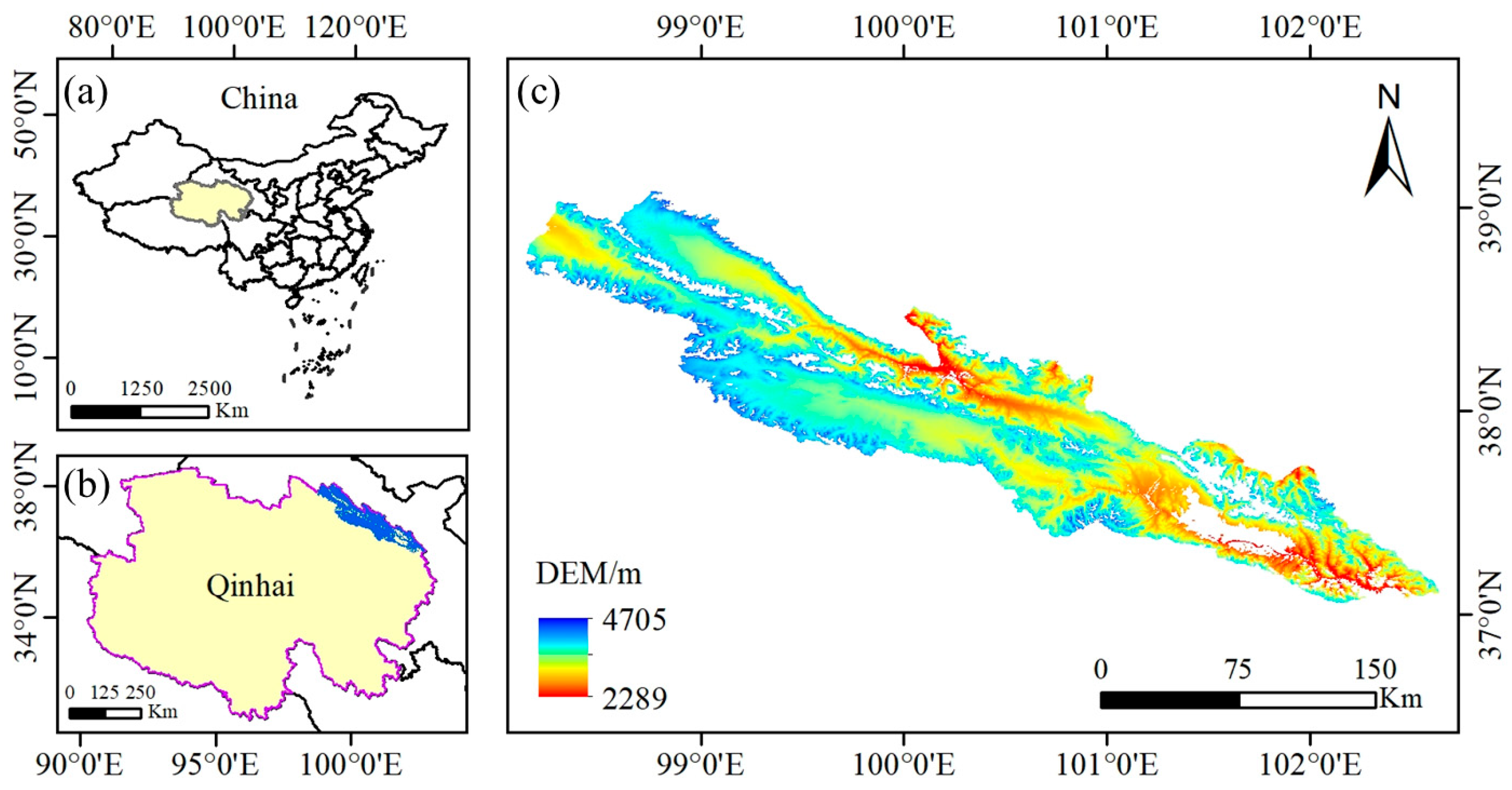
The southern slope of the Qilian Mountains is located at the northeastern edge of the Qinghai–Tibet Plateau (98°08′ E–102°38′ E, 37°03′ N–39°05′ N), covering an area of approximately 24,000 km
2 (
Figure 1). It serves as a transitional zone between arid and alpine regions, characterized by pronounced topographic variation. The landscape comprises diverse geomorphic units, including high terraces, hills, and intermontane basins, with elevations ranging from 2289 to 4705 m [
42]. The region exhibits a typical plateau continental climate, with a mean annual temperature of approximately −5.9 °C and average annual precipitation of about 400 mm, most of which occurs between May and September [
43]. Dominated by grassland ecosystems with high vegetation coverage, this area represents a key carbon sink region along the northern margin of the Qinghai–Tibet Plateau. Grasslands in the study area mainly consist of alpine meadow and alpine steppe ecosystems, which are widely distributed across the Qinghai–Tibet Plateau and are highly sensitive to climatic variability. Vegetation is dominated by perennial herbaceous species, primarily from the genera
Stipa and
Carex. Representative species include
Stipa purpurea,
Carex parvula, and
Carex alatauensis.
Due to substantial heterogeneity in topography and climate, grassland phenological dynamics and productivity patterns exhibit marked spatial variation. Moreover, the ecosystem is highly sensitive to climate change, with vegetation phenology significantly influenced by rising temperatures and variable precipitation, thereby playing a pivotal role in regulating regional carbon cycling. As summarized by Wang et al., alpine grasslands across the Qinghai–Tibet Plateau have experienced pronounced changes in structure and productivity under the combined influences of climate change and adaptive management, highlighting the ecological significance of this region for carbon cycle studies [
44]. As a critical component of the Qinghai–Tibet Plateau’s ecological security barrier, the carbon productivity dynamics of grasslands in this region not only reflect the response mechanisms of alpine ecosystems to climate change but also bear important implications for regional carbon budget assessments.
2.2. Research Data
This study integrates multiple sources of remote sensing data to analyze the spatiotemporal coupling between vegetation phenology and GPP in the alpine grasslands of the southern Qilian Mountains. Stable grassland areas, defined as pixels classified as grassland (IGBP class code 10) in all years from 2001 to 2020, were identified using the MCD12Q1 land cover product on the GEE platform. GPP data were obtained from the PML V2 product, while NDVI time-series data were extracted from the MOD13Q1 product at a spatial resolution of 500 m. MODIS MOD13Q1 NDVI data were first quality-screened using the accompanying QA layer to remove low-quality observations (e.g., cloud, snow, and aerosol contamination). The remaining high-quality time series showed good temporal continuity, and no additional temporal gap-filling was applied. Using TIMESAT 3.3 software, the NDVI time series was subjected to curve fitting and smoothing by employing the double logistic function combined with a dynamic threshold method to extract key vegetation phenology parameters (SOS, EOS, and LOS). The phenological outputs were converted to GeoTIFF format using ENVI 5.3, and subsequent spatial analysis and modeling were conducted in ArcGIS 10.2 and R 4.5.0. Detailed data sources and descriptions are listed in
Table 1.
2.3. Vegetation Phenology Parameter Extraction
Vegetation phenological parameters are key indicators for characterizing the dynamic changes of the growing season. They are widely used to assess vegetation responses to variations in temperature and moisture, and thus play an important role in phenological studies under the context of global climate change.
By comparing the S-G, A-G and D-L filtering methods in areas such as Northeast China and the urban agglomeration of central Yunnan, it was found that the D-L fitting effect was closest to the original curve and had the best reconstruction of the vegetation growth peak [
41]. Therefore, in this study, TIMESAT 3.3 software was employed to process NDVI time series data. A double logistic (D-L) function was applied for curve fitting and smoothing, effectively reducing noise and outliers, thereby improving the accuracy of phenology detection. Among the existing phenology extraction approaches, commonly used techniques include threshold methods, moving average methods, and derivative-based methods [
45]. Considering that the south slope of Qilian Mountains has dramatic topographic relief, significant climatic gradient and diverse vegetation types, the threshold method has strong stability and adaptability, and has been widely used in alpine grassland ecosystems such as the Qinghai–Tibet Plateau [
15,
18]. Therefore, a dynamic threshold method was adopted in this study to extract SOS, EOS, and LOS, aiming to improve the flexibility and accuracy of phenological parameter extraction [
46,
47].
Threshold settings have a considerable impact on phenological results, and inappropriate threshold values may lead to systematic deviations in SOS and EOS detection. Previous studies have shown that in regions such as the Qinghai–Tibet Plateau, Northeast China, and North China, SOS is typically defined as 10–20% of the seasonal NDVI amplitude, while EOS is often defined as 40–50% [
48,
49,
50]. Based on these findings and the spectral characteristics of grasslands in the study area, we adopted a stable threshold scheme of SOS = 0.2 and EOS = 0.5, ensuring scientific robustness, regional applicability, and temporal comparability of the extracted phenological parameters.
2.4. Estimation of Grassland GPP
The GPP data used in this study are derived from the PML V2 product, developed by the Institute of Geographic Sciences and Natural Resources Research, Chinese Academy of Sciences. This dataset integrates an improved light use efficiency (LUE) model with multi-source remote sensing and meteorological drivers, utilizing a refined daily time-step approach. It has demonstrated high accuracy in global carbon flux assessments, particularly over alpine grassland ecosystems.
On the GEE platform, the PML V2 data were processed to calculate both annual total GPP and seasonal cumulative GPP over the southern slopes of the Qilian Mountains. The four seasons were defined as follows: spring (March–May), summer (June–August), autumn (September–November), and winter (December–February of the following year). GPP values were aggregated for each period by summing monthly GPP data, enabling the characterization of intra-annual variations in carbon assimilation capacity across the alpine grasslands.
2.5. Sen’s Slope Estimator
Sen’s slope estimator is a widely used non-parametric method for detecting trends in long-term time series, particularly in ecological and climate-related studies. Unlike traditional linear regression, it does not require the data to follow a normal distribution and is highly robust to outliers, making it especially suitable for time series with significant variability or missing values.
Originally proposed by P.K. Sen [
51], this method calculates the slope between all possible pairs of data points in a time series (i.e., the difference in observed values divided by the time interval), and uses the median of these slopes as an estimate of the overall trend. Its simplicity and resistance to the influence of extreme values make it well-suited for analyzing environmental changes. In this study, Sen’s slope estimator was applied to quantify the trends in vegetation phenological metrics—namely the SOS, EOS, and LOS—as well as GPP over the period 2001–2020 across the grasslands of the southern slopes of the Qilian Mountains. The slope results at the pixel level reveal spatially explicit patterns of temporal change, offering a basis for subsequent analyses of phenology–carbon coupling and cluster-based regionalization.
2.6. Pixel-Wise Univariate Linear Regression Analysis
To quantitatively assess the response of carbon production potential to vegetation phenological changes in the grassland ecosystems of the southern slopes of the Qilian Mountains, this study employs pixel-wise univariate linear regression to model GPP as a function of phenological parameters (SOS, EOS, LOS) across spatial scales. This approach reveals the sensitivity and spatial heterogeneity of GPP responses to variations in phenological timing [
52].
Specifically, phenological parameters (SOS, EOS, LOS) serve as independent variables, and GPP as the dependent variable, with regression models constructed at each pixel. Annual data from 2001 to 2020 are used to fit these models, yielding pixel-level slope coefficients (β) and significance levels (p-values). The slope β represents the magnitude and direction of GPP’s response to phenological changes. Specifically, β > 0 means that a delay in the phenological event (e.g., later SOS) is associated with an increase in GPP, whereas β < 0 means that an advance in the phenological event (e.g., earlier SOS) corresponds to an increase in GPP.
This regression analysis was implemented in the R programming environment (version 4.5.0), using pixel-level time series data to build the models and applying significance testing to identify regions with reliable responses. The method facilitates understanding the spatiotemporal patterns of carbon flux sensitivity to phenology in alpine grasslands and provides a quantitative foundation for subsequent clustering and mechanism analysis. For each pixel, three sensitivity coefficients were obtained: β_SOS, β_EOS and β_LOS, representing the responses of GPP to SOS, EOS and LOS, respectively.
2.7. K-Means Clustering
K-means clustering is an iterative, unsupervised learning algorithm widely used for partitioning large datasets into distinct groups. The clustering outcome strongly depends on the selection of the number of clusters (K), making the determination of an optimal K critical.
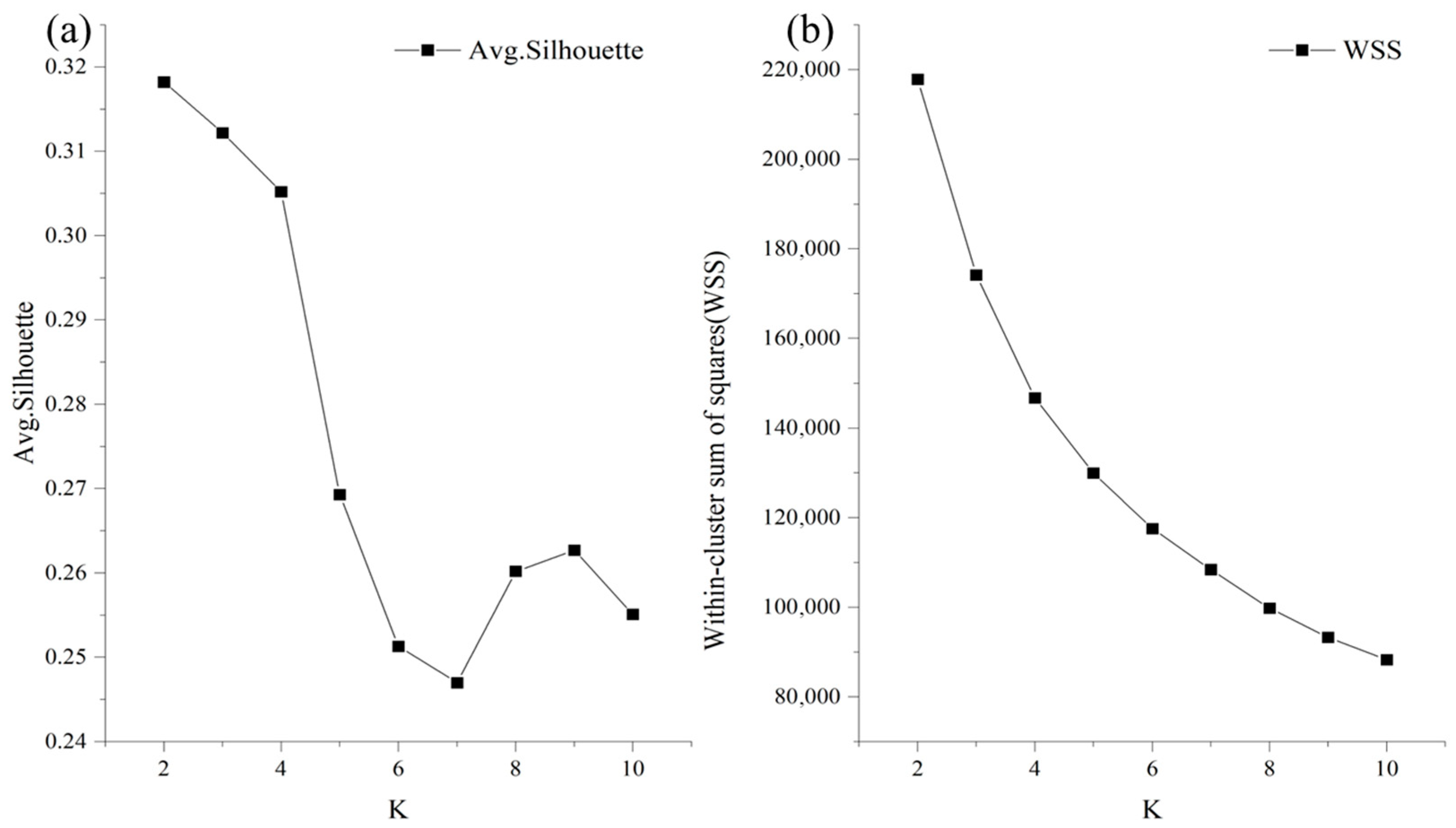
In this study, we combined the Silhouette coefficient and the Elbow method to select the best K value. The Silhouette coefficient measures the cohesion within clusters and the separation between clusters, with values closer to 1 indicating better-defined clusters [
53]. The Elbow method involves plotting the Within-Cluster Sum of Squares (WSS) against different K values and identifying the “elbow” point where the rate of decrease sharply changes, signifying an optimal number of clusters [
54].
To classify the coupled phenology–carbon production patterns of grasslands in the southern slopes of the Qilian Mountains, K-means clustering was performed on the standardized phenological variables—SOS, EOS, and LOS—exploring cluster numbers ranging from 2 to 10. The optimal K was determined by analyzing the WSS trend via the Elbow method and evaluating cluster stability and separation using the Silhouette coefficient, ensuring scientifically robust and ecologically meaningful classification results.
3. Results
3.1. Spatial and Temporal Distribution Characteristics of Grassland Phenology on the South Slope of Qilian Mountains
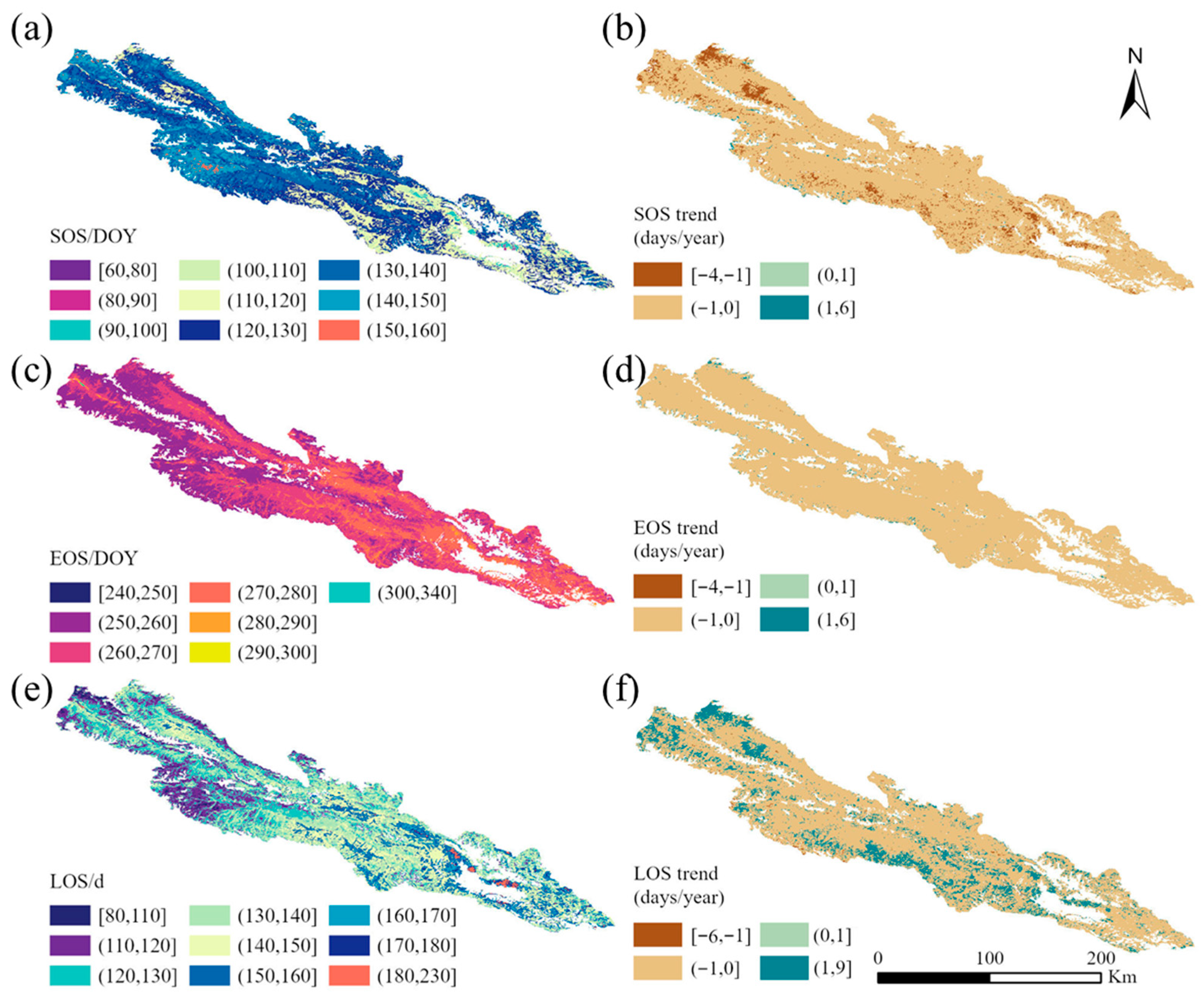
During the period 2001–2020, the grassland phenology on the southern slope of the Qilian Mountains exhibited clear seasonal patterns and notable spatial heterogeneity. The average SOS occurred on the 128th day of the year, primarily within April to May. The EOS averaged around the 264th day, mostly between September and October. The average LOS was approximately 135 days, ranging from 110 to 160 days (
Figure 2), indicating that the regional growing season was relatively short and concentrated in the warm and moist period of the year.
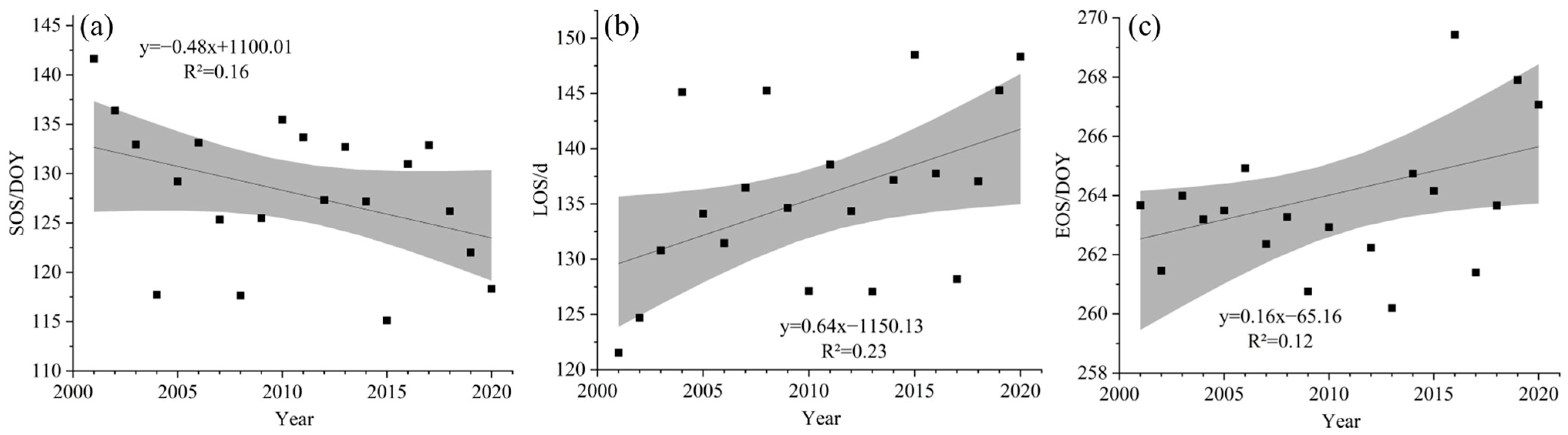
In terms of temporal trends, the phenological parameters showed dynamic interannual variations. The SOS exhibited an advancing trend, with an average shift of 0.5 days per year, suggesting an earlier onset of vegetation greening. The LOS extended by approximately 0.6 days per year on average, indicating a gradual lengthening of the growing season. Meanwhile, the EOS was delayed by about 0.2 days per year, implying a slight postponement of vegetation senescence (
Figure 3).
Further analysis based on the Sen’s slope estimator (
Figure 2) revealed spatially heterogeneous trends across the study area. SOS trends in most regions ranged between −1 and 0 days per year, indicating a modest advancement of the growing season in most pixels. In the northwestern high-altitude zones, some localized areas showed stronger advancement trends ranging from −4 to −1 days per year, albeit with limited spatial extent. EOS trends were generally stable across space, with most areas showing slight advances between −1 and 0 days per year, and only a few pixels displaying delays. LOS showed broader spatial variability, with several areas experiencing annual extensions exceeding 1 day. However, areas with slight LOS shortening (−1 to 0 days per year) remained predominant, reflecting strong spatial heterogeneity in phenological responses.
3.2. Spatiotemporal Characteristics of Grassland GPP on the Southern Slope of the Qilian Mountains
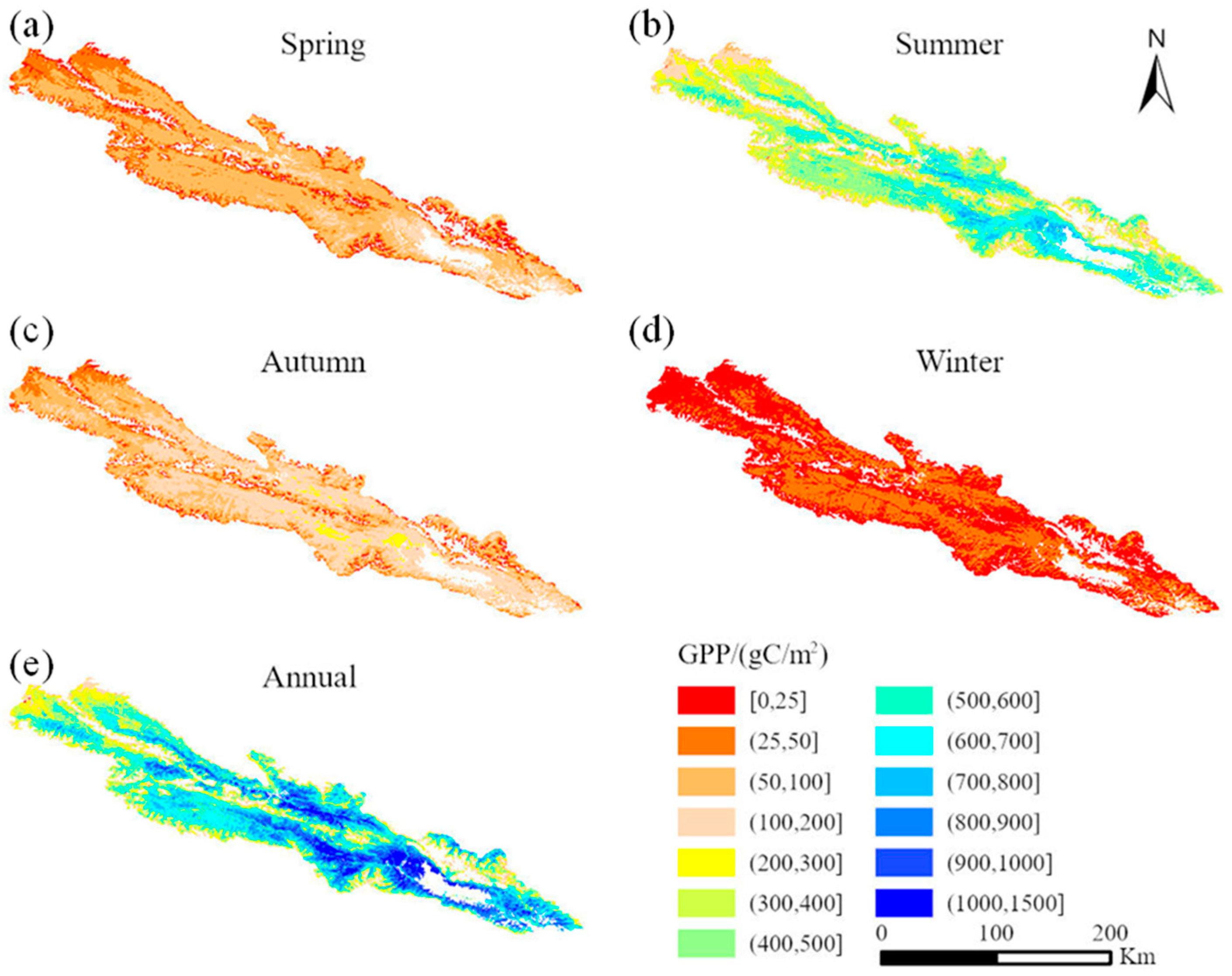
From 2001 to 2020, the annual average GPP of grasslands on the southern slope of the Qilian Mountains exhibited a clear spatial gradient, decreasing from southeast to northwest, a pattern that closely aligns with the region’s elevation distribution (
Figure 4). In lower-elevation areas, GPP values exceeded 1000 g C/m
2/a in some locations, indicating strong photosynthetic potential.
GPP showed pronounced seasonal variability, with summer contributing the highest values, followed by spring and autumn, and the lowest values observed in winter. During summer, abundant solar radiation and favorable hydrothermal conditions enhanced photosynthetic activity, making it the peak season for carbon fixation. The spatial distribution of summer GPP mirrored that of the annual average, also showing a southeast-to-northwest decreasing trend. Spring and autumn GPP patterns were generally similar, with multi-year averages of 62.5 g C/m2/a and 96.3 g C/m2/a, respectively. In winter, GPP approached zero across most of the region due to average temperatures falling below 0 °C, which suppresses photosynthesis.
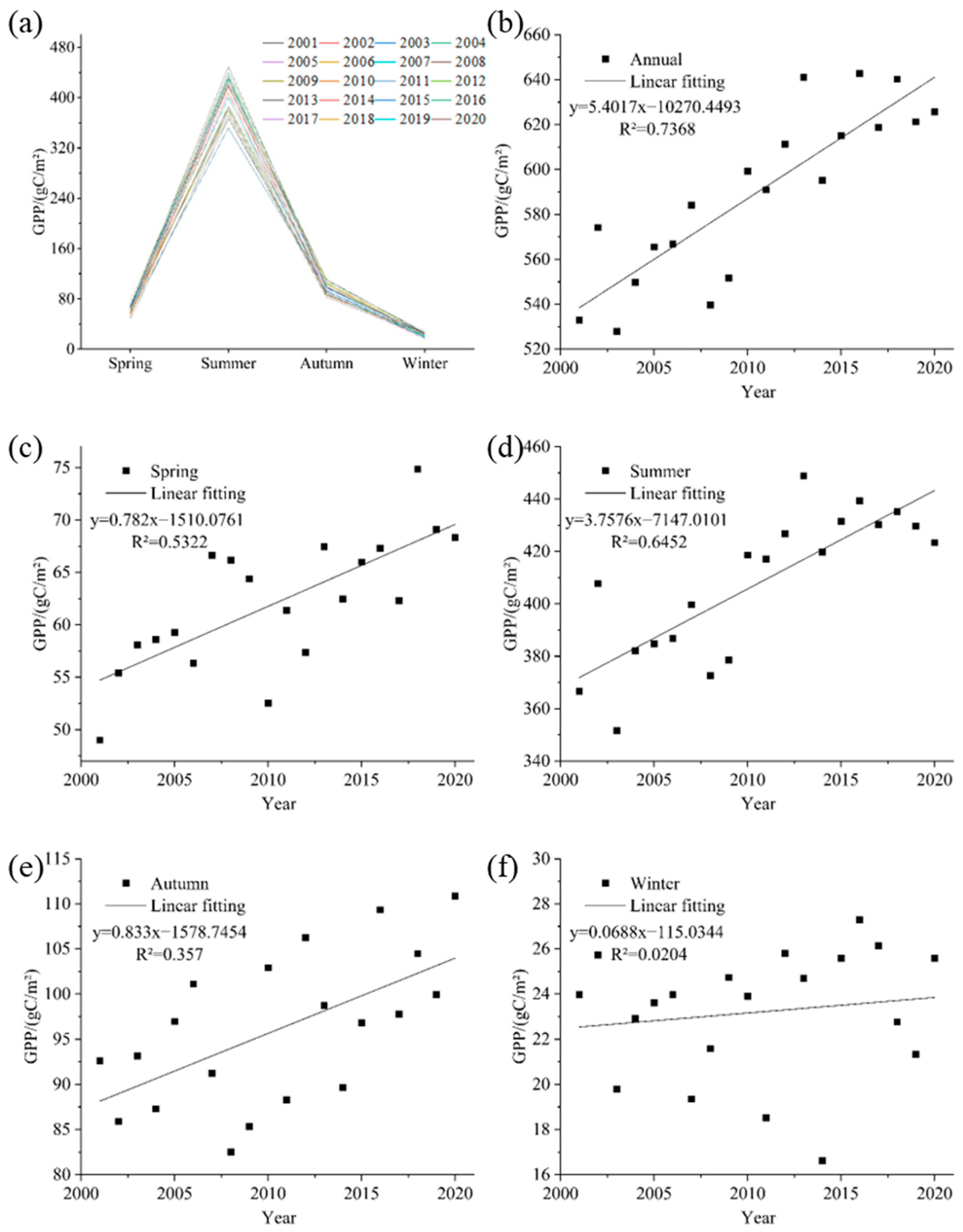
In terms of interannual variability (
Figure 5), the annual GPP across the study area showed an overall increasing trend, with an average annual growth rate of 5.4 g C/m
2/a. The peak value was observed in 2016, with an average GPP of 642.8 g C/m
2/a. All four seasons exhibited increasing GPP trends, with the most substantial growth in summer (3.8 g C/m
2/a), followed by autumn and spring.
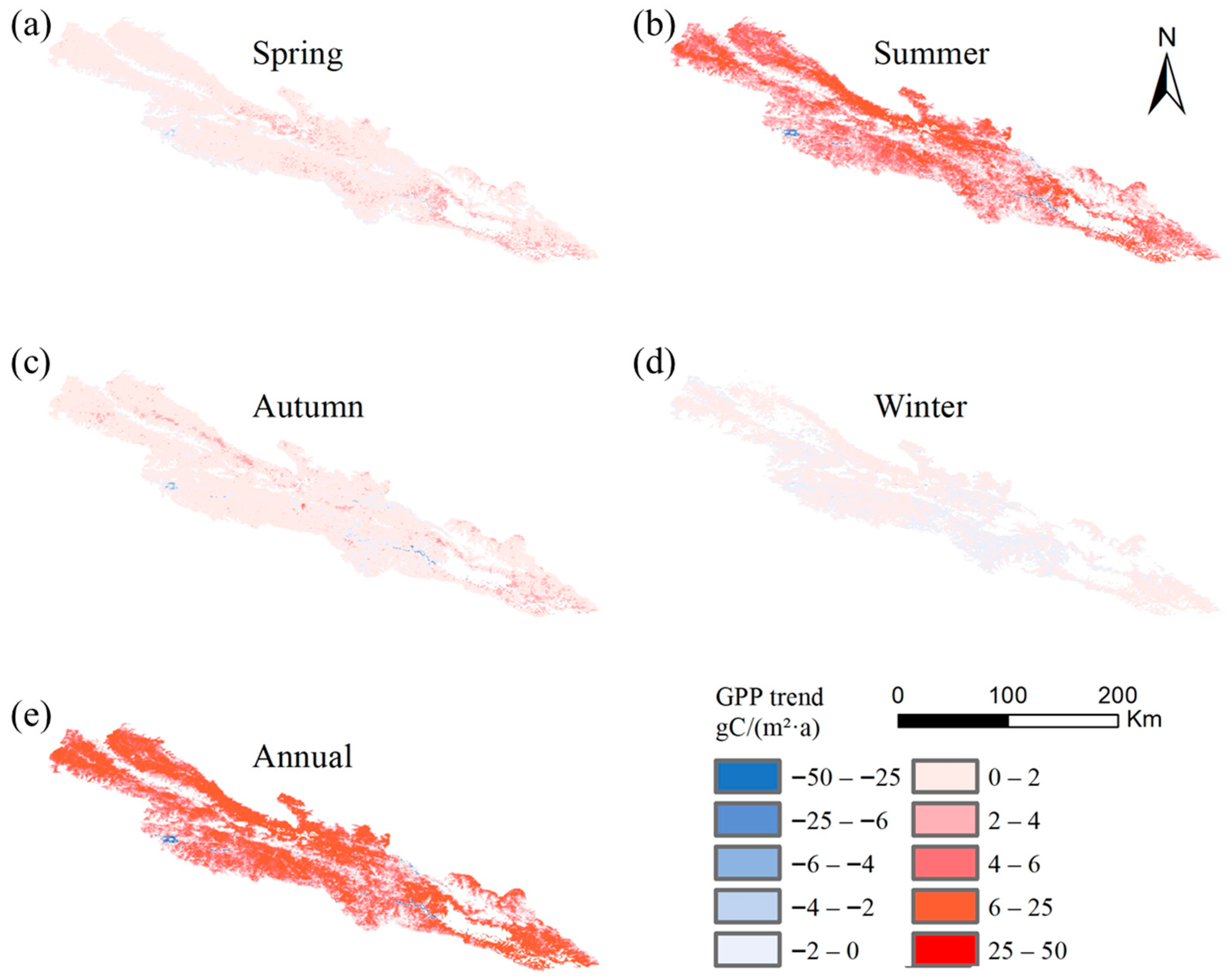
Further analysis using the Sen’s slope estimator revealed spatial patterns in GPP trends. The spatial distribution of changes in summer and annual GPP was largely consistent, indicating strong spatial coupling. Annual GPP changes ranged from −49.26 to +41.33 g C/m
2/a, while summer GPP varied from −34.13 to +32.5 g C/m
2/a (
Figure 6), highlighting summer’s dominant role in annual GPP dynamics. Spring, autumn, and winter GPP showed relatively moderate variations, ranging from −5.36 to +5.21, −10.18 to +6.55, and −7 to +4.61 g C/m
2/a, respectively, with relatively stable fluctuations.
Overall, while the magnitude of GPP change differed by season, the spatial pattern revealed that the southeastern and central low-elevation areas experienced the most significant—and largely positive—changes. These trends may be closely related to regional warming, improved precipitation conditions, or vegetation recovery, reflecting an increasing carbon sink potential under ongoing climate change.
3.3. Sensitivity of GPP to Phenological Changes
To quantitatively assess the regulatory effects of vegetation phenology on carbon productivity on the southern slope of the Qilian Mountains, pixel-wise univariate linear regression analyses were conducted using annual GPP as the response variable and the start of season (SOS), end of season (EOS), and length of season (LOS) as explanatory variables. For each regression, the slope and corresponding p-value were extracted to characterize the magnitude, direction, and statistical significance of interannual GPP responses to phenological variability.
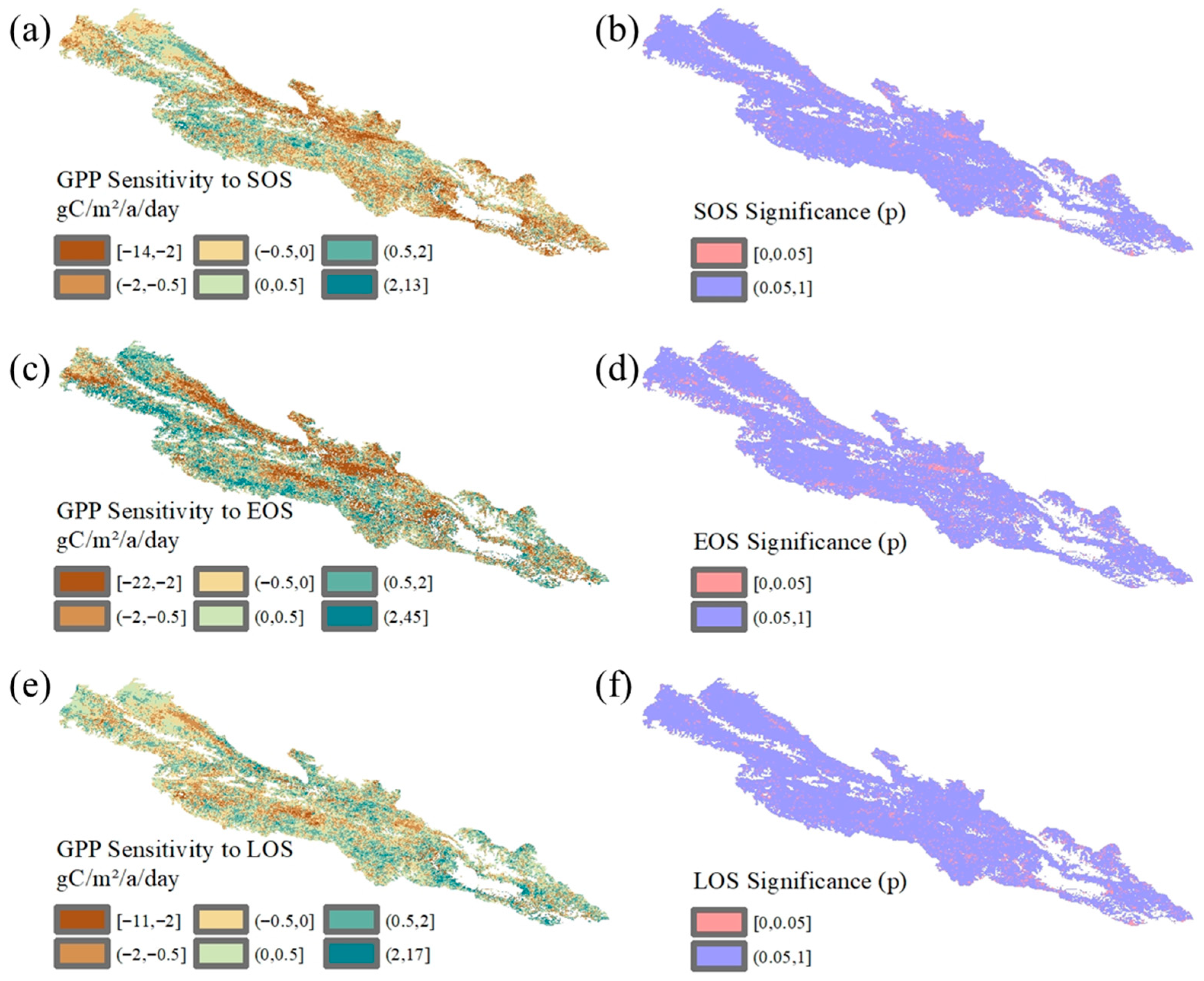
The spatial distribution of GPP sensitivity to SOS exhibited pronounced heterogeneity across the study area (
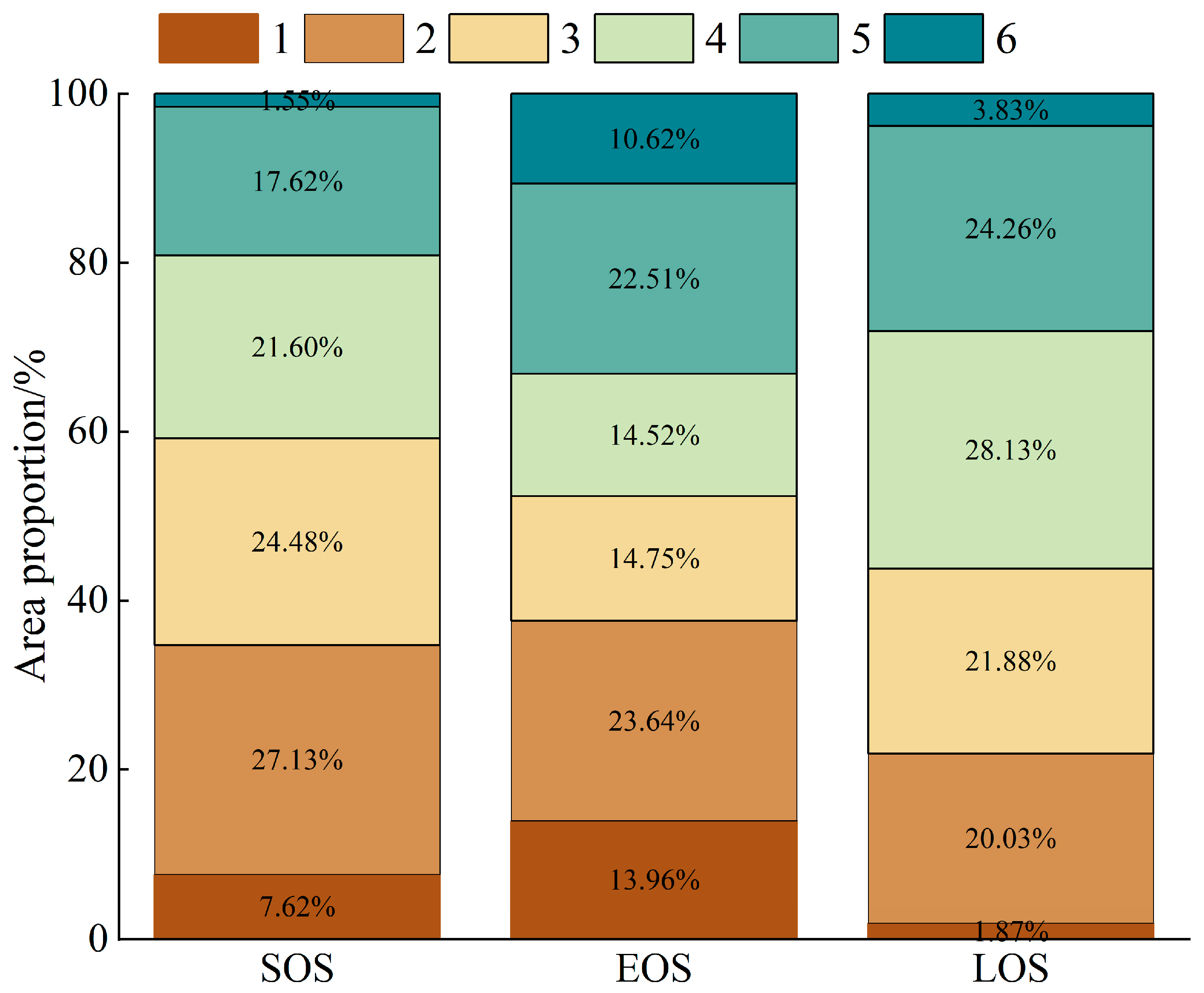
Figure 7). In most regions, negative regression slopes dominated, indicating that delayed spring green-up was generally associated with reduced annual GPP, whereas earlier SOS tended to enhance carbon uptake. Statistically significant relationships were spatially sparse and fragmented, accounting for less than 5% of the total area, suggesting that although SOS–GPP coupling is widespread, its strength varies considerably across different environmental settings. Quantitatively, the regression slope of GPP with respect to SOS ranged from −14 to 13 g C m
−2 yr
−1 day
−1, with most values concentrated between −2 and 2 g C m
−2 yr
−1 day
−1 (
Figure 8). Among these, the slope interval from −2 to −0.5 g C m
−2 yr
−1 day
−1 accounted for the largest proportion (27.13%), and pixels with negative slopes represented approximately 59.23% of the study area.
For EOS, spatial patterns of GPP sensitivity were more heterogeneous and lacked a consistent directional trend (
Figure 7). Both positive and negative responses were observed across the region, and statistically significant pixels were rare and spatially scattered, with a total proportion below 5%. This indicates that the influence of EOS on annual GPP is highly context-dependent. In terms of magnitude, EOS-related regression slopes ranged from −22 to 45 g C m
−2 yr
−1 day
−1 and were primarily concentrated within the −2 to 2 interval (
Figure 8), with roughly equal proportions of positive and negative slopes. Although a delayed EOS may promote higher GPP by extending the photosynthetically active period in some areas, this effect was offset or even reversed in certain low-elevation regions, possibly due to climatic constraints or physiological senescence.
Regarding LOS, the spatial distribution of GPP sensitivity revealed a predominance of positive responses across much of the study area (
Figure 7), indicating that a longer growing season generally favors enhanced carbon productivity. However, negative responses were evident in some high-elevation regions, likely reflecting thermal and moisture limitations on alpine grasslands. The proportion of statistically significant LOS–GPP relationships (5.1%) was comparable to that observed for SOS. Quantitatively, regression slopes associated with LOS ranged from −11 to 17 g C m
−2 yr
−1 day
−1, with approximately 50.01% of pixels falling within the narrow interval of −0.5 to 0.5 g C m
−2 yr
−1 day
−1 (
Figure 8). Overall, 56.22% of the study area exhibited positive slopes, suggesting that an extended growing season does not necessarily translate into increased carbon fixation capacity under all environmental conditions.
3.4. Coupling Patterns of Vegetation Phenology with GPP
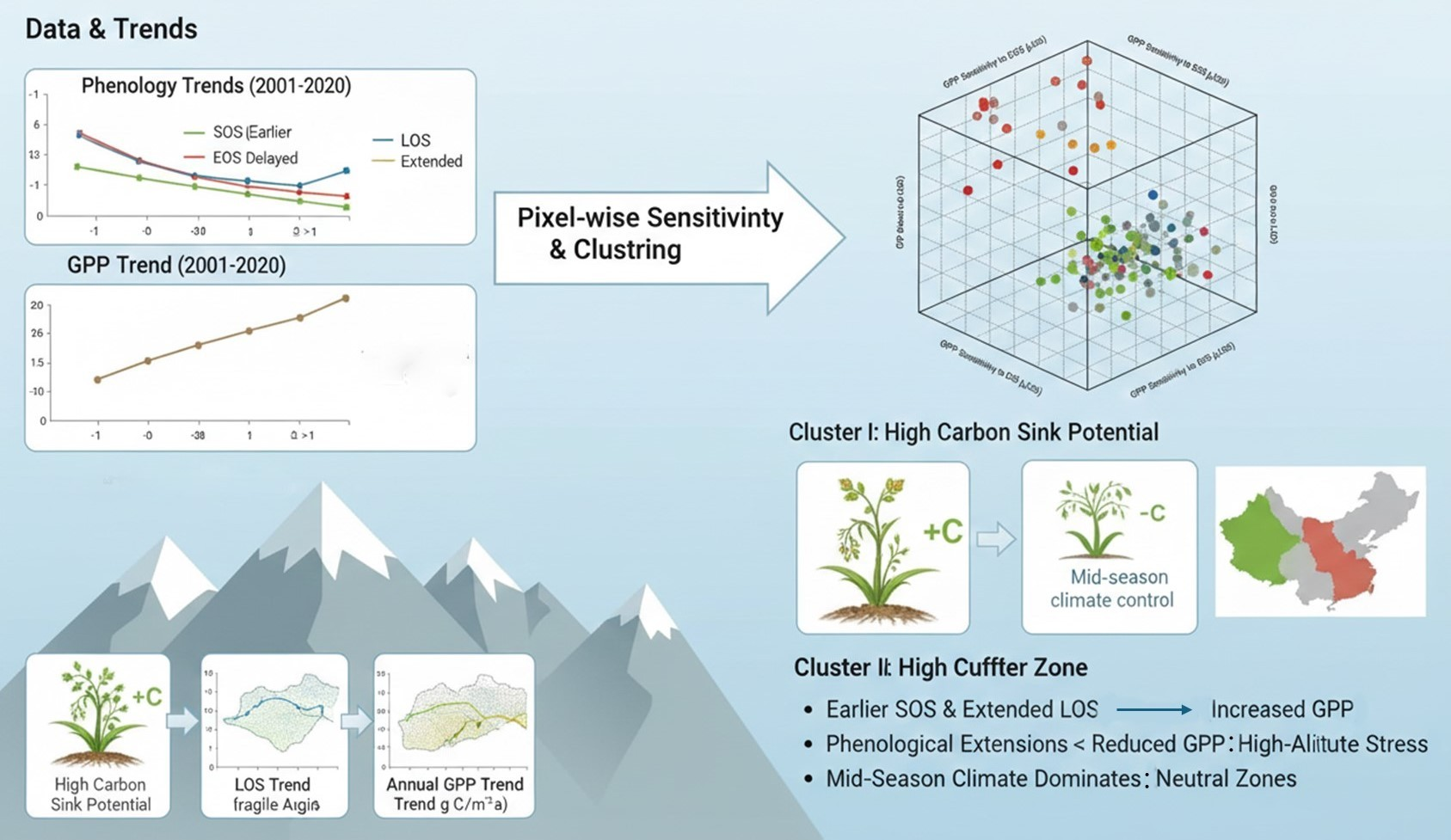
To comprehensively identify the regulatory patterns of vegetation phenology on carbon productivity across the grasslands of the southern slope of the Qilian Mountains, we constructed a three-dimensional sensitivity feature space based on pixel-wise regression slopes of GPP against SOS, EOS, and LOS. K-means clustering was subsequently applied to classify the pixels according to their phenology–GPP coupling characteristics. Evaluation using the elbow method and silhouette coefficient indicated that K = 3 provided an optimal balance between clustering stability and ecological interpretability, with a pronounced reduction in within-cluster sum of squares and silhouette values exceeding 0.3 (
Figure 9).
The resulting three phenology–GPP sensitivity clusters exhibit clearly differentiated functional characteristics. Cluster I, identified as a high carbon sequestration potential zone, is characterized by a negative sensitivity to delayed SOS (−0.6) and positive sensitivities to delayed EOS (1.9) and extended LOS (0.8). This pattern indicates that GPP in this zone benefits from a phenological configuration of earlier green-up, later senescence, and a prolonged growing season. Although clustering was based on GPP sensitivities rather than phenological trends themselves, ecosystems within Cluster I show a strong capacity to translate favorable phenological shifts into enhanced carbon uptake, reflecting high ecological adaptability.
Cluster II, defined as an ecologically vulnerable zone, exhibits uniformly negative sensitivity center values (SOS = −0.8, EOS = −3.4, LOS = −0.1), indicating that phenological shifts at any stage are detrimental to GPP. This response pattern suggests that, in these high-altitude ecosystems, phenological extensions do not translate into increased carbon uptake, but instead coincide with enhanced environmental stress. Warming-induced earlier snowmelt and green-up may advance the growing season into periods with limited soil moisture recharge, while delayed senescence can expose vegetation to increasing drought stress or early frost risk. In addition, dominant alpine grass species in these regions may exhibit limited physiological plasticity, constraining their ability to sustain photosynthetic activity over an extended growing season. As a result, phenological changes fail to enhance—and may even suppress—carbon assimilation in these regions.
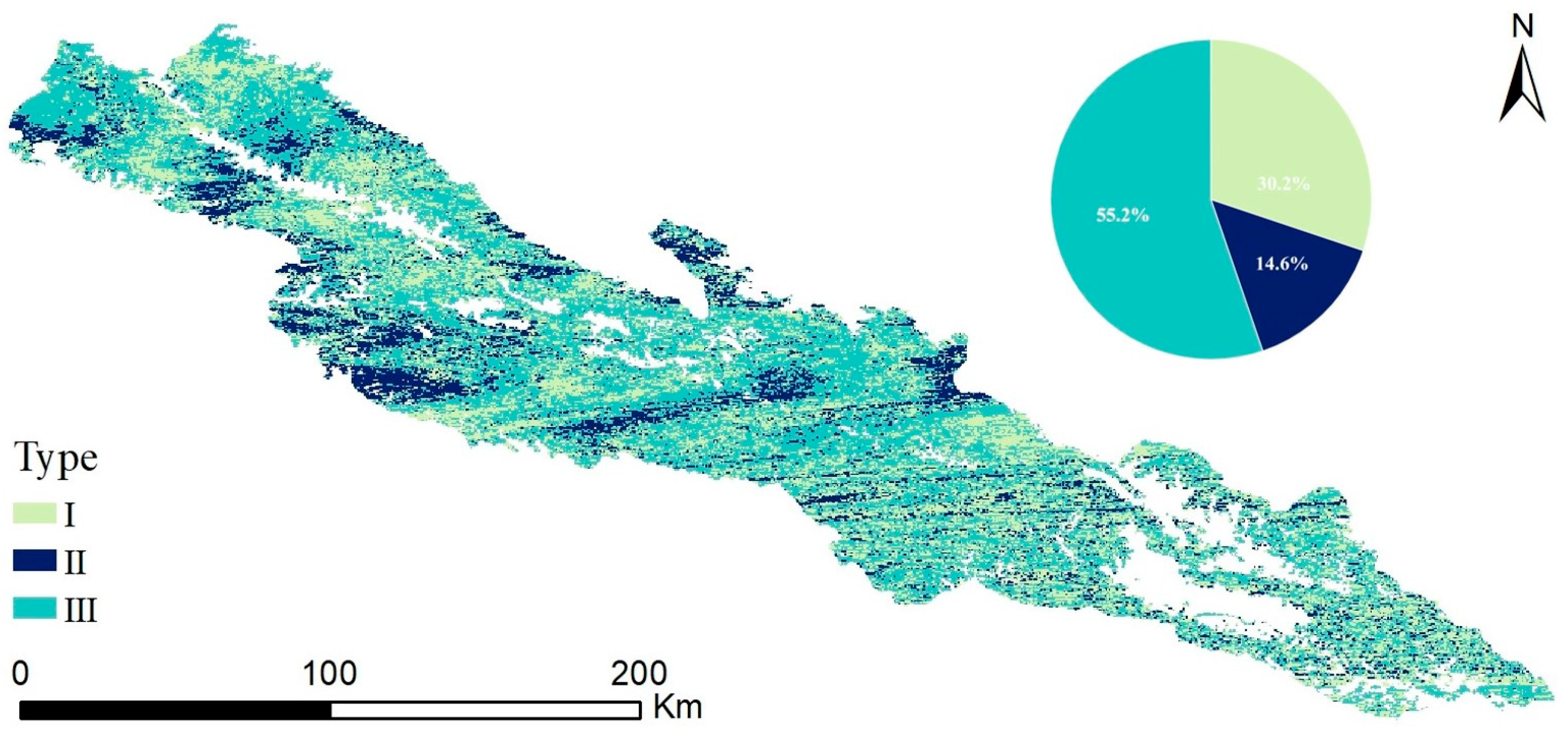
Cluster III, categorized as a phenologically neutral buffer zone, displays sensitivity values close to zero (SOS = 0.1, EOS = −0.15, LOS = −0.1). Importantly, the extensive spatial dominance of this cluster, accounting for 55.2% of the study area (
Figure 10), necessitates interpretation beyond a simplistic attribution to ecosystem stability. The near-zero sensitivities indicate a weak coupling between interannual GPP variability and the timing of season onset and termination; however, this widespread pattern more plausibly reflects a shift in dominant controls on carbon uptake. Specifically, GPP dynamics across large portions of the study area are likely regulated more strongly by mid-growing-season environmental conditions—such as the intensity and timing of peak-summer precipitation, soil moisture availability, and associated hydrothermal balance—than by variations in SOS or EOS. During the period of maximum photosynthetic demand, these mid-season factors can override phenological influences, effectively decoupling annual carbon assimilation from growing-season length. Consequently, the “neutral” response observed in Cluster III does not imply ecological insensitivity, but rather indicates the limitation of phenology-centric metrics in capturing the primary drivers of GPP variability in these regions.
Spatially, Cluster III is widely distributed across transitional mid-elevation zones, where hydrothermal conditions are relatively balanced and carbon uptake is less constrained by phenological boundaries. In contrast, Cluster I comprises 30.2% of pixels and is mainly located in southeastern and central low- to mid-elevation areas with favorable environmental conditions, while Cluster II accounts for 14.6% of the study area and is concentrated in high-altitude northwestern regions characterized by pronounced climatic stress. Together, this sensitivity-based clustering reveals strong functional heterogeneity in phenology–GPP coupling and highlights the existence of distinct regulatory regimes governing carbon dynamics across the southern slope of the Qilian Mountains.
4. Discussion
4.1. Spatiotemporal Patterns of Phenology and GPP in Alpine Grasslands
During the 2001–2020 study period, vegetation phenology on the southern slope of the Qilian Mountains exhibited a pronounced trend of earlier spring green-up, later autumn senescence, and an overall lengthening of the growing season, which are closely linked to global warming [
55]. However, in alpine regions of the Qinghai–Tibet Plateau, increasing evidence from Earth observation studies indicates that the advancement of spring phenology is not solely controlled by rising air temperature, but is strongly mediated by changes in snow cover duration and snowmelt timing. Reduced snow persistence and earlier snowmelt can accelerate soil thawing and improve early-season soil moisture availability, thereby facilitating earlier vegetation green-up (SOS) [
8,
9].
Specifically, the SOS advanced by approximately 0.5 days per year, the EOS was delayed by about 0.2 days per year, and the LOS extended by an average of 0.6 days per year. Spatially, SOS showed a marked northwest–southeast advancement, while EOS was correspondingly delayed, resulting in a clear spatial gradient of growing-season lengthening [
56,
57]. Such spatial patterns are consistent with previous findings in the Qilian Mountains and across the Qinghai–Tibet Plateau, where elevation-dependent snow cover and snowmelt dynamics exert strong control on the timing of spring phenological onset [
8,
58].
Meanwhile, GPP of grassland on the southern slope has generally increased against the backdrop of a distinct warming and humidifying trend in this region [
59]. The region’s complex terrain creates significant spatial heterogeneity in ecosystem processes. Existing studies indicate that the net effect of combined water and heat availability on regional grassland carbon productivity is positive [
60,
61], and our observed GPP increase is consistent with basin-wide studies showing the most pronounced increases occurring in summer [
62,
63]. The mean annual GPP for perennial grassland on the southern slope exceeded 530 g C m
−2, slightly higher than the Qinghai–Tibet Plateau average [
62], which likely reflects our focus on undisturbed perennial grassland, reducing uncertainty from mixed vegetation types.
4.2. Pixel-Scale Sensitivity of GPP to Phenological Shifts
This study developed pixel-scale linear regression models to evaluate the sensitivity of GPP responses to SOS, EOS, and LOS. The results reveal that these phenological metrics exert distinct effects on GPP, indicating spatial heterogeneity. Specifically, earlier SOS generally has positive effects on GPP, as earlier green-up enables an extended photosynthetic window and enhances early-season biomass accumulation. This aligns with findings that earlier spring phenology increases vegetation NPP through extended growing seasons [
64,
65]. Similarly, delayed EOS and increased LOS enhance GPP in some regions, as autumn extensions allow continued photosynthetic activity, contributing to carbon uptake, which is corroborated by studies on the Tibetan Plateau [
66].
However, in high-altitude, climate-stressed areas, phenological advances or extensions may not lead to GPP increases and can even correlate negatively with productivity. This aligns with Zhang et al., who found that although green-up dates advanced across the plateau, NDVI did not increase in high-altitude zones—likely due to constraints such as low temperature, permafrost, and mismatches in water and heat that decouple potential growth from actual accumulation [
67]. This paradox may stem from thermal–moisture mismatches or species-specific physiological constraints.
4.3. Ecological Implications of Phenology-GPP Functional Zonation
The three-dimensional sensitivity space combined with k-means clustering effectively delineates the functional heterogeneity of phenology–GPP coupling across alpine grasslands, revealing distinct ecological regimes in which carbon uptake responds differently to phenological variability.
Cluster I, characterized by high carbon sequestration potential, exhibits strong positive sensitivities of GPP to phenological changes. In these areas, extensions of the growing season—via earlier start of season (SOS) or delayed end of season (EOS)—translate directly into enhanced carbon assimilation. This pattern indicates that phenological shifts act as a primary regulator of interannual GPP variability, highlighting regions where climate-driven phenological advances can substantially strengthen ecosystem carbon sinks.
In contrast, Cluster II represents an ecologically vulnerable regime in which phenological extensions are associated with reductions in GPP. The observed “phenological extension–GPP reduction” paradox in these predominantly high-altitude regions reflects the dominance of physiological and environmental stress over phenological benefits. Earlier onset of the growing season driven by warming-induced snowmelt may lead to a thermal–moisture mismatch, whereby increased evaporative demand is not matched by sufficient soil moisture availability, resulting in progressive drought stress during the extended growing season. Moreover, species-specific physiological constraints may further limit carbon uptake. Dominant alpine grass species (e.g., Stipa purpurea) are often adapted to short growing seasons and conservative resource-use strategies, exhibiting limited plasticity in photosynthetic capacity, stomatal regulation, and carbon allocation. Consequently, an extended growing season may increase maintenance respiration costs without a corresponding increase in photosynthetic carbon gain. Finally, delayed senescence can prolong exposure to early autumn frost events, causing damage to photosynthetic tissues and further reducing seasonal carbon assimilation. Together, these mechanisms indicate that, in Cluster II, phenological lengthening amplifies environmental stress rather than enhancing productivity, resulting in net reductions in GPP.
The extensive spatial dominance of Cluster III (the so-called “neutral buffer” zone), accounting for 55.2% of the study area, requires careful interpretation beyond a simplistic attribution to ecosystem stability. While the near-zero sensitivity values indicate a weak statistical relationship between interannual GPP variability and the selected phenological metrics (SOS, EOS, and LOS), the large spatial coverage of this cluster strongly suggests an alternative explanation: that phenology may not be the primary control on carbon uptake dynamics across more than half of the alpine grasslands. Instead, GPP in these regions is likely more strongly regulated by environmental conditions during the mid-growing season, when photosynthetic activity reaches its maximum. Factors such as the magnitude and timing of peak-summer precipitation, soil moisture availability, and episodic heat stress can exert dominant control over GPP variability, effectively decoupling carbon assimilation from changes in the timing of seasonal onset and termination. Under such conditions, variations in SOS or EOS may have limited influence on annual carbon uptake, even though vegetation remains climatically responsive. This interpretation is consistent with the pronounced phenological sensitivity observed in Cluster I, underscoring a fundamental spatial dichotomy in the dominant regulatory mechanisms of carbon cycling across the landscape. Consequently, Cluster III should not be interpreted as an inherently “stable” ecosystem state, but rather as a region where a phenology-centric framework reveals its limitations, highlighting the necessity of incorporating mid-season hydro-meteorological drivers to fully explain observed GPP dynamics.
This functional zonation complements the multi-stage phenology–physiology framework proposed by Xia et al. [
68], which emphasizes the combined control of GPP by phenological processes and vegetation functional traits. By explicitly identifying regions where GPP is governed primarily by non-phenological constraints, our results provide a clearer basis for interpreting the ecological meaning of the “neutral buffer” zone. From a management perspective, this distinction is critical: while carbon sink enhancement in Cluster I may largely depend on anticipating phenological shifts, strategies in Cluster III are more likely to benefit from managing water availability and mitigating climate extremes rather than focusing solely on changes in growing-season timing.
4.4. Limitations and Future Research Directions
This study provides a spatially explicit assessment of phenology–GPP coupling; however, several limitations should be acknowledged. First, the use of MODIS NDVI data at a 500 m spatial resolution, while suitable for regional-scale analysis, may smooth fine-scale ecological heterogeneity in the complex terrain of the Qilian Mountains. This spatial averaging effect could reduce sensitivity in topographic transition zones (ecotones) and potentially influence pixel-level estimates of phenology–GPP relationships.
Second, although the PML_V2 GPP product has been widely validated across diverse ecosystems, the lack of direct validation using in situ flux tower or phenological observations within the specific study area remains a limitation. This constraint is common across the Qinghai–Tibetan Plateau due to the sparse distribution of ground-based observation networks [
44].
In addition, soil moisture and snow–ice processes are widely recognized as key regulators of alpine vegetation phenology and carbon uptake. While these factors were not explicitly included in the current sensitivity framework—which focuses on isolating the net effects of phenological timing (SOS, EOS, LOS)—their influence likely contributes to the observed spatial patterns, particularly in regions exhibiting weak or neutral phenology–GPP sensitivity. This interpretation is consistent with previous syntheses highlighting water availability as a primary constraint on warming-induced productivity responses on the Qinghai–Tibetan Plateau [
44].
Future research should therefore prioritize a more integrated framework by (1) incorporating higher-resolution satellite data and ground-based observations (e.g., PhenoCams and eddy covariance flux towers) to improve spatial validation and (2) explicitly integrating satellite-derived soil moisture, snow cover duration, and land surface freeze–thaw indicators (e.g., from SMAP and SMOS missions) into phenology–carbon sensitivity analyses. Such efforts will be essential for disentangling the combined roles of phenological shifts and hydrothermal processes—particularly spring soil thawing and moisture availability—in regulating alpine grassland carbon dynamics.
5. Conclusions
Based on 2001–2020 satellite observations, this study provides a pixel-level, sensitivity-based assessment of the spatiotemporal coupling between vegetation phenology and gross primary productivity (GPP) in the alpine grasslands on the southern slope of the Qilian Mountains, a climatically sensitive but under-investigated transition zone on the northeastern Tibetan Plateau. By integrating MODIS-derived phenological metrics (SOS, EOS and LOS) with the advanced PML V2 GPP product at 500 m resolution, we revealed a consistent trend of earlier SOS, delayed EOS and prolonged LOS driven by earlier spring warming, later autumn cooling and increased heat accumulation. Meanwhile, GPP showed a steady upward trajectory, but its response to phenological shifts exhibited pronounced spatial heterogeneity along topographic and climatic gradients.
Earlier SOS generally enhanced carbon uptake, and in some regions, delayed EOS and extended LOS further promoted GPP. However, in high-elevation zones with strong climatic constraints, phenological advances or extensions did not necessarily translate into greater carbon accumulation, indicating a partial decoupling between longer growing seasons and effective carbon assimilation. These findings underscore the importance of considering both the timing and the effectiveness of phenological changes when evaluating carbon dynamics in alpine grasslands.
Building on pixel-wise sensitivity analysis of GPP to SOS, EOS and LOS, we constructed a three-dimensional phenology–GPP sensitivity space and applied k-means clustering to classify grassland ecosystems into three functional response zones—areas of high carbon sink potential, ecologically fragile regions and neutral buffers. Compared with previous studies that mainly described large-scale correlations between phenology and productivity, this sensitivity-based functional zoning framework explicitly captures how strongly and in which direction GPP responds to phenological shifts at the pixel scale. The resulting functional zones exhibit distinct phenology–productivity coupling patterns shaped by the combined influence of topography, climate variability and ecosystem resilience, and reveal the complex, spatially heterogeneous nature of phenology–carbon interactions in an ecological transition zone that has been underrepresented in earlier work.
Under the ongoing influence of global climate change, this study highlights the necessity of considering the entire growing season—encompassing SOS, EOS and LOS—in assessments of regional carbon dynamics and ecosystem services. The sensitivity-based and spatially explicit approach developed here offers practical guidance for identifying areas with high carbon sink potential and ecological vulnerability, providing scientific support for regionally differentiated climate adaptation and sustainable grassland management strategies on the southern slope of the Qilian Mountains and other alpine grasslands.
Future work should integrate in situ phenological observations to further refine remote sensing estimates, incorporate ecosystem models to simulate phenology–carbon coupling under diverse climate scenarios, and explore non-climatic drivers such as soil moisture and freeze–thaw processes. These steps will strengthen our mechanistic understanding and improve projections of alpine grassland carbon sequestration in a rapidly changing environment.