


Abstract
A fungus, Acremonium strictum KR21-2, produces biogenic manganese oxides (BMOs) that can oxidize exogenous Mn2+ ions to form different BMO phases. When other guest ions are present during the BMO formation, it can strongly affect the mineralogical characteristics of the resultant BMO phase. The impact of coexisting Ni2+ ions on the mineralogy of BMO phases formed through enzymatic Mn(II) oxidation and its sequestration ability is not yet fully understood. To better understand it, repeated sequestration experiments were conducted using BMOs in Ni2+/Mn2+ binary, single Ni2, and single Mn2+ solution systems with a pH range of 6.0 to 7.5. It was observed that simultaneous sequestration of Ni2+ and Mn2+ was efficient, with irreversible Ni2+ incorporation at pH values above 7.0. The resultant BMO phases showed that Ni2+-bearing Mn oxides resembling feitknechitite (β-MnOOH) were developed through enzymatic Mn(II) oxidation. At pH values below 6.5, the turbostratic birnessite structure was maintained even in Ni2+/Mn2+ binary solutions, and subsequently, the Ni2+ sequestration efficiency was low. The pseudo-first-order rate constants of enzymatically inactivated BMOs for Mn2+ sequestration were two orders of magnitude lower than those of active BMOs, indicating the crucial role of the enzymes in precipitating Ni2+-bearing Mn oxide phases. These findings provide new insights into the mechanism of Ni2+ interaction with Mn oxide through microbial activity under circumneutral pH conditions.
1. Introduction
Nickel (Ni) is a highly significant element in numerous industrial applications [1]. It has been increasingly used in rechargeable electrical batteries for electric vehicles, along with other rare metals like Co, Mn, Li, etc. [2]. While a trace amount of Ni is essential for several biological processes, an excessive amount of it can be toxic to plants, fishes, and animals, including humans [3,4,5,6]. Therefore, efficient Ni remediation is necessary to maintain a clean environment worldwide [5], and bioremediation offers a cost-effective solution to toxic heavy metal contamination [7,8,9,10,11,12].
Biogenic nanoparticles (BNPs) are gaining attention for their potential in remediation and recovery of heavy metals from wastewaters [13,14]. This is because BNPs possess unique properties such as high specific surface area, catalytic activity, and desirable morphology. Among BNPs, biogenic Mn oxides (BMOs), which are produced by bacteria and fungi, are known for their strong sorption and oxidation capabilities for various inorganic elements in natural environments [15,16]. Biogenic Mn oxide formation through biologically mediated redox reactions is an interesting process for developing an efficient remediation system, particularly for heavy metals [17,18,19,20]. Enzymatic Mn(II) oxidation with O2 (as an electron acceptor) by multicopper oxidase (MCO) is a key process in both bacterial and fungal BMO formation [21,22,23]. A fungal Mn(II)-oxidizer, Acremonium strictum KR21-2, secretes an MCO-type Mn(II)-oxidizing enzyme to precipitate BMOs from Mn(II) at ~mM levels [22,23]. This strain is considered a model Mn(II)-oxidizing microorganism due to its potential in sequestering various elements.
In a previous study, it was discovered that newly formed BMOs in the cultivation of A. strictum KR21-2 can effectively oxidize exogenous Mn2+ to form different BMO phases [24]. This is because the enzymatic Mn(II)-oxidizing activity is stably maintained in the primary BMO phase [24]. This process strongly affects the mineralogical characteristics of the resultant BMO phase when the BMO formation progresses under the coexistence of guest elements (ions) sequestered into the BMO phase [25,26]. The crystal structure of BMOs is typically turbostratic birnessite when no associated cation coexists [27]. However, coexisting Zn2+ and Co2+ during Mn oxidation by fungal BMOs provide mixed Zn/Mn and Co/Mn oxide phases of woodruffite (ZnMnIV3O7·2H2O) [25] and asbolane [26]. Such mineralogical variations in the resultant solid phases are important not only for biogeochemical association in Mn oxide phases but also for metal resource recovery and remediation of water contaminated with toxic elements.
The impact of coexisting Ni2+ on the mineralogy of BMO phases formed through enzymatic Mn(II) oxidation and its sequestration ability is still not fully understood. We hypothesized that the presence of Ni2+ affects the mineralogical properties of BMO as enzymatic BMO formations progress, which, in turn, has a significant effect on their sequestration ability. Therefore, in this study, we aimed to examine the Ni2+ sequestration process associated with enzymatic BMO formation and elucidate the mineralogical alterations linked to Ni2+ sequestration. Repeated-treatment experiments were conducted on newly formed (enzymatically active) and heated (enzymatically inactivated) BMOs in Ni2+/Mn2+ binary, single Mn2+, and single Ni2+ solutions under aerobic conditions with pH values ranging between 6.0 and 7.5. The results demonstrate that the enzymatic formation of Ni2+-bearing Mn oxides, most probably Ni(II)-substituted feitknechitite, can be attributed to the efficient simultaneous Ni2+ and Mn2+ sequestration at pH values above 7.0. This study suggests that the process of Mn oxide biomineralization plays a role in the formation of Mn oxides that irreversibly incorporate high levels of Ni2+ in natural environments. Additionally, this study demonstrates that enzymatically active BMOs have the potential to recover both Ni2+ and Mn2+ simultaneously in recycling processes and contaminated wastewater treatment.
2. Materials and Methods
2.1. Biogenic Manganese Oxide Production by Acremonium Strictum KR21-2
All the chemical reagents used in this study were of analytical grade and were purchased from FUJIFILM Wako Chemical Co. (Osaka, Japan), except for the yeast extract, which was acquired from Nacalai Tesque, Inc. (Kyoto, Japan). A. strictum KR21-2, a fungus that enzymatically oxidizes Mn(II) to BMOs, was incubated for 72 h at 25 °C in a HAY liquid medium (pH of 7.0 by 20 mM HEPES buffer) supplemented with 1 mM Mn(NO3)2. The isolation and phylogenetic position (based on 18S rRNA sequencing) of this strain have been described elsewhere [22]. BMOs with fungal mycelia were collected using a cell strainer (100 μm nylon mesh; 352360, Falcon, NY, USA) and washed with Milli-Q water [26]. These were referred to as “newly formed BMOs” and were used for sequestration experiments within 1 h of washing [26]. To study the effects of enzymatic Mn(II) oxidizing activity in the BMOs, we inactivated the associated Mn(II) oxidase(s) by heating the newly formed BMOs for 2 h in a water bath (Thermo Minder Mini-80, Taitec, Nagoya, Aichi, Japan) at 85 °C, followed by cooling of the samples to room temperature (approximately 20 °C) [24]. These were referred to as “heated BMOs” and used for further analysis.
2.2. Repeated-Treatment Experiments of Biogenic Manganese Oxides
For repeated-treatment experiments [26], the newly formed or heated BMOs (1 mM as Mn) were mixed with 0–4.6 mM Ni(NO3)2, with or without 0.9 mM exogenous Mn(NO3)2 under air-equilibrated (aerobic) conditions at 25 °C, on a reciprocal shaker at 105 strokes·min−1 (NR–10, Taitec, Nagoya, Aichi, Japan). This procedure was repeated three times, and the solution was changed every 24 h. The solution pH was maintained either at 6.0, 6.5 (with 100 mM 2-(N-morpholino)ethanesulfonic acid (MES) buffer adjusted using NaOH), 7.0 or 7.5 (with 100 mM HEPES buffer adjusted using NaOH) [26]. In experiments where the pH was 7.5, the maximum concentration of Ni2+ was limited to 0.5 mM due to the solubility limitation of Ni2+ at 0.79 mM, which was determined by the solubility product (Ksp) of Ni(OH)2 at 10−16.1 (25 ± 2 °C) [28]. In all sequestration experiments, the supernatant was collected at 0, 2, 4, 6, and 24 h for each treatment and then separated through centrifugation at 12,000× g for 2 min. The dissolved metal concentrations of the supernatants were measured using an Avio 200 inductively coupled plasma optical emission spectrometer (ICP-OES, PerkinElmer, Waltham, MA, USA).
2.3. Two-Step Extraction Procedure for Biogenic Manganese Oxide
Aqueous 10 mM Cu(NO3)2 and 50 mM hydroxylamine hydrochloride were used for speciation of Ni and Mn sequestered by the BMOs [29,30]. The two-step extraction process separated adsorbed Mn(II) and oxidized Mn from BMOs. The Ni and Mn fractions dissolved in aqueous Cu(NO3)2 and hydroxylamine hydrochloride extracts were called exchangeable (reversible) and reducible (irreversible) fractions, respectively [25,26]. The metal concentrations in the extracts were determined using an ICP-OES after dilution with 1.0 M HNO3. All sequestration and extraction experiments were conducted in triplicate or quadruplicate (n = 3 or 4), and the data in the figures and tables are presented as the mean ± standard deviation.
2.4. X-ray Diffraction Analysis
XRD measurements were conducted on the BMOs after repeated-treatment experiments [26]. A Rint2500 diffractometer (Rigaku Co., Akishima, Tokyo, Japan) was used with CuKα radiation at 26 mA and 40 kV. BMO samples were collected using a 100 μm nylon mesh (FALCON Cell Strainer 352360, Corning Inc., Corning, NY, USA), washed thrice with Milli-Q water, and then frozen at −60 °C. After lyophilization with an EYELA Freeze Dryer FD-1000 (Tokyo Rikakikai Co., LTD., Tokyo, Japan), lyophilized BMO samples were placed on a glass holder and scanned over a 2θ range of 5–55° at 1.0° min−1 using a 0.02° step interval. Mineralogical phase identification was conducted using the ICDD database (version PDF-2 Release 2020).
2.5. Single-Treatment Experiments of Enzymatically Inactivated Biogenic Manganese Oxides
To measure the kinetic rate for Ni2+ and Mn2+ sequestration by heated BMOs, heated BMOs were treated either in 0.5 mM Ni(NO3)2/0.9 mM Mn(NO3)2 binary or single 0.9 mM Mn(NO3)2 solutions for 10 days. Pseudo-first-order rate constants for Mn2+ sequestration in the binary systems were calculated from the concentration changes from 0 to 10 d and compared to those for newly formed BMOs deduced from the data from 0 to 6 h.
3. Results and Discussion
3.1. Simultaneous Sequestration of Mn2+ and Ni2+ by Newly Formed Biogenic Manganese Oxides
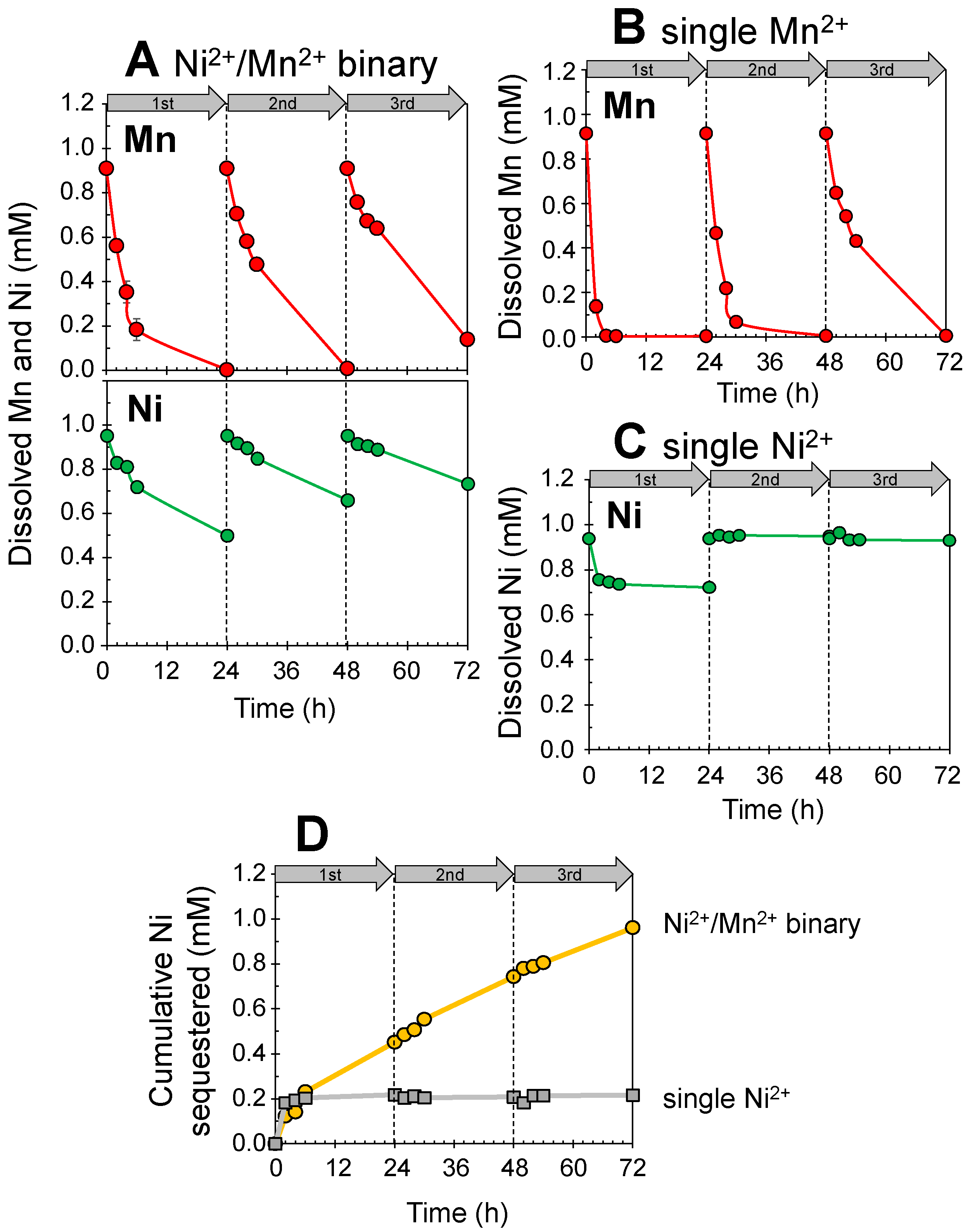
Repeated-treatment experiments were conducted in Ni2+/Mn2+ binary solutions containing 0.9 mM Ni(NO3)2 and 0.9 mM Mn(NO3)2 at pH 7.0 (100 mM HEPES). The experiments showed that newly formed BMOs (1 mM as Mn) can sequester both Mn2+ and Ni2+ (Figure 1A), as previously reported [31]. The sequestration efficiencies for Mn2+ were >99%, 98.9 ± 1.2%, and 84.5 ± 3.7% in the first, second, and third treatments, respectively, with a cumulative sequestration efficiency of 94.4 ± 1.6% (Figure 1A and Table S1). However, the presence of Ni2+ lowered the kinetic rate for Mn2+ sequestration, resulting in a lower Mn2+ sequestration efficiency in Ni2+/Mn2+ binary solutions (Figure 1A) compared to that in single Mn2+ solutions (Figure 1B and Table S2). Dissolved Ni2+ was more readily sequestered, with efficiencies of 47.5 ± 1.8%, 30.6 ± 2.0%, and 22.8 ± 1.0% (cumulative efficiency of 33.6 ± 1.5%), in Ni2+/Mn2+ binary solutions than in single Ni2+ solutions, with 23.2 ± 0.2%, −1.1 ± 0.6%, and 0.9 ± 0.8% (cumulative efficiency of 7.7 ± 0.5%; Figure 1C and Table S3). These results demonstrate that continuous Ni2+ sequestration by newly formed BMOs requires an exogenous Mn2+ supplement, as shown in Figure 1D. The fungal mycelia grown without Mn2+ supplementation had a significantly lower Ni2+ sequestration capacity at ~0.02 mM and pH 7.0, and, consequently, a negligible contribution to Ni2+ sequestration [31].
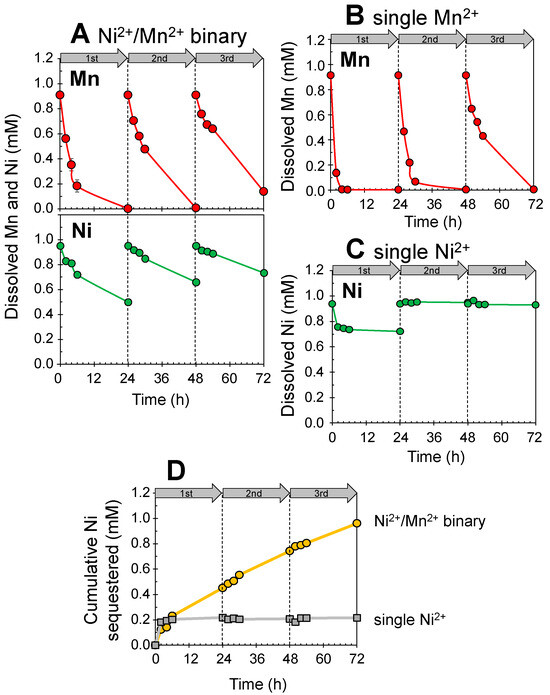
Figure 1.
Repeated-treatment experiments of newly formed biogenic manganese oxides (BMOs; 1 mM as Mn) under aerobic conditions at pH 7.0 (100 mM HEPES buffer) in (A) Ni(NO3)2 + Mn(NO3)2 binary, (B) single Mn(NO3)2, and (C) single Ni(NO3)2 solution systems. (D) Cumulative concentrations of sequestered Ni are plotted as a function of treatment time. The initial concentrations of Ni(NO3)2 and Mn(NO3)2 were 0.9 mM. Bathing solutions were renewed every 24 h. Data are the mean ± standard deviation (n = 4).
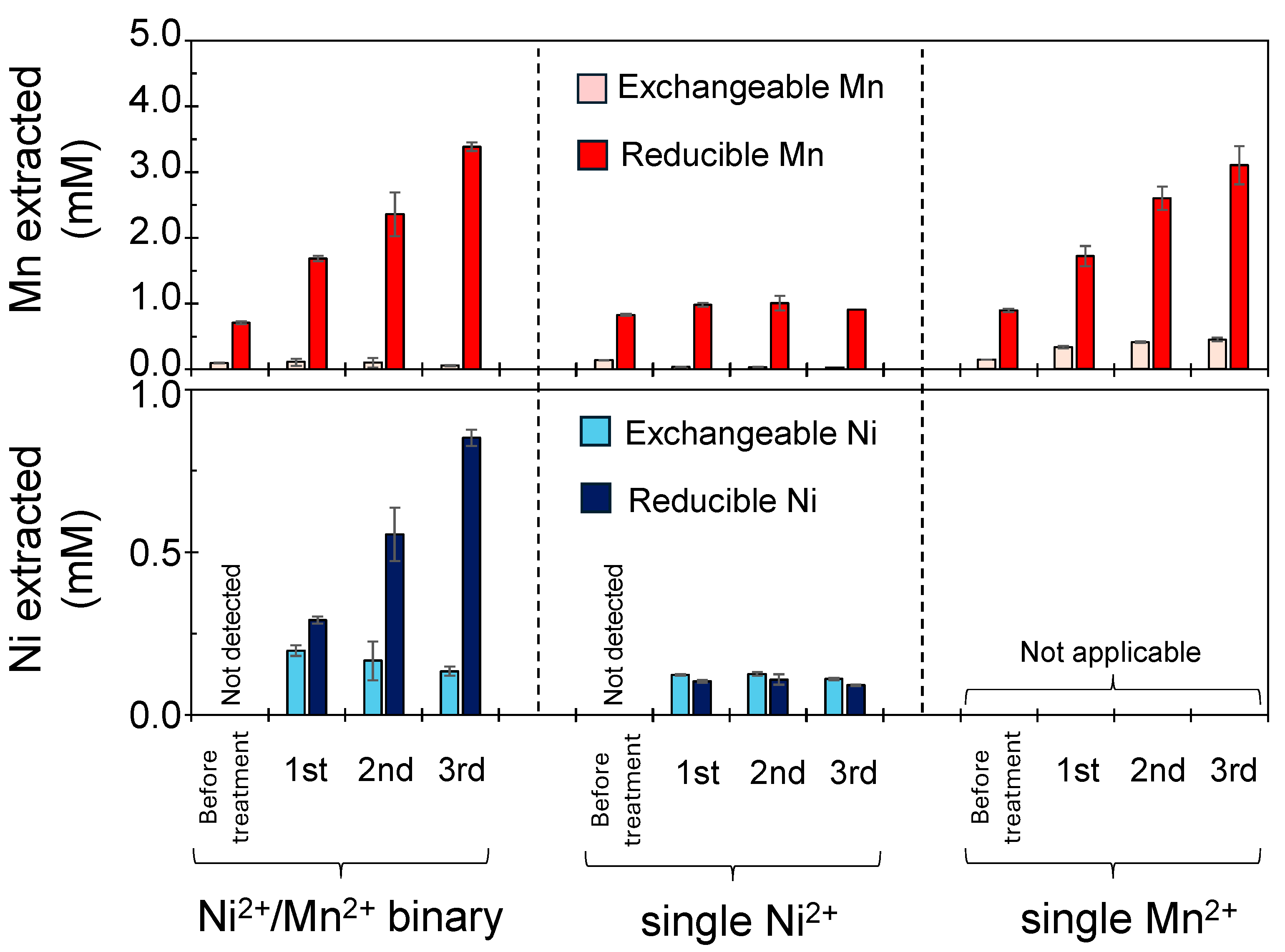
The two-step extraction procedure for the BMO phases revealed that solid Mn contained mostly reducible Mn in all solution systems (Figure 2). Newly formed BMO progressively increased the amounts of reducible Mn in the presence of exogenous Mn2+. (Figure 2). When heated (enzyme-inactivated) BMOs were used in repeated-treatment experiments, Mn sequestration was scarce (Table S4). This suggests that exogenously added Mn2+ was precipitated through an enzymatic oxidation process by newly formed BMOs. In Ni2+/Mn2+ binary solutions, the amount of irreversibly sorbed Ni2+ (reducible Mn) increased with the number of repeated treatments and accounted for 81.4 ± 0.2% in the solid Ni after the third treatment (Figure 2 and Table S1). In contrast, exchangeable Ni2+ dominated sequestered Ni for single Ni2+ solution systems (Figure 2 and Table S2). Hence, it is likely that Ni2+ is incorporated into the precipitate during ongoing Mn oxide formation.
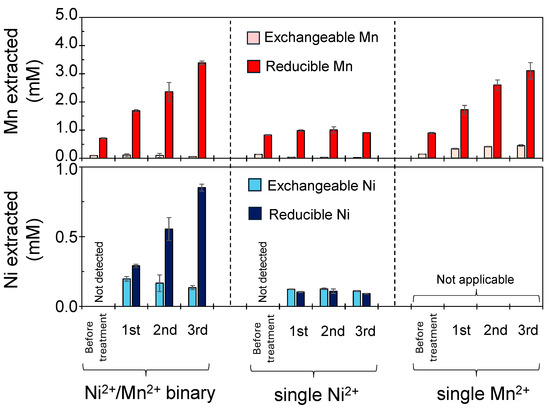
Figure 2.
Two-step extraction of biogenic manganese oxides (BMOs) during repeated-treatment experiments. Mn (top) and Ni (bottom) in exchangeable and reducible phases in the resultant BMOs for the Ni2+/Mn2+ binary, single Ni2+, and single Mn2+ solution systems. The experimental conditions were the same as those in Figure 1. Bathing solutions were renewed every 24 h. Data are the mean ± standard deviation (n = 4).
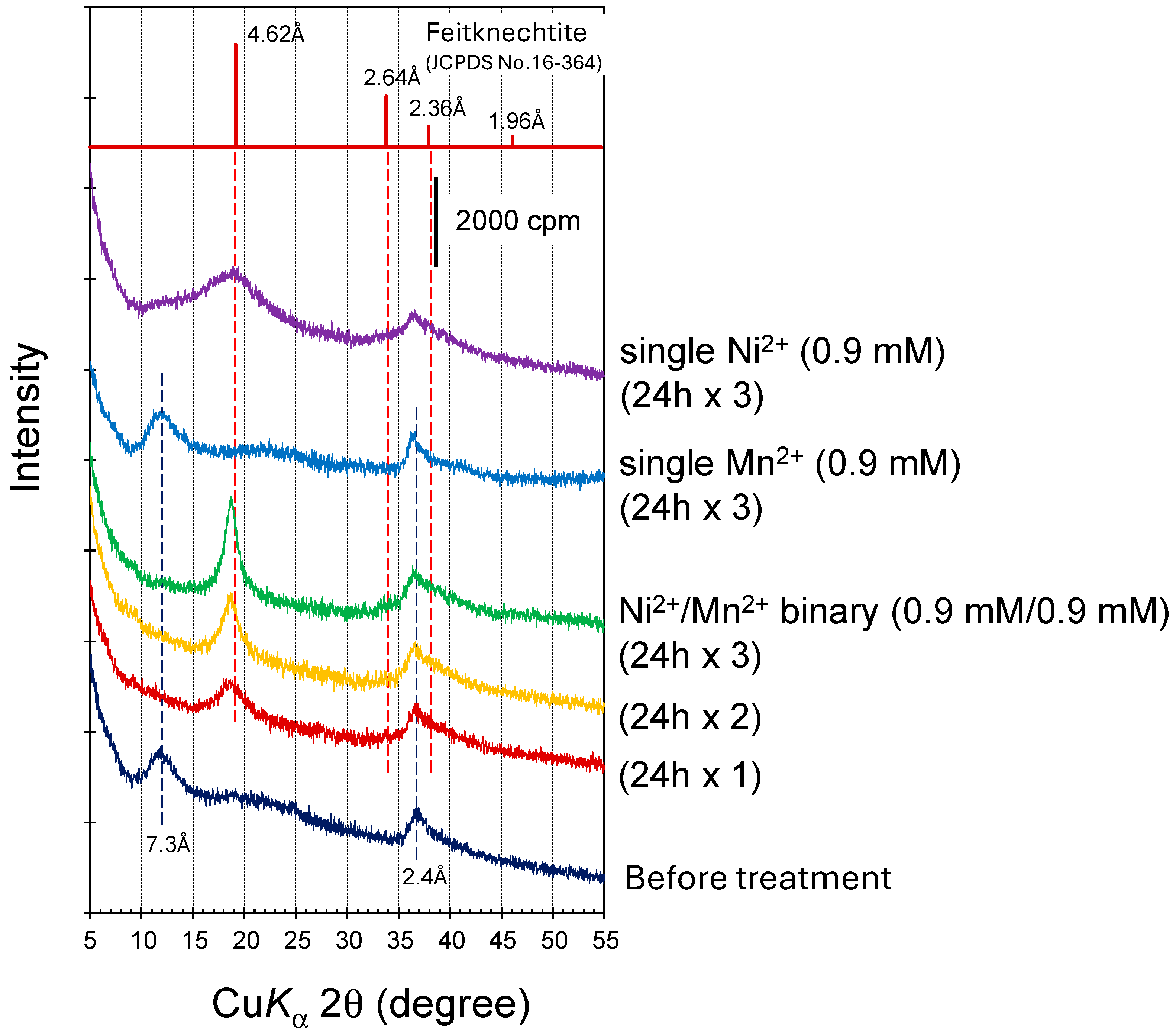
XRD experiments were conducted on newly formed BMOs that were treated in the Ni2+/Mn2+ binary solutions, and it was found that there was a clear mineralogical alteration (Figure 3). The newly formed BMOs were primarily layered analogously to vernadite, which is a nanostructured and turbostratic variety of birnessite [27]. The XRD peaks of the primary BMOs at approximately 7.3 and 2.4 Å (Figure 3 “Before treatment”) were identified as the 001 basal reflection of vernadite and the 11,20 diffraction band of the C-centered two-dimensional unit cell, respectively [27]. Repeated treatments of the newly formed BMOs in single Mn2+ solutions (0.9 mM Mn2+, 24 h, three times) did not alter the XRD pattern (Figure 3), indicating that enzymatic oxidation of Mn2+ by the newly formed BMOs still favored the mineralization of turbostratic birnessite in single Mn2+ solutions.
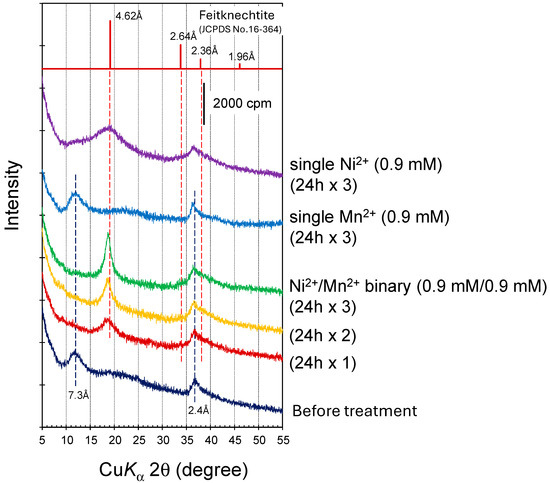
Figure 3.
Powder X-ray diffraction patterns of newly formed biogenic manganese oxides (BMOs; 1 mM as Mn) before and after repeated-treatment experiments in the Ni2+/Mn2+ binary (after 1st, 2nd, and 3rd treatments), single Mn2+ (after 3rd treatment), and single Ni2+ (after 3rd treatment) solution systems under aerobic conditions at pH 7.0 (100 mM HEPES buffer). The experimental conditions were the same to those in Figure 1.
In contrast, XRD measurements for the resultant BMOs treated repeatedly in Ni2+/Mn2+ binary solutions showed prominent peaks at approximately 4.6 Å, with the intensity increasing as the treatment times increased (Figure 3). This XRD pattern resembled that of feitknechitite (β-MnIIIOOH, JCPDS No. 16-364; Figure 3) [32,33,34]. Lefkowitz and Elzinga [34,35] demonstrated the reductive transformation of chemically synthesized birnessite into secondary feitknechitite as a metastable phase when birnessite is reacted with solutions containing Mn2+ under anaerobic conditions at pH > 7. When Ni2+ is present, the secondary feitknechitite thus formed readily incorporates dissolved Ni(II) at pH 7.5, and consequently significantly affects the speciation and solubility of Ni(II) [34], indicating that feitknechitite crystallization favors Ni(II) incorporation above pH ~7.0, possibly through isomorphic substitution. In our experiments, the XRD pattern of feitknechitite did not appear for the resultant BMOs in the single Mn2+ solution system at pH 7.0 (Figure 3), where enzymatic Mn(II) oxidation readily progressed (as seen in Figure 1B). Consequently, we can surmise that coexisting Ni2+ is a prerequisite for feitknechitite formation in our experimental conditions. Manganese oxides with a feitknechitite XRD pattern thus formed in the Ni2+/Mn2+ binary solution system are most probably a Ni(II)-substituted feitknechitite [34,36], which may be attributed to Ni2+ sequestration concurrent with enzymatic Mn(II) oxidation by newly formed BMOs.
3.2. Mineralization of Ni(II)-Incorporated Manganese Oxide Phases in Ni2+/Mn2+ Binary Solution Systems
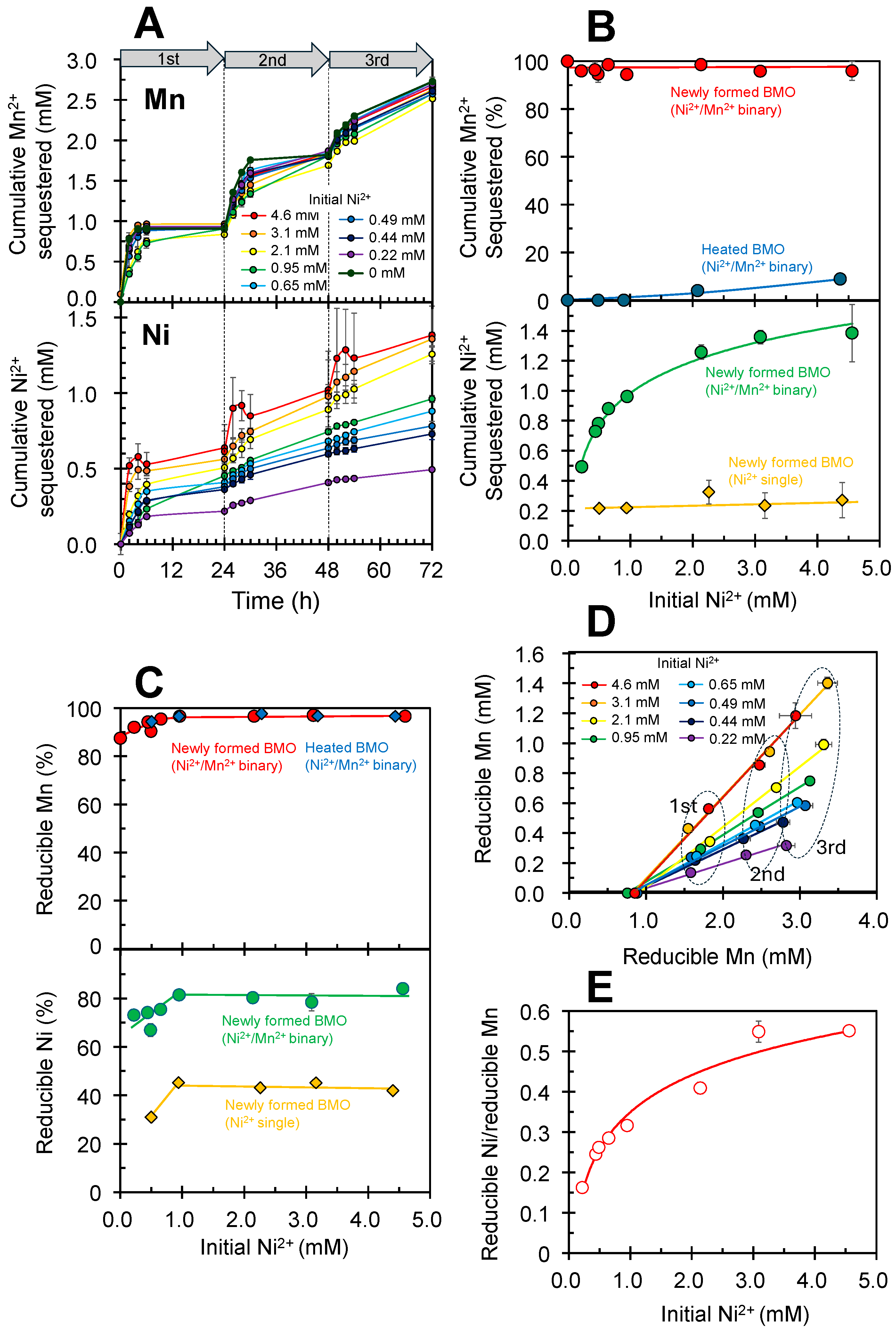
Repeated-treatment experiments were conducted on newly formed BMOs in Ni2+/Mn2+ binary solutions with different ratios to investigate the simultaneous sequestration of Ni2+ and Mn2+, and the resultant mineralogical alteration of BMO phases. The experiments involved binary solutions with 0.22–4.6 mM Ni(NO3)2 and 0.9 mM Mn(NO3)2. The results showed that the newly formed BMOs efficiently sequestered exogenous Mn2+ with cumulative efficiencies of over 94.4% (Figure 4B and Table S1). Most of the Mn2+ was precipitated as reducible (oxidized) Mn, with a percentage of more than 90.3% (Figure 4C and Table S1). Heated BMOs had less ability to precipitate Mn2+ (Figure 4B and Table S4), indicating that enzymatic Mn(II) oxidation was responsible for the efficient Mn sequestration by newly formed BMOs. In addition, dissolved Ni2+ was also sequestered concurrently with Mn(II) oxidation (Figure 4A). The amounts of Ni2+ sequestered increased as the initial Ni2+ concentration increased (Figure 4B). In solutions with only Ni2+, the cumulative Ni2+ sequestered remained near constant at ~0.2 mM (Figure 4B) throughout the initial Ni2+ concentrations, suggesting that the sorption of Ni2+ on preformed (primary) BMOs reached saturation and that continuous Mn(II) oxidation was closely linked with Ni2+ sequestration.
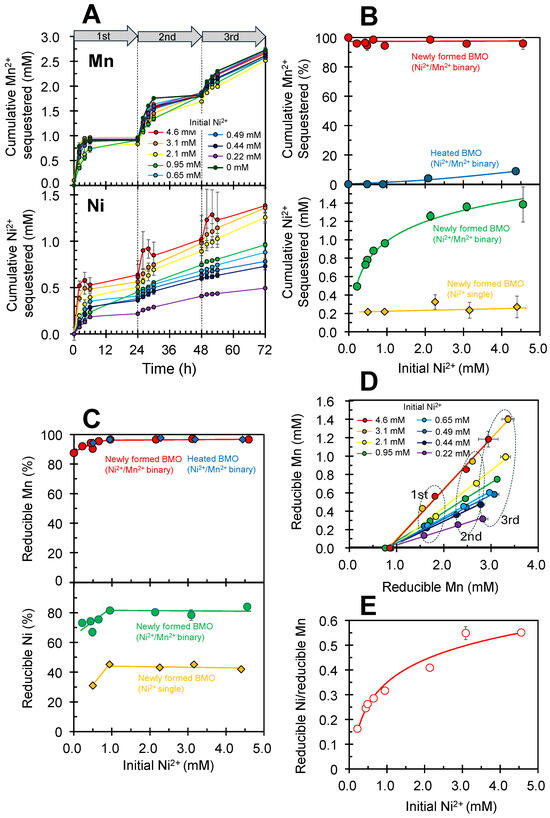
Figure 4.
Repeated-treatment experiments of newly formed biogenic manganese oxides (BMOs; 1 mM as Mn) under aerobic conditions at pH 7.0 (100 mM HEPES buffer) in (A) Ni(NO3)2 (0–4.6 mM) + Mn(NO3)2 (0.9 mM) binary solutions. (A) Cumulative concentrations of sequestered Mn (top) and Ni (bottom) are plotted as a function of treatment time. (B) Sequestration efficiencies (cumulative) of Mn (top) and Ni (bottom) are plotted as a function of initial Ni2+ concentrations. (C) Reducible Mn (top) and Ni (bottom) in the resultant BMO phases after repeated-treatment experiments (plotted as a function of initial Ni2+ concentrations). (D) Linear relationships of reducible Ni and Mn in the resultant BMO phases during repeated-treatment experiments. (E) Molar ratios of reduced Ni relative to reducible Mn in the resultant BMO phases, plotted as a function of initial Ni2+ concentrations. In (B,C), the data for heated BMOs in Ni2+/Mn2+ binary systems and newly formed BMOs in single Ni2+ systems are also plotted for comparison. Data are the mean ± standard deviation (n = 3 or 4).
The level of Ni2+ sequestration irreversibility (extracted as reducible Ni) in the Ni2+/Mn2+ binary solution system was significantly higher (60.9–84.0%; Figure 4C and Table S1) than the single Ni2+ sorption on preformed BMOs (30.9–45.2%; Figure 4C and Table S3). The reducible Ni was found to have a linear correlation with reducible Mn throughout the repeated-treatment experiments (R2 > 0.98; Figure 4D). By analyzing the slope of each linear correlation equation (Figure 4D), the molar ratios of reducible Ni relative to reducible Mn were plotted as a function of initial Ni2+ concentrations in Figure 4E. These ratios depended on the initial Ni2+ concentrations and tended to reach saturation at a Ni/Mn molar ratio of about 0.55 (Figure 4E). This indicates that irreversible Ni2+ incorporation occurred concurrently with precipitation of the Mn oxide phase.
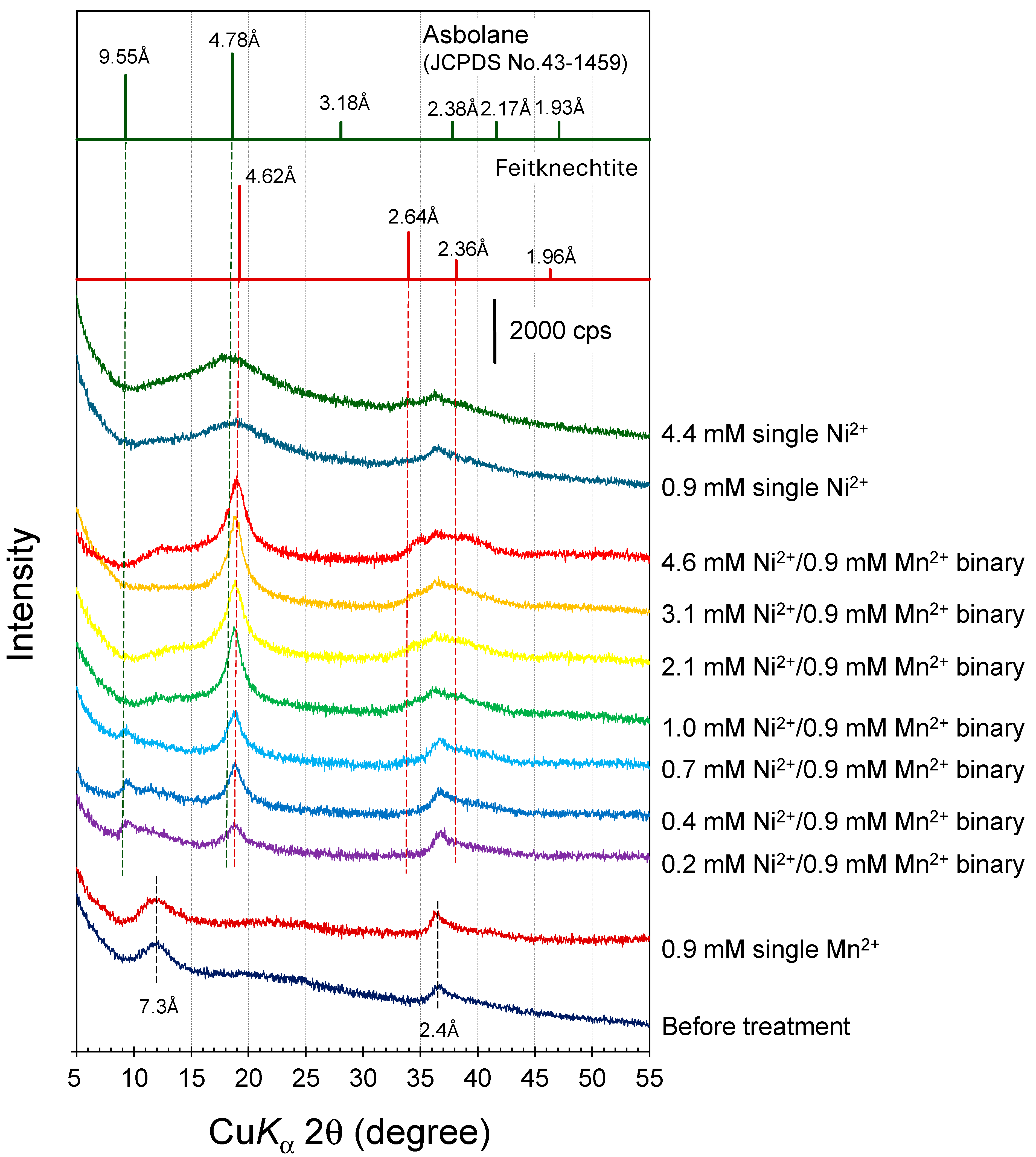
XRD peaks at approximately 4.6 Å were observed in newly formed BMOs for all Ni2+/Mn2+ binary solution systems, which were tentatively assigned to Ni(II)-substituted feitknechitite (refer to Section 3.1; Figure 5). The intensity of the peaks increased with the increase in irreversible Ni2+ incorporation (Figure 4E and Figure 5), indicating the crystallographic development of the feitknechitite structure through a simultaneous Ni2+ and Mn2+ sequestration process. When the initial Ni2+ concentrations were below 0.7 mM, an additional XRD peak appeared at around 9.5 Å. This XRD pattern closely resembled that of asbolane (JPCDS 43-1459, Figure 5). Asbolane is thought to consist of MnO6 octahedra layers alternating with a poorly structured “island” of Co and Ni oxides [32]. Such an asbolane-type structure would be formed as an intermediate between turbostratic birnessite (no Ni2+ addition) and Ni(II)-substituted feitknechitite (Ni2+ > 1.0 mM) structures when lower Ni2+ loadings (<0.7 mM Ni2+ relative to 0.9 mM Mn2+). The single Ni2+ solution systems (Figure 5), however, did not show any distinguishable XRD peaks even at the highest concentration of Ni2+ at 4.4 mM, and a broad hump at around 4.6 Å was observed. This result indicates that repeated treatments of the ordinary BMO phase (turbostratic birnessite) with single Ni2+ solutions cannot bring about direct rearrangement in a well-defined feitknechitite structure under the experimental conditions used in this study.
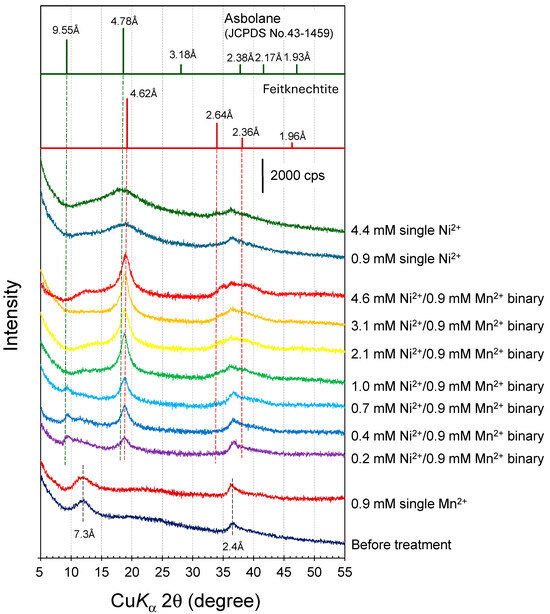
Figure 5.
Powder X-ray diffraction patterns of newly formed biogenic manganese oxides (BMOs; 1 mM as Mn) before and after repeated-treatment experiments in the Ni2+/Mn2+ binary (0.2–4.6 mM Ni2+ and 0.9 mM Mn2+), single Mn2+ (0.9 mM), and single Ni2+ (0.9 and 4.4 mM) systems under aerobic conditions at pH 7.0 (100 mM HEPES buffer). The treatment was in triplicate with renewal of bathing solutions every 24 h.
3.3. pH Dependence of Sequestration Efficiency in Ni2+/Mn2+ Binary Solution Systems
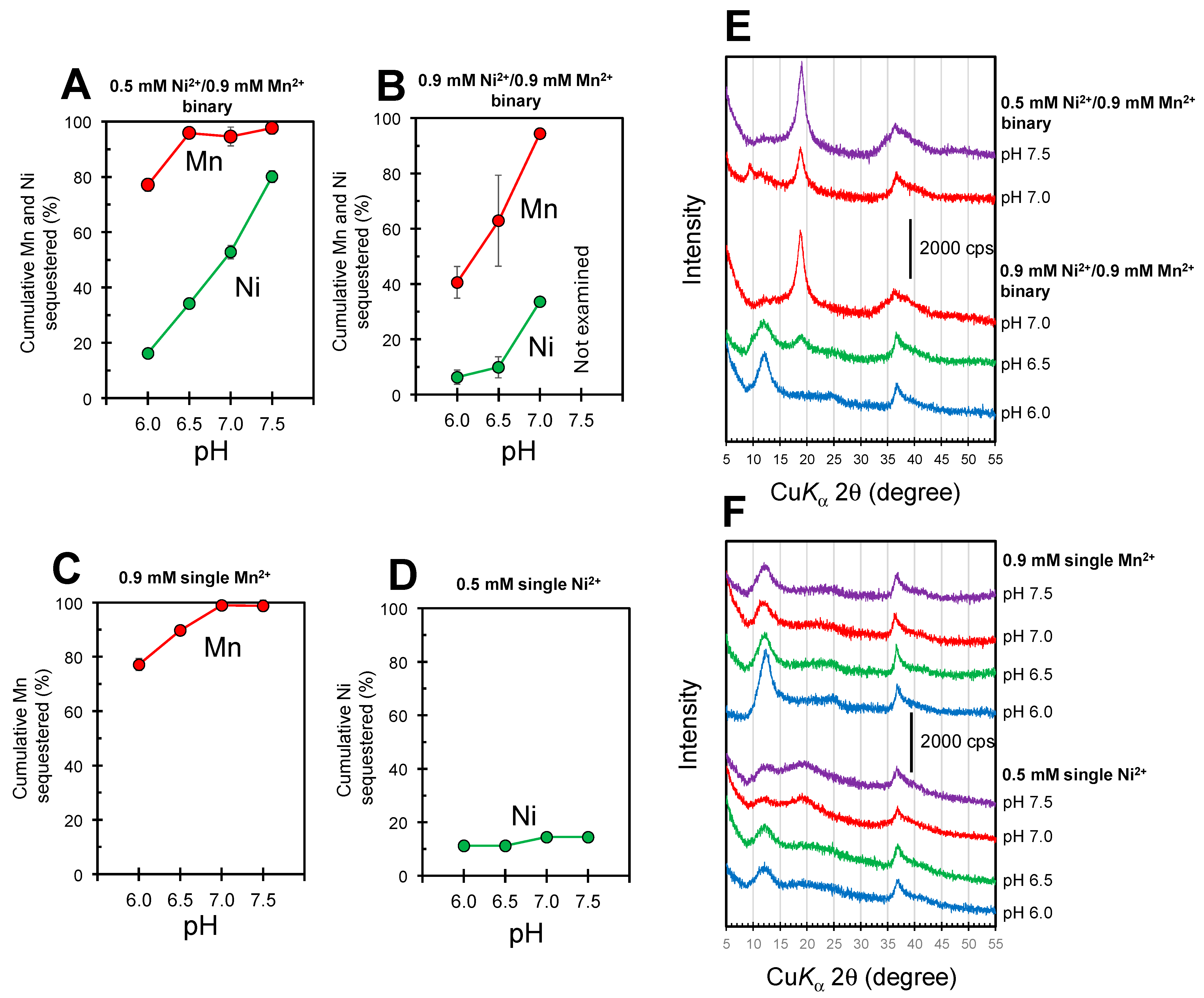
Repeated-treatment experiments were conducted to determine the pH dependence of the sequestration efficiency of newly formed BMOs and how it relates to the mineralogical characteristics of the resultant solid phases in Ni2+/Mn2+ binary, single Mn2+, and single Ni2+ solutions at pH 6.0–7.5. In 0.5 mM Ni2+ and 0.9 mM Mn2+ binary solutions, the sequestration affinities for Ni2+ showed a strong pH dependence. Cumulative sequestration efficiencies of 16.2 ± 1.7, 34.2 ± 0.8, 52.8 ± 2.4, and 80.1 ± 2.2% were observed at pH 6.0, 6.5, 7.0, and 7.5, respectively. In contrast, almost quantitative sequestrations were observed for Mn2+ at pH 6.5–7.5 (>94.6 ± 2.4%) with an efficiency of 77.1 ± 2.3% at pH 6.0 (Figure 6A). The resultant solid phase showed a more intense XRD peak at approximately 4.6 Å at pH 7.5 than pH 7.0 (Figure 6E), demonstrating that Ni(II)-substituted feitknechitite formation is the most probable causative factor for efficient Ni2+ sequestration. It is noteworthy that in Ni2+/Mn2+ binary solutions, even with higher Ni2+ loading (0.9 mM), the resultant solid phases displayed mainly the XRD pattern for turbostratic birnessite at pH 6.0 and 6.5 (Figure 6E), at which small amounts of Ni2+ were sequestered (Figure 6A,B, Table S5). These results demonstrate that the pH of the solution is a crucial factor controlling the mineralogical characteristics of the resultant solid phases. This, in turn, affects the simultaneous sequestration efficiencies in Ni2+/Mn2+ binary solution systems. These findings may be related to the results found by Lefkowitz and Elzinga [34]. They demonstrated that the transformation of birnessite into Ni(II)-substituted feitknechitite, and subsequent Ni2+ sequestration, occurs easily in anaerobic Ni2+/Mn2+ binary solutions through interfacial Mn(II)-Mn(IV) comproportionation [34]. However, this reaction only takes place at pH 7.5 and not at pH 6.5 [34]. Therefore, the crystal growth of Ni(II)-substituted feitknechitite strictly favors values above pH 7. The pH dependence of sequestration for single Mn2+ (77.2–>99% for 0.5 mM Mn2+; Table S2) and single Ni2+ (11.2–14.5% for 0.5 mM Ni2+; Table S6) solution systems was not pronounced (Figure 6C,D) and, subsequently, their XRD patterns were analogized to that of the primary BMO phase (Figure 6F).
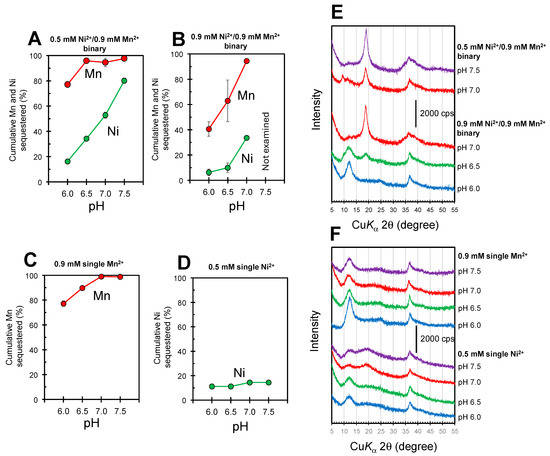
Figure 6.
Sequestration efficiencies (cumulative) of Mn and Ni by newly formed biogenic manganese oxides (BMOs; 1 mM as Mn) under aerobic conditions at pH 6.0, 6.5 (100 mM MES buffer), 7.0, and 7.5 (100 mM HEPES buffer) in (A,B) Ni2+/Mn2+ binary (0.5 or 0.9 mM Ni2+, and 0.9 mM Mn2+), (C) single Mn2+ (0.9 mM), and (D) single Ni2+ (0.5 mM) systems. Powder X-ray diffraction patterns of the resultant BMO phases in (E) Ni2+/Mn2+ binary (0.5 or 0.9 mM Ni2+, and 0.9 mM Mn2+), (F) single Mn2+ (0.9 mM), and single Ni2+ (0.5 mM) systems. The treatment was in triplicate with renewal of bathing solutions every 24 h. Data in (A–D) are the mean ± standard deviation (n = 4).
3.4. Abiotic Mn(II) Oxidation in Ni2+/Mn2+ Binary Solution Systems
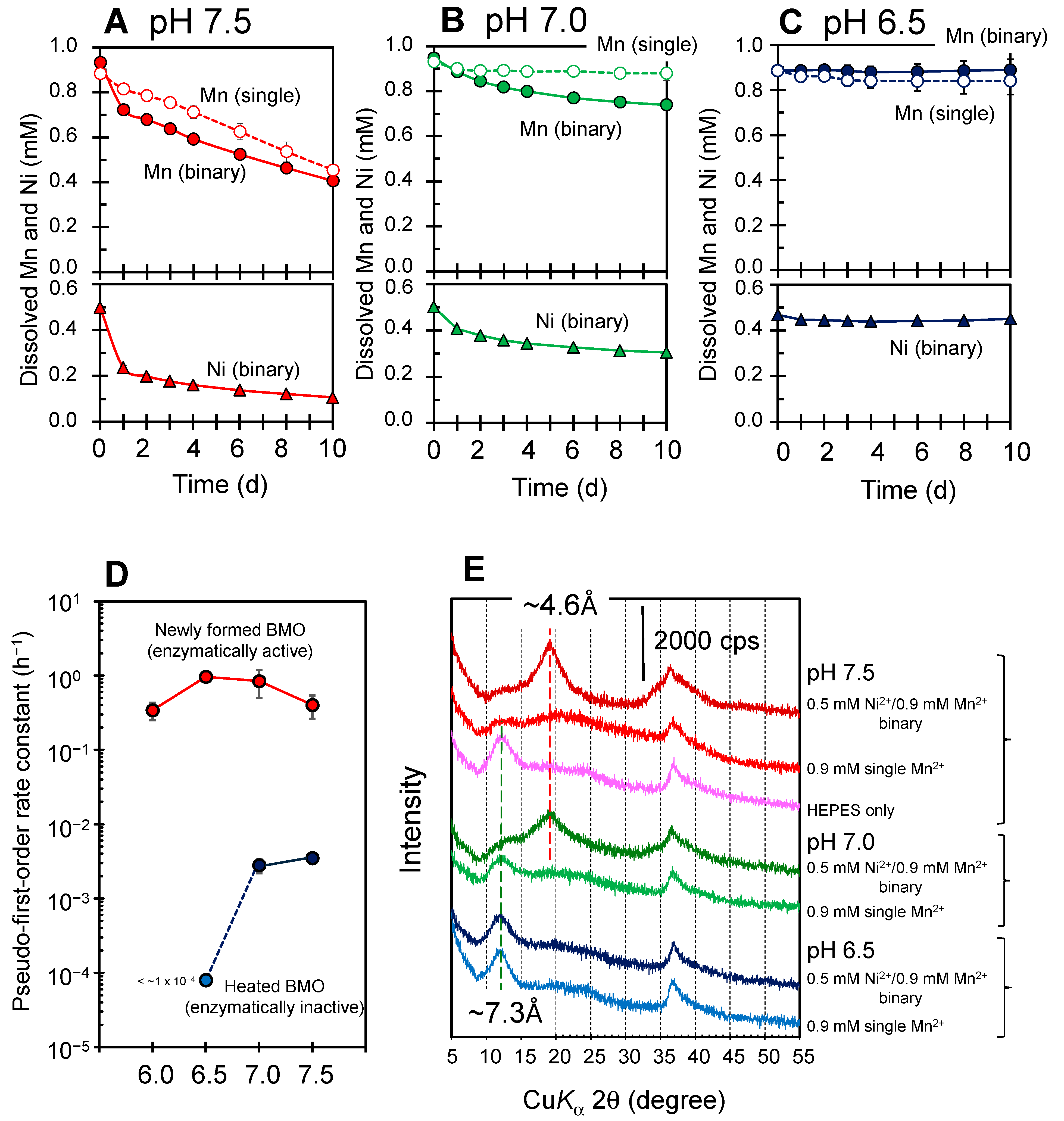
To clarify the contribution of enzymatic and abiotic (auto-catalytic) oxidation processes to Mn(II) sequestration on BMO surfaces, we measured the kinetics of abiotic Mn(II) oxidation in Ni2+/Mn2+ binary and single Mn2+ solution systems using heated (enzymatic-inactivated) BMOs at pH 6.5, 7.0, and 7.5. At pH 7.5, dissolved Mn2+ and Ni2+ concentrations gradually decreased with reaction times both in the binary and single systems (Figure 7A). The sequestration efficiencies were 78.6 ± 1.8% for 0.5 mM Ni2+ and 56.4 ± 1.8% for 0.9 mM Mn2+ after 10 days in the Ni2+/Mn2+ binary solution systems (Figure 7A). The pseudo-first-order rate constant for Mn2+ sequestration of (3.5 ± 0.2) × 10−3 h−1 (0–10 d) was two orders of magnitude lower than that by newly formed BMOs of (4.0 ± 1.4) × 10−1 h−1 (0–6 h; Table S5). The sequestration efficiency for Mn2+ in the single Mn2+ solution was 48.5 ± 5.7%, which was slightly lower than that in the binary system. At pH 7.0, 21.9 ± 1.8% of 0.9 mM Mn2+ and 39.4 ± 1.2% of 0.5 mM Ni2+ were sequestered for 10 d (Figure 7B). During this reaction time, the pseudo-first-order rate constant for Mn2+ sequestration was deduced to be (1.0 ± 0.1) × 10−3 h−1 (0–10 d), which was also two orders of magnitude lower than that by newly formed BMOs of (8.4 ± 3.4) × 10−1 h−1 (0–6 h; Figure 4A and Table S1). Only 5.4 ± 4.0% of 0.9 mM Mn2+ was sequestered in the single Mn2+ system (Figure 7B). Therefore, the presence of Ni2+ exhibited synergistic effects on Mn2+ sequestration both at pH 7.5 and 7.0. XRD patterns of the resultant solid phases at pH 7.0 and 7.5 displayed a peak at around 4.6 Å (Figure 7E), which can most likely be assigned to Ni(II)-substituted feitknechitite, because of the simultaneous Ni2+ sequestration. In contrast, such a peak was not observed in the single Mn2+ solution systems (Figure 7E), even at pH 7.5, where Mn2+ was significantly sequestered (Figure 7A), and consequently, ordinary feitknechitite was scarcely formed in single Mn2+ solutions even at pH 7.5, as was observed for newly formed BMOs in the single Mn2+ solution systems (Figure 6F). No significant sequestration for Ni2+ or Mn2+ was observed at pH 6.5 for the binary and single systems (Figure 7C), where the XRD patterns for turbostratic birnessite were maintained despite the presence of Ni2+ (Figure 7E). The kinetic rate for sequestrations by heated BMOs was estimated to be <~1 × 10⁻⁴ h−1(0–10 d) and, subsequently, much lower than those by newly formed BMOs (9.6 ± 0.5 × 10⁻¹ h−1) (0–6 h; Figure 7D). These results demonstrated that the enzymatic Mn(II)-oxidizing activity has a crucial role in controlling the precipitation kinetics of Ni2+-bearing Mn oxides and subsequently Ni2+ sequestration in environments under circumneutral pH conditions.
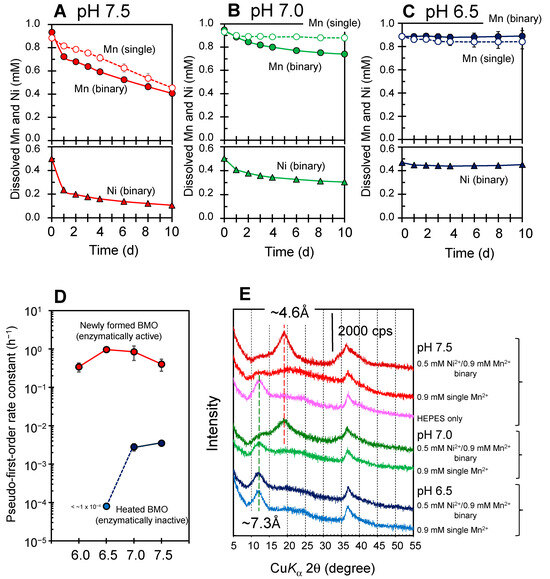
Figure 7.
Changes in dissolved Mn2+ and Ni2+ concentrations in long-term single-treatment experiments (for 10 days) of heated biogenic manganese oxides (BMOs; 1 mM as Mn) under aerobic conditions at (A) pH 7.5 (100 mM HEPES buffer), (B) pH 7.0 (100 mM HEPES buffer), and (C) pH 6.5 (100 mM MES buffer) in Ni2+/Mn2+ binary (0.5 mM Ni2+, and 0.9 mM Mn2+) and single Mn2+ (0.9 mM) systems. (D) Pseudo-first-order rate constants for Mn2+ sequestration by newly formed and heated BMOs (1 mM as Mn) in 0.5 mM Ni2+/0.9 mM Mn2+ binary solution systems at pH 6.0–7.5. (E) Powder X-ray diffraction patterns of the resultant BMO phases. Data in (A–D) are the mean ± standard deviation (n = 3 or 4).
4. Conclusions
The results of this study indicate that fungal BMOs can effectively remove Ni2+ and Mn2+ from binary solution systems at pH 7.0–7.5. The newly formed BMOs, which retain Mn(II) oxidizing activity, significantly enhance the kinetic rates for Mn(II) oxidation and subsequent Ni2+ incorporation. X-ray diffraction measurements reveal that the sequestration efficiencies closely relate to the mineralogical characteristics of the resultant solid phases. The ongoing formation of Ni(II)-substituted feitknechitite most likely controls sequestration efficiency in binary solution systems at pH values above 7.0. The molar ratio of irreversibly sequestrated Ni2+ relative to reducible Mn depends on the initial Ni2+ concentration and reaches saturation at Ni/Mn of ~0.55. In contrast, pH conditions below 6.5 are not favorable for the formation of Ni2+-substituted feitknechitite, either through enzymatic or abiotic (auto-catalytic) Mn(II) oxidation. The pseudo-first-order rate constants of the enzymatically active BMOs are two orders of magnitude higher than those of the inactivated BMOs. Therefore, the enzymatic active BMO is considered a valuable tool to recover (remove) Ni2+ and Mn2+ swiftly from contaminated water. The findings of this study strongly infer biological (fungal and bacterial) contributions to the mineralization process of Ni2+-bearing Mn oxide phases through enzymatic formation in natural environments.
Supplementary Materials
The following supporting information can be downloaded at: https://www.mdpi.com/article/10.3390/min14040330/s1, Table S1: Summary of repeated-treatment experiments for newly formed biogenic manganese oxides (BMOs) in Ni2+/Mn2+ binary solutions under aerobic conditions at pH 7.0; Table S2: Summary of repeated-treatment experiments for newly formed and heated biogenic manganese oxides (BMOs) in single Mn2+ solutions under aerobic conditions at pH 6.0, 6.5, 7.0, and 7.5; Table S3: Summary of repeated-treatment experiments for heated biogenic manganese oxides (BMOs) in single Ni2+ solutions under aerobic conditions at pH 7.0; Table S4: Summary of repeated-treatment experiments for heated biogenic manganese oxides (BMOs) in Ni2+/Mn2+ binary solutions under aerobic conditions at pH 7.0; Table S5: Summary of repeated-treatment experiments for newly formed and heated biogenic manganese oxides (BMOs) in Ni2+/Mn2+ binary solutions under aerobic conditions at pH 6.0, 6.5, and 7.5; Table S6: Summary of repeated-treatment experiments for newly formed biogenic manganese oxides (BMOs) in single Ni2+ solutions under aerobic conditions at pH 6.0, 6.5, and 7.5.
Author Contributions
Conceptualization, Y.T., H.K. and M.T.; methodology, Y.T., H.K., M.T. and N.M.; validation, Y.T., K.U. and N.M.; investigation, Y.T., H.K., M.T., K.U., O.G. and N.M.; data curation, Y.T., H.K., M.T. and K.U.; writing—original draft preparation, Y.T. and H.K.; writing—review and editing, K.U., O.G. and N.M.; visualization, Y.T., H.K. and M.T.; supervision, Y.T.; project administration, Y.T.; funding acquisition, Y.T. All authors have read and agreed to the published version of the manuscript.
Funding
This research was funded by the Japan Society for the Promotion of Science, JSPS KAKENHI, grant no. 20K12222 (Y.T.).
Data Availability Statement
Data are contained within the article and Supplementary Materials.
Conflicts of Interest
The authors declare no conflicts of interest.
References
- Reck, B.K.; Müller, D.B.; Rostkowski, K.; Graedel, T.E. Anthropogenic Nickel Cycle: Insights into Use, Trade, and Recycling. Environ. Sci. Technol. 2008, 42, 3394–3400. [Google Scholar] [CrossRef] [PubMed]
- Yugo, M.; Soler, A. Outlook for battery raw materials (literature review). Concawe Rev. 2019, 28, 25–39. [Google Scholar]
- Shahzad, B.; Tanveer, M.; Rehman, A.; Cheema, S.A.; Fahad, S.; Rehman, S.; Sharma, A. Nickel; whether toxic or essential for plants and environment—A review. Plant Physiol. Biochem. 2018, 132, 641–651. [Google Scholar] [CrossRef] [PubMed]
- Buxton, S.; Garman, E.; Heim, K.E.; Lyons-Darden, T.; Schlekat, C.E.; Taylor, M.D.; Oller, A.R. Concise Review of Nickel Human Health Toxicology and Ecotoxicology. Inorganics 2019, 7, 89. [Google Scholar] [CrossRef]
- Kumar, A.; Jigyasu, D.K.; Kumar, A.; Subrahmanyam, G.; Mondal, R.; Shabnam, A.A.; Cabral-Pinto, M.M.S.; Malyan, S.K.; Chaturvedi, A.K.; Gupta, D.K.; et al. Nickel in terrestrial biota: Comprehensive review on contamination, toxicity, tolerance and its remediation approaches. Chemosphere 2021, 275, 129996. [Google Scholar] [CrossRef] [PubMed]
- Begum, W.; Rai, S.; Banerjee, S.; Bhattacharjee, S.; Mondal, M.H.; Bhattarai, A.; Saha, B. A comprehensive review on the sources, essentiality and toxicological profile of nickel. RSC Adv. 2022, 12, 9139–9153. [Google Scholar] [CrossRef] [PubMed]
- Saeed, M.U.; Hussain, N.; Sumrin, A.; Shahbaz, A.; Noor, S.; Bilal, M.; Aleya, L.; Iqbal, H.M.N. Microbial bioremediation strategies with wastewater treatment potentialities—A review. Sci. Total Environ. 2022, 818, 151754. [Google Scholar] [CrossRef] [PubMed]
- Alori, E.T.; Gabasawa, A.I.; Elenwo, C.E.; Agbeyegbe, O.O. Bioremediation techniques as affected by limiting factors in soil environment. Front. Soil Sci. 2022, 2, 937186. [Google Scholar] [CrossRef]
- Kour, D.; Khan, S.S.; Kour, H.; Kaur, T.; Devi, R.; Rai, P.K.; Judy, C.; McQuestion, C.; Bianchi, A.; Spells, S.; et al. Microbe-mediated bioremediation: Current research and future challenges. J. Appl. Biol. Biotechnol. 2022, 10, 6–24. [Google Scholar] [CrossRef]
- Tufail, M.A.; Iltaf, J.; Zaheer, T.; Tariq, L.; Amir, M.B.; Fatima, R.; Asbat, A.; Kabeer, T.; Fahad, M.; Naeem, H.; et al. Recent advances in bioremediation of heavy metals and persistent organic pollutants: A review. Sci. Total Environ. 2022, 850, 157961. [Google Scholar] [CrossRef]
- Li, X.; Feng, C.; Lei, M.; Luo, K.; Wang, L.; Liu, R.; Li, Y.; Hu, Y. Bioremediation of organic/heavy metal contaminants by mixed cultures of microorganisms: A review. Open Chem. 2022, 20, 793–807. [Google Scholar] [CrossRef]
- Dutta, D.; Rautela, R.; Gujjala, L.K.S.; Kundu, D.; Sharma, P.; Tembhare, M.; Kumar, S. A review on recovery processes of metals from E-waste: A green perspective. Sci. Total Environ. 2023, 859, 160391. [Google Scholar] [CrossRef] [PubMed]
- Hennebel, T.; De Gusseme, B.; Boon, N.; Verstraete, W. Biogenic metals in advanced water treatment. Trends Biotechnol. 2009, 27, 90–98. [Google Scholar] [CrossRef] [PubMed]
- Ali, I.; Peng, C.; Khan, Z.M.; Naz, I.; Sultan, M.; Ali, M.; Abbasi, I.A.; Islam, T.; Ye, T. Overview of microbes based fabricated biogenic nanoparticles for water and wastewater treatment. J. Environ. Manag. 2019, 230, 128–150. [Google Scholar] [CrossRef]
- Tebo, B.M.; Bargar, J.R.; Clement, B.G.; Dick, G.J.; Murray, K.J.; Parker, D.; Verity, R.; Webb, S.M. Biogenic manganese oxides: Properties and mechanisms of formation. Annu. Rev. Earth Planet. Sci. 2004, 32, 287–328. [Google Scholar] [CrossRef]
- Villalobos, M.; Bargar, J.; Sposito, G. Trace metal retention on biogenic manganese oxide nanoparticles. Elements 2005, 1, 223–226. [Google Scholar] [CrossRef]
- Miyata, N.; Tani, Y.; Sakata, M.; Iwahori, K. Microbial manganese oxide formation and interaction with toxic metal ions. J. Biosci. Bioeng. 2007, 104, 1–8. [Google Scholar] [CrossRef] [PubMed]
- Grangeon, S.; Bataillard, P.; Coussy, S. The nature of manganese oxides in soils and their role as scavengers of trace elements: Implication for soil remediation. In Environmental Soil Remediation and Rehabilitation; van Hullebusch, E.D., Huguenot, D., Pechaud, Y., Simonnot, M.-O., Colombano, S., Eds.; Springer Nature: Cham, Switzerland, 2020; Chapter 7; pp. 399–429. [Google Scholar] [CrossRef]
- Cai, Y.; Yang, K.; Qiu, C.; Bi, Y.; Tian, B.; Bi, X. A Review of manganese-oxidizing bacteria (MnOB): Applications, future concerns, and challenges. Int. J. Environ. Res. Public Health 2023, 20, 1272. [Google Scholar] [CrossRef]
- Huang, Y.; Huangfu, X.; Ma, C.; Liu, Z. Sequestration and oxidation of heavy metals mediated by Mn(II) oxidizing microorganisms in the aquatic environment. Chemosphere 2023, 329, 138594. [Google Scholar] [CrossRef]
- Geszvain, K.; Butterfield, C.; Davis, R.E.; Madison, A.S.; Lee, S.-W.; Parker, D.L.; Soldatova, A.; Spiro, T.G.; Luther, G.W., III; Tebo, B.M. The molecular biogeochemistry of manganese(II) oxidation. Biochem. Soc. Trans. 2012, 40, 1244–1248. [Google Scholar] [CrossRef]
- Miyata, N.; Tani, Y.; Iwahori, K.; Soma, M. Enzymatic formation of manganese oxides by an Acremonium-like hyphomycete fungus, strain KR21-2. FEMS Microbiol. Ecol. 2004, 47, 101–109. [Google Scholar] [CrossRef]
- Miyata, N.; Tani, Y.; Maruo, K.; Tsuno, H.; Sakata, M.; Iwahori, K. Manganese(IV) oxide production by Acremonium sp. strain KR21-2 and extracellular Mn(II) oxidase activity. Appl. Environ. Microbiol. 2006, 72, 6467–6473. [Google Scholar] [CrossRef] [PubMed]
- Chang, J.; Tani, Y.; Naitou, H.; Miyata, N.; Seyama, H. Fungal Mn oxides supporting Mn(II) oxidase activity as effective Mn(II) sequestering materials. Environ. Technol. 2013, 34, 2781–2787. [Google Scholar] [CrossRef]
- Chang, J.; Tani, Y.; Naitou, H.; Miyata, N.; Tojo, F.; Seyama, H. Zn(II) sequestration by fungal biogenic manganese oxide through enzymatic and abiotic processes. Chem. Geol. 2014, 383, 155–163. [Google Scholar] [CrossRef]
- Aoshima, M.; Tani, Y.; Fujita, R.; Tanaka, K.; Miyata, N.; Umezawa, K. Simultaneous sequestration of Co2+ and Mn2+ by fungal manganese oxide through asbolane formation. Minerals 2022, 12, 358. [Google Scholar] [CrossRef]
- Grangeon, S.; Lanson, B.; Miyata, N.; Tani, Y.; Manceau, A. Structure of nanocrystalline phyllomanganates produced by freshwater fungi. Am. Mineral. 2010, 95, 1608–1616. [Google Scholar] [CrossRef]
- Mattigod, S.V.; Rai, D.; Felmy, A.R.; Rao, L. Solubility and solubility product of crystalline Ni(OH)2. J. Solut. Chem. 1997, 26, 391–403. [Google Scholar] [CrossRef]
- Rosson, R.A.; Nealson, K.H. Manganese binding and oxidation by spores of a marine bacillus. J. Bacteriol. 1982, 151, 1027–1034. [Google Scholar] [CrossRef] [PubMed]
- De Vrind, J.P.; de Vrind-de Jong, E.W.; de Voogt, J.W.; Westbroek, P.; Boogerd, F.C.; Rosson, R.A. Manganese oxidation by spores and spore coats of a marine Bacillus species. Appl. Environ. Microbiol. 1986, 52, 1096–1100. [Google Scholar] [CrossRef]
- Chang, J.; Tani, Y.; Naitou, H.; Miyata, N.; Seyama, H.; Tanaka, K. Sequestration of Cd(II) and Ni(II) ions on fungal manganese oxides associated with Mn(II) oxidase activity. Appl. Geochem. 2014, 47, 198–208. [Google Scholar] [CrossRef]
- Burlet, C.; Vanbrabant, Y. Study of the spectro-chemical signatures of cobalt–manganese layered oxides (asbolane–lithiophorite and their intermediates) by Raman spectroscopy. J. Raman Spectrosc. 2015, 46, 941–952. [Google Scholar] [CrossRef]
- Grangeon, S.; Warmont, F.; Tournassat, C.; Lanson, B.; Lanson, M.; Elkaïm, E.; Claret, F. Nucleation and growth of feitknechtite from nanocrystalline vanadate precursor. Eur. J. Mineral. 2017, 29, 767–776. [Google Scholar] [CrossRef]
- Lefkowitz, L.P.; Elzinga, E.J. Structural alteration of hexagonal birnessite by aqueous Mn(II): Impacts on Ni(II) sorption. Chem. Geol. 2017, 466, 524–532. [Google Scholar] [CrossRef]
- Lefkowitz, J.P.; Rouff, A.A.; Elzinga, E.J. Influence of pH on the reductive transformation of birnessite by aqueous Mn(II). Environ. Sci. Technol. 2013, 47, 10364–10371. [Google Scholar] [CrossRef]
- Hem, J.D.; Lind, C.J.; Roberson, C.E. Coprecipitation and redox reactions of manganese oxides with copper and nickel. Geochim. Cosmochim. Acta 1989, 53, 2811–2822. [Google Scholar] [CrossRef]
Disclaimer/Publisher’s Note: The statements, opinions and data contained in all publications are solely those of the individual author(s) and contributor(s) and not of MDPI and/or the editor(s). MDPI and/or the editor(s) disclaim responsibility for any injury to people or property resulting from any ideas, methods, instructions or products referred to in the content. |
© 2024 by the authors. Licensee MDPI, Basel, Switzerland. This article is an open access article distributed under the terms and conditions of the Creative Commons Attribution (CC BY) license (https://creativecommons.org/licenses/by/4.0/).