


Abstract
Advanced oxidation technology of persulfate is a new method to degrade wastewater. As the economy progresses and technology develops, increasingly more pollutants produced by the paper industry, printing and dyeing, and the chemical industry are discharged into water, causing irreversible damage to water. Methods and research directions of activation persulfate for wastewater degradation by a variety of iron-based catalysts are reviewed. This review describes the merits and demerits of advanced oxidation techniques for activated persulfate by iron-based catalysts. In order to promote the development of related research work, the problems existing in the current application are analyzed.
1. Introduction
With people’s yearning for a better life, increasingly more new materials are used in the petrochemical, medical, and pharmaceutical industries. As a result, huge amounts of organic pollutants are produced [1,2,3]. Advanced oxidation processes (AOPs) can generate a variety of free radical ions, which can gradually decompose large organic matter into small organic matter until mineralization occurs. At present, advanced oxidation methods include Fenton oxidation [4,5,6], ozone oxidation [7,8], photolysis [9,10,11], photocatalysis [12,13], and ferrate (VI) catalytic oxidation [14,15,16], etc. It is worth mentioning that advanced oxidation technology (sulfate radical-based AOPs, SR-AOPs) based on persulfate (PS) that can produce sulfate radical ion (SO4−) is also attracting increasing attention [17,18].
In recent years, sulfonamides antibiotics (SAs) have been widely detected in urban and agricultural wastewater and its receiving water in many regions of the world [19], and it is estimated that about 12 t of sulfamethoxazole (SMX) is discharged into the South China Sea via the Mekong River every year [20]. When it enters the water body, it affects the survival and growth of the microbial community and microfauna, and even induces antibiotic resistance, which will eventually destroy the virtuous cycle of the entire ecosystem [21]. SR-AOPs have shown a great result in this regard [22,23]. This technology not only has a good effect in the treatment of antibiotic wastewater, but also shows excellent performance in the treatment of oilfield wastewater [24].
Common persulfates include peroxymonosulfate (peroxymonosulfate, PMS) and peroxodisulfate (peroxodisulfate, PDS). Owing to the high redox potential (2.5–3.1 V) [25] of the sulfate radical ion, it can effectively oxidize organic pollutants into H2O and CO2 as a powerful oxidant. It can also be applied over a wide range of pH, from 3 to 8 [22,26,27]. Although PS is a strong oxidant, without the action of catalyst the number of collisions with organic pollutants is reduced, which greatly reduces the effect of the chemical agent [28].
Iron is a transition metal, less toxic than copper and manganese. At present, there are many reports about the application of various [29] iron-based catalysts such as CuFe2O4 [30,31,32] in the activation of persulfate [33,34,35]. In this paper, the role of various iron-based catalysts in the activation of persulfate is reviewed. Then, we introduce the advanced oxidation technology of persulfate, as well as the current problems and development prospects, so as to promote the sustainable development of this technology.
2. Activation Persulfate by Various Iron-Based Catalysts
2.1. MeFe2O4 (Me = Cu, Co, Zn, etc.)
In terms of activation mechanism, transition metal compounds react with PS to produce a large amount of ·SO4−; the reaction equation follows:
Mn+ + S2O82− → M(n+1)+ +·SO4− + SO42−
As can be seen from the above reaction, metal ions are in a free state dispersed in the solution during the reaction process. Although the wastewater can be degraded by the activation persulfate mechanism, it belongs to homogeneous catalysis; metal ions will be dissolved in the aqueous solution, which causes difficult separation from solution. Therefore, the production cost is greatly increased due to its difficult recycling nature, and it is easy to cause secondary pollution to the environment. Therefore, MeFe2O4 with a low metal leaching rate has become a new research direction. Through PS/PMS [36] heterogeneous catalytic technology, these problems can be effectively solved [22,37,38].
At present, there are several common methods for preparing iron-based catalysts: hydrothermal, solvothermal, sol–gel preparation, and coprecipitation methods.
In the hydrothermal method, the solute is dispersed into the solution, stirred, and heated in the reactor, and finally washed and dried to obtain the required product [39].
Similar to the hydrothermal method, the solvothermal method changes water into an organic solvent. By dissolving one or more precursors in a nonaqueous solvent, the reaction occurs in liquid phase or supercritical conditions [40].
The sol–gel method is to dissolve the metal alkoxides in organic solvents, form homogeneous solutions, add other components, react at a certain temperature to form gels, and finally make products by drying [41].
Coprecipitation is an important method to prepare composite oxide ultrafine powder containing a large variety of metal elements [42].
The electron transfer between transition metal oxides is much higher [43] than that between single transition metal oxides. Generally, AB2O4 [44,45] structure is referred to as spinel structure. CuFe2O4 is a typical spinel ferrite with a magnetic structure, which has high chemical stability and low metal leaching rate. Taking CuFe2O4 as an example, compared with single transition metal oxides, Fe and Cu elements can play a role in the reaction; respectively, they can also activate PS to produce ·OH and ·SO4−.
G. Xian et al. [46] comprehensively compared the catalytic degradation effects of CoFe2O4, CuFe2O4, MnFe2O4, and ZnFe2O4. In detail, CuFe2O4 presented the best and fastest catalytic performance in organics removal. Almost 87.6% azo dye acid orange 7 (AO7) was removed in PS solution coupled with CuFe2O4 [46]. Additionally, it was known that CuFe2O4 had the best catalytic effect. Moreover, through the quenching experiment, it was not ·OH but ·SO4− that played a major role in the reaction.
Table 1 shows the degradation effects of some different MeFe2O4-activated PS/PMS on different kinds of wastewater. It can be seen from the table that the iron-based catalyst with spinel structure mainly acts on ·SO4− in the mechanism of activation persulfate; the effect of ·OH is slightly worse [47]. Of course, there are also some nonfree radical pathways, which degrade pollutants in water by generating singlet oxygen 1O2 [48,49,50].

Table 1.
Effect of Different MeFe2O4-activated PMS on degradation of different wastewater [39,40,41,42,47,51,52,53].
2.2. MeFe2O4 Combined with the Carrier
As mentioned above, the carrier recombination method can increase the specific surface area and increase the contact of chemical sites [54], thus greatly improving the rate of chemical reaction. At present, SiO2 [54,55], black phosphorus [56,57], and rGO [58,59] (reduced graphene oxide) are commonly used as carriers. After compositing with the carrier, it is closely combined with the carrier by van der Waals force [58] or electrostatic interaction [60], making it difficult to fall off the surface of the carrier.
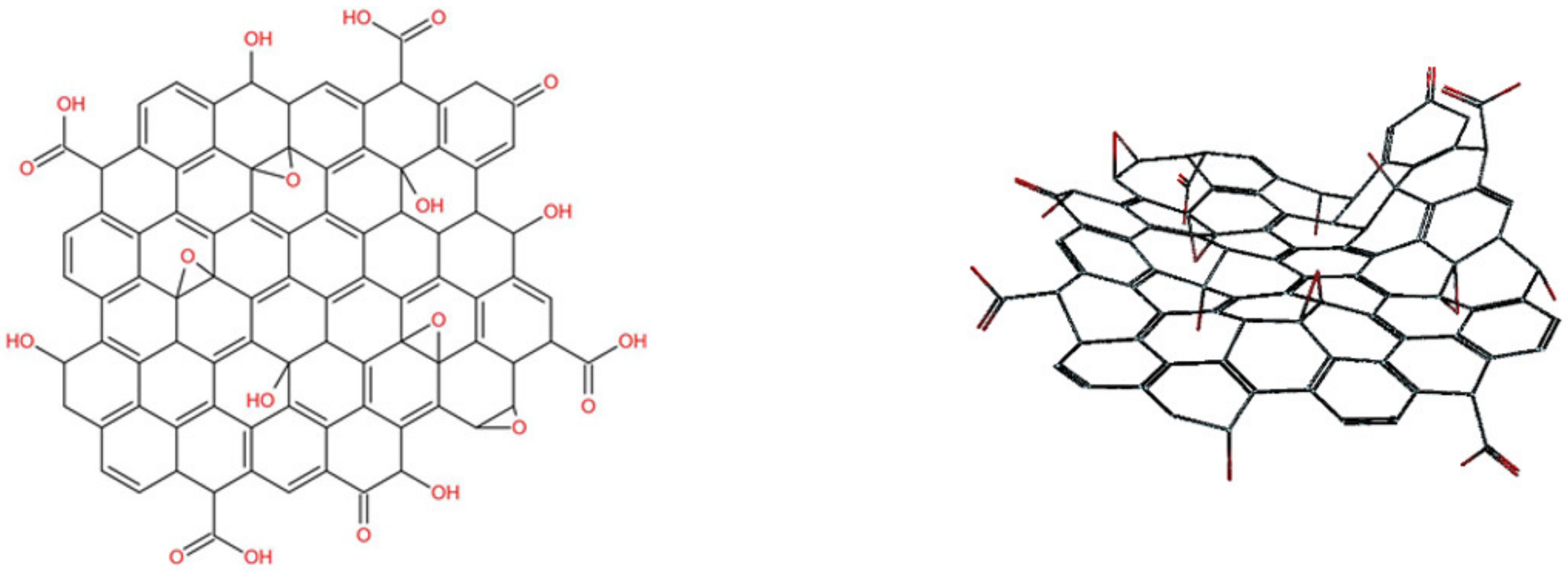
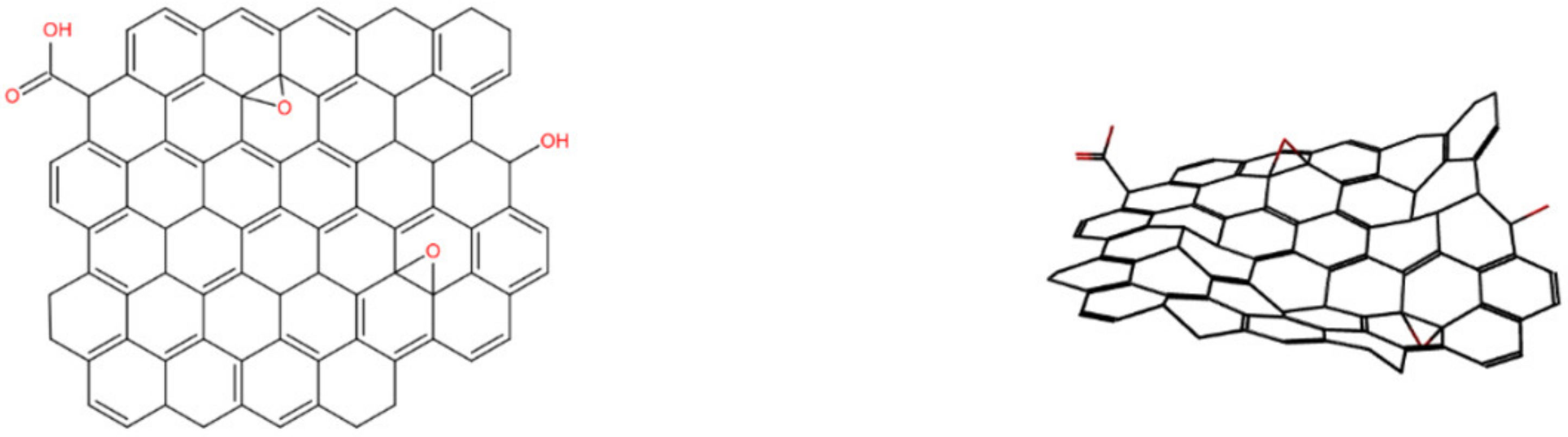
Pure graphene is a benzene-ring-like two-dimensional nanomaterial consisting of sp2 hybrid orbitals. However, its high production cost limits its large-scale application. Afterward, by improving Hummer’s method, a large number of oxygen-containing functional groups were linked at the edge of the plane by a strong oxidant, hence the name GO (graphene oxide) (Figure 1); rGO (Figure 2) was obtained by sodium borohydride and other means of reduction, which has low synthesis cost and is suitable for use as a good carrier of catalysis.
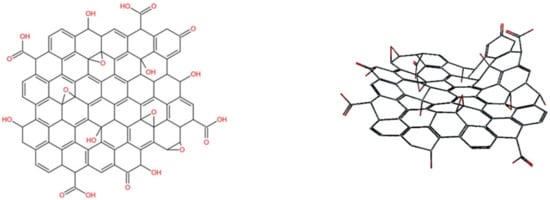
Figure 1.
Plane structure (left) and solid structure (right) of GO (bond line type).
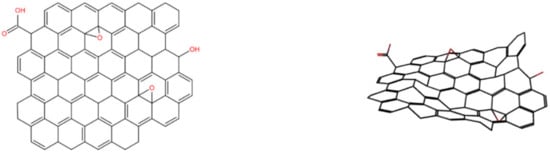
Figure 2.
Plane structure (left) and solid structure (right) of rGO (bond line type).
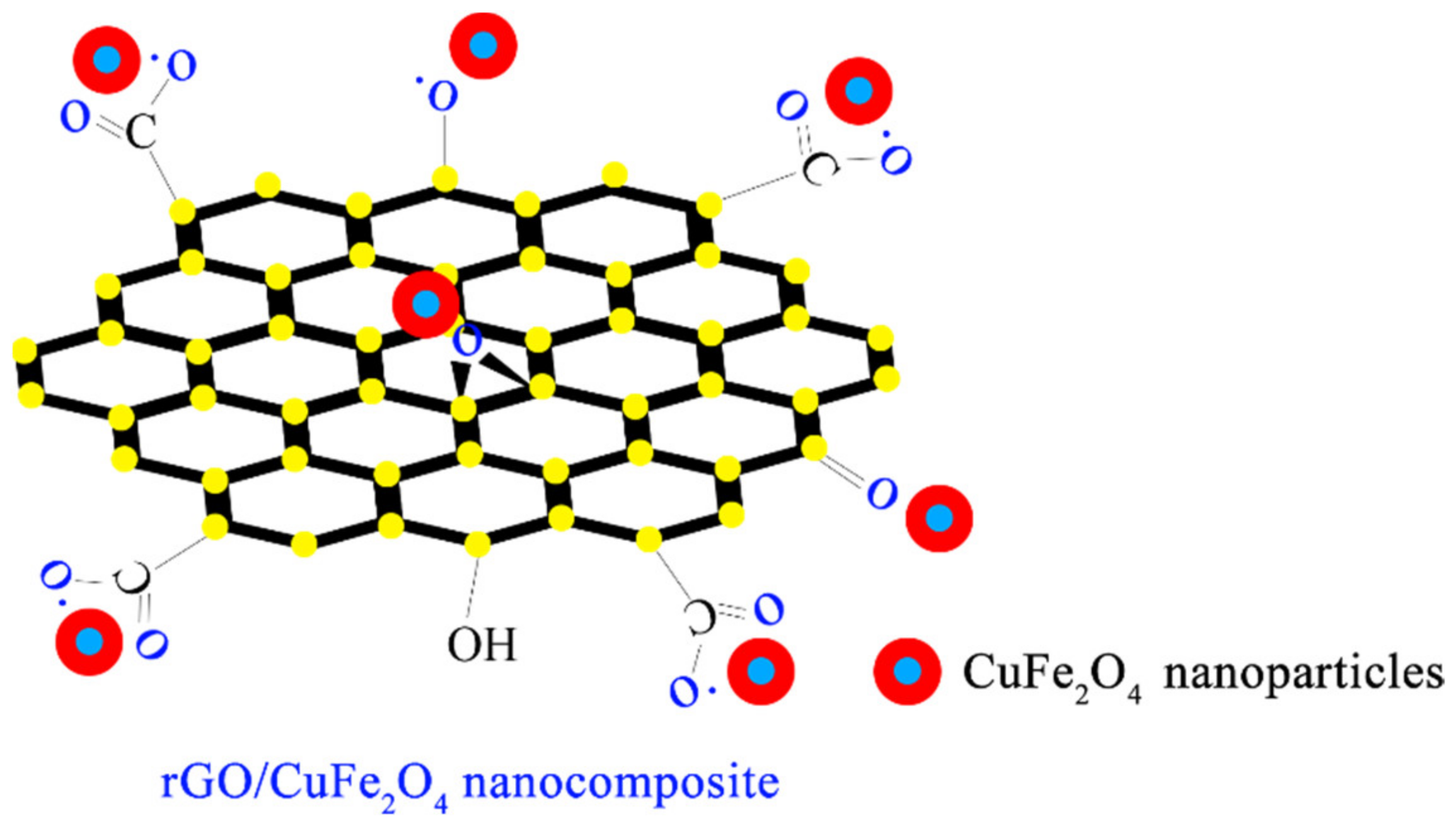
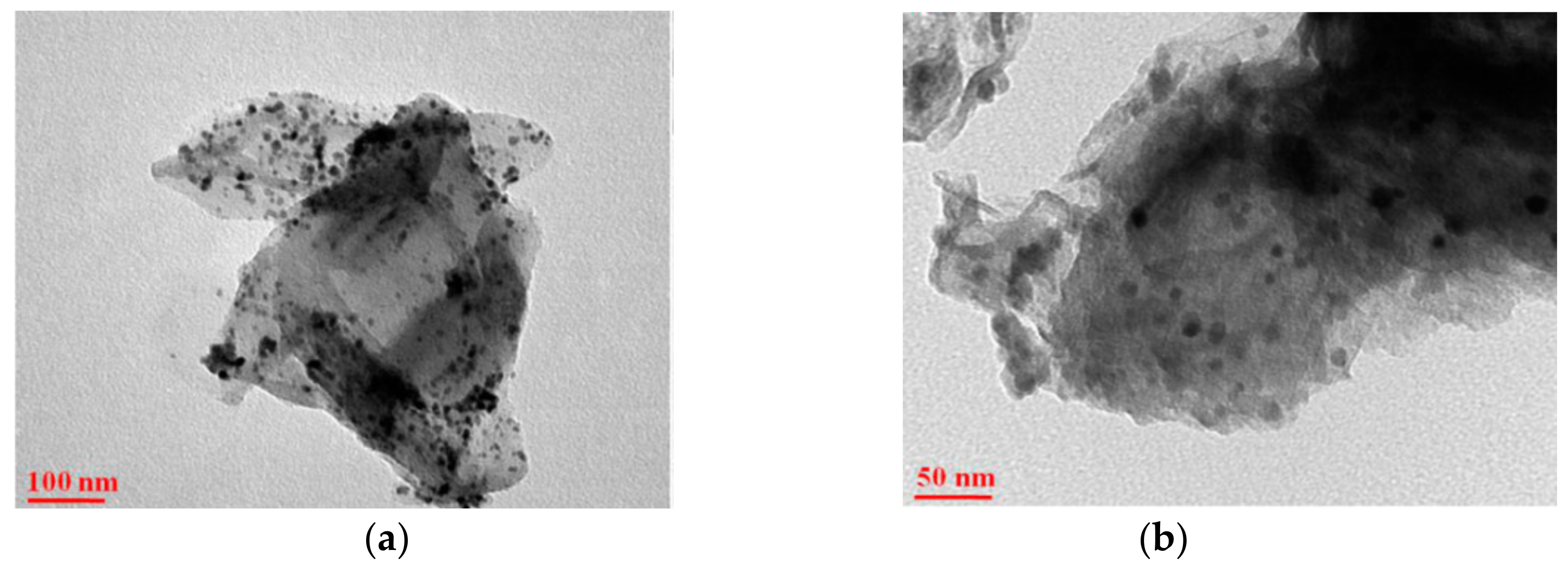
Taking CuFe2O4, a representative of MeFe2O4, as an example, by comparing the effect of pure CuFe2O4 with that of CuFe2O4 combined with the carrier, it can be seen that the latter has a stronger catalytic effect under acidic and photoinduced conditions [61]. CuFe2O4 in CuFe2O4–rGO is closely combined with the oxygen-containing groups on rGO through electrostatic interaction, as shown in Figure 3. Images from a scanning electron microscope are shown in Figure 4.
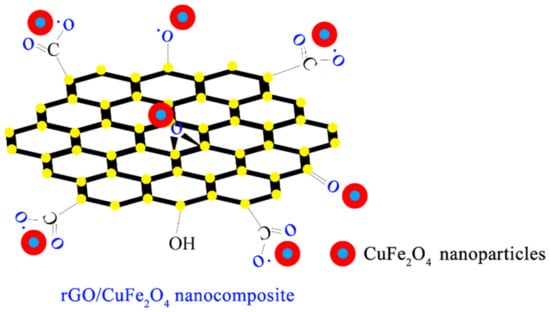
Figure 3.
Chemical structural formula of CuFe2O4-rGO [60].
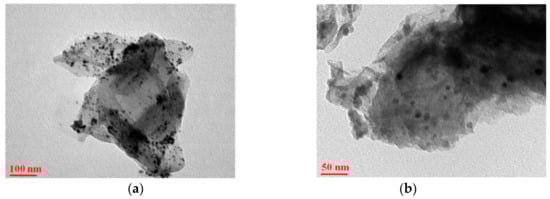
Figure 4.
TEM images of (a,b) rGO/CuFe2O4 nanostructures under different magnifications [60].
Table 2 shows the degradation effects of some CuFe2O4 and rGO composite materials on different kinds of wastewater. It can be seen from the table that the composite catalyst can still produce good effects even without the presence of PS. Not only the Cu, Fe, and other elements in the catalyst can produce pure chemical catalytic effect, but the carrier rGO can produce electron transition under the light condition, promoting the transfer of electrons, and plays a part of the photocatalytic effect [62,63]. Table 2 contains some other carriers, which can also greatly influence degradation of different kinds of wastewater.
Table 2.
Effects of partial MeFe2O4 and carrier composite materials on degradation of different kinds of wastewater [61,64,65,66,67,68,69,70].
2.3. Activation Persulfate by Fe0
In recent years, activation persulfate based on Fe0 (zero-valent iron, ZVI) have been widely used in chemical production and environmental remediation [71,72]. As mentioned above, the activation persulfate/Fe (II) mechanism can cause secondary pollution to water, so ZVI/PS [73,74] is used instead to reduce a series of problems caused by the reduction of Fe2+ content due to the change of pH and other factors in water [71].
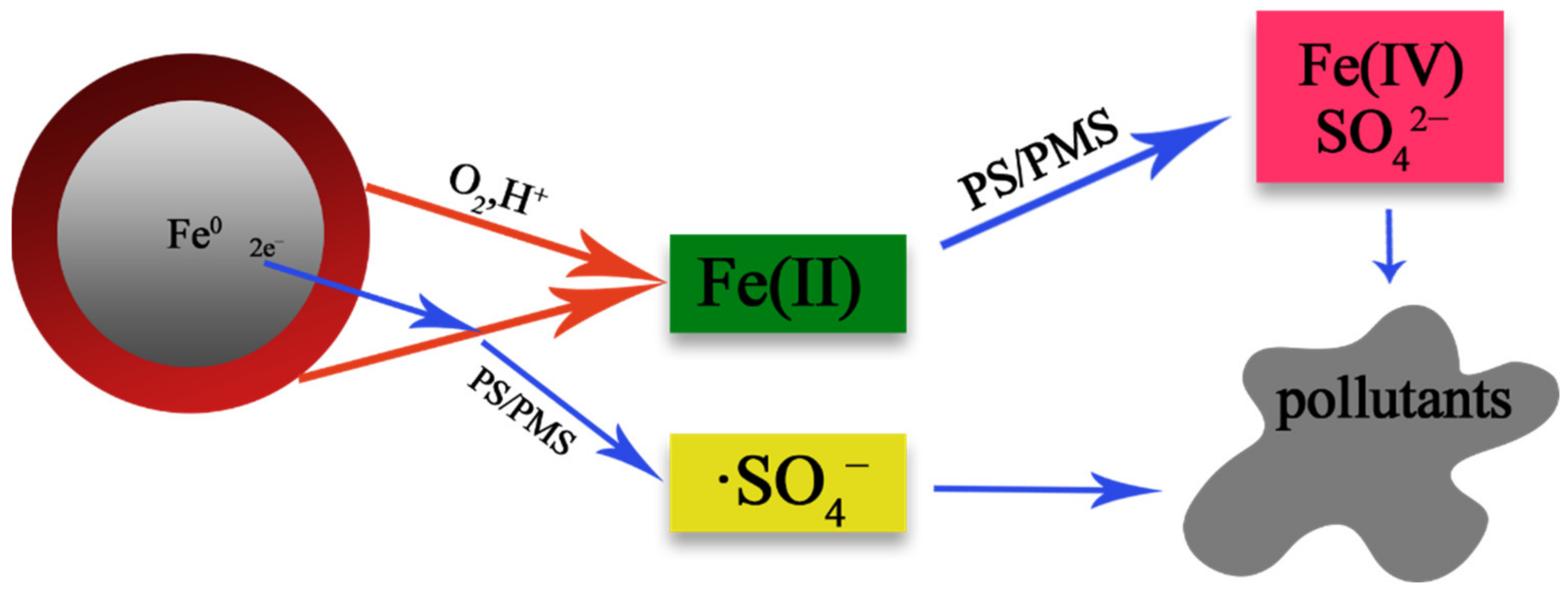
ZVI/PS system has strong reducibility (Fe0,E0 = −0.44 V) [75]. Compared with CuFe2O4, its reaction process is more complex, as shown in Figure 5. Fe0 is first converted to Fe2+ in the presence of acid and oxidant, then further oxidized to Fe3+ by Fe2+, and finally to Fe(IV) [76,77]. The reaction mechanism follows [78]: According to the reaction equation, the reaction is easily affected by pH, and the reaction will gradually slow with the increase of pH. Weng et al. [79] point out that the Fe0/PS system exhibits two-stage kinetics. The kinetic first stage is mostly attributed to a heterogeneous reaction occurring on the surface of the Fe0 aggregate. As the reaction proceeds, decolorization shifts from the slow kinetic first stage to the fast kinetic second stage when sufficient Fe2+ ions are maintained in the system [80].
Fe0 + 2H+ → Fe2+ + H2
2Fe0 + O2 + 2H2O → 2Fe2+ + 4OH−
Fe0 + S2O82− → Fe2+ + 2SO42−
Fe0 + HSO5− → Fe2+ + SO42− + OH−
Fe2+ + S2O82− → Fe3+ + SO42− + ·SO4−
Fe2+ + HSO5− → Fe3+ + SO42− + ·SO4−
Fe0 + S2O82− → Fe2+ + 2·SO4− + SO42−
Fe0+2 HSO5− → Fe2+ + 2OH− + 2·SO4−
Fe2+ + S2O82− + H2O → FeIVO2+ + 2SO42− + 2H+
Fe2+ + HSO5− → FeIVO2+ + SO42− + H+
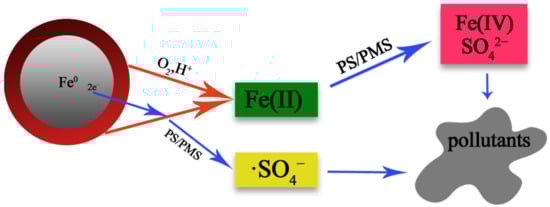
Figure 5.
Schematic of the formation of ·SO4− and Fe(IV) in nZVI/persulfate systems containing methyl phenyl sulfoxide [81].
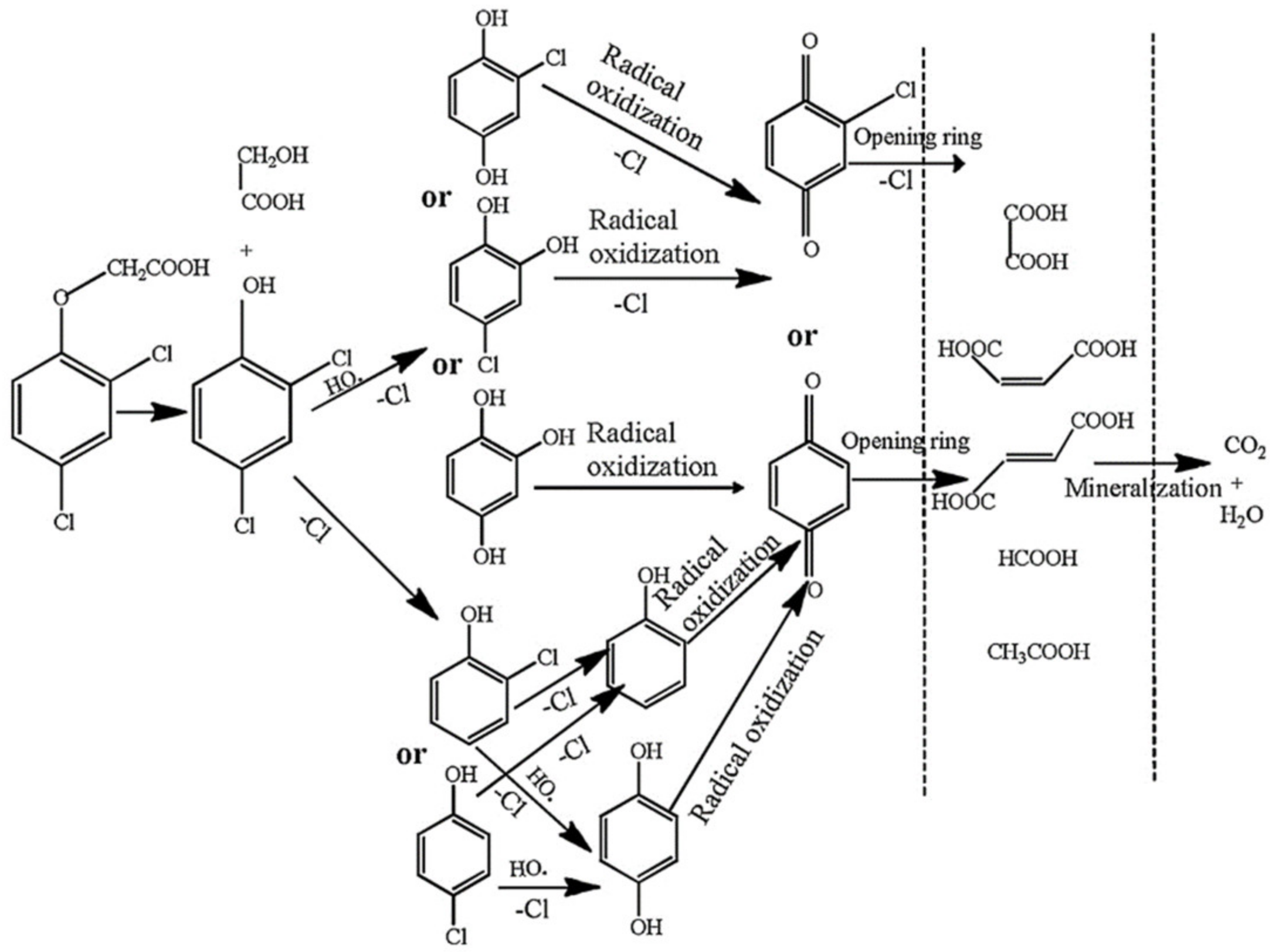
Figure 6 shows the proposed degradation pathway of 2,4-D [82]. By examining Figure 6, it can further confirm that macromolecular organic matter is decomposed into small molecular organic matter, which is gradually mineralized.
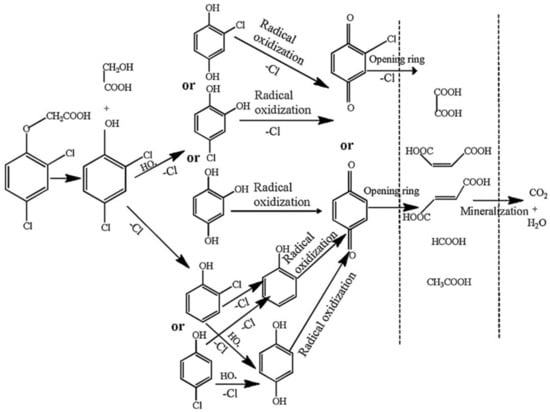
Figure 6.
The proposed degradation pathway of 2,4-D [82].
Table 3 shows the degradation effects of various types of polluted water bodies activated by PS/PMS based on elemental iron. Usually, an appropriate amount of H2O2 [83] will be added to the water when PS is activated by Fe0, so as to reduce the cost of oxidant. Through the analysis of the table, it can be seen that the effect of ZVI when used alone [84] is worse than when it is combined with the carrier or when other conditions exist.
Table 3.
Degradation effect of different kinds of wastewater based on PS/PMS activated by different kinds of iron [85,86,87,88,89,90,91,92].
2.4. Fe3O4
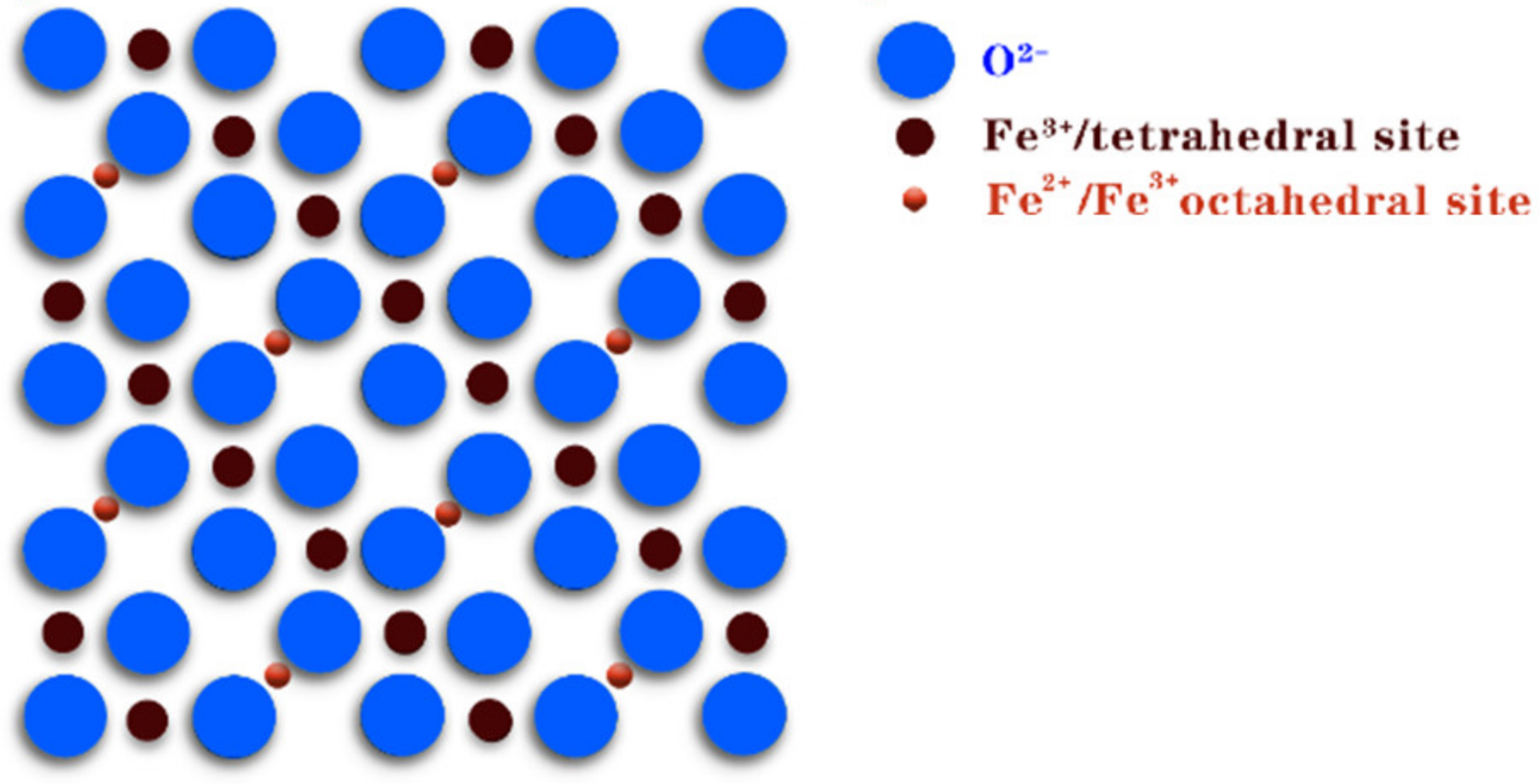
Fe3O4 magnetite, also known as magnetic iron oxide, is a black crystal with a rotating spinel structure (Figure 7). In magnetite, Fe2+ and Fe3+ are disordered on the ferrite octahedron, so electrons can transfer rapidly between Fe2+ and Fe3+; thus, reversible redox reactions can occur at the same position on the octahedron.
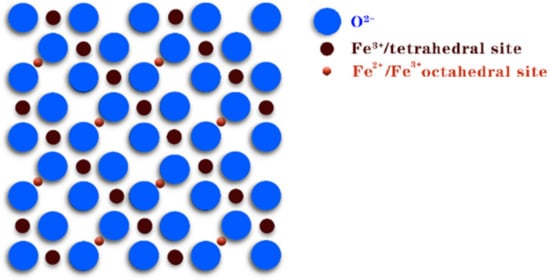
Figure 7.
Crystal structure of Fe3O4.
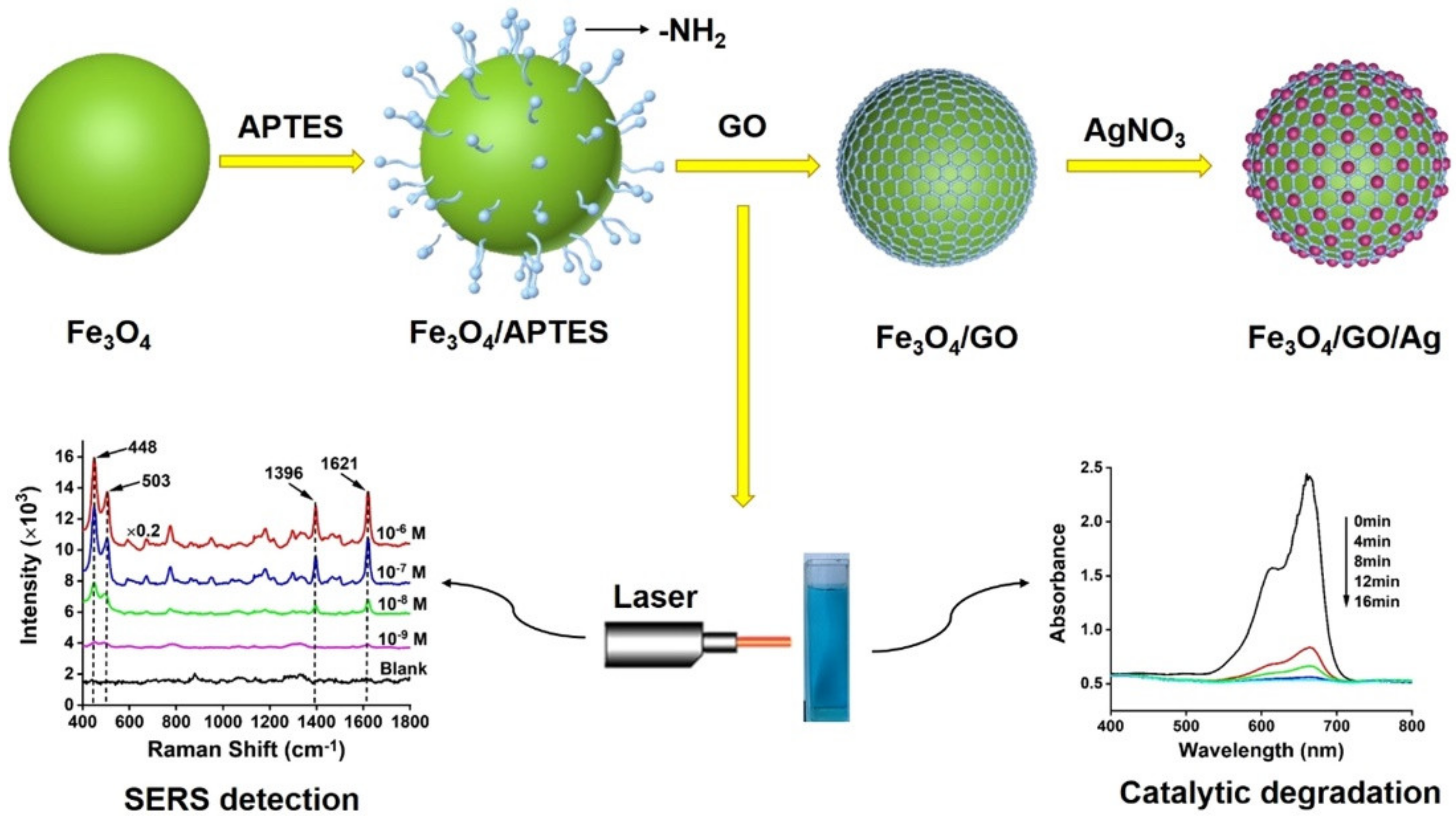
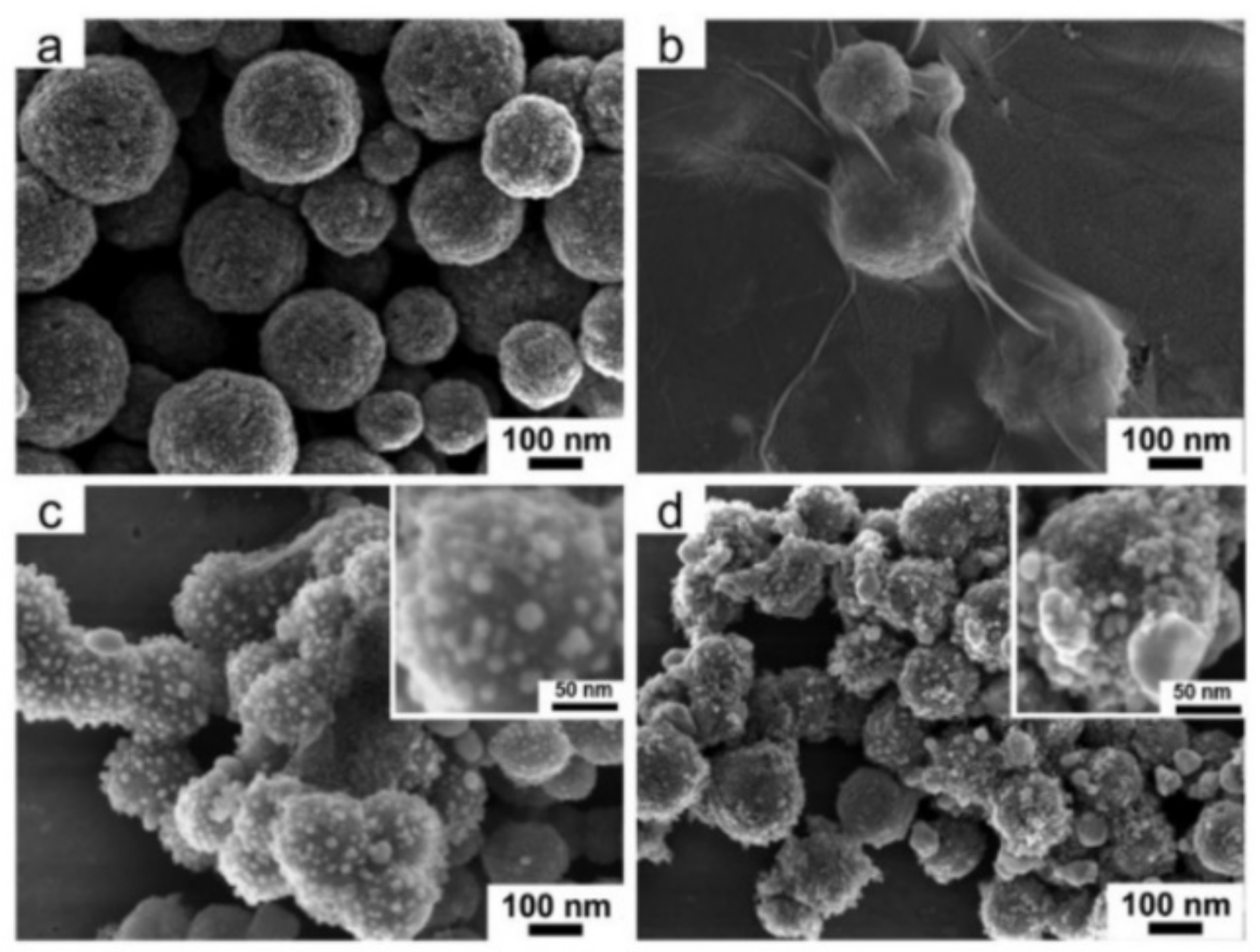
However, since Fe3O4 is easy to accumulate in solution and contact sites are reduced after agglomeration, single Fe3O4 is rarely used. Using the composite carrier method [93] can not only solve these problems, but also speeds the reaction rate, making it more cost effective when applied in industrial production. He et al. [94] pointed out that the Fe3O4/GO/Ag composite microspheres are formed using magnetic Fe3O4 as cores, followed by coating an internal layer of GO and an outer layer of Ag nanoparticles, as Figure 8 shows. The synthesized Fe3O4/GO/Ag composite catalyst under the action of NaBH4, methylene blue, and ciprofloxacin can be completely degraded within 12 min. Figure 8 shows SEM images of Fe3O4/GO/Ag composite catalyst. In Figure 9, we can clearly observe that Ag has been completely attached to the Fe3O4/GO surface, which can increase the specific surface area and improve the chemical reaction rate.
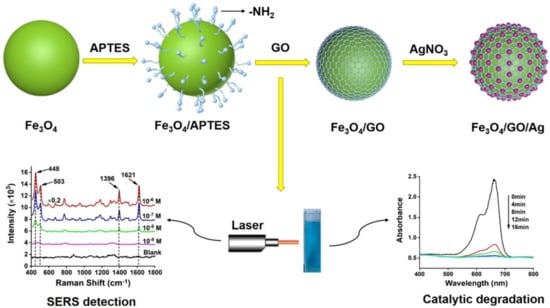
Figure 8.
Illustration of the fabrication of Fe3O4/GO/Ag composite microspheres [94].
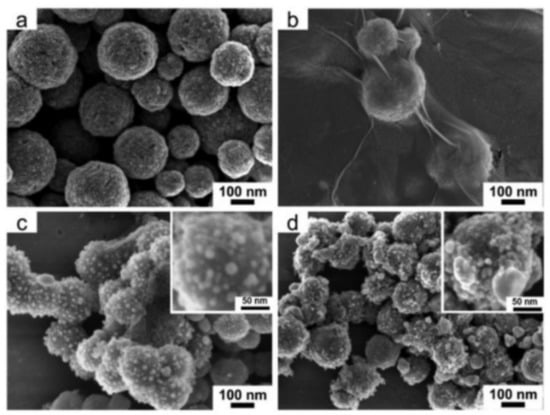
Figure 9.
Typical FESEM images of (a) Fe3O4, (b) Fe3O4/GO, (c) Fe3O4/GO/Ag, and (d) Fe3O4/Ag microspheres. Inserts are magnified FESEM images of Fe3O4/GO/Ag and Fe3O4/Ag microspheres [94].
Table 4 shows the research progress of Fe3O4 and its composite materials on the degradation of different pollutants reported at present. According to the data in the table, when Fe3O4 is compounded with the carrier, the catalytic performance is greatly improved.
Table 4.
Effects of Fe3O4 and its composite-material-activated PS/PMS on degradation of different kinds of wastewater [95,96,97,98,99,100,101].
3. Comparison of the Performance of Different Iron-Based Catalysts
Different catalysts and contaminants are described above. We select representative pollutants, 2,4-D, NOF, and BPA, as examples to illustrate the performance of various kinds of catalysts.
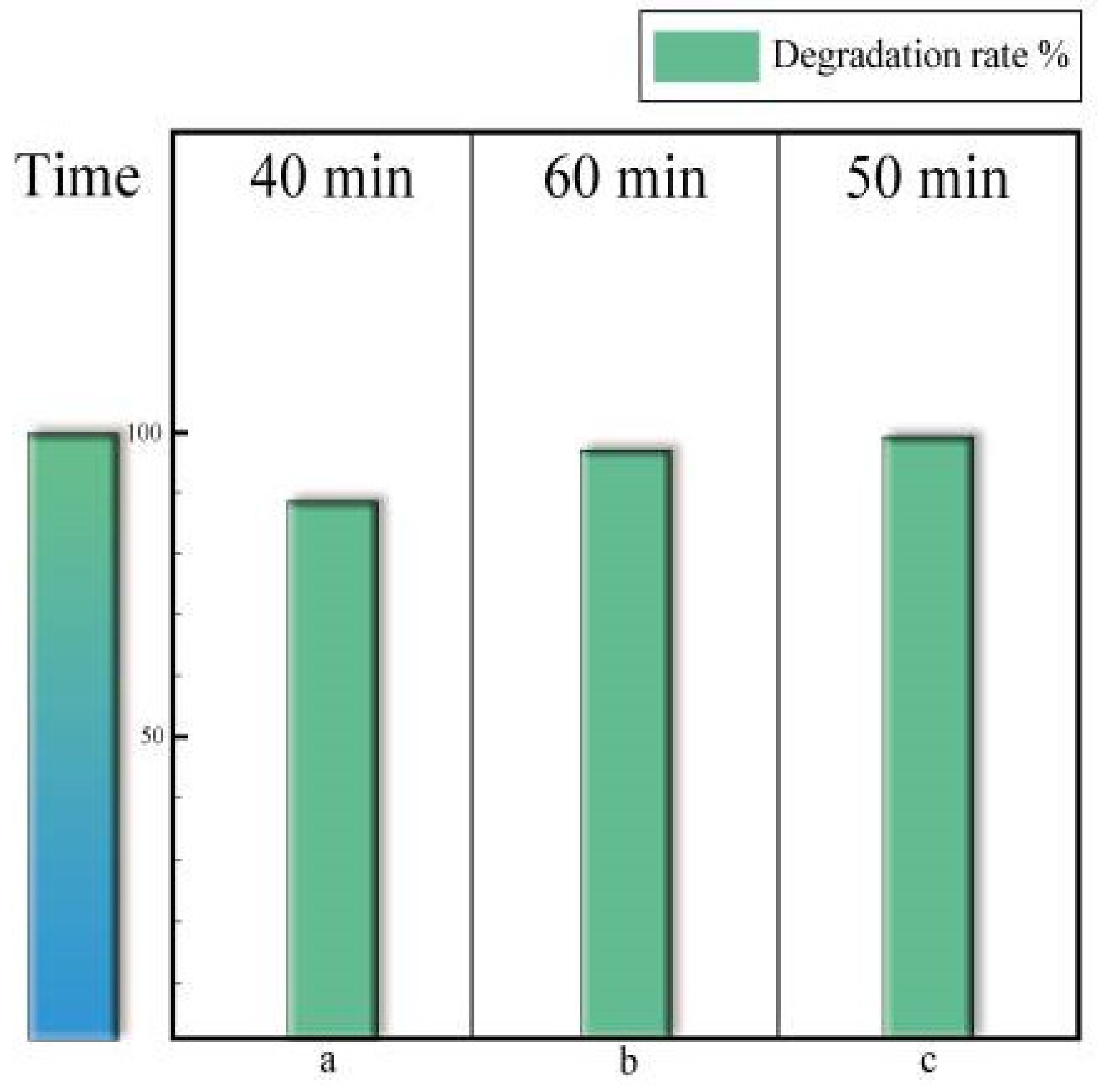
As one type of auxin analogue, 2,4-D is the most applied herbicides in the world. If overused, it pollutes the water body and harms crops [102]. Figure 10 shows that when the concentration of 2,4-D was 20 mg/L, all three iron-based catalysts showed excellent degradation rate and fast degradation time. The best material is Fe@C/PB, which can degrade 99.4% of the 2,4-D in 50 min [92].
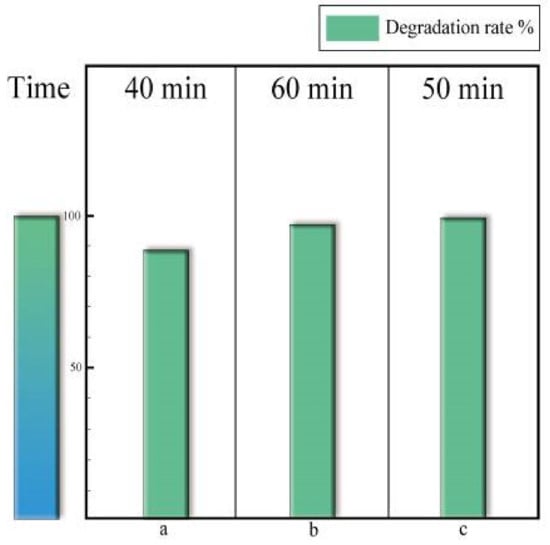
Figure 10.
Degradation of 2,4-D by three iron-based catalysts: (a) CuFe2O4/O3 [42], (b) TiO2@CuFe2O4/UV [69], and (c) Fe@C/PB [92].
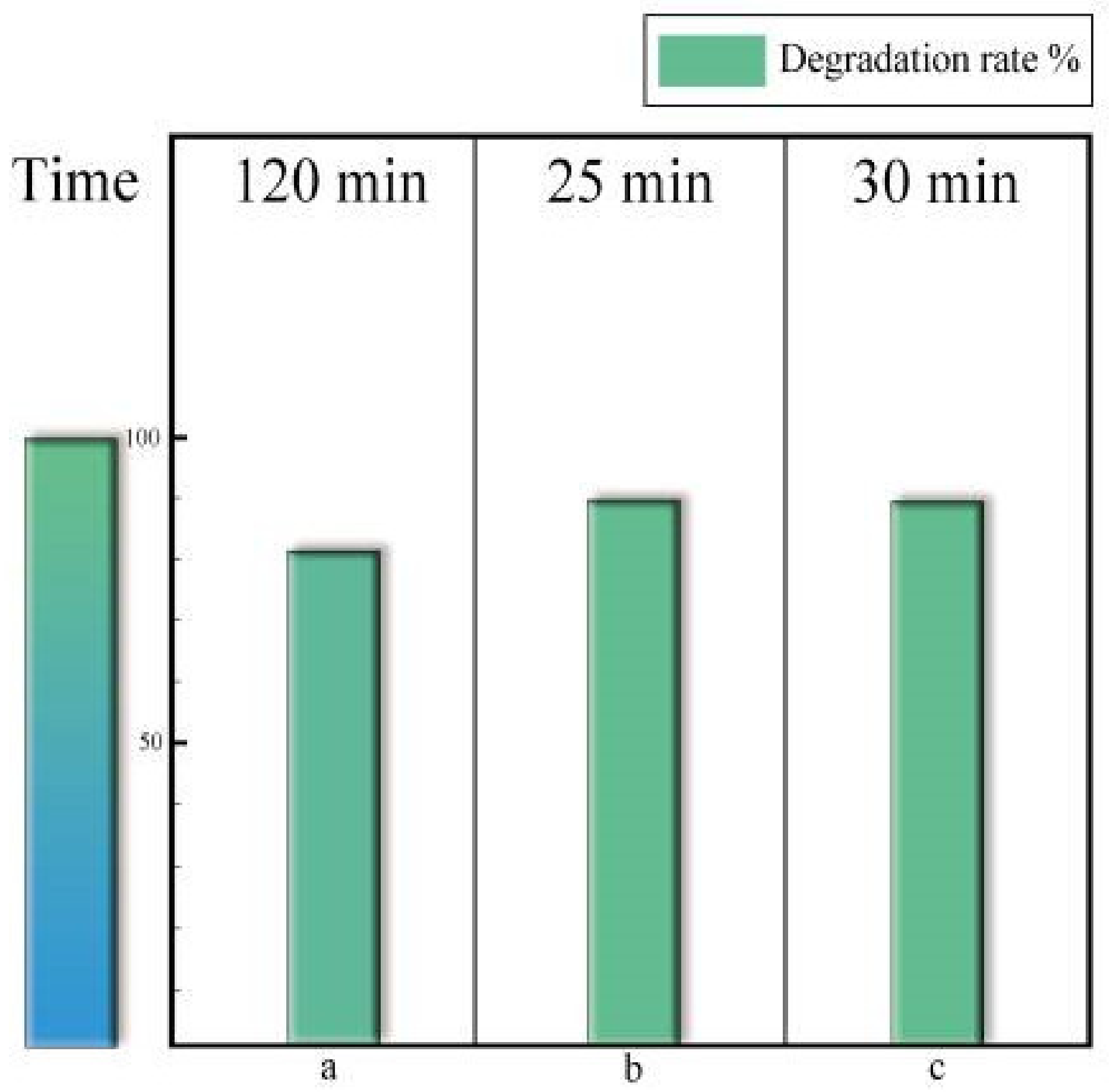
Antibiotics are currently extensively used in human medicine, animal farming, agriculture, and aquaculture, and their residue has become a global environmental problem [103]. NOF is the third generation of quinolone antibiotic. It has certain antibacterial action [104]. Figure 11 shows that when the concentration of NOF was 15 μM, Fe2O3@CoFe2O4 was 0.3 g/L. In 25 min, the degradation rate could reach 89.8% [69]. Compared with the degradation rate of other pollutants, it has a greater improvement. Piezoelectric catalysis can be used to further enhance performance.
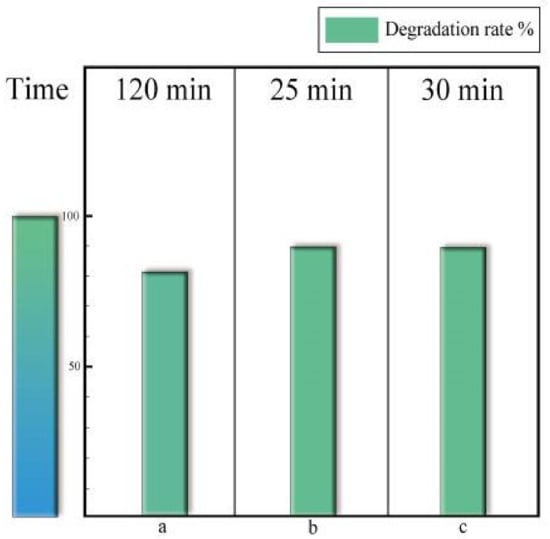
Figure 11.
Degradation of NOF by three iron-based catalysts: (a) CoFe2O4–SAC [47], (b) Fe2O3@CoFe2O4 [69], and (c) rGO–Fe3O4 [88].
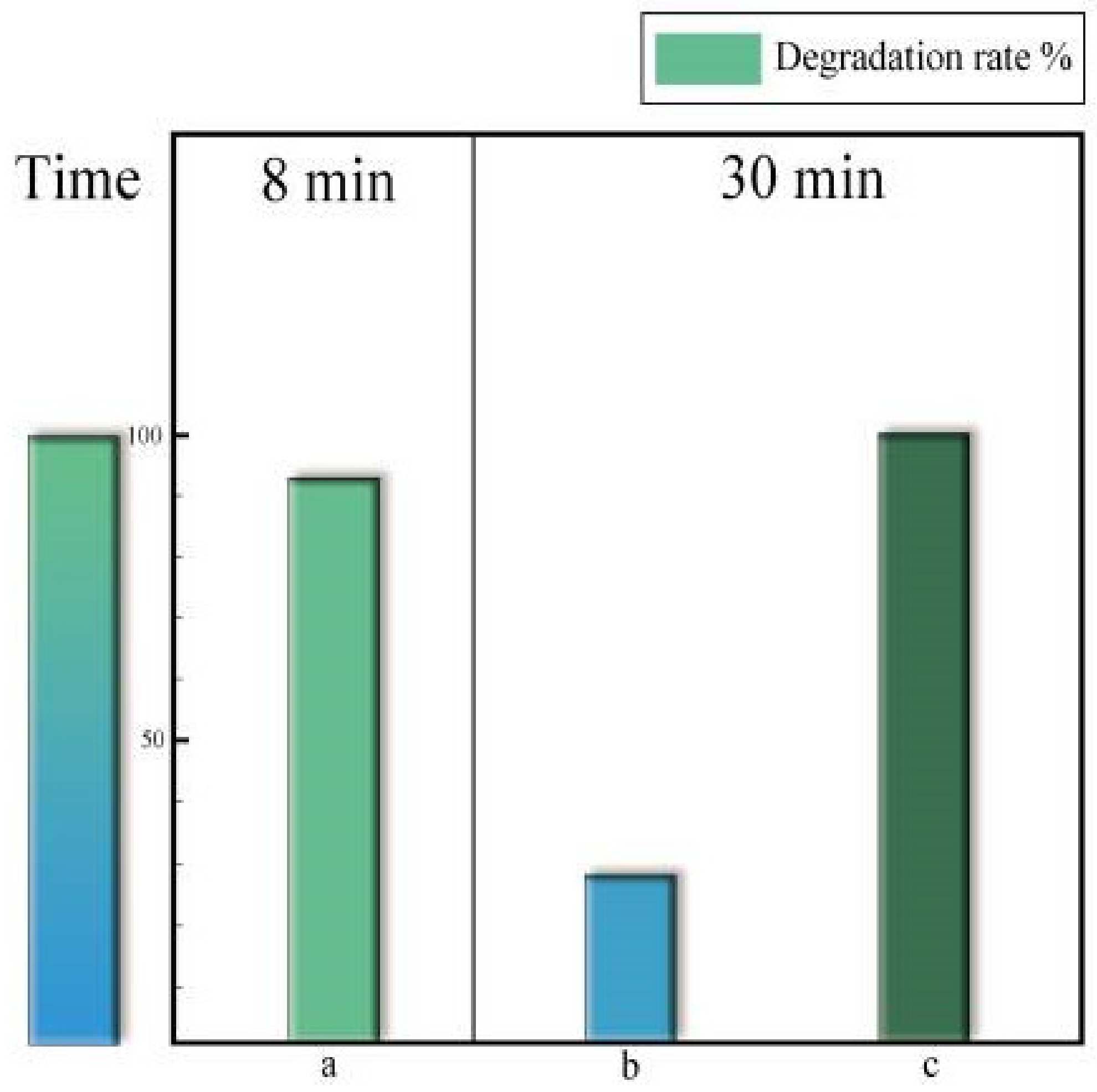
BPA is a very common chemical product. It is widely found in plastics used in our daily life. It can lead to endocrine disorders, and cancer is also considered to be associated with BPA [105]. Figure 12 shows that when the concentration of BPA was 10 mg/L, the degradation rate of (a) the biochar loaded with CoFe2O4 nanoparticles can reach 93% [39] in 8 min.
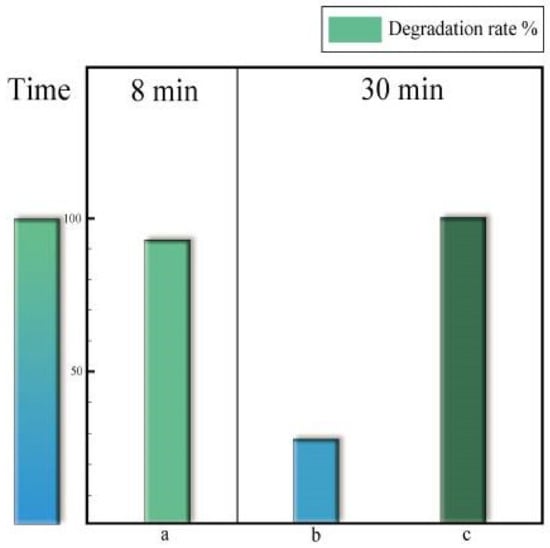
Figure 12.
Degradation of BPA by three iron-based catalysts: (a) biochar loaded with CoFe2O4 nanoparticles [39], (b) Fe3O4 [87], and (c) CuO–Fe3O4–BC [88].
4. Coupling Activation of Iron-Based Catalysts under Auxiliary Action
4.1. Photocatalytic Activation
Transition metal compounds with lower states can effectively activate PMS, and the reaction mechanism follows:
Mn+ + HSO5− → M(n+1)+ + ·SO4− + ·OH
Mn+ + HSO5− → M(n+1)+ + SO42− + ·OH
Currently, photocatalytic activation of PS can be done either through direct exposure to ultraviolet light, or through the reaction of light with the photocatalyst to excite the photoinduced electrons on its surface [106]. According to many studies, the efficiency of Fenton-like degradation of pollutants by iron-based catalyst can be improved under the condition of light [107,108]. As an efficient catalyst to activate persulfate, Fe2+ also shows good performance under dark conditions, but there are still problems such as the reduction of utilization rate caused by the mutual transformation of Fe2+ and Fe3+. Benkelberg et al. [109] found in their study that under ultraviolet light, the transformation of Fe3+ into Fe2+ in the solution was accelerated, and the Fe(OH)2 generated by the reaction would greatly absorb ultraviolet light and produce Fe2+ and ·OH. The reaction mechanism follows:
However, as described above, homogeneous catalysis based on Fe2+ is prone to many problems. Therefore, heterogeneous catalysis based on an iron catalyst is relatively more convenient to recycle and is environmentally friendly. Regardless of the form the iron-based catalyst enters the solution, it will be converted to Fe2+ to activate PS and degrade the pollutants in the water. It is Fe2+ that plays a vital role in activating persulfate. Part of the ions converted to Fe3+ will also be converted to Fe2+ through illumination and other ways to speed the reaction process.
Table 5 shows the degradation effects of different iron-based catalysts on different pollutants under UV lamp irradiation. The data in the Table show that the degradation effect is the best under UV lamp irradiation (UV–Vis) within the visible range.
Table 5.
Effects of different iron-based catalysts on degradation of different pollutants under ultraviolet lamp irradiation [107,110,111,112,113,114,115].
4.2. Piezoelectric Catalytic Activation
Piezoelectrics are a noncentrosymmetric crystal structure that separates positive and negative charges under the action of external forces, resulting in a corresponding piezopotential [116,117,118]. Piezocatalysis refers to the conversion of mechanical energy into chemical energy. When using an iron-based catalyst piezoelectric material or coupled with other photocatalysts, an electric field near the piezoelectric material assists in charge separation [119]. Vibration is a very common motion that produces mechanical energy. Compared with commonly used oxidation methods such as Fenton reaction and photoelectric catalysis, piezoelectric catalytic activation is more resource-saving. Even a very small vibration can drive a deformation of nano/micrometer materials to generate a potential [120]. The degradation mechanism of piezoelectric catalysis follows [121]:
(Piezo-materials) + vibration → (Piezo-materials)(h++ e−)
O2 + e− → ·O2−
h+ + OH− → ·OH
h+/ e−/·OH/·O2− + pollutants → degradation products
Ultrasound (US) is the most common wave that can generate mechanical energy. PS is converted into ·SO4− under the action of ultrasound; the reaction equation follows [122]:
S2O82− + US → 2·SO4−
H2O + US → H· + ·OH
·SO4− + H2O + ·OH → H+ + SO42−
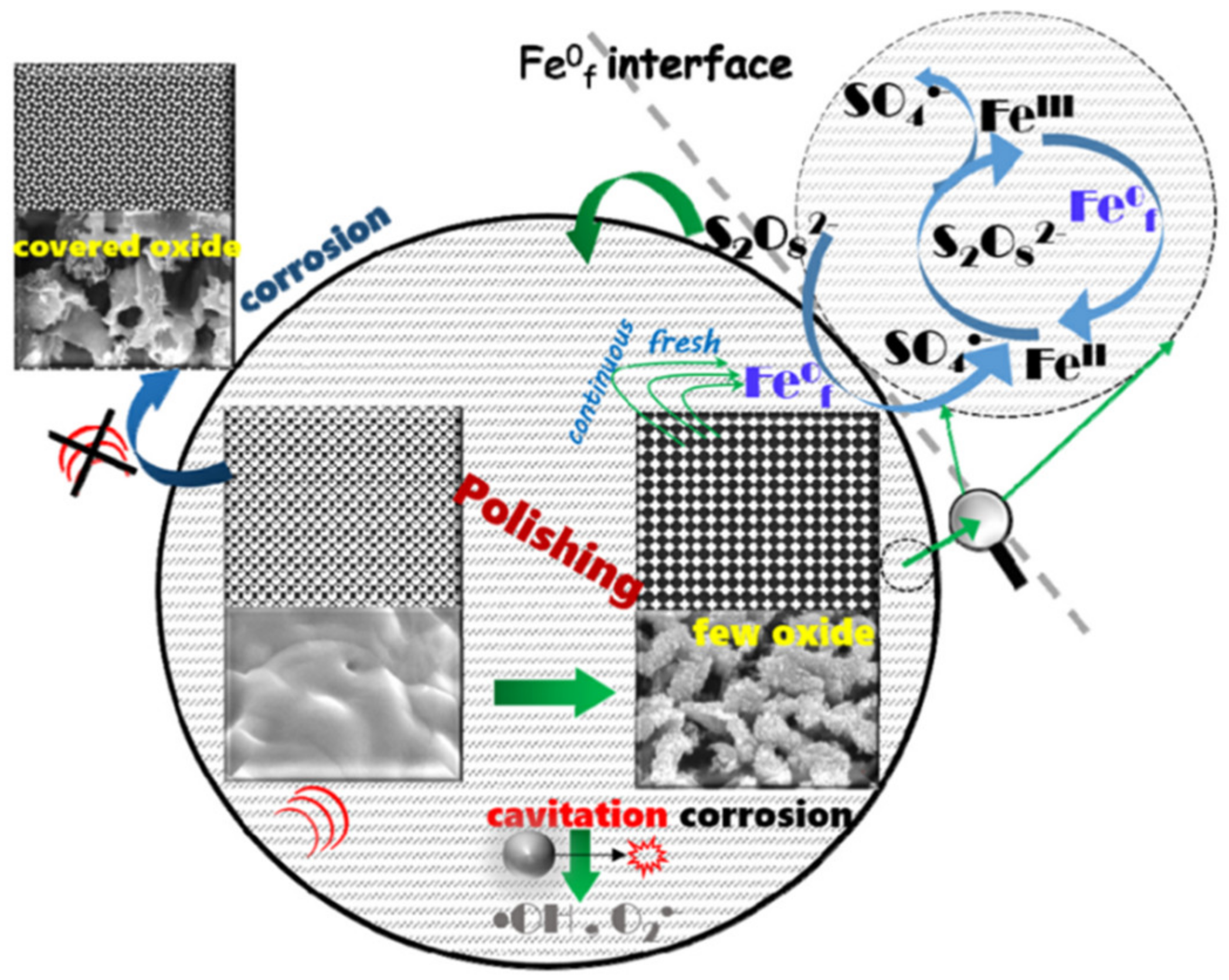
The study of Xu et al. [123] indicated that in the ultrasonic environment, activation persulfate based on foamed zero-valent iron (Fe0f) could remove the oxide film on the surface of Fe0f in the reaction process. Thus, more Fe0f is exposed to the solution to increase the contact area and speeds the reaction. In the persulfate/chlorite Fe0f system, a large number of ·SO4−, ·OH and other free radical ions can be generated through ultrasonic action. The possible reaction mechanism is shown in Figure 13 [123].
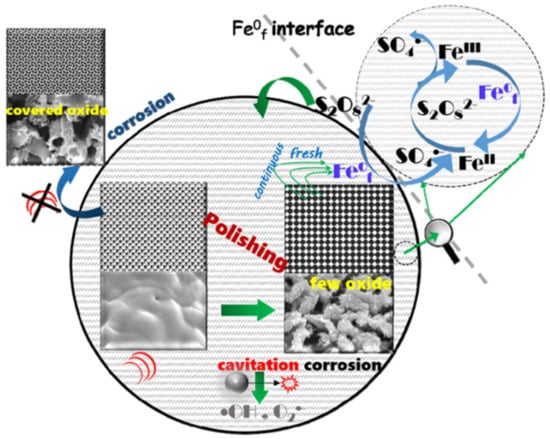
Figure 13.
The possible reaction mechanism of US/Fe0f–PS [123].
As an activation method of piezoelectric catalysis, an ultrasonic wave is partially used as an example in the Table 6 to degrade different kinds of wastewater through the activation persulfate mechanism.
Table 6.
Under the action of ultrasound, iron-based catalysts degrade different kinds of wastewater by activation persulfate [37,88,123,124,125,126,127,128].
4.3. Summary
The coupling activation of two iron-based catalysts under auxiliary action was introduced above. Both methods can accelerate the activation effect of iron-based catalysts on activation persulfate to a certain extent.
At present, the problem of photocatalysis is how to strengthen the application range of the photocatalyst. The treatment of industrial wastewater is generally conducted outdoors under complicated conditions. Some single photocatalysts, such as few-layered graphite-modified graphitic carbon nitride composite (GrCN), can be used in the degradation process together with PMS and photothermal catalysis [129]. The maximum reaction rate is 0.044 min−1. The light source used for the data given in Table 5 is ultraviolet light, although sunlight contains only 5–7% of the ultraviolet spectrum. Therefore, how to improve the practicability of materials in the visible light range has become a new research direction.
Furthermore, if GrCN is used alone to degrade wastewater, not to mention the effect, recycling becomes a large problem. Therefore, it is a better method to compound it with a magnetic carrier. By combining magnetic iron oxide nanoparticles with the carrier, not only can the excellent catalytic effect of iron oxide be brought into play, but it can also facilitate the recovery of GrCN as a carrier, so that the two substances complement each other [130].
Piezoelectric catalysis, as a newly developed technology in recent years, still has a great space for development. Through ultrasonic and other methods that can generate vibration, oxidants and catalysts can be evenly dispersed into sewage to increase the contact point of chemical reaction, and more electrons can be generated by promoting piezoelectric materials to increase the concentration of free radicals and accelerate the progress of chemical reaction.
Table 7 shows the advantages and disadvantages of representative five iron–base catalysts mentioned above.
Table 7.
Advantages and disadvantages of representative five iron–base catalysts mentioned above.
5. Conclusions and Prospect
Activation persulfate technology based on iron-based catalysts has attracted wide attention in recent years. As for iron-based catalysts themselves because the central atom is Fe, their electron configuration is not in a full or partially full state, so their chemical properties are relatively active, and they are susceptible to not only pH but also various ions in water. SR-AOPs-PMS/PDS technology is new, and several metal ions mentioned above can activate persulfate. In terms of the current problems, several ideas and possibilities for improvement are proposed:
Adopt the multimetal composite method in the advanced oxidation technology of bimetal coordination. Taking iron as the core, screen and compare other metal ions of transition elements, and compound new iron-based catalyst.
Based on the data above, it is not difficult to see that the AOPs technology of nonfree radicals also has ideal effects. Compared with the generation of ·SO4−, the degradation effect of 1O2 produced by nonfree radicals is better to find a new nonfree radical reaction pathway to degrade wastewater.
After the reaction stops, the solubility of some iron-based catalysts or metal leaching may produce iron slag and other wastes. If the subsequent treatment is improper, it is easy to cause secondary pollution to the water body; at the same time, there is metal valency reaction in the reaction process, which reduces the collision of effective molecules and has more side reactions. How to improve the effective ion concentration for the reaction has become an urgent problem to be solved.
The persulfate used in the reaction is strongly oxidizing. If stored improperly or used in excess, it will produce a large toxic effect on organisms.
Most of the iron-based catalyst reaction conditions are acidic and create a strong acid environment. It is not applicable in a neutral environment. If used for degraded wastewater, the pH of water needs to be adjusted, and if there is acid intolerance or acid decomposition substances in the water, then it is easy to produce adverse consequences. Furthermore, the pH of water should be adjusted after the reaction is terminated, which greatly increases the cost.
Coupled catalysis based on iron-based catalysts with auxiliary action has played a good role in activation persulfate, and it is worthy of further study to improve the degradation effect by applying additional conditions. We can try to improve the performance of the materials with poor degradation effect among the 12 different iron-based catalysts mentioned above by photocatalysis, piezoelectric catalysis, and other methods.
Piezoelectric catalysis, as a research hotspot in recent years, is in its infancy at present. More kinds of catalysts can be produced by attempting to combine other transition metals and oxides with iron-based materials.
Author Contributions
Conceptualization, K.Z. and Z.L.; methodology, P.M.; software, Z.L. and P.M.; validation, Z.L., P.M., W.Z. and Y.T.; formal analysis, K.Z.; investigation, Y.Z. and W.Z.; resources, K.Z.; data curation, P.M.; writing—original draft preparation, Z.L. and J.Z.; writing—review and editing, Z.L.; visualization, Z.L.; supervision, K.Z.; project administration, K.Z.; funding acquisition, K.Z. All authors have read and agreed to the published version of the manuscript.
Funding
This review was funded by the Research Foundation of China University of Petroleum–Beijing at Karamay (grant number: YJ2018B02002).
Acknowledgments
This work was financially support by the Research Foundation of China University of Petroleum–Beijing at Karamay (grant number: YJ2018B02002). Thanks to the reviewers and editors for their valuable comments. I would like to express my heartfelt thanks to every author of the research group who actively participated in the work.
Conflicts of Interest
The authors declare no conflict of interest.
References
- Wang, G.; Bi, W.; Zhang, Q.; Dong, X.; Zhang, X. Hydrothermal carbonation carbon-based photocatalysis under visible light: Modification for enhanced removal of organic pollutant and novel insight into the photocatalytic mechanism. J. Hazard. Mater. 2021, 127821. [Google Scholar] [CrossRef]
- Van Gijn, K.; Chen, Y.L.; van Oudheusden, B.; Gong, S.; de Wilt, H.A.; Rijnaarts, H.H.M.; Langenhoff, A.A.M. Optimizing biological effluent organic matter removal for subsequent micropollutant removal. J. Environ. Chem. Eng. 2021, 9, 106247. [Google Scholar] [CrossRef]
- Zeng, H.; Lan, H.; An, X.; Repo, E.; Park, Y.; Pastushok, O.; Liu, H.; Qu, J. Insight into electroreductive activation process of peroxydisulfate for eliminating organic pollution: Essential role of atomic hydrogen. Chem. Eng. J. 2021, 426, 128355. [Google Scholar] [CrossRef]
- Giannakis, S.; Samoili, S.; Rodríguez-Chueca, J. A meta-analysis of the scientific literature on (photo)Fenton and persulfate advanced oxidation processes: Where do we stand and where are we heading to? Curr. Opin. Green Sustain. Chem. 2021, 29, 100456. [Google Scholar] [CrossRef]
- Tian, Y.; Jia, N.; Zhou, L.; Lei, J.; Wang, L.; Zhang, J.; Liu, Y. Photo-Fenton-like degradation of antibiotics by inverse opal WO3 co-catalytic Fe2+/PMS, Fe2+/H2O2 and Fe2+/PDS processes: A comparative study. Chemosphere 2021, 132627. [Google Scholar] [CrossRef]
- Sathe, S.M.; Chakraborty, I.; Dubey, B.K.; Ghangrekar, M.M. Microbial fuel cell coupled Fenton oxidation for the cathodic degradation of emerging contaminants from wastewater: Applications and challenges. Environ. Res. 2022, 204, 112135. [Google Scholar] [CrossRef] [PubMed]
- Mojiri, A.; Vakili, M.; Farraji, H.; Aziz, S.Q. Combined ozone oxidation process and adsorption methods for the removal of acetaminophen and amoxicillin from aqueous solution; kinetic and optimisation. Environ. Technol. Innov. 2019, 15, 100404. [Google Scholar] [CrossRef]
- Zhu, B.; Jiang, G.; Chen, S.; Liu, F.; Wang, Y.; Zhao, C. Multifunctional Cl-S double-doped carbon nitride nanotube unit in catalytic ozone oxidation synergistic photocatalytic system: Generation of ROS-rich region and effective treatment of organic wastewater. Chem. Eng. J. 2022, 430, 132843. [Google Scholar] [CrossRef]
- Tozar, T.; Boni, M.; Staicu, A.; Pascu, M.L. Optical Characterization of Ciprofloxacin Photolytic Degradation by UV-Pulsed Laser Radiation. Molecules 2021, 26, 2324. [Google Scholar] [CrossRef] [PubMed]
- Mahbub, P.; Smallridge, A.; Irtassam, A.; Yeager, T. Scalable production of hydroxyl radicals (.OH) via homogeneous photolysis of hydrogen peroxide using a continuous-flow photoreactor. Chem. Eng. J. 2022, 427, 131762. [Google Scholar] [CrossRef]
- Hsieh, M.-C.; Lai, W.W.-P.; Lin, A.Y.-C. Sunlight photolysis mitigates the formation of N-nitrosodimethylamine (NDMA) during the chloramination of methadone. Chem. Eng. J. 2020, 384, 123307. [Google Scholar] [CrossRef]
- Ahmadpour, N.; Sayadi, M.H.; Sobhani, S.; Hajiani, M. A potential natural solar light active photocatalyst using magnetic ZnFe2O4 @ TiO2/Cu nanocomposite as a high performance and recyclable platform for degradation of naproxen from aqueous solution. J. Clean. Prod. 2020, 268, 122023. [Google Scholar] [CrossRef]
- Yin, R.; Chen, Y.; Hu, J.; Jin, S.; Guo, W.; Zhu, M. Peroxydisulfate bridged photocatalysis of covalent triazine framework for carbamazepine degradation. Chem. Eng. J. 2022, 427, 131613. [Google Scholar] [CrossRef]
- Tang, P.; Liu, B.; Xie, W.; Wang, P.; He, Q.; Bao, J.; Zhang, Y.; Zhang, Z.; Li, J.; Ma, J. Synergistic mechanism of combined ferrate and ultrafiltration process for shale gas wastewater treatment. J. Membr. Sci. 2022, 641, 119921. [Google Scholar] [CrossRef]
- Manoli, K.; Li, R.; Kim, J.; Feng, M.; Huang, C.-H.; Sharma, V.K. Ferrate(VI)-peracetic acid oxidation process: Rapid degradation of pharmaceuticals in water. Chem. Eng. J. 2022, 429, 132384. [Google Scholar] [CrossRef]
- Pan, B.; Feng, M.; Qin, J.; Dar, A.A.; Wang, C.; Ma, X.; Sharma, V.K. Iron(V)/Iron(IV) species in graphitic carbon nitride-ferrate(VI)-visible light system: Enhanced oxidation of micropollutants. Chem. Eng. J. 2022, 428, 132610. [Google Scholar] [CrossRef]
- Prasannamedha, G.; Kumar, P.S. A review on contamination and removal of sulfamethoxazole from aqueous solution using cleaner techniques: Present and future perspective. J. Clean. Prod. 2020, 250, 119553. [Google Scholar] [CrossRef]
- Babu, D.S.; Srivastava, V.; Nidheesh, P.V.; Kumar, M.S. Detoxification of water and wastewater by advanced oxidation processes. Sci. Total Environ. 2019, 696, 133961. [Google Scholar] [CrossRef]
- Hu, J.; Li, X.; Liu, F.; Fu, W.; Lin, L.; Li, B. Comparison of chemical and biological degradation of sulfonamides: Solving the mystery of sulfonamide transformation. J. Hazard. Mater. 2021, 127661. [Google Scholar] [CrossRef]
- Shimizu, A.; Takada, H.; Koike, T.; Takeshita, A.; Saha, M.; Rinawati; Nakada, N.; Murata, A.; Suzuki, T.; Suzuki, T.; et al. Ubiquitous occurrence of sulfonamides in tropical Asian waters. Sci. Total Environ. 2013, 452–453, 108–115. [Google Scholar] [CrossRef] [PubMed]
- Chen, K.; Zhou, J.L. Occurrence and behavior of antibiotics in water and sediments from the Huangpu River, Shanghai, China. Chemosphere 2014, 95, 604–612. [Google Scholar] [CrossRef]
- Li, Y.; Zhu, W.; Guo, Q.; Wang, X.; Zhang, L.; Gao, X.; Luo, Y. Highly efficient degradation of sulfamethoxazole (SMX) by activating peroxymonosulfate (PMS) with CoFe2O4 in a wide pH range. Sep. Purif. Technol. 2021, 276, 119403. [Google Scholar] [CrossRef]
- Wang, S.; Wang, J. Synergistic effect of PMS activation by Fe0@Fe3O4 anchored on N, S, O co-doped carbon composite for degradation of sulfamethoxazole. Chem. Eng. J. 2022, 427, 131960. [Google Scholar] [CrossRef]
- Zhang, T.; Liu, Y.; Zhong, S.; Zhang, L. AOPs-based remediation of petroleum hydrocarbons-contaminated soils: Efficiency, influencing factors and environmental impacts. Chemosphere 2019, 246, 125726. [Google Scholar] [CrossRef]
- Zhang, J.; Song, H.; Liu, Y.; Wang, L.; Li, D.; Liu, C.; Gong, M.; Zhang, Z.; Yang, T.; Ma, J. Remarkable enhancement of a photochemical Fenton-like system (UV-A/Fe(II)/PMS) at near-neutral pH and low Fe(II)/peroxymonosulfate ratio by three alpha hydroxy acids: Mechanisms and influencing factors. Sep. Purif. Technol. 2019, 224, 142–151. [Google Scholar] [CrossRef]
- Yang, L.; He, L.; Xue, J.; Ma, Y.; Xie, Z.; Wu, L.; Huang, M.; Zhang, Z. Persulfate-based degradation of perfluorooctanoic acid (PFOA) and perfluorooctane sulfonate (PFOS) in aqueous solution: Review on influences, mechanisms and prospective. J. Hazard. Mater. 2020, 393, 122405. [Google Scholar] [CrossRef] [PubMed]
- Ding, R.-R.; Li, W.-Q.; He, C.-S.; Wang, Y.-R.; Liu, X.-C.; Zhou, G.-N.; Mu, Y. Oxygen vacancy on hollow sphere CuFe2O4 as an efficient Fenton-like catalysis for organic pollutant degradation over a wide pH range. Appl. Catal. B Environ. 2021, 291, 120069. [Google Scholar] [CrossRef]
- Liu, F.; Zhang, Y.; Wang, S.; Gong, T.; Hua, M.; Qian, J.; Pan, B. Metal-free biomass with abundant carbonyl groups as efficient catalyst for the activation of peroxymonosulfate and degradation of sulfamethoxazole. Chem. Eng. J. 2022, 430, 132767. [Google Scholar] [CrossRef]
- Zhang, W.; Qian, L.; Han, L.; Yang, L.; Ouyang, D.; Long, Y.; Wei, Z.; Dong, X.; Liang, C.; Li, J.; et al. Synergistic roles of Fe(II) on simultaneous removal of hexavalent chromium and trichloroethylene by attapulgite-supported nanoscale zero-valent iron/persulfate system. Chem. Eng. J. 2022, 430, 132841. [Google Scholar] [CrossRef]
- Keerthana, S.P.; Yuvakkumar, R.; Ravi, G.; Pavithra, S.; Thambidurai, M.; Dang, C.; Velauthapillai, D. Pure and Ce-doped spinel CuFe2O4 photocatalysts for efficient rhodamine B degradation. Environ. Res. 2021, 200, 111528. [Google Scholar] [CrossRef]
- Wu, R.; Qu, J.; He, H.; Yu, Y. Removal of azo-dye Acid Red B (ARB) by adsorption and catalytic combustion using magnetic CuFe2O4 powder. Appl. Catal. B Environ. 2004, 48, 49–56. [Google Scholar] [CrossRef]
- Ding, Y.; Zhu, L.; Wang, N.; Tang, H. Sulfate radicals induced degradation of tetrabromobisphenol A with nanoscaled magnetic CuFe2O4 as a heterogeneous catalyst of peroxymonosulfate. Appl. Catal. B Environ. 2013, 129, 153–162. [Google Scholar] [CrossRef]
- Salami, R.; Amini, M.; Bagherzadeh, M.; Chae, K.H. Vanadium oxide-supported copper ferrite nanoparticles: A reusable and highly efficient catalyst for rhodamine B degradation via activation of peroxymonosulfate. Appl. Organomet. Chem. 2021, 35. [Google Scholar] [CrossRef]
- Yi, X.-H.; Ji, H.; Wang, C.-C.; Li, Y.; Li, Y.-H.; Zhao, C.; Wang, A.; Fu, H.; Wang, P.; Zhao, X.; et al. Photocatalysis-activated SR-AOP over PDINH/MIL-88A(Fe) composites for boosted chloroquine phosphate degradation: Performance, mechanism, pathway and DFT calculations. Appl. Catal. B Environ. 2021, 293, 120229. [Google Scholar] [CrossRef]
- Duan, P.; Liu, X.; Liu, B.; Akram, M.; Li, Y.; Pan, J.; Yue, Q.; Gao, B.; Xu, X. Effect of phosphate on peroxymonosulfate activation: Accelerating generation of sulfate radical and underlying mechanism. Appl. Catal. B Environ. 2021, 298, 120532. [Google Scholar] [CrossRef]
- Fan, X.; Wang, Y.; Zhang, D.; Guo, Y.; Gao, S.; Li, E.; Zheng, H. Effects of acid, acid-ZVI/PMS, Fe(II)/PMS and ZVI/PMS conditioning on the wastewater activated sludge (WAS) dewaterability and extracellular polymeric substances (EPS). J. Environ. Sci. 2020, 91, 73–84. [Google Scholar] [CrossRef]
- Wei, W.; Zhou, D.; Feng, L.; Li, X.; Hu, L.; Zheng, H.; Wang, Y. The graceful art, significant function and wide application behavior of ultrasound research and understanding in carbamazepine (CBZ) enhanced removal and degradation by Fe0/PDS/US. Chemosphere 2021, 278, 130368. [Google Scholar] [CrossRef]
- Wang, J.; Wang, S. Activation of persulfate (PS) and peroxymonosulfate (PMS) and application for the degradation of emerging contaminants. Chem. Eng. J. 2018, 334, 1502–1517. [Google Scholar] [CrossRef]
- Li, Y.; Ma, S.; Xu, S.; Fu, H.; Li, Z.; Li, K.; Sheng, K.; Du, J.; Lu, X.; Li, X.; et al. Novel magnetic biochar as an activator for peroxymonosulfate to degrade bisphenol A: Emphasizing the synergistic effect between graphitized structure and CoFe2O4. Chem. Eng. J. 2020, 387, 124094. [Google Scholar] [CrossRef]
- Wang, X.; Wang, A.; Ma, J. Visible-light-driven photocatalytic removal of antibiotics by newly designed C3N4@MnFe2O4-graphene nanocomposites. J. Hazard. Mater. 2017, 336, 81–92. [Google Scholar] [CrossRef]
- Huang, Y.; Han, C.; Liu, Y.; Nadagouda, M.N.; Machala, L.; O’Shea, K.E.; Sharma, V.K.; Dionysiou, D.D. Degradation of atrazine by ZnxCu1−xFe2O4 nanomaterial-catalyzed sulfite under UV–vis light irradiation: Green strategy to generate SO4−. Appl. Catal. B Environ. 2018, 221, 380–392. [Google Scholar] [CrossRef]
- Jaafarzadeh, N.; Ghanbari, F.; Ahmadi, M. Efficient degradation of 2,4-dichlorophenoxyacetic acid by peroxymonosulfate/magnetic copper ferrite nanoparticles/ozone: A novel combination of advanced oxidation processes. Chem. Eng. J. 2017, 320, 436–447. [Google Scholar] [CrossRef]
- Song, Y.; Yang, Y.; Mo, S.; Guo, D.; Liu, L. Fast construction of (Fe2O3)x@Ni-MOF heterostructure nanosheets as highly active catalyst for water oxidation. J. Alloys Compd. 2022, 892, 162149. [Google Scholar] [CrossRef]
- Lyu, L.; Won Kim, C.; Seong, K.-D.; Kang, J.; Liu, S.; Yamauchi, Y.; Piao, Y. Defect engineering induced heterostructure of Zn-birnessite@spinel ZnMn2O4 nanocrystal for flexible asymmetric supercapacitor. Chem. Eng. J. 2021, 133115. [Google Scholar] [CrossRef]
- Xie, X.; Wang, B.; Wang, Y.; Ni, C.; Sun, X.; Du, W. Spinel structured MFe2O4 (M = Fe, Co, Ni, Mn, Zn) and their composites for microwave absorption: A review. Chem. Eng. J. 2022, 428, 131160. [Google Scholar] [CrossRef]
- Xian, G.; Kong, S.; Li, Q.; Zhang, G.; Zhou, N.; Du, H.; Niu, L. Synthesis of Spinel Ferrite MFe2O4 (M = Co, Cu, Mn, and Zn) for Persulfate Activation to Remove Aqueous Organics: Effects of M-Site Metal and Synthetic Method. Front. Chem. 2020, 8. [Google Scholar] [CrossRef]
- Yang, Z.; Li, Y.; Zhang, X.; Cui, X.; He, S.; Liang, H.; Ding, A. Sludge activated carbon-based CoFe2O4-SAC nanocomposites used as heterogeneous catalysts for degrading antibiotic norfloxacin through activating peroxymonosulfate. Chem. Eng. J. 2020, 384, 123319. [Google Scholar] [CrossRef]
- Mostafa, S.; Rosario-Ortiz, F.L. Singlet oxygen formation from wastewater organic matter. Environ. Sci. Technol. 2013, 47, 8179–8186. [Google Scholar] [CrossRef]
- Yi, Q.; Ji, J.; Shen, B.; Dong, C.; Liu, J.; Zhang, J.; Xing, M. Singlet Oxygen Triggered by Superoxide Radicals in a Molybdenum Cocatalytic Fenton Reaction with Enhanced REDOX Activity in the Environment. Environ. Sci. Technol. 2019, 53, 9725–9733. [Google Scholar] [CrossRef]
- Mikrut, M.; Mazuryk, O.; Macyk, W.; van Eldik, R.; Stochel, G. Generation and photogeneration of hydroxyl radicals and singlet oxygen by particulate matter and its inorganic components. J. Environ. Chem. Eng. 2021, 9, 106478. [Google Scholar] [CrossRef]
- Liu, F.; Li, W.; Wu, D.; Tian, T.; Wu, J.-F.; Dong, Z.-M.; Zhao, G.-C. New insight into the mechanism of peroxymonosulfate activation by nanoscaled lead-based spinel for organic matters degradation: A singlet oxygen-dominated oxidation process. J. Colloid Interface Sci. 2020, 572, 318–327. [Google Scholar] [CrossRef] [PubMed]
- Gao, D.; Junaid, M.; Lin, F.; Zhang, S.; Xu, N. Degradation of sulphachloropyridazine sodium in column reactor packed with CoFe2O4−loaded quartz sand via peroxymonosulfate activation: Insights into the amorphous phase, efficiency, and mechanism. Chem. Eng. J. 2020, 390, 124549. [Google Scholar] [CrossRef]
- Li, J.; Xu, M.; Yao, G.; Lai, B. Enhancement of the degradation of atrazine through CoFe2O4 activated peroxymonosulfate (PMS) process: Kinetic, degradation intermediates, and toxicity evaluation. Chem. Eng. J. 2018, 348, 1012–1024. [Google Scholar] [CrossRef]
- Ratanaphain, C.; Viboonratanasri, D.; Prompinit, P.; Krajangpan, S.; Khan, E.; Punyapalakul, P. Reactivity characterization of SiO2-coated nano zero-valent iron for iodoacetamide degradation: The effects of SiO2 thickness, and the roles of dehalogenation, hydrolysis and adsorption. Chemosphere 2022, 286, 131816. [Google Scholar] [CrossRef] [PubMed]
- Ding, S.; Wan, J.; Wang, Y.; Yan, Z.; Ma, Y. Activation of persulfate by molecularly imprinted Fe-MOF-74@SiO2 for the targeted degradation of dimethyl phthalate: Effects of operating parameters and chlorine. Chem. Eng. J. 2021, 422, 130406. [Google Scholar] [CrossRef]
- Wang, L.; Guan, R.; Qi, Y.; Zhang, F.; Li, P.; Wang, J.; Qu, P.; Zhou, G.; Shi, W. Constructing Zn-P charge transfer bridge over ZnFe2O4-black phosphorus 3D microcavity structure: Efficient photocatalyst design in visible-near-infrared region. J. Colloid Interface Sci. 2021, 600, 463–472. [Google Scholar] [CrossRef]
- Shao, S.; Deng, J.; Lv, X.; Ji, H.; Xiao, Y.; Zhu, X.; Feng, K.; Xu, H.; Zhong, J. Black phosphorus nanoflakes decorated hematite photoanode with functional phosphate bridges for enhanced water oxidation. Chem. Eng. J. 2021, 425, 131500. [Google Scholar] [CrossRef]
- Askari, M.B.; Salarizadeh, P.; Beitollahi, H.; Tajik, S.; Eshghi, A.; Azizi, S. Electro-oxidation of hydrazine on NiFe2O4-rGO as a high-performance nano-electrocatalyst in alkaline media. Mater. Chem. Phys. 2022, 275, 125313. [Google Scholar] [CrossRef]
- Wang, X.; Wang, D.; Ma, C.; Yang, Z.; Yue, H.; Zhang, D.; Sun, Z. Conductive Fe2N/N-rGO composite boosts electrochemical redox reactions in wide temperature accommodating lithium-sulfur batteries. Chem. Eng. J. 2022, 427, 131622. [Google Scholar] [CrossRef]
- Karthikeyan, C.; Ramachandran, K.; Sheet, S.; Yoo, D.J.; Lee, Y.S.; Satish kumar, Y.; Kim, A.R.; Gnana kumar, G. Pigeon-Excreta-Mediated Synthesis of Reduced Graphene Oxide (rGO)/CuFe2O4 Nanocomposite and Its Catalytic Activity toward Sensitive and Selective Hydrogen Peroxide Detection. ACS Sustain. Chem. Eng. 2017, 5, 4897–4905. [Google Scholar] [CrossRef]
- Othman, I.; Abu Haija, M.; Ismail, I.; Zain, J.H.; Banat, F. Preparation and catalytic performance of CuFe2O4 nanoparticles supported on reduced graphene oxide (CuFe2O4/rGO) for phenol degradation. Mater. Chem. Phys. 2019, 238. [Google Scholar] [CrossRef]
- Wang, W.; Yu, J.C.; Xia, D.; Wong, P.K.; Li, Y. Graphene and g-C3N4 nanosheets cowrapped elemental alpha-sulfur as a novel metal-free heterojunction photocatalyst for bacterial inactivation under visible-light. Environ. Sci. Technol. 2013, 47, 8724–8732. [Google Scholar] [CrossRef]
- Sun, B.; Ma, W.; Wang, N.; Xu, P.; Zhang, L.; Wang, B.; Zhao, H.; Lin, K.A.; Du, Y. Retraction of “Polyaniline: A New Metal-Free Catalyst for Peroxymonosulfate Activation with Highly Efficient and Durable Removal of Organic Pollutants”. Environ. Sci. Technol. 2021, 55, 3451. [Google Scholar] [CrossRef]
- Hao, P.; Hu, M.; Xing, R.; Zhou, W. Synergistic degradation of methylparaben on CuFe2O4-rGO composite by persulfate activation. J. Alloys Compd. 2020, 823, 153757. [Google Scholar] [CrossRef]
- Li, R.; Cai, M.; Xie, Z.; Zhang, Q.; Zeng, Y.; Liu, H.; Liu, G.; Lv, W. Construction of heterostructured CuFe2O4/g-C3N4 nanocomposite as an efficient visible light photocatalyst with peroxydisulfate for the organic oxidation. Appl. Catal. B Environ. 2019, 244, 974–982. [Google Scholar] [CrossRef]
- Gan, L.; Zhong, Q.; Geng, A.; Wang, L.; Song, C.; Han, S.; Cui, J.; Xu, L. Cellulose derived carbon nanofiber: A promising biochar support to enhance the catalytic performance of CoFe2O4 in activating peroxymonosulfate for recycled dimethyl phthalate degradation. Sci. Total Environ. 2019, 694, 133705. [Google Scholar] [CrossRef]
- Golshan, M.; Kakavandi, B.; Ahmadi, M.; Azizi, M. Photocatalytic activation of peroxymonosulfate by TiO2 anchored on cupper ferrite (TiO2@CuFe2O4) into 2,4-D degradation: Process feasibility, mechanism and pathway. J. Hazard. Mater. 2018, 359, 325–337. [Google Scholar] [CrossRef]
- Zhu, B.; Cheng, H.; Ma, J.; Kong, Y.; Komarneni, S. Efficient degradation of rhodamine B by magnetically separable ZnS–ZnFe2O4 composite with the synergistic effect from persulfate. Chemosphere 2019, 237, 124547. [Google Scholar] [CrossRef] [PubMed]
- Kohantorabi, M.; Hosseinifard, M.; Kazemzadeh, A. Catalytic activity of a magnetic Fe2O3@CoFe2O4 nanocomposite in peroxymonosulfate activation for norfloxacin removal. N. J. Chem. 2020, 44, 4185–4198. [Google Scholar] [CrossRef]
- Zhang, X.; Feng, M.; Wang, L.; Qu, R.; Wang, Z. Catalytic degradation of 2-phenylbenzimidazole-5-sulfonic acid by peroxymonosulfate activated with nitrogen and sulfur co-doped CNTs-COOH loaded CuFe2O4. Chem. Eng. J. 2017, 307, 95–104. [Google Scholar] [CrossRef]
- Cuervo Lumbaque, E.; Lopes Tiburtius, E.R.; Barreto-Rodrigues, M.; Sirtori, C. Current trends in the use of zero-valent iron (Fe0) for degradation of pharmaceuticals present in different water matrices. Trends Environ. Anal. Chem. 2019, 24, e00069. [Google Scholar] [CrossRef]
- Hussain, I.; Zhang, Y.; Huang, S.; Gao, Q. Degradation of p-chloroaniline by FeO3−xH3−2x/Fe0 in the presence of persulfate in aqueous solution. RSC Adv. 2015, 5, 41079–41087. [Google Scholar] [CrossRef]
- Rodriguez, S.; Vasquez, L.; Romero, A.; Santos, A. Dye Oxidation in Aqueous Phase by Using Zero-Valent Iron as Persulfate Activator: Kinetic Model and Effect of Particle Size. Ind. Eng. Chem. Res. 2014, 53, 12288–12294. [Google Scholar] [CrossRef]
- Li, J.; Zhang, X.; Sun, Y.; Liang, L.; Pan, B.; Zhang, W.; Guan, X. Advances in Sulfidation of Zerovalent Iron for Water Decontamination. Environ. Sci. Technol. 2017, 51, 13533–13544. [Google Scholar] [CrossRef] [PubMed]
- Xiao, S.; Cheng, M.; Zhong, H.; Liu, Z.; Liu, Y.; Yang, X.; Liang, Q. Iron-mediated activation of persulfate and peroxymonosulfate in both homogeneous and heterogeneous ways: A review. Chem. Eng. J. 2020, 384, 123265. [Google Scholar] [CrossRef]
- Wang, Z.; Qiu, W.; Pang, S.-Y.; Zhou, Y.; Gao, Y.; Guan, C.; Jiang, J. Further understanding the involvement of Fe(IV) in peroxydisulfate and peroxymonosulfate activation by Fe(II) for oxidative water treatment. Chem. Eng. J. 2019, 371, 842–847. [Google Scholar] [CrossRef]
- Huang, J.; Zhang, H. Mn-based catalysts for sulfate radical-based advanced oxidation processes: A review. Environ. Int. 2019, 133, 105141. [Google Scholar] [CrossRef]
- Zheng, X.; Niu, X.; Zhang, D.; Lv, M.; Ye, X.; Ma, J.; Lin, Z.; Fu, M. Metal-based catalysts for persulfate and peroxymonosulfate activation in heterogeneous ways: A review. Chem. Eng. J. 2022, 429, 132323. [Google Scholar] [CrossRef]
- Weng, C.H.; Ding, F.; Lin, Y.T.; Liu, N. Effective decolorization of polyazo direct dye Sirius Red F3B using persulfate activated with Fe-0 aggregate. Sep. Purif. Technol. 2015, 147, 147–155. [Google Scholar] [CrossRef]
- Li, H.; Wan, J.; Ma, Y.; Wang, Y.; Huang, M. Influence of particle size of zero-valent iron and dissolved silica on the reactivity of activated persulfate for degradation of acid orange 7. Chem. Eng. J. 2014, 237, 487–496. [Google Scholar] [CrossRef]
- Wang, Z.; Qiu, W.; Pang, S.; Gao, Y.; Zhou, Y.; Cao, Y.; Jiang, J. Relative contribution of ferryl ion species (Fe(IV)) and sulfate radical formed in nanoscale zero valent iron activated peroxydisulfate and peroxymonosulfate processes. Water Res. 2020, 172, 115504. [Google Scholar] [CrossRef] [PubMed]
- Li, X.; Zhou, M.; Pan, Y. Enhanced degradation of 2,4-dichlorophenoxyacetic acid by pre-magnetization Fe-C activated persulfate: Influential factors, mechanism and degradation pathway. J. Hazard. Mater. 2018, 353, 454–465. [Google Scholar] [CrossRef]
- Ye, C.; Liu, P.; Ma, Z.; Xue, C.; Zhang, C.; Zhang, Y.; Liu, J.; Liu, C.; Sun, X.; Mu, Y. High H2O2 Concentrations Observed during Haze Periods during the Winter in Beijing: Importance of H2O2 Oxidation in Sulfate Formation. Environ. Sci. Technol. Lett. 2018, 5, 757–763. [Google Scholar] [CrossRef]
- Peng, X.; Xi, B.; Zhao, Y.; Shi, Q.; Meng, X.; Mao, X.; Jiang, Y.; Ma, Z.; Tan, W.; Liu, H.; et al. Effect of Arsenic on the Formation and Adsorption Property of Ferric Hydroxide Precipitates in ZVI Treatment. Environ. Sci. Technol. 2017, 51, 10100–10108. [Google Scholar] [CrossRef]
- Wu, J.; Wang, B.; Cagnetta, G.; Huang, J.; Wang, Y.; Deng, S.; Yu, G. Nanoscale zero valent iron-activated persulfate coupled with Fenton oxidation process for typical pharmaceuticals and personal care products degradation. Sep. Purif. Technol. 2020, 239, 116534. [Google Scholar] [CrossRef]
- Zhang, T.; Yang, Y.; Gao, J.; Li, X.; Yu, H.; Wang, N.; Du, P.; Yu, R.; Li, H.; Fan, X.; et al. Synergistic degradation of chloramphenicol by ultrasound-enhanced nanoscale zero-valent iron/persulfate treatment. Sep. Purif. Technol. 2020, 240, 116575. [Google Scholar] [CrossRef]
- Chen, L.; Huang, Y.; Zhou, M.; Xing, K.; Lv, W.; Wang, W.; Chen, H.; Yao, Y. Nitrogen-doped porous carbon encapsulating iron nanoparticles for enhanced sulfathiazole removal via peroxymonosulfate activation. Chemosphere 2020, 250, 126300. [Google Scholar] [CrossRef] [PubMed]
- Li, S.; Tang, J.; Liu, Q.; Liu, X.; Gao, B. A novel stabilized carbon-coated nZVI as heterogeneous persulfate catalyst for enhanced degradation of 4-chlorophenol. Environ. Int. 2020, 138, 105639. [Google Scholar] [CrossRef]
- Li, H.; Wan, J.; Ma, Y.; Wang, Y. Synthesis of novel core–shell Fe0@Fe3O4 as heterogeneous activator of persulfate for oxidation of dibutyl phthalate under neutral conditions. Chem. Eng. J. 2016, 301, 315–324. [Google Scholar] [CrossRef] [Green Version]
- Feng, Y.; Zhong, J.; Zhang, L.; Fan, Y.; Yang, Z.; Shih, K.; Li, H.; Wu, D.; Yan, B. Activation of peroxymonosulfate by Fe0@Fe3O4 core-shell nanowires for sulfate radical generation: Electron transfer and transformation products. Sep. Purif. Technol. 2020, 247, 116942. [Google Scholar] [CrossRef]
- Liu, Y.; Guo, H.; Zhang, Y.; Cheng, X.; Zhou, P.; Wang, J.; Li, W. Fe@C carbonized resin for peroxymonosulfate activation and bisphenol S degradation. Environ. Pollut. 2019, 252, 1042–1050. [Google Scholar] [CrossRef] [PubMed]
- Guo, F.; Wang, K.; Lu, J.; Chen, J.; Dong, X.; Xia, D.; Zhang, A.; Wang, Q. Activation of peroxymonosulfate by magnetic carbon supported Prussian blue nanocomposite for the degradation of organic contaminants with singlet oxygen and superoxide radicals. Chemosphere 2019, 218, 1071–1081. [Google Scholar] [CrossRef] [PubMed]
- Wang, H.; Zhang, C.; Zhang, X.; Wang, S.; Xia, Z.; Zeng, G.; Ding, J.; Ren, N. Construction of Fe3O4@β-CD/g-C3N4 nanocomposite catalyst for degradation of PCBs in wastewater through photodegradation and heterogeneous Fenton oxidation. Chem. Eng. J. 2022, 429, 132445. [Google Scholar] [CrossRef]
- He, J.; Song, G.; Wang, X.; Zhou, L.; Li, J. Multifunctional magnetic Fe3O4/GO/Ag composite microspheres for SERS detection and catalytic degradation of methylene blue and ciprofloxacin. J. Alloys Compd. 2022, 893, 162226. [Google Scholar] [CrossRef]
- Zhen, J.; Zhang, S.; Zhuang, X.; Ahmad, S.; Lee, T.; Si, H.; Cao, C.; Ni, S.-Q. Sulfate radicals based heterogeneous peroxymonosulfate system catalyzed by CuO-Fe3O4-Biochar nanocomposite for bisphenol A degradation. J. Water Process Eng. 2021, 41, 102078. [Google Scholar] [CrossRef]
- Yin, F.; Wang, C.; Lin, K.-Y.A.; Tong, S. Persulfate activation for efficient degradation of norfloxacin by a rGO-Fe3O4 composite. J. Taiwan Inst. Chem. Eng. 2019, 102, 163–169. [Google Scholar] [CrossRef]
- Yan, J.; Lei, M.; Zhu, L.; Anjum, M.N.; Zou, J.; Tang, H. Degradation of sulfamonomethoxine with Fe3O4 magnetic nanoparticles as heterogeneous activator of persulfate. J. Hazard. Mater. 2011, 186, 1398–1404. [Google Scholar] [CrossRef] [PubMed]
- Wu, Z.; Wang, Y.; Xiong, Z.; Ao, Z.; Pu, S.; Yao, G.; Lai, B. Core-shell magnetic Fe3O4@Zn/Co-ZIFs to activate peroxymonosulfate for highly efficient degradation of carbamazepine. Appl. Catal. B Environ. 2020, 277, 119136. [Google Scholar] [CrossRef]
- Zhao, G.; Zou, J.; Chen, X.; Liu, L.; Wang, Y.; Zhou, S.; Long, X.; Yu, J.; Jiao, F. Iron-based catalysts for persulfate-based advanced oxidation process: Microstructure, property and tailoring. Chem. Eng. J. 2021, 421, 127845. [Google Scholar] [CrossRef]
- Fu, H.; Zhao, P.; Xu, S.; Cheng, G.; Li, Z.; Li, Y.; Li, K.; Ma, S. Fabrication of Fe3O4 and graphitized porous biochar composites for activating peroxymonosulfate to degrade p-hydroxybenzoic acid: Insights on the mechanism. Chem. Eng. J. 2019, 375, 121980. [Google Scholar] [CrossRef]
- Lu, J.-D. The effect of two ferromagnetic metal stripes on valley polarization of electrons in a graphene. Phys. Lett. A 2020, 384, 126402. [Google Scholar] [CrossRef]
- Brovini, E.M.; de Deus, B.C.T.; Vilas-Boas, J.A.; Quadra, G.R.; Carvalho, L.; Mendonça, R.F.; Pereira, R.D.O.; Cardoso, S.J. Three-bestseller pesticides in Brazil: Freshwater concentrations and potential environmental risks. Sci. Total Environ. 2021, 771, 144754. [Google Scholar] [CrossRef]
- Wang, F.; Gao, J.; Zhai, W.; Cui, J.; Liu, D.; Zhou, Z.; Wang, P. Effects of antibiotic norfloxacin on the degradation and enantioselectivity of the herbicides in aquatic environment. Ecotoxicol. Environ. Saf. 2021, 208, 111717. [Google Scholar] [CrossRef] [PubMed]
- Balakrishna, K.; Rath, A.; Praveenkumarreddy, Y.; Guruge, K.S.; Subedi, B. A review of the occurrence of pharmaceuticals and personal care products in Indian water bodies. Ecotoxicol. Environ. Saf. 2017, 137, 113–120. [Google Scholar] [CrossRef] [Green Version]
- Harnett, K.G.; Chin, A.; Schuh, S.M. BPA and BPA alternatives BPS, BPAF, and TMBPF, induce cytotoxicity and apoptosis in rat and human stem cells. Ecotoxicol. Environ. Saf. 2021, 216, 112210. [Google Scholar] [CrossRef]
- Yang, Q.; Ma, Y.; Chen, F.; Yao, F.; Sun, J.; Wang, S.; Yi, K.; Hou, L.; Li, X.; Wang, D. Recent advances in photo-activated sulfate radical-advanced oxidation process (SR-AOP) for refractory organic pollutants removal in water. Chem. Eng. J. 2019, 378, 122149. [Google Scholar] [CrossRef]
- Khan, J.A.; He, X.; Khan, H.M.; Shah, N.S.; Dionysiou, D.D. Oxidative degradation of atrazine in aqueous solution by UV/H2O2/Fe2+, UV/S2O82-/Fe2+ and UV/HSO5−/Fe2+ processes: A comparative study. Chem. Eng. J. 2013, 218, 376–383. [Google Scholar] [CrossRef]
- Devi, L.G.; Munikrishnappa, C.; Nagaraj, B.; Rajashekhar, K.E. Effect of chloride and sulfate ions on the advanced photo Fenton and modified photo Fenton degradation process of Alizarin Red S. J. Mol. Catal. A Chem. 2013, 374–375, 125–131. [Google Scholar] [CrossRef]
- Benkelberg, H.-J.; Warneck, P. Photodecomposition of Iron(III) Hydroxo and Sulfato Complexes in Aqueous Solution: Wavelength Dependence of OH and SO4− Quantum Yields. J. Phys. Chem. 1995, 99, 5214–5221. [Google Scholar] [CrossRef]
- Khan, S.; He, X.; Khan, H.M.; Boccelli, D.; Dionysiou, D.D. Efficient degradation of lindane in aqueous solution by iron (II) and/or UV activated peroxymonosulfate. J. Photochem. Photobiol. A Chem. 2016, 316, 37–43. [Google Scholar] [CrossRef]
- Jaafarzadeh, N.; Ghanbari, F.; Ahmadi, M. Catalytic degradation of 2,4-dichlorophenoxyacetic acid (2,4-D) by nano-Fe2O3 activated peroxymonosulfate: Influential factors and mechanism determination. Chemosphere 2017, 169, 568–576. [Google Scholar] [CrossRef] [PubMed]
- Ahmed, M.M.; Chiron, S. Solar photo-Fenton like using persulphate for carbamazepine removal from domestic wastewater. Water Res. 2014, 48, 229–236. [Google Scholar] [CrossRef]
- Ahmed, M.M.; Brienza, M.; Goetz, V.; Chiron, S. Solar photo-Fenton using peroxymonosulfate for organic micropollutants removal from domestic wastewater: Comparison with heterogeneous TiO2 photocatalysis. Chemosphere 2014, 117, 256–261. [Google Scholar] [CrossRef] [PubMed]
- Zhu, K.; Wang, J.; Wang, Y.; Jin, C.; Ganeshraja, A.S. Visible-light-induced photocatalysis and peroxymonosulfate activation over ZnFe2O4 fine nanoparticles for degradation of Orange II. Catal. Sci. Technol. 2016, 6, 2296–2304. [Google Scholar] [CrossRef]
- Cai, C.; Liu, J.; Zhang, Z.; Zheng, Y.; Zhang, H. Visible light enhanced heterogeneous photo-degradation of Orange II by zinc ferrite (ZnFe2O4) catalyst with the assistance of persulfate. Sep. Purif. Technol. 2016, 165, 42–52. [Google Scholar] [CrossRef]
- Villa, S.M.; Maturi, M.; Santaniello, T.; Migliorini, L.; Locatelli, E.; Franchini, M.C.; Milani, P. Quantitative Spectral Electromechanical Characterization of Soft Piezoelectric Nanocomposites. Sens. Actuators A Phys. 2021, 113196. [Google Scholar] [CrossRef]
- Tan, D.; Jiang, C.; Sun, N.; Huang, J.; Zhang, Z.; Zhang, Q.; Bu, J.; Bi, S.; Guo, Q.; Song, J. Piezoelectricity in monolayer MXene for nanogenerators and piezotronics. Nano Energy 2021, 90, 106528. [Google Scholar] [CrossRef]
- Wang, P.; Li, X.; Fan, S.; Chen, X.; Qin, M.; Long, D.; Tadé, M.O.; Liu, S. Impact of oxygen vacancy occupancy on piezo-catalytic activity of BaTiO3 nanobelt. Appl. Catal. B Environ. 2020, 279, 119340. [Google Scholar] [CrossRef]
- Yang, X.; Li, P.; Wu, B.; Li, H.; Zhou, G. A flexible piezoelectric-triboelectric hybrid nanogenerator in one structure with dual doping enhancement effects. Curr. Appl. Phys. 2021, 32, 50–58. [Google Scholar] [CrossRef]
- Xu, Q.; Zhang, H.; Leng, H.; You, H.; Jia, Y.; Wang, S. Ultrasonic role to activate persulfate/chlorite with foamed zero-valent-iron: Sonochemical applications and induced mechanisms. Ultrason. Sonochem. 2021, 78, 105750. [Google Scholar] [CrossRef]
- Nie, G.; Yao, Y.; Duan, X.; Xiao, L.; Wang, S. Advances of piezoelectric nanomaterials for applications in advanced oxidation technologies. Curr. Opin. Chem. Eng. 2021, 33. [Google Scholar] [CrossRef]
- Li, Y.-T.; Zhang, J.-J.; Li, Y.-H.; Chen, J.-L.; Du, W.-Y. Treatment of soil contaminated with petroleum hydrocarbons using activated persulfate oxidation, ultrasound, and heat: A kinetic and thermodynamic study. Chem. Eng. J. 2022, 428, 131336. [Google Scholar] [CrossRef]
- Xu, Q.; Li, Z.; You, H.; Li, H.; Yu, Y. Foamed-Fe0 via phase interface polishing by ultrasound to activate persulfate for treating triphenylmethane derivative. J. Environ. Chem. Eng. 2021, 9. [Google Scholar] [CrossRef]
- Zhou, T.; Zou, X.; Mao, J.; Wu, X. Decomposition of sulfadiazine in a sonochemical Fe0-catalyzed persulfate system: Parameters optimizing and interferences of wastewater matrix. Appl. Catal. B Environ. 2016, 185, 31–41. [Google Scholar] [CrossRef]
- Pan, Y.; Zhang, Y.; Zhou, M.; Cai, J.; Tian, Y. Enhanced removal of antibiotics from secondary wastewater effluents by novel UV/pre-magnetized Fe0/H2O2 process. Water Res. 2019, 153, 144–159. [Google Scholar] [CrossRef] [PubMed]
- Chakma, S.; Praneeth, S.; Moholkar, V.S. Mechanistic investigations in sono-hybrid (ultrasound/Fe2+/UVC) techniques of persulfate activation for degradation of Azorubine. Ultrason. Sonochem. 2017, 38, 652–663. [Google Scholar] [CrossRef] [PubMed]
- Liu, J.; Zhou, J.; Ding, Z.; Zhao, Z.; Xu, X.; Fang, Z. Ultrasound irritation enhanced heterogeneous activation of peroxymonosulfate with Fe3O4 for degradation of azo dye. Ultrason. Sonochem. 2017, 34, 953–959. [Google Scholar] [CrossRef]
- Sajjadi, S.; Khataee, A.; Bagheri, N.; Kobya, M.; Senocak, A.; Demirbas, E.; Karaoglu, A.G. Degradation of diazinon pesticide using catalyzed persulfate with Fe3O4@MOF-2 nanocomposite under ultrasound irradiation. J. Ind. Eng. Chem. 2019, 77, 280–290. [Google Scholar] [CrossRef]
- Qiu, P.; Xue, N.; Cheng, Z.; Kai, X.; Zeng, Y.; Xu, M.; Zhang, S.; Xu, C.; Liu, F.; Guo, Z. The cooperation of photothermal conversion, photocatalysis and sulfate radical-based advanced oxidation process on few-layered graphite modified graphitic carbon nitride. Chem. Eng. J. 2021, 417, 127993. [Google Scholar] [CrossRef]
- Singh, P.; Sharma, K.; Hasija, V.; Sharma, V.; Sharma, S.; Raizada, P.; Singh, M.; Saini, A.K.; Hosseini-Bandegharaei, A.; Thakur, V.K. Systematic review on applicability of magnetic iron oxides–integrated photocatalysts for degradation of organic pollutants in water. Mater. Today Chem. 2019, 14, 100186. [Google Scholar] [CrossRef]
Publisher’s Note: MDPI stays neutral with regard to jurisdictional claims in published maps and institutional affiliations. |
© 2021 by the authors. Licensee MDPI, Basel, Switzerland. This article is an open access article distributed under the terms and conditions of the Creative Commons Attribution (CC BY) license (https://creativecommons.org/licenses/by/4.0/).