

Abstract
Employee satisfaction and productivity are highly dependent on the alignment between the design of a workplace, the culture, the work activities, and the technology used, and while the understanding of such interactions has received increased interest in fields including architecture, health, and psychology, very little is known in relation to virtual work and reality (VR). VR workplaces have the potential to become an integral part of new work arrangements, enabling employees to execute teamwork and task work through (mature) simulated environments designed to meet individual, team, and organizational productivity needs. Thus, the aim of this study was three-fold: In study 1, we gained, through expert interviews, insights into contemporary thinking in workplace design, and gathered a greater understanding of the dimensions of design, behaviors, environments, and tools that affect collaborative work and productivity. In study 2, we observed knowledge workers in home environments and open, closed, and balanced office layouts, in order to understand the potential for successful integration in VR. In study 3, we evaluated environmental needs and opportunities through VR. Based on our findings, we developed an Ecology of Work model, combining work systems and pillars of performance success. These are followed by discussions on design needs and implications for VR.
1. Introduction
Over the past few years, substantial developments in digital technologies have encouraged a shift in the way we work and produce, from an office-based environment to remote work (also called “virtual work”) [1], with an increased focus on how virtual reality (VR) can support and enhance work-related applications [2]. Remote work differs from traditional work in that workers are physically dispersed, communicating and working mostly via and assisted by digital technology [3], while VR enables users to experience and interact with life-like models or environments through interactive 3D visualization and graphical displays, provided through head-mounted displays and handheld, position-tracked devices with one or more position trackers [4].
VR for work has received special attention since the unprecedented outbreak of COVID-19, which required millions of workers to work from home, almost overnight [5]. In 2020, in the United Kingdom, nearly one in two employees worked remotely, acting as a catalyst for digital transformation towards work in VR. Since early 2021, sales in hardware for VR almost doubled, creating figures of units shipped in the range of millions, and success rates in the range of billions, and large enterprises have begun to engaged meeting environments for teamwork and task work [4].
For both work and VR, the environment in which work is executed can actively impact workers’ workspace relationships, task performance, and overall job satisfaction [6]. To illustrate, in the context of spatial dimensions (i.e., proximity, workspace assignment, and privacy crowding), closed offices, where employees have their own individual working areas distinctly divided either by using walls, cubicles or panels [7], have been demonstrated to increase the perception of privacy, concentration and work efficiency. However, they limited opportunities for collaboration and supervision, and if not interrupted by occasional social interactions, created a feeling of oppression [8]. Open office spaces, defined by the absence of interior partitions and rooms [7], have exhibited an increased net of usable areas and ease of re-configuration (i.e., cost reduction), as well as transparency and coordination through greater social interaction, cooperation, feedback and knowledge sharing communication. However, they reduce privacy [9], which, paired with constant background noise or poor lighting, has led to increased stress at work [10], concentration issues, and performance and productivity decrements [11].
Similarly, relationships were found between productivity and interior design, with low-quality office lighting, poor ventilation, and ambient sound levels higher than 55 decibels (dBA) creating physical and mental tiredness, and a lack of concentration and poor work performance [12]. Additionally, the ability to alter one’s work position by standing or walking compared to sitting continuously at a 90-degree angle impacts work efficiency, as do adjustable tables, chairs with appropriate seat heights, pan depth, or backrests, which, alongside an appropriate utilization of information technology (e.g., computer, laptop, keyboard, and mouse shape and size), can create significant health and cost benefits if executed in accordance to the needs of the work characteristics and task details [13].
Given the close relationship between productivity and performance satisfaction in response to spatial dimensions and interior design, newer workplace models are shifting to plans that include open offices with private spaces to appeal to both the collaborative and individual needs of employees [14]. Furthermore, cultural expectations and needs are considered to have a strong influence on how the workspace is perceived and utilized effectively. As shown in early anthropology and communication studies, defining and organizing spaces, such as intimate, social, and public spaces, and enabling productive teamwork and task work, has shown to vary significantly, depending on the cultural context, such as employees’ cultural backgrounds and social settings [15,16].
These shifts in spatial design, as well as increases in cultural awareness, are particularly relevant for working in VR [2]. VR can support demands for interactions, collaboration, and knowledge sharing while still addressing individual workstyle needs, minimizing distraction, and decreasing crowding [17]. As an adaptable workspace, it can offer spaces and interior features designed for different work activities [17], acknowledge employees’ cultural diversity and differing communication styles, and, in doing so, effectively improve productivity and wellbeing.
At present, however, only a few studies investigated office design and productivity in the context of VR. It is known that immersive VR environments can significantly impact perceived vitality, stress [18], and mood [19,20], while simple changes in environmental features such as the colors of the walls as well as room temperature do not have such effects [21]. The latter has been addressed with a particular focus on productivity, suggesting a more nuanced interaction between productivity and the environment provided in VR; with future studies being advised to consider behavioral and cognitive components such as personalized solo productivity versus shared space for collaborative team/task work, and effective time and contingent planning through smart notification management to enable effective synchronous and asynchronous work arrangements [22]. A more recent study [23] evaluated physical offices (open or closed office) versus VR offices (beach or virtual office) and addressed differences in performance (navigation task) and attitudes (flow, VR vs. no VR preference), showing that the physical, closed office and the beach VR were similarly ranked in reducing distraction and inducing flow, and that these two environments are preferred over the non-VR open office and VR open office environments. However, limitations due to study design (e.g., study duration, task characteristics, and novelty effects) make it difficult to generalize the findings in relation to real-life workplaces, teams, and task characteristics [23].
With this in mind, the aim of this study was to make an important step in enhancing the usability of (matured) VR [24]. Based on user experience analysis methods, this study sought to trace performance, verify the completion of the tasks, and improve the organization of the (virtual) workplace, by providing insights, guidelines, and implications in relation to user experience and human–computer interaction design.
This was achieved by (i) conducting expert interviews to gain a perspective on how workplace design can affect collaboration, productivity, and work satisfaction; (ii) exploring design and environmental features for virtual knowledge workers as well as those working in open, closed, and balanced offices, through the lens of ethnographic research and interviews; (iii) surveying knowledge workers using VR for solo, teamwork and task work activities, in order to understand the nature and importance of VR environments and customization. Based on these findings, we developed an “Ecology of Work” model, which features the work systems and pillars of performance success, followed by design guidelines for environments in VR.
2. Materials and Methods
2.1. Participants Data Collection
For study 1, we spoke with experts such as academic researchers and industry executives working in the areas of organizational behavior, workplace strategy, architecture, product development, and real estate strategy. We asked questions regarding technology utilization and employee productivity (cf. Table 1 for an overview of methods used for each study, as well as a detailed list of questions addressed).
Table 1.
Overview of methods and research questions for each study.
Study 2a aimed at understanding the immediate and broader environmental needs of both remote and office knowledge workers (cf. Table 1). We observed eleven remote knowledge workers from 4 different companies (500+ employees) in the US and UK.
In study 2b, we observed knowledge workers across companies in closed (n = 1), open (n = 3) and balanced office layouts (n = 3). These companies worked in various fields, including architecture, insurance, gaming, advertising, and social networking, all located in the US.
Study 3 surveyed 711 employees working at a large IT company in the UK and US, seeking to understand dependencies between room customization and context (e.g., work and task activities) when working in VR.
Written consent was obtained from all participants.
2.2. Data Processing
Expert Interview and Observational Data
We generated an initial coding frame for organizing, exploring, and comparing data from both interviews and observations (of 175 h). No a priori coding framework was selected; codes were generated inductively from the dataset using a simplified thematic analysis (i.e., content analysis) [25]. The method was chosen for its epistemological flexibility; a second researcher (NDE) independently coded a sub-sample of the transcripts [26]. The research team met to discuss emergent codes and categories. These discussions provided new insights regarding the data and helped finalize the analysis. Content observed and identified was inspected against the broader literature. The primary outcome of all of the studies was a qualitative assessment of the different environmental features and productivity, and its implication for VR.
3. Results
The results for each study are reported here; in addition, a table has been created with an overview of key findings regarding work- and environment-related aspects (cf. Table 2). This is followed by the design of the “Ecology of Work” model, which is used as a guideline for considering VR workplace design and optimization.
Table 2.
Key findings based on work-related productivity characteristics and needs.
3.1. Study 1
3.1.1. Expert Interviews
Based on the expert interviews, five categories were identified: (i) managing shifts in work environments; (ii) redefining collaboration; (iii) a new virtual world; (iv) form meets function; and (v) space as culture.
Managing Shifts in Work Environments
The participants acknowledged that loosely structured spaces introduce new forms of socialization by encouraging more diverse, incidental interaction, and whilst an increased density can make a space feel energetic and lively, such design should be complemented by private areas to provide outlets for quiet and concentration. A lack of employee allegiance and connection to the organization and/or space was mentioned to significantly decrease the value of incidental spaces, and it was implied that space alone does not attract employees; to this end, effective change management needs to happen to enable employee movement and interaction with the space, as well as each other. As such, new spaces should be designed as employee relations tools, targeted to increase retention and signify an investment in employees.
“There are rooms that are loud, noisy, and lively, but this design supports a different level of socialization rather than one giant, crowded room or a single cubby that’s just for yourself.” (VP of product development)
Redefining Collaboration
Interviewees emphasized that understanding the journey for employees in a space is key; employees’ needs should be understood, and the values and physical culture must be manifested in the space. To successfully collaborate, there should be a democratization of the remote experience to equalize levels of input and eliminate imbalances that exist in hybrid (in-person and remote) interactions. The degree of ownership required in a space should be understood by examining the activities happening within different teams; here, needs can vary dramatically. A workspace should allow for self-navigation; when employees feel a space responds to their unique needs, retention tends to increase. Ownership and identity can be created throughout a workspace without anchoring to one specific place (e.g., an assigned desk).
“Individual identity has nothing to do with a desk. We figure out the house rules around meetings and interruptions. It’s almost like a community center for my organization.” (Global Head of real estate)
A New Virtual World
Experts expressed the notion that there has been insufficient research into current and emerging technologies to determine whether spontaneous virtual collaboration can be effective and productive. Hybrid work represents the largest obstacle to successful virtual collaboration because of competing online and offline norms. When shifting from face-to-face collaboration to virtual communication, sharing complex information, delivering bad news, and ensuring privacy are the biggest challenges to overcome. Intermittency in connectivity is most successful for complex problem-solving, as the sense of always being on stage with constant connectivity can negatively impact employee wellbeing. Embracing new spaces and boundaries must happen organically: organizations should provide the environment and capability, but employees must be able to figure it out for themselves.
“Research suggests that face-to-face interaction is richer than electronic communication, but someone might discover that the tools have gotten so good that electronics might be better.” (Associate Professor, Business School, US)
Form Meets Function
It was highlighted that understanding employees’ benchmark of reality before designing a new space is necessary to create a space that meets employee needs and aligns with goals and values. The more aesthetically pleasing and functional a space is, the more people want to be there, and when spaces are designed correctly, they can encourage behavioral change. Organizations must give employees the cultural authority to utilize new spaces on their own without having to worry about perceptions and management’s opinions. Office cultures grounded in physical design must be considered when designing cohesive, larger spaces for employees from different locations.
“The technology you might be designing for might not be the technology when the space is finished.” (VP, interior design)
Space as Culture
Lastly, experts stressed that space is never neutral; it is always either positively or negatively impacting the contributions of employees and teams. To create a successful workspace, design must reflect an understanding of people and people must understand their building, without gaps between the design of a space and its effect on employee performance. Reallocations of space within an organization should be based on behavior profiles as well as the functional requirements of employees. A participatory process that permits employees to actively contribute to the design ensures spaces are used as intended, but corporate cultures with social inequity do not support this type of ground-up participation and require a different approach.
“When together, people are physiologically more relaxed, and reactions to comments are reinforcing. In a virtual version, it feels more like a take-from-both-sides rather than the give-and-take of what is really a conversation.” (CEO, change management)
3.2. Study 2a
3.2.1. Remote Working
Study 2 explored immediate environment, broader environment, and movement and posture when executing teamwork and task work activities. Each knowledge worker is here represented by a mock name.
Immediate Environment
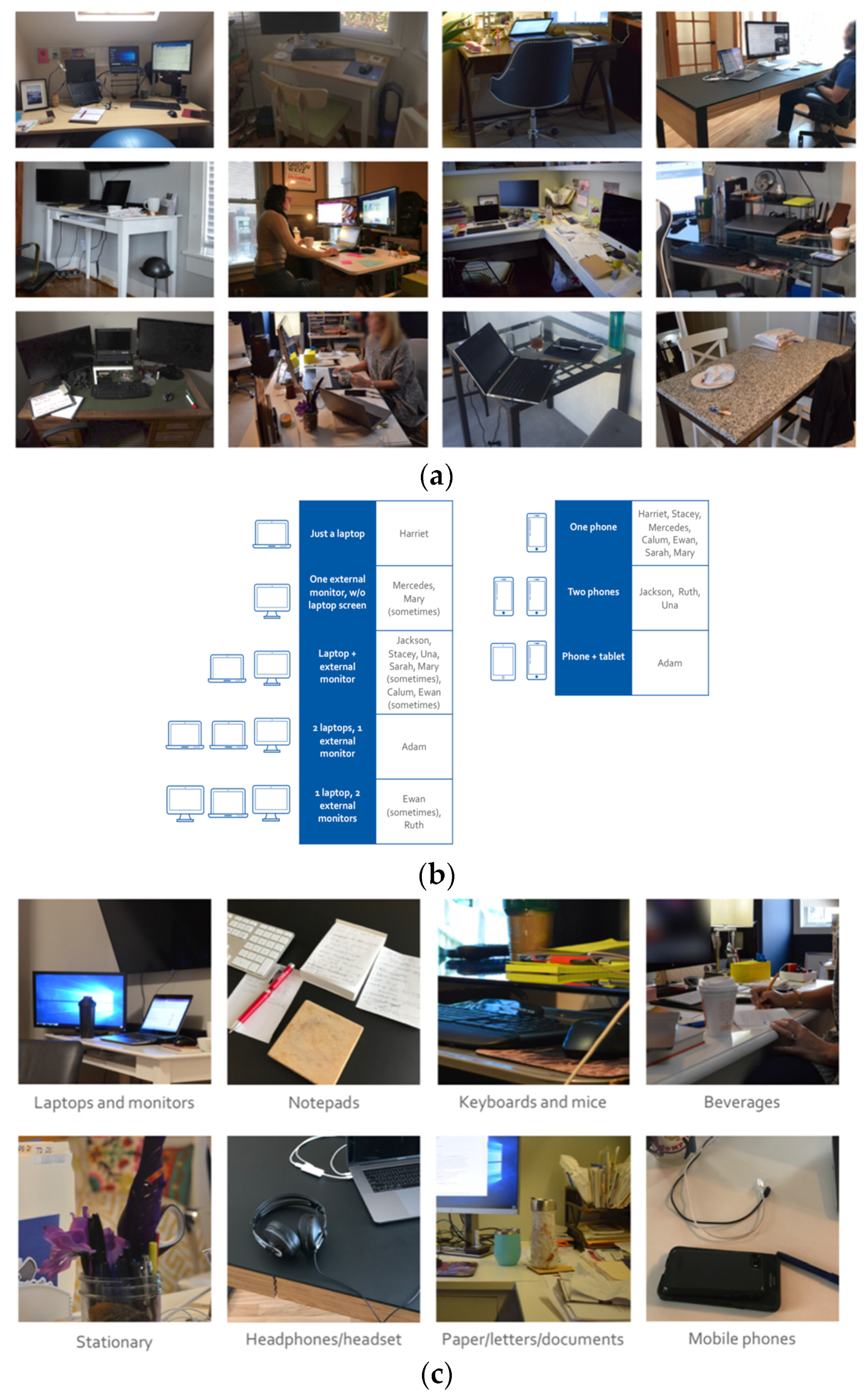
The immediate environment here displayed unique features in relation to desk material and shape; objects and artifacts found on each desk; the number of monitors used; and the type of space created for “availability” (i.e., being available for co-workers). Overall, most participants worked from a desk that was wooden, rectangular, and roughly 1 m long and 0.6–0.8 m wide (cf. Figure 1a). If the employee did not utilize their standard workspace, they were usually on the go. Items that employees frequently needed and could be easily stored were often found on desks, including electronics (cf. Figure 1b), writing materials and beverages, as well as photos and art to create a personal and pleasant environment (cf. Figure 1c).
Figure 1.
(a). Examples of the immediate environmental features of knowledge workers: use of tables and desks. (b). Examples of the immediate environmental features of knowledge workers: use of monitors and electronic devices. (c). Examples of the immediate environmental features of knowledge workers: customization of workspace.
Broader Environment
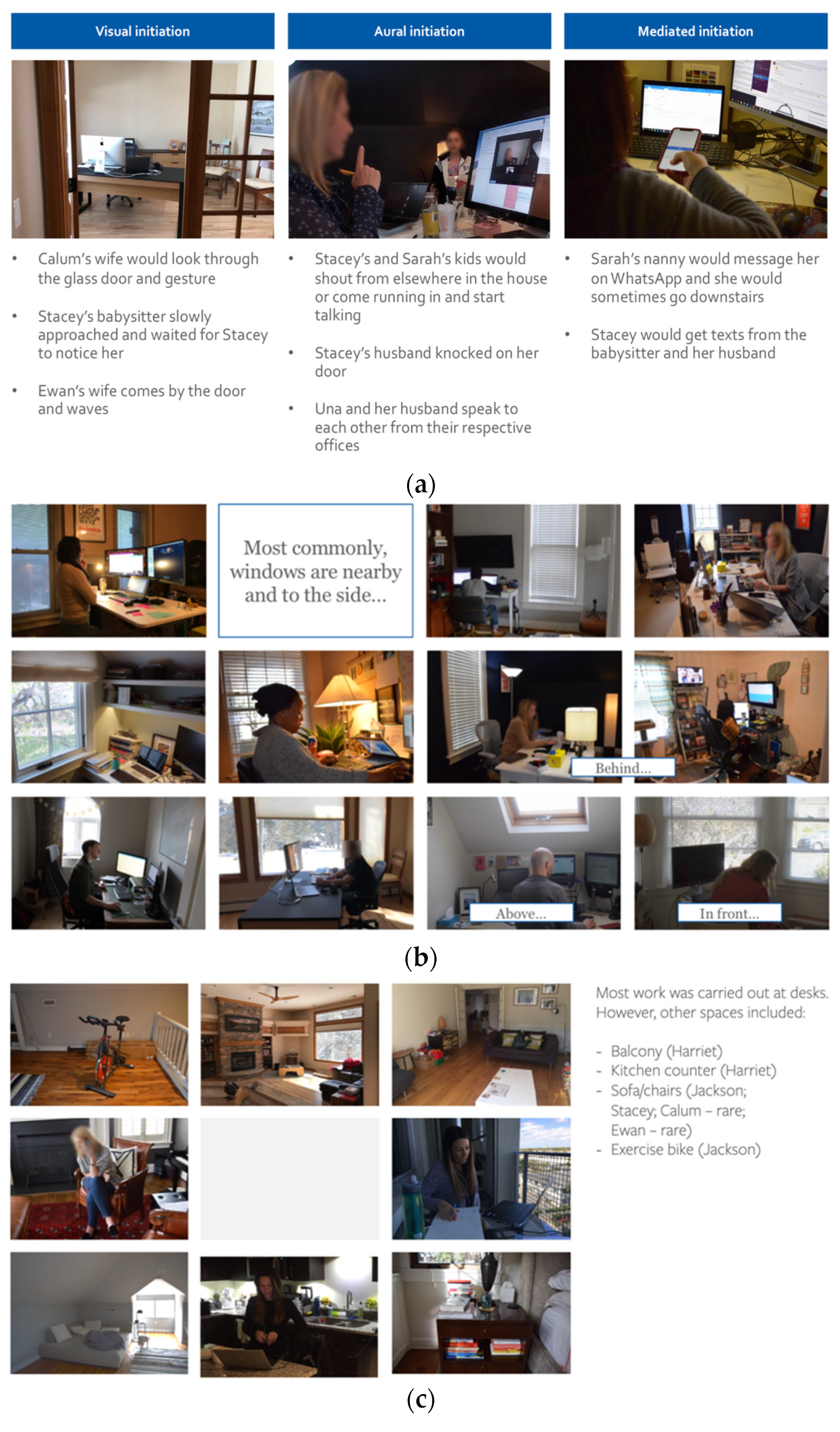
In this study, remote workers spent most of their time at home office desks, designed for predominantly sedentary contexts. Windows were often positioned nearby, but room brightness varied. Pets, children, and other people often entered workspaces. Interactions with them were initiated visually, aurally, or mediated through messages. While most work was carried out at desks, other spaces of interest included the balcony, kitchen counter, sofa/chairs, and an exercise bike (cf. Figure 2a–c).
Figure 2.
(a). Examples of observed visual, aural, or mediated interactions. (b). Examples of window setup in offices. (c). Examples of additional, non-traditional, workspaces utilized.
Movement and Posture
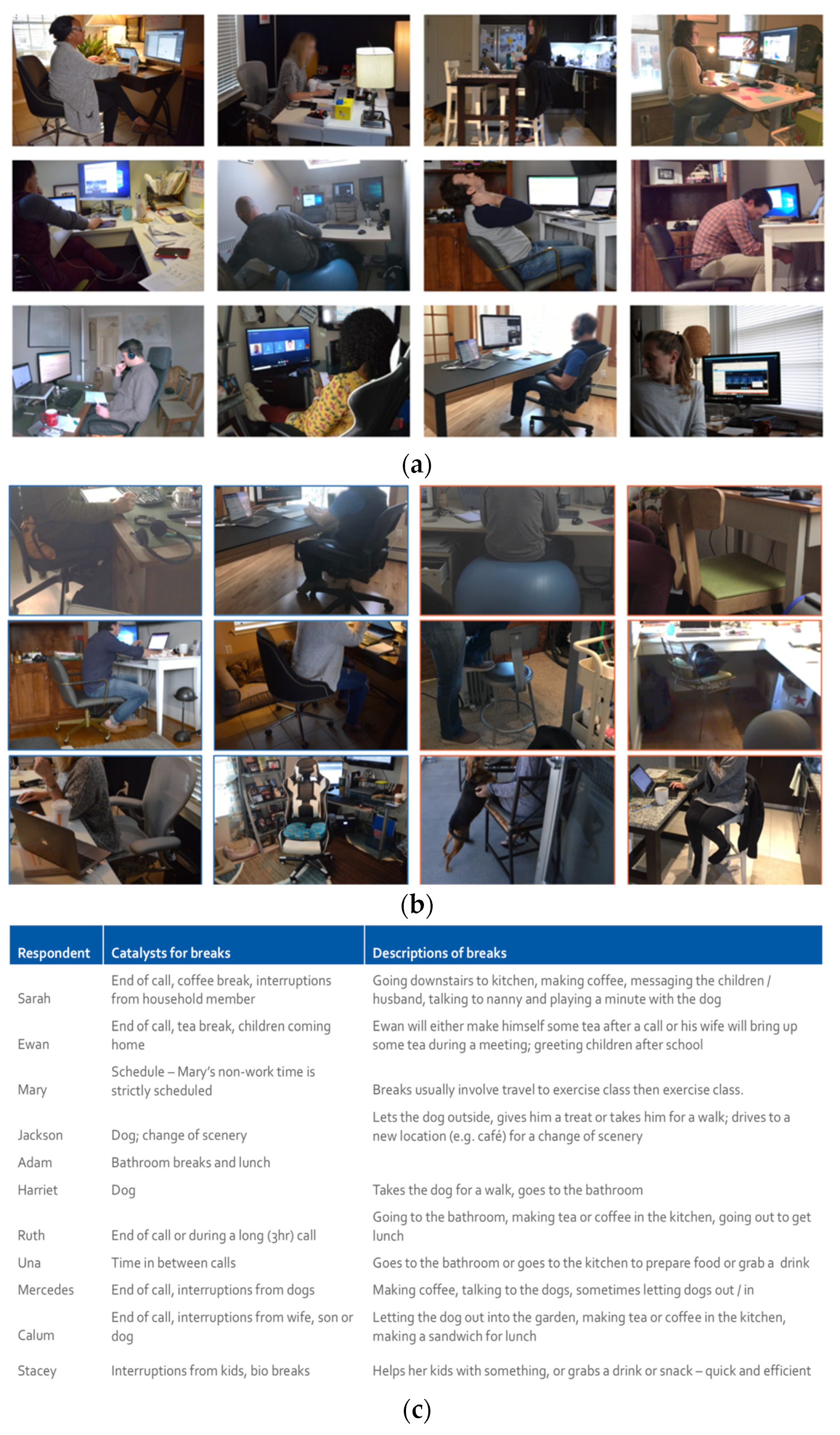
Although half of the participants had rollable chairs, movement was minimal; a wide range of postures was observed, including twisting, and leaning forwards and backwards. Focused work sessions could be as short as a few minutes, 15 or 20 min, and reached up to 45 min to slightly over an hour. Any longer sessions were extremely rare. Meetings were different, as they often lasted at least an hour, while breaks were frequent and often involved leaving workspaces (cf. Figure 3a–c).
Figure 3.
(a). Examples of different postures observed during working. (b). Examples of chairs and ability to move within the remote office work environment. (c). Catalysts for breaks in between work activities, including further descriptions from each knowledge worker.
3.3. Study 2b
3.3.1. Office Working
In the context of office working, we focused on: (i) the physical space, by understanding differences between spatial configurations and identifying key behaviors; (ii) the collaboration space, by observing interactions between employees, both work-related and social; and (iii) individual behavior, by exploring specific individuals to understand work activities and how employees interact with their environment. All three aspects were examined in the light of an open, closed, and balanced office layout (cf. Table 3 for example quotes based on observations related to each office layout).
Table 3.
Intentions of using office layouts for individual and teamwork: sample quotes from executive managers based on observations.
Physical Space
In open layouts, team spaces were highly customized with leave-behinds and a stamp of team personality, displaying a strong sense of camaraderie. Space designations were created, and employees moved freely and frequently between a variety of work zones based on their work activities. While the hierarchy was invisible, managers sat among their teams and meeting rooms were the only closed spaces. On the downside, the open layout forced employees to use quieter, “indoor” voices as they engaged in work and social conversations. The glass doors of closed offices complicated issues around privacy and surveillance, while the physical perks were an outside view, wellness rooms, and an incorporated lunchroom to ensure employee wellbeing. In some cases, the array of team and communal breakout areas was underutilized for individual and collaborative work as well as social exchanges, while any added strategic positioning of “pantries” had the added benefit of refuge and rejuvenation, i.e., snack and beverage offerings.
The closed layout varied across floors according to department-specific activities and norms. Some were more cubicle-heavy with flatter hierarchies, while others were private office-heavy, more for managers and executives. Narrow interzone corridors and discernable individual workspace boundaries minimized opportunities for social interaction, while muted ambient conditions optimized focused work.
The balanced layout with open desks, closed meeting rooms, breakout spaces, and private offices fostered a collaborative environment with options for privacy and refuge when desired. Open collaborative spaces between desks and teams were frequently utilized, and teams sometimes left behind artifacts to reserve their space. Although hierarchies existed, the open-door culture for private offices encouraged communication and connection between managers and employees, as well as connectivity to the outside world. The meeting rooms were away from individual desks, encouraging unplanned, organic conversations as employees walked to meetings together. Comfortable and aesthetically pleasing spaces with touches of company identity created a second home feel and encouraged employees to relax and feel attached to the space. Employee desks placed along the office perimeter increased exposure to natural light.
Collaboration Space
In open-layout spaces, employees forged bonds within their respective teams per seating arrangement and organizational structure. Where there was co-creation, there was team color: artifacts, a gaming setup, chatting, and noise. Whiteboards and post-it notes in closed meeting spaces were the signs of offline collaboration; however, online collaboration was also utilized using the same tools. Spontaneous collaboration happened continuously and ranged from quick meetings to casual corridor chats, spontaneous learning for extended periods of time, and group brainstorming. Teams had their own open huddle spaces near desks and used them for quick meetings, relaxation, and a change in scenery. Cross-department meet-ups occurred in the lunchroom, a company-designated common area, and communal spaces such as micro kitchens and booths had multiple seating configurations and served as collision points.
For closed-office layouts, our study identified grounds for both work and social exchanges, such as play areas and wall stickers, and a leaderboard signaled team camaraderie. Learning moments inspired collaboration on the floor, but the focused nature of work resulted in momentary, if not sparse collaborative behavior.
Lastly, in balanced office layouts, frequent spontaneous interactions occurred within teams and fostered a sense of community across departments. Implicit norms of transparency and open communication enabled face-to-face talk to flow at desks and open breakout spaces, while virtual communication with other offices and clients happened in meeting rooms with optimal tools and technology for digital collaboration. Employees were often found chatting in corridors and at desks. Breakout spaces within teams were rarely used for social interactions; norms around noise levels and boundaries seemed to exist and, in turn, obstruct prolonged social interactions.
Individual Behavior
The open-desk layout created a sense of transparency, while the size and placement of monitors allowed for individuals to create visual boundaries blocking their line of sight to colleagues; the use of headphones was prominent and used to signal unavailability and focused work. Jackets, stickers, and mugs were sprinkled across desk pods, along with the popular desk plant and occasional plush toys. Expressions of individual identity varied and ranged from personal items to symbols of company affinity. Strong online personas existed, often characterized by memes and inside jokes exchanged on Slack, which was seen as part of team-building culture. When it came to personal matters, the open layout was not always inviting, and some took personal phone calls in other places; here, refuge areas were highly utilized for individual work, taking phone calls, and recharging. Employees’ ergonomic preferences manifested personalized work environments. Some preferred stand-up desks, whilst others created cubicle boundaries with pop-out drawers that mimicked a door or a wall. Lastly, limited storage space did not stop employees from modest personalization, such as free-handing flowers and butterflies on whiteboard cubicle partitions.
In closed-office layouts, the personal cubicle was a repository for self-expression and identity building. Employees personalized their cubicles with flowers and photos of family and friends; they were building a “second home”, and, as such, the style and amount of personalization varied by person. The cubicle was the employee’s mainstay, and taking calls was acceptable, if not conventional.
For balanced office layouts, our study demonstrated that individual privacy was limited by an open-desk layout, although employees appeared to be comfortable using headphones to block out surrounding noise when needed. The personalization of desks was allowed, and employees utilized this to varying degrees, showcasing different interests and past work. Company identity was visible on almost all desks through desktop screensavers and mugs. Heads-down work occurred at individual desks, often for extended periods of time. Mobility was encouraged across varied and flexible work zones designed for different concentration and privacy needs. Given elbow-to-elbow proximity to peers, the holding of meetings at individual workstations was rare. Most preferred to use huddle rooms or open breakout spaces.
3.4. Study 3
Based on studies 1 and 2, a survey was conducted to evaluate the need for environment customization in the context of VR (cf. Table 4 for example quotes). This was conducted in order to understand commonalities and differences between real-life needs versus those in VR, and to identify VR design and development implications.
Table 4.
Environment customization in the context of VR: survey themes with example quotes.
Overall, our findings suggest that workspace environments and customization are important at the company level (e.g., brand colors, logos, and mascots), the team level (meeting spaces, information persistence, etc.), and the individual level (avatars, settings, and personal items in the environment). Employee perception of ownership was perceived to be very important and could be categorized as follows: (i) meeting properties; (ii) personal preference; and (iii) company and team identity.
3.4.1. Customizing Based on Meeting Properties
The ability to customize space based on meeting properties included three considerations: the number of attendees; the focus of the meeting; and the utility (i.e., what tools are needed for meetings). To illustrate, the results show the need for a VR environment to create space that facilitates the group size but that could be expanded indefinitely. This fosters more flexible and enhanced communication and interaction, but also allows the option to view content from different angles, enabling shifts in visual attention during, e.g., presentations. Different tasks and meeting goals manifested environmental needs such as collaborative settings, presentation settings, and social settings, including sticky notes and shared screens; a lecture-like setup including a podium and tools to facilitate structured discussions; and a coffee-house environment, with background music and the ability to play games and socialize.
3.4.2. Customizing Based on Personal Preference and Real-World or Preferred Outside Context
Most knowledge workers responded with customization goals that reflected a desire to customize based on individual taste and personal objects, reflecting real-life workspace and decorations, such as pictures of family members, mugs, pens, and paper. Participants, furthermore, emphasized non-VR preferences, such as a realistic view from the window showing distinct geographical locations (e.g., London or NYC offices), as well as the ability to change the view to that of the city/landscape they desired. Respondents wished for space to represent the time of day, appropriate lighting conditions, and outside weather, which they believed affected their mood and focus more positively.
3.4.3. Customizing to Match Company Aesthetics and Team Identity
Lastly, VR was employed to represent the company branding and aesthetics, while team identity was explored in relation to “team-specific personality”, with avatars of each member being displayed in the room, post-it notes of individual comments and typical verbal expressions, and an environmental theme specific to the avatars chosen within the team.
3.5. The Ecology of Work Model
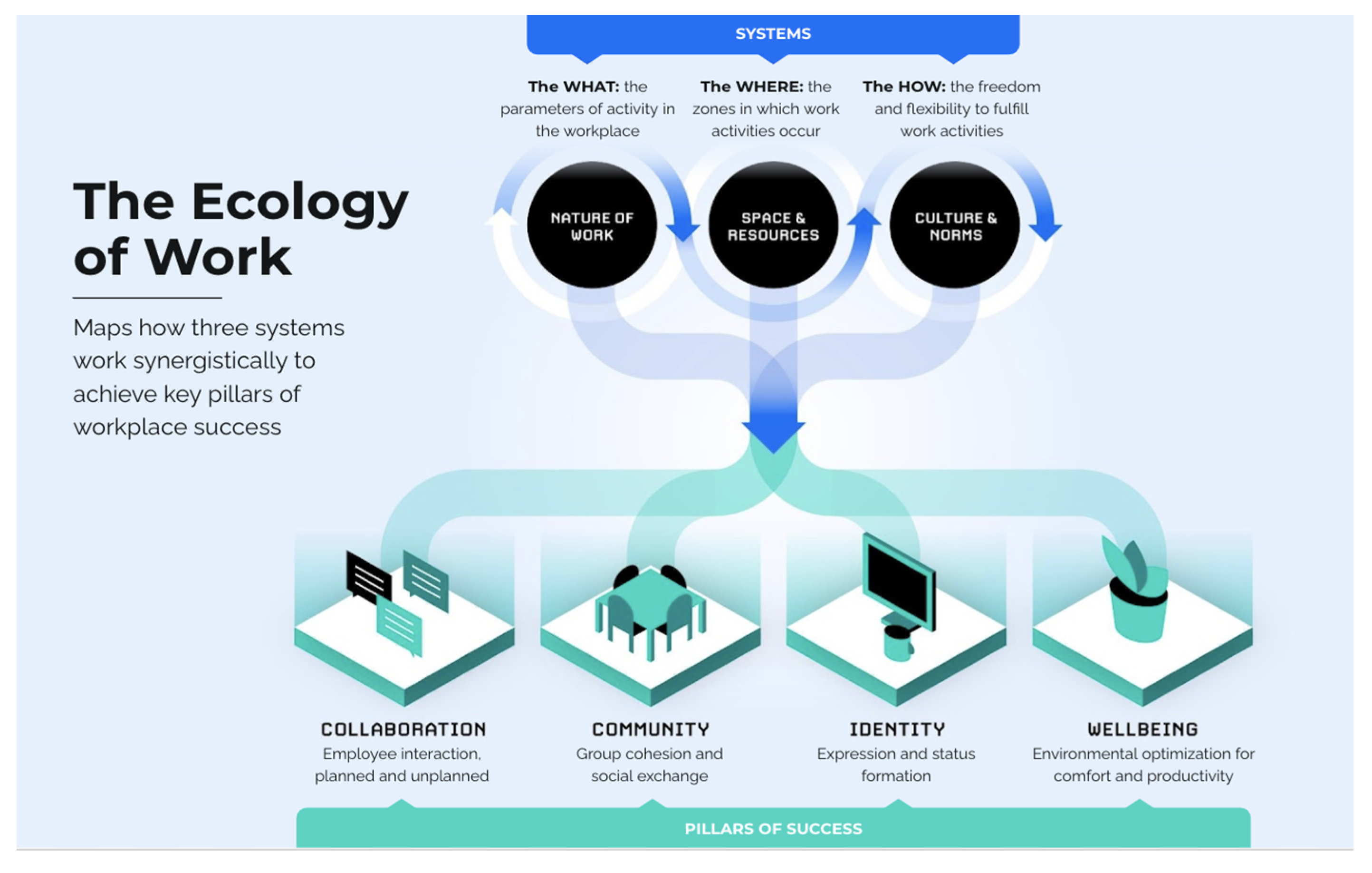
Studies have demonstrated that every organization has unique needs, activities, environments, and knowledge worker characteristics. Drawing from our findings, we have developed an “Ecology of Work” model (cf. Figure 4), featuring systems and pillars of success, including the importance of collaboration, community, identity, and wellbeing, all of which represent design needs and implications in the context of VR.
Figure 4.
The Ecology of Work model.
3.5.1. Systems
Nature of Work
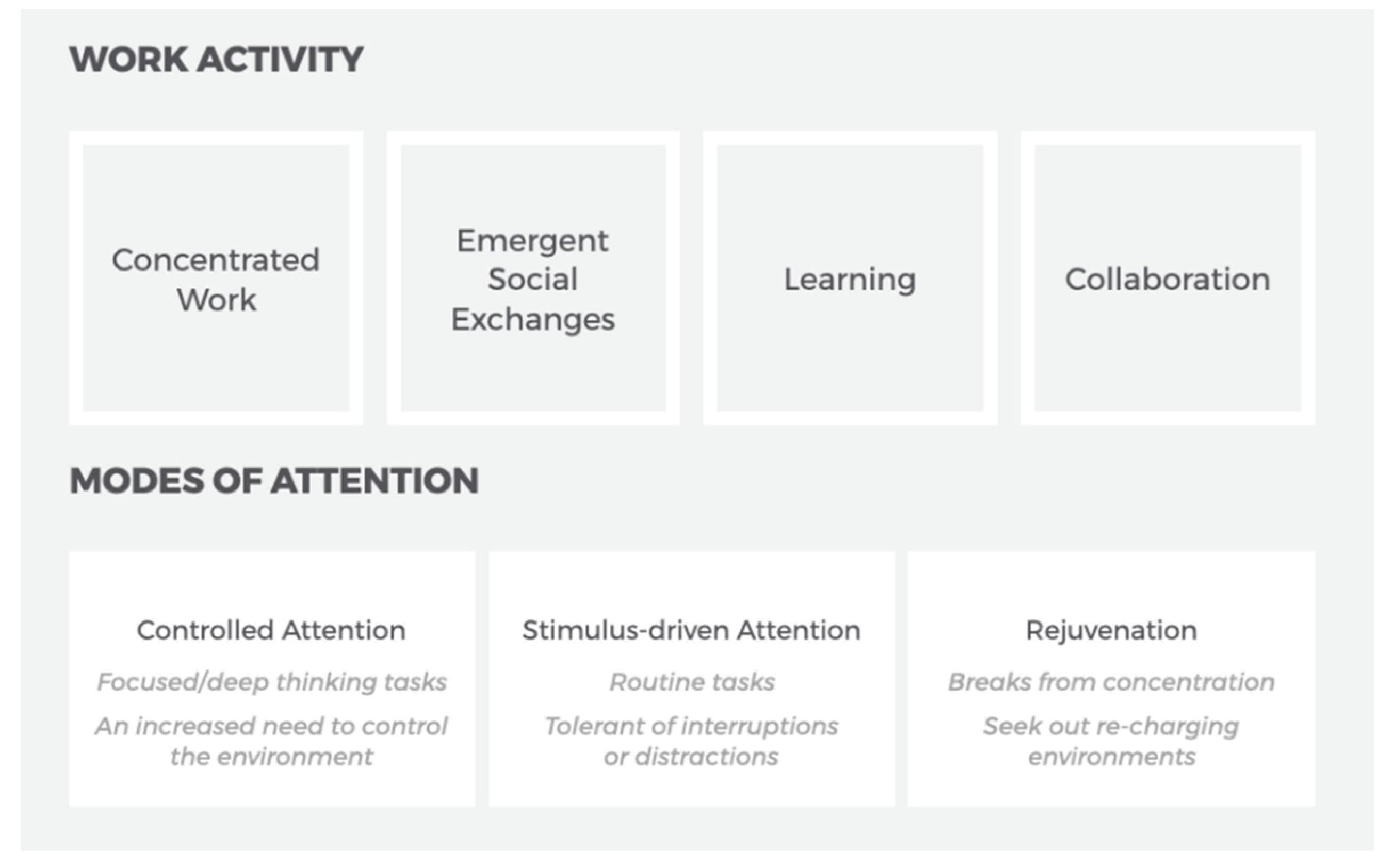
The nature of work is dynamic and highly specific to the task at hand. Employees move between different modes of attention based on their work activity; while concentrated work may require more controlled attention, social exchanges can lean more towards rejuvenation. As work activities diversify and employees move more fluidly between modes of attention, the importance of separate spaces increases (cf. Figure 5).
Figure 5.
Examples of work activities and modes of attention.
Space and Resources
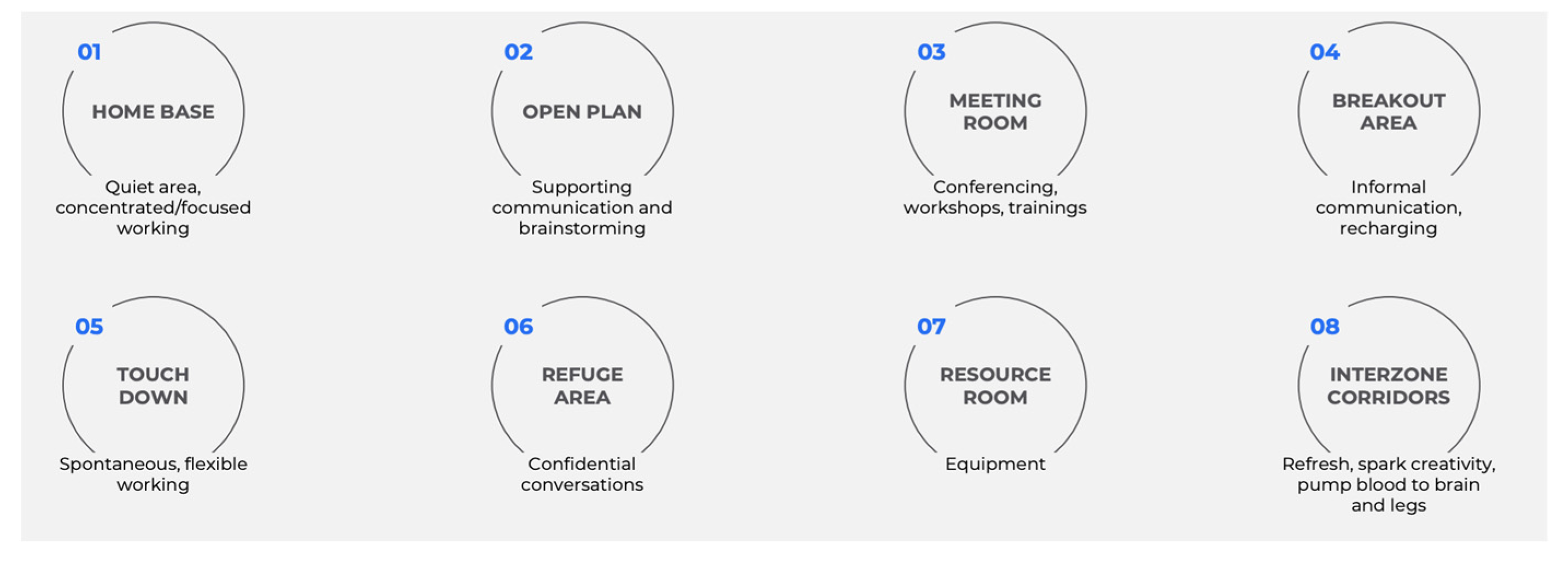
Spaces and resources can either facilitate or prevent work and collaboration. Physical space layout and tangible resources either enforce or eliminate privacy, mobility, and autonomy. As such, a variety of available work zones allows employees to choose where to work based on their activities (cf. Figure 6).
Figure 6.
Proposed zones and designated areas to ensure productivity.
Culture and Norms
Implicit and explicit norms guide employee behavior, interactions, and social cues. They set expectations for individual roles and employee dynamics. The culture of a company is informed by the company’s mission, vision and values, the attitude and conduct of leadership and management, and its organizational structure.
3.5.2. Pillars of Success
Collaboration
Physical layouts can either help or hinder collaborative needs. The strategic placement of work zones (e.g., corridors near the home base) enables more dynamic, spontaneous collaboration. The ability to move freely between zones as needed encourages the complete utilization of spaces.
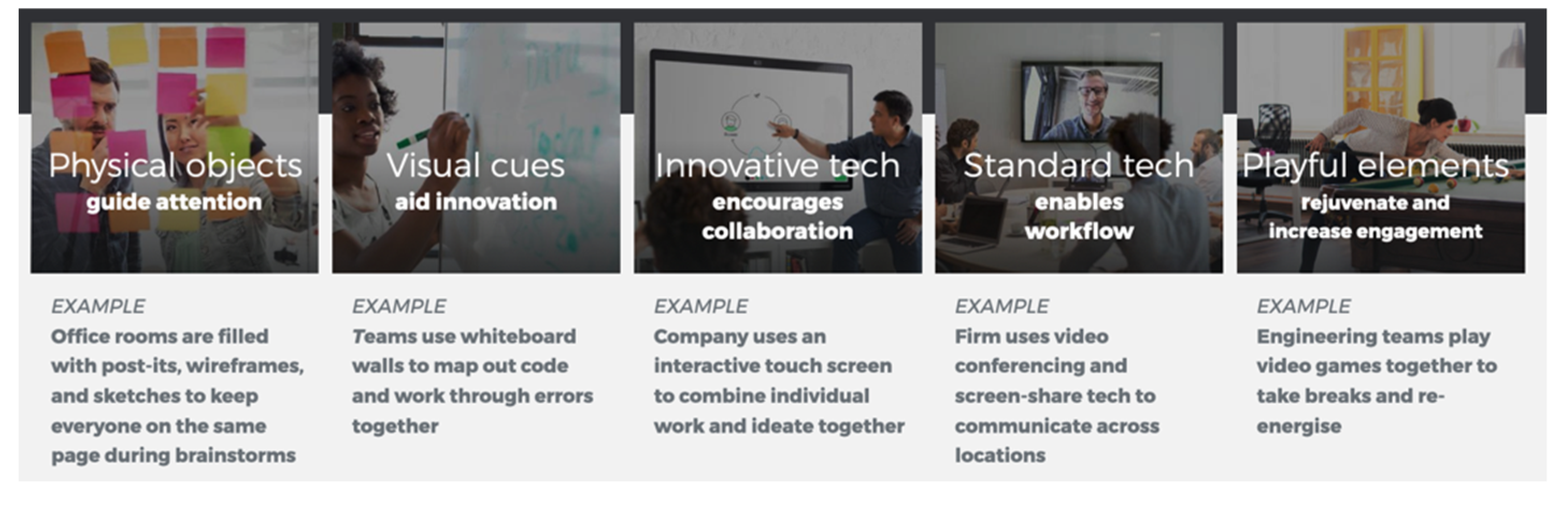
Tools and technology that facilitate collaboration increase engagement and productivity, and can take many forms, including physical objects to guide attention (e.g., sticky notes), visual cues to aid innovation (e.g., whiteboards), innovative technology to encourage collaboration (e.g., interactive touch-screens), standard technology to enable effective workflows (e.g., video conferencing to work across locations), and playful elements to rejuvenate and increase engagement (e.g., playing video games together; cf. Figure 7).
Figure 7.
Illustrations of how technology can facilitate collaboration and increase engagement.
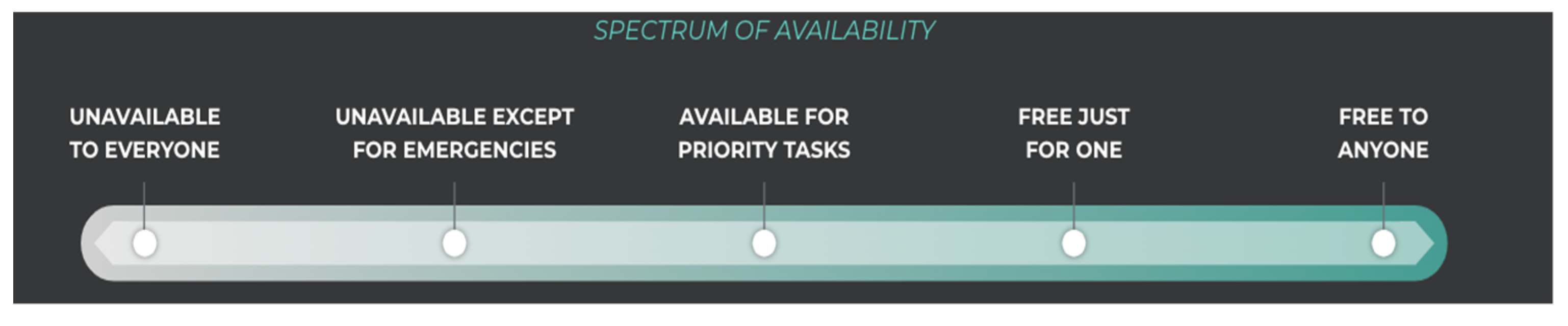
Employees use social cues to signal availability: headphones, making or avoiding eye contact, doors left open or closed, digital status setting, blocking calendar, etc., although not all cues were respected in our studies. Attempts at engagement included the pop-by, digital check-ins, or physical surveys (peeking over desks, standing up to check). Individuals find ways to explicitly signal un/availability when cues do not work, including emoji signs on a closed door to know when to approach. Availability is typically deferred by declining a pop-by or check-in, requesting a planned collaboration instead, or altering body language to lean into the workstation. Availability can be experienced as not merely binary, with employees finding ways to communicate a spectrum of availability (cf. Figure 8). Although interactions are unplanned, spontaneous collaboration can range from asking a quick question to sitting together and working through a task for hours. The duration of these exchanges depends on both the availability of employees and the nature of work activities.
Figure 8.
Availability spectrum for employees.
Community
Community building can happen intentionally or spontaneously. A tight-knit community supports individuals, encourages participation, and eases employees’ relationships with their work and coworkers. Such group cohesion can be facilitated by:
- Planned social exchanges;
- Common areas designed to facilitate casual interaction;
- Catered lunches;
- Events designed for recognition.
Effective space design can support unplanned social interactions, and include breakout spaces to enable the blending of collaboration and relationship building; refuge areas, which permit transitions from public to private conversation; technology integration, which connects employees at all times; and collision points, which facilitate unplanned run-ins.
Identity
Employees and teams use identity to claim space and create ownership. As space becomes more open, individuals struggle with smaller workstations, indistinct boundaries, and a lack of adequate storage. When space encourages identity formation and expression, collaboration improves. Identity exists and forms at multiple levels: industry, which evolves around the industry’s perceptions and reputations; company, which concerns heritage and clients; teams, including previous and current work, team members, and play elements; and employees, manifesting in values, interests, and professional skills (cf. Table 5).
Table 5.
Levels of identities and attributes for companies; teams; and individual employees.
Wellbeing
Employees need to be comfortable in their space before effectively engaging and collaborating with each other. Organizations recognize that employee wellbeing is tied to greater productivity and promote it in the following ways.
- Natural elements: light, humidity, air quality and movement, noise, temperature;
- Ergonomics: sitting/standing desk, rotating monitor stands, storage space, flexible privacy screens, window blinds, and desk lamps;
- Food/hygiene/fitness: mental health and wellbeing are key for productivity, and workspaces, whether VR or in real life, need to have an infrastructure in place that allows for healthy food intake and opportunities to exercise;
- Ambient conditions (noise, lighting): considering poor ambient conditions as a contributor to stress, office spaces need to allow for individual customizations, depending on employees’ unique attention needs;
- Accessibility: New designs of spaces should be universal and easy to use for all members of staff whether mobile or not. This also includes adjustable chairs, desks, and considerations of office space for free movement;
- Resimercial design: Driven by the increase in Millennial and Gen Z workers and the blurring of work and life, the resimercial aesthetic takes elements of the home and introduces them to the commercial workplace. Employees are now accustomed to working from home or from a third place and want some of the same creature comforts in their office environment.
When employees do not have control over their surroundings, they create shortcuts, including umbrellas rigged to shield views; sky lights positioned above desk; commandeering communal space; placing books under their computer to create a standing desk; positioning monitors to create privacy.
4. Discussion
The aims of this study were to (i) conduct expert interviews to gain a perspective on how workplace design can affect collaboration, productivity, and work satisfaction; (ii) explore design and environmental features for remote knowledge workers as well as different knowledge workers in open, closed, and balanced offices, through the lens of ethnographic research and interviews; and (iii) conduct a survey with knowledge workers using VR for solo, teamwork and task work, in order to better understand the importance of VR environments and customization.
Based on the results, we developed an Ecology of Work model, featuring systems and pillars of success. The systems regard the:
- ○
- “what”, including the parameters of activity in the workplace (i.e., nature of work);
- ○
- “where”, addressing the zones in which work activities occur (i.e., space and resources);
- ○
- “how”, investigating the degree of freedom and flexibility to fulfill work activities (i.e., culture and norms).
All three work together to achieve key pillars of success, including collaboration, community, identity, and wellbeing.
4.1. Implication for VR Workplace Design
The following section outlines the implications of our Ecology of Work model for VR workplace design and optimization (cf. Table 6 for a summary).
Table 6.
Ecology of Work model and guideline for VR design and optimization.
4.1.1. Nature of Work
Firstly, VR needs to account for several activities and work arrangements, including individual working, distributed collaboration, and in-office work. We know from previous research [27,28] that productivity is a multifaceted concept, largely depending on deadlines, knowledge workers’ mental states (e.g., attention, motivation); the type of task (single tasks versus multi-tasking); and self-regulation behavior (e.g., task tracking versus external validation). It is, furthermore, shaped and impacted by synchronous and asynchronous collaboration, and the visibility of other team members’ availability and working progress, through information sharing and project management and execution. As a result of this, for VR to be successful, it needs to incorporate tailored environments based on the productivity characteristics aforementioned [27].
4.1.2. Space and Resources
VR needs to account for different teamwork and task work activities, such as individual workspaces for concentration and identity alignment; team/group spaces for increased efficiency and collaboration; and recreational spaces for relaxation and sparking serendipitous interaction and socialization. Open, “transparent” offices have been shown to be overstimulating, and as a result, reduce organizational productivity, suggesting that an environment that is not 100% open may be better suited for collaborative work and increasing creativity [17]. Furthermore, the concept of “distributed cognition” [29] suggests that thinking processes are embedded in the physical work environment. A team can provide “cognitive space” to hold ideas and experiences. Returning to the same workplace each day, keeping meeting notes on the board, and leaving work samples and half-finished prototypes on tables can help teammates maintain a shared project mindset, sharpen their focus, and speed up the collaborative process. Since VR offers an infinite number of possibilities regarding how workspaces are created, these parameters will be important when designing work environments for everyone.
4.1.3. Culture and Norms
Beyond the physical layout of the office, the success of a workplace is largely influenced by the culture and norms of an organization. The ways employees interact with one another, the organization, and their spaces impact productivity, collaboration, and overall wellbeing [9]. Anticipating and understanding the nuances of employee behavior leads to a more optimal use of space and elevates workplace productivity. As such, spaces in VR must be open to all so that workers can freely choose where to be based on their activities. This should, in addition, be supported by the freedom to personalize in settings with low privacy and high distraction levels, which can contribute to positive cognitive and affective states [30]. The personalization of spaces allows workers to feel a sense of control and ownership, by breaking the uniformity of spaces and tapping into the desire to have others see them as they see themselves [31]. It helps affirm specific identity categorization, and create bonds and relationships over shared interests [32].
4.1.4. Pillars of Success: Collaboration
Our findings show that physical layouts and the technology used (e.g., whiteboards, VC, interactive screens, etc.) can have a significant impact on teamwork and task work success. These findings are in alignment with previous work; for example, in our previous work [27], we showed that VR can enable joyful, energized teamwork sessions, with personalized avatars being a significant contributor to team cohesiveness, while the challenges that need resolution to permit effective collaboration in VR include lighter hardware and improved comfort, as well as adequate technology and tool implementations, alongside VR spaces that enable both teamwork and task work.
4.1.5. Pillars of Success: Community
Our results indicate that effective space design can support unplanned social interactions. For example, breakout spaces enable the blending of collaboration and relationship building; refuge areas permit transitions from public to private conversation; technology integration connects employees at all times; and collision points facilitate unplanned run-ins. In the context of VR, future studies will need to consider a similar set up, in order to facilitate all this.
4.1.6. Pillars of Success: Identity
Employees and teams use identity to claim space and create ownership. Identity exists and forms on multiple levels: industry, which evolves around perceptions and reputations; company, which concerns heritage and clients; teams, including previous and current work, team members, and play elements; and employees, as regards their values, interests, and professional skills. Identity and ownership also need to be acknowledged in VR, where customization in relation to (i) meeting properties, (ii) personal preferences, and (iii) company and team identity were mentioned as important factors in the uptake of VR in the workplace.
4.1.7. Pillars of Success: Wellbeing
Employees need to be comfortable in their space before they can effectively engage and collaborate with each other. Important aspects for greater wellbeing and productivity include natural elements (light, humidity), ergonomics (e.g., rotating monitor stands, storage space), food/hygiene/fitness (mental health and wellbeing courses), ambient conditions (noise, lighting), accessibility (ease of use for all members of staff whether mobile or not), and resimercial design (e.g., elements of the home introduced in the commercial workplace). A number of studies have explored the relationship between wellbeing and VR exposure (for a review, see [33]). There is little to support the downplaying of VR and wellbeing at work; our findings encourage the use of VR office design to enable safe use outside (e.g., hot beverages, wires on the floor, headset weight and discomfort) and inside (e.g., eye-fatigue). However, future studies will need to explore VR wellness integrations and their relationships with productivity at individual, team and systemic levels in greater detail.
4.2. Limitations
Future research is advised to address the following limitations:
Through extensive observations, we have shown that successful office environments enhance employees’ sense of belonging, align with their identities, and increase their perceived productivity. Future studies are encouraged to confirm these (snapshot) observations alongside interviews and the utilization of standardized coding schemes that allow one to evaluate team and task performance more objectively, and over a longer period of time, thus enabling the inference of predictive relationships between behaviors shown in an office environment and their impacts on organizational productivity.
Secondly, while we conducted a survey to gather insights on the environmental features needed to enhance productivity in VR, future studies will need to run more experimental designs to understand the impacts of the features on productivity, as well as how variations in these, along with the capacity for personalization, may play a role in productivity outcomes in VR.
5. Conclusions
The aim of this study was to identify the current needs of solo, team, and organizational environments, and how the interplay between them can enhance overall productivity and work engagement. Through expert interviews and extensive observations, we have shown that successful office environments enhance employees’ sense of belonging and align with their identities, as well as offering more communication with peers and a stronger connection to the company. When developing VR for work, future studies are encouraged to objectively investigate the effectiveness of VR workspaces for both teamwork and task work. In particular, addressing multiple dimensions of VR use, and exploring how these compare to other collaborative online tools in relation to its overall return on investment (ROI) will be crucial in establishing a wider adoption in the workforce market. Future research should, therefore, assess VR workspaces and their impact on enhanced processes (e.g., coordination, communication), beneficial emergent states (e.g., cohesion, mutual trust), and individual, group and systemic outcomes (e.g., satisfaction, productivity, identity). Assessing the indicators of all these dimensions will provide a comprehensive understanding of the benefits of VR for work and, thus, ROI.
Author Contributions
L.A.: conceptualization, methodology, investigation, data curation, formal analysis, writing—original draft, writing—review and editing. N.E.-D.: conceptualization, methodology, investigation, data curation, formal analysis, writing—review and editing. T.N.: conceptualization, methodology, investigation, data curation, formal analysis, writing—review and editing. All authors have read and agreed to the published version of the manuscript.
Funding
This paper is independent research funded by Meta. The views expressed in this publication are those of the authors and not necessarily those of Meta.
Institutional Review Board Statement
This study received ethical approval under Meta’s Research Authority, and was conducted in line with the British Psychology Society, UK.
Informed Consent Statement
Written informed consent was obtained from all the subjects involved in the study.
Data Availability Statement
The datasets generated and analyzed during the current study are not publicly available.
Acknowledgments
We wish to thank Tim Loving for his feedback and guidance during the manuscript development.
Conflicts of Interest
The authors declare no conflict of interest. The funders had no role in the design of the study; in the collection, analyses, or interpretation of data; in the writing of the manuscript; or in the decision to publish the results.
References
- Wang, B.; Liu, Y.; Qian, J.; Parker, S.K. Achieving effective remote working during the COVID-19 pandemic: A work design perspective. Appl. Psychol. 2020, 70, 16–59. [Google Scholar] [CrossRef] [PubMed]
- Weiss, P.L.; Jessel, A.S. Virtual reality applications to work. Work 1998, 11, 277–293. [Google Scholar] [CrossRef] [PubMed]
- Watson-Manheim, M.B.; Chudoba, K.M.; Crowston, K. Discontinuities and continuities: A new way to understand virtual work. Inf. Technol. People 2002, 15, 191–209. [Google Scholar] [CrossRef] [Green Version]
- Cipresso, P.; Giglioli, I.A.C.; Raya, M.A.; Riva, G. The past, present, and future of virtual and augmented reality research: A network and cluster analysis of the literature. Front. Psychol. 2018, 9, 2086. [Google Scholar] [CrossRef] [PubMed] [Green Version]
- Kniffin, K.M.; Narayanan, J.; Anseel, F.; Antonakis, J.; Ashford, S.P.; Bakker, A.B.; Bamberger, P.; Bapuji, H.; Bhave, D.P.; Choi, V.K.; et al. COVID-19 and the workplace: Implications, issues, and insights for future research and action. Am. Psychol. 2021, 76, 63–77. [Google Scholar] [CrossRef] [PubMed]
- Węziak-Białowolska, D.; Dong, Z.; McNeely, E. Turning the mirror on the architects: A study of the open-plan office and work behaviors at an architectural company. Front. Psychol. 2018, 9. [Google Scholar] [CrossRef]
- Muzaffar, A.; Noor, P.; Mahmud, N.; Mohamed Noor, N. A comparative study on the impacts of open plan and closed office layout towards. J. Penyelid. Sains Sos. 2020, 3, 49–58. [Google Scholar]
- Nag, P.K. Spatial and behavioural attributes in office design. In Office Buildings: Health, Safety and Environment; Springer: Singapore, 2019; pp. 29–49. [Google Scholar] [CrossRef]
- Bernstein, E.S.; Turban, S. The impact of the ‘open’ workspace on human collaboration. Philos. Trans. R. Soc. Biol. Sci. 2018, 373, 1753. [Google Scholar] [CrossRef] [PubMed]
- De Croon, E.; Sluiter, J.; Kuijer, P.P.; Frings-Dresen, M. The effect of office concepts on worker health and performance: A systematic review of the literature. Ergonomics 2005, 48, 119–134. [Google Scholar] [CrossRef] [PubMed]
- Sakellaris, I.A.; Saraga, D.E.; Mandin, C.; Roda, C.; Fossati, S.; De Kluizenaar, Y.; Carrer, P.; Dimitroulopoulou, S.; Mihucz, V.G.; Bluyssen, P.M.; et al. Perceived indoor environment and occupants’ comfort in European “modern” office buildings: The OFFICAIR study. Int. J. Environ. Res. Public Health 2016, 13, 444. [Google Scholar] [CrossRef] [PubMed] [Green Version]
- Chandra, A.; Chandna, P.; Deswal, S.; Kumar, R. Ergonomics in the office environment: A review. In Proceedings of the International Conference of Energy and Environment, Chandigarh, India, 9–10 April 2021. [Google Scholar]
- Mohd Makhbul, Z.; Shukor, M.S.; Muhamed, A. Ergonomics workstation environment toward organisational competitiveness. Int. J. Public Health 2022, 11, 157–169. [Google Scholar] [CrossRef]
- Khazanchi, S.; Sprinkle, T.A.; Masterson, S.S.; Tong, N. A spatial model of work relationships: The relationship-building and relationship-straining effects of workspace design. Acad. Manag. Rev. 2018, 43, 590–609. [Google Scholar] [CrossRef]
- Jandt, F.E. An Introduction to Intercultural Communication: Identities in a Global Community; Sage Publications: Thousand Oaks, CA, USA, 2004. [Google Scholar]
- Pellow, D. Setting Boundaries: The anthropology of spatial and social organization:setting boundaries: The anthropology of spatial and social organization. Am. Ethnol. 1999, 26, 770. [Google Scholar]
- Appel-Meulenbroek, R.; de Vries, B.; Weggeman, M. Knowledge sharing behavior: The role of spatial design in buildings. Environ. Behav. 2016, 49, 874–903. [Google Scholar] [CrossRef]
- Arora, S.; Mahapatra, M. Virtual reality as a solution for workplace stress. Int. J. Indian Psychol. 2022, 10, 674–690. [Google Scholar]
- Adhyaru, J.S.; Kemp, C. Virtual reality as a tool to promote wellbeing in the workplace. Digit. Health 2022, 8, 4470. [Google Scholar] [CrossRef]
- Mattila, O.; Korhonen, A.; Pöyry, E.; Hauru, K.; Holopainen, J.; Parvinen, P. Restoration in a virtual reality forest environment. Comput. Hum. Behav. 2020, 107, 106295. [Google Scholar] [CrossRef]
- Latini, A.; Di Giuseppe, E.; D’Orazio, M.; Di Perna, C. Exploring the use of immersive virtual reality to assess occupants’ productivity and comfort in workplaces: An experimental study on the role of walls colour. Energy Build. 2021, 253, 111508. [Google Scholar] [CrossRef]
- Li, J.; George, C.; Ngao, A.; Holländer, K.; Mayer, S.; Butz, A. An exploration of users’ thoughts on rear-seat productivity in virtual reality. In Proceedings of the 12th International Conference on Automotive User Interfaces and Interactive Vehicular Applications, Virtual Event, DC, USA, ACM; 2020. pp. 92–95. Available online: https://dl.acm.org/doi/10.1145/3409251.3411732 (accessed on 3 February 2022).
- Ruvimova, A.; Kim, J.; Fritz, T.; Hancock, M.; Shepherd, D.C. ‘Transport Me away’: Fostering flow in open offices through virtual reality. In Proceedings of the 2020 CHI Conference on Human Factors in Computing Systems, Honolulu, HI, USA, 25–30 April 2020; pp. 1–14. Available online: https://dl.acm.org/doi/10.1145/3313831.3376724 (accessed on 6 July 2022).
- Grubert, J.; Ofek, E.; Pahud, M.; Kristensson, P.O. The office of the future: Virtual, portable, and global. IEEE Comput. Graph. Appl. 2018, 38, 125–133. [Google Scholar] [CrossRef] [Green Version]
- Braun, V.; Clarke, V. Using thematic analysis in psychology. Qual. Res. Psychol. 2006, 3, 77–101. [Google Scholar] [CrossRef] [Green Version]
- Cypress, B.S. Rigor or reliability and validity in qualitative research: Perspectives, strategies, reconceptualization, and recommendations. Dimens. Crit. Care Nurs. 2017, 36, 253–263. [Google Scholar] [CrossRef]
- Aufegger, L.; Elliott-Deflo, N. Virtual reality and productivity in knowledge workers. Front. Virtual Real. 2022, 3. Available online: https://www.frontiersin.org/articles/10.3389/frvir.2022.890700 (accessed on 7 July 2022). [CrossRef]
- Kim, Y.H.; Choe, E.K.; Lee, B.; Seo, J. Understanding personal productivity: How knowledge workers define, evaluate, and reflect on their productivity. In Proceedings of the 2019 CHI Conference on Human Factors in Computing Systems; Association for Computing Machinery: New York, NY, USA, 2019; pp. 1–12. [Google Scholar] [CrossRef]
- Perry, M. Distributed cognition. In HCI Models, Theories, and Frameworks; Elsevier: Amsterdam, The Netherlands, 2003; pp. 193–223. [Google Scholar]
- Laurence, G.A.; Fried, Y.; Slowik, L.H. “My space”: A moderated mediation model of the effect of architectural and experienced privacy and workspace personalization on emotional exhaustion at work. J. Environ. Psychol. 2013, 36, 144–152. [Google Scholar] [CrossRef]
- Paoli, D.D.; Sauer, E.; Ropo, A. The spatial context of organizations: A critique of ‘creative workspaces’. J. Manag. Organ. 2019, 25, 331–352. [Google Scholar] [CrossRef] [Green Version]
- Elsbach, K.D. Interpreting workplace identities: The role of office décor. J. Organ. Behav. 2004, 25, 99–128. [Google Scholar] [CrossRef] [Green Version]
- Montana, J.I.; Matamala-Gomez, M.; Maisto, M.; Mavrodiev, P.A.; Cavalera, C.M.; Diana, B.; Mantovani, F.; Realdon, A. The benefits of emotion regulation interventions in virtual reality for the improvement of wellbeing in adults and older adults: A systematic review. J. Clin. Med. 2020, 9, 500. [Google Scholar] [CrossRef] [Green Version]
Publisher’s Note: MDPI stays neutral with regard to jurisdictional claims in published maps and institutional affiliations. |
© 2022 by the authors. Licensee MDPI, Basel, Switzerland. This article is an open access article distributed under the terms and conditions of the Creative Commons Attribution (CC BY) license (https://creativecommons.org/licenses/by/4.0/).