


Abstract
Among the numerous learning management platforms, Moodle is free, open-source software supporting expanding and modularized system functions and services to facilitate online courses or online resources and interactive activities. This study enhanced a personalized learning service for the Moodle e-learning management system, which synchronizes the user’s identity according to the user information database of the third-party user management platform system. According to the user’s demand to provide a personalized e-course, including personalized learning process, e-materials, and learning path to improve learning efficiency. This study adopted the pre-test and post-test achievement to compare the benefit of the personalized e-learning platform. Research samples were students in the “programming” course at the Technology University in central Taiwan. The experiment results indicate: (i) The average post-test result after using the proposed platform was higher than the average pre-test result (before using the proposed platform). (ii) The learning effect gap in the post-test between students was less than in the pre-test result. Hence, the proposed personalized e-learning platform was beneficial.
1. Introduction
With the rapid development of network technology, knowledge and information are freely available on the Internet. Electronic learning (e-learning) generally refers to applying electronic equipment to obtain educational resources or training through the Internet as early as the 1980s [1]. The initial e-learning only provided services for text, documents, or files. With the development of Information and Communications Technology (ICT), the e-learning environment allows various forms of presentation such as text files, graphics, video, dialogue, and multimedia [2,3]. Affected by the COVID-19 epidemic, network and multimedia streaming technology have also helped expand the e-learning environment. Schools and many large enterprises are also turning to e-learning [4,5,6]. Compared with classroom teaching environments, the advantages of e-learning include saving round-trip time and providing e-learning resources at any time and place. In terms of cost-effectiveness, e-learning materials and courses can be reused and modified according to the current teaching environment, combined with digitalization for saving paper printing [7]. E-learning demand continues to improve and shifts to more personalization and multifunctional learning, including interacting with students, online collaboration, exams integrated into school innovations, and educational programs to improve learning effectiveness [7,8,9,10].
Personalized learning aims to provide corresponding learning resources according to the learning characteristics. An e-course takes into account learning ability, knowledge, background, and demand to arrange the e-learning process, e-learning material, and learning path, which includes learning ability, knowledge, background, and so on [8,11,12,13]. It is challenging for a unified e-curriculum to satisfy learners with different learning characteristics, even in the same course. Inappropriate e-course arrangement may cause a learner’s cognitive burden or get lost, reducing learning performance, which only lengthens the time required for learning but affects the willingness to learn. Since there is no single curriculum that can meet the needs of all learners, it shows the necessity of research topics on personalized learning [8,14,15,16].
A learning management platform provides an e-learning environment where learners can learn on-demand autonomously and are not limited by time and place. For example, Modular Object-Oriented Dynamic Learning Environment (Moodle) is the most commonly used open-source learning management platform [17,18,19]. An open source provides developers with adding third-party resources and establishing functions on demand. Moodle official website statistics currently show more and more users around the world (https://moodle.net/sites/, accessed on 13 February 2022).
Moodle originated in outback Australia. Peter Taylor created the first Moodle website at Curtin University. At the end of 2001, users could download Moodle through the Concurrent Versions System (CVS). The official website released Moodle 1.0 in August 2002; users can discuss each other on the new forum. Additionally, Moodle 1.0 has been translated into different languages and created interface sets. In 2003, the official website released the first collaborative generation module and established the Moodle.org organization. In 2004, more than 1000 users registered at Moodle.org websites. In 2008, there were about 500,000 users. In 2010, there were more than one million users and more than 50 partner companies. In 2013, the official Moodle large-scale open online course introduced the essential functions of Moodle to more than 9000 participants [5,9,17,20].
One of the advantages of e-learning is that it can provide related learning resources based on learners’ personal needs, goals, abilities, and interests. Personalized learning allows learners to set personal learning goals, in which it is necessary to understand the needs of each individual. Therefore, relevant research indicates that personalized learning has become increasingly essential to implement and accommodate individual learner differences over the past decade [8]. Tarabasz et al. [21] suggested that integrating the latest digital technologies and innovations into the learning environment are a competitive advantage and the key to success in the education demand.
This study enhanced a personalized learning service for the Moodle e-learning management system, which synchronized the user’s identity according to the user information database of the third-party user management platform system. Such a system was compatible with the student information management system (SIMS) for obtaining the user’s background, learning needs, and goals. According to the user’s demand it provided a personalized e-course, including a personalized learning process, e-learning material, and learning path to improve learning efficiency and willingness to learn. Furthermore, feedback learning results to Moodle are also more beneficial to an instructor improving teaching quality. The pseudocode and the sequence diagram in this study provided implementation references. This study adopted pre-test and post-test achievements to compare the benefit of the personalized e-learning platform. Overall, the average post-test result after using the proposed platform was higher than the average pre-test result (before using the proposed platform). The standard deviation in the post-test result was of smaller scale than that of the pre-test results and approved the benefits of the proposed personalized e-learning platform.
2. Related Works
2.1. Learning Management Platforms
Table 1 shows the most common learning management platforms and compares the system architecture, supported operating systems, and other online resources. As mentioned in the introduction section, Moodle is an open-source learning management system for expanding system functions and services according to the users’ demand. Table 2 and Table 3 compare the teaching materials, teaching interaction, and learning evaluation functions for the most common learning management platforms, respectively.

Table 1.
The comparison of sources for learning management platforms.
Table 2.
The comparison of learning assessment functions for learning management platforms.
Table 3.
The comparison of interactive functions for learning management platforms.
- Moodle is a convenient platform for instructors to develop e-learning resources and teaching interaction;
- Users can expand and module for functions and services;
- The functionality of Moodle is relatively complete compared with that of other learning management platforms.
Therefore, Moodle is currently a learning management platform for universities, colleges, and other educational institutions (https://moodle.net/sites/, accessed on 13 February 2022) with a high usage rate at home and abroad [17]. Gamage et al. [9] indicated that Moodle is widely used for university STEM subjects and is beneficial for learning performance, satisfaction, and engagement. The use of Moodle is growing, and further research is expected. Sinaga and Pustika [5] applied Moodle to teach and learn English lessons during the spread of COVID-19, in which the questionnaire was conducted on 30 students, six of whom participated in the interview. The results of Sinaga and Pustika [5] show a positive attitude towards implementing Moodle as a learning platform. However, students sometimes lack self-management to track learning activities. Jeong et al. [22] developed a Moodle plugin, Middle, to infer personalized instruction for each student based on a Bayesian network model. Jeong et al. [22] indicated that Moodle’s design has significant limitations. It is presented how to overcome those limitations and expand.
2.2. Personalized Learning
One of the advantages of e-learning is that it can provide corresponding learning resources based on learners’ personal needs, goals, abilities, and interests. Since no single learning path can meet the needs of all learners, some scholars have proposed personalized learning. The related research topic is about providing customized learning (learning on demand) for a learner’s needs, goals, abilities, and interests. Some works propose relevant mechanisms for personalized learning recommendations. Chen [11] proposed a genetic-based e-learning system to generate personalized learning paths, which evaluates individual learners’ incorrect test responses in pre-tests to improve learning performance. Chen and Duh [14] developed a personalized intelligent tutoring system based on Fuzzy Item Response Theory (FIRT) to recommend courseware according to appropriate difficulty levels. In [14], FIRT evaluates a learner’s ability through a fuzzy reasoning mechanism and responds to the learner’s difficulty level and comprehension percentage of the learned courseware. Chu et al. [12] proposed a personalized e-course composition approach based on particle swarm optimization, which considers the requirements for meeting learning objectives, required concepts, the difficulty of e-learning material, limited study time, and the balance between inclusive concepts, and implemented a course editing tool to assist educators with less effort and time on the selection of teaching materials. In 2012, Li et al. [13] presented a self-adjusting e-course generation process, which includes determining the conceptual structure, adjusting the difficulty of materials, analyzing learner abilities and learning goals to assemble individuals. Hsieh et al. [15] proposed a personalized English article recommending a system to select appropriate English articles for a learner according to accumulated learner profiles, which utilized fuzzy inference mechanisms, memory cycle updates, learner preferences, and an analytic hierarchy process (AHP) to support the learner in improving English ability.
In the same year, Jeong et al. [22] also developed a personalized learning curriculum planning system based on a decision support mechanism to assist learners in selecting and assembling courses according to their profiles. In 2013, Hsieh et al. [15] developed a personalized creativity learning system (PCLS) to provide adaptive learning, which combined game-based learning, decision trees, data mining, AI techniques, and multi-agents to improve students’ learning of creativity. Chang and Ke [23] also proposed a curriculum assembly system based on a genetic algorithm, and at the same time proposed a dominant legal computing mechanism, in addition to reducing the search space to increase the search efficiency and finding the best solution in a legal solution space. In 2017, Chao et al. [24] proposed a “Nursing Ethics Issue Decision Analysis System“, an online interactive situational learning environment. Most of the students gave positive affirmations in feedback from the final student questionnaire. Smatkov et al. [25] proposed a method of centralized distribution of university e-learning electronic educational resources, which applies structured analysis of the problems and objectives of the system. Smatkov et al. [25] takes into account electronic educational resources for e-learning to enhance the timely completion of multi-session e-learning and the availability of a reserve of electronic educational resources. In addition, Wang et al. [26] proposed Top-N based on TP-GNN (Graph Neural Network) to predict learners’ preferences and needs to help learners take personal courses in MOOCs (Massive Open Online Courses). Benmesbah et al. [27] proposed an improved genetic algorithm called a self-adaptive genetic algorithm to select appropriate learning objects according to the needs of learners and provide personalized curriculum assembly. Goštautaitė and Kurilov [28] investigated exemplar-based approaches and possibilities, combined with case-based reasoning methods for automatically predicting student learning styles in virtual learning environments. Goštautaitė and Kurilov [28] utilized the Bayesian Case model to diagnose a student’s learning style according to the student’s behavioral activities performed in an e-learning environment.
Chen and Wang [8] further stated that personalized learning allows learners to set personal learning goals, in which it is necessary to understand the needs of each individual. Therefore, relevant research indicates that personalized learning has become increasingly essential to implement and accommodate individual learner differences over the past decade.
3. Personalized Service (Methods)
This paper expands the personalized service compatible with Moodle e-learning management system to achieve personalized processing with a self-improvement mechanism. The user identifications for service permissions include (1) administrators, (2) instructors, and (3) learners:
- Administrator
- Personalized learning map service: uses graphic visualization to realize a personalized learning map, allowing administrators to maintain personal learning requirements and characteristics. By using the course service of the management platform learners, administrators set required subjects for learners.
- SIMS synchronization service: imports the third-party user management platform system (such as the human resource management system used by the industry or the school’s educational administration registered student management system) into Moodle. By synchronizing the user identity with authority to use the service in Moodle, the administrator and the instructor can list and print the learner information for a specific Moodle course in a report format.
- Instructor
- Learner Portfolio service: combines with Beacon indoor positioning technology; the teacher sets the list of students taking the course. When the students enter the designated space or classroom, they use a handheld device to perform a roll call. The proposed service collects the learners’ learning history and provides reports to manage and create a teaching environment.
- Learning feedback service: teachers can use the learning feedback service to understand the learners’ learning conditions and ideas after the students complete a course. The system’s fine-tuning is necessary to refine the course materials and procedures continually.
- Learner
- Personalized learning map service: obtains a personalized learning map that matches learning demand according to individual needs and characteristics. The system automatically recommends personalized learning courses to reduce students’ self-loss in the boundless studies and e-materials and affect learning willingness.
- Learning feedback service: the students can use the learning feedback service to deliver the learning conditions and suggestions after the course.
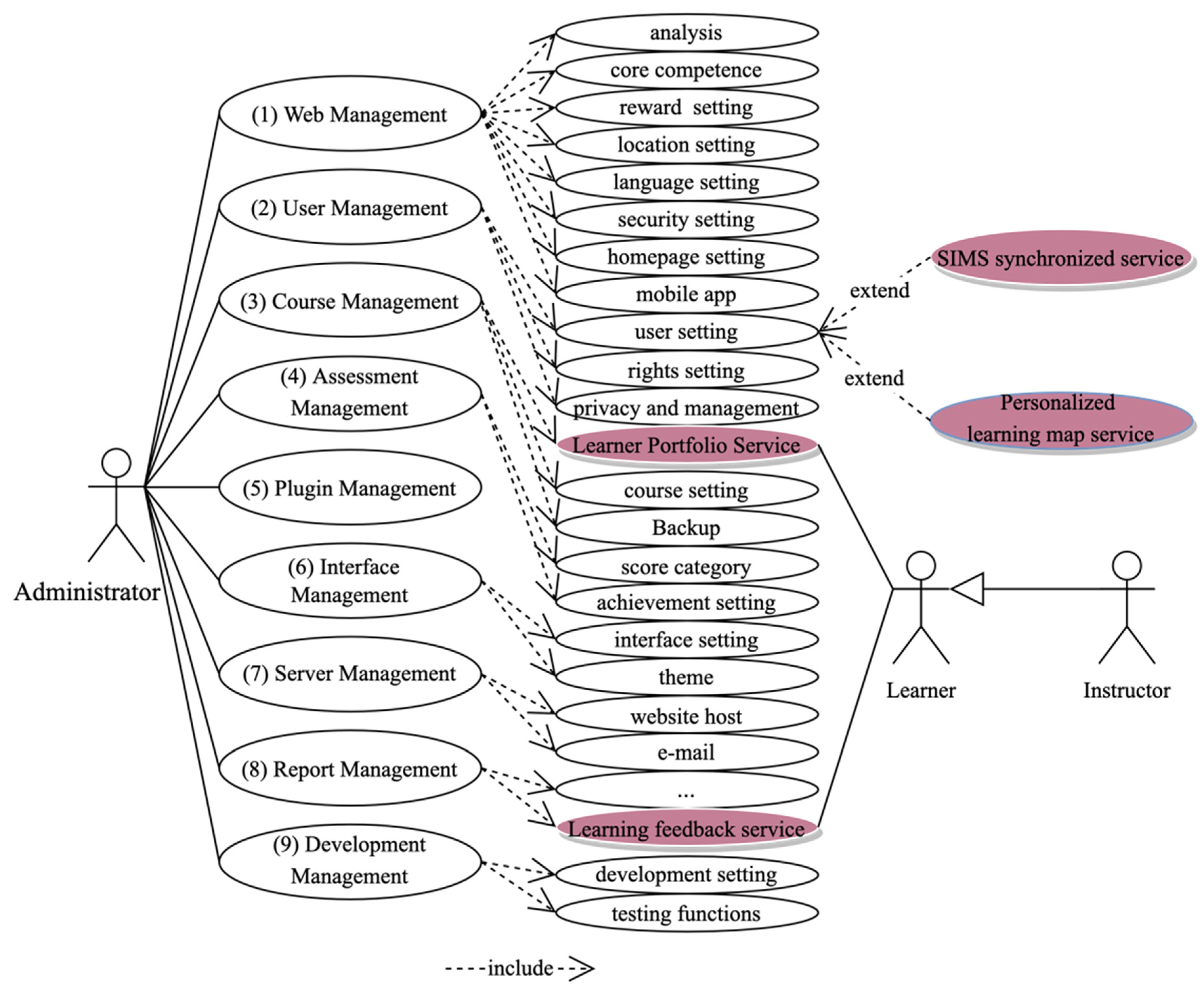
Figure 1 is the use case diagram for the expansion services proposed in this paper, highlighting the expanded services and their corresponding module. The extension services were compatible with the Moodle website’s modules, synchronized the third-party user management system, ensured user information integrity, and realized the comprehensive utilization of learning resources. Automation was adopted to reduce human input and setting, so system problems caused by human factors could be avoided. The learning feedback service continuously improved the modules and services in the Moodle online learning management system.
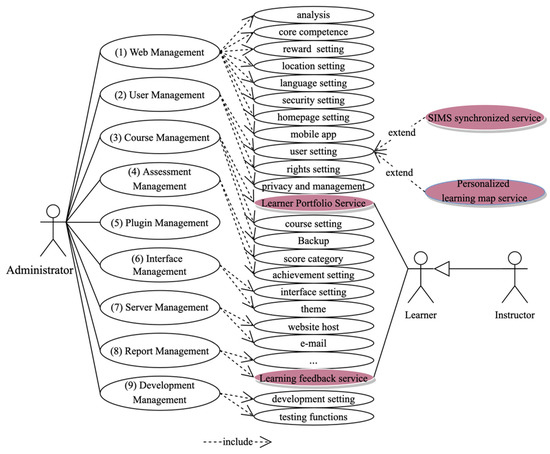
Figure 1.
The use case diagram for Moodle with the expanded services proposed in this study.
The Moodle e-learning management system includes a variety of management modules such as user information, course, and teaching materials arrangements, as shown in Figure 1 use case diagram, whose details include:
- (1)
- The web management module includes core capabilities, analysis methods, medals, website location and language, security, home page, and other settings.
- (2)
- The user management module handles user-related, user rights, and privacy settings.
- (3)
- The course management module manages courses and categories, class application, and backup settings.
- (4)
- The assessment management module sets a scoring item, scale, score.
- (5)
- The plugin management module is for the plugin settings installed on the website, such as reporting, uploading, antivirus, various activity modules, and other detailed function settings.
- (6)
- The interface management module is for setting the interface and theme.
- (7)
- The server management module includes the basic settings related to the website host and e-mail.
- (8)
- The report management module views the items recorded on the website, such as backup, comments, setting changes, event list, log, performance, questionnaire, questionnaire results, and information security status.
- (9)
- The development management module is used by programmers for development, debugging, and testing functions.
The expanded functions include:
- SIMS synchronized service: synchronizes the user profiles from a student information management system (SIMS), which is the essential reference for personalized learning.
- Personalized learning map service: provides personalized e-course based on SIMS user’s learning demands and characteristics.
- Learner portfolio service: provides a course enrollment and deposits learners’ learning situations.
- Learning feedback service: completed learning feedback is used to explore the impact of different teaching factors on learning effectiveness.
The following subsection presents the details of the expanded services.
3.1. SIMS Synchronized Service
SIMS synchronized service converts the portfolio of SIMS for a Moodle e-learning management system, in which functions are divided into users’ portfolios import and export.
- Users’ portfolios import function: an administrator can upload users’ portfolios from SIMS into CSV format, significantly reducing the time of labor required in manual input confirmation and modification for comparing users’ identification.
- Users’ portfolios export function: An administrator and an instructor can output the learner portfolio as an XLS or CSV file for convenient report production for a specific course.
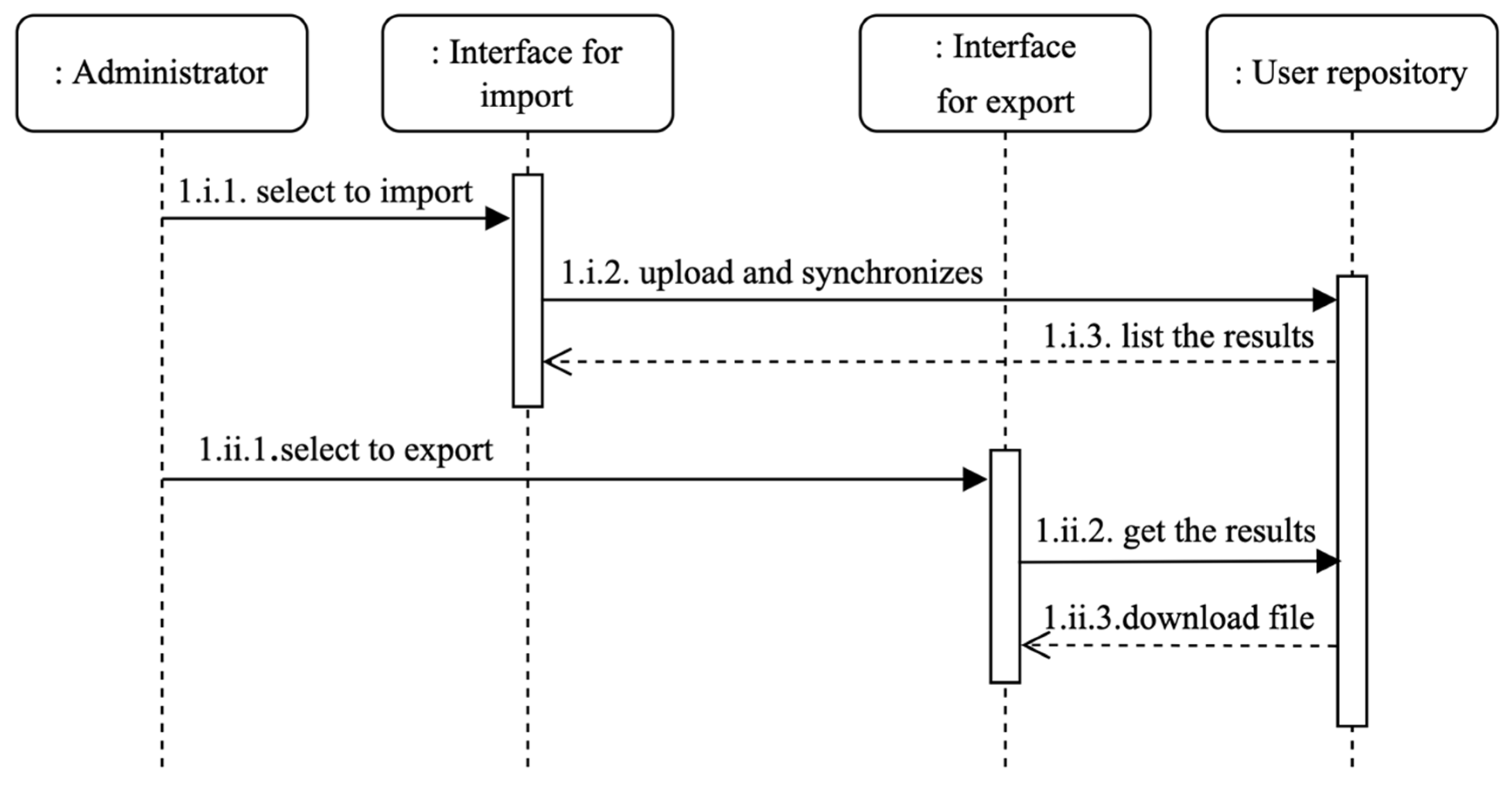
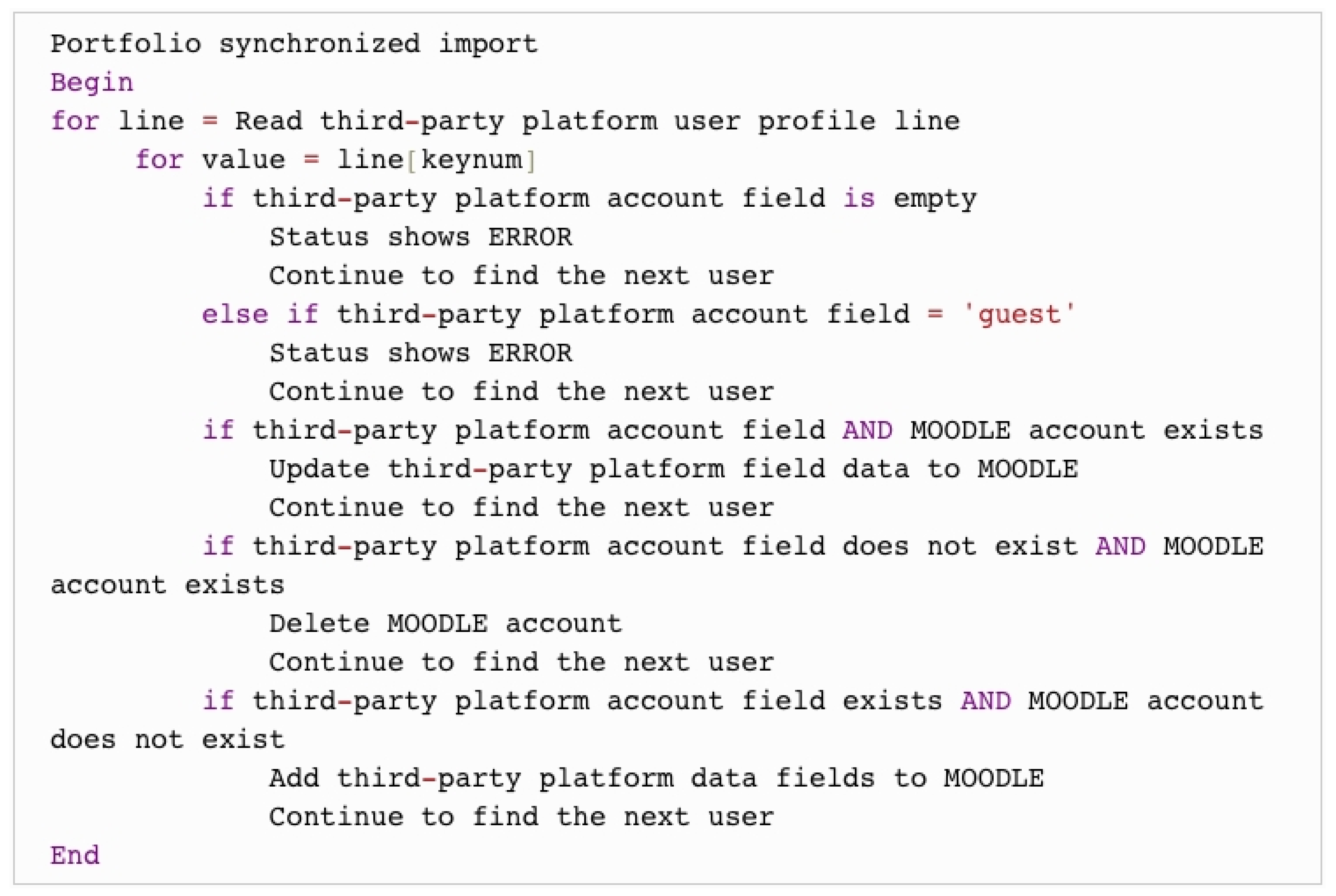
As Figure 2 and Figure 3 show, the procedures for users’ portfolios import function of SIMS synchronized service contain:
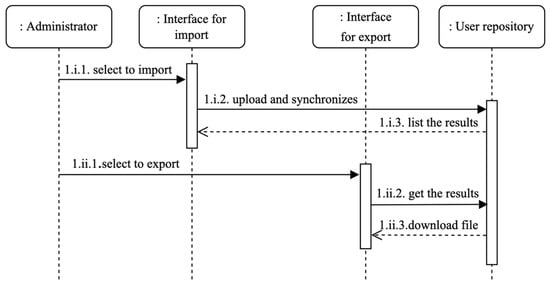
Figure 2.
The sequence diagram for users’ portfolios import function of SIMS synchronized service.
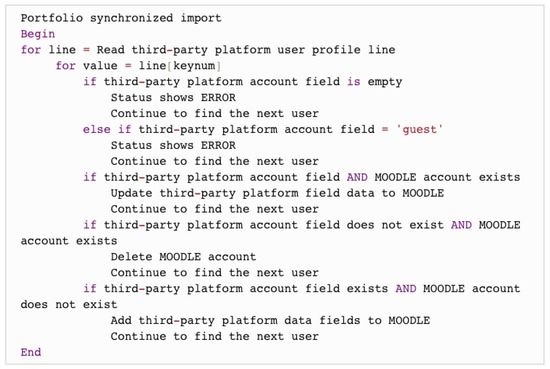
Figure 3.
The pseudocode for users’ portfolios import function of SIMS synchronized service.
- Step 1.i.1.
- An administrator selects the SIMS portfolio synchronized service for the import function.
- Step 1.i.2.
- The administrator converts the SIMS portfolio into CSV format and uploads the CSV file into Moodle. The user profiles comparison contains three situations:
- (1)
- If a user profile exists in Moodle but not in the SIMS database, Moodle deletes the user profile.
- (2)
- If a user profile exists in Moodle and exists in the third-party database, Moodle updates the user profile according to the information in the SIMS database.
- (3)
- If a user profile does not exist in Moodle but exists in the SIMS database, Moodle adds the user profile according to the information in the SIMS database.
- Step 1.i.3.
- Moodle synchronizes the users’ identities and usage rights and lists the synchronized results for the administrator.
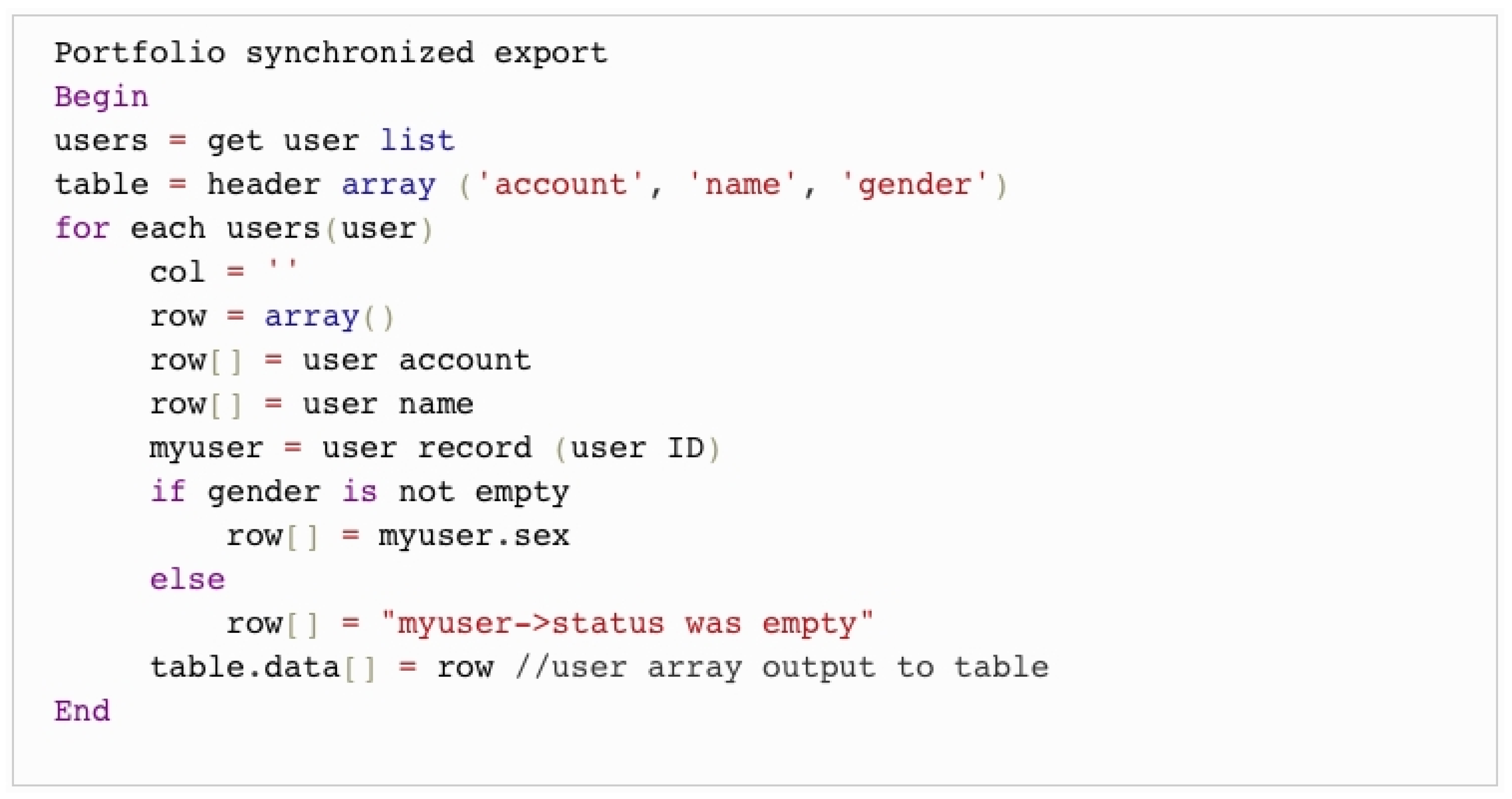
As Figure 2 and Figure 4 show, the procedures for users’ portfolios export function of SIMS synchronized service execute as follow:
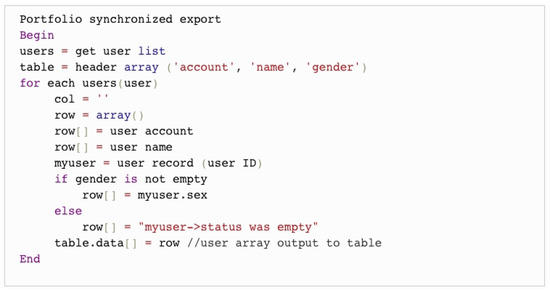
Figure 4.
The pseudocode for users’ portfolios export function of SIMS synchronized service.
- Step 1.ii.1.
- An administrator selects the users’ portfolios export function of SIMS synchronized service for the export function.
- Step 1.ii.2.
- The administrator inquiries about users’ profiles for a course in Moodle.
- Step 1.ii.3.
- Moodle converts the inquired results into XLS/CSV format for the administrator to download the XLS/CSV file.
3.2. Personalized Learning Map Service
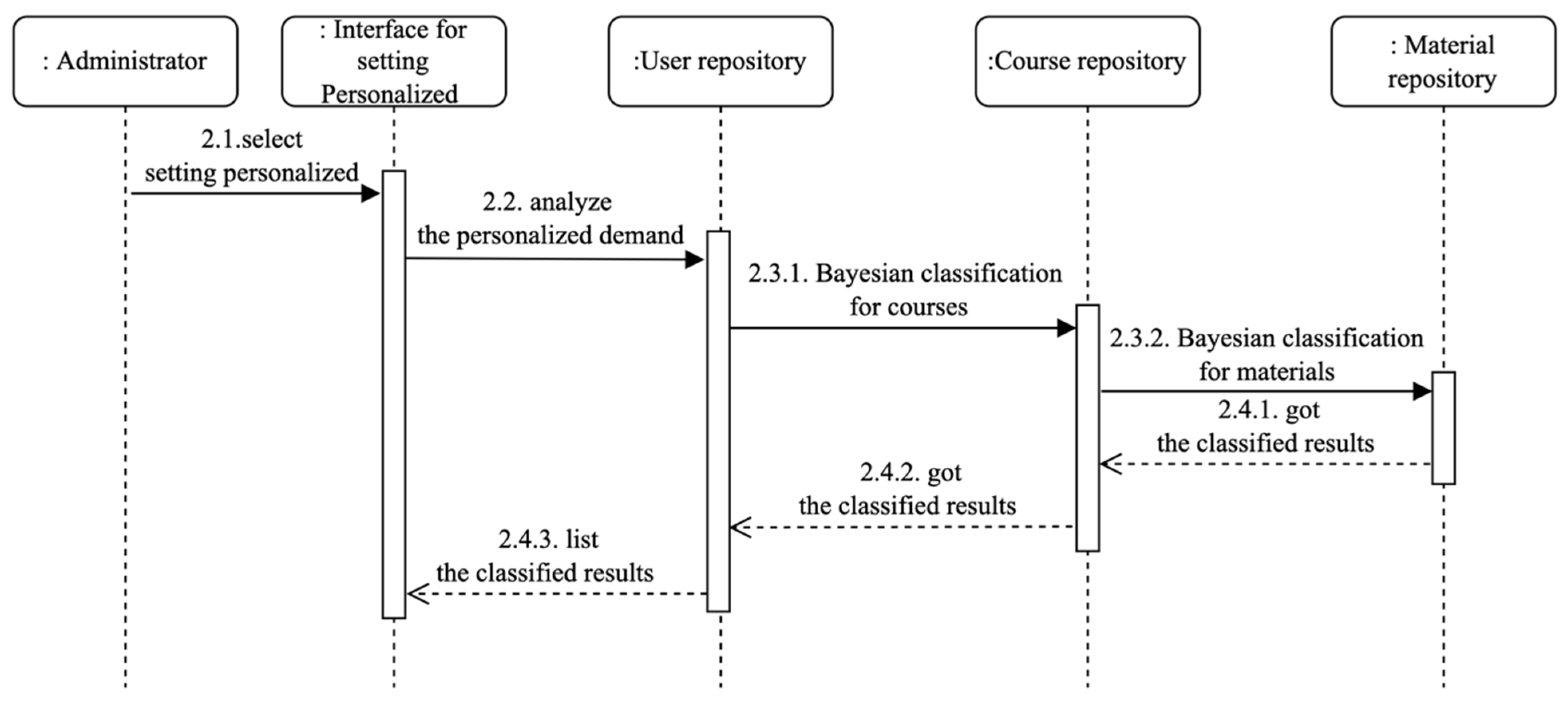
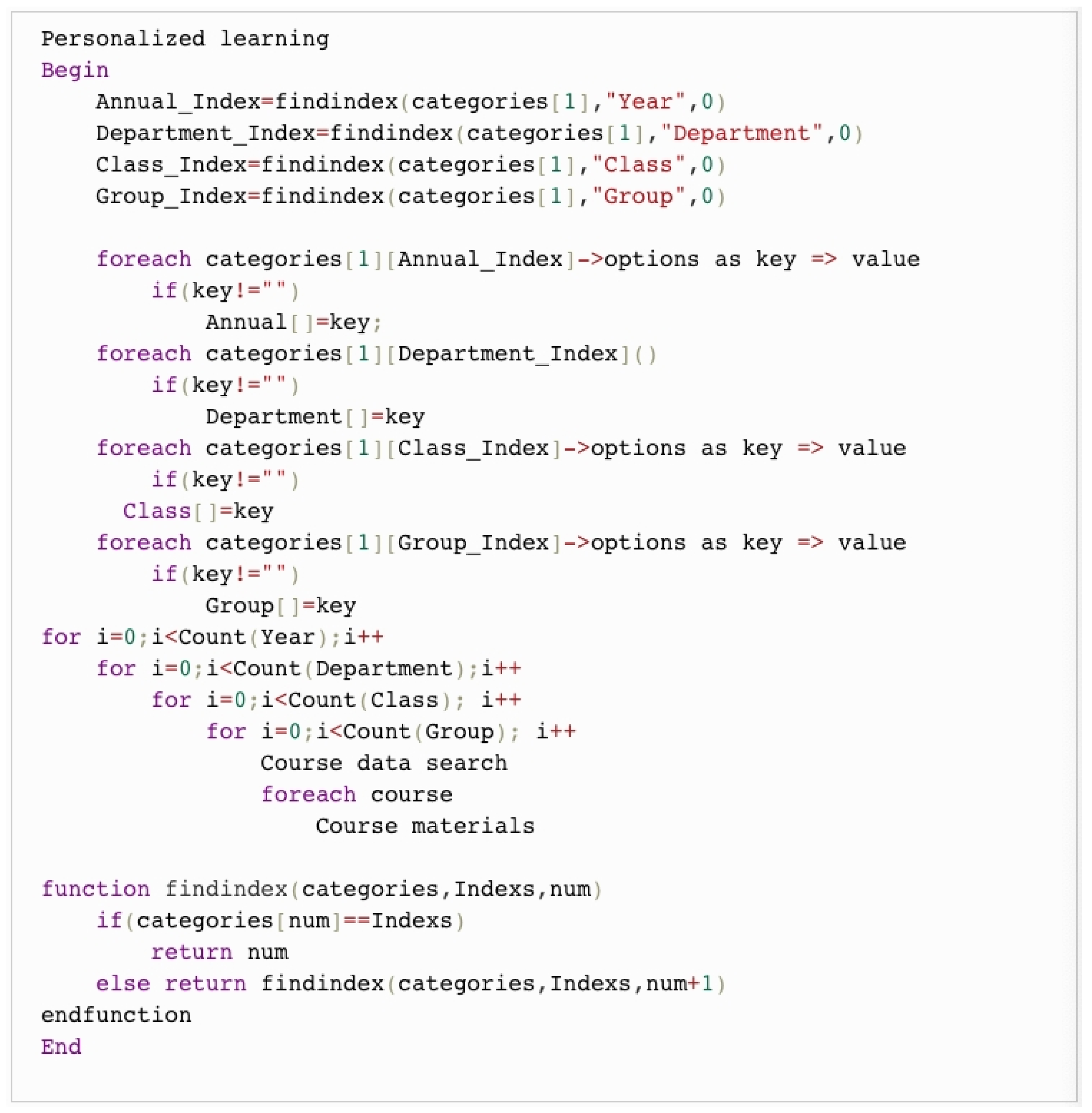
According to the profiles provided by SIMS, a personalized learning map service recommends personalized e-courses based on the learner’s background and demand. The administrator can plan learning steps to enable the learner to effectively achieve learning goals and reduce the complexity of manual courses.
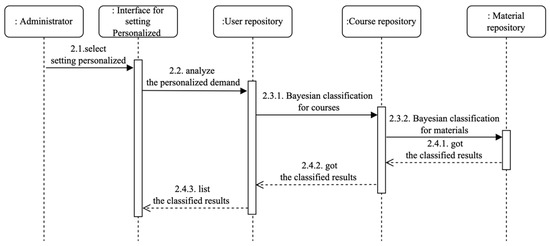
Figure 5.
The sequence diagram for personalized learning map service.
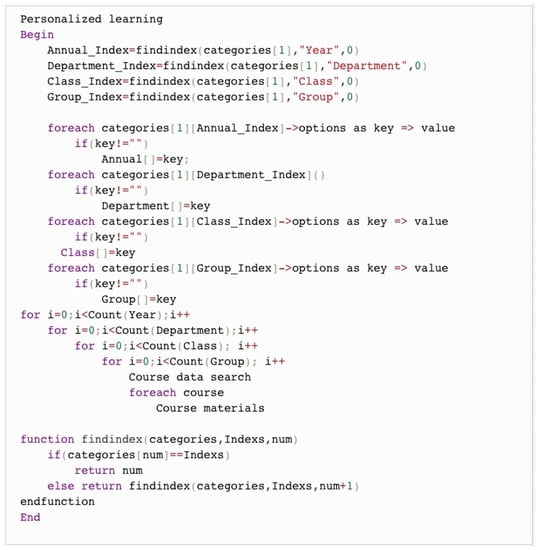
Figure 6.
The pseudocode for personalized learning map service.
- Step 2.1.
- An administrator selects setting the personalized learning map service.
- Step 2.2.
- The service analyzes the personalized demand according to the portfolio imported from SIMS.
- Step 2.3.
- This study applies Bayesian classification [29,30], which uses the probability of known events to infer the category of unknown data. A classification method achieves a minor error by analyzing probability statistics. As the data increases, there is better classification performance.
- Step 2.4.
- The computed result recommends the personalized e-materials and courses corresponding to the learner’s demand.
3.3. Learner Portfolio Service
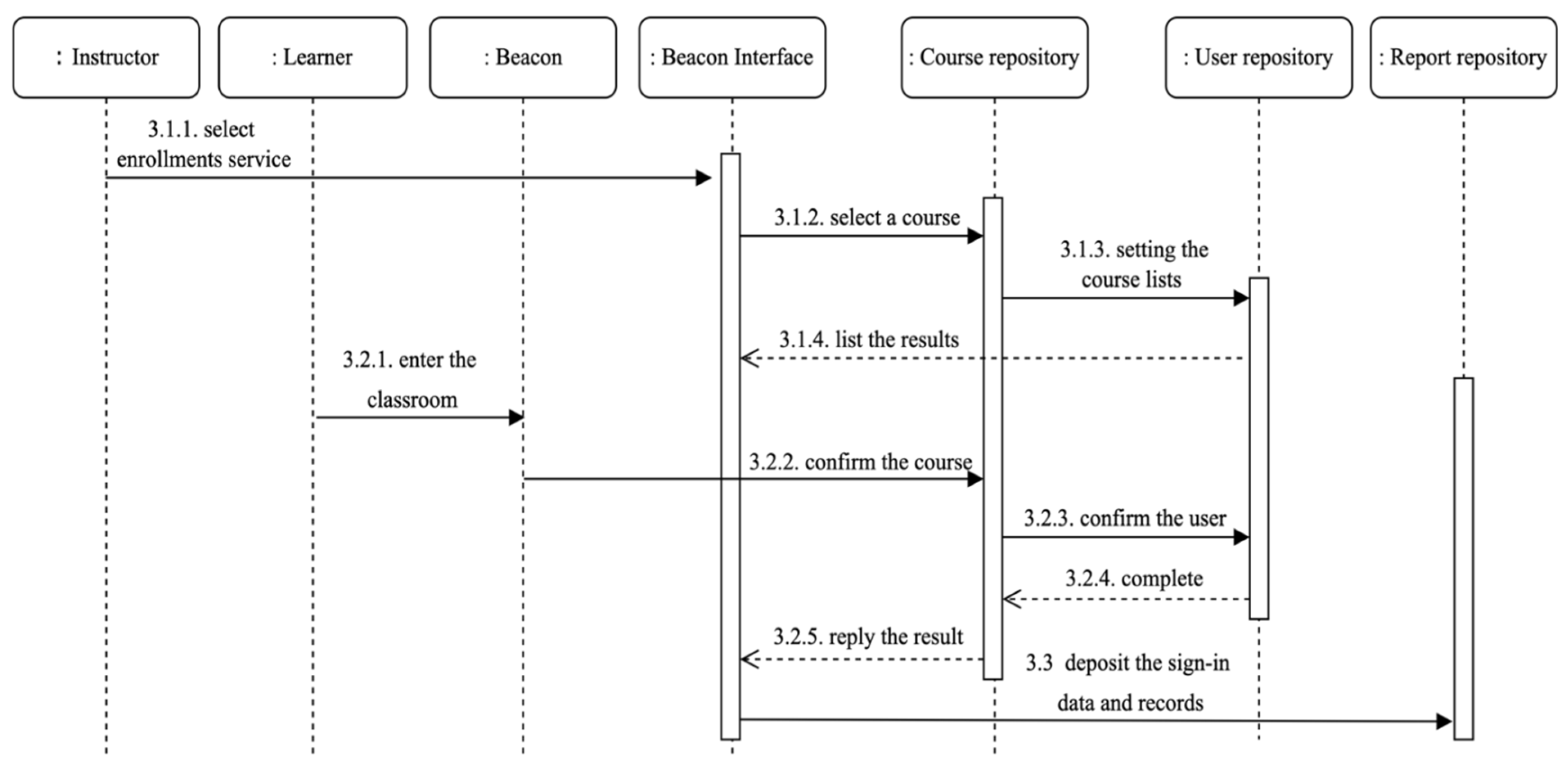
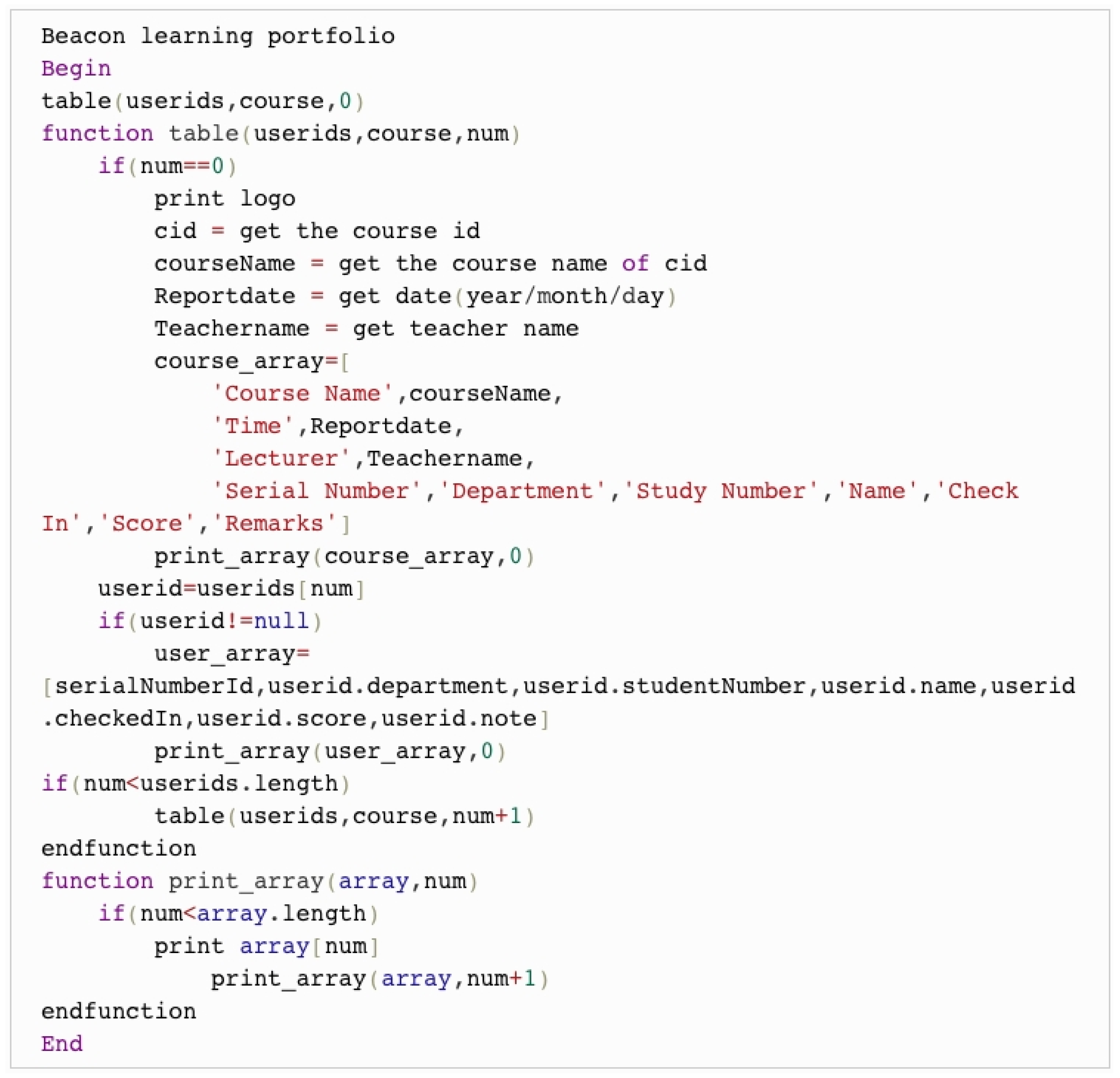
This paper used beacon-based identification for course enrollment. Bluetooth Low Energy (BLE) beacon is an actively broadcast electronic signal used for object identification. An instructor inquired about the list of course participants and checked all participants in the course. When a course participant entered the designated space or classroom, she/he could scan the Beacon with a handheld device, connect to the server via Wi-Fi, and communicate with a list of course enrollment. After searching and confirming, the instructor could understand the teaching situation and collect the learning history of all learners. The procedures in Figure 7 and the pseudocode in Figure 8 executed as:
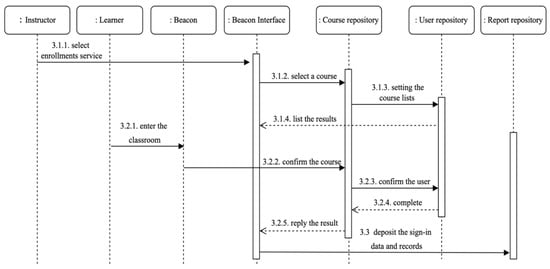
Figure 7.
The sequence diagram for learner portfolio service.
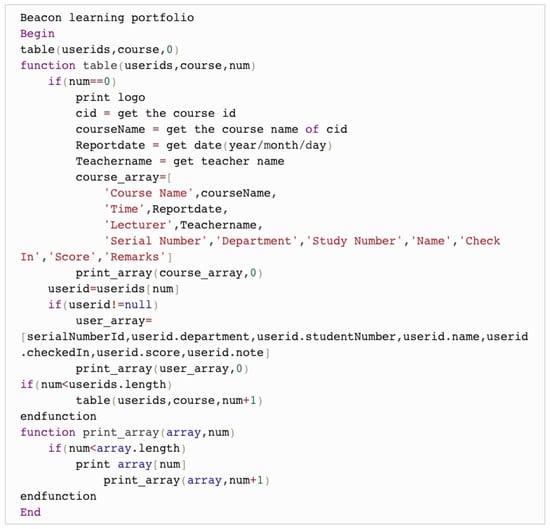
Figure 8.
The pseudocode for learner portfolio service.
- Step 3.1.
- After an instructor used the Beacon sign-in service interface to confirm the course enrollment list, the service would automatically generate the sign-in form.
- Step 3.2.
- When a learner entered the classroom, the service received the Beacon information. The service searched and confirmed the list of course sign-up.
- Step 3.3.
- The system deposited and collected the sign-in data and recorded it in the report for the course enrollment list. The instructor could make it into a sign-in form for printing it out directly.
3.4. Learning Feedback Service
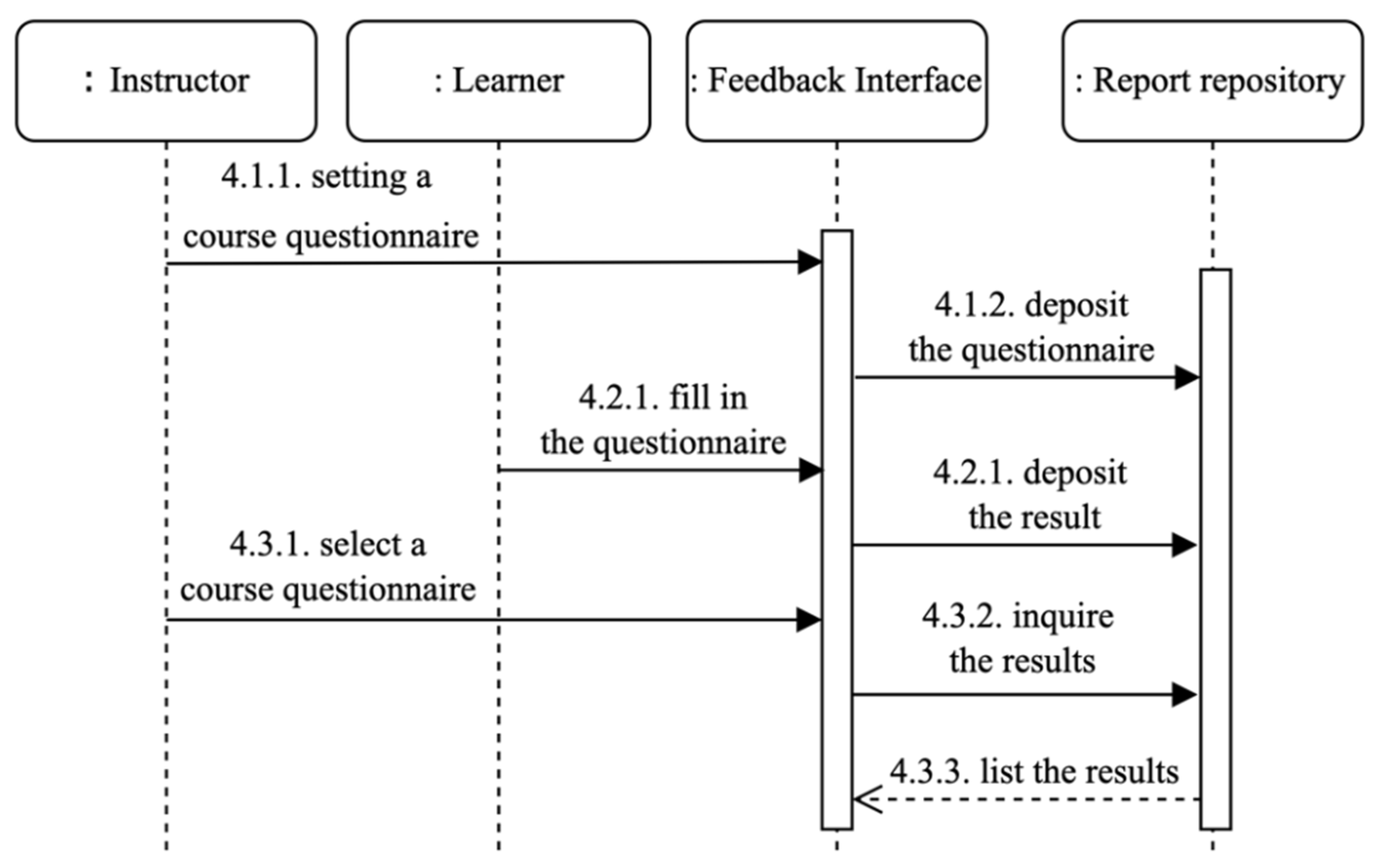
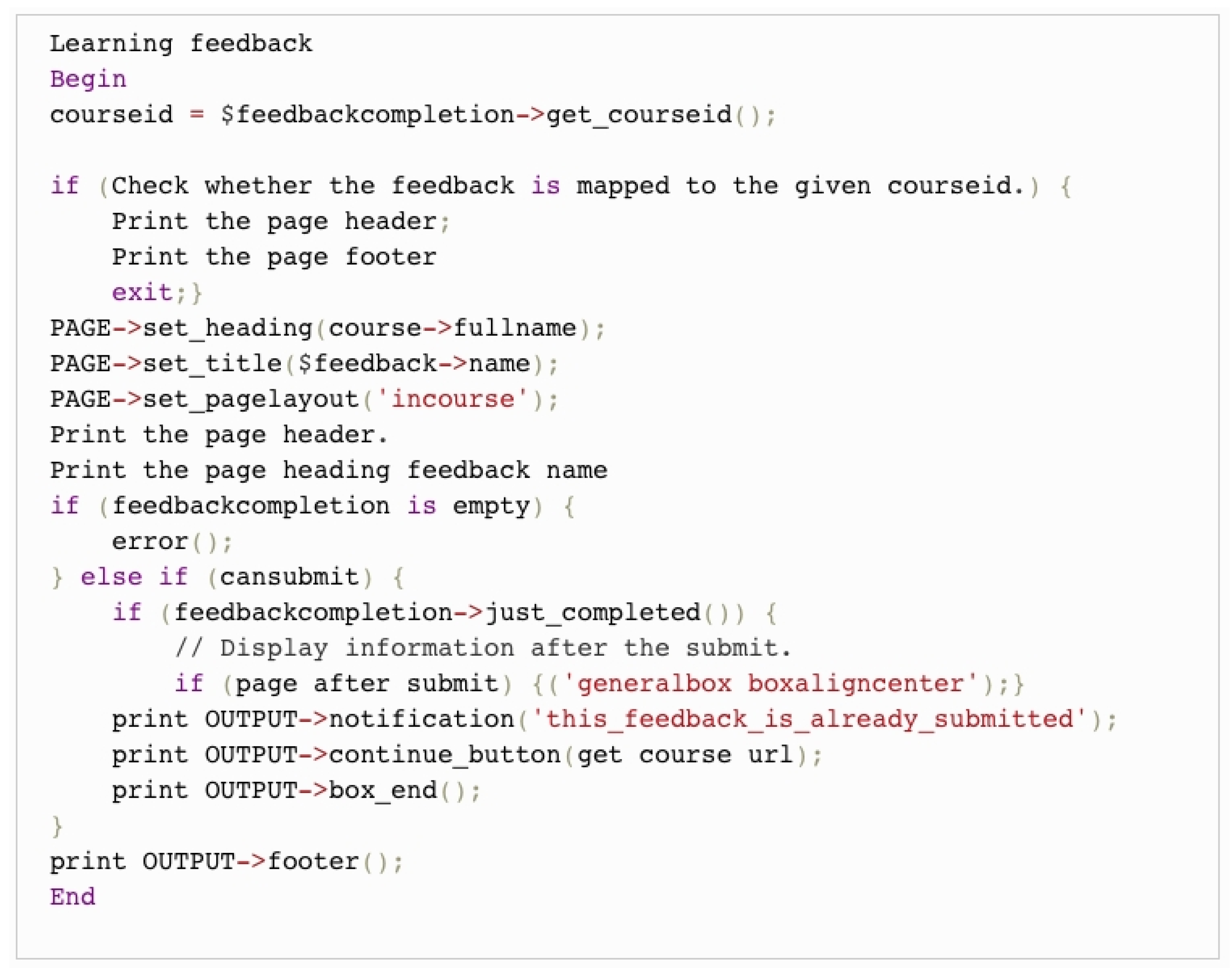
Using the learning feedback service, a course learner could use the Moodle learning management platform to fill in the questionnaire, reducing paper consumption and reducing the manual input of questionnaire results. An instructor could use the learning feedback service to understand the learning status and reflections and then conduct course fine tuning and refine the course materials and procedures, as shown in Figure 9 and Figure 10.
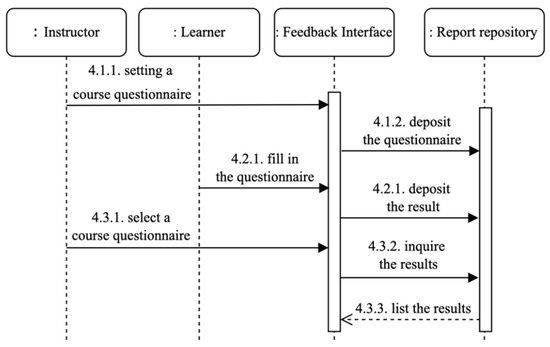
Figure 9.
The sequence diagram for learning feedback service.
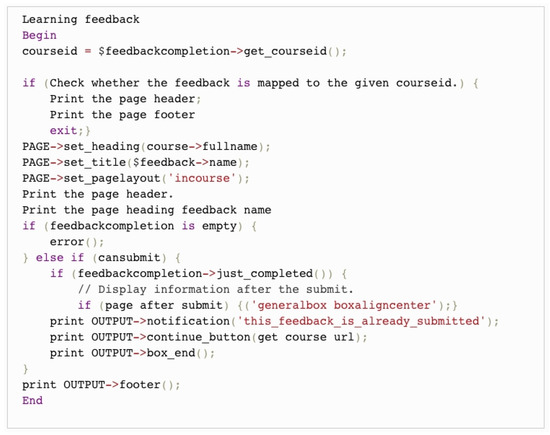
Figure 10.
The pseudocode for learning feedback service.
- Step 4.1.
- The instructor sets up the questionnaire according to the course and reserves it to the course repository.
- Step 4.2.
- After completing the course, the learner fills in the course questionnaire, and the system records it in the report repository.
- Step 4.3.
- The instructor can inquire about the course questionnaire results from the report repository and output them to XLS format for subsequent analysis.
4. Experiment Design
4.1. System Information
The services proposed in this paper were compatible with the Moodle learning platform. As the Introduction section presented, Moodle is an open-source learning platform that employs PHP to support developing function modules and plugins on the Moodle platform. The purpose of the functional module was to make it easier to use between learners and teachers. As Table 4 shows, the operating system of this system used Linux as the working platform. Before installing Moodle, a user needed to build a completed LAMP platform for the basic requirements environment. A LAMP platform contains Linux operating system, an Apache web server, a MySQL or MariaDB database management system, PHP, Perl, Python, and other programming languages, which are open-source.
Table 4.
The system environment setting.
4.2. Experiment Procedure
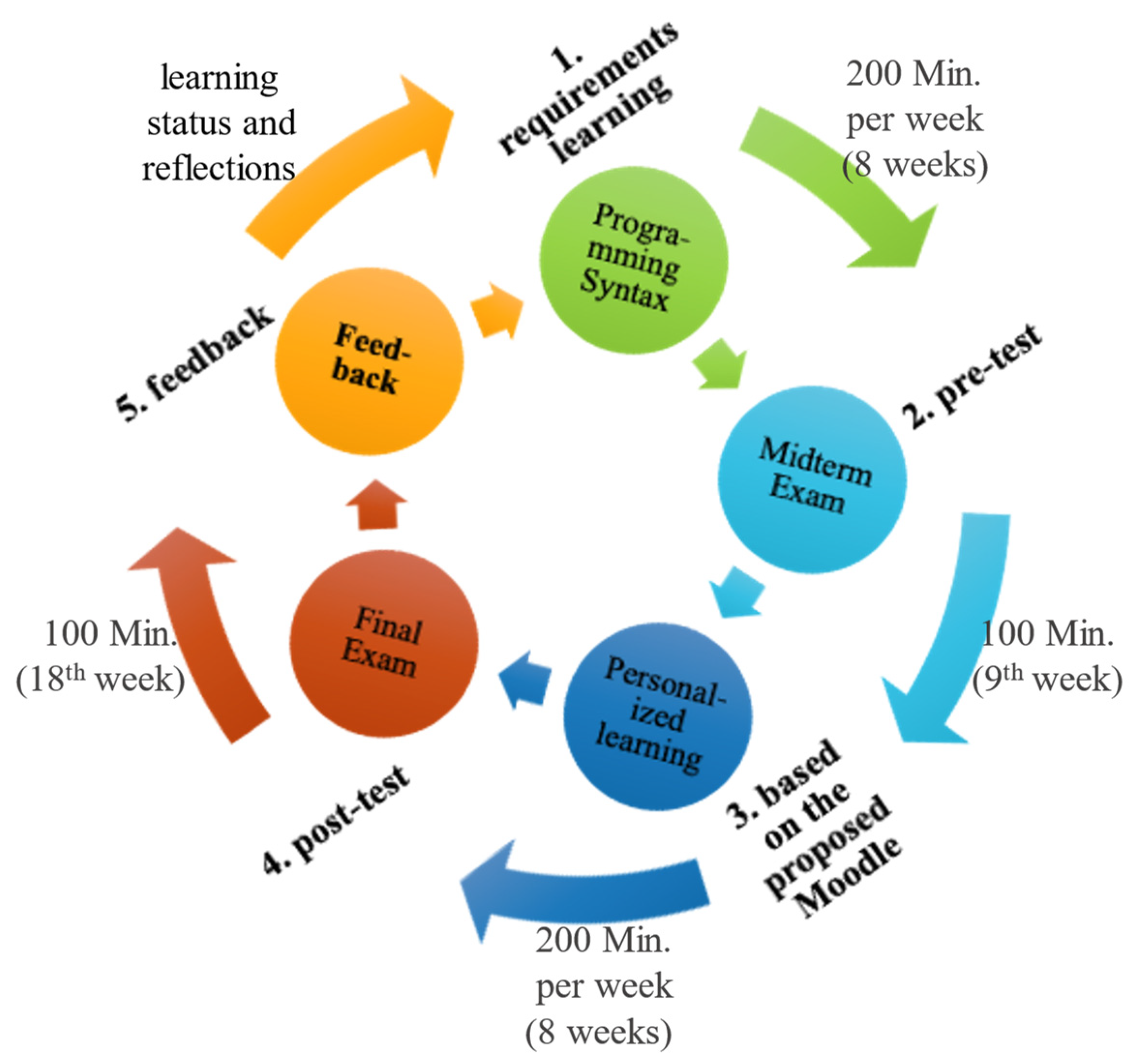
The practical course was the “programming” course at Technology University in central Taiwan. This paper used the Moodle e-learning management platform with the proposed service to collect learners’ achievements before and after using the proposed platform. Figure 11 shows the flow of the experiment:
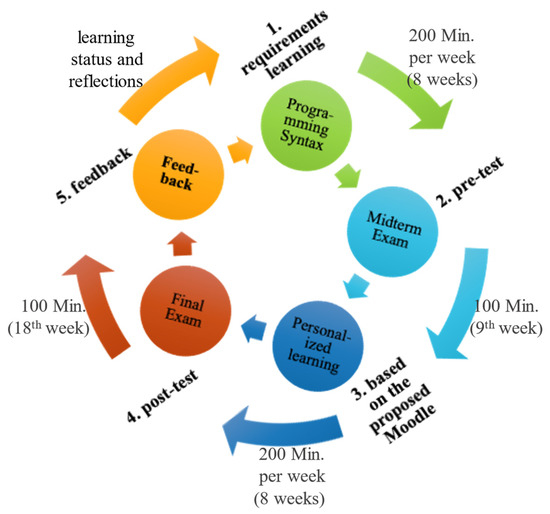
Figure 11.
The experiment procedures at the practice course.
- Step 1.
- Programming requirement learning: In classroom environments, an instructor taught programming syntax to establish basic training in programming. Supplemented code examples helped the students learn and understand programming grammar.
- Step 2.
- Mid-term assessment: The mid-term assessment test contained a comprehension test and a programming test to understand the students’ learning status in the first eight weeks to carry out the next stage of personalized learning.
- Step 3.
- Personalized Learning: According to the Mid-term results, students had individual learning on the Moodle e-learning platform with the personalized service provided in this study, allowing students to enhance or remediate learning based on the assessment results.
- Step 4.
- Final assessment: This experiment conducted a final exam at 18 weeks as a post-test score.
- Step 5.
- Feedback: The learning feedback service was used to understand the learning status and reflections.
4.3. Results
Table 5 shows a comparison of pre-test and post-test scores. The average score of the post-test was 74.67, which was higher than that of the pre-test at 71.49. The lowest and highest scores in the post-test were higher than those in the pre-test. Table 6 exhibits that the mean in the post-test was higher than that in the pre-test. Additionally, the standard deviation in the post-test was less than that in the pre-test, which means that the difference of score distributions in the post-test was of small scale. That is, the learning effect gap in the post-test between students was less than that in the pre-test result. However, Table 7 (p = 0.191 > 0.05) indicates no significant difference in the results of paired t-tests [31]. A possible reason is that the programming test contained comprehensive and programming exams. However, the proposed personalized platform reinforced the theoretical aspect, resulting in students without programming practice. Overall, the average post-test result after using the proposed platform was higher than the average pre-test result (before using the proposed platform). The standard deviation in the post-test result was smaller than that in the pre-test results and approved the benefits of the proposed personalized e-learning platform.
Table 5.
The range of the score for the pre-test and the post-test achievements.
Table 6.
The comparative statistical analysis for the pre-test and the post-test achievements.
Table 7.
Paired t-tests for difference between means in the pre-test and the post-test achievements.
5. Discussion
Moodle is an open-source learning management system that possesses extensibility, modularization, and maintainability. This study ultimately presents the procedures for realizing personalized learning services compatible with Moodle, which contains (1) integrating from third-party databases, (2) personalizing the learning process, (3) gathering student portfolios, and (4) delivering feedback. The experiment was conducted in the “programming” course at the Technology University in central Taiwan. The experiment results indicate: (i) The average post-test result after using the proposed platform was higher than the average pre-test result (before using the proposed platform). (ii) The learning effect gap in the post-test between students was less than that in the pre-test result. Hence, the proposed personalized e-learning platform was beneficial.
Compared with current personalized learning services, this study provides implementing and integrating processes compatible with an open-source e-learning management system. Campo et al. [20] indicated that Moodle’s design has significant limitations. Hence, this study presents the pseudocode and the sequence diagram for implementation reference. Sinaga and Pustika [5] lack some introduction to the practical procedures for implementation in an e-learning platform. Romero et al. [18] is missing a description on how to sync user data and sources to user data sync in Moodle. Some research provides a personalized learning method [11,12,13,14,15,16]; however, the compatibility with an open-source e-learning management system is not presented.
6. Conclusions and Future Developments
This study proposes a personalized service compatible with Moodle e-learning management system and presents the pseudocode and the sequence diagram for implementation reference. This study adopted pre-test and post-test achievements to compare the benefit of the personalized e-learning platform. Research samples were students in the “programming” course at the Technology University in central Taiwan. Overall, the average post-test result after using the proposed platform was higher than the average pre-test result (before using the proposed platform). The standard deviation in the post-test result was of smaller scale than that of the pre-test results and approved the benefits of the proposed personalized e-learning platform.
This research, however, is subject to several limitations. The first is the number of research samples, which concerns the number of students taking courses. The second limitation concerns the “programming” course, the practice course. A critical issue is exploring the relationship between students’ background, achievement, and opinions before and after using the e-learning platform with the personalized service, which the authors are working on in another study. In future work, the authors will extend the personalized services for different courses or subjects and combine them with MOOCs to explore more information for e-learning research.
Author Contributions
Formal analysis, J.-W.L.; Investigation, Y.-C.C.; Methodology, Y.-C.C. and J.-W.L.; Software, D.-Y.H.; Validation, Y.-C.C.; Writing—original draft, Y.-C.C.; Writing—review & editing, J.-W.L. All authors have read and agreed to the published version of the manuscript.
Funding
This research was funded by the Ministry of Science and Technology, R.O.C, grant number MOST 109-2221-E-126-006.
Institutional Review Board Statement
Not applicable.
Informed Consent Statement
Not applicable.
Data Availability Statement
Data sharing not applicable.
Conflicts of Interest
The authors declare no conflict of interests.
References
- Sangrà, A.; Vlachopoulos, D.; Cabrera, N. Building an inclusive definition of e-learning: An approach to the conceptual framework. Int. Rev. Res. Open Distrib. Learn. 2012, 13, 145–159. [Google Scholar] [CrossRef]
- Liu, S.; Guo, C.; Al-Turjman, F.; Muhammad, K.; de Albuquerque, V.H.C. Reliability of response region: A novel mechanism in visual tracking by edge computing for IIoT environments. Mech. Syst. Signal Process. 2020, 138, 106537. [Google Scholar] [CrossRef]
- Liu, S.; Wang, S.; Liu, X.; Lin, C.-T.; Lv, Z. Fuzzy detection aided real-time and robust visual tracking under complex environments. IEEE Trans. Fuzzy Syst. 2020, 29, 90–102. [Google Scholar] [CrossRef]
- Maatuk, A.M.; Elberkawi, E.K.; Aljawarneh, S.; Rashaideh, H.; Alharbi, H. The COVID-19 pandemic and E-learning: Challenges and opportunities from the perspective of students and instructors. J. Comput. High. Educ. 2021, 34, 21–38. [Google Scholar] [CrossRef] [PubMed]
- Sinaga, R.R.F.; Pustika, R. Exploring STUDENTS’ATTITUDE towards English online learning using moodle during COVID-19 pandemic at smk yadika bandarlampung. J. Engl. Lang. Teach. Learn. 2021, 2, 8–15. [Google Scholar]
- Doanh, D.C.; Thang, H.N.; Nga, N.T.V.; Van, P.T.; Hoa, P.T. Entrepreneurial behaviour: The effects of the fear and anxiety of Covid-19 and business opportunity recognition. Entrep. Bus. Econ. Rev. 2021, 9, 7–23. [Google Scholar]
- Gao, P.; Li, J.; Liu, S. An introduction to key technology in artificial intelligence and big data driven e-learning and e-education. Mob. Netw. Appl. 2021, 26, 2123–2126. [Google Scholar] [CrossRef]
- Chen, S.Y.; Wang, J.-H. Individual differences and personalized learning: A review and appraisal. Univers. Access Inf. Soc. 2021, 20, 833–849. [Google Scholar] [CrossRef]
- Gamage, S.H.; Ayres, J.R.; Behrend, M.B. A systematic review on trends in using Moodle for teaching and learning. Int. J. STEM Educ. 2022, 9, 1–24. [Google Scholar] [CrossRef] [PubMed]
- Raleiras, M.; Nabizadeh, A.H.; Costa, F.A. Automatic learning styles prediction: A survey of the State-of-the-Art (2006–2021). J. Comput. Educ. 2022, 1–93. [Google Scholar] [CrossRef]
- Chen, C.-M. Intelligent web-based learning system with personalized learning path guidance. Comput. Educ. 2008, 51, 787–814. [Google Scholar] [CrossRef]
- Chu, C.-P.; Chang, Y.-C.; Tsai, C.-C. PC2PSO: Personalized e-course composition based on Particle Swarm Optimization. Appl. Intell. 2011, 34, 141–154. [Google Scholar] [CrossRef]
- Li, J.-W.; Chang, Y.-C.; Chu, C.-P.; Tsai, C.-C. A self-adjusting e-course generation process for personalized learning. Expert Syst. Appl. 2012, 39, 3223–3232. [Google Scholar] [CrossRef]
- Chen, C.-M.; Duh, L.-J. Personalized web-based tutoring system based on fuzzy item response theory. Expert Syst. Appl. 2008, 34, 2298–2315. [Google Scholar] [CrossRef]
- Hsieh, T.-C.; Wang, T.-I.; Su, C.-Y.; Lee, M.-C. A fuzzy logic-based personalized learning system for supporting adaptive English learning. J. Educ. Technol. Soc. 2012, 15, 273–288. [Google Scholar]
- Lin, C.F.; Yeh, Y.-C.; Hung, Y.H.; Chang, R.I. Data mining for providing a personalized learning path in creativity: An application of decision trees. Comput. Educ. 2013, 68, 199–210. [Google Scholar] [CrossRef]
- Rice, W.; William, H. Moodle; Packt Publishing: Birmingham, UK, 2006. [Google Scholar]
- Romero, C.; Ventura, S.; García, E. Data mining in course management systems: Moodle case study and tutorial. Comput. Educ. 2008, 51, 368–384. [Google Scholar] [CrossRef]
- Ikawati, Y.; Al Rasyid, M.U.H.; Winarno, I. Student behavior analysis to detect learning styles in Moodle learning management system. In Proceedings of the 2020 International Electronics Symposium (IES), Surabaya, Indonesia, 19—30 September 2020; pp. 501–506. [Google Scholar]
- Campo, M.; Amandi, A.; Biset, J.C. A software architecture perspective about Moodle flexibility for supporting empirical research of teaching theories. Educ. Inf. Technol. 2021, 26, 817–842. [Google Scholar] [CrossRef] [PubMed]
- Tarabasz, A.; Selaković, M.; Abraham, C. The classroom of the future: Disrupting the concept of contemporary business education. Entrep. Bus. Econ. Rev. 2018, 6, 231. [Google Scholar] [CrossRef]
- Jeong, H.-Y.; Choi, C.-R.; Song, Y.-J. Personalized Learning Course Planner with E-learning DSS using user profile. Expert Syst. Appl. 2012, 39, 2567–2577. [Google Scholar] [CrossRef]
- Chang, T.-Y.; Ke, Y.-R. A personalized e-course composition based on a genetic algorithm with forcing legality in an adaptive learning system. J. Netw. Comput. Appl. 2013, 36, 533–542. [Google Scholar] [CrossRef]
- Chao, S.-Y.; Chang, Y.-C.; Yang, S.; Clark, M. Development, implementation, and effects of an integrated web-based teaching model in a nursing ethics course. Nurse Educ. Today 2017, 55, 31–37. [Google Scholar] [CrossRef] [PubMed]
- Smatkov, S.; Kuchuk, N.; Sieja, M. The method of centralised distribution of electronic educational resources in academic e-learning. Tech. Trans. 2019, 2, 119–128. [Google Scholar] [CrossRef]
- Wang, J.; Xie, H.; Wang, F.L.; Lee, L.-K.; Au, O.T.S. Top-N personalized recommendation with graph neural networks in MOOCs. Comput. Educ. Artif. Intell. 2021, 2, 100010. [Google Scholar] [CrossRef]
- Benmesbah, O.; Lamia, M.; Hafidi, M. An improved constrained learning path adaptation problem based on genetic algorithm. Interact. Learn. Environ. 2021, 1–18. [Google Scholar] [CrossRef]
- Goštautaitė, D.; Kurilov, J. Comparative Analysis of Exemplar-Based Approaches for Students’ Learning Style Diagnosis Purposes. Appl. Sci. 2021, 11, 7083. [Google Scholar] [CrossRef]
- Peterka, V. Bayesian approach to system identification. In Trends and Progress in System identification. Elsevier: Amsterdam, The Netherlands, 1981; pp. 239–304. [Google Scholar]
- García, P.; Schiaffino, S.; Amandi, A. An enhanced Bayesian model to detect students’ learning styles in Web-based courses. J. Comput. Assist. Learn. 2008, 24, 305–315. [Google Scholar] [CrossRef]
- Pfanzagl, J.; Sheynin, O. Studies in the history of probability and statistics XLIV A forerunner of the t-distribution. Biometrika 1996, 83, 891–898. [Google Scholar] [CrossRef]
Publisher’s Note: MDPI stays neutral with regard to jurisdictional claims in published maps and institutional affiliations. |
© 2022 by the authors. Licensee MDPI, Basel, Switzerland. This article is an open access article distributed under the terms and conditions of the Creative Commons Attribution (CC BY) license (https://creativecommons.org/licenses/by/4.0/).