Enhancing IoT-LLN Security with IbiboRPLChain Solution: A Blockchain-Based Authentication Method



Abstract
1. Introduction
1.1. Contributions
- A novel blockchain-based authentication method for RPL.
- A thorough evaluation of our proposed method using simulations.
- We demonstrate that the proposed method can effectively mitigate routing attacks in IoT-LLNs.
- Blockchain’s inherent immutability and transparency safeguard routing information from tampering and manipulation, preventing malicious nodes from disrupting network operations.
- Smart contracts automate the authentication process, reducing the overhead associated with manual verification and expediting the response to potential threats.
- Blockchain’s distributed architecture can accommodate a growing number of nodes without compromising performance, making it suitable for large-scale IoT-LLNs.
1.2. Problem Statement
1.3. Related Work
2. Background
2.1. Routing Protocol for Low-Power and Lossy Networks (RPL)
2.1.1. Blockchain Technology Overview
2.1.2. Security Considerations in IoT-LLNs
2.1.3. Addressing Security Vulnerabilities in RPL
2.2. Blockchain
2.3. Smart Contracts for Routing Attack Detection
2.4. Blockchain for Enhanced RPL Security
3. RPL Security in IoT Environment
3.1. Security Attacks on 6LowPAN and RPL
3.1.1. Version Number Attack (VNA)
3.1.2. Decreased Rank Attack (DRA)
3.1.3. Increased Rank Attack (IRA)
4. The Proposed IbiboRPL Chain Solution
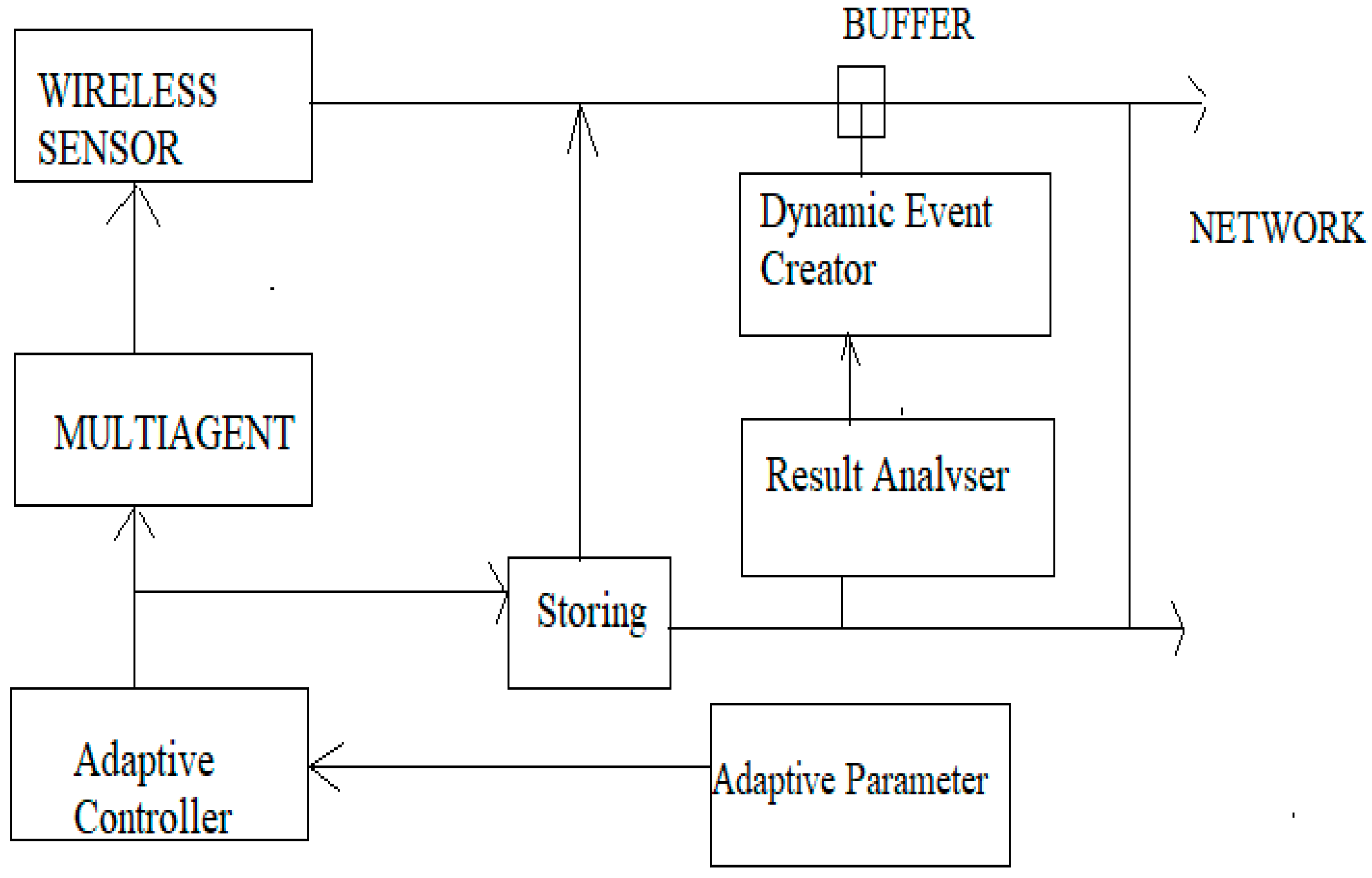
4.1. Enhancing Security and Scalability with the IbiboRPLChain Solution
4.2. Optimising Performance with Balanced Distributed Variance Estimation
4.3. The Role of Multiagents in IoT Applications
4.4. Proposed Objective: Tracking Multiagents with Multiple Locations
4.5. System Model and Multiagent Control
Network Priority Signal Control
4.6. Multiagent Leader and Consensus-Based Signal Points
4.6.1. Proposed Approach: Bounded Area for Multiagent Saturation Point and Located Signal Point
4.6.2. Dynamic Leaderless Following Protocol and Dynamic Distributed Adaptive Consensus
4.7. Experimental Simulation Scenarios
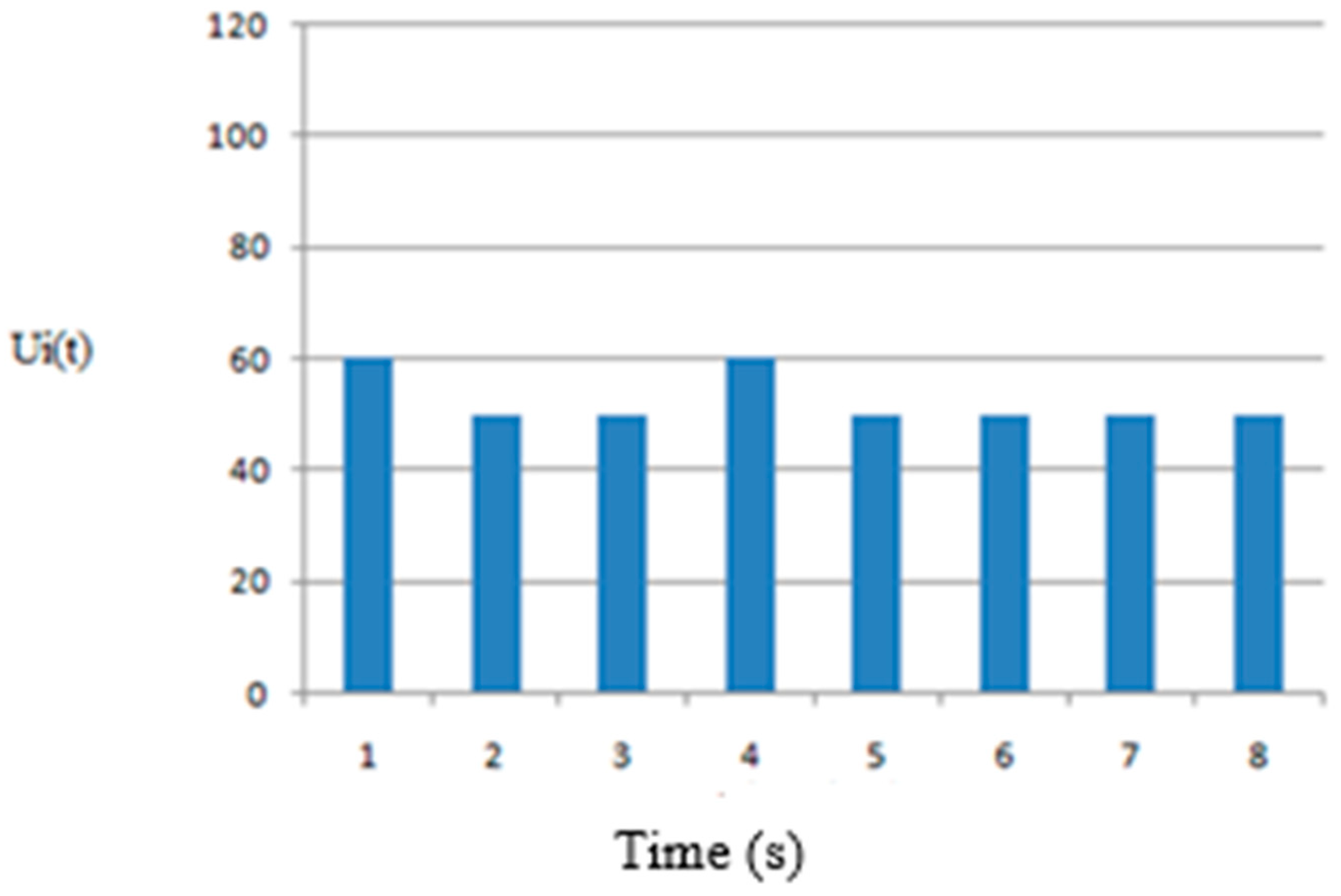
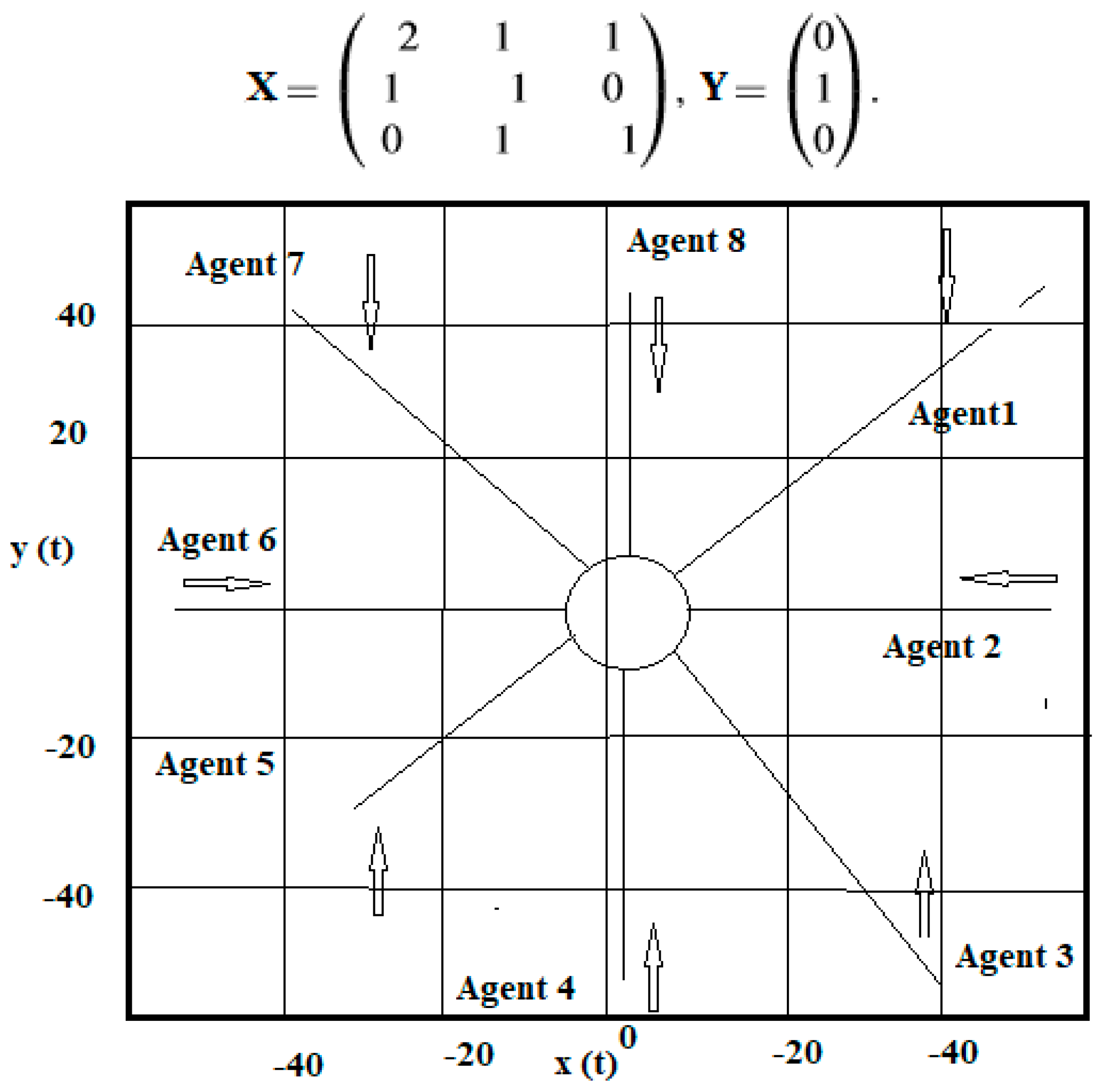
4.7.1. Example 1: Triggering Experiment
- and are the multiagent coordination points of different angles.
- is the regular velocity of the respective nodes.
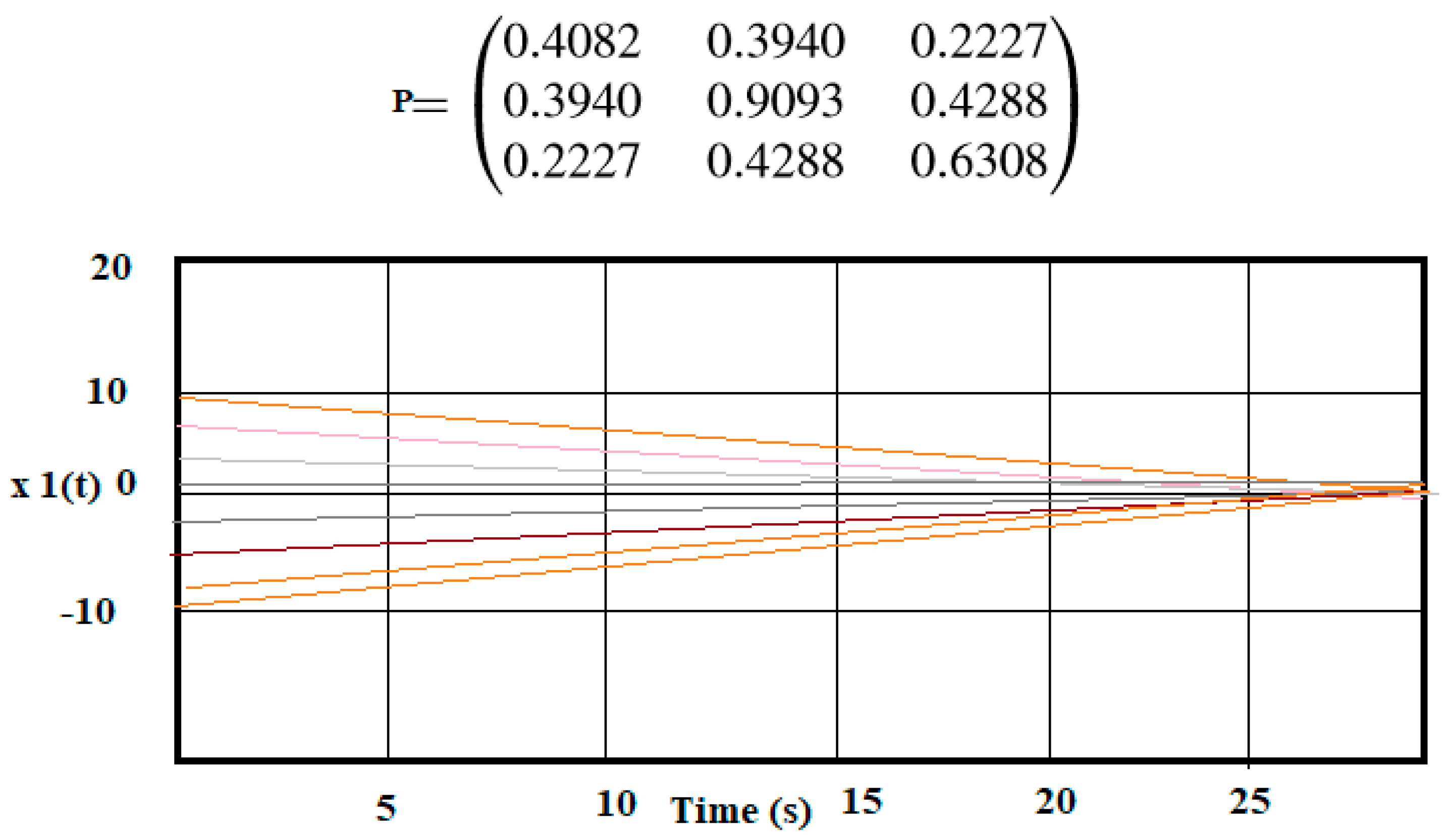
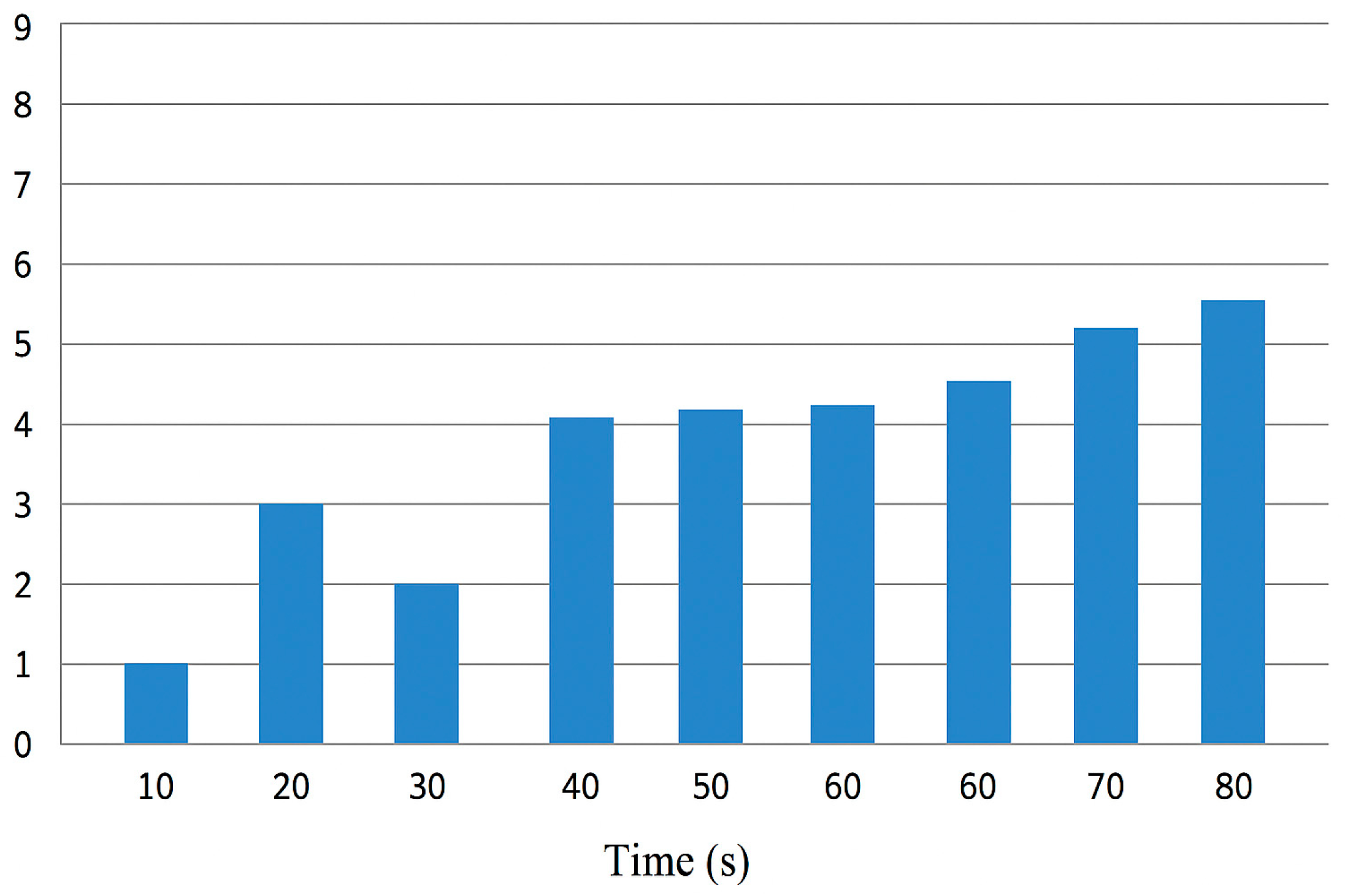
4.7.2. Example 2: Performance Evaluation
4.8. The Proposed IbiboRPLChain Solution: Algorithmic Derivation
4.8.1. Design Rationale and Threat Model
4.8.2. State–Space View of the Control Plane
4.8.3. Measurement Model and Minimum-Variance Fusion
4.8.4. Event-Triggered Dynamic Consensus (Equations (3)–(7))
- (i)
- Statistical robustness: adversarial outliers are diluted by the majority evolution of honest nodes;
- (ii)
- Communication frugality: non-informative traffic is suppressed, conserving energy while preserving responsiveness in dynamic topologies.
4.8.5. Attack Observables and Anomaly Scoring
- Rank discontinuity: ∣ Δ rank ∣ = ∣∣ exceeding a policy threshold.
- Version jump: inconsistent with legitimate DODAG rebuilds.
- Parent churn: excessive rate of preferred-parent changes in a sliding window.
- Control burstiness: DIO/DAO/DIS frequency significantly above the norm given current link quality.
4.8.6. Smart-Contract Attestation and On-Chain Ruling
4.8.7. Network-Side Mitigation and Recovery
4.8.8. Complexity, Energy Budget, and Correctness
- (a)
- Conservative thresholds for noisy links;
- (b)
- Event-trigger parameters that suppress chatter without masking genuine changes;
- (c)
- Low-latency, permissioned consensus (e.g., BFT/PoA), configured with a finality depth compatible with LLN delay budgets.
4.8.9. Parameterisation Used in Our Experiments
- Anomaly score weights:
- Thresholds:
- Windows and timers:
- Ledger settings: consensus type (e.g., PoA/BFT), finality depth, gateway authorisation list.
4.8.10. Algorithm Overview (High-Level Workflow)
- Verify freshness/signature; update per-node counters.
- Compute Δ rank, Δ version, parent-churn, and burstiness; update anomaly score.
- If score ≥ : submit hashed features to .
- On-chain ruling → benign: decay score; malicious: blacklist/quarantine/rekey + broadcast alert.
- Periodically adapt thresholds using false-positive/false-negative estimates from the audit log.
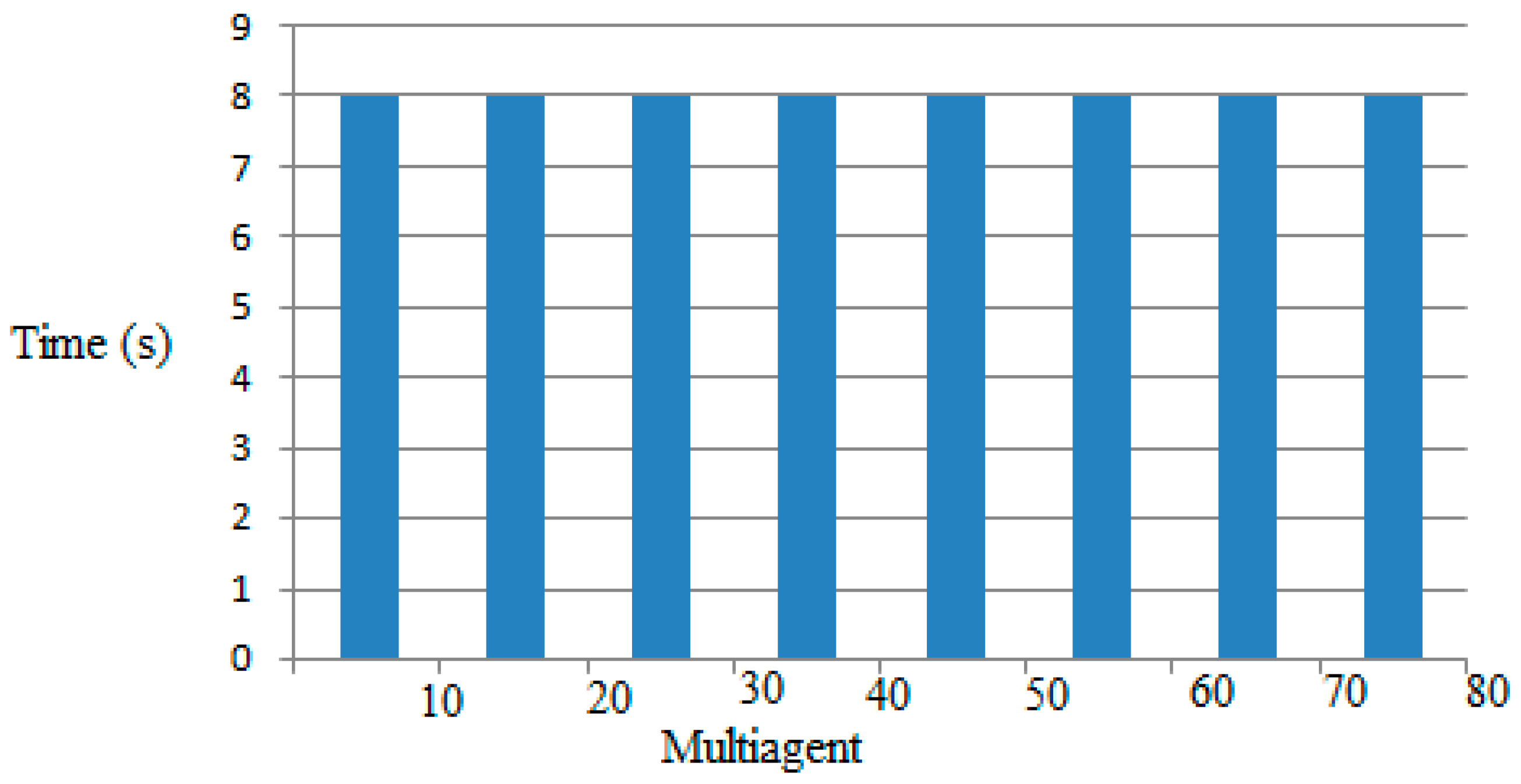
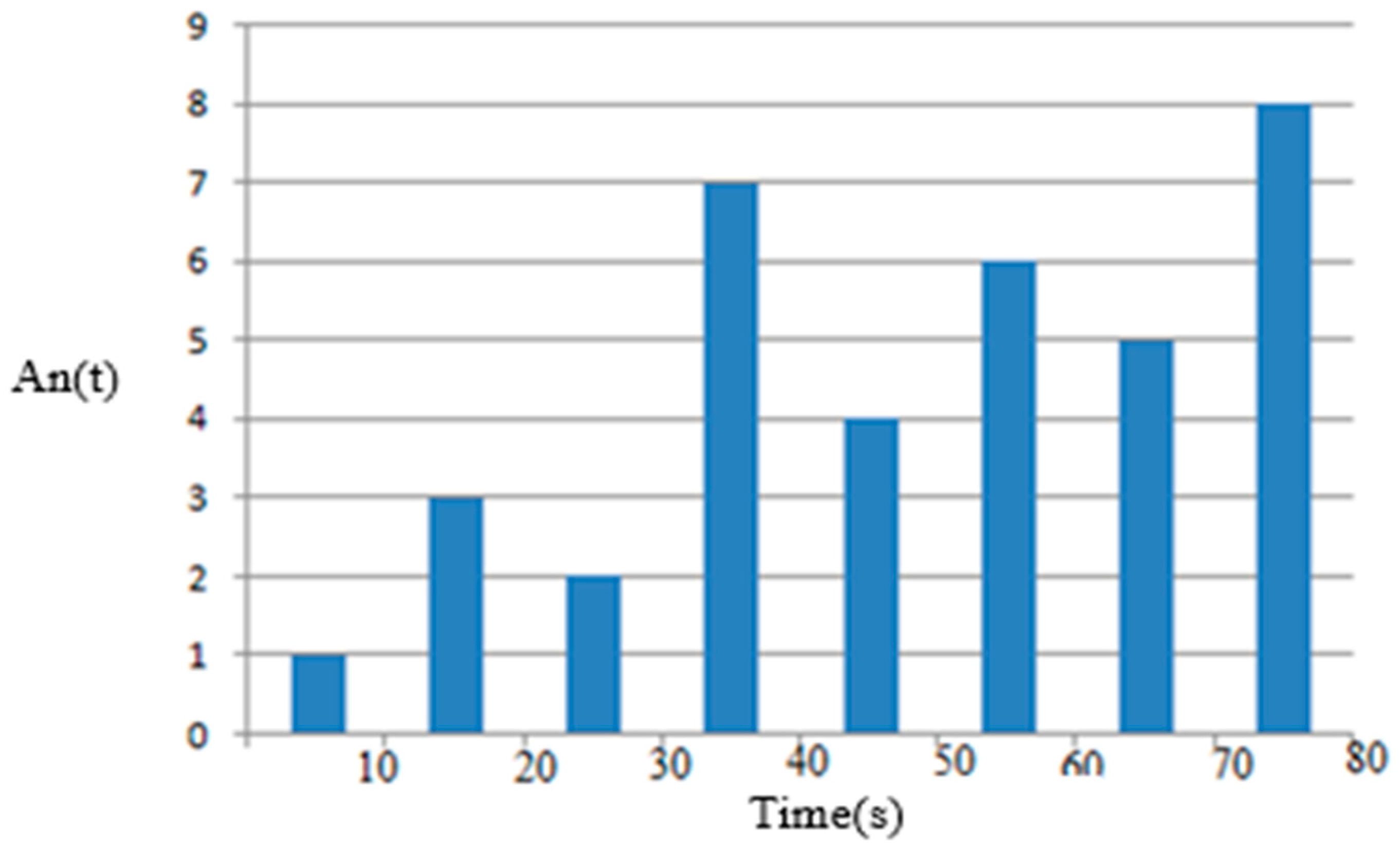
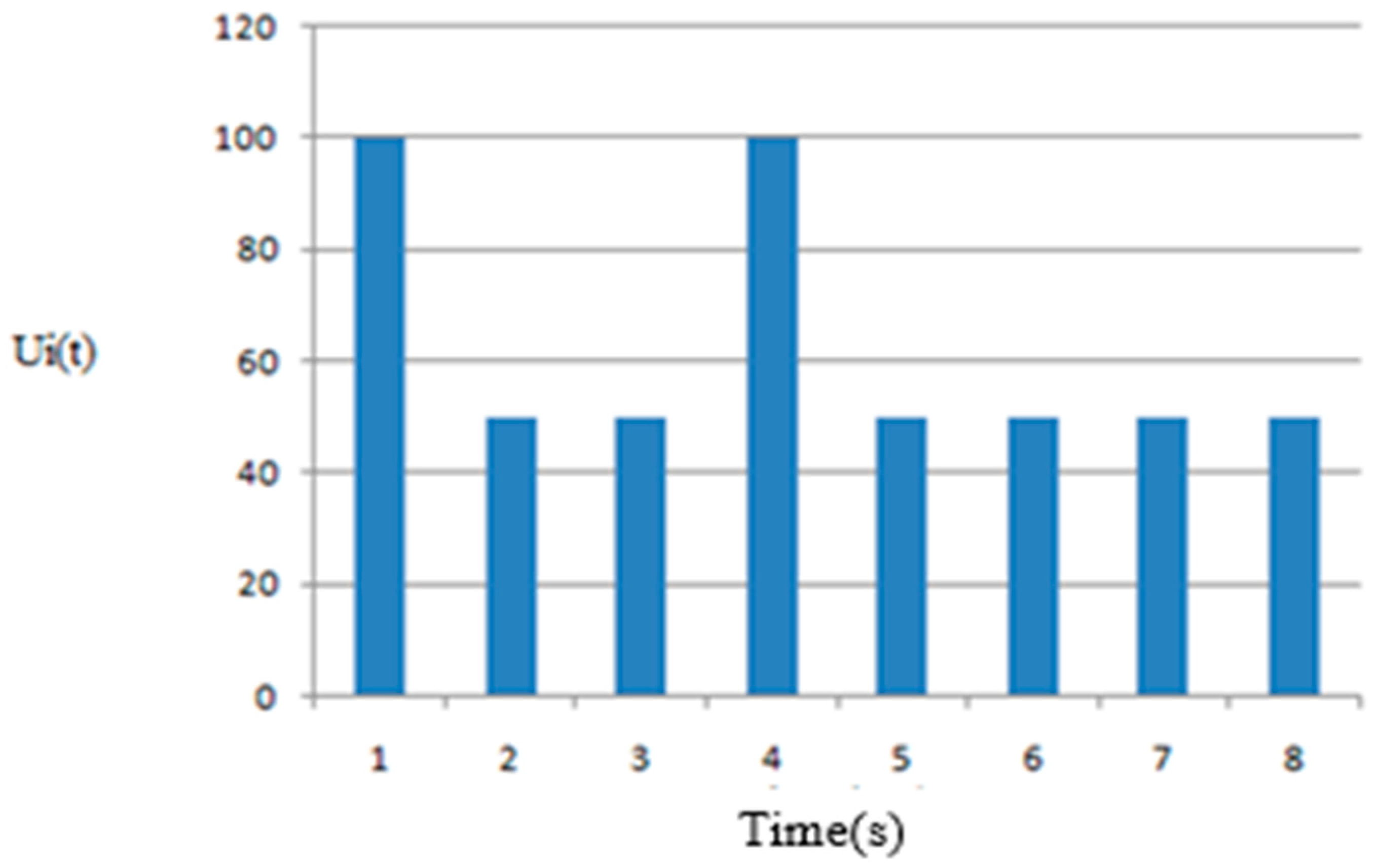
4.8.11. Empirical Alignment with the Derivation
5. Analysis and Discussions
- Identity Authentication. Each application has an enormous number of users; therefore, it is required to apply the privilege and deny illegal access by employing authentication mechanisms.
- Data Storage and Recovery. Data transmission among different wireless objects and applications is exposed to many security threats. This state needs the data integrity and privacy to protect the transmitted data from exploitation.
- Handling Huge Data. The application layer processes a large amount of data, which leads to data loss during the transmission process. This problem may affect the efficiency of the wireless processes.
- Software Vulnerabilities. Programming errors in application software can create vulnerabilities that may be exploited.
- Confidentiality. Equivalent to privacy, confidentiality ensures that data is protected and only accessible to authorised users.
- Integrity. Data integrity is a security requirement to ensure the accuracy, completeness, and consistency of the data.
- Availability. Availability of data refers to ensuring that authorised users can access information and services whenever they need it.
- Access control. This is a security procedure used to control who or what can view or utilise resources and manage server communication.
- Authentication. This is the process of recognising a user’s identity before launching a communication channel between two parties.
- Authorisation. This defines the rights and privileges of the authentication party after gaining access to a system.
6. Conclusions
Author Contributions
Funding
Institutional Review Board Statement
Informed Consent Statement
Data Availability Statement
Conflicts of Interest
References
- Alfriehat, N.; Anbar, M.; Aladaileh, M.; Hasbullah, I.; Shurbaji, T.A.; Karuppayah, S.; Almomani, A. RPL-based attack detection approaches in IoT networks: Review and taxonomy. Artif. Intell. Rev. 2024, 57, 1–56. [Google Scholar] [CrossRef]
- Alsukayti, I.S.; Alreshoodi, M. RPL-Based IoT Networks under Simple and Complex Routing Security Attacks: An Experimental Study. Appl. Sci. 2023, 13, 4878. [Google Scholar] [CrossRef]
- Prajapati, A.K.; Pilli, E.S.; Battula, R.B.; Varadharajan, V.; Verma, A.; Joshi, R.C. A Comprehensive Survey on RPL Routing-based Attacks and Mitigation. Comput. Electr. Eng. 2025, 123, 110071. [Google Scholar] [CrossRef]
- Boudouaia, M. Version Number Attacks in RPL-based IoT Networks: State of the Art. In Proceedings of the 8th International Conference on Future Networks & Distributed Systems, Marakech, Morocco, 11–12 December 2024; ACM: New York, NY, USA, 2024. [Google Scholar]
- Omar, A.A.R.A.; Soudan, B.; Altaweel, A. UOS_IOTSH_2024: A Comprehensive Network Traffic Dataset for Sinkhole Attacks in Diverse RPL IoT Networks. Data Brief 2024, 55, 110650. [Google Scholar] [CrossRef]
- Bang, A.O.; Rao, U.P.; Kaliyar, P.; Conti, M. Assessment of Routing Attacks and Mitigation Techniques with RPL Control Messages: A Survey. ACM Comput. Surv. 2025, 55, 1–36. [Google Scholar] [CrossRef]
- Arshad, D. THC-RPL: Trust-enabled Hybrid Cooperative Routing for Sybil Detection in IoT Networks. PLoS ONE 2022. [Google Scholar] [CrossRef]
- Hassan, J.; Sohail, A.; Awad, A.I.; Zaka, M.A. LETM-IoT: A lightweight and efficient trust mechanism for Sybil attacks in Internet of Things networks. Ad Hoc Netw. 2024, 163, 103576. [Google Scholar] [CrossRef]
- Raghavendra, T.; Anand, M.; Selvi, M.; Thangaramya, K.; Kumar, S.S.; Kannan, A. An intelligent RPL attack detection using machine learning-based intrusion detection system for Internet of Things. Procedia Comput. Sci. 2022, 215, 61–70. [Google Scholar] [CrossRef]
- Alfriehat, N.; Alenezi, M.; Alshahrani, H.; Alenezi, F.; Alarifi, A.; Al-Hadhrami, T.; Alghamdi, M.; Almomani, A.; Alzahrani, B.; Alotaibi. Machine/Deep Learning for IoT IDS (within survey (1)). Artif. Intell. Rev. 2024. [Google Scholar]
- Albinali, H.; Azzedin, F. Replay Attacks in RPL-based IoT: Comparative & Empirical Study. Comput. Netw. 2025, 257, 110996. [Google Scholar]
- Krari, A.; Hajami, A.; Toubi, A.; Said, M.A. Enhancing IoT Security: A Comprehensive Framework for Energy and Radio Dataset Generation to Mitigate IoT RPL Attacks. Int. J. Tech. Phys. Probl. Eng. 2024, 16, 106–119. [Google Scholar]
- Obaidat, M.A.; Rawashdeh, M.; Alja’afreh, M.; Abouali, M.; Thakur, K.; Karime, A. Exploring IoT and blockchain: A comprehensive survey on security, integration strategies, applications and future research directions. Big Data Cogn. Comput. 2024, 8, 174. [Google Scholar] [CrossRef]
- Kumar, N.; Ali, R. Smart contract-based authentication in 6G-IoNMT: Protocol design and latency trade-offs. Comput. Netw. 2024. [Google Scholar]
- Bano, S.; Sonnino, A.; Al-Bassam, M.; Azouvi, S.; McCorry, P.; Meiklejohn, S.; Danezis, G. SoK: Consensus in the age of blockchains. In Proceedings of the 1st ACM Conference on Advances in Financial Technologies, Zurich, Switzerland, 21–23 October 2019; pp. 183–198. [Google Scholar] [CrossRef]
- Biais, B.; Bisiere, C.; Bouvard, M.; Casamatta, C. The Blockchain Folk Theorem; IDEI Working Papers; Institutd’ÉconomieIndustrielle: Toulouse, France, 2017. [Google Scholar]
- Bonneau, J. Hostile blockchain takeovers (short paper). In Proceedings of the 5th IFCA Workshop on Bitcoin and Blockchain Research, Willemstad, Curaçao, 2 March 2018; pp. 92–100. [Google Scholar]
- Zhong, S.; Chen, J.; Yang, Y. Sprite: A simple, cheat-proof, credit-based system for mobile ad-hoc networks. In Proceedings of the IEEE INFOCOM 2003, Twenty-Second Annual Joint Conference of the IEEE Computer and Communications Societies (IEEE Cat. No. 03CH37428), San Francisco, CA, USA, 30 March–3 April 2003; IEEE: New York, NY, USA, 2003; Volume 3, pp. 1987–1997. [Google Scholar]
- Zhang, Z.; Wang, J.; Luo, J.; Ding, X.; Zhong, J.; Wang, J.; Wu, F.X.; Pan, Y. Sprites: Detection of deletions from sequencing data by re-aligning split reads. Bioinformatics 2016, 32, 1788–1796. [Google Scholar] [CrossRef]
- Shang, R.; Liu, H.; Jiao, L.; Esfahani, A.M. Community mining using three closely joint techniques based on community mutual membership and refinement strategy. Appl. Soft Comput. 2017, 61, 1060–1073. [Google Scholar] [CrossRef]
- Uddin, A.; Stranieri, A.; Gondal, I.; Balasurbramanian, V. A lightweight blockchain based framework for underwater iot. Electronics 2019, 8, 1552. [Google Scholar] [CrossRef]
- Li, C.; Coelho, E.A.A.; Dragicevic, T.; Guerrero, J.M.; Vasquez, J.C. Multiagent-based distributed state of charge balancing control for distributed energy storage units in ac microgrids. IEEE Trans. Ind. Appl. 2017, 53, 2369–2381. [Google Scholar] [CrossRef]
- Xing, L.; Mishra, Y.; Tian, Y.-C.; Ledwich, G.; Zhou, C.; Du, W.; Qian, F. Distributed state-of-charge balance control with event triggered signal transmissions for multiple energy storage systems in smart grid. IEEE Trans. Syst. Man Cybern. Syst. 2019, 49, 1601–1611. [Google Scholar] [CrossRef]
- Sharma, M.; Elmiligi, H.; Gebali, F.; Verma, A. Simulating Attacks for RPL and Generating Multi-class Dataset for Supervised Machine Learning. In Proceedings of the 2019 IEEE 10th Annual Information Technology, Electronics and Mobile Communication Conference (IEMCON), Vancouver, BC, Canada, 17–19 October 2019; pp. 20–26. [Google Scholar] [CrossRef]
- Liu, Z.; Liu, Z.; Zhang, L.; Lin, X. MARP: A distributed MAC layer attack resistant pseudonym scheme for VANET. IEEE Trans. Dependable Secur. Comput. 2018, 17, 869–882. [Google Scholar] [CrossRef]
- Haq, I.U.; Alnemr, R.; Paschke, A.; Schikuta, E.; Boley, H.; Meinel, C. Distributed trust management for validating sla choreographies. In Proceedings of the Grids and Service-Oriented Architectures for Service Level Agreements, Boston, MA, USA, 1 January 2010. [Google Scholar]
- Lu, Y. Blockchain and the related issues: A review of current research topics. J. Manag. Anal. 2018, 5, 231–255. [Google Scholar] [CrossRef]
- Lu, Y. Blockchain: A survey on functions, applications and open issues. J. Ind. Integr. Manag. 2018, 3, 1850015. [Google Scholar] [CrossRef]
- Atlam, H.F.; Alenezi, A.; Alassafi, M.O.; Wills, G. Blockchain with Internet of Things: Benefits, challenges, and future directions. Int. J. Intell. Syst. Appl. 2018, 10, 40–48. [Google Scholar] [CrossRef]
- Ibibo, J.T. IoT Attacks Countermeasures: Systematic Review and Future Research Direction. In Big Data Technologies and Applications (BDTA 2023); Lecture Notes of the Institute for Computer Sciences, Social Informatics and Telecommunications Engineering; Tan, Z., Wu, Y., Xu, M., Eds.; Springer: Cham, Switzerland, 2024; Volume 555. [Google Scholar] [CrossRef]
- Ibibo, J.T. Emerging Challenges and Solutions in RPL Protocol: Research Review. In Proceedings of the 2023 IEEE 28th International Workshop on Computer Aided Modeling and Design of Communication Links and Networks (CAMAD), Edinburgh, UK, 6–8 November 2023; pp. 283–289. [Google Scholar] [CrossRef]
- Ma, X.; Dong, D. Evolutionary nonnegative matrix factorization algorithms for community detection in dynamic networks. IEEE Trans. Knowl. Data Eng. 2017, 29, 1045–1058. [Google Scholar] [CrossRef]
- Meng, Z.; Yang, T.; Li, G.; Ren, W.; Wu, D. Synchronization of coupled dynamical systems: Tolerance to weak connectivity and arbitrarily bounded time-varying delays. IEEE Trans. Autom. Control 2017, 63, 1791–1797. [Google Scholar] [CrossRef]
- Wang, B.; Wang, J.; Zhang, B.; Chen, W.; Zhang, Z. Leader-follower consensus of multi-vehicle wirelessly networked uncertain systems subject to nonlinear dynamics and actuator fault. IEEE Trans. Autom. Sci. Eng. 2018, 15, 492–505. [Google Scholar] [CrossRef]
- Zhao, Y.; Liu, Y.; Wen, G.; Chen, G. Distributed optimization of linear multi-agent systems: Edge-and node-based adaptive designs. IEEE Trans. Autom. Control 2017, 62, 3602–3609. [Google Scholar] [CrossRef]
- Liu, Y.-J.; Tong, S. Barrier Lyapunov functions for Nussbaum gain adaptive control of full state constrained nonlinear systems. Automatica 2017, 76, 143–152. [Google Scholar] [CrossRef]
- He, W.; Xu, C.; Han, Q.L.; Qian, F.; Lang, Z. L2 leader–follower consensus of networked Euler–Lagrange systems with external disturbances. IEEE Trans. Syst. Man Cybern. Syst. 2018, 48, 1920–1928. [Google Scholar] [CrossRef]
- Coelho, V.N.; Cohen, M.W.; Coelho, I.M.; Liu, N.; Guimarães, F.G. Multi-agent systems applied for energy systems integration: State-of-the-art applications and trends in microgrids. Appl. Energy 2017, 187, 820–832. [Google Scholar] [CrossRef]
- Ge, X.; Han, Q.-L. Distributed formation control of networked multi-agent systems using a dynamic event-triggered communication mechanism. IEEE Trans. Ind. Electron. 2017, 64, 8118–8127. [Google Scholar] [CrossRef]
- He, W.; Chen, G.; Han, Q.-L.; Qian, F. Network-based leader-following consensus of nonlinear multi-agent systems via distributed impulsive control. Inf. Sci. 2017, 380, 145–158. [Google Scholar]
- Nguyen, D.H.; Narikiyo, T.; Kawanishi, M. Robust consensus analysis and design under relative state constraints or uncertainties. IEEE Trans. Autom. Control 2018, 63, 1784–1790. [Google Scholar] [CrossRef]
- Yu, J.; Shi, Y. scaled group consensus in multiagent systems with first/second-order continuous dynamics. IEEE Trans. Cybern. 2018, 48, 2259–2271. [Google Scholar] [PubMed]
- Zhao, M.; Peng, C.; He, W.; Song, Y. Event-triggered communication for leader-following consensus of second-order multiagent systems. IEEE Trans. Cybern. 2018, 48, 1888–1897. [Google Scholar] [CrossRef]
- Ge, X.; Han, Q.-L.; Zhang, X.-M. Achieving cluster formation of multi-agent systems under aperiodic sampling and communication delays. IEEE Trans. Ind. Electron. 2018, 65, 3417–3426. [Google Scholar]
- NxT–The Blockchain Application Platform. Available online: https://nxtplatform.org/ (accessed on 8 April 2019).
- Ibibo, J.T. A Bibliometric Analysis and Comprehensive Overview of Security Attacks Against RPL in IoT Networks. In The Seventh International Conference on Safety and Security with IoT, SaSeIoT 2023; EAI/Springer Innovations in Communication and Computing; Tran, K.P., Li, S., Heuchenne, C., Truong, T.H., Eds.; Springer: Cham, Switzerland, 2024. [Google Scholar] [CrossRef]
- Du, C.; Liu, X.; Ren, W.; Lu, P.; Liu, H. Finite-time consensus for linear multi-agent systems via event-triggered strategy without continuous communication. IEEE Trans. Control Netw. Syst. 2019, 7, 19–29. [Google Scholar] [CrossRef]
- Miraz, M.H.; Ali, M. Applications of blockchain technology beyond cryptocurrency. arXiv 2018, arXiv:1801.03528. [Google Scholar] [CrossRef]
- Madumidha, S.; SivaRanjani, P.; Rajesh, S.; Sivajumar, S. Blockchain security for Internet of Things: A literature survey. Int. J. Pure Appl. Math. 2018, 119, 3677–3686. [Google Scholar]
- Ibibo, J.T.; Japheth, B.R. RPL Protocol Using Contiki Operating Systems: A Review. In The Seventh International Conference on Safety and Security with IoT, SaSeIoT 2023; EAI/Springer Innovations in Communication and Computing; Tran, K.P., Li, S., Heuchenne, C., Truong, T.H., Eds.; Springer: Cham, Switzerland, 2024. [Google Scholar] [CrossRef]
- Liu, T.; Jiang, Z.-P. Event-based control of nonlinear systems with partial state and output feedback. Automatica 2015, 53, 10–22. [Google Scholar] [CrossRef]
- Xing, L.; Wen, C.; Liu, Z.; Su, H.; Cai, J. Event-triggered output feedback control for a class of uncertain nonlinear systems. IEEE Trans. Autom. Control 2018, 64, 290–297. [Google Scholar] [CrossRef]
- Wang, X.; Lemmon, M.D. Event-triggering in distributed networked control systems. IEEE Trans. Autom. Control 2011, 56, 586–601. [Google Scholar] [CrossRef]
- Du, S.L.; Sun, X.M.; Cao, M.; Wang, W. Pursuing an evader through cooperative relaying in multi-agent surveillance networks. Automatica 2017, 83, 155–161. [Google Scholar] [CrossRef]
- Bartoletti, M.; Lande, S.; Podda, A.S. A proof-of-stake protocol for consensus on bitcoin subchains. In Financial Cryptography and Data Security; Brenner, M., Rohloff, K., Bonneau, J., Miller, A., Ryan, P.Y.A., Teague, V., Bracciali, A., Sala, M., Pintore, F., Jakobsson, M., Eds.; Springer: Cham, Switzerland, 2017; pp. 568–584. [Google Scholar]
- Nowzari, C.; Garcia, E.; Cortés, J. Event-triggered communication and control of networked systems for multi-agent consensus. Automatica 2019, 105, 1–27. [Google Scholar] [CrossRef]
- George, J.; Yi, X.; Yang, T. Distributed robust dynamic average consensus with dynamic event-triggered communication. In Proceedings of the 2018 IEEE Conference on Decision and Control (CDC), Miami, FL, USA, 17–19 December 2018; pp. 434–439. [Google Scholar]
- Murali, S.; Jamalipour, A. A lightweight intrusion detection for sybil attack under mobile RPL in the internet of things. IEEE Internet Things J. 2019, 7, 379–388. [Google Scholar] [CrossRef]
- Almusaylim, Z.A.; Alhumam, A.; Mansoor, W.; Chatterjee, P.; Jhanjhi, N.Z. Detection and mitigation of RPL rank and version number attacks in smart internet of things. Preprints 2020. [Google Scholar] [CrossRef]






| N/S | Parameters | Value |
|---|---|---|
| 1 | Simulator | Cooja (Contiki 2.7) |
| 2 | Simulation time | 1800 s |
| 3 | DODAG root rank | 1 |
| 4 | Scenario dimension | 200 × 200 m2 |
| 5 | Node Distribution | Uniform Distribution |
| 6 | Mote type | Z1 |
| 7 | Gateway nodes | 1 |
| 8 | Radio medium | Unit disc graph medium |
| 9 | Transport layer protocol | UDP |
| 10 | PHY and MAC layer | IEEE 802.15.4 |
| 11 | Data packet size | 30 bytes |
| 12 | Speed of node | 1 to 2 m/s |
| 13 | Transmission range | 50 m |
| 14 | Data packet sending interval | 60 s |
| 15 | Routing Protocol | RPL |
| 16 | Rank Metric | MRHOF |
| 17 | Nominal Capacity | 1000 mAh |
| 18 | Battery Capacity | 1000 mAh |
| Feature | Existing—Limited Agents and Specific Time Schedules | Proposed—IbiboRPLChain Solution System | Improvement |
|---|---|---|---|
| Methodology | Mac Protocol Based Scheduling Method [43] | Blockchain based Authentication Method | Authentication System |
| Triggering instants | High (100) | Reduced by 50% (50) | Significant reduction |
| Time | Slow (100 s) | Improved by 2× (50 s) | Twice as fast |
| Consensus | Not achieved (0%) | Achieved (100%) | Significant improvement |
| Activeness | Low (10%) | Increased by 3× (30%) | Significant improvement |
| Security | Low (20%) | Improved by 4× (80%) | Significant improvement |
| Network computation time | High (100 s) | Reduced by 3× (33 s) | Significant reduction |
| Propagation | Unstable (0%) | Stabilised (100%) | Significant improvement |
| Time evolution strength | Low (10%) | Increased by 5× (50%) | Significant improvement |
| Feature | Existing Method–Decentralised Method | IbiboRPLChain Solution | Bitcoin | Ethereum | Hyperledger Fabric |
|---|---|---|---|---|---|
| Author Name | Konstantinos Tsoulias1 [8] | Our Solution | S. Lande [55] | R. Shang [21] | D. H. Nguyen [39] |
| Security | Uses SHA-256 to secure the blockchain. | Uses a combination of cryptographic algorithms to secure the blockchain, including SHA-256, ECDSA, and Merkle trees. | Uses SHA-256 to secure the blockchain. | Uses SHA-256 to secure the blockchain. | Uses PBFT to secure the blockchain. |
| Triggering instants | Transactions | Events or transactions | Block completion | Transactions | Transactions |
| Time | Transaction Time | Block time | Block time | Transaction time | Transaction time |
| Consensus | Proof of Work (PoW) | Proof of Work (PoW) | Proof of Work (PoW) | Proof of Stake (PoS) | Byzantine Fault Tolerance (BFT) |
| Propagation | Sharding | Gossip protocol | Gossip protocol | Sharding | Gossip protocol |
| Time evolution strength | Strong | Strong | Strong | Strong | Strong |
| Activeness | Active | Passive | Passive | Passive | Active |
| Advantages | Secure, widely adopted | Secure, scalable, efficient | Secure, widely adopted | Secure, supports smart contracts | Secure, enterprise-grade |
| Adaptability | Limited adaptability | Can be adapted to a variety of IoT-LLN environments | Limited adaptability | Limited adaptability | Limited adaptability |
| Computational Cost | Moderate computational cost | Low computational cost | High computational cost | High computational cost | Moderate computational cost |
| Features | Supports smart contracts. | Supports secure authentication, data integrity, and non-repudiation. | Supports secure payments. | Supports smart contracts. | Supports enterprise-grade security. |
Disclaimer/Publisher’s Note: The statements, opinions and data contained in all publications are solely those of the individual author(s) and contributor(s) and not of MDPI and/or the editor(s). MDPI and/or the editor(s) disclaim responsibility for any injury to people or property resulting from any ideas, methods, instructions or products referred to in the content. |
© 2025 by the authors. Licensee MDPI, Basel, Switzerland. This article is an open access article distributed under the terms and conditions of the Creative Commons Attribution (CC BY) license (https://creativecommons.org/licenses/by/4.0/).
Share and Cite
Ibibo, J.T.; Balota, J.E.; Alwada'n, T.; Akinade, O.O. Enhancing IoT-LLN Security with IbiboRPLChain Solution: A Blockchain-Based Authentication Method. Appl. Sci. 2025, 15, 10557. https://doi.org/10.3390/app151910557
Ibibo JT, Balota JE, Alwada'n T, Akinade OO. Enhancing IoT-LLN Security with IbiboRPLChain Solution: A Blockchain-Based Authentication Method. Applied Sciences. 2025; 15(19):10557. https://doi.org/10.3390/app151910557
Chicago/Turabian StyleIbibo, Joshua T., Josiah E. Balota, Tariq Alwada'n, and Olugbenga O. Akinade. 2025. "Enhancing IoT-LLN Security with IbiboRPLChain Solution: A Blockchain-Based Authentication Method" Applied Sciences 15, no. 19: 10557. https://doi.org/10.3390/app151910557
APA StyleIbibo, J. T., Balota, J. E., Alwada'n, T., & Akinade, O. O. (2025). Enhancing IoT-LLN Security with IbiboRPLChain Solution: A Blockchain-Based Authentication Method. Applied Sciences, 15(19), 10557. https://doi.org/10.3390/app151910557