


Abstract
The gamma mass (µm) and linear (µ) attenuation coefficients of polycarbonate-bismuth oxide composites (PC-Bi2O3) with different bismuth oxide weight factors were investigated theoretically using EpiXS and a Monte Carlo simulation-based toolkit and Geant4 within an energy range between 0.1 and 2 MeV. The wide energy ranges of gamma rays and neutrons were chosen to cover as many applications as possible. The attenuation coefficients were then used to compute the half-value layers. The effective atomic numbers and effective electron densities of the studied samples obtained by EpiXS were compared as well. In order to further evaluate the shielding effectiveness of the studied samples, the thicknesses of all the investigated samples equivalent to 0.5 mm lead at a gamma energy of 511 keV were compared using a Geant4 code simulating a female numerical phantom with a gamma source placed facing the chest and a cylinder-shaped shield wrapped around the trunk area. The fast neutron removal cross sections of the investigated samples were studied to evaluate the effect of the weight factor of nanocomposites on the neutron shielding capabilities of the polymer as well.
1. Introduction
Polymers are flexible, lightweight, and nontoxic materials with low atomic numbers. Adding nano-reinforcements, especially high-density and high-atomic-number metal oxides, to polymers makes them novel gamma shielding materials with many outstanding features [1,2,3]. The photoelectric effect is dominant in high-Z elements, which is why heavy metals such as lead are usually used as a shielding material. However, lead is toxic and heavy, which made researchers try finding better alternatives with comparable shielding properties [4,5].
In this work, fast neutron and gamma attenuation properties of a novel newly introduced polycarbonate-bismuth oxide composite with different weight fractions of nano-Bi2O3 (0, 5, 10, 20, 30, 40, and 50 wt %) by Mehrara R et al. were theoretically investigated at a wide gamma energy range [1]. EpiXS, which is a Windows-based program for photon attenuation, dosimetry, and shielding, based on the EPICS2017 and EPDL9 database that allows obtaining the photon cross section data for any sample, was used in this work to estimate the attenuation coefficients, half-value layers, effective atomic numbers, and electron densities of all studied samples within the energy range of interest [6]. A Geant4 toolkit, which is based on a Monte Carlo simulation, was also used to investigate the attenuation properties of the samples of interest and compared to those results obtained from EpiXS [7]. Fast neutron removal cross sections were be investigated and compared among the samples as well.
2. Materials and Methods
Polycarbonate is a recyclable polymer with an amorphous structure that makes it a great choice when making homogeneous nanocomposites. The densities and composites of the studied samples were as mentioned in a recently published article where the fabrication of different weight percentages of a polycarbonate-bismuth oxide composite was done by Mehrara et al. using a mixed-solution method. The investigated samples are tabulated in Table 1 [1].

Table 1.
A list of the studied samples’ densities.
3. Theory
The mass attenuation coefficient µm is the main parameter investigated when studying the attenuation properties of any sample, and it can be calculated using Equation (1) [8]:
where (I0) is the mono-energetic incident intensity of photons and (I) is the attenuated photons intensity after passing through a mass per unit area (x) layer of a certain material. In case the sample is made of mixtures or compounds, Equation (2) can be used [8]:
where (wi) is the weight of the ith element.
The mass attenuation coefficient is very important when it comes to choosing a shielding material. The half-value layer (HVL) is also important in predicting the required thickness of a shielding material, and it is sample thickness that reduces the radiation level by a factor of 2, as described by Equation (3).
where μ (cm−1) is the linear attenuation coefficient of the material; the relation between the mass attenuation coefficient and the linear attenuation coefficient is given by Equation (4) [9,10].
These parameters were studied and compared theoretically for all investigated samples.
Neutron attenuation is described by the neutron-removing cross section (ΣR) which is the probability of neutron reactions within the material and is given by the mixture rule for each element in the composite material as shown in Equation (5) [11]:
where (ρi) is partial density and (ΣR/ρ) is the mass removal cross section, which can be calculated for any compound by Equation (6) [12]:
where (A) is the atomic weight and (Z) is the atomic number. The neutron removal coefficient is found by multiplying the neutron removal coefficient by the density of the absorber.
The fast neutron removal cross section of any element can be calculated using the empirical formulas indicated by Equations (7) and (8) [13]:
4. Monte Carlo Simulation
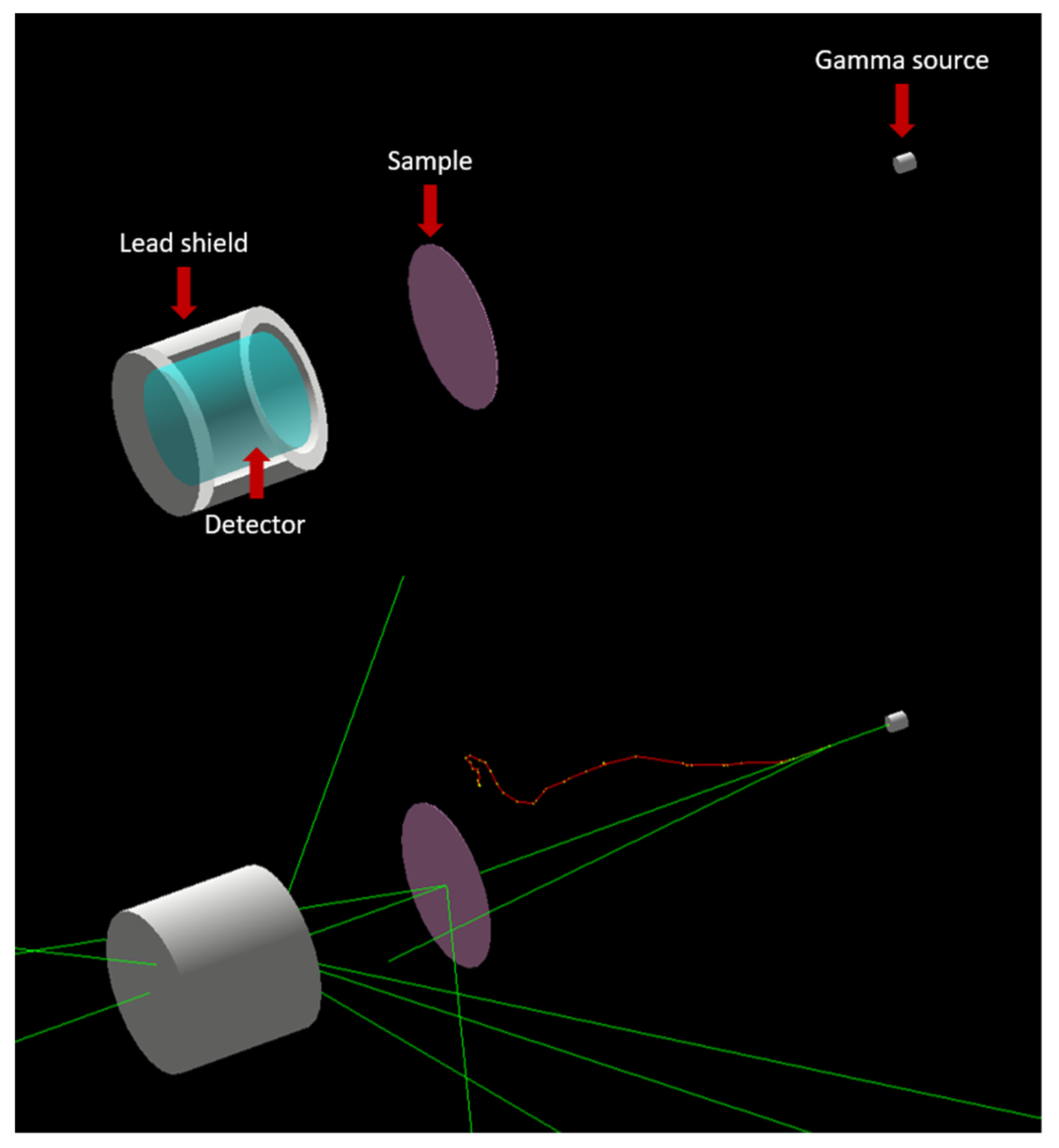
A Geant4 simulation code was developed and used to investigate the desired parameters of the studied samples within the studied energy range. Geant4 is a toolkit based on the Monte Carlo statistical method that simulates the passage of particles in matter [7]. Version 10.07 of Geant4 toolkit was used to develop the code used in the current work. A gamma source placed in front of the sample emitting mono-energetic gamma particles in the direction of the sample followed by a detector surrounded by a lead container. Figure 1 shows a visualization of the simulation code. The ratio between the number of gamma particles that reached the detector with and without the sample was found for each energy; then, the attenuation coefficient based on the sample’s thickness was calculated. This process was repeated for all the studied samples. The results of the Geant4 code were validated using those from the Windows based software; EpiXS.
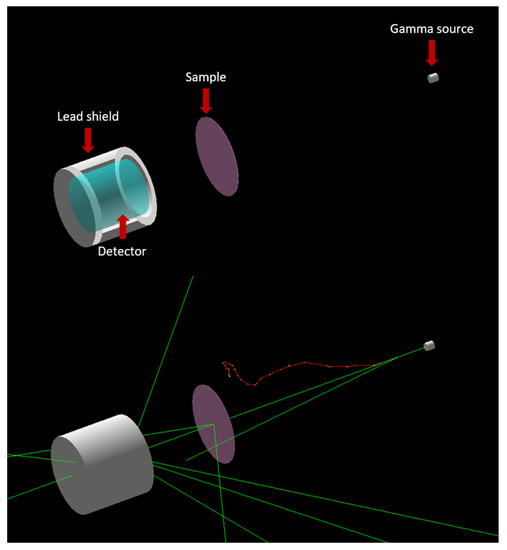
Figure 1.
Simulation code visualization (green lines indicate the paths of non-charged particles and red lines indicate the paths of negatively charged particles).
5. Results and Discussion
5.1. Attenuation Coefficient
The linear and mass attenuation coefficients were obtained using EpiXS and Geant4 for all studied samples; then, the percentage difference between them was calculated using Equation (9) as shown in Table 2 and Table 3.
Table 2.
Mass attenuation coefficients of the samples found by EpiXS and Geant4.
Table 3.
Half-value layers of the samples found by EpiXS and Geant4.
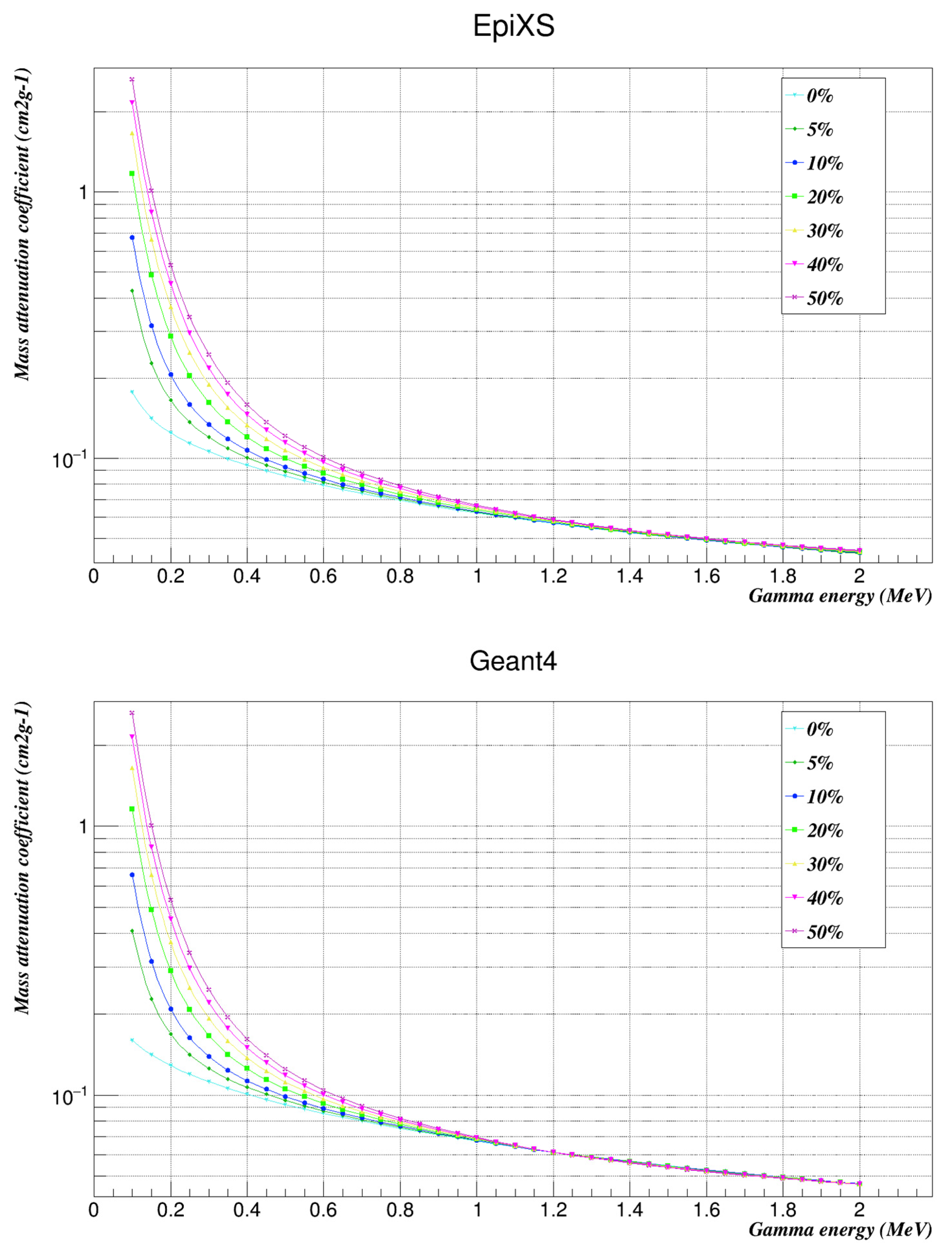
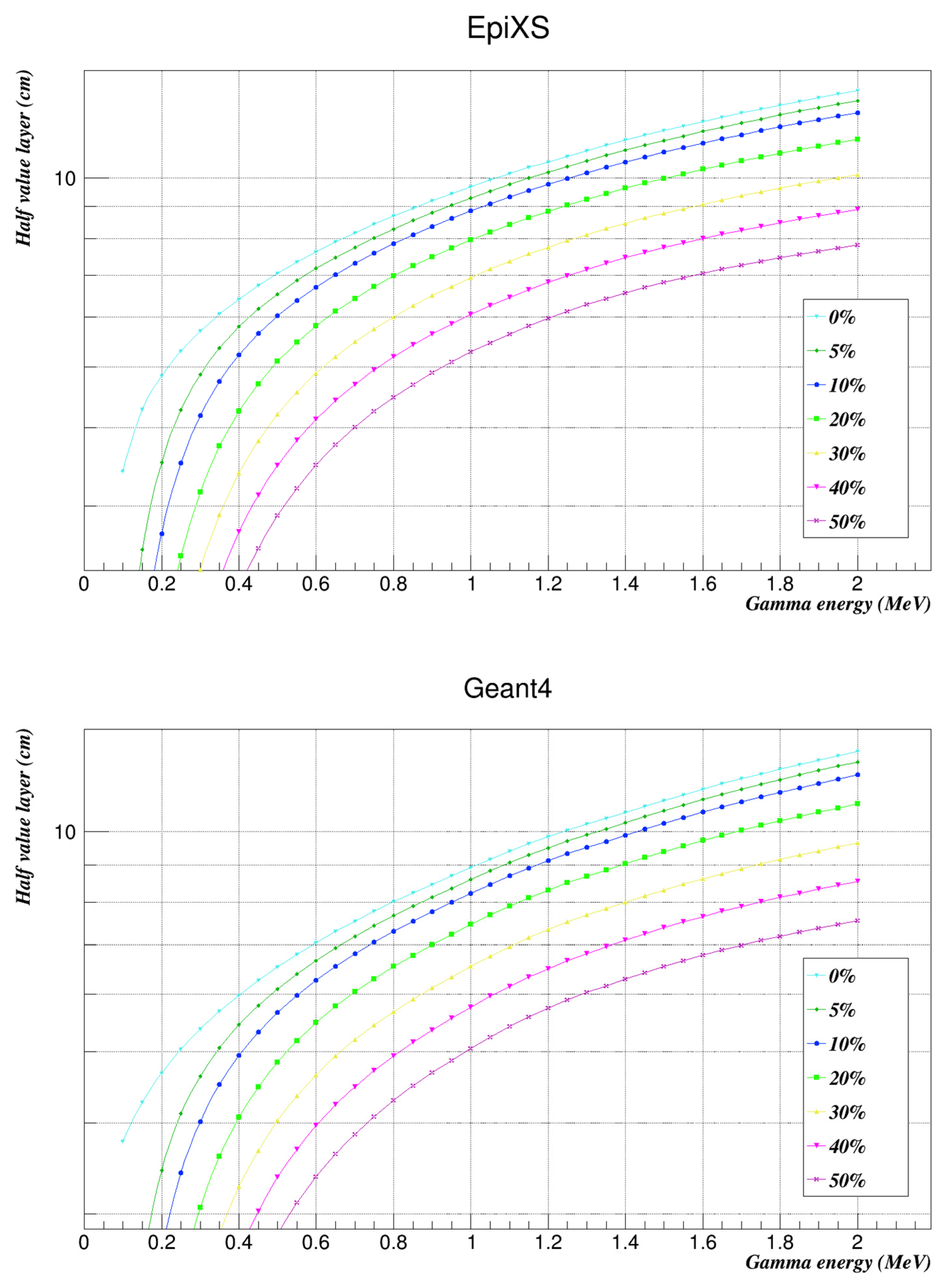
Figure 2 and Figure 3 illustrate the mass attenuation coefficients of the studied samples using both EpiXS and Geant4. Root 6.10/04 software was used to plot them [14].
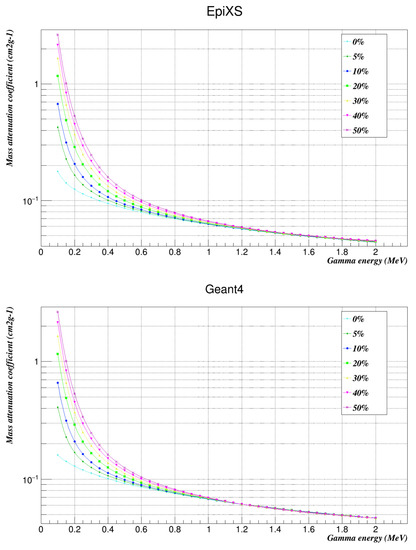
Figure 2.
Mass attenuation coefficients of the investigated samples at the studied energies as found by EpiXS and Geant4.
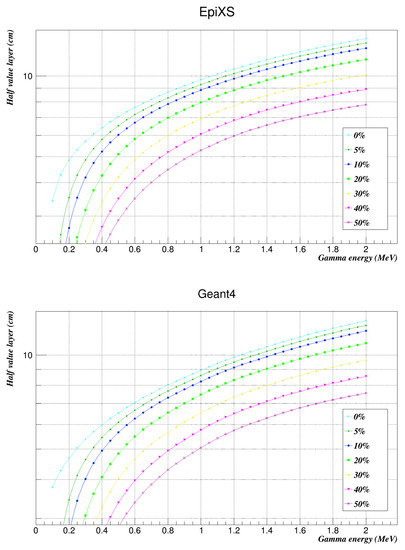
Figure 3.
Half-value layers of the investigated samples at the studied energies as found by EpiXS and Geant4.
The results showed that increasing the weight factor of the nanocomposites in the polymer increased the ability to shield against gamma rays, which is very clear from Figure 2 and Figure 3, especially at lower energies. The mass attenuation coefficients of the studied samples were used to compute the half-value layers of the samples within the studied energy range.
5.2. Half-Value Layer (HVL)
The half-value layer is an important parameter for any radiation shielding design since it refers to the required thickness of an absorber to reduce the radiation level to half of its initial value. Table 3 summarizes all the HVLs of the studied samples.
The results showed that increasing the weight factor of the nanocomposites in the polymer decreased the half-value layer, which is very notable in Figure 3. The shielding properties of the polycarbonate-bismuth oxide composite were very promising, especially when adding the composites’ weight fractions. The mass attenuation coefficient values increased as the weight fractions of the Bi2O3 nanocomposites increased noticeably. Geant4 results showed very good agreement with those obtained from EpiXS. Further studies of different composites at different energy ranges may be necessary to fully cover the shielding capabilities of polycarbonate-bismuth oxide.
5.3. Effective Atomic Number (Zeff) and Effective Electron Density (Neff)
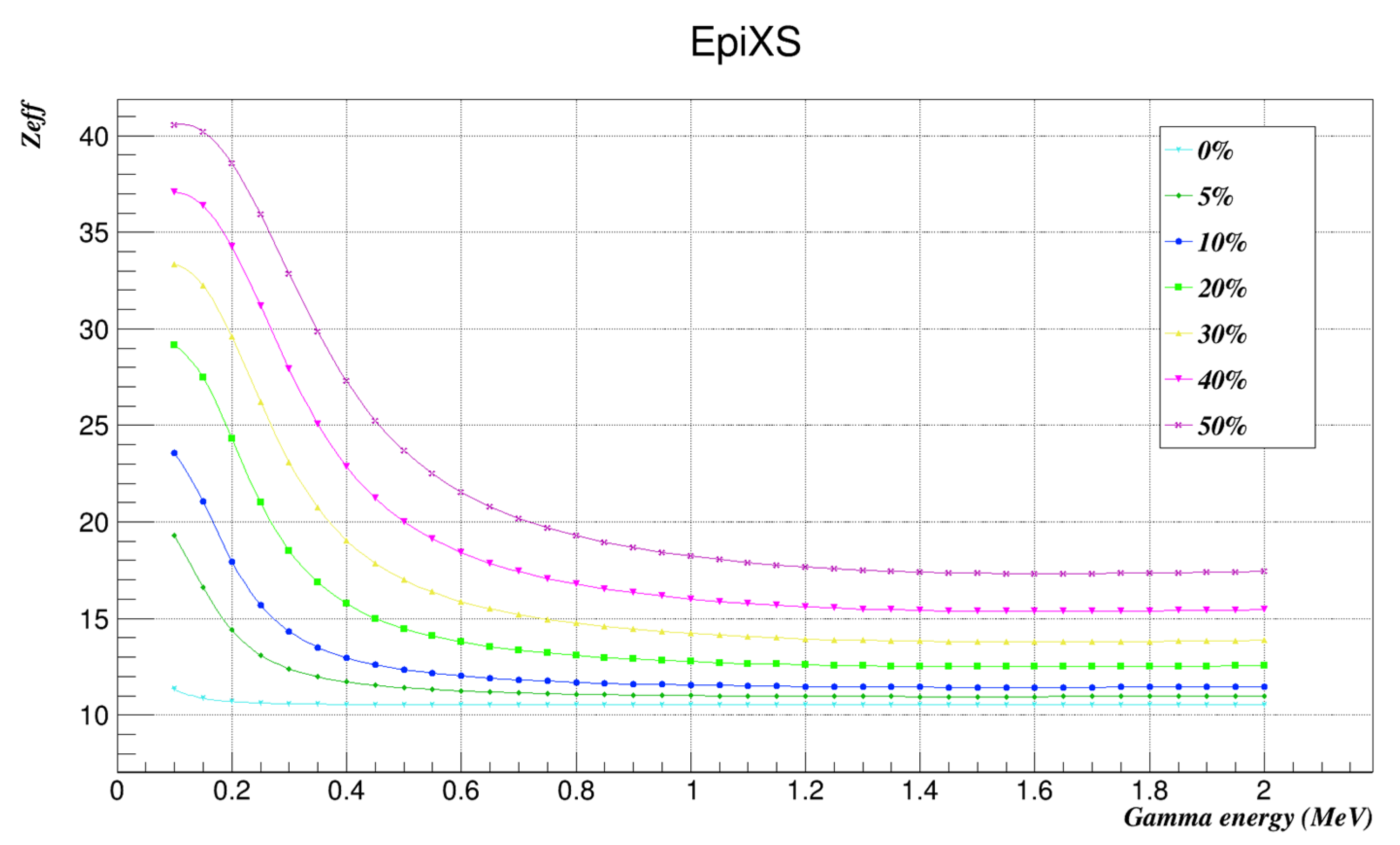
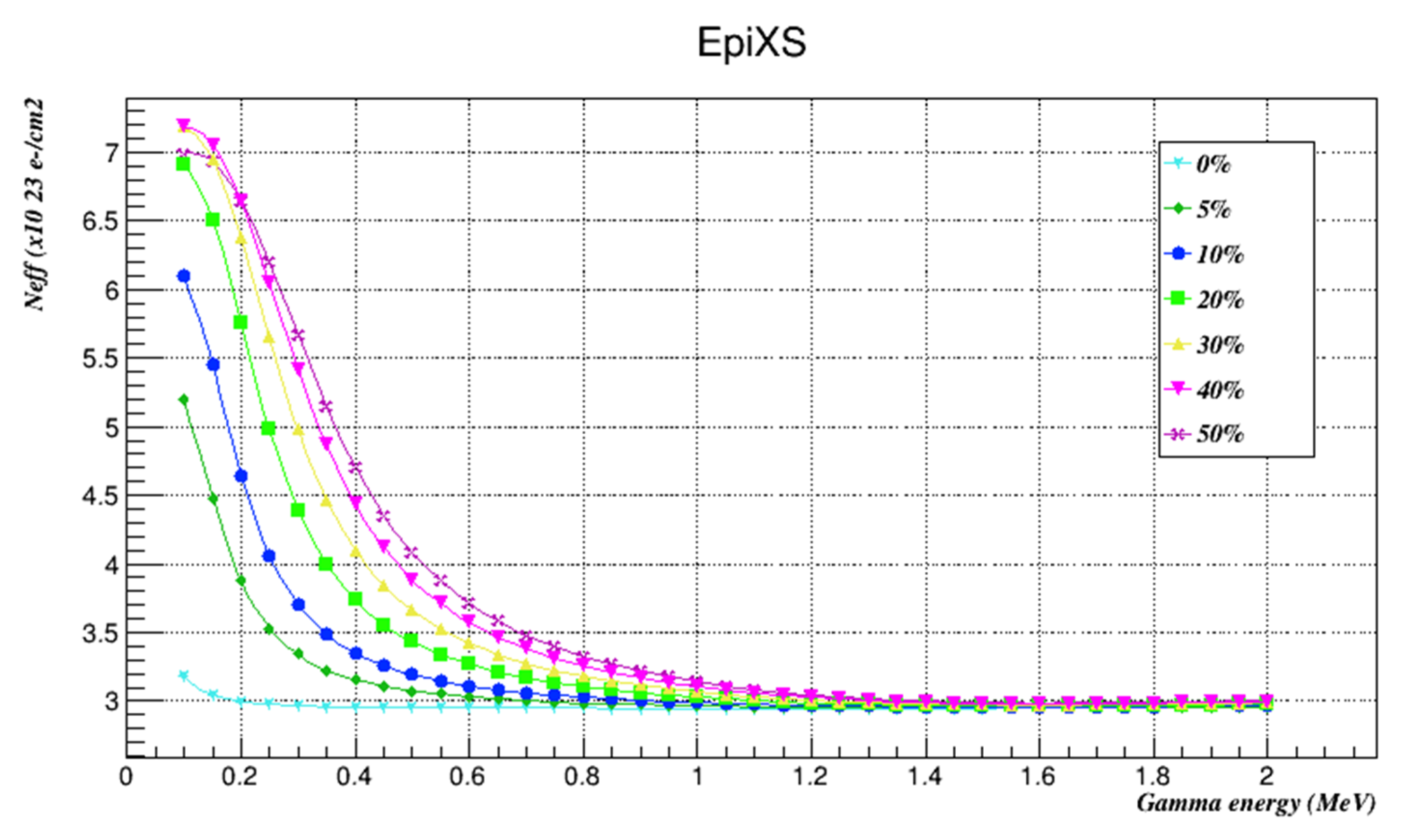
The effective atomic number and effective electron density of all investigated samples were found using EpiXS as shown in Table 4 and Table 5 and plotted in Figure 4 and Figure 5.
Table 4.
The effective atomic number of the investigated samples at the studied gamma energy range.
Table 5.
The effective electron density of the investigated samples at the studied gamma energy range.
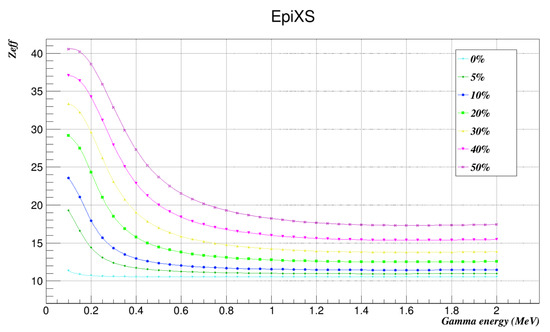
Figure 4.
The effective atomic numbers of the investigated samples at the studied energies as found by EpiXS.
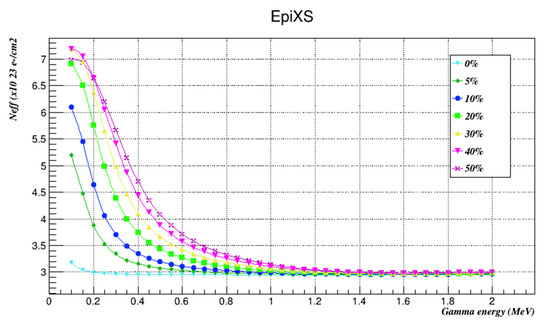
Figure 5.
The effective electron densities of the investigated samples at the studied energies as found by EpiXS.
The Zeff and Neff of the investigated samples were evaluated using EpiXS. The results showed that they both behaved in a similar way and that Zeff and Neff increased with increments of nanocomposites’ weight factors along the whole energy range studied. These results agree with previously published results that nanocomposites have an impressive shielding effect from low-energy gamma radiation, and here we conclude that this applies on a wide range of gamma radiation as well.
6. Fast Neutron Removal Cross Section
The fast neutron removal cross sections were found using a Geant4 code and then calculated for all the studied samples using Equations (5), (7) and (8) with the use of the fast neutron removal cross sections and the weight fractions of each element in each polymer [15,16,17]. Table 6 lists the Geant4-obtained fast neutron removal cross sections compared with those calculated in order to validate the obtained results.
Table 6.
Fast neutron effective removal cross sections of the samples using Geant4 compared to manually calculated ones.
Good agreement was shown between the calculated removal cross sections and those found using Geant4 as the percentage deviation was less than 9% and the agreement became better as the weight factor of the nanocomposites increased. The fast neutron removal cross section increased as the weight fraction of the nanocomposites increased in the polymer, as can be seen from the obtained results. This concludes that the weight factor of the nanocomposites increased the neutron shielding ability of the polymer.
7. Lead-Equivalent Gamma Shield
The shielding thicknesses equivalent to 0.5 mm of lead of all studied samples were simulated using the Geant4 toolkit with a numerical female human phantom and a 511 keV gamma source placed in front of it. Table 7 summarizes the thicknesses of the studied samples equivalent to 0.5 mm of lead with a gamma energy of 511 keV.
Table 7.
Thicknesses of the samples equivalent to 0.5 mm of lead.
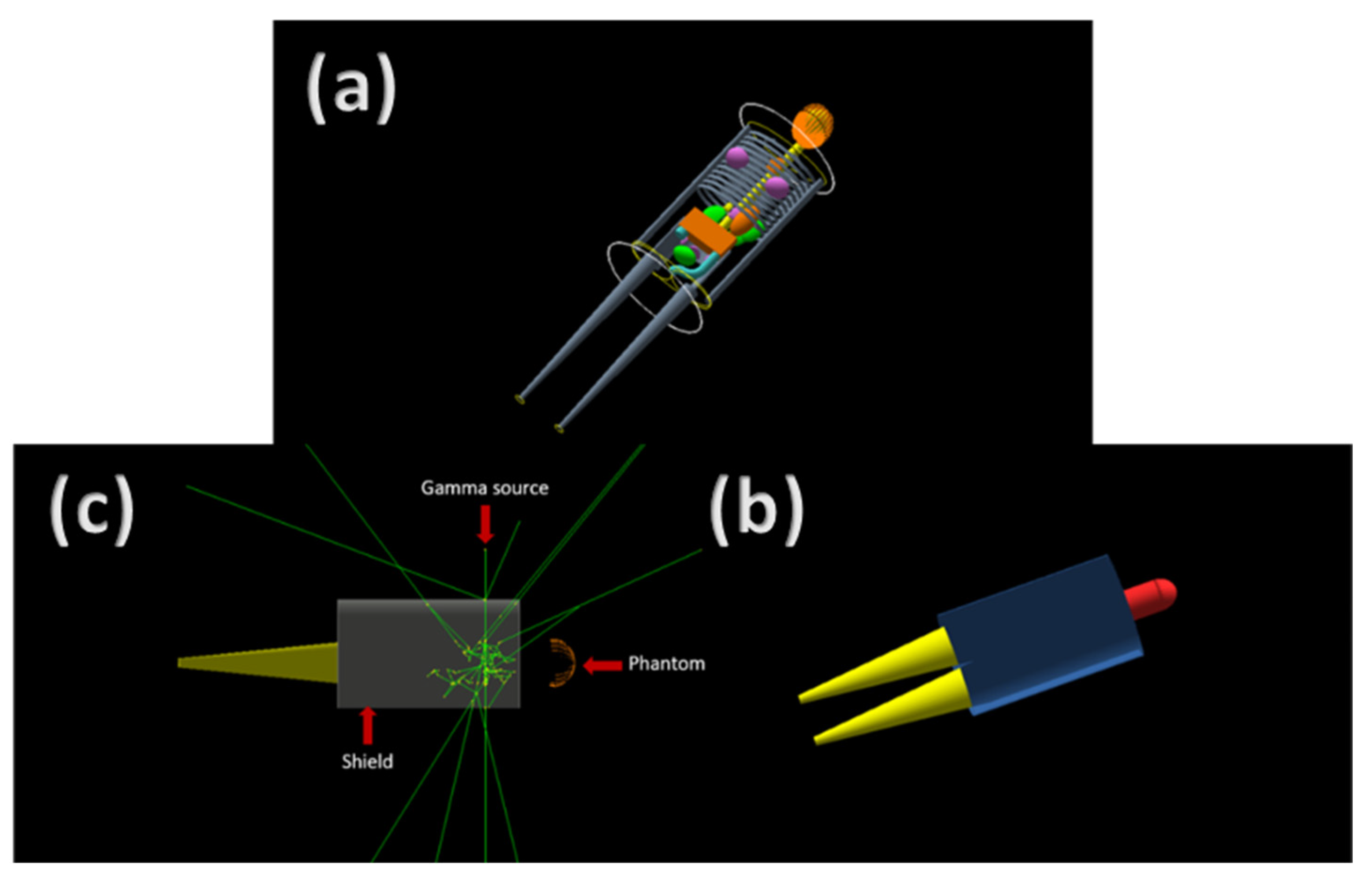
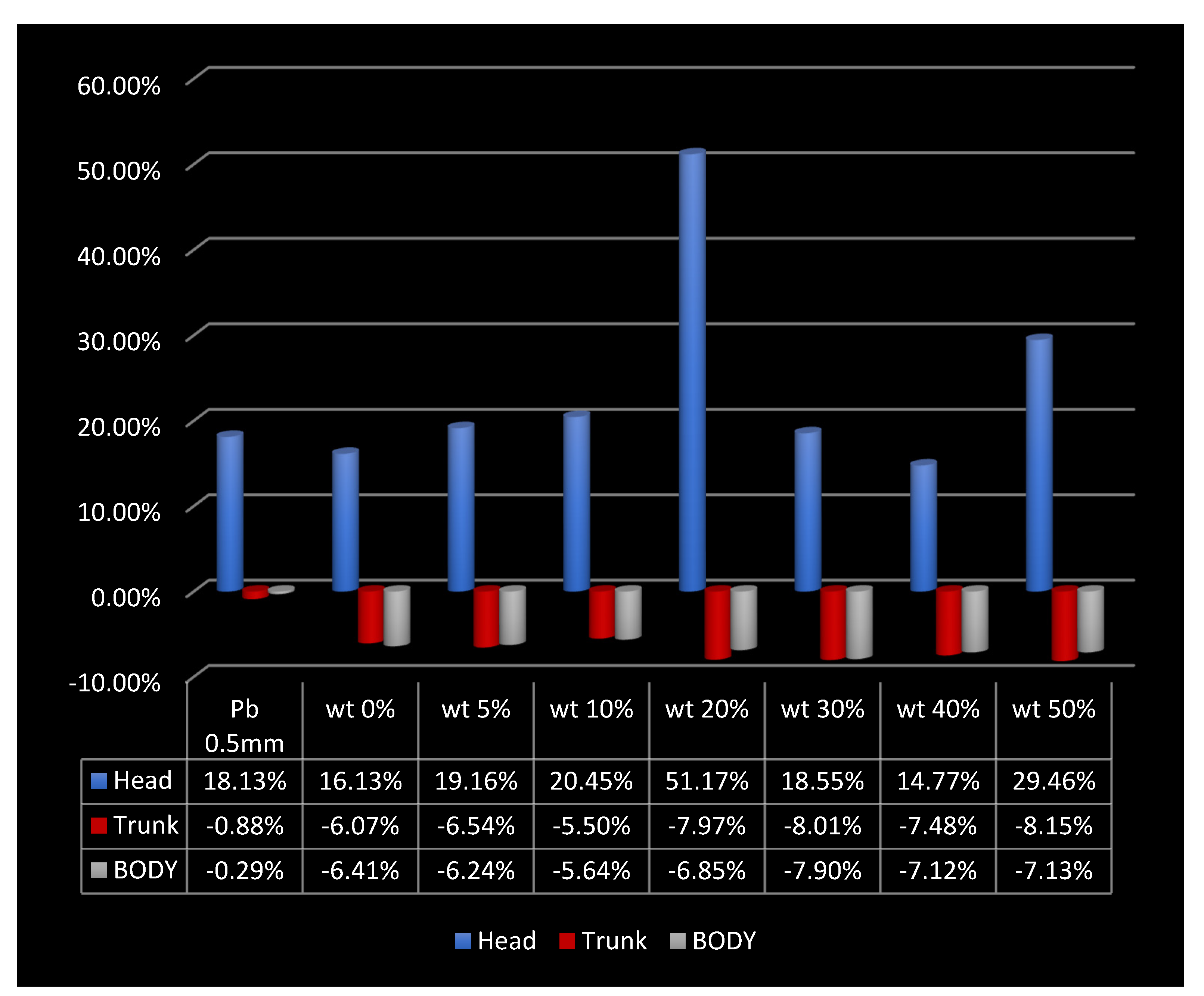
Figure 6 represents the simulation visualization of the phantom with the gamma source and the simulated shield covering the whole trunk area. Table 8 shows the energy deposit with and without the shields in the whole body, the head, and the trunk. Percentage of energy loss with the shield compared to that without are shown in Figure 7.
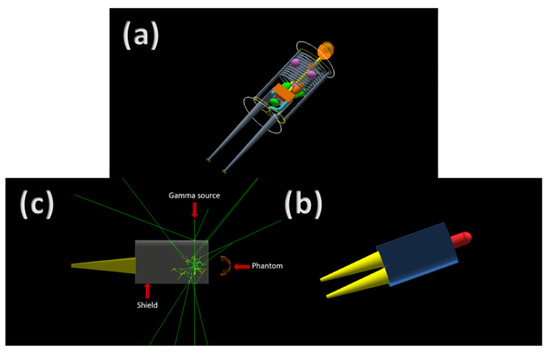
Figure 6.
Geant4 visualization of the simulated phantom with a shield (a) wire frame; (b) solid view, (c) side view with the gamma source shooting gamma particles in the direction of the phantom.
Table 8.
Energy deposits in the head, trunk, and whole body of the phantom.
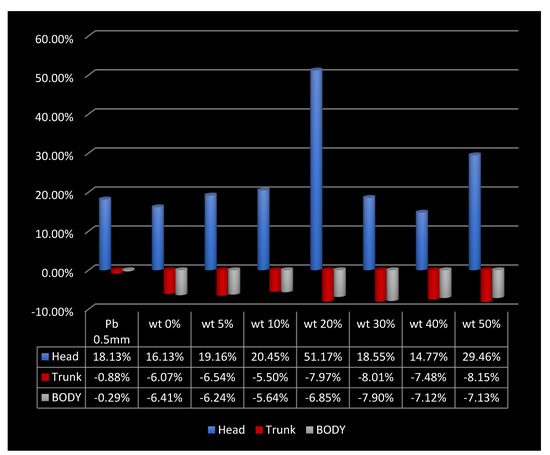
Figure 7.
Percentages of energy deposit to the body, head, and trunk with different shields.
The energy deposit in the head of the phantom which was not shielded as well as the total energy deposit in the trunk of the phantom were both compared without and with 0.5 mm-lead-equivalent cylindrical shielding. The obtained results showed that the energy delivered to the head increased while using the shields, which may be due to scattering of the gamma rays when hitting the material of the shields. Meanwhile, the total energy delivered to the trunk was reduced when using the shields, although the detailed energy deposit in the organs may have varied. Table 8 show the energy deposit in the head, trunk, and whole body with and without the studied shields.
The results of the simulation code showed that using PC-Bi2O3 as a shield decreased the energy deposit within the protected areas even more than lead shielding did. The energy deposit of the trunk area which was fully covered by the shield was less than the energy deposit with no shield by 6 to 8%, whereas it was decreased by only 0.88% in case of a lead shield. The energy deposit of the head, which was not protected at all, increased in all cases by 14 to 29% which was due to the scattered gamma rays. The energy deposit in the whole body was decreased by 6 to 7% when using PC-Bi2O3 as a shield, while it decreased only by 0.29% when using a traditional lead shield.
8. Conclusions
The results showed that the gamma shielding properties of the studied samples became better with an increasing weight factor of the Bi2O3 nanocomposites within the PC, especially at lower gamma energies, and it became almost equal at high energies. This means that PC-Bi2O3 could be used as a replacement to toxic traditional lead shielding materials. The results of the second simulation code showed that using PC-Bi2O3 as a shield decreased the energy deposit within the protected areas as well as the whole body more than a traditional lead shield did. The fast neutron shielding capabilities of PC-Bi2O3 were increased as well when the weight factor of the Bi2O3 nanocomposites was increased.
The obtained results show that PC-Bi2O3 is a good candidate to replace traditional gamma and neutron shielding material, and further studies at other gamma and neutron energies may agree with these results. The results also show that Geant4 could be used in estimating the shielding properties of materials.
Funding
This research received no external funding.
Institutional Review Board Statement
Not applicable.
Informed Consent Statement
Not applicable.
Data Availability Statement
Not applicable.
Conflicts of Interest
The author declares no conflict of interest.
References
- Mehrara, R.; Malekie, S.; Kotahi, S.; Kashian, S. Introducing a novel low energy gamma ray shield utilizing Polycarbonate Bismuth Oxide composite. Sci. Rep. 2021, 11, 10614. [Google Scholar] [CrossRef] [PubMed]
- Mirji, R.; Lobo, B. Study of polycarbonate–bismuth nitrate composite for shielding against gamma radiation. J. Radioanal. Nucl. Chem. 2020, 324, 7–19. [Google Scholar] [CrossRef]
- Saboori, A.; Dadkhah, M.; Fino, P.; Pavese, M. An Overview of Metal Matrix Nanocomposites Reinforced with Graphene Nanoplatelets; Mechanical, Electrical and Thermophysical Properties. Metals 2018, 8, 423. [Google Scholar] [CrossRef]
- Martin James, E. Physics for Radiation Protection; Wiley: Weinheim, Germany, 2013. [Google Scholar]
- Ambika, M.R.; Nagaiah, N.; Harish, V.; Lokanath, N.K.; Sridhar, M.A.; Renukappa, N.M.; Suman, S.K. Preparation and characterisation of Isophthalic-Bi2O3 polymer composite gamma radiation shields. Radiat. Phys. Chem. 2017, 130, 351–358. [Google Scholar] [CrossRef]
- Hila, F.C.; Asuncion-Astronomo, A.; Dingle, C.A.M.; Jecong, J.F.M.; Javier-Hila, A.M.V.; Gili, M.B.Z.; Balderas, C.V.; Lopez, G.E.P.; Guillermo, N.R.D.; Amorsolo, A.V., Jr. EpiXS: A Windows-based program for photon attenuation, dosimetry and shielding based on EPICS2017 (ENDF/B-VIII) and EPDL97 (ENDF/B-VI.8). Radiat. Phys. Chem. 2021, 182, 109331. [Google Scholar] [CrossRef]
- Ivanchenko, V. Geant4 toolkit for simulation of HEP experiments. Nucl. Instrum. Methods Phys. Res. Sect. A Accel. Spectrometers Detect. Assoc. Equip. 2003, 502, 666–668. [Google Scholar] [CrossRef]
- Hubbell, J. Photon mass attenuation and energy-absorption coefficients. Int. J. Appl. Radiat. Isot. 1982, 33, 1269–1290. [Google Scholar] [CrossRef]
- Kaewkhao, J.; Laopaiboon, J.; Chewpraditkul, W. Determination of effective atomic numbers and effective electron densities for Cu/Zn alloy. J. Quant. Spectrosc. Radiat. Transf. 2008, 109, 1260–1265. [Google Scholar] [CrossRef]
- Madhusudhan, A.; Narender, K.; Kishan, G.; Krishna, N.; Krishna, R. Mass Attenuation Coefficients, Effective atomic and Electron Numbers of Alkali Halides for Multi-Energetic Photons. Res. J. Phys. Sci. 2013, 1, 11–16. [Google Scholar]
- Olukotun, S.; Mann, K.; Gbenu, S.; Ibitoye, F.; Oladejo, O.; Joshi, A.; Tekin, H.; Sayyed, M.; Fasasi, M.; Balogun, F.; et al. Neutron-shielding behaviour investigations of some clay-materials. Nucl. Eng. Technol. 2019, 51, 1444–1450. [Google Scholar] [CrossRef]
- Mann, K.S. Toolkit for fast neutron removal cross-section. In Proceedings of the 3rd international Conference Advancements in Engineering and Technology; Bhai Gurdas Institute of Engineering and Technology: Sangrur, India, 2015. [Google Scholar]
- El Abd, A.; Mesbah, G.; Mohammed, N.; Ellithi, A. A simple Method for Determining the Effective Removal Cross Section for Fast Neutrons. J. Radiat. Nucl. Appl. 2017, 2, 53–58. [Google Scholar] [CrossRef]
- Brun, R.; Rademakers, F. ROOT—An Object Oriented Data Analysis Framework, Proceedings AIHENP’96 Workshop, Lausanne, Sep. 1996. Nucl. Inst. Methods Phys. Res. A 1997, 389, 81–86. [Google Scholar] [CrossRef]
- Hehn, G. Principles of Radiation Shielding. Nucl. Technol. 1986, 74, 104–105. [Google Scholar] [CrossRef]
- El-Khayatt, A. Calculation of fast neutron removal cross-sections for some compounds and materials. Ann. Nucl. Energy 2010, 37, 218–222. [Google Scholar] [CrossRef]
- Abd Elwahab, N.; Helal, N.; Mohamed, T.; Shahin, F.; Ali, F. New shielding composite paste for mixed fields of fast neutrons and gamma rays. Mater. Chem. Phys. 2019, 233, 249–253. [Google Scholar] [CrossRef]
Publisher’s Note: MDPI stays neutral with regard to jurisdictional claims in published maps and institutional affiliations. |
© 2022 by the author. Licensee MDPI, Basel, Switzerland. This article is an open access article distributed under the terms and conditions of the Creative Commons Attribution (CC BY) license (https://creativecommons.org/licenses/by/4.0/).