
Repellent and Attractant Activities of Organic Compounds on Female and Male Philonthus decorus (Coleoptera, Staphylinidae)


Abstract
Simple Summary
Abstract
1. Introduction
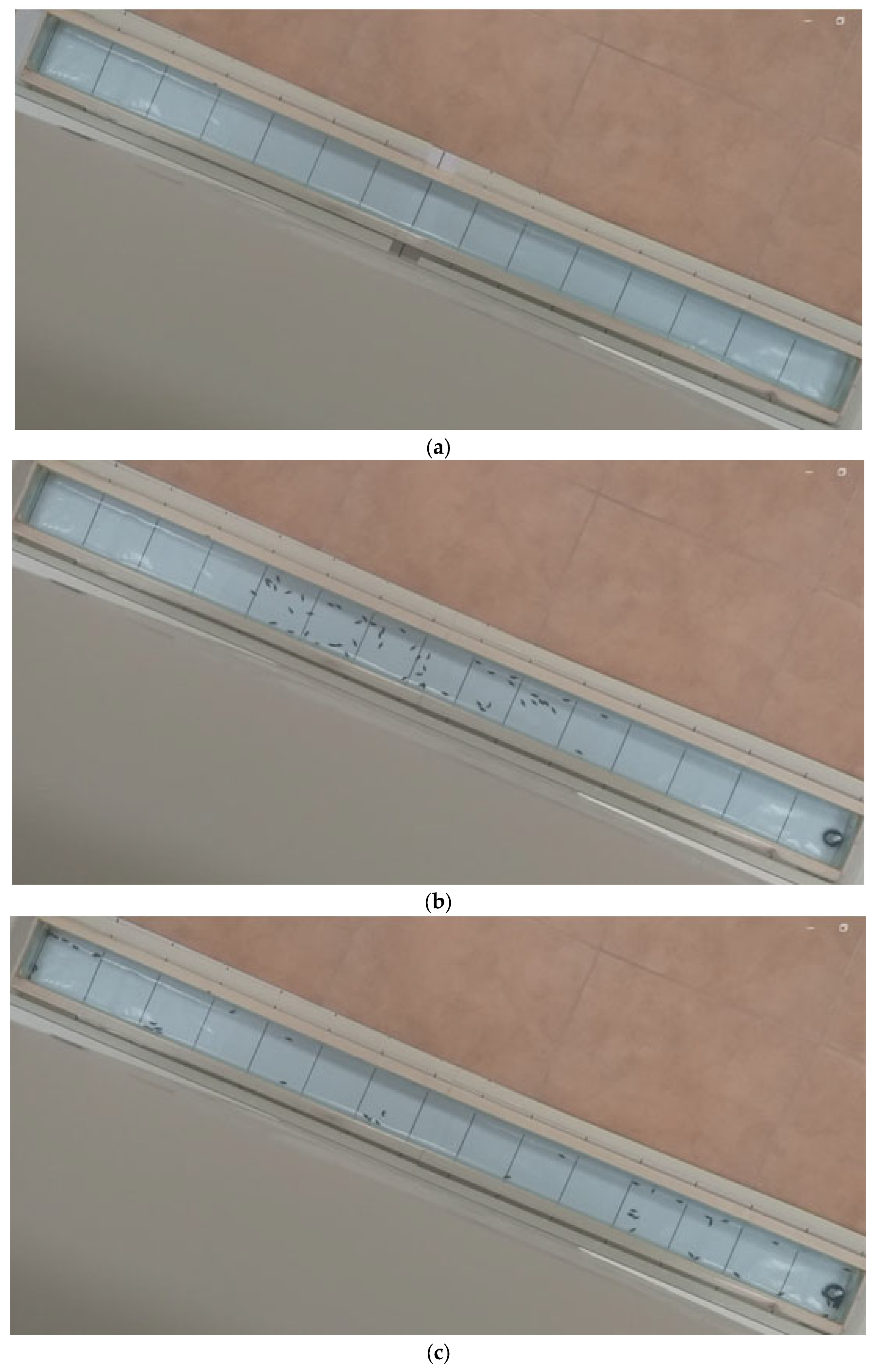
2. Materials and Methods
3. Results
4. Discussion
5. Conclusions
Author Contributions
Funding
Institutional Review Board Statement
Informed Consent Statement
Data Availability Statement
Conflicts of Interest
References
- Knudsen, G.K.; Tasin, M.; Aak, A.; Thöming, G. A Wind tunnel for odor mediated insect behavioural assays. J. Vis. Exp. 2018, 141, e58385. [Google Scholar] [CrossRef]
- Kleinlogel, S.; Vogl, C.; Jeschke, M.; Neef, J.; Moser, T. Emerging approaches for restoration of hearing and vision. Physiol. Rev. 2020, 100, 1467–1525. [Google Scholar] [CrossRef]
- Wicher, D.; Marion-Poll, F. Editorial: Function and regulation of chemoreceptors. Front. Cell. Neurosci. 2018, 12, 496. [Google Scholar] [CrossRef]
- Liu, F.; Chen, Z.; Ye, Z.; Liu, N. The olfactory chemosensation of hematophagous hemipteran insects. Front. Physiol. 2021, 12, 703768. [Google Scholar] [CrossRef]
- Robertson, H.M. Molecular evolution of the major arthropod chemoreceptor gene families. Annu. Rev. Entomol. 2019, 64, 227–242. [Google Scholar] [CrossRef]
- Balart-García, P.; Cieslak, A.; Escuer, P.; Rozas, J.; Ribera, I.; Fernández, R. Smelling in the dark: Phylogenomic insights into the chemosensory system of a Subterranean beetle. Mol. Ecol. 2021, 30, 2573–2590. [Google Scholar] [CrossRef]
- Fleischer, J.; Krieger, J. Insect pheromone receptors—Key elements in sensing intraspecific chemical signals. Front. Cell. Neurosci. 2018, 12, 425. [Google Scholar] [CrossRef]
- Rork, A.M.; Renner, T. Carabidae semiochemistry: Current and future directions. J. Chem. Ecol. 2018, 44, 1069–1083. [Google Scholar] [CrossRef]
- Cai, X.; Li, Z.; Pan, H.; Lu, Y. Research and application of food-based attractants of herbivorous insect pests. Chin. J. Biol. Control 2018, 34, 8–35. [Google Scholar] [CrossRef]
- Benelli, G.; Pavela, R. Beyond mosquitoes—Essential oil toxicity and repellency against bloodsucking insects. Ind. Crop. Prod. 2018, 117, 382–392. [Google Scholar] [CrossRef]
- Pfeiffer, L.; Ruther, J.; Hofferberth, J.; Stökl, J. Interference of chemical defence and sexual communication can shape the evolution of chemical signals. Sci. Rep. 2018, 8, 321. [Google Scholar] [CrossRef]
- Alharbi, O.M.L.; Basheer, A.A.; Khattab, R.A.; Ali, I. Health and environmental effects of persistent organic pollutants. J. Mol. Liq. 2018, 263, 442–453. [Google Scholar] [CrossRef]
- Song, C.; Liu, Y.; Sun, L.; Zhang, Q.; Mao, H. Emissions of volatile organic compounds (VOCs) from gasoline- and liquified natural gas (LNG)-fueled vehicles in tunnel studies. Atmos. Environ. 2020, 234, 117626. [Google Scholar] [CrossRef]
- Clomburg, J.M.; Crumbley, A.M.; Gonzalez, R. Industrial biomanufacturing: The future of chemical production. Science 2017, 355, 6320. [Google Scholar] [CrossRef]
- Wang, Z.; Walker, G.W.; Muir, D.C.G.; Nagatani-Yoshida, K. Toward a global understanding of chemical pollution: A first comprehensive analysis of national and regional chemical inventories. Environ. Sci. Technol. 2020, 54, 2575–2584. [Google Scholar] [CrossRef]
- Tudi, M.; Ruan, H.D.; Wang, L.; Lyu, J.; Sadler, R.; Connell, D.; Chu, C.; Phung, D.T. Agriculture development, pesticide application and its impact on the environment. Int. J. Environ. Res. Public Health 2021, 18, 1112. [Google Scholar] [CrossRef]
- Du, J.; Andreassen, L.D.; Holliday, N.J. Behavioural responses to dimethyl disulphide by Aleochara bilineata and Aleochara bipustulata. Physiol. Entomol. 2018, 43, 20–29. [Google Scholar] [CrossRef]
- Marchiori, C.H. Aleochara notula Erichson, 1839 (Coleoptera: Staphylinidae) as a natural enemy of dipterans in chicken and cattle feces in Brazil. Open Access Res. J. Sci. Technol. 2021, 2, 1–5. [Google Scholar] [CrossRef]
- Herman, L.H. Catalog of the Staphylinidae (Insecta: Coleoptera). 1758 to the end of the second millennium. Staphylinine group (Part V). Staphylininae: Diochini, Maorothiini, Othiini, Platyprosopini, Staphylinini (Amblyopinina, Anisolinina, Hyptiomina, Philonthina). Bull. Am. Mus. Nat. Hist. 2001, 265, 2441–3020. [Google Scholar] [CrossRef]
- Tamutis, V.; Tamutė, B.; Ferenca, R. A catalogue of Lithuanian beetles (Insecta, Coleoptera). Zookeys 2011, 121, 1–494. [Google Scholar] [CrossRef]
- Dettner, K.; Reissenweber, F. The defensive secretion of Omaliinae and Proteininae (Coleoptera: Staphylinidae): Its chemistry, biological and taxonomic significance. Biochem. Syst. Ecol. 1991, 19, 291–303. [Google Scholar] [CrossRef]
- Huth, A.; Dettner, K. Defense chemicals from abdominal glands of 13 rove beetle species of subtribe Staphylinina (Coleoptera: Staphylinidae, Staphylininae). J. Chem. Ecol. 1990, 16, 2691–2711. [Google Scholar] [CrossRef]
- Steidle, J.L.M.; Dettner, K. Chemistry and morphology of the tergal gland of freeliving adult Aleocharinae (Coleoptera: Staphylinidae) and its phylogenetic significance. Syst. Entomol. 1993, 18, 149–168. [Google Scholar] [CrossRef]
- Peschke, K.; Metzler, M. Defensive and pheromonal secretion of the tergal gland of Aleochara curtula. I. The chemical composition. J. Chem. Ecol. 1982, 8, 773–783. [Google Scholar] [CrossRef]
- Dettner, K.; Schwinger, G.; Wunderle, P. Sticky secretion from two pairs of defensive glands of rove beetle Deleaster dichrous (Grav.) (Coleoptera: Staphylinidae). Gland morphology, chemical constituents, defensive functions, and chemotaxonomy. J. Chem. Ecol. 1985, 11, 859–883. [Google Scholar] [CrossRef]
- Steidle, J.L.M.; Dettner, K. The chemistry of the abdominal gland secretion of six species of the rove beetle genus Bledius. Biochem. Syst. Ecol. 1995, 23, 757–765. [Google Scholar] [CrossRef]
- Sellenschlo, U. Beifänge in borkenkäfer-pheromonfallen in Norddeutschland. Anz. Schadlingskunde Pflanzenschutz Umweltschutz 1986, 59, 148–152. [Google Scholar] [CrossRef]
- Martikainen, P.; Viiri, H.; Räty, M. Beetles (Coleoptera) caught with pheromones of Gnathotrichus retusus and G. sulcatus (Col., Scolytidae) in Southern Finland. Anz. Schädlingskunde 2001, 74, 7–10. [Google Scholar] [CrossRef]
- Fäldt, J.; Jonsell, M.; Nordlander, G.; Borg-Karlson, A.K. Volatiles of bracket fungi Fomitopsis pinicola and Fomes fomentarius and their functions as insect attractants. J. Chem. Ecol. 1999, 25, 567–590. [Google Scholar] [CrossRef]
- Huang, X.J.; Dong, G.F.; Xue, R.D. Studies on the attractiveness of some compounds of Aedes albopictus. Chin. J. Vector Biol. Control 1991, 2, 55–58. [Google Scholar]
- Silva, F.C.; Ventura, M.U.; Morales, L. Capture of Hypothenemus hampei Ferrari (Coleoptera, Scolytidae) in response to trap characteristics. Sci. Agric. 2006, 63, 567–571. [Google Scholar] [CrossRef]
- Bernardi, O.; Garcia, M.S.; Silva, E.J.E.; Zazycki, L.C.F.; Bernardi, D.; Miorelli, D.; Ramiro, G.A.; Finkenauer, E. Coleoptera collected with light traps and ethanol traps in plantation of Eucalyptus spp. in the south of the state Rio Grande do Sul. Ciênc. Florest. 2010, 20, 579–588. [Google Scholar] [CrossRef]
- Khan, M.; Shahjahan, R.M. Evaluation of Eucalyptus leaf extracts as repellent for adult Sitophilus oryzae (L.) (Col.: Curculionidae) and attractant for Callosobruchus chinensis (L.) (Col.: Bruchidae). Bangladesh J. Entomol. 1998, 8, 81–88. [Google Scholar]
- Hashimoto, K.; Hayashi, F. Cantharidin world in nature: A concealed arthropod assemblage with interactions via the terpenoid cantharidin. Entomol. Sci. 2014, 17, 388–395. [Google Scholar] [CrossRef]
- Pekar, S. Differential effects of formaldehyde concentration and detergent on the catching efficiency of surface active arthropods by pitfall traps. Pedobiologia 2002, 46, 539–547. [Google Scholar] [CrossRef]
- Cohen, E.; Ikan, R.; Sulov, A. Response of the females of Trogoderma granarium (Coleoptera, Dermestidae) to cuticular free fatty acids. Entomol. Exp. Appl. 1971, 14, 315–318. [Google Scholar] [CrossRef]
- Evans, W.G. Oscillatoria sp. (Cyanophyta) mat metabolites implicated in habitat selection in Bembidion obtusidens (Coleoptera: Carabidae). J. Chem. Ecol. 1982, 8, 671–678. [Google Scholar] [CrossRef]
- Sato, M.; Kuwahara, Y.; Matsuyama, S.; Suzuki, T. Chemical ecology of astigmatid mites: XXXVII. Fatty acid as food attractant of astigmatid mites, its scope and limitation. Appl. Entomol. Zool. 1993, 28, 565–569. [Google Scholar] [CrossRef]
- López-Riquelme, G.O.; Malo, E.A.; Cruz-López, L.; Fanjul-Moles, M.L. Antennal olfactory sensitivity in response to task-related odours of three castes of the ant Atta mexicana (Hymenoptera: Formicidae). Physiol. Entomol. 2006, 31, 353–360. [Google Scholar] [CrossRef]
- Moore, B.P. Chemical defense in carabids and its bearing on phylogeny. In Carabid Beetles; Erwin, T.L., Ball, G.E., Whitehead, D.R., Halpern, A.L., Eds.; Springer: Dordrecht, The Netherlands, 1979; pp. 193–203. [Google Scholar] [CrossRef]
- Seenivasagan, T.; Guha, L.; Parashar, B.D.; Agrawal, O.P.; Sukumaran, D. Olfaction in Asian tiger mosquito Aedes albopictus: Flight orientation response to certain saturated carboxylic acids in human skin emanations. Parasitol. Res. 2014, 113, 1927–1932. [Google Scholar] [CrossRef]
- Casana-Giner, V.; Gandia-Balaguer, A.; Primo-Yufera, E. Field trial of an attractant mixture for dipterous, including the pest Ceratitis capitata (Wiedemann) (Dipt., Tephritidae), in Valencia, Spain. J. Appl. Entomol. 1999, 123, 47–48. [Google Scholar] [CrossRef]
- Tóth, M.; Szarukán, I.; Dorogi, B.; Gulyás, A.; Nagy, P.; Rozgonyi, Z. Male and female noctuid moths attracted to synthetic lures in Europe. J. Chem. Ecol. 2010, 36, 592–598. [Google Scholar] [CrossRef]
- Badra, Z.; Larsson Herrera, S.; Cappellin, L.; Biasioli, F.; Dekker, T.; Angeli, S.; Tasin, M. Species-specific induction of plant volatiles by two aphid species in apple: Real time measurement of plant emission and attraction of lacewings in the wind tunnel. J. Chem. Ecol. 2021, 47, 653–663. [Google Scholar] [CrossRef]
- Dobler, S.; Daloze, D.; Pasteels, J.M. Sequestration of plant compounds in a leaf beetle’s defensive secretion: Cardenolides in Chrysochus. Chemoecology 1998, 8, 111–118. [Google Scholar] [CrossRef]
- Moshkin, V.S.; Brygadyrenko, V.V. Influence of organic acids on locomotor activity of Stratiolaelaps scimitus (Mesostigmata, Laelapidae). Biosyst. Divers. 2023, 31, 401–409. [Google Scholar] [CrossRef]
- Dean, G.J.; Satasook, C. Response of Chrysoperla carnea (Stephens) (Neuroptera: Chrysopidae) to some potential attractants. Bull. Entomol. Res. 1983, 73, 619–624. [Google Scholar] [CrossRef]
- Deml, R.; Dettner, K. Biogenic amines and phenolics characterize the defensive secretion of saturniid caterpillars (Lepidoptera: Saturniidae): A comparative study. J. Comp. Physiol. 1993, 163, 123–132. [Google Scholar] [CrossRef]
- Peterson, J.K.; Horvat, R.J.; Elsey, K.D. Squash leaf glandular tricome volatiles: Identification and influence on behavior of female pickleworm moth [Diaphania nitidalis (Stoll.)] (Lepidoptera: Pyralidae). J. Chem. Ecol. 1994, 20, 2099–2109. [Google Scholar] [CrossRef]
- Scarpati, M.L.; Scalzo, R.L.; Vita, G. Olea europaea volatiles attractive and repellent to the olive fruit fly (Dacus oleae Gmelin). J. Chem. Ecol. 1993, 19, 881–891. [Google Scholar] [CrossRef] [PubMed]
- Xiu, C.-L.; Pan, H.-S.; Liu, B.; Luo, Z.-X.; Williams, I.L.; Yang, Y.-Z.; Lu, Y.-H. Perception of and behavioral responses to host plant volatiles for three Adelphocoris species. J. Chem. Ecol. 2019, 45, 779–788. [Google Scholar] [CrossRef]
- Faly, L.I.; Brygadyrenko, V.V.; Orzekauskaite, A.; Paulauskas, A. Sensitivity of non-target groups of invertebrates to cypermethrin. Biosyst. Divers. 2023, 31, 393–400. [Google Scholar] [CrossRef]
- Langraf, V.; Petrovičová, K.; Schlarmannová, J.; Cenke, P.; Brygadyrenko, V. Influence of ecological farming on the community structure of epigeic arthropods in crops Triticum aestivum and T. spelta. Biosyst. Divers. 2022, 30, 263–269. [Google Scholar] [CrossRef]
- Parhomenko, O.V.; Kolomiichuk, S.V.; Omelianov, D.D.; Brygadyrenko, V.V. Potential use of synthetic and natural aromatic mixtures in prevention from Shelfordella lateralis cockroaches. Regul. Mech. Biosyst. 2022, 13, 174–179. [Google Scholar] [CrossRef]
- Nehrii, V.V.; Brygadyrenko, V.V. Effects of aromatic compounds on movement activity of Pyrrhocoris apterus in the conditions of a laboratory experiment. Regul. Mech. Biosyst. 2022, 13, 80–84. [Google Scholar] [CrossRef]


| Name of Compounds | Structural Formula | Melting Temperature; Boiling Temperature | LD50 (Rat, Oral), mg/kg | Use in Pharmaceutics and Food Industry | Use in Industry, Construction, and Household |
|---|---|---|---|---|---|
| Hexane C6H14 |  | −95.0; 68.0 | 25,000 | Used during extraction of plant oils from peanuts, soybeans, maize, and other oilseed crops | Processing of oil, production of gasoline and additives; chemical industry—fractional purification of compounds, making of chemical reagents, production of glues; tire production; electronics |
| Toluene C7H8 |  | −95.0; 110.6 | 636 | – | In the chemical industry as a raw material for organic synthesis; in the varnish industry (is included in various solvents, varnishes, and paints); as solvent for many organic compounds and polymers; as additive to motor fuels |
| Xylene (ortho- xylene) C8H10 |  | −47.4; 138.5 | 5000 | – | In the oil, chemical, printing, and leather industries, construction (synthesis of terephthalic acid, solvent of varnishes and paints, etc.) |
| Methanol CH4O |  | −97.6; 64.7 | 5628 | Used in pharmaceutics | In petrochemical (production of fuel) and chemical industries in making of formaldehyde, acetic acid, plastic, rubber, synthetic fabrics, coloring, fungicides |
| Ethanol C2H6O |  | −114.1; 78.2 | 7060 | Used in pharmaceutics as an antiseptic agent, and as a solvent and preservative for medicinal drugs; food additive E1510 (solvent, preservative), is included in alcoholic beverages, dairy products, bakery, and confectionery | Used in chemical industry as a raw material, as a solvent in production of varnishes, household chemicals, component of antifreezes and glass cleaner, etc.; in perfumery and cosmetics |
| Isopropanol C3H8O |  | −89.0; 82.6 | 5045 | Used as a disinfectant for external use (substitute of ethyl alcohol); as a raw material for synthesis of acetone, hydrogen peroxide, etc. | Used in industry for metal polishing, maintenance of office equipment; included in cosmetics, perfumery, household chemicals, and maintenance of vehicles |
| 1-Butanol C4H10O |  | −89.8; 117.7 | 790 | – | In the chemical industry for synthesis of many organic compounds; in the paint and varnish industry; in production of resins and plastifiers; as vehicle fuel |
| Isoamyl alcohol C5H12O |  | −117.0; 131.1 | 1300 | Used in food production and production of fruit essences | Production of varnishes and paints, plastifiers, as solvent of fats, waxes, resins, and oils, in cosmetics and perfumery |
| Benzyl alcohol C7H8O |  | −15.2; 205.3 | 1230 | Used in pharmaceutics as an antimicrobial agent in oil solutions; as food supplement E1519 | In the chemical industry as a solvent of varnishes; in perfumery |
| Hydroquinone C6H6O2 |  | 172.0; 287.0 | 302 | Used in production of medicinal drugs; food industry as an antioxidant | In production of organic colorings, photographic materials; in cosmetics |
| Ethylene glycol C2H6O2 |  | −12.9; 197.3 | 4700 | Used as a cryoprotectant, is included in solutions which preserve the tissues and organs from destruction during thawing | Used as a thermal carrier in household heating and cooling systems of computers; is included in antifreezes and brake fluids; production of many polymers; as solvent of paints; organic synthesis; production of preservatives, and others. |
| Glycerol C3H8O3 |  | 17.8; 290.0 | 12,600 | In pharmaceutics, it is used as a sweetener in syrups and lozenges; in the food industry, it is used as a component of numerous foods (food supplement E422, emulsifier) | Used in the paint and varnish industry; production of plastic; textile, paper, and tanning industries; production of detergents and cosmetics (as humectants, smoothing component); and tobacco production |
| Formalin CH2O |  | −92.0; −19.0 | 100 | In pharmaceutics, it is used as a disinfectant; in some medicinal drugs | Used in metallurgy; in the oil and petrochemical industries; in the chemical industry—production of formaldehyde resins, antiseptics, solvents for varnishes and paints; as a raw material in organic synthesis; in the paper, textile, and tanning industries; production of agricultural pesticides |
| Acetone C3H6O |  | −94.9; 56.1 | 5800 | Used in production of medicinal drugs; for isolating plant extracts from plants; production of bandages; food industry to extract fats, etc. | In the chemical industry it is used as a raw material for synthesis of many organic compounds; production of varnishes and paints; as a surface-cleaning solvent; in the textile industry, perfumery |
| Formic acid CH2O2 |  | 8.4; 100.8 | 1100 | In pharmaceutics it is used as a disinfectant of equipment, to prepare solutions of performic acid; food supplement E236 (preservative) | In the chemical industry it is used as solvent; in textile and tanning industries; in galvanization for metal cleaning; in construction to improve the properties of concrete, etc. |
| Acetic acid C2H4O2 |  | 16.0; 118.0 | 3310 | Is a component of medicinal drugs used in dermatology; food supplement E260 (preservation and flavoring) | Production of plastic, varnishes, paints, solvents, etc. |
| Oleic acid C18H34O2 |  | 16.3; 360 | 25,000 | Is a component of cosmetics and prophylaxis skin-care products; is present in natural oils and food products | Is used as emulsifier for mechanical treatment of metals, production of varnishes and paints; in soap-making, and other spheres |
| Oxalic acid C2H2O4 |  | 189.0; – | 7500 | Used in pharmaceutics during production of antimicrobial drugs | In the chemical industry for producing colorings, production of household chemicals; in textile and tanning industries; metal processing; in production of cosmetics as a component of bleaching creams, etc. |
| Tartaric acid C4H6O6 |  | 169.0; 399.3 | 2000 | Used in pharmaceutics; in the food industry as a pH regulator and antioxidant in production of canned foods, confectionery, beverages (supplement E334); in winemaking | Used in the textile industry for dyeing of fabric; in cosmetics for production of creams and lotions |
| Citric acid C6H8O7 |  | 156.0; 310.0 | 6730 | Used in pharmaceutics; as supplement E330—pH regulator and preservative; in production of processed cheese, confectionary, beverages | Used in oil mining during drilling wells; in construction as an additive to cement; in the chemical industry during production of household chemicals, etc. |
| L-Ascorbic acid C6H8O6 |  | 190.0–192.0; – | 11,900 | A component of medicinal drugs and bioadditives (prophylaxis and treatment of vitamin C deficiency); food supplements E300–E305 (antioxidants, stabilizers, pH regulators) | Used as a powerful reducing agent in the development of film and prints; in cosmetics as a component of creams, etc. |
| Glycine C2H5NO2 |  | 233; – | 7930 | A component of medicinal drugs and bioadditives as a restorative and sedative agent, for treatment of pathologies of the nervous system; one of the 20 essential amino acids that participate in synthesis of proteins in foods; food supplement E640; ingredient of sports nutrition products | Used in the chemical industry as an additive to galvanizing liquids and a pH regulator |
| L-Alanine C3H7NO2 |  | 258.0; – | >5110 | A component of some medicinal drugs and bioadditives; one of the 20 essential amino acids—monomers of proteins in foods | – |
| L-Cysteine C3H7NO2S |  | 240.0 – | 1890 | A component of drugs for treatment of pathologies of the respiratory system and the liver; non-essential amino acid present in foods; food supplement E920 (production of bakery and meat products, in sport diet) | Used in cosmetics as the main ingredient of hair-care preparations |
| L-Asparagine C4H8N2O3 |  | 234.0; 438.0 | – | A component of some drugs and bioadditives; one of the 20 essential amino acids—monomers of proteins in foods | Used in the chemical industry |
| L-Arginine C6H14N4O2 |  | 222.0; 368.0 | 5110 | Used in pharmaceutics for drugs for treatment of pathologies of the cardiovascular system; basic amino acid in proteins in foods; essential for children | – |
| Phenylalanine C9H11NO2 |  | 283; _ | 10,000–16,000 | As a component of drugs to treat depressive conditions, neurasthenia, hyperactivity, and others; essential amino acids in foods, food supplement E951 (sugar substitute, in sports nutrition) | – |
| L-Tyrosine C9H11NO3 |  | 343; – | 5110 | A component of drugs and dietary supplements, has psychostimulating and antidepressant effects; non-essential amino acid in some foods; ingredient for sport diets | Used in cosmetics, in some preparations for solariums |
| L-Tryptophan C11H12N2O2 |  | –; – | 2000 | A component of drugs for treatment of obsessive compulsive disorders, depressive conditions, mitigation of signs of drug withdrawal syndrome; essential amino acid in foods | – |
| Boric acid BH3O3 |  | 170.9; 300.0 | 2660 | In pharmaceutics as a disinfectant in preparations used in dermatology; supplement E284 (pH regulator and preservative) | In foundries; in production of ceramics, fiber optics, glass; in households (drugs against synanthropic insects) |
| Ammonia solution NH4OH |  | −57.5; 37.7 | 350 | In the food industry (food supplement E527) | Used in agriculture (nitrogen fertilizers) |
| Phosphoric acid H3PO4 |  | 42.3; 212.0 | 1530 | Used as a pH regulator in gassed beverages; for phosphatization of meat; food supplement E338; used in stomatology and orthodontics as an etching solution | Used in freons in industrial refrigerators; as a flux during soldering of metals; as an anti-corrosive agent for treating metals; in aviation industry, etc. |
| Name of Mixture of Compounds | Name of Compounds, Molecular Formula, Percentage in Mixture | Structural Formula | Melting Temperature. Boiling Temperature, °C | Use in Industry, Construction, and Household |
|---|---|---|---|---|
| Gasoline 95 | Aromatic compounds CnH2n−6 (4–16%) Alkanes CnH2n+2 (25–61%) Cycloalkanes CnH2n (9–71%) Unsaturated compounds CnH2n (13–45%) Carbon monoxide CO Nitrogen oxide NOx Sulfur dioxide SO2 Aldehyde |  | –; 33.0–205.0 | Used as fuel in engines of carburetor and injector types, as a solvent in making of paraffin; combustible material |
| Gasoline 98 | Aromatic compounds CnH2n−6 (4–16%) Alkanes CnH2n+2 (25–61%) Cycloalkanes CnH2n (9–71%) Unsaturated compounds CnH2n (13–45%) Carbon monoxide CO Nitrogen oxide NOx Sulfur dioxide SO2 Aldehyde |  | –; 33.0–205.0 | Used as high-octane fuel for injector engines with high compression ratio, as a raw material for the petrochemical industry; as a combustible material. |
| Diesel fuel CnH2n | Alkanes CnH2n+2 (10–40%) Cycloalkanes CnH2n (20–60%) Aromatic compounds CnH2n−6 (15–30%) |  | –; 180.0–360.0 | Fuel for a large number of freight, passenger, and road transport and special equipment with diesel fuel, can be used for heating systems of private houses, boiler houses; in industry during mechanical and thermal processing of metals, in lubricating and cooling systems |
| Solvent 646 | Ethanol C2H6O (15%) Butanol C4H10O (10%) Toluene C7H8 (50%) Acetone C3H6O (10% and other) |  | –; 59.0 | In petrochemicals and light industry; as a solvent for paints; in production of paints; cleaning of details, removal of dirt; in car servicing; production of perfumery and cosmetics; for household needs |
| Solvent 649 | Xylene C8H10 (50%) 2-Ethoxyethanol C4H10O2 (30%) Isobutanol C4H10O (20%) |  | –; – | In the chemical industry; to adjust various paints and varnished to needed viscosity (nitrocellulose paints, varnishes, enamels, coatings) |
| White spirit | Aliphatic compounds Aromatic compounds ≤16% (can contain ethylbenzene (C8H10)—0.1–1%) Sulfur (S)—≤0.025% |  | −95.0; 140.0–200.0 | Production of paints and varnishes and drying oils; in the road-vehicle industry as a solvent for car services, for degreasing of surfaces, car putties; production of roofing materials |
| Nefrasas 80/120 | Cycloalkanes CnH2n N-alkanes CnH2n+2 Isoalkanes CnH2n+2 Aromatic compounds CnH2n−6 (0.5–2.5%) |  | –; – | Used in the chemical, petrochemical, forestry, and textile industries; as a solvent of paints, cleaning of details, removal of coatings, and dirt; for household needs |
| Turpentine | Turpentine Pinus sylvestris L.: Pinene C10H16 (78%) Delta-3-carene C10H16 (10–18%) Dipentene C10H16 (4–6%) |  | −55.0; 154.0 | In the chemical industry (production of camphor, terpin hydrate, and other); varnishes and paints, textile industry; perfumery |
| Ratio of Number of Insects on 4 10 × 10 cm Squares of the Migratory Field That Were Closer to the Odor Source to the Number of Insects That Were on 4 10 × 10 cm Squares of the Experimental Field That Were the Farthest from the Odor Source | Threshold Value of the Attractiveness Index | Range of the Attractiveness Index | Attractant/Repellent Category |
|---|---|---|---|
| 16:1 | 16.000 | >16 | extremely high attractant activity |
| 8:1 | 8.000 | 8.000–15.999 | very strong attractant activity |
| 4:1 | 4.000 | 4.000–7.999 | strong attractant activity |
| 2:1 | 2.000 | 2.000–3.999 | moderate attractant activity |
| 1:2 | 0.500 | 0.500–1.999 | no activity |
| 1:4 | 0.250 | 0.250–0.499 | moderate repellent activity |
| 1:8 | 0.125 | 0.125–0.249 | strong repellent activity |
| 1:16 | 0.062 | 0.063–0.124 | very strong repellent activity |
| – | – | <0.062 | extremely strong repellent activity |
| Compound | Index of Attraction for Males, Conventional Units, x ± SE | Attractiveness of Compounds for Males | Attractiveness Index for Females, Conventional Units, x ± SE | Attractiveness of Compounds for Females | F, F0.05 = 4.07 | P |
|---|---|---|---|---|---|---|
| Control | 1.224 ± 0.144 | no activity | 1.248 ± 0.065 | no activity | 0.02 | 0.880 |
| Ethylene glycol | 0.589 ± 0.037 | no activity | 0.580 ± 0.036 | no activity | 0.03 | 0.855 |
| Solvent 646 | 0.273 ± 0.042 | moderate repellent activity | 0.298 ± 0.055 | moderate repellent activity | 0.13 | 0.723 |
| Phosphoric acid | 1.002 ± 0.196 | no activity | 0.922 ± 0.099 | no activity | 0.13 | 0.717 |
| Toluene | 0.368 ± 0.039 | moderate repellent activity | 0.389 ± 0.036 | moderate repellent activity | 0.02 | 0.699 |
| Asparagine | 1.889 ± 0.126 | no activity | 1.763 ± 0.231 | no activity | 0.23 | 0.636 |
| Isopropanol | 0.485 ± 0.062 | moderate repellent activity | 0.438 ± 0.074 | moderate repellent activity | 0.23 | 0.634 |
| Oleic acid | 0.218 ± 0.031 | strong repellent activity | 0.244 ± 0.023 | strong repellent activity | 0.47 | 0.498 |
| Tartaric acid | 1.056 ± 0.076 | no activity | 0.938 ± 0.145 | no activity | 0.52 | 0.475 |
| L-Alanine | 1.537 ± 0.106 | no activity | 1.349 ± 0.237 | no activity | 0.52 | 0.474 |
| White spirit | 0.452 ± 0.074 | moderate repellent activity | 0.378 ± 0.047 | moderate repellent activity | 0.72 | 0.399 |
| Turpentine | 0.792 ± 0.147 | no activity | 0.989 ± 0.101 | no activity | 1.22 | 0.275 |
| Nefrasas 80/120 | 0.468 ± 0.040 | moderate repellent activity | 0.612 ± 0.097 | no activity | 1.86 | 0.180 |
| L-Arginine | 1.280 ± 0.100 | no activity | 1.778 ± 0.324 | no activity | 2.16 | 0.149 |
| Acetic acid | 0.287 ± 0.057 | moderate repellent activity | 0.182 ± 0.019 | strong repellent activity | 2.99 | 0.091 |
| Acetone | 0.632 ± 0.042 | no activity | 0.512 ± 0.049 | no activity | 3.50 | 0.068 |
| Gasoline 95 | 0.387 ± 0.069 | moderate repellent activity | 0.602 ± 0.082 | no activity | 4.03 | 0.051 |
| Glycine | 2.913 ± 0.489 | moderate attractant activity | 1.828 ± 0.184 | no activity | 4.31 | 0.044 |
| Solvent 649 | 0.385 ± 0.056 | moderate repellent activity | 0.590 ± 0.080 | no activity | 4.39 | 0.042 |
| L-Tyrosine | 1.161 ± 0.157 | no activity | 1.730 ± 0.218 | no activity | 4.62 | 0.037 |
| Citric acid | 0.537 ± 0.034 | no activity | 0.424± 0.035 | moderate repellent activity | 5.43 | 0.025 |
| Isoamyl alcohol | 0.304 ± 0.048 | moderate repellent activity | 0.465 ± 0.046 | moderate repellent activity | 5.92 | 0.019 |
| Gasoline 98 | 0.511 ± 0.046 | no activity | 0.745 ± 0.066 | no activity | 8.49 | 5.7 × 10⁻³ |
| 1-Butanol | 0.401 ± 0.071 | moderate repellent activity | 0.136 ± 0.035 | strong repellent activity | 11.41 | 1.6 × 10⁻³ |
| Boric acid | 0.505 ± 0.083 | no activity | 0.921 ± 0.078 | no activity | 13.34 | 7.2 × 10⁻⁴ |
| Phenylalanine | 1.695 ± 0.126 | no activity | 3.868 ± 0.485 | moderate attractant activity | 18.85 | 8.7 × 10⁻⁵ |
| Benzyl alcohol | 0.704 ± 0.053 | no activity | 1.494 ± 0.172 | no activity | 19.28 | 7.5 × 10⁻⁵ |
| Hydroquinone | 1.760 ± 0.150 | no activity | 0.932 ± 0.084 | no activity | 23.19 | 1.9 × 10⁻⁵ |
| Formalin | 0.400 ± 0.051 | moderate repellent activity | 0.720 ± 0.039 | no activity | 24.38 | 1.3 × 10⁻⁵ |
| L-Cysteine | 2.443 ± 0.210 | moderate attractant activity | 1.225 ± 0.125 | no activity | 24.86 | 1.1 × 10⁻⁵ |
| Formic acid | 0.382 ± 0.037 | moderate repellent activity | 0.789 ± 0.072 | no activity | 25.22 | 9.9 × 10⁻⁶ |
| Xylene | 0.492 ± 0.098 | moderate repellent activity | 1.303 ± 0.122 | no activity | 26.85 | 5.9 × 10⁻⁶ |
| Ascorbic acid | 0.701 ± 0.043 | no activity | 1.367 ± 0.111 | no activity | 31.22 | 1.6 × 10⁻⁶ |
| Ammonia solution | 0.654 ± 0.061 | no activity | 0.226 ± 0.041 | strong repellent activity | 34.47 | 6.1 × 10⁻⁷ |
| Glycerol | 1.829 ± 0.222 | no activity | 0.432 ± 0.058 | moderate repellent activity | 37.60 | 2.6 × 10⁻⁷ |
| Hexane | 0.242 ± 0.036 | strong repellent activity | 0.918 ± 0.091 | no activity | 47.42 | 2.1 × 10⁻⁸ |
| Methanol | 0.414 ± 0.035 | moderate repellent activity | 2.604 ± 0.307 | moderate attracting activity | 50.15 | 1.1 × 10⁻⁸ |
| L-Tryptophan | 0.429 ± 0.030 | moderate repellent activity | 1.285 ± 0.106 | no activity | 60.23 | 1.2 × 10⁻⁹ |
| Ethanol | 0.371 ± 0.055 | moderate repellent activity | 1.049 ± 0.058 | no activity | 71.56 | 1.3 × 10⁻¹⁰ |
| Diesel fuel | 0.316 ± 0.070 | moderate repellent activity | 2.700 ± 0.274 | moderate attracting activity | 70.88 | 1.5 × 10⁻¹⁰ |
| Oxalic acid | 1.168 ± 0.081 | no activity | 0.274 ± 0.020 | moderate repellent activity | 113.54 | 1.6 × 10⁻¹³ |
| Type of Activity | Range of Attractiveness Index | Examples of Compounds or Their Mixtures | Number of Examples, % | |
|---|---|---|---|---|
| Males | Females | |||
| Very strong repellent activity | 0.063–0.124 | no | no | 0.0 |
| Strong repellent activity | 0.125–0.249 | oleic acid, hexane | oleic acid, acetic acid, 1-butanol, ammonia solution | 7.5 |
| Moderate repellent activity | 0.250–0.499 | solvent 646, toluene, isopropanol, white spirit, nefrasas 80/120, acetic acid, gasoline 95, solvent 649, isoamyl alcohol, 1-butanol, formalin, formic acid, xylene, methanol, L-tryptophan, ethanol, diesel fuel | solvent 646, toluene, isopropanol, white spirit, citric acid, isoamyl alcohol, glycerol, oxalic acid | 31.3 |
| No activity | 0.500–1.999 | ethylene glycol, phosphoric acid, asparagine, tartaric acid, L-alanine, turpentine, L-arginine, acetone, L-tyrosine, citric acid, gasoline 98, boric acid, phenylalanine, benzyl alcohol, hydroquinone, ascorbic acid, ammonia solution, glycerol, oxalic acid | ethylene glycol, phosphoric acid, asparagine, tartaric acid, L-alanine, turpentine, L-arginine, acetone, nefrasas 80/120, gasoline 95, glycine, solvent 649, L-tyrosine, gasoline 98, boric acid, benzyl alcohol, hydroquinone, formalin, L-cysteine, formic acid, xylene, ascorbic acid, hexane, L-tryptophan, ethanol | 55.0 |
| Moderate attractant activity | 2.000–3.999 | glycine, L-cysteine | phenylalanine, methanol, diesel fuel | 6.2 |
| Strong attractant activity | 4.000–7.999 | no | no | 0.0 |
| Very strong attractant activity | 8.000–15.999 | no | no | 0.0 |
| Overall | – | – | – | 100.0 |
Disclaimer/Publisher’s Note: The statements, opinions and data contained in all publications are solely those of the individual author(s) and contributor(s) and not of MDPI and/or the editor(s). MDPI and/or the editor(s) disclaim responsibility for any injury to people or property resulting from any ideas, methods, instructions or products referred to in the content. |
© 2024 by the authors. Licensee MDPI, Basel, Switzerland. This article is an open access article distributed under the terms and conditions of the Creative Commons Attribution (CC BY) license (https://creativecommons.org/licenses/by/4.0/).
Share and Cite
Faly, L.; Brygadyrenko, V.; Paulauskas, A. Repellent and Attractant Activities of Organic Compounds on Female and Male Philonthus decorus (Coleoptera, Staphylinidae). Biology 2024, 13, 294. https://doi.org/10.3390/biology13050294
Faly L, Brygadyrenko V, Paulauskas A. Repellent and Attractant Activities of Organic Compounds on Female and Male Philonthus decorus (Coleoptera, Staphylinidae). Biology. 2024; 13(5):294. https://doi.org/10.3390/biology13050294
Chicago/Turabian StyleFaly, Liudmyla, Viktor Brygadyrenko, and Algimantas Paulauskas. 2024. "Repellent and Attractant Activities of Organic Compounds on Female and Male Philonthus decorus (Coleoptera, Staphylinidae)" Biology 13, no. 5: 294. https://doi.org/10.3390/biology13050294
APA StyleFaly, L., Brygadyrenko, V., & Paulauskas, A. (2024). Repellent and Attractant Activities of Organic Compounds on Female and Male Philonthus decorus (Coleoptera, Staphylinidae). Biology, 13(5), 294. https://doi.org/10.3390/biology13050294