


Abstract
A study was carried out to assess the physico-chemical characteristics of wild fruits: Myrianthus holstii and Garcinia buchananii, consumed by rural communities in Rwanda. Although the species have been prioritized for domestication in the country, very little information has been documented on their yield potential, morphological traits, and nutritional compositions. Data were collected from nine fruiting trees for each species in the Bugesera and Nyamagabe districts. All fruits per tree were counted and 10 fruits were harvested for characterization. The proximate composition, vitamins, and minerals were analyzed using Association of Official Analytical Chemists (AOAC) methods. Analyses of inferential statistics were performed to detect differences in means among the fruits from different populations. The highest yield (279 kg/tree) for M. holstii was recorded in the Musebeya population while the highest (15.12 kg/tree) for G. buchananii was recorded in the Juru populations. The quantities of vitamins A and C in M. holstii fruits ranged from 0.92 mg/100 g to 0.93 mg/100 g and from 19.22 mg/100 g to 19.94 mg/100 g, respectively. The quantities of vitamins A and C in G. buchananii fruits ranged from 0.56 mg/100 g to 0.95 mg/100 g and 33.82 mg/100 g to 34.84 mg/100 g, respectively. The most abundant mineral element recorded in this study was iron (15.95 mg/100 g) found in the M. holstii species and contributing 159.5% of the recommended daily allowance. The results obtained in this work suggest the potential value of G. buchananii and M. holstii for the development of novel products in the food industry. The findings also offer opportunities for tree selection to support their domestication and to reduce pressure on the remaining population in the wild.
1. Introduction
Although the world is recovering from the global pandemic, it is coping with the consequences of the ongoing war in Ukraine, which has shaken food and energy markets [1]. Agrifood systems remain highly vulnerable to shocks and disruptions arising from conflicts, climate variability and extremes, and economic contraction. These factors keep challenging the capacity of agrifood systems to deliver safe, nutritious, and affordable diets for all. On the other side, global hunger, measured by the prevalence of undernourishment, remained relatively unchanged from 2021 to 2022 but is still far above pre-COVID-19-pandemic levels. The proportion of the world population facing chronic hunger in 2022 was about 9.2%, compared with the 7.9% recorded in 2019. Furthermore, recent projections show that almost 600 million people will be chronically undernourished in 2030 [2].
Malnutrition is among the greatest societal challenges, causing vast health, economic, and environmental burdens [3]. Several countries are also experiencing the double burden of malnutrition wherein undernutrition coexists with overweight, obesity, and other diet-related diseases [4,5,6]. More importantly, poor diets and the resulting malnutrition due to the lack of basic proteins, energy foods, and micronutrients [7] are more severe in Sub-Saharan Africa and are increasingly becoming a public health problem [3,4]. In addition, in 2022, 2.4 billion people living in rural areas did not have access to nutritious, safe, and sufficient food all year round [2], underlining the enormous challenge of achieving the United Nations (UN) Sustainable Development Goal 2 (SDG2) of the zero-hunger target by 2030.
Non-timber forest products (NTFPs) are forest products derived from both plants and animals [8]. These products are vital for subsistence and meeting the sources of daily nutrition requirements [9]. The edible products of wild plants are among the NTFPs commonly utilized as sources of supplementary nutrition in both developing and underdeveloped countries [10]. Nutrients are essential elements for good health, and people get their required nutrients from a variety of foods, particularly fruits. A lack of nutrients results in many diseases such as scurvy and anemia, caused by vitamin C and iron deficiencies, respectively [11]. Approximately two billion people across the globe consume wild foods for their nourishment and also utilize them as sources of income, thereby improving their living standards [12].
Indigenous fruits are among the edible fruits of wild plants that play crucial roles in the livelihoods of rural communities [13,14]. These fruits have different chemical compounds like dietary fibers, organic acids, and phenolic compounds that make them good sources of medicines [15,16,17]. Edible wild fruits are also very rich in carbohydrates, proteins, fats, vitamins, and minerals that may be deficient in other common diets [18]. Studies on some indigenous fruit species, such as Adansonia digitate (Malvaceae), Parinari curaterifolia (Chrysobalanaceae) and Vitex doniana (Lamiaceae), have shown substantially higher quantities of nutritive elements than the domesticated fruits that are commonly consumed by the local communities [19,20,21], indicating their nutritional importance.
Myrianthus holstii (Urticaceae) and Garcinia buchananii (Guttifefae) are among the prioritized wild indigenous fruit trees in Rwanda. Their fruits are consumed during the learn period from June to September as food and sources of herbal medicine. Furthermore, the fruits of M. holstii are regarded as famine food [22] and have been proposed for industrial food production [23]. Even though the fruits of prioritized species are edible and often sold in local markets [24], no studies have evaluated their yield potential, morphological traits, and nutritional composition. Hence, those species that have food and nutritional potential may therefore be overlooked in agriculture and nutrition development planning, policies, and projects. Therefore, this study assessed the yield and fruit morphological and nutritional traits of the M. holstii and G. buchananii fruits of Rwanda. The morphological characterization of indigenous fruits contributes to the identification of elite trees for domestication [18,25]. Therefore, the characterization of the fruit yield and nutritional values of these indigenous fruits will contribute to the development of their domestication programs and sustainable utilization.
2. Materials and Methods
2.1. Study Sites and Sampling Method
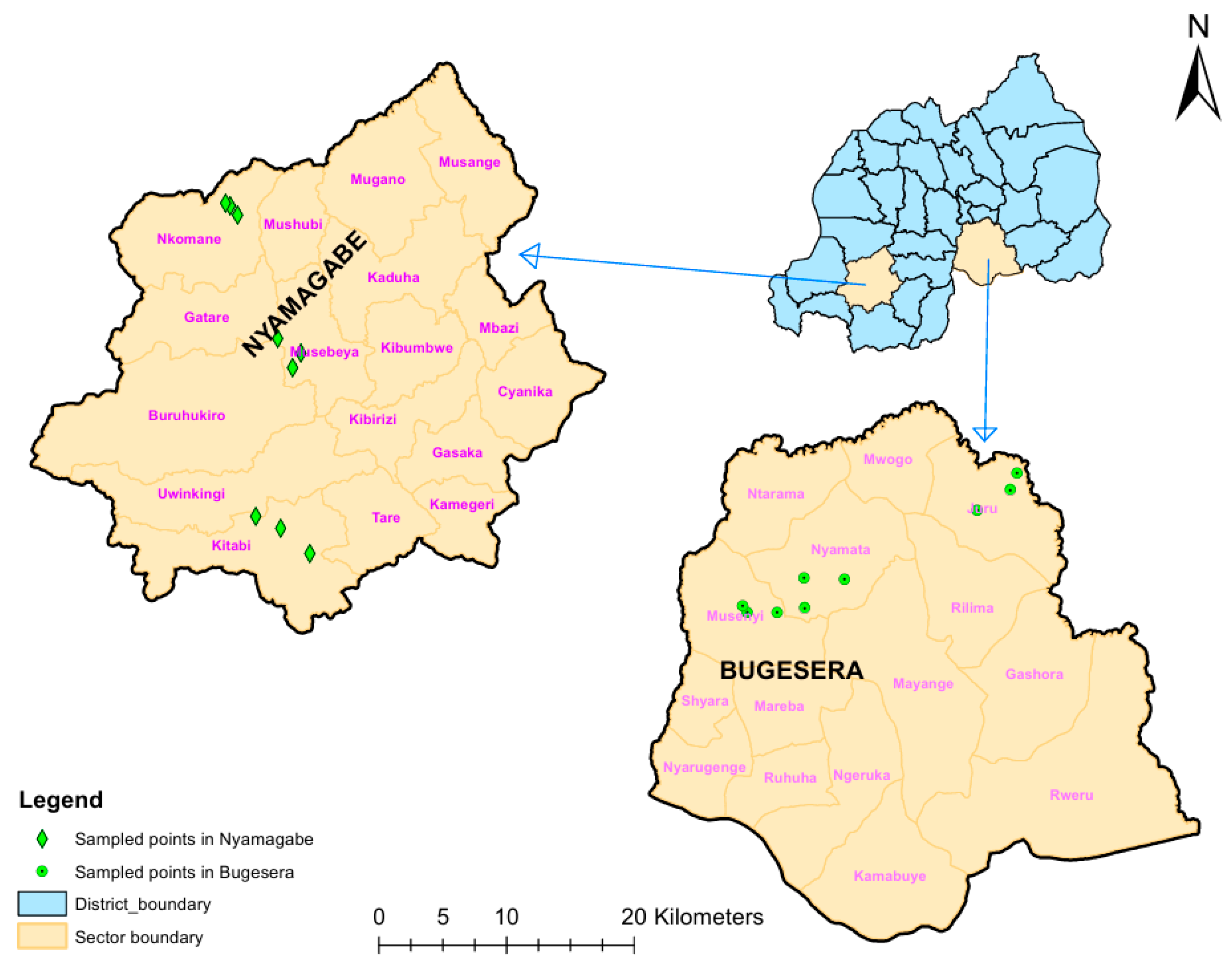
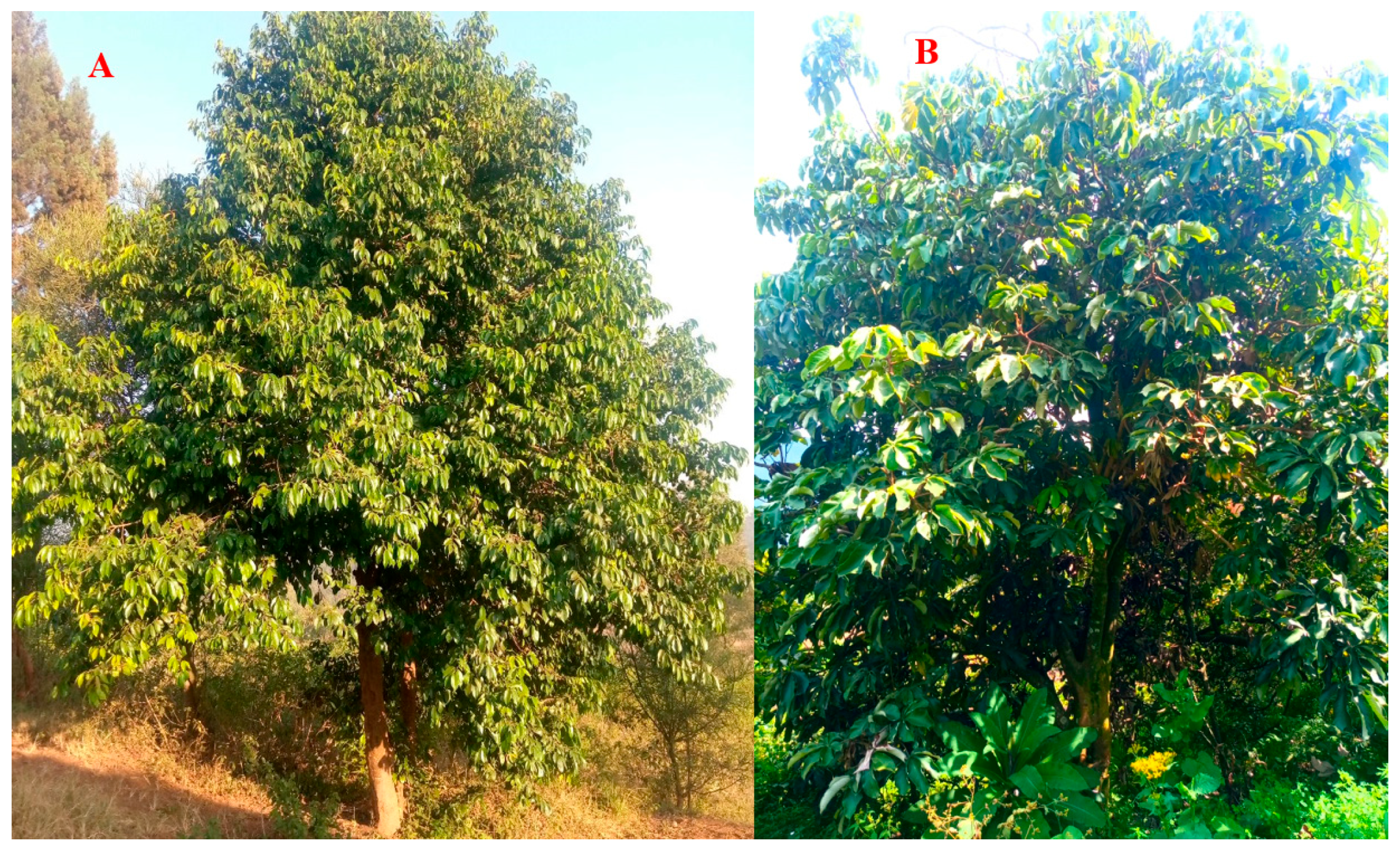
This study was carried out in the Bugesera and Nyamagabe districts of Rwanda (Figure 1) between June and July 2023, which is the peak season for both species. Before the study, a field survey was carried out to identify major sites where M. holstii and G. buchananii trees exist (Figure 2). Three administrative sectors in each district with major occurrences of M. holstii and G. buchananii trees were chosen and the locations of the available trees at each site were mapped using the Global Positioning System (GPSMAP64s, Garmin Ltd, Olathe, KS, USA).
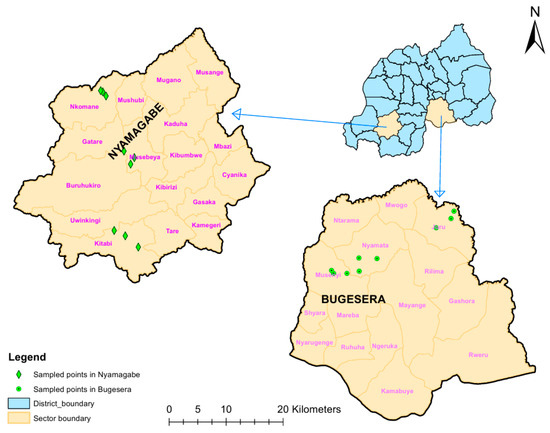
Figure 1.
Geographical locations of Garcinia buchananii trees in Bugesera district and Myrianthus holstii trees in Nyamagabe district.
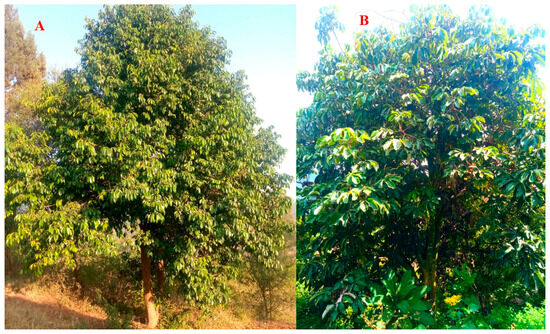
Figure 2.
Typical trees of Garcinia buchananii (A) and Myrianthus Holstii (B).
2.2. Fruit Yield Evaluation
Three fruiting trees of M. holstii and G. buchananii per site (Table 1) were randomly selected for sampling and characterization. All the fruits hanging on the selected trees were counted twice and the mean fruit number per tree was calculated. Ten well-ripened fruits per tree were harvested from the top, middle, and lower tree canopy. The harvested fruits were weighed using a weighing balance and the yield per tree was calculated by multiplying the mean fruit weight of the sampled fruits per tree by the mean number of fruits per tree.

Table 1.
GPS coordinates of sampled trees.
2.3. Fruit Collection and Processing
Fully ripened fruits that had turned yellow from green were handpicked randomly from nine individual trees of each species from the study areas. Fruits from the same tree were sorted and packed together in cooler boxes and then transported to the University of Rwanda (UR)’s Huye Biotechnology Laboratory Complex for analysis. Fruits were washed thoroughly with distilled water to remove any attached impurities and then characterized.
2.4. Morphological Characterization of Myrianthus holstii and Garcinia buchananii Fruits
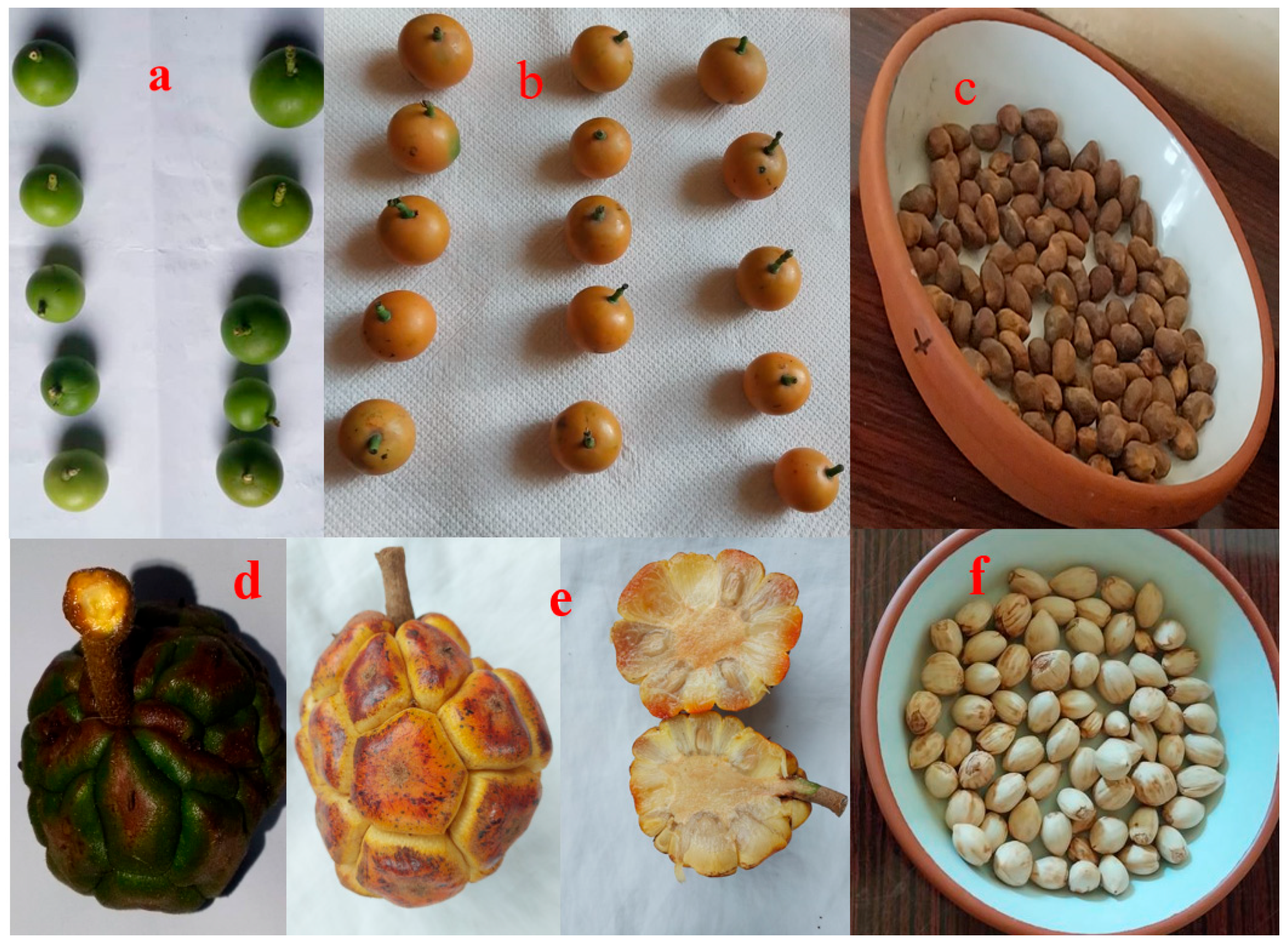
Morphological characterization of fruits (Figure 3) was carried out using eight morphological descriptors, namely fruit length, fruit diameter, fruit weight, number of seeds per fruit, seed weight, seed length, seed diameter, and percentage of pulp weight. The fruit, seed, and pulp weights (g) were assessed using an analytical weighing balance while their sizes (cm) were measured using a Vernier Caliper (Mitutoyo, UK). The percentage of fruit pulp was estimated by the formula in Equation (1).
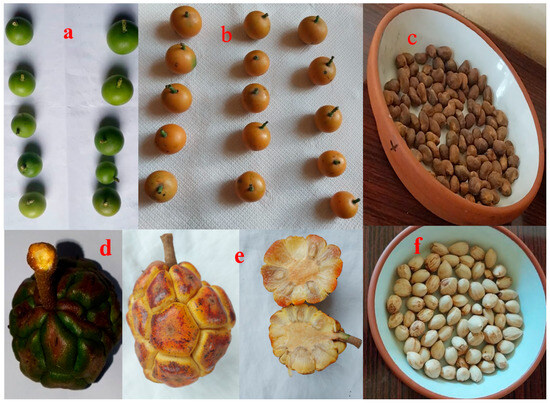
Figure 3.
The phenotypes of fruits and seeds of Garcinia buchananii (a–c) and Myrianthus holstii (d–f): unripe fruits (a,d); ripe fruits (b,e); seeds (c,f).
2.5. Determination of Proximate Content in the Fruits
For moisture content evaluation, 5 g of fresh fruit pulp was weighed using a dry porcelain dish of known weight. The sample was then dried in a vacuum oven at 110 °C for 4 h and then cooled in a desiccator and re-weighed. The moisture content was calculated according to the AOAC standard method [26] using Equation (2).
The pH, total soluble solids (TSS), and total titratable acidity (TTA) values were determined using standard methods used in AOAC [26]. A digital pH meter (model: Hanner) was used while a handheld refractometer was used to determine the TSS values as described previously [27]. Briefly, each pulp sample was dropped on the refractometer and the reading was taken within 30 s. After each reading, the refractometer was cleaned with cotton wool soaked in 95% ethanol and rinsed with distilled water before the next use.
For TTA estimation, 10 g of the pulp was mixed with 60 mL of de-ionized distilled water and three drops of phenolphthalein indicator and then titrated with 0.1 N Sodium hydroxide (NaOH) until the solution turned to pink color. The volume of NaOH added to the solution was multiplied by a correction factor of 0.007 to estimate titrable acidity as a percentage of citric acid. The results were then expressed as a percentage of the citric acid using the formula in Equation (3) [28,29].
The micro Kjeldahl method [26,29] was used to determine the quantity of nitrogen in the fruits, which was then multiplied by the factor 6.25 to estimate the percentage (%) of crude protein. Dietary fiber content was analyzed following procedures outlined by AOAC [26]. Fat content was determined by continuous extraction with diethyl ether using the Soxhlet apparatus [30]. The percentage of crude fat content was then calculated using Equation (4) [28].
2.6. Determination of the Mineral Composition in the Fruits
Analyses for calcium (Ca), potassium (K), sodium (Na), phosphorus (P), zinc (Zn), copper (Cu), and iron (Fe) were carried out according to the standard methods [26]. Two (2 g) of the dried fruit pulps were mixed with 5 mL of distilled water and 25 mL of concentrated nitric acid. The mixture was then digested under reflux over a water bath at 90 °C for 4 h. The refluxed solution was cooled and then mixed with 10 mL of concentrated perchloric acid. The samples were further digested for 1 h, cooled, and mixed with concentrated hydrochloric acid (2 mL) and the final volume was filled to 100 mL with distilled water. The analyses of minerals were then carried out in triplicates using an atomic absorption spectrophotometer (Shimadzu Ltd, Kyoto, Japan) with a graphite furnace and the results were expressed as mg of the analyte per 100 g [31].
2.7. Determination of β-Carotene and Vitamin C Content in the Fruits
Beta-carotene was determined based on the method described previously by the AOAC [28] while vitamin C analysis was carried out by titration method as described previously [32]. Both Beta-carotene and vitamin C were expressed in mg/100 g.
3. Statistical Analysis
All statistical analyses were performed in the R software, version 4.3.3 [33]. We performed an analysis of variance (ANOVA) to test for differences in the yield, fruit morphological traits, and nutritional composition of G. buchananii and M. holstii fruits from different administrative sectors. We also performed Pearson’s correlation coefficient (r) to understand the association among our variables. The statistical significance was determined at p ≤ 0.05 followed by the Tukey multiple comparison test.
4. Results and Discussion
4.1. Yield and Morphological Characterization of Fruits from Selected Indigenous Wild Fruit Trees
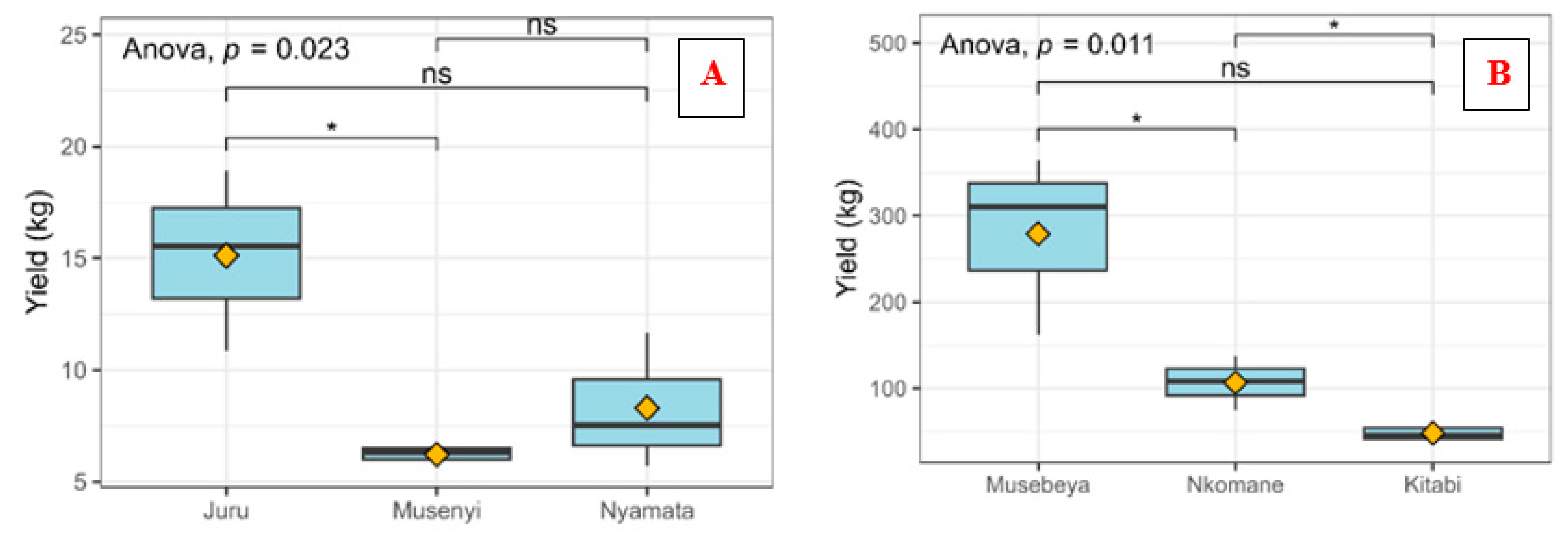
The fruit yield per tree in G. buchananii differed significantly across the three sectors in Bugesera (p ≤ 0.05), with the lower yields observed in trees found in the Musenyi sector and the highest recorded in the Juru sector (Figure 4A). However, the fruit length, diameter and weight, seed number, weight, length and diameter, and % pulp did not show any significant differences (p > 0.05) among the G. buchananii fruits from different sectors (Table 2).
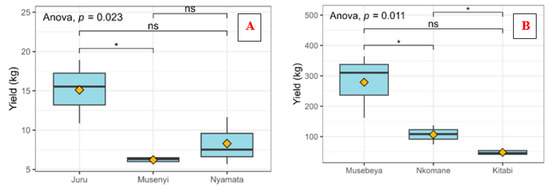
Figure 4.
Mean yields of Garcinia buchanannii (A) and Myrianthus holstii (B). The data was expressed as mean ± standard error. Asterisk indicates a statistically significant difference in fruit yield between two different sectors (* p < 0.05); ns—indicates insignificant difference in fruit yield between two different sectors.
Table 2.
Fruit morphological characteristics of Garcinia buchananii and Myrianthus holstii.
Myrianthus holstii trees from the Musebeya sector had significantly higher yields (p ≤ 0.05) than those from the Nkomane and Kitabi sectors (Figure 4B). The fruit traits, including the weight, length, and diameter of M. holstii, varied significantly across the location, with the heaviest and longest fruits recorded in the Musebeya sector (Table 2). However, among the seed traits, only the seed weight of M. holstii varied significantly across the locations (p ≤ 0.05), with the seeds from Musebeya being heavier than those from Nkomane and Kitabi (Table 2). Although not significantly different across the locations, our current study revealed that M. holstii fruits have heavy and high pulp contents that can be potentially processed into different products such as juice, jam, and wine and eventually result in high market prices.
Various documented morphological traits showed significant correlations for both G. buchananii and M. holstii. For instance, a strong significant and positive correlation was exhibited between fruit length and fruit weight in G. buchananii (Table 3). In M. holstii, a significant and positive correlation was found between fruit and seed morphological traits (Table 4). Similar results have been reported in other multipurpose trees in East Africa [34]. The significant relationship between the fruit traits of the studied species indicates that one trait can be used to predict the characteristics of other traits, especially in fields where time and finances are often constrained [35].
Table 3.
Correlation coefficients for fruit morphological traits of Garcinia buchananii.
Table 4.
Correlation coefficients for fruit morphological traits of Myrianthus Holstii.
The morphological characteristics of fruits are important parameters in post-harvest handling and the development technologies involving fruits [36] and in the marketing of fruits since people tend to prefer bigger fruits [37]. Differences in fruit and seed morphological characteristics have been widely reported in other studies [34,35,38]. The same species of fruits may vary morphologically from one location to another. Thus, knowledge of those characteristics is essential for the selection of propagation material, processing, and pricing. The availability of information on fruit yield and weight implies that it can be used during selection when fruiting potential becomes an objective for domestication. We also observed the existence of a large variation between individual trees, which may be used as a source to select superior individual trees as propagation or breeding materials to improve the domestication of these indigenous fruit trees.
4.2. Proximate Analysis
The findings revealed that in G. buchananii, the pH did not vary across the locations (p > 0.05), with the readings reported in Nyamata being slightly higher than in fruits collected in the Juru and Musenyi sectors. The TTA was significantly higher in fruits from Musenyi and Juru (p < 0.01) than in those from the Nyamata sector. The TSS (p < 0.05) and moisture (p < 0.001) contents in fruits were also higher in fruits from Nyamata than from Juru and Musenyi. However, our data revealed more contents of fibers (p < 0.001), ash (p < 0.05), proteins (p < 0.001), and fat (p < 0.001) in G. buchananii fruits collected in Juru than in Nyamata and Musenyi (Table 5).
Table 5.
Variation in proximate composition of Garcinia buchananii and Myrianthus holstii from different locations.
The variation in the proximate analysis was also noticed in M. holstii fruits, where the pH was slightly higher than those values recorded for G. buchananii and significantly higher in fruits collected in Musebeya (p < 0.01) than from the Nkomane and Kitabi sectors (Table 5). Fruits from Kitabi recorded more TTA and lower TSS values than those from Nkomane and Musebeya (Table 5). Meanwhile, the moisture content was higher in fruits collected in Nkomane and Kitabi than in Musebeya (p < 0.001) whereas the fiber contents were lower in fruits collected in Nkomane than in Musebeya and Kitabi (p < 0.05). The ash content in M. holstii fruits did not vary significantly across the three sectors (p > 0.05) but showed an upward trend from Nkomane and Musebeya to Kitabi. The protein and fat contents differed significantly across the three sectors in M. holstii fruits (p < 0.001), with the fruits from Nkomane and Musebeya recording more proteins and fats, respectively (Table 5).
pH, TTA, and TSS values are important chemical parameters for fruit pulp as they determine its quality. The pH was low and ranged between 2.9 and 3.5 in both G. buchananii and M. holstii, and these fruits are thus regarded as acidic. Fruits with acidic properties are recommended for the production of juice and jam [39], indicating the potential of the fruits from G. buchananii and M. holstii in industrial production. The studies also recorded more fibers and proteins in both plant species, indicating that their fruits could be good sources of both fibers and plant proteins in comparison to the commonly used exotic fruits. While proteins are known to reduce the risk of stunting and some malnourishment-associated diseases, the role of dietary fibers in health and nutrition has received considerable attention since the mid-1970s. Dietary fiber-rich products have also gained popularity as food ingredients for obtaining health benefits and have encouraged food scientists both to search for new fiber sources as well as to develop high-fiber products [40].
4.3. Vitamins and Minerals
Our data found significant differences (p ≤ 0.01) in the mean quantities of vitamins A and C in fruits from different locations. The quantities of vitamins A and C in G. buchananii fruits were higher in Juru followed by fruits from Musenyi and Nyamata (Table 6). The vitamin C levels in M. holstii fruits were about 14.66 mg/100 g lower than those observed in G. buchananii (Table 4), indicating that the G. buchananii fruit is very rich in vitamin C. The fruits from the current studies also showed significant quantities of essential mineral content according to the recommended daily allowances (RDAs) [41]. The most abundant mineral elements were iron (15.95 mg/100 g), contributing to 159.5%, followed by zinc (2.321 mg/100 g), contributing to 22.14%; potassium (262 mg/100 g), contributing to 13.1%; copper (0.581 mg/100 g), contributing 4.57%; and sodium (10.7 mg/100 g), contributing to 2.014% of the RDA. The high quantities of these elements allow the fruits to be considered excellent sources of bio-elements [42].
Table 6.
Vitamin and mineral compositions of Garcinia buchananii and Myrianthus holstii fruits.
5. Conclusions
This study profiled the yield and morphological and nutritional composition of G. buchananii and M. holstii fruits. The findings showed significant differences in the studied attributes among the different locations. Overall, G. buchananii trees from the Juru population and M. holstii trees from the Musebeya population showed higher yields and better fruit qualities than the other studied populations; thus, those regions may be better than the others for the domestication of indigenous fruits. The study also showed that M. holstii has a higher yield than G. buchananii, with bigger-sized fruits that can attract consumer attention. However, G. buchananii presented more vitamin C content than M. holstii. The studied fruits also appear to be good sources of Na, K, Fe, and vitamins A and C and hence could contribute towards nutritional security and zero hunger. The nutritional content revealed in this study emphasizes the potential of these species to improve the human diet. Therefore, the results suggest the promotion of G. buchananii and M. holstii for use in agroforestry programs and the food industry for the development of novel products. Therefore, awareness of the nutritional content of these species in communities and by stakeholders is required to ensure their sustainable utilization and usage in solving nutritional problems in society. The findings also offer opportunities for tree selection to support domestication processes and reduce pressure on the remaining population in the wild.
Author Contributions
Conceptualization, G.N.; investigation, G.N., S.A., A.S.D. and F.N.; writing—original draft preparation, G.N.; writing—review and editing, S.A., A.S.D. and F.N.; supervision, S.A., A.S.D. and F.N. All authors have read and agreed to the published version of the manuscript.
Funding
The Sida Grant Number 13394 funded this research through the REFOREST program.
Data Availability Statement
The data presented in this study are available on request from the corresponding author upon reasonable request.
Acknowledgments
The authors gratefully acknowledge the Swedish International Development Cooperation Agency (Sida) through the Regional Research School in Forest Sciences (REFOREST), which financially supported this research. The authors also extend their appreciation to the lab technicians at the UR—Huye Biotechnology Laboratory Complex for their technical assistance in fruit sample analysis and the farmers in the research areas for the collaboration and support rendered to us during data collection.
Conflicts of Interest
The authors declare no conflicts of interest.
References
- Tsutsunashvili, A.; Aránega, A.Y.; Urueña, R.C. Challenged global economics amids conflict in warring countries. Sustain. Technol. Entrep. 2024, 3, 100068. [Google Scholar] [CrossRef]
- FAO; IFAD; UNICEF; WFP; WHO. The State of Food Security And Nutrition in the World 2023. Urbanization, Agrifood Systems Transformation and Healthy Diets across the Rural–Urban Continuum; FAO: Rome, Italy, 2023; Available online: https://openknowledge.fao.org/server/api/core/bitstreams/8b27c570-2f8b-4350-8d5a-8e82432e6db7/content (accessed on 14 January 2024).
- Mokria, M.; Gebretsadik, Y.; Birhane, E.; McMullin, S.; Ngethe, E.; Hadgu, K.M.; Hagazi, N.; Tewolde-Berhan, S. Nutritional and ecoclimatic importance of indigenous and naturalized wild edible plant species in Ethiopia. Food Chem: Mol. Sci. 2022, 4, 100084. [Google Scholar] [CrossRef] [PubMed]
- Akombi, B.J.; Agho, K.E.; Merom, D.; Renzaho, A.M.; Hall, J.J. Child malnutrition in sub-Saharan Africa: A meta-analysis of demographic and health surveys (2006–2016). PLoS ONE. 2017, 12, e0177338. [Google Scholar] [CrossRef] [PubMed]
- Mannar, V.; Micha, R.; Allemandi, L.; Afshin, A.; Baker, P.; Battersby, J.; Bhutta, Z.; Corvalan, C.; Di Cesare, M.; Chen, K. 2020 Global Nutrition Report: Action on Equity to End Malnutrition. 2020. Available online: https://repository.mdx.ac.uk/item/89022 (accessed on 27 January 2024).
- Weffort, V.R.S.; Lamounier, J.A. Hidden hunger—A narrative review. J. Pediatr. 2023, 100, 10–17. [Google Scholar] [CrossRef] [PubMed]
- Ritchie, H.; Roser, M. Micronutrient Deficiency. 2017. Available online: https://ourworldindata.org/micronutrient-deficiency (accessed on 1 January 2024).
- Talukdar, N.R.; Choudhury, P.; Barbhuiya, R.A.; Singh, B. Importance of non-timber forest products (NTFPs) in rural livelihood: A study in Patharia Hills Reserve Forest, northeast India. Trees For. People 2021, 3, 100042. [Google Scholar] [CrossRef]
- Vedeld, P.; Angelsen, A.; Bojö, J.; Sjaastad, E.; Berg, G.K. Forest environmental incomes and the rural poor. For. Policy Econ. 2007, 9, 869–879. [Google Scholar] [CrossRef]
- Pereira, A.G.; Fraga-Corral, M.; García-Oliveira, P.; Jimenez-Lopez, C.; Lourenço-Lopes, C.; Carpena, M.; Otero, P.; Gullón, P.; Prieto, M.A.; Simal-Gandara, J. Culinary and nutritional value of edible wild plants from northern Spain rich in phenolic compounds with potential health benefits. Food Funct. 2020, 11, 8493–8515. [Google Scholar] [CrossRef] [PubMed]
- Biswas, S.C.; Kumar, P.; Kumar, R.; Das, S.; Misra, T.K.; Dey, D. Nutritional composition and antioxidant properties of the wild edible fruits of Tripura, Northeast India. Sustainability 2022, 14, 12194. [Google Scholar] [CrossRef]
- Heilpern, S.A.; DeFries, R.; Fiorella, K.; Flecker, A.; Sethi, S.A.; Uriarte, M.; Naeem, S. Declining diversity of wild-caught species puts dietary nutrient supplies at risk. Sci. Adv. 2021, 7, eabf9967. [Google Scholar] [CrossRef]
- Kalaba, F.K.; Chirwa, P.W.; Prozesky, H. The contribution of indigenous fruit trees in sustaining rural livelihoods and conservation of natural resources. J. Hortic. For. 2009, 1, 1–6. [Google Scholar]
- Mapongmetsem, P.M.; Kapchie, V.N.; Tefempa, B.H. Diversity of local fruit trees and their contribution in sustaining the rural livelihood in the northern Cameroon. Ethiop. J. Environ. Stud. Manag. 2012, 5, 32–36. [Google Scholar] [CrossRef]
- Stadlmayr, B.; Charrondière, U.R.; Eisenwagen, S.; Jamnadass, R.; Kehlenbeck, K. Nutrient composition of selected indigenous fruits from sub-Saharan Africa. J. Sci. Food Agric. 2013, 93, 2627–2636. [Google Scholar] [CrossRef] [PubMed]
- Bvenura, C.; Sivakumar, D. The role of wild fruits and vegetables in delivering a balanced and healthy diet. Food Res. Int. 2017, 99, 15–30. [Google Scholar] [CrossRef] [PubMed]
- Ali, K.; Amin, M.; Khan, M.E.H.; Jones, D.A. Assessment of variability in nutritional quality of wild edible fruit of Monotheca buxifolia (Falc.) A. DC. Along the altitudinal gradient in Pakistan. Saudi J. Biol. Sci. 2023, 30, 103489. [Google Scholar] [CrossRef] [PubMed]
- Leakey, R.R.B.; Greenwell, P.; Hall, M.N.; Atangana, A.R.; Usoro, C.; Anegbeh, P.O.; Fondoun, J.M.; Tchoundjeu, Z. Domestication of Irvingia gabonensis: 4. Tree-to-tree variation in food-thickening properties and in fat and protein contents of dika nut. Food Chem. 2005, 90, 365–378. [Google Scholar] [CrossRef]
- Ndabikunze, B.K.; Mugasha, A.G.; Chcimshama, S.A.D.; Tiisekwa, B.P.M. Nutritive, value of selected forest/woodland edible fruits, seeds and nuts in Tanzania. Tanzan. J. Agric. Sci. 2006, 7, 27–33. Available online: https://www.ajol.info/index.php/tjags/article/view/109926 (accessed on 12 December 2023).
- Prasad, K.N.; Hassan, F.A.; Yang, B.; Kong, K.W.; Ramanan, R.N.; Azlan, A.; Ismail, A. Response surface optimisation for the extraction of phenolic compounds and antioxidant capacities of underutilised Mangifera pajang Kosterm. Peels. Food Chem. 2011, 128, 1121–1127. [Google Scholar] [CrossRef]
- Ruffo, C.K.; Birnie, A.; Tengnäs, B. Edible Wild Plants of Tanzania. 2002. Available online: https://agris.fao.org/search/en/providers/122621/records/647396b768b4c299a3fb6a61 (accessed on 1 January 2024).
- Minzangi, K.; Kaaya, A.N.; Kansiime, F.; Tabuti, J.R.; Samvura, B. Oil content and physicochemical characteristics of some wild oilseed plants from Kivu region Eastern Democratic Republic of Congo. Afr. J. Biotechnol. 2011, 10, 189–195. [Google Scholar]
- FAO. Fruit Specific Preservation Technologies in Fruit and Vegetable Processing; FAO Corporate Document Repository: Rome, Italy, 2014. [Google Scholar]
- Bigirimana, C.; Omujal, F.; Isubikalu, P.; Bizuru, E.; Obaa, B.; Malinga, M.; Agea, J.G.; Lamoris, J.B. Utilisation of indigenous fruit tree species within the Lake Victoria Basin, Rwanda. Agric. Sci. Int. J. 2016, 1, 1–3. [Google Scholar]
- Van den Bilcke, N.; Alaerts, K.; Ghaffaripour, S.; Simbo, D.J.; Samson, R. Physico-chemical properties of tamarind (Tamarindus indica L.) fruits from Mali: Selection of elite trees for domestication. Genet. Resour. Crop Evol. 2014, 61, 537–553. [Google Scholar] [CrossRef]
- AOAC. Official Method of Analysis, 17th ed.; Association of Official Analytical Chemists: Washington, DC, USA, 2000. [Google Scholar]
- Nishimwe, G.; Okoth, E.M.; Rimberia, F.K. Evaluation of Physicochemical, Nutritional and Sensory Quality Characteristics of New Papaya Hybrids Fruits Developed in JKUAT. 2019. Available online: https://www.academia.edu/download/71511418/883279d824785c1dc83c8c54b7659b0521b2.pdf (accessed on 23 November 2023).
- AOAC. Official Methods of Analysis AOAC International, 15th ed; Association of Official Analytical Chemists: Washington, DC, USA, 1990. [Google Scholar]
- Horwitz, W.; Latimer, G.W. Official Methods of AOAC International, 18th ed; Association of Official Analytical Chemistry International: Gaithersburg, MD, USA, 2000. [Google Scholar]
- James, G.S. Analytical Chemistry of Foods; Blackie Academic and Professional: London, UK, 1995. [Google Scholar]
- Okullo, J.B.L.; Omujal, F.; Agea, J.G.; Vuzi, P.C.; Namutebi, A.; Okello, J.B.A.; Nyanzi, S.A. Proximate and mineral composition of shea (Vitellaria paradoxa CF Gaertn) fruit pulp in Uganda. Afr. J. Food Agric. Nutr. Dev. 2010, 10. Available online: https://www.ajol.info/index.php/ajfand/article/view/64286 (accessed on 20 November 2023).
- Steel, R.G.D.; Torrie, J.H.; Dickey, D.A. Principles and Procedures of Statistics—A Biometric Approach, 3rd ed.; McGraw-Hill: Toronto, Canada, 1997; ISBN 9780070610286. [Google Scholar]
- R Core Team. R: A Language and Environment for Statistical Computing; R Foundation for Statistical Computing: Vienna, Austria, 2020; Available online: https://cir.nii.ac.jp/crid/1370298755636824325 (accessed on 25 January 2024).
- Omondi, M.; Rimberia, F.K.; Wainaina, C.M.; Mukundi, J.B.N.; Orina, J.; Gebauer, J.; Kehlenbeck, K. Fruit morphological diversity and productivity of baobab (Adansonia digitata L.) in coastal and lower eastern Kenya. For. Trees Livelihood. 2019, 28, 266–280. [Google Scholar] [CrossRef]
- Andrew, S.M.; Kombo, S.A.; Chamshama, S.A. Diversity in fruit and seed morphology of wooden banana (Entandrophragma bussei Harms ex Engl.) populations in Tanzania. Trees For. People 2021, 5, 100095. [Google Scholar] [CrossRef]
- Shahbazi, F.; Rahmati, S. Mass modeling of fig (Ficus carica L.) fruit with some physical characteristics. Food Sci. Nutr. 2013, 1, 125–129. [Google Scholar] [CrossRef] [PubMed]
- Mkwezalamba, I.; Munthali, C.R.; Missanjo, E. Phenotypic variation in fruit morphology among provenances of Sclerocarya birrea (A. Rich.) Hochst. Int. J. For. Res. 2015, 2015, 1–8. [Google Scholar] [CrossRef]
- De Smedt, S.; Alaerts, K.; Kouyaté, A.M.; Van Damme, P.; Potters, G.; Samson, R. Phenotypic variation of baobab (Adansonia digitata L.) fruit traits in Mali. Agrofor. Syst. 2011, 82, 87–97. [Google Scholar] [CrossRef]
- Silva, B.M.; Andrade, P.B.; Mendes, G.C.; Seabra, R.M.; Ferreira, M.A. Study of the Organic Acids Composition of Quince (Cydonia oblonga Miller) Fruit and Jam. J. Agric. Food Chem. 2002, 50, 2313–2317. [Google Scholar] [CrossRef]
- Cogoi, L.; Giacomino, M.S.; Pellegrino, N.; Anesini, C.; Filip, R. Nutritional and phytochemical study of Ilex paraguariensis fruits. J. Chem. 2013, 2013, 1–6. [Google Scholar] [CrossRef]
- National Research Council (US) Subcommittee on the Tenth Edition of the Recommended Dietary Allowances. Recommended Dietary Allowances, 10th ed.; National Academies Press (US): Washington, DC, USA, 1989. [Google Scholar] [PubMed]
- Saura-Calixto, F.; Canellas, J. Mineral Composition of Almond Varieties (Prunus amygdalus). Z. Lebensm. -Unters. -Forsch. 1982, 174, 129–131. [Google Scholar] [CrossRef]
Disclaimer/Publisher’s Note: The statements, opinions and data contained in all publications are solely those of the individual author(s) and contributor(s) and not of MDPI and/or the editor(s). MDPI and/or the editor(s) disclaim responsibility for any injury to people or property resulting from any ideas, methods, instructions or products referred to in the content. |
© 2024 by the authors. Licensee MDPI, Basel, Switzerland. This article is an open access article distributed under the terms and conditions of the Creative Commons Attribution (CC BY) license (https://creativecommons.org/licenses/by/4.0/).