


Abstract
In recent years, research and applications related to the metaverse have garnered widespread attention in the field of online education. However, enhancing user experiences in metaverse learning remains a challenging issue. This study aims to explore how gamification enhances the metaverse learning experience by boosting learning motivation. In the first phase of the research, the relationship between gamification, learning motivation, and user learning satisfaction was examined. The results indicated higher user satisfaction with gamified metaverse learning experiences, with intrinsic and external regulations serving as mediating factors between gamification and learning satisfaction. In the second phase of the study, the five elements of gamification (challenge, reward, feedback, PBL, social interaction) were further validated for their role in enhancing learning motivation and, consequently, improving learning satisfaction. Notably, the rewarding element emerged as the most significant factor. These research findings hold practical significance for providers of metaverse learning experiences and the application of gamification in metaverse learning. They provide valuable insights for future research and practical implementation in this evolving field.
1. Introduction
In recent years, the development and research of the metaverse have led the innovation of the digital age, seamlessly integrating the virtual and the real. The metaverse is a digital virtual world where users can interact with the environment, create content, acquire knowledge, and engage in social interactions in an unprecedented way, immersing themselves in virtual reality. With the metaverse as the next major tech platform, the Global Metaverse Market Revenue is expected to likely approach USD 800 billion by 2024, according to Bloomberg Intelligence, Newzoo, IDC, PWC, Statista, and Two Circles [1]. The metaverse not only transforms the way we engage with the digital world but also extends its influence into various fields [2].
With the rise of the metaverse, it has caused various companies to pay close attention to it. Roblox, regarded as “The First Stock of Metaverse”, was successfully listed on the New York Stock Exchange, and the concept of the “metaverse” was brought into investors’ view for the first time in its prospectus, which attracted much attention from society and was also highly sought after by the capital [3]. Facebook renamed the company as Meta [4]. In 2021, NetEase Fuxi officially released the immersive virtual conference system “Yaotai”, creating an ancient immersive virtual conference world and applying for registration of metaverse-related trademarks such as “NetEase Metaverse”, “Thunderfire Metaverse”, and “Fuxi Metaverse” [5]. Another notable event was the launch of Apple’s Vision Pro head-mounted display device, which brings a more immersive entertainment experience to users. The huge investments made by these companies have sparked a great deal of interest in the metaverse as the next major technological advancement [6].
The use of the metaverse is also becoming more common in education. Traditional education often faces challenges in engaging and motivating students, leading to situations where students disengage from learning, resulting in suboptimal learning outcomes. Educators and learners alike are actively seeking to leverage the interactivity and immersion offered by the metaverse to provide a more enriched and compelling learning experience [7]. Students can utilize metaverse technology to explore ideas and situations that are challenging or difficult to imagine in the real world [8]. For instance, medical students can travel within a virtual human body, observe various physiological conditions, and gain a better understanding of human anatomy. Additionally, the metaverse facilitates the gathering of students from diverse backgrounds, enabling cross-regional and cross-cultural collaborative learning experiences [9]. Students can access knowledge from experts and lecturers worldwide, fostering global connectivity. This interconnectedness promotes information exchange and enhances social interaction, making learning activities more engaging and valuable. The development of metaverse technology presents an opportunity for fundamental changes in student engagement and learning motivation within the educational realm [10].
Gamification elements play a pivotal role in the metaverse learning experience, introducing principles of game design to enhance user interactivity and engagement. Through elements such as rewards, challenges, and social interaction, gamification provides learners with a more captivating and enjoyable learning experience. However, despite the immense potential that the metaverse brings to education, effectively applying gamification to enhance user learning experiences remains a challenge [11].
Considered one of the most significant factors in the metaverse learning experience, learning motivation plays a crucial role. In [12], Heiberger and Harper found in their study that learning motivation is a key factor in determining the level of student engagement [13]. Learning motivation is closely related to the level of engagement and learning effects of metaverse learning [14]. Investigating how motivation operates in this context becomes particularly crucial. This study aims to investigate how gamification can enhance learning motivation among metaverse users, ultimately improving user satisfaction with the learning process. Specifically, we investigate the impact of gamification elements on learning motivation and how learning motivation acts as a mediator in influencing learning satisfaction. The following research questions are proposed:
- Does learning motivation mediate the relationship between gamification and learning satisfaction?
- How does gamification affect learning motivation in metaverse learning scenarios?
This study adopted a two-phase research approach to explore the above research questions. In the first stage (Study 1), the objective was to delineate the mediating role of learning motivation between gamification and learning satisfaction. Study 1 operationalized gamification within a comprehensive framework, while Study 2 explored how different gamification elements, when applied, enhance the metaverse learning experience by increasing learning motivation. By answering the research questions, our study seeks to comprehend the role and effects of gamification in metaverse learning, unveil the mediating role of learning motivation between gamification and learning satisfaction, and offer insights for a better metaverse learning experience. Additionally, it aims to provide practical insights for educators and developers on how to effectively integrate gamification elements.
The structure of this paper comprises the following sections. After the introduction in Section 1, Section 2 presents a literature review, summarizing prior research on learning motivation, gamification in education, and metaverse learning. Section 3 presents the methodology of Study 1, including data collection and analysis methods. Section 4 presents the methodology of Study 2 and the results of the study, including the effect of gamification elements on the motivation to learn and the mediating role of motivation in learning satisfaction. Finally, Section 5 discusses the research results, elucidating their implications and practical significance. Ultimately, Section 6 provides conclusions, summarizing the main findings and limitations of the study and proposing directions for future research.
2. Literature Review
2.1. Gamification in Education
Gamification in education is continually garnering widespread attention as an instructional method. In the context of learning, gamification is often referred to as “gamified learning” [15,16]. Although there is overlapping research literature between gamified learning and game-based learning, they share a common toolkit of game design elements and both emphasize value beyond entertainment [17]. However, they are fundamentally different in nature. Game-based learning, such as serious games, is designed as mature games, whereas gamified learning focuses on enhancing or altering existing learning processes [18]. It is not a complete product like serious games but rather a design process that introduces game elements into existing learning processes [17,18]. Gamified learning involves the application of game design principles and elements to educational settings with the aim of increasing learner engagement and interest. The scope of gamification extends from traditional classrooms to online learning platforms and, more recently, to metaverse learning platforms. In education, common gamification elements include challenging tasks, reward systems, leaderboard competitions, real-time feedback, and social interaction. These elements aim to create a positive learning environment, stimulate learners’ intrinsic motivation, and improve their academic performance and satisfaction. Graland conducted a meta-analysis of research data published between 2013 and 2015 on gamification in educational settings [19]. The analyses showed that there was a positive correlation between the use of gamification and learning outcomes, and that learning motivation has a significant impact on learning outcomes. However, the generalizability of these findings is limited by the small sample size. Additionally, literature reviews by Hamari and Seaborn, Fels et al. found a positive trend in the impact of gamification on education, but also identified mixed results. They attributed these variations to differences in gamification contexts and participant characteristics, although the influence of novelty and publication bias is also considered a possible factor [20,21]. A series of reviews conducted by Dicheva et al. reported positive outcomes of gamification on various motivational, behavioral, and cognitive factors in educational contexts. However, due to methodological limitations, most studies were considered uncertain [22,23,24]. Despite some successes in the application of gamification in education, the detailed mechanisms of how gamification influences learning motivation and satisfaction are not fully understood.
2.2. Learning Motivation
Learning motivation has consistently been a crucial area of study in education and psychology. It involves the intrinsic or external incentives and drives within individuals that propel them to engage in learning activities [25]. Learning motivation encompasses various factors, including intrinsic regulation, identified regulation, introjected regulation, and external regulation [26]. These factors are closely associated with learners’ behaviors, attitudes, and academic achievements. Research has indicated that learning motivation can lead to success in learning activities, while a lack of motivation can be a significant barrier to students’ success [27]. Learners who exhibit high levels of autonomy and intrinsic motivation typically demonstrate better academic performance and higher levels of learning satisfaction. Therefore, understanding how learning motivation interacts with gamification elements to enhance the learning experience is of paramount significance in the field of education.
2.3. Gamification and Learning Motivation in the Metaverse
According to the existing literature, there is a growing trend in the use of metaverse technology in education. The metaverse integrates virtual reality, augmented reality, and social media, creating a virtual digital world that offers entirely new learning and interactive experiences [28]. Within this metaverse realm, the application of gamification elements has become particularly noteworthy. For instance, learners can gain learning experiences through virtual challenges, reward systems, and virtual social interactions [11]. These elements are designed to engage learners, spark their interest, and enhance their learning motivation.
As mentioned above, gamification has been proven to be an effective method for enhancing motivation and improving experiences in many scenarios. This mechanism can be explained through the framework of Self-Determination Theory (SDT), which is a critical theoretical framework for studying user satisfaction, motivation, and future behavior [29,30,31]. SDT posits that the fulfillment of psychological needs for competence, autonomy, and relatedness is crucial for learning motivation and subsequent high-quality learning [32]. The SDT theory emphasizes the importance of the environment in meeting these psychological needs [33]. Enriching the learning environment through the introduction of various gamification elements can impact learning motivation and satisfaction. For example, Repero-Padilla et al. argue that the design of gamification elements in online learning environments, such as points, rewards, challenges, and leaderboards, is highly effective in enhancing students’ interest, motivation, and persistence [34]. Additionally, Bier et al.’s research found that gamified interpersonal interaction systems can assist users in maintaining excitement and attention [35]. Hamari et al.’s study suggests that the effectiveness of gamification in regard to learning outcomes may vary in different contexts [21]. For the convenience of researchers, we summarize some research articles on gamified learning in metaverse learning scenarios in Appendix A. As metaverse technology is still in its developmental stages, further research is needed to explore the performance of gamification in metaverse learning scenarios.
Research discussions on gamification in metaverse learning are relatively limited, but recent studies have begun to explore this area [10,36,37,38]. For instance, Muthmainnah et al.’s research suggests that gamification elements in metaverse learning scenarios positively impact student engagement, transforming learning into an enjoyable experience [10]. Agustini et al.’s study found that gamification enhances student motivation and initiative, providing students with a more immersive learning experience in metaverse settings [37].
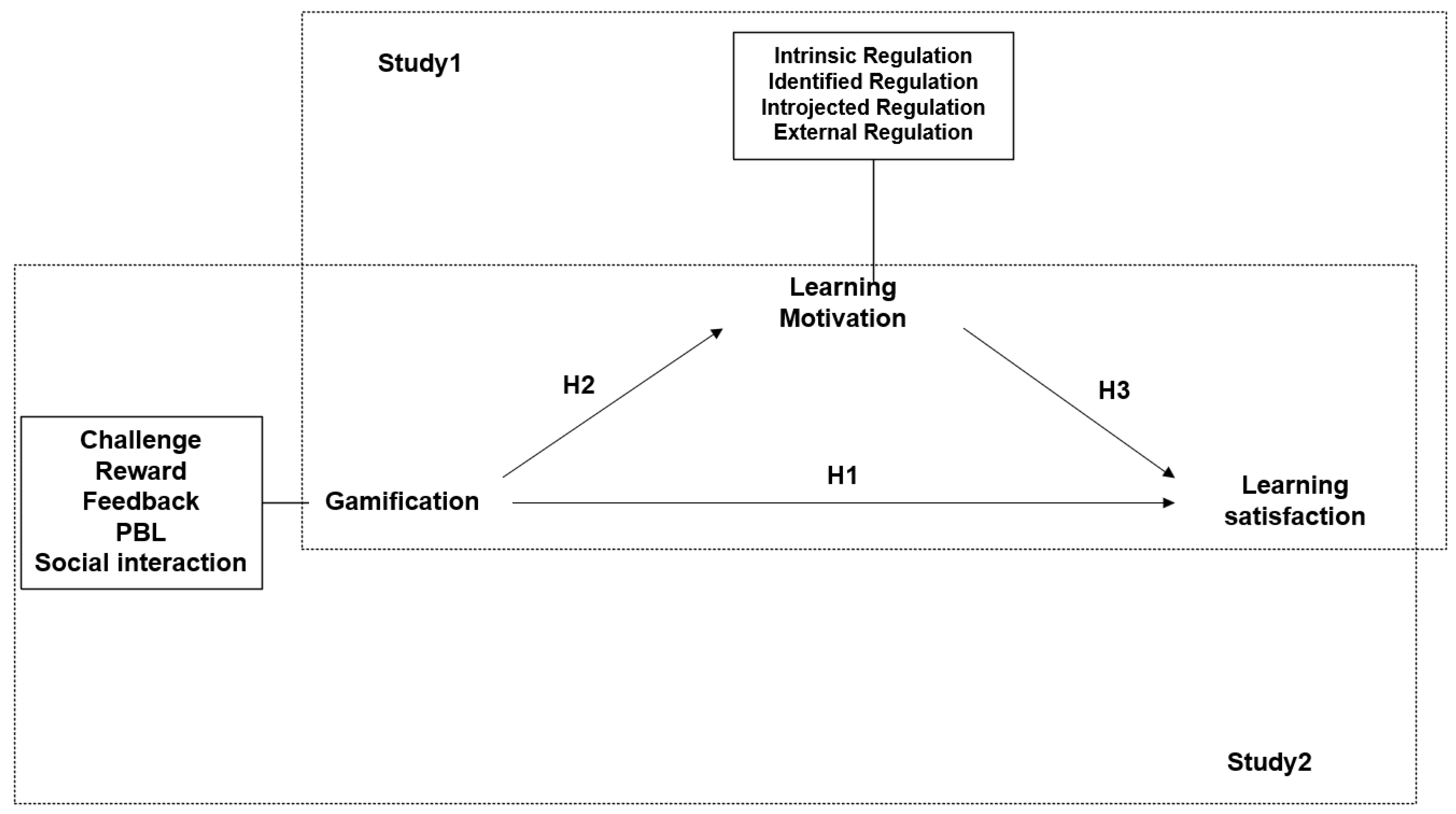
We propose three foundational hypotheses, as depicted in the research framework shown in Figure 1, based on the belief that gamification can enhance learning motivation and increase user satisfaction in metaverse learning scenarios. Previous research has often treated gamification as a comprehensive variable. However, our study aims to explore how different gamification elements contribute to higher user satisfaction by enhancing learning motivation.
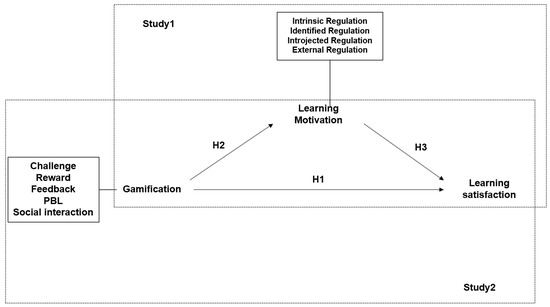
Figure 1.
Research Framework.
H1.
In the Metaverse Learning Experience, Gamification can increase user Learning Satisfaction.
H2.
In the Metaverse learning Experience, Gamification can increase Learning Motivation.
H3.
In the Metaverse Learning Experience, Learning Motivation plays a mediating role between Gamification and user Learning Satisfaction.
The theoretical framework of this study is centered on the interaction between gamification elements and learning motivation to enhance the metaverse learning experience. We explore how, in the context of metaverse learning, learning motivation acts as a mediator between gamification elements and user satisfaction with learning. We provide insights into how gamification elements affect users’ learning satisfaction by exploring four key mediators in learning motivation. This exploration aims to provide insight into the role of gamification in metaverse learning.
By comprehensively studying the theoretical frameworks of gamification in education, learning motivation, and the metaverse, this research will provide us with profound insights to assist the fields of education and metaverse technology in better understanding how to leverage gamification elements to optimize the learning environment.
3. Method of Study 1
3.1. Hypothetical Development
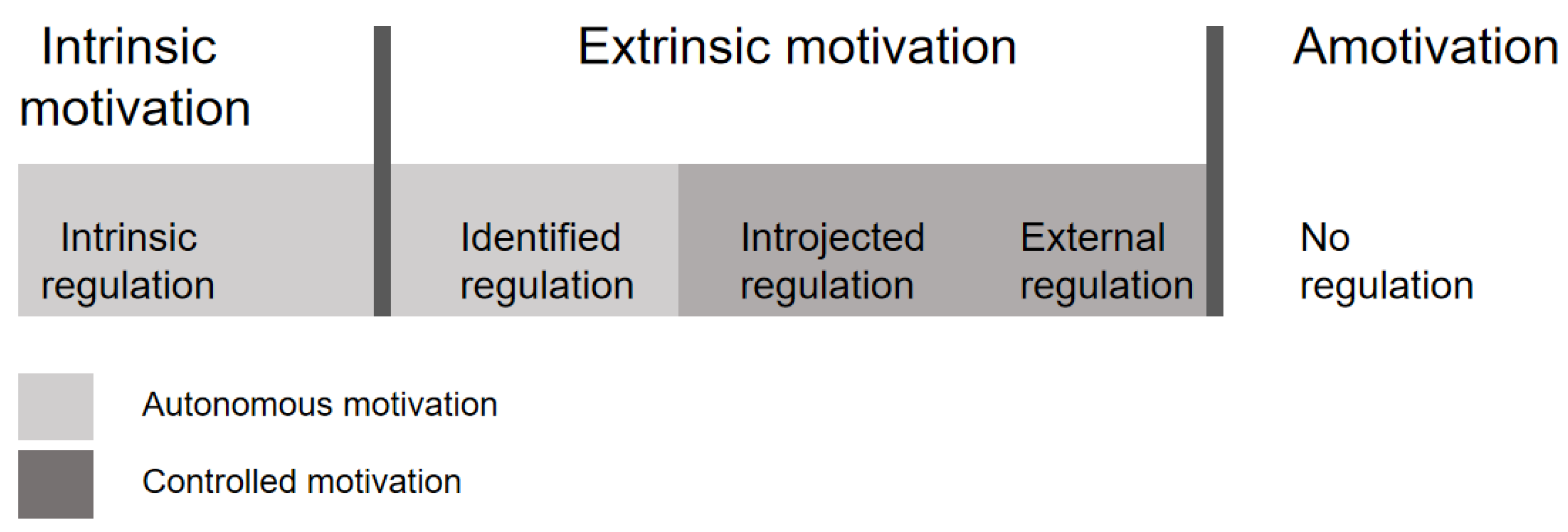
The purpose of Study 1 was to determine the mediating role of aspects of learning motivation between gamification and user learning satisfaction. As previously mentioned, learning motivation can be conceptualized as intrinsic regulation, identity regulation, introjected regulation, and external regulation [26], with these four aspects of motivation forming a continuum, as illustrated in Figure 2 from intrinsic to identified to introjected and finally to external regulation.
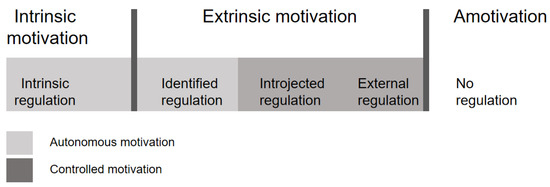
Figure 2.
Motivation Type. Reprinted from Serious Games and Edutainment Applications: Volume II (p. 489), by M. Ma & A. Oikonomou, 2017, Chan: Springer International Publishing AG. Copyright 2017 by “Springer International Publishing IG” [39].
Intrinsic regulation primarily manifests when participants engage in learning due to their inherent interest and enjoyment in the task itself. Intrinsic regulation involves participants experiencing a sense of satisfaction intrinsically in their learning, driven by the task’s interesting nature, its level of challenge, or alignment with personal values [40]. Intrinsic regulation is typically associated with higher learning achievements, deeper understanding, and more positive learning experiences. Gamification elements such as interesting tasks, challenging levels, and engaging storylines can stimulate participants’ intrinsic interest. By providing enjoyable and captivating learning experiences, gamification contributes to making the learning process more engaging and interesting, thereby enhancing intrinsic regulation.
Identified regulation primarily occurs when participants understand and endorse the importance of learning, and thus, their engagement in learning is driven by achieving specific goals or values [40,41]. In identified regulation, participants may not necessarily experience direct intrinsic enjoyment, but they recognize that learning is essential for achieving personal or professional goals, satisfying needs, or aligning with values. Identified regulation is associated with higher levels of autonomy and academic achievement. Gamification design can emphasize the practical application and value of learning, helping participants recognize the connection between learning and their personal goals and values. By setting clear goals, implementing reward systems, and emphasizing the practical utility of learning, gamification can prompt participants to identify the importance of learning, thereby increasing their level of identified regulation.
Introjected regulation primarily occurs when individuals experience some internal guilt, shame, or pressure, and they engage in learning to avoid negative emotional experiences [33,41]. In introjected regulation, participants may feel some internal pressure, hoping to avoid negative emotions arising from laziness, social pressure, etc., by engaging in learning. Gamification elements such as competitive elements, reward systems, and leaderboards may induce some internal pressure, but excessive pressure should be avoided in the design. By setting challenges and rewards reasonably, gamification can stimulate positive intrinsic motivation, encouraging participants to be more driven by self-motivation rather than internal pressure. Introjected regulation may lead to some positive learning behaviors but is generally not as persistent and positive as intrinsic and identified regulation.
External regulation primarily manifests as individuals responding to external rewards or punishments, where they engage in learning to obtain rewards or avoid punishment [33,41]. In external regulation, individuals’ learning motivation mainly stems from external incentives. Gamification often includes external rewards and recognition, such as badges, points, ranking systems, etc. These external incentives can guide learners’ behavior to some extent. However, it should be noted in the design that an excessive emphasis on external rewards may lead participants to learn solely for the sake of rewards rather than genuinely understanding and applying knowledge. Learning motivation driven by external regulation is typically short-term and is less likely to result in sustained learning interest or deeper levels of learning engagement.
Therefore, we propose the following hypothesis:
H4.
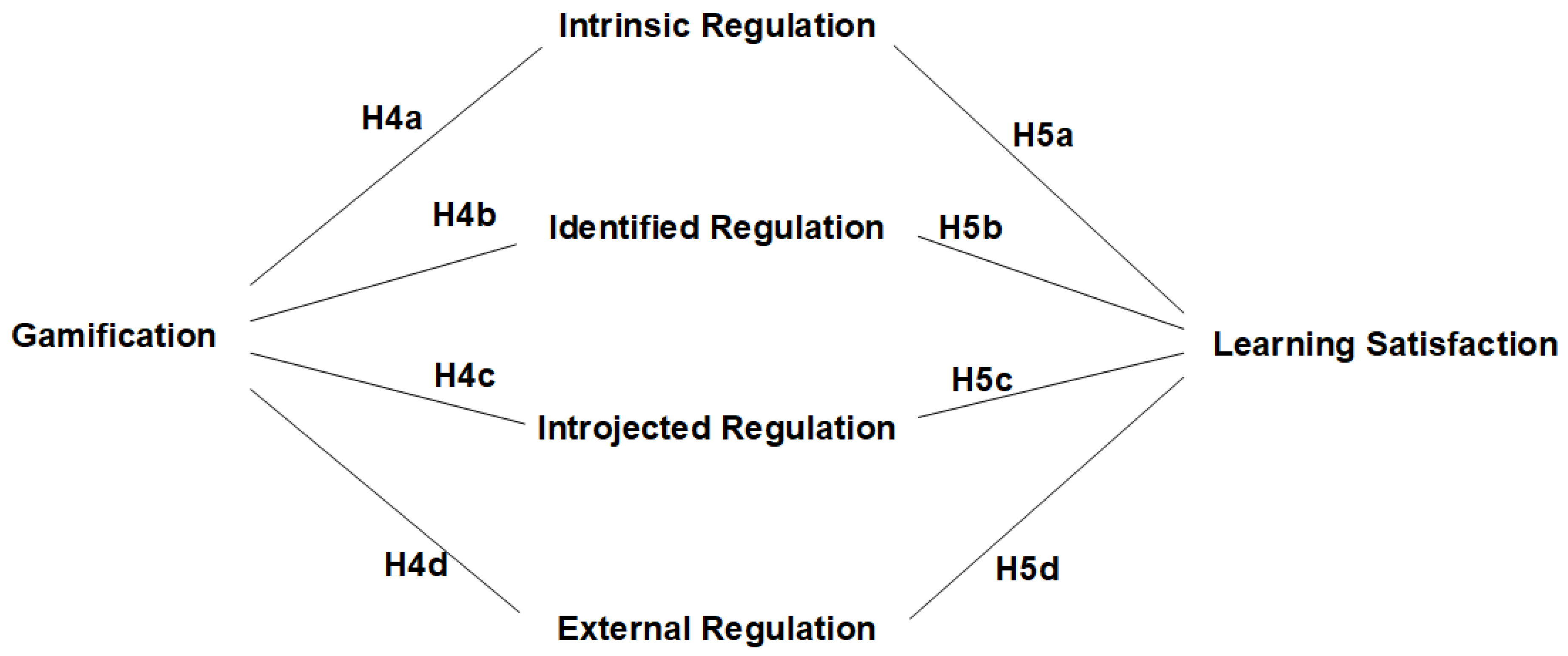
Gamification leads to higher learning motivation in the metaverse learning experience (including intrinsic regulation [H4a], identified regulation [H4b], introjected regulation [H4c], and external regulation [H4d]).
H5.
In the metaverse learning experience, learning motivation (intrinsic regulation [H5a], identified regulation [H5b], introjected regulation [H5c], and external regulation [H5d]) play a mediating role in the relationship between gamification and learning satisfaction.
3.2. Experimental Design and Procedures of Study 1
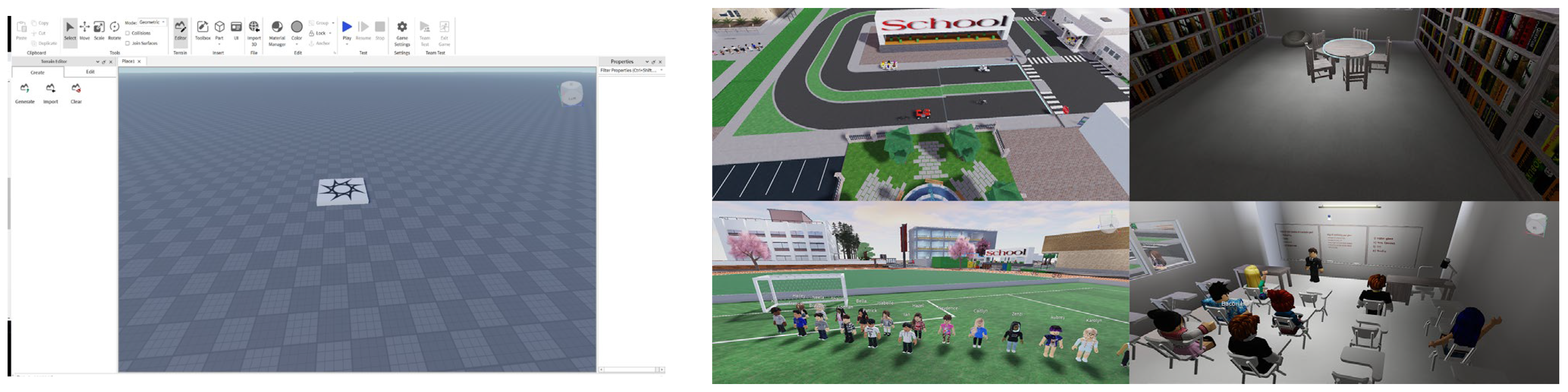
To test these hypotheses, we conducted an online survey, and the model for Study 1 is illustrated in Figure 3. In this survey, we designed a novel metaverse learning scenario using Roblox Studio, as depicted in Figure 4. In the non-gamified group, participants experienced the learning scenario without any gamified elements. Conversely, the gamified group experienced the learning scenario with common gamification elements, such as challenges (tasks), rewards (virtual currency, virtual prizes), feedback and badges, and leaderboards, integrated into the experience.
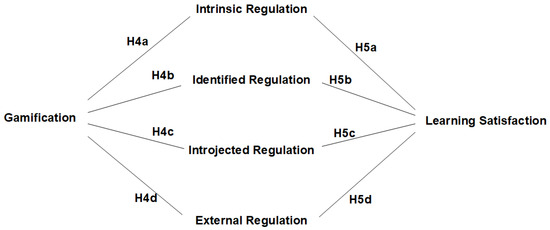
Figure 3.
Research model of Study 1.
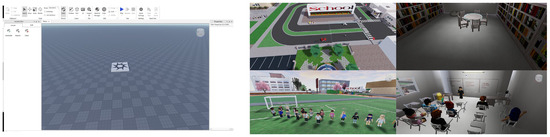
Figure 4.
Roblox studio and learning scenario.
To ensure random sampling, our study was available to all participants who were in good physical condition, did not have a severe 3D vertigo reaction, and were familiar with the use of electronic devices. Participants were enrolled online during which they were reminded of the importance of being in proper health condition during the experience. Randomly distributed to different groups, they were then put through a variety of procedures during the course of the experiment. Throughout this process, participants were free to explore the metaverse learning scenario. The experience duration was controlled to between 40 and 60 min to observe changes in participants’ learning motivation. After completing the metaverse learning experience, participants were given the opportunity to redeem rewards using the points that they had accumulated during the scenario. They were then asked to fill out a questionnaire.
3.3. Measurement and Experiments of Study 1
The questionnaire was divided into two parts: one part assessed learning motivation and the other part assessed learning satisfaction. Learning motivation was measured across four dimensions (intrinsic regulation, identified regulation, introjected regulation, and external regulation), developed by Lin et al. [42]. The scale for measuring learning satisfaction was developed by Wang [43]. Both questionnaires utilized a 7-point Likert scale for measurement.
The pre-experiment, conducted from 12–16 August 2023, involving a sample of 30 participants, aimed to ensure the validity and reliability of the formal experimental data and assess the rationality of the gamified design. The results of the pre-experiment indicated that the gamified experience proceeded smoothly.
The formal experiment took place from 17 September to 27 September 2023, spanning 10 days, and a total of 177 samples were collected. According to the G*Power 3.1.9.2 test [44], to achieve adequate statistical power, a minimum sample size of 128 was recommended for this study, calculated based on an effect size of 0.5, a significance level (α) of 0.05, power of 0.8, two groups, and 5 response variables, so the sample of 177 participants in this experiment was considered acceptable. All participants initially underwent a similar experiential process, ensuring that the results were not influenced by participants’ physical conditions. More than half of the participants had a bachelor’s degree or above and had attended an online learning program at least once within the last year. It can be speculated that gamification and the metaverse are relatively well-received among young people, consistent with many studies on metaverse learning experiences and the demographics of this study’s sample.
After analyzing the data using SPSS 22.0, initially, we assessed the reliability and validity of the main variables of learning motivation and learning satisfaction. Table 1 and Table 2 show the results of the measurement model. The factor analysis results indicate that the absolute values of all standardized loadings are greater than 0.6 and demonstrate significance, suggesting good measurement relationships, making them suitable for further analysis. All AVE (average variance extracted) values are above 0.5, and all CR (construct reliability) values are higher than 0.7, indicating good convergent validity and construct reliability in the analyzed data [45]. The analysis concluded the AVE square root, and one-way CFA showed that there were no problems with discriminant validity and common method bias.

Table 1.
Measurement Models.
Table 2.
Discriminant Validity: Pearson correlation with AVE square root value.
3.4. The Main Effects of Gamification of Study 1
An assessment was conducted on the dependent variables between gamified and non-gamified learning experiences, including two independent variables (gamified and non-gamified learning experiences) and five dependent variables (intrinsic regulation, external regulation, identified regulation, introjected regulation, and learning satisfaction). MANOVA results indicate a significant main effect of learning gamification on learning motivation and satisfaction. Table 3 presents the results of the univariate tests, which show that the impact of gamification on learning motivation and satisfaction differs significantly, with a significance level below 0.01. Based on the mean values from the dependent variables, participants involved in gamified learning showed higher learning motivation and satisfaction, thus supporting H1, H2 and H4.
Table 3.
Main effects of the gamification learning experience.
3.5. The Mediating Role of Learning Motivation of Study 1
The parallel mediating effect of learning motivation was examined between gamification and learning satisfaction using SPSS macro-model 4 developed by Hayes. As shown in Table 4, these results showed that gamification was a significant predictor of learning satisfaction (c = 5.837, p < 0.01). The direct predictive effect of gamification on learning satisfaction remains significant (c’ = 1.759, p < 0.01) after adding the mediating variables. Gamification has a significantly positive predictive effect on intrinsic regulation (a = 5.126, p < 0.01), and intrinsic regulation also has a significantly positive predictive effect on satisfaction (b = 0.322, p < 0.01). The positive predictive effect of gamification on external regulation is significant (a = 5.837, p < 0.01), while external regulation also significantly predicts learning satisfaction positively (b = 0.319, p < 0.01). In validating the mediating role of learning motivation, only intrinsic regulation and external regulation show significant partial mediating effects between gamification and learning satisfaction (indirect effect of intrinsic regulation: a*b = 1.653; CI = [0.861, 2.522], indirect effect of external regulation: a*b = 1.589; CI = [0.755, 2.692]). On the other hand, the mediating effects of identified regulation and introjected regulation are not significant, supporting H5a and H5d while rejecting H5b and H5c.
Table 4.
Results of the test of the Mediating Role of Learning Motivation.
4. Method of Study 2
4.1. Hypothetical Development
In the first study, the researchers explored the role of learning motivation and the various gamification elements in a model. We found that external and intrinsic regulation were the main factors that influence the satisfaction of participants. In the second study, the researchers sought to identify the role that these two factors play in the relationship between gamification and learning satisfaction.
The researchers evaluated the various types of gamification elements commonly used in the field of learning. We were able to identify the factors that influence the motivation of participants. The criteria for choosing the right gamification elements included their ease of implementation and their theoretical effects on learning motivation.
Rahmani et al. argue that challenges are a key principle of gamification, and they must be both interesting and challenging [46]. The challenge element in gamification guides participants through the process, engaging them in difficult tasks [47]. Challenges should align with the participants’ skill levels, and as participants’ skills improve, the difficulty of challenges should also increase. Locke et al. suggest that the presence of a specific, moderately difficult, and clearly defined challenge element can motivate participants [48,49]. Hus and Xi et al. propose that challenges are associated with enhanced motivation, as challenges in gamification can provide functional value to participants, enhancing their overall experience [50,51].
Kim et al. argue that the reward element in the gamified experience positively influences participants’ motivation [52]. Rewards are numerical or intangible incentives obtained after completing stages or tasks in the gamified experience, often appearing in the form of virtual currency, virtual goods, or physical items [53]. Munson et al.’s research found that even if participants did not express excessive concern about rewards, they did appreciate this setup and were more motivated as a result [54]. Rewards can also provide functional value to participants, increasing their enjoyment and offering a meaningful experience [55].
Werbach and Hunter et al. argue that providing continuous feedback to learners is a core feature of gamification [56]. Positive feedback can enhance learners’ learning motivation and self-esteem [57]. Hattie and Timperley found that feedback is one of the most effective factors in the relationship between educational interventions and general learning [58]. Ranieri et al. found that in gamified learning, feedback is associated with high student satisfaction [59].
PBL (Points, Badges, and Leaderboards) elements are commonly used design elements in gamification, and when used appropriately, they can be powerful and practical [60]. Points are earned by participants in the gamified experience, serving as a reminder of their current progress or can be exchanged for virtual items [61]. Badges are commonly used in gamification to showcase a participant’s achievement of certain skills, increasing their motivation to engage in learning activities [21]. They can also provide participants with a goal to strive for. Leaderboards tap into individuals’ innate competitive instincts, encouraging participants to exert more effort. Leaderboards can motivate participants to engage more in learning activities by fostering a desire to improve their rankings, resulting in higher satisfaction when they achieve success [62].
Rigby et al. emphasized the impact of social interactions on learning motivation and satisfaction [63]. Ryan and Deci also highlighted the potentially crucial influence of connections in interpersonal activities [33]. Rigby and Ryan found that collaborating with others can make participants feel the importance of their contributions to others, enabling them to tackle problems that they might not be able to solve on their own, leading to a sense of fulfillment. The competitive nature inherent in social interactions can either enhance or diminish motivation. Destructive social interactions, where success is achieved by undermining others, can lead to a sense of oppression. On the other hand, if competition is friendly and encourages collaboration and support, it can foster constructive competition, potentially cultivating a sense of connection and enhancing learning motivation [63]. According to Xu et al., the social mechanisms in gamification can enhance participants’ sense of engagement [64]
Based on the above literature, the following hypotheses were formulated for this study:
H6.
Intrinsic regulation mediates between gamification elements (challenge [H6a], reward [H6b], feedback [H6c], PBL [H6d], and socialization [H6e]) and learning satisfaction in metaverse learning experiences.
H7.
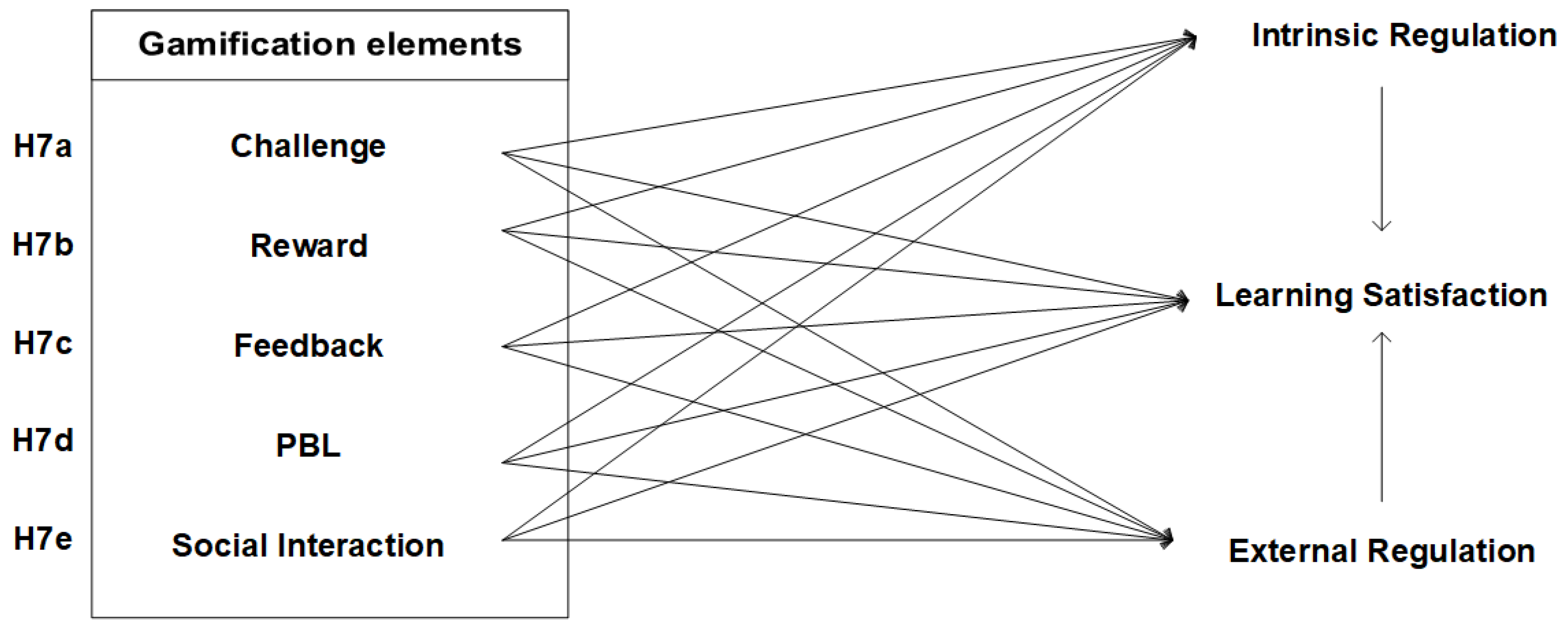
External regulation mediates the relationship between gamification elements (challenge [H7a], reward [H7b], feedback [H7c], PBL [H7d], and social interaction [H7e]) and learning satisfaction.
4.2. Experimental Design and Procedures of Study 2
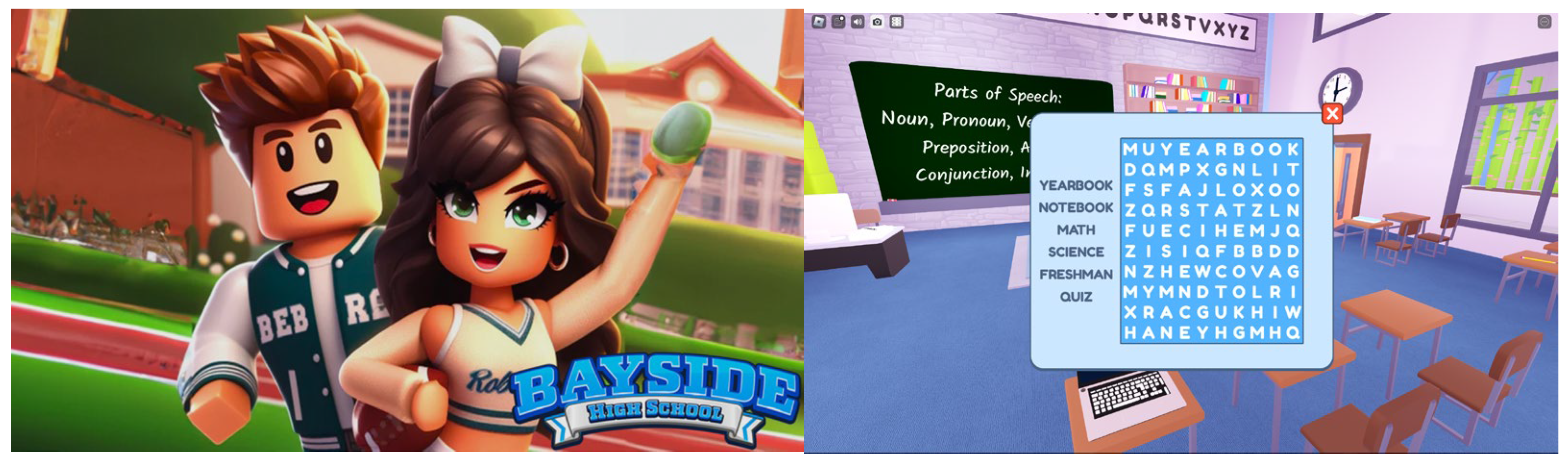
We conducted a survey to investigate the impact on and extent of each gamification element of intrinsic motivation, external motivation, and learning satisfaction, as shown in Figure 5. Participants were invited to experience a metaverse learning scenario online, specifically the highly popular learning environment, Bayside High School, created by Double Bandit Studio in Roblox, as shown in Figure 6. Before the formal experience, participants had one week to freely explore this learning environment, ensuring their familiarity with it. All participants were required to use a computer for the experience, eliminating potential device-related impacts. In the metaverse learning experience, participants could freely explore the entire learning scenario, earn points by completing relevant tasks in Bayside High School, and use these points to redeem personalized decorations. Participants received real-time feedback in the scenario, tracking of their learning progress, with PBL elements also integrated. In order to ensure changes in learning motivation, participants spent at least one hour in the formal experience. The learning experience was followed by a survey for participants.
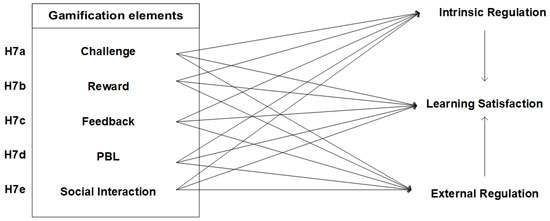
Figure 5.
Research model of Study 2.

Figure 6.
Roblox, Bayside High School.
4.3. Measurement and Experiments of Study 2
Similarly, intrinsic motivation, external motivation, and learning satisfaction were measured in Study 2. The measurement items for assessing the effectiveness of gamification elements in this study were adapted from Standage et al. and further developed by Siaw-Chui Wee et al. [65,66]. After the metaverse learning experience, participants rated the effectiveness of each gamification element. It was based on a 7-point Likert scale, and a preliminary survey with 30 samples conducted before the formal experiment indicated a smooth experience process.
In the formal survey, a total of 427 responses were received. However, 27 samples were excluded due to incomplete questionnaires and insufficient experience duration, resulting in a final sample of 400 responses. Similar to Study 1, factor analysis yielded reasonable results. In Table 5, the average variance extracted values surpassed the minimum threshold of 0.5, and all composite reliability values exceeded 0.7, indicating excellent convergent validity and construct reliability. Overall, the reliability and validity of the model structure were satisfactory, as evidenced by the correlation matrix demonstrating good discriminant validity.
Table 5.
Measurement Models of Study 2.
4.4. Results of Study 2
Study 2 employed the same data analysis methods as Study 1 to validate the research hypotheses. Using SPSS macro Model 4, it tested for mediating effects. The independent variable was the effectiveness of gamification elements, with intrinsic regulation and external regulation serving as mediating variables, and learning satisfaction as the dependent variable. The results, as shown in Table 6, indicate that all gamification elements (challenge, reward, feedback, PBL, and social) significantly influence learning satisfaction, with reward playing a more substantial role in enhancing learning satisfaction than other gamification elements (c’ = 0.279 and 0.251, p < 0.001). All gamification elements also had a positive impact on learning motivation, with reward having a greater effect compared to other gamification elements (a = 0.357 and 0.320, p < 0.001). Table 6 presents the results, indicating the partial mediating effects of intrinsic and external regulations on the relationship between the effectiveness of all gamification elements and learning satisfaction. This finding supports H6a, H6b, H6c, H6d, H6e, H7a, H7b, H7c, H7d, and H7e.
Table 6.
Study2 summary of mediating role test results.
5. Discussion
The results of both studies offer a deeper comprehension of the theoretical model. Learning motivation emerges as a pivotal variable within the model. The results of Study 1 show that gamified experience participants scored significantly higher on all four dimensions of learning motivation compared to non-gamified experiences, and gamified users received different points based on task completion, which could be redeemed for different rewards. This challenge increased users’ anticipation and interest in the outcome, and the perceived value of the prizes inadvertently motivated users to actively participate in the metaverse experience. Some participants even set their own goals of obtaining high points and redeeming all the prizes before engaging in the gamified experience. In contrast, for non-gamified participants, the fact that they already knew the prizes they could receive at the end led to a lack of both excitement and motivation, suggesting that gamified experiences can increase learning motivation. Notably, gamification elements assume a critical role in augmenting learning motivation, validating both gamified learning theory and self-determination theory. This reaffirms that gamification exerts a positive influence on motivation and learning outcomes [15,33]. These findings provide evidence for the beneficial impact of gamification on education. For example, one participant expressed, “In the metaverse learning scenario, I wanted to complete a series of challenges, earn more rewards, and my learning motivation was very high during this experience”. This positive Stimulus—Response Chain greatly influenced the gamified participants’ motivation and enhanced their willingness to act. That observation provides an explanation as to why gamified metaverse participants’ intrinsic regulation, external regulation, identified regulation, and introjected regulation indices exceeded those of non-gamified participants. Forease of reading, we also list the contributions of this study in Appendix B.
5.1. Theoretical Implications
This study provides a substantial theoretical contribution to the current literature in regard to improving the metaverse learning experience. While previous research has recognized the link between gamification and learning satisfaction, the mechanisms behind it remain ambiguous. Some scholars argue about the positive impact of gamification on both learning motivation and learning satisfaction [67]. However, this point has not been fully validated in practice. This gap is filled by our study, in which we provide empirical proof of the complex mechanisms through which gamification affects learning satisfaction. The study mainly reveals the mediating role of learning motivation between gamification and learning satisfaction in metaverse learning. We expand the understanding of learning motivation in metaverse learning. It is also among the first empirical studies to explore the role of learning motivation in metaverse learning. Additionally, this study advances current understanding of metaverse contexts by investigating the positive effects of gamification on motivation, a topic that was previously explored in a different context.
Next, this study furthers our understanding of learning motivation by exploring the role of different aspects of learning motivation in this model of mediation. It emphasizes the role of “ intrinsic regulation” and “ external regulation” within the mechanism. Intrinsic and external regulation are part of the mediating relationship between gamification and learning satisfaction compared with other aspects of learning motivation. In other words, inspiring intrinsic and external regulations is a key pathway to achieving gamification. Research on the role of motivation in gamified educational environments often focuses on only one aspect of motivation, such as intrinsic motivation [68]. This study followed the recommendation of Buckley and Doyle by exploring different aspects of motivation [41]. Both intrinsic regulation and external regulation have a positive impact on learning motivation and satisfaction. Therefore, this research addresses a gap in the literature by providing a deeper understanding of the potential motivational processes influencing how gamification works and whether it is effective. It provides important insights into how to design and implement a gamified metaverse learning environment.
Additionally, past research has often treated gamification as a comprehensive concept [69]. This study expands the understanding of gamification by elucidating how different gamification elements motivate users in various ways and enhance their satisfaction. The results of Study 2 further detail how different gamification elements (challenge, reward, feedback, PBL, and social) enhance learning satisfaction by increasing intrinsic and external regulation. In the model, all gamification elements played a role, with rewards slightly more impactful than other gamification elements. This suggests that users are more focused on external stimuli such as rewards in gamified experiences, and satisfying both functional and experiential values is conducive to enhancing users’ metaverse gamified experiences. The findings of this research show that the learning experience in the metaverse has both utilitarian and hedonic value [55]. The research highlights that gamification elements that enhance users’ external motivation have a greater impact on enhancing the overall experience compared to other elements. Concretely, the study suggests that, in the context of metaverse learning, rewards serve as effective external stimuli to fulfill users’ desires for competence and autonomy. This finding provides guidance for gamification designers and educators to help them use gamification elements more effectively to stimulate student interest and engagement. Effective feedback mechanisms are also crucial, as past literature has indicated. Feedback can assist users in understanding their current status and provide guidance on areas where they may be confused. Participants, upon receiving feedback, may feel that their efforts are acknowledged and valued, potentially interpreting feedback as personal achievements [70]. Furthermore, in the metaverse learning experience, challenges can continuously stimulate users’ intrinsic motivation and a desire for ongoing learning. Serving as a social comparison mechanism, users may self-motivate by aiming to achieve higher accomplishments compared to other users [71]. Therefore, challenges, PBL, and social interactions can enhance learning motivation, ultimately leading to increased learning satisfaction. However, it is essential to note that not all participants will consider achieving specific accomplishments as their primary motivation for engaging in learning activities when using gamification [72]. Understanding participants’ diverse interests and motivations is beneficial for educators and metaverse developers to create engaging learning environments for users.
5.2. Impact of Education
This study holds significance in the field of education as it provides in-depth insights into the application of gamified elements in education. In the metaverse, education and learning experiences are undergoing revolutionary changes, and gamification plays a crucial role as a novel educational approach. With the rapid development of metaverse technology, the educational field is filled with curiosity and anticipation about how to realize effective learning experiences in this emerging environment. Our study performs a useful exploration of this area, exploring the complex relationship between gamification, learning motivation, and learning satisfaction, and providing new insights into the practice and theory of metaverse learning. By delving into how gamified elements influence learning motivation, a better understanding emerges on how to leverage these elements to enhance student engagement and interest, ultimately improving their academic outcomes. The research findings indicate that in the metaverse, gamified elements can create more satisfying learning experiences, particularly by stimulating users’ intrinsic and external motivations. Furthermore, research has emphasized the mediating role of learning motivation between gamification elements and learning satisfaction. This discovery equips educators with powerful tools to design and implement gamified metaverse learning environments more effectively. By understanding the critical role of learning motivation, educators can better tailor gamified elements to inspire students’ intrinsic and external motivations, thus enhancing their academic performance and satisfaction. In conclusion, this research makes a significant contribution both to the theoretical understanding and practical application of metaverse learning. It provides valuable references and guidance for educators and developers, thus contributing to the continuous development and improvement of metaverse environments.
5.3. Limitations and Suggestions for Future Research
There are some limitations to this study that need to be recognized. Firstly, due to time constraints, the sample size for the study was relatively small. Most participants held a bachelor’s degree or higher, which may limit the generalizability of the research findings. While students are an appropriate demographic for experiencing both the metaverse and gamification, the use of different samples for Study 1 and Study 2 introduced potential challenges in regard to generalizing the results. Secondly, the attempt to mitigate the influence of sample characteristics by using random assignment was effective to some extent, but could not entirely eliminate potential biases. Different sample characteristics may result in varied learning experiences and motivational responses. Therefore, caution is needed when interpreting and extrapolating the study results.
Even with these limitations, the results of this study provide valuable insights into the relationship between gamification elements, learning motivation, and learning satisfaction in metaverse learning experiences. Future research could enhance our understanding of this field by increasing the sample size, diversifying the participant characteristics, and refining the experimental design for further validation.
This study only discusses the effects of some of the most common gamification elements. Further exploration of additional gamification elements is warranted to gain a deeper insight into their impact on the metaverse learning experience. All of the metaverse learning scenarios tested in this study are from Roblox. While Roblox is an excellent metaverse platform, the generalizability of the conclusions to other metaverse platforms remains a topic for discussion. Additionally, there is potential for more interdisciplinary research in this field.
Given that learning motivation has its foundations in education and psychology, future research could optimize metaverse learning motivation models, and explore their underlying mechanisms, while providing a theoretical basis for complicated gamification design and motivation monitoring. Lastly, our study did not address changes in users’ learning motivation over the course of the metaverse learning experience, and neglected delayed testing to assess the long-term effects of gamification in metaverse learning environments. Exploring the real-time observation and measurement of learning motivation using intelligent monitoring devices in relation to its long-term impact would be an interesting and meaningful avenue for future research.
6. Conclusions
The rise of metaverse technology has significantly transformed the field of education. An increasing amount of research is focusing on metaverse learning experiences, greatly influencing how educators and metaverse professionals provide users with a positive learning experience. Our study aims to contribute to the field by examining the links between gamification, learning motivation, and metaverse learning satisfaction. The study consisted of two stages, the first of which examined the relationship between gamification, learning motivation, and user learning satisfaction. Users showed higher satisfaction with the gamified metaverse learning experience and identified that intrinsic and external regulation in learning motivation plays a partly mediating role. The second stage further validated in a metaverse learning scenario how the five elements of gamification (challenge, reward, feedback, PBL, and social interaction) can enhance learning motivation, and thus learning satisfaction, especially where the reward element plays the most significant role. These findings have theoretical and practical implications for metaverse developers and educational practitioners interested in enhancing users’ metaverse learning experiences.
In the process of exploration, this study also lays the foundation for further research. We will delve into the ways in which complex gamification design and motivation testing are carried out in metaverse learning scenarios, continue to explore the practical applications of metaverse technology in education, and investigate other key factors that influence users’ learning motivation and how they interact with each other in metaverse learning scenarios to produce a better positive impact.
Author Contributions
Writing—original draft, W.Y.; Software and Formal analysis, M.F.; Visualization, J.X.; Conceptualization and Supervision, Y.P.; Project administration, X.Z. All authors have read and agreed to the published version of the manuscript.
Funding
This achievement is the phased result of the planning fund for the research of Humanities and Social Sciences of the Ministry of Education of China “Research on the normal form of personalized interpretation of smart museum exhibition” (project number: 21YJA760093).
Institutional Review Board Statement
Not applicable.
Informed Consent Statement
Not applicable.
Data Availability Statement
Data are contained within the article.
Conflicts of Interest
The authors declare no conflicts of interest.
Correction Statement
This article has been republished with a minor correction to the existing affiliation information. This change does not affect the scientific content of the article.
Appendix A. List of Articles on Gamified Learning in Metaverse Learning Contexts
| Article | Citations | Description |
| Díaz et al. [73] | 263 | Evaluating the feasibility of Metaverse implementation in higher education programs, the results demonstrate the utility and functionality of the metaverse in and out of the classroom. |
| Zhang et al. [74] | 197 | Discussing the metaverse from an educational perspective, the challenges facing the metaverse in the field of education are presented. Finally, a series of research topics related to the metaverse in education are presented. |
| Jovanović and Milosavljević [36] | 90 | Evaluated the potential of the VoRtex platform for online education with the most important security benefits in education and a solution that is sufficiently suited for educational purposes. |
| Park et al. [11] | 90 | The relationship between play experiences and motivation to learn was examined to provide equal educational opportunities for learners through the creation of innovative educational environments. |
| Lee and Hwang [75] | 76 | Emphasizes hands-on teaching opportunities for teaching practitioners, using emerging technologies as tools to achieve sustainable education. |
| Dahan et al. [76] | 68 | The study identifies the particular technologies that should be provided by the Metaverse Framework and discusses the application of the Metaverse Framework as a framework for e-learning environments. |
| Jeon et al. [77] | 65 | Explore the possibilities of using metaverse-based platforms for education. On a metaverse platform, learners can feel the presence of learning, and motivation and immersion can be enhanced. |
| Tayal et al. [78] | 53 | Details related to gamification often used in the metaverse are discussed, and relevant future challenges that the metaverse may pose for current and future generations are summarized. |
| Park et al. [79] | 50 | To analyze the differences in learning motivation between different player types and to propose methods that can provide an effective gamification experience. Constructing environments that build game experiences, rules, and strategies preferred by each type of player is considered an important factor in gamification design. |
| Ji-Eun Yu [80] | 47 | By providing basic data that point the way to the development of physical education based on the metaverse. |
| Jining Han et al. [81] | 29 | Overview of current research on Roblox learning by exploring the benefits, challenges, and existing gaps of the metaverse platform, Roblox. |
| Shu and Gu [82] | 17 | The effectiveness of smart education models empowered by Edu-Metaverse in improving student learning outcomes. |
| Agustini et al. [37] | 16 | Metaverse-based gamification can increase student motivation, interest, motivation, and understanding of knowledge. |
| Jagatheesaperumal et al. [83] | 38 | A comprehensive review of various educational cases is presented and various technologies are explored, which may play an important role in future metaverse educational services. Common research problems and future research directions in the field are noted. |
| Lopez-Belmonte et al. [84] | 31 | This study developed a comprehensive assessment tool and validated it as a valid and reliable instrument for evaluating metaverse educational experiences and practices. |
Appendix B. Contribution of the Study
| Current Research | Contribution of This Study | |
| Theoretical implications | Mixed results of gamification and lack of empirical research in metaverse learning scenarios | Empirical evidence for the detailed mechanisms by which gamification affects learning motivation and learning satisfaction |
| Most research on the role of motivation in gamified educational environments has been limited to one aspect of motivation | Exploration of different aspects of motivation | |
| Operationalizing Gamification as an Integrated Concept | Expanded understanding of gamification by exploring how different gamification elements can motivate users and increase their satisfaction in different ways | |
| Impact of Education | Lack of in-depth relevant research in metaverse scenarios due to the complex relationship between gamification, learning motivation, and learning satisfaction | Understanding the key roles in learning motivation, educators can better adapt gamification elements in metaverse learning contexts |
| Lack of Applicability of Gamified Learning in metaverse scenarios | An empirical case for the use of gamification in education in a metaverse scenarios |
References
- He, Z.; Liu, H. Depth Analysis of Microsoft’s Acquisition of Activision Blizzard: Thinking Based on the Development of the Metauniverse. Highlights Bus. Econ. Manag. 2023, 7, 380–386. [Google Scholar] [CrossRef]
- Rahman, K.R.; ShiTol, S.K.; Islam, M.S.; Iftekhar, K.T.; Saha, P. Use of Metaverse Technology in Education Domain. J. Metaverse 2023, 3, 79–86. [Google Scholar] [CrossRef]
- Xu, Y.; Liu, W.; He, T.; Tsai, S.-B. Buzzword or Fuzzword: An Event Study of the Metaverse in the Chinese Stock Market. Internet Res. 2024, 34, 174–194. [Google Scholar] [CrossRef]
- Fernandez, P. Facebook, Meta, the Metaverse and Libraries. Libr. Hi Tech News 2022, 39, 1–3. [Google Scholar] [CrossRef]
- Baughman, J. Enter the Battleverse: China’s Metaverse War. Mil. Cyber Aff. 2022, 5, 2. [Google Scholar]
- Garcia, J.; Miller, A.; Wilson, N.; Martinez, C.; Moore, R. The Metaverse and AIGC: Navigating the Shifts in Tech Trends and Future Prospects. 2023. preprint. Available online: https://doi.org/10.13140/RG.2.2.21307.80168 (accessed on 25 March 2024).
- Alawadhi, M.; Alhumaid, K.; Almarzooqi, S.; Aljasmi, S.; Aburayya, A.; Salloum, S.A.; Almesmari, W. Factors Affecting Medical Students’ Acceptance of the Metaverse System in Medical Training in the United Arab Emirates. South East. Eur. J. Public Health 2022, 5, 1–4. [Google Scholar] [CrossRef]
- Salloum, S.; Al Marzouqi, A.; Alderbashi, K.Y.; Shwedeh, F.; Aburayya, A.; Al Saidat, M.R.; Al-Maroof, R.S. Sustainability Model for the Continuous Intention to Use Metaverse Technology in Higher Education: A Case Study from Oman. Sustainability 2023, 15, 5257. [Google Scholar] [CrossRef]
- Yang, F.; Ren, L.; Gu, C. A Study of College Students’ Intention to Use Metaverse Technology for Basketball Learning Based on UTAUT2. Heliyon 2022, 8, e10562. [Google Scholar] [CrossRef]
- Muthmainnah; Al Yakin, A.; Ibna Seraj, P.M. Impact of Metaverse Technology on Student Engagement and Academic Performance: The Mediating Role of Learning Motivation. Int. J. Comput. Inf. Manuf. IJCIM 2023, 3, 10–18. [Google Scholar] [CrossRef]
- Park, S.; Kim, S. Identifying World Types to Deliver Gameful Experiences for Sustainable Learning in the Metaverse. Sustainability 2022, 14, 1361. [Google Scholar] [CrossRef]
- Lee, J.; Kwon, K.H. Motivation for Improving Academic Achievement in Cosmetological Education. Health Sci. Rep. 2022, 5, e919. [Google Scholar] [CrossRef]
- Heiberger, G.; Harper, R. Have You Facebooked Astin Lately? Using Technology to Increase Student Involvement. New Dir. Stud. Serv. 2008, 2008, 19–35. [Google Scholar] [CrossRef]
- Hwang, G.-J.; Tu, Y.-F.; Chu, H.-C. Conceptions of the Metaverse in Higher Education: A Draw-a-Picture Analysis and Surveys to Investigate the Perceptions of Students with Different Motivation Levels. Comput. Educ. 2023, 203, 104868. [Google Scholar] [CrossRef]
- Landers, R.N. Developing a Theory of Gamified Learning: Linking Serious Games and Gamification of Learning. Simul. Gaming 2014, 45, 752–768. [Google Scholar] [CrossRef]
- Armstrong, M.B.; Landers, R.N. An Evaluation of Gamified Training: Using Narrative to Improve Reactions and Learning. Simul. Gaming 2017, 48, 513–538. [Google Scholar] [CrossRef]
- Landers, R.N.; Auer, E.M.; Collmus, A.B.; Armstrong, M.B. Gamification Science, Its History and Future: Definitions and a Research Agenda. Simul. Gaming 2018, 49, 315–337. [Google Scholar] [CrossRef]
- Deterding, S.; Dixon, D.; Khaled, R.; Nacke, L. From game design elements to gamefulness: Defining gamification. In Proceedings of the MindTrek ’11: Proceedings of the 15th International Academic MindTrek Conference: Envisioning Future Media Environments, Tampere, Finland, 28–30 September 2011; pp. 9–15. [Google Scholar]
- Garland, C.M. Gamification and Implications for Second Language Education: A Meta Analysis. Master’s Thesis, St. Cloud State University, St. Cloud, MN, USA, 2015. Available online: https://repository.stcloudstate.edu/cgi/viewcontent.cgi?article=1043&context=engl_etds (accessed on 25 March 2024).
- Seaborn, K.; Fels, D.I. Gamification in Theory and Action: A Survey. Int. J. Hum.-Comput. Stud. 2015, 74, 14–31. [Google Scholar] [CrossRef]
- Hamari, J.; Koivisto, J.; Sarsa, H. Does Gamification Work?—A Literature Review of Empirical Studies on Gamification. In Proceedings of the 2014 47th Hawaii International Conference on System Sciences, Waikoloa, HI, USA, 6–9 January 2014; pp. 3025–3034. [Google Scholar]
- Dichev, C.; Dicheva, D. Gamifying Education: What Is Known, What Is Believed and What Remains Uncertain: A Critical Review. Int. J. Educ. Technol. High. Educ. 2017, 14, 9. [Google Scholar] [CrossRef]
- Dicheva, D.; Dichev, C.; Agre, G.; Angelova, G. Gamification in Education: A Systematic Mapping Study. J. Educ. Technol. Soc. 2015, 18, 75–88. Available online: https://www.jstor.org/stable/10.2307/jeductechsoci.18.3.75 (accessed on 25 March 2024).
- Dicheva, D.; Dichev, C. Gamification in Education: Where Are We in 2015? In E-Learn: World Conference on E-Learning in Corporate, Government, Healthcare, and Higher Education; Association for the Advancement of Computing in Education (AACE): Waynesville, NC, USA, 2015; pp. 1445–1454. [Google Scholar]
- Ainley, M. Connecting with Learning: Motivation, Affect and Cognition in Interest Processes. Educ. Psychol. Rev. 2006, 18, 391–405. [Google Scholar] [CrossRef]
- Deci, E.L.; Ryan, R.M. Intrinsic Motivation and Self-Determination in Human Behavior; Springer Science & Business Media: Berlin/Heidelberg, Germany, 2013; ISBN 978-1-4899-2271-7. [Google Scholar]
- Jaemu, L.; Kim, Y.; Lee, Y. A Web-Based Program to Motivate Underachievers Learning Number Sense. Int. J. Instr. Media 2008, 35, 185–195. [Google Scholar]
- Hedrick, E.; Harper, M.; Oliver, E.; Hatch, D. Teaching & Learning in Virtual Reality: Metaverse Classroom Exploration. In Proceedings of the 2022 Intermountain Engineering, Technology and Computing (IETC), Orem, UT, USA, 14–15 May 2022; pp. 441–445. [Google Scholar]
- Sailer, M.; Hense, J.U.; Mayr, S.K.; Mandl, H. How Gamification Motivates: An Experimental Study of the Effects of Specific Game Design Elements on Psychological Need Satisfaction. Comput. Hum. Behav. 2017, 69, 371–380. [Google Scholar] [CrossRef]
- Ntoumanis, N. A Prospective Study of Participation in Optional School Physical Education Using a Self-Determination Theory Framework. J. Educ. Psychol. 2005, 97, 444–453. [Google Scholar] [CrossRef]
- Mekler, E.D.; Brühlmann, F.; Tuch, A.N.; Opwis, K. Towards Understanding the Effects of Individual Gamification Elements on Intrinsic Motivation and Performance. Comput. Hum. Behav. 2017, 71, 525–534. [Google Scholar] [CrossRef]
- Ryan, R.M.; Deci, E.L. Intrinsic and Extrinsic Motivations: Classic Definitions and New Directions. Contemp. Educ. Psychol. 2000, 25, 54–67. [Google Scholar] [CrossRef]
- Ryan, R.M.; Deci, E.L. 1: Overview of Self-Determination Theory: An Organismic Dialectical Perspective. In Handbook of Self-Determination Research; Rochester: New York, NY, USA, 2002; pp. 3–33. [Google Scholar]
- Ropero-Padilla, C.; Rodriguez-Arrastia, M.; Martinez-Ortigosa, A.; Salas-Medina, P.; Folch Ayora, A.; Roman, P. A Gameful Blended-Learning Experience in Nursing: A Qualitative Focus Group Study. Nurse Educ. Today 2021, 106, 105109. [Google Scholar] [CrossRef]
- Bier, L.; Emele, M.; Gut, K.; Kulenovic, J.; Rzany, D.; Peter, M.; Abendroth, B. Preventing the Risks of Monotony Related Fatigue While Driving through Gamification. Eur. Transp. Res. Rev. 2019, 11, 44. [Google Scholar] [CrossRef]
- Jovanović, A.; Milosavljević, A. VoRtex Metaverse Platform for Gamified Collaborative Learning. Electronics 2022, 11, 317. [Google Scholar] [CrossRef]
- Agustini, K.; Putrama, I.M.; Wahyuni, D.S.; Mertayasa, I.N.E. Applying Gamification Technique and Virtual Reality for Prehistoric Learning toward the Metaverse. Int. J. Inf. Educ. Technol. 2023, 13, 247–256. [Google Scholar] [CrossRef]
- Srisawat, S.; Piriyasurawong, P. Metaverse Virtual Learning Management Based on Gamification Techniques Model to Enhance Total Experience. Int. Educ. Stud. 2022, 15, 153. [Google Scholar] [CrossRef]
- Ma, M.; Oikonomou, A. (Eds.) Serious Games and Edutainment Applications; Springer International Publishing: Cham, Switzerland, 2017; ISBN 978-3-319-51643-1. [Google Scholar]
- Vansteenkiste, M.; Sierens, E.; Soenens, B.; Luyckx, K.; Lens, W. Motivational Profiles from a Self-Determination Perspective: The Quality of Motivation Matters. J. Educ. Psychol. 2009, 101, 671–688. [Google Scholar] [CrossRef]
- Buckley, P.; Doyle, E. Gamification and Student Motivation. Interact. Learn. Environ. 2016, 24, 1162–1175. [Google Scholar] [CrossRef]
- Lin, C.-P.; Tsai, Y.H.; Chiu, C.-K. Modeling Customer Loyalty from an Integrative Perspective of Self-Determination Theory and Expectation–Confirmation Theory. J. Bus. Psychol. 2009, 24, 315–326. [Google Scholar] [CrossRef]
- Wang, Y.-S. Assessment of Learner Satisfaction with Asynchronous Electronic Learning Systems. Inf. Manag. 2003, 41, 75–86. [Google Scholar] [CrossRef]
- Faul, F.; Erdfelder, E.; Buchner, A.; Lang, A.-G. Statistical Power Analyses Using G*Power 3.1: Tests for Correlation and Regression Analyses. Behav. Res. Methods 2009, 41, 1149–1160. [Google Scholar] [CrossRef] [PubMed]
- Fong, L.; Law, R.; Hair, J.F., Jr.; Hult, G.T.M.; Ringle, C.M.; Sarstedt, M. A Primer on Partial Least Squares Structural Equation Modeling (PLS-SEM). Eur. J. Tour. Res. 2014, 6, 211–213. [Google Scholar] [CrossRef]
- Videogames and Health Improvement: A Literature Review of Randomized Controlled Trials|Games for Health Journal. Available online: https://www.liebertpub.com/doi/abs/10.1089/g4h.2012.0031 (accessed on 17 November 2023).
- Wang, Y.-F.; Hsu, Y.-F.; Fang, K. The Key Elements of Gamification in Corporate Training—The Delphi Method. Entertain. Comput. 2022, 40, 100463. [Google Scholar] [CrossRef]
- Smith, A. Social Foundations of Thought and Action: A Social–Cognitive Theory; Prentice Hall: Englewood Cliffs, NJ, USA, 2009. [Google Scholar]
- Locke, E.A. Goal Theory vs. Control Theory: Contrasting Approaches to Understanding Work Motivation. Motiv. Emot. 1991, 15, 9–28. [Google Scholar] [CrossRef]
- Xi, N.; Hamari, J. Does Gamification Satisfy Needs? A Study on the Relationship between Gamification Features and Intrinsic Need Satisfaction. Int. J. Inf. Manag. 2019, 46, 210–221. [Google Scholar] [CrossRef]
- Hsu, C.-L.; Chen, M.-C. How Gamification Marketing Activities Motivate Desirable Consumer Behaviors: Focusing on the Role of Brand Love. Comput. Hum. Behav. 2018, 88, 121–133. [Google Scholar] [CrossRef]
- Kim, Y.-N.; Lee, Y.; Suh, Y.-K.; Kim, D.-Y. The Effects of Gamification on Tourist Psychological Outcomes: An Application of Letterboxing and External Rewards to Maze Park. J. Travel Tour. Mark. 2021, 38, 341–355. [Google Scholar] [CrossRef]
- Lindqvist, J.; Cranshaw, J.; Wiese, J.; Hong, J.; Zimmerman, J. I’m the Mayor of My House: Examining Why People Use Foursquare—A Social-Driven Location Sharing Application. In Proceedings of the SIGCHI Conference on Human Factors in Computing Systems, Vancouver, BC, Canada, 7 May 2011; pp. 2409–2418. [Google Scholar]
- Munson, S.; Consolvo, S. Exploring Goal-Setting, Rewards, Self-Monitoring, and Sharing to Motivate Physical Activity. In Proceedings of the 2012 6th International Conference on Pervasive Computing Technologies for Healthcare (PervasiveHealth), San Diego, CA, USA, 21–24 May 2012; pp. 25–32. [Google Scholar]
- Shi, S.; Leung, W.K.S.; Munelli, F. Gamification in OTA Platforms: A Mixed-Methods Research Involving Online Shopping Carnival. Tour. Manag. 2022, 88, 104426. [Google Scholar] [CrossRef]
- Werbach, K.; Hunter, D. For the Win: How Game Thinking Can Revolutionize Your Business; Wharton Digital Press: Philadelphia, NY, USA, 2012. [Google Scholar]
- Urh, M.; Vukovic, G.; Jereb, E.; Pintar, R. The Model for Introduction of Gamification into E-Learning in Higher Education. Procedia-Soc. Behav. Sci. 2015, 197, 388–397. [Google Scholar] [CrossRef]
- Hattie, J.; Timperley, H. The Power of Feedback. Rev. Educ. Res. 2007, 77, 81–112. [Google Scholar] [CrossRef]
- Ranieri, M.; Raffaghelli, J.E.; Bruni, I. Game-Based Student Response System: Revisiting Its Potentials and Criticalities in Large-Size Classes. Act. Learn. High. Educ. 2021, 22, 129–142. [Google Scholar] [CrossRef]
- Alcantara, A.S.; Oliveira, S.R.B.; Junior, R.V.; Cardoso, W.R. The Use of PBL (Points, Badges and Leaderboards) Components and Game Mechanics for Teaching and Learning of Knowledge Management. In Proceedings of the XXIV Conferência Internacional de Informática Educativa (TISE 2019), Arequipa, Peru, 26–28 November 2019; Volume 16. [Google Scholar]
- Jurado, J.L.; Fernandez, A.; Collazos, C.A. Applying Gamification in the Context of Knowledge Management. In Proceedings of the 15th International Conference on Knowledge Technologies and Data-Driven Business, Graz, Austria, 21 October 2015; pp. 1–4. [Google Scholar]
- Natvig, L.; Line, S.; Djupdal, A. “Age of Computers”: An Innovative Combination of History and Computer Game Elements for Teaching Computer Fundamentals. In Proceedings of the 34th Annual Frontiers in Education, Savannah, GA, USA, 20–23 October 2004; pp. 1175–1180. [Google Scholar]
- Rigby, S.; Ryan, R.M. Glued to Games: How Video Games Draw Us in and Hold Us Spellbound. Choice Rev. Online 2011, 49, 49–0099. [Google Scholar] [CrossRef]
- Xu, F.; Tian, F.; Buhalis, D.; Weber, J.; Zhang, H. Tourists as Mobile Gamers: Gamification for Tourism Marketing. J. Travel Tour. Mark. 2016, 33, 1124–1142. [Google Scholar] [CrossRef]
- Wee, S.-C.; Choong, W.-W. Gamification: Predicting the Effectiveness of Variety Game Design Elements to Intrinsically Motivate Users’ Energy Conservation Behaviour. J. Environ. Manag. 2019, 233, 97–106. [Google Scholar] [CrossRef]
- Standage, M.; Duda, J.L.; Ntoumanis, N. A Test of Self-determination Theory in School Physical Education. Br. J. Educ. Psychol. 2005, 75, 411–433. [Google Scholar] [CrossRef] [PubMed]
- Sailer, M.; Homner, L. The Gamification of Learning: A Meta-Analysis. Educ. Psychol. Rev. 2020, 32, 77–112. [Google Scholar] [CrossRef]
- Hanus, M.D.; Fox, J. Assessing the Effects of Gamification in the Classroom: A Longitudinal Study on Intrinsic Motivation, Social Comparison, Satisfaction, Effort, and Academic Performance. Comput. Educ. 2015, 80, 152–161. [Google Scholar] [CrossRef]
- Frías-Jamilena, D.M.; Fernández-Ruano, M.L.; Polo-Peña, A.I. Gamified Environmental Interpretation as a Strategy for Improving Tourist Behavior in Support of Sustainable Tourism: The Moderating Role of Psychological Distance. Tour. Manag. 2022, 91, 104519. [Google Scholar] [CrossRef]
- Ye, H.; Kankanhalli, A. Solvers’ Participation in Crowdsourcing Platforms: Examining the Impacts of Trust, and Benefit and Cost Factors. J. Strateg. Inf. Syst. 2017, 26, 101–117. [Google Scholar] [CrossRef]
- Leclercq, T.; Poncin, I.; Hammedi, W. The Engagement Process During Value Co-Creation: Gamification in New Product-Development Platforms. Int. J. Electron. Commer. 2017, 21, 454–488. [Google Scholar] [CrossRef]
- Kim, B. Understanding Gamification; Library Technology Reports; American Library Association: Chicago, IL, USA, 2015; Chapter 2; Volume 51. [Google Scholar]
- Díaz, J.E.M.; Saldaña, C.A.D.; Ávila, C.A.R. Virtual World as a Resource for Hybrid Education. Int. J. Emerg. Technol. Learn. IJET 2020, 15, 94–109. [Google Scholar] [CrossRef]
- Zhang, X.; Chen, Y.; Hu, L.; Wang, Y. The Metaverse in Education: Definition, Framework, Features, Potential Applications, Challenges, and Future Research Topics. Front. Psychol. 2022, 13, 1016300. [Google Scholar] [CrossRef]
- Lee, H.; Hwang, Y. Technology-Enhanced Education through VR-Making and Metaverse-Linking to Foster Teacher Readiness and Sustainable Learning. Sustainability 2022, 14, 4786. [Google Scholar] [CrossRef]
- Dahan, N.A.; Al-Razgan, M.; Al-Laith, A.; Alsoufi, M.A.; Al-Asaly, M.S.; Alfakih, T. Metaverse Framework: A Case Study on E-Learning Environment (ELEM). Electronics 2022, 11, 1616. [Google Scholar] [CrossRef]
- Jeon, J.; Jung, S.K. Exploring the Educational Applicability of Metaverse-Based Platforms. Korea Assoc. Inf. Educ. 2021, 2021, 361–368. Available online: https://koreascience.kr/article/CFKO202130548299122.page (accessed on 20 January 2024).
- Tayal, S.; Rajagopal, K.; Mahajan, V. Virtual Reality Based Metaverse of Gamification. In Proceedings of the 2022 6th International Conference on Computing Methodologies and Communication (ICCMC), Erode, India, 29 March 2022; pp. 1597–1604. [Google Scholar]
- Park, S.; Min, K.; Kim, S. Differences in Learning Motivation among Bartle’s Player Types and Measures for the Delivery of Sustainable Gameful Experiences. Sustainability 2021, 13, 9121. [Google Scholar] [CrossRef]
- Yu, J.-E. Exploration of Educational Possibilities by Four Metaverse Types in Physical Education. Technologies 2022, 10, 104. [Google Scholar] [CrossRef]
- Han, J.; Liu, G.; Gao, Y. Learners in the Metaverse: A Systematic Review on the Use of Roblox in Learning. Educ. Sci. 2023, 13, 296. [Google Scholar] [CrossRef]
- Shu, X.; Gu, X. An Empirical Study of a Smart Education Model Enabled by the Edu-Metaverse to Enhance Better Learning Outcomes for Students. Systems 2023, 11, 75. [Google Scholar] [CrossRef]
- Jagatheesaperumal, S.K.; Ahmad, K.; Al-Fuqaha, A.; Qadir, J. Advancing Education Through Extended Reality and Internet of Everything Enabled Metaverses: Applications, Challenges, and Open Issues. IEEE Trans. Learn. Technol. 2024, 17, 1120–1139. [Google Scholar] [CrossRef]
- López-Belmonte, J.; Pozo-Sánchez, S.; Lampropoulos, G.; Moreno-Guerrero, A.-J. Design and Validation of a Questionnaire for the Evaluation of Educational Experiences in the Metaverse in Spanish Students (METAEDU). Heliyon 2022, 8, e11364. [Google Scholar] [CrossRef]
Disclaimer/Publisher’s Note: The statements, opinions and data contained in all publications are solely those of the individual author(s) and contributor(s) and not of MDPI and/or the editor(s). MDPI and/or the editor(s) disclaim responsibility for any injury to people or property resulting from any ideas, methods, instructions or products referred to in the content. |
© 2024 by the authors. Licensee MDPI, Basel, Switzerland. This article is an open access article distributed under the terms and conditions of the Creative Commons Attribution (CC BY) license (https://creativecommons.org/licenses/by/4.0/).