


Abstract
This study aims to present the teaching and learning activities of Engineering Design Processes (EDP) to secondary school students. The proposed teaching technique used was blended learning, which integrated group activities based on online learning and individual hands-on activities through independent study at home. The context of COVID-19 medical mask protection was used in comparison to the current situation. In order to test the effectiveness of the proposed learning activities, a single-group pretest–posttest design was employed to explore (a) the students’ perceptions of their problem-solving confidence before and after they underwent the proposed learning technique and (b) students’ perceptions of the designed course. After they had finished the 4 weeks of learning activities, the students were asked to complete the Students’ Perception on Problem-Solving Skill Questionnaire (SPPSS) and the Students’ Perception towards the Proposed Blended Engineering Design Process learning activities Questionnaire (SPBEDP) in order to gauge how confident they felt in their ability to solve problems and how they felt about the proposed course. There were 30 seventh-grade students enrolled in this course. An increase in the level of problem-solving confidence was found in the students after they were subjected to the proposed activities. Moreover, the students mentioned that, based on the proposed activities, “Identify Problem and Need”, “Design a Solution”, and “Developing Prototype” are the Engineering Design Process learning steps they enjoyed most since they were the steps in which they could use their creativity, and they were hands-on, fun, easy, challenging, and provided them with an opportunity to choose issues in which they are interested.
1. Introduction
The COVID-19 pandemic caused by the SARS-CoV-2 virus has changed the situation of learning worldwide. The classroom environment changed from traditional teaching and learning processes where students experience face-to-face educational interactions to online learning and teaching. Different methods [1,2,3,4,5] have been implemented to continue the education process in numerous countries worldwide. Online learning has become a widespread and growing phenomenon, encouraging the institutional use of information and communication technologies (ICT). The challenging question raised during this difficult period concerns the format of online teaching strategies that could enable a good standard of education. One strategy used in this online teaching era is blended learning, also known as “hybrid learning”. Blended learning is an educational approach that combines online educational materials and opportunities for interaction online with physical place-based classroom methods. The benefits of a blended classroom are that they enable educators to link online and in-class activities, allowing them to draw upon the strengths of each, a variety of different mediums and resources can be utilized for learning, and resources can be created or recorded once and used multiple times across various classes.
Therefore, we here share our experiences on how the Engineering Design Processes course was designed and conducted in the form of blended learning for our group of secondary school students. In order to test the efficiency of our proposed teaching technique, a single-group pretest–posttest design was also conducted to explore (a) the students’ perceptions of their problem-solving confidence and (b) the students’ perceptions of the designed course. We expected that our experiences might guide other educators who are transitioning their face-to-face engineering design process courses to remote learning in the future. In the next section, the Blended Engineering Design Process Course Design is proposed. This section is followed by an introduction to the research methodology. Lastly, the teaching outcomes are evaluated, and the findings of the study are discussed.
2. The Engineering Design Process (EDP)
The engineering design process (EDP) has had major influence on the world of education as a teaching method and teaching activity. Adams, R. S., Turns, J. and Atman, C. J. (2003) [6] illustrated that educating effective engineering designers is the role or step to reflecting on practice. EDP is the step that emphasizes problem-solving and encourages students to learn and develop their cognitive structure in engineering design [7,8]. NRC (2004, 1996) [9,10]; Quinn, Schweingruber, and Keller (2011) [11] added that EDP is the policy required for enhanced engineering design to solve real-world problems. This was likewise extended to K-12 education standards for technology education, science education, curricula, and educational research [12,13]. Moreover, EDP was useful for structuring the stages of design, construction, and redesign processes [14].
As demonstrated in previous studies [15,16,17,18,19], EDP has been integrated with other teaching approaches and skills, such as science, technology, engineering, and mathematics (STEM), project-based learning (PjBL), problem-based learning (PBL), inquiry-based learning, blended learning, critical thinking skills, creativity skills, problem-solving skills, and metacognition skills. Many research studies mentioned that many teachers using EDP and STEM enter into the subject area from different educational backgrounds and contexts. Estapa and Tank (2017) [20] found that the nature of EDP enables connections between all STEM disciplines to be explicitly identified. According to Hafiz, Nor and Ayop, Shahrul Kadri (2019) [21], the result of a systematic review of EDP in STEM within the school context in 37 selected articles found that the implementation of EDP in STEM education showed positive, measurable effectiveness in 71% of the studies. In addition, Lammi, M., Denson, C. and Asunda, P. (2018) [22] searched and reviewed the literature related to EDP in secondary schools and found that STEM is important to related curricula with EDP. Furthermore, this study suggests that teachers or educators should focus on developing EDP so that secondary school students can understand the EDP process before entering college by promoting the engineering habits of the mind, and it should be authentic to the learner and to the field of engineering, be open-ended, include modeling, and encourage continuous optimization.
Even though EDP is prominent in STEM education, a dearth of research relating to EDP in secondary-level environments has resulted in other pedagogical practices independent of the literature base [23]. Additionally, Dixon and Johnson (2012) [24] mentioned that various researchers considered combining the engineering design concept with blended learning in the learning module to develop the problem-solving skills of the learners. Including this, the other needs are to design and investigate the result’s Engineering Design Process learning activities integrated with blended learning in the context of the COVID-19 medical mask protection topic for secondary school students.
3. A Blended Engineering Design Process Course Design
Blended learning is an educational approach that combines different types of learning strategies [25]. This approach refers to the combination of online (e-learning) and face-to-face learning. Students will learn on their own, and teachers will support them as facilitators in and outside the classroom and provide one-on-one sessions for those who need extra guidance.
This is because the COVID-19 situation has prevented students from participating in face-to-face working groups. Therefore, as a teacher, we thus transformed the face-to-face group project into a project that students can perform as an individual project at home. Moreover, to avoid the constraints of insufficient classroom time for the Engineering Design Process. Self-study class activities were added to the course so that students could learn on their own outside of the online classroom at home. Therefore, the course was designed and proposed as a blended learning strategy that integrated group-activity-based online learning and individual hands-on activities through independent study at home.
Learning Activity
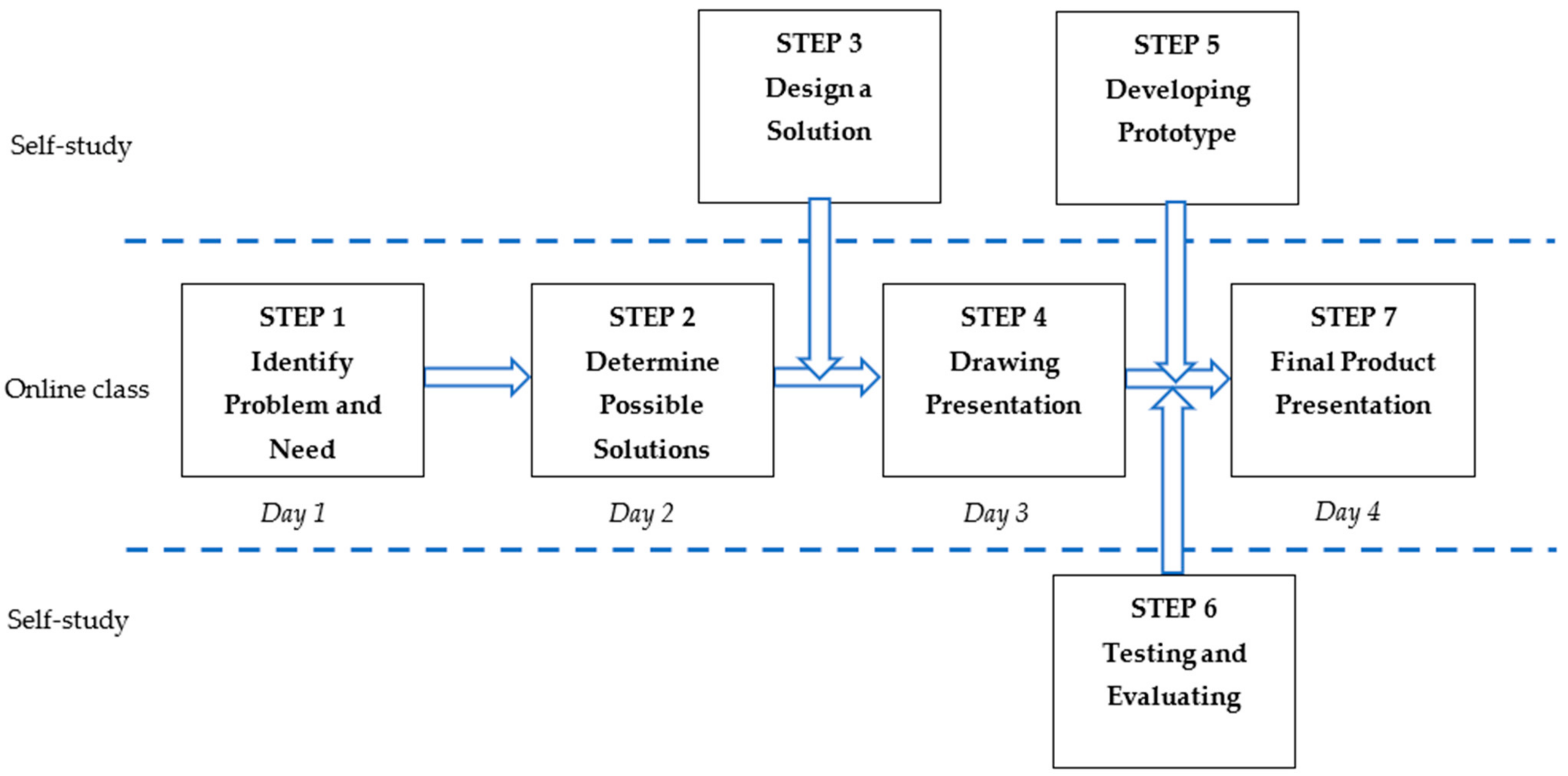
The engineering design process presented in this work consists of seven learning steps: STEP 1—Identify Problem and Need; STEP 2—Determine Possible Solutions; STEP 3—Design a Solution; STEP 4—Drawing Presentation; STEP 5—Developing Prototype; STEP 6—Testing and Evaluating; and STEP 7—Final Product Presentation. STEP 4 contains the presentation of a prototype drawing, which was added to the traditional process to provide students with the opportunity to express their thoughts to the class. In addition, experts also were invited to participate in the class discussion both in STEP 4 and STEP 7. This is to provide the students with the opportunity to receive feedback from the experts and improve the designs before producing a prototype and further developing it in the future, respectively.
During teaching, Google Classroom was used as a platform to connect the teacher and students outside of the class, wherein the teacher provides various materials, and the students use the platform to submit assignments; also included are announcements regarding the pre-class activities that students must study and perform before attending in each class and other learning materials that will be used in in-class activities, such as worksheets.
The Zoom application is used as a learning platform to create online classrooms. STEP 1, 2, 4, and 7 of the Engineering Design Process activities are taught in an online classroom, totaling four lessons at 1.5 h each (90 min), and STEP 3, 5, and 6, which are Design a Solution, Developing Prototype, and Testing and Evaluating Prototype are self-study sessions, where the students spend their free time outside of class to study independently at home (see also Figure 1).
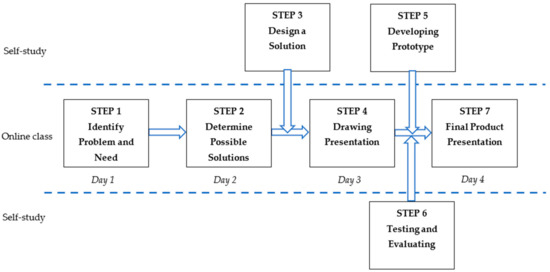
Figure 1.
Diagram of course designed for the proposed Blended Engineering Design Process learning activities.
By the end of each online class, the students would complete a formative assessment via a Google form to review what they have learned and describe the homework assigned by the teacher before leaving the class. Teachers would check the students’ answers after the students gradually submitted the formative assessments. If the teacher found that any student had questions or was unable to answer what the day’s assignment was, the teacher would use this information from the formative assessment to provide feedback to the students in real time. The Figure 1 below shows the flow chart learning process of the proposed blended learning activities. Additionally, the details of each teaching step are as follows (see Table 1).

Table 1.
Proposed Blended Engineering Design Process learning activities.
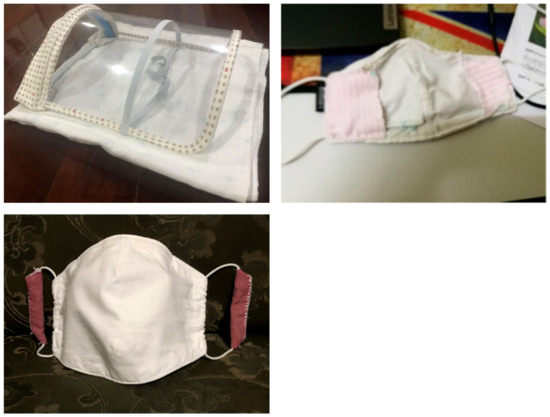
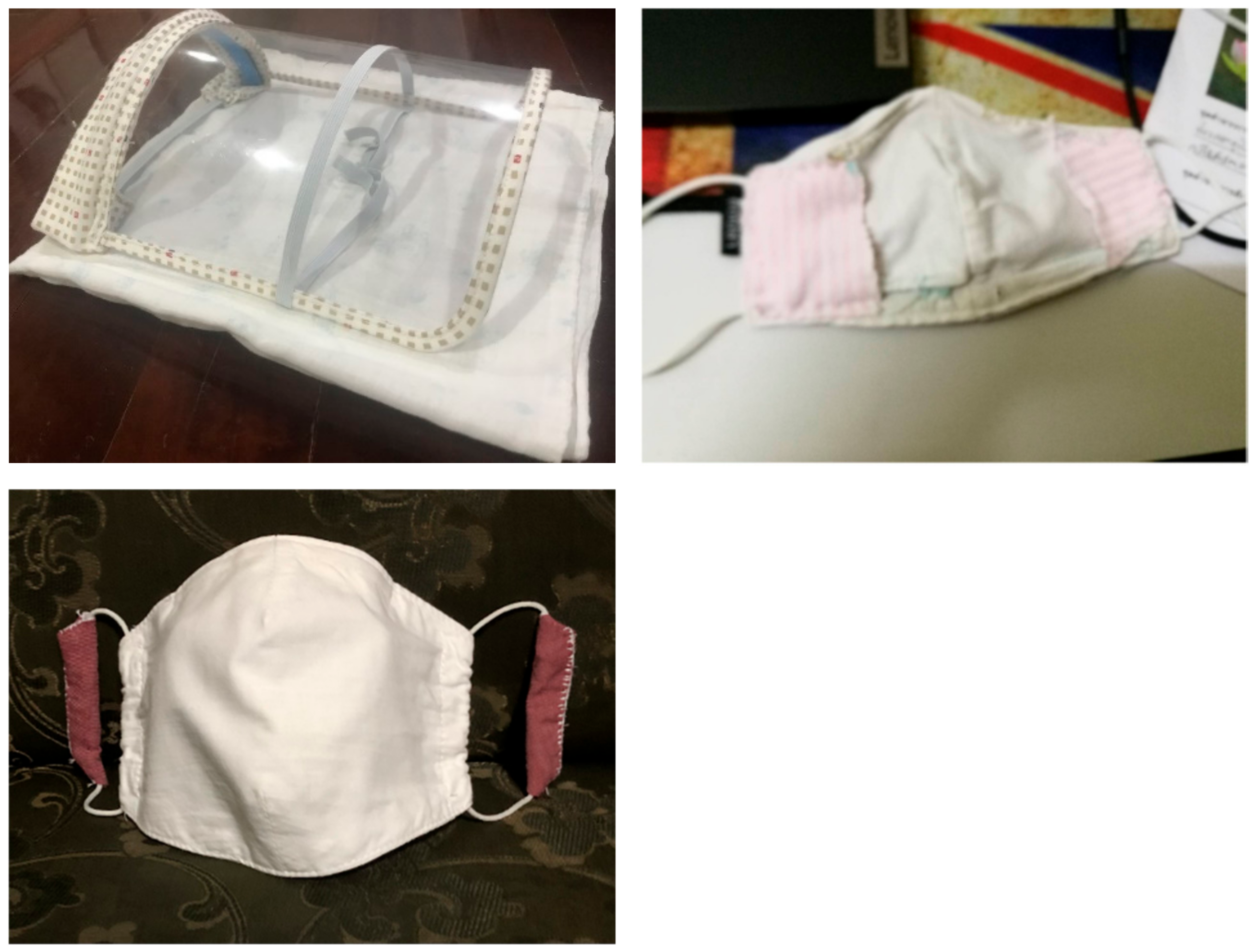
Figure 2.
Examples of students’ prototypes for COVID-19 mask protection.
The following are examples of students’ prototypes:
4. Methodology
In order to test the efficiency of this proposed teaching technique, this research was conducted to examine (a) the student’s perception of their confidence in their problem-solving skills after they underwent the proposed Blended Engineering Design Process learning activities and (b) the students’ perception on the designed course for answering research questions as the following:
- What is the student’s perception of their confidence in their problem-solving skills after they underwent the proposed Blended Engineering Design Process learning activities?
- Do the proposed Blended Engineering Design Process learning activities enhance students’ perceptions of their confidence in their problem-solving skills?
- What are the students’ perceptions of the designed course of Blended Engineering Design Process learning activities?
4.1. Research Design
A single-group pretest–posttest design was employed (see Figure 3). The pretest and posttest of the students’ perception of their confidence in their problem-solving skills were administered before and after the proposed activities to investigate the students’ problem-solving skills. Furthermore, an open-ended questionnaire was administered after the last lesson to investigate the students’ perception toward the proposed activities. The study was conducted after approval by the research ethics committee of Mahidol University, Thailand.

Figure 3.
Single group pretest–posttest design.
4.2. Participants
The participants were chosen based on a convenience sampling method. Since this study involved all seventh-grade students who were taking a computing science class, no sample size calculation was conducted, and they had never experienced the Engineering Design Process before (n = 30).
Table 2 shows the results of two well-known tests for normality [26], namely the Kolmogorov–Smirnov Test and the Shapiro–Wilk Test. The Shapiro–Wilk test is more appropriate for small sample sizes (<50 samples). Subsequently, this study used the Shapiro–Wilk test. The pre-test was normally distributed (Sig. = 0.729). The post-test was normally distributed (Sig. = 0.132). Therefore, the data are normal.
Table 2.
Tests of normality.
4.3. Research Instruments
Students’ Perception on Problem-Solving Skill Questionnaire (SPPSS) and Students Perception towards the Proposed Blended Engineering Design Process learning activities Questionnaire (SPBEDP) were used in this study. The details of the research instruments used to answer the research questions are shown in Table 3.
Table 3.
Research instruments.
The Students’ Perception on Problem-Solving Skill Questionnaire (SPPSS) was used to investigate the students’ perceptions of their problem-solving confidence before and after they underwent the proposed Blended Engineering Design Process activities. The questionnaire SPPSS was modified from the Personal Problem-Solving Inventory (PSI) [27], which is a 32-question questionnaire comprising questions of three main constructions: problem-solving confidence, 11 items; approaching style, 16 items; and personal control, 5 items. Since we focus on the construction of the problem-solving abilities of the participants in this study, therefore, the SPPSS herein is an 11-question questionnaire in the construction of problem-solving confidence (the reliability α = 0.85), adopted from the PSI. It contains parallel items in the form of behavior rating scales. The five behavior rating scales are Very Much Like Me, Mostly Like Me, Somewhat Like Me, Not Much Like Me, and Not Like Me at All, respectively (See Appendix A: Table A1). Moreover, the student’s perception of the Proposed Blended Engineering Design Process learning activities Questionnaire (SPBEDP) was also used to investigate the student’s perception of the Proposed Blended Engineering Design Process activities. It is a seven-item questionnaire consisting of two close-end questions and five opened-ended questions developed by the teacher and then content-validated by experts.
The questions used in the SPBEDP are the following: based on these proposed activities:
- Which learning STEP in engineering design process you most liked? (closed-end)
- Why do you like this learning STEP the most? (open-ended)
- Which learning STEP in engineering design process you least liked? (closed-end)
- Why do you like this learning STEP the least? (open-ended)
- If it could be improved, what learning STEP/process you would like to add to or remove from the activities? (open-ended)
- If yes, why you would like to add/remove the STEP? (open-ended)
- What is the knowledge or skills that you have gained from the activities? (open-ended)
4.4. Data Collection
The instruction in this course is a blended learning method implemented over a total of 7 days consisting of four days of online classrooms and three days of self-study. Online classroom lessons were on Day 1, Day 2, Day 4, and Day 7, wherein the learners will learn and practice “STEP 1: Identify Problem and Need”, “STEP 2: Determine Possible Solutions”, “STEP 4: Drawing Presentation”, and “STEP 7: Final Product Presentation” of the engineering design process. While the self-study home lessons are on Day 3, Day 5, and Day 6, wherein the learners will learn and practice “STEP 3: Design a solution”, “STEP 5: Developing Prototype”, and “STEP 6: Testing and Evaluating Prototype”. On the first day (Day 1) of the lesson, the participants were briefed about the objective of the lesson. Following that, the pretest of SPPSS was conducted for 10 min. At the end of each online lesson, the students would complete a formative assessment as an exit ticket to verify their understanding and review the homework assigned by the teacher. After the last lesson (Day 7) was finished, the participants were made to attend the posttest of SPPSS for 10 min. The pretest and posttest of SPPSS were compared to the same set of students at different time periods. Then, they were asked to respond to the SPBEDP, which lasted for another 5 min.
4.5. Data Analysis
In order to analyze the data, the mean and standard deviation of each item were determined, as reflected in the result section. An open-ended item included in the questionnaire was analyzed by reviewing the views or any elements of their feelings expressed, and the repeated ideas or views were grouped together.
5. Results
5.1. Students’ Perception on Their Problem-Solving Confidence
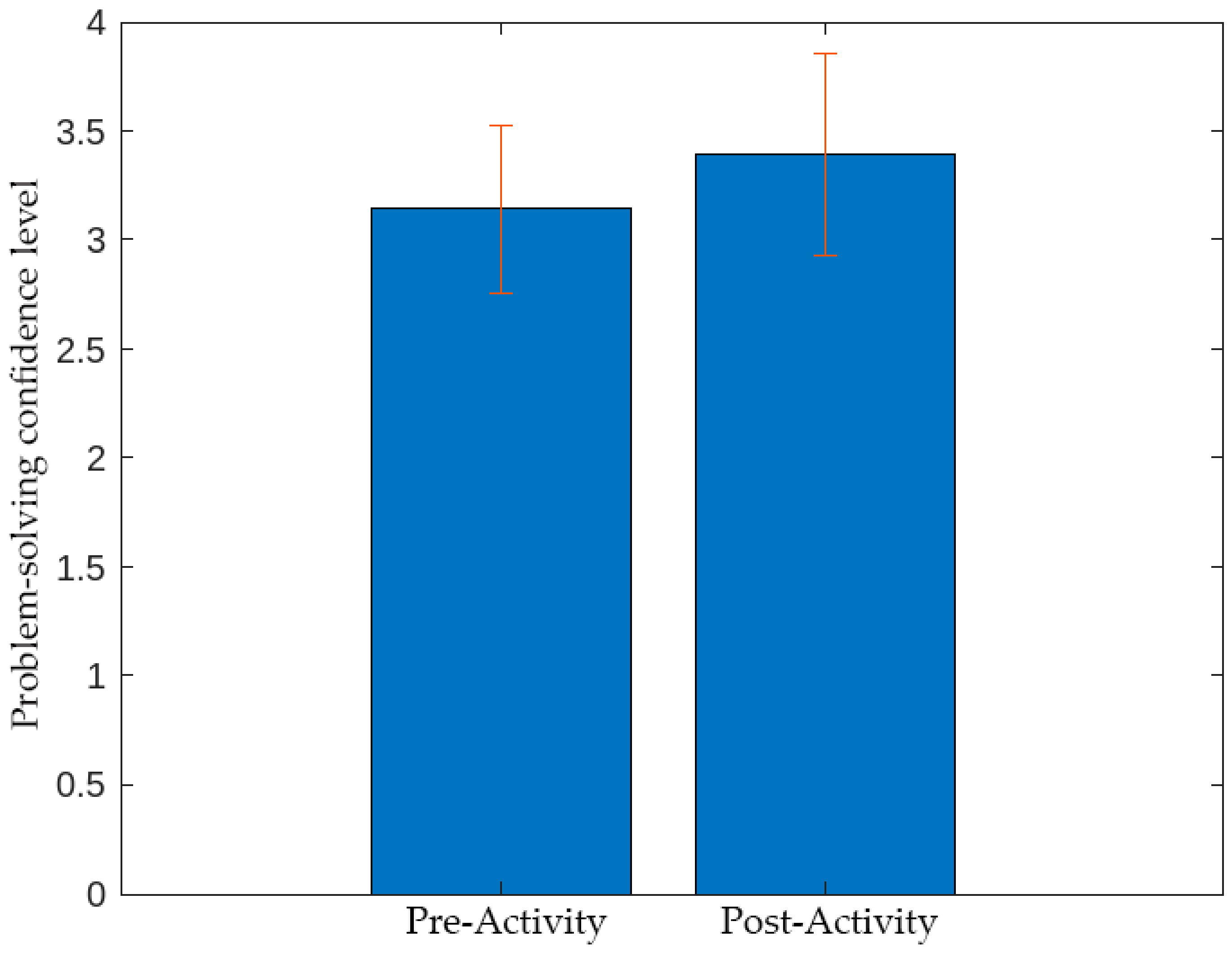
Table 4 shows the scores of Students’ Perception of his/her confidence in their problem-solving skills before and after they underwent the proposed activity. It was found that the mean level of confidence in solving problems before participating in the activity was 3.142 (S.D. = 0.384), and after participating in the activity, it was = 3.391 (S.D. = 0.464). The scores of students’ perception of his/her confidence in problem-solving skill was also significant at p < 0.001. This means that the proposed activities could increase students’ confidence in problem-solving (see also Figure 4).
Table 4.
Scores of students’ perception on his/her problem-solving confidence (SPPSS) t-test and effect size for samples.
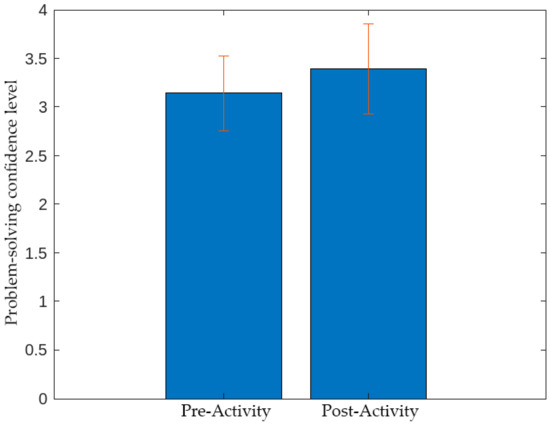
Figure 4.
Problem-solving confidence level of students before and after participating in the activities.
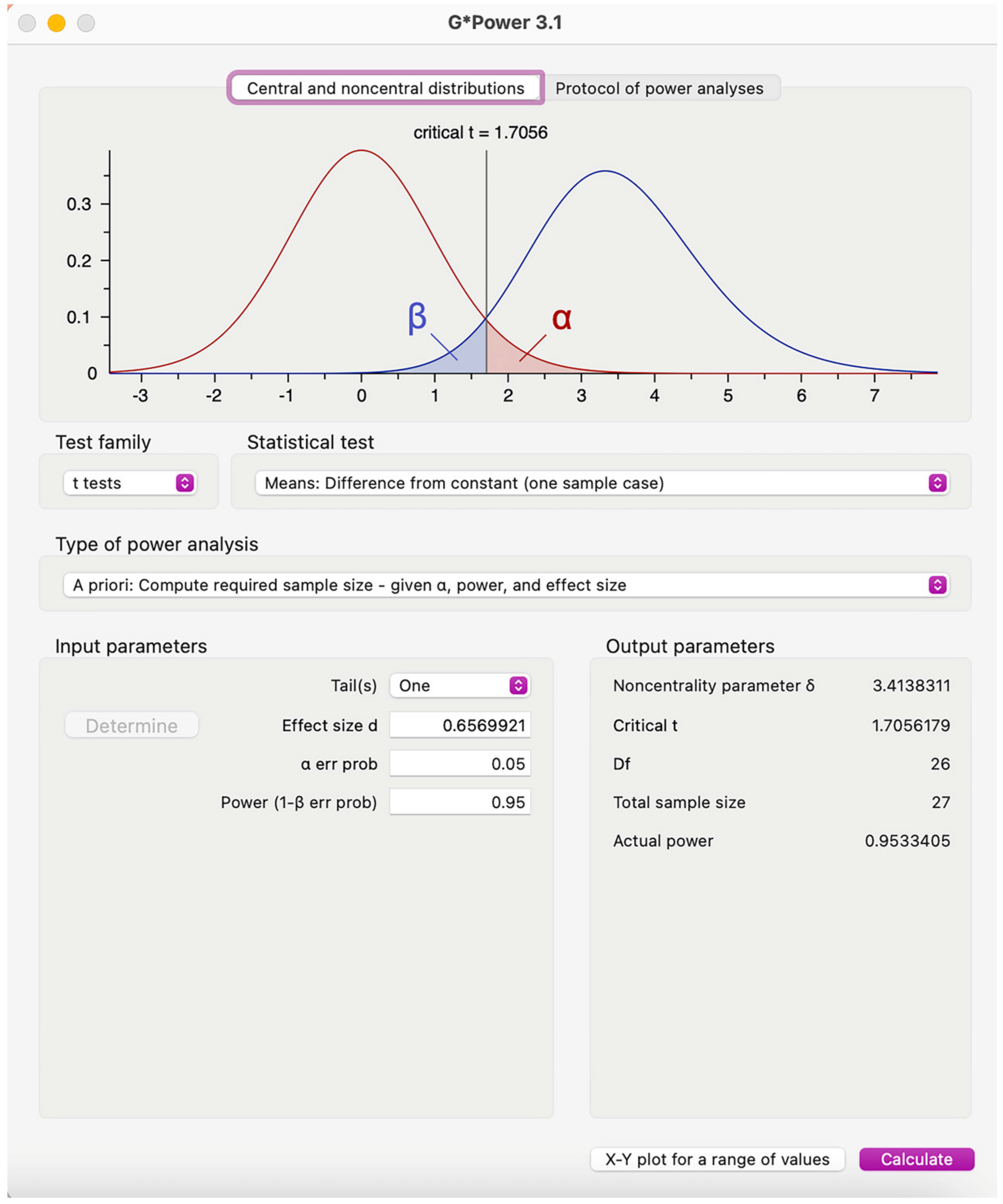
Figure 5 provides the settings and input parameters used to select the G*Power for this analysis [28] (the sample size of the pre and post-test n = 30). To support the results and conclusions, this study analyzed the effect size, which was estimated from the value of Cohen’s d and the effect-size t-test. This is a one-tailed test because it has a directional hypothesis (the activity in the lesson plan will increase the steps): setting α and power to 0.05. From the results, the positive impact of participation in the Process Learning Activities for Secondary School Students during the COVID-19 Epidemic can be concluded: Students’ Learning Activities and Perception was of medium magnitude (Cohen’s d = 0.65). The samples test requires a total sample size of twenty-seven.
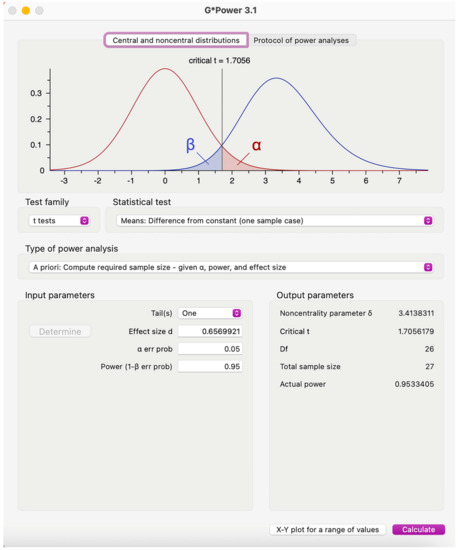
Figure 5.
G*Power settings, inputs, and outputs for samples.
5.2. Students’ Perception on the Designed Course
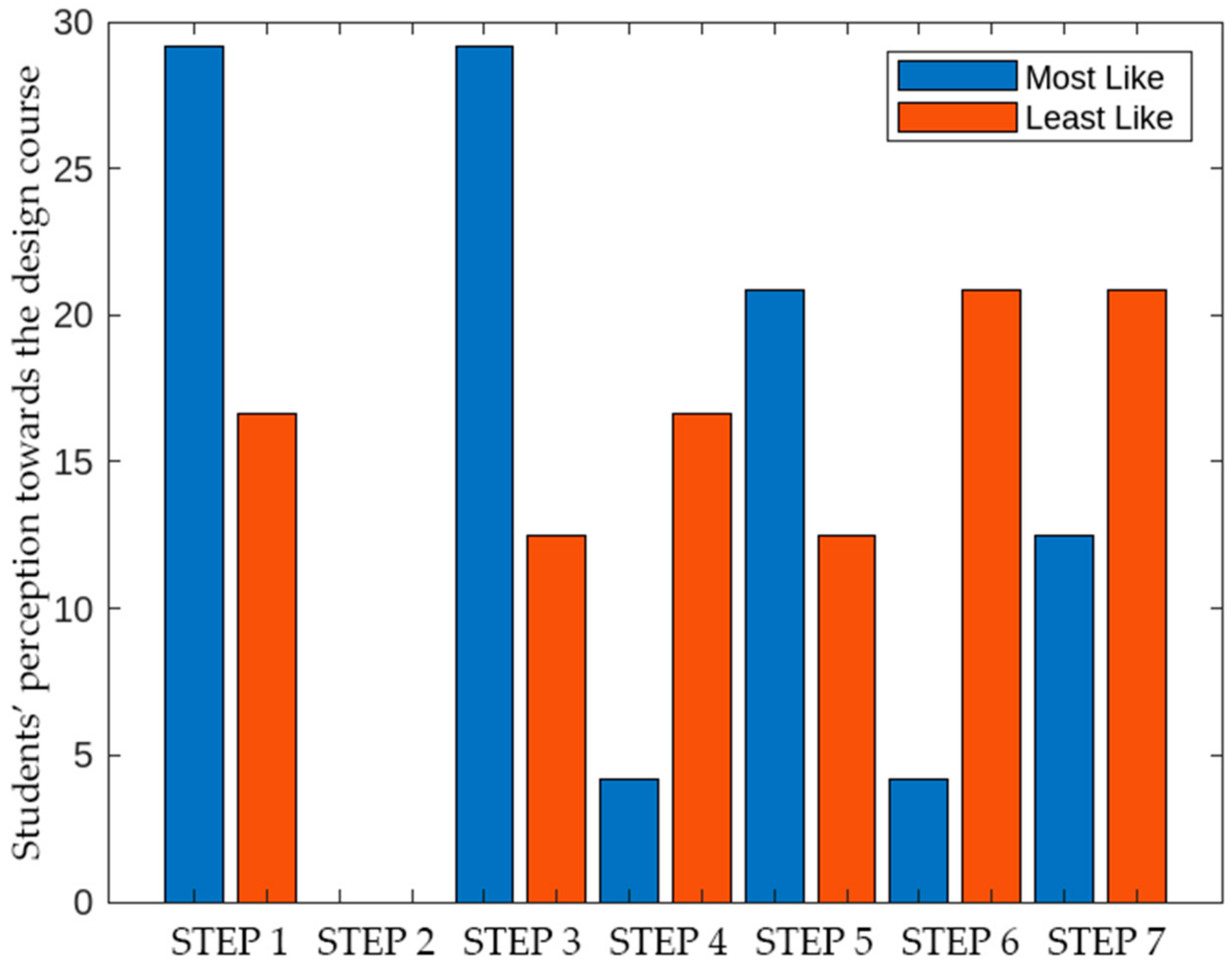
In this regard, when asking the students which learning STEP of the engineering design process they most liked, and which learning STEP they least liked, we found that the top three learning steps the students most liked were STEP 3: Designing a solution (29.17%); STEP 1: Identify Problem and Need (29.17%); and STEP: 5 Developing Prototype (20.83%), respectively. On the other hand, the top three steps the students least liked are STEP 6: Testing and evaluating the solution (20.83%); STEP 7: Final product presentation (20.83%); and STEP 4: Drawing Presentation (16.67%), respectively (see Figure 6 and Table 5).
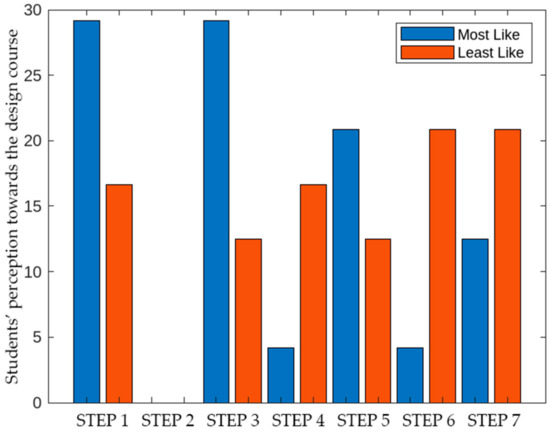
Figure 6.
Comparison chart between most liked percentage and least liked percentage for each step of the EDP activity in the designed course.
Table 5.
Students’ perception on each step of EDP activity in the design course.
The students provided reasons as to why they most liked the teaching and learning process in STEP 3, 1, and 5 because it was a step in which they used their creativity (STEP 3), hands-on (STEP 1, 5), fun (STEP 3, 5), easy (STEP 1), challenging (STEP 5), and having an opportunity to choose issues in which they are interested (STEP 1). However, there are still some students who least liked these steps because they considered them to be difficult (STEP 5), required a lot of analysis (STEP 1, 3), and some students said that they were not good at drawing (STEP 3).
Examples of students’ responses are as follows:
“identified the issues of my own interest”;
“identified the issues based on what I have found”;
“used creativity”;
“because it’s quite fun to invent”;
“practicing and I could see that it wasn’t as easy as I thought at first”.
The reasons why they least liked learning in STEP 6, 7, and 4 are they did not like the presentation (STEP 4, 7). Moreover, the invention must be tested on the target group. In this process, they will receive feedback to improve their work. This process makes them feel discouraged and bored (STEP 6).
Examples of students’ responses are as follows:
“I don’t really want to present because I’m worried that I’ll say something wrong during the presentation.”;
“because there are so many corrections that sometimes I don’t want to continue doing it”.
In addition, we also found that STEP 2: Determine possible solutions, is the step that none of the students said was their favorite step nor their least favorite step. Therefore, we think that the process at this stage in which information is sought before making a decision may be a skill that students normally practice and, therefore, do not consider to be anything special.
However, when asked about the issue of which learning process should be reduced or added, all of the students responded in the same way: “There is no activity part to be reduced”.
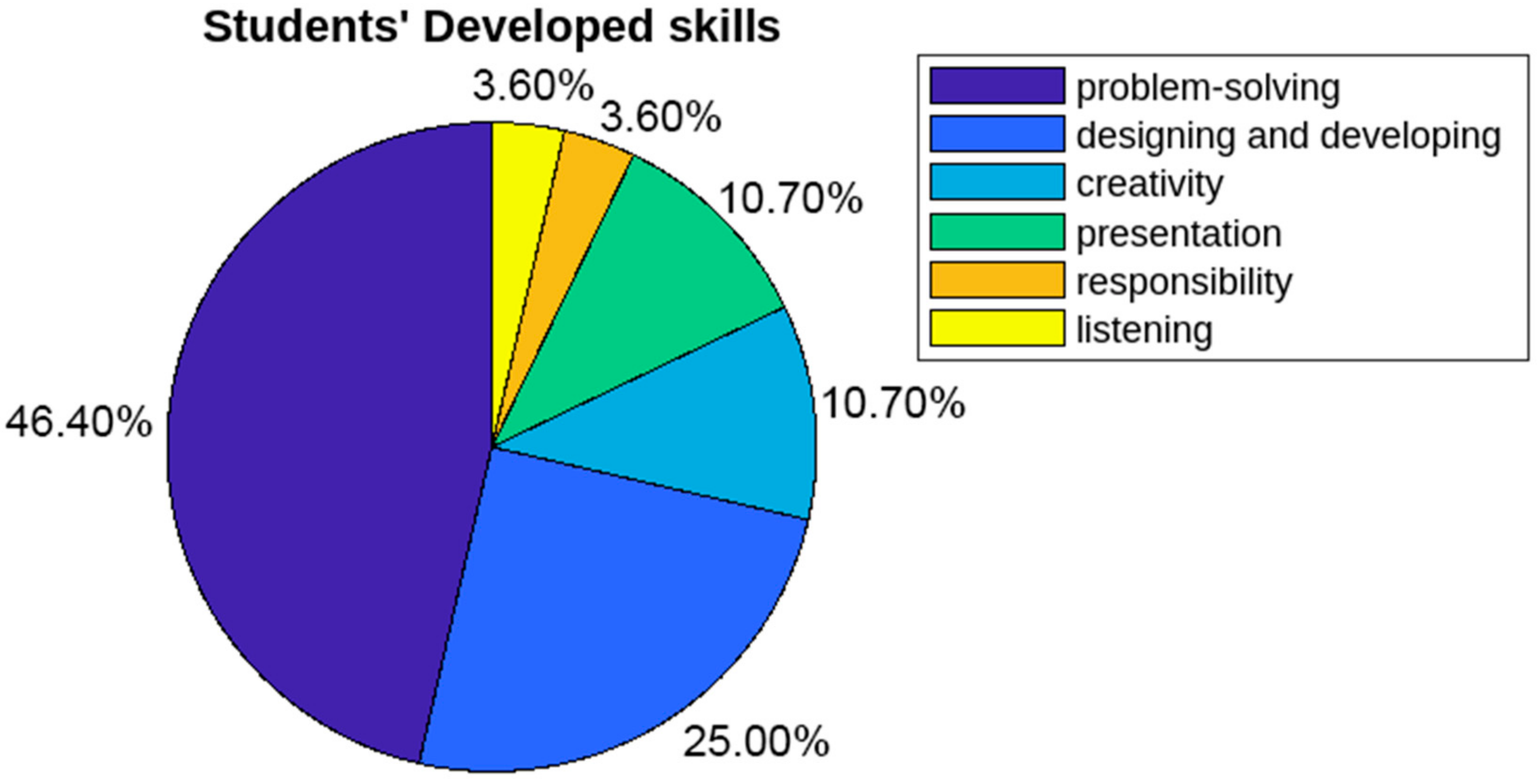
Moreover, when asked about what they have learned in relation to the knowledge or skills where they have improved due to performing the activities, the areas where the students developed due to the activities in descending order were problem-solving skills (46.40%), designing and product developing skills (25.00%), creativity (10.70%), presentation skills (10.70), including practicing responsibility (3.60%), and listening skills (3.60%), respectively (see Figure 7).
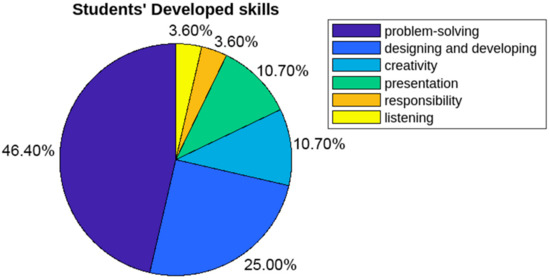
Figure 7.
Students’ perception on skills they developed after participating in the proposed activities.
Examples of students’ responses are as follows:
“have thought about being more assertive in presenting (When presenting, I’m not confident because I feel that there are many experts. I’m afraid to do something wrong and I’m afraid to be disappointed. So, I choose not to present)”;
“develop presentation skills, searching for information, and selection of equipment”;
“have developed a problem-solving mindset and practiced responsibility”;
“has developed an observation of the problem of wearing a mass, practice solving problems, whether it’s the main problem or the problem that you encounter during the process”.
Based on the above information, it can be seen that what the students liked the most was the ability to practice, think, and create the work by themselves. While some students still disliked testing, evaluating, and presenting the work. This might be due to the lack of opportunities for the students to practice these kinds of skills.
Therefore, the guidelines for the development of learners based on this study is that teachers should encourage the learners more in terms of (i) grit, i.e., relentlessness in the face of obstacles. This is one of the skills necessary for 21st-century learners, providing students with the opportunity to create a piece of work, test, listen to user opinions, and receive feedback to improve and revise. (ii) Presentation of the work they have developed. This will allow students to have the opportunity to present ideas, express their opinions and receive comments from experts, leading to the further development of their work and greater self-confidence.
6. Discussion and Conclusions
In this study, we investigated (a) the students’ perceptions of their problem-solving confidence skills after they underwent the proposed Blended Engineering Design Process learning activities and (b) the students’ perceptions of the designed course.
The presented engineering design process activities in this work consisted of seven learning steps: STEP 1—Identify Problem and Need; STEP 2—Determine Possible Solutions; STEP 3—Design a Solution; STEP 4—Drawing Presentation; STEP 5—Developing Prototype; STEP 6—Testing and Evaluating; and STEP 7—Final Product Presentation.
The blended teaching process that was integrated between the group activities based on online learning and individual hands-on activities through independent study at home was used to teach students about the engineering design process by working on the topic of COVID-19 medical mask protection. STEP 1, 2, 4, and 7 of the Engineering Design Process activities are taught in an online classroom, and STEP 3, 5, and 6, which are the steps Design a solution, Developing Prototype, and Testing and Evaluating Prototype are self-study sessions, where students spend their free time outside of class studying independently at home.
The efficiency of this proposed teaching technique was tested using two questionnaires: Students’ Perception on Problem-Solving Skill Questionnaire (SPPSS) and Students Perception towards the Proposed Blended Engineering Design Process learning activities Questionnaire (SPBEDP) to answer the research questions.
We found statistically significant difference between the means of the posttest (M= 3.391; SD = 0.464) and the pretest (M = 3.142; SD = 0.384) at p 0.001, indicating enhanced student confidence related to problem-solving due to the proposed Blended Engineering Design Process Learning Activities.
Similar claims of increased student problem-solving have also been reported in the literature [29,30,31,32,33]. Syukri M. et al. (2018) [30] integrated an engineering design process (asking, imagining, planning, creating, and improving) into an electrical and magnetism module for secondary school students in Aceh, Indonesia, and found that the physics teaching and learning module, which integrated the five steps of the engineering design process, was more effective when compared to the use of the existing original module in increasing the students’ skills in solving physics problems. Fan, S.-C. and K.-C. Yu (2017) [31] developed a STEM engineering module that emphasized the application of integrative STEM understandings and higher-order thinking skills to the high school students in Taiwan. Their steps of the engineering design process used in the study were: (1) identify the problems, constraints, and limitations; (2) develop possible solutions; (3) perform a predictive analysis and model the prototypes; (4) test and modify the best prototype; (5) evaluate the final design; and (6) redesign and optimize. The STEM engineering design teaching module was aligned with engineering design processes and supplemented with integrative STEM knowledge via the use of virtual computer simulations and physical models. They found that their STEM engineering design teaching module not only increased student understanding of the mechanism concepts but also focused on promoting students’ abilities to use scientific and mathematics knowledge to predict, analyze, and solve engineering problems. The results showed that students in the STEM engineering teaching module outperformed their counterparts in conceptual knowledge and understanding. The largest difference between the experimental group and the control group mean scores related to the problem of predictive and analytical skills. The experimental group students demonstrated a significant advancement in their problem prediction and analysis subtest mean scores, whereas the control group students—who were studied using traditional technology educational approaches—showed little or no improvement in the subtest scores for the problems of prediction and analysis. Li, Y. et al. (2016) [32] integrated engineering design-based science activity into STEM Education using Lego bricks for fourth-grade students and found that the students’ increased problem-solving abilities in the experimental group were significantly improved, and the males made more significant progress in problem-solving ability than the females in the experimental group. Similar to the experiment of Li, Y. et al. [32], Vela, K. et al. (2019) [33] also developed a STEM project-based camp that incorporated the engineering design process (EDP) and investigated an individual’s confidence in their ability to implement the engineering design process between male and female students. The study also indicated that males were more confident in their ability to design and build innovative products than females. These results underscore the importance of identifying ways to increase female students’ confidence in their ability to think, design and create innovative products.
Our results also show that in our work the EDP that students liked most, the third highest’s EDP step are STEP 1: Identify Problem and Need; STEP 3: Design a Solution; and STEP 5: Developing Prototype. This is because it is hands-on, fun, easy, challenging, and the students can also use their creativity and have the opportunity to choose issues in which they are interested.
Similar claims are also supported by the work of Fan, S.-C. and K.-C. Yu (2017) [31] that the problems of definition, prediction, and analysis are the most important components of engineering design for high school students. These are the processes that could enhance the higher-order thinking skills of the students. Therefore, teachers should focus on helping students become aware of these abilities during activities, and more specific instructional strategies and practices which focus on teaching problem definition, prediction, and analysis should be emphasized.
Our research also found that in addition to problem-solving skills (46.40%), which are the skills that learners had developed by learning with the Engineering Design Process; other skills such as designing and product developing skills (25.00%), creativity (10.70%), presentation skills (10.70), including practicing responsibility (3.60%), and listening skills (3.60%) were also developed in our work.
These issues are similar to the claims of Zhou, N. et al. (2016) [34], in which not only the understanding of the engineering design processes but the hands-on engineering design activities have also shown the potential to promote middle school students’ self-efficacy and critical thinking skills [29] while providing explanations, making associations, questioning information, giving justifications, solving problems, thinking creatively [35,36], making generalizations, attempting to convince others [37], and self-management [38,39], which are considered to be 21st century skills.
For the Blended Engineering Design Process learning activities for secondary school students, we found that students were able to allocate their learning time and encountered no barriers in executing creative projects using resources both inside and outside of the classroom. Hence, Blended Learning is a flexible learning model that combines creative advances and technology of online learning with interactions. It is one of the best ways to deal with the need for “learning anywhere, learning anytime, learning everything, learning flexibly, learning openly and learning for the whole life”, which is currently an inevitable trendy [40].
Limitation and Implementation of This Study
Furthermore, the EDP approach still has limitations when integrated with content at the school level, particularly in interdisciplinary knowledge and situations such as the COVID-19 epidemic. Moreover, EDP is a new learning approach, and there are still some obstacles to implementing it [41]. Hence, the implementation of the EDP used in this content is needed.
Author Contributions
Conceptualization, M.P.; methodology, M.P.; formal analysis, S.S.; investigation, S.S., K.P., P.R., S.C. and W.K.; writing — original draft, M.P.; project administration, M.P. All authors have read and agreed to the published version of the manuscript.
Funding
This research was funded by Mahidol University, grant number 65A110000046; Fundamental Fund (FF).
Institutional Review Board Statement
The study was conducted in accordance with the Declaration of Helsinki, and approved by the Central Institutional Review Board of Mahidol University (MU-CIRB) MU-CIRB2021/112.1103 (approved on 25 March 2021).
Informed Consent Statement
Written informed consent has been obtained from the patient(s) to publish this paper.
Data Availability Statement
Not applicable.
Acknowledgments
This research project is supported by Mahidol University (Basic Research Fund: fiscal year 2021).
Conflicts of Interest
The authors declare no conflict of interest.
Appendix A
Please answer each question/statement as honestly as possible.
Table A1.
Perception level of confidence in problem solving.
Table A1.
Perception level of confidence in problem solving.
| Items | Very Much Like Me | Mostly Like Me | Somewhat Like Me | Not Much Like Me | Not Like Me at All |
|---|---|---|---|---|---|
| 1. I am usually able to think up creative and effective alternatives to solve a problem. | |||||
| 2. I have the ability to solve most problems even though initially no solutions immediately apparent. | |||||
| 3. Many problems I face are too complex for me to solve. | |||||
| 4. I make decisions and am happy with them later. | |||||
| 5. When I make plans to solve a problem, I am almost certain that I can make them work | |||||
| 6. Given enough time and effort, I believe I can solve most problems that confront me. | |||||
| 7. When faced with a novel situation I have confidence that I can handle problems that may arise. | |||||
| 8. I trust my ability to solve new and difficult problems. | |||||
| 9. After making a decision, the outcome I expected usually matches the actual outcome. | |||||
| 10. When confronted with a problem, I am unsure of whether I can handle the situation. | |||||
| 11. When I become aware of a problem, one of the first things I do is to try to find out exactly what the problem is. |
References
- Skliarova, I.; Meireles, I.; Martins, N.; Tchemisova, T.; Cação, I. Enriching Traditional Higher STEM Education with Online Teaching and Learning Practices: Students’ Perspective. Educ. Sci. 2022, 12, 806. [Google Scholar] [CrossRef]
- Hall, J.A. A Problem-Centered Approach to Designing Blended Courses: Unifying Online and Face-to-Face Modalities. Educ. Sci. 2022, 12, 689. [Google Scholar] [CrossRef]
- Lo, C.-K.; Tlili, A.; Huang, X. The Use of Open Educational Resources during the COVID-19 Pandemic: A Qualitative Study of Primary School Mathematics Teachers in Hong Kong. Educ. Sci. 2022, 12, 744. [Google Scholar] [CrossRef]
- Wilcha, R.-J. Effectiveness of virtual medical teaching during the COVID-19 crisis: Systematic review. JMIR Med. Educ. 2020, 6, e20963. [Google Scholar] [CrossRef] [PubMed]
- Putra, P.; Liriwati, F.Y.; Tahrim, T.; Syafrudin, S.; Aslan, A. The students learning from home experience during COVID-19 school closures policy in indonesia. J. Iqra 2020, 5, 30–42. [Google Scholar] [CrossRef]
- Adams, R.S.; Turns, J.; Atman, C. Educating effective engineering designers: The role of reflective practice. Des. Stud. 2003, 24, 275–294. [Google Scholar] [CrossRef]
- Brand, B.R. Integrating science and engineering practices: Outcomes from a collaborative professional development. Int. J. STEM Educ. 2020, 7, 13. [Google Scholar] [CrossRef]
- English, L.D.; King, D. STEM learning through engineering design: Fourth-grade students’ investigations in aerospace. Int. J. STEM Educ. 2015, 2, 14. [Google Scholar] [CrossRef]
- Council, N.R. National Science Education Standards; National Academies Press: Washington, DC, USA, 1996. [Google Scholar]
- Council, N.R. Engaging Schools: Fostering High School Students’ Motivation to Learn; National Academies Press: Washington, DC, USA, 2003. [Google Scholar]
- Council, N.R. A Framework for K-12 Science Education: Practices, Crosscutting Concepts, and Core Ideas; National Academies Press: Washington, DC, USA, 2012. [Google Scholar]
- Council, N.R. Engineering in K-12 Education: Understanding the Status and Improving the Prospects; National Academies Press: Washington, DC, USA, 2009. [Google Scholar]
- Council, N.R. Next Generation Science Standards: For States, by States; National Academies Press: Washington, DC, USA, 2013. [Google Scholar]
- King, D.; English, L. Engineering design in the primary school: Applying STEM concepts to build an optical instrument. Int. J. Sci. Educ. 2016, 38, 2762–2794. [Google Scholar] [CrossRef]
- Eisenkraft, A. Engineering Design Challenges in a Science Curriculum; NCETE: Champaign, IL, USA, 2011. [Google Scholar]
- Becker, K.; Mentze, N. Engineering design thinking: High school students’ performance and knowledge. In Proceeding of the 2015 International Conference on Interactive Collaborative Learning (ICL), Firenze, Italy, 20–24 September 2015; IEEE: Piscataway, NJ, USA, 2015. [Google Scholar]
- Sadler, P.M.; Coyle, H.; Schwartz, M. Engineering competitions in the middle school classroom: Key elements in developing effective design challenges. J. Learn. Sci. 2000, 9, 299–327. [Google Scholar] [CrossRef]
- Tikhonov, D.; Makarova, I.; Pashkevich, A.; Shubenkova, K. An Integrated Platform for Blended Learning in Engineering Education. In Proceedings of the 9th International Conference on Computer Supported Education (CSEDU 2017), Porto, Portugal, 21–23 April 2017; SCITEPRESS: Setúbal, Portugal.
- Lawanto, O. Students’ metacognition during an engineering design project. Perform. Improv. Q. 2010, 23, 117–136. [Google Scholar] [CrossRef]
- Estapa, A.T.; Tank, K. Supporting integrated STEM in the elementary classroom: A professional development approach centered on an engineering design challenge. Int. J. STEM Educ. 2017, 4, 6. [Google Scholar] [CrossRef]
- Hafiz, N.R.M.; Ayop, S.K. Engineering Design Process in Stem Education: A Systematic. Int. J. Acad. Res. 2019, 9, 676–697. [Google Scholar]
- Lammi, M.; Denson, C.; Asunda, P. Search and review of the literature on engineering design challenges in secondary school settings. J. Pre-Coll. Eng. Educ. Res. 2018, 8, 5. [Google Scholar] [CrossRef]
- Carr, R.L. Integrating Engineering Design Challenges into Secondary STEM Education; NCETE: Champaign, IL, USA, 2011. [Google Scholar]
- Dixon, R.A.; Johnson, S.D. The Use of Executive Control Processes in Engineering Design by Engineering Students and Professional Engineers. J. Technol. Educ. 2012, 24, 73–89. [Google Scholar] [CrossRef]
- Bonk, C.J.; Graham, C.R. The Handbook of Blended Learning: Global Perspectives, Local Designs; John Wiley & Sons: Hoboken, NJ, USA, 2012. [Google Scholar]
- Dodge, Y. Kolmogorov–Smirnov Test. The Concise Encyclopedia of Statistics; Springer: New York, NY, USA, 2008; pp. 283–287. [Google Scholar]
- Heppner, P.P.; Petersen, C.H. The development and implications of a personal problem-solving inventory. J. Couns. Psychol. 1982, 29, 66–75. [Google Scholar] [CrossRef]
- Faul, F.; Erdfelder, E.; Lang, A.G.; Buchner, A. G* Power 3: A flexible statistical power analysis program for the social, behavioral, and biomedical sciences. Behav. Res. Methods 2007, 39, 175–191. [Google Scholar] [CrossRef]
- Evans, M.A.; Schnittka, C.; Jones, B.D.; Brandt, C.B. Studio STEM: A model to enhance integrative STEM literacy through engineering design. In Connecting Science and Engineering Education Practices in Meaningful Ways; Springer: New York, NY, USA, 2016; Volume 44, pp. 107–137. [Google Scholar]
- Syukri, M.; Halim, L.; Mohtar, L.E.; Soewarno, S. The impact of engineering design process in teaching and learning to enhance students’ science problem-solving skills. J. Pendidik. IPA Indones. 2018, 7, 66–75. [Google Scholar] [CrossRef]
- Fan, S.-C.; Yu, K.-C. How an integrative STEM curriculum can benefit students in engineering design practices. Int. J. Technol. Des. 2017, 27, 107–129. [Google Scholar] [CrossRef]
- Li, Y.; Huang, Z.; Jiang, M.; Chang, T.W. The effect on pupils’ science performance and problem-solving ability through Lego: An engineering design-based modeling approach. J. Educ. Technol. Soc. 2016, 19, 143–156. [Google Scholar]
- Vela, K.; Caldwell, C.; Capraro, R.M.; Capraro, M.M. The nexus of confidence and gender in an engineering project-based STEM camp. In Proceedings of the 2019 IEEE Frontiers in Education Conference (FIE), Covington, KY, USA, 16–19 October 2019; IEEE: Piscataway, NJ, USA, 2019. [Google Scholar]
- Zhou, N.; Pereira, N.L.; George, T.T.; Alperovich, J.; Booth, J.; Chandrasegaran, S.; Tew, J.D.; Kulkarni, D.M.; Ramani, K. The influence of toy design activities on middle school students’ understanding of the engineering design processes. J. Sci. Educ. Technol. 2017, 26, 481–493. [Google Scholar] [CrossRef]
- Gök, B.; Sürmeli, H. The Effect of Scientific Toy Design Activities Based on the Engineering Design Process on Secondary School Students’ Scientific Creativity. Asian J. Univ. Educ. 2022, 18, 692–709. [Google Scholar]
- Han, H.-J.; Shim, K.-C. Development of an engineering design process-based teaching and learning model for scientifically gifted students at the Science Education Institute for the Gifted in South Korea. Asia-Pac. Sci. Educ. 2019, 5, 1–18. [Google Scholar] [CrossRef]
- Sen, C.; Ay, Z.S.; Kiray, S.A. Computational thinking skills of gifted and talented students in integrated STEM activities based on the engineering design process: The case of robotics and 3D robot modeling. Think. Ski. Creat. 2021, 42, 100931. [Google Scholar] [CrossRef]
- Denson, C.D. Building a Framework for Engineering Design Experiences in STEM: A Synthesis; NCETE: Champaign, IL, USA, 2011. [Google Scholar]
- Dym, C.L.; Agogino, A.M.; Eris, O.; Frey, D.D.; Leifer, L.J. Engineering design thinking, teaching, and learning. J. Eng. Educ. 2005, 94, 103–120. [Google Scholar] [CrossRef]
- Van Hung, T. Design of the blended learning course in engineering education. J. Sci. Technol. 2020, 18, 93–98. [Google Scholar]
- Guzey, S.S.; Harwell, M.; Moreno, M.; Peralta, Y.; Moore, T.J. The impact of design-based STEM integration curricula on student achievement in engineering, science, and mathematics. J. Sci. Educ. Technol. 2017, 26, 207–222. [Google Scholar] [CrossRef]

Disclaimer/Publisher’s Note: The statements, opinions and data contained in all publications are solely those of the individual author(s) and contributor(s) and not of MDPI and/or the editor(s). MDPI and/or the editor(s) disclaim responsibility for any injury to people or property resulting from any ideas, methods, instructions or products referred to in the content. |
© 2023 by the authors. Licensee MDPI, Basel, Switzerland. This article is an open access article distributed under the terms and conditions of the Creative Commons Attribution (CC BY) license (https://creativecommons.org/licenses/by/4.0/).