


Abstract
Technology proliferated in our daily lives, including in the educational system. To make good use of it, it is so important that teachers have the best training in its use and possibilities. The main objective of this study was to analyze the different methods of training for future primary school teachers and assess the efficacy of the methods. We used SCOPUS, and Web of Science databases to carry out this systematic review and we followed the PRISMA statement. Two authors independently conducted the literature search, and then, they reached a consensus. A total of 13 relevant articles were selected to be analyzed in detail. Our results showed that the training programs carried out improved the digital competencies of students of primary education degrees. Moreover, they improved the knowledge of theoretical content, improved linguistic competence and fostered cooperative work and creativity. In conclusion, we encourage teachers, not only future teachers but also current teachers, to take these types of training programs in order to improve their digital competency, which is a necessity in current society.
1. Introduction
The invention of the telephone and the telegraph in the second half of the 19th century could be considered the starting point of the technological revolution. Thenceforth, the creation of the internet and its extension to the global population produced unstoppable changes in the way we communicate, work, and learn.
This proliferation of information and communication technologies (ICT) in our daily lives lead to a major interest in their application to education [1]. ICT can be defined as technologies that facilitate several ways of communicating and supporting the production, storage, and usage of information [2]. ICT includes mobile phones, laptops, web applications, digital games, computers, tablets, social media, and digital tools, among others. Their use in education may be seen as a positive and potential tool. Easy access, portability, or immediacy can be described as advantages of ICT [3]; however, the most important ones in education are (a) the improvement in learning engagement, (b) support to learn actively and collaboratively [4], and (c) fostering creativity, communication, and critical thinking [5]. In fact, ICTs had a significant impact on the educational achievements of students, since their use in education made it possible to access multiple learning resources [6] and improve teaching materials, resulting in more attractive or interactive lessons [7]. In addition, technologies in the classroom favor more individualized teaching and flexibility and autonomy on the part of students [8].
It is necessary to explore the differences in the development of ICT because of several factors. Accessibility can be considered the most important one. Data from the National Institute of Statistics [9] show that 90% of families in the European Union and 96% of Spanish families had internet access in 2021. These are good percentages. Nevertheless, strong differences between areas exist. Rural areas are not in equal conditions in relation to the number of resources and social, cultural, and educative activities [10]. Consequently, they do not have the same accessibility and availability of technological tools. In fact, a systematic review of this topic found that there were persistent and growing differences between urban and rural areas [11], even though rural people most need connectivity in order to foster their inclusion [11]. Despite these disparities, Morales [12] affirmed that rural schools with internet access used ICT more than urban schools because of teacher involvement.
Teachers are a strong factor in technological transformation; however, some of them are resistant to digital innovation [13]. In this resistance, we can find two reasons: the innovation poses potential changes from an accommodated status or the innovation conflicts with their own beliefs [14]. Unfortunately, it is believed that teachers’ resistance will continue to exist in the following decade [15]. It is due to the establishment of school identity and culture [16], which are very related to system effectiveness [17]. School cultures accommodate teacher, and so, any change is perceived as a challenge to the leadership’s entitlements [13]. With the inclusion of technologies, teachers are required to implement and apply new ideas which they are not be accustomed to. Moreover, they feel less motivated to change if they are only receivers instead of contributors to it [18]. Hart and Laher [19] affirmed that teachers accept changes if they have freedom and free expression. In this sense, teachers’ attitudes significantly affect the success of the educational system [20].
Technological integration in education depends on not only the attitudes but also the aptitudes of teachers [19]. We verified this during the lockdown because of COVID-19. The schools were closed, and so, emergency remote teaching was established [21], provoking several challenges for people involved in the educational system [22,23]. In this context, distance learning was essential [24] because educational opportunities provided not only learning opportunities but also affected mental and physical well-being [25]. In fact, many teachers were forced to learn the use of different platforms in order to communicate with students and families; for instance, Google Classroom, Zoom, e-mail, or Canvas, among others [26]. Teachers may have been prepared to understand and use online and blended-learning tools [27,28] because the successful use was determined by how the teacher integrated ICT within the teaching and learning process [29]. It is necessary to differentiate the concept of online education from distance education, since the first refers to a synchronous process in which the teacher and students coincide in time [30], while the second gives the student the opportunity to control the time, space, and pace of their learning [31]. However, the teacher training in digital competence studied in this research is mainly aimed at the integration of technology in face-to-face teaching, although the educator must know how to adapt to non-face-to-face educational situations for reasons such as COVID-19.
On the other hand, training, which at first glance seems the most logical thing in our society, can be affected by cultural, social, and individual differences [32,33]. These differences make teachers perceive technology in different ways, and the use of ICT is strongly determined by their own thoughts. Actually, the results of Dele-Ajayi et al. showed that the use of ICT inside the classroom was not among the worries of teachers [1]. To sum up, teachers’ attitudes toward educational technologies are decisive in innovation and technological change resistance [34]. This finding indicates that they prioritize other tasks, initiatives, and activities over the use of ICT. For this reason, educators in training must become digital learners who consider new technologies to be ideal tools to improve teaching practice and student learning [35]. Thus, future teachers see their role modified since they now become content facilitators, resource designers, researchers, or managers of new learning communities [36]. Therefore, teaching digital competence must be one of the basic competencies of teachers in the 21st century. This necessity for initial ICT training can be based on the TPACK model (technological pedagogical content knowledge), sustained in teacher training due to the interaction of the disciplinary, pedagogical, and technological components [37]. This model, as an ICT training strategy, is an ideal means for the training of future teachers and the inclusion of ICT in the teaching–learning process, since the teachers in training acquire the necessary knowledge to include technologies in their educational practice effectively [38].
Teachers’ awareness is necessary of the need to train and update their technological knowledge since they are and will continue to be part of our society. In this sense, Pariente said that solution must be considered from the field of teacher training (initial and permanent training) including six stages: training in the pedagogical use of ICT, skills in the use of software and hardware, didactic training, the adaptation of materials, production of materials, and evaluation [39]. Additionally, the five areas of digital competence that every teacher must have, which are information and digital literacy, communication and collaboration, content creation, security, and problem-solving, must be considered [40]. Thus, educators must know how to identify and analyze information, interact in digital environments, create their own content using digital resources, be able to adopt cybersecurity measures to protect their information, make responsible use of technologies, and solve technical problems by making creative use of technology.
In this sense, previous research investigated the level of digital skills of educators, and they found that there were differences between the skills in different areas [41]. Teachers were highly qualified in areas of communication and information [42], but they had difficulties in content creation [43], security, and problem-solving [44,45]. Moreover, differences between gender [46,47,48] and age [49,50] were found; men perceived themselves as more competent than women and younger people had higher self-perceived digital skills than the elder. In general, there was a mix of results, some of them said that future teachers perceived their level of digital skills as beginner users [51] and others felt very competent [52]. The problem is that there is a mismatch between their technical and pedagogical skills [53], and so, people who thought that they had good digital skills found it difficult to integrate ICT into their lessons [52].
Compiling all these areas, some frameworks were created in order to establish standards for educators. For instance, we can find “a guide for teachers and other professionals” [54], “UNESCO’s ICT Competency Framework for Teachers” [55], and “the European Digital Competence Framework for Educators” [56], among others.
For all the reasons mentioned before and considering that digital competence is a key competence that people have to develop throughout their lives [57,58], we considered it essential to carry out a systematic review of the training programs related to digital competencies for future teachers of primary education in face-to-face lessons.
Objectives
The main objective of this study was to analyze the different methods of training digital competencies for future primary school teachers and verify whether they work.
Specifying this aim, we present some research questions that will be answered in the resulting epigraph.
RQ1: What is the distribution over time of studies selected that examine programs to support the development of digital competence?
RQ2: What type of programs were used in the articles selected?
RQ3: Does training improve digital competencies?
RQ4: What other variables were studied?
2. Materials and Methods
In this article, a systematic review was carried out following the recommendations of the Preferred Reporting Items for Systematic Review and Meta-Analyses 2020 (PRISMA) [59]. The study, materials, and data included in this article were not preregistered.
2.1. Literature Search
Literature Search was developed from November 2022 to January 2023, in order to compile a list of relevant studies. The databases used were SCOPUS and WoS (Web of Science). We searched for relevant articles about training digital competencies programs for future primary school teachers, as we think they are important skills that teachers must develop.
To achieve our goal, we used a specific search string in both databases. The terms included were chosen by two researchers independently. The search string used was: “teacher” AND (“primary school” OR “primary education” OR “elementary school” OR “elementary education”) AND (“digital competence” OR “digital skills”). They were selected to define the general lines of this research. We did not apply publication date limitations with the aim of identifying the major number of suitable studies [60]. However, language limits (Spanish and English) and type of scientific production (articles for scientific journals) limits were set.
2.2. Selecion Process
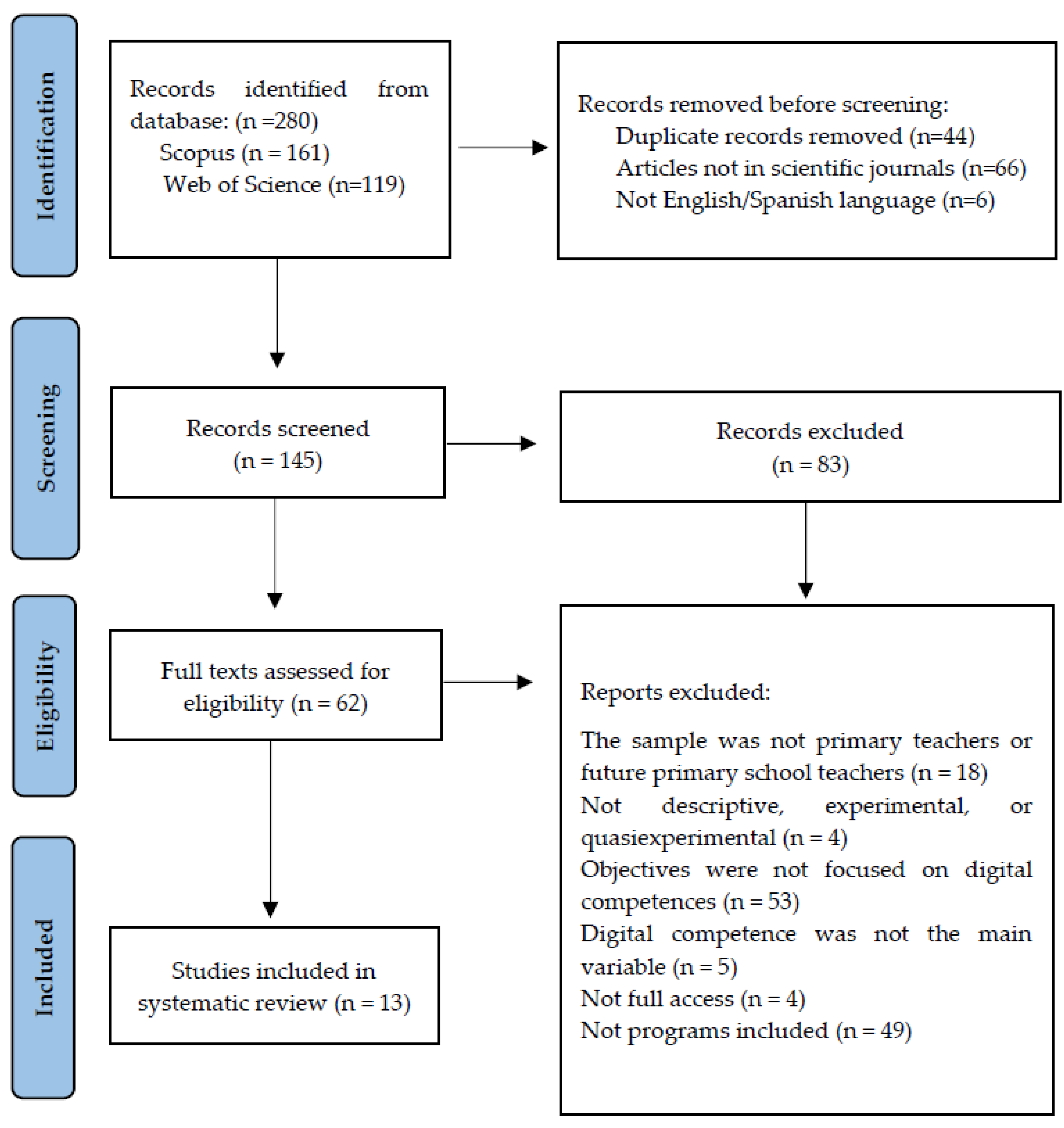
Regarding the search string mentioned before, a total of 280 articles were identified. They were imported to a Word file to identify duplicated studies. At first, the search was run by title, abstract, and keywords. Two researchers chose relevant articles, which resulted in 62 articles, independently. The following inclusion criteria were determined for the selection of the articles:
- Regarding the language, English and Spanish studies were accepted;
- Regarding the type of scientific production, articles published in scientific specialized journals were included;
- Regarding the type of research, experimental and quasi-experimental studies were accepted;
- Regarding the sample, articles whose sample was future primary school teachers were accepted. Most of them were students of the primary education degree;
- Regarding the objectives of the studies, articles whose objectives were related to digital competencies were accepted;
- Regarding access, we accepted articles which we can access to in a complete way;
- Regarding the results shown, articles that studied the digital competencies of teachers after an intervention program were accepted;
- Regarding the variables studied, articles that studied digital competencies were included.
Moreover, some exclusion criteria were adopted:
- Studies in languages other than English or Spanish were refused, even though their abstracts were in Spanish or English;
- Studies in gray literature were excluded;
- Descriptive and analytical studies were refused such as systematic reviews;
- Studies with students in primary school and teachers of other educational stages’ samples were refused;
- Studies which we could not access completely were refused;
- Articles where digital competence was measured without intervention programs were refused;
- Validation of questionnaires and analysis of the curricula of primary education degrees were refused.
Finally, the two researchers assessed the articles chosen for eligibility by reading the whole text. Applying the same criteria, 13 articles were included in our systematic review at the end. Figure 1 shows the selection process.
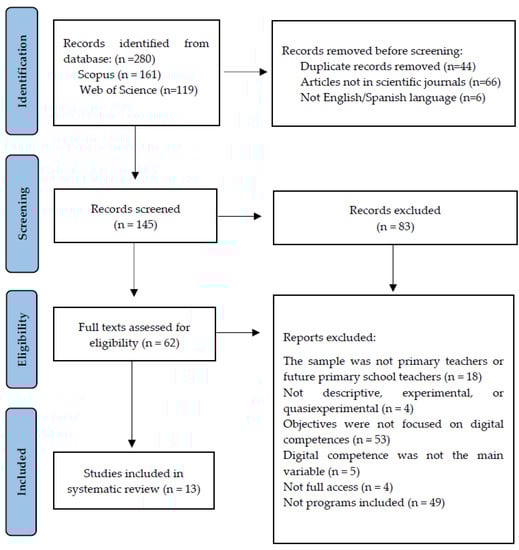
Figure 1.
Flow diagram of the articles during the selection process.
2.3. Data Collection Process
A total of 13 studies were analyzed in detail to collect data. Two researchers compiled data in a table independently, and then, a third researcher validated the data. The information compiled was the name of authors, publication date, objective(s), variable(s), instrument(s), sample, country, intervention description, and results.
3. Results
Firstly, we present the characteristics of the studies selected in Table 1.

Table 1.
Characteristics of the studies selected.
In response to the first research question: What is the distribution over time of studies selected that examine programs to support the development of digital competence?
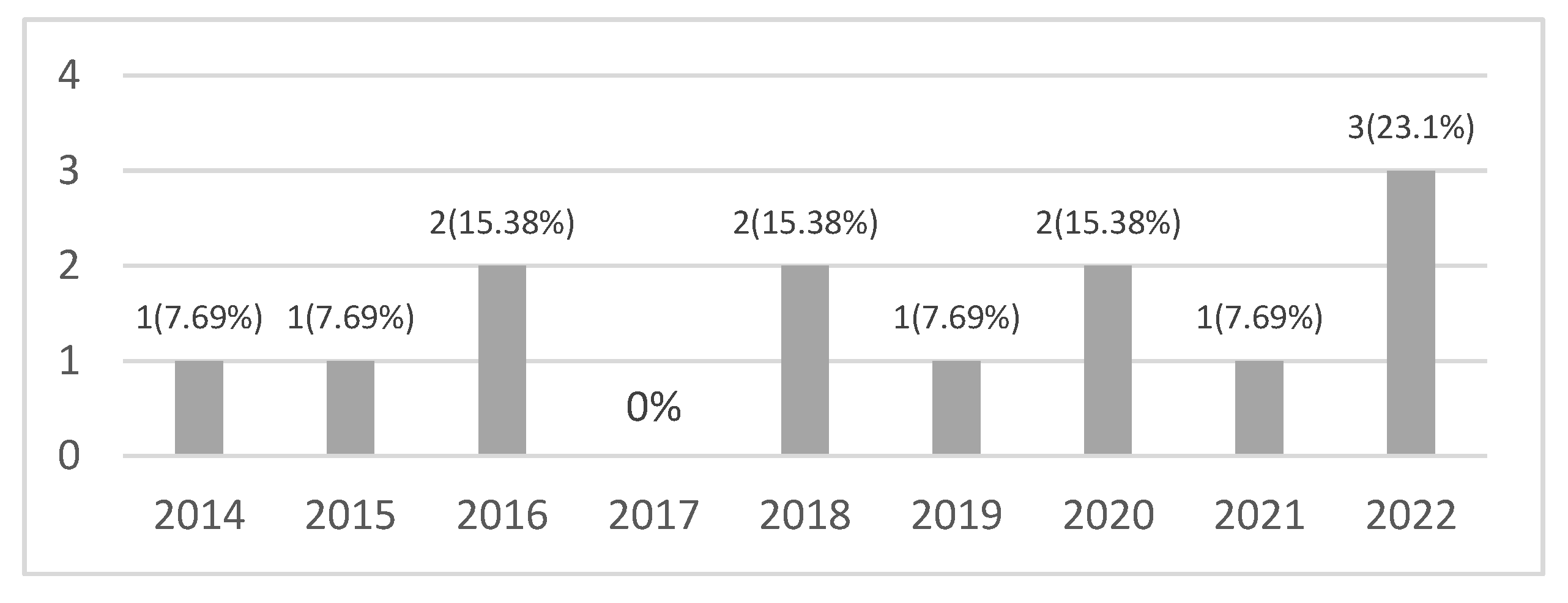
A total of thirteen articles were analyzed in detail, nine of which corresponded to the last five years, demonstrating the importance of digital competence in the teaching-learning process and the need for future teachers to develop it to face the emerging challenges of their profession. It is important to say that the research methodology did not impose a year’s restriction. In addition, since 2019, there were more studies on programs to improve the digital competence of teachers due to the need to successfully address the educational changes caused by the COVID-19 pandemic. Figure 2 shows the evolution of the number of articles published and selected.
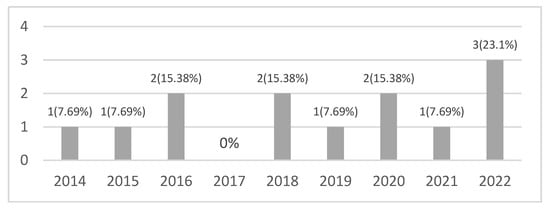
Figure 2.
The number of selected articles per year.
Answering the second research question: What type of program has been used in the articles selected?
We could not define a specific program because each article followed a different one. However, some similarities can be seen (see Table 2). For instance, refs. [62,67] used the TPACK model which includes technological, pedagogical, and content knowledge. Refs. [65,66] used the same training program between them too. Unfortunately, this last program was not described in the article. Lastly, we found some articles which used methodological strategies such as project-based learning [71,73], having a similar final task related to the creation of stories and service-learning.
Table 2.
Description of the intervention programs.
Regarding the third question: Does training improve digital competencies? Table 3 shows the impact of training on digital competencies.
Table 3.
Results about digital competencies.
The results of this study showed that further training in educational technology is required for the acquisition of key competencies by teachers [61]. Prior to the implementation of the programs, the students of primary education degrees had generic knowledge about ICT [62], and even they felt that there was a lack of knowledge about the use of ICT [64]. However, the students’ results after taking part in the programs showed an improvement in the mastery of digital competence [63,67,70,71,73], including the development of technological knowledge (TK), technological content knowledge (TCK), and technological pedagogical knowledge (TPK) [62]. Additionally, we observed progressive training of students in technological resources [67]. Moreover, they were aware that knowledge about educational technological tools was essential for their future teaching practice [64].
Martínez-Pérez et al. [61] affirmed that students acquired strategies for searching the Internet, strategies to safely protect sensitive content, and skills to create their own digital resources. These skills can be used in the teaching of history in primary education, or any other subject [62]. According to Ortega et al. [65], there were improvements in navigation, interaction, and digital identity management skills. They also learned to develop and create content and to use digital-editing programs, but between the pre-test and post-test, there were no significant differences in the management of websites or the creation of audio.
Finally, in response to the fourth research question: What other variables were studied?
The most studied variables in the analyzed articles, after digital competence, were linguistic competence [66,69,71,73] and creativity [61,69,71,73], in four of thirteen articles each. They were followed closely by problem-solving skills [65,66,72] and cooperative work [61,64,68]. The other variables studied can be seen in Table 4.
Table 4.
Variables studied apart from digital competence.
4. Discussion
This systematic review provided an analysis of the effects of programs aimed at improving the digital competence of future primary education teachers. Throughout this research, we found several types of programs that made use of active methodologies to develop and improve teachers’ digital competencies.
A result that we want to emphasize is the increase in the number of articles found since 2019 up to now. The main cause of this finding could be the role of the COVID-19 lockdown. In fact, the studies selected for this article showed that the development of digital competence in teaching was a growing need since the context of the COVID-19 pandemic. Moreover, forced digitalization was one of the most impacting modifications during the lockdown.
On the one hand, we can highlight how teachers and students acted in this situation and what problems they faced during the distance education in lockdown. Saifullah et al. [74] affirmed that the provision of support to both teachers and students was an essential decision for a successful transition from face-to-face to emergency distance learning. However, they had to cope with an increase in workload [75], low mood [76,77], or stress [78,79]. Moreover, motivation decreased, they had worse attitudes toward the online modality, and they were dissatisfied with the development of online lessons [80]. The reason for these feelings was COVID-19, which forced teachers and students to transition to an emergency educational system in a very short time, affecting their personal and pedagogical objectives [81].
On the other hand, although insufficient digital competence among future teachers existed before COVID-19, and it was limited to the manipulative use of ICT [82,83,84], the issue of educational innovation became urgent after the lockdown because of COVID-19. Nevertheless, the implementation of ICT in the educative system cannot be considered an innovation in itself, since innovation is not only educating teachers to use digital tools but also acquiring several competencies that allow them to strengthen learning [85]. In view of this, Cabero-Almenara and Palacios-Rodríguez [86] defended the need to rethink other ways of training for future teachers, so as to acquire competencies with which they have to face the current demands of society, such as the virtual teaching modality. In this sense, in order to train future teachers as digitally competent individuals, an extensive intervention program is important [87], as our results show. Training programs are a good option during education degrees, as the results of this systematic review endorse, but what is more important is permanent training [39]. All the articles found had the same sample: future teachers. What happened with teachers in service? They also have to learn how to use ICT properly.
In addition, Papanikolaou et al. [88] affirmed that the acquisition of digital competencies by teachers in training is essential to ensure the use of new technologies in their professional practice and to enrich the teaching–learning process. This statement confirms that we need training for educators in general, and for pre-service and in-service teachers.
In this sense, our results showed that the TPACK model had good results in the training of digital skills since they increased several knowledge that favored the development of teachers’ digital competencies [62,67]. These are in line with other authors who affirmed that the knowledge types and their integration increased when they used this model [89,90,91]. We can say that they will become “digital experts”. It is true that, nowadays, pre-service teachers use ICT in their daily life and are known as “digital natives”, which makes them have positive results in technological knowledge [92,93]; however, their pedagogical knowledge is not as advanced. Moreover, García- Valcárcel and Martín del Pozo [94] affirmed that the lack of content knowledge had a negative impact on the teaching–learning process and on the digital competence of future teachers. These are the reasons why the educational process must include proposals applied to specific didactic, technological, and content problems [95]. So, we propose to develop an integrated intervention program.
Furthermore, project-based learning and service learning were used in some of the articles selected [71,72,73] and obtained good results. On the one hand, in service learning (SL), students learn, and, at the same time, they transform the world around them [96]. Students develop social competencies while they are involved in their learning process [97]. On the other hand, project-based learning (PBL) fosters motivation for knowledge search and production [98]. Students must obtain a final product through several tasks they resolve [99]. Both strategies are increasing in popularity in the education system from preschool to university. Our results show that they improved the technological knowledge and digital skills of future teachers; furthermore, SL makes students face learning difficulties and overcome them and make students foster their own reliance [100] and PBL fosters critical thinking and creativity [101], and so, they are very important aspects for teachers in the technological environment.
5. Conclusions
The integration of new technologies in education depends mainly on the attitudes and aptitudes of teachers. Therefore, future teachers must be trained as digitally competent individuals in order to eliminate the barrier to digital tools in education. Teachers are a key element in technological transformation since their attitude towards educational technologies is a determining factor in responding to educational innovation and technological advances in today’s society. However, the level of digital skills is very low among teachers; they consider themselves to have some knowledge about ICT but they do not know how to use it properly. Even those who believe they have good digital skills showed difficulties in integrating ICT into their practical classes. This is due to the fact that most intervention programs aimed at teacher training in digital competence are usually limited to instrumental issues. The use of technology is then discussed in more classical aspects of the teacher profile, such as being an expert in technological content, but the implementation of innovative pedagogical practices that consolidate the use of ICT in the classroom is ignored.
Thus, digital literacy, as a process of acquiring competencies to understand and manage technologies, must be present in the university training of teachers. The main objective of this study was to analyze the effect of different programs on the development of the digital competence of teachers, with the purpose of determining whether or not they improve it. We only found articles where training programs were developed for future teachers, and so, we extend our offer to people who create intervention programs for educators to foster teachers who are working at schools at this moment undertaking a digital training course. There is no specific intervention program that everyone uses, each researcher carried out a different one and all of them produced good results. The TPACK model was one of the most used in the studies selected. It includes all the things that teachers have to know: technological, pedagogical, and content knowledge. This training strategy will make teachers use ICT in their educational practice effectively. Moreover, it could be included in every single intervention program as content to teach. Nevertheless, as mentioned before, all the studies showed an improvement in the digital skills of future teachers after an intervention program. Not only the generic knowledge about ICT but also the five areas of digital competence evaluated in some European and Spanish frameworks are fostered. Some studies showed improvements in the following specific areas: information and navigation, communication and collaboration, content creation, security, and problem-solving. They represent the digital competence that every citizen must obtain in the technological environment we live.
Finally, this systematic review could have important educational implications, especially after the situation experienced in the COVID-19 pandemic, in which technologies played a fundamental role and were the only possible way to respond to the teaching-learning process, based on distance education. Some programs exist and have good results, now it is time to identify the weak points and resolve them.
6. Limitations
A systematic review is a proven method in social science research. Moreover, we followed the PRISMA methodology, which is a great method in social science research because of its transparency and openness to suggestions and comments.
Nevertheless, some limitations can be found, like in any research method. This study focused only on articles published in scientific journals, without considering other research such as gray literature. This was due to the scientific rigor that specialized journals follow during the publication stage; for instance, the peer review. Language limitation is added. In addition, it is important to say that every single article selected was carried out in Spain, which could be another limitation, taking into account that these projects were developed in the same environment.
On the contrary, the strength of this review was that it brought together a collection of studies that showed the effectiveness of different training programs during the degree, studying digital competencies.
Author Contributions
All authors made a significant contribution to the work reported and have read and agreed to the published version of the manuscript.
Funding
This research received no external funding.
Institutional Review Board Statement
Not applicable.
Informed Consent Statement
Not applicable.
Data Availability Statement
Not applicable.
Acknowledgments
We would like to extend our gratitude to the Ministry of University (Spain) because of the University Teacher Training Program (FPU21/00004).
Conflicts of Interest
The authors declare no conflict of interest.
References
- Dele-Ajayi, O.; Dunsin, O.; Okoli, A. Teachers’ concerns about integrating information and communication technologies in the classrooms. PLoS ONE 2021, 16, e0249703. [Google Scholar] [CrossRef] [PubMed]
- Hamelink, C.J. New Information and Communication Technologies, Social Development and Cultural Change; United Nations Research Institute for Social Development: Palais des Nations, Switzerland, 1997. [Google Scholar]
- Witt, R.E.; Kebaetse, M.B.; Holmes, J.H.; Ryan, L.-Q.; Ketshogileng, D.; Antwi, C.; Kovarik, C.; Nkomazana, O. The role of tablets in accessing information throughout undergraduate medical education in Botswana. Int. J. Med. Inf. 2016, 88, 71–77. [Google Scholar] [CrossRef] [PubMed]
- Ravenscroft, A.; Warburton, S.; Hatzipanagos, S.; Conole, G. Designing and evaluating social media for learning: Shaping social networking into social learning? J. Comput. Assist. Learn. 2012, 28, 177–182. [Google Scholar] [CrossRef]
- Qian, M.; Clark, K.R. Game-based Learning and 21st century skills: A review of recent research. Comput. Hum. Behav. 2016, 63, 50–58. [Google Scholar] [CrossRef]
- Spiezia, V. Does computer use increase educational achievements? Student-level evidence from PISA. OECD J. Econ. Stud. 2010, 1, 1–22. [Google Scholar] [CrossRef]
- Comi, S.L.; Argentin, G.; Gui, M.; Origo, F.; Pagani, L. is it the way they use it? Teachers, ICT and student achievement. Econ. Educ. Rev. 2017, 56, 24–39. [Google Scholar] [CrossRef]
- Alderete, M.V.; Di Meglio, G.; Formichella, M.M. Access to ICT and educational performance: A relationship enhanced by their use? An analysis for Spain. Rev. Educ. 2017, 377, 54–81. [Google Scholar]
- Instituto Nacional de Estadística. Available online: https://www.ine.es/ss/Satellite?L=es_ES&c=INESeccion_C&cid=1259925529799&p=%5C&pagename=ProductosYServicios%2FPYSLayout¶m1=PYSDetalle¶m3=1259924822888 (accessed on 20 January 2023).
- Lorenzo, M.M.; Santos, M.A. Buscando la mejora de la escuela rural a través de los nuevos entornos educativos. Rev. Educ. 2004, 335, 215–228. [Google Scholar]
- Salemink, K.; Strijker, D.; Bosworth, G. Rural development in the digital age: A systematic literature review on unequal ICT availability, adoption, and use in rural areas. J. Rural. Stud. 2017, 54, 360–371. [Google Scholar] [CrossRef]
- Morales, N. ICT and pupils of rural areas: Between the digital gap and inclusive education. Bordón Rev. Pedagog. 2017, 69, 41–56. [Google Scholar]
- Toto, G.A.; Limone, P. From Resistance to Digital Technologies in the Context of the Reaction to Distance Learning in the School Context during COVID-19. Educ. Sci. 2021, 11, 163. [Google Scholar] [CrossRef]
- Abbas, Q.; Awan, S.H. Impact of organizational politics on employee performance in public sector organizations. Pak. Ad. Rev. 2017, 1, 18–31. [Google Scholar]
- Håkansson, M.L. School leaders’ practices for innovative use of digital technologies in schools. Br. J. Educ. Technol. 2019, 50, 1226–1240. [Google Scholar] [CrossRef]
- Schipper, T.M.; de Vries, S.; Goei, S.L.; van Veen, K. Promoting a professional school culture through lesson study? An examination of school culture, school conditions, and teacher self-efficacy. Prof. Dev. Educ. 2020, 46, 112–129. [Google Scholar] [CrossRef]
- Ozgenel, M. The role of charismatic leader in school culture. Eurasian J. Educ. Res. 2020, 20, 85–114. [Google Scholar] [CrossRef]
- Canals, L.; Al-Rawashdeh, A. Teacher training and teachers’ attitudes towards educational technology in the deployment of online English language courses in Jordan. Comput. Assist. Lang. Learn. 2019, 32, 639–664. [Google Scholar] [CrossRef]
- Hart, S.A.; Laher, S. Perceived usefulness and culture as predictors of teachers attitudes towards educational technology in South Africa. S. Afr. J. Educ. 2015, 35. [Google Scholar] [CrossRef]
- Yilmaz, O.; Bayraktar, D.M. Teachers’ attitudes towards the use of educational technologies and their individual innovativeness categories. Procedia Soc. Behav. Sci. 2014, 116, 3458–3461. [Google Scholar] [CrossRef]
- Bozkurt, A.; Sharma, R.C. Emergency remote teaching in a time of global crisis due to CoronaVirus pandemic. Asian J. Distance Educ. 2020, 15, 1–6. [Google Scholar]
- Carlson, D.L.; Petts, R.; Pepin, J.R. Changes in parents’ domestic labor during the COVID-19 pandemic. Sociol. Inq. 2021, 92, 1217–1244. [Google Scholar] [CrossRef] [PubMed]
- Dempsey, M.; Burke, J. COVID-19 Practice in Primary Schools in Ireland Report: A Two-Month Follow Up; Maynooth University: Kildare, Ireland, 2020. [Google Scholar]
- Creed, C.; Morpeth, R.L. Continuity education in emergency and conflict situations: The case for using open, distance and flexible learning. J. Learn. Dev. 2014, 1. [Google Scholar] [CrossRef]
- The Inter-Agency Network for Education in Emergencies. Minimum Standards for Education in Emergencies, Chronic Crises and Early Reconstruction; DS Print: London, UK, 2004. [Google Scholar]
- Francom, G.M.; Lee, S.J.; Pinkney, H. Technologies, Challenges and Needs of K-12 Teachers in the Transition to Distance Learning during the COVID-19 Pandemic. TechTrends 2021, 65, 589–601. [Google Scholar] [CrossRef] [PubMed]
- Mackey, J.; Gilmore, F.; Dabner, N. Blended learning for academic resilience in times of disaster or crisis. J. Online Teach. Learn. 2012, 8, 122–135. [Google Scholar]
- Tull, S.; Dabner, N.; Ayebi-Arthur, K. Social media and e-learning in response to seismic events: Resilient practices. J. Open Flex. Distance Learn. 2017, 21, 63–76. [Google Scholar]
- Huizenga, J.C.; Ten Dam, G.T.M.; Voogt, J.M.; Admiraal, W.F. Teacher perceptions of the value of game- based learning in secondary education. Comput. Educ. 2017, 110, 105–115. [Google Scholar] [CrossRef]
- Camargo, C.P.; Tempski, P.Z.; Busnardo, F.F.; Martins, M.; Gemperli, R. Online learning and COVID-19: A meta-synthesis analysis. Clinics 2020, 75, e2286. [Google Scholar] [CrossRef]
- Champeaux, H.; Mangiavacchi, L.; Marchetta, F.; Piccoli, L. Child development and distance learning in the age of COVID-19. Rev. Econ. Househ. 2022, 20, 659–685. [Google Scholar] [CrossRef] [PubMed]
- Ertmer, P.A.; Ottenbreit-Leftwich, A.T.; Sadik, O.; Sendurur, E.; Sendurur, P. Teacher beliefs and technology integration practices: A critical relationship. Comput. Educ. 2012, 59, 423–435. [Google Scholar] [CrossRef]
- Yusuf, M.O.; Balogun, M.R. Student-teachers’ competence and attitude towards Information and communication technology: A case study in a Nigerian University. Contemp. Educ. Technol. 2011, 2, 18–36. [Google Scholar] [CrossRef]
- Al-Takhayneh, S.K.; Karaki, W.; Hasan, R.A.; Chang, B.-L.; Shaikh, J.M.; Kanwal, W. Teachers’ psychological resistance to digital innovation in Jordanian entrepreneurship and business schools: Moderation of teachers’ psychology and attitude toward educational technologies. Front. Psychol. 2022, 13, 1–15. [Google Scholar] [CrossRef]
- Esteve, F.; Duch, J.; Gisbert, M. Digital learners in the scientific literature: Design and implementation of a systematic review between 2001 and 2010. Pixel-Bit. Rev. Medios Educ. 2014, 45, 9–21. [Google Scholar]
- Szymkowiak, A.; Melovic, B.; Dabic, M.; Jeganathan, K.; Kundi, G.S. Information technology and Gen Z: The role of teachers, the internet, and technology in the education of young people. Technol. Soc. 2021, 65, 101565. [Google Scholar] [CrossRef]
- Cabero, J.; Marín-Díaz, V.; Castaño, C. Validation of the application of the TPACK model for teacher training in ICT. Rev. D’innovació Educ. 2015, 14, 13–22. [Google Scholar]
- Cejas, R.; Navío, A.; Barroso, J.M. The competences of university teachers from the TPACK model (Technological and Pedagogical Content Knowledge). Pixel-Bit. Rev. Medios Educ. 2016, 49, 105–119. [Google Scholar]
- Pariente, J. Hacia una auténtica integración curricular de las tecnologías de la Información y la comunicación. Rev. Iberoam. Educ. 2005, 36, 4. [Google Scholar] [CrossRef]
- Llamas-Salguero, F.; Macías, E. Initial training of teachers in basic education for the generation of knowledge with Information and Communication Technologies. Rev. Complut. Educ. 2016, 29, 577–593. [Google Scholar] [CrossRef]
- Gabarda, V.; García, E.; Ferrando, M.L.; Chiappe, A. El profesorado de Educación Infantil y Primaria: Formación tecnológica y competencia digital. Innoeduca Int. J. Technol. Educ. Innov. 2021, 7, 19–31. [Google Scholar] [CrossRef]
- Llopis, M.Á.; Santágueda, M.; Esteve, F.M. Competencia digital, actitudes y expectativas hacia las tecnologías digitales. Perfil de los futuros maestros de primaria. RIITE Rev. Interuniv. Investig. Tecnol. Educ. 2021, 11, 114–130. [Google Scholar] [CrossRef]
- Castiñeira, N.; Lorenzo-Rial, M.A.; Pérez, U. Competencia digital docente para crear contenidos: Autopercepción del profesorado en formación didáctico-científica de Galicia (España). Educ. Pesqui. 2022, 48, e243510. [Google Scholar]
- Domingo-Coscollola, M.; Bosco, A.; Carrasco, S.; Sánchez, J.A. Fomentando la competencia digital docente en la universidad: Percepción de estudiantes docentes. Rev. Investig. Educ. 2020, 38, 167–782. [Google Scholar] [CrossRef]
- Rodríguez-García, A.M.; Moreno, A.J.; Peñalva, A.; Marín, J.A.Y. La competencia digital del profesorado: ¿un reto para la excelencia docente. In Innovación y Tecnología en Contextos Educativos; Sánchez, E., Ruiz, J., Sánchez, E., Eds.; UMA Editorial: Málaga, Spain, 2019; pp. 123–130. [Google Scholar]
- Fernández-Sánchez, R.M.; Silva-Quiroz, J. Evaluación de la competencia digital de futuros docentes desde una perspectiva de género. RIED Rev. Iberoam. Educ. Distancia 2022, 25, 327–342. [Google Scholar] [CrossRef]
- Marimon, M.; Romeu, T.; Ojando, E.S.; Esteve, V. Competencia Digital Docente: Autopercepción en estudiantes de educación. Pixel-Bit. Rev. Medios Educ. 2022, 65, 275–303. [Google Scholar]
- Rodríguez-García, A.-M.; Cardoso-Pulido, M.-J.; De la Cruz-Campos, J.-C.; Martínez-Heredia, N. Communicating and Collaborating with Others through Digital Competence: A Self-Perception Study Based on Teacher Trainees’ Gender. Educ. Sci. 2022, 12, 534. [Google Scholar] [CrossRef]
- Moreno, M.D.; Gabarda, V.; Rodríguez, A. Alfabetización informacional y competencia digital en estudiantes de magisterio. Profr. Rev. Currículum Form. Profr. 2018, 22, 253–270. [Google Scholar]
- Pozo, S.; López, J.; Fernández, M.; López, J.A. Análisis correlacional de los factores incidentes en el nivel de competencia digital del profesorado. Rev. Electrónica Interuniv. Form. Profr. 2020, 23, 143–159. [Google Scholar]
- Girón-Escudero, V.; Cózar-Gutiérrez, R.; González-Calero, J.A. Análisis de la autopercepción sobre el nivel de competencia digital docente en la formación inicial del maestro/a. Rev. Electrónica Interuniv. Form. Profr. 2019, 22, 193–218. [Google Scholar]
- Tadeu, P. La competencia científico-tecnológica en la formación del futuro docente: Algunos aspectos de la autopercepción en respeto a la integración de las TIC en el aula. Educ. Siglo XXI 2020, 38, 37–54. [Google Scholar] [CrossRef]
- Fernández, M.C.; López, B.C.; Carballo, J.S.; Martínez-Santos, A.E.; Otero, L.C. Competencias y actitudes para el uso de las TIC de los estudiantes del grado de maestro de Galicia. Publicaciones 2020, 50, 103–120. [Google Scholar] [CrossRef]
- Crompton, H. ISTE Standards for Educators: A Guide for Teachers and Other Professionals; International Society for Technology in Education: Washington, DC, USA, 2017. [Google Scholar]
- Butcher, N. Marco de Competencias Docentes en Materia de TIC; UNESCO: Paris, France, 2019. [Google Scholar]
- Redecker, C.; Punie, Y. Digital Competence of Educators DigCompEdu; Publications Office of the European Union: Luxembourg, 2017. [Google Scholar]
- Comisión Europea. Recomendación 2006/962/CE del Parlamento Europeo y del Consejo, de 18 de Diciembre de 2006, Sobre las Competencias Clave para el Aprendizaje Permanente. Diario Oficial de la Unión Europea de 30 de Diciembre de 2006. Available online: https://eurlex.europa.eu/legal-content/ES/TXT/?uri=celex%3A32006H0962 (accessed on 14 April 2023).
- Consejo Europeo. Recomendación 2018/C 189/01 del Consejo de 22 de Mayo de Relativa a las Competencias Clave para el Aprendizaje Permanente. Diario Oficial de la Unión Europea de 4 de Junio de 2018. Available online: https://eur-lex.europa.eu/legalcontent/ES/TXT/PDF/?uri=CELEX:32018H0604 (accessed on 14 April 2023).
- Page, M.J.; McKenzie, J.E.; Bossuyt, P.M.; Boutron, I.; Hoffmann, T.C.; Mulrow, C.D.; Shamseer, L.; Tetzlaff, J.M.; Akl, E.A.; Brennan, S.E.; et al. The PRISMA 2020 Statement: An Updated Guideline for Reporting Systematic Reviews. BMJ 2021, 88, 105906. [Google Scholar]
- Wong, S.S.-L.; Wilczynski, N.L.; Haynes, R.B. Developing Optimal Search Strategies for Detecting Clinically Sound Treatment 419 Studies in EMBASE. J. Med. Libr. Assoc. 2006, 94, 41–47. [Google Scholar]
- Martínez-Pérez, S.; Cabero-Almenara, J.; Barroso-Osuna, J.; Palacios-Rodríguez, A. T-MOOC for Initial Teacher Training in Digital Competences: Technology and Educational Innovation. Front. Educ. 2022, 7, 846998. [Google Scholar] [CrossRef]
- Ciriza-Mendívil, C.D.; Lacambra, A.M.; Hernández, J.M. Technological Pedagogical Content Knowledge: Implementation of a Didactic Proposal for Preservice History Teachers. Front. Educ. 2022, 7, 852801. [Google Scholar] [CrossRef]
- Gómez-Gómez, M.; Hijón-Neira, R.; Santacruz-Valencia, L.; Pérez, D. Impact of the Emergency Remote Teaching and Learning Process on Digital Competence and Mood in Teacher Training. EKS 2022, 23, e27037. [Google Scholar]
- Domínguez-Lloria, S.; Fernández-Aguayo, S.; Marín-Marín, J.A.; Alvariñas-Villaverde, M. Effectiveness of a Collaborative Platform for the Mastery of Competencies in the Distance Learning Modaluty during COVID-19. Sustainability 2021, 13, 5854. [Google Scholar] [CrossRef]
- Ortega, J.A.; Rendón, L.M.; Fuentes, J.A.; Ortega, A. Effectiveness of a program of training in digital competences conducted with Primary Education Degree students on the affective e-learning+ model. Educ. Siglo XXI 2020, 38, 81–104. [Google Scholar]
- Pérez, A.; Hernández-Sánchez, A.M. Effects on the affective e-Learning program on the development of Digital Competence in Primary Education Degree students. Educ. Siglo XXI 2020, 38, 129–150. [Google Scholar] [CrossRef]
- Gómez-Trigueros, I.M. The geospace competences with the TPACK model and Outodoor Educationautor. Eur. J. Geogr. 2019, 10, 33–45. [Google Scholar]
- Sáez-López, J.M.; Feliz-Murias, T.; Holgueras-González, A.I. Interactive Videoconferencing in Educational Settings: A Case in Primary Education. Int. J. Web-Based Learn. Teach. Technol. 2018, 13, 80–93. [Google Scholar] [CrossRef]
- Huertas, C.A. Creation of 3D Animation Videos through Cooperative Learning in the EFL Classroom: Educational Innovation for Primary Education Teacher Training. Guiniguada 2018, 27, 13–21. [Google Scholar]
- Gallego-Lema, V.; Muñoz-Cristóbal, J.A.; Arribas-Cubero, H.F.; Rubia-Avi, B. Ubiquitous learning: A learning process in Physical Education in the Natural Environment. Rev. Latinoam. Tecnol. Educ. Relatec 2016, 15, 60–73. [Google Scholar]
- Del Moral, M.E.; Villalustre, L.; Neira, M.R. Digital Storytelling: Activating Communicative, Narrative and Digital Competences in Initial Teacher Training. Rev. Estud. Sobre Lect. 2016, 15, 22–41. [Google Scholar]
- Ortega-Tudela, J.M.; Cámara-Estrella, A.M.; Diaz-Pareja, E.M. Service learning as a tool to enhance future teachers’ media competence. Cult. Educ. 2015, 27, 440–455. [Google Scholar] [CrossRef]
- Villalustre, L.; del Moral, M.E. Digital storytelling: A new strategy for storytelling and acquired competencies by future teachers. Rev. Complut Educ 2014, 25, 115–132. [Google Scholar]
- Saifullah, M.; Sharmeen, N.; Zaima, A. Effectiveness of online education during the during COVID-19 pandemic: A study of Banlgadesh. Int. J. Inf. Learn. Technol. 2022, 39, 405–422. [Google Scholar] [CrossRef]
- Okeyre, E.; Salusalu, M.; Goundar, R.; Marfoh, K. Online teaching during COVID-19 pandemic in Fiji: Challenges, facilitators and improvement strategies. Qual. Res. J. 2022, 23, 62–82. [Google Scholar] [CrossRef]
- Delgado, S. Effects of the pandemic on the development of university educational practice. Panorama 2021, 16. [Google Scholar]
- Mahmood, Z.; Saleem, S.; Jabeen, A. Pshychosocial reactions of Pakistani Students towards COVID-19: A prevalence study. Pak. J. Med. Sci. 2021, 37, 456–460. [Google Scholar] [CrossRef]
- Estrada, I.C.; Zavala, A.M.; Torres, M. Technological implications in distance education during the pandemic in university students. Interciencia 2022, 47, 439–446. [Google Scholar]
- Rojas-Solís, J.L.; Fragoso-Luziriaga, R. Academic Stress, Procrastination, and Internet Uses among College Students during the COVID-19 Pandemic. Rev. Cienc. Salud 2022, 20, 519–529. [Google Scholar]
- Ricardo, C.; Vieira, C. Higher Education Instructors’ Beliefs and Conceptions about Remote Education during COVID-19. Rev. Iberoam. Educ. Distancia 2023, 26, 17–37. [Google Scholar]
- Yang, G.; Chun, F.; Chuang, W. Teacher Ahency in Adapting to Online Teaching during COVID-19: A Case Study on Teachers of Chinese as an Additional Language in Macau. J. Technol. Chin. Lang. Teach. 2021, 12, 82–101. [Google Scholar]
- Roblizo, M.J.; Cozar, R. Usos y competencias TIC en los futuros maestros de Educación Infantil y Primaria: Hacia una alfabetización tecnológica real para docentes. Pixel-Bit. Rev. Medios Educ. 2015, 47, 23–39. [Google Scholar]
- Roig-Villa, R.; Mengual, S.; Sterratinio, C.; Quinto, P. Actitudes hacia los recursos tecnológicos en el aula de los futuros docentes. @tic. Revista d’innovació educativa. 2015, 15, 12–19. [Google Scholar]
- Gomez-Trigueros, I.M. New Learning of geography with technology: The TPACK model. Eur. J. Geogr. 2018, 9, 38–48. [Google Scholar]
- Calderón, C.A.; Hinojosa, M.L.; Veli, D.D.; Castillo, M.N. Educational Innovation and the COVID-19 Pandemic: Challenges in the New Normal. Eurasian J. Educ. Res. 2022, 39, 519–529. [Google Scholar]
- Cabero-Almenara, J.; Palacios-Rodríguez, A. The evaluation of virtual education: E-activities. RIED 2021, 24, 169–188. [Google Scholar] [CrossRef]
- Beltrán, M.; Ramírez-Montoya, M.S. Innovation in the instructional design of massive open courses (MOOCs) to develop entrepreneurial competences in energy sustainability. Educ. Knowl. Soc. 2019, 20, 75–96. [Google Scholar]
- Papanikolaou, K.; Makri, K.; Roussos, P. Learning design as a vehicle for the development of TPACK in blended learning teacher training on technology-enhaced learning. Int. J. Educ. Technol. High. Educ. 2017, 14, 34. [Google Scholar] [CrossRef]
- Redmond, P.; Peled, Y. Exploring TPACK among pre-service teachers in Australia and Israel. Br. J. Educ. Technol. 2018, 50, 2040–2054. [Google Scholar] [CrossRef]
- Ladrón, L.; Cabero, J.; Almagro, B. El conocimiento tecnológico, pedagógico y disciplinar del profesorado de educación física. Retos 2019, 36, 362–369. [Google Scholar] [CrossRef]
- Jiménez, M.J.; Cabero, J. The technological, pedagogical and content knowledge of Andalusian university teachers about ICT. Analysis from the TPACK model. Innoeduca 2021, 7, 4–18. [Google Scholar]
- Miguel-Revilla, D.; Martínez-Ferreira, J.M.; Sánchez-Agustí, M. Assessing the digital competence of educators in social studies: An analysis in initial teacher training using the TPACK-21 model. Australas. J. Educ. Technol. 2020, 36, 1–12. [Google Scholar] [CrossRef]
- Romero, R.; Llorente, C.; Palacios, A. Competencias digitales docentes desarrolladas por el alumnado del grado en educación infantil: Presencialidad vs. virtualidad. Edutec. Rev. Electrón. Tecnol. Educ. 2021, 76, 109–125. [Google Scholar] [CrossRef]
- García-Valcárcel, A.; Martín del Pozo, M. Analysis of the digital competences of graduates of university degrees to be a teacher. Rev. Latinoam. Tecnol. Educ. 2016, 15, 155–168. [Google Scholar]
- Mishra, P. Considering contextual knowledge: The TPACK diagram gets an upgrade. J. Digt. Learn. Teach. Edu. 2019, 35, 76–78. [Google Scholar] [CrossRef]
- Puig, J.M.; Palos, J. Rasgos pedagógicos del Aprendizaje-Servicio. Cuad. Pedagog. 2006, 357, 60–63. [Google Scholar]
- Middaugh, E.; Kahne, J. Nuevos medios como herramienta para el aprendizaje servicio. Comunicar 2013, 20, 99–108. [Google Scholar] [CrossRef]
- Maldonado, M. Aprendizaje basado en proyectos colaborativos. Una experiencia en educación superior. Rev. Educ. 2008, 14, 158–180. [Google Scholar]
- García-Varcálcel, A.; Basilotta, V. Aprendizaje basado en proyectos (ABP): Evaluación desde la perspectiva de alumnos de educación primaria. Rev. Investig. Educ. 2017, 1, 113–131. [Google Scholar]
- García, A.; Mínguez, R. Los límites de la educación en valores cívicos: Cuestiones y propuestas pedagógicas. Educ. XXI 2011, 14, 263–285. [Google Scholar]
- Toledo, P.; Sánchez, J.M. Aprendizaje basado en proyectos: Una experiencia universitaria. Rev. Currículum Form. Profr. 2018, 22, 471–491. [Google Scholar]
Disclaimer/Publisher’s Note: The statements, opinions and data contained in all publications are solely those of the individual author(s) and contributor(s) and not of MDPI and/or the editor(s). MDPI and/or the editor(s) disclaim responsibility for any injury to people or property resulting from any ideas, methods, instructions or products referred to in the content. |
© 2023 by the authors. Licensee MDPI, Basel, Switzerland. This article is an open access article distributed under the terms and conditions of the Creative Commons Attribution (CC BY) license (https://creativecommons.org/licenses/by/4.0/).