


Abstract
This commentary addresses a problem of practice related to student disengagement in technology-rich classrooms, where learners are digitally connected but socially and academically disconnected. Although not an empirical study, the commentary draws on instructional examples from secondary- and graduate-level teaching. The authors examine how digital literacy instruction can strengthen engagement, reading comprehension, and ethical participation in online environments. The article highlights strategies such as the workshop model, multimodal composition, digital content curation, and the use of mentor texts to support critical thinking and collaborative learning. These practices aim to develop students’ analytical skills, awareness of audience, and recognition of their own positionality in digital spaces. Across courses, the authors reflected on increased student engagement when digital tools were used not simply for task completion but to support inquiry, discourse, and authentic creation for real audiences.
1. Introduction
The following scenario from Mrs. Goodwin’s (pseudonym) class exemplifies, to borrow from Charles Dickens, the best and worst of times. Her high school seniors were high-achieving and motivated. They conscientiously completed assignments, stayed on task, wrote competent essays, rarely scored below a B on assessments, and were seldom absent. Although seated in groups of four, Mrs. Goodwin found it disconcerting that every student was focused on a device or computer screen rather than interacting with the person next to or across from them. They were connected, but not with one another, and this distance ran counter to the classroom community she sought to create. They were also immersed, but not in a way that reflected one of the key conditions for learning, active engagement, as described by Crouch and Cambourne (2018) in Teaching Decisions That Bring the Conditions of Learning to Life. Although she believed technology could serve as a bridge to support learning and collaboration, she wondered: was it now a barrier to a spontaneous and interactive classroom for these students?
Mrs. Goodwin’s students were digital natives: individuals who had only known a technology-rich world (Adjin-Tettey, 2020; Cooper & Frey, 2021). Throughout the school year, they had demonstrated growing prowess when using digital texts and navigating sources effectively, particularly when citing evidence to support key ideas. Still, as a reflective practitioner who aimed to design learning experiences grounded in her students’ needs and interests, Mrs. Goodwin felt she was falling short in showing students what building knowledge together could look like. While her students were adept at using digital tools, they did not appear to be developing new social practices and dispositions that promoted a cross-pollination of ideas—a vision articulated more than 15 years ago by the International Reading Association (2009) in its position statement on New Literacies and 21st-Century Technologies. How could she effectively introduce and sustain student-led inquiry, intellectual engagement, and thoughtful curation of resources that promoted peer interaction, discourse, and authentic evaluation?
This scenario captures the daily reality of many educators. Our efforts to navigate digital environments in ways that authentically engage students and advance learning have been an ongoing problem of practice. Together, our goal was to create more dynamic learning communities, whether in secondary classrooms or teacher preparation programs, where learners interact meaningfully and extend familiar practices from everyday contexts to academic ones. In doing so, we aim to strengthen reading comprehension across multimodal texts, promote sustained inquiry, and celebrate the possibilities of connected learning.
2. Language Comprehension and Digital Literacies: An Evolution
More than 25 years ago, Gee (1999) cautioned that defining language solely as a way to communicate information was overly reductionist, as it overlooked its role in shaping identity and forming social affiliations. Yet even today, the way we teach reading comprehension often remains corralled by what we can easily measure. The most straightforward assessments emphasize how well students can summarize and synthesize key ideas and details. In our own classrooms, while students made inferences and connections, we found instructional practices often remained rooted in a “5 W’s and H” approach, regardless of the text’s modality, sophistication, or complexity. The limitation, it seemed, was not in student responses but in our instructional approach. Even with reasonable success in adopting new technologies and adapting instruction, refining digital literacies instruction demanded greater innovation (Castek & Gwinn, 2020). With that in mind, we shifted to exploring how the diversity of texts created, collected, and shared online could support deeper engagement with identity, affiliation, and discourse.
“Digital literacy” is a broad term used to describe the effective and responsible use of digital texts and tools. The concept emerged in the 1990s alongside the increasing presence of personal computers in classrooms. Early definitions emphasized basic technological proficiency, such as operating software programs (Gilster, 1997). As internet use became mainstream, definitions expanded to include online safety, responsible online behavior (“netiquette”), and source evaluation skills (Lucaser & Acedera, 2025; Shea, 1994). More recently, the rise of generative artificial intelligence (AI), particularly following the release of ChatGPT 3.5 in 2022, has prompted further expansion of the term to include critical evaluation and responsible use of AI tools (Chen, 2023). Collectively, these evolving competencies—accessing information, navigating changing technologies, and communicating across digital platforms—are often referred to as the “new literacies,” which extend, rather than replace, traditional reading and writing instruction (Chen, 2023; International Reading Association, 2009).
Despite the growing importance of digital literacy, efforts to standardize its instruction remain uneven across school districts and regions. For instance, public schools fortunate to have access to up-to-date technological resources are better positioned to equip students with the skills needed for postsecondary education or the workforce (Banerjee, 2020). In contrast, under-resourced schools often rely on outdated hardware and software to meet daily instructional needs (Adjin-Tettey, 2020; Banerjee, 2020). To address these disparities, professional associations and international organizations have introduced frameworks to guide more cohesive digital literacy instruction. One such example is the European Union’s Digital Competence Framework for Citizens (DigComp) 2.2, which outlines 21 competencies across five key areas: (1) information and data literacy, (2) communication and collaboration, (3) digital content creation, (4) safety, and (5) problem solving (Vuorikari et al., 2022). Grounded in current research, frameworks like DigComp 2.2 offer a foundation for educators seeking to integrate digital literacy into their teaching.
3. Instructional Context
Cognizant of the evolving nature of digital literacies and aiming for greater coherence between subject matter learning and technology use, we have continually refined how we integrate digital literacy skills into our classrooms, both individually and collaboratively. In reviewing our instructional practices, we noticed consistent themes and strategies across different courses and levels. For this commentary, we focus on selected course experiences where these overlapping approaches are most evident.
3.1. New Literacies
New Literacies is an undergraduate course designed to help preservice educators develop fluency in using digital texts and tools for learning and communication. Joseph taught this course as a dual enrollment offering for high school juniors and seniors intending to pursue postsecondary studies in education. The course met every other day for 74 min over one semester and was organized around four instructional units: (1) The “New” Literacies, (2) Communicating for Impact, (3) Technology and Society, and (4) Multimodal Communication.
Unit 1 introduces students to the concept of digital literacy and its relevance in contemporary education, using frameworks such as DigComp 2.2 to guide their understanding. Unit 2 emphasizes effective communication in both spoken and multimedia formats. Unit 3 explores current technological issues and innovations, including the societal impact of artificial intelligence. Unit 4 focuses on multimodal communication and content curation, culminating in student-designed projects on self-selected topics. Although not a methods course, previous students have noted its relevance to their future career goals. For instance, one student reflected, “In my professional work, I aspire to be a history teacher at the high school level. All of these skills that I’ve learned in this class will help me provide a more informational and diverse way of teaching in the future.” Another student, who did not plan to pursue a career in education, commented that he learned how to “make good decisions on websites to use, communicate professionally, collaborate on digital platforms, build creative skills, and use time management.”
3.2. Content Area Reading and Language Arts in Middle and Secondary Schools
This graduate course, offered in hybrid (in-person and asynchronous) or blended online (synchronous and asynchronous) formats, is designed for certified teachers pursuing certification as reading specialists and consultants. Organized into five units, the course surveys (1) how literacy achievement manifests across diverse groups of readers and writers, (2) disciplinary literacy and expanded definition of text, (3) learner collaboration, (4) effective use of technology for teaching and learning, and (5) universal design principles in lesson planning.
Unit 1 addresses reader identity and introduces “new” modeling approaches that emphasize learner engagement, versus compliance, when teaching for vocabulary (including advanced strategies for word learning and generalization), comprehension, and text response. Unit 2 explores the unique contribution of each content area in accelerating broad literacy and specialized subject learning through embedded texts and instructional practices. Units 3 and 4 emphasize the social construction of knowledge, as students share and critique work and research within professional learning communities. Unit 5 bridges traditional lesson planning with inquiry-based “content curation” by merging literacy outcomes, personal goals, and interests with text study. One candidate described the class as “one of the most helpful…in the program with a perfect balance of theory and readings with application,” enabling her to implement strategies in her own classroom immediately.
3.3. Examining Content, Culture, and Current Events Through Children’s and Young Adult Literature
This asynchronous online graduate course is designed for in-service and preservice teachers. It explores how nonfiction and narrative represent a “tradition of thought” within content area study, cultural exploration, and the analysis of current events. Ultimately, the course invites students to examine how influence is created, perpetuated, and managed through the multimodal texts we read with children and adolescents and, we might argue, for ourselves.
The course is structured across four units. Unit 1 introduces IDEEL—an acronym for Identity, Development, Efficacy, Engagement, and Learning—as a lens for analyzing texts across content areas, cultures, and current events. The remaining three units guide students in reading and analyzing curated selections of children’s and young adult literature, grouped by recommended, but not required, titles for different age and grade levels in each of the above areas. These texts are paired with research articles focused on literacy in content areas, culture representation (and misrepresentation), and the nature of current events, both as they unfold and as they are reported. Students reported that the class supported their efforts to collaborate with other teachers through the use of shared texts and engaging lesson plans, with one commenting how much she “really appreciated…the new texts and literacies.”
4. Shared Instructional Methods
4.1. Workshop Model
The workshop model, commonly used in English Language Arts classrooms, positions students, not just teachers, as active participants in reading, writing, and discussion. We have applied this structure across our courses to strike a balance between teacher-directed instruction and student-centered learning (Marangell, 2023; Randall & Marangell, 2020). A typical lesson begins with a whole-class check-in and a brief mini-lesson or interactive presentation focused on a specific skill or topic. The majority of the session is then dedicated to student work time, where learners apply what they have learned individually or collaboratively. During this time, the instructor confers with students one-on-one or in small groups, offering guidance and modeling as needed. Sessions typically conclude with a return to whole-group or small-group sharing, where students celebrate accomplishments and reflect on their learning. This shift—from collective launch, to independent or small-group work, and back to shared reflection—creates a cohesive classroom culture and enables students to learn from one another’s processes and products.
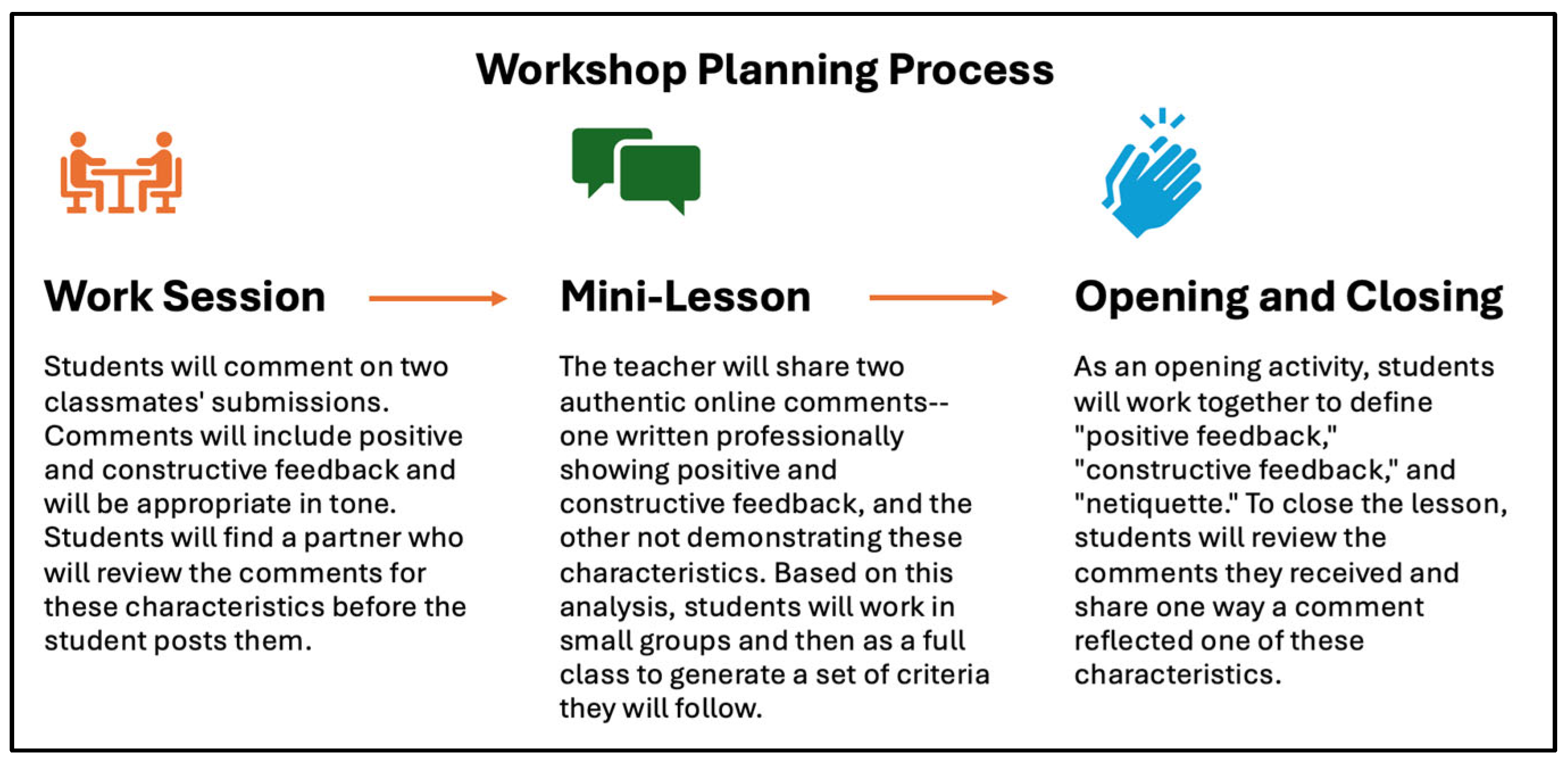
The workshop model emphasizes practices that educators often associate with “good teaching,” such as scaffolded lesson structures and supporting students’ intellectual engagement. In our experience, however, its value also lies in addressing digital disengagement. When planning a workshop-style lesson, the instructor begins by focusing on the work time activity, rather than on the direct instruction they will deliver (Tovani, 2011). For example, imagine a classroom where students are expected to read one another’s digital work and provide feedback using an online tool. A traditional planning approach might begin with an introductory overview before releasing students to complete the task. In contrast, the workshop model prompts the teacher to first anticipate what students will be doing and saying during work time. The mini-lesson is then crafted to support students in that specific task. Finally, the teacher considers how to begin and end the session in ways that engage learners and help them synthesize their understanding. Figure 1 illustrates a sample planning process based on this model.
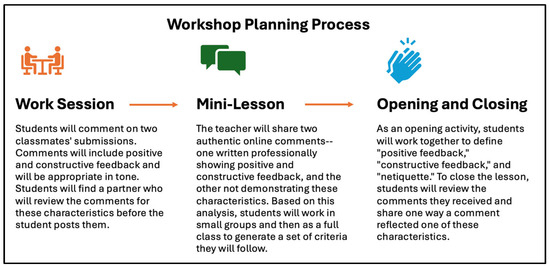
Figure 1.
Sample Workshop Model Planning Process.
A workshop format is also adaptable to online courses. For example, in synchronous settings, we begin with a whole-group session before using breakout rooms for small-group or individual conferences, followed by a closing reflection. In asynchronous courses, new concepts or skills are introduced through prerecorded videos, and students are encouraged to attend live “focus sessions” for follow-up support. Students also participate in collaborative meaning-making by generating co-authored responses to texts using tools like Teams or Google Apps. In many cases, we adapt traditional instructional strategies for virtual purposes. For instance, a “text impressions” activity is a traditional strategy that requires students to consider keywords or phrases from a text and then return to them post-reading to generate a summary (Fisher et al., 2012). In our revised iteration, students collect key terms or ideas on a shared document and then collaboratively revise the document to reflect their developing understandings. These processes and products are shaped by students’ identities, experiences, and engagement online (McDaniel, 2024), and often culminate in public reflections posted to shared forums.
4.2. Balance of Traditional and Technology Fluency
Although many teachers do not see themselves as fully digital natives, the assumption that their students are may not bear out if online reading comprehension is part of the definition of what makes a native (Coiro, 2011). This reality has implications for both teacher preparation and professional development. Increasingly, schools and universities are moving away from traditional print materials in favor of digital access through online platforms, Chromebooks, and e-readers. Yet, ready and quick access to digital tools does not guarantee students’ understanding, a phenomenon reported by Dillon (1992) and then echoed by Dyson and Haselgrove (2000) in their 2000 study on reading speed and patterns when reading from screens.
In his blog, “Is Comprehension Better with Digital Text?,” Shanahan (2024) referenced multiple studies showing diminished comprehension in digital formats. However, like Shanahan, we are not arguing for a return to the days of hard copies. Instead, we advocate for increased awareness among teachers and students about how reading digital texts requires distinct strategies for self-monitoring and critical literacy.
As the delivery of instructional materials shifts, so too must instructional methods, particularly in relation to Information and Communications Technology (ICT), including AI. Our courses emphasize building learners’ technology fluency with the understanding that technology should serve as a tool to enhance, not replace, traditional literacy practices. Maryanne Wolf’s (2018) Reader, Come Home introduced the concept of the biliterate brain—the idea that readers engage differently with print and digital texts. While print reading typically occurs more slowly and deeply, digital reading opens opportunities for exploration, interactivity, and collaboration. Our goal is for students to become skilled, flexible readers in both modalities.
When thinking of the biliterate brain, a “Seal of Biliteracy” provides helpful context. While all states now offer the “Seal of Biliteracy” to high school students who graduate with the ability to read and write fluently in a language other than English, it was first introduced in California about 15 years ago. The Seal indicates proficiency beyond speech or basic interpersonal communications skills (BICS), and fluency with text is the deciding characteristic of biliteracy. When evaluated, reading fluency is measured through accuracy, rate, and prosody. Developing readers work toward automaticity (fast, accurate, and effortless reading) and gain prosody (the expression, rhythm, and intonation that characterize how something is read) over time and with practice. Yet, automaticity is insufficient for comprehension because prosody is associated with meaning-making (Shanahan, 2023). Automaticity is fast, and skimming is fast. As Maryanne Wolf (2018) observed, “skimming” is more typical of digital reading, and students who are reading primarily on digital devices may not recognize how modality impacts comprehension. So, even though many students have reached a level of automaticity with their use of digital devices and ability to navigate online environments, it is unclear how much, if any, prosody is inherent to their reading of online texts. Ultimately, weak or “shallow” understanding of screen materials results in a kind of dysfluency in students’ ability to understand and reflect upon screen content (Carr, 2010; Delgado et al., 2018). If our goal is to help create a truly biliterate brain, it seems that we need to disrupt “automaticity”—not in how students access and operate within and across digital content, but in the analysis and interpretation of content they cite in their work.
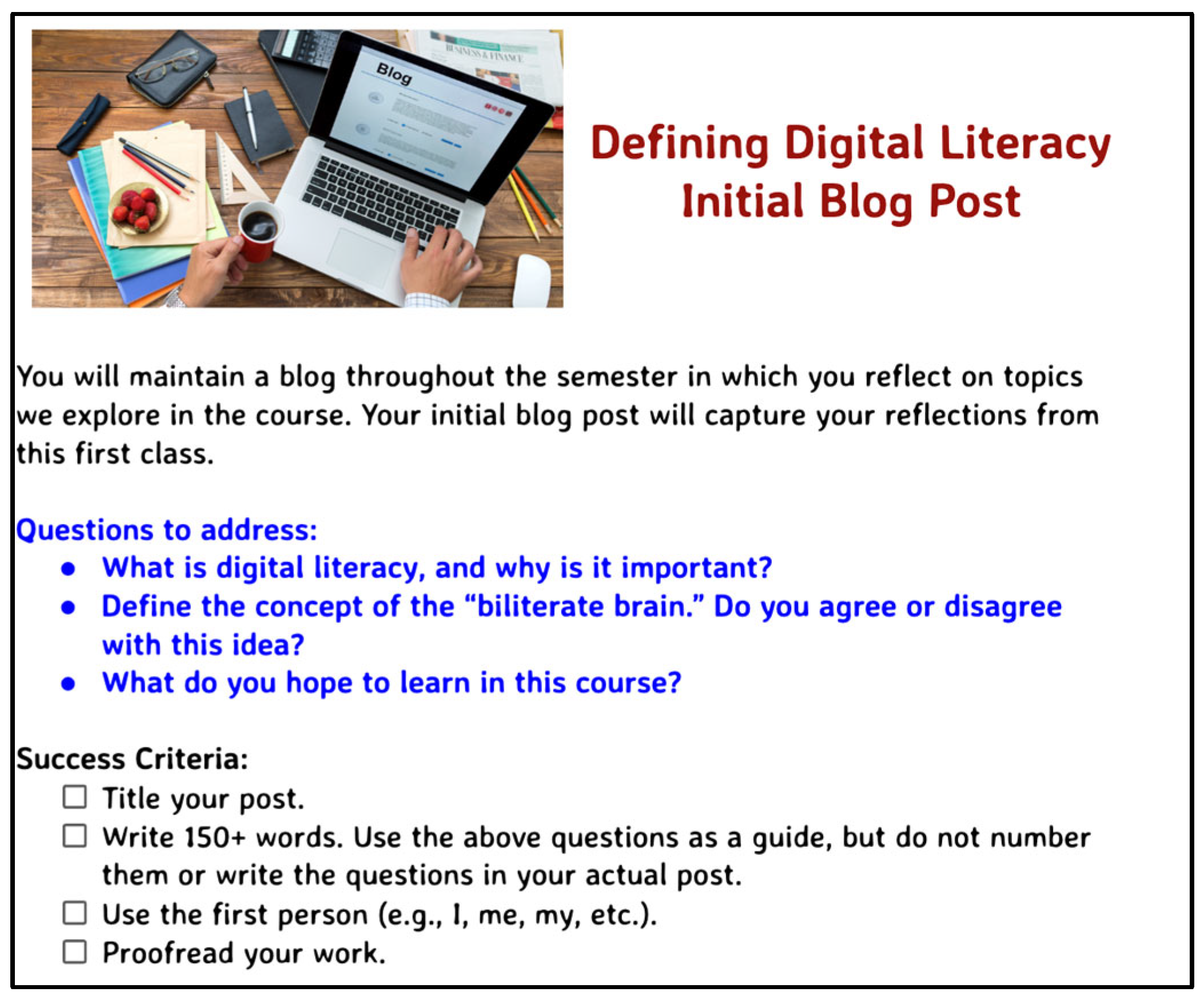
We frame all courses with the biliterate brain concept in mind. In New Literacies, for example, students begin the course by reading print excerpts from Wolf’s (2018) book, annotating to note questions, comments, or personal connections. These readings are processed in small groups before students share their thinking digitally via blog posts, inviting peer responses (see Figure 2). Similarly, in Content Area Reading, students read across multiple formats (i.e., articles, professional texts, and book excerpts), then use strategies such as 3-2-1 summaries or discussion protocols to process and share ideas. Many of these reflections and products are posted on discussion boards or wikis, where classmates can engage with and build on each other’s work.
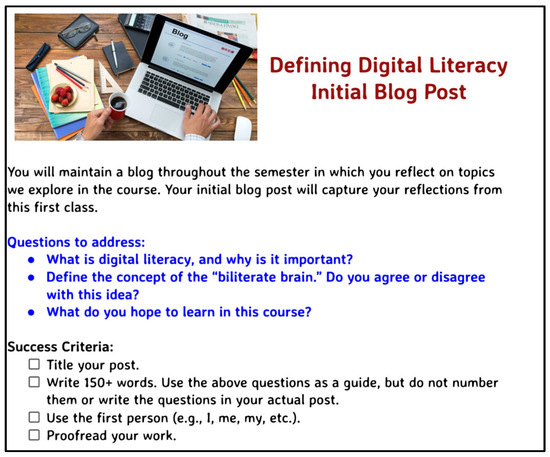
Figure 2.
New Literacies Initial Blog Post Directions.
4.3. Authentic and Multimodal Projects
Across courses, a key instructional goal is for students to use technology to enhance or complement, rather than substitute, traditional literacy practices. To support this goal, we encourage students to create work intended for authentic audiences beyond the classroom. Authenticity is a core element of project-based learning (PBL Toolkit, 2021), as it brings a real-world relevance that may be missing from traditional classroom assignments. Within this approach, we emphasize multimodal literacy: the ability to communicate effectively across various modes and media (International Literacy Association, n.d.).
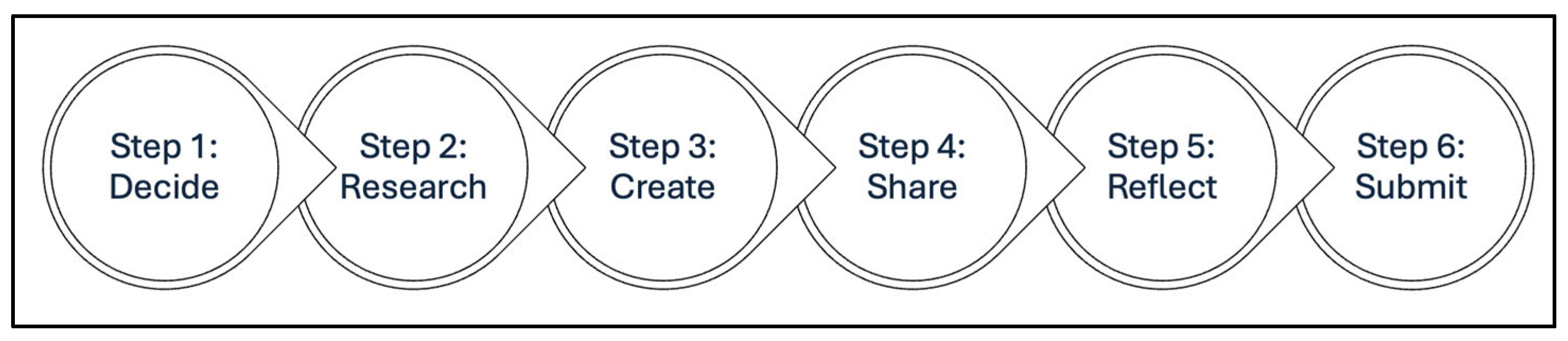
Students apply this emphasis in a variety of ways. In New Literacies, for example, learners create informational podcasts that draw on traditional research practices–often including print—based sources–but result in an audio product that may feature narration, interview segments, and sound effects. In Content Area Reading, students engage in digital content curation, designing online exhibits that reflect, in part, museum literacies (Eakle, 2009). This process requires students to determine a learning goal and then select relevant audio, video, images, artifacts, and texts to convey their developing understanding of the topic. Regardless of the product, these experiences often follow six steps (see Figure 3), beginning with learners deciding on their overarching themes, researching content, creating the product, sharing the product with others, reflecting on the learning process, and submitting their final drafts and written reflections.
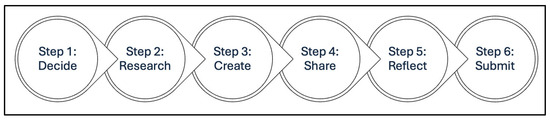
Figure 3.
Multimodal Product Development Process.
Students regularly liken this type of work to going “down the rabbit hole,” noting that their ideas are limited only by the time parameters of the course. This level of engagement speaks to one of the most rewarding aspects of teaching digital literacy: students begin to see its generative power. They often find greater satisfaction in discovering new directions and possibilities that emerge from their work than in simply completing a final product (Randall & Mercurio, 2016; Randall & Mercurio, 2018).
Technology not only amplifies the reach and impact of students’ messages but also provides a flexible medium through which they can view, listen to, and respond to one another’s work asynchronously. The ability to create multimodal products also supports personalized inquiry. In one instance, a student in New Literacies created a website focused on the role models in her life, including personal reflections and images of her father and sister, which she planned to share with them as a surprise. Another student developed a digital portfolio showcasing his soccer accomplishments to use as part of his college application materials. In Children’s and Young Adult Literature, students created multimodal Body Biographies to explore individuals they identified as influential, whether through academic content, cultural significance, or current events, using digital tools to represent the enduring impact of those figures. At its most basic, a Body Biography is a graphic organizer in which students collect information about an individual. Yet, Body Biographies go beyond the facts and events of a person’s life because they ask students to use metaphors when describing the values, opportunities, and circumstances that shape lives (Morawski & Sokolowski, 2023). For instance, getting to the “heart” of a person involves understanding their deepest feelings and cares, whereas the backbone would represent a person’s strengths (or lack of them). The eyes reveal how experience becomes a lens for seeing the world as it is and how they want it to be, the hands represent what a person literally or symbolically “carries,” and the feet show where a person has come from and what they are moving toward.
Another shared assignment is the “Ignite Lite” Talk, adapted from the Ignite Talk format, which includes 20 auto-advancing slides presented in five minutes (Ignite Talks, n.d.). Our “lite” version is slightly shortened for classroom use but retains the core structure. Like podcasts and digital exhibits, these talks require research and integration of multimedia elements. In Content Area Reading, students introduce digital tools or educational resources they believe would benefit cross-disciplinary teaching. Students in New Literacies create similar talks focused on promising technological innovations. In online courses, these presentations are submitted as prerecorded screencasts, which classmates can then view and respond to asynchronously.
Infographics are also used across courses to connect digital literacy with media literacy. Like the news, infographics condense complex information, often emphasizing magnitude (how wide-reaching the issue is), impact (the resulting change for individuals and groups), relevance (its importance to different audiences), and timeliness (how awareness can prompt informed action). These projects challenge students to decide what to include, recognizing that all representations are, to some extent, incomplete. They must evaluate how the medium, platform (e.g., social media), and brevity contribute to understanding or risk contributing to misinformation (Jaeger & Taylor, 2021; Wilhelm, 2023). In New Literacies, students create infographics for younger learners, drawing on real survey data from those same groups, to practice audience awareness and purposeful design.
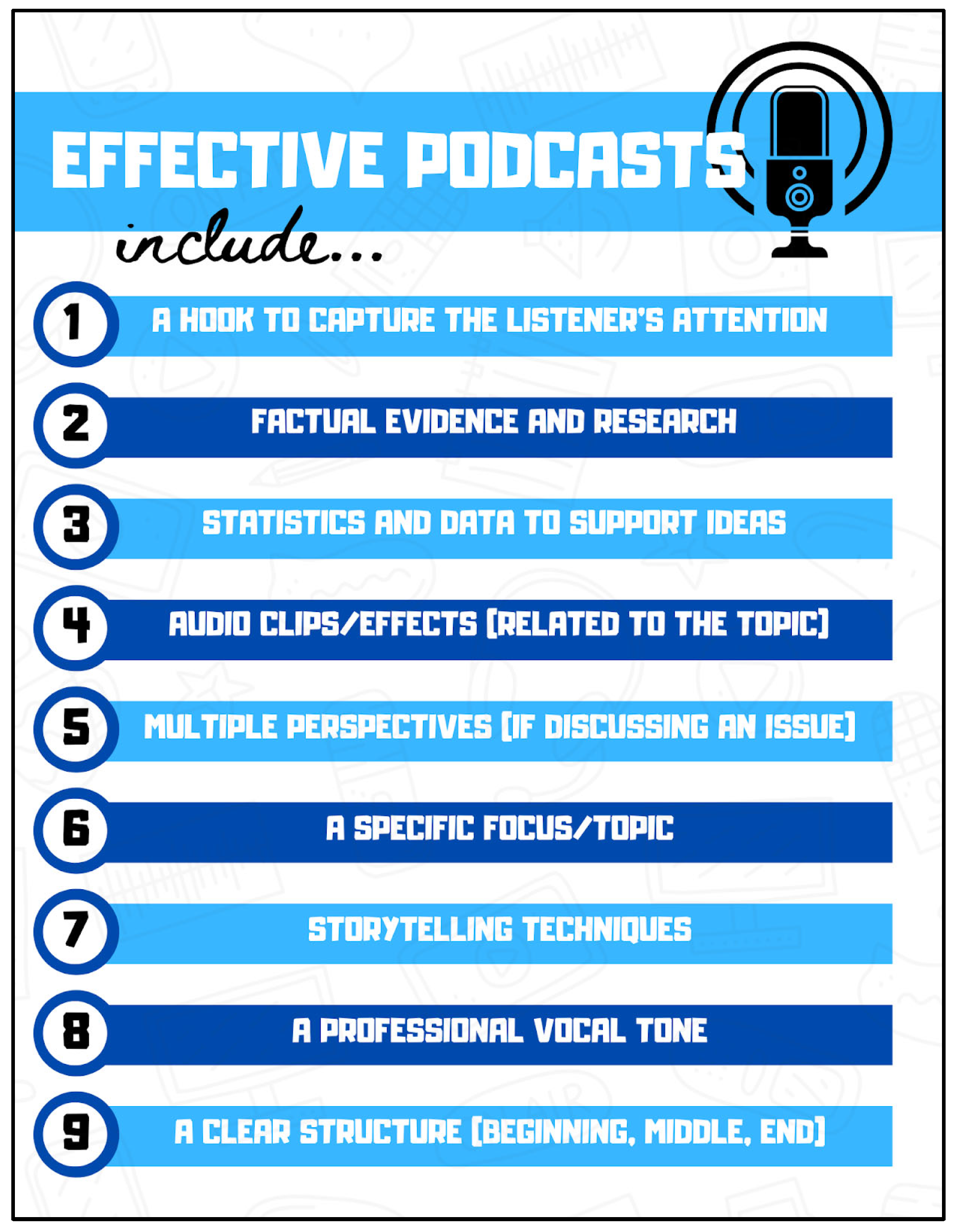
Because students may be unfamiliar with formats such as podcasts, Ignite Talks, and infographics, we provide mentor texts, which may include professional examples, former student work, and instructor-created models (Gallagher, 2011). After reviewing multiple samples, students collaborate to identify the characteristics of effective products. Figure 4 illustrates the podcast criteria generated by one class of students after reviewing several models.
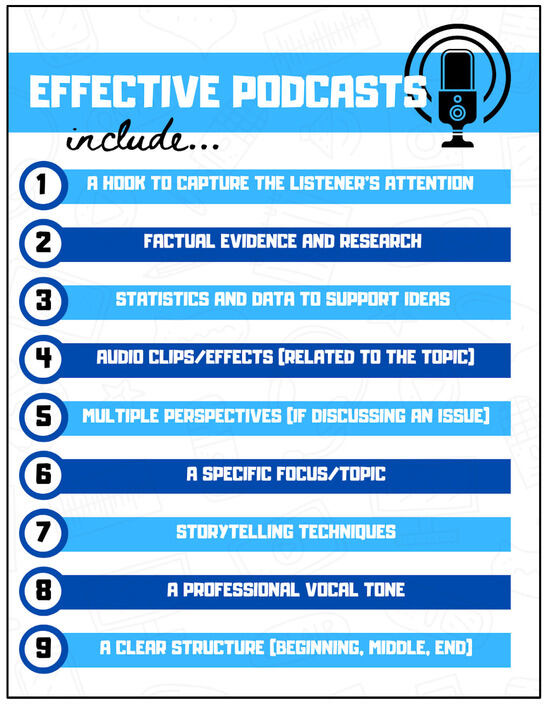
Figure 4.
Student-Generated List of Effective Podcast Characteristics.
4.4. Source Evaluation
In every course, we also prioritize effective source use, given the urgency of helping students avoid misinformation online. We dedicate instructional time to website evaluation strategies and academic database navigation. One method we introduce is M. Caulfield’s (2019) SIFT method, which is a four-part process to guide source evaluation: (1) Stop reading to learn about the author or source, (2) Investigate the source, (3) Find better coverage, and (4) Trace claims, quotes, and media back to the original context. In one New Literacies project, students select a website related to a topic of interest and record a screencast demonstrating how they apply each step of the SIFT method. After viewing classmates’ screencasts, students offer peer feedback focused on the credibility of the evaluation and suggest additional strategies or questions that could strengthen the analysis. These lateral reading strategies require students to fact-check and verify information, habits that support academic research and personal information practices.
5. Conclusions
Returning to Mrs. Goodwin, we see a teacher with a strong instructional foundation in place. Yet, better integration and focus on digital literacy skills would have the potential to make her classroom a transformative one. Imagine the shift in engagement if students had opportunities to pursue inquiry experiences, self-select areas of study, use technology as the foundation for collaboration, and create authentic products.
These changes will not happen overnight. A useful starting point, regardless of setting, can be to review the existing curriculum: Where are logical places to integrate digital literacy topics and skills? Which standards or course outcomes support authentic types of learning? Meyers and VanGronigen (2021) suggest a short-cycle process to this work, with clear goals and focused timelines. Because every context is unique, leaders and other stakeholders are best positioned to identify appropriate entry points. Rather than setting year-long goals, Meyers and VanGronigen recommend shorter timelines with regular monitoring. Implementation phases can remain flexible to align with local needs.
This review, and the subsequent instructional shifts, can help build more connected classrooms, where students not only learn how to collaborate but also how to use digital texts and tools in ways that mirror real-world research and communication practices. Ultimately, these changes may inform larger-scale efforts to update district technology policies, support teacher professional learning in digital literacy, and revise preservice programs through school–university partnerships. In a world that feels increasingly connected yet, at times, personally disconnected, digital literacy instruction can help close this gap.
Author Contributions
Conceptualization, J.M. and R.R.; writing—original draft preparation, J.M. and R.R.; writing—review and editing, J.M. and R.R. All authors have read and agreed to the published version of the manuscript.
Funding
This research received no external funding.
Conflicts of Interest
The authors declare no conflict of interest.
References
- Adjin-Tettey, T. D. (2020). Can ‘digital natives’ be ‘strangers’ to digital technologies? An analytical reflection. Inkanyiso: Journal of Humanities and Social Sciences, 12(1), 11–23. [Google Scholar]
- Banerjee, M. (2020). An exploratory study of online equity: Differential levels of technological access and technological efficacy among underserved and underrepresented student populations in higher education. Interdisciplinary Journal of e-Skills and Lifelong Learning, 16, 93–121. [Google Scholar] [CrossRef] [PubMed]
- Carr, N. (2010). The shallows: How the internet is changing the way we think, read, and remember. Atlantic Books Ltd. [Google Scholar]
- Castek, J., & Gwinn, C. B. (2020). Literacy and leadership in the digital age. In A. S. Dagen, & R. M. Bean (Eds.), Best practices of literacy leaders (2nd ed., pp. 258–279). Guilford Press. [Google Scholar]
- Caulfield, M. (2019, May 12). Introducing SIFT, a four moves acronym. Hapgood. Available online: https://hapgood.us/2019/05/12/sift-and-a-check-please-preview/ (accessed on 18 July 2025).
- Chen, S. Y. (2023). Generative AI, learning and new literacies. Journal of Educational Technology Development and Exchange (JETDE), 16(2), 1–19. [Google Scholar] [CrossRef]
- Coiro, J. (2011). Predicting reading comprehension on the Internet: Contributions of offline reading skills, online reading skills, and prior knowledge. Journal of Literacy Research, 43, 352–392. [Google Scholar] [CrossRef]
- Cooper, T., & Frey, T. K. (2021). Teaching digital natives where they live: Generation Z and online learning. In R. Robinson (Ed.), Communicating, engaging, and educating Generation Z: Theoretical and practical implications for instructional spaces (pp. 71–84). Lexington Books. [Google Scholar]
- Crouch, D., & Cambourne, B. (2018). Teaching decisions that bring the conditions of learning to life. Available online: https://foundationforlearningandliteracy.info/wp-content/uploads/2020/10/Teaching-decisions-that-bring-the-conditions-of-learning-to-life-1.pdf (accessed on 18 July 2025).
- Delgado, P., Vargas, C., Ackerman, R., & Salmerón, L. (2018). Don’t throw away your printed books: A meta-analysis on the effects of reading media on reading comprehension. Educational Research Review, 25, 23–38. [Google Scholar] [CrossRef]
- Dillon, A. (1992). Reading from paper versus screens: A critical review of the empirical literature. Ergonomics, 35(10), 1297–1326. [Google Scholar] [CrossRef]
- Dyson, M., & Haselgrove, M. (2000). The effects of reading speed and reading patterns on the understanding of text read from screen. Journal of Research in Reading, 23(2), 210–223. [Google Scholar] [CrossRef]
- Eakle, A. J. (2009). Museum literacies and adolescents using multiple forms of texts “on their own”. Journal of Adolescent & Adult Literacy, 53(3), 204–214. [Google Scholar] [CrossRef]
- Fisher, D., Frey, N., & Lapp, D. (2012). Teaching students to read like detectives: Comprehending, analyzing, and discussing text. Solution Tree Press. [Google Scholar]
- Gallagher, K. (2011). Write like this: Teaching real-world writing through modeling and mentor texts. Routledge. [Google Scholar]
- Gee, J. P. (1999). An introduction to discourse analysis: Theory and method. Routledge. [Google Scholar]
- Gilster, P. (1997). Digital literacy. Wiley & Sons, Inc. [Google Scholar]
- Ignite Talks. About—Ignite talks. n.d. Available online: https://www.ignitetalks.io/about (accessed on 18 July 2025).
- International Literacy Association. Literacy glossary. n.d. Available online: https://www.literacyworldwide.org/get-resources/literacy-glossary (accessed on 18 July 2025).
- International Reading Association. (2009). New literacies and 21st-century technologies: A position statement of the International Reading Association [PDF]. Available online: https://www.literacyworldwide.org/docs/default-source/where-we-stand/new-literacies-21st-century-position-statement.pdf (accessed on 18 July 2025).
- Jaeger, P. T., & Taylor, N. G. (2021). Arsenals of lifelong Information literacy: Educating users to navigate political and current events information in a world of ever-evolving misinformation. The Library Quarterly, 91(1), 19–31. [Google Scholar] [CrossRef]
- Lucaser, A. M. R., & Acedera, A. P. (2025). Information literacy skills and critical thinking strategies: Key factors of online source credibility evaluation skills. International Journal of All Research Writings, 6(7), 128–137. [Google Scholar]
- Marangell, J. P. (2023). High school social studies teachers’ perceptions and practices using workshop model: An action research study. In N. Nasr-Barakat, & J. Perry (Eds.), Contemporary perspectives through action research across educational disciplines: The K-12 classroom (pp. 87–109). Information Age Publishing. [Google Scholar]
- McDaniel, D. S. (2024). Toward culturally digitized pedagogy: Informing theory, research, and practice. Reading Research Quarterly, 59(2), 193–210. [Google Scholar] [CrossRef]
- Meyers, C. V., & VanGronigen, B. A. (2021). The best-laid plans can succeed. Educational Leadership, 78(7), 50–55. [Google Scholar]
- Morawski, C., & Sokolowski, J. (2023). The experiences of three teachers using body biographies for multimodal literature study. International Journal for Talent Development and Creativity, 11(1), 161–172. [Google Scholar] [CrossRef]
- PBL Toolkit. (2021). Project based learning handbook for middle & high school. Buck Institute for Education. [Google Scholar]
- Randall, R. E., & Marangell, J. P. (2020). One story creates another: Using book clubs to promote inquiry in the content areas. Inquiry in Education, 12(2), 1–10. [Google Scholar]
- Randall, R. E., & Mercurio, M. L. (2016). Tributes beyond words: Memorializing the triangle shirtwaist factory fire through the intersection of art, history and literacy for pre-service educators. Journal for Learning through the Arts: A Research Journal on Arts Integration in Schools and Communities, 12(1), 1–16. [Google Scholar]
- Randall, R. E., & Mercurio, M. L. (2018). Imagination, literacy, and design: Content area curation in the secondary classroom. Teacher Education and Practice, 31(1), 44–62. [Google Scholar]
- Shanahan, T. (2023, July 8). Can we really teach prosody and why would we want to? Shanahan on Literacy. Available online: https://www.shanahanonliteracy.com/blog/can-we-really-teach-prosody-and-why-would-we-want-to (accessed on 18 July 2025).
- Shanahan, T. (2024, November 9). Is comprehension better with digital text? Shanahan on Literacy. Available online: https://www.shanahanonliteracy.com/blog/is-comprehension-better-with-digital-text-1 (accessed on 18 July 2025).
- Shea, V. (1994). Netiquette. Albion Books. [Google Scholar]
- Tovani, C. (2011). So what do they really know?: Assessment that informs teaching and learning. Stenhouse Publishers. [Google Scholar]
- Vuorikari, R., Kluzer, S., & Punie, Y. (2022). DigComp 2.2: The digital competence framework for citizens—With new examples of knowledge, skills and attitudes (EUR 31006 EN). Publications Office of the European Union. [Google Scholar] [CrossRef]
- Wilhelm, J. (2023). Fighting fake news: Teaching students to identify and interrogate information pollution. Corwin. [Google Scholar]
- Wolf, M. (2018). Reader come home: The reading brain in a digital world. Harper. [Google Scholar]
Disclaimer/Publisher’s Note: The statements, opinions and data contained in all publications are solely those of the individual author(s) and contributor(s) and not of MDPI and/or the editor(s). MDPI and/or the editor(s) disclaim responsibility for any injury to people or property resulting from any ideas, methods, instructions or products referred to in the content. |
© 2025 by the authors. Licensee MDPI, Basel, Switzerland. This article is an open access article distributed under the terms and conditions of the Creative Commons Attribution (CC BY) license (https://creativecommons.org/licenses/by/4.0/).