1. Introduction
In the context of rapid global economic growth and technological advancement, sustainable development has become a critical priority worldwide. The excessive consumption of natural resources, continuous environmental degradation, and intensifying climate change have revealed the limitations of traditional development models. Promoting sustainability is not only essential for ensuring long-term economic prosperity but also for maintaining social equity and ecological balance. Therefore, integrating sustainability principles into economic and technological systems is crucial to achieving harmonious coexistence between humans and nature, as well as securing a stable and livable environment for future generations [
1].
Against the backdrop of the global pursuit of sustainable development and renewable energy transition, photovoltaic (PV) technology has emerged as a cornerstone for achieving carbon neutrality and green energy transformation [
2]. However, the accuracy and efficiency of PV power generation are highly dependent on the precision of model parameter identification. Since PV models exhibit strong nonlinearity and are influenced by environmental factors such as temperature and irradiance, accurately extracting their parameters is a challenging yet essential task. Reliable parameter extraction not only enhances the fidelity of PV system simulations and performance predictions but also supports the optimal design, control, and operation of renewable energy systems, thereby playing a vital role in promoting sustainable energy development [
3]. Therefore, an increasing number of researchers are focusing on the parameter extraction of photovoltaic models.
Nevertheless, accurately identifying the parameters of photovoltaic (PV) models remains a complex global optimization problem due to their high-dimensional, nonlinear, and multimodal characteristics. Traditional optimization techniques often suffer from slow convergence and premature stagnation in local optima, limiting their effectiveness in real-world applications. Researchers employed heuristic algorithms to solve this problem. For instance, Jiao et al. proposed an enhanced Harris–Hawks optimization by combining orthogonal learning (OL) and generalized adversarial learning to extract photovoltaic module parameters from actual current–voltage data, enabling efficient and accurate estimation of solar cell and photovoltaic module parameters [
4]. Oliv et al. proposed a chaotic whale optimization algorithm for solar cell parameter estimation, utilizing chaos maps to compute and automatically adapt the algorithm’s internal parameters, demonstrating outstanding performance in estimating solar cell parameters [
5]. To accurately estimate unknown parameters in complex photovoltaic models, Yang et al. proposed an effective improvement algorithm based on the L-SHADE (Linear Population Size Reduction) approach for dual-parameter coordinated updates [
6]. This method decomposes the unknown parameters of solar photovoltaic models with varying complexities into linear and nonlinear parameters. Through the CSpL-SHADED (CSpL—Dual-Parameter Coordinated Update L-SHADE Parameter Decomposition Method (CSpL-SHADED). This effective improvement algorithm decomposes unknown parameters of solar photovoltaic models with varying complexities into linear and nonlinear components. CSpL-SHADED enables precise estimation of nonlinear parameters, while linear parameters are computed via constructed matrix equations. Experiments conducted on four solar photovoltaic models of differing complexities yielded favorable results.
Intelligent optimization algorithms have been widely applied to various problems. For example, Gou J proposed a Particle Swarm Optimization algorithm incorporating Individual Differential Evolution (IDE-PSO) [
7]. This method classifies particles into several subgroups according to their performance levels. In another study, Ye W developed a multi-population PSO featuring a Dynamic Learning Strategy (PSO-DLS) [
8], which distinguishes particles as either regular or communicative types. Chen et al. [
9] proposed a new algorithm named PMEEA/D-VW, which is based on the original MOEA/D (multi-objective evolutionary algorithm based on decomposition) framework and is used for multi-objective test case prioritization. Rabeh Abbassi et al. [
10] proposed a developed Mountain Gazelle Optimizer (MGO) to generate optimal values for the unknown parameters of photovoltaic power generation units. Li et al. [
11] focused on the theory of the multi-objective 3L-SDHVRP and proposed a multi-objective evolutionary algorithm based on decomposition, customizable replacement neighborhoods, and dynamic resource allocation (referred to as MOEA/D-RD) to address this problem. Zhao et al. [
12] proposed a surrogate-assisted evolutionary algorithm based on multi-population clustering and prediction (SAEA/MPCP) to solve the CEDOP problem, improving the efficiency of surrogate model construction and optimization. Mohamed et al. [
13] proposed an advanced Dynamic Fick’s Law Algorithm (DFLA) for extracting optimal parameters of fuel cells. Rezk et al. [
14] proposed a robust method based on the Gradient-Based Optimizer (GBO) to identify the optimal parameters of proton-exchange membrane fuel cells (PEMFCs). Saidi et al. [
15] proposed a new hybrid algorithm, CADESSA, for PEMFC parameter identification. Abdullah et al. [
16] employed an enhanced Artificial Gorilla Troops Optimizer to extract the optimal parameters of the photovoltaic three-diode model. Chen et al. [
17] proposed an efficient hybrid optimization algorithm combining grid search and an improved Nelder–Mead simplex method (GS-INMS) for PV model parameter identification. Abbassi et al. [
18] introduced a new method using the newly developed Puma Optimizer (PO) to extract the key parameters of the photovoltaic cell double-diode model (DDM).
Intelligent optimization algorithms have demonstrated broad application potential in areas such as multi-objective optimization and parameter identification, and a series of improved and innovative methods have emerged. However, for the uncertainties, constraints, and real-time requirements commonly encountered in practical engineering problems, the adaptation mechanisms of existing algorithms remain insufficient. Therefore, how to enhance robustness, adaptability, and general applicability while ensuring efficiency remains a key issue that urgently needs to be addressed in the field of intelligent optimization.
The Enterprise Development Optimization Algorithm is a novel metaheuristic optimization algorithm inspired by the enterprise development process [
19], encompassing tasks, structures, technologies, and interpersonal interactions. It employs a mechanism of switching activities to determine each step by updating the solutions found. Furthermore, experiments involving various mathematical functions and complex structural design problems demonstrate that the ED optimization algorithm is a superior metaheuristic algorithm. However, since the NFL theorem asserts that no single “universal optimal algorithm” exists that outperforms others across all problems, designing improved or hybrid optimization algorithms tailored to specific problem characteristics—to enhance their convergence efficiency, robustness, and solution accuracy—has become a major research focus in the field of intelligent optimization.
For instance, addressing the challenges posed by large-scale direct grid connection of wind and solar power for peak shaving, Zhao et al. proposed an enhanced version of the ED algorithm (TGED) by integrating chaotic initialization and Gaussian random walk mechanisms [
20]. For this problem, the algorithm outperformed other benchmark algorithms in terms of solution accuracy and convergence performance, reducing the residual load peak-to-valley difference by over 600 MW. To address multi-objective optimization challenges in practical engineering, Truong et al. proposed a novel ED optimization algorithm tailored for complex multi-objective engineering problems [
21]. By integrating advanced population and non-dominated sorting techniques into existing single-objective evolutionary development algorithms, this new multi-objective approach effectively identifies Pareto optimal solutions. Based on the above research, to address the issue of extracting photovoltaic model parameters, this paper proposed a multi-strategy enhanced enterprise development algorithm (MEED), which overcomes the tendency of ED to get stuck in local optima when addressing the problem of extracting parameters for photovoltaic models. The main contributions and innovations of this work are as follows:
We proposed a hybrid initialization method based on chaotic mapping and adversarial learning mechanisms to enhance the quality of the initial population, enabling the algorithm to better explore the solution space.
We proposed a trend position update method based on historical information enables the algorithm to better utilize information from historical updates, accelerating algorithm convergence.
A boundary control method based on mirror reflection is proposed to prevent out-of-bounds individuals from clustering near the boundary, enabling the algorithm to escape local optima more effectively and seek global optimal solutions.
Comprehensive benchmark validation: MEED is compared against 11 mainstream metaheuristic algorithms on the CEC2017 benchmark suite, and statistical analysis demonstrated significant differences between MEED and other algorithms.
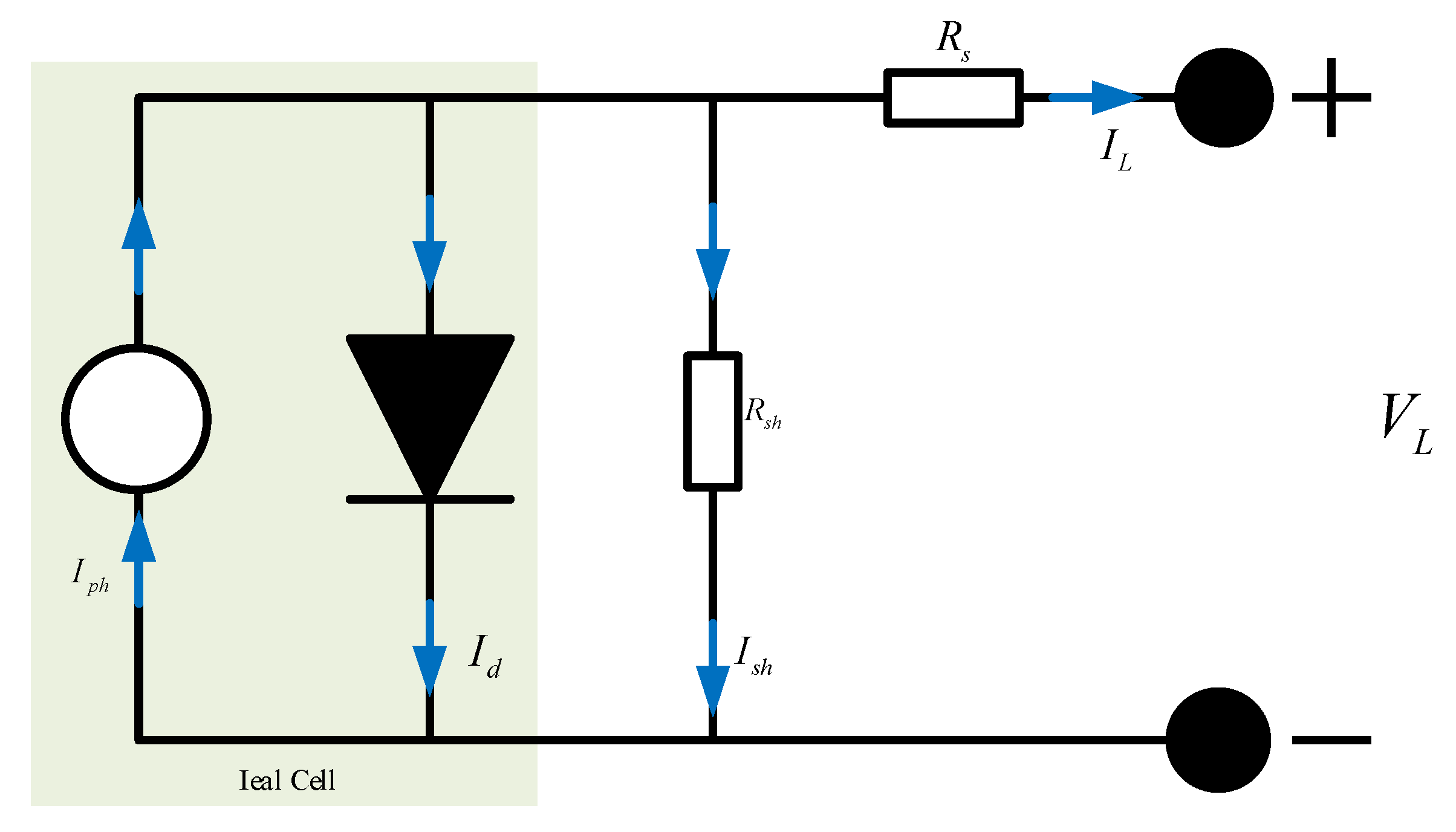
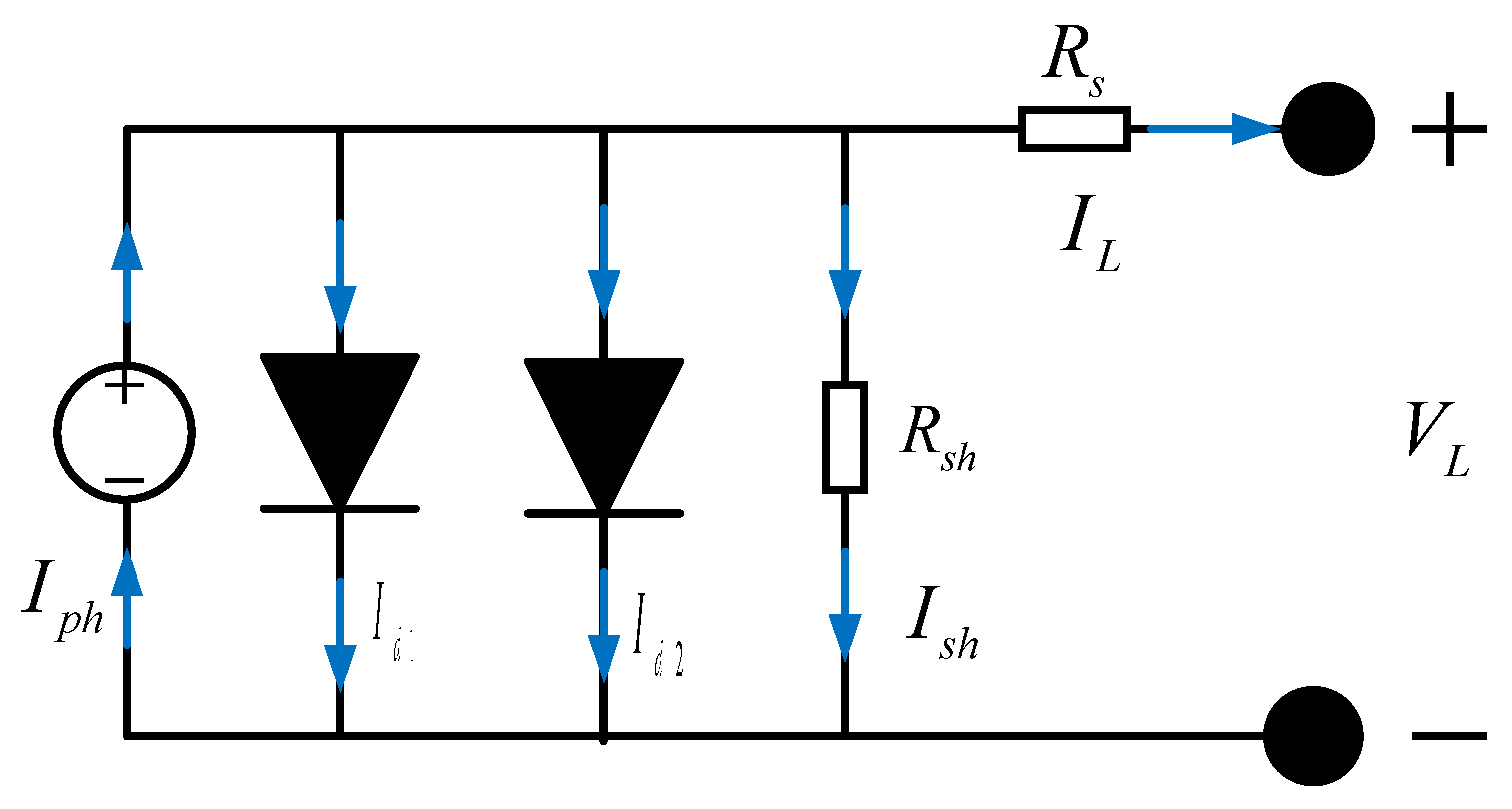
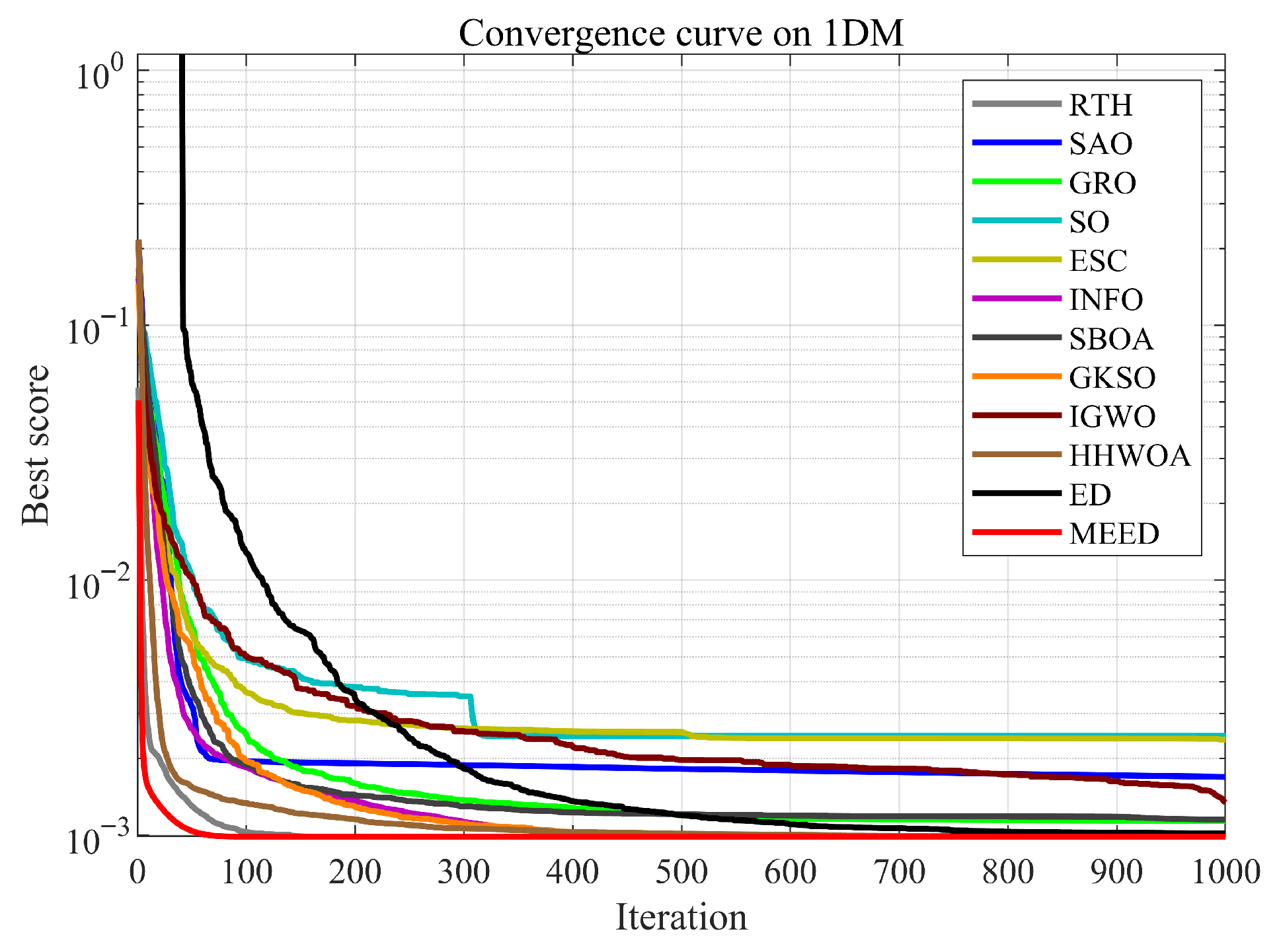
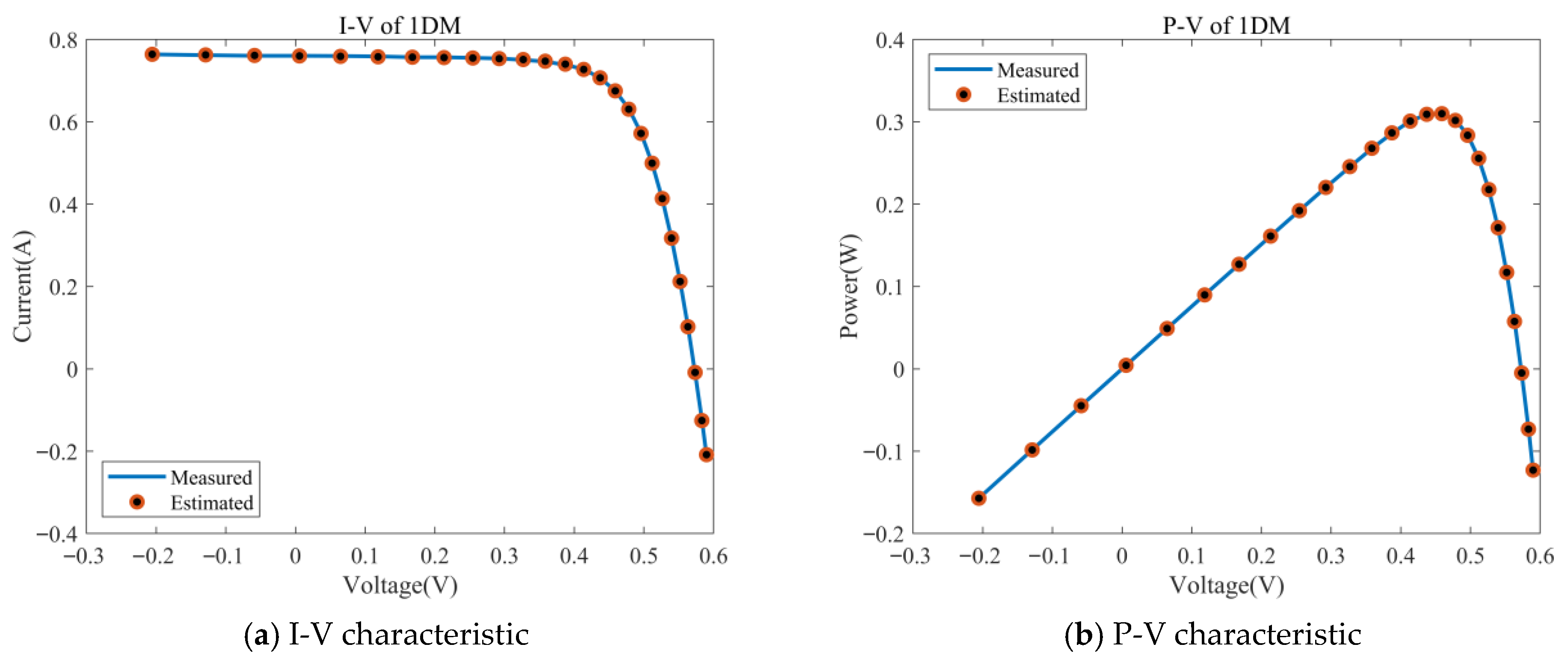
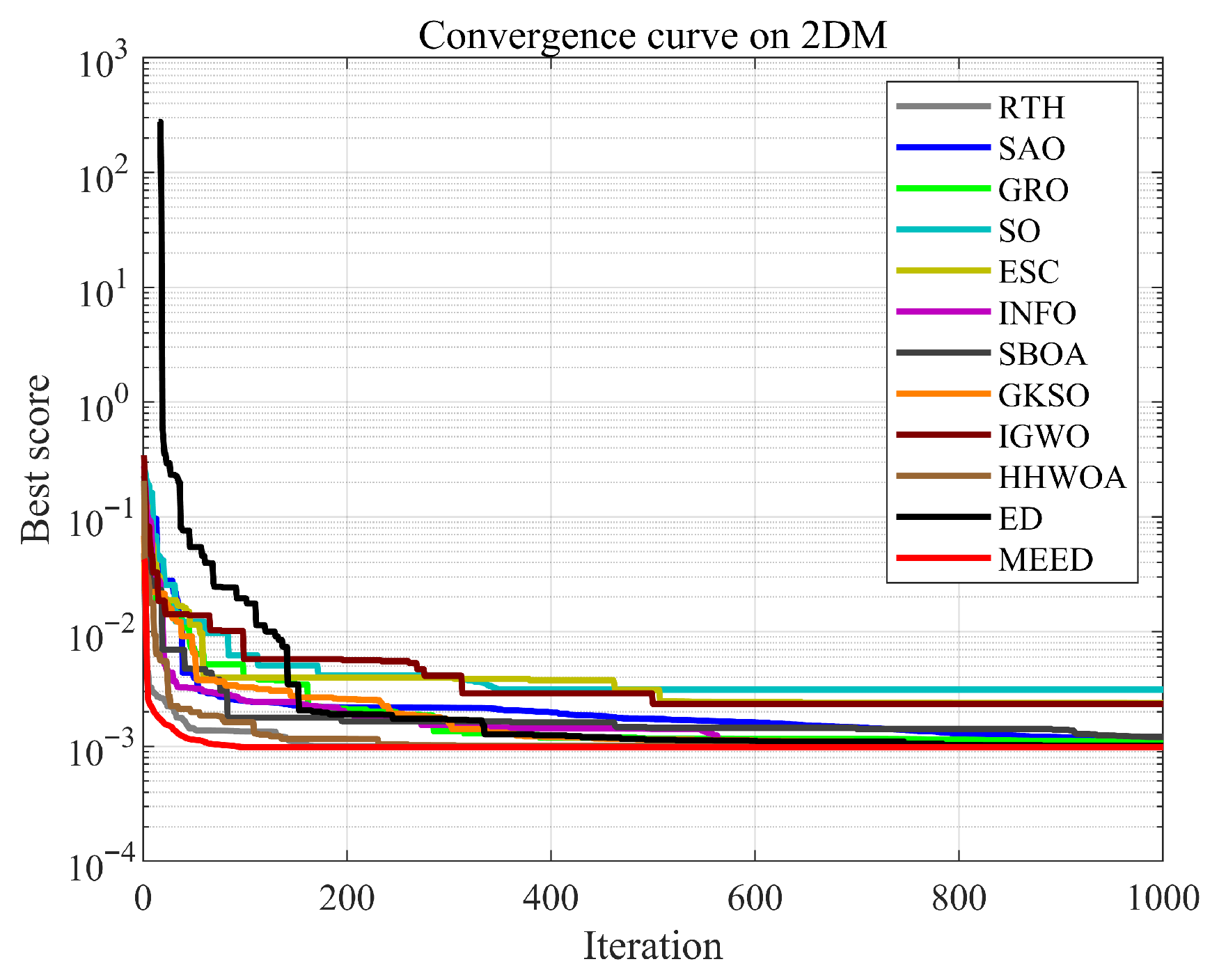
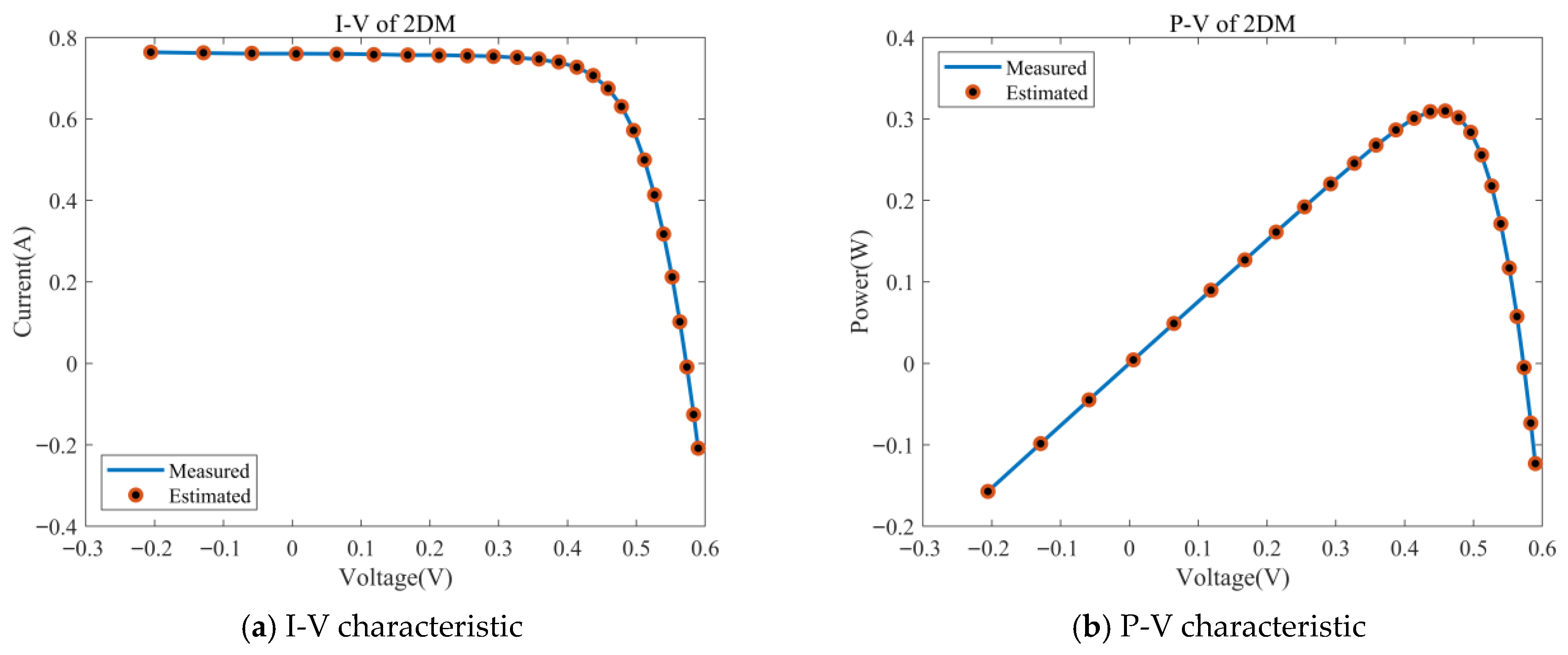
Application to PV model parameter identification: MEED is applied to both the SDM and DDM PV models. Using experimental data from the Photowatt-PWP201 PV module and the RTC France solar cell, the algorithm’s effectiveness is validated through root mean square error (RMSE), integrated absolute error (IAE), and curve-fitting comparisons, demonstrating its practical value for solving complex real-world problems.
The remainder of this paper is organized as follows:
Section 2 presents the fundamental principles of the ED optimization algorithm.
Section 3 introduces the three improvement strategies of MEED.
Section 4 conducts comparative experiments on CEC2017 test suites.
Section 5 applies MEED to PV model parameter identification, validating its effectiveness in practical engineering problems.
Section 6 concludes the study and outlines future research directions.
3. Proposed MEED
3.1. Hybrid Initialization Method Based on Chaotic Mapping and Adversarial Learning Mechanism
The quality of the initial population plays a crucial role in the convergence speed and optimization accuracy of metaheuristic algorithms. A well-distributed initial population effectively enhances global exploration and prevents premature convergence. In ED optimization algorithms, population initialization typically employs a basic random approach. While simple, this method often results in poor initial solution quality. Therefore, this paper proposes a hybrid initialization method based on chaotic mapping and adversarial learning mechanisms to improve the quality of the initial population [
22]. In this method, chaotic mapping is first employed to generate a sequence with good ergodicity, which is then mapped onto the decision space to obtain initial candidate solutions. This process can be formally expressed as Equation (10):
where
is a control parameter with a value of 2.
represents a chaotic scalar, whose value lies between 0 and 1. Then, mapping the chaotic variables onto the decision space to obtain the initial population can be expressed as Equation (11).
This mapping ensures strong randomness and sensitivity to initial conditions, effectively increasing the search diversity in the early stage. Additionally, to accelerate convergence and enhance global search capabilities, we propose a selection scheme based on adversarial learning. Solutions derived through adversarial learning can be computed using Equation (12).
Through an evaluation of the fitness function, we retain higher-quality individuals in the initial population, which can be described by Equation (13).
This mechanism allows the algorithm to explore more promising areas of the search space from the beginning, effectively enhance the quality of the initial population.
3.2. Trend Position Update Method Based on Historical Information
In the ED optimization algorithm, its position update mechanism relies on selection. To accelerate the algorithm’s convergence speed and fully utilize information from high-quality solutions within the population, this paper proposes a position update method based on historical information; this method relies on the historical search position matrix and fitness evidence, where the historical search position matrix contains the positions of all individuals at each iteration, and the fitness matrix includes the fitness values of each individual at every iteration. The position update can be specifically described by Equation (14):
where
and
are used to control the influence strength of the current global optimum and historical trend, respectively, with their values set to 0.5.
and
denote random disturbance terms following a uniform distribution between 0 and 1.
represents the global optimum position at the current iteration, while
denotes the historically weighted trend center, calculated using Equation (15).
Here,
denotes the position of the globally optimal individual in the
-th iteration, while
represents the weight based on the fitness value, calculated using Equation (16):
where
denotes the fitness value of the globally optimal individual in the
-th iteration, while
represents a small constant to prevent division by zero.
3.3. Boundary Control Method Based on Mirror Reflection
In ED optimization algorithms, boundary control is achieved through truncation when individuals exceed the search domain. While this method ensures all individuals remain within the feasible region, it causes solutions that would otherwise exceed the boundary to cluster at the edge. This reduces population diversity and weakens the algorithm’s global search capability. To address this, we propose a boundary control strategy based on mirror reflection [
23]. When an individual exceeds the search range, it is symmetrically reflected back into the feasible region rather than simply truncated. This approach not only maintains the continuity of the search trajectory, avoiding premature convergence caused by boundary stagnation, but also better balances global exploration and local exploitation capabilities. Specifically, it can be calculated using Equation (17).
The boundary control method based on mirror reflection effectively addresses the limitations of the traditional clamping strategy. When an individual exceeds the boundary of the search space, instead of being forcibly truncated to the nearest bound, its position is symmetrically reflected back into the feasible region. This mechanism offers several advantages. First, it maintains the continuity of the search trajectory, preventing abrupt changes that may disrupt the convergence path. Second, by avoiding the accumulation of individuals along the boundaries, it preserves population diversity and enhances the algorithm’s global exploration ability. Third, the reflection operation allows boundary individuals to re-enter the search region with a meaningful direction, thereby reducing the risk of premature convergence. Finally, since this method requires only simple arithmetic operations, it introduces no additional computational complexity. Overall, the mirror-reflection-based boundary control strategy achieves a better balance between exploration and exploitation, ensuring both stability and robustness in the optimization process.
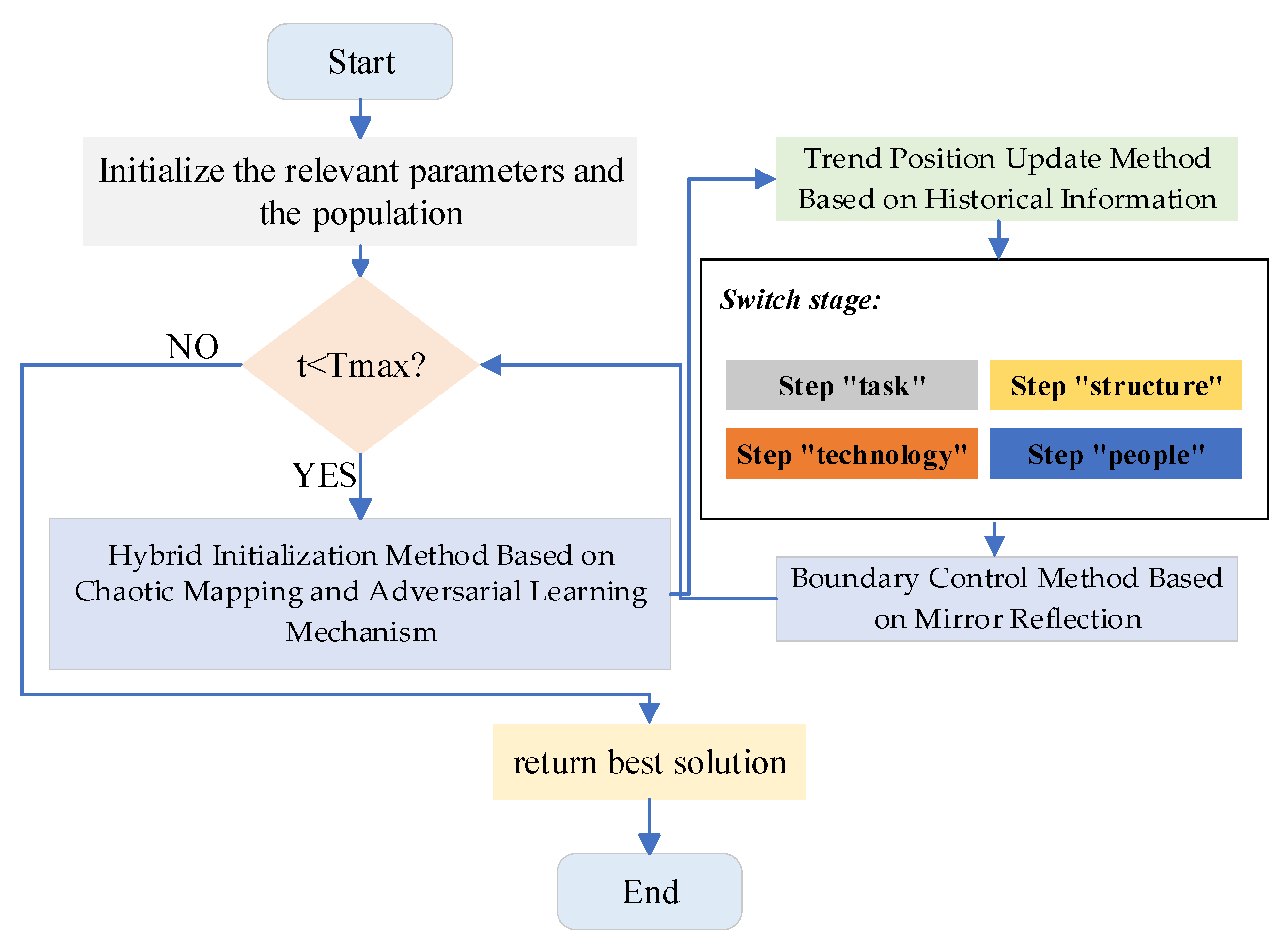
The MEED’s flowchart is provided in
Figure 1, and the pseudocode of the ED is outlined in Algorithm 3.
| Algorithm 3: the pseudo-code of the MEED |
| 1: Begin |
| 2: Initialize: the relevant parameters iterations T and the number of coatis pop. |
| 3: Hybrid initialization (Equations (10)–(13)) |
| 4: Calculate the fitness of the objective function. |
| 5: For t < T do |
| 6: For i = 1:N do |
| 7: Calculate C(t) by using Equation (9). |
| 8: If rand < p1, then p1 = 0.1 |
| 9: Step “task” |
| 10: Else |
| 11: Switch C(t) |
| 12: Case C(t) = 1 |
| 13: Step “structure” |
| 14: Case C(t) = 2 |
| 15: Step “technology” |
| 16: Case C(t) = 3 |
| 17: Step “people” |
| 18: End switch |
| 19: End if |
| 20: Trend position update using historical info (Equations (14)–(16)) |
| 21: Mirror-reflection boundary control (Equation (17)) |
| 22: End for |
| 23: t = t + 1 |
| 24: End for |
| 25: return best solution |
| 26: end |
3.4. Complexity Analysis of MEED
For the proposed MEED algorithm, the initialization phase follows the standard ED framework, including population initialization and fitness evaluation for individuals in a -dimensional search space. In addition, MEED incorporates a hybrid initialization strategy based on chaotic mapping and adversarial learning, where chaotic sequence generation, mapping, and adversarial solution construction are all conducted at the population level and involve only linear operations with respect to the population size and dimensionality, resulting in a computational complexity of for the initialization stage. During the iterative optimization process, MEED preserves the original activity-switching mechanism and the four-step update structure of ED (task, structure, technology, and people) while further introducing a historical-information-based trend position update strategy and a mirror-reflection boundary control strategy. Although these enhancement strategies add extra position update and boundary handling operations, they are all executed for each individual across dimensions using simple arithmetic and weighted aggregation operations, without introducing nested loops or higher-order computations. Specifically, position updating, trend calculation, boundary control, fitness evaluation, and selection are performed for individuals in each iteration, leading to a per-iteration computational complexity of . Therefore, over iterations, the total computational complexity of MEED is , which is consistent with the standard ED algorithm, demonstrating that the proposed multi-strategy enhancements improve optimization performance without increasing the computational complexity order.
4. Experimental Results and Detailed Analyses
In this subsection, we evaluate MEED’s performance using CEC2017 [
24]. First, we briefly introduce the comparison algorithms and parameter settings. Subsequently, we conduct a comprehensive analysis of MEED’s performance across three dimensionality levels: 30, 50, and 100. Finally, to determine whether MEED exhibits significant differences compared to other algorithms, we conducted statistical analysis on MEED. To ensure fairness in comparison, we set the population size for all algorithms to 50 and the maximum iteration count to 1000. To mitigate experimental randomness, each algorithm was independently run 30 times, and the average results were used for analysis. All experiments are conducted on a Windows 11 operating system with a 13th Gen Intel(R) Core(TM) i5-13400 CPU @ 2.5 GHz and 16 GB RAM, using MATLAB 2023a.
4.1. Competitor Algorithms and Parameters Setting
In this section, the superior performance of the proposed MEED algorithm is validated through comparative experiments with 11 state-of-the-art algorithms, including the Red-tailed Hawk Algorithm (RTH), Snow Ablation Optimizer (SAO), Gold Rush Optimizer (GRO), Snake Optimizer (SO), Escape Algorithm (ESC), weighted mean of vectors algorithm (INFO), Secretary Bird Optimization Algorithm (SBOA), Genghis Khan Shark Optimizer (GKSO), Improved Gray Wolf Optimizer (IGWO), hyper-heuristic whale optimization algorithm (HHWOA), and the standard enterprise development algorithm (ED). To enhance the reproducibility of the experiments,
Table 1 lists the parameter settings for each comparison algorithm.
4.2. Ablation Study
To verify the effectiveness of different improvement strategies in enhancing the performance of the enterprise development (ED) algorithm and to clarify the role of each strategy in the optimization process, this study conducts ablation experiments using the 30-dimensional CEC2017 benchmark set. The convergence behaviors of the original ED algorithm, ED variants incorporating a single improvement strategy (ED-CP, ED-HI, and ED-MR), and the MEED algorithm that integrates all strategies are systematically compared. Specifically, ED-CP corresponds to the hybrid initialization strategy, ED-MR corresponds to the mirror-reflection boundary control strategy, and ED-HI represents another single-strategy variant.
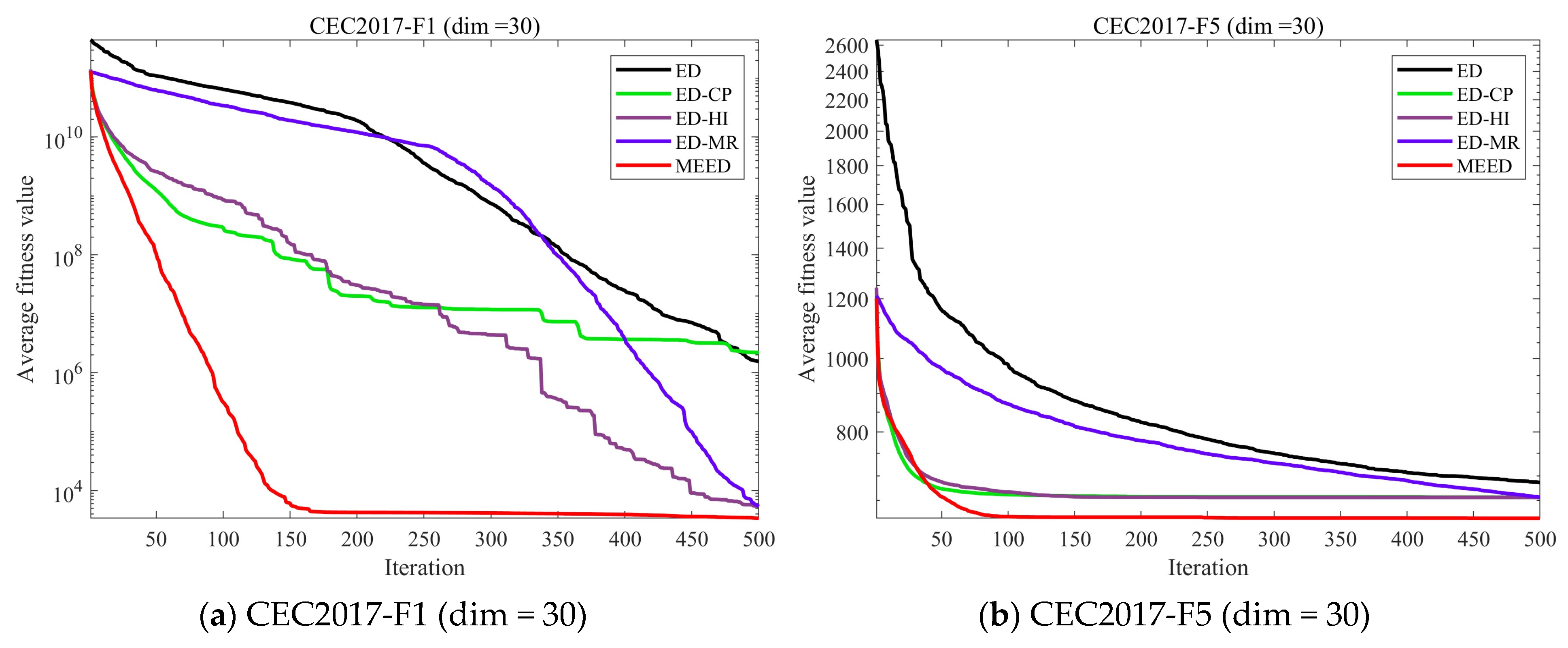
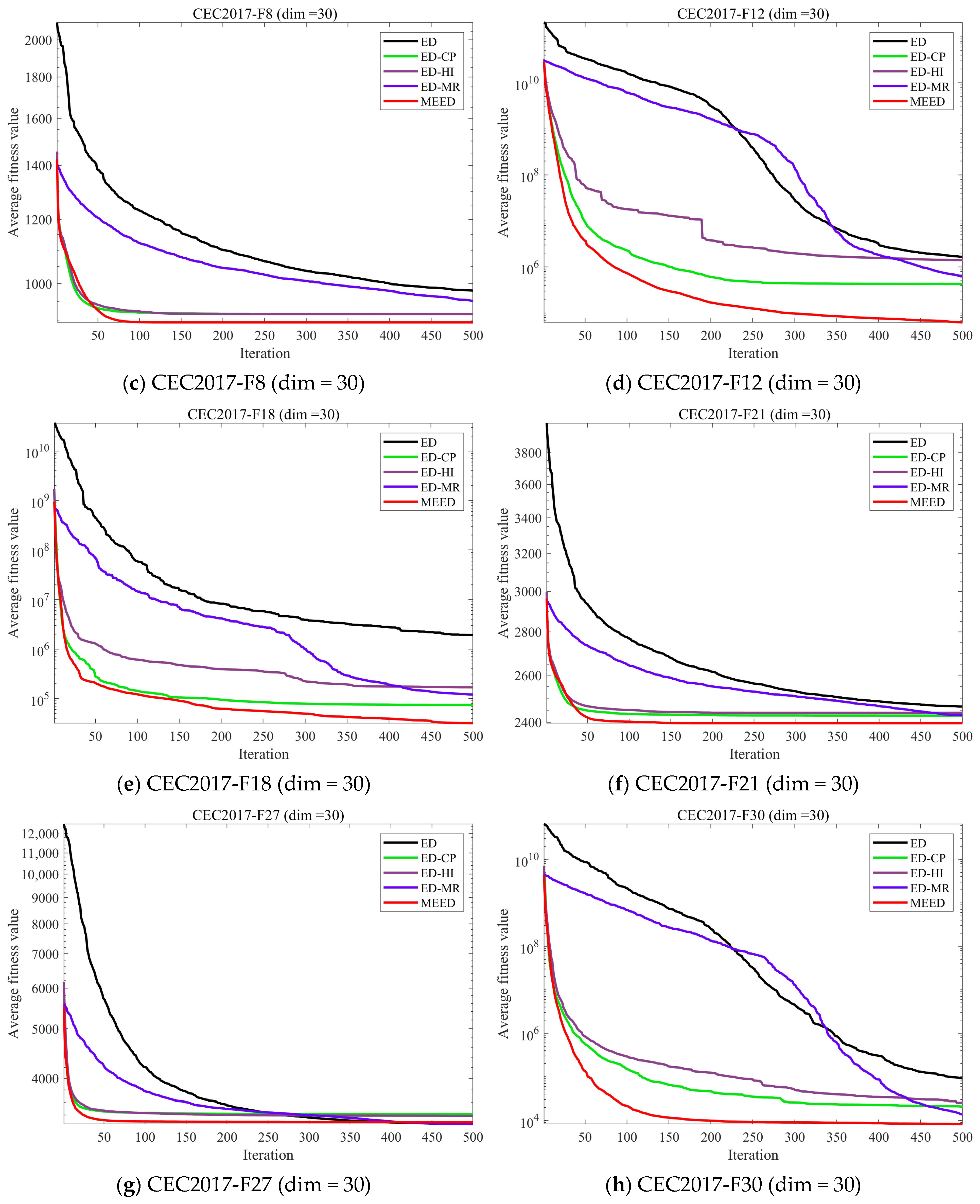
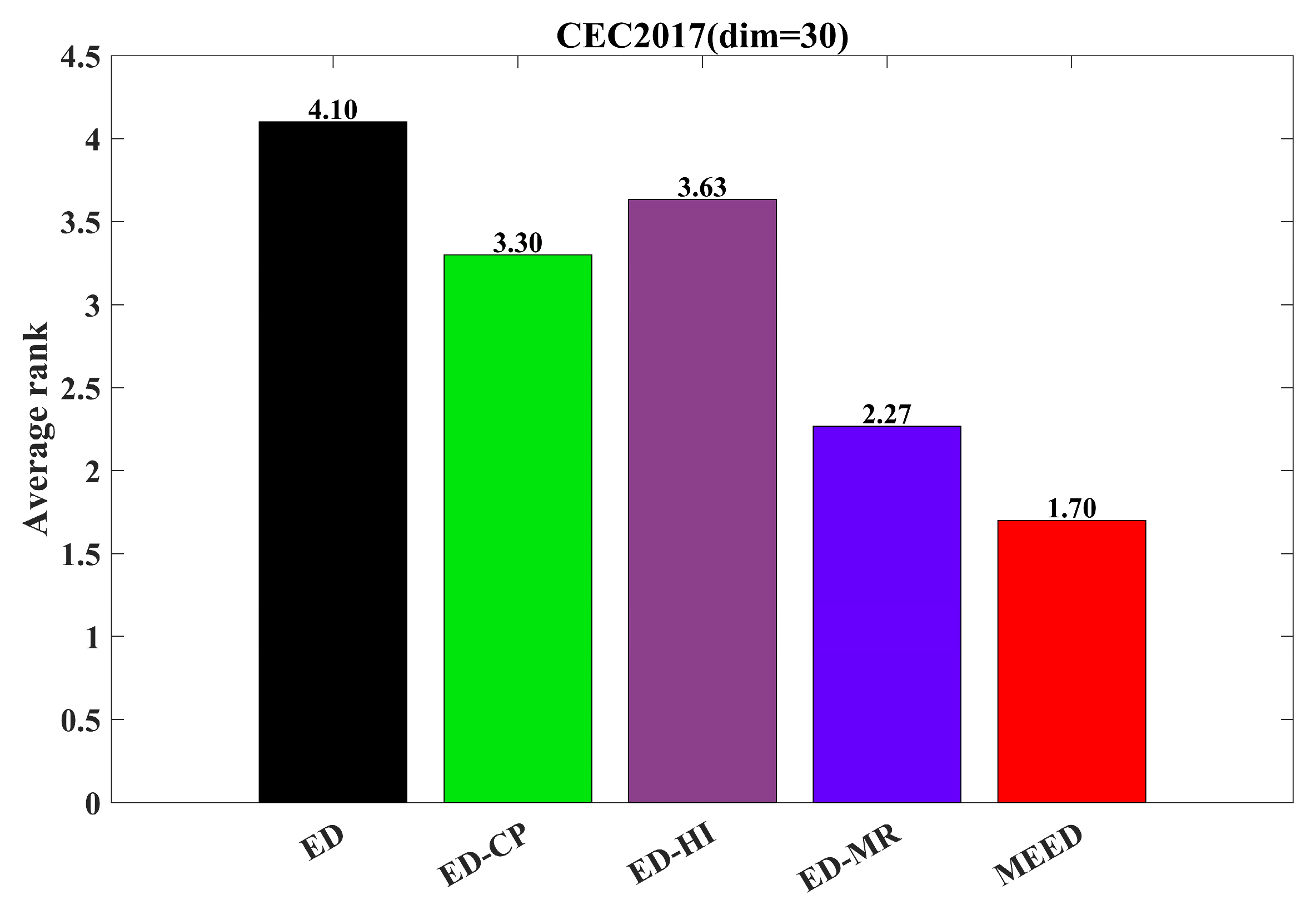
The experiments aim to analyze, through a direct comparison of convergence curves, the impact of each strategy on convergence speed, optimization accuracy, and the ability to escape local optima, thereby providing empirical evidence for the rationality and effectiveness of the multi-strategy fusion adopted in the MEED algorithm. The detailed convergence curve comparisons and average ranking results are illustrated in
Figure 2 and
Figure 3.
Figure 2 compares the convergence performance of the original ED algorithm, its variants incorporating different improvement strategies (ED-CP, ED-HI, and ED-MR), and the final MEED algorithm on the CEC2017 benchmark set. As observed from the subfigures, ED variants that adopt only a single improvement strategy outperform the original ED algorithm in both convergence speed and optimization accuracy. Among them, ED-HI based on hybrid initialization and ED-MR based on mirror-reflection boundary control exhibit particularly prominent performance, confirming that each individual strategy contributes to enhancing the algorithm’s effectiveness. In contrast, the MEED algorithm, which integrates all improvement strategies, consistently maintains the best convergence trend throughout the entire iteration process. It not only achieves rapid fitness reduction in the early stages and quickly widens the performance gap with other algorithms but also continues to approach the global optimum in the middle and late stages without suffering from premature stagnation. For example, on the complex multimodal function F12 and the composite function F27, the convergence curves of MEED are significantly lower than those of the other algorithms, indicating that the synergistic effects of hybrid initialization, historical trend updating, and mirror-reflection boundary control effectively balance global exploration and local exploitation, thereby overcoming the limitations of single-strategy approaches.
Figure 3 presents the performance improvements brought by different strategies to the ED algorithm in a more intuitive manner through average rankings. Due to issues such as random initialization, insufficient utilization of historical information, and improper boundary handling, the original ED algorithm ranks last on average, highlighting its deficiencies in complex optimization problems, including low convergence accuracy and a tendency to fall into local optima. After introducing individual improvement strategies, the average rankings of the ED variants are improved to varying degrees. In particular, ED-HI (hybrid initialization) and ED-MR (mirror reflection) show more substantial ranking improvements, with average ranks reduced to 3.63 and 2.27, respectively, demonstrating the crucial roles of initial population quality enhancement and boundary control in overall algorithm performance. The MEED algorithm, which integrates all three strategies, achieves the best average ranking of 1.70, significantly outperforming all other variants. This result fully validates the effectiveness of multi-strategy collaborative improvement: hybrid initialization establishes a high-quality search foundation, historical trend updating provides efficient convergence guidance, and mirror-reflection boundary control preserves population diversity. Together, these complementary mechanisms enable MEED to exhibit more stable and superior overall performance on 30-dimensional complex optimization problems.
4.3. Comparison Using the CEC2017 Test Set
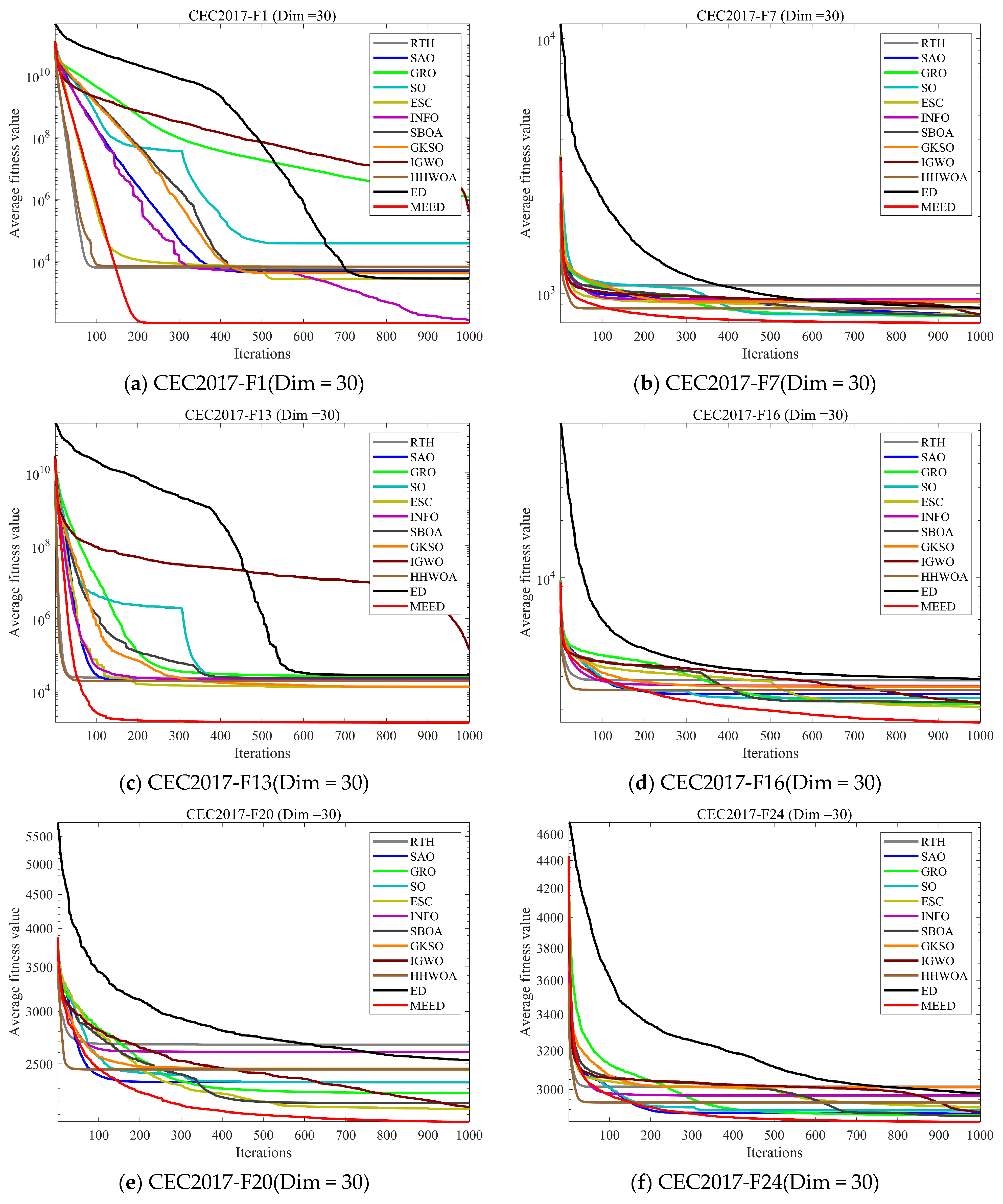
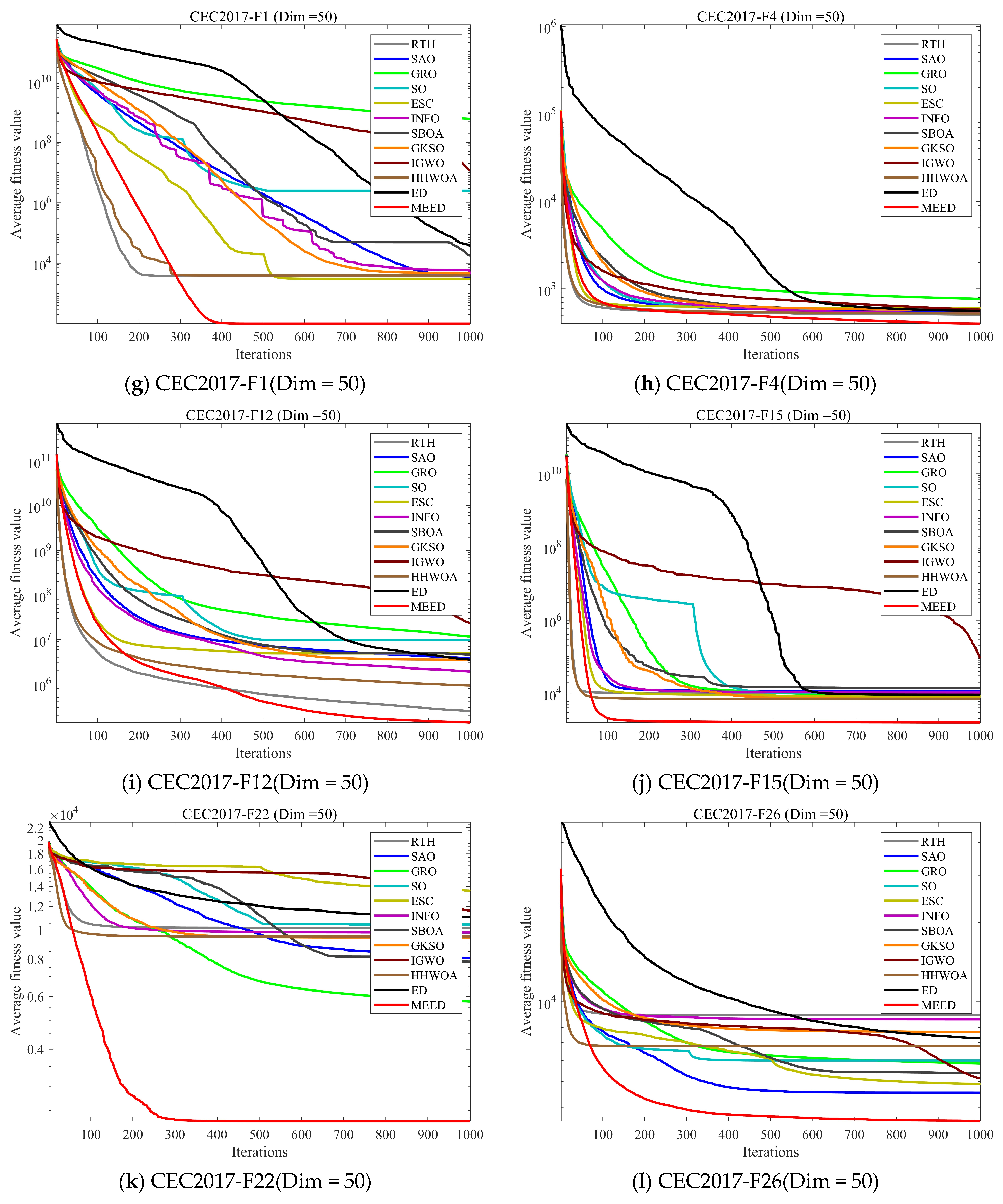
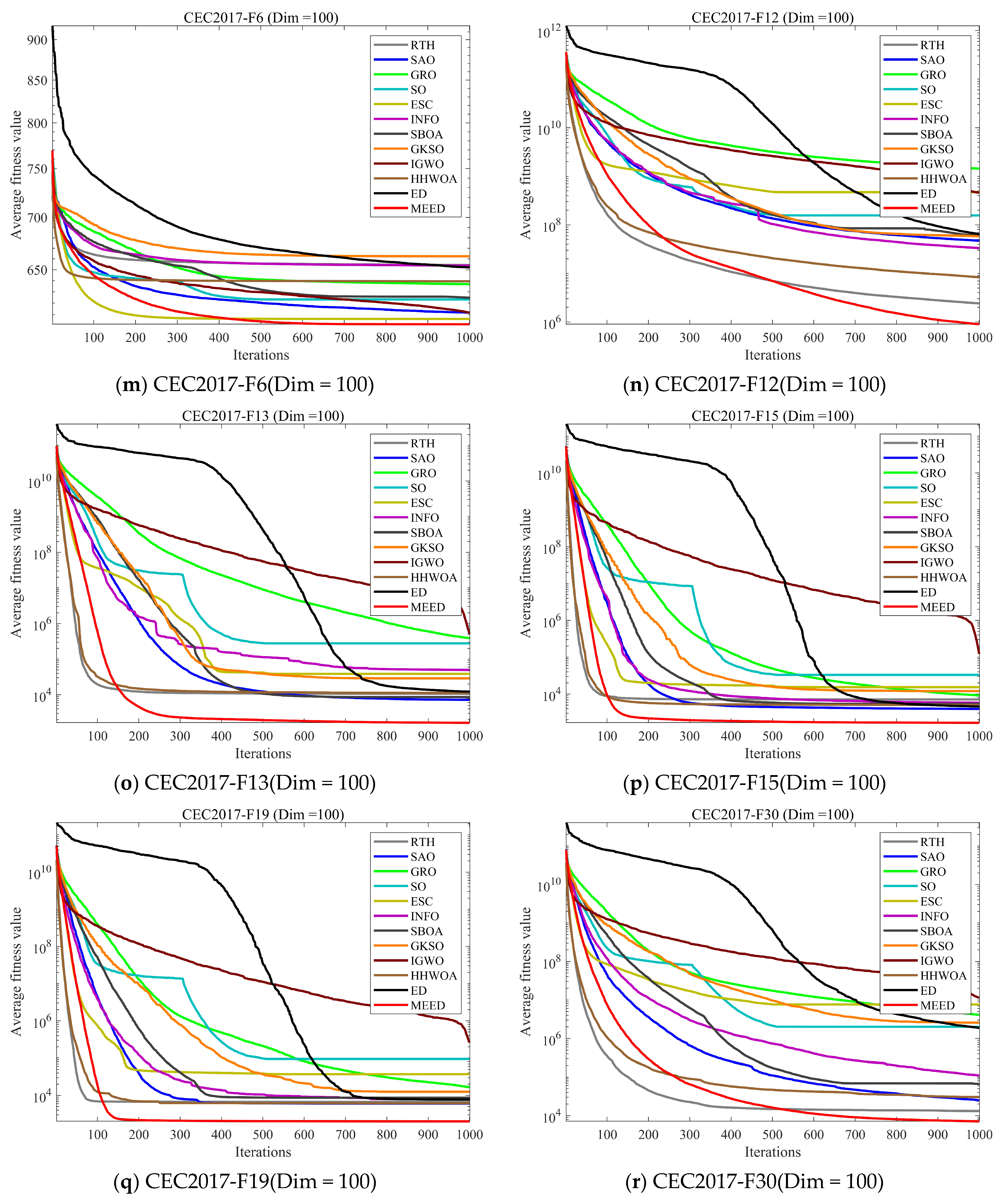
In this subsection, we evaluate the performance of MEED using the CEC2017 test set. We compare MEED against 11 other state-of-the-art algorithms across three dimensionality levels: 30, 50, and 100 dimensions. The convergence curves for each algorithm are shown in
Figure 4. Experimental results for each algorithm on various test functions are presented in
Table 2,
Table 3 and
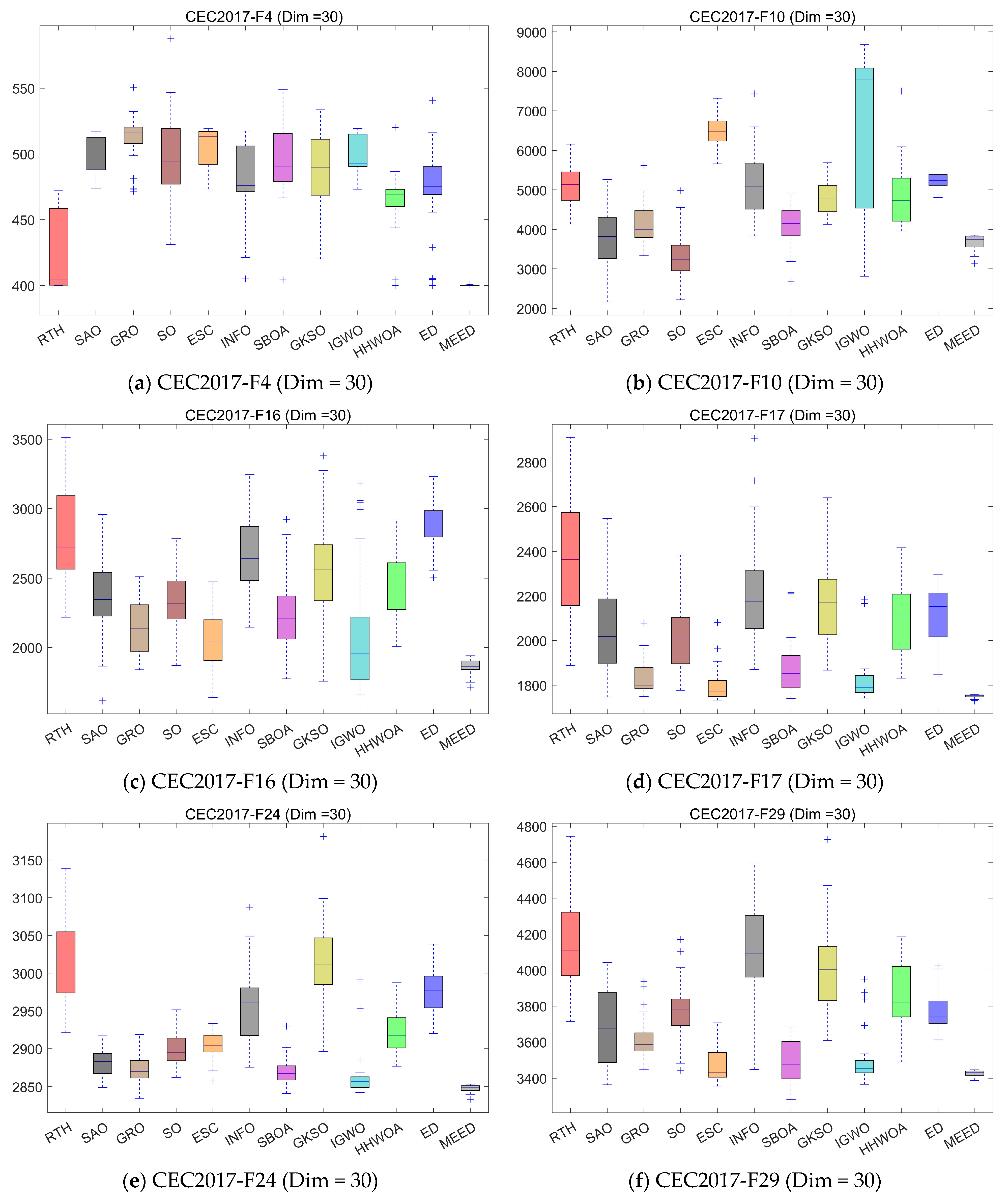
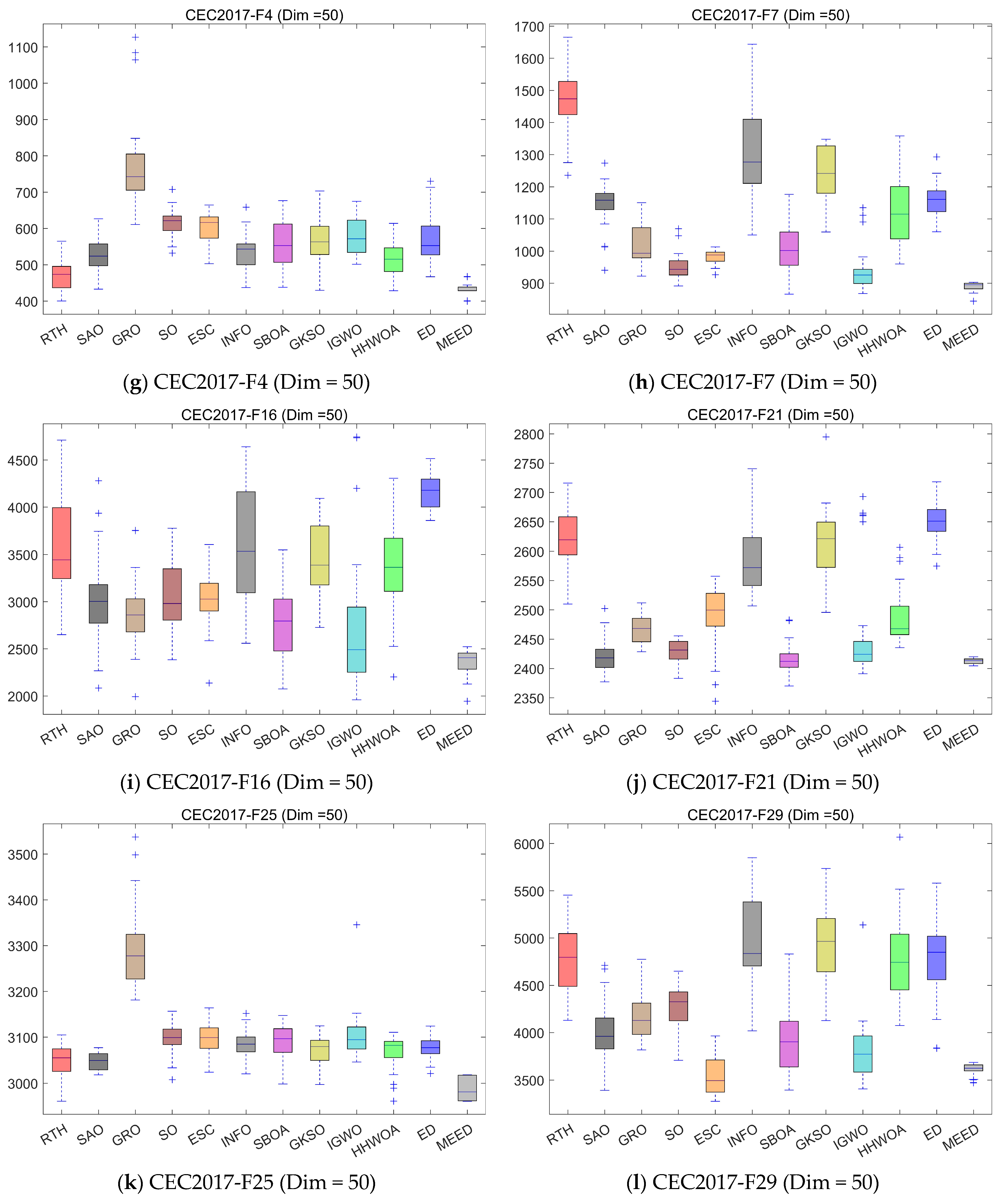
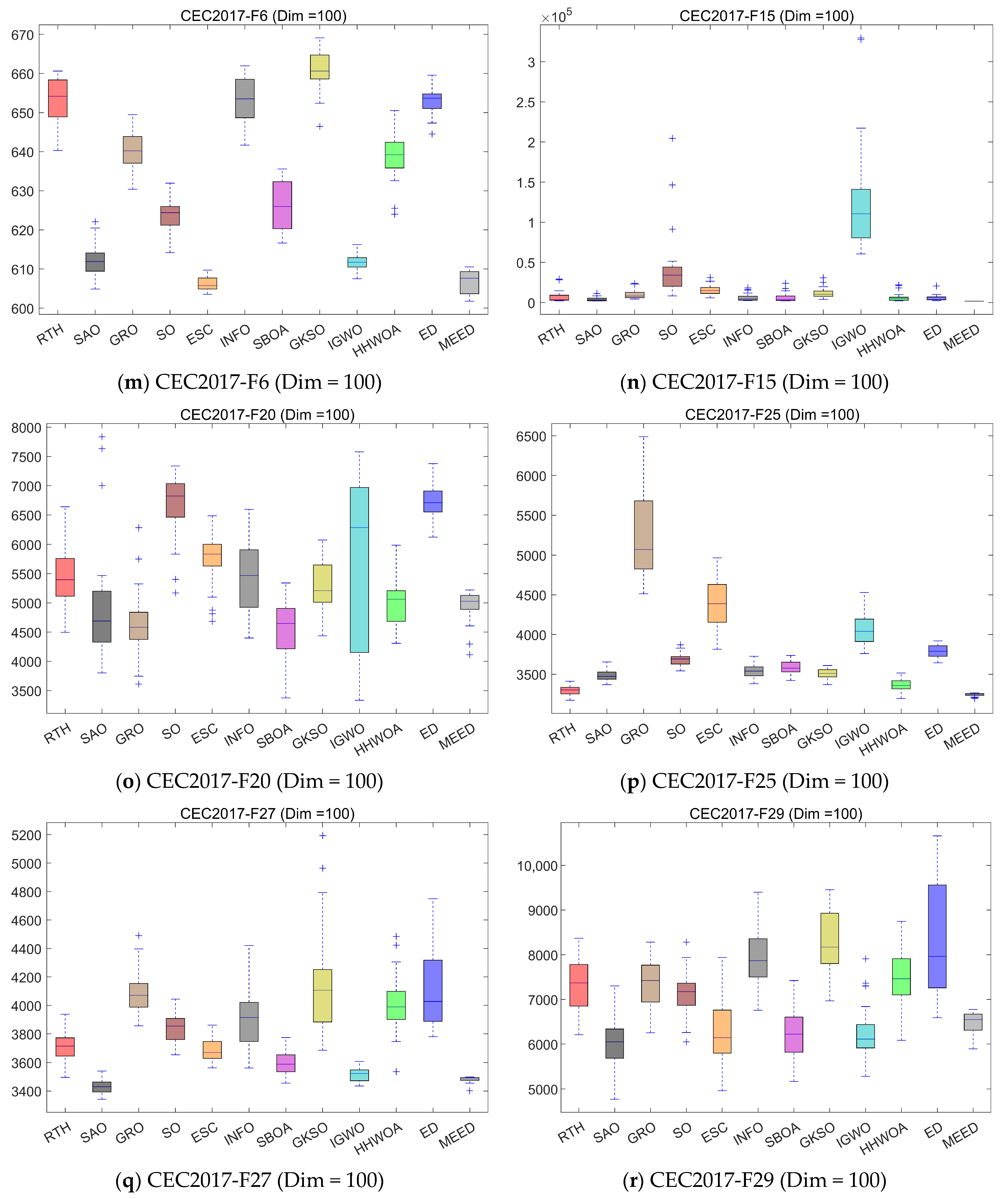
Table 4. Here, “mean” represents the mean of 30 runs, and “std” represents the standard deviation of 30 runs. To provide a comprehensive analysis of the algorithms, box plots of experimental results from 30 runs are displayed in
Figure 5.
Performance analysis under dim = 30: The convergence curves of MEED and the comparison algorithms on six representative CEC2017 benchmark functions (F1, F7, F13, F16, F20, and F24) demonstrate that MEED achieves a significantly faster and more stable convergence process. In unimodal functions such as F1 and F7, MEED rapidly approaches the global optimum within the early stages of iteration, indicating its superior exploitation capability and convergence efficiency. For complex multimodal functions (e.g., F13 and F16), MEED consistently maintains lower average fitness values than other algorithms throughout the optimization process, proving its strong robustness and ability to escape local optima. Furthermore, in hybrid and composite functions such as F20 and F24, MEED still exhibits excellent convergence stability and solution precision, whereas most comparison algorithms show oscillation or premature convergence. These results collectively confirm that the integration of multi-strategy mechanisms in MEED significantly improves both the global exploration ability and local exploitation accuracy, leading to overall superior optimization performance.
Performance analysis under dim = 50: The convergence curves of all algorithms on six representative CEC2017 benchmark functions (F1, F4, F12, F15, F22, and F26) under 50-dimensional conditions further validate the superior optimization capability of MEED. It can be clearly observed that MEED achieves the fastest convergence rate and the lowest final fitness values across almost all test functions. Specifically, in unimodal functions such as F1 and F4, MEED rapidly converges to the global optimum within the first few hundred iterations, demonstrating excellent exploitation ability. In complex multimodal and hybrid functions (e.g., F12, F15, and F22), MEED consistently outperforms other algorithms, showing a strong capacity to escape from local optima and maintain high convergence stability. Even in the highly composite function F26, which presents numerous local minima and rugged landscapes, MEED still achieves the best convergence precision with a smooth and stable descent curve, while other algorithms exhibit stagnation or oscillation behaviors. These results indicate that MEED possesses superior robustness and scalability when addressing high-dimensional and complex optimization tasks. The incorporation of multi-strategy mechanisms enables MEED to balance exploration and exploitation effectively, thereby maintaining high search efficiency even in challenging large-scale optimization scenarios.
Performance analysis under dim = 100: The convergence behaviors of MEED and other algorithms on the 100-dimensional CEC2017 benchmark functions (F6, F12, F13, F15, F19, and F30) further demonstrate the outstanding scalability and robustness of the proposed algorithm. With the increase in problem dimensionality, the search space becomes exponentially more complex, and the risk of premature convergence grows substantially. However, MEED consistently achieves the fastest convergence speed and the lowest average fitness values among all comparison algorithms. For instance, in relatively smooth unimodal functions such as F6, MEED exhibits a rapid and stable descent trend, reaching near-optimal regions within the early iterations. For multimodal and hybrid functions such as F12, F13, F15, and F19, MEED maintains excellent stability and avoids local stagnation, effectively balancing exploration and exploitation in high-dimensional landscapes. Even on the highly composite and challenging function F30, MEED achieves the most stable convergence curve and the smallest final fitness value, while other algorithms show evident oscillations or premature convergence. These results clearly confirm that MEED possesses strong adaptability to large-scale optimization problems. The synergistic design of its hybrid initialization, mirror-reflection boundary handling, and historical trend-guided update mechanism allows MEED to maintain population diversity, strengthen search guidance, and ensure high-precision convergence even in complex high-dimensional search spaces.
Across all dimensional settings, MEED consistently achieves the best convergence performance and the lowest solution errors compared with other advanced metaheuristic algorithms. The results confirm that the hybrid strategy design of MEED effectively improves convergence speed, prevents premature convergence, and enhances global optimization capability. Moreover, the algorithm exhibits strong scalability, maintaining excellent performance even as the problem dimensionality increases from 30 to 100, which highlights its robustness and potential for solving large-scale and real-world optimization problems.
4.4. Statistical Analysis
Statistical analysis plays a crucial role in verifying the reliability and significance of the obtained optimization results. Since metaheuristic algorithms are stochastic in nature, their performance can vary across multiple independent runs due to random initialization and probabilistic operators. Therefore, relying solely on mean or best fitness values may lead to misleading conclusions. By employing non-parametric statistical tests, such as the Wilcoxon rank-sum test and the Friedman test, the robustness and statistical significance of the proposed algorithm’s superiority can be quantitatively validated. These tests help determine whether the performance improvements are genuinely significant or merely due to random chance, thereby ensuring the fairness and credibility of algorithmic comparisons. In this subsection, we conducted the Wilcoxon rank-sum test and Friedman mean rank test on MEED, with specific details as follows:
4.4.1. Wilcoxon Rank Sum Test
The Wilcoxon rank-sum test, also known as the Mann–Whitney U test, is a non-parametric statistical method used to evaluate whether two independent samples come from the same distribution. Unlike parametric tests such as the t-test, the Wilcoxon test does not assume that the data follow a normal distribution, making it particularly suitable for evaluating the stochastic performance of metaheuristic algorithms, where the results often exhibit non-Gaussian characteristics due to random initialization and probabilistic operators.
In this subsection, the Wilcoxon rank-sum test was employed at a 5% significance level (α = 0.05) to compare the performance of the proposed MEED algorithm with other benchmark algorithms across multiple independent runs. The null hypothesis (H
0) assumes that there is no significant difference between the two algorithms, while the alternative hypothesis (H
1) suggests a statistically significant difference. A
p-value < 0.05 indicates that H
0 can be rejected, confirming that the observed performance difference is statistically significant.
Table 5,
Table 6 and
Table 7 present experimental results across three dimensions for 11 comparison algorithms on the CEC2017 test set. The data reveal that MEED exhibits significant differences from the comparison algorithms on most test functions.
4.4.2. Friedman Mean Rank Test
The Friedman test is a non-parametric statistical test commonly used to compare the performance of multiple algorithms over a set of benchmark problems. It serves as the non-parametric alternative to the repeated-measures ANOVA and is particularly suitable for algorithmic performance comparison when the assumptions of normality and homoscedasticity are not satisfied.
In this subsection, the Friedman test was applied to evaluate the overall performance differences among all compared algorithms across multiple benchmark functions. For each problem, the algorithms were ranked according to their average fitness values, where a lower rank indicates better performance.
Table 8 presents the experimental results of MEED and its comparison algorithms across three dimensions on the CEC2017 test set. “
” represents the average ranking achieved by the algorithm across 30 test functions, while “
” denotes the final ranking obtained by the algorithm on one dimension of the test set.
As can be seen from the experiment results, in the 30-dimensional scenario, the MEED algorithm achieved an average ranking of 1.57 and ranked first overall, while SBOA—the relatively better-performing algorithm among others—had an average ranking of 5.17, significantly higher than MEED. In the 50-dimensional scenario, MEED’s average ranking was 1.90, and the second-best SAO had an average ranking of 4.5, still showing a noticeable gap compared to MEED. Even when dimensions increased to 100, MEED maintained optimal performance with an average rank of 3.2. Notably, compared to the unmodified ED, it achieved the worst performance across all three dimensions. In summary, MEED demonstrates superior optimization performance and robustness compared to algorithms like SAO, SBOA, and IGWO in complex multi-dimensional optimization problems, maintaining stable and excellent optimization results across different dimensional scenarios.
6. Conclusions
This paper proposes a multi-strategy enhanced enterprise development (MEED) optimization algorithm suitable for photovoltaic model parameter estimation. First, a hybrid initialization method based on chaotic mapping and adversarial learning mechanism is introduced to enhance the initial population quality, enabling the algorithm to explore the potential search space more effectively. Subsequently, a trend position update method based on historical information is introduced to accelerate convergence toward the global optimum. Furthermore, the boundary control method based on mirror reflection significantly enhances the algorithm’s exploration capability, effectively avoiding local optima traps. Comparative evaluations against 11 other algorithms using the IEEE CEC2017 test set, combined with statistical analysis, validate the superiority of MEED. Experimental results demonstrate that MEED exhibits significant advantages. Additionally, the MEED method was applied to parameter identification for single-diode (SDM) and dual-diode (DDM) photovoltaic models. Experiments based on real measurement data demonstrate the effectiveness and reliability of MEED in addressing complex engineering optimization problems, providing a robust and efficient solution for precise modeling and optimization of photovoltaic systems.
Future studies could further broaden the application scope of MEED, including its utilization in parameter optimization for wind energy systems and electricity load prediction within other complex renewable energy scenarios. Moreover, coupling adaptive parameter adjustment strategies with multi-objective optimization frameworks is expected to greatly improve the algorithm’s flexibility in handling dynamic and multi-constraint optimization tasks.