
Review

The Fungus Among Us: Innovations and Applications of Mycelium-Based Composites
1
Centre for Future Materials (CFM), University of Southern Queensland, Toowoomba, QLD 4350, Australia
2
School of Agriculture and Environmental Sciences, University of Southern Queensland, Toowoomba, QLD 4350, Australia
3
School of Health and Medical Sciences, University of Southern Queensland, Toowoomba, QLD 4350, Australia
4
School of Agriculture and Food Sustainability, University of Queensland, St. Lucia, QLD 4072, Australia
*
Author to whom correspondence should be addressed.
J. Fungi 2025, 11(8), 549; https://doi.org/10.3390/jof11080549
Submission received: 24 June 2025 / Revised: 11 July 2025 / Accepted: 18 July 2025 / Published: 23 July 2025

Abstract

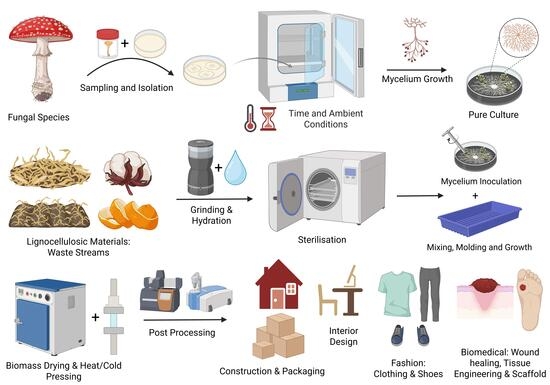
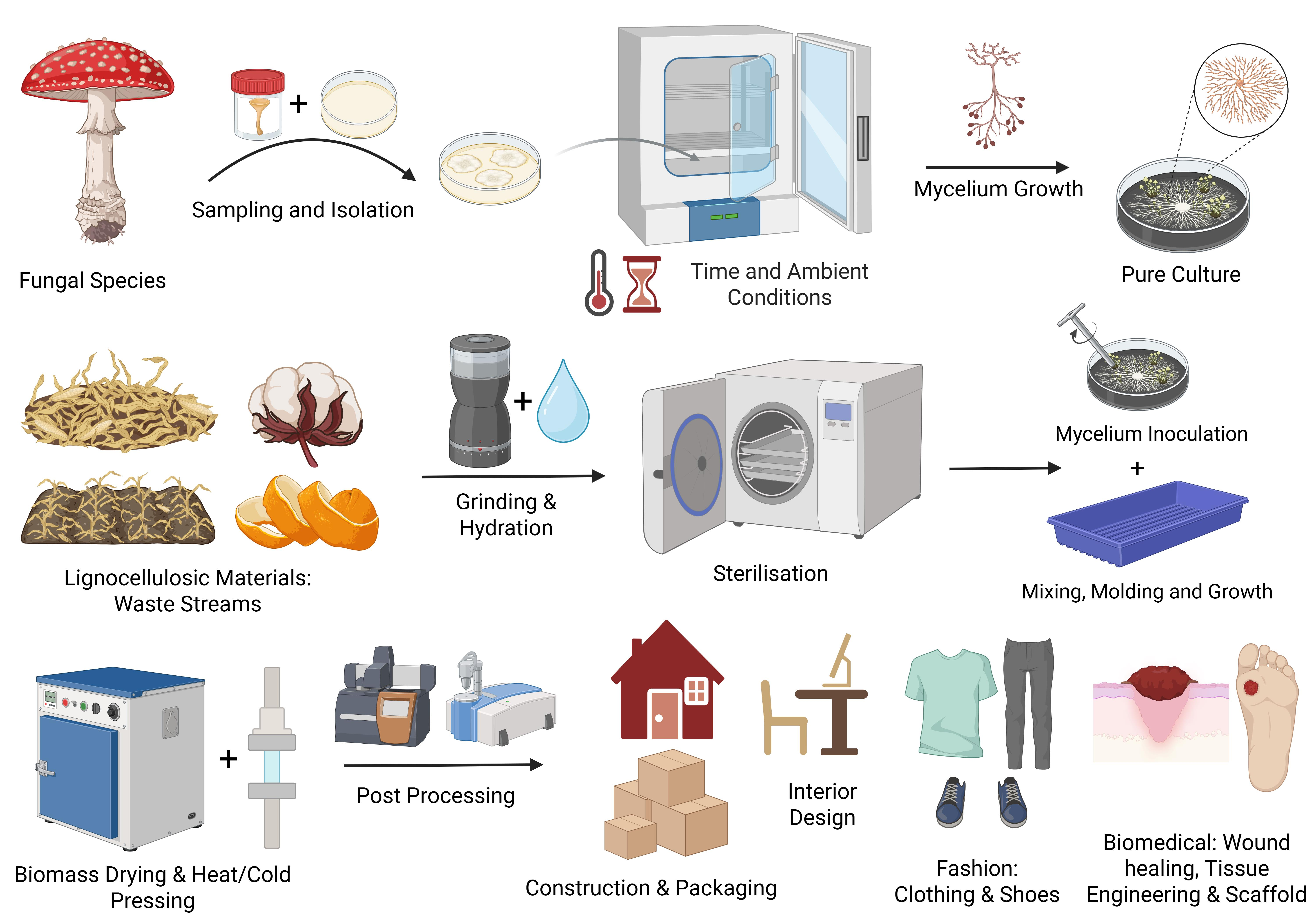
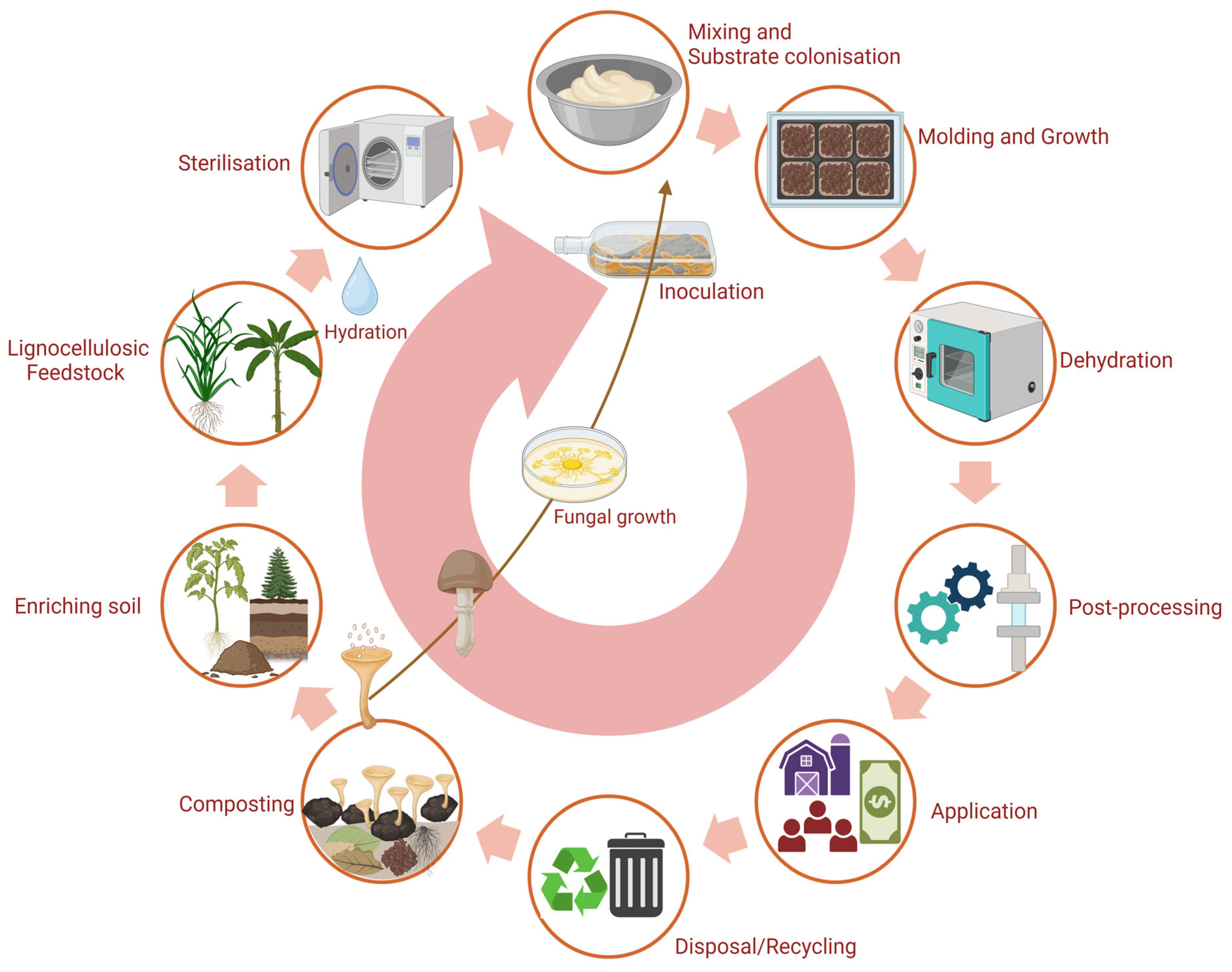
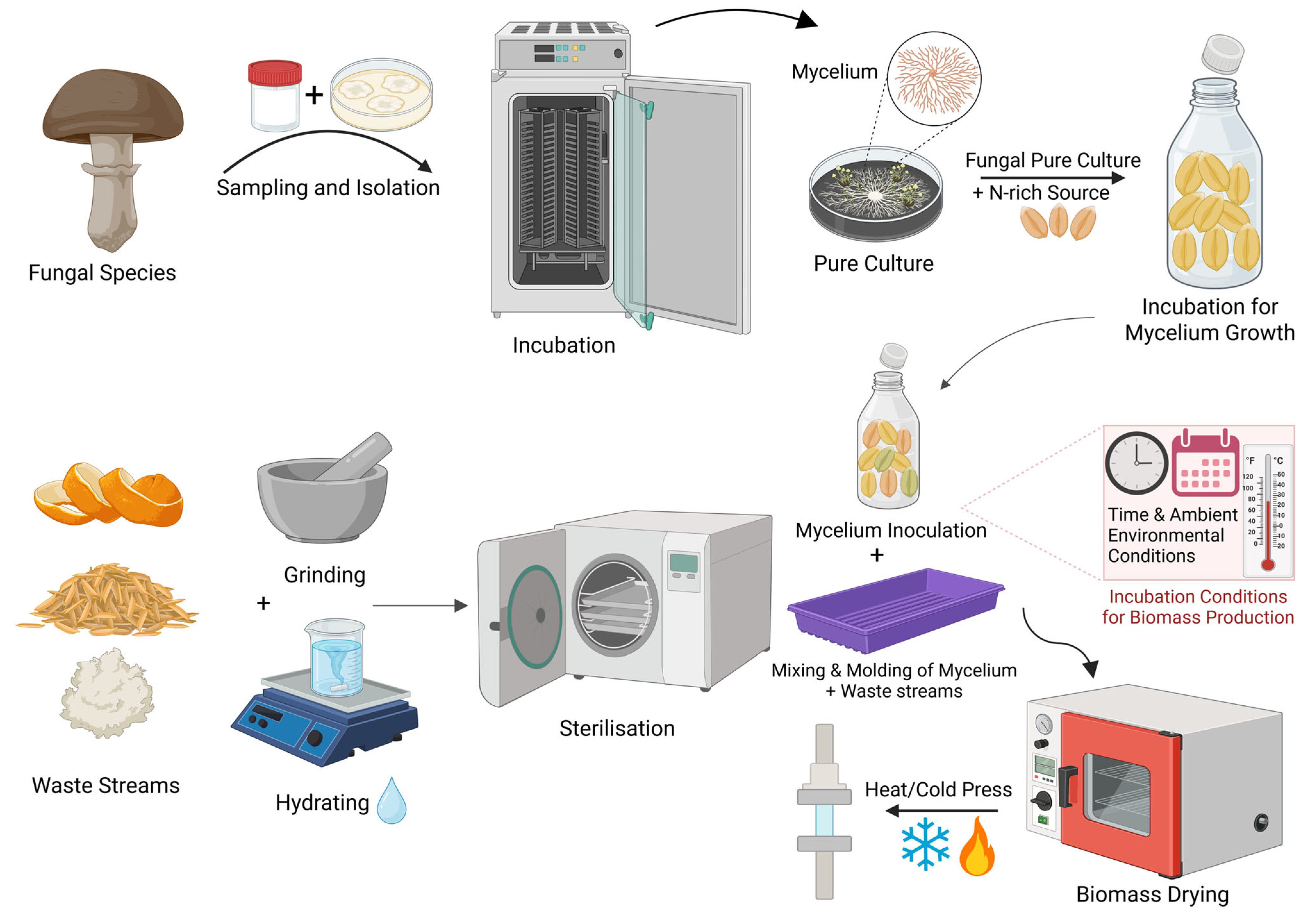
Mycelium-based composites (MBCs) are an emerging category of cost-effective and environmentally sustainable materials that are attracting significant research and commercial interest across various industries, including construction, manufacturing, agriculture, and biomedicine. These materials harness the natural growth of fungi as a low-energy bio-fabrication method, converting abundant agricultural by-products and waste into sustainable alternatives to energy-intensive synthetic construction materials. Their affordability and eco-friendly characteristics make them attractive for both research and commercialisation. Currently, mycelium-based foams and sandwich composites are being actively developed for applications in construction. These materials offer exceptional thermal insulation, excellent acoustic absorption, and superior fire safety compared to conventional building materials like synthetic foams and engineered wood. As a result, MBCs show great potential for applications in thermal and acoustic insulation. However, their foam-like mechanical properties, high water absorption, and limited documentation of material properties restrict their use to non- or semi-structural roles, such as insulation, panelling, and furniture. This paper presents a comprehensive review of the fabrication process and the factors affecting the production and performance properties of MBCs. It addresses key elements such as fungal species selection, substrate choice, optimal growth conditions, dehydration methods, post-processing techniques, mechanical and physical properties, termite resistance, cost comparison, and life cycle assessment.
Keywords: fungal mycelium; biocomposite; sustainability; waste stream; MBC fungal mycelium; biocomposite; sustainability; waste stream; MBC
Graphical Abstract