


Abstract
We discuss the potential usefulness of molecular testing of soil, dust, and water samples to detect medically important parasites, and where such testing could be used to supplement stool sampling in humans. A wide variety of parasites including protozoa and helminths, many of which are zoonotic, have an important infection reservoir in the environment. In some cases, this environmental period is essential for further parasite development. We describe the progress in implementing methods for the molecular detection of these parasites in soil across eight collaborating centers in Latin America and represent a variety of potential applications in improving our understanding of parasite epidemiology and mapping, surveillance, and control of these parasites. This methodology offers new opportunities for improving our understanding of a wide variety of parasites of public health importance and novel tools for their control.
1. Introduction
Human parasitic infections acquired from the environment are estimated to infect several billion people worldwide [1]. These infections are most prevalent in children living in urban neighborhoods and rural communities in conditions of inadequate clean water and sanitation in tropical and temperate regions, especially in low- and middle-income countries (LMICs). Among these parasites are intestinal protozoa (e.g., Giardia intestinalis and Cryptosporidium spp.), soil-transmitted helminths (STH—e.g., Ascaris lumbricoides, Trichuris trichiura, hookworms, and Strongyloides stercoralis), and zoonotic infections (e.g., Toxocara spp.). In most endemic settings, individuals may be infected with more than one parasite at any time and with several parasites over their life span. Infections are generally acquired through ingesting contaminated food, water, geophagy, and other contact forms with fecal-contaminated soil. Infections with these parasites during childhood have been associated with significant mortality and morbidity, the latter primarily mediated through chronic nutritional deficits, anemia, and impaired childhood growth and development [2].
2. Soil as a Reservoir for Parasite Infections
In the case of protozoal cysts and helminth eggs, infectious stages of parasites in the environment can survive for extended periods in the soil, generally for months to years. For some parasites, the soil is a necessary part of their life cycles: eggs of some parasite species require a period of embryonation (e.g., A. lumbricoides and T. trichiura) before becoming infectious. In contrast, those of other species hatch into infectious larvae (e.g., hookworms) or undergo further larval development (e.g., Strongyloides stercoralis). Soil represents an important environmental reservoir for these infections. The long-term survival of infectious stages in the environment, whether as cysts, eggs, or larvae, depends on several factors, including soil type and characteristics (e.g., pH), climate (temperature and humidity), and shade. The presence of infectious stages in the environment, their density and dispersal, and the opportunities for transmission are likely important determinants of the endemicity of any specific parasite in any geographic locality.
3. Soil and Stool Sampling
Epidemiological studies of environmental parasites in endemic communities rely on stool sampling or other diagnostic methods from members of whole communities or specific groups considered to be at the greatest risk [3]. For example, STH prevalence studies often sample stools from children of school age because they are both easily accessible in schools and an important reservoir of infection. Stool sampling, particularly in large surveys, can be expensive and logistically challenging, requiring repeated visits to schools or communities, often by experienced field teams, while social and cultural factors may limit participation rates. We successfully used a multi-parallel real-time quantitative Polymerase Chain Reaction (qPCR) platform designed for use with stool samples for use with a variety of environmental samples including soil, dust, and water samples. Multiparallel qPCR is a molecular test developed to quantify the amount of parasite DNA in stool samples and is run separately for each parasite (i.e., multiparallel). This qPCR platform has now been successfully applied in multiple settings including in the USA [4,5,6], Latin America [7,8,9,10,11,12], and Africa [13,14]. Soil testing would complement stool sampling and be advantageous for the epidemiological mapping of enteric parasites, particularly those that cause significant morbidity and are amenable to control strategies. In addition, soil sampling could be used for studies of routes and intensity of transmission of a variety of parasitic pathogens, including emerging and zoonotic infections that may not be detectable in human stool samples (e.g., Toxocara spp. and Angiostrongylus spp.).
4. A Robust and High Throughput Molecular Assay for the Detection of Parasites in Soil, Dust, and Water
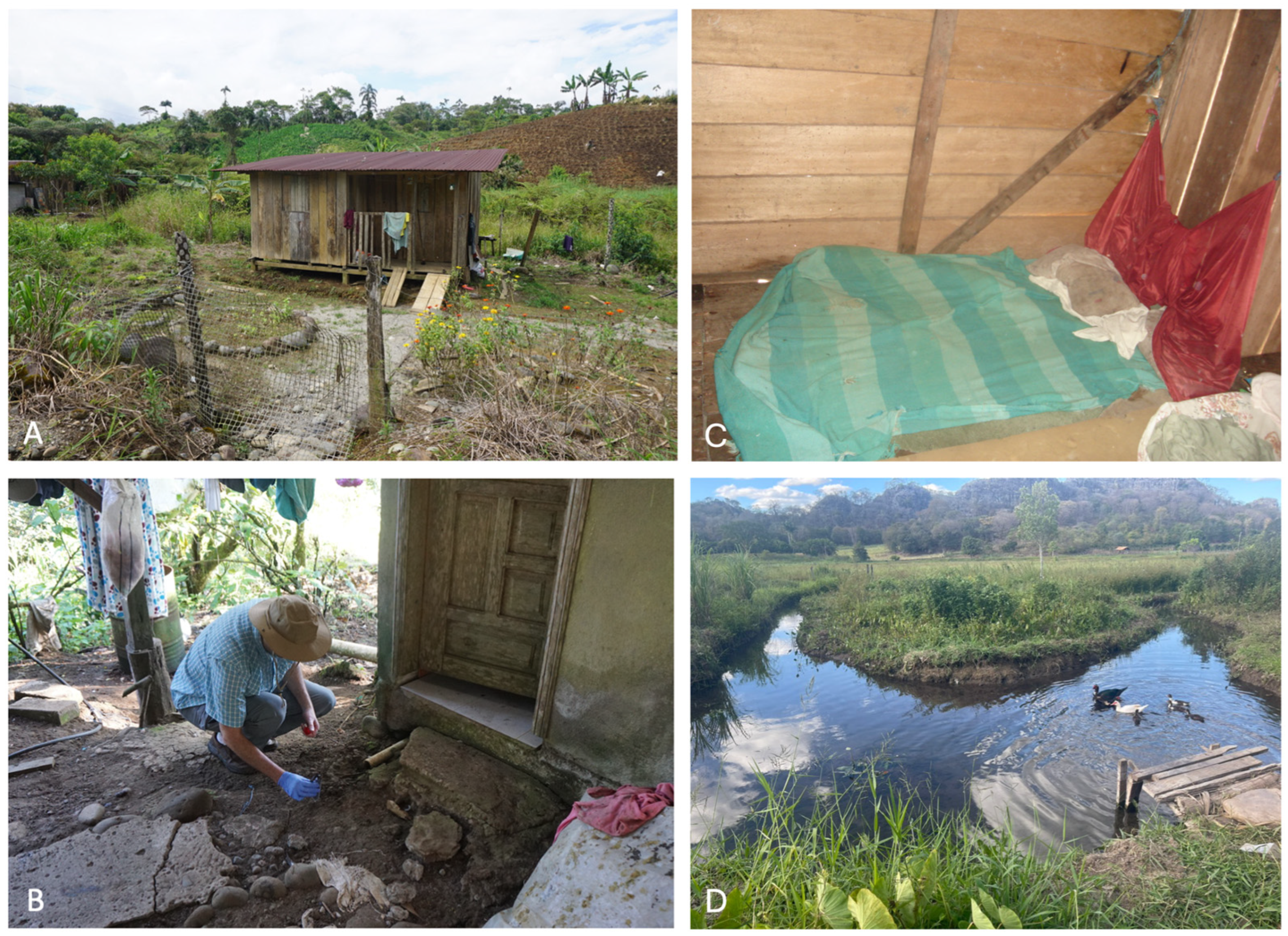
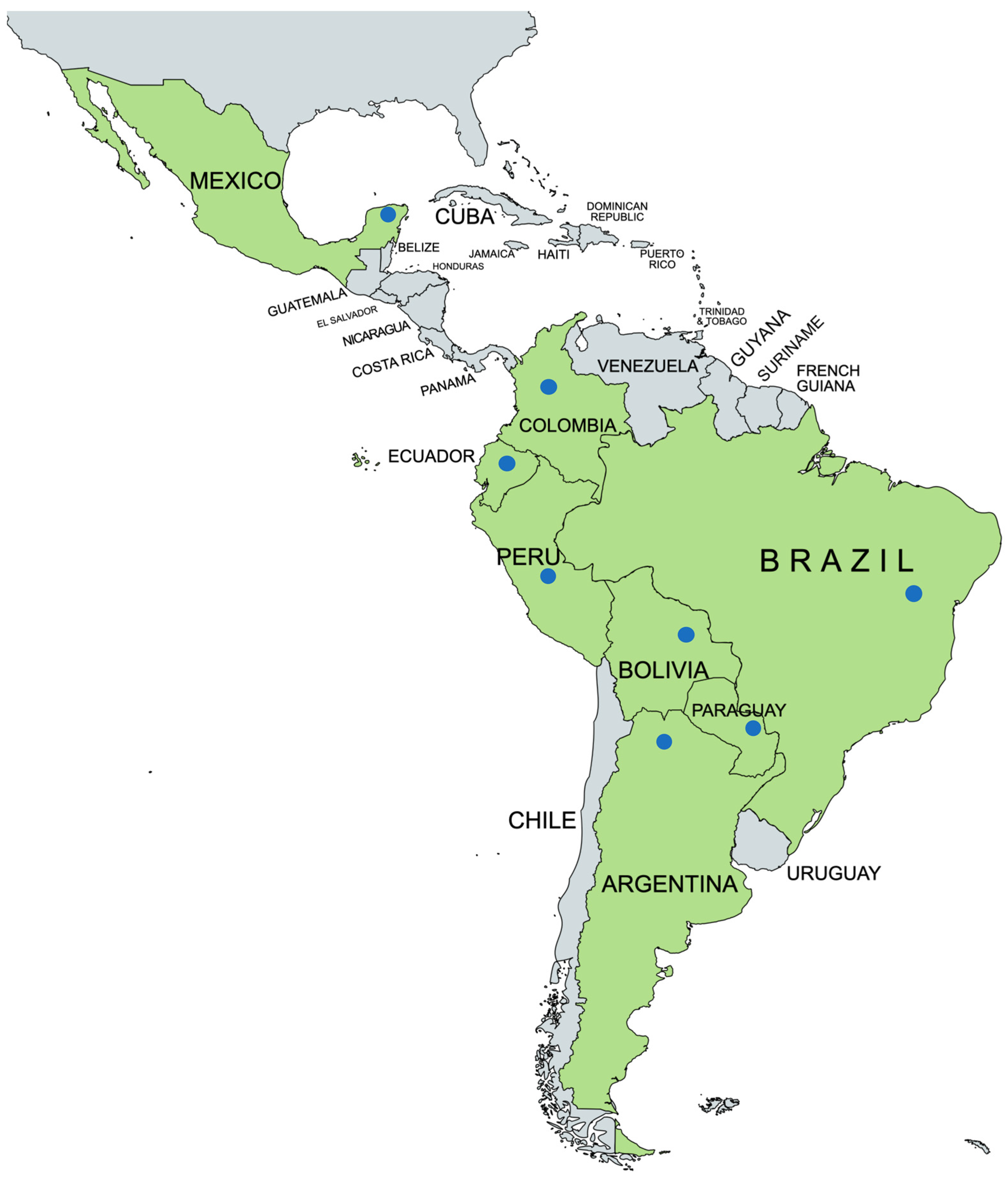
We evaluated the utility of qPCR-based screening for parasite infections in soil, dust, and water samples around households (Figure 1) and community centers in rural communities known to be endemic for a variety of STH and protozoan parasites in eight Latin American countries (Argentina, Bolivia, Brazil, Colombia, Ecuador, Mexico, Paraguay, and Peru) (Figure 2). Before its use in Latin America, our soil and qPCR assays were used throughout the USA. A soil study of urban parks in New York City showed a higher prevalence and parasite burden of Toxocara in poorer neighborhoods [15]. Another study of parasites in playground soil from indigenous Paiute reservations in Utah has similar associations of parasites with poverty [16]. Finally, a multi-state soil study in rural Southern USA (Texas, Louisiana, Mississippi, Alabama, and South Carolina) consistently revealed parasite burden and prevalence with high poverty rates [17]. Apart from considerations of climate and soil, the presence, dispersal, and density of enteric parasites in soil are likely to directly reflect the epidemiology of these parasites in communities where human populations live. We used highly specific and sensitive qPCR to map the spatial epidemiology of multiple enteric parasites within these communities. The parasites evaluated included anthroponotic and zoonotic helminths (Ancylostoma duodenale, Ancylostoma ceylanicum, Ascaris lumbricoides, Necator americanus, Strongyloides stercoralis, Taenia solium, Trichuris trichiura, Toxocara canis/cati) and protozoa (Acanthamoeba spp., Blastocystis, Cryptosporidium spp., Entamoeba histolytica, and Giardia intestinalis). These data have provided information on potentially important sites of transmission within households and communities for a range of different protozoal and helminth parasites, including zoonotic infections. Outdoor sampling can be extended to samples collected indoors on different surfaces, including dust. For example, we showed that mattress and floor dust samples from the beds of children living in rural communities have significant rates of parasite contamination—for example, in one analysis, 39% of mattress samples were positive for A. lumbricoides and positivity was strongly associated with the presence of active infections [18] (Figure 1C—a typical bed in Esmeraldas Province, Ecuador). Parasites including G. intestinalis, Blastocystis, Cryptosporidium, and the trematode, Schistosoma mansoni in Brazil, were also detected in the water samples (Figure 1D). Of course, detecting DNA by qPCR could reflect non-viable parasites rather than viable infectious parasites. Still, several methods could be used to determine the potential for transmission. Among these are the incorporation of vital dyes into living cells or the detection of mRNA [19]. Because the qPCR assays we used can detect as little as 1 fg/µL of DNA, their exquisite sensitivity must be considered, particularly if parasite viability measures are impractical, as may be the case in many settings. Under such circumstances, it may be possible to define quantitative thresholds below which it is unlikely that viable parasite stages of specific parasites are present in any specific setting. Further, extracted DNA from parasite-contaminated soil could be used for surveillance of genetic resistance markers for anthelmintic and antiprotozoal drugs.
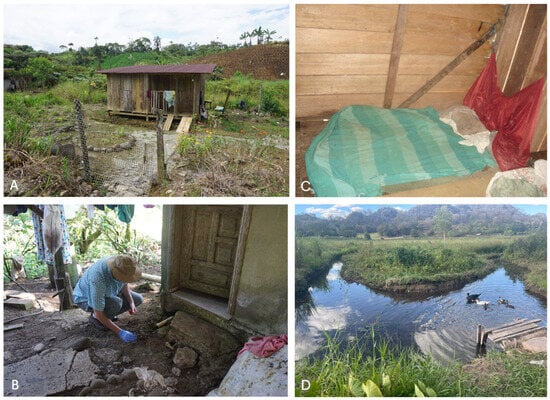
Figure 1.
(A)—Soil samples were collected in the environment (i.e., in front of the front door, in the porch area, and front of the latrine) around this rural household in the Amazon region of Ecuador. (B)—Collection of peri-domestic soil samples in Ecuador. (C)—A typical bed where dust was collected in Esmeraldas Province, Ecuador. (D)—Local streams and waterways used for bathing and washing and which are sources of Schistosoma mansoni exposure in Januária, Brazil.
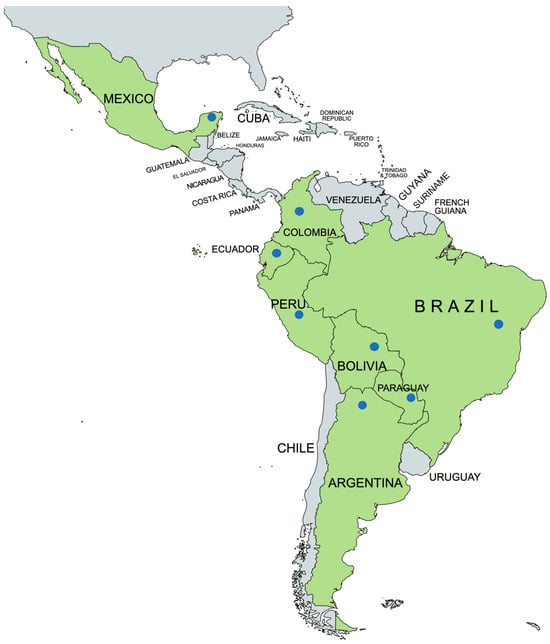
Figure 2.
Map showing locations of collaborating centers in Latin America for our collaborating research group on using molecular methods for parasite detection in soil samples. Including sites in Argentina, Bolivia, Brazil, Colombia, Ecuador, Mexico, Paraguay, and Peru.
5. Soil and Water Assays across Field Sites in Latin America
Other research groups have developed methods for molecular testing of soil and other samples for STH parasites [20]. Our soil sampling method has the advantage of easy use and standardization across laboratories. The methods can be easily adapted for other environmental samples, such as household dust. Additionally, it offers the flexibility of a simple extraction method that can be performed in unsophisticated laboratories at field sites using inexpensive and widely available equipment with more centralized molecular testing where appropriate (Figure 1). The assays are currently being standardized across eight collaborating laboratories within a Latin American research network. Our sampling method draws on standardized multi-parallel qPCR assays developed for molecular diagnostics of enteric parasites in stool samples in resource-limited settings [7].
Further, the technique allows relatively high throughput testing of samples when using a 96-well plate format. In contrast, the high specificity of the assays allows human and animal parasites to be distinguished easily. Further studies must define the number of soil samples required to estimate potential transmission risks (or exclude significant risks) for a specific infection in a community or defined geographic area.
6. The Assays Have Wide Potential Applicability
The use of molecular assays to detect enteric parasites in soil and other environmental samples has a wide variety of potential applications: examples of potential uses are provided in Table 1. For example, in the case of STH control programs, mapping of prevalent STH in unmapped regions could use soil sampling as a rapid method before stool surveys to determine the need for preventive chemotherapy in communities. The technique may be particularly useful in populations of low parasite transmission where infections are likely undetectable by standard microscopic methods. Given the growing interest in moving beyond morbidity control to elimination of transmission of STH infections in some formerly endemic settings [21], in populations where STH transmission is thought to have been interrupted or is close to being interrupted, soil sampling may be more sensitive than screening of stools at a populational level. Longitudinal sampling could be performed in sentinel communities, as with other helminth elimination programs [22], with sampling focused on collecting relatively few soil samples from community centers or schools where ongoing or recrudescence of transmission could be monitored. In such circumstances, viability measurement will be important as intact DNA in old and degenerate eggs may otherwise give positive results. Similarly, post-treatment and post-certification surveillance could be carried out most efficiently using soil sampling at key sites in sentinel communities. It may be important to do surveillance for the emergence of genetic markers of resistance to benzimidazole drugs under conditions of periodic preventive chemotherapy, particularly if community-wide mass drug treatments are being given [23].

Table 1.
Examples of potential uses of soil and other environmental sampling for detecting enteric parasites in the environment. STH—soil-transmitted helminths. WASH—water, sanitation, and hygiene.
Genetic markers of resistance could be detected in soil samples before a loss of drug efficacy is detectable in treated populations, and community soil sampling would allow such surveillance to be performed relatively easily and cost-effectively. Control programs for other enteric parasites, if and when considered feasible and cost-effective, could use a similar strategy for initial mapping followed by measurement of impact on the transmission of Water, Sanitation, and Hygiene (WASH) strategies or chemotherapy.
7. Conclusions
The availability of molecular assays for the detection of enteric parasites in soil and other environmental samples using high throughput methodology that can be applied easily in resource-limited settings provides a potentially valuable tool for the surveillance of transmission risk in endemic populations, as well as for the monitoring of the emergence of drug resistance. Although further field evaluation of these methods will be required in various settings, these methods could complement stool collections for many research and surveillance uses, particularly in populations with limited acceptability and where repeated sampling may be required.
Author Contributions
P.J.C. and R.M. drafted this viewpoint. All authors are responsible for their respective countries’ environmental studies. All authors have read and agreed to the published version of the manuscript.
Funding
This work was supported by the Maternal and Infant Environmental Health Riskscape Center of Excellence on Environmental Health Disparities Research, National Institute on Minority Health and Health Disparities, National Institutes of Health grant no. P50 MD015496. Also, an Environmental Protection Agency grant no. EPA grant R840478.
Conflicts of Interest
The authors declare no conflict of interest.
References
- Disease, G.B.D.; Injury, I.; Prevalence, C. Global, regional, and national incidence, prevalence, and years lived with disability for 354 diseases and injuries for 195 countries and territories, 1990–2017: A systematic analysis for the Global Burden of Disease Study 2017. Lancet 2018, 392, 1789–1858. [Google Scholar] [CrossRef]
- Gabain, I.L.; Ramsteijn, A.S.; Webster, J.P. Parasites and childhood stunting—A mechanistic interplay with nutrition, anaemia, gut health, microbiota, and epigenetics. Trends Parasitol. 2023, 39, 167–180. [Google Scholar] [CrossRef] [PubMed]
- Salami, A.; Fakih, H.; Chakkour, M.; Salloum, L.; Bahmad, H.F.; Ghssein, G. Prevalence, risk factors and seasonal variations of different Enteropathogens in Lebanese hospitalized children with acute gastroenteritis. BMC Pediatr. 2019, 19, 137. [Google Scholar] [CrossRef] [PubMed]
- McKenna, M.L.; McAtee, S.; Bryan, P.E.; Jeun, R.; Ward, T.; Kraus, J.; Bottazzi, M.E.; Hotez, P.J.; Flowers, C.C.; Mejia, R. Human Intestinal Parasite Burden and Poor Sanitation in Rural Alabama. Am. J. Trop. Med. Hyg. 2017, 97, 1623–1628. [Google Scholar] [CrossRef]
- Herrick, J.A.; Nordstrom, M.; Maloney, P.; Rodriguez, M.; Naceanceno, K.; Gallo, G.; Mejia, R.; Hershow, R. Parasitic infections represent a significant health threat among recent immigrants in Chicago. Parasitol. Res. 2020, 119, 1139–1148. [Google Scholar] [CrossRef]
- Singer, R.; Xu, T.H.; Herrera, L.N.S.; Villar, M.J.; Faust, K.M.; Hotez, P.J.; Aiken, A.R.A.; Mejia, R. Prevalence of Intestinal Parasites in a Low-Income Texas Community. Am. J. Trop. Med. Hyg. 2020, 102, 1386–1395. [Google Scholar] [CrossRef]
- Mejia, R.; Vicuna, Y.; Broncano, N.; Sandoval, C.; Vaca, M.; Chico, M.; Cooper, P.J.; Nutman, T.B. A novel, multi-parallel, real-time polymerase chain reaction approach for eight gastrointestinal parasites provides improved diagnostic capabilities to resource-limited at-risk populations. Am. J. Trop. Med. Hyg. 2013, 88, 1041–1047. [Google Scholar] [CrossRef]
- Cimino, R.O.; Jeun, R.; Juarez, M.; Cajal, P.S.; Vargas, P.; Echazu, A.; Bryan, P.E.; Nasser, J.; Krolewiecki, A.; Mejia, R. Identification of human intestinal parasites affecting an asymptomatic peri-urban Argentinian population using multi-parallel quantitative real-time polymerase chain reaction. Parasit. Vectors 2015, 8, 380. [Google Scholar] [CrossRef]
- Naceanceno, K.S.; Matamoros, G.; Gabrie, J.A.; Bottazzi, M.E.; Sanchez, A.; Mejia, R. Use of Multi-Parallel Real-Time Quantitative PCR to Determine Blastocystis Prevalence and Association with Other Gastrointestinal Parasite Infection in a Rural Honduran Location. Am. J. Trop. Med. Hyg. 2020, 102, 1373–1375. [Google Scholar] [CrossRef]
- Bryan, P.E.; Romero, M.; Sanchez, M.; Torres, G.; Gomez, W.; Restrepo, M.; Restrepo, A.; Mejia, R. Urban versus Rural Prevalence of Intestinal Parasites Using Multi-Parallel qPCR in Colombia. Am. J. Trop. Med. Hyg. 2020, 104, 907–909. [Google Scholar] [CrossRef]
- Nolan, M.S.; Murray, K.O.; Mejia, R.; Hotez, P.J.; Villar Mondragon, M.J.; Rodriguez, S.; Palacios, J.R.; Murcia Contreras, W.E.; Lynn, M.K.; Torres, M.E.; et al. Elevated Pediatric Chagas Disease Burden Complicated by Concomitant Intestinal Parasites and Malnutrition in El Salvador. Trop. Med. Infect. Dis. 2021, 6, 72. [Google Scholar] [CrossRef] [PubMed]
- Castaneda, S.; Acosta, C.P.; Vasquez, A.L.; Patino, L.H.; Mejia, R.; Ramirez, J.D. Molecular detection of intestinal parasites in a rural community of Colombia: A one health approach to explore potential environmental-zoonotic transmission. Zoonoses Public Health 2024, 71, 723–735. [Google Scholar] [CrossRef] [PubMed]
- Morawski, B.M.; Yunus, M.; Kerukadho, E.; Turyasingura, G.; Barbra, L.; Ojok, A.M.; DiNardo, A.R.; Sowinski, S.; Boulware, D.R.; Mejia, R. Hookworm infection is associated with decreased CD4+ T cell counts in HIV-infected adult Ugandans. PLoS Negl. Trop. Dis. 2017, 11, e0005634. [Google Scholar] [CrossRef] [PubMed]
- Grau-Pujol, B.; Cuamba, I.; Jairoce, C.; Cossa, A.; Da Silva, J.; Sacoor, C.; Dobano, C.; Nhabomba, A.; Mejia, R.; Munoz, J. Molecular Detection of Soil-Transmitted Helminths and Enteric Protozoa Infection in Children and Its Association with Household Water and Sanitation in Manhica District, Southern Mozambique. Pathogens 2021, 10, 838. [Google Scholar] [CrossRef]
- Tyungu, D.L.; McCormick, D.; Lau, C.L.; Chang, M.; Murphy, J.R.; Hotez, P.J.; Mejia, R.; Pollack, H. Toxocara species environmental contamination of public spaces in New York City. PLoS Negl. Trop. Dis. 2020, 14, e0008249. [Google Scholar] [CrossRef]
- McKim, S.; Kopystynsky, K.; Wolf, N.; Akbar, F.A.; Bottazzi, M.E.; Hotez, P.J.; Mejia, R. Environmental Detection of Parasites in the Marginalized Paiute Reservations Compared to a Nearby Area. Am. J. Trop. Med. Hyg. 2024, 110, 457–459. [Google Scholar] [CrossRef]
- Crudo Blackburn, C.; Yan, S.M.; McCormick, D.; Herrera, L.N.; Iordanov, R.B.; Bailey, M.D.; Bottazzi, M.E.; Hotez, P.J.; Mejia, R. Parasitic Contamination of Soil in the Southern United States. Am. J. Trop. Med. Hyg. 2024, 111, 506. [Google Scholar] [CrossRef]
- Mejia, R.; Seco-Hidalgo, V.; Garcia-Ramon, D.; Calderon, E.; Lopez, A.; Cooper, P.J. Detection of enteric parasite DNA in household and bed dust samples: Potential for infection transmission. Parasit. Vectors 2020, 13, 141. [Google Scholar] [CrossRef] [PubMed]
- Gyawali, P.; Ahmed, W.; Sidhu, J.P.; Nery, S.V.; Clements, A.C.; Traub, R.; McCarthy, J.S.; Llewellyn, S.; Jagals, P.; Toze, S. Quantitative detection of viable helminth ova from raw wastewater, human feces, and environmental soil samples using novel PMA-qPCR methods. Environ. Sci. Pollut. Res. Int. 2016, 23, 18639–18648. [Google Scholar] [CrossRef]
- Amoah, I.D.; Singh, G.; Stenstrom, T.A.; Reddy, P. Detection and quantification of soil-transmitted helminths in environmental samples: A review of current state-of-the-art and future perspectives. Acta Trop. 2017, 169, 187–201. [Google Scholar] [CrossRef]
- Asbjornsdottir, K.H.; Means, A.R.; Werkman, M.; Walson, J.L. Prospects for elimination of soil-transmitted helminths. Curr. Opin. Infect. Dis. 2017, 30, 482–488. [Google Scholar] [CrossRef] [PubMed]
- Guevara, A.; Lovato, R.; Proano, R.; Rodriguez-Perez, M.A.; Unnasch, T.; Cooper, P.J.; Guderian, R.H. Elimination of onchocerciasis in Ecuador: Findings of post-treatment surveillance. Parasit. Vectors 2018, 11, 265. [Google Scholar] [CrossRef] [PubMed]
- Kotze, A.C.; Hunt, P.W.; Skuce, P.; von Samson-Himmelstjerna, G.; Martin, R.J.; Sager, H.; Krucken, J.; Hodgkinson, J.; Lespine, A.; Jex, A.R.; et al. Recent advances in candidate-gene and whole-genome approaches to the discovery of anthelmintic resistance markers and the description of drug/receptor interactions. Int. J. Parasitol. Drugs Drug Resist. 2014, 4, 164–184. [Google Scholar] [CrossRef] [PubMed]
Disclaimer/Publisher’s Note: The statements, opinions and data contained in all publications are solely those of the individual author(s) and contributor(s) and not of MDPI and/or the editor(s). MDPI and/or the editor(s) disclaim responsibility for any injury to people or property resulting from any ideas, methods, instructions or products referred to in the content. |
© 2024 by the authors. Licensee MDPI, Basel, Switzerland. This article is an open access article distributed under the terms and conditions of the Creative Commons Attribution (CC BY) license (https://creativecommons.org/licenses/by/4.0/).