


Abstract
Microgrids are one of the main drivers in achieving sustainable energy management in the context of smart cities and smart regions. In this way, multiple energy sources are employed and overall system performance is given by adequate information handling in terms of energy consumption requirements as well as user behavior profiles. This paper introduces a framework for wireless mesh communication, monitoring, and distributed energy management for domestic microgrids. A communication scheme based on a combination of sensors which describe energy consumption profiles (i.e., current probes, power consumption level at different loads), environmental factors (temperature, humidity and illumination level) and user behavior profiles (presence sensor detectors) is employed in order to provide an interactive scenario in terms of the management of multiple energy sources. Practical tests have been performed by using an XBee ZigBee network in a meshed configuration connected to an experimental microgrid implemented at the Public University of Navarre (UPNA). The system has been implemented in order to provide cloud-enabled data gathering, sending the required information via web services to a private cloud. These initial results are being scaled with the aim of providing a multi-microgrid communication and control scheme.
1. Introduction
The concern regarding clean energy generation from renewable energy sources has rapidly increased over the last decades. Distributed generation units (DGs) such as photovoltaic cells, wind turbines, fuel cells and microturbines are integrated into the power system using power electronic inverters. DGs have many advantages over conventional power plants because they are distributed, more scalable, and have high operational flexibility as they can supply their power locally or via the main grid. The high penetration of DGs into power systems introduced some problems related to protection schemes and resonance. Microgrid smart networks are proposed as an effective solution to these problems, as they can realize flexible coordinated control among DGs. Microgrids (MGs) coordinate the conflict occurring in DG–large power system connections. They are very effective in improving the reliability of electric power systems when connected to them [1].
MGs provide many benefits to the environment, power systems, and customers. They ensure a reliable, fast, and efficient backup source to sudden power losses. They balance variations in energy demand, optimizing energy usage. They reduce operating costs, energy bills and carbon emissions for a cleaner environment [2].
The operation of a power distribution system by means of multi-microgrids (MMGs) that are in communication via a shared network can improve the efficiency, security, sustainability, reliability, resilience, and operating cost of the electric power supplied to loads. The operation, management and control of MMGs is more complicated than that of a single microgrid, as the MGs share power based on special proposed configuration for each one. Accordingly, MMG smart networks require a safe, reliable, robust, efficient, and technically planned two-way communication system and energy management systems (EM) in order to coordinate individual MG operations to achieve high operational power quality for the MGs cluster. The function of communication and EM systems are to provide communication and control purposes for the MMG network. Originally, the development of the theory of smart networks described in [3], depended mainly on the two-way communication technologies characterized by low cost and low energy consumption [4].
The communication network provides the necessary implementation for connecting sensors, actuators and meters to collect required data for different MGs. Wireless communication infrastructure such as WIFI or ZigBee has a slower data transmission rate and is affected by interference. However, it has many advantages including easy, fast, and low-cost instalment and perfectly fits the required high-flexibility option (plug-and-play) of MGs with a large number of DGs and loads [5].
This work introduces an IoT framework for the distributed communication of an MMG system. This platform develops a bidirectional data exchange between the MGs for optimal operation. This is achieved by developing wireless and cloud communications for the required coordination between MGs. The main advantage of this three-level communication system is high redundancy. The system can continue to perform its functions even if part of the communication system fails. Measures have been carried out using an XBee ZigBee network in a meshed configuration connected to an experimental MG implemented at the Public University of Navarre (UPNA). The obtained results will help us to provide an experimental MMG and control scheme.
2. System Description
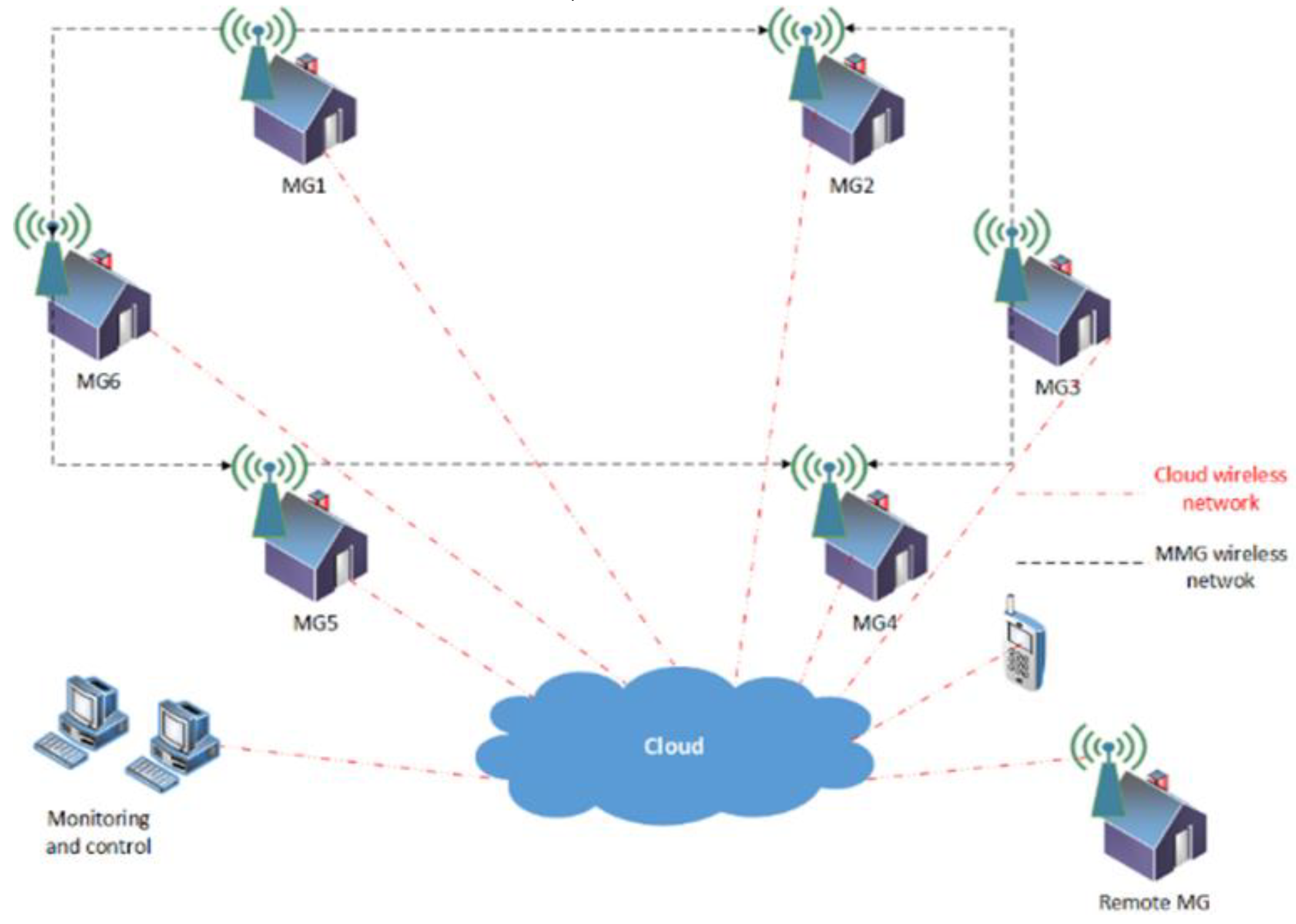
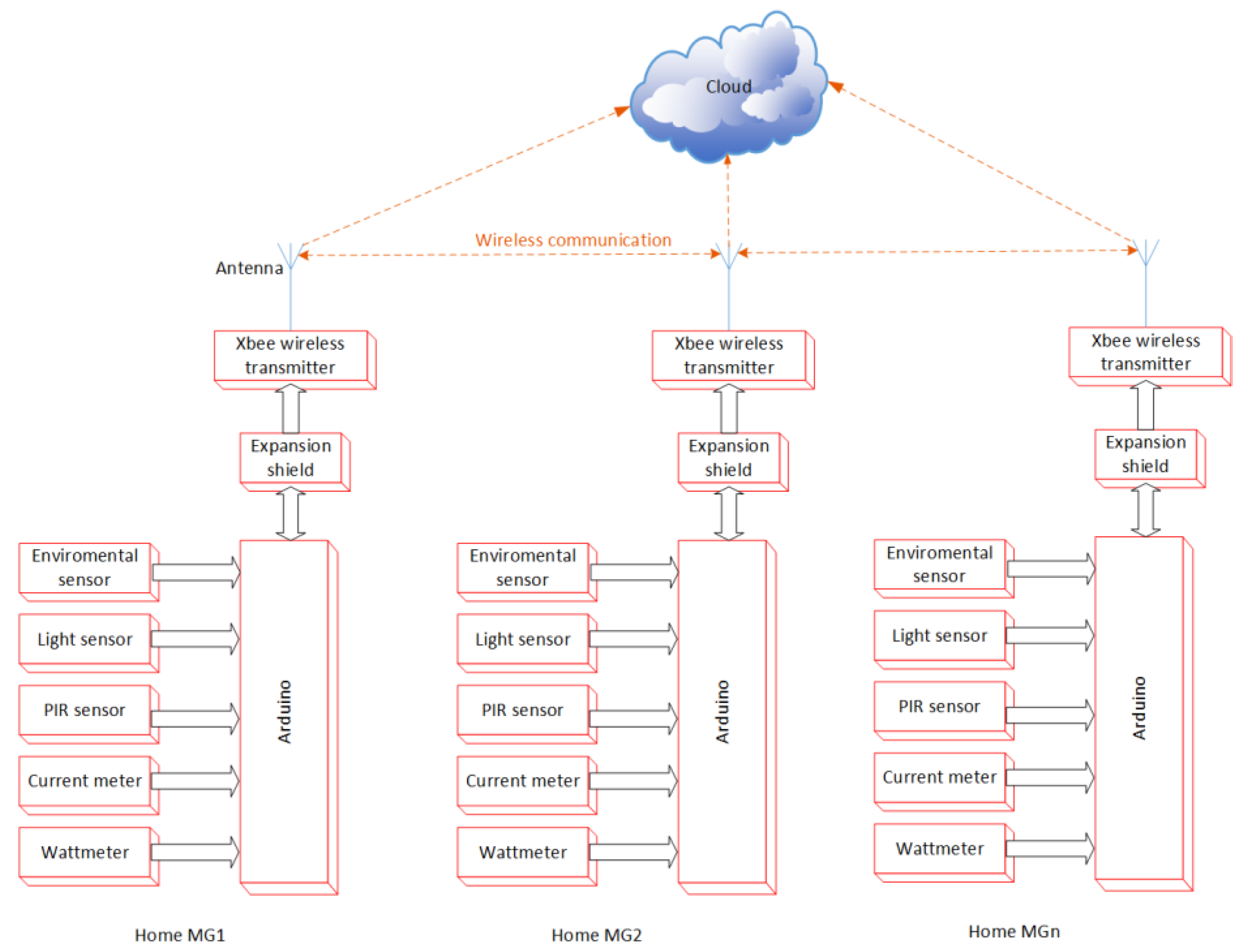
As shown in Figure 1, the system consists of three layers: the home area microgrid, the connection and communication between home MGs (MMG network), and the global cloud server communication which links the home MGs together.
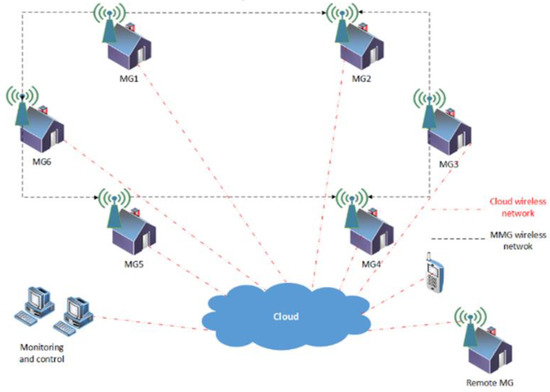
Figure 1.
Multi-microgrid (MMG) system configuration with a wireless communication network infrastructure.
2.1. Communication Framework Description
The home area microgrid network is the building unit of our smart MMG network where we consider a built residential MG. A typical structure consists of smart sensors and actuators to measure various operation parameters. These measured parameters are of three categories: loads power consumption (consumed power, electric current, frequency, and voltage), environment (temperature, humidity, and altitude), and users associated information (number of users and their activity). Wireless technologies such as Wi-Fi and ZigBee can be used.
The MMG network is a group of connected home area MGs. The aim is to share measured or sensed parameters between different MGs for further analysis and operation management. The communication is completed wirelessly using ZigBee technology.
The cloud acts as the global communication structure, connecting all the units within the smart grid. The cloud provides data sharing and redundant communication between MGs, data access to users and communication with remote MG networks.
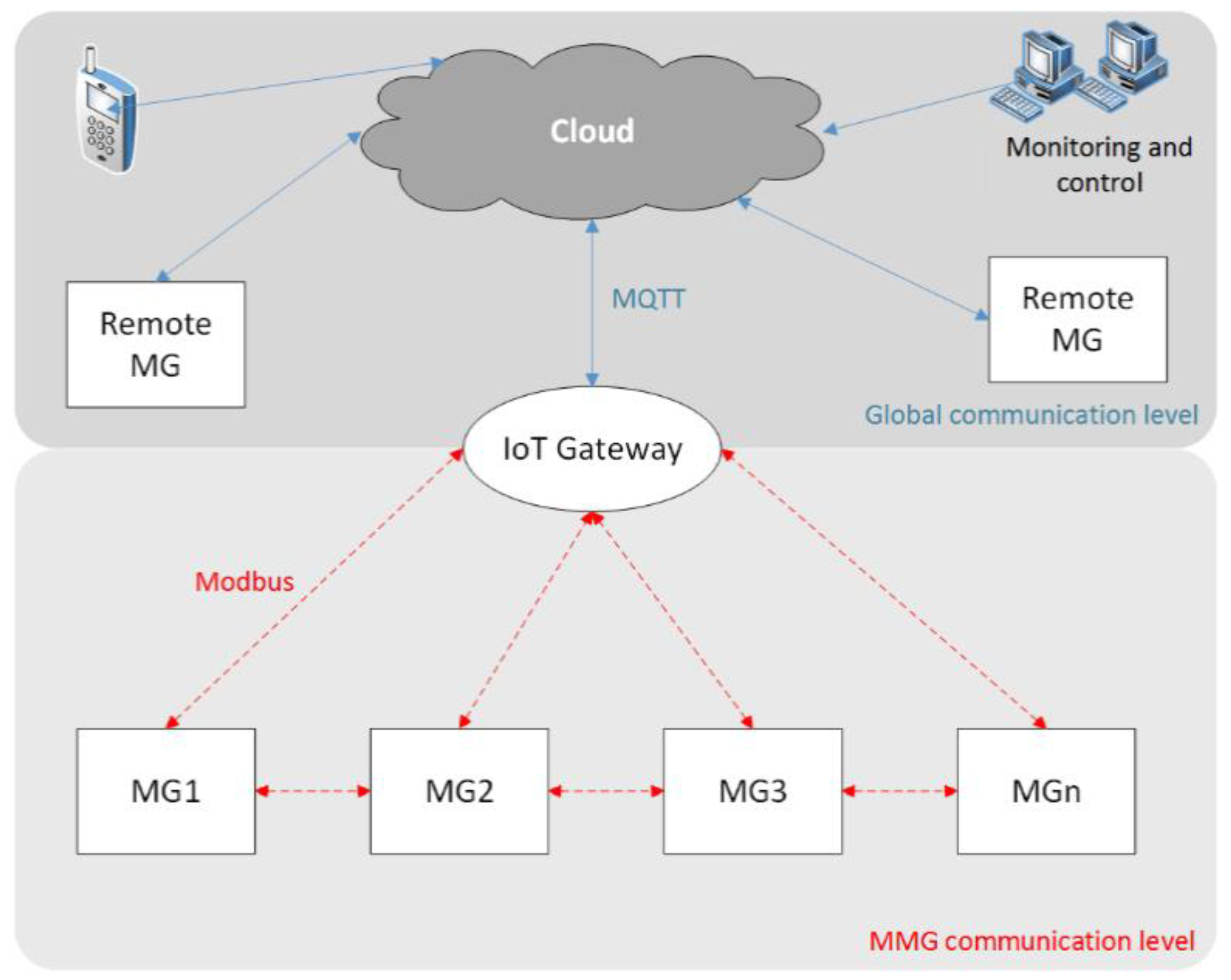
As previously discussed, a communication system is required to transfer the information between the MGs. Figure 2 shows the details of our introduced wireless communication framework. Modbus TCP/IP is employed as the communication protocol between MGs. For smart grids, Internet of Things (IoT) protocols such as message queue telemetry transport (MQTT) are used to transfer the data from the lower communication levels to the cloud. We chose the MQTT protocol as the global communication level connecting the MMG system to the cloud server.
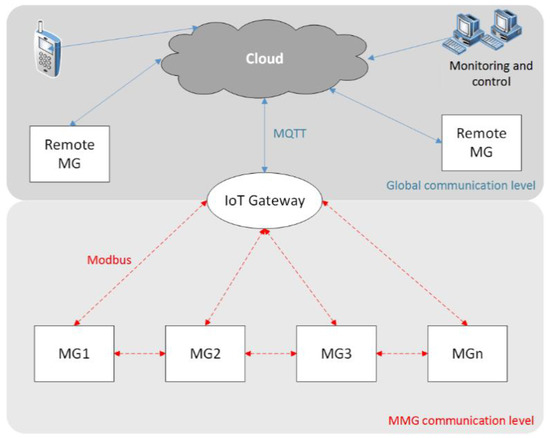
Figure 2.
Overview of the Internet of Things (IoT) cloud-based MMG communication platform.
2.2. System Designed and Hardware Used
In this work, we present accurate data measurements on an Arduino Uno board. This technique may be useful in many other similar real environments. With simple programming, the Arduino can read, control and interact with an extensive variety of sensors and meters to measure certain parameters.
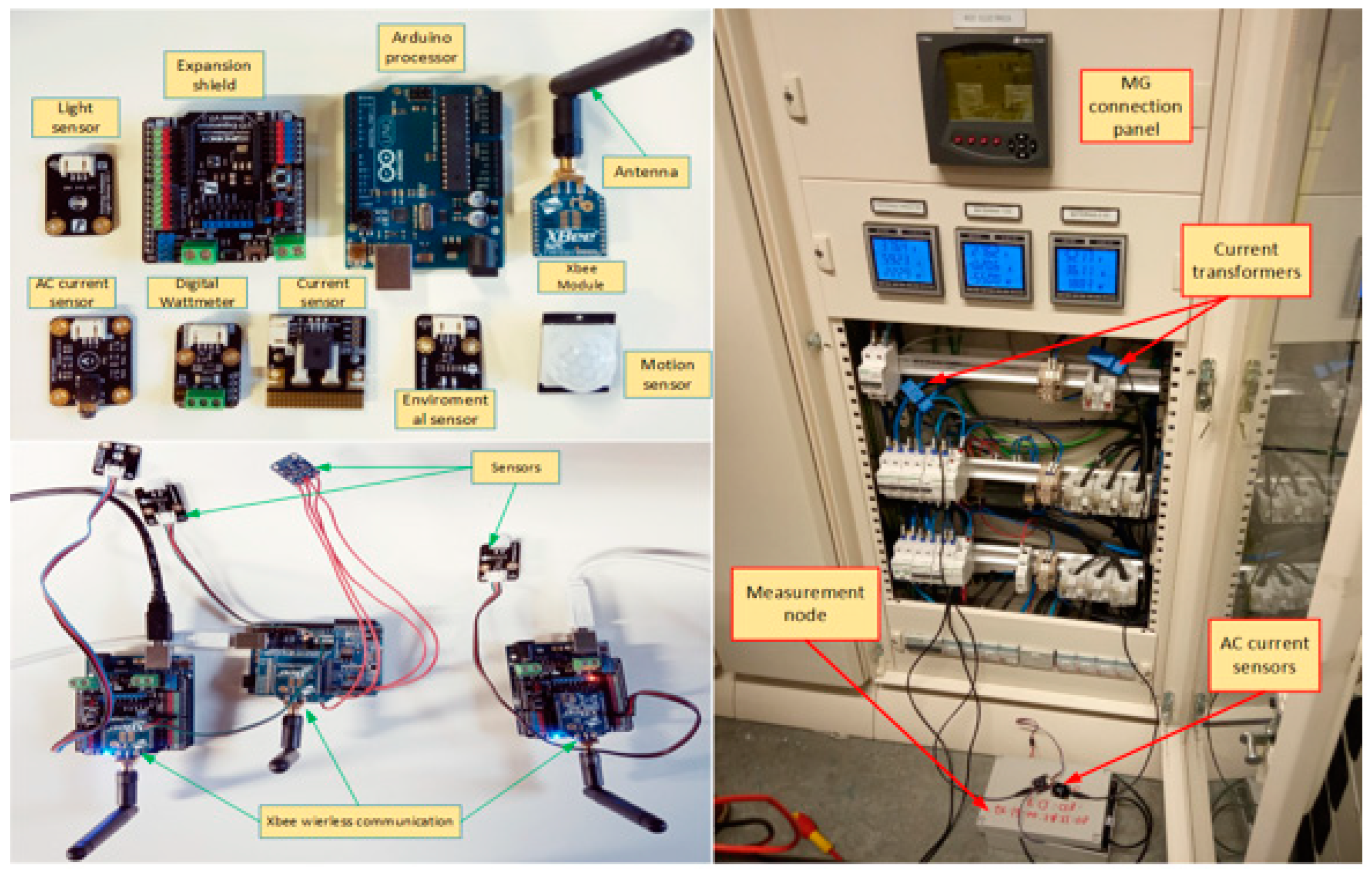
For our system, as can be seen in Figure 3, the main components include environmental, light intensity, and human presence sensors, in addition to electric current and power consumption meters. The transfer of communication and data is performed using an XBee wireless module and extension shield. The formed nodes are managed by the Arduino microcontroller and the ZigBee data protocol. The recorded data by sensors can be transmitted to other neighboring MG systems and to the IoT cloud via the XBee wireless communication module. Figure 4 provides details regarding all used components and how they are connected to the experimental MG panel of UPNA.
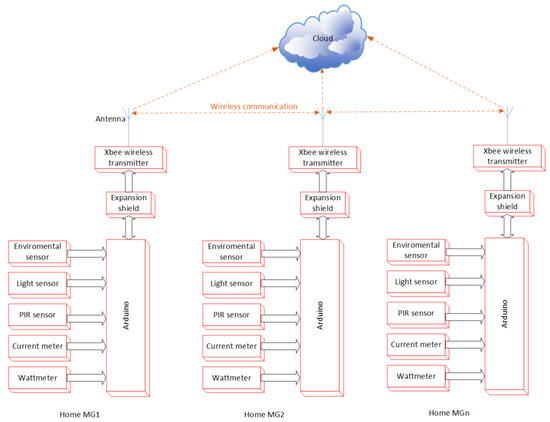
Figure 3.
Block diagram of the designed platform with used components.
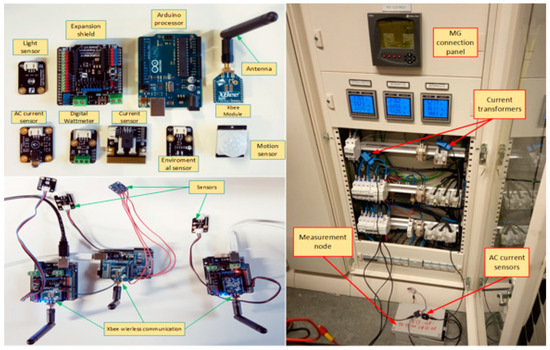
Figure 4.
Block diagram of the designed platform with used components.
3. Results and Discussion
3.1. Sensors Reading
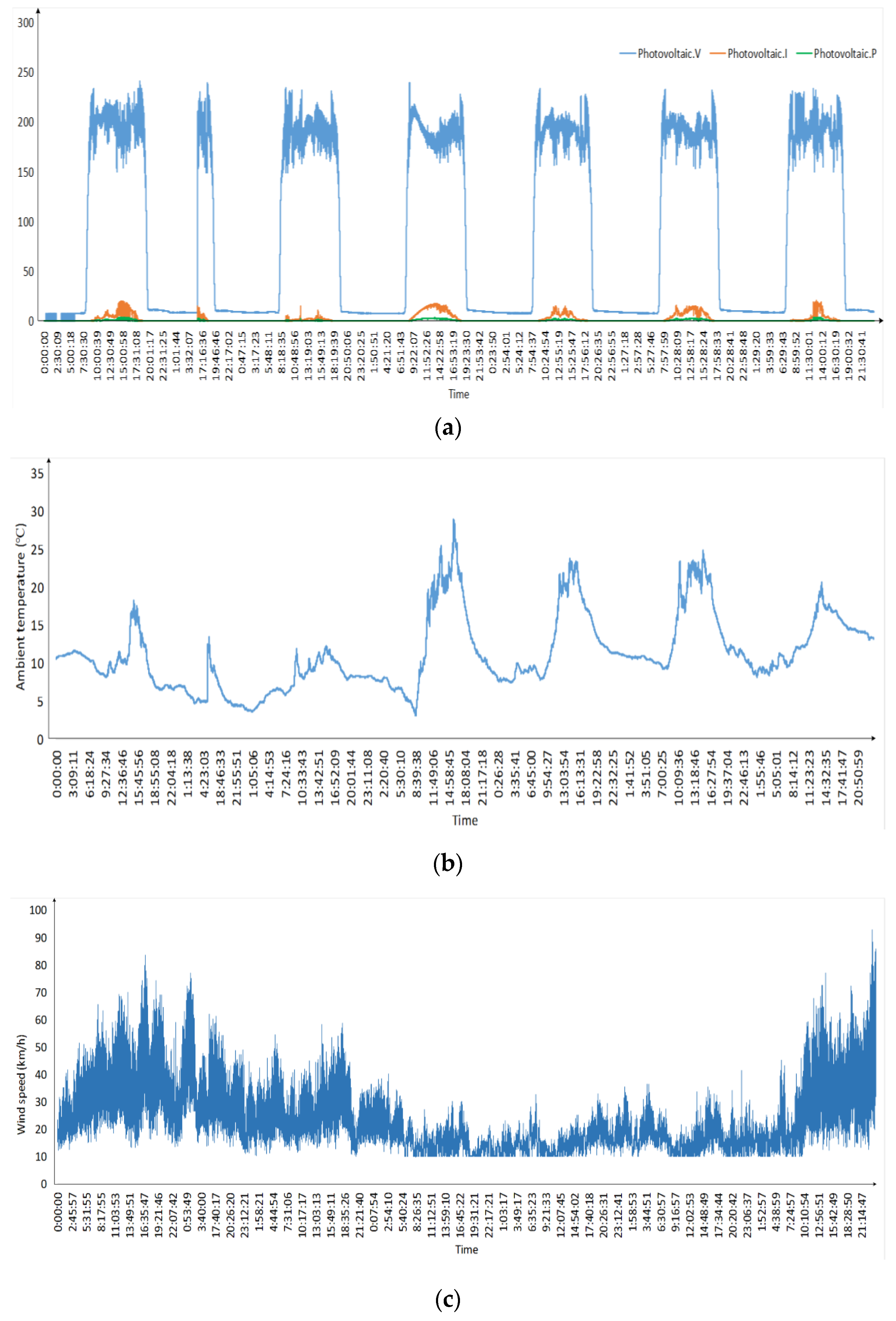
Some 1 s sensor readings and measurements are listed in Figure 5. The readings are collected over a period of 3 days.
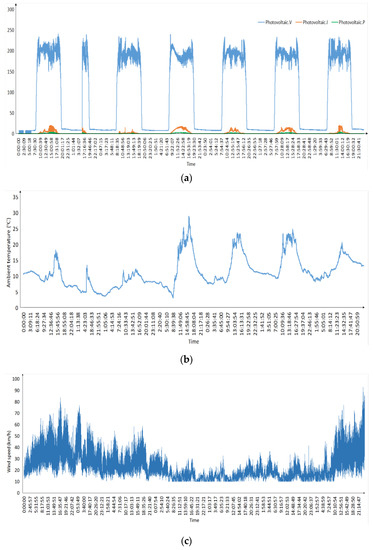
Figure 5.
Sensor readings: (a) Solar PV panels measured voltage, current and supplied power; (b) Ambient temperature measured by an environmental sensor; (c) Wind speed measurements by the anemometer.
3.2. Cloud Network
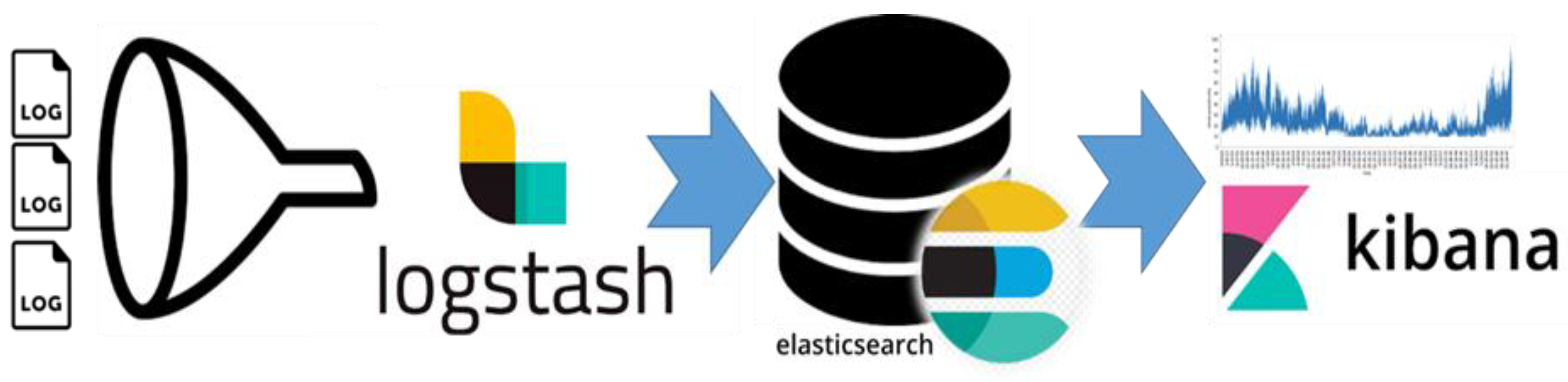
As shown in Figure 6, the data collection is achieved on an Elasticsearch-based system. We run containers by means of VMware vSphere, allowing scalable computing and convenient deploying of the monitoring solution. Logstash provides both data collection and log parsing, Elasticsearch provides data storage, and finally, Kibana allows data visualization and business intelligence. Logstash ensures the collection of data logs and the proper processing of the data. Data is then stored and managed by Elasticsearch, which provides the structured information to the visualization tool in order to provide a dashboard, which subsequently supports the decision-making procedures.
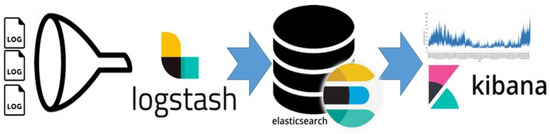
Figure 6.
Cloud architecture schema. Data ingestion, storage and visualization.
4. Discussion
In this paper, we proposed a novel IoT platform specifically for the integration of the MMG networks and wide-scale data sharing. The proposed cloud-based communication framework is wirelessly distributed and consists of three levels (information detection, transfer and analysis) for the operation of MGs. This system is suitable for the monitoring, management and control of MMG networks. We utilized two communication protocols for data exchange: Modbus TCP/IP protocol for data exchange between MGs, and MQTT protocol for interactions between the MGs and the cloud server. We constructed an actual laboratory-based model for a real MG system. The measured parameters and sensor readings were taken from a real environment and covered all required MG states of operation. By sharing this data between MGs, we developed an efficient IoT platform that not only monitors arising problems of all components in the system, but also provides fast solutions to them.
Author Contributions
Conceptualization, A.E. and F.F.; Methodology, F.F.; Software, I.P. and H.K.; Validation, A.E. and P.L.-I.; Formal analysis, A.E., I.P. and H.K.; Investigation, A.E.; Resources, J.M.P.; Data curation, A.E.; Writing—Original draft preparation, A.E. and I.P.; Writing—Review and editing, P.L.-I. and F.F.; Visualization, A.E. and J.J.A.; Supervision, J.M.P. and F.F.; Project administration, F.F.; Funding acquisition, F.F. and J.J.A. All authors have read and agreed to the published version of the manuscript.
Funding
This research and APC was funded by Project RTI2018-095499-B-C31, Funded by Ministerio de Ciencia, Innovación y Universidades, Gobierno de España (MCIU/AEI/FEDER, UE).
Conflicts of Interest
The authors declare no conflict of interest. The funders had no role in the design of the study; in the collection, analyses, or interpretation of data; in the writing of the manuscript, or in the decision to publish the results.
References
- Khan, K.R.; Rahman, A.; Nadeem, A.; Siddiqui, M.S.; Khan, R.A. Remote Monitoring and Control of Microgrid using Smart Sensor Network and Internet of Thing. In Proceedings of the 1st International Conference on Computer Applications & Information Security (ICCAIS), Riyadh, Saudi Arabia, 4–6 April 2018; pp. 1–4. [Google Scholar]
- Power Africa. Eaton Microgrid Solution Saves 40% in Energy Costs. Available online: https://medium.com/power-africa/eaton-microgrid-solution-saves-40-in-energy-costs-ee8d32ae138c (accessed on 1 May 2019).
- Kuzlu, M.; Pipattanasomporn, M.; Rahman, S.J.C.N. Communication network requirements for major smart grid applications in HAN, NAN and WAN. Comput. Netw. 2014, 67, 74–88. [Google Scholar] [CrossRef]
- Sahoo, S.K.; Kishore, N. Coordinated control and operation of a multi-microgrid system. In Proceedings of the 7th International Conference on Power Systems (ICPS), Shivajinagar, India, 21–23 December 2017; pp. 283–288. [Google Scholar]
- Moghimi, M.; Bennett, C.; Leskarac, D.; Stegen, S.; Lu, J. Communication architecture and data acquisition for experimental MicroGrid installations. In Proceedings of the IEEE PES Asia-Pacific Power and Energy Engineering Conference (APPEEC), Brisbane, QLD, Australia, 15–18 November 2015; pp. 1–5. [Google Scholar]
Publisher’s Note: MDPI stays neutral with regard to jurisdictional claims in published maps and institutional affiliations. |
© 2019 by the authors. Licensee MDPI, Basel, Switzerland. This article is an open access article distributed under the terms and conditions of the Creative Commons Attribution (CC BY) license (https://creativecommons.org/licenses/by/4.0/).