
Article

Pulsed Dielectric Barrier Discharges for Gas-Phase Composition Control: A Simulation Model

1
Dipartimento di Fisica, Università degli Studi di Milano-Bicocca, Piazza della Scienza 3, 20126 Milano, Italy
2
Department of Physics, St. Joseph’s College Devagiri, Calicut 673008, India
*
Author to whom correspondence should be addressed.
Plasma 2023, 6(4), 735-752; https://doi.org/10.3390/plasma6040050
Submission received: 6 October 2023 / Revised: 29 November 2023 / Accepted: 7 December 2023 / Published: 12 December 2023
(This article belongs to the Special Issue Dielectric Barrier Discharges 2023)

Featured Application

Control or at least prediction of the gas-phase composition in atmospheric pressure cold plasmas is very important to evaluate the potential of plasma treatments, which could be considered in several applications, from health and environmental processes targeting hazard agents to the production of advanced materials through suitable surface functionalization.

Abstract

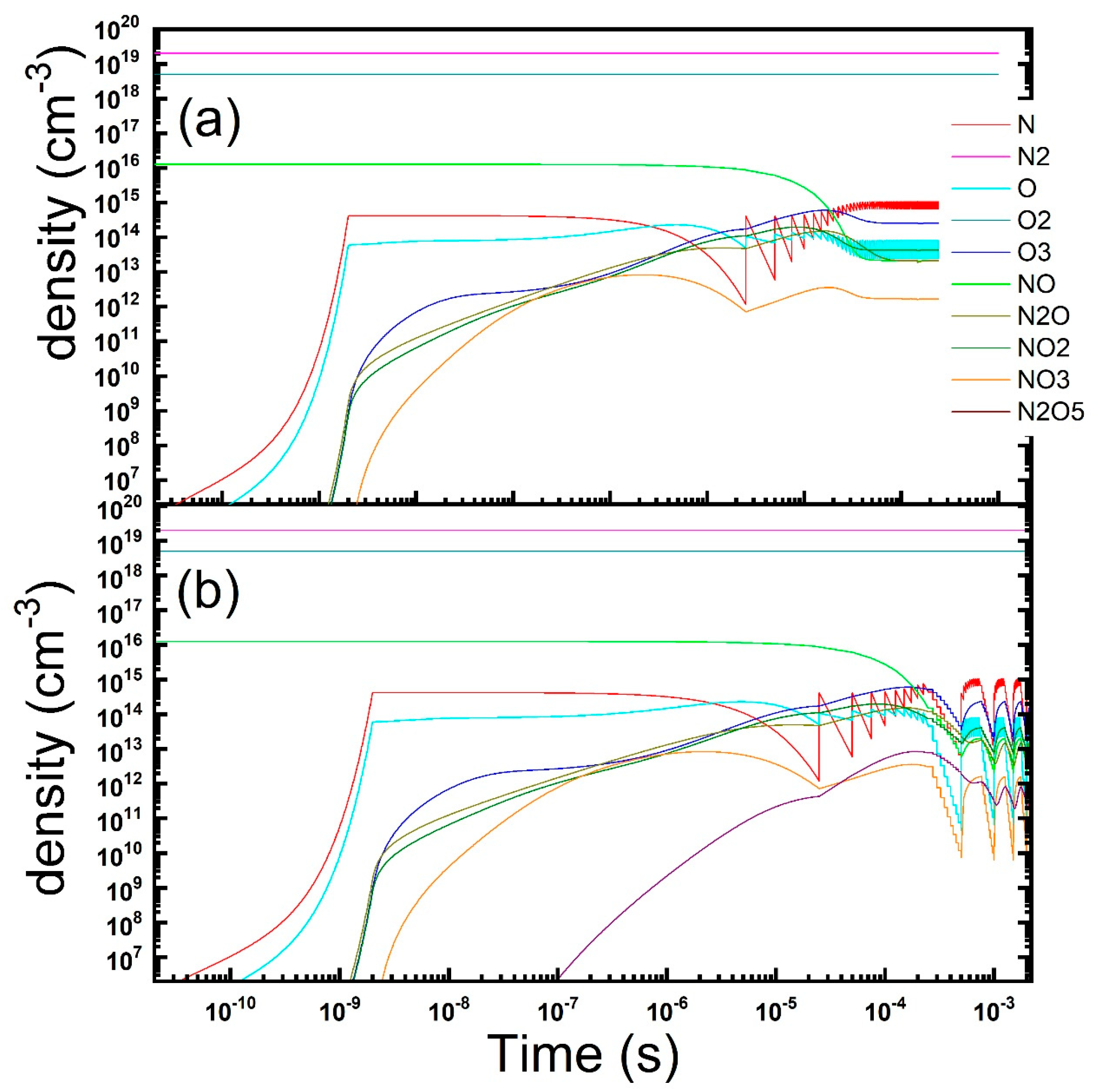
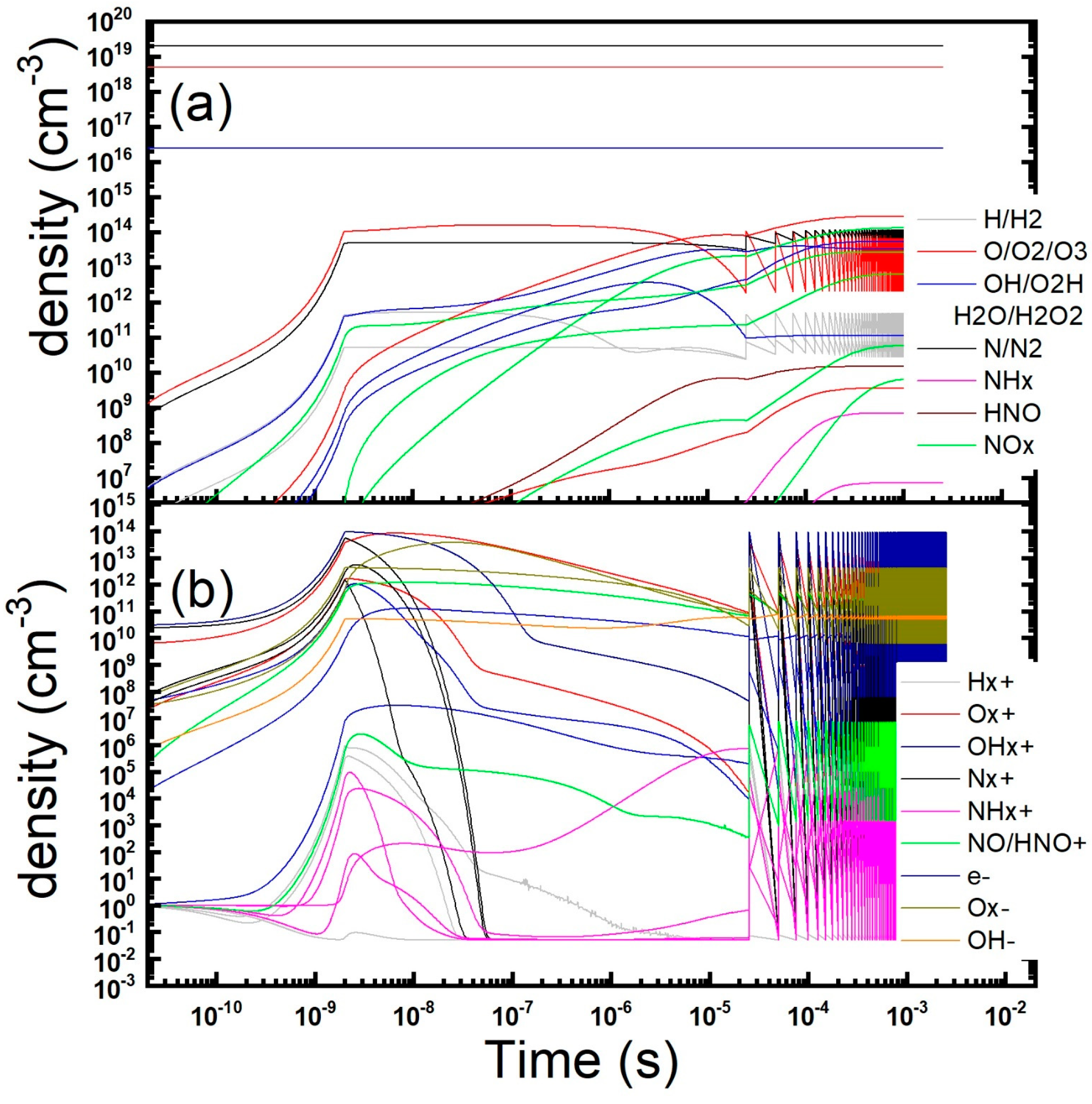
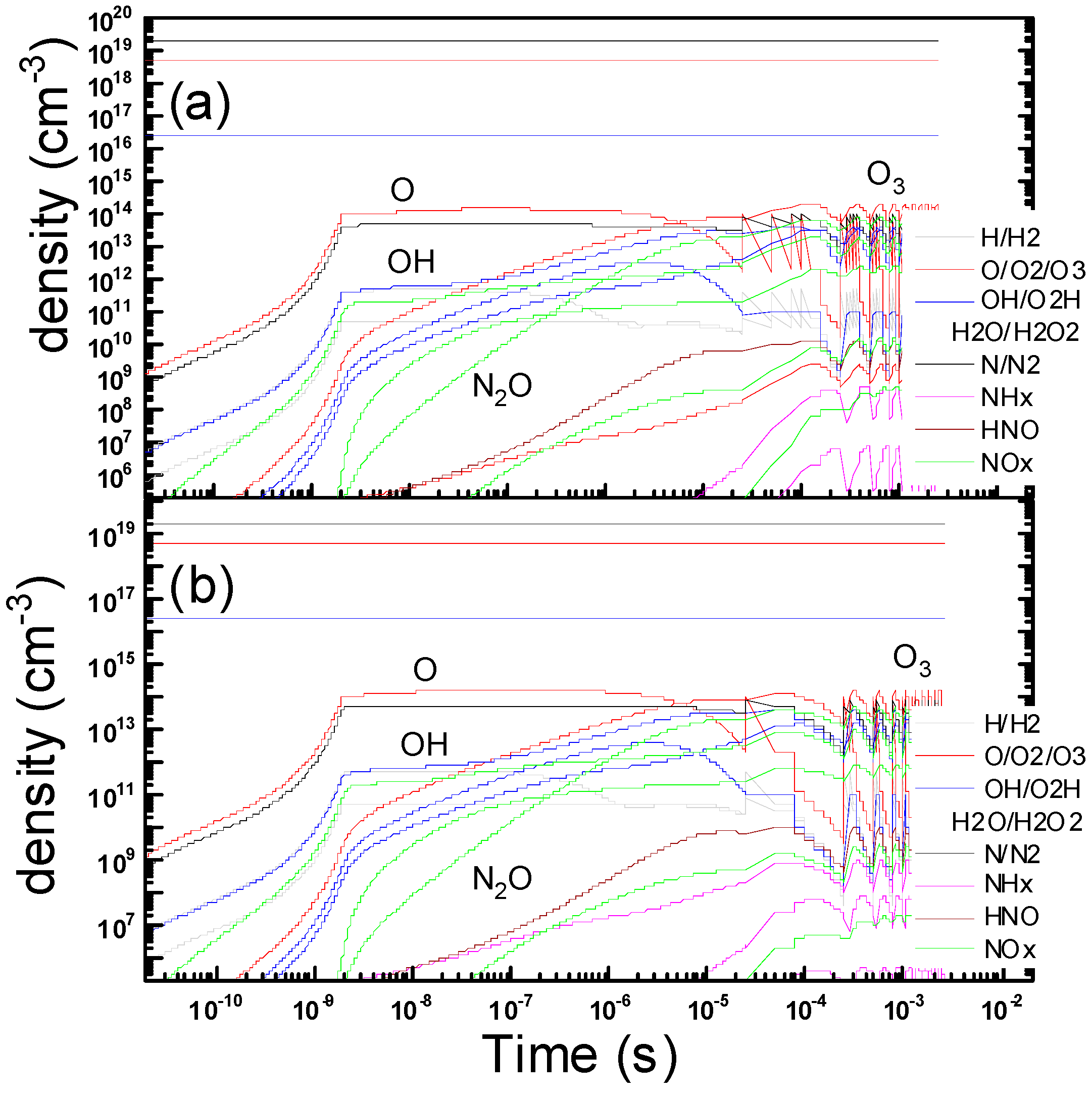
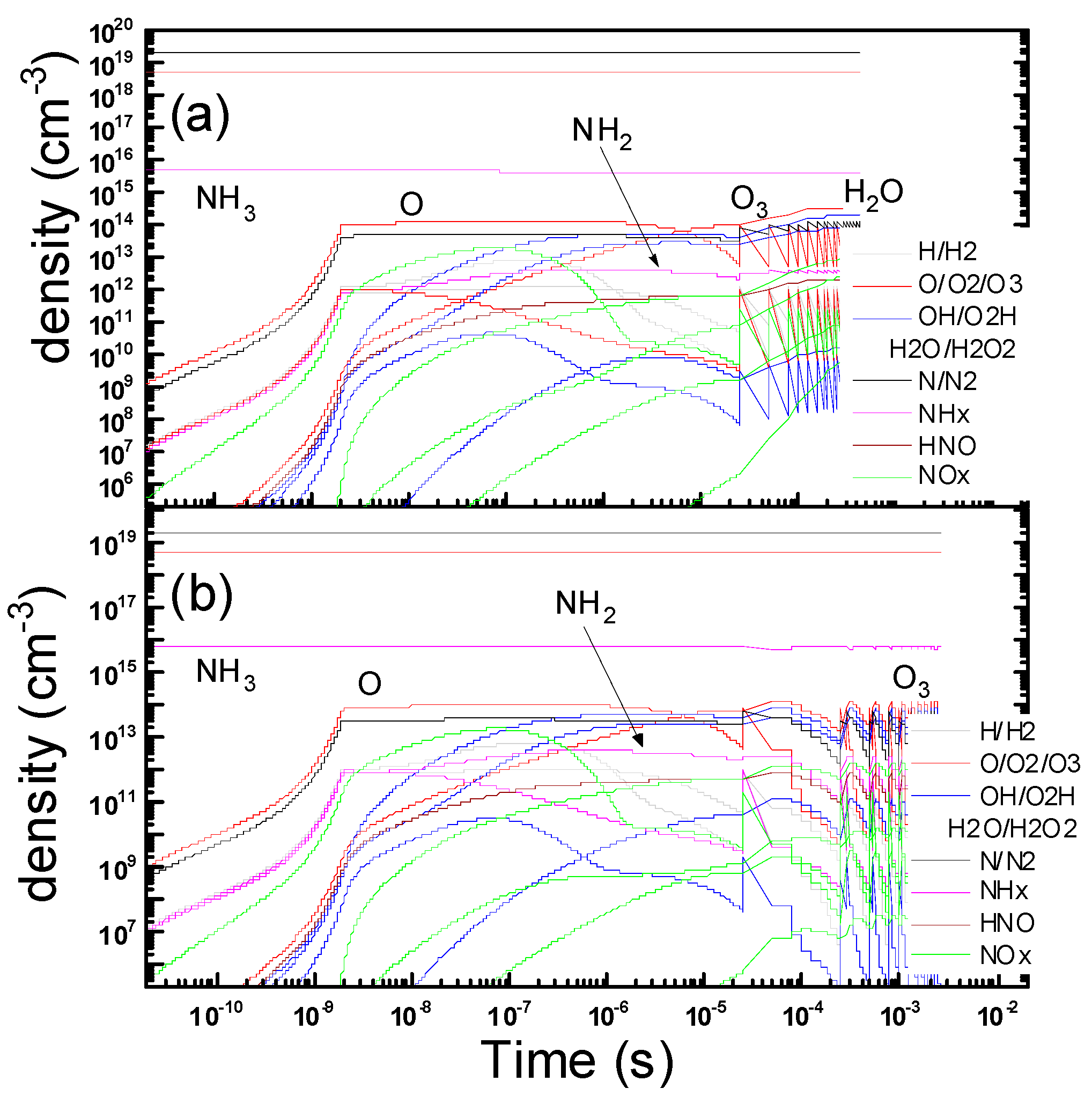
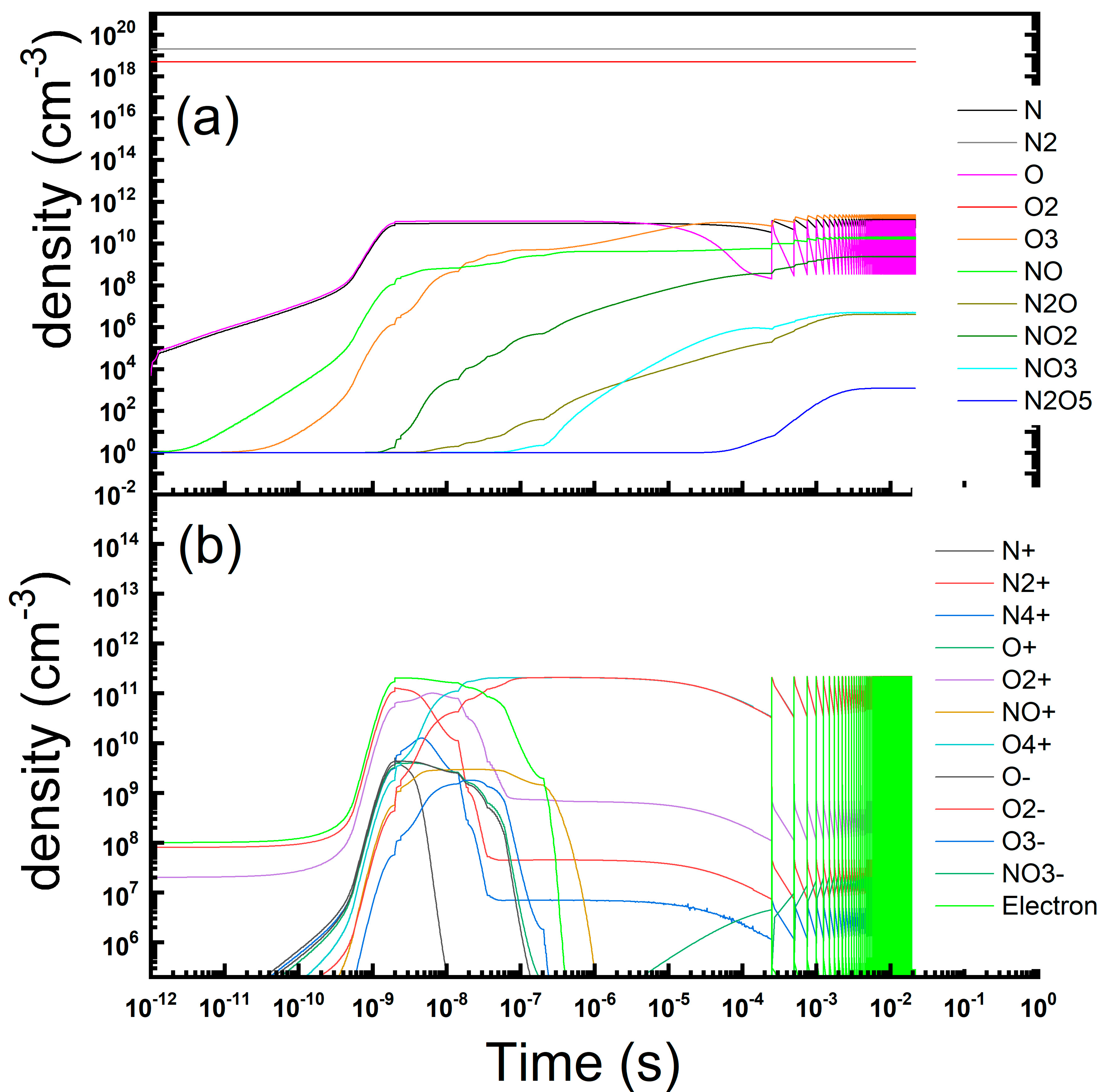
We present results obtained from the numerical simulation of the gas-phase chemical kinetics in atmospheric pressure air non-equilibrium plasmas. In particular, we addressed the effect of the pulsed operation mode of a planar dielectric barrier discharge. As conjectured, the large difference in the time scales involved in the fast dissociation of molecules in plasmas and their subsequent reactions to produce stable chemical species makes the presence of a continuously repeated plasma production stage unnecessary and a waste of electrical power and efficiency. The results on NOx remediation, ozone production, water vapor and ammonia dissociation are discussed. A few comparisons with experimental findings in a dielectric barrier discharge reactor already used for applications are also briefly addressed. Our results clearly indicate a pattern for the optimization of the discharge using a carefully designed repetition rate and duty cycle.
Keywords: dielectric barrier discharge; atmospheric pressure plasmas; chemical kinetics; plasma modeling dielectric barrier discharge; atmospheric pressure plasmas; chemical kinetics; plasma modeling
Graphical Abstract