Article

Method for Determining Stresses in the Soil Layer Under the Action of a Dihedral Wedge

Kostanay Branch of «Scientific Production Center of Agricultural Engineering», LLP, Abay Avenue, 34, Kostanay 110000, Kazakhstan
*
Author to whom correspondence should be addressed.
AgriEngineering 2026, 8(6), 241; https://doi.org/10.3390/agriengineering8060241 (registering DOI)
Submission received: 5 May 2026 / Revised: 28 May 2026 / Accepted: 4 June 2026 / Published: 12 June 2026
(This article belongs to the Section Agricultural Mechanization and Machinery)

Abstract

The experimental determination of the relationships between the stress distribution zone in the soil layer and the parameters of tillage working bodies is a labor-intensive process. Therefore, preliminary mathematical modeling of this process is recommended to minimize the total number of experiments. The research was conducted using the principles of classical mechanics and soil mechanics. Using an equation proposed by J. Boussinesq, a graphical–analytical method was developed to evaluate the stress state in the soil layer induced by a dihedral wedge. This method incorporates both the geometric parameters of the dihedral wedge and the physico-mechanical properties of the soil. A direct proportional relationship was established between the length of the dihedral wedge and the total area of the deformed soil mass. Specifically, increasing the length of the dihedral wedge by 83% (from 0.05 to 0.30 m) resulted in an 80% increase in the area of the deformed soil mass (from 0.02 to 0.10 m2). The proposed graphical–analytical method can be employed in the design of tillage implements. The results we obtained are consistent with the patterns previously reported by other researchers. The findings were used in the development of various types of flat-cutting working tools for shallow and deep tillage.

1. Introduction

Soil compaction, as a consequence of various anthropogenic factors, represents a significant challenge in contemporary agricultural production [1].
The management of soil compaction is carried out in three directions [2,3,4]: reduction in compaction, prevention of compaction, and decompaction.
To reduce soil compaction, several measures have been proposed. These include improvements in propulsion systems of power units (dual wheels, low-pressure tires, rubber–metal tracks), reduction in their weight, creation of wide-span and combined machines, and adoption of controlled traffic farming (technological wheel tracks) [5,6,7].
It is evident that the measures currently in place to prevent soil compaction are insufficient and require further development and study. This field of work may encompass machines operating on an air cushion, as well as the concept of bridge farming [8,9,10]. However, implementing such technologies will require significant capital investment for long-term research and development. In this regard, at the current stage of scientific and technological development, the most effective method for combating soil compaction is its decompaction.
Methods of artificial or technical soil decompaction can be classified as follows:
(a)
Mechanical decompaction methods [11,12];
(b)
Methods based on hydraulic action [13];
(c)
Methods based on gas-dynamic action [14];
(d)
Methods based on wave (vibratory, electromagnetic) action [15,16].
In the current stage of scientific and technological development, deep mechanical tillage is regarded as the most effective method of soil decompaction [17,18]. The remaining methods are considered alternatives, generally aimed at reducing draft resistance [19,20]. Nevertheless, the reduction in draft resistance is counterbalanced by the increased energy requirements needed to operate technical equipment that implements hydraulic, gas-dynamic, or other types of action.
Mechanical tillage can be defined as the mechanical action of tillage implements on the cultivated soil layer. This process primarily involves the disintegration of the soil monolith into structural aggregates, the rearrangement of these aggregates, and an increase in the volume of air-filled pores between them. The size distribution of soil aggregates and their quantitative proportion are regulated by agronomic requirements. Consequently, under non-moldboard (conservation) tillage, a minimum of 60% of soil aggregates (clods) must have a characteristic dimension of ≤5.0 cm [21].
The following classification of working elements is proposed, based on the mechanical method of soil decompaction:
-
By the presence of a drive (traction-driven working elements with active drive and traction working elements without drive);
-
By soil inversion: moldboard tillage (>135° inversion) and non-moldboard tillage;
-
By tillage depth (for surface tillage (up to 8 cm), for shallow tillage (8–16 cm), for conventional tillage (16–24 cm) and for deep tillage (more than 24 cm));
-
By working width relative to the width of the directly cultivated field surface (full-width tillage and strip tillage);
-
By predominant type of deformation (compression deformation, tensile deformation and shear deformation);
-
By the trajectory of movement (working elements with translational motion and working elements with rotational motion).
Since the existing working elements for mechanical soil decompaction are predicated on dihedral and trihedral wedges, as well as their various combinations, and because soil deformation under dihedral and trihedral wedges is considered equivalent according to [22], for convenience the dihedral wedge will be treated as the soil-deforming element in this study.
The distribution of compressive stresses in soil under the action of a dihedral wedge was investigated by Vagin [23], who experimentally determined the stress distribution zones for different soil types.
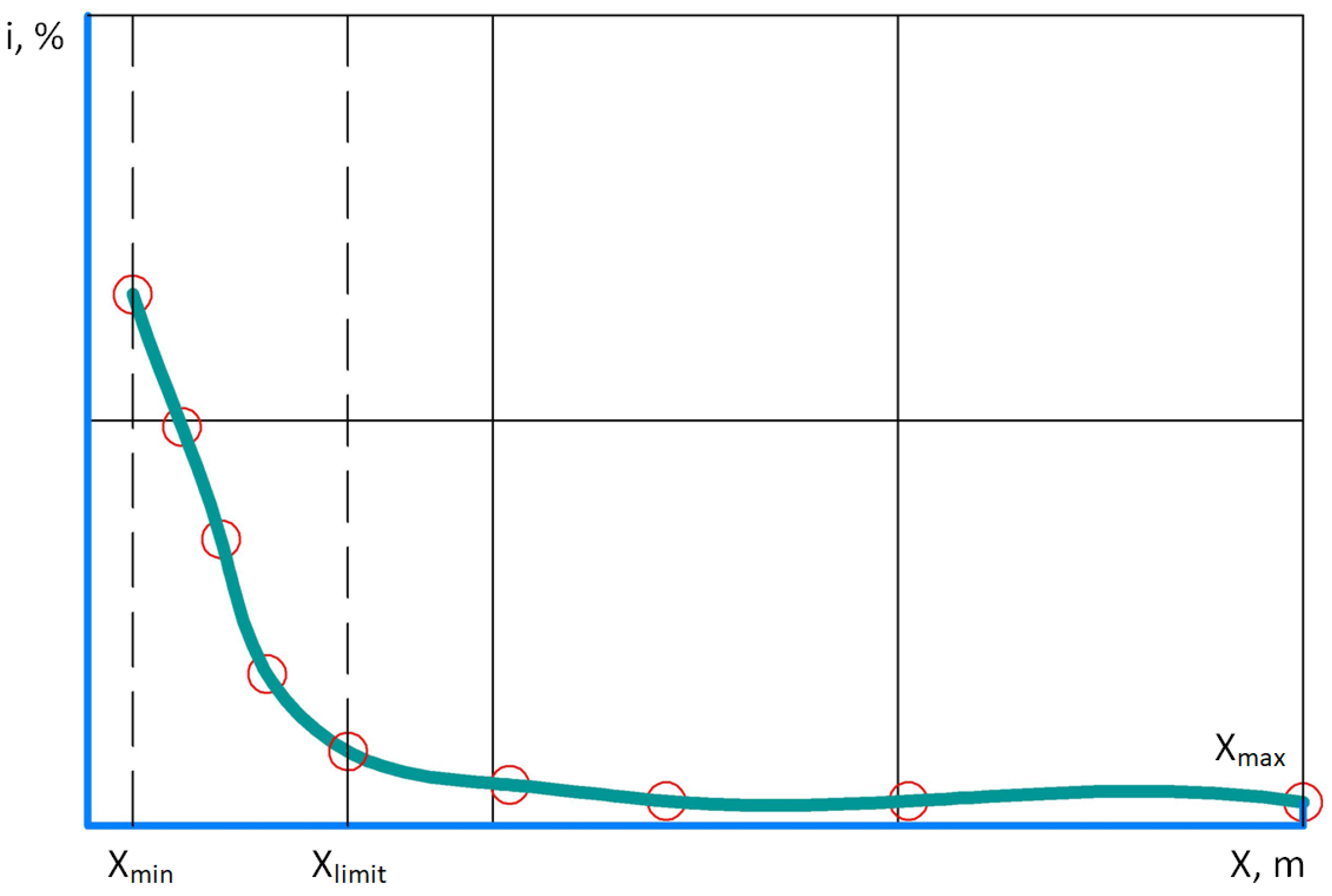
The essence of the method is as follows. Thin steel rods were inserted into the soil layer at the tillage depth, arranged in a single plane at equal distances from each other. This plane was perpendicular to the loading plane of the soil layer. Between the rods, indicator heads were fixed to record changes in the distance between them. The distances between rods before and after soil loading were used to determine the soil compaction coefficient. The dependence of the compaction coefficient on the distance from the loading plane exhibits two distinct segments (Figure 1). In the first segment, X X = [ X m i n X m i n ; X l i m i t X l i m i t ] , the compaction coefficient decreases sharply with increasing distance from the loading plane. In the second segment, X X = [ X l i m i t ; X m a x ] , the curve i = f X   asymptotically approaches the x-axis, indicating only minor changes in compaction ( i , % ) within this interval. In both segments, an inverse proportional relationship (near-linear) is observed, which can be accurately described by an equation of the form y = k x + b .
In the work [24], the authors reviewed and synthesized the results of experimental studies conducted at different times, in which patterns of stress distribution in the soil layer were identified in both longitudinal and transverse planes using load-measuring sensors buried at various depths, as in the previous example. Furthermore, the impact of the wedge’s translational velocity on alterations in the soil layer’s strength limit during deformation was investigated.
Of particular interest are the studies presented in [25,26]. In these works, the authors employed strain-gauge sensors (buried at various depths in the soil) to determine stresses arising under the action of wheeled [25] and tracked [26] propulsion systems.
Experimental investigations reported in [27] are also noteworthy. Using soil stress transducers, the authors examined the influence of external loads on the stresses generated within the soil layer.
The results of the aforementioned studies facilitate a comprehensive characterization of the nature and rate of propagation of stresses and deformations in the soil ahead of the wedge.
When the objective of the research is to establish the relationship between the wedge parameters and the zone of ultimate stress distribution that leads to the failure of the soil monolith, conducting such labor-intensive experimental investigations is reasonable only if preliminary theoretical calculations are available, as these can help minimize the total number of experiments.
At present, Discrete Element Method (DEM) modeling is widely applied in agricultural mechanics to model stress distribution in the soil layer under the action of working tools.
For example, in [28], the authors developed a DEM model to simulate the interaction between a plow body and the soil layer. In [29], a model was created to study the interaction of a double-disk working tool with soil. In [30], DEM modeling was employed in designing the working surface of bionic subsoilers. In [31], the method was used to predict force reactions and soil behavior during non-moldboard tillage. Extensive DEM studies of plowing, weed cutting, soil compaction, fertilizer application, and other processes are presented in [32].
DEM modeling provides acceptable accuracy for investigating the interaction between working tools and soil. However, its application is not always rational, as it requires significant computational resources, complex model development, and is highly labor-intensive.
In certain cases, continuum soil models, in which soil is treated as a continuous medium, provide an alternative to DEM modeling. This approach reduces the labor intensity of model development and requires far fewer computational requirements than DEM modeling. Moreover, research results confirm that considering soil as a continuous medium can achieve accuracy comparable to DEM modeling [33].
In work [34], analytical expressions were proposed to determine the extent of stress propagation in the soil under an external load. However, these expressions do not account for the geometric and operational parameters of the soil-deforming element.
A similar mathematical model describing the relationship between the mechanical properties of the soil and the parameters of the deforming element is presented in [35]. This model considers soil zones where shear and tensile stresses predominate. However, the authors do not address the failure of the soil monolith under compressive stresses, which is the most common scenario during deep tillage of compacted fine-textured soils (loams).
In the theory of stress distribution within a mass of linearly deformable soil, the fundamental problem is the determination of stresses induced by a concentrated force. The equation proposed by J. Boussinesq provides a solution to this problem [36].
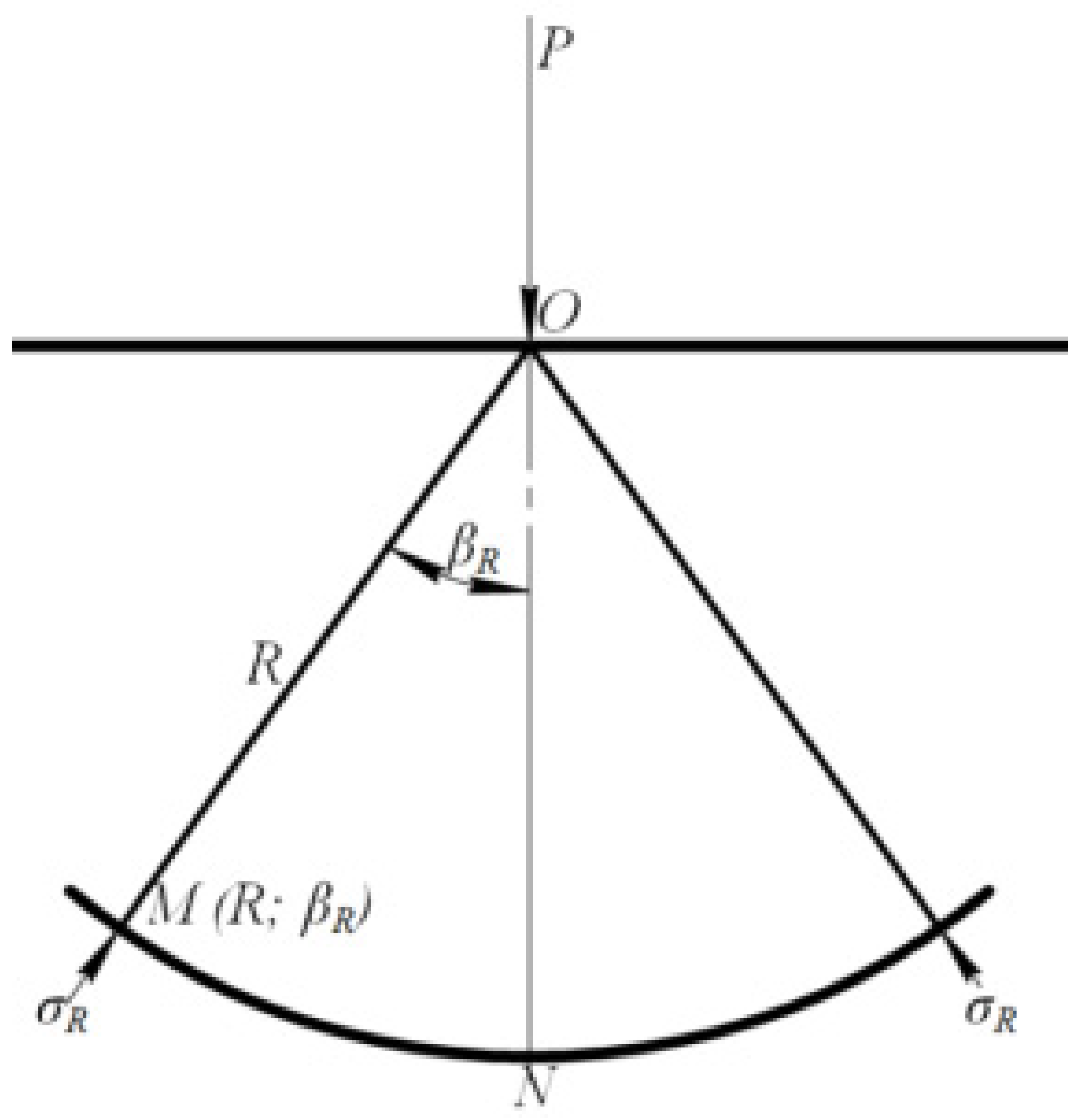
According to Figure 2, this equation describes the stress distribution within the soil mass under the influence of a concentrated force P applied at point O:
σ R = 3 · P · c o s   β R 2 · π · R 2 ,
where   σ R is the stress at the considered point M, Pa;
P is the concentrated force, N;
β R is the angle between the line of action of force P and the arbitrary point M;
R is the distance from the point of application of the force to the considered point M, m.
This equation has found wide application in soil mechanics for various engineering calculations. For example, in [37], it is used in the design of buried structures and retaining walls. In [38], Equation (1) is applied to determine vertical loads on underground pipelines. In [39], it is employed to evaluate the response of compressible soils to a static vertical point load applied at the surface. However, in agricultural mechanics, the use of Boussinesq’s equation has not yet become widespread. It is evident that the nature of stress distribution in agricultural soil under the action of tillage implements is identical to that observed in soil masses. Therefore, we consider the application of Boussinesq’s equation in our case to be justified.

The Aim of the Research

In this context, the aim of the present study is to develop a graphical–analytical method that, at the stage of theoretical investigations, will make it possible to determine the relationship between the stress distribution zone ahead of a dihedral wedge and its geometric parameters.

2. Materials and Methods

The developed graphical–analytical method is predicated on the principles of classical mechanics and soil mechanics. The research employed a scientific method that included the use of mathematical modeling, abstraction, analysis, and synthesis.
The methodology for conducting experimental research was based on the provisions of the current regulatory documentation, namely conditions for conducting experimental research—in accordance with GOST 20915 [40], determination of tillage depth—in accordance with GOST 33736 [41], and strain gauging of dihedral wedge variants—in accordance with GOST 34631 [42].

2.1. Methodology for Theoretical Determination of Stresses in the Soil Layer Under the Action of a Dihedral Wedge

Stress values arising at various points within the soil layer due to the action of a wedge were determined using the equation proposed by J. Boussinesq (Equation (1)).
By comparing the calculated value of σ R with the ultimate compressive stress of soil ( σ u l t . c o m p ), it is possible to infer the soil response (failure or partial deformation) to the action of the deforming tool at the considered point in the soil layer.
The following expression will demonstrate the concentrated force P (N) through the resistance R D . D . (N), arising during the failure (deformation) of the soil monolith by the deforming tool into its individual components, N.
To determine R D . D . (N), we make the following assumptions:
-
Stresses arising in the soil monolith as a result of the action of the deforming tool increase in proportion to the applied force;
-
The velocity of the deforming tool is constant and equal to v (m/s), and the soil layer does not change its height during interaction with the tool.
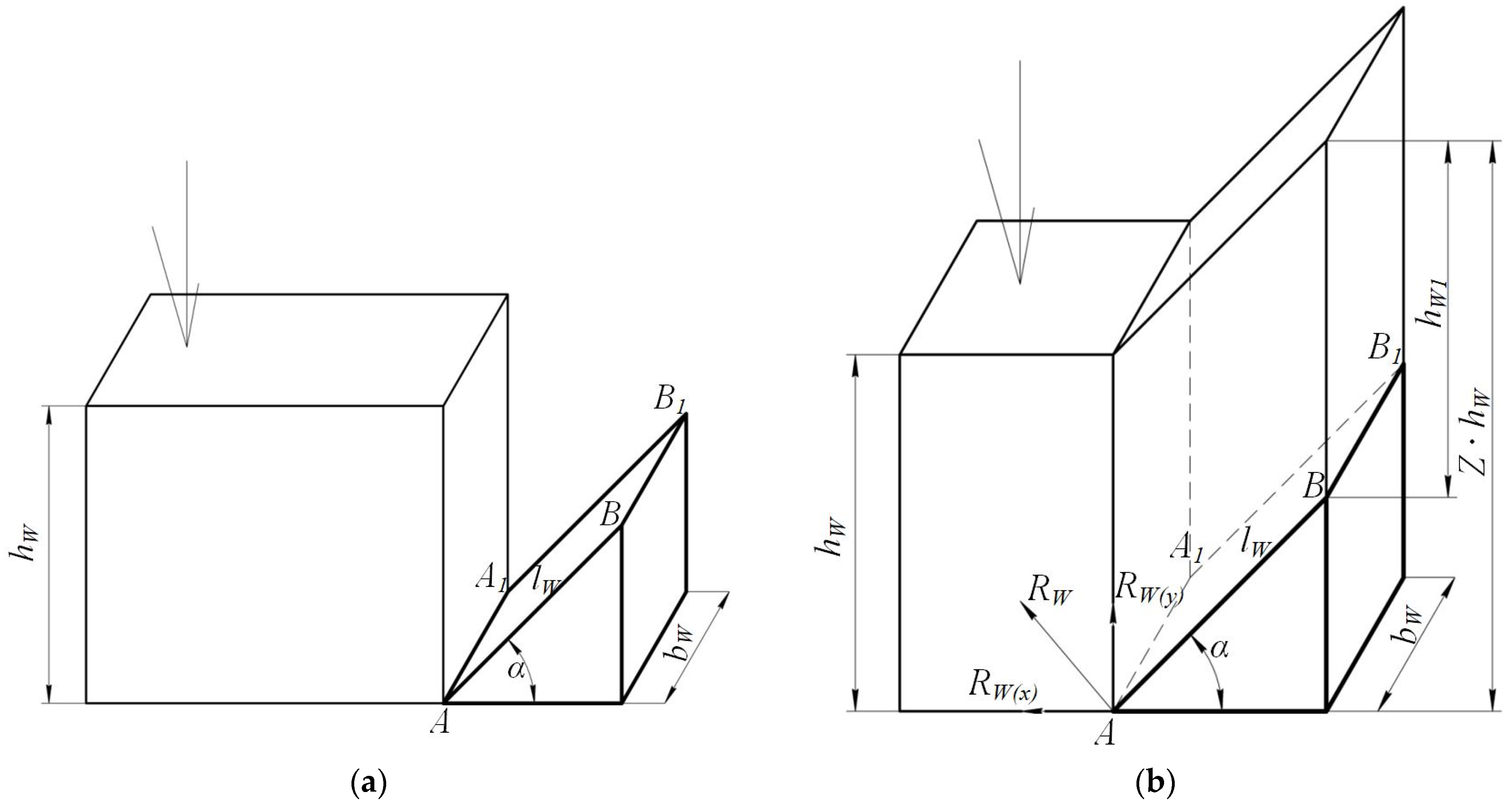
According to Figure 3, let us consider the deforming tool (dihedral wedge) with a working surface A A 1 B B 1 , where A A 1 = B B 1 = b W , A B = A 1 B 1 = l W . and the working surface A A 1 B B 1 is inclined to the horizontal at the soil crumbling angle α .
When the dihedral wedge transitions from position 1 to position 2, a force must be applied to it to overcome the deformation resistance exerted by the soil layer in the form of a resultant R D . D . .
Considering the adopted assumptions, the volume of the deformable soil layer V D . S . can be represented as follows:
V D . S . = b W · h W · l W · c o s   α .
The resultant force R D . D . can be resolved into horizontal R D . D . ( x ) and vertical R D . D . ( y ) components. The horizontal component R D . D . ( x ) represents the resistance exerted by the soil volume V D . S . against the penetration of the wedge A A 1 B B 1 :
R D . D . ( x ) = V D . S . · k D ( x ) ,
where k D ( x ) is the horizontal component of the specific resistance of the soil to volumetric deformation, expressed in N/m3.
The vertical component R D . D . ( y ) represents the resistance exerted by the soil volume V D . S . when its structural integrity is disrupted during vertical uplift. The change in height relative to the selected reference point (penetration depth of the deforming tool, h W ) is expressed using the dimensionless coefficient Z :
Z = h W l W · s i n   α ,
where l W is the length of the working face of the dihedral wedge, m.
That is, relative to the bottom of the furrow located at the penetration depth of the deforming tool h W , the volume of the deformable soil V D . S . will be raised by a factor of Z. Consequently, the expression for calculating the vertical component R D . D . y can be written as follows:
R D . D . ( y ) = V D . S . · Z · k D ( y ) ,
where k D ( y ) is the vertical component of the specific resistance of the soil to volumetric deformation, in N/m3.
The product of the cosine of the angle α and the square root of the sum of the squares of k D ( x ) and Z · k D ( y ) can be interpreted as the resultant specific resistance of the soil to volumetric deformation for the dihedral wedge with the crumbling angle. Hence, following the vector addition rule, the resultant R D . D . will be determined by the following formula:
R D . D . = b W · h W · l W · k D ( α ) .
The validity of the presented equality is corroborated by the findings of various authors, as reported, for example, in [22,23,24,43], which conclude that the resultant specific resistance of the soil to volumetric deformation, k D , is a function of the following variables: the crumbling angle, the lift height of the deformable soil layer, and the physico-mechanical properties of the soil.
The value k D ( α ) was determined through strain-gauge measurements of dihedral wedges under field conditions on soils typical for the studied region followed by subsequent mathematical processing of the experimental data. The methodology for determining the specific resistance of soil to volumetric deformation is outlined in Section 2.2. Considering Equation (6), Formula (1) can be written as follows:
σ R = 3 · b W · h W · l W · k D ( α ) · c o s   β R 2 · π · R 2 .
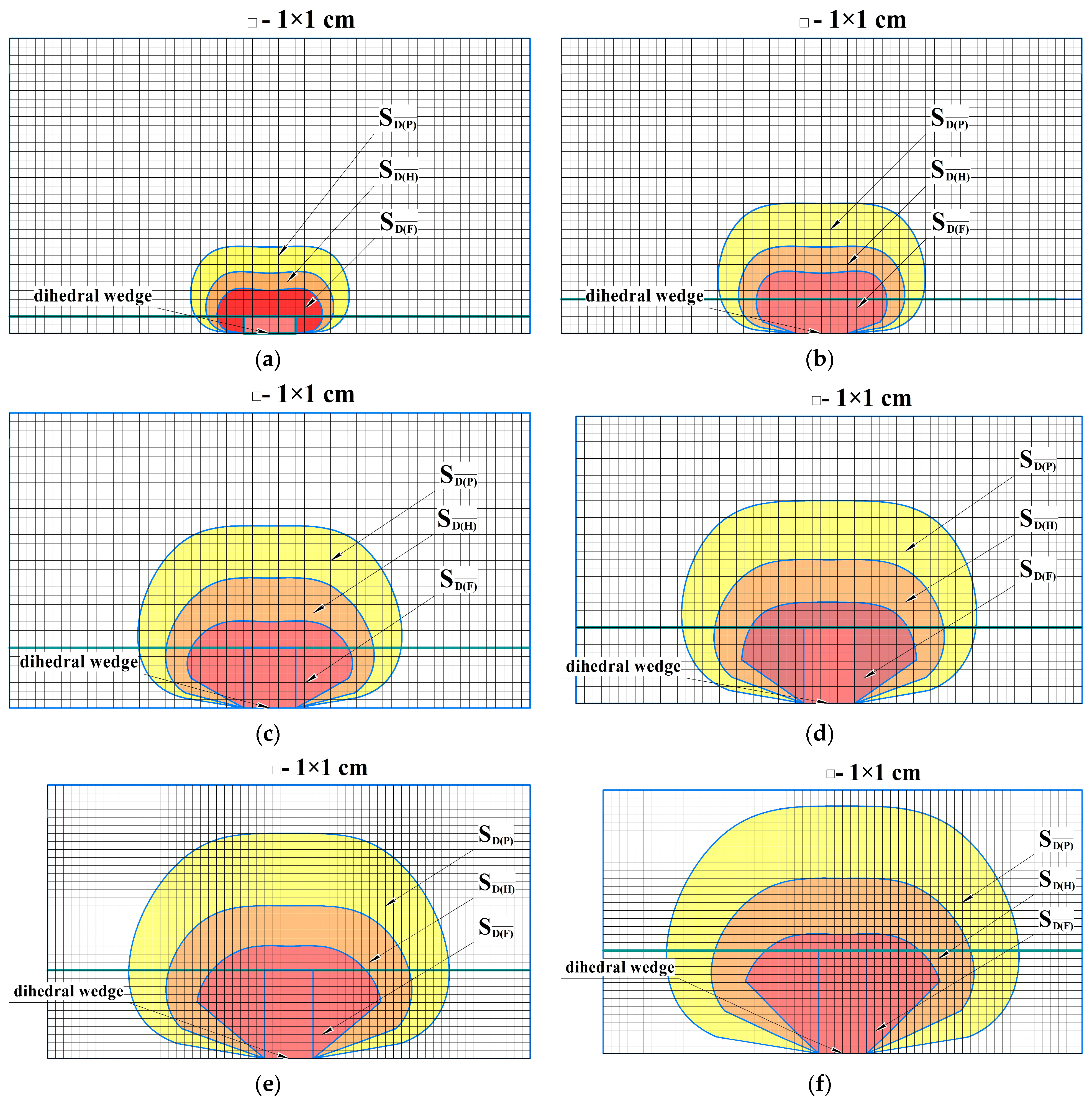
Based on calculations according to Formula (7), stress distribution diagrams were constructed for three distinct soil zones:
-
Soil layer failure zone (distribution of ultimate stresses), where the condition σ R > σ u l t . c o m p is satisfied;
-
High-deformation soil layer zone, where the condition 0.50 · σ u l t . c o m p σ R < σ u l t . c o m p is satisfied;
-
Soil layer partial-deformation zone, for which the condition   0.25 · σ u l t . c o m p σ R < 0.50 · σ u l t . c o m p is satisfied.
Using the least squares method, a regression equation of the form y = f(x) was derived to approximate the curve bounding the areas of the soil layer failure zone S D . ( F ) as well the high- and partial-deformation zones S D . ( H . ) and S D . ( P . ) , respectively.
Subsequently, the definite integral was applied to compute the corresponding are as S D . ( F ) and S D . ( H . ) , and S D . ( P . ) :
S D . ( F ) =   x F x F f x ( F ) d x F ,
S D . ( H ) = x H x H f x ( H ) d x H x F x F f x ( F ) d x F ,
S D . ( P ) = x P x P f x ( P ) d x P x H x H f x ( H ) d x H x F x F f x ( F ) d x F ,
where f x ( F ) , f x ( H ) and f x ( P ) is a regression equation approximating the curves bounding the areas of the soil layer failure zone S D . ( F ) , the high-deformation zone S D . ( H ) , and the partial-deformation zone S D . ( P ) .
The total area of the deformable soil S D . (m2) is then determined as the sum of the are as S D . ( F ) , S D . ( H ) and S D . ( P ) .

2.2. Methodology for the Experimental Determination of the Specific Resistance of Soil to Volumetric Deformation

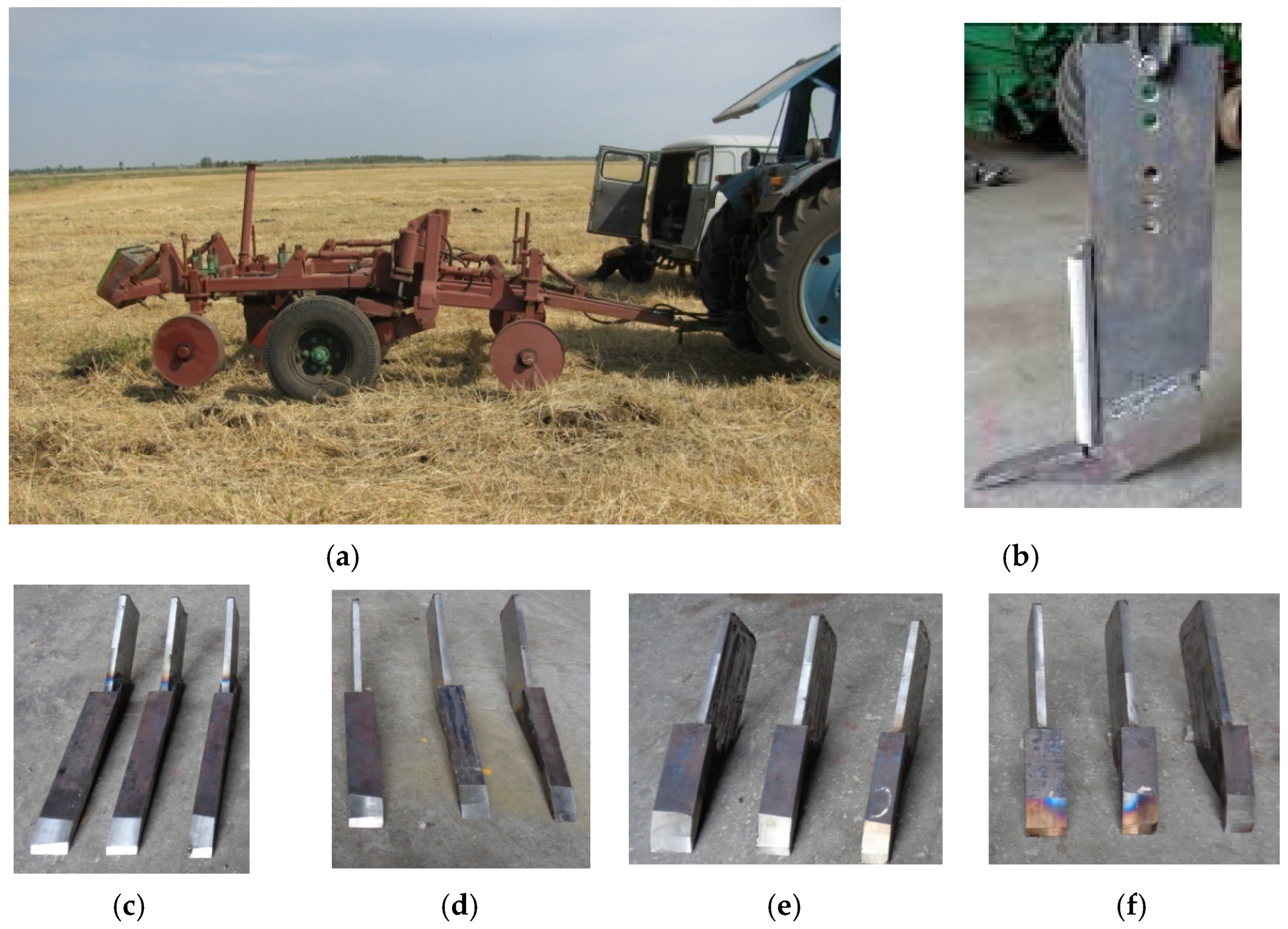
In the initial phase of the research, strain gauging of variants of dihedral wedges mounted on the field unit was conducted. In the subsequent phase, mathematical processing of the obtained initial data was undertaken to ascertain the value of k D ( α ) for various angles α. The general view of the field unit and variants of dihedral wedges, and the stand for their fixation, is presented in Figure 4.
As illustrated in Figure 4, the field unit, in addition to the hitch, was equipped with 4 support points (metal support wheels) located at each corner of the frame when in the working position. This structural configuration eliminated the unit’s weight-related influence on draft resistance, which otherwise results from friction between the components of the working element and the soil.
The weight of the laboratory unit, excluding the working element, was determined to be Ge = 1900 N. The weight of a single working element was found to be G(w.e) = 650 N. The rolling friction coefficient was established as fc = 0.2.
A series of dihedral wedges were methodically affixed to the stand, which was then attached to the frame of the field unit. The wedges were then advanced through the soil at a depth of 0.3 m. During the movement of the field unit, the initial data were recorded. These included the resultant draft resistance of the field unit (RF.I., N) and the travel speed (V, m/s).
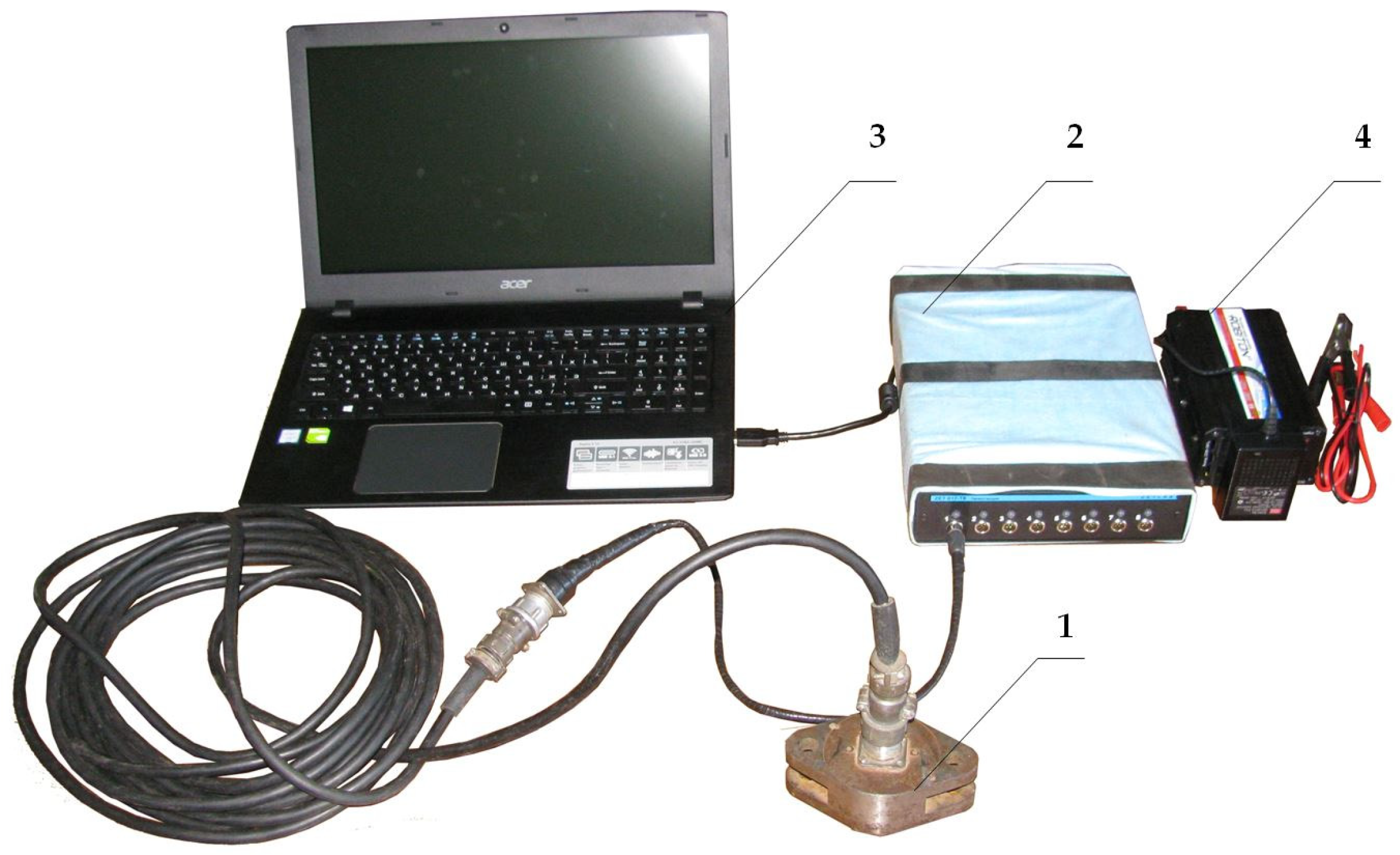
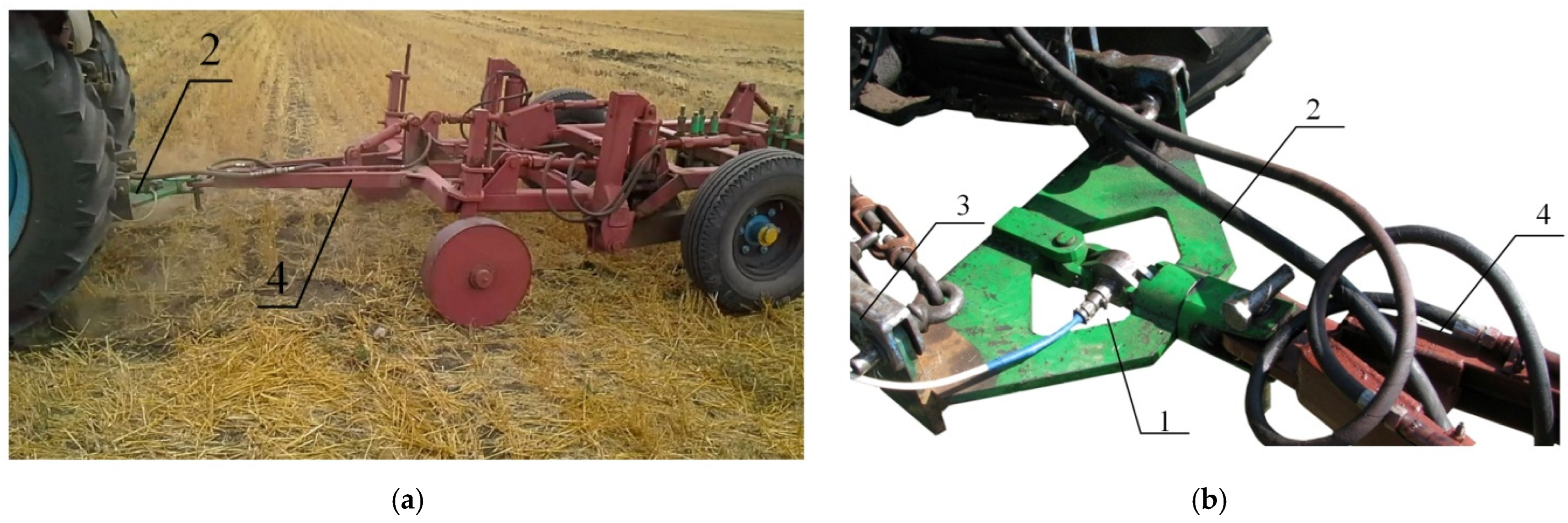
The resultant draft resistance was measured using strain-gauge equipment, which included a tensile force sensor (strain-gauge link) with a measurement range of up to 2.0 t (manufacturer: KB “SPC Agricultural engineering”, Kostanay, Kazakhstan), plates for installing the strain-gauge link (manufacturer: KB “SPC Agricultural engineering”, Kazakhstan), a ZET017-T8 strain-gauge station (manufacturer: ZETLAB, Moscow, Russia), a portable personal computer Acer Aspire E 15 (manufacturer: Acer, Shanghai, China) with Windows 7 software (manufacturer: Microsoft Corporation, Redmond, WA, USA), a 12–220 V voltage converter Robiton R300 (manufacturer: Robiton, Dongguan and Shenzhen, China), and connecting wires (see Figure 5 and Figure 6).
The error of the strain-gauge measuring equipment, as determined in accordance with [44,45] specified, was found to be 1.96%. Geometric dimensions were measured using an R5 ICR tape measure, categorized as second-class in terms of accuracy. Mass characteristics were determined using tension dynamometers of the following models: DSI−0.1, DSI−0.5, and DSI−100 (manufacturer: Plant of testing devices, Ivanovo, Russia). It is imperative to note that all measuring instruments are accompanied by a certificate of verification of the established type.
The test conditions were defined in accordance with GOST 20915-2011 [40].
The methodology for determining tillage depth is outlined in accordance with the provisions set out in GOST 33736-2016 [41], while the methodology for determining the resultant draft resistance of the field unit (N) and its travel speed (m/s) is outlined in accordance with GOST 34631 [42], respectively. The experiment was replicated five times. The experimental research plan is presented in Table 1.
The obtained initial data were used to determine the value of the specific resistance of soil to volumetric deformation:
k D ( α ) =   R F . I .   g · f · m F . I . + m S + m W b W · h W · ρ S · g · l W · 1 + t g ( α + φ ) sin α b W · h W · l W · c o s   α + + b W · h W · ρ S · v 2 · s i n · 1 + t g ( α + φ ) b W · h W · l W · c o s   α .
where g —acceleration due to gravity, m/s2;
f —rolling friction coefficient;
m F . I . —mass of the field unit, kg;
m S —mass of the stand, kg;
m W —mass of the dihedral wedge, kg;
ρ S —soil density, kg/m3;
α—wedge installation angle relative to the furrow bottom (crumbling angle), deg.;
φ —soil-on-steel friction angle, deg.
The specific resistance of the soil to volumetric deformation for a wedge with an angle of α was determined by adopting the arithmetic mean value. In order to assess the homogeneity and stability of the obtained set of values for the specific soil resistance, the coefficient of variation, υ, was utilized. The methodology for determining the relevant sources is outlined in [46] and is to be followed.

3. Findings

3.1. The Following Report Summarizes the Findings of an Experimental Study Undertaken to Ascertain the Specific Resistance of Soil to Volumetric Deformation

The values of k D ( α ) for various angles α are presented in Table 2.
The soil hardness in the 30-centimetre layer was found to be 7.1 MPa, with a moisture content of 17.6% and a density of 1330 kg/m3. These conditions are considered typical for the region under consideration during fall plowing.
It was established that changes in travel speed within the considered speed range did not affect the value of k D ( α ) . The set of values obtained for specific soil resistance were homogeneous and stable. The coefficient of variation is thus υ = 6.5%.
The values of k D ( α ) presented in Table 2 were utilised in the mathematical modeling of soil layer deformation processes by tillage working elements, which are based on the dihedral wedge, under the conditions of the northern region of Kazakhstan.

3.2. Findings of Stress Determination in the Soil Layer Under the Action of a Dihedral Wedge

According to the developed research methodology, the relationship was established between the area of the deformable soil zone S D . (m2) and the length of the dihedral wedge l W (m). The length of the dihedral wedge varied within the range l W = [0.05; 0.30] m, while its width remained constant at b W = 0.06 m. The installation angle of the dihedral wedge relative to the furrow bottom was α = 20°.
Calculations performed using Formulas (7)–(10) produced the following results:
-
Stress distribution profiles in the soil layer for various lengths of the dihedral wedge are presented in Figure 7;
-
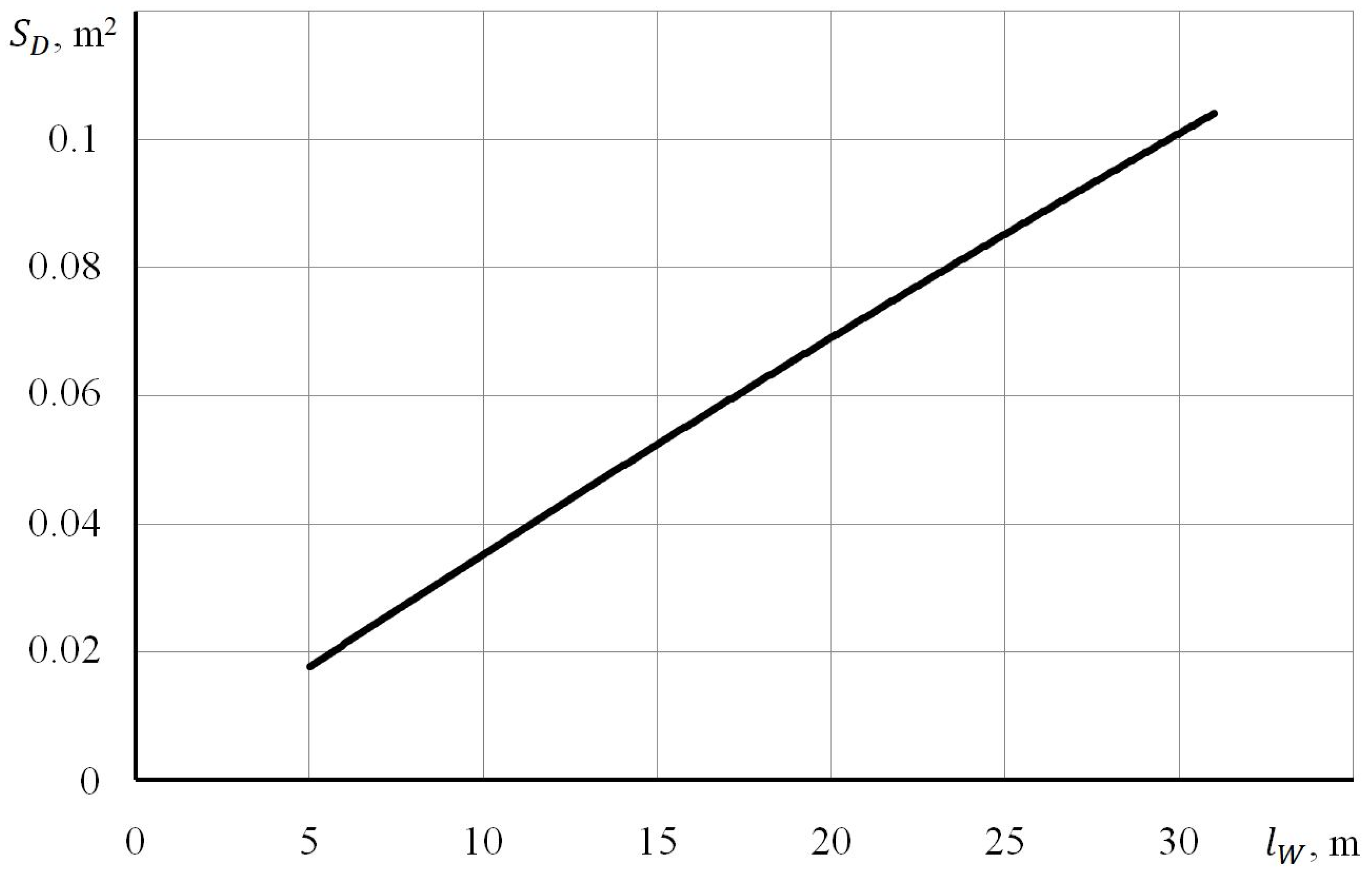
The functional relationship S D . = f ( l W ) is shown in Figure 8.
As shown in Figure 7, increasing the length of the dihedral wedge from 0.05 to 0.30 m (an 83% increase in relative units) leads to an increase in the area of the deformable soil zone (SD., m2) from 0.02 to 0.10 m2, representing an 80% increase. This demonstrates that the area of the deformable soil increases proportionally with the length of the dihedral wedge.
The identified quantitative relationship between the dihedral wedge length ( l W , m) and the area of the deformable soil zone (SD., m2) can be utilized in the design of soil-engaging working tools, for example, to justify the chisel projection of a flat-cutting working element at the stage of theoretical investigations.
The nature of the functional dependence S D = f ( l W ) is similar to the soil stress distribution patterns identified by the authors in [23,24] during their earlier experimental studies. This confirms that the method we have developed for determining stresses is consistent with the behavior of real soil systems.

4. Discussion

The development of the graphical–analytical method for determining the stresses induced in a soil layer by the dihedral wedge was based on an equation proposed by J. Boussinesq. This method incorporates the effects of both the wedge parameters and the physical–mechanical properties of the soil. The findings of the study demonstrated the direct proportional relationship between the length of the dihedral wedge and the total area of the deformable soil. Specifically, an 83% increase in wedge length (from 0.05 to 0.30 m) resulted in an 80% increase in the area of deformable soil (from 0.02 to 0.10 m2).
The relationship between the length of the dihedral wedge and the area of deformed soil was identified and used to substantiate the parameters of the flat-cutting working element for processing soils with a heavy physical and mechanical composition and low moisture content in geographical regions prone to wind erosion. One of the most common methods of reducing the risk of wind erosion is to maintain a protective layer of stubble and crop residues on the field surface. In the context of the prevailing soil and climatic conditions, implementation of flat-cutting working elements is deemed the most efficacious approach in ensuring adherence to agrotechnical requirements.
According to our hypothesis, it is possible to increase the percentage of stubble retained after soil tillage with flat-cutting implements and maintain a sufficient level of soil crumbling by increasing the working width of the flat-cutting implement while simultaneously increasing the length of the chisel (namely, its cantilevered part).
In order to facilitate a quantitative assessment of the quality of soil crumbling at the theoretical research stage, a soil layer deformation interference coefficient was proposed. This was determined by the following formula:
λ I = S D S F C = S D B F C · h W ,
where λ I —soil layer deformation interference coefficient;
S F C —total area of soil processed by the flat-cutting working element, m2;
B F C —working width of the flat-cutting working element, m.
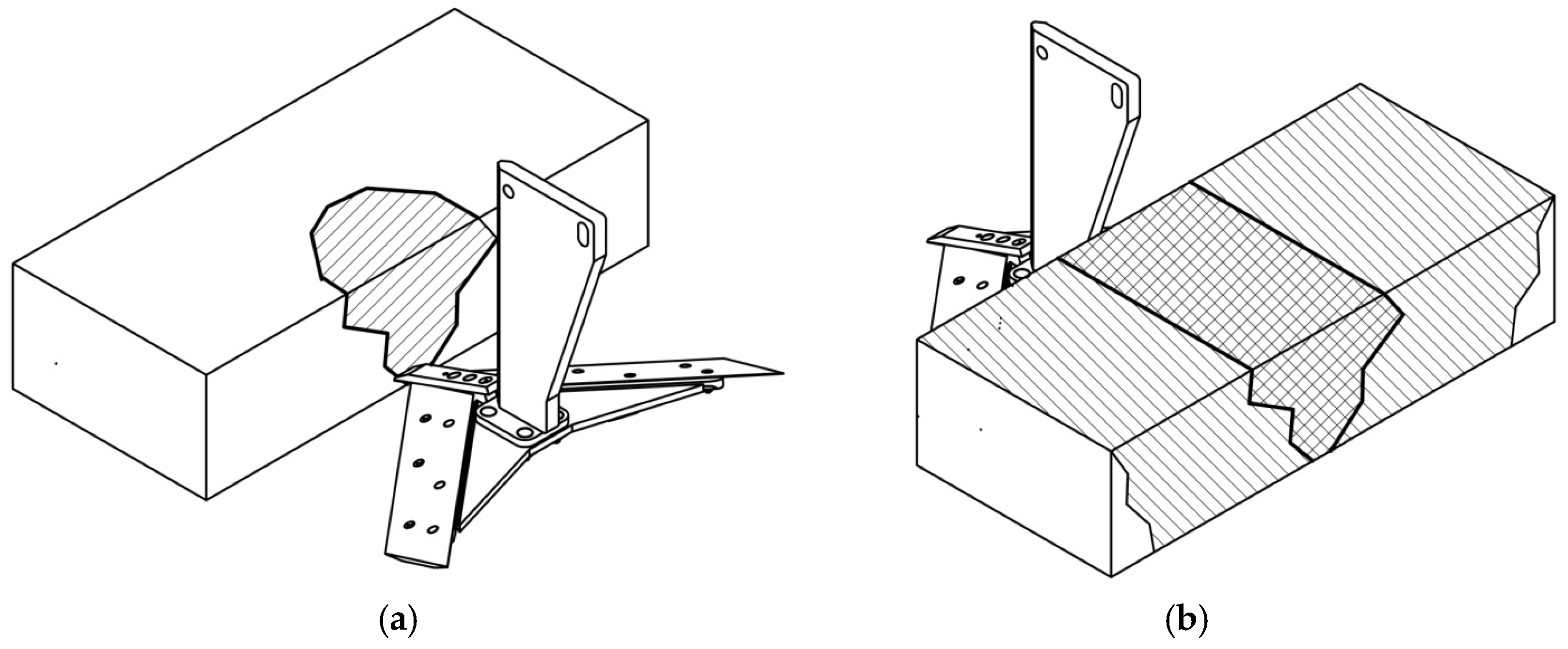
The following physical interpretation can be deduced from the formula. The flat-cutting working element primarily affects the soil layer through the chisel and the shares. As the cutting edge of the chisel is offset forward relative to the cutting edges of the shares, it is the chisel that exerts the initial impact on the soil monolith (see Figure 9a).
In accordance with the research findings presented in Section 2.1, the following conclusions can be drawn: the action of the chisel produces zones of soil failure, zones of high deformation and zones of partial deformation, S D . ( F ) , S D . ( H . ) and S D . ( P . ) , respectively. At the moment of contact between the cutting edge of the shares and the considered cross-section of the soil layer (see Figure 9b), there is an interaction (interference) of fracture line trajectories, caused by the shares, with the already existing cracked sections in the soil. Consequently, the intensity of soil crumbling in this area will be at its greatest. The zone will be located in the central part of the working element, with respect to the longitudinal–vertical plane that passes through the axis of symmetry of the flat-cutting working element. In the peripheral region of the flat-cutting working element situated beyond the soil deformation interference zone, the ultimate stress state leading to soil fracture will be predominantly caused by the action of the cutting edges of the shares on the soil monolith. However, this is insufficient for the intensive crack formation when working with soils of heavy physical–mechanical composition and low moisture. Consequently, an increase in the value of λ I will result in greater levels of soil crumbling.
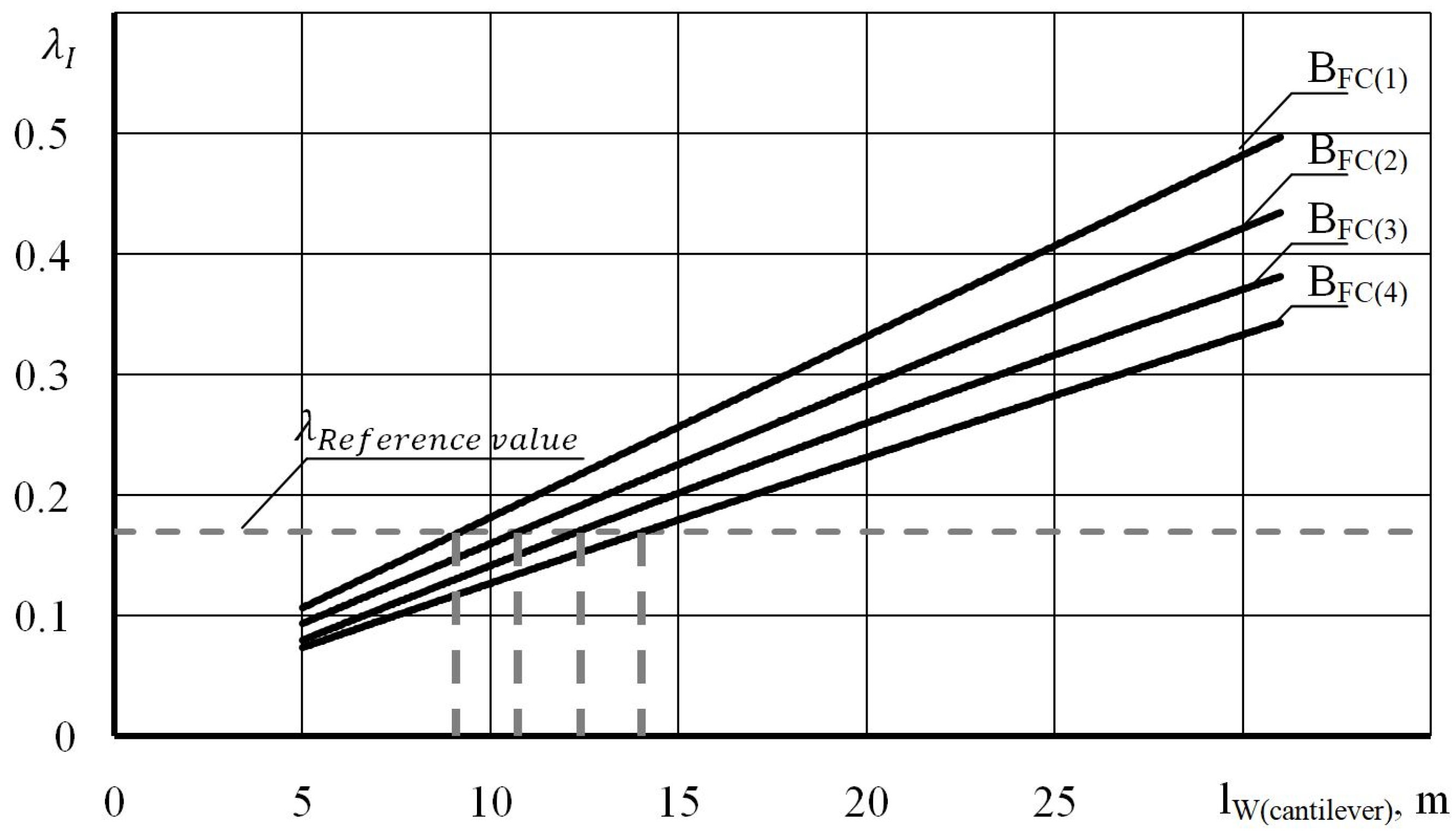
In the context of the flat-cutting working element, implementation of the technological operation under consideration is deemed to be satisfactory when soil crumbling reaches 60–65% (provided that the stubble retention is no less than 60%). It has been established that the specified level of crumbling corresponds to λ I = 0.18 . This value was adopted as the reference standard.
A correlation was identified between the working width of the flat-cutting element and the length of the chisel’s cantilevered part, which ensured increased stubble retention and an adequate level of soil crumbling. The calculation results are presented in Figure 10.
As demonstrated in Figure 10, an increase in the working width of the flat-cutting working element requires a corresponding increase in chisel length to ensure the required level of soil crumbling, expressed through the interference coefficient λ I . It is therefore evident that, contingent upon the working width of the flat-cutting working element, the condition for the required crumbling is fulfilled at the following values:
-
at BFC = 0.7 m l W ( c a n t i l e v e r ) ≥ 8.0 mm;
-
at BFC = 0.8 m l W ( c a n t i l e v e r ) ≥ 11.0 mm;
-
at BFC = 0.9 m l W ( c a n t i l e v e r ) ≥ 14.0 mm;
-
at BFC = 1.0 m l W ( c a n t i l e v e r ) ≥ 17.0 mm.
The BFC(1)–BFC(4) curves do not exhibit an optimum zone; therefore, it was not possible to draw an unambiguous conclusion regarding the optimal width of the flat-cutting working element and the length of the chisel cantilevered part at this stage of the research. It is imperative to consider the influence of the analyzed design parameters on the energy performance. An unwarranted increase in the chisel length not only raises the interference coefficient value, thereby intensifying soil crumbling, but also leads to higher draft resistance of the flat-cutting working element in comparison. This, in turn, will have a detrimental effect on the energy intensity of the technological process under consideration.
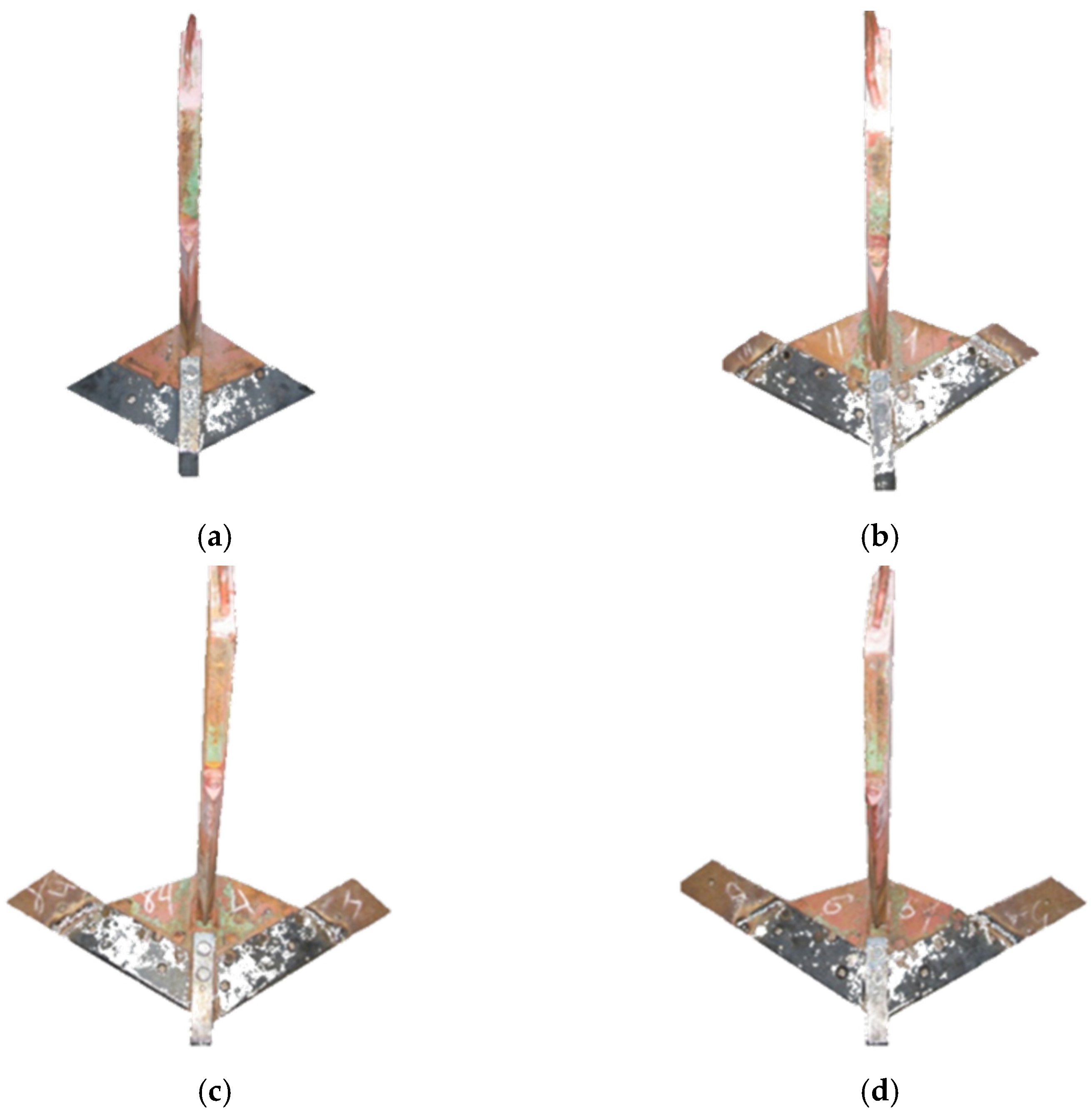
The manufactured variants of the flat-cutting working elements are presented in Figure 11.
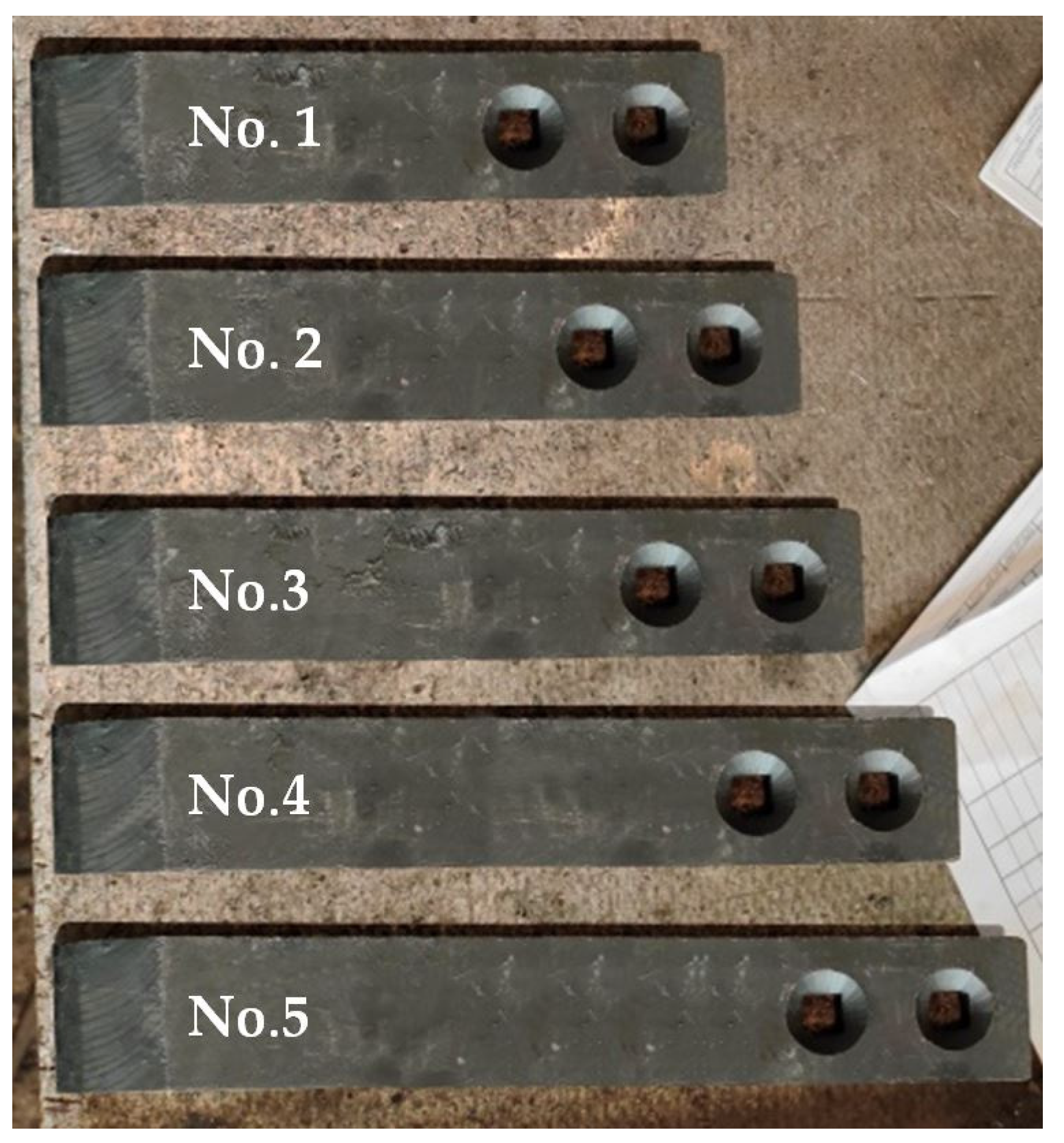
The manufactured options of chisels with different lengths are presented in Figure 12.
As this article is dedicated to the description of the method developed by us for determining stresses in the soil layer under the influence of the dihedral wedge, it is not possible to present here the comprehensive research findings on substantiating the optimal working width and chisel length of the flat-cutting working element. The research results substantiating the said parameters of the flat-cutting working elements will be presented in more detail in future publications.
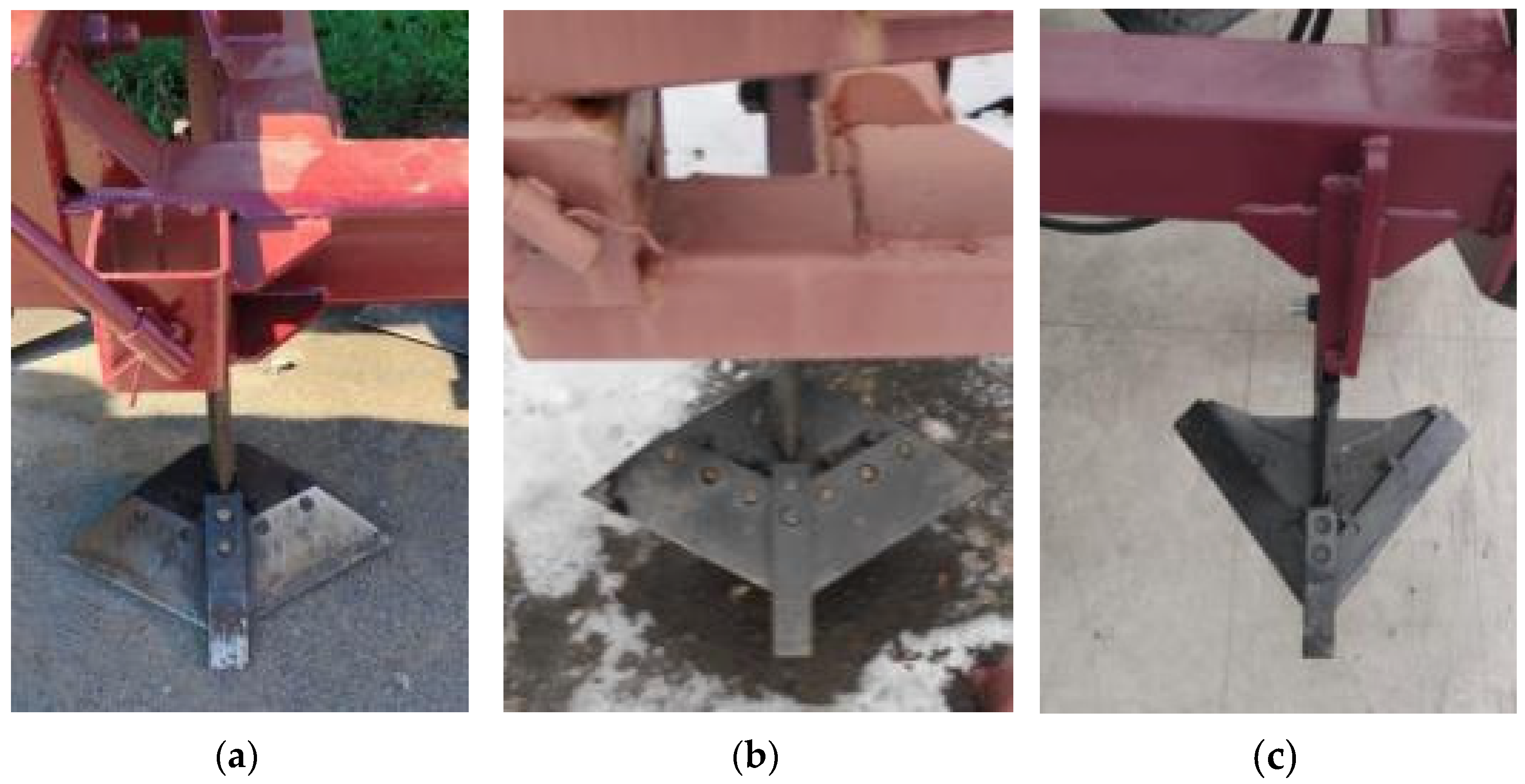
For example, the mathematical model we developed was used to justify the projection of the chisel in variants of flat-cutting working tools for deep tillage of compacted soils [47], as well as in the flat-cutting working tool of the cultivator-fertilizer for subsurface application of mineral fertilizers [48]. Photographs of these working tools are presented in Figure 13.

Author Contributions

Conceptualization, A.K., A.D. and I.T.; methodology, A.K. and Y.P.; software, I.T.; validation, A.K., P.I. and A.S.; investigation, A.K., A.D. and I.T.; data curation, P.I. and A.S.; writing—original draft preparation, A.K. and A.D.; writing—review and editing, Y.B. and Y.P.; visualization, I.T.; supervision, A.K.; funding acquisition, Y.B. All authors have read and agreed to the published version of the manuscript.

Funding

This research was funded by the Industrial Development Committee of Industry of the Ministry of Industry and Construction of the Republic of Kazakhstan (Grant №. BR23992300).

Institutional Review Board Statement

Not applicable.

Informed Consent Statement

Not applicable.

Data Availability Statement

All data used in this study are publicly accessible at the following link: https://doi.org/10.5281/zenodo.18884094.

Conflicts of Interest

Authors Anton Kuvaev, Alexey Derepaskin, Ivan Tokarev, Yurij Binyukov, Yurij Polichshuk, Pavel Ivanchenko, and Alexander Semibalamut were employed by the company Kostanay branch of «Scientific Production Center of Agricultural Engineering», LLP. All authors declare that the research was conducted in the absence of any commercial or financial relationships that could be construed as a potential conflict of interest.

References

  1. Lamande, M.; Schjonning, P. Soil mechanical stresses in high wheel load agricultural field traffic: A case study. Soil Res. 2017, 56, 129–135. [Google Scholar] [CrossRef]
  2. Hamza, M.A.; Anderson, W.K. Soil compaction in cropping systems: A review of the nature, causes and possible solutions. Soil Tillage Res. 2005, 82, 121–145. [Google Scholar] [CrossRef]
  3. Yang, P.; Dong, W.; Heinen, M.; Qin, W.; Oenema, O. Soil compaction prevention, amelioration and alleviation measures are effective in mechanized and small holder agriculture: A meta-analysis. Land 2022, 11, 645. [Google Scholar] [CrossRef]
  4. Schjonning, P.; Lamande, M.; Thorse, M. Soil Compaction—Drivers, Pressures, State, Impacts and Responses; Danish Centre for Food and Agriculture: Tjele, Denmark, 2019; 34p, Available online: https://pure.au.dk/ws/portalfiles/portal/161792978/Levering_Vidensgrundlag_Jordpakning_traktose.pdf (accessed on 3 June 2026).
  5. Mudarisov, S.; Gainullin, I.; Gabitov, I.; Hasanov, E.R.; Farhutdinov, I. Soil compaction management: Reduce soil compaction using a chain-track tractor. J. Terramech. 2020, 89, 1–12. [Google Scholar] [CrossRef]
  6. El-Sayegh, Z.; El-Gindy, M.; Johansson, I.; Oijer, F. Improved tire-soil interaction model using FEA-SPH simulation. J. Terramech. 2018, 78, 53–62. [Google Scholar] [CrossRef]
  7. Antille, D.L.; Peets, S.; Galambosova, J.; Botta, G.F.; Rataj, V.; Macak, M.; Tullberg, J.N. Review: Soil compaction and controlled traffic farming in arable and grass cropping systems. Agron. Res. 2019, 17, 653–682. [Google Scholar] [CrossRef]
  8. Pholpho, T.; Pholpho, K. Multi-role hovercraft for agricultural. IOP Conf. Ser. Earth Environ. Sci. 2019, 301, 012013. [Google Scholar] [CrossRef]
  9. Nair, A.; Pai, K.; Varghese, M.; Thomas, S. Hovercraft based farming system. Int. J. Sci. Res. 2014, 2, 17–22. Available online: https://www.researchgate.net/publication/279840766_Hovercraft_Based_Farming_System (accessed on 3 June 2026).
  10. Beloev, H. Methodology for experimental study of soil microrelief on ruts in bridge farming. Mach. Energ. 2022, 13, 9–15. [Google Scholar] [CrossRef]
  11. Widmer, A.; Johannes, A.; Fontana, M.; Sommer, M.; Elfouki, S.; Bragazza, L.; Koestel, J. Short-term impact of mechanical loosening on physical soil properties in a severely compacted subsoil. Geoderma 2025, 464, 117611. [Google Scholar] [CrossRef]
  12. Oliveira, E.; Wittwer, R.; Hartmann, M.; Keller, T.; Buchmann, N.; Heijden, M. Effects of conventional, organic and conservation agriculture on soil physical properties, root growth and microbial habitats in a long-term field experiment. Geoderma 2024, 447, 116927. [Google Scholar] [CrossRef]
  13. Jiao, G.; Zhou, J.; Zhu, T.; Zhao, Z. Experimental study of water jet cutting of frozen soil. Energy Educ. Sci. Technol. Part A Energy Sci. Res. 2014, 32, 7165–7172. Available online: https://www.researchgate.net/publication/289040230_Experimental_study_of_water_jet_cutting_of_frozen_soil (accessed on 3 June 2026).
  14. A Prototype of a Universal Pneumatic Plow Is Being Tested. Available online: https://agri-news.ru/novosti/opytnyy-obrazets-universalnogo-pnevmopluga-prokhodit-ispytanie/ (accessed on 22 May 2026).
  15. Dzhabborov, N.; Dobrinov, A.; Sergeev, A. Vibration parameters and indicators of a dynamic tillage tool. IOP Conf. Ser. Earth Environ. Sci. 2021, 937, 032048. [Google Scholar] [CrossRef]
  16. Liu, G.; Xia, J.; Zheng, K.; Cheng, J.; Wang, K.; Zeng, R.; Wang, H.; Liu, Z. Effects of vibration parameters on the interfacial adhesion system between soil and metal surface. Soil Tillage Res. 2022, 218, 105294. [Google Scholar] [CrossRef]
  17. Peixoto, D.S.; da Silva, L.D.C.M.; De Melo, L.B.B.; Azevedo, R.P.; Araújo, B.C.L.; De Carvalho, T.S.; Moreira, S.G.; Curi, N.; Silva, B.M. Occasional tillage in no-tillage systems: A global meta-analysis. Sci. Total. Environ. 2020, 745, 140887. [Google Scholar] [CrossRef] [PubMed]
  18. Peralta, G.; Alvarez, C.; Taboada, M. Soil compaction alleviation by deep non-inversion tillage and crop yield responses in no tilled soils of the Pampas region of Argentina. A meta-analysis. Soil Tillage Res. 2021, 211, 105022. [Google Scholar] [CrossRef]
  19. Qaisrani, R.; Li, J. Application of Bio-Inspired Surfaces in Reducing Adhesion to the Surfaces of Soil-Engaging Components of Agricultural and Earth-Moving Machinery. In Bio-Inspired Surfaces and Applications; Ng, E.Y.K., Luo, Y., Eds.; World Scientific Publishing Co.: Hackensack, NJ, USA, 2016; pp. 485–553. Available online: https://www.researchgate.net/publication/304145409_Application_of_Bio-Inspired_Surfaces_in_Reducing_Adhesion_to_the_Surfaces_of_Soil-Engaging_Components_of_Agricultural_and_Earth-Moving_Machinery (accessed on 3 June 2026).
  20. Balovnev, V.I. Road-Building Machines with Working or Gans of Intensifying Action; Mashinostroenie: Moscow, Russia, 1981; 224p. [Google Scholar]
  21. Tabashnikov, A.T. The System of Criteria for Quality, Reliability, and Economic Efficiency of Agricultural Machinery: An Instructional and Methodological Publication; Rosinformagrotekh: Moscow, Russia, 2010; 310p, Available online: https://search.rsl.ru/ru/record/01004726183 (accessed on 3 June 2026).
  22. Sineokov, G.N. Design of the Tillage Implement; Mashinostroenie: Moscow, Russia, 1965; 310p, Available online: https://search.rsl.ru/ru/record/01008420102 (accessed on 3 June 2026).
  23. Vagin, A.T.; Larchenkov, L.V.; Piletskiy, A.Z. Mechanization of Soil Protection from Wind Erosion in the Non-Chernozem Zone; Kolos: Leningrad, Russia, 1977; 272p, Available online: https://search.rsl.ru/ru/record/01007681406 (accessed on 3 June 2026).
  24. Panov, I.M.; Vetokhin, V.I. Physical Foundations of Soil Mechanics; Feniks: Kyev, Ukraine, 2008; 265p, Available online: https://search.rsl.ru/ru/record/01005452720 (accessed on 3 June 2026).
  25. Lima, R.; Keller, T. Soil stress measurement by load cell probes as influenced by probe design, probe position, and soil mechanical behavior. Soil Tillage Res. 2021, 205, 104796. [Google Scholar] [CrossRef]
  26. Gaynullin, I. Experimental study of track-type tractor speed influence on soil sealing. Int. Res. J. 2017, 3, 29–31. [Google Scholar] [CrossRef]
  27. Pytka, J. Load effect up on soil stress and deformation state in structured and disturbed sandy loam for two tillage treatments. Soil Tillage Res. 2001, 1–2, 13–25. [Google Scholar] [CrossRef]
  28. Mudarisov, S.; Lobachevsky, Y.; Farkhutdinov, I. Justification of the soil dem-model parameters for predicting the plow body resistance forces during plowing. J. Terramech. 2023, 109, 37–44. [Google Scholar] [CrossRef]
  29. Hoseinian, S.; Hemmat, A.; Esehaghbeygi, A. Development of a dual sideway-share subsurface tillage implement: Part 1. Modeling tool interaction with soil using DEM. Soil Tillage Res. 2022, 215, 105201. [Google Scholar] [CrossRef]
  30. Sun, J.; Wang, Y.; Ma, Y. DEM simulation of bionic subsoilers (tillage depth > 40 cm) with drag reduction and lower soil disturbance characteristics. Adv. Eng. Softw. 2018, 119, 30–37. [Google Scholar] [CrossRef]
  31. Lopez, E.; Tijskens, E.; Herrera Suárez, M.; Gonzalez Cueto, O.; Ramon, H. Prediction model for non-inversion soil tillage implemented on discrete element method. Comput. Electron. Agric. 2014, 106, 120–127. [Google Scholar] [CrossRef]
  32. Zhao, H.; Huang, Y.; Liu, Z.; Liu, W.; Zheng, Z. Applications of Discrete Element Method in the Research of Agricultural Machinery. Agriculture 2021, 11, 425. [Google Scholar] [CrossRef]
  33. De Pue, J.; Cornelis, W. DEM simulation of stress transmission under agricultural traffic Part 1: Comparison with continuum model and parametric study. Soil Tillage Res. 2019, 195, 104408. [Google Scholar] [CrossRef]
  34. Tsypuk, A.M. Justification of the size of the stress region in the soil under the influence of mechanical load. Tr. Lesoinzhenernogo Fak. Petrgu 1999, 172–174. Available online: https://rt.petrsu.ru/files/pdf/2488.pdf (accessed on 3 June 2026).
  35. Ibarra, S.; McKyes, E.; Broughton, R. A model of stress distribution and cracking in cohesive soils produced by simple tillage implements. J. Terramech. 2005, 42, 115–139. [Google Scholar] [CrossRef]
  36. Vaghela, K. Principles and Practices of Soil Mechanics and Foundation Engineering; Marcel Dekker: New York, NY, USA, 2008; 1050p. [Google Scholar]
  37. Frazee, G. New formulations of Boussinesq solution for vertical and lateral stresses in soil. Pract. Period. Struct. Des. Constr. 2021, 2, 06021001. [Google Scholar] [CrossRef]
  38. Marohl, M. Comparison of numerical methods for calculation of vertical soil pressures on buried piping due to truck loading. In Proceedings of the Pressure Vessels and Piping Division, Anaheim, CA, USA, 20–24 July 2014. Volume 1: Codes and Standards. [Google Scholar] [CrossRef]
  39. Vrettos, C. The Boussinesq problem for soils with bounded non-homogeneity. Int. J. Numer. Anal. Methods Geomech. 1998, 22, 655–669. [Google Scholar] [CrossRef]
  40. GOST 20915-2011; Testing of Agricultural Tractors and Machines. Procedure for Determination of Test Conditions. Standartinform: Moscow, Russia, 2013; 27p. Available online: https://files.stroyinf.ru/Data2/1/4293788/4293788522.pdf (accessed on 3 June 2026).
  41. GOST 33736-2016; Agricultural Machinery. Machines for Deep Tillage. Test Methods. Standartinform: Moscow, Russia, 2017; 39p. Available online: https://files.stroyinf.ru/Data2/1/4293746/4293746702.pdf (accessed on 3 June 2026).
  42. GOST 34631-2019; Agricultural Machinery. Methods of Power Estimation. Standartinform: Moscow, Russia, 2020; 13p. Available online: https://files.stroyinf.ru/Data/739/73915.pdf (accessed on 3 June 2026).
  43. Burchenko, P.N. Mechanical and Technological Foundations of New Generation Tillage Machines; VIM: Moscow, Russia, 2002; 212p, Available online: https://search.rsl.ru/ru/record/01002151495 (accessed on 3 June 2026).
  44. Montero, W.; Farag, R.; Diaz, V.; Ramirez, M.; Boada, B.L. Uncertainties associated with strain-measuring systems using resistance strain gauges. J. Strain Anal. Eng. Des. 2011, 1, 1–13. [Google Scholar] [CrossRef]
  45. Sujatha, C. Strain Gauge-Based Equipment. In Vibration, Acousticsand Strain Measurement; Sujatha, C., Ed.; Springer: Cham, Switzerland, 2023; pp. 305–349. [Google Scholar] [CrossRef]
  46. Stepniak, C. Coefficient of variation. In International Encyclopedia of Statistical Science; Lovric, M., Ed.; Springer: Cham, Switzerland, 2025; pp. 305–349. [Google Scholar] [CrossRef]
  47. Kuvaev, A.; Derepaskin, A.; Tokarev, I. Substantiation of the working width of the tillage implement. Acta Univ. Agric. Silvic. Mendel. Brun. 2021, 69, 21–31. [Google Scholar] [CrossRef]
  48. Kuvaev, A.; Derepaskin, A.; Tokarev, I.; Polichshuk, Y.; Binyukov, Y.; Ivanchenko, P.; Kukhar, V.; Semibalamut, A. Optimizing cultivator-fertilizer performance with tractor-mounted configuration in northern Kazakhstan. Int. J. Agric. Biosci. 2025, 14, 674–682. [Google Scholar] [CrossRef]
Figure 1. The relationship between the compaction coefficient (i, %) and distance from the loading plane of the soil layer (X, m).
Agriengineering 08 00241 g001
Figure 2. Diagram for determining the stress at the considered point M under the action of the concentrated force P.
Agriengineering 08 00241 g002
Figure 3. Diagram of soil layer deformation by a two-faced wedge: (a) position 1; (b) position 2.
Agriengineering 08 00241 g003
Figure 4. Field unit, variants of dihedral wedges, and stand for their fixation: (a) Field unit. General view; (b) Stand for fixation of dihedral wedge variants; (c) Dihedral wedges, α = 10°, b = 0.4–0.6 m; (d) Dihedral wedges, α = 20°, b = 0.4–0.6 m; (e) Dihedral wedges, α = 30°, b = 0.4–0.6 m; (f) Dihedral wedges, α = 40°, b = 0.4–0.6 m.
Agriengineering 08 00241 g004
Figure 5. General view of the strain-gauge equipment: 1. Compression strain-gauge link (20 kN); 2. Strain-gauge station; 3. Portable PC; 4. 12–220 V voltage converter.
Agriengineering 08 00241 g005
Figure 6. Components of the strain-gauge equipment installed on the tractor’s hitch system. (a) General view; (b) Mutual arrangement of the strain-gauge equipment components, the tractor hitch system, and the field unit. 1—Strain-gauge link; 2—Plate for mounting the strain-gauge link; 3—Tractor hitch system; 4—Laboratory unit.
Agriengineering 08 00241 g006
Figure 7. Stress distribution diagrams in the transverse-vertical plane for dihedral wedges of varying lengths l W : (a) l W = 0.05 m; (b) l W = 0.10 m; (c) l W = 0.15 m; (d) l W = 0.20 m; (e) l W = 0.25 m; (f) l W = 0.30 m.
Agriengineering 08 00241 g007
Figure 8. Influence of the dihedral wedge length ( l W . , m) on the total area of the deformable soil (SD, m2).
Agriengineering 08 00241 g008
Figure 9. Interaction process of the flat-cutting working element components with the soil monolith cross-section: (a) interaction of the chisel; (b) interaction of the shares.
Agriengineering 08 00241 g009
Figure 10. Influence of the length of the chisel cantilevered part l W ( c a n t i l e v e r ) (m) and the working width of the flat-cutting working element B F C (m) on the soil layer deformation interference coefficient λ I : BFC(1) = 0.7 m; BFC(2) = 0.8 m; BFC(3) = 0.9 m; BFC(4) = 1.0 m.
Agriengineering 08 00241 g010
Figure 11. Options of flat-cutting working elements manufactured for experimental research: (a) BFC = 0.6 m; (b) BFC = 0.7 m; (c) BFC = 0.8 m; (d) BFC = 0.9 m.
Agriengineering 08 00241 g011
Figure 12. Chisel options manufactured for experimental research are as follows: option No. 1 (standard chisel) l W = 285 mm, l W ( c a n t i l e v e r ) = 50 mm; option No. 2 l W = 315 mm, l W ( c a n t i l e v e r ) = 80 mm; option No. 3 l W = 345 mm, l W ( c a n t i l e v e r ) = 110 mm; option No. 4 l W = 375 mm, l W ( c a n t i l e v e r ) = 140 mm; option No. 5 l W = 405 mm, l W ( c a n t i l e v e r ) = 170 mm.
Agriengineering 08 00241 g012
Figure 13. Variants of flat-cutting working tools with substantiated chisel projection: (a) for soil tillage to a depth of 20–35 cm (working tool width 0.6 m, chisel projection 5 cm); (b) for soil tillage to a depth of 20–35 cm (working tool width 0.7 m, chisel projection 8 cm); (c) for soil tillage to a depth of 14–25 cm (working tool width 0.7 m, chisel projection 8 cm).
Agriengineering 08 00241 g013
Table 1. Experimental Research Plan.
Variable Parameters
b, m α , degreeV, m/s
0.04–0.06 (step 0.01)10–40 (step 10)1.7–2.9 (step 0.3)
Evaluated Parameter R F . I . , N
Total number of experiments—60, repetition: 5-fold
Table 2. Values k D α for deforming tools with different angle α .
Angle α, degrees10203040
Specific soil resistance to volumetric deformation k D ( α ) , N/m37.00 × 1056.49 × 1057.66 × 1058.01 × 105
Disclaimer/Publisher’s Note: The statements, opinions and data contained in all publications are solely those of the individual author(s) and contributor(s) and not of MDPI and/or the editor(s). MDPI and/or the editor(s) disclaim responsibility for any injury to people or property resulting from any ideas, methods, instructions or products referred to in the content.