Skip Content
You are currently on the new version of our website. Access the old version .

AgriEngineering

AgriEngineering is an international, peer-reviewed, open access journal on the engineering science of agricultural and horticultural production, published monthly online by MDPI.

Quartile Ranking JCR - Q2 (Agricultural Engineering)

All Articles (1,148)

Whole-plant maize (corn) (WPC) is a critical forage in ruminant diets, and rapid, reliable measurement of its nutritional composition is essential for precision feeding. We hypothesized that an on-site near-infrared spectroscopy (OS-NIRS—specifically, HarvestLab™ 3000) sensor would provide within-laboratory repeatability comparable to commercial analytical laboratories (ALs) and inter-laboratory reproducibility similar to conventional laboratory analyses. To test this, WPC samples were collected across three experiments and two countries (USA and Germany) and analyzed by both OS-NIRS and ALs, with precision metrics calculated according to ISO 5725. Results showed that OS-NIRS achieved intra-laboratory repeatability equal to or greater than ALs, particularly for protein and starch. The repeatability performance of the OS-NIRS sensors was similar to that of ALs for moisture and NDF. Inter-laboratory reproducibility varied widely across constituents and experiments. Including OS-NIRS data with AL measurements produced inconsistent effects—sometimes narrowing confidence intervals but more often widening them—while OS-NIRS data alone demonstrated repeatability on par with ALs but mixed reproducibility outcomes. Inclusion of OS-NIRS data did not introduce systematic bias and, in some cases, improved consistency. These findings indicate that OS-NIRS can complement laboratory analyses by providing timely, farm-level measurements that enhance decision-making in feed management.

7 February 2026
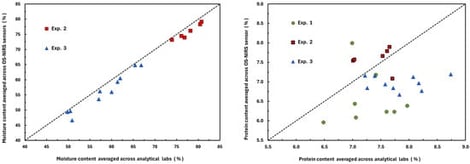
Comparison of OS-NIRS sensors and analytical laboratory measurements of moisture content (% wet basis) and protein, starch and NDF (% of DM) for whole-plant corn samples. Each point represents the mean constituent value of a sample, averaged across all replicates, with the x-axis showing analytical laboratory values and the y-axis showing OS-NIRS sensor values. Data is from Experiments 1 (green circles); 2 (red squares); and 3 (blue triangles). The dashed line denotes the 1:1 line of identity, illustrating agreement between methods.

Ridge Regression Modeling of Evaporation Reduction Strategies for Small-Scale Water Storage in Semi-Arid Regions

  • Kishore Nalabolu,
  • Madhusudhan Reddy Karakala and
  • Shobhan Naik Vankanavath
  • + 11 authors

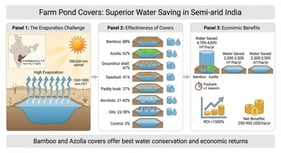
In semi-arid areas, water loss from small agricultural water storage facilities is significant, owing to evaporation. A longitudinal study was conducted between 2019 and 2022 at the Agricultural Research Station, Ananthapuramu, located in the semi-arid climate of Peninsular India, which compared 12 distinct treatments designed to reduce evaporation. These treatments included bamboo sheets, agricultural residues, Azolla (Azolla pinnata), monomolecular alcohol films, and oil-based films, along with an untreated control. Evaporation rates and meteorological data were measured using the depth loss method and automatic weather station. Results indicated substantial treatment effects, such as bamboo sheets decreasing evaporation by 88%, reducing daily loss from 5.2 mm to 0.8 mm, while Azolla achieved a 62% reduction (2.8 mm). Organic residues decreased evaporation by 37–47%, and chemical monolayers and oils by 21–42%. Ridge regression models demonstrated strong performance (R2 = 0.789–0.808), with bamboo sheets exhibiting the lowest Root Mean Square Error (0.127 mm day−1). Economic analysis revealed annual water savings of 4700–4800 m3 ha−1 for bamboo sheets and 2300–2500 m3 ha−1 for less effective covers. Assuming a baseline water value of 0.20 US$ m−3, annual net benefits ranged from 250 to 900 US$ ha−1, with Net Present Values spanning from 7000 to 160,000 US$ ha−1 across various scenarios. Overall, bamboo sheets and Azolla were identified as the most effective and economically viable options for mitigating evaporation in semi-arid smallholder water systems. Maximum air temperature (Tmax) was a key meteorological variable used to model daily evaporation, together with wind speed, followed by relative humidity and sunshine duration.

3 February 2026

Location of study area.

An Investigation of the Impacts of Controlled Traffic Farming on Soil Properties

  • Raveendrakumaran Bawatharani,
  • Miles Grafton and
  • Clive Davies
  • + 2 authors

Soil compaction caused by uncontrolled machinery traffic is a major constraint to sustainable crop production. Controlled Traffic Farming (CTF), which restricts machinery movement to permanent lanes, has been practiced in New Zealand for more than a decade but has not been evaluated against Random Traffic Farming (RTF). This knowledge gap limits farmer awareness and adoption. This study hypothesized that CTF reduces soil compaction and improves soil physical properties compared with RTF. A one-year field experiment was conducted at Pukekohe, New Zealand, using annual ryegrass grown under CTF and RTF. Soil penetration resistance (PR), bulk density, total porosity, moisture content, and air-filled porosity were measured to a 40 cm depth. RTF increased soil PR relative to CTF across 10–40 cm. Bulk density was lower under CTF (0.96–1.03 g·cm−3) than RTF (1.11–1.30 g·cm−3), with improved total porosity (0.60–0.62 cm·cm−3) and aeration (12–23 cm·cm−3). CTF achieved a 5.7% higher bed-level yield. When scaled to the whole-field context, the productivity of tramlines contributed to 8% greater dry matter yield under CTF than RTF, indicating that the area allocated to tramlines did not negate the system-level productivity. This study provides the first New Zealand-specific empirical comparison of CTF and RTF to support adoption of CTF.

3 February 2026

Location of field experiment site in Pukekohe (−37.3187 S, 174.9985 E). Adapted from Ref. [22].

AgDataBox-IoT—Managing IoT Data and Devices in Precision Agriculture

  • Felipe Hister Franz,
  • Claudio Leones Bazzi and
  • Antonio Marcos Massao Hachisuca
  • + 4 authors

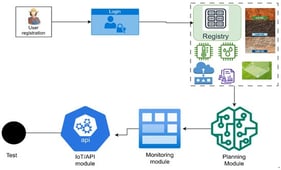
The growing global population intensifies food demand, challenging the agricultural sector to increase efficiency. Precision agriculture (PA) addresses this challenge by leveraging advanced technologies, such as the Internet of Things (IoT) and sensor networks, to collect and analyze field data. However, accessible tools for storing, managing, and analyzing these data are often limited. This study presents AgDataBox-IoT (ADB-IOT), a novel web application designed to fill this gap by providing a user-friendly platform for optimizing agricultural management. ADB-IOT integrates into the existing AgDataBox ecosystem, extending its capabilities with dedicated IoT functionalities. The application enables farmers to plan IoT networks, visualize and analyze field-collected data through thematic maps and graphs, and monitor and control IoT devices. This integrated approach facilitates informed decision-making, improves control over sustainable soil management, and enhances the overall efficiency of agricultural operations. As a freely accessible tool, ADB-IOT lowers the barrier to adopting precision agriculture technologies.

3 February 2026

Stages of web application development.

News & Conferences

Issues

Open for Submission

Editor's Choice

Reprints of Collections

Application of Artificial Neural Network in Agriculture
Reprint

Application of Artificial Neural Network in Agriculture

Editors: Ray E. Sheriff, Chiew Foong Kwong
Emerging Agricultural Engineering Sciences, Technologies, and Applications
Reprint

Emerging Agricultural Engineering Sciences, Technologies, and Applications

Volume II
Editors: Muhammad Sultan, Yuguang Zhou, Redmond R. Shamshiri, Muhammad Imran

Get Alerted

Add your email address to receive forthcoming issues of this journal.

XFacebookLinkedIn
AgriEngineering - ISSN 2624-7402