


Abstract
Cities worldwide face significant challenges in managing stormwater, a concern worsened by rapid urbanization and the impacts of climate change. Bioretention landscapes helped solve these issues by replicating natural ecosystems to effectively capture, filter, and treat stormwater while offering additional ecosystem services. However, most studies and existing guides have been for colder and drier climates. Adapting bioretention practices to tropical and wet equatorial climates, characterized by intense rainfall patterns and high temperature and humidity, presents unique challenges and knowledge gaps. This systematic literature review aims to address these gaps by synthesizing existing research from 2010 to 2022 on bioretention landscapes in tropical and wet equatorial climates. Following the methodology outlined in PRISMA guidelines, we identified 10 key studies primarily focusing on countries within the Köppen–Geiger climate zones Aw, Af, and Am, which are tropical and wet equatorial climates. These studies spanned across different continents, including locations such as Malaysia, Singapore, Burkina Faso, and India. Data synthesis revealed critical design elements, including planting selection, substrate layer composition, and performance metrics. Our findings highlight the necessity for climate-specific design approaches and identify key research gaps that can inform future studies and guide practical applications in designing bioretention landscapes for tropical and wet equatorial climates.
1. Introduction
Ecosystem services provided by bioretention landscapes extend beyond stormwater management. These systems contribute to biodiversity conservation, improve air and water quality, enhance aesthetic value, and provide recreational spaces [1,2,3]. Understanding the system and design criteria of bioretention landscapes is essential for harnessing their full potential in urban environments, particularly in tropical and wet equatorial climates, where rainfall patterns are intense and frequent [4].
There are many types of bioretention landscapes including rain gardens, bioswales, and bioretention cells. The anatomy of bioretention landscapes contains various components, including ponding depth, plants, filter media, transition layer, and drainage layer [4,5]. Each component plays a crucial role in the performance and resilience of the system. Optimizing the design and maintenance of these landscapes requires a comprehensive understanding of their anatomy and functioning.
Despite the growing popularity of bioretention landscapes, most guides are created in Western countries with dry, subtropical climates [6,7,8]. The only exception for tropical climate bioretention design is the Active, Beautiful, and Clean (ABC) stormwater guide from Singapore [9], but even so, more experiments and suggestions from the wetter tropical climates should be explored. There are notable gaps in knowledge regarding their application in tropical and wet equatorial climates [4,10]. These regions present unique challenges, including high rainfall intensity, prolonged wet seasons, and biodiverse ecosystems. Understanding how bioretention practices can be adapted and optimized for these climates is essential for sustainable stormwater management and ecosystem preservation.
This systematic literature review aims to address these gaps by synthesizing existing research on bioretention landscapes in tropical and wet equatorial climates. By critically analyzing the current state of knowledge, identifying key research findings, and highlighting areas requiring further investigation, this review seeks to contribute to the development of effective strategies for designing and implementing bioretention landscapes in these challenging environments.
Through addressing these research gaps, this review aims to contribute to the advancement of knowledge and inform future research and practice in the design and implementation of bioretention landscapes in tropical and wet equatorial climates.
2. Materials and Methods
In this study, the researchers used a systematic literature review in accordance with the Preferred Reporting Items of Systematic Review and Meta-Analysis (PRISMA) [11]. The researchers selected studies from the database and analyzed, selected, and synthesized knowledge from the previous studies through the following steps. The detailed registry can be found via the Open Sciences Framework Registry (OSF) at https://doi.org/10.17605/OSF.IO/R3P2E. The Supplementary Materials contain a full PRISMA statement table and flowchart.
2.1. Database and Search Strategy
This systematic literature review was conducted using the Web of Science and Scopus database, accessed from 15 January 2023 to 30 June 2023. The search focused on observational and experimental studies published between January 2011 and December 2022. The inclusion criteria were centered around studies that used specific keywords related to stormwater management, including bioretention cells, rain gardens, and bioswales. The location keywords such as ‘tropical’, ‘equatorial’, or ‘hot climate’ are also applied to narrow down the search. Additionally, a snowball literature review method and expert recommendations from the fields of architecture, landscape architecture, and engineering were employed to enhance the comprehensiveness of the search.
2.2. Exclusion and Inclusion Criteria
Studies were included if they discussed key design and construction criteria for stormwater management systems such as planting design, layer design, and materials in the Köppen–Geiger’s Aw, Af, and Am climates, which are the climate along the belt across the equator. These are climates with high temperature and heavy rainfalls, which have not been studied broadly in terms of bioretention design [12]. Exclusion criteria involved empirical studies that did not meet the standard research methodologies, theoretical perspectives, and literature review. Duplicates were also eliminated to ensure the uniqueness of each included study.
2.3. Research Questions
The search aimed to address the following research questions.
- -
- Where are the bioretention designs studied in the Köppen–Geiger’s A climates?
- -
- What materials, depth, and layers are used to design bioretention landscapes in the Köppen–Geiger’s A climates?
- -
- What plant materials are used to design bioretention landscapes in the Köppen–Geiger’s A climates?
- -
- What are the limitations and gaps of knowledge regarding the bioretention design in the Köppen–Geiger’s A climates?
2.4. Data Synthesis and Analysis
The initial list of studies was compiled by the primary researcher. This list was further refined with the help of experts in the fields of landscape architecture, architecture, and engineering who helped in eliminating irrelevant studies, recommending additional sources, and deciding on the final selection. Important factors such as climatic contexts, construction layers, planting selection, and effectiveness were included in the analysis and synthesis. Finally, all researchers read the papers and discussed possible implementations within the context of the region.
2.5. Visual Representation and Characterization
The findings from the selected studies were visualized in four ways. First, the locations of the studies were identified and placed on a geographical map. This helped us understand where the studies were taking place and identify possible cultural contexts. Second, the plant species used in the studies were documented for their appearances and requirements in the landscapes for future design uses. Finally, the performance in quality and quantity of the designs was listed in the table for future reference by designers.
2.6. Evaluation of Study Quality
Each study was evaluated for its methodological quality and relevance to the research questions [13]. This quality assessment was crucial for synthesizing reliable and valid conclusions from the literature.
3. Results
3.1. Selection Results
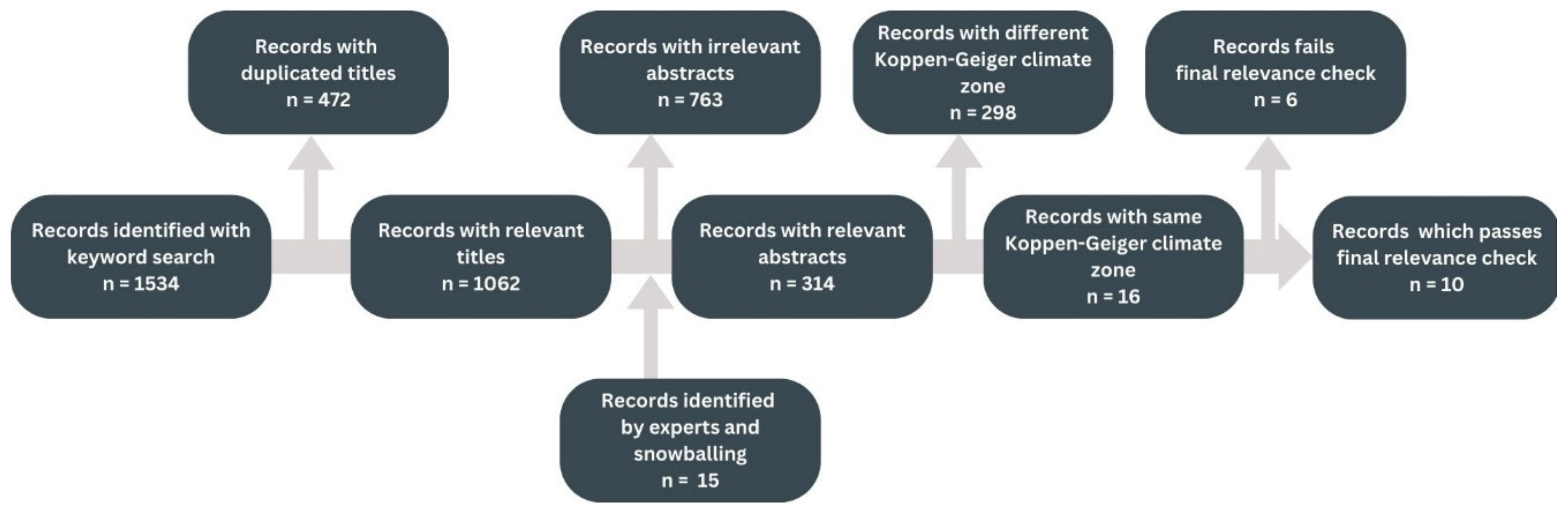
Through the systematic literature review process, 10 final studies met the criteria. Initially, we found 1534 records with relevant information, which were reduced to 1062 after duplication removal. After removing records with irrelevant abstracts and methods and adding the studies recommended by the experts in landscape architecture, architecture, and engineering, along with the snowball results, 314 studies remained. We finally identified 16 studies that were in the climate zone, but the close review examination of the article texts revealed that 6 papers might not be relevant. One study was a literature review, three studies did not include the design of bioretention systems, and two studies used simulations without reference to the climate patterns. The selection process is shown in Figure 1.
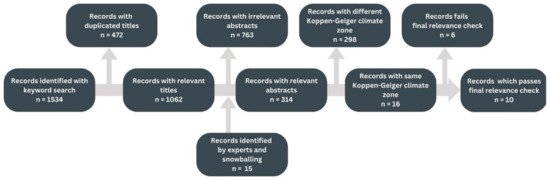
Figure 1.
PRISMA flow diagram which indicated the selection process leading to 10 final studies.
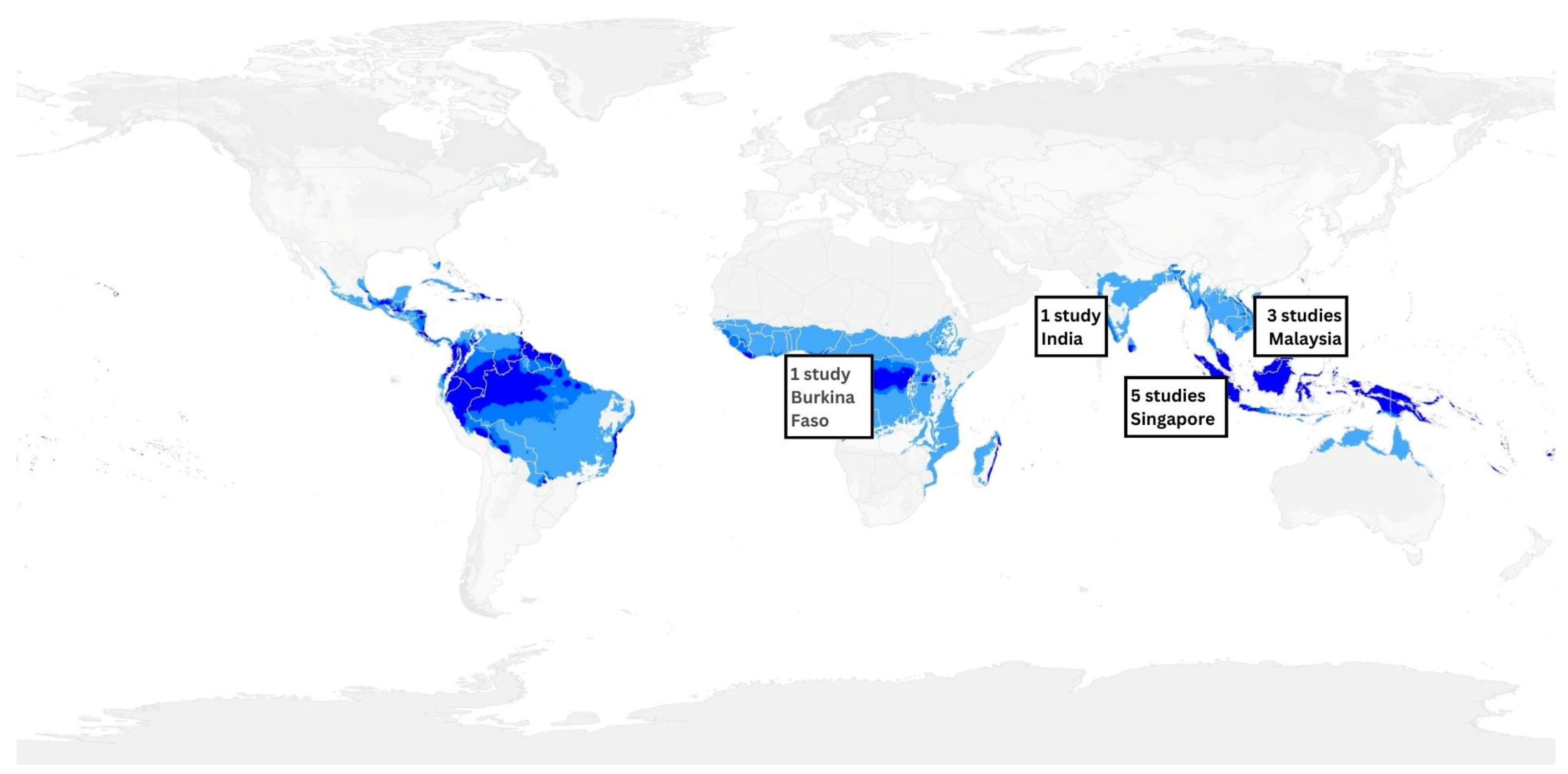
Among 10 studies, one study was from Burkina Faso and one from India. We found three studies from Malaysia and five from Singapore (Figure 2).
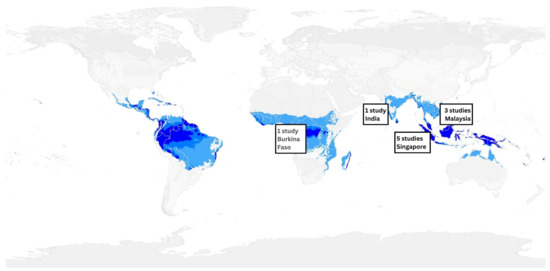
Figure 2.
Geographical locations of the studies within the tropical and wet equatorial climates.
3.2. Data Synthesis—Benefits Studied
Arrays of water quality and quantity improvement were explored within our selected manuscripts. Fewer studies (only three) studied water quantity control. On the other hand, all but one study explored various water chemicals including nutrients, heavy metals, E. coli, total suspended solids, pH, conductivity, and different oxygen demands. Most studies found the designed bioretention to be more effective than the control group in varying extents. All the water quality and quantity measurements are shown in Table 1.

Table 1.
Selected studies regarding bioretention design in tropical and wet equatorial Köppen–Geiger climate zones.
3.3. Data Synthesis—Design Criteria
For the designs toward underground layers of bioretention, there was no consensus on depths across the studies, and some removed parts of the layers. Some studies included unique and notable design innovations, such as using geotextile as a transition layer or using worms to help manage nutrients, but the studies were too ununiformed to be conclusive as part of a design guide without further investigation. The layers and depths of bioretention cells in each study are presented in Table 2.
Table 2.
Design criteria of studied bioretention cells.
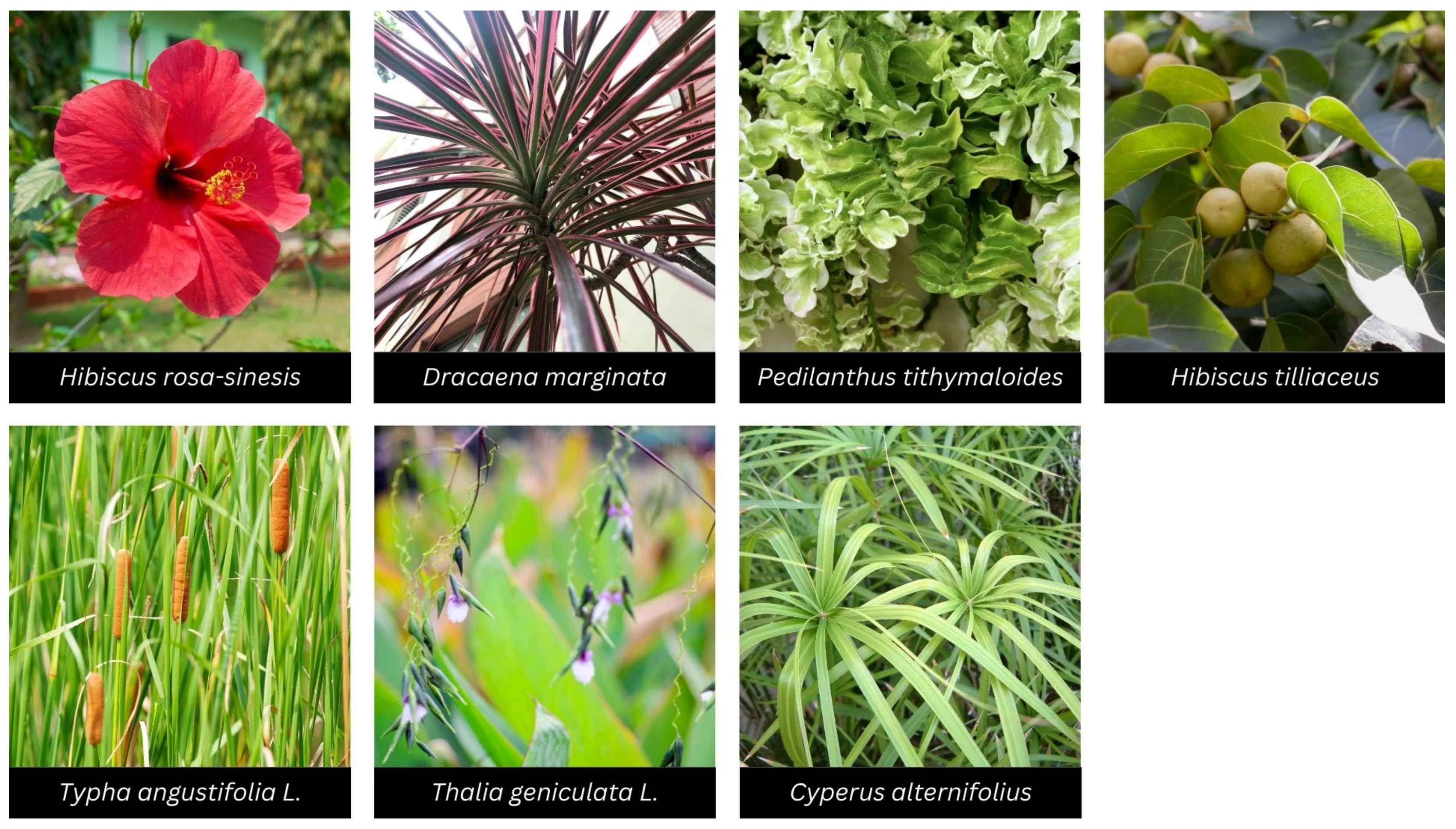
As far as planting design, the results were rather limited. Eight species of plants were used in these studies. Some studies did mention plants but omitted several species while giving a few examples. Not all plants presented were native plants, but most were adaptable domestic plants found in the study locations. Surprisingly, the plants did not include only sedges, shrubs, and native-looking grass like the guides in the west, but offered a variety of shapes, sizes, and functions from large trees to ornamental flowers to water plants (Figure 3). Notably, most of the species studied preferred full sun and three out of eight belonged to the Malvaceae family, which might suggest possible further designs. Table 3 presents the requirements of these plants in the landscape.
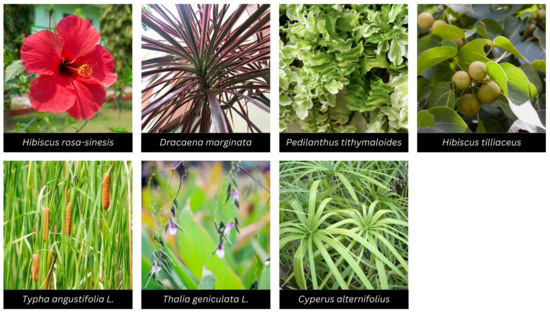
Figure 3.
Examples of plant species found across the studies. Images compiled from Canva’s Creative Commons license. Each image was cross-checked with researchers for accuracy.
Table 3.
Details of plants found in the studies.
3.4. Design Recommendations
Based on the results of this systematic literature review, along with the existing knowledge from other climates, we developed the following design recommendations.
First, the designs for the underground bioretention layers were aligned with the existing guides, including the Singapore ABC design. The bioretention designs in the studies found are similar to the existing guidelines for other climates. This could mean that the ABC guidelines work well with the wet equatorial climate, or that we still need to identify the adjustments for the underground layering structure to accommodate the unique stormwater requirements of the tropical and wet equatorial climates.
Secondly, special technology beyond the design guides might be needed for tropical and wet equatorial climates. The studies found provided the challenges and opportunities unique to the tropical and wet equatorial climates such as longer and heavier rainfall, mineral-rich water, industrial history, and biodiverse plants and local materials (coconut husks, for example). These unique characteristics suggested that researchers may need to adjust the existing technology or develop a new one to suit the requirements of such climates.
Third, experiment and monitor the implemented bioretention projects to contribute to the growing knowledge. Currently, there is a limited number of studies on bioretention in these climates, and most were studied in the laboratory setting, except for a few studies that identified bioretention in public parks. To gain more knowledge on how bioretention projects truly function in tropical and wet equatorial climates, designers should work with researchers in installing monitoring elements and schedules to develop new collaborative knowledge specific to the design of bioretention in this region.
Fourth, biomass might be key for planting design. In the two studies that compared different plants, the results suggested that the biomass of plants within the bioretention might be a key to the performance that could be influenced by the planting design. With this information, plants that could grow and survive well in limited spaces, along with planting techniques that can put more biomass into the bioretention areas, such as layering plants in different heights, might be a technique that can be used. However, further design and testing should be conducted. Furthermore, planting selection could include species that provide more ecosystem services, such as edible plants or plants of cultural significance, to increase the value and acceptance of the bioretention projects.
Fifth, cost-effectiveness and feasibility analysis must be a part of the design and policy process. None of these studies estimated the costs of installation and maintenance of the bioretention system. While bioretention landscapes offer ecological and aesthetic benefits, their feasibility must be evaluated in comparison to conventional stormwater management systems, such as retention ponds and underground drainage networks. Studies indicate that bioretention can be cost-effective over the long term due to reduced infrastructure maintenance and flood mitigation benefits. However, higher initial installation costs and maintenance requirements, such as regular sediment removal and plant management, may pose challenges. Future research should conduct comparative cost-benefit analyses to assess the economic viability of bioretention in tropical regions, considering both capital investment and lifecycle costs.
Finally, the researchers discussed whether bioretention is an appropriate solution to the wet tropical climate. It is possible that due to the unique hydrological situation, the aggressive nature of local flora, and the density of the settlement [26], one could argue that bioretentions, as they were designed in the West, might not be the most fitting solution. Alternatively, should the green infrastructure system fit into the existing structures across the history of the region, such as the canal and water channel systems [27]? Further investigations, experiments, and design cases should be conducted and reported.
3.5. Remaining Gaps
This study helps identify the remaining gaps in designing bioretention in tropical and wet equatorial climates. With the limited number of the study, we found smaller research on water quantity control, even though the cities in these climates are prone to flooding. Like other places around the world, the lack of consistency in the definition and design criteria of bioretention can be concerning. While bioretention could be designed in multiple ways to fit the stormwater requirement, this variability made it difficult to identify design elements that could improve performance, especially above ground.
Furthermore, limited knowledge of how different plants perform and survive in bioretention provides opportunities for future studies, especially because these climates have rich and biodiverse plants, including trees, shrubs, vines, and groundcovers, to explore. Notably, shade-tolerant plants have the potential to survive in tropical and wet equatorial climates. Currently, the combined knowledge between the studies and local horticulturalists might still be needed for planting design. Lastly, because of the unpredictable rainfall and changing climate, this research question demands field-based and long-term studies, which would help in understanding how this technology functions in the long run.
These papers focused on the design of bioretention cells, but socio-economic and technological factors may help improve design sustainability. Urban politics can influence adoption, as city and provincial authorities may prioritize certain aspects while overlooking long-term maintenance and public engagement. Advocacy at the community level can help highlight the socio-economic benefits of bioretention, such as improved public health and local job creation. Additionally, enhancing bioretention monitoring through advanced data analysis—using sensors for water quality, soil conditions, and plant health—can refine performance and inform future designs [28,29].
4. Discussion
4.1. Key Results
In this study, we found 10 published studies that identified the designs of bioretention and its effectiveness through experiments and observational methods across tropical and wet equatorial climates. The studies provided several stormwater quality and quantity benefits of bioretention cells, but not many are comparing the effectiveness of the designs. In terms of the designs, various depths of design layers and plants were also used in the bioretention designs found in these studies. Notably, plants from the Malvaceae family might be promising as a part of a biodiverse bioretention and should be further investigated. The synthesis suggested that the bioretention design in this climate can be made into various forms to fit the growing needs and utilizations for bioretention in the country.
4.2. Contributions
The designs and performance of the underground water retention did not differ much from the existing guides, especially in their inconsistencies [6,7,9]. Notably, the plant species selection was wider than expected and included several plants that did not fit the descriptions of the existing guide, even for the ones that offered a wide selection of plants [30]. This gave a promising idea and posed a strong challenge to the planting designers and landscape architects that bioretention cells, bioswales, and rain gardens in tropical and wet equatorial climates might be unique and entirely different from their cooler, drier counterparts. Furthermore, the discussion explored the ideas of implementation and reinvention of the bioretention system to fit the climactic and historical contexts, similar to some studies regarding rain gardens in the region [4,27]. This study is novel because it systematically compared the performance of bioretention across the designs using a similar climate factor as a control. It sheds light on the diversity and possibilities of future bioretention landscape designs.
4.3. Implementation
While most of the guides need more consistency to be able to suggest a clear construction manual of bioretention landscapes for engineers, landscape designers, landscape architects, or policymakers, the findings were promising that the designs used, aside from the plants, did not differ much from the previous guides in different climates [6,7]. Thus, using the existing ABC design guide from Singapore along with the recommendations from other climates should be a good start if one must design the bioretention landscapes now. However, practitioners and researchers must work together in the future to develop guides toward creating bioretention landscape designs that are suitable for tropical and wet equatorial environments.
The long-term performance and maintenance of bioretention systems are critical to success in design implementation, particularly in the focus climate of this study where intense rainfall and rapid plant growth pose unique challenges. Although studied papers present the effectiveness of the design components, considerations such as optimizing layer composition and design, enhancing hydraulic performance, preventing clogging and sediment accumulation, monitoring, and adaptive management should be implemented to ensure system longevity and adapt to changing environmental conditions over time. From a socio-economic perspective, community involvement and institutional support should be considered to enhance the maintainance practices to reduce reliance on external resources [31].
4.4. Limitations and Future Studies
This study is not without limitations. First, this review only found 10 studies that fit the criteria. This means that the design recommendations made from this study might still need further supportive evidence, and more experiments may be needed to fully understand how to design bioretention systems within these climates. Secondly, focusing on published peer-reviewed articles may leave behind some technical reports, commercial case studies, and existing construction guides. Furthermore, more nuanced technical analyses, such as meta-analysis, along with developing prediction equations, might create deeper knowledge that is more usable for the practitioner. However, the number and information of the manuscript regarding our selection criteria may limit us from doing so at the moment. Furthermore, because these studies were done in the laboratory, outdoor climate, plant community, and public acceptance, which were important to the sustainability of bioretention landscape projects, were not explored in this study. While there is growing evidence to show the socio-economic factors of bioretention and green infrastructure [4,27], the collection and analysis of such studies might be needed. Future studies should expand such criteria to create a comprehensive guide that expands upon bioretention landscape design performance. Alternatively, the studies that allow deeper investigations, such as the research-through-design method, might be needed to fit the designs in the overall contexts [4]. Additionally, due to the time used to search, analyze, extract, and synthesize information, this study might miss some newer studies that would fit the criteria but were published during the analysis processes [32,33,34,35]. Future studies could explore these new studies in comparison to the older ones to see the evolution in how this topic has been studied within these climates across time.
Future research should prioritize socio-economic factors, such as public acceptance and cost-effectiveness, and long-term implementation challenges, including maintenance and climate change resilience. Interdisciplinary collaboration between landscape architects, engineers, and policymakers can facilitate adaptive management strategies for the sustainability of design implementation [36].
5. Conclusions
Bioretention landscapes are a promising solution to stormwater management issues in urban spaces. However, most studies and existing guides have been for colder and drier climates. Thus, in this study, the researchers addressed these gaps by synthesizing existing research on bioretention landscapes, including rain gardens, bioswales, and bioretention cells, within tropical and wet equatorial climates. The researchers identified 10 key studies across different continents, including locations such as Malaysia, Singapore, Burkina Faso, and India. Data synthesis revealed inconsistencies in the bioretention landscape designs, but that various plants and layers can be applied for these landscapes to perform better than the control cases. This means that designers and researchers must work together in building and monitoring these bioretention landscape projects in the near future. This study provided a list of studies for designers and researchers to explore and compare bioretention designs, which if applied and monitored, could make bioretention landscapes more common and generate more knowledge. The change will certainly address the stormwater management problems in urban areas in the near future.
Supplementary Materials
The following supporting information can be downloaded at: https://www.mdpi.com/article/10.3390/world6020056/s1, Table S1: Prisma 2020 Checklist for this literature review [37].
Author Contributions
Conceptualization, P.S.; methodology, P.S. and D.R.; software, P.S.; formal analysis, P.S., D.R., T.K.N.A. and E.Y.; writing—original draft preparation, P.S. and T.K.N.A.; writing—review and editing, P.S., D.R., T.K.N.A., E.Y., H.T.H.E. and M.N.H.; visualization, P.S. All authors have read and agreed to the published version of the manuscript.
Funding
This research has been partially funded by Chiang Mai University and Master’s Program in Integrated Sciences (Sustainable Urban Landscape), Multidisciplinary and Interdisciplinary School, Chiang Mai University, Chiang Mai 50200, Thailand, under the Presidential Scholarship at Chiang Mai University.
Institutional Review Board Statement
Not applicable.
Informed Consent Statement
Not applicable.
Data Availability Statement
The data are available upon request.
Conflicts of Interest
The authors declare no conflicts of interest.
References
- Austin, G. Green Infrastructure for Landscape Planning: Integrating Human and Natural Systems; Routledge: London, UK, 2014. [Google Scholar]
- Lourdes, K.T.; Gibbins, C.N.; Hamel, P.; Sanusi, R.; Azhar, B.; Lechner, A.M. A review of urban ecosystem services research in Southeast Asia. Land 2021, 10, 40. [Google Scholar] [CrossRef]
- Erell, E.; Pearlmutter, D.; Williamson, T. Urban Microclimate: Designing the Spaces Between Buildings; Routledge: London, UK, 2012. [Google Scholar]
- Wanitchayapaisit, C.; Suppakittpaisarn, P.; Charoenlertthanakit, N.; Surinseng, V.; Yaipimol, E.; Rinchumphu, D. Rain garden design for stormwater management in Chiang Mai, Thailand: A Research-through-Design Study. Nakhara J. Environ. Des. Plan. 2022, 21, 222. [Google Scholar] [CrossRef]
- Rinchumphu, D.; Tangsongsuwan, R.; Kridakorn Na Ayudhya, T.; Irvine, K.; Chua, L.; Suppakittpaisarn, P.; Chakrawattana, N. Potential Evaluation of Urban Bioretention Design (Technical Report). Faculty of Engineering, Chiang Mai University: Chiang Mai, Thailand. 2021.
- USEPA. Managing Wet Weather with Green Infrastructure: Action Stratefy; US Environmental Protection Agency: Washington, DC, USA, 2008.
- European-Commission. Building a Green Infrastructure for Europe; European Union Publication: Brussels, Belgium, 2013. [Google Scholar]
- Department of Planning and Local Government: Government of South Australia. Water Sensitive Urban Design—Greater Adelaide Region; Government of South Australia: Adelaide, South Australia, 2010.
- Public Utilities Board (PUB). Active, Beautiful, Clean (ABC) Waters Design Guidelines. 2014. Available online: https://www.nlb.gov.sg/main/article-detail?cmsuuid=cfc0035c-4734-4d26-8fe1-8f0c6a9e1e6c (accessed on 12 February 2025).
- Ong, G.; Kalyanaraman, G.; Wong, K.; Wong, T. Monitoring Singapore’s first bioretention system: Rain garden at balam estate. In Proceedings of the 7th International Conference on Water Sensitive Urban Design, Melbourne, VIC, Australia, 21–23 March 2012; pp. 601–608. [Google Scholar]
- Sarkis-Onofre, R.; Catalá-López, F.; Aromataris, E.; Lockwood, C. How to properly use the PRISMA Statement. Syst. Rev. 2021, 10, 1–3. [Google Scholar] [CrossRef] [PubMed]
- Peel, M.C.; Finlayson, B.L.; McMahon, T.A. Updated world map of the Köppen-Geiger climate classification. Hydrol. Earth Syst. Sci. 2007, 11, 1633–1644. [Google Scholar] [CrossRef]
- Young, J.M.; Solomon, M.J. How to critically appraise an article. Nat. Clin. Pract. Gastroenterol. Hepatol. 2009, 6, 82–91. [Google Scholar] [CrossRef]
- Goh, H.; Zakaria, N.; Lau, T.; Foo, K.; Chang, C.; Leow, C. Mesocosm study of enhanced bioretention media in treating nutrient rich stormwater for mixed development area. Urban Water J. 2017, 14, 134–142. [Google Scholar] [CrossRef]
- Adugna, A.T.; Andrianisa, H.A.; Konate, Y.; Ndiaye, A.; Maiga, A.H. Performance comparison of sand and fine sawdust vermifilters in treating concentrated grey water for urban poor. Environ. Technol. 2015, 36, 2763–2769. [Google Scholar] [CrossRef]
- Hermawan, A.A.; JiaWei, C.; Pasbakhsh, P.; Hart, F.; Talei, A. Halloysite nanotubes as a fine grained material for heavy metal ions removal in tropical biofiltration systems. Appl. Clay Sci. 2018, 160, 106–115. [Google Scholar] [CrossRef]
- Wang, J.; Chua, L.H.; Shanahan, P. Evaluation of pollutant removal efficiency of a bioretention basin and implications for stormwater management in tropical cities. Environ. Sci. Water Res. Technol. 2017, 3, 78–91. [Google Scholar] [CrossRef]
- Vijayaraghavan, K.; Praveen, R. Dracaena marginata biofilter: Design of growth substrate and treatment of stormwater runoff. Environ. Technol. 2016, 37, 1101–1109. [Google Scholar] [CrossRef]
- Yau, W.K.; Radhakrishnan, M.; Liong, S.-Y.; Zevenbergen, C.; Pathirana, A. Effectiveness of ABC waters design features for runoff quantity control in urban Singapore. Water 2017, 9, 577. [Google Scholar] [CrossRef]
- Lim, H.; Lim, W.; Hu, J.; Ziegler, A.; Ong, S. Comparison of filter media materials for heavy metal removal from urban stormwater runoff using biofiltration systems. J. Environ. Manag. 2015, 147, 24–33. [Google Scholar] [CrossRef]
- Lee, L.Y.; Wang, B.; Guo, H.; Hu, J.Y.; Ong, S.L. Aluminum-based water treatment residue reuse for phosphorus removal. Water 2015, 7, 1480–1496. [Google Scholar] [CrossRef]
- Lim, F.Y.; Neo, T.H.; Guo, H.; Goh, S.Z.; Ong, S.L.; Hu, J.; Lee, B.C.Y.; Ong, G.S.; Liou, C.X. Pilot and field studies of modular bioretention tree system with talipariti tiliaceum and engineered soil filter media in the tropics. Water 2021, 13, 1817. [Google Scholar] [CrossRef]
- Hermawan, A.A.; Talei, A.; Leong, J.Y.C.; Jayatharan, M.; Goh, H.W.; Alaghmand, S. Performance assessment of a laboratory scale prototype biofiltration system in tropical region. Sustainability 2019, 11, 1947. [Google Scholar] [CrossRef]
- Missouri Botanical Garden. Missouri Botanical Garden Plant Finder. Available online: https://www.missouribotanicalgarden.org/ (accessed on 1 October 2024).
- The National Parks of Singapore. Flora and Fauna Web. Available online: https://www.nparks.gov.sg/florafaunaweb (accessed on 1 October 2024).
- Suppakittpaisarn, P.; Surinseng, V.; Wanitchayapaisit, C.; Yaipimol, E.; Xu, Q. Healthy Ecosystem Services and Healthy Human Settlements: Opportunities and Challenges in Northern Thailand. Landsc. Archit. J. 2020, 27, 77–88. [Google Scholar]
- Wanitchayapaisit, C.; Charoenlertthanakit, N.; Surinseng, V.; Yaipimol, E.; Rinchumphu, D.; Suppakittpaisarn, P. Enhancing Water-Sensitive Urban Design in Chiang Mai through a Research–Design Collaboration. Sustainability 2023, 15, 16127. [Google Scholar] [CrossRef]
- Gonzalez-Merchan, C.; Barraud, S.; Le Coustumer, S.; Fletcher, T. Monitoring of clogging evolution in the stormwater infiltration system and determinant factors. Eur. J. Environ. Civ. Eng. 2012, 16, s34–s47. [Google Scholar] [CrossRef]
- Kridakorn Na Ayutthaya, T.; Suropan, P.; Sundaranaga, C.; Phichetkunbodee, N.; Anambutr, R.; Suppakittpaisarn, P.; Rinchumphu, D. The influence of bioretention assets on outdoor thermal comfort in the urban area. Energy Rep. 2023, 9, 287–294. [Google Scholar] [CrossRef]
- Hunt, W.F.; Lord, B.; Loh, B.; Sia, A. Plant Selection for Bioretention Systems and Stormwater Treatment Practices; Springer Nature: Berlin/Heidelberg, Germany, 2015. [Google Scholar]
- Dietz, M.E.; Clausen, J.C. A field evaluation of rain garden flow and pollutant treatment. Water Air Soil Pollut. 2005, 167, 16. [Google Scholar] [CrossRef]
- Jain, N.; Yadav, S.; Taneja, S.; Ray, S.; Haritash, A.; Pipil, H. Phosphate removal from urban stormwater runoff using Canna lily and Cyperus alternifolius-based bioretention system. Sustain. Water Resour. Manag. 2024, 10, 65. [Google Scholar] [CrossRef]
- Ahmed, F.; Loc, H.H.; Babel, M.; Stamm, J. A community-scale study on nature-based solutions (NBS) for stormwater management under tropical climate: The case of the Asian Institute of Technology (AIT), Thailand. J. Hydroinformatics 2024, 26, 1080–1099. [Google Scholar] [CrossRef]
- Narayanasamydamodaran, S.; Kumar, N.; Zuo, J.e. The role of plant uptake in total phosphorous and total nitrogen removal in vegetated bioretention cells using vetiver and cattail. Chemosphere 2024, 364, 143276. [Google Scholar] [CrossRef]
- Vijuksungsith, P.; Satapanajaru, T.; Muangkaew, K.; Boonprasert, R. Performance of bioretention systems by umbrella plant (Cyperus alternifolius L.) and common reed (Phragmites australis) for removal of microplastics. Environ. Technol. Innov. 2024, 35, 103734. [Google Scholar] [CrossRef]
- Locatelli, L.; Guerrero, M.; Russo, B.; Martínez-Gomariz, E.; Sunyer, D.; Martínez, M. Socio-Economic Assessment of Green Infrastructure for Climate Change Adaptation in the Context of Urban Drainage Planning. Sustainability 2020, 12, 3792. [Google Scholar] [CrossRef]
- Page, M.J.; McKenzie, J.E.; Bossuyt, P.M.; Boutron, I.; Hoffmann, T.C.; Mulrow, C.D.; Shamseer, L.; Tetzlaff, J.M.; AKl, E.A.; Brennan, S.E.; et al. The PRISMA 2020 statement: An updated guideline for reporting systematic reviews. BMJ 2021, 372, n71. [Google Scholar] [CrossRef]
Disclaimer/Publisher’s Note: The statements, opinions and data contained in all publications are solely those of the individual author(s) and contributor(s) and not of MDPI and/or the editor(s). MDPI and/or the editor(s) disclaim responsibility for any injury to people or property resulting from any ideas, methods, instructions or products referred to in the content. |
© 2025 by the authors. Licensee MDPI, Basel, Switzerland. This article is an open access article distributed under the terms and conditions of the Creative Commons Attribution (CC BY) license (https://creativecommons.org/licenses/by/4.0/).