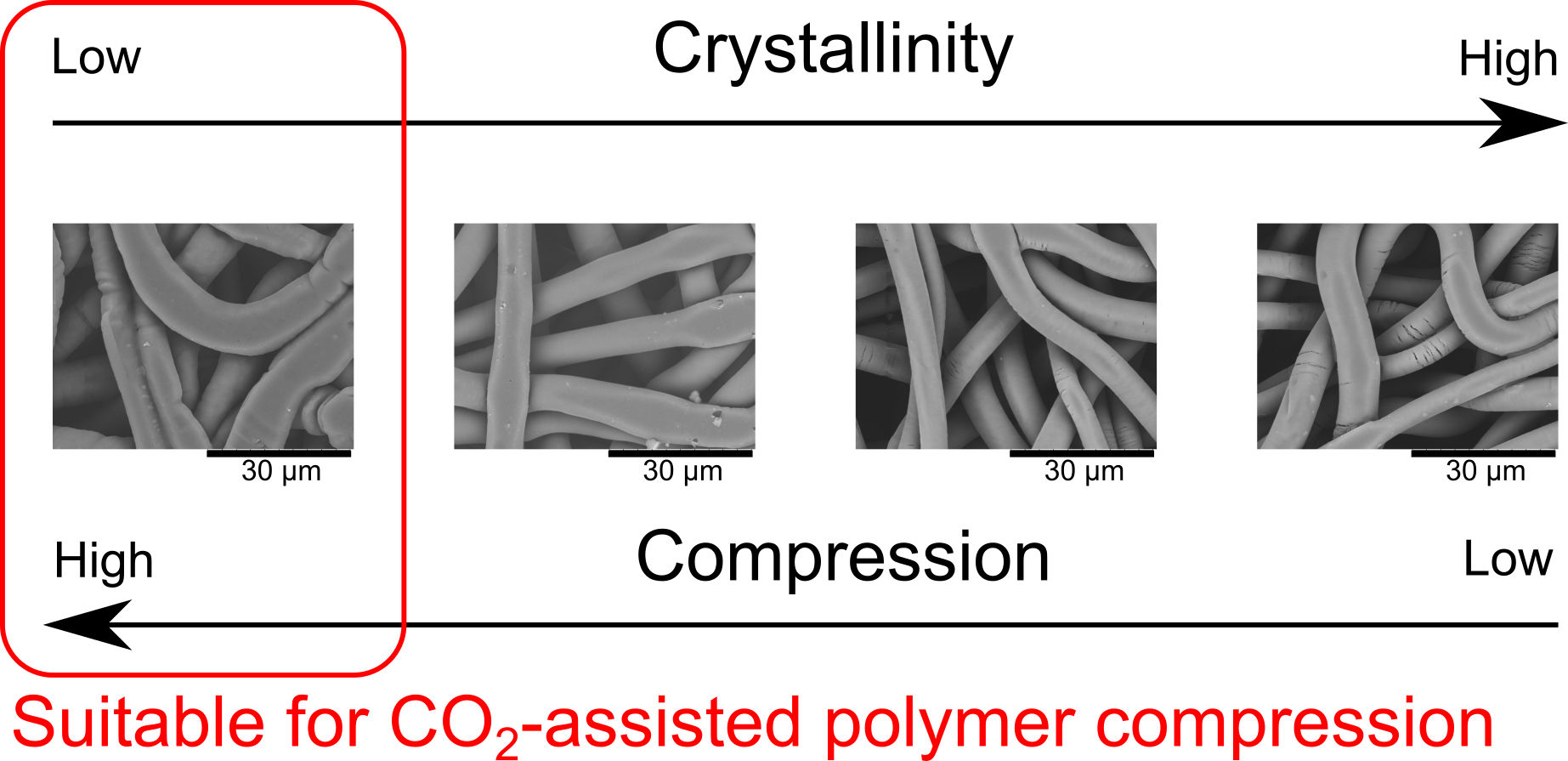

Application of CO2-Assisted Polymer Compression to Polylactic Acid and the Relationship between Crystallinity and Plasticization

Abstract
1. Introduction
2. Materials and Methods
3. Results and Discussion
4. Conclusions
Funding
Data Availability Statement
Conflicts of Interest
References
- UN OWG. Introduction to the Proposal of the Open Working Group for the Sustainable Development Goals. Outcome Document as of 19.6.2014 (Online). 2014. Available online: https://sdgs.un.org/ (accessed on 13 April 2021).
- Shogren, R.; Wood, D.; Orts, W.; Glenn, G. Plant-based materials and transitioning to a circular economy. Sustain. Prod. Consum. 2019, 19, 194–215. [Google Scholar] [CrossRef] [Scilit]
- Inamuddin. Green Polymer Composites Technology: Properties and Applications; CRC Press: Boca Raton, FL, USA, 2019; ISBN 978-0367872557. [Google Scholar]
- Sin, L.T.; Tueen, B.S. Polylactic Acid: A Practical Guide for the Processing, Manufacturing, and Applications of PLA, 2nd ed.; William Andrew: Oxford, UK, 2019; ISBN 978-0128144725. [Google Scholar]
- Rojas, A.; Velásquez, E.; Garrido, L.; Galotto, M.J.; de Dicastillo, C.L. Design of active electrospun mats with single and core-shell structures to achieve different curcumin release kinetics. J. Food Eng. 2020, 273, 109900. [Google Scholar] [CrossRef] [Scilit]
- Velásquez, E.; Vidal, C.P.; Rojas, A.; Guarda, A.; Galotto, M.J.; de Dicastillo, C.L. Natural antimicrobials and antioxidants added to polylactic acid packaging films. Part I: Polymer processing techniques. Compr. Rev. Food Sci. Food Saf. 16. [CrossRef] [Scilit]
- Aizawa, T. A new method for producing porous polymer materials using carbon dioxide and a piston. J. Supercrit. Fluids 2018, 133, 38–41. [Google Scholar] [CrossRef] [Scilit]
- Koytsoumpa, E.K.; Bergins, C.; Kakaras, E. The CO2 economy: Review of CO2 capture and reuse technologies. J. Supercrit. Fluids 2018, 132, 3–16. [Google Scholar] [CrossRef]
- Aizawa, T. Fabrication of porosity-controlled polyethylene terephthalate porous materials using a CO2-assisted polymer compression method. RSC Adv. 2018, 8, 3061–3068. [Google Scholar] [CrossRef] [Scilit]
- Aizawa, T. Peel and penetration resistance of porous polyethylene terephthalate material produced by CO2-assisted polymer compression. Molecules 2019, 24, 1384. [Google Scholar] [CrossRef] [Scilit]
- Aizawa, T.; Wakui, Y. Correlation between the porosity and permeability of a polymer filter fabricated via CO2-assisted polymer compression. Membranes 2020, 10, 391. [Google Scholar] [CrossRef] [Scilit]
- Wakui, Y.; Aizawa, T. Analysis of sustained release behavior of drug-containing tablet prepared by CO2-assisted polymer compression. Polymers 2018, 10, 1405. [Google Scholar] [CrossRef] [Scilit]
- Aizawa, T. Process development of CO2-assisted polymer compression for high productivity: Improving equipment and the challenge of numbering-up. Technologies 2019, 7, 39. [Google Scholar] [CrossRef] [Scilit]
- Aizawa, T. Novel strategy for fabricating multi-layer porous membranes with varying porosity. ACS Omega 2020, 5, 24461–24466. [Google Scholar] [CrossRef] [Scilit] [PubMed]
- Aizawa, T. New design method for fabricating multilayer membranes using CO2-assisted polymer compression process. Molecules 2020, 25, 5786. [Google Scholar] [CrossRef] [Scilit]
- Kemmere, M.F.; Meyer, T. Supercritical Carbon Dioxide in Polymer Reaction Engineering; Wiley-VCH: Weinheim, Germany, 2005; ISBN 978-3527607051. [Google Scholar]
- Li, M.; Zhang, J.; Zou, Y.; Wang, F.; Chen, B.; Guan, L.; Wu, Y. Models for the solubility calculation of a CO2/polymer system: A review. Mater. Today Commun. 2020, 25, 1012772. [Google Scholar] [CrossRef] [Scilit]
- Lee, J.K.; Yao, S.X.; Li, G.M.; Jun, M.B.G.; Lee, P.C. Measurement methods for solubility and diffusivity of gases and supercritical fluids in polymers and its applications. Polym. Rev. 2017, 57, 695–747. [Google Scholar] [CrossRef] [Scilit]
- Gangapurwala, G.; Vollrath, A.; De San Luis, A.; Schubert, U.S. PLA/PLGA-based drug delivery systems produced with supercritical CO2-A green future for particle formulation? Pharmaceutics 2020, 12, 1118. [Google Scholar] [CrossRef] [Scilit] [PubMed]
- Villamil Jiménez, J.A.; Le Moigne, N.; Bénézet, J.-C.; Sauceau, M.; Sescousse, R.; Fages, J. Foaming of PLA composites by supercritical fluid-assisted processes: A review. Molecules 2020, 25, 3408. [Google Scholar] [CrossRef] [Scilit] [PubMed]
- Balaban, M.O.; Ferrentino, G. Dense Phase Carbon Dioxide: Food and Pharmaceutical Applications; Wiley-Blackwell: Ames, IA, USA, 2012; ISBN 978-0813806495. [Google Scholar]
- Drabek, J.; Zatloukal, M. Meltblown technology for production of polymeric microfibers/nanofibers: A review. Phys. Fluids 2019, 31, 091301. [Google Scholar] [CrossRef] [Scilit]
- Bruckmoser, K.; Resch, K. Effect of processing conditions on crystallization behavior and mechanical properties of poly(lactic acid) staple fibers. J. Appl. Polym. Sci. 2015, 132, 42432. [Google Scholar] [CrossRef] [Scilit]
- Fried, J.R. Polymer Science and Technology, 3rd ed.; Prentice Hall: Upper Saddle River, NJ, USA, 2014; ISBN 978-0137039555. [Google Scholar]
- Lim, L.-T.; Auras, R.; Rubino, M. Processing technologies for poly(lactic acid). Prog. Polym. Sci. 2008, 33, 820–852. [Google Scholar] [CrossRef] [Scilit]
- Young, R.J.; Lovell, P.A. Introduction to Polymers, 3rd ed.; CRC Press: Boca Raton, FL, USA, 2011; ISBN 978-0849339295. [Google Scholar]
- Tomasko, D.L.; Li, H.; Liu, D.; Han, X.; Wingert, M.J.; Lee, L.J.; Koelling, K.W. A review of CO2 applications in the processing of polymers. Ind. Eng. Chem. Res. 2003, 42, 6431–6456. [Google Scholar] [CrossRef] [Scilit]
- Lian, Z.; Epstein, S.A.; Blenk, C.W.; Shine, A.D. Carbon dioxide-induced melting point depression of biodegradable semicrystalline polymers. J. Supercrit. Fluids 2006, 39, 107–117. [Google Scholar] [CrossRef] [Scilit]
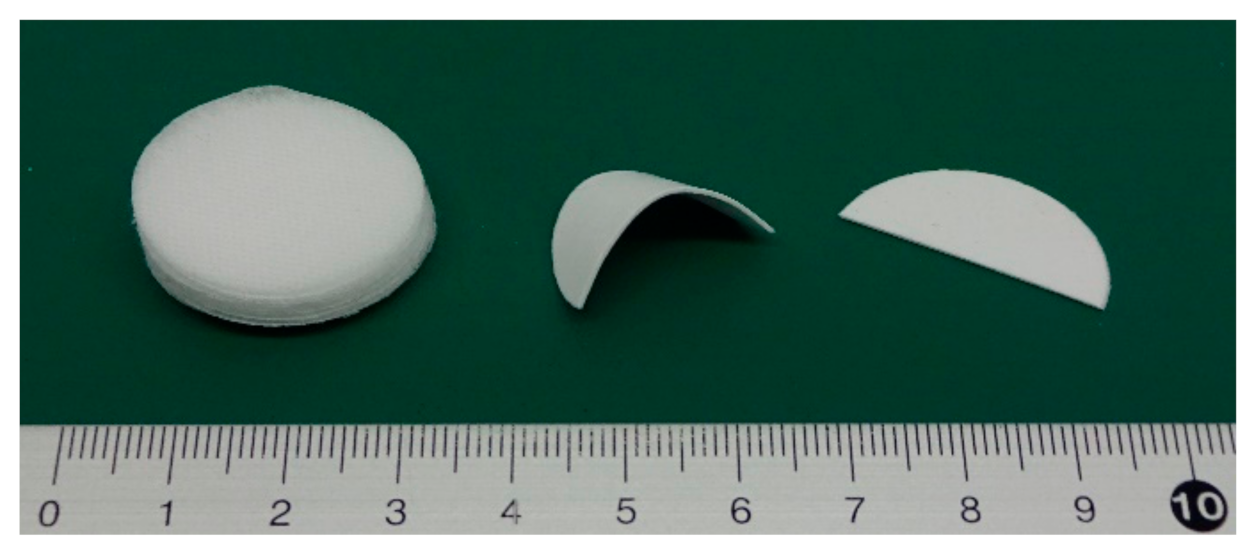
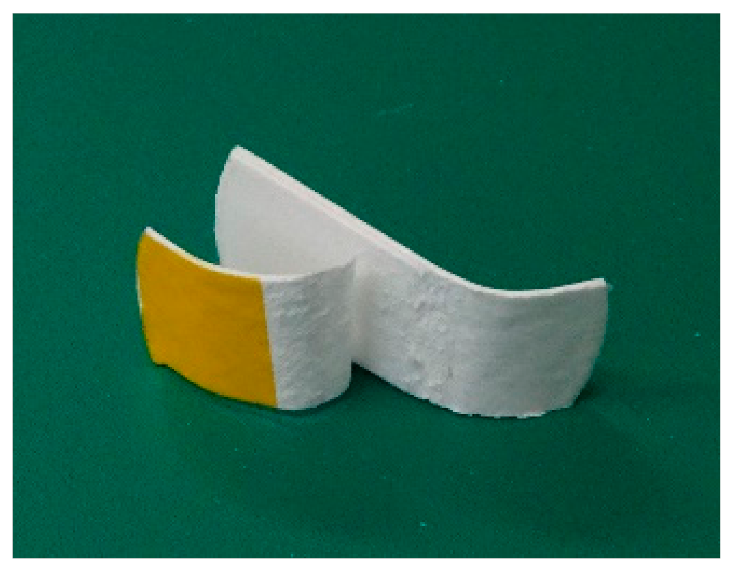
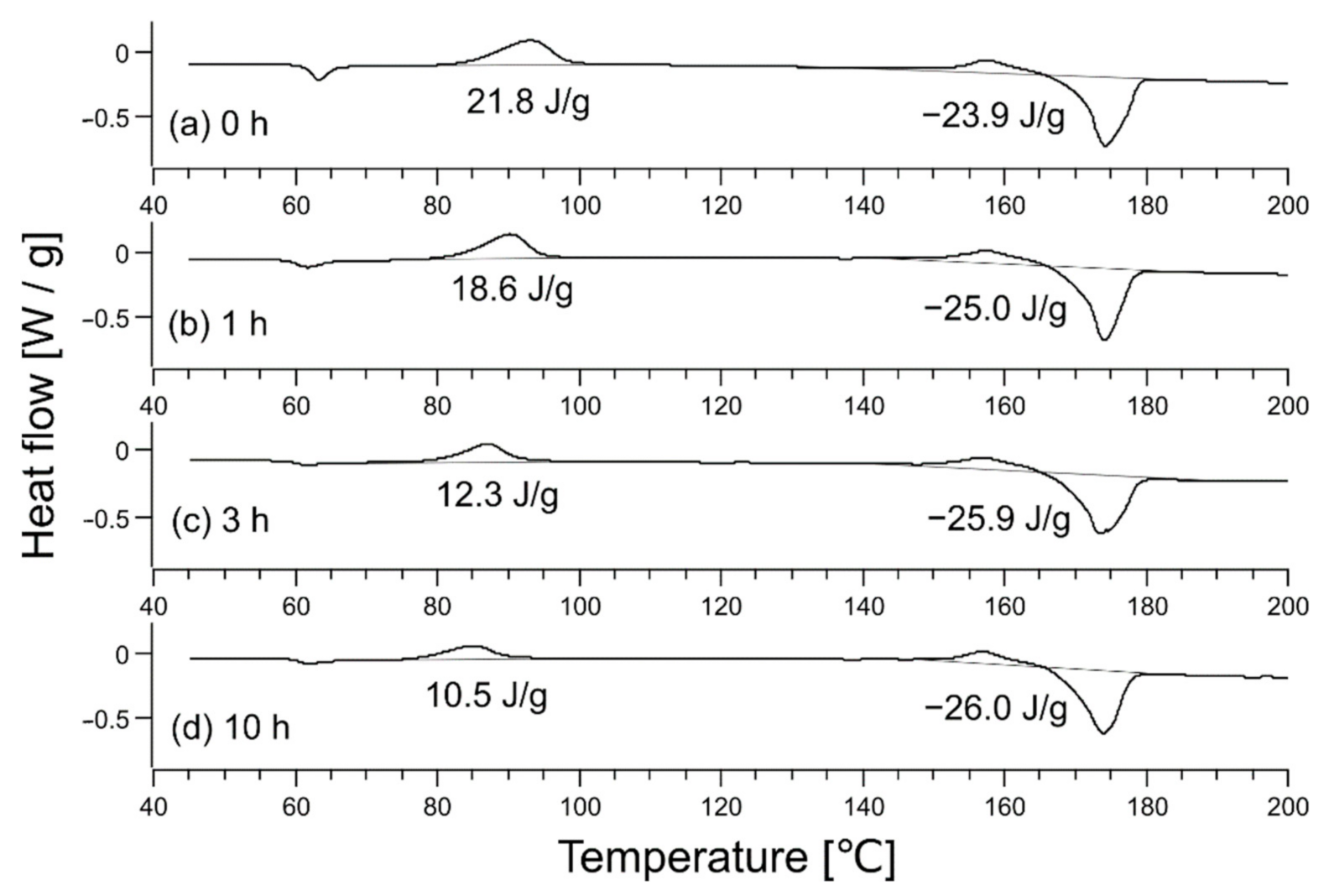
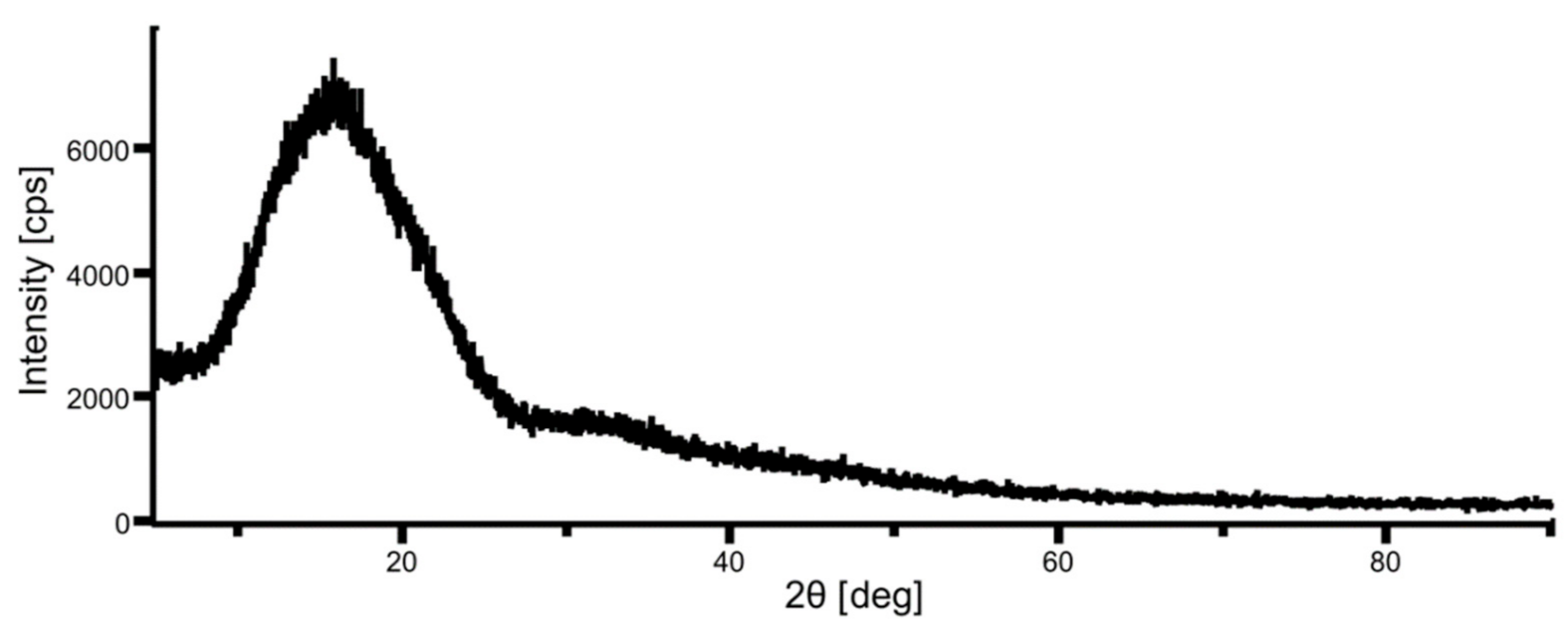
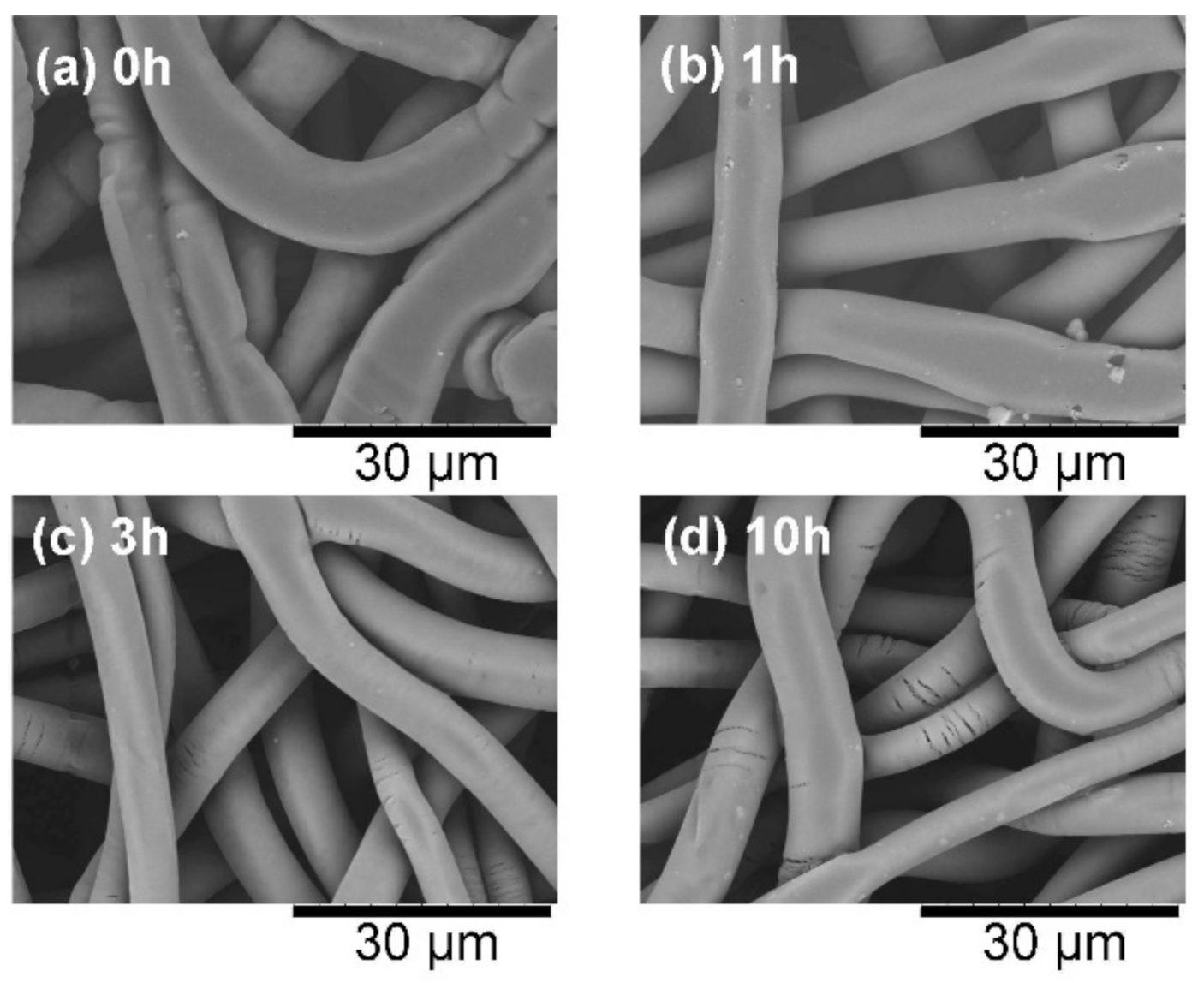

| Sample | Heat-Treatment Time [h] | Thickness [mm] | Standard Deviation [mm] |
|---|---|---|---|
| 1A | 0 | 1.197 | 0.003 |
| 1B | 1 | 1.206 | 0.003 |
| 2A | 0 | 1.152 | 0.018 |
| 2B | 3 | 1.249 | 0.019 |
| 3A | 0 | 1.114 | 0.006 |
| 3B | 10 | 1.285 | 0.005 |
| 4A | 1 | 1.157 | 0.004 |
| 4B | 3 | 1.246 | 0.009 |
| 5A | 1 | 1.140 | 0.009 |
| 5B | 10 | 1.261 | 0.009 |
| 6A | 3 | 1.173 | 0.010 |
| 6B | 10 | 1.229 | 0.006 |
Publisher’s Note: MDPI stays neutral with regard to jurisdictional claims in published maps and institutional affiliations. |
© 2021 by the author. Licensee MDPI, Basel, Switzerland. This article is an open access article distributed under the terms and conditions of the Creative Commons Attribution (CC BY) license (https://creativecommons.org/licenses/by/4.0/).
Share and Cite
Aizawa, T. Application of CO2-Assisted Polymer Compression to Polylactic Acid and the Relationship between Crystallinity and Plasticization. Compounds 2021, 1, 75-82. https://doi.org/10.3390/compounds1020007
Aizawa T. Application of CO2-Assisted Polymer Compression to Polylactic Acid and the Relationship between Crystallinity and Plasticization. Compounds. 2021; 1(2):75-82. https://doi.org/10.3390/compounds1020007
Chicago/Turabian StyleAizawa, Takafumi. 2021. "Application of CO2-Assisted Polymer Compression to Polylactic Acid and the Relationship between Crystallinity and Plasticization" Compounds 1, no. 2: 75-82. https://doi.org/10.3390/compounds1020007
APA StyleAizawa, T. (2021). Application of CO2-Assisted Polymer Compression to Polylactic Acid and the Relationship between Crystallinity and Plasticization. Compounds, 1(2), 75-82. https://doi.org/10.3390/compounds1020007