Article

Identification of Kinetic Efficacy Variables for the Rhythmic Gymnastics Pike Jump to Monitor Performance


by
Manuel Nogueras
1,
Pablo Floria
2 and
Amelia Ferro-Sánchez
3,*
1
Comunidad de Madrid, 28039 Madrid, Spain
2
Physical Performance & Sports Research Center (CIRFD), Universidad Pablo de Olavide, 41013 Sevilla, Spain
3
Sports Department, Faculty of Physical Activity and Sport Sciences, Universidad Politécnica de Madrid, 28040 Madrid, Spain
*
Author to whom correspondence should be addressed.
Biomechanics 2026, 6(1), 19; https://doi.org/10.3390/biomechanics6010019
Submission received: 30 July 2025 / Revised: 7 December 2025 / Accepted: 26 December 2025 / Published: 4 February 2026

Abstract

Background/Objectives: In Rhythmic Gymnastics (RG), the jump is an element of great difficulty that requires the qualities of strength and coordination. Jump height and power are the variables normally used to assess the final performance of jumps. However, they do not allow us to analyze what happens in the intermediate stages or provide practical information to find jump improvement strategies. This study aimed to determine which kinetic variables, organized within a hierarchical model, serve as performance indicators in the Pike Jump executed from a standing start with arm swing. Methods: Ten high-level women gymnasts (14 ± 0.7 years) performed 53 Pike Jumps on a Dinascan-IBV, v.8.1 dynamometric platform (Valencia, Spain) that recorded at 1000 Hz. In the model, jumping was divided into five phases, and 76 related efficacy variables were defined, with 34 of them normalized for total jump time or body weight. Bivariate correlations were analyzed with a bilateral significance test to validate the proposed model. Results: Average and Initial Vertical Ground Reaction Force can be used as performance indicators of the Pike Jump, providing information on intermediate stages of the jump and allowing us to improve specific aspects related to the level of force and the way to apply it in RG. Conclusions: The degree of correlation found among the variables allowed us to validate the model. Normalized variables allow a more precise analysis to be carried out and question some results obtained in the literature in which non-normalized data were presented.

1. Introduction

The jump in Rhythmic Gymnastics (RG) must have “a defined and fixed shape in flight, a good amplitude in its form, be coordinated with the mastery of an apparatus, and have good elevation” [1]. It requires important qualities of power and coordination.
Although it had been the body element most frequently performed in RG competitions in previous Olympic cycles [2], representing 72% of all body elements [3,4,5], by the 2013 World Championship, it had already become the second most used body movement and fifth in overall difficulty [2]. In that year, the top-ranked gymnasts performed more 1-point jumps and gymnasts, independently of their rank, performed a higher number of 0.5-point jumps [2].
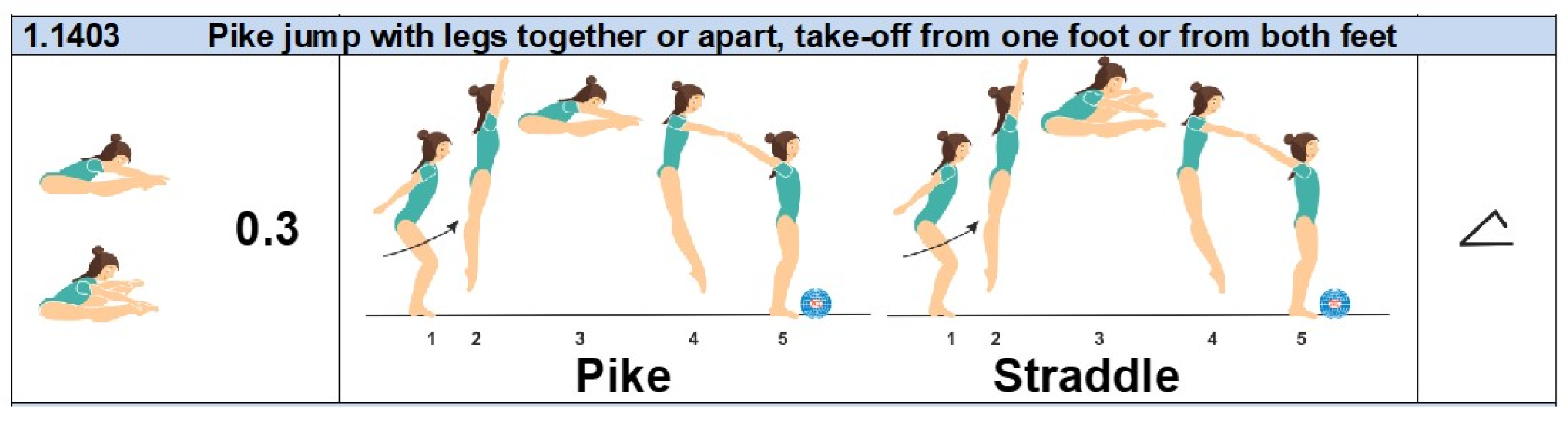
The Pike Jump is executed by applying an impulse with countermovement in the take-off with both lower limbs and an impulse with both upper limbs, ensuring coordination during flight and landing (Figure 1). It has a similar pattern to the Abalakov jump (ABK) and the countermovement jump (CMJ). It has been determined that the use of the upper limbs increases the height of the jump (JH) by 12.1% if it is applied in the eccentric phase, and by 3.51% if it is only applied in the concentric phase, with this increase being higher if it is applied in both phases [6,7]. During the flight phase, there is a great amplitude of hip abduction and flexion, until the trunk is situated between both lower limbs. This jump has a 0.3-point value in the current code [1].
The main objective of the vertical jump is to reach maximal vertical velocity at take-off (VTO) to attain the maximal height of the center of gravity and thus JH [3,8]. JH and power (P) are variables habitually used to assess performance [3,9,10]. They are normally calculated indirectly with kinetic analysis techniques [10], and they are directly related to the elastic characteristics of the skeletal muscle [11]. However, these variables do not allow us to know what happens in the intermediate stages related to the temporal domain, if the impulse at take-off has been effective or not, and how the force in the jump has been managed. This makes it difficult to find strategies for improvement.
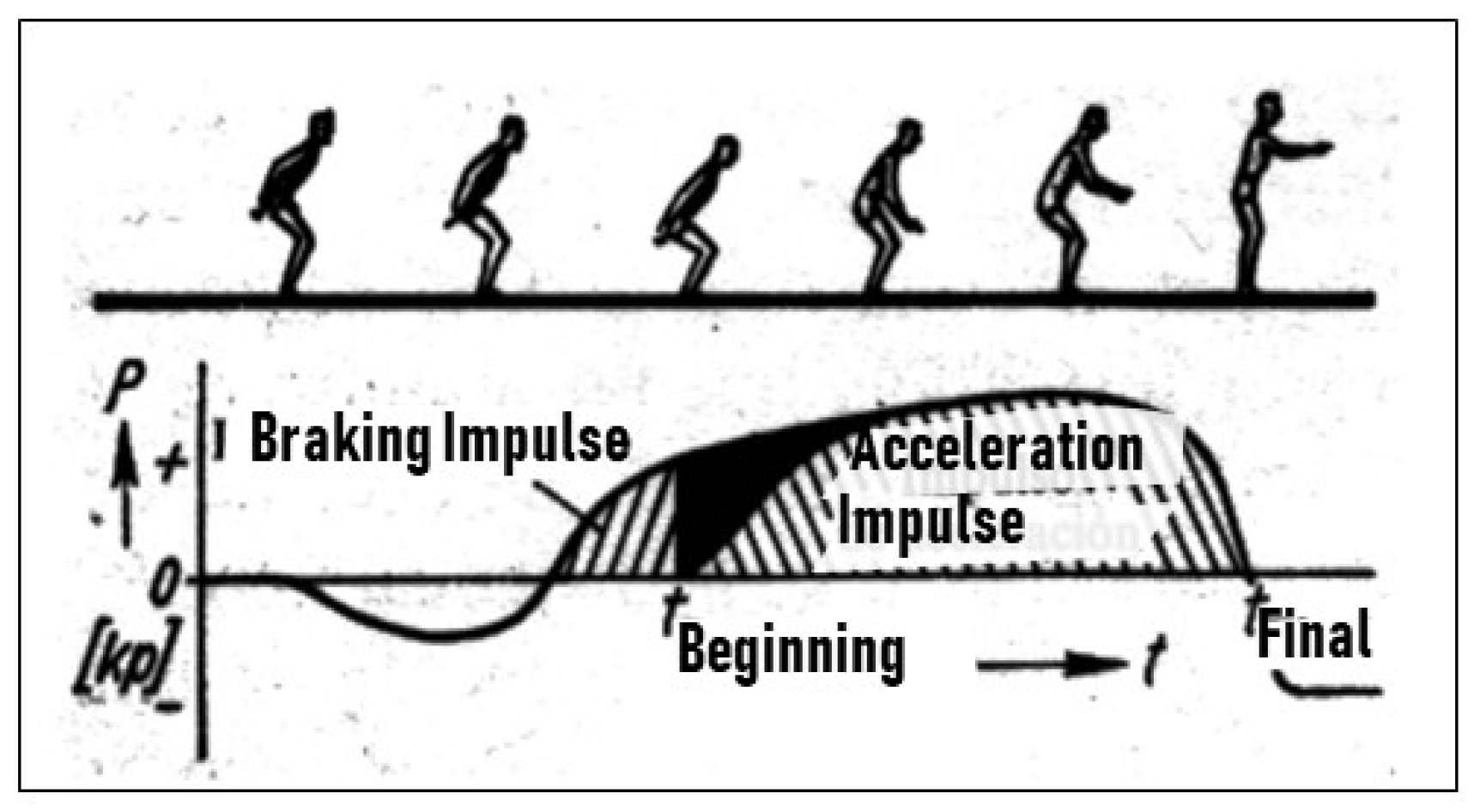
A large number of Vertical Ground Reaction Forces (VGRFs) have been defined to analyze vertical jumps. Hochmuth [12] described, in a CMJ study, initial VGRFs at the instant in which flexion impulse (Im_I) and braking impulse are compensated in the force-time curves (F-t) (Figure 2).
It marks the beginning of the ascending phase of the movement. Initial VGRF must precede Maximal VGRF because if the Im_I is too high, such a big impulse would have to be used for braking, making it hugely difficult to compensate it and provide an adequate take-off. Therefore, the Impulse Index (Im_I/Im_N), the relationship between Im_I and acceleration or Net impulse (Im_N) [13], should be optimal with values of 0.3–0.4 [12]. Initial VGRF and Im_I/Im_N have not been analyzed in kinetic studies and have been compared adequately even less, by normalizing the data according to the subject’s weight (BW) and the total time of the jump (TT) to avoid their influence on the final result.
Likewise, in studies related to running [14,15], Average VGRF was described as a performance indicator, since it allows for measuring the global force level of the athlete.
Three types of studies have been found related to generic jumps in RG: (1) studies employing generic jumps to predict performance [16,17,18,19,20,21,22,23,24,25,26,27], (2) studies evaluating generic jumps after training periods in rhythmic gymnasts [28,29] and (3) studies that analyze variables in specific RG jumps [30,31,32,33,34].
In relation to the first, some authors employ generic jumps, such as CMJ or ABK, looking for variables that predict the performance of rhythmic gymnasts [16,17,18]. Gymnasts (7 to 27 years old) have been reported to show a higher JH and a higher P than the control groups [17]. JH, in 15 repeated CMJs, influenced the accumulation of mineral density in the femoral neck bone in trained RG compared to untrained girls [20]. In contrast to other studies [21,22], they did not find that influence in CMJ JH. The higher JH in RG girls (9–10 years old) has been shown to not be due to gains in strength or muscle mass, but to the composition of the muscles and greater coordination in the jump [18]. Female gymnasts, compared to an untrained group, have also been seen to have a longer flight time (FT), shorter Contact Time (CT), and a better FT to CT ratio and Bosco expression in Drop Jump (DJ) at different heights, with the FT being the less discriminating factor [19]. In a study in which the CMJ was progressively loaded in rhythmic gymnasts from base level to the first division, 72.3% of them presented a force deficit in Force–Velocity (F-V) profile, while 11% had a velocity deficit [23]. Those deficits were independent of age (although there was a trend, but not statistically significant); in fact, other studies found similar deficits in 87 ballet dancers (18.94 ± 1.32 years old) [24]. The absence of differences was probably because jumps of the younger gymnasts were higher than in other studies [24], while those of older gymnasts were lower [25,26,27]. The magnitude was 44.4% low force deficit and 27.8% high force deficit [23].
On the other hand, studies have been conducted where various variables of generic jumps were evaluated in rhythmic gymnasts after some periods of training. After nine months of RG-specific training, 8–9-year-old gymnasts did not obtain significant improvements in JH in ABK compared to the scale for the average population of girls of that age [28]. Fifty-five novice gymnasts (7 years old) executed 12 motor ability tests before and after a year’s training. Tests related to strength and coordination explained 65% of the variance with respect to the mastery level evaluated by expert judges in seven RG-specific jumps [29]. After a month of training different jumps in water, 15–17-year-old elite gymnasts improved their JH and P [29].
Studies in which RG-specific jumps are subject to meticulous kinetic analysis are scarce. In a study of 10 gymnasts from the Spanish RG team (13–16 years old), it was observed that jumps executed with a prior impulse, called a Chassé (double step with a little jump), recorded higher force, higher JH and lower take-off angle (A_TO) than those executed without a Chassé [30]. Therefore, this will be a fact to be considered in the studies consulted.
One of the studied jumps is the Split Leap (SPL). The most valued requirement for expert judges is that the knee must be extended as much as possible during take-off, landing, and in the stance phase [31]. In the SPL, CT was higher in men than in women [16]. In this study, significant correlations were found between the SPL and the Hopping test (HT) (seven consecutive CMJs with no complete descent phase and looking for a minimal CT). Another significant correlation was found in FT between SPL and another jump, the ½ turn Cossack jump, with both variables also being correlated with the SPL JH. In SPL, high-impact peak VGRFs are up to 8 times the gymnast’s Body Weight (BW) [30]. Lower A_TO values were recorded in this jump compared to other jumps like the Stag Leap Jump, with or without a Chassé, or Jeté entournant. Since those gymnasts also executed CMJ and ABK generic jumps, it was observed that the JH of these was lower than that of the Stag Leap Jump without Chassé.
The Jeté entournant jump, another jump analyzed in the literature, also had higher CT in men than in women, but no significant differences in FT and JH variables were found. These three variables yielded the lowest values in this jump, compared to generic jumps like CMJ, Squat Jump (SJ) and HT, or to gymnastic jumps like ½ turn Cossack jump and SPL [16].
In another study [32], the relationship between Center of Gravity height during take-off (HCG_TO) in a Grand Jeté leap and two common jump tests (CMJ and DJ) in 35 classical ballet dancers (male n = 10 and female n = 25, divided into novice, semiprofessional and professional) was analyzed. As the ballet groups increased in skill level, larger correlations were found with the Grand Jeté leap and the two jump assessments within the three different skill-level ballet groups. CMJ seemed to have a greater relationship to the Grand Jeté leap than the DJ for all groups
Consequently, except in the studies by Ferro et al. [30] and Di Cagno et al. [16], kinetic analyses of RG-specific jumps which allow identification of efficacy variables that may affect the performance of gymnasts have not been addressed in the literature. Otherwise, in generic jumps such as SJ, CMJ or ABK, indirect measures such as JH and P have been used as criteria of efficacy. However, there are few studies that explain how to improve JH from kinetic variables that can be assessed directly and from specific RG jumps.
Therefore, the objective of this study was to identify kinetic variables that can be indicators of performance, taking JH as a primary efficacy variable, but also other kinetic variables based on previous studies, such as Initial VGRF [33], Im_N, Average VGRF and Maximal VGRF.

2. Materials and Methods

2.1. Participants

Ten high-level women gymnasts (14 ± 0.7 years old, 43.53 ± 2.55 Kg and 1.55 ± 0.07 m) who had previously competed in international competitions for more than 2 years participated in the study. They trained 5–6 days a week for 4–6 h. All the gymnasts were informed about the objective of the research and the use of the data, and an informed consent form was signed by them and their parents, authorizing their participation. Tests were conducted according to the ethical norms for experimentation with humans, approved by the University Ethics Committee (4 February 2015), and according to the declaration of Helsinki 2013 [34].

2.2. Study Design

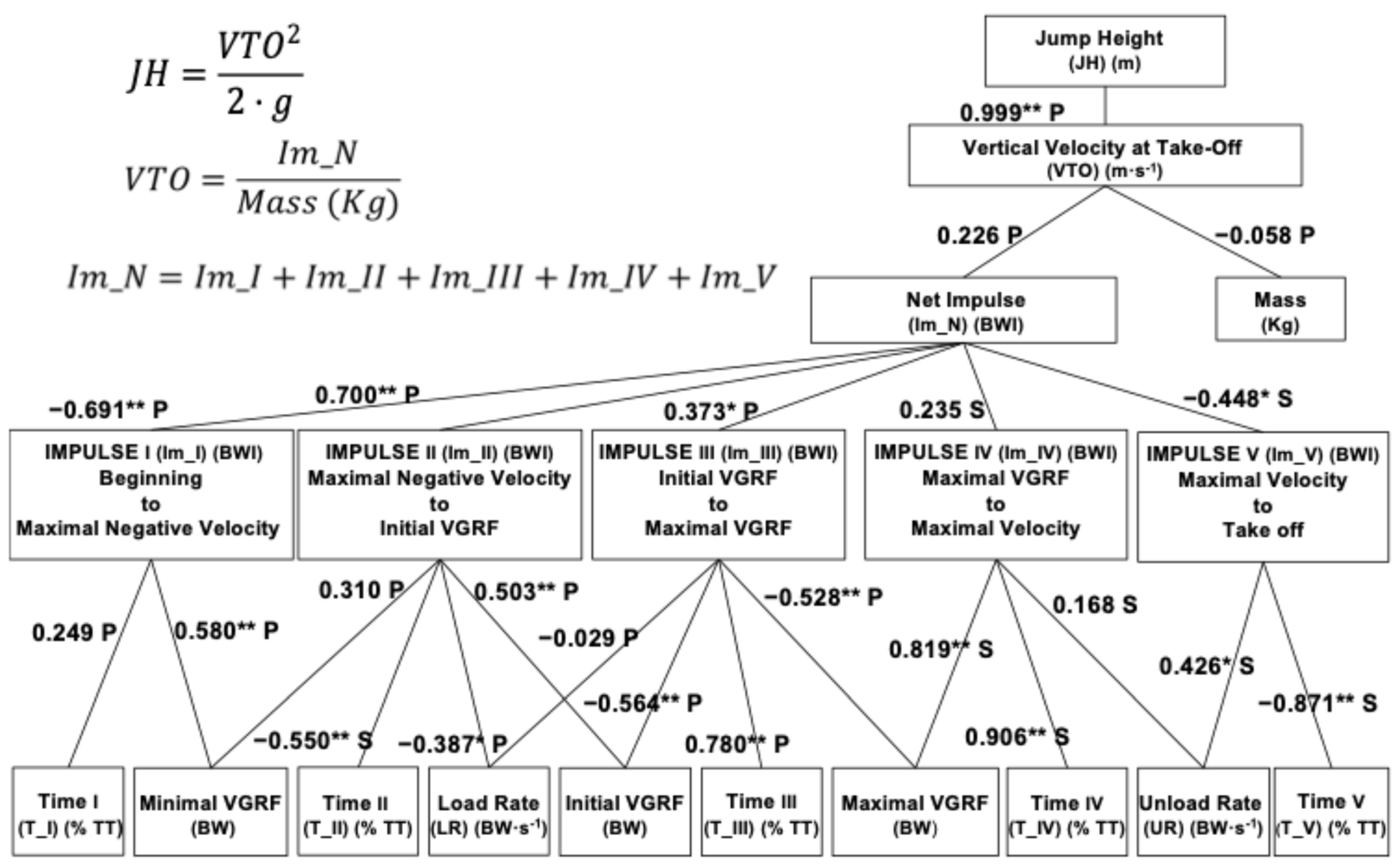
To determine which kinetic influence the performance of Pike Jump in RG, a hierarchical model was proposed to observe the relationship between variables and performance based on Hay’s qualitative framework [35] and the adaptation of Ferro et al. [30]. Subsequently, a regression analysis was performed where 76 kinetic variables obtained in the Pike Jump (42 non-normalized and 34 normalized by BW and/or TT) were related to three proposed efficacy variables: JH measured in an indirect way (JH = VTO2/2 g), and Average VGRF and Initial VGRF measured in a direct way. The analysis was applied to all the variables related to the model in the same hierarchical order to prove if the proposed dependence was valid. Likewise, Ferro et al.’s [30] method was included with kinetic variable normalization with the aims of making them comparable to those obtained by other authors and being able to use them in gymnasts’ performance evaluations.

2.3. Procedures

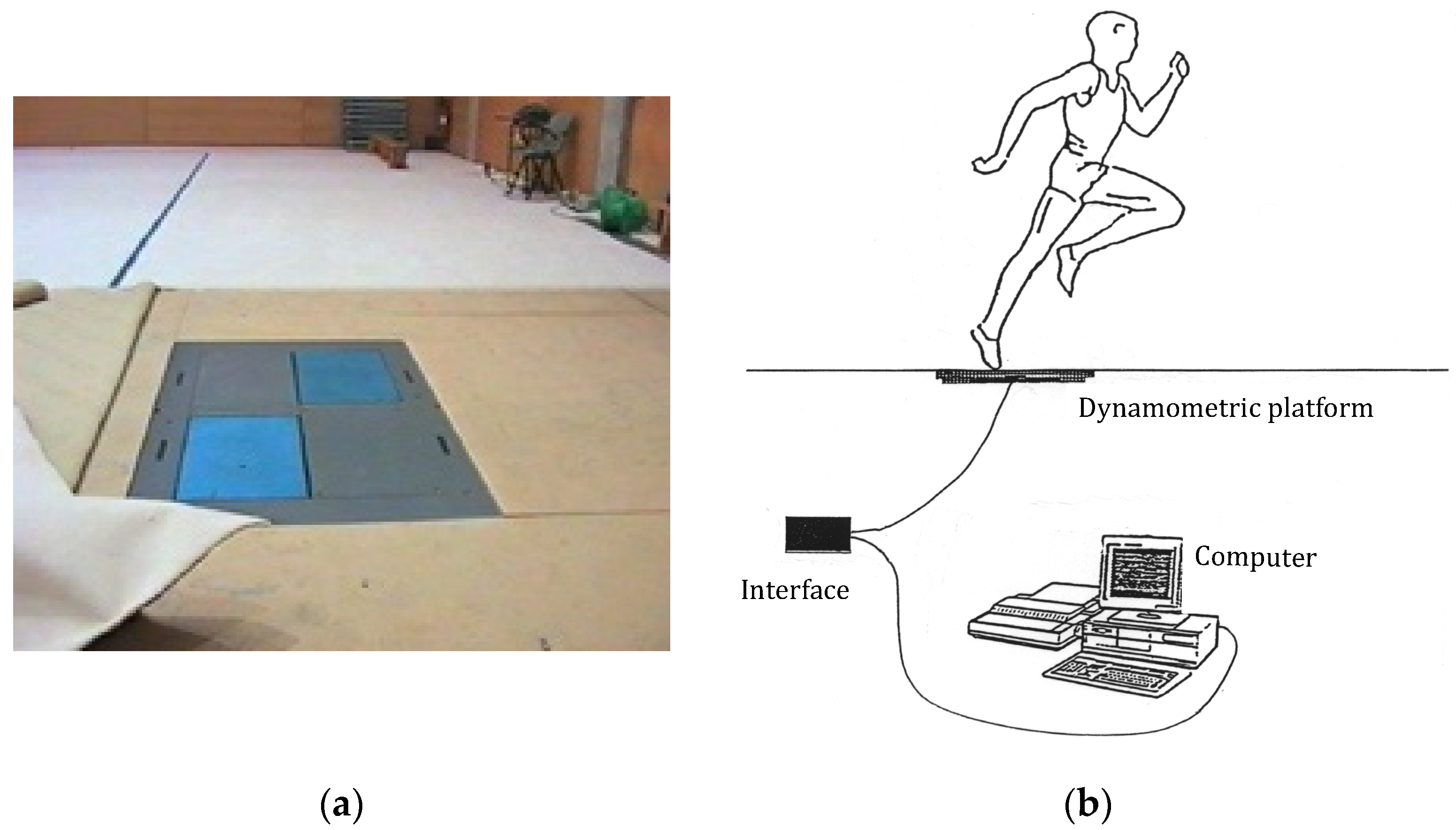
Fifty-three Pike Jumps executed on a dynamometric platform Dinascan-IBV v. 8.1 (Valencia, Spain), with a sampling frequency of 1000 Hz, were recorded. The platform (370 × 600 × 100 mm) was embedded in the floor of the gym, was supported on a ground steel plate and was covered with the same carpet employed in the gymnastic competitions (Figure 3a,b). Data were registered by Dinascan-IBV Software v.8.1 (Valencia, Spain) and processed using a second-order Butterworth low-pass filter, with a cut-off frequency of 400 Hz as in previous studies by Ferro et al. [30]. The jumps were carried out individually over six consecutive training sessions. Each gymnast performed 10 jumps with 5 min of rest between attempts. For analysis, the 5 to 6 best-executed jumps per gymnast were selected (0.3 points assigned to the Pike Jump according to the code points of Rhythmic Gymnastics from 2025 to 2028, FIG [1]). Approximately one month before, the gymnasts completed a familiarization phase with the dynamometric platform during regular training session. Jumps were divided into five phases. 42 kinetic variables, were defined and normalized, obtaining a total of 76 variables. Force data were expressed in N and BW. Mechanical impulse data were expressed in N·s and BWI related to CT. Force rates were presented in N·s−1 and BW·s−1. Time data were expressed in seconds and in percentages of time with respect to CT and TT. Kinetic variables were represented in a hierarchical way using an analysis model designed for the Pike Jump, based on Hay’s [35] and Ferro et al.’s [30] qualitative analysis system (Figure 4). Both the beginning of the jump and take-off instant were identified using Street et al.’s [36] method. For the beginning of the jump, the method consisted of analyzing the VGRF data, searching for the first value that exceeded one of the two VGRF force thresholds at the start of the movement: the maximum or the minimum. Once this value was found, the process went back to the first value that exceeded the gymnast’s weight. For the take-off instant, the first intersection of the F-T curve with a VGRF value ≤ 0 was found, indicating that the subject was in the air. In the range from that instant up to two-tenths of a second further, the instant with the smallest standard deviation was sought. This value was determined as the take-off instant.
Based on the force-time and mechanical impulse data along three axes obtained with Dinascan-IBV Software v.8.1, the following variables were defined, calculated by BioGym v.3, and classified into four groups (see Figure 5 and Figure 6).
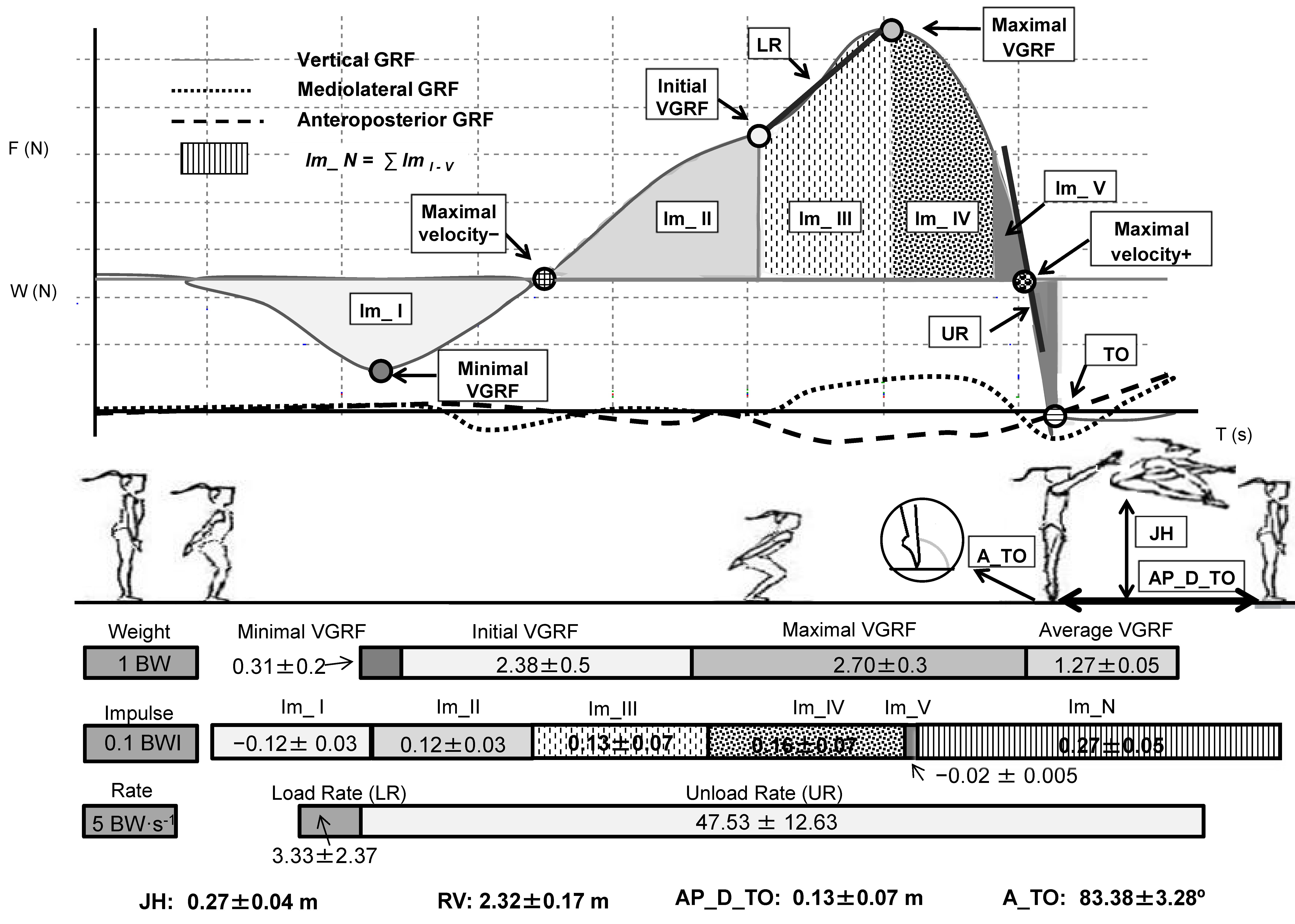
  • Variables related to VGRF were Minimal VGRF, Maximal VGRF, Initial VGRF [33], Average VGRF, Load rate (LR) and Unload rate (UR). LR represent the speed of VGRF increase of the load and UR the speed of the VGRF decrease in the release. LR was calculated as the increase in load from Initial VGRF to Maximal VGRF (R_Maximal–Initial VGRF) divided by T_III and UR as (50 N + BW) − 50 N divided by T (50 N + BW) − T (50 N). Increased in force from Minimal VGRF to Maximal VGRF (R_Maximal–Minimal VGRF) was also calculated. Other variables were the vertical mechanical impulses of the five phases (Im_I, Im_II, Im_III, Im_IV, Im_V). The division into these phases was based on Hochmuth’s study [12], with phase I being from the beginning of the movement to the maximal positive velocity instant, phase II from there to the Initial VGRF, phase III from Initial VGRF to Maximal VGRF, phase IV from Maximal VGRF to maximal negative velocity, and phase V from there to the take-off instant. In Figure 6, this can be seen in more detail. The sum of these five phases provided Im_N.
  • Variables related to GRF in other axes were the anteroposterior and mediolateral reaction maximal forces (AP_GRF, ML_GRF) in the concentric phase and the average anteroposterior (Im_ap) and mediolateral (Im_ml) impulses and Mediolateral Velocity (VML).
  • Kinematic variables related to kinetics were JH, calculated through VTO [37], HCG_TO, anteroposterior distance during take-off (AP_D_TO), the resultant velocity (RV) and the angle at take-off (A_TO) calculated through VR. VTO was obtained through Im_N and the mass.
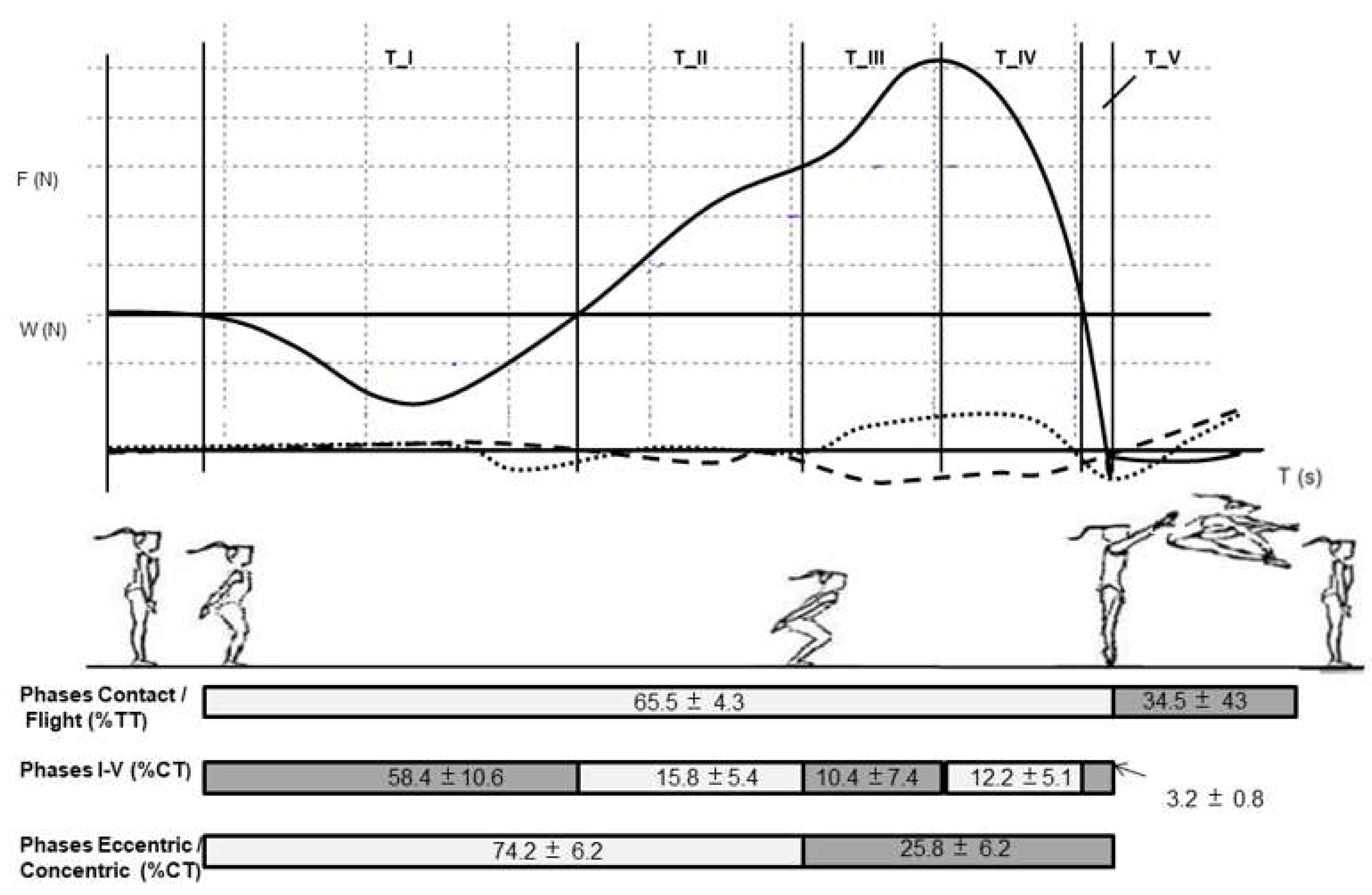
  • Temporal variables analyzed were the times of each one of the phases (T_I, T_II, T_III, T_IV y T_V), TT, FT, CT, Concentric Phase, Eccentric Phase, Times to Maximal VGRF (T_ Maximal VGRF) and to maximal velocity (T_MV) and time from maximal VGRF to take-off (T_Maximal VGRF–TO).

2.4. Statistical Analyses

Normality was assessed using the Kolmogorov–Smirnov in SPSS 26.0 with a confidence level of 95%; variables with p < 0.05 were classified as non-normal. For all variables descriptive statistics (minimum, maximum, mean, and standard deviation) were calculated. Bivariate correlations with two-tailed significance tests were then conducted: Pearson’s coefficient for normally distributed variables and Spearman’s coefficient for non-normal variables (denoted as P and S, respectively, in Figure 4). Statistical significance was set at p = 0.05, and strong significance at p = 0.001.

3. Results

In Figure 4, the hierarchical model of the efficacy variables with the indications of the correlations found among them can be observed. Times achieved in each of the phases into which the Pike Jump was divided, besides Concentric Phase and Eccentric Phase into its countermovement part and the CT and FT, can be observed in Figure 5. Average JH was 0.27 ± 0.04 m, RV was 2.32 ± 0.17 m, AP_D_TO was 0.13 ± 0.07 m and A_TO was 83.38°.
Vertical forces generated and their mechanical impulses can be observed in Figure 6. In some jumps, subjects did not execute phase III, since they recorded a Maximal VGRF value before the Initial VGRF one, so the assigned value in those jumps was 0. Practically all the normalized variables correlated with the highest and lowest variables in the hierarchy, which shows that this is a valid model to explain the biomechanics of the Pike Jump. Non-normalized variables, not represented in the model, did not show significant correlations.
Likewise, variables which correlated with JH, Initial and Average VGRF can be seen in Table 1, Table 2 and Table 3. Every impulse in the phases, except Im_IV, correlated with Average VGRF, as well as Im_N and Im_I/Im_N, the majority of temporal variables and UR (Table 1). Initial VGRF correlated with both the times and every impulse except that of phase V, like Im_I/Im_N, Minimal and Maximal VGRF, R_Minimal-Maximal VGRF and R_Initial-Maximal VGRF.

4. Discussion

The jump analyzed in this study shows a certain similarity to the ABK, as well as with the CMJ, with both usually used to evaluate force performance in training [38], so the bibliography related to it that has been found has been useful for checking this study. Nevertheless, it has not been possible to contrast data found with those mentioned by other authors, as references of similar studies have not been found in the literature. The average JH was similar to those recorded in other studies [18,39] in CMJ. In A_TO average values of 83.38 ± 3.28° can be seen, which are less vertical than those found by Ferro et al. [30], where the minimum value obtained by the gymnasts was 87.05° and the maximum 89.81° in ABK jumps. This, along with the average AP_D_TO of 13 ± 0.07 cm, showed that minimal displacement in this axis can be useful for the Pike Jump. In the reviewed literature [33], the JH-VTO relationship appears to be the strongest correlation (Table 1) and the losses in JH are reported to be equivalent to those in VTO [40,41]. JH in this study correlated with Maximal VGRF and also Im_N, expressed in absolute values, but not with the normalized ones. It can be seen that some of the correlations cited in the literature have not been found in our study due to the absence of some normalized values. Based on our experience in kinetic assessments in RG and in other sports [38], we emphasize that data normalization is essential to allow valid comparisons between athletes of different body masses without biassing variables related to vertical forces. In the literature [12], it is affirmed that to achieve a more powerful jump, Maximal VRGF, CT or both of them should be increased, although increasing CT would lack meaning, since it would entail a decrease in velocity in the Concentric Phase [42]. In our study, none of these normalized variables showed any significant correlation with JH, although in the Maximal VGRF variable, it existed when it was expressed in N. Other authors [18] found that in prepuberal subjects, with the low force levels estimated for them, other factors in vertical jump performance, like muscular fiber composition or coordination, are more important. JH also correlated positively with UR, and negatively with T_V and Im_V, indicating that lower times and impulses in this phase will favor a faster take-off, and reaffirming it as the most influential phase in JH. UR is a variable employed to quantify the rate of force development, which is the force type in which fatigue is most seen [43,44,45]. The correlation between JH and Im_I/Im_N was significant too, consistent with previous findings. Dowling and Vamos [46] considered that the optimum value for Im_I/Im_N is 27%, while Hochmuth [12] considers it to be between 30% and 35% in the CMJ (jumping without using the arms). These data differ from those found in the present study, where the value is established at 46%. Similar values were obtained in the ABK and the STL by Ferro [30] (35–45%). According to the bibliography [15], delaying Maximal VGRF as long as possible is an essential factor for movements requiring an explosive take-off, like vertical jumps. This is revealed in the relationships found between JH and T-Maximal VGRF (%CT) and T-MV (%CT). Although jumps were not executed in a situation of actual competition, they were completed in a usual training situation. Gymnasts underwent a familiarization period, and a dynamic platform was fitted on the floor and covered with the carpet used by gymnasts in competition to modify the performance in jumps as little as possible.
Initial VGRF was correlated with mechanical impulses in all phases except V; with Im_I/Im_N, Concentric Phase and Eccentric Phase; with the attainment of Maximal VGRF in phase IV; with R_Msximal–Miniimal VGRF; and with R_Maximal–Initial VGRF (Table 2). This last variable has to be as high as possible and provides optimum energy storage to be employed in the countermovement. These results indicate that a high Initial VGRF has a great influence in the intermediate phase of the jump, when the transition between Eccentric Phase and Concentric Phase takes place, making it optimum, and letting it obtain, from that point, a lot of vertical force and a great Im_IV, contributing to the achievement of a high Im_N that makes it possible to generate the maximum VTO. For that reason, it is considered an efficacy variable. Impulses generated until that point of force development and the optimum relationship between them are vital for the achievement of a high Initial VGRF.
Average VGRF correlated with Im_N and UR and with every phase impulse except Im_IV (Table 3). Its relationship with the same initial impulses as Initial VGRF, where the jump is gestated, should be noted, in spite of not correlating with it, as well as with those of the Concentric Phase and Eccentric Phase. Nevertheless, it is in the last phase of the jump where this variable correlates negatively with Im_V, since a smaller impulse determines a smaller decrease in Average VGRF in the jump, and positively with UR, indicating that the greater this variable, the more favored the maintenance of the vertical force until the take-off. It does not correlate with Maximal VGRF, which indicates that to achieve a high Im_N, it is more important to achieve a high global level of vertical force. This, together with the correlation found with T_Maximal VGRF–TO, indicates that its longer duration facilitates force generation for longer. Therefore, it could be affirmed that Average VGRF can be an efficacy variable in the final phase, in which force production must be maintained to ensure an explosive take-off [47,48]. UR is a direct variable that can be indicative of the level of explosiveness of the jump, and depends on the level of force generated in phase V and on the time interval in which his force decreases, and its calculation is very simple. These two efficacy variables are of great interest to coaches because they are closely related to jump performance.
With regard to the correlations appearing in the hierarchy graphic, it can be observed that one does not exist between VTO and lm_N or VTO and mass, and therefore neither is there a correlation between JH and Im_N or mass. Im_N correlates in a significant way with Im_I and Im_II. Dowling and Vamos [46] found a very poor correlation between the Negative Impulse (Im_I in our study) and JH. The strongest positive correlation observed is that between Im_II and Im_N, underscoring the critical role of the braking phase in generating a lager impulse to achieve higher jump height [8,49,50,51,52,53,54]. Im_III correlates significantly with Im_N. The absence of a correlation of force variables in phase III and the temporal ones with Im_N indicates the limited weight of this phase in the jump. Im_N correlates with every impulse except Im_IV.
In contrast, Im_V showed a strong negative correlation with Im_N (r = −0.448; p < 0.05), likely because it is partially offset by Im_IV; thus, a lower Im_V results in a subtracted less positive impulse for Im_N. Furthermore, the impulses in each phase are associated with the corresponding force variables generated in that phase. Nearly all variables included in the graphic were significant, supporting the validity of its proposed framework.
Minimal VGRF is important for Im_I, but not for Im_II. The correlation of Im_II with T_II was very significant and negative; therefore, it proves that the impulse is determined more by time than by force. A significant correlation has been found between LR and Im_II, but not with Im_III. As a matter of fact, LR did not correlate with any of the determinant variables to achieve a good JH, except for TT, with which it correlated significantly (r = 0.386; p < 0.05).
Initial VGRF correlated with Im_II (r = 0.503; p < 0.01) and Im_III, (r = −0.564; p < 0.01), like Maximal VGRF (BW) correlated with Im_III (r = −0.528; p < 0.05) and Im_IV (r = 0.718; p < 0.01), given that they are the dominant forces in the Forec-time record [12].
It should be highlighted as one of the study’s limitations could be that these gymnasts are 14 years old, a period of rapid physical development for female adolescents, with substantial annual changes in body morphology, muscle strength, and coordination. Although this could limit the generalizability of the results, it must be noted that all the gymnast are top-level. The study did not look for results for 14-year-olds; it looked for results for elite gymnasts in this sport, and to validate the biomechanical Hay model for the Pike Jump with the athletes most qualified to carry out this jump.

5. Conclusions

A new methodology for analyzing jumps without prior impulse and with arm swing, like those found in RG or in team sports, among others, has been elaborated. It has been seen that to apply a greater quantity of force in the jump, gymnasts should strive to carry out phase I (phase II) and phase V in the shortest possible time. They should also look for an impulse increase in all its positive phases, and a much more explosive execution of the eccentric phase of the jump than the concentric one. The ratio Im_I/Im_N should be observed. For a greater Initial VGRF, the percentage of total time spent in phases I, II and III is important. The maximum application of Minimal and Maximal VGRF is fundamental (the first in a negative and the second in a positive way). Impulse in phase IV must be high, unlike Im_III, which indicates that, except for this phase, in the Concentric Phase a greater application of force to speed must be prioritized. A smaller Im_V determines a smaller decrease in Average VGRF in the jump, and higher UR favors the efficacy of VGRF applied until the take-off. A table of variables which contains the indicators of performance in the Pike Jump in a hierarchical order to establish the relationship between them and facilitate the understanding of the biomechanics of jumping has been created. The high number of correlations found between these variables allows us to validate the model used. It will allow us to determine the effectiveness variables of the jumps, so that coaches, by viewing the values recorded in these variables by their gymnasts, can quickly and easily identify their shortcomings and improvements. Once the Hay hierarchical model has been proven to work, it will be possible to identify which of these variables are indicative of gymnasts’ performance, ensuring the test’s effectiveness and saving time in the tests.

Author Contributions

Conceptualization, M.N. and A.F.-S.; methodology, A.F.-S.; software, M.N. and A.F.-S.; validation, A.F.-S.; formal analysis, M.N., P.F. and A.F.-S.; investigation, M.N.; resources, A.F.-S.; data curation, M.N., P.F. and A.F.-S.; writing—original draft preparation, M.N., P.F. and A.F.-S.; writing—review and editing, M.N., P.F. and A.F.-S.; visualization, A.F.-S.; supervision, A.F.-S.; project administration, A.F.-S. All authors have read and agreed to the published version of the manuscript.

Funding

This research received no external funding.

Institutional Review Board Statement

The study was conducted in accordance with the Declaration of Helsinki (2013) (34) and was approved by the Ethics Committee of Universidad Politécnica de Madrid (4 February 2015).

Informed Consent Statement

Informed consent was obtained from all participants involved in the study. Written informed consent was obtained from the participants to publish this paper.

Data Availability Statement

The data in this study are available on reasonable request to the first author and corresponding author.

Acknowledgments

Thanks to the gymnasts who participated in this study and to the Universidad Politécnica de Madrid for the support.

Conflicts of Interest

The authors declare no conflicts of interest.

Abbreviations

The following abbreviations are used in this manuscript:
ABKAbalakov Jump
A_TOTake-off angle
AP_D_TOAnteroposterior distance during take-off
AP_GRFAnteroposterior Ground Reaction Force
BWBody Weight
CMJCountermovement Jump
CTContact Time
DJDrop Jump
F-tForce-time
F-VForce-Velocity
FTFlight Time
HCG_TOCenter of gravity height during take-off
HTHopping Test
Im_apAnteroposterior Impulse
Im_IImpulse in phase I
Im_I/Im_NImpulse Index
Im_IIImpulse in Phase II
Im_IIIImpulse in Phase III
Im_IVImpulse in Phase IV
Im_mlMediolateral Impulse
Im_NNet Impulse
Im_VImpulse in Phase V
JHJump Height
LRLoad Rate
ML_GRFMediolateral Ground Reaction Force
NNewton
PPower
R_Maximal–Initial VGRFIncrease in force from Initial VGRF to Maximal VGRF
R_Maximal–Miniimal VGRFIncrease in force from Minimal VGRF to Maximal VGRF
RGRhythmic Gymnastics
RVResultant Velocity
SJSquat Jump
SPLSplit Leap
T_ITime in Phase I
T_IITime in Phase II
T_IIITime in Phase III
T_IVTime in Phase IV
T_VTime in Phase V
T_ Maximal VGRFTime to Maximal VGRF
T_Maximal VGRF–TOTime from Maximal VGRF to Take-off
T_MVTime to Maximal Velocity
TTTotal Time
URUnload Rate
VGRFVertical Ground Reaction Force
VMLMediolateral Velocity
VTOVelocity at take-off

References

  1. Fédération Internationale de Gymnastique. 2025–2028 Código de Puntuación GR; Fédération Internationale de Gymnastique: Lausanne, Switzerland, 2025; p. 74. [Google Scholar]
  2. Leandro, C.; Ávila-Carvalho, L.; Sierra-Palmeiro, E.; Bobo-Arce, M. Technical content of elite rhythmic gymnastics/Tehnične značilnosti sestav vrhuskih ritmičark. Sci. Gymnast. J. 2016, 8, 85–96. [Google Scholar] [CrossRef]
  3. Lebre, E.; Sousa, F. Étude biomécanique du saut “enjambé” en GRS. In GRD: Le Sens d’une Évolution; Institut National du Sport et de l’Éducation Physique (INSEP): Paris, France, 1997; Volume 18, pp. 221–225. [Google Scholar]
  4. Ávila-Carvalho, L.; Leandro, C.; Lebre, E. 2009 Portimão Rhythmic Gymnastics World Cup. Scores analysis. In Book of Abstracts of the 16th Annual Congress of the European College of Sport Science; Cable, N.T., George, K., Eds.; Liverpool John Moores University: Liverpool, UK, 2011; pp. 579–580. [Google Scholar]
  5. Caburrasi, E.F.; Santana, M.V. Análisis de las Dificultades Corporales en los Campeonatos Europeos de Gimnasia Rítmica Deportiva Granada 2002. 2003. Available online: http://www.efdeportes.com/efd65/grd.htm (accessed on 19 October 2025).
  6. Williams, S.J.; Barron, T.R.; Ciepley, A.J.; Ebben, W.P. Kinetic analysis of the role of upper extremity segmental inertia on vertical jump performance. J. Exerc. Physiol. Online 2017, 20, 28–34. [Google Scholar]
  7. Hara, M.; Shibayama, A.; Takeshita, D.; Hay, D.C.; Fukashiro, S. A comparison of the mechanical effect of arm swing and countermovement on the lower extremities in vertical jumping. Hum. Mov. Sci. 2008, 27, 636–648. [Google Scholar] [CrossRef] [PubMed]
  8. Harman, E.A.; Rosenstein, M.T.; Frykman, P.N.; Rosenstein, R.M. The effects of arms and countermovement on vertical jumping. Med. Sci. Sports Exerc. 1990, 22, 825–833. [Google Scholar] [CrossRef]
  9. Mizuguchi, S.; Sands, W.A.; Wassinger, C.A.; Lamont, H.S.; Stone, M.H. A new approach to determining net impulse and identification of its characteristics in countermovement jumping: Reliability and validity. Sports Biomech. 2015, 14, 258–272. [Google Scholar] [CrossRef]
  10. Sole, C.J.; Mizuguchi, S.; Sato, K.; Moir, G.L.; Stone, M.H. Phase characteristics of the countermovement jump force–time curve: A comparison of athletes by jumping ability. J. Strength Cond. Res. 2018, 32, 1155–1165. [Google Scholar] [CrossRef]
  11. Richter, A.; Räpple, S.; Kurz, G.; Schwameder, H. Countermovement jump in performance diagnostics: Use of the correct jumping technique. Eur. J. Sport Sci. 2012, 12, 231–237. [Google Scholar] [CrossRef]
  12. Hochmuth, G. Biomecánica de los Movimientos Deportivos; INEF de Madrid: Madrid, Spain, 1973. [Google Scholar]
  13. Kirby, T.J.; McBride, J.M.; Haines, T.L.; Dayne, A.M. Relative net vertical impulse determines jumping performance. J. Appl. Biomech. 2011, 27, 207–214. [Google Scholar] [CrossRef]
  14. Munro, C.F.; Miller, D.L.; Fuglevand, A.J. Ground reaction forces in running: A reexamination. J. Biomech. 1987, 20, 147–155. [Google Scholar] [CrossRef]
  15. Miller, D.I. Ground reaction forces in distance running. In Biomechanics of Distance Running; Cavanagh, P., Ed.; Human Kinetics: Champaign, IL, USA, 1989; pp. 203–224. [Google Scholar]
  16. Di Cagno, A.; Baldari, C.; Battaglia, C.; Monteiro, M.D.; Pappalardo, A.; Piazza, M.; Guidetti, L. Factors influencing performance of competitive and amateur rhythmic gymnastics—Gender differences. J. Sci. Med. Sport 2009, 12, 411–416. [Google Scholar] [CrossRef]
  17. Kums, T.; Ereline, J.; Gapeyeva, H.; Paasuke, M. Vertical jumping performance in young rhythmic gymnasts. Biol. Sport 2005, 22, 237–246. [Google Scholar]
  18. Pérez-Gómez, J.; Vicente-Rodríguez, G.; Ara Royo, I.; Arteaga, R.; Calbet, J.; Dorado, C. Capacidad de salto en niñas prepúberes que practican gimnasia rítmica. Mot. J. Hum. Mov. 2006, 15, 273–286. [Google Scholar]
  19. Marina, M.; Jemni, M.; Rodríguez, F.A.; Jimenez, A. Plyometric jumping performances of male and female gymnasts from different heights. J. Strength Cond. Res. 2012, 26, 1879–1886. [Google Scholar] [CrossRef] [PubMed]
  20. Võsoberg, K.; Tillmann, V.; Tamm, A.; Maasalu, K.; Jürimäe, J. Bone mineralization in rhythmic gymnasts entering puberty: Associations with jumping performance and body composition variables. J. Sports Sci. Med. 2017, 16, 99–104. [Google Scholar] [PubMed]
  21. Baptista, F.; Mil-Homens, P.; Carita, A.I.; Janz, K.; Sardinha, L.B. Peak vertical jump power as a marker of bone health in children. Int. J. Sports Med. 2016, 37, 653–658. [Google Scholar] [CrossRef]
  22. Hardcastle, S.A.; Gregson, C.L.; Rittweger, J.; Crabtree, N.; Ward, K.; Tobias, J.H. Jump power and force have distinct associations with cortical bone parameters: Findings from a population enriched by individuals with high bone mass. J. Clin. Endocrinol. Metab. 2014, 99, 266–275. [Google Scholar] [CrossRef]
  23. Ferreira Melo de Sá, L.; Leite, I.; Batista Santos, A.; Tristão Ávila Carvalho, M.d.L. Jump ability and force–velocity profile in rhythmic gymnastics. Sci. Gymnast. J. 2023, 15, 225–237. [Google Scholar] [CrossRef]
  24. Álvarez, J.A.E.; Reyes, P.J.; Pérez Sousa, M.Á.P.; da Conceição, F.; García, J.P.F. Analysis of the force–velocity profile in female ballet dancers. J. Dance Med. Sci. 2020, 24, 59–65. [Google Scholar] [CrossRef]
  25. Dobrijević, S.; Moskovljević, L.; Marković, M.; Dabović, M. Effects of proprioceptive training on explosive strength, agility and coordination of young rhythmic gymnasts. Fiz. Kult. 2018, 72, 71–79. [Google Scholar] [CrossRef]
  26. Gateva, M. Investigation of strength abilities of rhythmic gymnasts. Res. Kinesiol. 2013, 41, 245–248. [Google Scholar]
  27. Batista, A.; Garganta, R.; Ávila-Carvalho, L. Strength in Portuguese rhythmic gymnasts of different competition levels. J. Phys. Educ. Sport 2019, 19, 1213–1221. [Google Scholar] [CrossRef]
  28. Wolf-Cvitak, J.; Grcic-Zubcevic, N.; Maric, Z. Influence of training of rhythmic gymnastics fundamentals on certain motor abilities in girls 8–9 years of age. Kineziologija 2002, 34, 61–72. [Google Scholar]
  29. Miletić, D.; Sekulić, D.; Wolf-Cvitak, J. The leaping performance of 7-year-old novice rhythmic gymnasts is highly influenced by the condition of their motor abilities. Kineziologija 2004, 36, 35–43. [Google Scholar]
  30. Ferro, A.; Rivera, A.; Pagola, I. Metodología para el análisis cinético de saltos específicos de gimnasia rítmico-deportiva. In Investigaciones en Ciencias del Deporte (ICD). Biomecánica de la Fuerza Muscular y su Valoración; Ministerio de Educación y Cultura, Consejo Superior de Deportes: Madrid, España, 1999; Volume 21, pp. 87–107. [Google Scholar]
  31. Dyhre-Poulsen, P. An analysis of splits leaps and gymnastic skill by physiological recordings. Eur. J. Appl. Physiol. Occup. Physiol. 1987, 56, 390–397. [Google Scholar] [CrossRef] [PubMed]
  32. Blanco, P.; Nimphius, S.; Seitz, L.B.; Spiteri, T.; Haff, G.G. Countermovement Jump and Drop Jump Performances Are Related to Grand Jeté Leap Performance in Dancers with Different Skill Levels. J. Strength Cond. Res. 2021, 35, 3386–3393. [Google Scholar] [CrossRef]
  33. Hochmuth, G.; Marhold, E. The further development of biomechanical principles. In Asmussen E & Jorgensen K. Biomechanics VI-B; University Park Press: Baltimore, MD, USA, 1977; pp. 93–106. [Google Scholar]
  34. World Medical Association. World Medical Association Declaration of Helsinki: Ethical principles for medical research involving human subjects. JAMA 2013, 310, 2191–2194. [Google Scholar] [CrossRef]
  35. Hay, J. The Biomechanics of Sports Techniques, 4th ed.; Prentice-Hall: Englewood Cliff, NJ, USA, 1993. [Google Scholar]
  36. Street, G.; McMIllan, S.; Board, W.; Rasmussen, M.; Heneghan, J.M. Sources of error in determining Countermovement Jump height with the Impulse Method. J. Appl. Biomech. 2001, 17, 43–54. [Google Scholar] [CrossRef]
  37. Baca, A. A comparison of methods for analyzing drop jump performance. Med. Sci. Sports Exerc. 1999, 31, 437–442. [Google Scholar] [CrossRef] [PubMed]
  38. Ferro, A. La Carrera de Velocidad. Metodología de Análisis Biomecánico; Editorial y librerías Deportivas Esteban Sanz: Madrid, Spain, 2001. [Google Scholar]
  39. Hanson, E.; Leigh, S.; Mynark, R. Acute effects of heavy and light load squat exercise on the kinetic measures of vertical jumping. J. Strength Cond. Res. 2007, 21, 1012–1017. [Google Scholar] [CrossRef]
  40. Sánchez-Medina, L.; González-Badillo, J. Velocity loss as an indicator of neuromuscular fatigue during resistance training. Med. Sci. Sports Exerc. 2011, 43, 1725–1734. [Google Scholar] [CrossRef]
  41. Jiménez-Reyes, P.; Cuadrado-Peñafiel, V.; González-Badillo, J.J. Aplicación del CMJ para el control del entrenamiento en las sesiones de velocidad. (Application of the Counter Movement Jump Test to Monitor Training Load in Sprint Sessions). Cultura_Ciencia_Deporte 2011, 6, 105–112. [Google Scholar] [CrossRef]
  42. Salles, A.S.; Baltzopoulos, V.; Rittweger, J. Differential effects of countermovement magnitude and volitional effort on vertical jumping. Eur. J. Appl. Physiol. 2011, 111, 441–448. [Google Scholar] [CrossRef] [PubMed]
  43. Hakkinen, K.; Komi, P.V.; Kauhanen, H. Electromyographic and force production characteristics of leg extensor muscles of elite weight lifters during isometric, concentric, and various stretch-shortening cycle exercises. Int. J. Sports Med. 1986, 7, 144–151. [Google Scholar] [CrossRef] [PubMed]
  44. Hakkinen, K.; Kauhanen, H. Daily changes in neural activation, force-time and relaxation-time characteristics in athletes during very intense training for one week. Electromyogr. Clin. Neurophysiol. 1989, 29, 243–249. [Google Scholar] [PubMed]
  45. González-Badillo, J.J.; Gorostiaga, E. Fundamentos del Entrenamiento de Fuerza. Aplicación al alto Rendimiento Deportivo; INDE: Barcelona, Spain, 1995. [Google Scholar]
  46. Dowling, J.; Vamos, L. Identification of kinetic and temporal factors related to vertical jump performance. J. Appl. Biomech. 1993, 9, 95–110. [Google Scholar] [CrossRef]
  47. Barker, L.A.; Harry, J.R.; Mercer, J.A. Relationships Between Countermovement Jump Ground Reaction Forces and Jump Height, Reactive Strength Index, and Jump Time. J. Strength Cond. Res. 2017, 32, 248–254. [Google Scholar] [CrossRef]
  48. González-Badillo, J.; Marques, M. Relationship between kinematic factors and countermovement jump height in trained track and field athletes. J. Strength Cond. Res. 2010, 24, 3443–3447. [Google Scholar] [CrossRef]
  49. Bobbert, M.F.; Gerritsen, K.G.; Litjens, M.C.; Van Soest, A.J. Why is countermovement jump height greater than squat jump height? Med. Sci. Sports Exerc. 1996, 28, 1402–1412. [Google Scholar] [CrossRef]
  50. Bobbert, M.F.; Casius, L.J. Is the effect of a countermovement on jump height due to active state development? Med. Sci. Sports Exerc. 2005, 37, 440–446. [Google Scholar] [CrossRef]
  51. Bosco, C.; Komi, P. Potentiation of the mechanical behavior of the human skeletal muscle through prestretching. Acta Physiol. Scand. 1979, 106, 467–472. [Google Scholar] [CrossRef]
  52. Bosco, C.; Viitasalo, J.T.; Komi, P.V.; Luhtanen, P. Combined effect of elastic energy and myoelectrical potentiation during stretch-shortening cycle exercise. Acta Physiol. Scand. 1982, 114, 557–565. [Google Scholar] [CrossRef]
  53. Bosco, C.; Tsarpela, O.; Foti, C.; Cardinale, M.; Tihanyi, J.; Bonifazi, M.; Viru, M.; Viru, A. Mechanical behaviour of leg extensor muscles in male and female sprinters. Biol. Sport 2002, 19, 189–202. [Google Scholar]
  54. Fukashiro, S.; Komi, P.V. Joint moment and mechanical power flow of the lower limb during vertical jump. Int. J. Sports Med. 1987, 8, 357. [Google Scholar] [CrossRef]
Figure 1. Pike jump in Rhythmic Gymnastics 2025–2028 Code of points FIG [1].
Biomechanics 06 00019 g001
Figure 2. Force-time graphic of a jump with countermovement. Hochmuth [12].
Biomechanics 06 00019 g002
Figure 3. (a) Installation of two dynamometric platforms under the gym floor. For the study, we used only one of them. (b) Dynamometry system.
Biomechanics 06 00019 g003
Figure 4. Proposed model for the analysis of the Pike Jump based on Hay [35] and Ferro et al. [30] and statistical results obtained. P, Pearson’s correlation coefficient; S, Spearman’s correlation coefficient. * p < 0.05; ** p < 0.001.
Biomechanics 06 00019 g004
Figure 5. Temporal variables in the Force-time graph and instants of the beginning of each phase and position of the gymnast on each of them. F, Force; W, Weight; T, Time; BW; T, Time; TT, Total Time; CT, Contact Time.
Biomechanics 06 00019 g005
Figure 6. Most relevant analyzed variables of the study on an Force-time graph. F, Force; W, Weight; T, Time; BW, Body Weight; GRF, Ground Reaction Force; VGRF, Vertical Ground Reaction Force; Im, Mechanical Impulse; Im_N, Net Impulse; LR, Load Rate; UR, Unload Rate; JH, Jump Height; RV, Resultant Velocity; AP_D_TO, Anteroposterior Distance at Take-Off; A_ TO, Angle at Take-Off.
Biomechanics 06 00019 g006
Table 1. Variables that correlated to JH.
Variable AverageSDrN
JHT_II (%TT)10.313.54−0.359 *53
T_V (%TT)2.070.41−0.681 **53
Im_V (BWI)−0.020.00−0.675 **53
Im_N (N·s)100.369.370.075 **53
Im_I/Im_N (%)4690.514 **53
UR (BW·s−1)47.5312.630.790 **53
VTO (m·s−1)2.300.170.999 **53
RV (m·s−1)2.320.170.994 **53
FT (s)0.470.030.999 **53
Concentric phase (%CT)25.796.240.358 *53
Maximal VGRF (N)1155.08160.560.554 **53
T_MV (%CT)96.800.760.462 **53
T_Maximal VGRF (%CT)96.800.760.462 **53
HCG_TO (m)0.120.050.345 *53
AP_D_TO (m)0.130.07−0.570 **53
Statistically significant: *: p < 0.05; **: p < 0.001. JH, Jump Height; T, Time; TT, Total Time; Im, Mechanical Impulse; BWI, Body Weight Impulse; Im_N, Net Impulse; UR, Unload Rate; VTO, Vertical Velocity at Take-Off; RV, Resultant Velocity; FT, Flight Time; CT, Contact Time; VGRF, Vertical Ground Reaction Force; T_MV, Time to Maximal Velocity; T_Maximal VGRF, Time to Maximal Vertical Ground Reaction Force; HCG_TO, Height of Center of Gravity at Take-Off; AP_D_TO, Anteroposterior Distance at Take-Off.
Table 2. Variables that correlated to Initial VGRF.
Variable AverageSDrN
Initial VGRFT_I (%TT)38.438.400.528 **53
Minimum VGRF (BW)0.310.18−0.737 **53
T_II (%TT)10.313.54−0.938 **53
T_III (%TT)6.744.80−0.799 **53
Maximal VGRF (BW)2.700.330.736 **53
R_Maximal–Minimal VGRF (BW)2.390.460.827 **53
T_IV (%TT)7.923.100.680 **53
Im_I (BWI)−0.120.03−0.531 **53
Im_II (BWI)0.120.030.531 **53
Im_III (BWI)0.130.75−0.564 **53
Im_IV (BWI)0.160.080.893 **53
Eccentric phase (%CT)74.216.240.496 **53
Concentric phase (%CT)25.796.24−0.710 **53
R_Maximal–Initial VGRF (BW)0.320.33−0.828 **53
Mediolateral GRF (BW)−0.040.120.360 *53
T_Maximal VGRF–TO (%TT)9.993.290.481 **53
Im_ml (BWI)00.010.400 **53
VML (m·s−1)−0.50.140.418 **53
Im_I/Im_N (%)469−0.561 **53
Statistical significant: *: p < 0.05; **: p < 0.001. VGRF, Vertical Ground Reaction Force; T, Time; BW, Body Weight; R_Maximal–Minimal VGRF, Increase in force from Minimsl VGRF to Maximal VGRF; TT, Total Time; Im, Mechanical Impulse; BWI, Body Weight Impulse; CT, Contact Time; R_Maximal–Initial VGRF, Increase in force from Initial VGRF to Maximal VGRF; GRF, Ground Reaction Force; T_Maximal VGRF–TO, Time from Máximal VGRF to Take-off; Im_ml, Mechanical Impulse mediolateral; VML, Mediolateral Velocity; Im_N, Net Impulse.
Table 3. Variables that correlated to Average VGRF.
Variable AverageSDrN
Average VGRFT_I (%TT)38.438.40−0.661 **53
UR (BW·s−1)47.5312.630.469 **53
T_V (%TT)2.070.410.395 **53
Im_I (BWI)−0.120.03−0.690 **53
Im_II (BWI)0.120.030.698 **53
Im_III (BWI)0.130.750.403 *53
Im_V (BWI)−0.020−0.428 *53
Im_N (BWI)0.270.050.997 **53
T_Maximal VGRF–TO (%CT)15.425.490.406 *53
T_Maximal VGRF (%TT)63.354.54−0.989 **53
FT (%TT)34.534.340.994 **53
CT (%TT)65.474.34−0.994 **53
TT (s)1.380.19−0.804 **53
Eccentric pase (%CT)74.216.24−0.570 **53
Concentric phase (%CT)25.796.240.570 **53
Statistical significant: *: p < 0.05; **: p < 0.001. VGRF, Vertical Ground Reaction Force; T, Time; TT, Total Time; UR, Unload Rate; BW, Body Weight; Im, Mechanical Impulse; BWI, Body Weight Impulse; T_ Maximal VGRF–TO, Time frorm Máximal VGRF to Take-off; T_Maximal VGRF, Time to Maximal VGRF; FT, Flight Time; CT, Contact Time.
Disclaimer/Publisher’s Note: The statements, opinions and data contained in all publications are solely those of the individual author(s) and contributor(s) and not of MDPI and/or the editor(s). MDPI and/or the editor(s) disclaim responsibility for any injury to people or property resulting from any ideas, methods, instructions or products referred to in the content.