


Abstract
Globally, national governments have committed to restoring their native biodiversity, which can include the reintroduction of species. Amassing public support can prove difficult when the species is considered a contestable species, such as the Eurasian lynx, Lynx lynx, within the UK. Using an e-questionnaire widely distributed across social media platforms enabled the investigation of public perceptions regarding any proposed lynx reintroduction to England. The majority of the public generally supported the idea of a lynx reintroduction to England. Further investigation by societal groups allowed for greater and more detailed knowledge of perceptions, attitudes, and potential barriers to the potential reintroduction of this contestable species. There were varying opinions both negative and positive, between distinct societal groups, while respondent statements highlighted justifications for their positions. A closer investigation identified specific areas for educational efforts and engagement prior to any public consultation. Many negative opinions were based on either a lack of knowledge or misinformation, which highlighted where educational efforts should be targeted. Misinformation appeared rife within the farmer, vet, and wildlife photography groups. The study highlighted that applying both macro- and micro-scale analyses greatly benefits the identification, detail, and specific issues that need to be addressed, therefore enabling more efficient planning of relevant actions to address concerns before proceeding with such a proposal, especially at a time when funding is limited.
1. Introduction
Globally, countries make pledges to meet a range of international targets, such as the Sustainable Development Goals, Kunming–Montreal Global Biodiversity Framework, UN Decade on Ecosystem Restoration, etc., to arrest and preferably reverse the loss of their biodiversity [1,2]. To enact activities that facilitate nations meeting their pledges, nations need the support of their general public, following the ‘public trust doctrine’ (PTD) [3]. Therefore, managing wildlife for the benefit of current and future generations requires garnering knowledge on the general publics’ perspectives across human dimensions to facilitate the implementation of actions [4,5,6].
The Kunming–Montreal Global Biodiversity Framework, which outlines a vision of living in harmony with nature, urges nations to halt and reverse the loss of their biodiversity by 2050, with concrete targets and measures to be implemented by 2030 [7]. One of the conservation tools utilised by countries to meet such targets is the reintroduction of extirpated species. The IUCN has established clear guidelines to follow when reintroducing species [8], part of which requires engaging with and listening to the public [9]. This is particularly true when the species proposed for translocation is a contested species, such as an apex predator, which could invoke strong reactions [10], especially when the translocation is conducted within a complex socio-political environment [11].
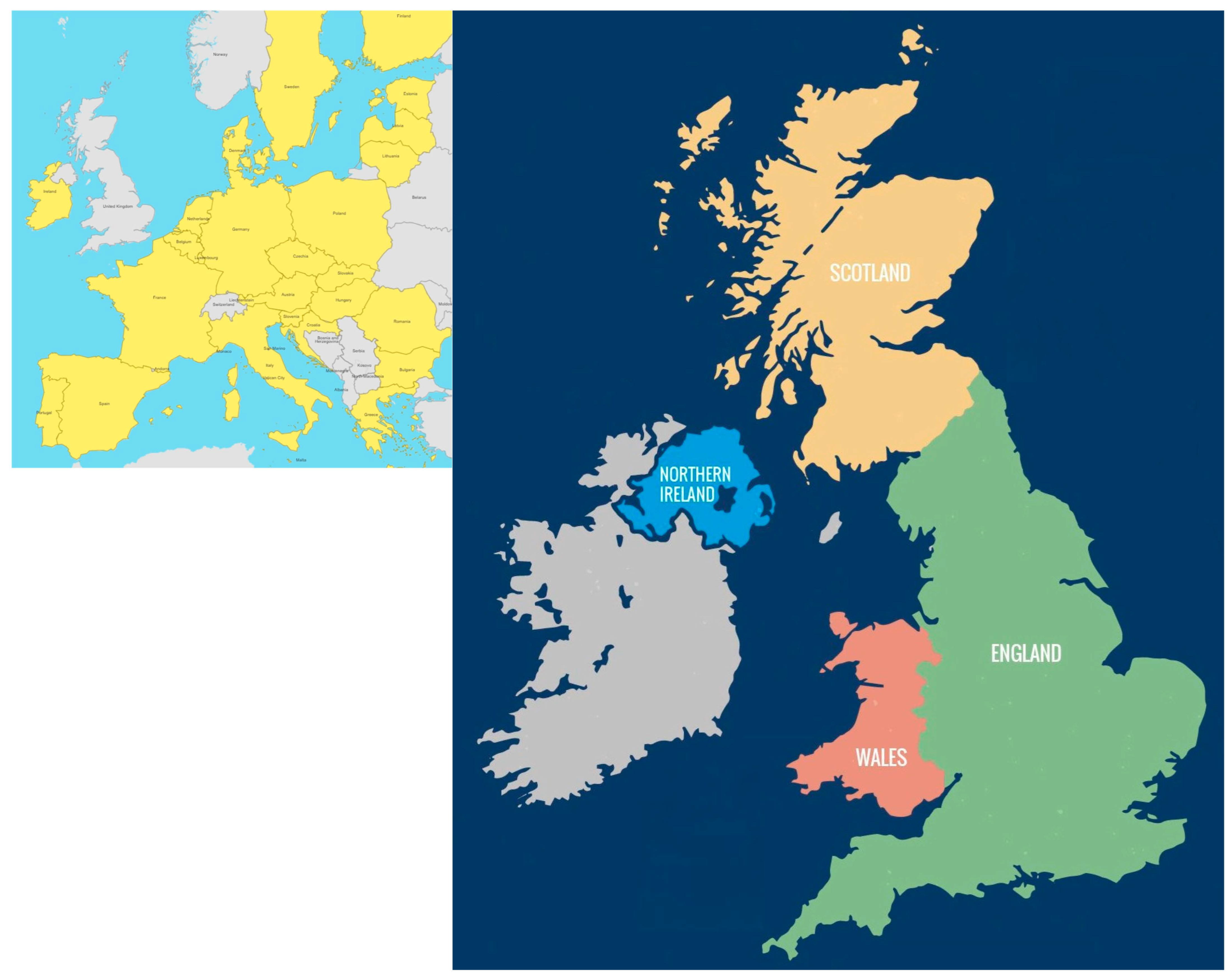
In England (Figure 1), the regulatory framework for species reintroduction is primarily governed by Natural England under existing legislation frameworks [12]. However, concerns have been raised regarding the efficiency of the licencing regime, with some suggesting that it serves more as a deterrent than an enabler and requires a more streamlined process with greater engagement [12]. Whilst being one of the most species-depauperate countries in the world [13], England has witnessed a few successful species translocation projects, such as red kite, Milvus milvus [14], beaver, Caster fiber [15], chequered skipper butterfly, Carterocephalus palaemon [16], cirl bunting, Emberiza cirlus [17], and pool frog, Pelophylax lessonae [18].
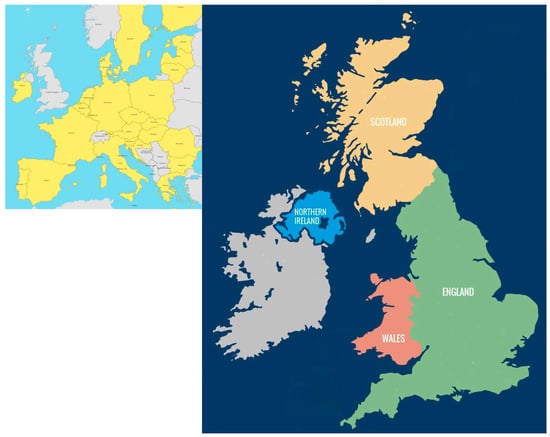
Figure 1.
Map detailing the different countries that make up the United Kingdom (UK) and a map of Europe (Source: https://european-union.europa.eu/principles-countries-history/eu-countries_en, accessed on 11 November 2024).
The Eurasian lynx, Lynx lynx, historically inhabited England [19] and can still be found across a range of habitats and regions within Eurasia, demonstrating their resilience [20,21]. Generally considered an apex predator, lynx play an important role in prey species population dynamics—especially roe deer, Capreolus capreolus, populations, its main prey [21,22,23,24]—which in turn promotes a more ecologically functional ecosystem [25]. The extirpation of lynx, and other predators, from the UK has contributed to rising deer populations, including roe deer, which has had damaging effects on UK environments, especially woodlands [20,26]. Currently, culling has been used to reduce deer numbers and mitigate their adverse impacts on woodlands across England [27]. However, with the aim of achieving both government targets and more ecologically functional ecosystems, the reintroduction of lynx has been debated in the UK [28,29,30,31,32,33]. An initial lynx reintroduction proposal was declined by the UK government for many reasons, such as ‘failure to meet IUCN Guidelines’ and ‘insufficient local support’ [34]. Previous studies have also reported general concerns, particularly among farmers and landowners, whilst also acknowledging the complexity and variability of opinions regarding lynx reintroduction to the UK [28,32,35,36,37,38]. Farmers were reported to generally oppose the reintroduction of lynx, with potential livestock losses being a main consideration [37,38]. Alternatively, in Germany it was reported that positive attitudes towards lynx reintroduction were influenced by age, education, and profession of the respondents [39]. Conversely, myth and misinformation were reported to underpin the negative attitudes of local people [21]; 68% of respondents thought lynx were harmful to livestock despite just two livestock attacks having been recorded by respondents. Furthermore, 44% stated that lynx were dangerous to humans, even though no attacks on humans had been recorded by participants [21]. More recently, a study based in Scotland (Figure 1) highlighted opposing views regarding lynx reintroduction that reflected competing environmental narratives [28], while a study focused on UK farmers reported negative attitudes overall towards lynx reintroduction [37].
Furthermore, it was important to consider potential impacts relating to tourism, as tourism can offer substantial financial benefits to communities, when managed sustainably [40] and, hence, has the ability to influence decision making [41]. It has been reported that 54% of respondents stated that the lynx were an important factor in tourists’ decision to visit the Harz Mountains in Germany [42]; thus, both positively impacting the decision making of those planning to visit, whilst also having positive economic impacts on local communities around the Harz National Park. Following the reintroduction of lynx to the Harz National Park in 2000, the lynx has been effectively used in marketing to attract visitors, featuring prominently in tourism campaigns and promotional materials [43]. Similar strategies could be employed in England. Therefore, understanding public perceptions in this regard is important from an economic perspective.
Currently, knowledge gaps exist regarding the wider human dimensions associated with the potential reintroduction of lynx into England, and the drivers or influences behind these opinions. This study aimed to expand and enhance our knowledge and understanding of the general publics’ perceptions towards a proposed lynx reintroduction in England. Specifically, we aimed to (1) identify the levels of positive support or negativity towards a lynx reintroduction into England; (2) identify differences in perceptions across society for a proposed lynx reintroduction to England; and (3) identify any primary concerns and the variance of opinions across societal groups.
2. Materials and Methods
This study explored public perceptions using an online questionnaire, consisting of a total of 19 questions. Perceptions and biases were examined using a mixed-method approach, integrating both quantitative and qualitative data types, with questions using both purposive sampling and snowball methods of distribution in the study.
JISC Online Surveys (https://www.jisc.ac.uk/online-surveys) was used to host the questionnaire due to the data security features and the ease of managing the data set. The questionnaire went live on 30 December 2023 and was closed on 20 February 2024. Snowball sampling was used via social media platforms, including Facebook, Instagram, and LinkedIn, where posts encouraged recipients to repost the survey. In parallel, purposive sampling collated the email addresses for 10 organisations representing relevant sectors of society (e.g., education, farming, healthcare, landowners, retail, tourism, veterinary, wildlife photography), from which five were randomly chosen by a random number generator to forward the questionnaire. While snowball sampling facilitated access, it introduced bias due to factors such as geographic proximity and personal relationships. Conversely, purposive sampling allowed for theoretical generalisations, but its subjective nature can pose challenges in mitigating researcher bias [44].
Both qualitative and quantitative data types have been presented in this study. Qualitative data were presented equally for all groups and levels, with text mined to provide depth and greater understanding of the qualitative data. Quantitative data, due to data set sizes being small when divided, used non-parametric tests. Spearman’s rank correlation was utilised to assess the significance of relationships between variables, while both Mann–Whitney or Kruskal–Wallis tests were applied to compare differences between data sets recorded. Chi-square tests were used to test the significance of observed values recorded against expected values. Significance levels were set at both p = 0.05 and p = 0.01 thresholds.
Ethical approval was obtained from the Institute of Science and Environments ethics committee at University of Cumbria before commencing data collection, in accordance with established ethical guidelines and standards. Following the recommendations of [45], participants provided informed consent, and were provided assurance of anonymity and the option to withdraw at any point. To safeguard the privacy and anonymity of respondents, data protection measures were implemented using JISC, which uses encryption and anonymisation techniques.
3. Results
A total of 84 responses were collected, representing a wide range of ages, locations, and employment types, which were grouped into appropriate categories (Table 1). Where individuals’ employment types were considered to be within a similar sector, they were grouped under one sector name to enable representation of a range of societal groups.

Table 1.
The ages, societal groups, and geographic locations of respondents to a questionnaire regarding the reintroduction of lynx to England conducted in 2024.
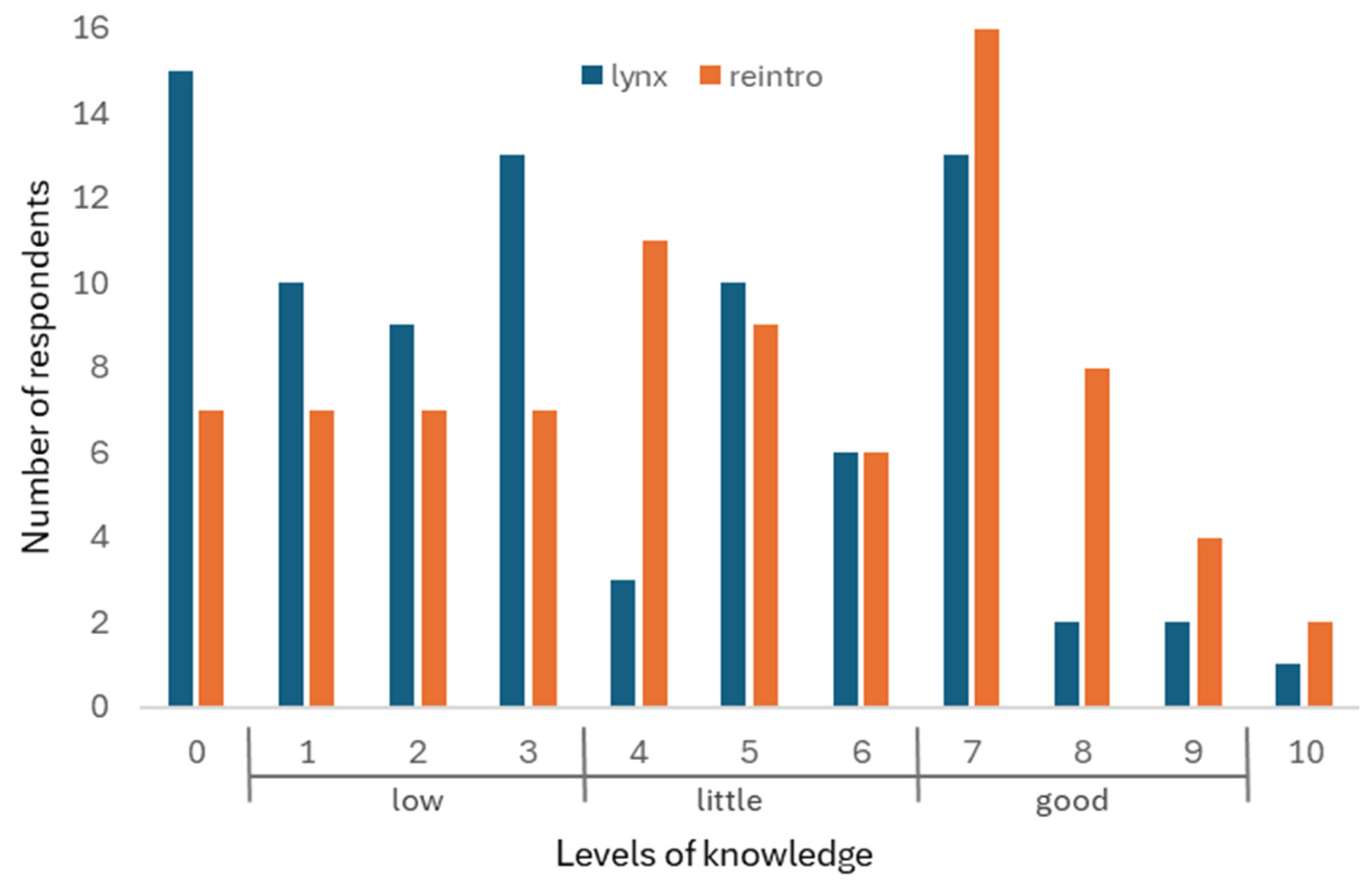
Of the 84 respondents to the questionnaire, nearly 81% thought they knew what a lynx was, while 14% did not and 5% were unsure. Respondents were asked to rate their knowledge of the Eurasian lynx (‘0’ being nothing at all to ‘10’ being expert) with ‘no knowledge’ (‘0’) being the single most common rating (n = 15, 18%), while just one (1.2%) respondent considered themselves an ‘expert’ on lynx. Knowledge levels 1 to 9 were arbitrarily grouped into threes (1,2,3 = low level of knowledge; 4,5,6 = little; 7,8,9 = good) resulting in most respondents rating themselves at a low level of knowledge on lynx (n = 32, 38%) or little knowledge (n = 19, 23%), while fewer considered themselves to have a good level of knowledge (n = 17, 20%) (Figure 2). When describing a lynx in open text, 75 (88%) respondents commonly used descriptors such as ‘cat’ (73%, n = 75) or ‘wild cat’ (28%), ‘large’/‘big’ (33%) or medium (20%), while ‘predator’ (13%) or ‘apex’ (5%) were much less used within descriptions.
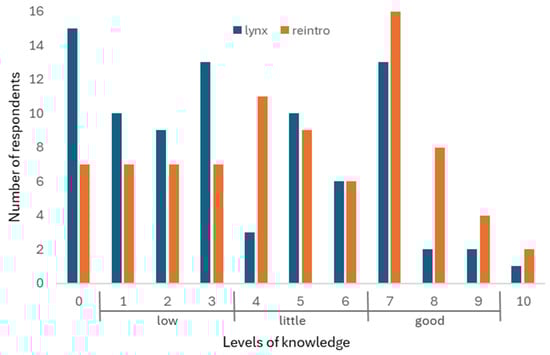
Figure 2.
The levels of knowledge people considered themselves to have on lynx (blue bars) and reintroduction (orange bars) as recorded by the 84 respondents to a lynx reintroduction to England questionnaire in 2024. The values contributing to the arbitrary grouped knowledge levels (low, little, good) have been highlighted.
Generally, respondents rated their knowledge on ‘reintroduction’ (‘0’ being nothing at all to ‘10’ being expert) higher than that for lynx (mean value for lynx knowledge being 30 while mean reintroduction knowledge was nearly 40; Figure 2). Just seven (8.3%) respondents reported ‘no knowledge’ (‘0’) while two (2.4%) respondents considered themselves ‘expert’. Most respondents considered themselves to have a good level of knowledge (rating themselves 7,8,9) on reintroduction (n = 28, 33.3%), followed by little knowledge (rating themselves 4,5,6) (n = 26, 31%), while fewer considered themselves to have a low level of knowledge (n = 21, 25%) (Figure 2). Nearly 92% (n = 77) of questionnaire respondents (n = 84) knew of reintroduction as a practice, commonly describing it using a combination of the terms such as ‘putting’/‘bring’/‘bringing back’ (n = 34, 43%), ‘releasing’/‘release’ (n = 8, 10%), or ‘establishing’ (n = 10, 13%) a ‘native’ (n = 11, 14%) species that ‘previously’/‘used to be’ (n = 20, 25%) there. However, there was no significant difference between the levels of knowledge recorded by respondents for lynx compared with reintroduction in this study (U = 37, n = 20, z = −0.95, p > 0.05).
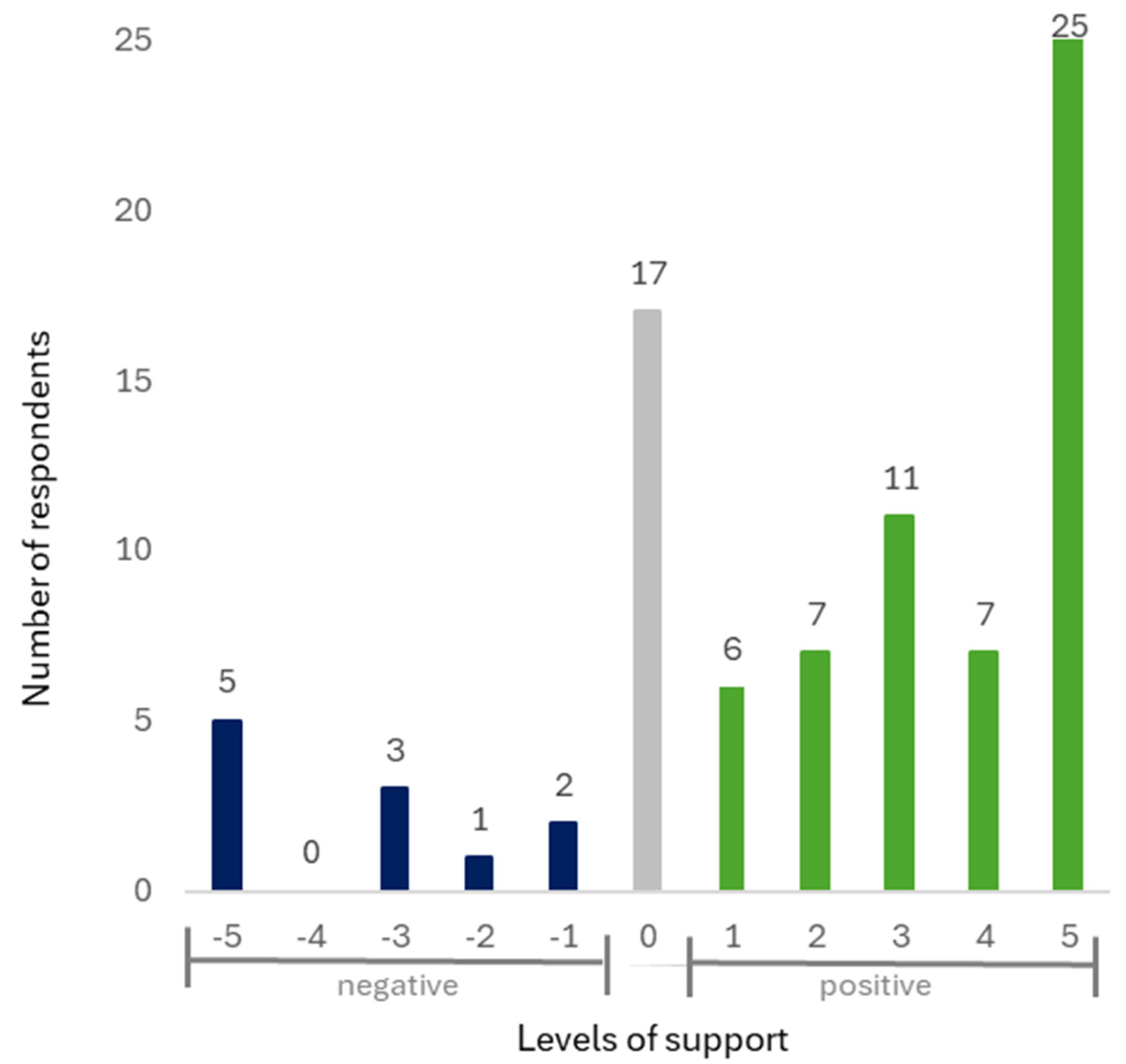
Respondents were asked to report their level of agreement or disagreement with the proposal to reintroduce the Eurasian lynx to England (Figure 3), with scoring ranging from −5 (=strongly disagree) to +5 (=strongly agree), with zero being neutral. In general, there were much greater levels of positive support (n = 56, 66.7%) for lynx being reintroduced than against the reintroduction (n = 11, 13%). There was a statistically significant difference between the levels of positive support and negative opposition regarding the reintroduction (U = 10.0, n = 10, df = 1, p = 0.008), with greater levels of positive support expressed (Figure 3).
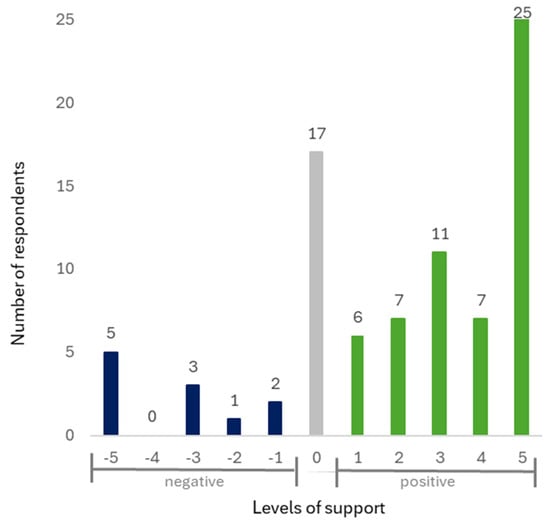
Figure 3.
Presented are the levels of positive (green bars), negative (dark blue bars), and neutral (light grey bars) support recorded by the 84 respondents for a potential lynx reintroduction to England in 2024.
Alongside the values given for individuals’ level of support, respondents provided supporting statements. The following are four example statements from each of the negative, neutral, and positive groups that typically express the justification and perceptions of those respondents. The positive and negative statements have been extracted from only the extreme values (−5 and +5) with the aim that these capture the core rationales and divergencies in views. The core themes coming from neutral statements were the need for greater information to make more informed opinions, while negative statements highlighted concerns about lynx attacks (on livestock, people, or pets), an additional predatory pressure on bird populations, and whether drivers that lead to their initial extirpation had been removed. Conversely, positive statements highlighted the need to restore a ‘natural balance’ within ecosystems and the moral imperative.
Negative oppositional statements (selected from −5’s only):
- 1.
- “Our birds and mammals are already struggling and under pressure to survive because of the way habitat has been changed by industrial farming methods. Farmers and wildlife projects are trying hard to support our current populations. Bird life is especially hard hit. I feel the Lynx as a predator is a step too far. Domestic cats are enough of a threat to bird life on top of habitat loss.”
- 2.
- “There are many farm animals in my area which would be under threat”
- 3.
- “There’s a reason they’re extinct. Livestock would end up being hunted by them. They aren’t going to select say deer just because we want them to.”
- 4.
- “I have dogs and enjoy walking and natural history photography”
Neutral statements (selected from 0’s only):
- 5.
- “I do not know enough to give a full answer.”
- 6.
- “I don’t know enough about the topic to have a strong opinion.”
- 7.
- “Don’t know enough about the consequences.”
- 8.
- “I don’t feel there’s enough information available or advertised to make an informed decision. My initial thought is that they should be reintroduced in Scotland rather than England as there is more wild territory for them to roam there.”
Positive supporting statements (selected from +5’s only):
- 9.
- “Their reintroduction will create a more natural balance in the animal world around deer and rodents, which they hunt.”
- 10.
- “To disperse Roe Deer so that their density does not damage efforts to recreate high forest. Also to balance predators such as Red Fox which have a damaging effect on other native species e.g., Curlew and Capercaillie.”
- 11.
- “I believe that we shouldn’t interfere with the ecosystem and that we should rewild.”
- 12.
- “Bringing back the lynx is righting a wrong, and would also diversify trophic networks with positive consequences for ecosystem processes (predation), ecosystem services (e.g., on timber production through natural forest regrowth), and people’s enjoyment of nature.”
Respondents were asked to identify both ‘what concerns’ and ‘what benefits’ they envisaged from a potential lynx reintroduction to England. No benefits were envisaged from a lynx reintroduction by 46% (n = 11) of those negative to the proposal compared to 11% (n = 36) of those positive to the proposal. Conversely, all (100%) negative supporters raised concerns with the proposal while 39% (n = 36) of positive supporters had no concerns. The common themes raised spanned across all levels of support. Firstly, the common benefits were ‘restoring ecological balance’ (especially regarding predation pressure on deer, rabbit and grey squirrel) and tourism income, while the common concerns were ‘livestock predation’ and ‘enough space’. However, towards the more positive end of the spectrum, points raised were more informed, with terms such as ‘meet environmental pledges’, ‘reduce road accidents caused by deer’, ‘potential to introduce a ‘landscape of fear’ approach in deer’, ‘improved understory flora in woodlands’, ‘increase sapling recruitment/forest regeneration’ and ‘top-down pressure on meso-predators (fox, Vulpes vulpes, cats, Felis catus or F. silvestris, badger, Meles meles)’ being cited, in addition to the two common themes. Example statements have been presented for those positioned at polar opposites, either −5 or +5 levels of support, and neutrally positioned respondents (Table 2).
Table 2.
Typical statements provided by respondents positioned either positively or negatively and neutrally along the levels of support for a lynx reintroduction to England in 2024.
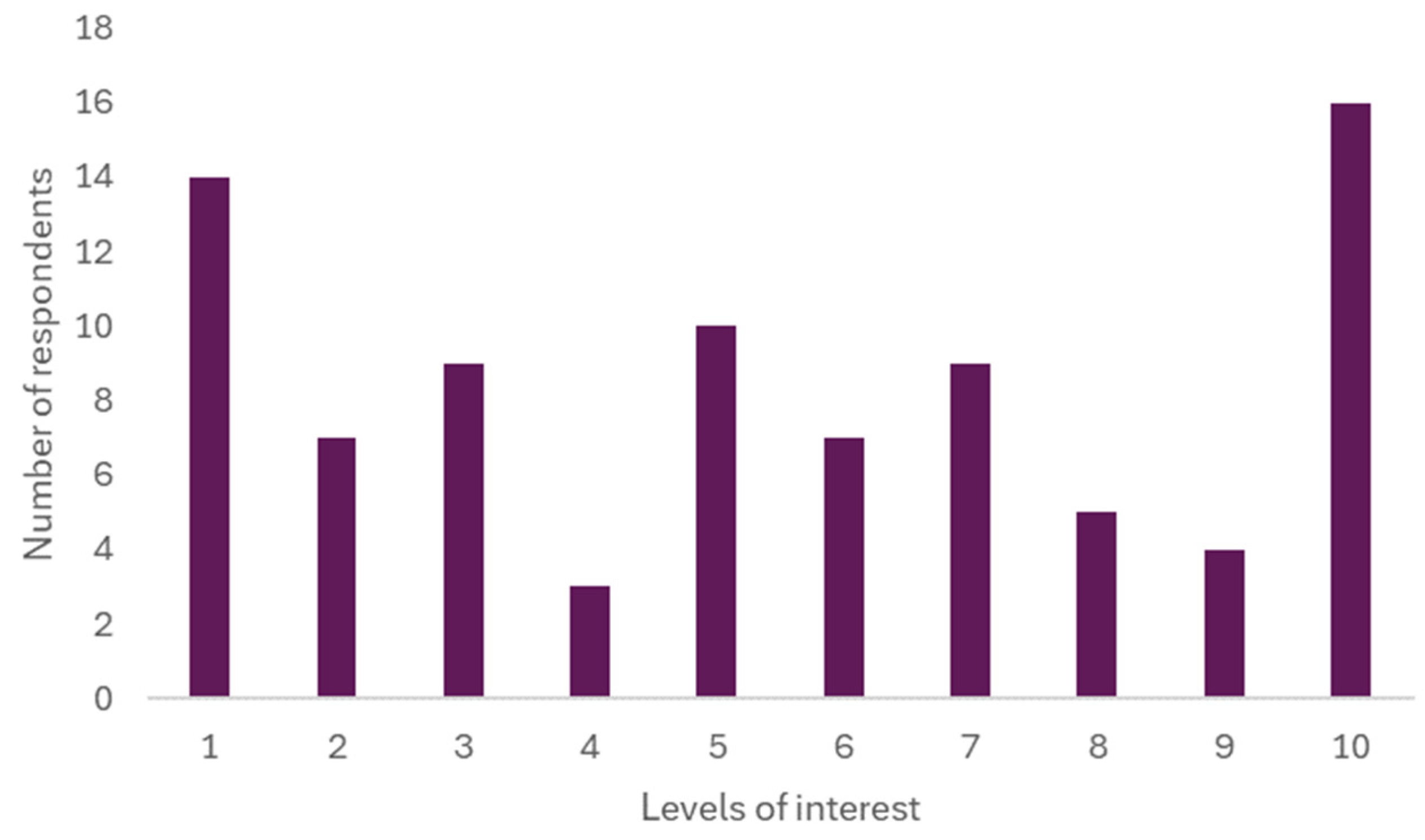
Any potential boost to tourism following a lynx reintroduction was investigated via the respondents being asked to give their opinions. Firstly, they were asked how likely or unlikely they would be to visit a lynx release site in England. The majority of respondents were ‘Very likely’ (n = 26; 31%) to visit a release site, followed by ‘Likely’ (n = 18; 21%) and ‘Neutral’ (n = 19; 23%), while ‘Unlikely’ (n = 13; 15%) and ‘Very unlikely’ (n = 8; 10%) were the lowest scoring categories. There was a significant difference between the observed versus expected wishing to visit a lynx site (ChiSq = 10.9, df = 4, p = 0.028). Respondents were asked the level of their interest in seeing lynx on a scale of 1 (not interested at all) to 10 (would contact the tourist company imminently). There was little difference between those less interested in seeing lynx (levels 1–5 totaled 43 respondents, 51%) and those who were more interested (levels 6–10 totaled 41 respondents, 49%) (Figure 4). Asked about their personal safety when visiting a site with lynx in England, of the 83 respondents to the question 68% (n = 56) were ‘Not concerned’ while one individual was ‘Very concerned’ followed by ‘Somewhat concerned’ (n = 17, 21%) and ‘Unsure’ (n = 9, 11%). There was a significant difference between the levels of concern expressed (ChiSq = 86.0, df = 3, p < 0.05).
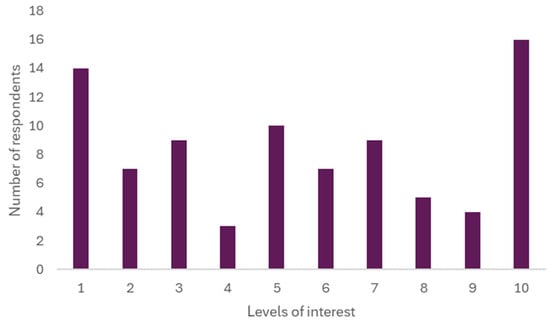
Figure 4.
Presented are the respondents’ level of interest in going to see lynx in England as recorded for the 84 respondents in 2024 (1 = not interested at all to 10 = would contact the company imminently).
Of the 84 respondents, 28 (33%) left summary statements that provided further insights into and justifications for their views. A selection of the statements ranging equally across positive support and negative attitudes towards such a reintroduction have been provided as follows in Table 3.
Table 3.
Summary statements from a range of positive and negative attitudes providing further insight and justification for their views regarding a lynx reintroduction to England in 2024.
Spearman’s rho test was used to investigate the relationships between variables for all respondents as one data set. The test results (Table 4) highlighted variables that displayed significant relationships with each other. Out of the ten bi-variable relationships, six were highly significant (at the p = 0.01 level) while one was significant (at the p = 0.05 level) (Table 4).
Table 4.
Spearman rho correlation coefficient matrix for a range of independent variables displaying significant relationships with one another. ‘*’ denotes the correlation is significant at the 0.05 level (2-tailed) while ‘**’ denotes that the correlation is highly significant at the 0.01 level (2-tailed).
Perspectives by Each Societal Group
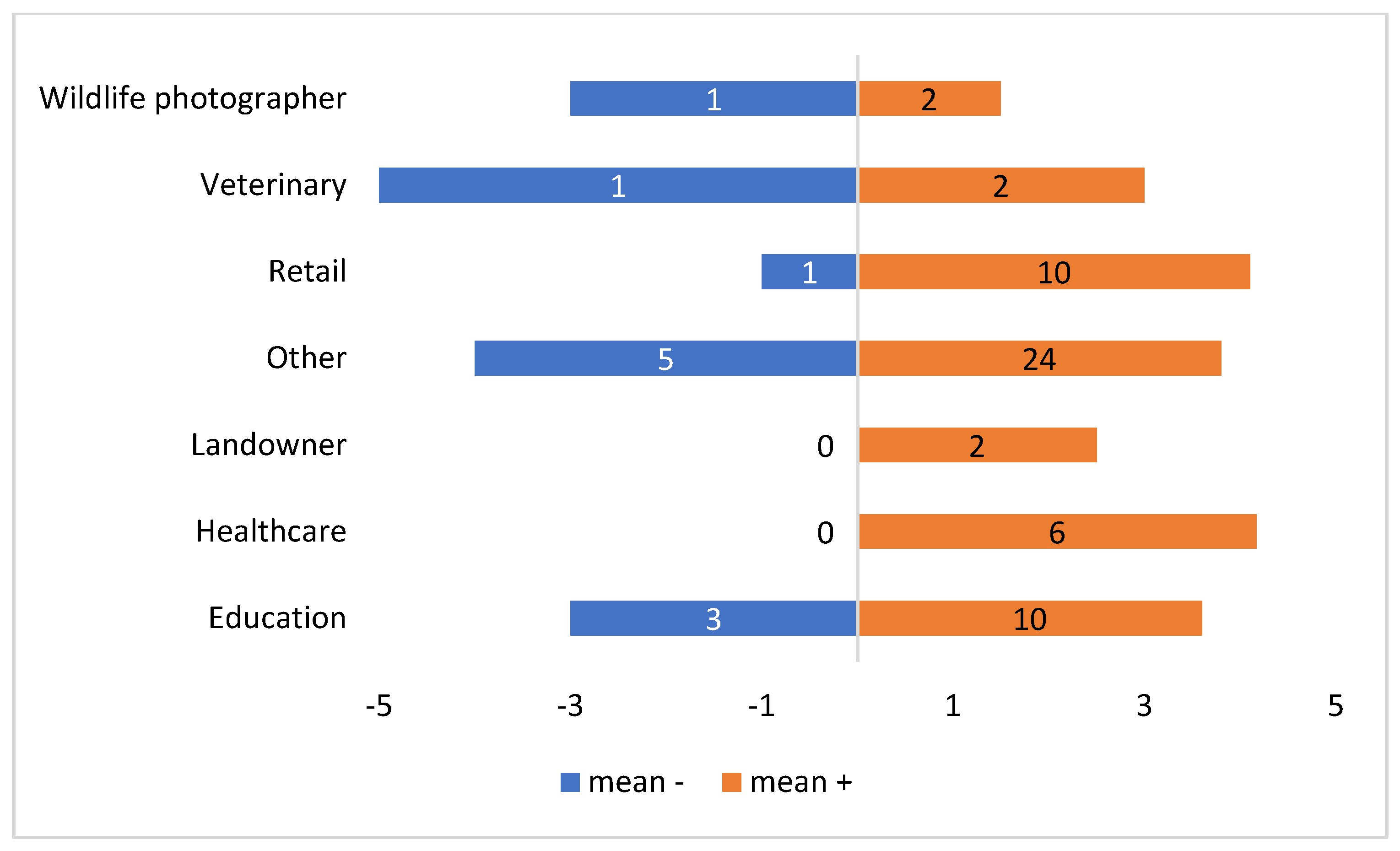
Respondents self-selected what working sector they belonged to in order to generate a range of societal groups (Table 1), with 7 sectors being developed (which included an ‘Other’ section). The majority were assigned to ‘Other’ (n = 39, 46.4%) followed by ‘Education’ (n = 17, 20.2%), ‘Retail’ (n = 13, 15.5), ‘Healthcare’ (n = 7, 8.3%), ‘Veterinary’ (3, 3.6%), ‘Wildlife photography’ (n = 3, 3.6%) and ‘Landowner’ (n = 2, 2.4%) (Table 1). The data set for the levels of support for a proposed lynx reintroduction were recalculated by societal group to identify if this highlighted any differences (Figure 5). Several groups recorded mean levels of support higher than the corresponding negative levels of support (‘Retail’, ‘Healthcare’, ‘Landowner’ and ‘Education’), while ‘Veterinary’, ‘Wildlife Photographer’, and ‘Other’ recorded higher mean levels of negative support (Figure 5); however, the corresponding ‘n’ value was just one in these cases.
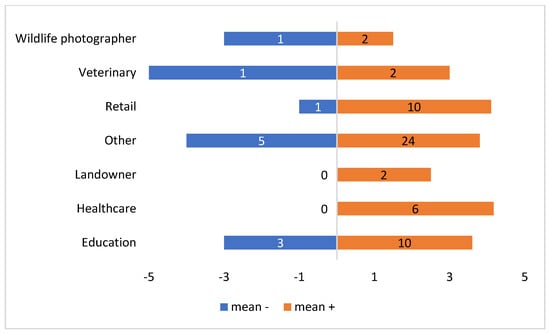
Figure 5.
The mean levels of support calculated by each societal grouping showing the levels of support recorded by the 84 respondents for a potential lynx reintroduction to England in 2024 (orange bars = positive support; blue bars = negative levels of support). The numbers within the bars represent the number of data counts contributing to the mean with zeros (0) excluded.
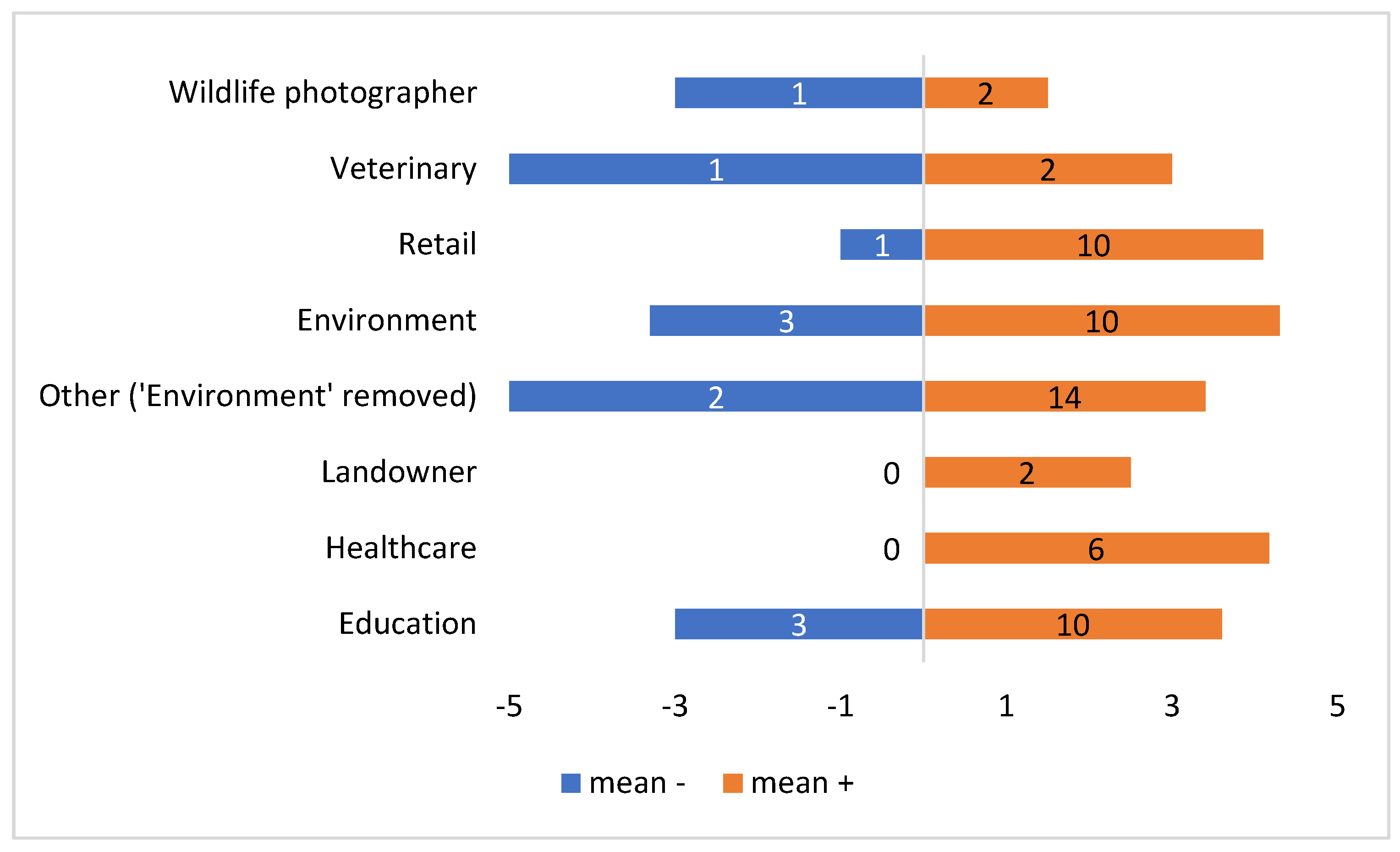
When selecting ‘Other’, respondents were asked for greater detail (i.e., job title). Using these data, within the ‘Other’ group, there were 13 individuals (33% of the 39 ‘Other’ respondents) identified who were working/involved within the ‘environment’ sector (such as ecological consultant, zoo and wildlife charity employees, conservation manager, etc.) ranging across both the UK and Europe. These individuals were removed from the ‘Other’ group to form a separate ‘Environment’ group and the data set was re-analysed (Figure 6).
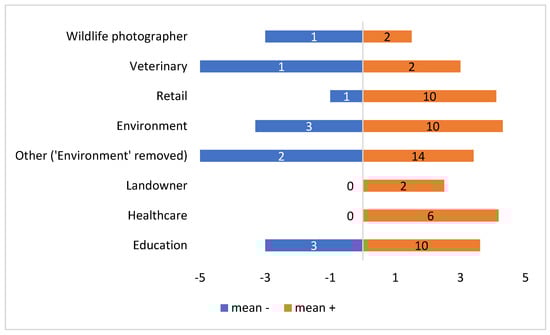
Figure 6.
The mean levels of support calculated by each societal group, with the addition of the extraction of ‘Environment’ from the ‘Other’ group, showing the levels of support recorded by the 84 respondents for a potential lynx reintroduction to England in 2024 (orange bars = positive support; blue bars = negative levels of support). The numbers within the bars represent the number of data counts contributing to the mean with zeros (0) excluded.
There were significant differences in both the number of counts recorded (U = 7.5, n = 16, z = −2.52, p < 0.05) and the mean levels of support (U = 0, n = 16, z = −3.31, p < 0.05) between positive and negative support for the reintroduction (Figure 6).
Spearman’s rho correlation test was used to re-analysis the relationships between variables between the new set of groups (Table 5). For some groups it was not possible to compute the correlation coefficients due to the data set being too small, such as the ‘Landowner’, ‘Veterinary’ and ‘Wildlife photography’ groups, and, thus, have not been presented in Table 5. In total, there were 12 highly significant (n = 7 at p < 0.01) and significant (n = 5 at p < 0.05) correlations, with all except 2 being positive relationships.
Table 5.
Spearman rho correlation coefficient matrix was performed on each societal grouping for a range of independent variables displaying significant relationships with one another. ‘*’ denotes the correlation is significant at the 0.05 level (2-tailed) while ‘**’ denotes that the correlation is highly significant at the 0.01 level (2-tailed).
Table 6 revisits the envisaged ‘Benefits’ and ‘Concerns’ using previously unpresented respondent statements separated by the group. The levels of detail within respondents’ statements varied across groups, from ‘Healthcare’ statements containing minimal text and the most use of “none” or ”unsure” (n = 3 out of 6; 50% of statements). Over 76% of respondents were able to provide statements for both ‘Benefits’ and ‘Concerns’ with any proposed lynx reintroduction (Table 6). However, across all groups and regardless of how detailed and well-articulated the statements were, common themes remained. These themes, within the benefits of lynx being reintroduced, covered controlling deer and other species (such as fox, rabbit, grey squirrel) to restore a more natural balance within ecosystems and the potential for increased income generation via tourism. Conversely, the themes within the concerns of lynx returning were mainly livestock predation leading to farmer retaliation killing lynx, not enough space/habitat, while a small number mentioned human safety.
Table 6.
Three typical statements (where possible) from within each group (either positive, negative, or neutral) spanning the levels of support for a lynx reintroduction to England in 2024.
4. Discussion
This study has collected and presented opinions from a range of ages, locations, and employment types to garner a cross-society perspective that will inform any future proposed lynx reintroduction to England. Establishing existing knowledge baselines form the logical starting point and, while no significant differences were recorded between the publics’ knowledge of lynx and reintroduction, there were general contrasting trends. For example, people self-proclaimed a greater subject knowledge of ‘reintroduction’ than ‘lynx’ as a species (Figure 2). Text descriptors further supported this suggestion, with 73% of respondents using ‘cat’ to describe lynx but just 18% used more technical terminology (e.g., 13% used ‘predator’; 5% used ‘apex’). Conversely, there were several phrases used to capture the essence of a reintroduction, such as ‘bringing back’ and similar terms (43%), ‘releasing’ (10%) a ‘native’ (14%) species that was ‘previously’ (25%) there. These data highlight an existing knowledge gap within society about the basic understanding of lynx among the majority of respondents. Such a knowledge gap permits the more vociferous and emotive opinions to dominate discussions, similar to experiences reported in other studies [21]. Furthermore, to ensure a successful reintroduction and both identify and mitigate potential negative interactions between humans and lynx, it is imperative to address such knowledge gaps. Hence, educational initiatives could be conducted first to increase public knowledge on the behaviour, including foraging and prey types, and the ecological role lynx play within the environment. By enhancing the public’s understanding, it would likely increase community support and allow better preparation for any proposed lynx reintroduction to England.
Overall, there was a much greater level of positive support for lynx being returned to England (Figure 3). However, supporting statements highlighted the two sides of predation being used within the narratives of both negative and positive supporters. Negative support statements highlighted the top-down pressure causing problems for farmers, via livestock predation, and conservationists, via predation of existing species of conservation interest, and even potential human harm. These negative statements align closely with those reported in the Macedonia-based study [21]. Conversely, positive supporters cited the benefits lynx predation could offer by restoring balance within English ecosystems, such as controlling deer populations, with benefits both for the forestry sector and a reduction in road traffic collisions with deer. Benefits for conservation, via predation on species such as red fox, that predate conservation interest species, were cited and morally the right thing having caused its initial extirpation. It is worth highlighting how non-supporters appeared more passionate/‘vocal’ in their opposition, expressing their views more extensively than positive supporters to such a project. Thus, this ‘more vociferous’ and enthusiastically delivered opposition could currently hold greater influence in the discourse surrounding the reintroduction of the lynx to England. Furthermore, within certain societal groups, such as veterinary, one might expect the group to have accurate knowledge on the lynx; however, it was observed to be lacking (Table 6). This, again, suggests individuals were often guided more by emotion or general opinion rather than a position of factual understanding, which matters greatly, as such individuals would likely be invited to give statements in any reintroduction consultation conducted by the relevant regulatory authority and their opinion would be held in high regard as ‘neutrals’. Conversely, one might expect a landowner in England to oppose such a reintroduction due to potential livestock issues. However, albeit not an active farmer, one landowner, despite only recording a weakly positive support for such a project and stating that “interactions with humans” was a concern, they also stated “…[they] would be happy to have [a lynx reintroduction project] on my land” (Respondent 67). These two cases highlight the levels of complexity involved with any societal engagement, supporting other studies findings [28,39] and the problem with coarse scale categorisations [37].
Tourism has also been cited as a potential societal benefit to follow any proposed lynx reintroduction [42,43]. Any resulting increased financial generation, following a reintroduction, could be proposed to both help financially offset any negative impacts incurred by farmers, either through a livestock loss compensation scheme or direct income generation activities, but also providing income generation benefits to the wider communities from tourist visitation. Certainly, there was much interest in seeing lynx, with 52% of respondents ‘very likely’/’likely’ to visit a release site as a tourist and just one person ‘very concerned’ about their personal safety when visiting a lynx release site area. The findings presented here draw parallels to that reported from the Harz Mountains study [42], where lynx could be leveraged as a promotional tool to attract visitors. Therefore, potentially boosting local economies by increasing tourism-related revenue and creating new business opportunities within the area. Potential increased revenue generation could form a persuasive argument to help address concerns of negative supporters, both directly as funding to compensate farmers or to fund educational activities aimed at increasing public knowledge and awareness. Reviewing the relationships between variables (Table 4) highlighted tourism’s highly significant positive relationships with both lynx and reintroduction knowledge as well as level of support for such a project. However, there was a significantly negative relationship with ‘age’, indicating that older individuals were less likely to support the idea of tourism being possible following such a project and, therefore, not seeing any potential benefits from lynx on tourism. One should acknowledge that, for some social groups like veterinary, the data set was limited and variability was high, thus affecting the results presented here, which would need improving in future studies.
Advantages were observed when reviewing data across the societal groups. For example, data on the levels of support across the groups clearly display the groups that need to be targeted for educational programmes. These include veterinary and wildlife photography groups, for example (Table 6). Also highlighted was how the mean levels of support had been highly impacted by single high scores where ’n’ values were small, such as the negative value scores for ‘Veterinary’ and ‘Other’ groups when ‘environment’ was removed. Underpinning the ‘Veterinary’ group negative value was one −5 score with the Cumbrian-based individual stating that the lynx was extirpated because of their predation threat to livestock and, potentially, humans, especially children. Similarly, the two −5 scores underpinning the ‘Other’ (without ‘environment’) group were older individuals (76 and 62 yrs old respectfully), with one viewing the lynx as curtailing them from carrying out their leisure activities (walking and photography) and the safety of their pets from predation by lynx. Similarly, the second individual considered the lynx a larger version of the domestic cat and, therefore, was mainly concerned it would have a proportionally greater impact on wild bird populations. This echoes the earlier call for educational activities to target and allay such misinformed fears. Conversely, highly supportive groups were identifiable, such as ‘Retail’, ‘Healthcare’ and ‘Environment’, which the former two groups might surprise people but could, therefore, make good allies for public engagement activities (Table 6) to help overcome social complexities and mistrust [3,5,6].
Within each societal group relationships between variables varied greatly, highlighting differences between groups (Table 5) that may have been overlooked when data were treated as one data set (Table 4). For example, the ‘Healthcare’ group did not record a single significant relationship between variables while the ‘Other’ group recorded 5 significant, three highly significant (p = 0.01 level), and two significant (p = 0.05 level) relationships. These included three significant relationships that were related to tourism; firstly, with lynx knowledge, secondly, a positive level of support, and, thirdly, a negative relationship with age. The two other relationships recorded within the ‘Other’ group were lynx knowledge with reintroduction knowledge (highly significant) plus age with level of support (negative, significant) (Table 5). Within the ‘Other’ group, age recorded all negative relationships with all other variables, whether significant or not. This possibly highlighted generational opposing differences between older and younger age groups in their attitudes to either lynx reintroduction or regarding the wider conservation aims of society. Only the ‘Environment’ group recorded a positive, highly significant, relationship between ‘level of support’ with ‘tourism interest’ possibly indicating that this group could envisage many positive benefits following a lynx reintroduction.
The array of differences presented between and within societal groups strongly echoes previous studies findings [28]. Furthermore, there was clear evidence that misinformation and myth figure strongly within some societal groups more than others, which influences and biases perceptions greatly, as reported in other studies [21]. However, the study has also presented evidence for generational differences in attitudes towards the reintroduction of contested species, such as lynx. Whether lynx was an apex predator generating a landscape fear scenario within ecosystems remains questionable [46]; however, it would provide some degree of a ‘natural’ balance within ecosystems. Potential landowner, farmer, and community income generation benefits would appear to be highly possible, given the levels of interest shown in visiting such a site, which would require both management of expectation and human footprint impacts on the ecosystem. Where these factors were well considered and managed, it would appear the UK government would be able to use this species’ reintroduction to help meet its international commitments.
5. Conclusions
This study found there was mostly positive support across society for the reintroduction of lynx to England. A highlight of the study was that ‘farmers’, contrary to general perception, were not homogenously opposed to a lynx reintroduction, with some openly positive towards the idea. Much of the negative opposition provided in statements within this study appears founded on misinformation, such as the level of danger lynx present [21]. This was particularly concerning to see in the veterinary group, as these would probably be considered an independent group by government agencies, and whose opinions and considerations would likely be weighted highly in any consultation. Hence, the study identifies areas for action, such as educational activities targeted at specific groups within society, that need conducting prior to any proposal going forward.
Author Contributions
Authors’ individual contributions are as follows: Conceptualization, A.I.C. and M.P.; methodology, A.I.C. and M.P.; validation, A.I.C. and M.P.; formal analysis, A.I.C. and M.P.; investigation, M.P.; resources, M.P.; data curation, A.I.C. and M.P.; writing—original draft preparation, A.I.C. and M.P.; writing—review and editing, A.I.C.; visualisation, A.I.C. and M.P.; supervision, A.I.C.; project administration, M.P. All authors have read and agreed to the published version of the manuscript.
Funding
This research received no external funding.
Institutional Review Board Statement
Ethical clearance for the study was approved by the Institute of Science and Environment’s ethic committee at the University of Cumbria (23-24/HSOC6100/001) on 18 October 2023.
Informed Consent Statement
Informed consent for participation was granted from all subjects involved in the study prior to their completing the e-survey.
Data Availability Statement
Data are openly unavailable due to privacy or ethical restrictions.
Acknowledgments
The authors thank the University of Cumbria for administrative and technical support during the drafting of this manuscript.
Conflicts of Interest
The authors declare no conflicts of interest.
Abbreviations
The following abbreviations are used in this manuscript:
| IUCN | International Union for Conservation of Nature |
| UNEP | United Nations Environment Programme |
| EFRA | The Environment, Food and Rural Affairs Committee |
References
- UNEP. UN Environment Programme. Available online: https://www.unep.org/ (accessed on 21 June 2024).
- Bolam, F.C.; Ahumada, J.; Akçakaya, H.R.; Brooks, T.M.; Elliott, W.; Hoban, S.; Mair, L.; Mallon, D.; McGowan, P.J.K.; Raimondo, D.; et al. Over half of threatened species require targeted recovery actions to avert human-induced extinction. Front. Ecol. Environ. 2023, 21, 64–70. [Google Scholar] [CrossRef]
- Forstchen, A.B.; Smith, C.A. The Essential Role of Human Dimensions and Stakeholder Participation in States’ Fulfillment of Public Trust Responsibilities. Hum. Dimens. Wildl. 2014, 19, 417–426. [Google Scholar] [CrossRef]
- Bath, A.J. The Role of Human Dimensions in Wildlife Resource Research in Wildlife Management. Ursus 1998, 10, 349–355. [Google Scholar]
- Mascia, M.B.; Brosius, J.P.; Dobson, T.A.; Forbes, B.C.; Horowitz, L.; McKean, M.A.; Turner, N.J. Conservation and the Social Sciences. Conserv. Biol. 2003, 17, 649–650. [Google Scholar] [CrossRef]
- Jones, M.S. Integrating the human dimensions into fish and wildlife management depends on increasing managers’ social science fluency. In Human Dimensions of Wildlife; Taylor & Francis: Oxford, NY, USA, 2024; pp. 1–8. [Google Scholar]
- IUCN. Frameworks for Biodiversity Conservation and Restoration. Available online: https://www.goldstandard.org/news/frameworks-for-biodiversity-conservation-and-restoration (accessed on 11 November 2024).
- IUCN. Guidelines for Reintroductions and Other Conservation Translocations; IUCN Species Survival Commission: Gland, Switzerland, 2013; pp. 1–36. [Google Scholar]
- Sampson, L.; Riley, J.V.; Carpenter, A.I. Applying IUCN reintroduction guidelines: An effective medium for raising public support prior to conducting a reintroduction project. J. Nat. Conserv. 2020, 58, 125914. [Google Scholar] [CrossRef]
- Thulin, C.G.; Röcklinsberg, H. Ethical Considerations for Wildlife Reintroductions and Rewilding. Front. Vet. Sci. 2020, 7, 163. [Google Scholar] [CrossRef] [PubMed]
- Marino, F.; Crowley, S.L.; Williams Foley, N.A.; McDonald, R.A.; Hodgson, D.J. The transformative potential of local stakeholder engagement in the reintroduction of a contested species. Biol. Conserv. 2024, 296, 110688. [Google Scholar] [CrossRef]
- Environment, Food and Rural Affairs Committee. Species Reintroduction: Government Response to the Committee’s Fifth Report. 2023. Available online: https://committees.parliament.uk/publications/41865/documents/207707/default/ (accessed on 3 April 2024).
- Burns, F.; Mordue, S.; al Fulaij, N.; Boersch-Supan, P.H.; Boswell, J.; Boyd, R.J.; Bradfer-Lawrence, T.; de Ornellas, P.; de Palma, A.; de Zylva, P.; et al. State of Nature 2023 Report; State of Nature Partnership: Bristol, UK, 2023. [Google Scholar]
- Carter, I.; Grice, P. The Red Kite Reintroduction Programme in England; English Nature Research Reports 2002; Natural England: London, UK, 2002; pp. 4–63. [Google Scholar]
- Pouget, D.; Gill, E.L. Advice and Recommendations for Beaver Reintroduction, Management and Licensing in England, 2nd ed.; Natural England NEER019; Natural England: York, UK, 2021. [Google Scholar]
- Bourn, N.A.D.; O’Riordan, S.; Maes, D.; Goffart, P.; Shadbolt, T.; Hordley, L.; Sainsbury, A.W.; Bulman, C.; Hoare, D.; Field, R.; et al. The history, science and preliminary results from the reintroduction of the Chequered Skipper, Carterocephalus palaemon into Rockingham Forest, England. J. Insect Conserv. 2024, 28, 1063–1078. [Google Scholar] [CrossRef]
- Collins, S.A.; Croft, S.; Jeffs, C.; Brown, S.; de Kort, S.R. Recovery of cirl bunting, Emberiza cirlus, song diversity after translocation. Conserv. Sci. Pract. 2024, 6, e13060. [Google Scholar] [CrossRef]
- Dawson, J.; Panter, C.T.; Zeisset, I. Comparisons of image-matching software when identifying pool frog (Pelophylax lessonae) individuals from a reintroduced population. Herpetol. J. 2021, 31, 53–57. [Google Scholar] [CrossRef]
- Johnson, R.; Greenwood, S. Assessing the ecological feasibility of reintroducing the Eurasian lynx (Lynx lynx) to southern Scotland, England and Wales. Biodivers. Conserv. 2020, 29, 771–797. [Google Scholar] [CrossRef]
- Hetherington, D.A.; Lord, T.; Jacobi, R.M. New evidence for the occurrence of Eurasian lynx (Lynx lynx) in medieval Britain. J. Quat. Sci. 2006, 21, 3–8. [Google Scholar] [CrossRef]
- Lescureux, N.; Linnell, J.D.C.; Mustafa, S.; Melovski, D.; Stojanov, A.; Ivanov, G.; Vasko Avukatov, V.; von Arx, M.; Breitenmoser, U. Fear of the unknown: Local knowledge and perceptions of the Eurasian lynx Lynx lynx in western Macedonia. Oryx 2011, 45, 600–607. [Google Scholar] [CrossRef]
- Myslajek, R.W.; Stachyra, P.; Figura, M.; Nowak, S. Food habits of the Eurasian lynx Lynx lynx in southeast Poland. J. Vertebr. Biol. 2021, 71, 1–7. [Google Scholar] [CrossRef]
- Odden, J.; Linnell, J.D.C.; Andersen, R. Diet of Eurasian lynx, Lynx lynx, in the boreal forest of southeastern Norway: The relative importance of livestock and hares at low roe deer density. Eur. J. Wildl. Res. 2006, 52, 237–244. [Google Scholar] [CrossRef]
- Andrén, H.; Liberg, O. Large impact of Eurasian lynx predation on roe deer population dynamics. PLoS ONE 2015, 10, e0120570. [Google Scholar] [CrossRef]
- Ripple, W.J.; Beschta, R.L. Wolf reintroduction, predation risk, and cottonwood recovery in Yellowstone National Park. For. Ecol. Manag. 2003, 184, 299–313. [Google Scholar] [CrossRef]
- Kay, S. Factors affecting severity of deer browsing damage within coppiced woodlands in the south of England. Biol. Conserv. 1993, 63, 217–222. [Google Scholar] [CrossRef]
- Fattorini, N.; Lovari, S.; Watson, P.; Putman, R. The scale-dependent effectiveness of wildlife management: A case study on British deer. J. Environ. Manag. 2020, 276, 111303. [Google Scholar] [CrossRef]
- Bavin, D.; MacPherson, J.; Crowley, S.L.; McDonald, R.A. Stakeholder perspectives on the prospect of lynx Lynx lynx reintroduction in Scotland. People Nat. 2023, 5, 871–1046. [Google Scholar] [CrossRef]
- Wilson, C.J. Could we live with reintroduced large carnivores in the UK? Mammal Rev. 2004, 34, 211–232. [Google Scholar] [CrossRef]
- Hetherington, D.A.; Miller, D.R.; Macleod, C.D.; Gorman, M.L. A potential habitat network for the Eurasian Lynx in Scotland. Mammal Rev. 2008, 38, 285–303. [Google Scholar] [CrossRef]
- Milner, J.; Irvine, J. The Potential for Reintroduction of Eurasian Lynx to Great Britain: A Summary of the Evidence; British Deer Society Commissioned Report 2015; The British Deer Society: Salisbury, UK, 2015; pp. 1–33. [Google Scholar]
- Lipscombe, S.; White, C.; Eagle, A.; van Maanen, E. A community divided: Local perspectives on the reintroduction of Eurasian lynx (Lynx lynx) to the UK. In Large Carnivore Conservation and Management, 1st ed.; Hovardas, T., Ed.; Routledge: London, UK, 2018. [Google Scholar]
- Ovenden, T.S.; Palmer, S.C.F.; Justin, M.J.; Travis, J.M.J.; Healey, J.R. Improving reintroduction success in large carnivores through individual-based modelling: How to reintroduce Eurasian lynx (Lynx lynx) to Scotland. Biol. Conserv. 2019, 234, 140–153. [Google Scholar] [CrossRef]
- Gove, M. Letter from UK Secretary of State for Environment, Food and Rural Affairs to Dr. Paul O’Donoghue, 30 November 2018; pp. 1–2. Available online: https://assets.publishing.service.gov.uk/media/5f19460c3a6f40727f97b781/letter-from-sos-to-lynx-uktrust-181203.pdf (accessed on 3 April 2024).
- Smith, D.; O’Donoghue, P.; Convery, I.; Eagle, A.; Piper, S.; White, C.; van Maanen, E. Application to Natural England for the Trial Reintroduction of Lynx to England; Lynx UK Trust/Clifford Chance/University of Cumbria 2015. pp. 1–68. Available online: https://insight.cumbria.ac.uk/id/eprint/3189/1/EngLynxConsult.pdf (accessed on 3 April 2024).
- Hawkins, S.A.; Brady, D.; Mayhew, M.; Smith, D.; Lipscombe, S.; White, C.; Eagle, A.; Convery, I. Community perspectives on the reintroduction of Eurasian lynx (Lynx lynx) to the UK. Restor. Ecol. 2020, 28, 1408–1418. [Google Scholar] [CrossRef]
- Tan, C.K.W.; Shepherd-Cross, J.; Jacobsen, K.S. Farmers’ attitudes and potential culling behavior on the reintroduction of lynx to the UK. Eur. J. Wildl. Res. 2024, 70, 3. [Google Scholar] [CrossRef]
- Wilson, S.; Campera, M. The Perspectives of Key Stakeholders on the Reintroduction of Apex Predators to the United Kingdom. Ecologies 2024, 5, 52–67. [Google Scholar] [CrossRef]
- Whiley, F.L.; Tzanopoulos, J. Public acceptance of Eurasian lynx (Lynx lynx) in Germany. J. Nat. Conserv. 2024, 77, 126535. [Google Scholar] [CrossRef]
- Carpenter, A.I.; Andreone, F. Valorisation of Madagascar’s Wildlife Trade and Wildlife Tourism: What Are the Conservation Benefits? Conservation 2023, 3, 509–522. [Google Scholar] [CrossRef]
- Weaver, D.B. Ecotourism as mass tourism: Contradiction or reality? Cornell Hotel Restaur. Adm. Q. 2001, 42, 104–112. [Google Scholar] [CrossRef]
- White, C.; Almond, M.; Dalton, A.; Eves, C.; Fessey, M.; Heaver, M.; Hyatt, E.; Rowcroft, P.; Waters, J. The Economic Impact of Lynx in the Harz Mountains, AECOM. 2016, pp. 1–7. Available online: https://www.northumberlandnationalpark.org.uk/wp-content/uploads/2018/04/Lynx-harz-mountains-AECOM.pdf (accessed on 3 April 2024).
- Hetherington, D. The lynx in Britain’s past, present and future. ECOS-Br. Assoc. Nat. Conserv. 2006, 27, 66–74. [Google Scholar]
- Sharma, G. Pros and cons of different sampling techniques. Int. J. Appl. Res. 2017, 3, 749–752. [Google Scholar]
- Regmi, P.R.; Waithake, E.; Paudyal, A.; Sikhada, P.; van Teijilingen, E. Guide to the design and application of online questionnaire surveys. Nepal J. Epidemiol. 2017, 6, 640–644. [Google Scholar] [CrossRef] [PubMed]
- Bavin, D. Personal Communications, 2024. Email correspondence.
Disclaimer/Publisher’s Note: The statements, opinions and data contained in all publications are solely those of the individual author(s) and contributor(s) and not of MDPI and/or the editor(s). MDPI and/or the editor(s) disclaim responsibility for any injury to people or property resulting from any ideas, methods, instructions or products referred to in the content. |
© 2025 by the authors. Licensee MDPI, Basel, Switzerland. This article is an open access article distributed under the terms and conditions of the Creative Commons Attribution (CC BY) license (https://creativecommons.org/licenses/by/4.0/).