


Abstract
In this paper, a few mathematical bases are given firstly. Then, the step thinness τp of primes is given as τp = Lo1 = P1ΠP/(P−1) for the inner character, having an lnX logarithmic outer character. The “best estimation and mutual exchange equivalent” are easily obtained as Lo1 = P1Π P/(P−1)~τp~lnX(ε). This is the principal contradiction, and P is the main aspect. Then, the sparsity τt of twin primes is defined as Lo2 = τt = P2 Π P/(P−2) = C2Lo1² = C2ln²X(C2 = 0.75739006). Then, the sparsity τg of the Goldbach pair and τb of both the twin and Goldbach pairs are obtained as Lo3 = τg = {2Lo1, Lo1², 2C2Lo1²} and Lo4 = τb =4.7Lo1³ (or they are omitted). Lastly, all conjectures can be proved with the same frame formula, N = X/LOK. The twin prime conjecture and Goldbach conjecture low bound are clearly and accurately proved with T = X/(C2Lo1²) = 1.32032X/ln²X and Gd = X/(2C2Lo1²) = 0.66016X/ln²X. Using Lo1 + C2 to decrypt the Selberg formula C(ω) = 2C(N) obtains the totally same results.
1. Introduction
Goldbach’s conjecture is a worldwide
problem, which has caused many mathematicians to study it. This paper studies
the top design and technical route to solve pure primes, twin prime pairs, and
Goldbach prime pairs, i.e., all PPP, or prime property problems (Figure 1).
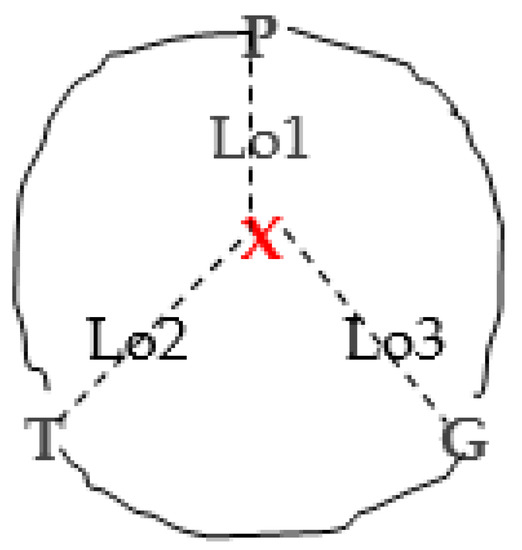
Figure 1.
Top design figure of solving Goldbach’s conjecture.
Frame formula expression: {P,T,G}
= X/Lok [1].
G: Goldbach conjecture (being wavy).
In this top design diagram, using Lo1, Lo2,
and Lo3, all {P,T,G} = X/Lok expressions can be
obtained.
(Z = PR ≤ √X is
the necessary or critical point, and X/2 is the sufficient point for the
sieve principle).
2. Pure Primes (P)
According to filter-sifter (sieve)
principle, Lo1 = P1 Π P/(P−1) is defined for pure prime numbers.
P1 = 1, P2 = 2, P3 = 3, P4 = 5, and P5 = 7…;
Z = PR ≤ √X is the necessary or critical point for the sieve principle.
The function Π P/(P−1) is called the Euler
function or Riemann function, which previous mathematicians proved before. Here
is a newer and more primary proof as follows:
X’s factorial: ΠX = 1*2*3*4*5*6…*X =
X!
Prime’s factorial: ΠP = 2*3*5*7…*P = P!
Composition’s factorial: ΠC = 4*6*8*9…*C =C!
Ratio product: ΠX/(X−1) = 2/1 * 3/2 * 4/3 * 5/4…X/(X−1) = X
=(X/(X−1))! = Π(P/(P−1)) * (C/(C−1)) = (P/(P−1))! * (C/(C−1))! = X.
The geometric average must be √X.
Let Lo1 = Π(P/(P−1)) and Loc = Π(C/(C−1)):
X = 6 15/4 = 3.75 24/15 = 1.6.
10 4.375 2.2857
47 7.209592623 > 6.519092349
52 < 7.212612812
53 7.348238615 >
54 < 7.348699846; the later Loc is greater.
Geometric average √X must not be changed.
Hence, Lo1 << √X << Loc; √X is the watershed, and Lo1 is the sparsity function of the sieve principle.
∵ √X is the watershed.
∴ Np = X/Lo1 >> √X; this means prime numbers must be infinite ∞.
Lo1 = ΠP/(P−1) ≈ τp ≈ lnX, i.e., the inner character and outer character are equivalent. The authors of paper [2], with results of (10.16)~(10.24), proved this equation, but the inner character was not used.
The double-face prime number theorem is proved.
QED.
3. Twin Pairs (T)
And similarly [3],
Lo2 = P2 Π P/(P−2) = C2Lo1² = C2ln²X(C2 = 0.75739006) identifies twin prime pairs.
The step constant C2 (twin bridge) is obtained from Lo2 = P2 Π P/(P−2) = C2Lo1².
C2 = 1/2 Π(P−1)²/(P(P−2)) = 0.75739006…
4. Gold Pairs (G)
Also similarly [4],
Lo3 = {2Lo1, Lo1², 2C2Lo1²} for the Goldbach conjecture pairs of up, average, and down.
So, {Gu, Ga, Gd} = X/Lo3 can be obtained.
5. All {PP, TP, GP} Formal Proofs
Frame formula expression: {P,T,G}= X/Lok; Lo1 = P1 Π P/(P−1)~τp~lnX(ε).
Independent proofs:
5.1. ∵ Lo1= ΠP/(P−1) ≈ τp ≈ lnX(ε).
∴ Np = X/Lo1 (X is out bound, Z = PR ≤ √X is the necessary point, and P is the filter variable.)
5.2. ∵ Lo2 = 2ΠP/(P−2) = C2Lo1².
∴ T =X/Lo2 = X/C2 Lo1² = 1.32032X/Lo1².
5.3. ∵ Lo3 = 2*2ΠP/(P−(1 + X%P! = 0)) = {2Lo1, Lo1², 2C2Lo1²} wavy.
∴ G = {Gu, Ga, Gd} = {Np/2, X/Lo1², 0.66016 X/Lo1²} wavy.
5.4. ∵ Lo4 = 4.7Lo1³.
∴ B = X/Lo4 = X/(4.7ln³X), (reasoning process omitted).
QED.
Decryption proofs: (using Lo1 + C2 to decrypt the Selberg formula C(ω) = 2C(N) as follows:)
∵ C(K) = LOK is for the denominator in the GES method, ∴ N = X/LOK, while
∵ C(ω) = 2C(N) is for the numerator in the SES method, ∴ N = C(ω)|2C(N) · X/ln²X. Therefore,
here Lo1~τp~lnX; (equivalent mutual exchange).
∴ Lo1 = lnX ∴ decrypt: C(ω) = 2C(N) = (|)Lo1/(!)C2.
Np = X/Lo1 Np = (|)C(ω) = Lo1*X/Lo1² = X/Lo1.
T = X/Lo2 = X/C2Lo1² = 1.32032X/Lo1² T = (!)C(ω) = X/C2Lo1² = X/C2Lo1² = 1.32032X/Lo1².
G = X/Lo3 = X/{2Lo1, Lo1², 2C2 Lo1²} = {Gu = Np/2, Ga = X/Lo1², and Gd = 0.66016 X/Lo1²}
while 3E: E1 = {P!}, E2 = {others}, and E3 = {2^n} to meet.
Lo4 = 4.7Lo1³ (reasoning process omitted).
Horizontal compression ratio Np/T equals vertical wavy ratio Gu/Gd = C2Lo1.
Decrypt QED.
6. Conclusions
Due to all the above, all {PP, TP, GP} can be obtained using {P,T,G} = X/Lok, and in using Lo1 + C2, all PPP{PP,TP,GP}, i.e., {P,T,G} i.e., pure primes, twin pairs, and Goldbach pairs, are totally proved and decrypted. So, all of the prime problems, including the Goldbach conjecture, are totally solved with Gd = 0.66016 X/Lo1². This is the fundamental conclusion of this paper [4].
Funding
This research received no external funding.
Institutional Review Board Statement
Not applicable.
Informed Consent Statement
Not applicable.
Data Availability Statement
No new data generated.
Acknowledgments
Many thanks are given to my teachers, Huirong Peng in Chengdu Electronic Engineering College, Rongchun Zhao and Huacan He in North West Plane University, Zhiyun Shen in Southwest Jitong University, and Zhenting Hou in Central South University, and to supervisors Deb and Paul in Memory University of Newfoundland, Canada. Special thanks to Zhicheng Chen for his great help with this paper.
Conflicts of Interest
The author declares no conflict of interest.
References
- Pang, C.; Pan, C. Goldbach Conjecture; Science Press: Beijing, China, 2011. [Google Scholar]
- Chen, J.; Shao, P. Goldbach Conjecture; Liaoning Press: Shenyang, China, 1987. [Google Scholar]
- Wang, Y. Mathematics Dictionary; Science Press: Beijing, China, 2010. [Google Scholar]
- Hua, L. An Introduction to the Theory of Numbers; Science Press: Beijing, China, 1975. [Google Scholar]
Disclaimer/Publisher’s Note: The statements, opinions and data contained in all publications are solely those of the individual author(s) and contributor(s) and not of MDPI and/or the editor(s). MDPI and/or the editor(s) disclaim responsibility for any injury to people or property resulting from any ideas, methods, instructions or products referred to in the content. |
© 2023 by the author. Licensee MDPI, Basel, Switzerland. This article is an open access article distributed under the terms and conditions of the Creative Commons Attribution (CC BY) license (https://creativecommons.org/licenses/by/4.0/).