


Abstract
Background: The increasing complexity of healthcare systems and the emphasis placed on patient safety have highlighted the crucial role of non-technical skills (NTS). Simulation-based training (SBT) has been widely adopted to acquire these skills. Objective: To evaluate the impact of simulation on the development of non-technical skills in health sciences students. Methods: This systematic review was conducted in accordance with the PRISMA 2020 guidelines and prospectively registered in PROSPERO (CRD420251066518). MEDLINE, Scopus, and Web of Science were searched from their inception to July 2025. Results: Twelve studies met the inclusion criteria. Most used quasi-experimental, before-and-after study designs and relied primarily on self-reported measures. The majority of results were classified at Kirkpatrick level 2a (attitude changes). Three studies reached level 2b, demonstrating improvements in objectively observed teamwork and communication behaviors. MERSQI scores ranged from 6.5 to 17, indicating variable methodological quality. No studies assessed transfer to clinical practice (level 3) or patient-level outcomes (level 4). Conclusions: Simulation-based training appears effective in improving self-reported non-technical skills and, to a lesser extent, objectively observed teamwork behaviors among health sciences students. However, the predominance of lower-level outcomes and methodological heterogeneity limit the strength of the evidence. Rigorous longitudinal studies evaluating higher-level outcomes are needed.
1. Introduction
Over the past decades, healthcare systems have become increasingly complex, requiring health professionals to master not only technical procedures but also a range of non-technical skills, including communication, teamwork, leadership, decision-making, and situational awareness [1]. These competencies are essential for ensuring safe and effective clinical practice. Evidence from patient safety research has demonstrated that failures in non-technical skills contribute substantially to adverse events in healthcare settings [1]. Consequently, international educational frameworks increasingly emphasize the integration of non-technical competencies into health professions training programs [2]. In response to these educational needs, simulation-based education (SBE) has emerged as a widely adopted pedagogical approach in health sciences education. Simulation enables learners to engage in realistic clinical scenarios within a safe learning environment where errors can occur without harming patients. Through structured scenarios, deliberate practice, and guided debriefing, simulation provides opportunities to develop both technical and non-technical competencies while promoting experiential learning and reflective practice [3,4,5,6].
In recent years, the global demand for evidence-based approaches to the development of interprofessional competencies has significantly increased. At the same time, advances in simulation technologies, including high-fidelity simulation, virtual reality, and online simulation platforms, have expanded the possibilities for training non-technical skills in health sciences education.
A growing body of literature has explored the effectiveness of simulation-based education in improving non-technical skills among health sciences students. Previous studies have reported improvements in communication, teamwork, and leadership behaviors following simulation-based training. Simulation modalities vary considerably and may include high-fidelity manikin simulation, standardized patient encounters, interprofessional simulation scenarios, and virtual or online simulation environments. These approaches aim to reproduce the complexity of clinical practice and foster collaborative learning among future healthcare professionals [6,7].
Despite the increasing adoption of simulation-based education in health professions curricula, the current evidence remains heterogeneous in terms of study designs, assessment tools, and Judging criteria. Many studies rely primarily on self-reported perceptions or attitudes rather than objective behavioral assessments. Furthermore, the extent to which simulation-based training leads to observable improvements in non-technical skills remains unclear, particularly when considering higher-level educational outcomes such as transfer to clinical practice [6].
Therefore, a comprehensive synthesis of the available evidence is necessary to better understand the impact of simulation-based education on the development of non-technical skills among health sciences students. The objective of this systematic review was to evaluate the effectiveness of simulation-based education in improving non-technical skills (such as communication, teamwork, and leadership) among health sciences students.
2. Materials and Methods
Study type
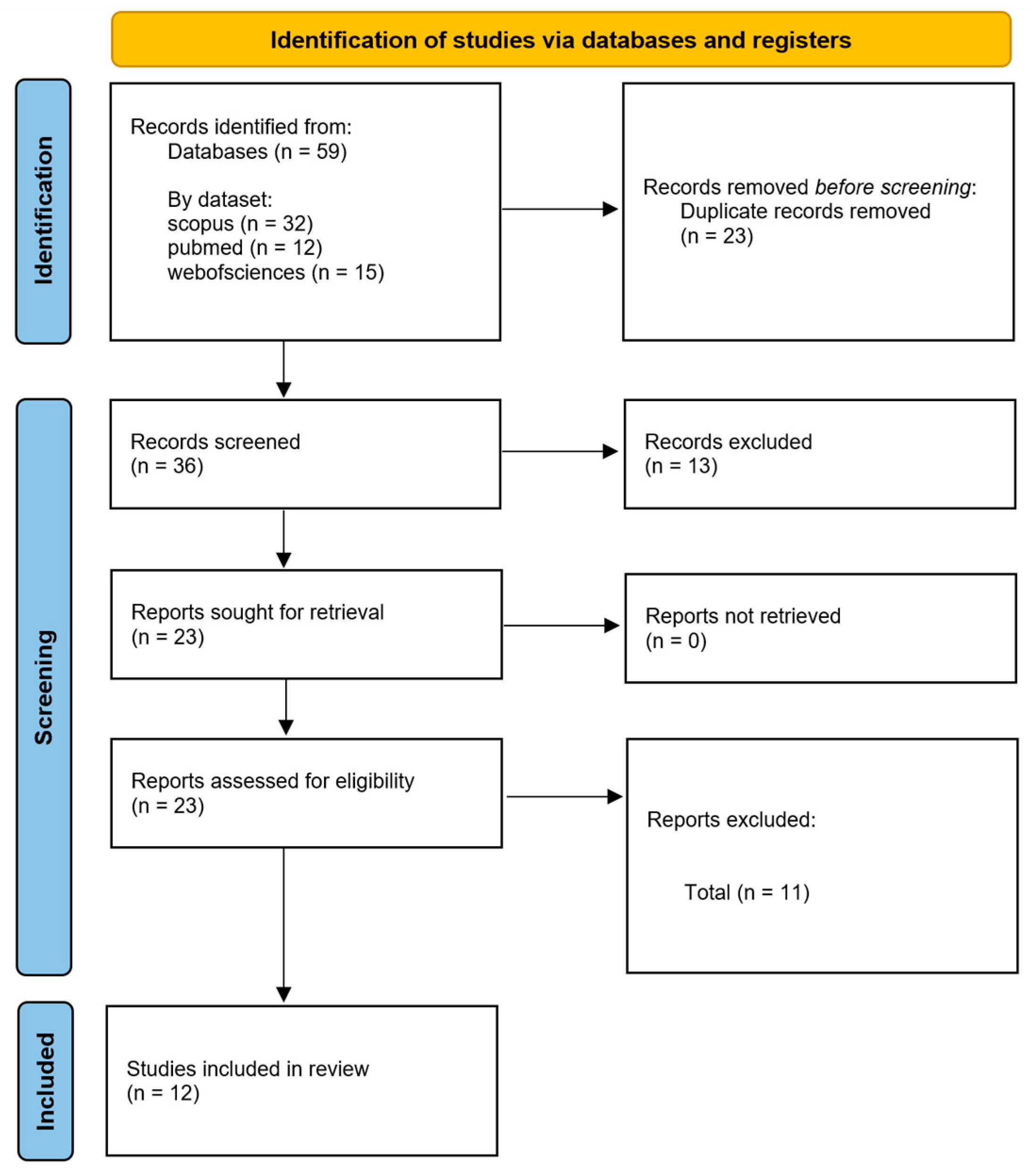
This study is a systematic review with narrative synthesis, conducted in accordance with the PRISMA 2020 recommendations [8] (Figure 1).
Figure 1.
Prisma flow.
The review protocol was prospectively registered in the PROSPERO database (registration number: CRD420251066518).
The objective of this review was to evaluate the effect of simulation methods on the development of Non-Technical Skills in health sciences students.
Search strategy
A systematic and exhaustive search was conducted in the MEDLINE (via PubMed), Scopus, and Web of Science databases, without geographical restrictions, in accordance with the PRISMA 2020 recommendations [8] (Figure 1).
The search strategies combined free keywords and controlled MeSH descriptors related to educational simulation (e.g., simulation, virtual reality, role-playing, manikin training) and Non-Technical Skills (e.g., Non-Technical Skills, communication, teamwork, leadership, emotional intelligence, decision-making). The terms were combined using the Boolean operators AND and OR according to the following equation: ((“simulation”) OR (“virtual reality”) OR (“role-playing”) OR (manikin AND training)) AND ((“Non-Technical Skills”) OR (“communication”) OR (“teamwork”) OR (“leadership”) OR (“empathy”) OR (“decision-making”)) AND (“health sciences students”).
The search focused on articles published in English and French up to July 2025. The reference lists of the included studies were also manually reviewed to identify any additional relevant studies.
Eligibility criteria
Population
Studies involving students enrolled in health science programs (medicine, nursing, pharmacy, physical therapy, and other paramedical disciplines) were eligible.
Intervention
The interventions studied involved the use of educational simulation methods, including high- or low-fidelity simulation, virtual reality, role-playing, and standardized patients.
Comparators
Comparators included traditional teaching, other active learning methods, or no intervention.
Outcome eligibility criteria
The review focused on studies assessing the development or improvement of Non-Technical Skills, such as communication, leadership, empathy, problem solving, stress management, and other cross-functional skills.
Types of studies included
Experimental studies, randomized controlled trials, quasi-experimental studies, before-and-after studies, and mixed studies with a usable quantitative component were included.
Exclusion criteria
Purely qualitative studies, studies that did not measure Non-Technical Skills, protocols, letters to the editor, and studies outside the field of health sciences were excluded.
Study selection and data extraction
Study selection was carried out in two stages: screening of titles and abstracts, and full-text reading of potentially eligible articles.
This procedure was carried out independently by two evaluators. Data were extracted using a standardized form, including the title, authors, year of publication, country, type of study, sample size, type of simulation, duration and frequency of interventions, tools for measuring non-technical skills, and main results.
Disagreements between reviewers were resolved by consensus or, in cases of persistent disagreement, by the intervention of a third reviewer.
Methodological evaluation
The methodological quality of the included studies was assessed using the Medical Education Research Study Quality Instrument (MERSQI) [9], which assigns a score to six domains on a scale of 0 to 3 (maximum score = 18), a tool specifically developed for evaluating medical education studies. The MERSQI assesses six methodological dimensions: study design, sampling, type of data, validity of instruments, statistical analyses, and presentation of results (Table 1).
Table 1.
Methodological quality of included studies (MERSQI domain scores and total scores).
When studies partially met the criteria for a given domain, intermediate scores (e.g., 0.5 or 1.5 points) were assigned.
Two independent evaluators conducted separate assessments of methodological quality. Inter-rater reliability was estimated using the intraclass correlation coefficient (ICC), calculated according to a two-way random effects model (ICC(2,1)), based on absolute agreement and single measures (Table 1).
The interpretation of ICC values followed the thresholds proposed by Koo and Li (2016): <0.50 (low), 0.50–0.75 (moderate), 0.75–0.90 (good), and > 0.90 (excellent) [22].
The certainty of evidence was judged qualitatively based on study design, methodological quality (MERSQI scores), and the level of outcome assessment according to the Kirkpatrick model. Given the absence of meta-analysis and the predominance of non-randomized studies, certainty ratings were expressed descriptively as very low, low, or moderate (Table 1).
3. Results
3.1. Study Selection and General Characteristics
The 12 included studies were conducted across diverse geographical settings, including the United States, Canada, Spain, Türkiye, and Saudi Arabia [10,11,12,13,14,15,16,17,18,19,20,21].
Across the included studies, a range of methodological designs was identified. Most studies employed quasi-experimental or pre–post designs [10,15,16,18,20], while others used observational or program evaluation approaches [13,14,17]. One study applied a randomized quasi-experimental design [18], and one study used a cross-sectional survey methodology [19] (Table 2).
Table 2.
Characteristics of the studies included in the systematic review.
The sample sizes varied substantially across studies, ranging from small pilot samples of approximately 20 participants to large educational cohorts exceeding 500 students [11,13,17]. Participants were primarily undergraduate health sciences students from a variety of disciplines, including nursing, medicine, physiotherapy, pharmacy, occupational therapy, nutrition and dietetics, and other health-related programs [12,13,14,18]. Several studies also included interprofessional cohorts composed of students from multiple health professions participating in shared simulation activities [10,15,17] (Table 2).
Across the included studies, simulation-based education was implemented using different pedagogical modalities. These included high-fidelity simulation scenarios [11,15,21], standardized patient encounters [16,18], immersive disaster simulations [10], online or virtual simulation environments [18], and structured interprofessional education programs integrating simulation activities within longer curricula [13] (Table 2).
In several studies, simulation sessions were followed by structured debriefing strategies such as instructor-led debriefing, self-debriefing, or combined debriefing approaches [15,21].
The non-technical skills assessed across the studies were relatively consistent and mainly included communication, teamwork, leadership, collaboration, situational awareness, coordination, and role understanding within interprofessional teams [10,14,15,20]. Additional constructs evaluated in some studies included empathy, respect, assertiveness, and communication self-efficacy [16], as well as attitudes toward teamwork and interprofessional collaboration [18,19] (Table 2).
A variety of validated instruments were used to measure these outcomes. Frequently used tools included the TeamSTEPPS Teamwork Attitudes Questionnaire (T-TAQ) [15,18], the Debriefing Experience Scale (DES) [21], the Communication and Teamwork Skills (CATS) assessment tool [21], the Mayo High Performance Teamwork Scale (MHPTS) [20], the Interprofessional Education Perception Scale (IEPS), and the Readiness for Interprofessional Learning Scale (RIPLS) [17]. Other studies used context-specific questionnaires or observational tools to assess teamwork behaviors and communication skills in simulated clinical environments [10,13] (Table 2).
According to the Kirkpatrick framework, most of the reported outcomes corresponded to level 2a or 2b, reflecting changes in attitudes, perceptions, knowledge, or observed teamwork behaviors following simulation-based education [15,20,21]. A smaller number of studies also reported descriptive outcomes related to learner satisfaction or perceptions of simulation-based training [13,19] (Table 2).
3.2. Quantitative Outcomes of Simulation-Based Educational Interventions
The quantitative outcomes reported across the twelve studies included are summarized in Table 3. The assessed outcomes covered multiple domains of non-technical competencies, including teamwork performance, communication skills, interprofessional collaboration, resilience, self-efficacy, and attitudes toward simulation. A variety of validated instruments and statistical approaches were used across the studies. The distribution of non-technical skills across different simulation modalities is presented in Table 4.
Table 3.
Measurement instruments, types of Non-Technical Skills assessed, and results reported in the included studies.
Table 4.
Distribution of non-technical skills assessed across simulation modalities in the included studies.
Overall, most studies (n = 9/12) reported positive effects of simulation-based education on non-technical skills. Improvements were consistently observed in teamwork, communication, interprofessional collaboration, and self-efficacy across different simulation modalities.
Several studies demonstrated significant improvements in teamwork performance and communication skills following simulation-based interventions. These improvements were particularly evident in studies using structured simulation scenarios combined with debriefing strategies [10,15,21].
In addition, simulation-based interventions were associated with enhanced self-efficacy, empathy, and resilience in learners, particularly in emotionally complex or clinically realistic scenarios [16,20].
However, some studies (n = 3/12) reported no statistically significant differences between groups or across certain domains, particularly in attitudinal measures or specific subcomponents such as mutual support or informative communication.
Furthermore, studies exploring predictive factors identified significant associations between individual characteristics, such as mindfulness or academic performance, and non-technical skill outcomes [14,19].
3.3. Outcomes According to Competency Domains
3.3.1. Teamwork and Team Performance Outcomes
Teamwork and team performance were among the most frequently assessed outcomes. Several studies reported improvements in teamwork-related competencies following simulation-based interventions, particularly when simulation was combined with structured debriefing or repeated practice [10,15,21].
Improvements were reported in domains such as team structure, leadership, situation monitoring, coordination, cooperation, and communication. However, not all teamwork-related domains improved consistently across studies.
3.3.2. Communication and Interprofessional Collaboration Outcomes
Communication and interprofessional collaboration were also commonly assessed across the included studies. Simulation-based interventions were generally associated with improved communication self-efficacy, collaborative behaviors, and understanding of professional roles [12,16].
Studies involving interprofessional simulation suggested improved understanding of team dynamics and professional roles. Nevertheless, some communication-related outcomes remained unchanged across certain studies.
3.3.3. Psychological and Attitudinal Outcomes
Several studies assessed psychological and attitudinal outcomes, including self-efficacy, empathy, resilience, mindfulness, and attitudes toward simulation-based learning [13,14,20].
Simulation-based education was generally associated with improvements in learners’ confidence, perceived competence, and attitudes toward collaborative practice. However, many of these outcomes were based on self-reported measures.
A summary of the main findings, categorized by domain of assessment and accompanied by their respective levels of evidence, is presented in Table 5. Overall, the data suggest that simulation-based education is associated with improvements in self-reported non-technical skills, particularly in teamwork, communication, and self-efficacy. However, the level of evidence remains low to moderate, primarily due to the predominance of self-reported measures and the limited number of studies employing objective behavioral assessments. Notably, no study assessed the transfer of learning to clinical practice or patient-level outcomes, highlighting a significant gap in the literature (Table 5).
Table 5.
Summary of findings from a narrative synthesis of the included studies.
4. Discussion
This systematic review highlights that simulation is a widely used teaching approach for developing non-technical skills in health sciences students. The results suggest that simulation is mainly used to support the learning of cross-disciplinary skills such as communication, teamwork, and interprofessional collaboration, in line with contemporary health education objectives aimed at improving the quality and safety of care.
Interpretation of the results using Kirkpatrick’s model shows that the majority of the studies included are at level 2a, corresponding to changes in attitudes, perceptions, and self-reported skills. This finding is consistent with the initial theoretical framework proposed by Kirkpatrick and Kirkpatrick, according to which lower levels of evaluation are more frequently explored in educational contexts due to their methodological feasibility [23].
A limited number of studies in this review reached level 2b, using validated observational assessment tools to measure actual communication, teamwork, and leadership behaviors in simulated scenarios. These results are consistent with previous work showing that simulation, when combined with structured and repeated interventions, can promote observable and measurable learning beyond self-reported perceptions alone [4].
Nevertheless, the absence of assessment at level 3 (transfer to actual clinical practice) and level 4 (patient or system outcomes) observed in all of the included studies reflects a recurring limitation in the literature on simulation-based education for developing these non-technical skills.
The predominance of self-reported tools observed in this review is consistent with trends widely described in the literature on the assessment of Non-Technical Skills and team training interventions, in which attitudinal and perceptual outcomes are more frequently assessed than observed behaviors or actual performance [24].
High-fidelity simulation and clinical simulation appear to be the modalities most frequently associated with the assessment of a wide range of non-technical skills. This finding is consistent with the conclusions of previous studies suggesting that rich and realistic simulated environments promote learner engagement and enable the training of complex skills such as leadership, communication in stressful situations, and team coordination [4]. These findings are consistent with recent systematic reviews in simulation-based education, which highlight that simulation has become a cornerstone of modern healthcare training and significantly improves clinical competence, decision-making, and learner performance. However, these studies also emphasize the persistent need for stronger evidence regarding the transfer of these skills to real clinical practice and their impact on patient outcomes [25,26].
However, the heterogeneity of simulation methods and teaching approaches observed in this review limits the direct comparability of results and highlights the need for more harmonized teaching standards.
In terms of curriculum, the results of this review support the idea that non-technical skills would benefit from being integrated into an explicit and structured manner into health sciences training programs. Several authors have emphasized that the development of these skills requires repeated exposure, appropriate educational supervision, and reflective debriefing sessions, which are central elements of effective simulation programs [24].
The gradual integration of simulation into curricula could thus help to better prepare students for the demands of complex and interprofessional clinical environments.
This systematic review has several strengths. First, it was conducted in accordance with the PRISMA 2020 guidelines and prospectively registered in PROSPERO, ensuring methodological transparency and reproducibility. Second, a comprehensive search strategy was applied across multiple major databases, reducing the risk of missing relevant studies. Third, the use of the MERSQI tool allowed for a structured and rigorous assessment of methodological quality in medical education research. Finally, the integration of Kirkpatrick’s framework provided a standardized interpretation of educational outcomes across studies.
This review has several limitations. First, most of the studies included were based on self-reported measures, limiting the scope of conclusions regarding actual behaviors. Second, the limited number of studies using validated observational tools reduces the robustness of conclusions regarding observable learning. Third, the heterogeneity of study designs, simulation modalities, and assessment instruments prevents any quantitative synthesis and limits the generalizability of the results. Finally, the lack of longitudinal follow-up and evaluation of Kirkpatrick’s higher levels is a major gap in the current literature.
Finally, the results of this review highlight the need to develop longitudinal studies that incorporate standardized observational assessment tools and target higher levels of outcomes according to the Kirkpatrick model. Future research should also explore the transfer of learning from simulation to actual clinical practice and its impact on patient outcomes and healthcare systems. From an educational perspective, harmonizing assessment frameworks and consistently integrating non-technical skills into curricula are essential levers for enhancing the effectiveness of health sciences training.
5. Conclusions
In conclusion, simulation-based education demonstrates a positive impact on the development of non-technical skills among health sciences students, particularly at the level of attitudes and self-reported competencies. However, the predominance of lower-level outcomes and the limited use of objective behavioral assessments restrict the strength of the evidence. The absence of studies evaluating transfer to clinical practice and patient-level outcomes highlights a critical gap in the literature. Future research should prioritize well-designed longitudinal studies incorporating standardized observational tools and targeting higher-level outcomes within the Kirkpatrick framework.
Author Contributions
M.E.A. conceived the conceptualization, methodology, formal analysis, and investigation, and wrote the original draft. M.A.B. helped conceive the methodology, conducted the investigation as well as the formal analysis. H.N. acted as the third reviewer in the formal analysis, supervised the project and reviewed the manuscript. All authors have read and agreed to the published version of the manuscript.
Funding
The authors have not received any support from any organization for the submitted work. No funding was received for the preparation of this manuscript. No funding was received for conduct of this study. No funds, grants, or other forms of support were received.
Institutional Review Board Statement
Not applicable.
Informed Consent Statement
Not applicable.
Data Availability Statement
No new data were created or analyzed in this study. Data sharing is not applicable to this article.
Acknowledgments
The authors used an artificial intelligence tool for language editing and text refinement only. The AI tool was not involved in study selection, data extraction, analysis, or interpretation. The authors take full responsibility for the integrity and accuracy of the work.
Conflicts of Interest
The authors declare no competing interests.
References
- Flin, R. Safety at the Sharp End: A Guide to Non-Technical Skills; CRC Press: Boca Raton, FL, USA, 2017. [Google Scholar]
- Safety, W.P.; World Health Organization. Patient Safety Curriculum Guide Multi-Professional Edition; World Health Organization: Geneva, Switzerland, 2011. [Google Scholar]
- Motola, I.; Devine, L.A.; Chung, H.S.; Sullivan, J.E.; Issenberg, S.B. Simulation in healthcare education: A best evidence practical guide. AMEE Guide No. 82. Med. Teach. 2013, 35, e1511–e1530. [Google Scholar] [CrossRef] [Scilit] [PubMed]
- Barry Issenberg, S.; Mcgaghie, W.C.; Petrusa, E.R.; Lee Gordon, D.; Scalese, R.J. Features and uses of high-fidelity medical simulations that lead to effective learning: A BEME systematic review. Med. Teach. 2005, 27, 10–28. [Google Scholar] [CrossRef] [Scilit] [PubMed]
- McGaghie, W.C.; Issenberg, S.B.; Cohen, E.R.; Barsuk, J.H.; Wayne, D.B. Does Simulation-Based Medical Education with Deliberate Practice Yield Better Results Than Traditional Clinical Education? A Meta-Analytic Comparative Review of the Evidence. Acad. Med. 2011, 86, 706–711. [Google Scholar] [CrossRef] [Scilit]
- Cook, D.A.; Hatala, R.; Brydges, R.; Zendejas, B.; Szostek, J.H.; Wang, A.T.; Erwin, P.J.; Hamstra, S.J. Technology-Enhanced Simulation for Health Professions Education. JAMA 2011, 306, 978–988. [Google Scholar] [CrossRef] [Scilit]
- Lateef, F. Simulation-based learning: Just like the real thing. J. Emerg. Trauma Shock 2010, 3, 348–352. [Google Scholar] [CrossRef] [Scilit] [PubMed]
- Page, M.J.; McKenzie, J.E.; Bossuyt, P.M.; Boutron, I.; Hoffmann, T.C.; Mulrow, C.D.; Shamseer, L.; Tetzlaff, J.M.; Akl, E.A.; Brennan, S.E.; et al. The PRISMA 2020 statement: An updated guideline for reporting systematic reviews. BMJ 2021, 2021, 372. [Google Scholar] [CrossRef] [Scilit]
- Cook, D.A.; Reed, D.A. Appraising the Quality of Medical Education Research Methods: The Medical Education Research Study Quality Instrument and the Newcastle–Ottawa Scale-Education. Acad. Med. 2015, 90, 1067–1076. [Google Scholar] [CrossRef] [Scilit]
- Miller, J.L.; Rambeck, J.H.; Snyder, A. Improving Emergency Preparedness System Readiness through Simulation and Interprofessional Education. Public Health Rep. 2014, 129, 129–135. [Google Scholar] [CrossRef] [Scilit]
- Luctkar-Flude, M.; Baker, C.; Hopkins-Rosseel, D.; Pulling, C.; McGraw, R.; Medves, J.; Krause, A.; Brown, C.A. Development and Evaluation of an Interprofessional Simulation-Based Learning Module on Infection Control Skills for Prelicensure Health Professional Students. Clin. Simul. Nurs. 2014, 10, 395–405. [Google Scholar] [CrossRef] [Scilit]
- Joyal, K.M.; Katz, C.; Harder, N.; Dean, H. Interprofessional education using simulation of an overnight inpatient ward shift. J. Interprof. Care 2015, 29, 268–270. [Google Scholar] [CrossRef] [Scilit]
- Peeters, M.J.; Sexton, M.; Metz, A.E.; Hasbrouck, C.S. A team-based interprofessional education course for first-year health professions students. Curr. Pharm. Teach. Learn. 2017, 9, 1099–1110. [Google Scholar] [CrossRef] [Scilit]
- Kerry, M.J.; Ander, D.S. Mindfulness fostering of interprofessional simulation training for collaborative practice. BMJ Simul. Technol. Enhanc. Learn. 2019, 5, 144–150. [Google Scholar] [CrossRef] [Scilit]
- Gannon, J.M.; Egelund, E.F.; Genuardi, F.; Simon, L.V.; Morrissey, T.K.; Gautam, S.; Dike, N.; Huffman, S.; Aull, M.T.; Hiller, N.W.; et al. Multistation Simulations and Deliberate Practice to Reinforce Huddle Behaviors in Interprofessional Student Teams. Clin. Simul. Nurs. 2020, 40, 17–24. [Google Scholar] [CrossRef] [Scilit]
- Escribano, S.; Cabañero-Martínez, M.J.; Fernández-Alcántara, M.; García-Sanjuán, S.; Montoya-Juárez, R.; Juliá-Sanchis, R. Efficacy of a Standardised Patient Simulation Programme for Chronicity and End-of-Life Care Training in Undergraduate Nursing Students. Int. J. Environ. Res. Public Health 2021, 18, 11673. [Google Scholar] [CrossRef] [Scilit] [PubMed]
- Boardman, L.A. Breaking silos: An interprofessional experience to improve safety in care delivery. Teach. Learn. Nurs. 2025, 20, e857–e862. [Google Scholar] [CrossRef] [Scilit]
- Uzelli, D.; Akın, E.; Kaya, D.Ö.; Tohtak, G.K.; Dündar, B.N.; Yıldırım, D.; Çalık, G.; Keskin, M. Comparing two online learning activities addressing interprofessional approach on health science students’ attitudes towards teamwork. Clin. Simul. Nurs. 2024, 97, 101638. [Google Scholar] [CrossRef] [Scilit]
- AlBalawi, I.; Alqahtani, J.S.; Al Ghamdi, S.S.; Aldhahir, A.M.; Alnasser, M.; Alqahtani, A.S.; AlRabeeah, S.M.; Alkhathami, M.; Almaqati, T.N.; AlDraiwiesh, I.A.; et al. Health Sciences Students’ Attitude, Perception, and Experience of Using Educational Simulation in Saudi Arabia: A Cross-Sectional Study. Nurs. Rep. 2022, 12, 620–628. [Google Scholar] [CrossRef] [Scilit] [PubMed]
- Escribano, S.; Sánchez-Marco, M.; Espinosa-Ramírez, S.; Mateos-Rodríguez, A.; Fernández-Lebrusán, L.; Cabañero-Martínez, M.-J. Emergency crisis resource management: A simulation-based course developed by the Spanish Society of Emergency Medicine (SEMES) for health sciences students. Emergencias 2023, 36, 41–47. [Google Scholar] [CrossRef] [Scilit]
- Rueda-Medina, B.; Gómez-Urquiza, J.L.; Molina-Rivas, E.; Tapia-Haro, R.; Aguilar-Ferrándiz, M.E.; Correa-Rodríguez, M. A Combination of Self-debriefing and Instructor-led Debriefing Improves Team Effectiveness in Health Science Students. Nurse Educ. 2021, 46, E7–E11. [Google Scholar] [CrossRef] [Scilit]
- Koo, T.K.; Li, M.Y. A Guideline of Selecting and Reporting Intraclass Correlation Coefficients for Reliability Research. J. Chiropr. Med. 2016, 15, 155–163. [Google Scholar] [CrossRef] [Scilit]
- Kirkpatrick, D.L.; Francisco, S. Evaluating Training Programs: The Four Levels; Berrett-Koehler Publishers: Oakland, CA, USA, 2006. [Google Scholar]
- Salas, E.; DiazGranados, D.; Klein, C.; Burke, C.S.; Stagl, K.C.; Goodwin, G.F.; Halpin, S.M. Does Team Training Improve Team Performance? A Meta-Analysis. Hum. Factors 2008, 50, 903–933. [Google Scholar] [CrossRef] [Scilit] [PubMed]
- Toofaninejad, E. Exploring the Transformative Potential of Learning Analytics in Medical Education: A Systematic Review. J. Adv. Med. Educ. Prof. 2025, 13, 12–25. [Google Scholar] [CrossRef]
- Mawyin-Muñoz, C.E.; Salmerón-Escobar, F.J.; Hidalgo-Acosta, J.A.; Calderon-León, M.F. Medical simulation: An essential tool for training, diagnosis, and treatment in the 21st century. BMC Med. Educ. 2025, 25, 1019. [Google Scholar] [CrossRef] [Scilit] [PubMed]

Disclaimer/Publisher’s Note: The statements, opinions and data contained in all publications are solely those of the individual author(s) and contributor(s) and not of MDPI and/or the editor(s). MDPI and/or the editor(s) disclaim responsibility for any injury to people or property resulting from any ideas, methods, instructions or products referred to in the content. |
© 2026 by the authors. Published by MDPI on behalf of the Academic Society for International Medical Education. Licensee MDPI, Basel, Switzerland. This article is an open access article distributed under the terms and conditions of the Creative Commons Attribution (CC BY) license.