Journal Description
Environmental and Earth Sciences Proceedings
- formerly Environmental Sciences Proceedings - is an open access journal dedicated to publish findings revealed from academic conferences, workshops and similar events in all areas of environmental and earth sciences. Published items are approved by the conference committee, and original research content is peer reviewed.
Latest Articles
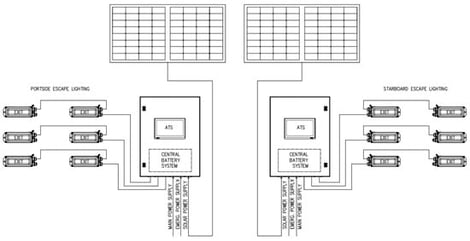
Engineering Sustainable Escape Lighting Systems for Marine Vessels: A Photovoltaic and ATS-Based Approach
Environ. Earth Sci. Proc. 2026, 41(1), 2; https://doi.org/10.3390/eesp2026041002 - 3 Feb 2026
Abstract
Ships are highly advanced marine structures that incorporate state-of-the-art technologies. Nevertheless, they still depend on outdated systems in certain critical areas, such as escape lighting. Escape lighting systems are vital components of shipboard safety infrastructure. However, conventional systems rely heavily on decentralized battery-powered
[...] Read more.
Ships are highly advanced marine structures that incorporate state-of-the-art technologies. Nevertheless, they still depend on outdated systems in certain critical areas, such as escape lighting. Escape lighting systems are vital components of shipboard safety infrastructure. However, conventional systems rely heavily on decentralized battery-powered luminaires and manual testing, leading to high maintenance costs and environmental burdens. This study addresses these challenges through an engineering-driven redesign of escape lighting systems. A novel system architecture was developed, integrating photovoltaic energy sources with centralized battery storage and Automatic Testing Systems (ATSs) compliant with the IEC 62034 standard. The system interfaces with both main and emergency power networks, reducing reliance on fossil fuels and minimizing battery usage. Engineering simulations and operational data indicate a 20% reduction in fuel oil consumption per escape light and a threefold decrease in maintenance costs over a vessel’s lifecycle. For a standard vessel equipped with 350 luminaires, the system demonstrates significant operational efficiency and environmental benefits, including reduced emissions and hazardous waste. This work exemplifies how ocean engineering innovations can enhance vessel safety while promoting sustainability. The integration of renewable energy and automated diagnostics into critical shipboard systems represents a forward-looking approach to marine engineering, aligning with global goals for greener maritime operations. Moreover, the proposed system supports compliance with evolving maritime regulations and offers a scalable solution adaptable to various vessel types and operational profiles.
Full article
(This article belongs to the Proceedings of The 1st International Online Conference on Marine Science and Engineering (IOCMSE 2025))
►
Show Figures
Open AccessProceeding Paper
Nitrate Vulnerability of the Almyros Aquifer (Thessaly, Greece) Under Climate Change Using DRASTIC and a Bias-Corrected Med-CORDEX-Driven Integrated Modeling System
by
Sibianka Lepuri, Athanasios Loukas and Aikaterini Lyra
Environ. Earth Sci. Proc. 2026, 40(1), 3; https://doi.org/10.3390/eesp2026040003 - 30 Jan 2026
Abstract
Groundwater in Mediterranean regions is facing increasing threats from climate change and intensive agriculture, necessitating robust vulnerability assessment tools. This study evaluates nitrate pollution vulnerability of the Almyros aquifer (Thessaly, Greece) using the DRASTIC index under the high-emission scenario RCP8.5. Bias-corrected Med-CORDEX climate
[...] Read more.
Groundwater in Mediterranean regions is facing increasing threats from climate change and intensive agriculture, necessitating robust vulnerability assessment tools. This study evaluates nitrate pollution vulnerability of the Almyros aquifer (Thessaly, Greece) using the DRASTIC index under the high-emission scenario RCP8.5. Bias-corrected Med-CORDEX climate projections were integrated into a coupled hydrological–hydrogeological modeling framework to simulate recharge, groundwater levels, and nitrate transport. DRASTIC results for the baseline (1991–2018) showed strong agreement with observed nitrate concentrations, while future projections (2031–2060, 2071–2100) revealed shifting vulnerability patterns, particularly in low-lying agricultural areas. The findings highlight climate-driven changes in groundwater vulnerability and support targeted adaptive management strategies.
Full article
(This article belongs to the Proceedings of The 9th International Electronic Conference on Water Sciences)
►▼
Show Figures

Figure 1
Open AccessConference Report
Abstract of the 2nd International Online Conference on Toxics
by
Natalia Garcia-Reyero and Carlos Barata
Environ. Earth Sci. Proc. 2025, 37(1), 3; https://doi.org/10.3390/eesp2025037003 - 28 Jan 2026
Abstract
The 2nd International Online Conference on Toxics (IOCTO 2025) successfully showcased essential advancements across the entire spectrum of toxicology, from environmental exposure modelling to molecular mechanisms and novel ecotoxicological applications [...]
Full article
(This article belongs to the Proceedings of The 2nd International Online Conference on Toxics)
Open AccessProceeding Paper
Treatment of Raw Mixed Dairy Wastewater Using an Attached-Growth Biological Filter
by
Stefania Patsialou, Iliana Pla, Dimitris V. Vayenas and Athanasia G. Tekerlekopoulou
Environ. Earth Sci. Proc. 2026, 40(1), 2; https://doi.org/10.3390/eesp2026040002 - 28 Jan 2026
Abstract
This study investigates the implementation of an attached-growth pilot-scale biofilter for the biological treatment of mixed dairy wastewater derived from real industrial effluents, consisting of equal proportions of raw second cheese whey (SCW) and pudding dessert wastewater (PDW). The biofilter was inoculated with
[...] Read more.
This study investigates the implementation of an attached-growth pilot-scale biofilter for the biological treatment of mixed dairy wastewater derived from real industrial effluents, consisting of equal proportions of raw second cheese whey (SCW) and pudding dessert wastewater (PDW). The biofilter was inoculated with indigenous microorganisms derived from the mixed wastewater stream with initial dissolved Chemical Oxygen Demand (d-COD) concentrations ranged from 1000 to 12,500 mg/L. The removal performance of organic and inorganic components was evaluated at a recirculation rate of 1.0 L/min, resulting in d-COD reductions of up to 92.3% and removal rates reaching 194.6 mg/(L·h). High removal rates were recorded for ammonium (up to 99.9%) and TKN (92.2–98.7%), while nitrate removal varied (29.4–89.3%) and solids removal exceeded 92%. d-COD concentrations of treated effluent consistently met discharge or municipal disposal legislation values, demonstrating the system’s efficiency and stability and proposing it as an ideal solution for wastewater treatment in dairy facilities.
Full article
(This article belongs to the Proceedings of The 9th International Electronic Conference on Water Sciences)
►▼
Show Figures

Graphical abstract
Open AccessProceeding Paper
Quantifying Risk Factors of Violence in Maritime Piracy Incidents Using Categorical Association Measures
by
Sonia Rozbiewska
Environ. Earth Sci. Proc. 2026, 41(1), 1; https://doi.org/10.3390/eesp2026041001 - 8 Jan 2026
Abstract
Maritime piracy remains a persistent security challenge across several global regions, with violent incidents posing the greatest threat to crew safety and vessel operations. This study investigates the relationship between violent escalation in piracy incidents and a set of contextual and operational variables
[...] Read more.
Maritime piracy remains a persistent security challenge across several global regions, with violent incidents posing the greatest threat to crew safety and vessel operations. This study investigates the relationship between violent escalation in piracy incidents and a set of contextual and operational variables using classical categorical data statistics. A dataset comprising reported maritime piracy and armed robbery events from 2015–2024 was compiled from IMB, OBP, and IMO sources and analysed through chi-square tests of independence, followed by Cramér’s V to quantify the strength of association. The results demonstrate that violence is not randomly distributed across incident characteristics. Geographic region exhibits the strongest measurable association with violent outcomes, reflecting the influence of regional security dynamics and the presence of organized criminal networks. Attack type and weapon type show additional, though weaker, associations, indicating that close-range engagement and the presence of firearms increase the likelihood of escalation. Vessel type, flag state, and seasonal timing display only marginal effects. Overall, the findings highlight that the probability of violence during piracy events is primarily shaped by spatial context and tactical execution. The study confirms that chi-square and Cramér’s V offer a transparent, interpretable framework for identifying key risk factors and can serve as a foundation for operational threat assessments and maritime security planning.
Full article
(This article belongs to the Proceedings of The 1st International Online Conference on Marine Science and Engineering (IOCMSE 2025))
Open AccessProceeding Paper
Evaluation of the Biostimulant Effect of Sinorhizobium meliloti on Grapevine Under Rational and Deficit Irrigation
by
Vasileios Papantzikos
Environ. Earth Sci. Proc. 2026, 40(1), 1; https://doi.org/10.3390/eesp2026040001 - 29 Dec 2025
Abstract
Agricultural irrigation management is considered more necessary than ever, as climate change directly threatens the growth of important Mediterranean crops in Greece. In this work, the metabolic characteristics of grapevine plants were assessed under rational 100% of available water (AW) and irrigation-deficient (57%
[...] Read more.
Agricultural irrigation management is considered more necessary than ever, as climate change directly threatens the growth of important Mediterranean crops in Greece. In this work, the metabolic characteristics of grapevine plants were assessed under rational 100% of available water (AW) and irrigation-deficient (57% of AW) conditions in 9 L pots, with the application of a Sinorhizobium meliloti biostimulant. Leaf area, proline, and total phenolic and chlorophyll content were assessed during the experiment as indicators of abiotic stress. The data of the experiment showed that the use of S. meliloti could act as a biotic stress inhibitor due to the irrigation deficit caused in the grapevine cultivation. This case study complements the literature on grapevine cultivation management practices in the scenario of imposing irrigation regimes due to climate change.
Full article
(This article belongs to the Proceedings of The 9th International Electronic Conference on Water Sciences)
►▼
Show Figures

Figure 1
Open AccessProceeding Paper
The Urban Light Plan: Toward Sustainable and Resilient Cities
by
Celestina Fazia, Giulia Fernanda Grazia Catania and Federica Sortino
Environ. Earth Sci. Proc. 2025, 36(1), 11; https://doi.org/10.3390/eesp2025036011 - 26 Dec 2025
Abstract
Urban lighting is evolving from a basic technical infrastructure to a strategic tool for sustainable regeneration, energy efficiency, and public space reactivation. This paper explores the potential of smart and adaptive lighting systems as enablers of 24 h services, equitable access, and environmental
[...] Read more.
Urban lighting is evolving from a basic technical infrastructure to a strategic tool for sustainable regeneration, energy efficiency, and public space reactivation. This paper explores the potential of smart and adaptive lighting systems as enablers of 24 h services, equitable access, and environmental resilience. By integrating lighting strategies with urban planning instruments (PRIC, PEC, PMU), cities can reduce energy consumption, limit light pollution, and foster new urban centralities. The study outlines regulatory gaps, technical solutions, and cultural shifts needed to transform lighting into a key asset for livable, inclusive, and digitally enabled urban futures.
Full article
(This article belongs to the Proceedings of The 2nd International Electronic Conference on Land)
Open AccessProceeding Paper
Urban 3D Multiple Deep Base Change Detection by Very High-Resolution Satellite Images and Digital Surface Model
by
Alireza Ebrahimi and Mahdi Hasanlou
Environ. Earth Sci. Proc. 2025, 36(1), 13; https://doi.org/10.3390/eesp2025036013 - 22 Dec 2025
Abstract
Timely and accurate urban change detection is vital for sustainable urban development, infrastructure management, and disaster response. Traditional two-dimensional approaches often overlook vertical and structural variations in dense urban areas. This study proposes a three-dimensional (3D) change detection framework that integrates high-resolution optical
[...] Read more.
Timely and accurate urban change detection is vital for sustainable urban development, infrastructure management, and disaster response. Traditional two-dimensional approaches often overlook vertical and structural variations in dense urban areas. This study proposes a three-dimensional (3D) change detection framework that integrates high-resolution optical imagery and Digital Surface Models (DSMs) from two time points to capture both horizontal and vertical transformations. The method is based on a deep learning architecture combining a ResNet34 encoder with a UNet++ decoder, enabling the joint learning of spectral and elevation features. The research was carried out in two stages. First, a binary classification model was trained to detect areas of change and no-change, allowing direct comparison with conventional methods such as Principal Component Analysis (PCA), Change Vector Analysis (CVA) with thresholding, K-Means clustering, and Random Forest classification. In the second stage, a multi-class model was developed to categorize the types of structural changes, including new building construction, complete destruction, building height increase, and height decrease. Experiments conducted on a high-resolution urban dataset demonstrated that the proposed CNN-based framework significantly outperformed traditional methods, achieving an overall accuracy of 96.58%, an F1-score of 96.58%, and a recall of 96.7%. Incorporating DSM data notably improved sensitivity to elevation-related changes. Overall, the ResNet34–UNet++ architecture offers a robust and accurate solution for 3D urban change detection, supporting more effective urban monitoring and planning.
Full article
(This article belongs to the Proceedings of The 2nd International Electronic Conference on Land)
►▼
Show Figures

Figure 1
Open AccessProceeding Paper
The Strait Bridge as an Opportunity for Careful Strategic Architectural and Urban Regeneration
by
Clara Stella Vicari Aversa and Celestina Fazia
Environ. Earth Sci. Proc. 2025, 36(1), 12; https://doi.org/10.3390/eesp2025036012 - 22 Dec 2025
Abstract
The Strait of Messina occupies a strategic position in the Mediterranean, representing an environmental and territorial peculiarity. The Strait area today is at the center of the political debate for the stable crossing project, a strategic infrastructure work for Italy and Europe. With
[...] Read more.
The Strait of Messina occupies a strategic position in the Mediterranean, representing an environmental and territorial peculiarity. The Strait area today is at the center of the political debate for the stable crossing project, a strategic infrastructure work for Italy and Europe. With the Strait Bridge, territorial arrangements, sea fronts, infrastructure systems, and urban and architectural dimensions will change. It appears necessary to prepare the territories and take advantage of all the opportunities related to future scenarios. The Strait area is not only marked by the crossing, but the whole territorial and urban system—the coastal strip and inland areas—becomes an active part of the processes of territorial regeneration and development.
Full article
(This article belongs to the Proceedings of The 2nd International Electronic Conference on Land)
►▼
Show Figures

Figure 1
Open AccessProceeding Paper
Propagation of Climate Model Variability to Coastal Groundwater Simulations Under Climate Change
by
Aikaterini Lyra, Athanasios Loukas, Pantelis Sidiropoulos and Nikitas Mylopoulos
Environ. Earth Sci. Proc. 2024, 31(1), 24; https://doi.org/10.3390/eesp2025032024 - 19 Dec 2025
Abstract
This study investigates the propagation of climate model variability to coastal groundwater systems under the high-emission RCP8.5 scenario, focusing on the Almyros Basin in Greece. Using Med-CORDEX bias-corrected climate projections, an Integrated Modelling System (IMS) combines UTHBAL (surface hydrology) and MODFLOW (groundwater hydrology)
[...] Read more.
This study investigates the propagation of climate model variability to coastal groundwater systems under the high-emission RCP8.5 scenario, focusing on the Almyros Basin in Greece. Using Med-CORDEX bias-corrected climate projections, an Integrated Modelling System (IMS) combines UTHBAL (surface hydrology) and MODFLOW (groundwater hydrology) to simulate future conditions, including precipitation, temperature, evapotranspiration, groundwater recharge, water balance, and seawater intrusion (as a quantity). The analysis quantifies both central tendencies and inter-model spread, revealing substantial declines in groundwater recharge and intensified seawater intrusion, while highlighting the uncertainty introduced by climate model projections. These findings provide critical insights for adaptive water resource management and planning in Mediterranean coastal aquifers under climate change.
Full article
(This article belongs to the Proceedings of The 4th International Electronic Conference on Forests)
►▼
Show Figures

Figure 1
Open AccessEditorial
Statement of Peer Review
by
Anthony R. Lupo
Environ. Earth Sci. Proc. 2025, 34(1), 19; https://doi.org/10.3390/eesp2025034019 - 9 Dec 2025
Abstract
In submitting conference proceedings to Environmental and Earth Sciences Proceedings, the volume editors of the proceedings certify to the publisher that all papers published in this volume have been subjected to peer review administered by the volume editors [...]
Full article
(This article belongs to the Proceedings of The 7th International Electronic Conference on Atmospheric Sciences (ECAS-7))
Open AccessProceeding Paper
Immediate and Residual Effects of Cattle Corralling and Mineral Fertilizer in Maize Cropping Systems in the Sub-Humid Zone of Northern Benin: Yields, Resource-Use Efficiency, Economic Profitability, and Post-Harvest Soil Fertility
by
Pierre G. Tovihoudji, Sourogou Anasse Gounou, Mouiz W. I. A. Yessoufou, Sissou Zakari, André Adjogboto and P. B. Irénikatché Akponikpè
Environ. Earth Sci. Proc. 2025, 36(1), 10; https://doi.org/10.3390/eesp2025036010 - 9 Dec 2025
Abstract
Effective management of organic and inorganic fertilizers is vital for sustaining productivity in intensive cropping systems. This four-year study (2012–2015) assessed the immediate and residual effects of cattle corralling combined with mineral fertilizer on maize in northern Benin using a strip-plot design with
[...] Read more.
Effective management of organic and inorganic fertilizers is vital for sustaining productivity in intensive cropping systems. This four-year study (2012–2015) assessed the immediate and residual effects of cattle corralling combined with mineral fertilizer on maize in northern Benin using a strip-plot design with five corralling levels No corralling(NM), immediate application (C0) and residual effects one (C1), two (C2), and three (C3) years after the initial corralling and three fertilizer rates F0 (no fertilizer), F1 (50% of the recommended rate) and F2 (the recommended rate). Cattle corralling doubled maize yield from 2.0 to 4.0 t ha−1 and increased net profitability from 384 to 1000 USD ha−1 compared to non-manured plots. Water-use efficiency increased from 3.4 to 6.8 kg ha−1 mm−1, and soil organic carbon increased nearly fourfold (3.0 to 11.2 g kg−1). Residual effects declined over time without mineral inputs (C0 > C1 > C2 > C3 > NM); however, these benefits were sustained or enhanced when combined with fertilizer (C3 > C2 > C1 > C0 > NM). Fertilizer responses were minor in C0 and C1 but significant in C2 and C3, demonstrating a strong organic–inorganic synergy. Nutrient recovery efficiency was initially lower in recently corralled plots but surpassed non-manured levels after two years. These results confirm that integrating livestock corralling with optimized fertilizer use strengthens soil fertility, resource efficiency, and profitability, providing a sustainable intensification pathway for maize systems in sub-humid, low-fertility regions.
Full article
(This article belongs to the Proceedings of The 2nd International Electronic Conference on Land)
►▼
Show Figures

Figure 1
Open AccessConference Report
Chanjman Atmosfè a—Creating a Change in the Atmosphere to Broaden Climate Conversations with a Focus on Haiti
by
Camellia Moses Okpodu, Bridger Huhn, Samelia Okpodu-Pyuzza and Calherbe Monel
Environ. Earth Sci. Proc. 2025, 38(1), 1; https://doi.org/10.3390/eesp2025038001 - 9 Dec 2025
Abstract
Our annual environmental conference has been a pivotal platform for addressing the unique environmental challenges faced by underrepresented communities since 2006. Adapting to the global pandemic in 2021, we seamlessly transitioned to a virtual environment, enabling us to concentrate our efforts on the
[...] Read more.
Our annual environmental conference has been a pivotal platform for addressing the unique environmental challenges faced by underrepresented communities since 2006. Adapting to the global pandemic in 2021, we seamlessly transitioned to a virtual environment, enabling us to concentrate our efforts on the critical role of the diaspora in leveraging scientific knowledge. In 2023, we focused on Haiti, a nation currently facing significant political turmoil. Our one-day virtual event featured three expert panels that delved into multifaceted strategies encompassing agriculture, healthcare, political advocacy, social dynamics, and entrepreneurship. These discussions aimed to equip Haiti to navigate the impacts of climate change effectively. In partnership with the Haiti Development Initiative (HDI), we engaged in a dynamic brainstorming session to generate innovative approaches for cultivating a resilient and sustainable economy. Our guiding mantra, the Haitian Creole phrase “Chanjman atmosfè a,” reflects our commitment to transforming the environmental landscape—shifting the atmosphere. A highlight of the event was the presentation by Computational Biology students from the University of Wyoming. Their project, titled “Using R Software to Compare Climate Data,” showcased an innovative pedagogical approach to analyzing climate data using statistical software. Their presentation demonstrated the practical application of computational tools in understanding and addressing climate change, providing valuable insights and methodologies that can be applied to environmental research in Haiti and beyond.
Full article
(This article belongs to the Proceedings of The Climate Conversation 2023—A Focus on Haiti)
►▼
Show Figures

Figure 1
Open AccessConference Report
Remarks and Abstracts of the 1st International Symposium on Energy and Meteorology (SIEME)
by
Maria Cristina Lemos Da Silva, Helber Barros Gomes, Fernando Ramos Martins, Samira de Azevedo Santos Emiliavaca, Amanda Santana Peiter, Dirceu Luis Herdies, Heliofábio Barros Gomes, Glauber Lopes Mariano and Marisol Osman
Environ. Earth Sci. Proc. 2025, 39(1), 1; https://doi.org/10.3390/eesp2025039001 - 4 Dec 2025
Abstract
The First International Symposium on Energy and Climate (SIEME 2025) has been held in Maceió, Brazil, from 20 to 22 August 2025. Organized by the Federal University of Alagoas (UFAL) and partner institutions, the event focuses on innovations and strategies in renewable energy,
[...] Read more.
The First International Symposium on Energy and Climate (SIEME 2025) has been held in Maceió, Brazil, from 20 to 22 August 2025. Organized by the Federal University of Alagoas (UFAL) and partner institutions, the event focuses on innovations and strategies in renewable energy, climate resilience, and green hydrogen within the global energy transition context. The symposium will feature keynote lectures, thematic sessions, round tables, and short courses addressing topics such as energy efficiency, extreme weather impacts, and sustainable technologies. Researchers, policymakers, and industry professionals from the Americas, among other countries, collaborated to advance sustainable energy solutions and climate adaptation strategies.
Full article
(This article belongs to the Proceedings of The International Symposium on Energy and Meteorology (SIEME) 2025)
Open AccessProceeding Paper
Advancing Nanotoxicology: High-Throughput Screening for Assessing the Toxicity of Nanoparticle Mixtures
by
Newton Neogi, Kristi Priya Choudhury, Sabbir Hossain, Md. Golam Sazid and Ibrahim Hossain
Environ. Earth Sci. Proc. 2025, 37(1), 2; https://doi.org/10.3390/eesp2025037002 - 3 Dec 2025
Abstract
The widespread application of nanoparticles (NPs) in fields ranging from consumer products to industrial processes has led to increased concerns about their potential toxic effects on human health and the environment. While traditional toxicological studies often evaluate the effects of individual NPs, real-world
[...] Read more.
The widespread application of nanoparticles (NPs) in fields ranging from consumer products to industrial processes has led to increased concerns about their potential toxic effects on human health and the environment. While traditional toxicological studies often evaluate the effects of individual NPs, real-world exposure scenarios typically involve mixtures of NPs, where interactions between particles can significantly alter their toxicological profiles. This study provides an overview of overcoming this gap by possible utilization of high-throughput screening (HTS) for evaluation of the combined effects of NP mixtures under various exposure conditions. This review discusses HTS of metal oxide NPs, which have cytotoxic, genotoxic, and oxidative stress-inducing effects. Using HTS, this review describes multiple studies with multiple mixture ratios and exposure durations using human lung epithelial cells and zebrafish embryo systems. The review also describes a range of interactions, from synergistic effects, where the combined toxicity might be the sum of individual toxicities. Oxidative stress and metal ion release were key drivers of toxicity, particularly in metal oxide-dominant NP mixtures. This theoretical study highlights the importance of integrating HTS into nanotoxicology research to provide a more comprehensive understanding of the toxic behavior of NPs.
Full article
(This article belongs to the Proceedings of The 2nd International Online Conference on Toxics)
►▼
Show Figures

Figure 1
Open AccessProceeding Paper
Soil Moisture Mapping Using Sentinel-1 SAR Data and Cloud-Based Regression Modeling on Google Earth Engine
by
Tarun Teja Kondraju, Selvaprakash Ramalingam, Rajan G. Rejith, Amrita Bhandari, Rabi N. Sahoo and Rajeev Ranjan
Environ. Earth Sci. Proc. 2025, 36(1), 9; https://doi.org/10.3390/eesp2025036009 - 27 Nov 2025
Abstract
Soil moisture is an essential environmental parameter affecting hydrological cycles, agricultural productivity, and climate systems. Conventional in situ measurements are precise but do not provide the spatiotemporal coverage for large applications. This research provides an extensive framework for estimating and mapping surface soil
[...] Read more.
Soil moisture is an essential environmental parameter affecting hydrological cycles, agricultural productivity, and climate systems. Conventional in situ measurements are precise but do not provide the spatiotemporal coverage for large applications. This research provides an extensive framework for estimating and mapping surface soil moisture by integrating Sentinel-1 Synthetic Aperture Radar (SAR) data with machine learning in the Google Earth Engine (GEE) cloud platform. The study area is the agricultural region of Perambalur district in Tamil Nadu State, India. The research took place between September 2018 and January 2019. The dual-polarized (VV and VH) Sentinel-1 C-band images were collected in tandem with ground truth soil moisture data collected through the gravimetric method. A set of SAR indices and engineered features were extracted from the backscattering coefficients (σ°). A random forest (RF) machine learning model was used in this study to estimate soil moisture. The RF model incorporating the complete set of engineered features showed a coefficient of determination (R2) of 0.694 and a root mean square error (RMSE) of 1.823 (Soil moisture %). The complete processing and modeling workflow was encapsulated in the GEE-based software tool (version 1) providing an accessible, user-friendly platform for generating near-real-time maps of soil moisture. This research proves that the combination of Sentinel-1 data with clever machine-learning algorithms in the GEE cloud platform provides a scalable, efficient, and potent tool for operational soil moisture mapping serving applications in precision agriculture and in the management of the water resource.
Full article
(This article belongs to the Proceedings of The 2nd International Electronic Conference on Land)
►▼
Show Figures

Figure 1
Open AccessProceeding Paper
Conservancies: A Demonstrable Local-Level Action for the Sustainable Development Goals in an African Indigenous Frontier
by
Alexander Omondi Imbo, Uta Wehn and Kenneth Irvine
Environ. Earth Sci. Proc. 2025, 36(1), 8; https://doi.org/10.3390/eesp2025036008 - 25 Nov 2025
Abstract
This paper examines an approach to local-level community action for the global Sustainable Development Goals (SDGs), amid the growing importance of context-specific implementations to accelerate progress. Land-use governance is critical for contributions to the SDGs, as it shapes a wide range of environmental,
[...] Read more.
This paper examines an approach to local-level community action for the global Sustainable Development Goals (SDGs), amid the growing importance of context-specific implementations to accelerate progress. Land-use governance is critical for contributions to the SDGs, as it shapes a wide range of environmental, social, and economic outcomes. Wildlife conservancies provide an innovative community-driven land-stewardship model that has proliferated across rangelands in various African countries as a sustainable development strategy. This study explores the potential contribution and capacity of conservancies, as a form of land-use governance, in advancing the SDGs at local levels. Using case studies from Kenya’s Maasai Mara, the research draws on qualitative primary data collected through in-depth interviews, a focus group discussion, observation, and document review, supplemented by secondary data obtained from a literature review. The data was analyzed thematically. The results show that conservancies address key socio-ecological challenges corresponding with multiple SDGs, particularly those related to poverty reduction, food security, climate action, and life on land. However, significant segments of local communities remain marginalized in decision making and benefit sharing, a situation rooted in pre-existing social hierarchies and weak governance institutions, raising concerns about social justice. Other major limitations are related to the conservancies’ over-reliance on tourism, and local people’s high dependence on natural resources. To resolve these limitations, the study recommends improving local governance via institutional strengthening, capacity building, gender empowerment, and stakeholder partnerships; diversifying income sources to reduce financial vulnerability; and adopting strategies to alleviate high dependence on natural resources in the long term.
Full article
(This article belongs to the Proceedings of The 2nd International Electronic Conference on Land)
►▼
Show Figures

Figure 1
Open AccessConference Report
Abstracts of the 7th International Electronic Conference on Atmospheric Sciences (ECAS-7)
by
Anthony R. Lupo
Environ. Earth Sci. Proc. 2025, 34(1), 18; https://doi.org/10.3390/eesp2025034018 - 24 Nov 2025
Abstract
The 7th International Electronic Conference on Atmospheric Sciences (ECAS-7) was held online from 4 to 6 June 2025 [...]
Full article
(This article belongs to the Proceedings of The 7th International Electronic Conference on Atmospheric Sciences (ECAS-7))
Open AccessProceeding Paper
Rainfall Runoff Simulation for Climate-Resilient Watershed Management: A Case Study of the Mangla Watershed, Pakistan
by
Saffi Ur Rehman, Tingting Chang, Muhammad Zaman and Abdullah Bin Jaweed
Environ. Earth Sci. Proc. 2025, 36(1), 7; https://doi.org/10.3390/eesp2025036007 - 24 Nov 2025
Abstract
Due to climate change, runoff simulations and understanding the relationship between rainfall and runoff are crucial for watershed management. This study combined a Geographic Information System (GIS) and the Hydrologic Engineering Centre-Hydrologic Modeling System (HEC-HMS) to simulate rainfall-based runoff for the Mangla Watershed.
[...] Read more.
Due to climate change, runoff simulations and understanding the relationship between rainfall and runoff are crucial for watershed management. This study combined a Geographic Information System (GIS) and the Hydrologic Engineering Centre-Hydrologic Modeling System (HEC-HMS) to simulate rainfall-based runoff for the Mangla Watershed. We used freely available satellite-based topography, soil and land use and land cover data, along with daily rainfall and discharge data for the hydrological modeling. For model generation, key parameters include the Curve Number method, the Unit Hydrograph method, the recession baseflow method, and the Muskingum routing method. The model was manually calibrated from 1991 to 2000 and validated from 2001 to 2010 and a sensitivity analysis was performed to check the model behavior and hydrological response of the watershed upon changing model parameters. The model’s efficiency was tested based on its statistical parameters, like the root mean square error (RMSE), standard deviation, Percent Bias, and Nash–Sutcliffe Efficiency. The Nash–Sutcliffe Efficiency for calibration and validation was 0.919 and 0.945, respectively. The findings demonstrate that HEC-HMS is an effective tool for rainfall-based runoff modeling in the Mangla Watershed and providing valuable insights for flood risk management and climate-resilient planning by using hydrological modeling to predict runoff dynamics, optimize reservoir operations, and inform adaptive strategies for managing water resources under changing climate conditions.
Full article
(This article belongs to the Proceedings of The 2nd International Electronic Conference on Land)
►▼
Show Figures

Figure 1
Open AccessProceeding Paper
Wildfire Damage Assessment over Eaton Canyon, California, Using Radar and Multispectral Datasets from Sentinel Satellites and Machine Learning Methods
by
Jacques Bernice Ngoua Ndong Avele and Viktor Sergeevich Goryainov
Environ. Earth Sci. Proc. 2025, 36(1), 6; https://doi.org/10.3390/eesp2025036006 - 20 Nov 2025
Abstract
Eaton Canyon in California serves as the focal point for a comprehensive post-wildfire ecological impact assessment. This study employs an approach integrating satellite imagery from the European Space Agency’s Sentinel constellation to study an area of 271.49 km2. The data encompasses
[...] Read more.
Eaton Canyon in California serves as the focal point for a comprehensive post-wildfire ecological impact assessment. This study employs an approach integrating satellite imagery from the European Space Agency’s Sentinel constellation to study an area of 271.49 km2. The data encompasses both radar and multispectral data, offering a multi-dimensional view of the affected landscape. The analysis leverages the power of the random forest algorithm. Firstly, three widely used indices—the difference normalized burn ratio (dNBR), relative burn ratio (RBR), and relative difference normalized burn ratio (RdNBR)—were calculated and compared based on their accuracy and Kappa index. Secondly, we developed a fusion approach by using all the fire indices to obtain a precise severity map by classifying the affected area into distinct severity classes. Thirdly, a separate fusion approach was developed utilizing the normalized difference vegetation index (NDVI), radar vegetation index (RVI), and modified normalized difference vegetation index (MNDVI) to analyze the distribution of vegetation before and after the wildfire. The merger proposals were developed using a combination of index values to obtain better information on the fire severity map and post-fire vegetation distribution. The results indicated an accuracy of 78% when employing the dNBR index. A higher accuracy of 81% was observed with the RBR index, while the RdNBR demonstrated an accuracy of 95%. Our approach, which combines all fire indicators, offers optimal accuracy of 99%. A percentage of 56.76% did not burn due to the topography of the canyon creating natural firebreaks. Areas classified as low severity (7.83%) showed minimal damage with minimal tree mortality. Moderate- to low-severity areas (5.83%) represented regions with partial crown burns and some tree mortality. Moderate- to high-severity areas (7.22%) showed significant tree mortality. Finally, high-severity areas (22.36%), characterized by complete tree mortality and significant loss of vegetation cover, were largely concentrated in specific sections of the canyon, likely influenced by factors such as slope and fuel type. These findings provide valuable information for post-fire ecological recovery efforts and future land management strategies in Eaton Canyon and similar fire-prone landscapes.
Full article
(This article belongs to the Proceedings of The 2nd International Electronic Conference on Land)
►▼
Show Figures

Figure 1
Highly Accessed Articles
Latest Books
E-Mail Alert
News
6 November 2025
MDPI Launches the Michele Parrinello Award for Pioneering Contributions in Computational Physical Science
3 February 2026
Acknowledgment to the Reviewers of Environmental and Earth Sciences Proceedings in 2025
Topics