Culinary Nutrition Programming for Members of a Community-Based Cancer Program
 , , and
Abstract
1. Introduction
- How do members practically apply the nutrition knowledge and skills gained through NJSC, particularly with respect to protein food choices?
- How does the NJSC programming provide social and emotional support to members?
2. Materials and Methods
2.1. Study Design
2.2. Program Description
2.3. Plant-Based Meal Program
2.4. Dietary Intake of Protein Foods
2.5. Semi-Structured Interviews
2.6. Quantitative Data Analysis
2.7. Qualitative Data Analysis
2.8. Ethical Approval
3. Results
3.1. Participant Characteristics
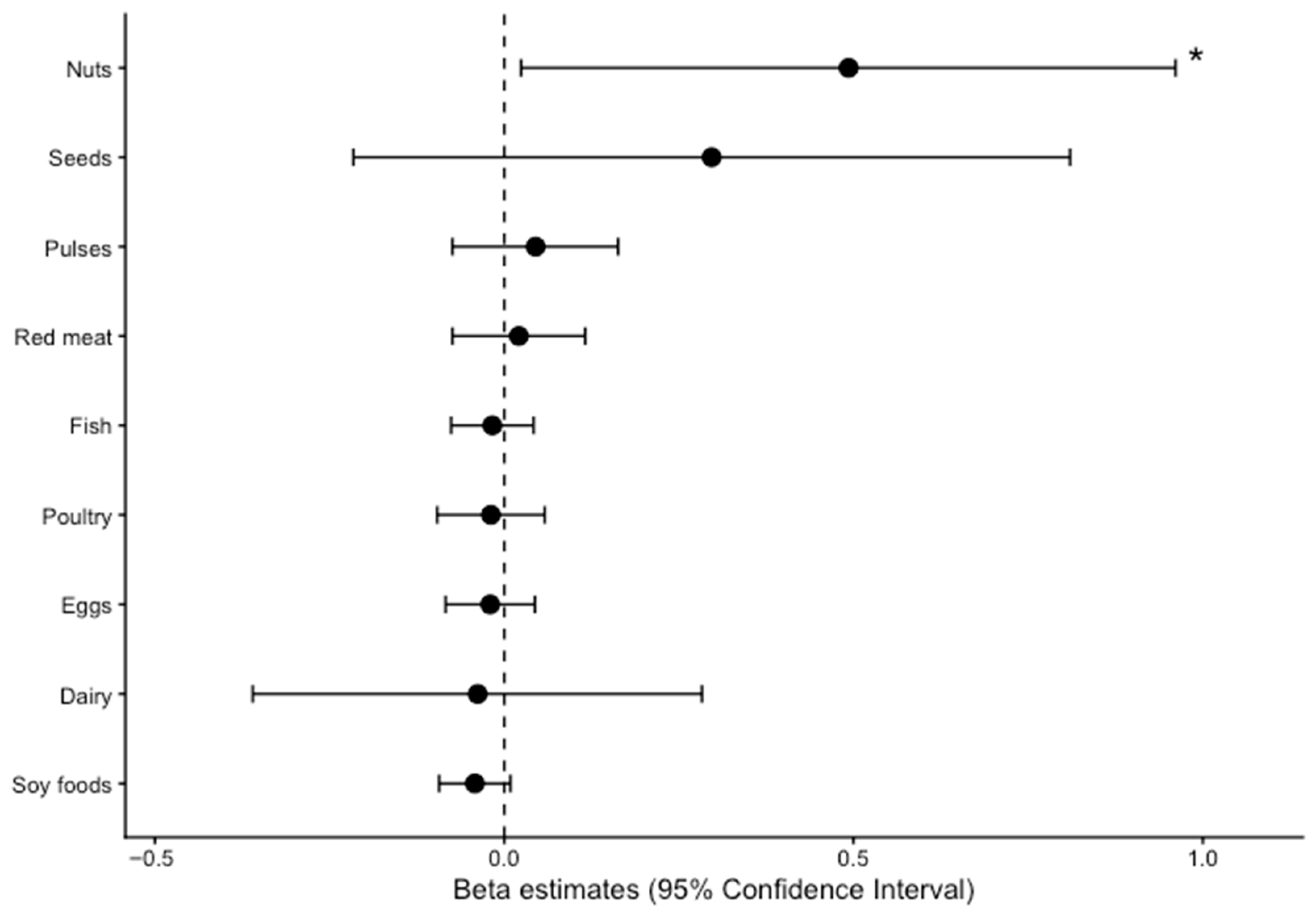
3.2. NJSC and Protein Foods
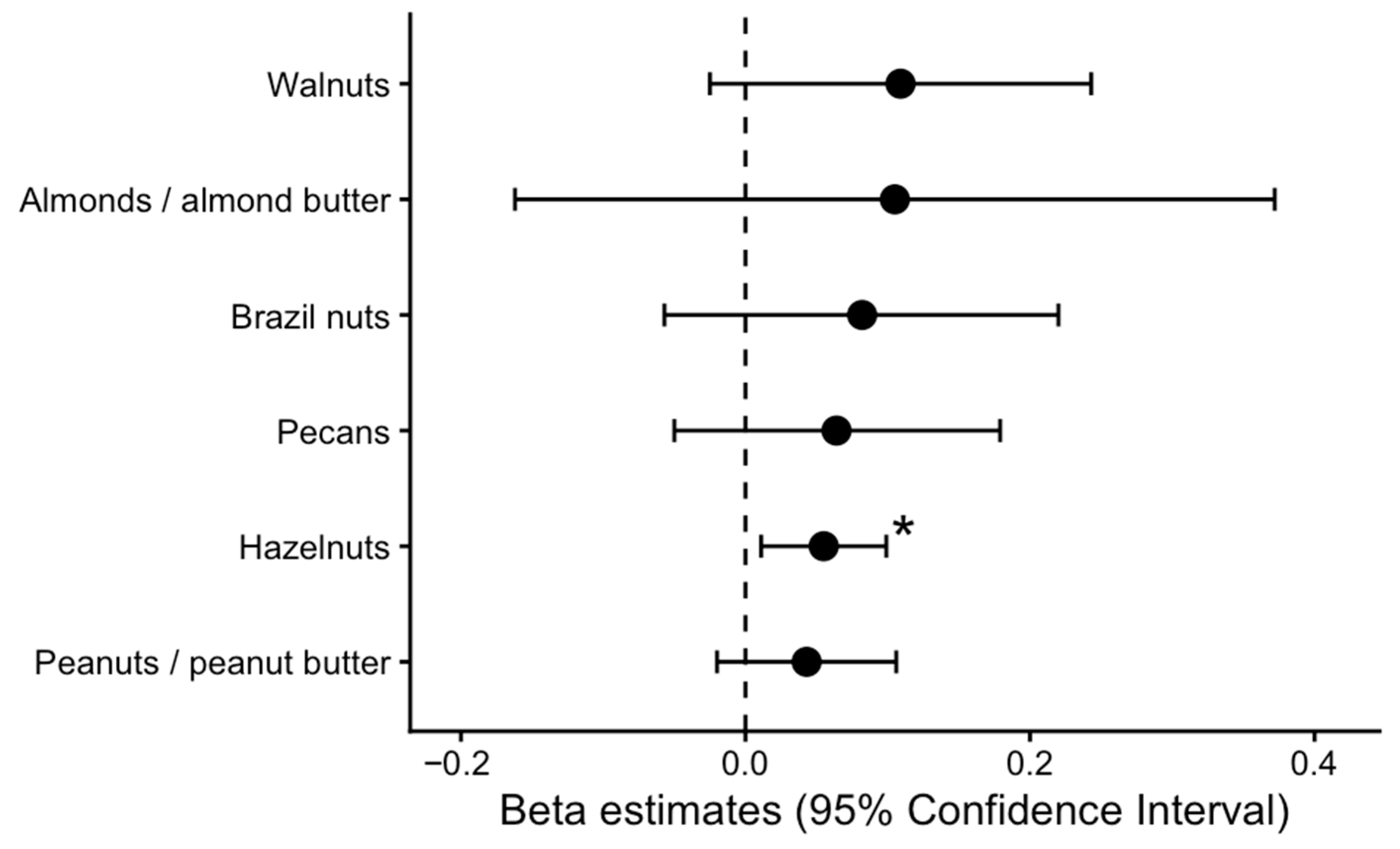
3.3. Subgroup and Sensitivity Analysis
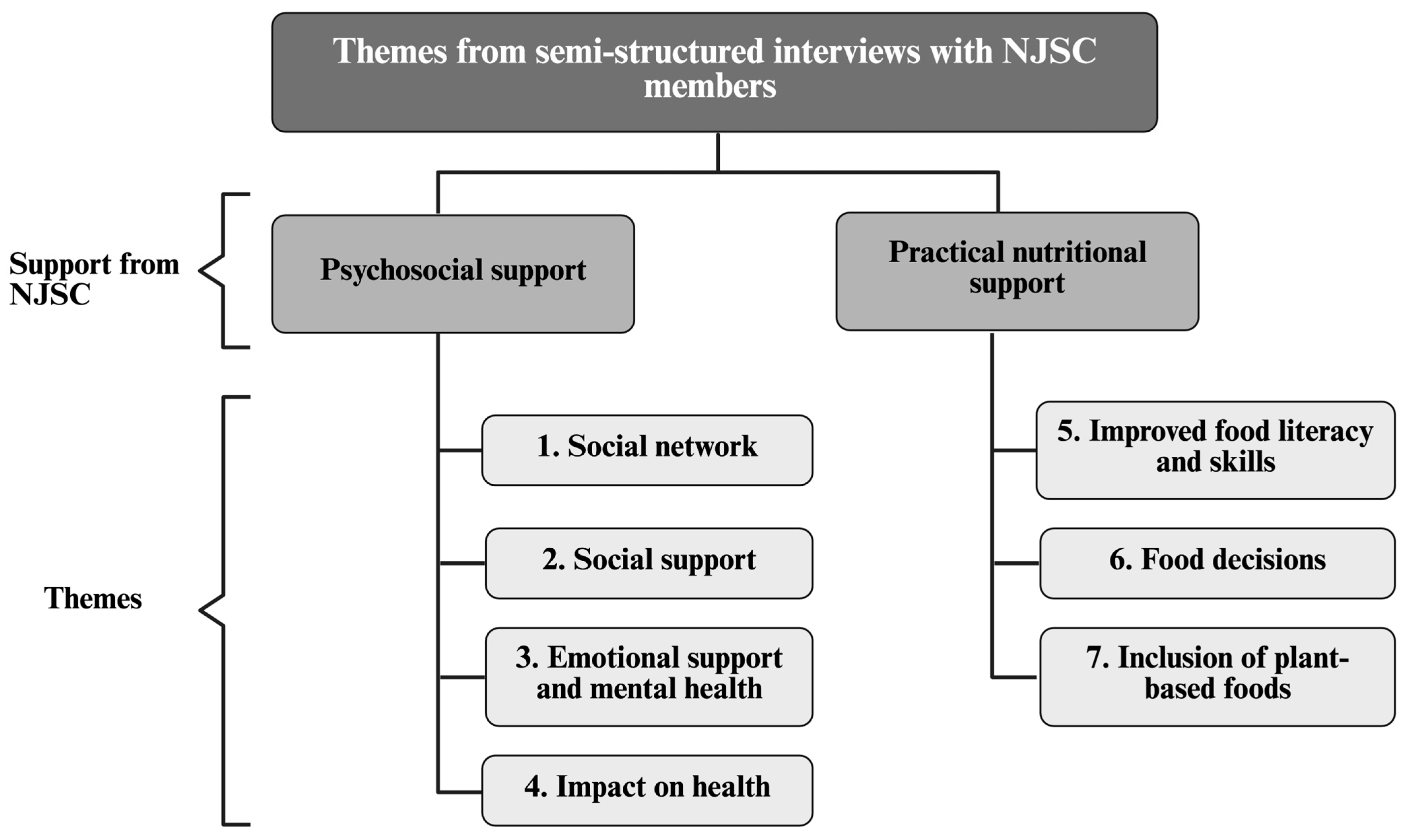
3.4. Emergent Themes
- Theme 1: Social Network
- Theme 2: Social Support
- Theme 3: Emotional Support and Mental Health
- Theme 4: Impact on Health
- Theme 5: Improved Food Literacy and Skills
- Theme 6: Food Decisions
- Theme 7: Inclusion of Plant-based Foods
4. Discussion
4.1. Principal Findings
4.2. Comparison with Previous Work
4.3. Strengths and Limitations
4.4. Implications for Practice and Recommendations for Future Programs
- (1)
- Integration of food in cancer programming
- (2)
- Nutrition resources in cancer programming
- (3)
- Tailoring the program to members and support networks
- (4)
- Interdisciplinary collaboration in cancer programming
- (5)
- Importance of continued research on culinary cancer programs
5. Conclusions
Supplementary Materials
Author Contributions
Funding
Institutional Review Board Statement
Informed Consent Statement
Data Availability Statement
Acknowledgments
Conflicts of Interest
References
- World Health Organization. Cancer. Available online: https://www.who.int/news-room/fact-sheets/detail/cancer (accessed on 16 September 2025).
- Ferlay, J.; Soerjomataram, I.; Dikshit, R.; Eser, S.; Mathers, C.; Rebelo, M.; Parkin, D.M.; Forman, D.; Bray, F. Cancer incidence and mortality worldwide: Sources, methods and major patterns in GLOBOCAN 2012. Int. J. Cancer 2015, 136, E359–E386. [Google Scholar] [CrossRef] [PubMed]
- Epplein, M.; Zheng, Y.; Zheng, W.; Chen, Z.; Gu, K.; Penson, D.; Lu, W.; Shu, X.-O. Quality of life after breast cancer diagnosis and survival. J. Clin. Oncol. 2011, 29, 406–412. [Google Scholar] [CrossRef]
- Lis, C.G.; Gupta, D.; Lammersfeld, C.A.; Markman, M.; Vashi, P.G. Role of nutritional status in predicting quality of life outcomes in cancer—A systematic review of the epidemiological literature. Nutr. J. 2012, 11, 27. [Google Scholar] [CrossRef]
- Cullen, T.; Hatch, J.; Martin, W.; Higgins, J.W.; Sheppard, R. Food Literacy: Definition and Framework for Action. Can. J. Diet. Pract. Res. 2015, 76, 140–145. [Google Scholar] [CrossRef]
- World Cancer Research Fund/American Institute for Cancer Research. Diet, Nutrition, Physical Activity, and the Prevention of Cancer. 2018. Available online: https://www.wcrf.org/dietandcancer/contents (accessed on 16 September 2025).
- Rock, C.L.; Byers, T.E.; Colditz, G.A.; Demark-Wahnefried, W.; Ganz, P.A.; Wolin, K.Y.; Elias, A.; Krontiras, H.; Liu, J.; Naughton, M.; et al. Reducing breast cancer recurrence with weight loss, a vanguard trial: The Exercise and Nutrition to Enhance Recovery and Good Health for You (ENERGY) Trial. Contemp. Clin. Trials 2013, 34, 282–295. [Google Scholar] [CrossRef]
- Raza, S.; Garfield, K.M.; Sullivan, K.R.; Jury, N.J.; Makaroff, L.; Trujillo, E.; Cohen, M.K.; Gately, K.; Mozaffarian, D.; Economos, C.D.; et al. Integration of food and nutrition into oncology care: Proceedings of the Food is Medicine in Oncology Care Symposium. Cancer 2026, 132, e70228. [Google Scholar] [CrossRef]
- Hasan, B.; Thompson, W.G.; Almasri, J.; Wang, Z.; Lakis, S.; Prokop, L.J.; Hensrud, D.D.; Frie, K.S.; Wirtz, M.J.; Murad, A.L.; et al. The effect of culinary interventions (cooking classes) on dietary intake and behavioral change: A systematic review and evidence map. BMC Nutr. 2019, 5, 29. [Google Scholar] [CrossRef] [PubMed]
- Salsman, J.M.; Pustejovsky, J.E.; Schueller, S.M.; Hernandez, R.; Berendsen, M.; McLouth, L.E.S.; Moskowitz, J.T. Psychosocial interventions for cancer survivors: A meta-analysis of effects on positive affect. J. Cancer Surviv. 2019, 13, 943–955. [Google Scholar] [CrossRef]
- World Cancer Research Fund International/CUP Global. Dietary and Lifestyle Patterns for Cancer Prevention: Evidence and Recommendations from CUP Global. 2025. Available online: https://www.wcrf.org/wp-content/uploads/2025/09/DLP_Report_FINAL_updated.pdf (accessed on 10 September 2025).
- Bossi, P.; Delrio, P.; Mascheroni, A.; Zanetti, M. The Spectrum of Malnutrition/Cachexia/Sarcopenia in Oncology According to Different Cancer Types and Settings: A Narrative Review. Nutrients 2021, 13, 1980. [Google Scholar] [CrossRef] [PubMed]
- Allen-Winters, S.; Wakefield, D.; Gaudio, E.; Moore, S.; Boone, K.; Morris, S.; Schwartz, D.L. “Eat to Live”-Piloting a Culinary Medicine Program for Head & Neck Radiotherapy Patients. Support. Care Cancer 2019, 28, 2949–2957. [Google Scholar]
- Patterson, P.; Pederson, J.; Hunt, S.; Woods, C. Advancing care in the breast cancer population through nutrition education, culinary skills instruction, and relational connection. J. Oncol. Navig. Surviv. 2016, 10, 463. [Google Scholar]
- Pritlove, C.; Capone, G.; Kita, H.; Gladman, S.; Maganti, M.; Jones, J.M. Cooking for Vitality: Pilot Study of an Innovative Culinary Nutrition Intervention for Cancer-Related Fatigue in Cancer Survivors. Nutrients 2020, 12, 2760. [Google Scholar] [CrossRef]
- Trestini, I.; Sperduti, I.; Caldart, A.; Bonaiuto, C.; Fiorio, E.; Parolin, V.; Zambonin, V.; Zanelli, S.; Tregnago, D.; Avancini, A.; et al. Evidence-based tailored nutrition educational intervention improves adherence to dietary guidelines, anthropometric measures and serum metabolic biomarkers in early-stage breast cancer patients: A prospective interventional study. Breast 2021, 60, 6–14. [Google Scholar] [CrossRef] [PubMed]
- Sullivan, E.S.; Rice, N.; Kingston, E.; Kelly, A.; Reynolds, J.V.; Feighan, J.; Power, D.G.; Ryan, A.M. A national survey of oncology survivors examining nutrition attitudes, problems and behaviours, and access to dietetic care throughout the cancer journey. Clin. Nutr. ESPEN 2021, 41, 331–339. [Google Scholar] [CrossRef]
- Middleton, G.; Patterson, K.A.; Muir-Cochrane, E.; Velardo, S.; McCorry, F.; Coveney, J. The Health and Well-being Impacts of Community Shared Meal Programs for Older Populations: A Scoping Review. Innov. Aging 2022, 6, igac068. [Google Scholar] [CrossRef]
- American Cancer Society Cancer Action Network. Survivor Views on Social Connection & Isolation. 2023. Available online: https://www.fightcancer.org/policy-resources/survivor-views-social-connection-isolation (accessed on 6 January 2026).
- Jadalla, A.; Ginex, P.; Coleman, M.; Vrabel, M.; Bevans, M. Family Caregiver Strain and Burden: A Systematic Review of Evidence-Based Interventions When Caring for Patients With Cancer. Clin. J. Oncol. Nurs. 2020, 24, 31–50. [Google Scholar] [CrossRef]
- Ezendam, N.P.M.; Karlsen, R.V.; Christensen, J.; Tjønneland, A.; van de Poll-Franse, L.V.; von Heymann-Horan, A.; Johansen, C.; Bidstrup, P.E. Do people improve health behavior after their partner is diagnosed with cancer? A prospective study in the Danish diet, Cancer and Health Cohort. Acta Oncol. 2019, 58, 700–707. [Google Scholar] [CrossRef]
- Molassiotis, A.; Brown, T.; Cheng, H.L.; Byrnes, A.; Chan, R.J.; Wyld, D.; Eastgate, M.; Yates, P.; Marshall, A.P.; Fichera, R.; et al. The effects of a family-centered psychosocial-based nutrition intervention in patients with advanced cancer: The PiCNIC2 pilot randomised controlled trial. Nutr. J. 2021, 20, 2. [Google Scholar] [CrossRef]
- Willis, D.G.; Sullivan-Bolyai, S.; Knafl, K.; Cohen, M.Z. Distinguishing Features and Similarities Between Descriptive Phenomenological and Qualitative Description Research. West. J. Nurs. Res. 2016, 38, 1185–1204. [Google Scholar] [CrossRef]
- Creswell, J.W.; Poth, C.N. Qualitative Inquiry and Research Design Choosing Among Five Approaches, 4th ed.; SAGE Publications, Inc.: Thousand Oaks, CA, USA, 2018. [Google Scholar]
- Gilda’s Club Greater Toronto. Available online: https://www.gildasclubtoronto.org/ (accessed on 5 January 2026).
- Kim, J.; Khil, J.; Kim, H.; Keum, N.; Zhang, X.; Giovannucci, E. Plant-based dietary patterns and the risk of digestive system cancers in 3 large prospective cohort studies. Eur. J. Epidemiol. 2023, 38, 617–627. [Google Scholar] [CrossRef] [PubMed]
- Zhong, G.-C.; Li, Z.; You, A.-J.; Zhu, Q.; Wang, C.-R.; Yang, P.-F. Plant-based diets and the risk of pancreatic cancer: A large prospective multicenter study. Am. J. Clin. Nutr. 2023, 117, 235–242. [Google Scholar] [CrossRef]
- Romanos-Nanclares, A.; Willett, W.C.; Rosner, B.A.; Collins, L.C.; Hu, F.B.; Toledo, E.; Eliassen, A.H. Healthful and Unhealthful Plant-Based Diets and Risk of Breast Cancer in U.S. Women: Results from the Nurses’ Health Studies. Cancer Epidemiol. Biomark. Prev. 2021, 30, 1921–1931. [Google Scholar] [CrossRef] [PubMed]
- Loeb, S.; Fu, B.C.; Bauer, S.R.; Pernar, C.H.; Chan, J.M.; Van Blarigan, E.L.; Giovannucci, E.L.; Kenfield, S.A.; Mucci, L.A. Association of plant-based diet index with prostate cancer risk. Am. J. Clin. Nutr. 2022, 115, 662–670. [Google Scholar] [CrossRef] [PubMed]
- Wang, Y.; Liu, B.; Han, H.; Hu, Y.; Zhu, L.; Rimm, E.B.; Hu, F.B.; Sun, Q. Associations between plant-based dietary patterns and risks of type 2 diabetes, cardiovascular disease, cancer, and mortality—A systematic review and meta-analysis. Nutr. J. 2023, 22, 1–16. [Google Scholar] [CrossRef]
- Fan, Y.; Wang, M.; Li, Z.; Jiang, H.; Shi, J.; Shi, X.; Liu, S.; Zhao, J.; Kong, L.; Zhang, W.; et al. Intake of Soy, Soy Isoflavones and Soy Protein and Risk of Cancer Incidence and Mortality. Front. Nutr. 2022, 9, 847421. [Google Scholar] [CrossRef]
- World Cancer Research Fund. Our Cancer Prevention Recommendations. Eat Wholegrains, Vegetables, Fruit and Beans. Available online: https://www.wcrf.org/research-policy/evidence-for-our-recommendations/wholegrains-veg-fruit-beans/ (accessed on 5 January 2026).
- Rock, C.L.; Thomson, C.; Gansler, T.; Gapstur, S.M.; McCullough, M.L.; Patel, A.V.; Bandrews, K.S.; Bandera, E.V.; Spees, C.K.; Robien, K.; et al. American Cancer Society guideline for diet and physical activity for cancer prevention. CA A Cancer J. Clin. 2020, 70, 245–271. [Google Scholar] [CrossRef]
- Aune, D.; Keum, N.; Giovannucci, E.; Fadnes, L.T.; Boffetta, P.; Greenwood, D.C.; Tonstad, S.; Vatten, L.J.; Riboli, E.; Norat, T. Nut consumption and risk of cardiovascular disease, total cancer, all-cause and cause-specific mortality: A systematic review and dose-response meta-analysis of prospective studies. BMC Med. 2016, 14, 207. [Google Scholar] [CrossRef] [PubMed]
- Zhu, B.; Sun, Y.; Qi, L.; Zhong, R.; Miao, X. Dietary legume consumption reduces risk of colorectal cancer: Evidence from a meta-analysis of cohort studies. Sci. Rep. 2015, 5, 8797. [Google Scholar] [CrossRef]
- Farvid, M.S.; Cho, E.; Chen, W.Y.; Eliassen, A.H.; Willett, W.C. Dietary protein sources in early adulthood and breast cancer incidence: Prospective cohort study. BMJ 2014, 348, g3437. [Google Scholar] [CrossRef]
- Kavanagh, M.E.; Zurbau, A.; Glenn, A.J.; Oguntala, J.O.; Josse, R.G.; Malik, V.S.; Chiavaroli, L.; Liu, S.; Kendall, C.W.C.; Jenkins, D.J.A.; et al. The portfolio dietary pattern and risk of cardiovascular disease mortality during 1988–2019 in US adults: A prospective cohort study. BMC Med. 2025, 23, 287. [Google Scholar] [CrossRef]
- Glenn, A.J.; Guasch-Ferré, M.; Malik, V.S.; Kendall, C.W.C.; Manson, J.E.; Rimm, E.B.; Willett, W.C.; Sun, Q.; Jenkins, D.J.; Hu, F.B.; et al. Portfolio Diet Score and Risk of Cardiovascular Disease: Findings From 3 Prospective Cohort Studies. Circulation 2023, 148, 1750–1763. [Google Scholar] [CrossRef]
- Glenn, A.; Kavanagh, M.; Bockus-Thorne, L.; McNeill, L.; Melina, V.; Jenkins, D.; Grant, S. Medical nutrition therapy for chronic pain management. In Clinical Pain Management: A Practical Guide, 2nd ed.; Wiley: Hoboken, NJ, USA, 2022; pp. 147–159. [Google Scholar] [CrossRef]
- Auclair, O.; Burgos, S.A. Protein consumption in Canadian habitual diets: Usual intake, inadequacy, and the contribution of animal- and plant-based foods to nutrient intakes. Appl. Physiol. Nutr. Metab. 2021, 46, 501–510. [Google Scholar] [CrossRef]
- Glenn, A.J.; Wang, F.; Tessier, A.-J.; E Manson, J.; Rimm, E.B.; Mukamal, K.J.; Sun, Q.; Willett, W.C.; Rexrode, K.M.; Jenkins, D.J.; et al. Dietary plant-to-animal protein ratio and risk of cardiovascular disease in 3 prospective cohorts. Am. J. Clin. Nutr. 2024, 120, 1373–1386. [Google Scholar] [CrossRef]
- UK EPIC-Norfolk Food Frequency Questionnaire. Available online: https://www.epic-norfolk.org.uk/wp-content/uploads/2020/11/CAMB-PQ-6-1205a_front.pdf (accessed on 22 December 2023).
- Flanagin, A.; Frey, T.; Christiansen, S.L. Updated Guidance on the Reporting of Race and Ethnicity in Medical and Science Journals. JAMA 2021, 326, 621–627. [Google Scholar] [CrossRef] [PubMed]
- Creswell, J.W.; Clark, V.P. Mixed Methods Research; SAGE Publications: Thousand Oaks, CA, USA, 2011. [Google Scholar]
- Clarke, V.; Braun, V. Thematic analysis. J. Appl. Posit. Psychol. 2017, 12, 297–298. [Google Scholar] [CrossRef]
- Morse, J.M. Critical Analysis of Strategies for Determining Rigor in Qualitative Inquiry. Qual. Health Res. 2015, 25, 1212–1222. [Google Scholar] [CrossRef] [PubMed]
- QSR International. NVIVO 12. QSR International (Americas) Inc.: Burlington, MA, USA, 2018; Available online: https://www.qsrinternational.com/ (accessed on 22 December 2023).
- Tashakkori, A.; Teddlie, C. The SAGE Handbook of Mixed Methods in Social & Behavioral Research, 2nd ed.; SAGE Publications: Thousand Oaks, CA, USA, 2010. [Google Scholar]
- Jenkins, D.J.A.; Jones, P.J.H.; Lamarche, B.; Kendall, C.W.C.; Faulkner, D.; Cermakova, L.; Gigleux, I.; Ramprasath, V.; de Souza, R.; Ireland, C.; et al. Effect of a Dietary Portfolio of Cholesterol-Lowering Foods Given at 2 Levels of Intensity of Dietary Advice on Serum Lipids in Hyperlipidemia: A Randomized Controlled Trial. JAMA 2011, 306, 831–839. [Google Scholar] [CrossRef]
- Messina, M.; Nechuta, S. A Review of the Clinical and Epidemiologic Evidence Relevant to the Impact of Postdiagnosis Isoflavone Intake on Breast Cancer Outcomes. Curr. Nutr. Rep. 2025, 14, 50. [Google Scholar] [CrossRef]
- Wei, Y.; Lv, J.; Guo, Y.; Bian, Z.; Gao, M.; Du, H.; Yang, L.; Chen, Y.; Zhang, X.; Wang, T.; et al. Soy intake and breast cancer risk: A prospective study of 300,000 Chinese women and a dose–response meta-analysis. Eur. J. Epidemiol. 2019, 35, 567–578. [Google Scholar] [CrossRef]
- Johnston, E.A.; Ayre, S.K.; Au-Yeung, Y.T.; Goodwin, B.C. A Scoping Review of Group Nutrition Education and Cooking Programs for People Affected by Cancer. J. Acad. Nutr. Diet. 2024, 124, 1302–1327.e1. [Google Scholar] [CrossRef]
- Huang, S.; Riccardi, D.; Pflanzer, S.; Redwine, L.S.; Gray, H.L.; Carson, T.L.; McDowell, M.; Thompson, Z.; Hubbard, J.J.; Pabbathi, S. Survivors Overcoming and Achieving Resiliency (SOAR): Mindful Eating Practice for Breast Cancer Survivors in a Virtual Teaching Kitchen. Nutrients 2023, 15, 4205. [Google Scholar] [CrossRef]
- Barak-Nahum, A.; Ben Haim, L.; Ginzburg, K. When life gives you lemons: The effectiveness of culinary group intervention among cancer patients. Soc. Sci. Med. 2016, 166, 1–8. [Google Scholar] [CrossRef] [PubMed]
- Pritlove, C.; Capone, G.; Ramasamy, M.; Avery, L.; Fierini, D.; Ferguson, S.E.; Han, K.; Jones, J.M. Eliminating Digestive Irregularities Caused by Late Effects: A Pilot Study of an Innovative Culinary Nutrition Intervention for Reducing Gastrointestinal Toxicity in Gynecologic Cancer Patients Who Have Undergone Pelvic Radiotherapy. Nutrients 2024, 16, 4227. [Google Scholar] [CrossRef] [PubMed]
- O’CAllaghan, N.; Douglas, P.; Keaver, L. A qualitative study into cancer survivors’ relationship with nutrition post-cancer treatment. J. Hum. Nutr. Diet. 2023, 36, 406–414. [Google Scholar] [CrossRef] [PubMed]
- Murat-Ringot, A.; Lan, R.; Goetz, E.; Basbous, L.; Charreyre, M.T.; Carrouel, F. Peer-led plant-based cooking workshops for post-cancer patients: An observational pilot study on dietary practices. Support. Care Cancer 2025, 33, 978. [Google Scholar] [CrossRef]
- Given, B.A.; Given, C.W.; Sherwood, P.R. Family and caregiver needs over the course of the cancer trajectory. J. Support. Oncol. 2012, 10, 57–64. [Google Scholar] [CrossRef]
- Kipnis, V.; Subar, A.F.; Midthune, D.; Freedman, L.S.; Ballard-Barbash, R.; Troiano, R.P.; Bingham, S.; Schoeller, D.A.; Schatzkin, A.; Carroll, R.J. Structure of dietary measurement error: Results of the OPEN biomarker study. Am. J. Epidemiol. 2003, 158, 14–21. [Google Scholar] [CrossRef]
- Birt, L.; Scott, S.; Cavers, D.; Campbell, C.; Walter, F. Member Checking: A Tool to Enhance Trustworthiness or Merely a Nod to Validation? Qual. Health Res. 2016, 26, 1802–1811. [Google Scholar] [CrossRef]
- Symington, A.; Slavin, J.; Kavanagh, M.; Saslove, T. A Community Guide to Cancer Nutrition. 978-1-7388824-3-4. 2023. Available online: https://www.gildasclubtoronto.org/wp-content/uploads/2023/03/A-Community-Guide-to-Cancer-Nutrition_ebook-version-2023.pdf (accessed on 16 September 2025).
- Symington, A.; Hotz, C. A Community Guide to Cancer Nutrition Companion Cookbook. Plant-Based Cooking for Side Effects of Cancer and Its Treatments. 978-1-7388824-0-1-0. 2023. Available online: https://www.gildasclubtoronto.org/wp-content/uploads/2023/03/Cancer-Nutrition-Companion-Cookbook_e-book2023.pdf (accessed on 16 September 2025).
- Symington, A. The Long Table Cookbook: Plant-Based Recipes for Optimal Health; Douglas and McIntyre: Vancouver, BC, Canada, 2019. [Google Scholar]



| Question | |
|---|---|
| 1 | Have you developed any new eating habits or eating routines since becoming a Not-Just-Supper Club member? If so, please describe. |
| 2 | Do you find that you have changed the way you prepare and eat foods at home since joining the Not-Just-Supper Club? If so, please describe. |
| 3 | Do you find that you share food ideas and recipes that you’ve tried at the Not-Just-Supper Club with family and friends? If so, please describe. |
| 4 | Do you feel your cancer-related symptoms or treatment side effects have improved since you’ve been attending and eating at Not-Just-Supper Club? If so, please describe. |
| 5 | Do you feel more interested and motivated to learn about nutrition tips and health-promoting practices after attending the Not-Just-Supper Club? If so, please describe. |
| Characteristic | n = 41 |
|---|---|
| Age (years) a, mean (SD) | 57.4 (15.8) |
| Sex | |
| Female | 36 (88) |
| Male | 5 (12) |
| Ethnicity b | |
| White | 17 (41) |
| Other | 11 (27) |
| Asian | 6 (15) |
| Black | 5 (12) |
| Did not answer | 2 (5) |
| Current smoker | |
| Yes | 3 (7) |
| No | 38 (93) |
| BMI (kg/m2), mean (SD) | 26.3 (7.5) |
| Duration at NJSC (years), mean (SD) | 1.8 (2.0) |
| Cancer diagnoses | |
| Breast | 10 (24) |
| Ovarian | 4 (10) |
| Bladder | 1 (2) |
| Esophageal | 1 (2) |
| Lymphoma | 1 (2) |
| Lung | 1 (2) |
| Renal | 1 (2) |
| Salivary | 1 (2) |
| Choriocarcinoma | 1 (2) |
| Uterine | 1 (2) |
| Multiple | 1 (2) |
| Did not answer | 5 (12) |
| None c | 13 (32) |
| Protein Group ᵃ | Consumers, n (%) | Servings/day (SD) | Pearson r with Time at NJSC | p-Value |
|---|---|---|---|---|
| Red meat | 35 (85.4) | 0.41 (0.44) | 0.01 | 0.94 |
| Poultry | 33 (80.5) | 0.26 (0.40) | −0.07 | 0.65 |
| Fish | 38 (92.7) | 0.34 (0.26) | −0.05 | 0.77 |
| Dairy | 35 (85.4) | 1.37 (1.83) | 0.00 | 0.99 |
| Eggs | 38 (92.7) | 0.39 (0.29) | −0.09 | 0.59 |
| Nuts | 41 (100) | 1.67 (2.14) | 0.45 | 0.003 |
| Seeds | 41 (100) | 1.72 (2.44) | 0.19 | 0.25 |
| Pulses | 41 (100) | 0.56 (0.55) | 0.03 | 0.83 |
| Soy foods | 40 (97.6) | 0.21 (0.29) | −0.26 | 0.11 |
| Major Themes | Representative Quotes |
|---|---|
| Theme 1: Social network | “The social component of Supper Club is so important. I almost eat all of my meals alone, this is the only time I eat meals with others. I felt like going to Gilda’s Club was a part of my treatment. Social interaction helps me get out of the house.” (Participant 38) |
| Theme 2: Social support | “My chance to try [the recipes] with friends is during potluck, which I started this week. And I learned to be creative, there is so much to create! Whatever I have in the house, I create.” (Participant 33) “I live alone. A lot of my friends live in other parts of the city, or they have partners or family, so I don’t see them often. It is nice to join a group of people at Gilda’s to chat… It’s nice and it has widened my network and contacts in the city; apart from having a nice tasty meal.” (Participant 40) |
| Theme 3: Emotional support and mental health | “Good food that gives me the energy and for time, it’s a great stress reducer. Gave me more time with people that I am in support group with. Decreased anxiety and stress, and more energy due to the healthy food.” (Participant 36) “Think it’s an amazing club to have, the Supper Club, whether you are a caregiver or someone with cancer, you need somewhere to unwind and breathe.” (Participant 39) “The food is done with love and care, I can feel that” (Participant 14) |
| Theme 4: Impact on health | “The smell of the food is very nurturing. It makes me feel good and comforted” (Participant 34). “My breast has cleared, I am not having fibrous breast, so if I stay on this diet, I will be clear. My energy is good. And my bowel movements, have been so good. So I eat well so that I am having healthy and textured bowel movements.” (Participant 27) |
| Theme 5: Improved food literacy and skills | “I learned how to peel ginger with a spoon.” (Participant 14) “Fairly good to begin with, but more conscious of the not-meat options. I always knew legumes and beans are cheap and reasonable to substitute for meat. Every week since I have come here for half of year… I’ve become more conscious.” (Participant 13) |
| Theme 6: Food decisions | “I try to check in with how I am eating, because of different health issues that have come up. This has re-instilled how to think about what I am eating.” (Participant 15) “Yes. I try to eat healthier. I added things that I learned about at the Supper Club into my diet. Like flax seeds, couscous. Try to make more conscious choices. Particularly anti-cancer foods.” (Participant 39) |
| Theme 7: Inclusion of plant-based foods | “Learned that meals don’t have to be meat-based/meat component to be filling. It also showed me the gap in my own repertoire of recipes.” (Participant 22) |
Disclaimer/Publisher’s Note: The statements, opinions and data contained in all publications are solely those of the individual author(s) and contributor(s) and not of MDPI and/or the editor(s). MDPI and/or the editor(s) disclaim responsibility for any injury to people or property resulting from any ideas, methods, instructions or products referred to in the content. |
© 2026 by the authors. Licensee MDPI, Basel, Switzerland. This article is an open access article distributed under the terms and conditions of the Creative Commons Attribution (CC BY) license.
Share and Cite
Hermosura, B.J.C.; Kavanagh, M.E.; Slavin, J.; Jenkins, D.J.A.; Symington, A. Culinary Nutrition Programming for Members of a Community-Based Cancer Program. Nutrients 2026, 18, 858. https://doi.org/10.3390/nu18050858
Hermosura BJC, Kavanagh ME, Slavin J, Jenkins DJA, Symington A. Culinary Nutrition Programming for Members of a Community-Based Cancer Program. Nutrients. 2026; 18(5):858. https://doi.org/10.3390/nu18050858
Chicago/Turabian StyleHermosura, Billie Jane C., Meaghan E. Kavanagh, Jaime Slavin, David J. A. Jenkins, and Amy Symington. 2026. "Culinary Nutrition Programming for Members of a Community-Based Cancer Program" Nutrients 18, no. 5: 858. https://doi.org/10.3390/nu18050858
APA StyleHermosura, B. J. C., Kavanagh, M. E., Slavin, J., Jenkins, D. J. A., & Symington, A. (2026). Culinary Nutrition Programming for Members of a Community-Based Cancer Program. Nutrients, 18(5), 858. https://doi.org/10.3390/nu18050858