Skip to Content
  • 0.3
    Impact Factor
  • 31 days
    Time to First Decision

Arts

Arts is an international, peer-reviewed, open access journal promoting significant research on all aspects of the visual and performing arts, published monthly online by MDPI.

Get Alerted

Add your email address to receive forthcoming issues of this journal.

All Articles (1,374)

The first two decades of the twentieth century saw an unprecedented surge in scientific and technological experiments directed at the physical transformation of the human body. In Bolshevik Russia of the 1920s, science fiction and scientific and technological experiments created a nexus. The science fiction of Aleksandr Beliaev (1884–1942) turned experiments into adventure plots. Beliaev’s views on scientific experiments were informed not only by Bolshevik science but also by late-nineteenth-century pre-Revolutionary scientific theories. Nikolai Fedorov’s visionary futurity known as “Philosophy of the Common Task” bridged pre-Revolutionary utopian aspirations with the speculative thought of the 1920s across science, literature and art. My aim is to identify and analyse both intersections and differences in Beliaev’s and Fedorov’s visions of futurity in relation to body transformations in two of Beliaev’s most important yet understudied novels of the 1920s, The Amphibian Man and Professor Dowell’s Head. My approach is both synchronic and diachronic. I address features of transhumanist and posthumanist thought in Beliaev’s narratives that involve experiments in assembling hybridised human–animal, interhuman and human–machine organisms. I position Beliaev’s writing within the speculative discourse that was informed by Fedorovian aspirational futurity as well as by scientific and medical experiments involving reanimation and restoration of humans and animals.

4 March 2026
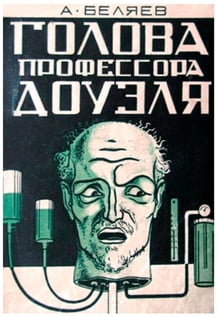
Professor Dowell’s Head (1925). Public domain, creative commons.

This article sets out an assertion that a mass art project can make a virtue of ‘network extension’ through an Instagram account, to build creative community, new connections, and physical artwork outcomes. We Are Making A Film About Mark Fisher is an example of a ‘manifested artwork’, where Fisher’s ideas on capitalism and community are explored through electronic media. We have taken the work of critical theorist, Mark Fisher, and subjected it to a process of détournement, alluding to the work of Guy de Bord and The Situationists. The thing in itself—Fisher’s processed ideas—are reprocessed and held up against the posthumous period between 2017 and now, since he died. The assertion in the work is that while the tools are circumscribed by a set of ‘standards’ and ‘production processes’, this does not delimit them from being employed towards the evolution of embodied and shared actions that develop a counter-narrative or something that eschews the methods of Hollywood or broadcast television documentaries. We just have to learn ways to do this. ‘Decapitalising’ a process, working with human agency and good will, turns the platform of Instagram into a tool of empowerment—reappropriating the algorithm and capturing the collective back from the closed corporate system of control. We see that a form of value is pulled back out of the machinic effects of a proprietary platform.

9 March 2026

This study advances the Confucian Visual Transformation Model (CVTM) to analyse how Confucian values are visually reformulated in contemporary Malaysian Chinese art. Integrating artist interviews (n = 5), symbolic visual coding, and audience surveys (n = 227), the research addresses the lack of empirical frameworks for transcultural aesthetics. While an initial exploratory factor analysis (EFA) confirmed four dimensions—Ren (benevolence), He (harmony), WenZhi (technique-ideology), and MeiShan (aesthetic-moral)—it also revealed structural overlaps. Consequently, the study proposes CVTM 2.0, which replaces additive metrics with a tension-driven fusion mechanism. Key innovations include a Symbolic Tension Index (STI) for dynamic weighting and a fuzzy integration layer to handle overlap between WenZhi and MeiShan. Results indicate that Confucian dimensions are not static but are activated through compositional and material tensions. Theoretically, this reframes Confucian aesthetics as a context-responsive system; practically, it offers a replicable blueprint for analysing postcolonial identity negotiation in Southeast Asian art.

3 March 2026

This article examines the avant-garde reformulation of the nature–culture dichotomy. Within avant-garde discourse, the traditional opposition between the organic and the mechanical—and, by extension, between the body and the machine—evolves into a specific dialectical form based on the principle of juxtaposition-in-identity. In this framework, a metaphysics of corporeality comes into conflict with an instrumentalist understanding of the organic. The analysis identifies a key conceptual shift in the 1920s: the notion of the body is superseded by that of the organism, which is subsequently transfigured into the machine. Focusing on Russian painting from the 1910s to the early 1930s, this study employs a comparative and typological methodology. It analyzes works by Mikhail Larionov, Mikhail Matyushin, and Pavel Filonov in relation to those of Konstantin Redko, situating this analysis within a broader art-historical and intellectual context. The research traces and exemplifies a pivotal transition in visual art: the shift from the early avant-garde mythopoetics of the machine–human to the late-1920s construct of the human–machine, as theorized in biomechanics and gesture studies. The article foregrounds electricity as a central pictorial motif, arguing that it served as a powerful visual and conceptual medium for synthesizing the organic with the mechanical and the mythological with the ideological. Ultimately, it posits that the internal social logic of this aesthetic shift contributed to the formation of the totalitarian body politic in Stalinist Russia.

3 March 2026

News & Conferences

Issues

Open for Submission

Editor's Choice

XFacebookLinkedIn
Arts - ISSN 2076-0752