

Journal Menu
► ▼ Journal Menu-
- Brain Sciences Home
- Aims & Scope
- Editorial Board
- Reviewer Board
- Topical Advisory Panel
- Instructions for Authors
- Special Issues
- Topics
- Sections & Collections
- Article Processing Charge
- Indexing & Archiving
- Editor’s Choice Articles
- Most Cited & Viewed
- Journal Statistics
- Journal History
- Journal Awards
- Society Collaborations
- Conferences
- Editorial Office
Journal Browser
► ▼ Journal BrowserNeed Help?
Announcements
15 May 2026
Brain Sciences Exceptional Reviewers List 2026

We are thrilled to share the updated Exceptional Reviewers List 2026. This program was established to recognize and honor scholars who have consistently delivered exceptional review reports to our journal. Committed to fostering rigorous research and promoting knowledge exchange, the journal acknowledges the vital role our reviewers play in maintaining the quality and integrity of the articles we publish. According to surveys conducted in 2025, 93% of our authors rated the peer review process as good or excellent, reflecting the strength and effectiveness of our reviewer community.
We would like to express our sincere appreciation to all the reviewers who have generously volunteered their time and expertise to assist in Brain Sciences’ peer-review process. Their dedication and attention to detail in evaluating manuscripts, offering valuable feedback, and contributing to academic rigor are truly commendable.
The Exceptional Reviewers List was introduced in May 2026. Each quarter, we will be selecting a group of outstanding reviewers and introducing them here.
Q1:
Name: Dr. Ghazaleh Soleimani
Affiliation: Department of Psychiatry and Behavioral Sciences, University of Minnesota, Minneapolis, United States
Name: Dr. Jaisan Islam
Affiliation: Department of Neuroscience, College of Medicine, Chungbuk National University, Republic of Korea
Name: Dr. Laila Craighero
Affiliation: Department of Neuroscience and Rehabilitation, University of Ferrara, Italy
Name: Dr. Ivan Serbetar
Affiliation: University of Zagreb, Faculty of Teacher Education, Croatia
Name: Dr. Hannah Carlson
Affiliation: Department of Psychology and Program in Neuroscience, Davidson College, USA
Name: Dr. Atul Gopal
Affiliation: California National Primate Center, University of California-Davis, USA
Name: Dr. Dana-Lynn Koomoa
Affiliation: Department of Pharmaceutical and Administrative Sciences, Western New England University, United States
Name: Dr. Trevor Gerson
Affiliations: 1 Children's Mercy Kansas City, USA; 2 University of Missouri - Kansas City, Missouri, USA
Name: Dr. Konstantina Kitsou
Affiliation: National and Kapodistrian University of Athens, Athens, Greece
Name: Dr. Logan T. Trujillo
Affiliation: Department of Psychology, Texas State University, United States
“I enjoy reviewing for Brain Sciences (MDPI) because their online review process allows me to efficiently provide authors with constructive feedback and quality assurance of their scientific research.”
7 May 2026
Brain Sciences | Highly Cited Papers in 2024 in the “Neuropsychiatry” Section

The “Neuropsychiatry” Section, in Brain Sciences (ISSN: 2076-3425), gathers the best available scientific evidence to guide clinical practice in the treatment of psychiatric illnesses. Original articles and reviews which advance our understanding of the etiology, course, and treatment of psychiatric illnesses are welcome. Papers reporting sound evidence-based practices which provide safeguards against reporting bias and promote the reproducibility of study procedures and the replicability of results, for example through the preregistration of study hypotheses, will also be highly valued.
All articles published in our journal are available in an open access format, granting you unrestricted access to the full free text. We invite you to explore our most highly cited papers in 2024 listed below:
1. “Neurobiological Underpinnings of Hyperarousal in Depression: A Comprehensive Review”
by Musi Xie, Ying Huang, Wendan Cai, Bingqi Zhang, Haonan Huang, Qingwei Li, Pengmin Qin and Junrong Han
Brain Sci. 2024, 14(1), 50; https://doi.org/10.3390/brainsci14010050
Available online: https://www.mdpi.com/2076-3425/14/1/50
2. “Autistic Traits as Predictors of Increased Obsessive–Compulsive Disorder Severity: The Role of Inflexibility and Communication Impairment”
by Liliana Dell’Osso, Benedetta Nardi, Chiara Bonelli, Giulia Amatori, Maria Alessandra Pereyra, Enrico Massimetti, Ivan Mirko Cremone, Stefano Pini and Barbara Carpita
Brain Sci. 2024, 14(1), 64; https://doi.org/10.3390/brainsci14010064
Available online: https://www.mdpi.com/2076-3425/14/1/64
3. “Behavioral and Psychiatric Disorders in Syndromic Autism”
by Ann C. Genovese and Merlin G. Butler
Brain Sci. 2024, 14(4), 343; https://doi.org/10.3390/brainsci14040343
Available online: https://www.mdpi.com/2076-3425/14/4/343
4. “The Effect of Antipsychotics on Cognition in Schizophrenia—A Current Narrative Review”
by Petru Fabian Lungu, Corina Miruna Lungu, Alin Ciobica, Ioana Miruna Balmus, Raluca Vitalaru, Ioannis Mavroudis, Romeo Dobrin, Mirela Cimpeanu and Irina Luciana Gurzu
Brain Sci. 2024, 14(4), 359; https://doi.org/10.3390/brainsci14040359
Available online: https://www.mdpi.com/2076-3425/14/4/359
5. “Prevalence and Correlates of the Concurrence of Autism Spectrum Disorder and Obsessive Compulsive Disorder in Children and Adolescents: A Systematic Review and Meta-Analysis”
by Claudia Aymerich, Malein Pacho, Ana Catalan, Noorulain Yousaf, Violeta Pérez-Rodríguez, Matthew J. Hollocks, Mara Parellada, Georgina Krebs, Bruce Clark and Gonzalo Salazar de Pablo
Brain Sci. 2024, 14(4), 379; https://doi.org/10.3390/brainsci14040379
Available online: https://www.mdpi.com/2076-3425/14/4/379
6. “Role of Glial Cells in Neuronal Function, Mood Disorders, and Drug Addiction”
by Yousef Tizabi, Bruk Getachew, Sheketha R. Hauser, Vassiliy Tsytsarev, Alex C. Manhães and Victor Diogenes Amaral da Silva
Brain Sci. 2024, 14(6), 558; https://doi.org/10.3390/brainsci14060558
Available online: https://www.mdpi.com/2076-3425/14/6/558
7. “Optimizing and Predicting Antidepressant Efficacy in Patients with Major Depressive Disorder Using Multi-Omics Analysis and the Opade AI Prediction Tools”
by Corrivetti, Giulio, Francesco Monaco, Annarita Vignapiano, Alessandra Marenna, Kaia Palm, Salvador Fernández-Arroyo, Eva Frigola-Capell, Volker Leen, Oihane Ibarrola, Burak Amil et al.
Brain Sci. 2024, 14(7), 658; https://doi.org/10.3390/brainsci14070658
Available online: https://www.mdpi.com/2076-3425/14/7/658
8. “Dopamine Dysregulation in Reward and Autism Spectrum Disorder”
by Kenneth Blum, Abdalla Bowirrat, Keerthy Sunder, Panayotis K. Thanos, Colin Hanna, Mark S. Gold, Catherine A. Dennen, Igor Elman, Kevin T. Murphy and Milan T. Makale
Brain Sci. 2024, 14(7), 733; https://doi.org/10.3390/brainsci14070733
Available online: https://www.mdpi.com/2076-3425/14/7/733
9. “Treatment of Cognitive Impairment Associated with Schizophrenia Spectrum Disorders: New Evidence, Challenges, and Future Perspectives”
by Irene Calzavara-Pinton, Gabriele Nibbio, Stefano Barlati, Lorenzo Bertoni, Nicola Necchini, Daniela Zardini, Antonio Baglioni, Stefano Paolini, Laura Poddighe, Viola Bulgari et al.
Brain Sci. 2024, 14(8), 791; https://doi.org/10.3390/brainsci14080791
Available online: https://www.mdpi.com/2076-3425/14/8/791
10. “Insights into the Effect of Light Pollution on Mental Health: Focus on Affective Disorders—A Narrative Review”
by Giulia Menculini, Federica Cirimbilli, Veronica Raspa, Francesca Scopetta, Gianmarco Cinesi, Anastasia Grazia Chieppa, Lorenzo Cuzzucoli, Patrizia Moretti, Pierfrancesco Maria Balducci, Luigi Attademo et al.
Brain Sci. 2024, 14(8), 802; https://doi.org/10.3390/brainsci14080802
Available online: https://www.mdpi.com/2076-3425/14/8/802
11. “Low-Grade Inflammation Associated with Major Depression Subtypes: A Cross-Sectional Study”
by Veronique Bernier, Ghada Alsaleh, Camille Point, Benjamin Wacquier, Jean-Pol Lanquart, Gwenolé Loas and Matthieu Hein
Brain Sci. 2024, 14(9), 850; https://doi.org/10.3390/brainsci14090850
Available online: https://www.mdpi.com/2076-3425/14/9/850
12. “Food Addiction”
by Haley Krupa, Ashley N. Gearhardt, Anne Lewandowski and Nicole M. Avena
Brain Sci. 2024, 14(10), 952; https://doi.org/10.3390/brainsci14100952
Available online: https://www.mdpi.com/2076-3425/14/10/952
13. “Mitochondrial Dysfunction as a Biomarker of Illness State in Bipolar Disorder: A Critical Review”
by Anna Giménez-Palomo, Helena Andreu, Oscar de Juan, Luis Olivier, Iñaki Ochandiano, Lidia Ilzarbe, Marc Valentí, Aldo Stoppa, Cristian-Daniel Llach, Giulio Pacenza et al.
Brain Sci. 2024, 14(12), 1199; https://doi.org/10.3390/brainsci14121199
Available online: https://www.mdpi.com/2076-3425/14/12/1199
14. “Identity and Temporal Fragmentation in Borderline Personality Disorder: A Systematic Review”
by Ilaria Faggioli, Cecilia Maria Esposito and Giovanni Stanghellini
Brain Sci. 2024, 14(12), 1221; https://doi.org/10.3390/brainsci14121221
Available online: https://www.mdpi.com/2076-3425/14/12/1221
6 May 2026
Interview with Dr. Sami Barrit—Winner of the Brain Sciences Best Paper Award
We are honored to announce that Dr. Sami Barrit has been selected as the winner of the Brain Sciences Best Paper Award 2025.
The following is an interview with Dr. Sami Barrit:
1. Can you please provide us with a short self-introduction?
I'm a young neurosurgeon born and raised in Brussels, specializing in stereotactic and functional neurosurgery with a particular focus on epilepsy surgery. I trained across several countries—France, Japan, and now the US—and have recently joined the Computational Precision Health program at UC Berkeley and UCSF. My research interest lies at the intersection of human and artificial intelligence, from clinical decision support to brain–computer interfaces.
2. Congratulations on your published paper and the award it has received! Could you briefly introduce your research focus and the key findings of the award-winning paper? What inspired this work?
In this study, we showed that a specialized, well-constrained LLM leveraging a curated neurology corpus outperformed practicing neurologists in a blinded evaluation of complex diagnostic cases with no hallucinations detected (that was still a major thing, back in the not-so-long-ago days). The project was motivated by a simple question: Can we build AI that is not just impressive in general, but genuinely trustworthy in the kind of difficult reasoning neurologists deal with every day?
3. What were the biggest challenges you faced during this research, and how did you overcome them?
Devising a paradigm rigorous and fair enough to be meaningful was the first challenge — but honestly, the hardest part was, as very busy residents, coordinating very busy clinicians across institutions to participate and be evaluated under proper blinded conditions. That only worked thanks to an efficient and trusting collaboration with my co-author and friend (and smartest neurologist I know), Nathan Torcida, MD, and a shared commitment to getting it right rather than getting it done fast.
4. What are the potential applications or long-term impacts of your award-winning research? How might it benefit industry or society?
Beyond the now widely debated benefits and risks of AI-driven clinical support, what I find most humbling in these findings is what they suggest about differential diagnosis itself—long considered the pinnacle of medical intellect—and how AI challenges us to rethink it. Not as a threat, but as an invitation to develop new practices of co-intelligence that, well-mastered, I believe represent a genuine opportunity for both better care and broader access to it.
5. Based on your experience, what advice would you give to early career researchers working in neurosciences?
Trust your gut and know that effort pays. Find your natural interest, your method, and—most importantly—your people, because the process matters as much as the outcome. Focus on your passion and mission, and don't let the noise distract you from it.
6. Why did you choose to publish your work in Brain Sciences? What factors influenced your decision?
Open access, a broad audience across clinical neuroscience, and an editorial process that was both efficient and respectful of authors' time, which, I'll be honest, is becoming rarer than it should be.
7. As a Best Paper Award winner, what suggestions do you have for Brain Sciences to further enhance its service or impact?
Produce richer multimedia content alongside publications—podcasts, interviews, short videos featuring guest editors or authors of landmark papers. The science is there; making it more alive and accessible to a wider audience would meaningfully extend its reach.
6 May 2026
MDPI INSIGHTS: The CEO's Letter #34 - MDPI US Office, Coatings 2026, Media and Partnerships, Recapping Poland Summit & Serbia Salon

Welcome to the MDPI Insights: The CEO's Letter.
In these monthly letters, I will showcase two key aspects of our work at MDPI: our commitment to empowering researchers and our determination to facilitating open scientific exchange.
Opening Thoughts

MDPI Opens First US Office in Philadelphia
I am delighted to highlight an important milestone in MDPI’s continued global development: the recent opening of our first office in the United States, located in Philadelphia.
This marks a significant step in building our engagement with one of the world’s most important research communities. The new office will serve as a hub for supporting scholars across the US, creating closer connections and more localized support.
As highlighted in recent coverage by our press release in InPublishing, this expansion reflects MDPI’s broader commitment to growing our international presence while remaining focused on the needs of the research community.
A Key Market for Research and Collaboration
The United States continues to play a central role in global research. To date, MDPI has published more than 237,000 articles affiliated with US institutions, and we collaborate with nearly 12,000 Editorial Board Members across the country. These relationships are fundamental to our mission of supporting Open Access and advancing scientific communication.
The opening of this office is not just about geography; it is about proximity to the communities we serve. It allows us to better understand the evolving needs of researchers while continuing to build collaboration and trust within the academic ecosystem.
The Team Behind this Milestone

This milestone reflects the efforts of teams across MDPI. I extend a special thank-you to Bob Vrooman (Head of Business Development, MDPI), who is leading this expansion, as well as to our colleagues in Toronto and across our North American teams for their continued support.
Bob shared: “MDPI is already a trusted partner of the North American research community, due in no small part to our dedicated team in Canada. Launching our first US office in Philadelphia is a great first step towards expanding MDPI’s market share and recognition in the US. I’m thrilled to be a part of this new phase in MDPI’s journey.”
As we continue to grow, our focus remains on supporting researchers globally and advancing Open Access with integrity.
Impactful Research

Coatings 2026: Highlights from Our Latest MDPI Conference (20-22 April)
I am pleased to share the successful completion of MDPI conference Coatings 2026, which took place last week in Athens from 20 to 22 April 2026. This conference brought together a diverse international community of researchers, industry experts, and partners, highlighting MDPI’s role not only as a publisher but also as a platform for scientific exchange and collaboration.
Conference Highlights
Coatings 2026 in numbers:
- The event attracted approximately 140 participants from 25 countries
- 143 submissions and a strong scientific program of talks and posters
- 2 keynote speakers and a wide range of invited contributions
- 7 sponsors and 11 media partners supporting the event
|
|
|
|
|
|


Scientific Programme
The program centered on “Safe and Sustainable by Design,” reflecting the growing importance of sustainability, regulatory frameworks, and technological innovation in materials science. Topics ranged from advanced coating technologies and additive manufacturing to AI-driven simulations and strategies to phase out potentially harmful substances in industrial processes.
Importantly, the conference brought together both academic and industrial perspectives, creating a space for dialogue on how research can translate into real-world impact. This is important as industries navigate environmental challenges, evolving regulations, and the need for more sustainable and circular approaches to production.
Thank You!
I would like to thank the entire conference team for their work in organizing this successful event. As we continue to grow, conferences like this play an important role in building our connection with global research communities, supporting interdisciplinary collaboration, and positioning MDPI at the intersection of science, technology, and societal impact.
 Members from Exelisis and MDPI EU Conference & Social Media team at the Coatings 2026 Conference in Athens, Greece.
Inside MDPI

Recent Media Coverage and Partnerships
Over the past two months, news from MDPI has enjoyed strong visibility across international publishing and academic media, reflecting our continued expansion and the increasing relevance of our work within the research community.
Below are some highlights covering partnerships, institutional agreements, and milestones that continue to shape our position in publishing – some of which are featured in leading industry platforms such as InPublishing, which is highly selective and reflects the growing recognition of MDPI’s growth within the publishing ecosystem.
Key Press Releases & Coverage (March–April 2026)
-
MDPI × Sikt (Norway): Partnership Renewal
We renewed our national Open Access agreement with Sikt, a key consortium partnership, continuing to support researchers across Norway through this partnership. The renewal was covered by several international publishing trade outlets.
Covered by: Research Information, STM Publishing News, ALPSP, Europe Says
-
MDPI × Jisc (UK): New Two-Year Open Access Agreement
A new two-year agreement with Jisc significantly expands MDPI’s footprint across UK academic institutions. Coverage appeared across major publishing industry titles in the UK and internationally.
Covered by: InPublishing, Research Information, STM Publishing News, ALPSP
-
MDPI Opens First US Office
The opening of our first US office marks an important milestone in our North American expansion to build engagement with one of the world’s leading research communities.
Coverage by: EurekAlert!, InPublishing, EdTech Innovation Hub, STM Publishing News, ALPSP
-
MDPI × SIGG: Italian Society of Gerontology and Geriatrics
We established a new partnership with the Italian Society of Gerontology and Geriatrics (SIGG), adding to our growing portfolio of society collaborations.
Coverage by: EurekAlert!, STM Publishing News, ALPSP
-
MDPI × Fast Track Health: New Journal Launch
The launch of a new journal in partnership with Fast Track Health reflects our continued expansion into emerging areas of health innovation.
Coverage by: EurekAlert!, Scienmag, STM Publishing News, ALPSP
-
MDPI 2025 Annual Report
Our 2025 Annual Report was also widely covered across international media, highlighting a 12% increase in submissions and continued investment in research integrity, infrastructure, and partnerships.
Coverage by: EurekAlert!, Research Information, STM Publishing News, ALPSP, Choice 360
Coverage also spanned multiple regions including Poland, Romania and South Korea, reflecting our ongoing efforts to communicate more effectively with regional research communities.
Looking Ahead
This coverage shows that MDPI is growing and building on its position through partnerships, visibility, and engagement across regions. As we continue to expand, our focus remains on supporting researchers globally, building on our institutional collaborations, and advancing Open Access with integrity.
Thank you to all teams involved in delivering these initiatives, and to our External Affairs team for ensuring our work is effectively communicated across the global publishing landscape!
Coming Together for Science

Recapping MDPI Poland Summit 2026 in Krakow (23 April)
On 23 April 2206, we hosted the first MDPI Poland Summit 2026 in Kraków, bringing together an engaged group of editors, researchers, and academic leaders from the country.
The Poland Summit welcomed some 45 participants, including Editors-in-Chief, Associate Editors, and Editorial Board Members, many with strong academic track records and international recognition.
Our engagements were open and constructive, focusing on MDPI’s positioning and reputation in Poland, alongside community interest in supporting our development, with active participation across our sessions, including Q&A and panel discussions.
|
|
|
|


MDPI Poland Summit Programme
From research integrity and peer review quality to AI in publishing and the future of academic communication, the agenda featured important topics currently shaping our industry.
During the day, MDPI colleagues shared a series of presentations covering:
- MDPI’s performance, growth, and impact in Poland: Stefan Tochev (CEO)
- Engagement with Academic Community: Dr. Marta Colomer (Public Affairs Lead)
- Research Integrity and Publication Ethics: Anna Pena (Research Integrity Manager)
- MDPI Editorial Process and Peer-Review Quality Metrics: Dr. Liliane Auwerter (Conference Organizer)
- AI in the Publishing Industry – Challenges, Innovation and MDPI’s vision: Dr. Enric Sayas (AI Product Owner)
- Panel Session: The Future of Academic Publishing, moderated by Dr. Marta Colomer
|
|
|
|
|
|
|
|


Poland as a Key Market for Open Access
The summit also highlighted the importance of Poland within the global research landscape.
In 2025:
- 75% of publications in Poland were made in Open Access
- 71% of those in Gold Open Access
- and over 344,000 publications produced in the last five years
MDPI plays a significant role in the Polish publishing ecosystem:
- #1 Open Access publisher in Poland
- 17% share of Open Access publications in 2025
- More than 12,500 publications from Polish institutions in 2025
- More than 91,000 publications overall since 1996
Looking Ahead
Events like the Poland Summit are an important part of how we evolve as an organization. They allow us to share the latest developments of MDPI and listen directly to our researchers and editors to better understand the market and align our development with the needs of the local community.
As MDPI continues to grow, this type of engagement will remain essential in ensuring that we are not only scaling globally, but doing so in a way that is aligned, trusted, and collaborative.

With Igor Matic (Office Manager, Krakow, Poland, MDPI) at the MDPI Poland Summit in Krakow.
Closing Thoughts

Recapping MDPI Serbia Salon 2026 in Belgrade (22 April)
On 22 April 2026, we hosted the MDPI Serbia Salon 2026 in Belgrade. The Salon welcomed over 50 participants, including more than 40 invited scholars from leading Serbian institutions, alongside colleagues from MDPI. The event also marked two important milestones: 30 years of MDPI and 10 years of our presence in Serbia, making it a celebration and an opportunity for reflection.

A Platform for Exchange
The Salon was designed not just as a series of presentations, but as a place for dialogue. Throughout the day, discussions focused on important topics around publishing today: research integrity and editorial standards, journal indexing and visibility, the evolving role of artificial intelligence, and funding and support for Open Access publishing.
|
|
|
|
|
|
|
|


Program Overview
- Opening the Salon MDPI Serbia 2026 – Serbia results and direction: Emir Ramadani (Operations Manager)
- Update on MDPI’s performance and growth: Stefan Tochev (CEO)
- Collaboration with MDPI – A personal perspective: Prof. Dr Srećko Stopić (Editorial Board Member)
- Linking Scientific Quality and Visibility: The role of indexing in publishing
- Research integrity and editorial ethics: Ana Stanković (Research Integrity Specialist)
- Artificial Intelligence in Scientific Publishing – Challenges, innovations and vision of MDPI: Dr Miloš Čučulović (Head of Technology Innovation)
It was encouraging to see the high level of engagement and discussion with the local academic community.
|
|
|
|
|
|
|
|


Publishing in Serbia
With 10 years of MDPI in Serbia (since 2016) and over 620 colleagues across 10 departments spread across offices in Belgrade and Novi Sad, MDPI continues to invest in the long-term development of the research community in Serbia and beyond.
Some high-level indicators illustrate both the strength of the local research ecosystem and MDPI’s role within it:
- 12,910 total publications in Serbia in 2025, of which 8,708 (67%) were Open Access (of which, in turn, 75% were Gold OA)
- A total of more than 55,000 publications (2021–2025), with 68% published Open Access
- 2,122 MDPI publications from Serbian institutions in 2025
- 25% of all Open Access publications in Serbia are published with MDPI
- More than 11,000 MDPI publications from Serbian institutions since 1996
- More than 75 Editorial Board Members from Serbia, including Editors-in-Chief and Associate Editors.
These figures reflect the growth of OA publishing in Serbia and the strong collaboration between MDPI and Serbia's research community.
Top 5 Publishers in Serbia (MDPI #1 with steady growth)

Looking Ahead
Research integrity and artificial intelligence will remain central topics for the industry. At the same time, clear communication of editorial processes will be essential in building trust and transparency.
Workshops and direct engagement remain among the most effective ways to strengthen these connections. As Open Access funding models continue to evolve, new opportunities for collaboration are emerging across institutions, publishers, and the broader research community.
Thank You!
The excellent feedback from participants shows the value of creating spaces where ideas can be exchanged openly and constructively. Sincere thanks to everyone who contributed to the success of this event: our speakers, participants, and especially the MDPI Serbia team for their great organization and support.

Chief Executive Officer
MDPI AG
6 May 2026
Brain Sciences | Highly Viewed Special Issues Published in 2024–2025

We invite you to read the following highly viewed Special Issues from 2024 and 2025, published in Brain Sciences (ISSN: 2076-3425). You are welcome to browse the Special Issues and the articles published in them that are of interest to you. In addition, you can find more highly cited and viewed Special Issues and articles published in Brain Sciences here.
1. “Focus on Mental Health and Mental Illness in Adolescents”
Guest Editor: Prof. Dr. Dariusz Krok
Views: 119040+
2. “Psychiatry and Addiction: A Multi-Faceted Issue”
Guest Editors: Prof. Dr. Fabrizio Schifano, Prof. Dr. Norbert Scherbaum and Dr. Giovanni Martinotti
Views: 101660+
3. “Brain Network Connectivity Analysis in Neuroscience”
Guest Editors: Dr. Mukesh Dhamala and Dr. Sahil Bajaj
Views: 70310+
4. “Recent Advances in Assessment and Rehabilitation of Individuals with Communication and Language Disorders”
Guest Editors: Dr. Dionysios Tafiadis, Prof. Dr. Nafsika Ziavra, Dr. Louiza Voniati and Dr. Angelos Papadopoulos
Views: 60880+
5. “Exploring the Mental Health of People with Autism”
Guest Editors:Dr. Domingo Garcia-Villamisar, Dr. María Álvarez-Couto and Dr. Gema Pilar Saez Suanes
Views: 99520+
6. “In the Arms of Morpheus: Recent Advances in Dreaming and in Other Sleep-Related Metacognitions”
Guest Editors: Dr. Sergio A. Mota-Rolim, Dr. Brigitte Holzinger, Dr. Michael Nadorff and Prof. Dr. Luigi De Gennaro
Views: 76190+
7. “Advances of AI in Neuroimaging”
Guest Editors: Dr. Iman Beheshti, Dr. Daichi Sone and Prof. Dr. Carson Leung
Views: 72310+
8. “Advances in Neuroinflammation”
Guest Editors: Dr. Junhui Wang, Dr. Hongxing Wang and Dr. Jing Sun
Views: 65460+
9. “Amyotrophic Lateral Sclerosis: Recent Considerations for Diagnosis, Pathogenesis and Therapy”
Guest Editor: Prof. Dr. Andrew Eisen
Views: 65400+
10. “Brain Stimulation for Psychiatric Disorders: Emerging Evidence and New Perspectives”
Guest Editors: Dr. Stefano Barlati and Dr. Jacopo Lisoni
Views: 59080+
30 April 2026
MDPI Open Science Insights: Academic Publishing Workshop at the Universidad Complutense de Madrid, 11 May 2026

MDPI is excited to collaborate with the Universidad Complutense de Madrid to host an exclusive academic publishing workshop aimed at empowering researchers with the knowledge and tools needed for successful academic publishing. This workshop will cover key aspects of MDPI’s open access publishing model, including journal selection, editorial workflow, and publication ethics. Participants will receive practical tips on improving their scientific writing and addressing reviewer comments, guided by experienced editors.
Date: 11 May 2026
Time: 15:30–17:30
Venue: Universidad Complutense de Madrid, Facultad de Ciencias Biológicas
Schedule:
|
Speaker |
Program and Content |
Time |
|
Ms. Caral Zhou |
Introduction to Open Access and the Biology & Brain Sciences Journal |
15:30 – 15:55 |
|
Ms. Caral Zhou |
Peer-Review Editorial Process |
15:55 – 16:20 |
|
Ms. Caral Zhou |
Open Access and Publication Repositories |
16:20 – 16:40 |
|
Mr. Iñigo Aristizabal |
Integrity in Scientific Publishing |
16:40 – 16:55 |
|
Mr. Iñigo Aristizabal |
Responsible Use of AI in Academic Publications |
16:55 – 17:20 |
|
Mr. Iñigo Aristizabal |
Quality Criteria in Scientific Publications |
17:20 – 17:30 |
|
|
Q&A Session |
|
Chair:
 |
Dr. Nuria de Pedro Ormeño, Editorial Board Member of Biology |
Speakers:
|
|
Mr. Iñigo Artistizabal is a biochemist with strong expertise in the academic publishing industry. He joined the MDPI office in Barcelona as an Assistant Editor in November 2017 and has worked as a Section Managing Editor and later as Senior Journal Relations Specialist, helping journals with scholarly meetings and booth attendance at both virtual and in-person conferences. |
 |
Ms. Caral Zhou holds a master’s degree from the University of Barcelona. She began her career at MDPI in 2023, working with the International Journal of Molecular Sciences (IJMS) and the Journal of Functional Morphology and Kinesiology (JFMK). In 2024, she advanced to the position of Section Managing Editor, and in 2025, she was appointed Journal Relations Specialist for JFMK, where she continues to contribute to the journal’s development and collaboration initiatives. |

24 April 2026
Prof. Dr. William Gerwick Appointed Chair of the 2026 Tu Youyou Award Committee
We are honored to announce that Prof. Dr. William Gerwick will serve as the Chair of the 2026 Tu Youyou Award Committee.
A world-renowned authority in marine natural products chemistry and pharmacology, Professor Gerwick is a Distinguished Professor at both the Scripps Institution of Oceanography and the Skaggs School of Pharmacy and Pharmaceutical Sciences at the University of California San Diego (UCSD). His pioneering work at the intersection of ocean sciences and drug discovery makes him a fitting leader for an award centered on transformative medicinal breakthroughs.
Under Professor Gerwick’s stewardship, the 2026 Tu Youyou Award Committee will focus on recognizing innovative and impactful research in natural products chemistry and medicinal chemistry, particularly work with the potential to drive meaningful advances in both scientific understanding and human health.
To provide further insight into his perspectives, we include below an interview with Professor Gerwick, in which he reflects on his scientific journey, his views on the field, and his vision for the Tu Youyou Award.
A Conversation with the Chair

1. Could you please introduce yourself and your research journey?
My research focuses on the natural products of marine algae and cyanobacteria, their application in medicine, their biosynthesis using genomic approaches, and innovative methods in the structure elucidation of natural products.
I received my BS degree from the University of California at Davis, my PhD from the University of California at San Diego, and conducted postdoctoral work at the University of Connecticut. After a couple of years in a junior faculty position at the Department of Chemistry at the University of Puerto Rico, I spent 21 years as Professor of Pharmacy at Oregon State University. In 2005, I returned to my PhD institution at the Scripps Institution of Oceanography and the Skaggs School of Pharmacy and Pharmaceutical Sciences at UC San Diego, where I am currently a Distinguished Professor of Oceanography and Pharmaceutical Sciences.
Throughout my career, I have been dedicated to advancing the field through both leadership and mentorship. I have served as president of the American Society of Pharmacognosy, chaired and co-chaired several major research conferences, and served as an associate editor for the Journal of Natural Products. I am a Fellow of the American Association for the Advancement of Science (AAAS) and of the American Society of Pharmacognosy. I have trained over 100 doctoral and postdoctoral students, and my research group has published nearly 500 papers and more than 25 patents on topics in the natural product sciences and medicinal chemistry.
2. What motivated you to accept the role of Chair of the 2026 Tu Youyou Award Committee?
Of course, I am a huge supporter of all awards that are given in recognition of excellent scientific research, and especially so in the natural products sciences and medicinal chemistry. However, this award is truly special in that it recognizes scientific excellence as well as impact, and is given in the name of an individual, Tu Youyou, who clearly had many challenges along the path to reach the pinnacle of her success. Not only was she the first Chinese person to win a Nobel prize in this area, but she was also the first Chinese woman to receive a Nobel prize, and this was achieved without graduate education in China or elsewhere. It’s a true testament to what can be achieved by hard work, determination, and vision. To read the history of her extraordinary approach to discovering novel antimalarial compounds from Traditional Chinese Medicine is truly inspirational. It is, therefore, the inspiration provided by the extraordinary life and career of Tu Youyou that motivated me to accept the Chair of the Award Committee for 2026.
3. How do you view the role of natural products chemistry and medicinal chemistry in today’s scientific landscape, and what major advances over the past decade have shaped this field?
A quite remarkable integration of fields is currently transforming natural products science and medicinal chemistry. In natural products, we are seeing integration of different omics methods, from metabolites to proteins to nucleic acids. Sophisticated biological and pharmacological approaches are driving the discovery of exquisitely potent and selective natural products. Advances are being made to integrate molecular-level recognition of natural products with chemical ecological studies, and sophisticated methods of structure determination using Artificial Intelligence or pioneering new tools such as microED are being applied with increasing frequency. High-level synthetic methodologies, such as protecting group-free synthetic routes, are enhancing medicinal chemistry, accelerating the identification of lead molecules with attractive pharmaceutical properties at an increasing pace.
4. How do you consider the balance between fundamental discovery (e.g., new molecules or mechanisms) and practical impact (e.g., therapeutic applications)?
Many individuals are excellent scientists and mentors, and have essential roles in developing our culture that values science and the scientific method. It should also be pointed out that not all scientific discoveries are going to have a broad societal impact, but they are nevertheless critical to the overall body and structure of science. But it is a truly remarkable individual who makes a key scientific discovery, recognizes its potential value to society in general, and then has the skills and determination to bring it forward as a useful product. That was the type of person the Tu Youyou is, and that is the type of person who is honored by the prize in her name.
5. What do you see as the key challenges or opportunities currently facing the field?
We are on the crux of an amazing revolution in many of the sciences, including natural products and medicinal chemistry; the purposeful application of Artificial Intelligence to solving many of the difficulties involved in the search for new pharmaceuticals from Nature. AI is transforming how we select organisms for study, what pharmaceutical targets to go after, rapidly resolving the chemical structures of new compounds, identifying efficient routes to their chemical synthesis, understanding their molecular mechanisms of action, and finally, designing their clinical application. The role of people in these pursuits is changing. Increasingly, the human role will be providing overall vision: what can we do? What should we do? And it is important to remember that AI is providing hypotheses, not truth. Scientists with expert domain knowledge will be critical for discerning the correctness of hypotheses put forth by AI. Altogether, advances in technology, expanding knowledge, and the appropriate use of AI methods are preparing society to be able to address emerging diseases, such as pandemics, as well as conditions that are not effectively treated by currently existing therapeutics.
6. How do you expect the Tu Youyou Award to contribute to the advancement of natural product chemistry, medicinal chemistry, and human health over the coming years?
The Tu Youyou Award is potentially transformative for the broad fields of natural products science and medicinal chemistry as it brings a significantly increased level of visibility to these topics and their contributions to human health. It will be crucial to have excellent communication to news agencies, social media and other communication outlets so that the general public is informed and educated on the high impact of these natural product/medicinal chemistry contributions. This will bring increased funding, attract promising students, and generally enrich the interface of these fields with the health sector.
7. What message would you like to convey to the research community and the public during this open nomination phase?
This prize gives broad societal visibility to the role that natural products have had in shaping a majority of our current medicines, as well as understanding the life forms with whom we share the planet. Further, it recognizes a woman scientist working under sub-optimal conditions who could persevere and make discoveries of global impact. The prize and what it represents, therefore, inspires current and future generations to engage in the study of Nature and its relationship to Human Health, to overcome adversity, and to aspire to making one’s life impactful.
About the Tu Youyou Award
Established in 2016, the Tu Youyou Award seeks to honor those who excel in the fields of natural products chemistry and medicinal chemistry. This award offers a total prize of CHF 100,000, which will be equally divided among the winners if there is more than one, with each recipient receiving an award medal and a certificate.
The 2026 Tu Youyou Award is open for nominations until 31 October 2026. We encourage all eligible candidates to participate in this prestigious recognition, as this award not only honors individual achievement but also encourages further scientific exchange, exploration and discovery in critical areas of medicine.
If you are interested in participating, please visit the Tu Youyou Award website for more information on the nomination requirements.
20 April 2026
Brain Sciences | Highly Cited Papers in 2024 in the “Computational Neuroscience, Neuroinformatics, and Neurocomputing” Section

The “Computational Neuroscience, Neuroinformatics, and Neurocomputing” Section of Brain Sciences (ISSN: 2076-3425) aim to improve our understanding of brain function, which requires interdisciplinary collaborations between theoretical, computational, and experimental disciplines and approaches. This Section fosters multidisciplinary interactions between theoretical, computational, and experimental work in the field of neuroscience.
This Section invites original contributions on a wide range of topics that promote theoretical modeling focused on understanding neural function at the molecular, cellular, and circuit levels via computational and model-based approaches that are experimentally testable. While the Section is primarily focused on theoretical and computational research, it welcomes experimental studies that validate and test theoretical conclusions. Primarily theoretical manuscripts should be highly relevant to the neural mechanisms of the neural function, while primarily experimental manuscripts should have implications for the computational analysis of nervous system function.
Manuscripts investigating physiological mechanisms underlying neuropathologies by combining theoretical and experimental approaches are highly encouraged. Similarly, manuscripts describing novel technological advances in data analysis techniques to further insights into the function of the nervous system are also highly encouraged. Modeling approaches at all levels, from biophysically motivated realistic simulations of neurons and synapses to high-level behavioral models of inference and decision-making, are also welcome.
All articles published in our journal are available in an open access format, granting you free, unrestricted access to the full text. We invite you to explore our most highly cited papers in 2024, listed below:
1. “Emotion Classification Based on Transformer and CNN for EEG Spatial–Temporal Feature Learning”
by Xiuzhen Yao, Tianwen Li, Peng Ding, Fan Wang, Lei Zhao, Anmin Gong, Wenya Nan and Yunfa Fu
Brain Sci. 2024, 14(3), 268; https://doi.org/10.3390/brainsci14030268
Available online: https://www.mdpi.com/2076-3425/14/3/268
2. “Graph Neural Networks in Brain Connectivity Studies: Methods, Challenges, and Future Directions”
by Hamed Mohammadi and Waldemar Karwowski
Brain Sci. 2025, 15(1), 17; https://doi.org/10.3390/brainsci15010017
Available online: https://www.mdpi.com/2076-3425/15/1/17
3. “A Comparative Study on Feature Extraction Techniques for the Discrimination of Frontotemporal Dementia and Alzheimer’s Disease with Electroencephalography in Resting-State Adults”
by Utkarsh Lal, Arjun Vinayak Chikkankod and Luca Longo
Brain Sci. 2024, 14(4), 335; https://doi.org/10.3390/brainsci14040335
Available online: https://www.mdpi.com/2076-3425/14/4/335
4. “Subject-Independent Emotion Recognition Based on EEG Frequency Band Features and Self-Adaptive Graph Construction”
by Jinhao Zhang, Yanrong Hao, Xin Wen, Chenchen Zhang, Haojie Deng, Juanjuan Zhao and Rui Cao
Brain Sci. 2024, 14(3), 271; https://doi.org/10.3390/brainsci14030271
Available online: https://www.mdpi.com/2076-3425/14/3/271
5. “EEG-Based Seizure Prediction Using Hybrid DenseNet–ViT Network with Attention Fusion”
by Shasha Yuan, Kuiting Yan, Shihan Wang, Jin-Xing Liu and Juan Wang
Brain Sci. 2024, 14(8), 839; https://doi.org/10.3390/brainsci14080839
Available online: https://www.mdpi.com/2076-3425/14/8/839
6. “The Clinical Relevance of Artificial Intelligence in Migraine”
by Angelo Torrente, Simona Maccora, Francesco Prinzi, Paolo Alonge, Laura Pilati, Antonino Lupica, Vincenzo Di Stefano, Cecilia Camarda, Salvatore Vitabile and Filippo Brighina
Brain Sci. 2024, 14(1), 85; https://doi.org/10.3390/brainsci14010085
Available online: https://www.mdpi.com/2076-3425/14/1/85
7. “Artificial Intelligence-Based Methodologies for Early Diagnostic Precision and Personalized Therapeutic Strategies in Neuro-Ophthalmic and Neurodegenerative Pathologies”
by Rahul Kumar, Ethan Waisberg, Joshua Ong, Phani Paladugu, Dylan Amiri, Jeremy Saintyl, Jahnavi Yelamanchi, Robert Nahouraii, Ram Jagadeesan and Alireza Tavakkoli
Brain Sci. 2024, 14(12), 1266; https://doi.org/10.3390/brainsci14121266
Available online: https://www.mdpi.com/2076-3425/14/12/1266
8. “Mental Workload Classification and Tasks Detection in Multitasking: Deep Learning Insights from EEG Study”
by Miloš Pušica, Aneta Kartali, Luka Bojović, Ivan Gligorijević, Jelena Jovanović, Maria Chiara Leva and Bogdan Mijović
Brain Sci. 2024, 14(2), 149; https://doi.org/10.3390/brainsci14020149
Available online: https://www.mdpi.com/2076-3425/14/2/149
9. “Review of EEG Affective Recognition with a Neuroscience Perspective”
by Rosary Yuting Lim, Wai-Cheong Lincoln Lew and Kai Keng Ang
Brain Sci. 2024, 14(4), 364; https://doi.org/10.3390/brainsci14040364
Available online: https://www.mdpi.com/2076-3425/14/4/364
10. “The Optimization of a Natural Language Processing Approach for the Automatic Detection of Alzheimer’s Disease Using GPT Embeddings”
by Benjamin S. Runde, Ajit Alapati and Nicolas G. Bazan
Brain Sci. 2024, 14(3), 211; https://doi.org/10.3390/brainsci14030211
Available online: https://www.mdpi.com/2076-3425/14/3/211
11. “A Data Augmentation Method for Motor Imagery EEG Signals Based on DCGAN-GP Network”
by Xiuli Du, Xiaohui Ding, Meiling Xi, Yana Lv, Shaoming Qiu and Qingli Liu
Brain Sci. 2024, 14(4), 375; https://doi.org/10.3390/brainsci14040375
Available online: https://www.mdpi.com/2076-3425/14/4/375
12. “MES-CTNet: A Novel Capsule Transformer Network Base on a Multi-Domain Feature Map for Electroencephalogram-Based Emotion Recognition”
by Yuxiao Du, Han Ding, Min Wu, Feng Chen and Ziman Cai
Brain Sci. 2024, 14(4), 344; https://doi.org/10.3390/brainsci14040344
Available online: https://www.mdpi.com/2076-3425/14/4/344
16 April 2026
MDPI’s Newly Launched Journals in the First Quarter of 2026
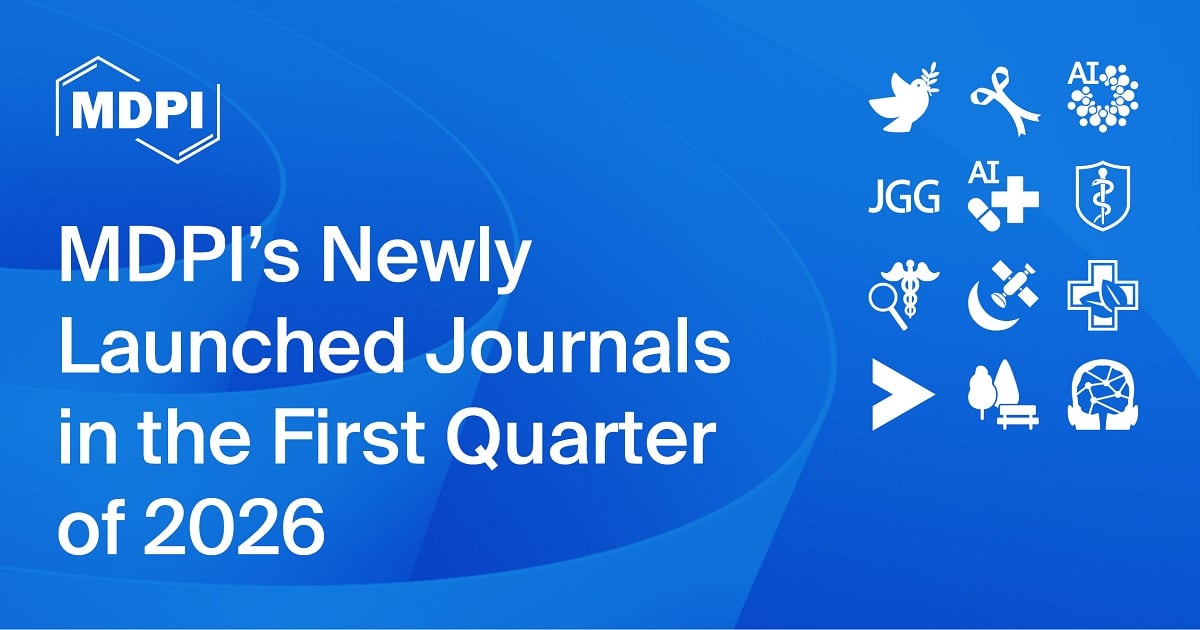
Our portfolio of journals available for publishing up-to-date research in immediate open access format has been further expanded. In the first quarter of 2026, nine new journals released their inaugural issues and three transferred journals released their first issue as part of MDPI, covering the subjects of clinical medicine, chemistry, computer science & mathematics, engineering, environment & ecology, and social sciences & psychology.
We extend our gratitude to the Editors-in-Chief, Associate Editors, and Editorial Board Members who will shape the future course of these brand-new journals. Each journal is dedicated to upholding strong editorial standards through a thorough peer review process, ensuring impactful open access scholarship.
Please feel free to browse and discover more about the new journals below.
|
New Journals |
Founding Editor(s)-in-Chief |
Journal Topics (Selected) |
|
|
Prof. Dr. Matt Oehlschlaeger, |
AI-based chemical data analysis, prediction, and discovery; AI-enabled chemical reaction prediction, synthesis planning, and retrosynthesis; AI in bioorganic chemistry and chemical biology; digital twins and simulation of chemical processes; AI-powered chemical education and pedagogy | |
|
|
Prof. Dr. Guang Jia, |
occupational hazards and exposure science; occupational health effects and susceptibility; occupational risk assessment and management; occupational health intervention, promotion, and policy | |
|
|
Prof. Dr. Alessandro Miani, |
environmental exposures and health; the built environment and public health; One Health approach; environmental justice and health equity; environmental policies and interventions | |
|
|
Prof. Dr. Miriam H. A. Bopp, |
neuroimaging technology and tool; multimodal neuroimaging integration and analysis; |
|
|
Prof. Dr. Raul A. Urrutia, |
personalized translational and clinical oncology research that contribute to a deeper understanding of cancer diagnoses, prognoses, prevention, and treatment specifically for individual patients | |
|
|
Prof. Dr. Pierre Boulanger, |
AI in disease detection, diagnosis, prediction, and treatment; medical informatics; AI in genomics and precision medicine; AI in drug discovery and development; |
|
|
Prof. Dr. Zhaokui Wang, |
astrodynamics; spacecraft technology; satellite technology; space transportation; space vehicle design, propulsion, and avionics; space energy, power and propulsion | |
|
|
Prof. Dr. Richard J Hauer, |
park design, planning, and evaluation; park and art; park, industrialization, urbanization, and civilization; park and education; park and smart society; park role in SDGs; park services for humans | |
|
|
Prof. Dr. Stacey L. Connaughton, |
conflict resolution; peacebuilding; peacemaking; mediation, reconciliation, and transitional justice; sustaining peace | |


|
Transferred Journals |
Editor(s)-in-Chief |
Journal Topics (Selected) |
|
|
Prof. Dr. Gianluigi Vendemiale, |
physiology and pathology of aging; biogerontology; epidemiology; clinical geriatrics; pharmacology; geriatric nursing | |
|
|
Prof. Dr. Michele Maffia, |
cellular and developmental biology; physiology, pathophysiology and endocrinology; diagnostic tools, therapies and public health | |
|
|
Dr. Warren S. Joseph, |
foot and ankle medicine; podiatric medicine | |


We would like to thank everyone who has supported the development of open access publishing. If you would like to create a new journal, you are welcome to send an application here or contact the New Journal Committee (newjournal-committee@mdpi.com).
2 April 2026
2026 Tu Youyou Award—Open for Nominations

We are delighted to announce that nominations are now open for the 2026 Tu Youyou Award. Named after Nobel Laureate Tu Youyou, whose discovery of artemisinin has saved millions of lives, this award recognizes researchers whose work advances the fields of natural products chemistry and medicinal chemistry, while also contributing to human health.
Prize
– CHF 100,000;
– A medal;
– A certificate.
The monetary prize will be shared equally should there be multiple recipients.
Who May Be Nominated?
– Scientists with outstanding achievements and contributions in the fields of natural products chemistry and medicinal chemistry.
Nominees must be individuals; team or group nominations are not permitted. Nominations are valid only for the current award cycle.
Who May Submit a Nomination?
– The director of the nominee’s host research institution or recognized scientists within the field.
Self-nominations will not be considered.
Nomination Materials
– A biographical sketch;
– A detailed description of the nominee’s contributions;
– 5–10 representative academic publications;
– A list of academic honors, awards, and funded projects;
– A nomination letter signed by two nominators.
How to Submit?
Submit nominations online via the following link: https://tuyouyouprize.org/nomination
Important Dates
– Nomination Deadline: 31 October 2026
– Winner Announcement: March 2027
For further information, please visit the Tu Youyou Award website (https://tuyouyouprize.org/). For any inquiries, please contact the Tu Youyou Award Team at tuyouyouaward@mdpi.com.
