



Journal Menu
► ▼ Journal Menu-
- CIMB Home
- Aims & Scope
- Editorial Board
- Reviewer Board
- Topical Advisory Panel
- Instructions for Authors
- Special Issues
- Topics
- Sections & Collections
- Article Processing Charge
- Indexing & Archiving
- Editor’s Choice Articles
- Most Cited & Viewed
- Journal Statistics
- Journal History
- Journal Awards
- Conferences
- Editorial Office
Journal Browser
► ▼ Journal Browser-
arrow_forward_ios
Forthcoming issue
arrow_forward_ios Current issue - Volumes not published by MDPI
- Vol. 42 (2021)
- Vol. 41 (2021)
- Vol. 40 (2021)
- Vol. 39 (2020)
- Vol. 38 (2020)
- Vol. 37 (2020)
- Vol. 36 (2020)
- Vol. 35 (2020)
- Vol. 34 (2019)
- Vol. 33 (2019)
- Vol. 32 (2019)
- Vol. 31 (2019)
- Vol. 30 (2019)
- Vol. 29 (2018)
- Vol. 28 (2018)
- Vol. 27 (2018)
- Vol. 26 (2018)
- Vol. 25 (2018)
- Vol. 24 (2017)
- Vol. 23 (2017)
- Vol. 22 (2017)
- Vol. 21 (2017)
- Vol. 20 (2016)
- Vol. 19 (2016)
- Vol. 18 (2016)
- Vol. 17 (2015)
- Vol. 16 (2014)
- Vol. 15 (2013)
- Vol. 14 (2012)
- Vol. 13 (2011)
- Vol. 12 (2010)
- Vol. 11 (2009)
- Vol. 10 (2008)
- Vol. 9 (2007)
- Vol. 8 (2006)
- Vol. 7 (2005)
- Vol. 6 (2004)
- Vol. 5 (2003)
- Vol. 4 (2002)
- Vol. 3 (2001)
- Vol. 2 (2000)
- Vol. 1 (1999)
Need Help?
Announcements
4 March 2026
MDPI’s 2025 Best Paper Awards—Award-Winning Papers Announced

MDPI is honored to announce the recipients of the 2025 Best Paper Awards, celebrating exceptional research for its scientific merit and broad impact. After a rigorous evaluation process conducted by Academic Editors, this year’s awards showcase papers that stand out for their innovation, relevance, and high-quality presentation.
Out of a highly competitive pool, 396 winning papers have been recognized for their exceptional contributions. We congratulate these authors for pushing the boundaries of their respective disciplines.
At MDPI, we are dedicated to broadening the reach of innovative science. To learn more about the award-winning papers and explore research projects in your field of study, please visit the following links:
- Biology and Life Sciences;
- Business and Economics;
- Chemistry and Materials Sciences;
- Computer Sciences and Mathematics;
- Engineering;
- Environmental and Earth Sciences;
- Medicine and Pharmacology;
- Social Sciences, Arts and Humanities;
- Physical Sciences;
- Public Health and Healthcare.
About MDPI Awards:
To reward the global research community and enhance academic dialogue, MDPI journals regularly host award programs across diverse scientific disciplines. These awards, serving as a source of inspiration and recognition, help raise the influence of talented individuals who have been credited with outstanding achievements and whose work drives the advancement of their fields.
Explore the Best Paper Awards open for participation, please click here.
27 January 2026
Meet Us at the 5th Molecules Medicinal Chemistry Symposium, 14–17 May 2026, Beijing, China
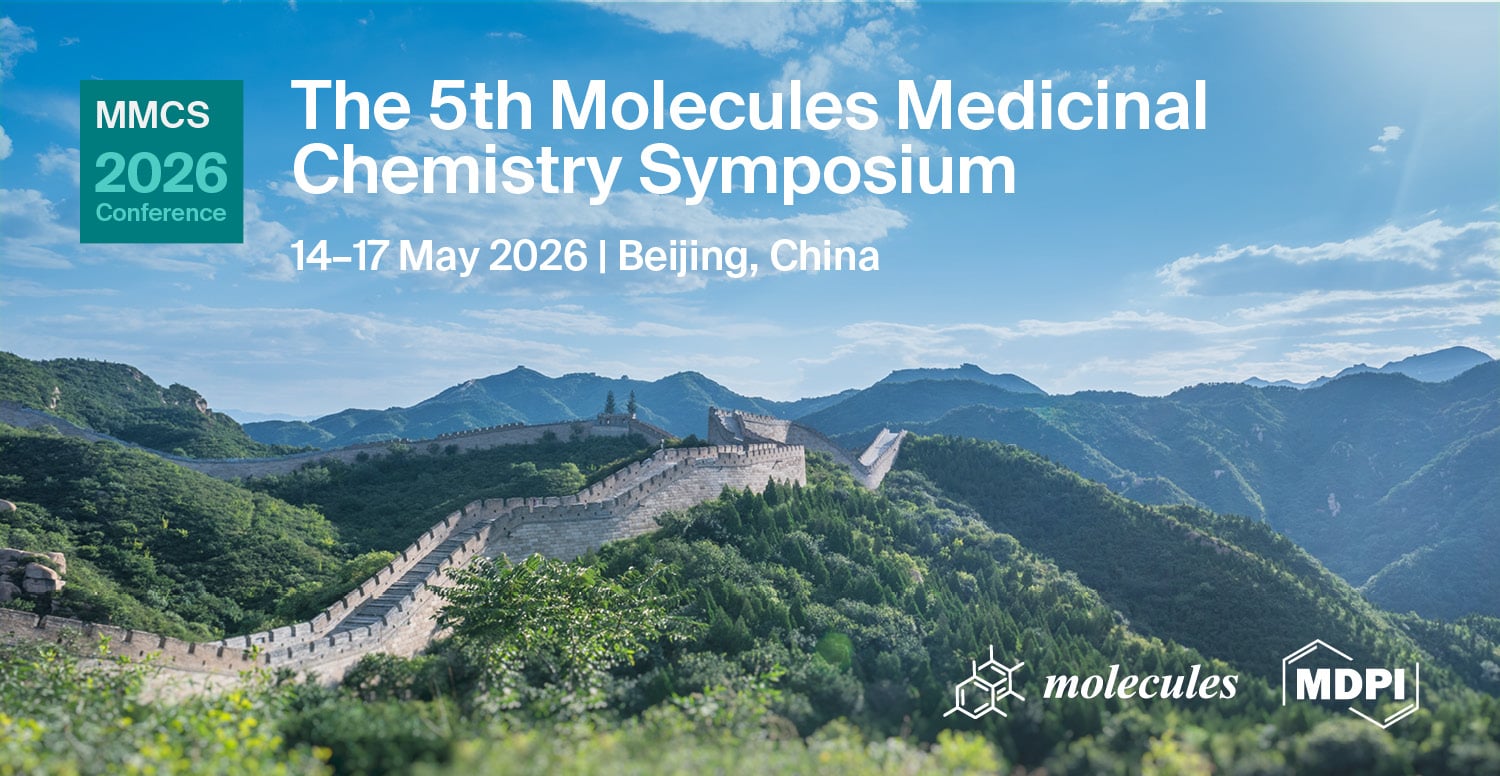
Conference: 5th MMCS: New Trends in Chemical Biology and Drug Discovery
Date: 14–17 May 2026, Beijing Time
Conference website: https://sciforum.net/event/MMCS2026
This conference is organized by the MDPI journal Molecules (ISSN: 1420-3049, IF: 4.6, and CiteScore: 8.6) and will take place in Beijing, China, from 14 to 17 May 2026 (Beijing time).
Conference Chairs:
- Prof. Dr. Xiaoguang Lei, College of Chemistry and Molecular Engineering, Peking University, China;
- Prof. Dr. Diego Muñoz-Torrero, Faculty of Pharmacy and Food Sciences, and Institute of Biomedicine (IBUB), University of Barcelona, Spain.
Topics of interest:
S1. Chemical biology for drug discovery;
S2. AI for drug discovery;
S3. New proximity-based drug modalities;
S4. Natural products in drug discovery;
S5. Biocatalysis for natural product and drug synthesis;
S6. Drug discovery targeting GPCRs and ion channels;
S7. DNA-encoded libraries in drug discovery;
S8. Medicinal chemistry tales.
Important dates:
Deadline for abstract submission: 13 March 2026;
Abstract acceptance notification: 27 March 2026;
Early bird registration deadline: 3 April 2026;
Covering author registration deadline: 3 April 2026;
Registration deadline: 14 May 2026.
Guide for authors:
To submit your abstract, please visit the following link: https://sciforum.net/user/submission/create/1319.
To register for the event, please visit the following link: https://sciforum.net/event/MMCS2026?section=#registration.
For more information, you may refer to the following link: https://sciforum.net/event/MMCS2026.
For any inquiries regarding the event, please contact mmcs2026@mdpi.com.
We look forward to seeing you at the 5th MMCS: New Trends in Chemical Biology and Drug Discovery.
2 April 2026
2026 Tu Youyou Award—Open for Nominations
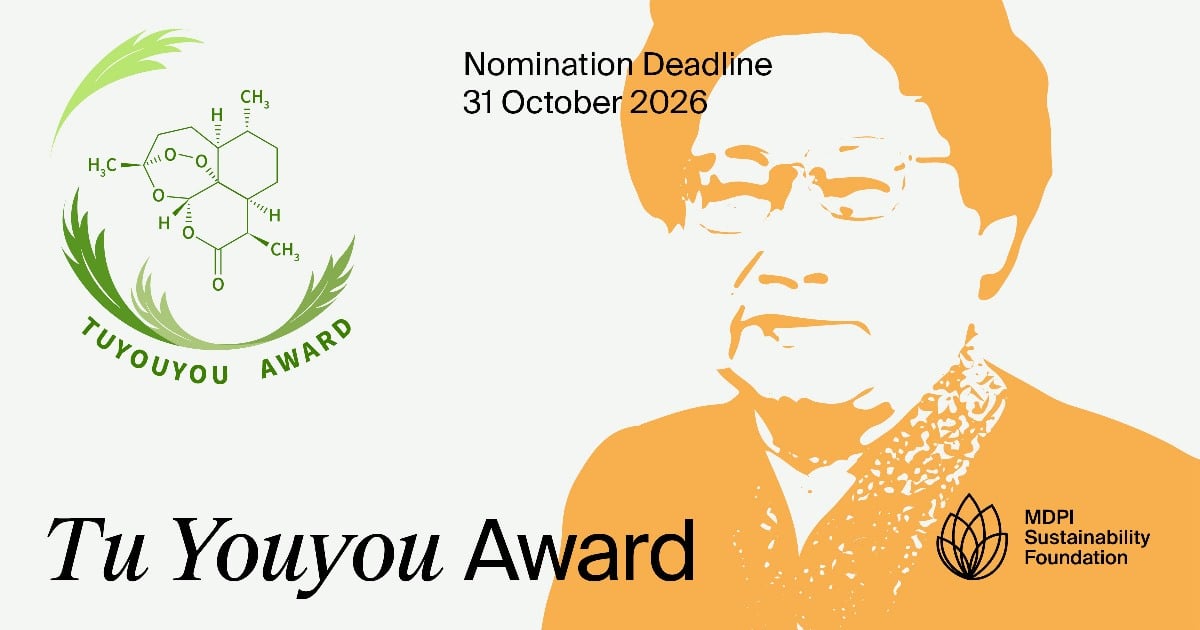
We are delighted to announce that nominations are now open for the 2026 Tu Youyou Award. Named after Nobel Laureate Tu Youyou, whose discovery of artemisinin has saved millions of lives, this award recognizes researchers whose work advances the fields of natural products chemistry and medicinal chemistry, while also contributing to human health.
Prize
– CHF 100,000;
– A medal;
– A certificate.
The monetary prize will be shared equally should there be multiple recipients.
Who May Be Nominated?
– Scientists with outstanding achievements and contributions in the fields of natural products chemistry and medicinal chemistry.
Nominees must be individuals; team or group nominations are not permitted. Nominations are valid only for the current award cycle.
Who May Submit a Nomination?
– The director of the nominee’s host research institution or recognized scientists within the field.
Self-nominations will not be considered.
Nomination Materials
– A biographical sketch;
– A detailed description of the nominee’s contributions;
– 5–10 representative academic publications;
– A list of academic honors, awards, and funded projects;
– A nomination letter signed by two nominators.
How to Submit?
Submit nominations online via the following link: https://tuyouyouprize.org/nomination
Important Dates
– Nomination Deadline: 31 October 2026
– Winner Announcement: March 2027
For further information, please visit the Tu Youyou Award website (https://tuyouyouprize.org/). For any inquiries, please contact the Tu Youyou Award Team at tuyouyouaward@mdpi.com.
31 March 2026
MDPI INSIGHTS: The CEO’s Letter #33 - 2025 Annual Report, Preprints.org, IWD, Recapping Viruses 2026 & Romania Salon

Welcome to the MDPI Insights: The CEO's Letter.
In these monthly letters, I will showcase two key aspects of our work at MDPI: our commitment to empowering researchers and our determination to facilitating open scientific exchange.
Opening Thoughts

Scaling Open Access with Integrity: MDPI Annual Report 2025
I am pleased to share the release of MDPI’s 2025 Annual Report, reflecting our continued progress as one of the world’s leading open access publishers. The report highlights not only our growth, but also the continued evolution of our publishing model and our commitment to quality, transparency, and collaboration.
You can explore the full report here: https://mdpi-res.com/data/mdpi_annual_report_2025_0401.pdf?1775045421
Or visit the interactive page: https://www.mdpi.com/annual-report-2025/
A Year of Growth and Responsibility
2025 was a year of significant growth for MDPI. We received over 669,000 manuscript submissions, the highest in our history, while maintaining a rejection rate above 60%, reinforcing our commitment to both scale and quality.
We published 261,576 peer-reviewed open access articles across a portfolio of 500 journals, supported by a global community of more than 68,000 Editorial Board Members and 209,000 reviewers.
Scaling with Integrity
Growth alone is not the objective; how we grow matters.
Our 2025 Annual Report, Scaling Open Access with Integrity, reflects our continued focus on building the systems and processes that support reliable and trustworthy publishing. As submission volumes increase globally, so too does the importance of robust editorial workflows, research integrity frameworks, and the infrastructure required to support them.
In 2025, we continued to invest in:
- Research integrity and quality assurance processes
- Editorial support and reviewer engagement
- Transparency across the publishing workflow
These efforts ensure that scale does not come at the expense of rigor, but rather reinforces it.
Validation Through Indexing and Visibility
As MDPI continues to grow, validation of quality remains essential.
In 2025, the number of MDPI journals indexed in the Web of Science Core Collection increased from 298 to 329, while Scopus coverage reached 355 journals, including 45 new acceptances. Coverage in major biomedical databases (PMC/Medline/PubMed) expanded to 95 journals, and indexing in Ei Compendex increased significantly.
These milestones reflect the strength of our editorial processes and the trust placed in our journals by independent indexing bodies.
Importantly:
- 96% of all MDPI articles are indexed in Web of Science databases
- More than 1.75 million articles are indexed, with an average of 13 citations per article
Recognition through Journal Citation Reports also continues to grow:
- 298 journals received Impact Factors
- 65% ranked in the top half of their categories
- 61 journals achieved top-quartile positions
These developments demonstrate that growth and quality are advancing together, supported by strong editorial oversight and consistent performance across our journal portfolio.
Strengthening Partnerships and Community
Open access is a collaborative endeavor.
In 2025, we expanded our institutional partnerships to more than 1,000 IOAP agreements, helping simplify publishing for researchers and institutions worldwide.
We also hosted 60 in-person conferences and virtual events, bringing together more than 28,000 participants to exchange ideas, share research, and strengthen connections across the global scientific community.
At the heart of everything we do is this community of authors, editors, reviewers, and partners who make open science possible.
Looking Ahead
Open access continues to move toward becoming the standard model for sharing research globally. With that growth comes increased responsibility.
Our focus moving forward is to continue building a publishing ecosystem that is:
- Collaborative, to serve the research community
- Rigorous, to ensure quality
- Transparent, to support trust
- Scalable, to meet global demand
We believe that open access, when combined with strong editorial standards and integrity, is the most effective way to accelerate scientific progress.
Thank you to all the scholarly community who collaborated with us and our MDPI staff for your continued dedication and contributions in making 2025 a successful year.
Impactful Research

Celebrating Ten Years of Preprints.org: Accelerating Open Research
In 2026, MDPI’s preprints server Preprints.org marked its 10th anniversary as a platform dedicated to accelerating the dissemination of research. Since its launch, Preprints.org has grown into a global platform that hosts more than 120,000 preprints contributed by hundreds of thousands of researchers worldwide, generating tens of millions of views and downloads and demonstrating the value of sharing research openly and rapidly.
At MDPI, we are proud to celebrate ten years of Preprints.org supporting the mission of open science. Over the past decade, we have seen how early sharing of research can accelerate collaboration and help ideas move more quickly from discovery to impact.
The Evolution of Preprints
While Preprints.org launched in 2016, the idea behind it has deeper roots. The concept of rapid research dissemination has existed for decades, with early preprint servers showing how open sharing can accelerate scientific progress.
Over the past decade, preprints have become an increasingly important part of scholarly communication. Researchers across disciplines are looking at faster ways to share their discoveries, exchange ideas, and receive feedback from the global scientific community.
Preprints in a Growing Research Ecosystem
The global preprint landscape has expanded significantly over the past decade, with multiple platforms serving different research communities. The figure below (sourced from James Butcher newsletter), based on data from Dimensions (Digital Science), shows the growth of preprint outputs across several major platforms over time.

Among these platforms, arXiv (the pioneering preprint server) has experienced great growth in recent years. At the same time, other platforms have continued to expand their reach across disciplines, capturing increasing global interest in early research sharing.
Preprints.org contributes to this evolving ecosystem by providing a multidisciplinary platform that works in synergy with academic journals, helping researchers bridge the gap between rapid dissemination and the formal publication process.
Celebrating the First Decade
To commemorate this milestone, Preprints.org launched a 10th Anniversary celebration hub highlighting the impact of preprints and the researchers who contribute to them.

One of the central initiatives is the Popular Preprints of the Decade Award, recognizing influential preprints published between 2016 and 2026 across multiple research fields. Through community voting, the award will recognize research that has generated high engagement and visibility within the global research community.
Looking Ahead: The Next Decade of Preprints
As research communication continues to evolve, preprints will continue to play an important role in enabling faster collaboration, improving transparency, and expanding access to knowledge. The next decade may bring further integration between preprint platforms and journals, new tools for discovery and evaluation, and greater global participation in open science.
At MDPI, we remain committed to supporting researchers through platforms that encourage the open exchange of ideas. The success of Preprints.org over the past ten years reflects the engagement and trust of the global research community – authors, readers, reviewers, and collaborators who believe in the value of sharing knowledge openly.
Congratulations to everyone involved in the development and growth of Preprints.org over the past decade!
Inside MDPI

Beyond International Women’s Day: Supporting Women in Research
International Women’s Day (IWD) offers an opportunity to recognize the achievements of women around the world and reflect on how we can continue building a more inclusive future. In research and academia, this conversation carries particular importance, as scientific progress depends on diverse perspectives, and supporting women in science is essential to strengthening the global research ecosystem.
For MDPI, IWD is an opportunity to celebrate the achievements of women in research and highlight the initiatives, conversations, and collaborations that help support researchers across disciplines and career stages.
Highlighting Women in Science Across MDPI
This year, MDPI marked International Women’s Day with a global campaign highlighting research, awards, and perspectives that support women in science. Throughout the week, our teams shared content across MDPI’s social media channels sharing the work of women researchers and encouraging engagement across the academic community.

As part of this initiative, MDPI published several blog articles exploring important themes related to gender equity in research. One article, Give Support, Gain Progress: Retaining Women in Science, discusses the importance of mentorship, institutional support, and inclusive research environments in helping women build sustainable scientific careers.
Another featured article, Bridging the Gap in Women’s Health Research, highlights the ongoing need to address disparities in health research and ensure that women’s health receives the scientific attention and investment it deserves.
These topics capture the notion that supporting women in science benefits not only individual researchers but the entire scientific community. When researchers from diverse backgrounds can contribute their perspectives and ideas, the scope and impact of scientific discovery expand.
Creating Spaces for Dialogue
Beyond online content, MDPI is also supporting conversations about women in research through community engagement.

On 10 March, MDPI UK hosted the “Women in Research” event, bringing together researchers and professionals to share experiences and discuss the opportunities and challenges women face throughout their scientific careers. Events like these are an opportunity for open dialogue, mentorship, and networking to create more inclusive research communities.
Looking Beyond a Single Day
While IWD is an important moment of recognition, progress requires ongoing effort.
Supporting women in research involves many forms of engagement: from mentorship and collaboration to creating inclusive environments in which diverse voices are heard and valued. Publishers, institutions, and researchers all play a role in building this ecosystem.
At MDPI, we remain committed to supporting the global research community and to promoting open access publishing as a foundation for accessible and inclusive knowledge-sharing.
As we reflect on IWD this year, we recognize the many women who contribute to research as authors, reviewers, editors, mentors, and educators; we also recognize the impact they continue to have on the advancement of science. The influence of women in research extends far beyond a single day of recognition, reminding us that supporting them is a commitment that continues throughout the year.
Coming Together for Science

Highlights from Viruses 2026 – New Horizons in Virology (11–13 March)
Through 11–13 March, we successfully delivered the Viruses 2026 – New Horizons in Virology MDPI conference in Barcelona, bringing together an international community of researchers, editors, and partners dedicated to advancing the field of virology.
Conference Highlights
Viruses 2026 in numbers:
- 198 total registrations, with 171 attendees on site
- 233 submissions, with 122 accepted
- 42 short talks, 9 flash talks, and 80 posters
- 13 invited speakers and 1 keynote speaker

The strong level of participation and quality of submissions once again demonstrate the relevance of the Viruses community.
A standout moment was the keynote lecture by Dr. Ho, which also attracted an NBC documentary film crew, highlighting the broader impact of the research being presented.
Scientific Programme
The conference programme covered areas across modern virology, including viral replication, pathogenesis, immunology, and public health. Sessions explored topics on antiviral therapeutics and vaccines, innate immunity, virus–host interactions, and the structure and mechanisms of virus replication.
Together, these discussions highlighted both the fundamental biology of viruses and the translational challenges of addressing emerging infectious diseases, reflecting the breadth and continued importance of virology research in a global context. The programme also included a sponsored workshop on research data management in virology, further emphasizing the importance of data practices in advancing the field.
Thank You
Feedback from participants has been very positive, and I would like to thank the Conference team for the organization and delivery of this year’s event.

Thank you to our Viruses journal team and all colleagues involved behind the scenes in supporting the delivery of the event. As noted by Dr. Eric Freed (EiC of Viruses), the success of this edition gives us strong momentum as we look ahead to the next conference in 2028, with opportunities to further expand participation and engagement.
Closing Thoughts

Recap from MDPI Romania Salon in Cluj-Napoca (24 March)
On 24 March, we had the opportunity to meet with members of the Romanian research community in Cluj-Napoca at our MDPI Romania Salon. The event was a space for presentations, open discussion, and the exchange of perspectives on publishing and the research landscape in Romania.

We welcomed 39 participants, including 27 researchers from institutions across Romania, representing cities such as Cluj-Napoca, Timișoara, and Reșița. Among them were Editorial Board Members, Associate Editors, and Guest Editors, all of whom play an important role in collaborating with MDPI and shaping the quality and direction of academic publishing.
|
|
|
|



A Shared Commitment to Research Excellence
These events reflect MDPI’s commitment to connecting with and supporting researchers by means of transparency, dialogue, and collaboration. During the day, MDPI colleagues shared a series of presentations covering different parts of our publishing ecosystem:
- MDPI’s presence in Romania – Anamaria Vartolomei (Journal Relationship Specialist (JRS), Section Managing Editor (ME))
- MDPI’s performance, growth, and impact in Romania – Stefan Tochev (CEO)
- Academic services, initiatives, and projects supporting researchers – Ioana Preda (JRS, Section ME)
- Best practices and standards in publication ethics – Lavinia Rogojina (Research Integrity Manager)
- Panel session on ethics, AI, and peer review – Lavinia Rogojina, Ioana Preda, Doris Larisa Albu (JRS, Section ME), Cristina Georgiana Spelmezan (JRS, Section ME)
- Closing remarks – Lavinia Dumitrela Cozma (Operations Manager, Section ME)

Feedback from participants was very positive, particularly regarding the quality of discussions, the relevance of the topics, and the opportunity to engage directly with MDPI colleagues. What stood out most was the openness of the discussion. These events are important not only for the purposes of presenting what we do, but also as an opportunity to listen, understand concerns, and continue to build alignment with the research community.
Romania and the Growth of Open Access Publishing
The Romanian research landscape continues to show growth in open access (OA) publishing.
In 2025:
- 72% of all publications in Romania were published as OA
- Of these, 74% were Gold Open Access
Over the past five years, Romania has produced more than 109,000 publications, with approximately 71% available openly, highlighting a sustained shift toward accessibility and knowledge-sharing.
Within this landscape, MDPI continues to play a significant role:

- MDPI is the leading OA publisher in Romania, contributing 42% of all OA publications in 2025
- More than 37,000 articles have been published with MDPI by Romanian institutions since 1996
- This figure includes over 7,500 publications in 2025 alone
- More than 400 Editorial Board Members from Romania collaborate with MDPI across disciplines
These trends show the growth of OA and the strength of collaboration between MDPI and the Romanian research community.
Looking Ahead
As academic publishing continues to evolve, maintaining open and transparent communication with researchers is essential. Events such as our Salons and Summits provide great opportunities to exchange perspectives and to build trust and collaboration.
Thank you to all participants who joined us in Cluj, and to our teams in Romania for delivering a successful event. A special thank-you to Alina-Florina Agafitei (Marketing Specialist) for her care and attention to detail in delivering the Salon.
Chief Executive Officer
MDPI AG
27 March 2026
Prof. Dr. Chongshan Dai Appointed Associate Editor in Current Issues in Molecular Biology

We are pleased to announce that Prof. Dr. Chongshan Dai has been appointed Associate Editor in Current Issues in Molecular Biology (CIMB, ISSN: 1467-3045). We look forward to his contribution to the continued success of the journal.
Prof. Dr. Chongshan Dai is a Professor and PhD Supervisor at China Agricultural University, and he completed his postdoctoral research at the University of Texas Southwestern Medical Center, USA. He joined China Agricultural University in 2021 and was selected for the National Young Top-notch Talents Program in 2023. His research focuses on clinically highly drug-resistant pathogenic bacteria and host immunity, encompassing both basic and applied research. He presides over a number of national-level research projects, including those funded by the National Natural Science Foundation of China and the National Key R&D Program of China. To date, he has published more than 100 papers as the first or corresponding author in prestigious journals such as PNAS, Cell Reports, and Environment International, among which 3 are ESI Highly Cited Papers and 1 is an F1000 Recommended Paper. His publications have received over 4,500 citations, and he holds an h-index of 37. He has filed 24 national invention patents (13 of which have been authorized) and 2 PCT patents.
CIMB is honored to publish this interview with Prof. Dr. Chongshan Dai, in which he affirmed the remarkable achievements of CIMB in recent years, provided guiding insights for the journal's long-term development, and shared profound perspectives on academic research.
The following is an interview with Prof. Dr. Chongshan Dai:
1. What sparked your interest in CIMB and motivated you to take on the role of its Associate Editor?
CIMB has published a wealth of outstanding research papers, particularly in the field of molecular pharmacology. I spend time reading the journal's publications every week, as they serve as a valuable source of new ideas and inspiration for my own research. Additionally, I believe that joining CIMB as an Associate Editor not only helps elevate my academic influence but also allows me to contribute to the journal's development. More importantly, this platform enables me to promote the latest research advances in veterinary pharmacology, helping to raise broader awareness of veterinary science and the discipline of veterinary pharmacology itself.
2. Among your various professional roles, which one do you consider the most important and fulfilling?
Looking back at all my professional roles, the time when I was a student remains the most cherished for me. Back then, my sole focus was on conducting solid research with dedication—no need to worry about research funding, no need to navigate interpersonal relationships within a team, and no sleepless nights over the research progress of others. Now, I have transitioned from a researcher who only needed to delve deep into his own small research niche to a graduate supervisor who guides and supports young researchers. This identity shift means far more than a simple change in title; it represents a complete reconstruction of my perspective on academic research.
I am acutely aware that my responsibilities now extend far beyond my own research progress—they encompass the most precious years of youth for a group of young scholars. They come to me with a passion for academic research and place their trust in me. It is only now that I truly understand the profound thoughts and sense of responsibility behind the seemingly casual words of “support and encouragement” from Academician Jianzhong Shen back in my student days. The phrase “the weight of great responsibility” is no longer an abstract concept to me; it is reflected in the careful consideration I put into every research discussion with my students, the anxiety I feel when they encounter research bottlenecks, and the in-depth thinking I devote to planning their future careers. The pressure is real—it permeates every ordinary moment: worrying about the feasibility of a research direction, caring about my students' physical and mental well-being, and questioning whether I am capable enough to be a reliable backstop for them. This kind of pressure is far more complex than the anxiety I felt when I failed to obtain experimental data as a student, because it involves the lives and futures of others. Whenever the weight feels overwhelming, I reflect on my own academic journey: how Professor Xilong Xiao's teachings of “delving deep into research” shaped me, and how Academician Shen's guidance illuminated my path. I then realize that this pressure is actually the price of passing the academic torch, and also a testament to this inheritance. The journey from being a mentee to a mentor is arduous, but every step is meaningful and worthwhile.
3. Scientific research often brings immense pressure, affecting both graduate students and their supervisors. What advice do you have for stress management in academic research?
It is true that many researchers, especially faculty members, are under tremendous research pressure today—this pressure stems not only from various institutional evaluations at universities, but also from the responsibilities of supporting their families. Therefore, I advise young faculty members to arrange their time rationally and maintain an open mind when facing such pressure. For graduate students, I encourage them to seize this invaluable opportunity to conduct high-quality research under the guidance of their supervisors, broaden their academic horizons, and strive to be pioneers in their research fields.
4. Throughout your academic career, which people or experiences have had the most profound impact on you?
In my academic journey, I first express my deepest gratitude to my supervisor, Professor Xilong Xiao. His teaching that “one must delve deep into research” has been a constant guiding principle for me. I also owe a great deal to Academician Jianzhong Shen, the leader of our research team. Academician Shen has always provided me with unwavering support and encouragement. Despite his extremely busy schedule, he never neglects to care for every young faculty member in the team. He is like a lighthouse, standing at the forefront of the discipline and guiding our research direction. Whenever I encounter research bottlenecks or fall into self-doubt, Academician Shen can always perceive it keenly and help me cut through the confusion with his broad and insightful academic perspective. His support and encouragement are never empty words; they are translated into concrete guidance, including full support in terms of research resources, and his constant affirmation that “you can do it”. It is this strong backing from the core of the team that has given me the courage to forge ahead in the turbulent sea of scientific research.
5. In your opinion, what is the key element of a high-quality research paper? Is it groundbreaking findings with great scientific value, or an ingenious research design combined with proficient writing skills?
I believe that an ingenious research design is crucial for a high-quality research paper. Groundbreaking findings with great scientific value are undoubtedly the ultimate pursuit of every researcher, yet such breakthroughs are often serendipitous—they require the right time, place, and people, and even a touch of luck. An ingenious research design, however, is a solid foundation that we can actively cultivate and master. A sophisticated research design can endow an ordinary research phenomenon with new explanatory power and make an understudied research direction full of potential through a unique perspective. More often than not, great scientific discoveries do not stem from the innovation of research tools, but from a transformative shift in research perspective.
6. What advice do you have for young researchers in this field?
Based on my own academic experience, I would like to offer the following suggestions for young scholars:
- Arrange your time rationally to cope with various pressures with a relaxed mindset.
- Continuously learn the latest advances in the field to enhance your professional competence. In particular, against the backdrop of the profound impact of artificial intelligence on our discipline, opportunities and challenges coexist. It is therefore extremely important to learn how to adapt to and integrate artificial intelligence into research to avoid being left behind.
- Balance work and rest appropriately. Always remember that health is the foundation of all endeavors.
27 March 2026
Current Issues in Molecular Biology Best Cover Award—Winner Announced

We are pleased to announce the winner of the 2025 Best Cover Award. The winner of the Best Cover Award will receive CHF 500.
The best cover is as follows:
“Meroterpenoids from Terrestrial and Marine Fungi: Promising Agents for Neurodegenerative Disorders—An Updated Review”
Curr. Issues Mol. Biol. 2025, 47(2), 96; https://doi.org/10.3390/cimb47020096
by Daniela Dimitrova, Simeonka Dimitrova, Gabriela Kehayova and Stela Dragomanova
Issue 2 (February 2025)
Congratulations to the winner for the excellent research!
We would like to thank everyone for their participation.
25 March 2026
Acknowledging the Contributions of Our Reviewers in 2025

As a pioneer in open access publishing, MDPI maintains rigorous publication standards. This mission relies on the dedication and expertise of our reviewers, who invest their time and knowledge to ensure the quality and integrity of the research we publish.
In 2025, over 209,000 reviewers contributed to the peer-review process at MDPI, providing more than 1.3 million review reports for our journals. To express our gratitude, MDPI’s Reviewer Recognition Program highlights reviewers across over 400 journals, featuring those who have assessed at least one manuscript and agreed to be acknowledged.
In addition, MDPI has identified its Top 1000 Reviewers of 2024 to recognize those whose expertise, dedication, and thoughtful evaluations were particularly outstanding.
Many journals have also established Outstanding Reviewer Awards to honor our reviewers’ commitment to publication excellence. Together with the Exceptional Reviewer List, we showcase the importance of reviewers’ work and their time and dedication.
These initiatives serve to express our deepest appreciation and gratitude towards the whole reviewer community. In recognition of their contributions, we also welcome new researchers to join this community. If you would like to contribute to open access publishing, learn more about the reviewers’ benefits and sign up to join us.
24 March 2026
Meet Us at the Society for Research on Biological Rhythm 2026 Biennial Meeting, 9–13 May 2026, Amelia Island, Florida, USA

Conference: The Society for Research on Biological Rhythm 2026 Biennial Meeting
Date: 9 May 2026–13 May 2026
Location: Amelia Island, Florida, USA
We are pleased to announce that MDPI will be participating in the 2026 Biennial Meeting of the Society for Research on Biological Rhythms (SRBR), taking place from May 9–13, 2026, at the Omni Amelia Island Resort & Spa, Florida, USA.
As one of the world’s leading international forums for the exchange of cutting-edge scientific information, the SRBR Biennial Meeting brings together researchers from all areas of chronobiology to share the latest advances in biological rhythms research.
The SRBR Biennial Meeting provides an opportunity to:
- Attend an outstanding scientific program;
- Learn about the most recent and often advances in biological rhythms. This year’s meeting will feature Circadian Medicine that will mark its emergence as a new important area of chronobiology;
- Meet and interact with internationally distinguished researchers and scientists.
Visit our booth to discover MDPI’s latest publications, Special Issues, and open access initiatives in chronobiology, circadian medicine, and related fields. Our editors will be on hand to discuss your research and answer any questions about publishing with MDPI.
The following open access journals will be represented at the conference:
If you will be attending this conference, please feel free to start a conversation with us. Our delegates look forward to meeting you in person and answering any questions that you may have.
For more information about the conference, please visit https://srbr.org/2026-biennial-meeting/#.
19 March 2026
Meet Us at the 12th Molecular and Cell Biology Symposium, 26–27 March 2026, Porto, Portugal

MDPI is delighted to announce its participation in the 12th Molecular and Cell Biology Symposium, which will take place from 26 to 27 March 2026, in Porto, Portugal.
The conference is organized by the students of the Doctoral Program in Molecular and Cell Biology at ICBAS, extending a bold invitation: “Drafting the Tomorrow of Science”.
If you are attending the conference, we invite you to visit us. Our representatives, Dr. Jesus Garcia and Ms. Lacey Li, will be available to discuss publishing opportunities, the benefits of open access, and our commitment to advancing biology research.
In addition, on 26 March, Dr. Jesus Garcia will host a workshop titled “Responding to Reviewers' Comments in Open Access Publishing” from 11:00 to 12:00 (Day 1). Ms. Lacey Li will give a 10-minute presentation about MDPI and our journals Biology and Current Issues in Molecular Biology (CIMB) on 27 March from 10:20 to 10:30. The presentation will take place in the main conference room. We eagerly await your arrival.
For more information about the conference, please visit its official website: https://www.i3s.up.pt/event.php?v=384#Program.
5 March 2026
Current Issues in Molecular Biology Travel Award—Winners Announced

We are delighted to announce the winners of the CIMB 2026 Travel Award. This award supports early career researchers by facilitating their participation in key international conferences in molecular biology in 2026, enabling them to present their outstanding work and engage with the global scientific community.
Please join us in congratulating the following winners:
- Dr. Alireza Shoari from the Mayo Clinic, USA
- Conference: The 2026 ASBMB Annual Meeting;
- Presentation title: “Engineered TIMP-1 Variants Targeting MMP-9 with Enhanced Specificity: A Dual-Targeting Strategy for Improved Breast Cancer Therapy”.
- Dr. Kunj Bihari Gupta from the Augusta University, USA
- Conference: AACR Annual Meeting 2026;
- Presentation title: “From Metal to Malignancy: How ROS and inflammatory cytokines accelerate Cadmium-induced Prostate Carcinogenesis”.
We extend our warmest congratulations to the awardees. Current Issues in Molecular Biology (CIMB, ISSN: 1467-3045) is proud to support their research dissemination and looks forward to the impact of their presented work. We also thank all applicants for their high-quality submissions.
