



You are currently viewing a new version of our website. To view the old version click .

Coatings

Coatings is an international, peer-reviewed, open access journal on coatings and surface engineering, published monthly online by MDPI.
The Korean Tribology Society (KTS) and Chinese Society of Micro-Nano Technology (CSMNT) are affiliated with Coatings and their members receive discounts on the article processing charges.
Quartile Ranking JCR - Q2 (Physics, Applied)

All Articles (11,799)

This study introduces a Ni15 intermediate layer to address cracks and low laser absorption in laser cladding of pure copper on 45 steel, preventing thermal stress and improving bonding strength. TiBN ceramic particles are added to enhance laser absorption and improve surface strength and wear resistance. Cu-TiBN gradient coatings with varying TiBN contents (0–8 wt.%) were fabricated on 45 steel. The study examines the coatings’ morphology, microstructure, phase composition, hardness, tribological performance, and wear mechanisms. Results show that TiBN alters the coating’s structure, refining the grains. With TiBN content over 4%, the coating mainly consists of the CuNi phase, and strengthening phases like NiTi and Cu2Ti form. Hardness increases from 66HV0.1 to 270HV0.1. The Cu-TiBN gradient coating outperforms pure copper in mechanical properties and wear resistance. The coating with 2% TiBN has the lowest friction coefficient (0.637), but higher TiBN content increases brittleness and cannot play a good role in reducing friction. The study demonstrates that TiBN boosts laser efficiency and wear resistance in copper-based coatings, offering a novel approach to laser cladding.

9 December 2025

Micro-morphology of powder materials: (a) Cu; (b) Ni15 alloy; (c) TiBN [19].

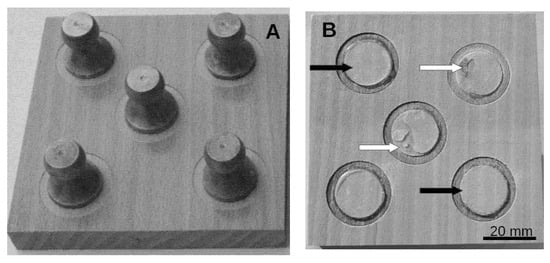
Wooden cultural relics, as significant components of historical and cultural heritage, are persistently threatened by deterioration due to biological, environmental, and chemical factors. Addressing these issues is crucial not only for the conservation of cultural heritage but also for ensuring its sustainable transmission to future generations. This review systematically examines international research on the degradation and preservation of wooden cultural relics, outlining the temporal evolution, key contributing nations and research groups, major thematic focuses, and their interrelationships. We comprehensively summarize the mechanisms underlying wood degradation—including microbial attack, chemical degradation, and stress-induced deformation—and evaluate advanced techniques for detecting and assessing deterioration. Furthermore, we analyze the critical environmental and material variables that influence degradation rates. Building on this foundation, the paper surveys current mainstream conservation methodologies, such as physical and chemical reinforcement, desiccation, and drying treatments. Special emphasis is placed on emerging strategies that leverage novel materials and technologies, for instance, biomimetic hydrophobic coatings to prevent liquid water penetration and nanomaterial-based approaches for multifunctional surface treatment. Finally, we discuss persistent challenges and prospective research directions in the field, aiming to inform future scientific studies and advance practical conservation efforts for wooden cultural heritage.

9 December 2025

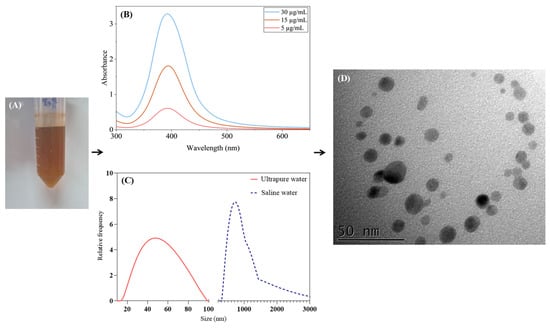
Calcium phosphates are one of the main materials used in biomedicine for bone regeneration purposes. To improve the properties of biocompatible β-Ca3(PO4)2, doping by bioactive, antibacterial is actively used, as well as luminescent ions. Co-doped phosphates Ca8−xSrxZnEu(PO4)7 with a β-Ca3(PO4)2 (β-TCP)-type structure were synthesized through solid-state synthesis. The β-TCP-type structure was confirmed using X-ray powder diffraction and FTIR spectroscopy. Photoluminescence data, including excitation and emission spectra, decay curves, lifetime values and quantum yields, were collected for all samples. Ca8−xSrxZnEu(PO4)7 phosphates exhibit strong red-emission due to 4f-4f transitions of Eu3+ ions in disordered oxygen surrounding, with quantum yields reaching 54%. The phosphates demonstrated biocompatibility through MTT assay, with successful differentiation of aMSCs into the osteogenic lineage. Antibacterial activity was tested against four bacteria (E. coli, S. aureus, P. aeruginosa, and E. faecalis) and a fungus (C. albicans). It was found that the samples demonstrated antibacterial properties. The growth of E. coli and E. faecalis is significant inhibited by Ca8−xSrxZnEu(PO4)7 samples with 0 ≤ x ≤ 6.0. Analysis of mixed salt solubility using Eu3+ ions as a fluorescent probe showed that increasing Sr2+ concentration in Ca8−xSrxZnEu(PO4)7 delays both β-TCP phase resorption and HAP phase precipitation. These results demonstrate the potential of Ca8−xSrxZnEu(PO4)7 phosphates for bioimaging and bone healing control.

9 December 2025

The contact fatigue performance of carburized gear steels is critical for transmission durability, yet the mechanisms linking alloy-specific microstructure to failure modes remain complex. This study systematically compares the contact fatigue behaviors of 20MnCr5 and 20CrMoH gears using step-loading tests and multi-scale characterization. The results demonstrate a significantly higher contact fatigue limit for 20MnCr5 of 1709 ± 12 MPa compared to 1652 ± 40 MPa for 20CrMoH, despite the latter exhibiting higher initial surface hardness. This hardness–toughness paradox is mechanistically elucidated by the distinct roles of alloying elements: while Molybdenum in 20CrMoH refines the grain size for high static strength, it limits retained austenite stability, resulting in a brittle hard-shell and soft-core structure prone to interface decohesion at martensite lath boundaries. Conversely, Manganese in 20MnCr5 promotes a gentler hardness gradient via favorable diffusion kinetics and stabilizes abundant film-like retained austenite. This microstructure activates a Stress Compensation Mechanism, where strain-induced martensitic transformation generates compressive volume expansion to counteract cyclic stress relaxation. Consequently, 20MnCr5 exhibits mild plastic micropitting driven by transformation toughening, whereas 20CrMoH undergoes severe brittle spalling driven by the Eggshell Effect. These findings confirm that balancing matrix toughness with hardness is more critical than maximizing surface hardness alone for contact fatigue resistance.

9 December 2025

News & Conferences

Issues

Open for Submission

Editor's Choice

Reprints of Collections

Polymer Thin Films
Reprint

Polymer Thin Films

From Fundamentals to Applications (Second Edition)
Editors: Mohor Mihelčič
Coatings for Cultural Heritage
Reprint

Coatings for Cultural Heritage

Cleaning, Protection and Restoration
Editors: Yumin Du

Get Alerted

Add your email address to receive forthcoming issues of this journal.

XFacebookLinkedIn
Coatings - ISSN 2079-6412