




Journal Menu
► ▼ Journal Menu-
- Current Oncology Home
- Aims & Scope
- Editorial Board
- Reviewer Board
- Topical Advisory Panel
- Instructions for Authors
- Special Issues
- Topics
- Sections & Collections
- Article Processing Charge
- Indexing & Archiving
- Editor’s Choice Articles
- Most Cited & Viewed
- Journal Statistics
- Journal History
- Journal Awards
- Society Collaborations
- Conferences
- Editorial Office
Journal Browser
► ▼ Journal Browser-
arrow_forward_ios
Forthcoming issue
arrow_forward_ios Current issue - Volumes not published by MDPI
Need Help?
Announcements
27 April 2026
MDPI World Cancer Day Webinar | April—Head and Neck Cancer Awareness Month, 30 April 2026
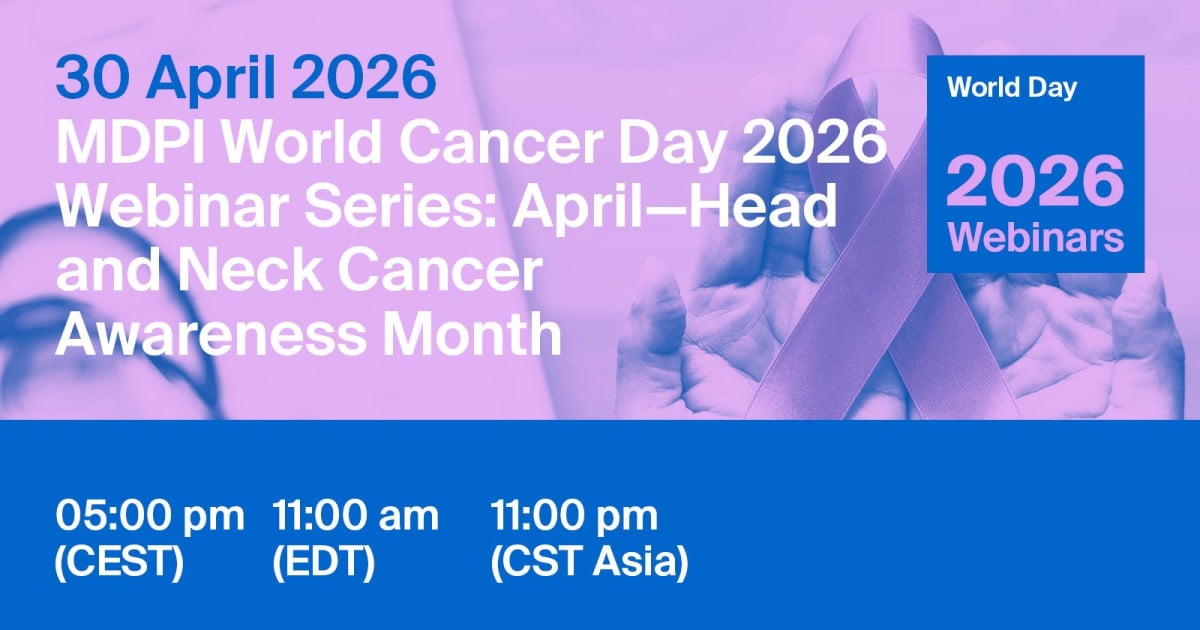
To commemorate World Cancer Day 2026, MDPI is pleased to introduce the “World Cancer Day 2026 Webinar Series”. Reflecting the global theme “United by Unique”, this series highlights how every story, discovery, and voice contributes to strengthening the global fight against cancer.
In our April session, we welcome leading voices in head and neck cancer research to share impactful insights, raise awareness, and highlight recent advances in prevention, diagnosis, and treatment.
Through this series, we aim to empower the global community with knowledge, inspire collaboration, and support ongoing efforts to address cancer worldwide. Together, we honor every patient’s journey, recognize every researcher’s contribution, and reinforce the power of collective action in the fight against cancer.
Date: 30 April 2026
Time: 17:00 CEST | 11:00 EDT | 23:00 CST Asia
Webinar ID: 824 5069 5488
Webinar Secretariat: journal.webinar@mdpi.com
Website: https://sciforum.net/event/WCD2026-3
Register now for free!

| Speaker | Presentation | Time (CEST) | Time (EDT) |
| Introduction | 17:00–17:10 | 11:00–11:10 | |
| Dr. Kousik Kesh | TBC | 17:10–17:30 | 11:10–11:30 |
| Q&A Session | 17:30–17:35 | 11:30–11:35 | |
| Prof. Dr. Richard Su | Artificial Intelligence in Oral Cancer Risk Prediction | 17:35–17:55 | 11:35–11:55 |
| Q&A Session | 17:55–18:00 | 11:55–12:00 | |
| Dr. Jennifer Anderson | Liposomal Doxorubicin Potentiates Anti-Tumor Immune Response in Head and Neck Squamous Cell Carcinoma | 18:00–18:20 | 12:00–12:20 |
| Q&A Session | 18:20–18:25 | 12:20–12:25 | |
| Dr. Jay Liao | Particle Beam Radiation Therapy for Head and Neck Cancer: Current Experience at The University of Washington / Fred Hutchinson Cancer Center | 18:25–18:45 | 12:25–12:45 |
| Q&A Session | 18:45–18:50 | 12:45–12:50 | |
| Dr. Wendell Yarbrough | TBC | 18:50–19:10 | 12:50–13:10 |
| Q&A Session | 19:10–19:15 | 13:10–13:15 | |
| Dr. Joshua D Smith | Mechanisms of Tobacco-Mediated Immunosuppression in Patients with HPV+ Oropharynx Cancer Who Smoke | 19:15–19:35 | 13:15–13:35 |
| Q&A Session | 19:35–19:40 | 13:35–13:40 | |
| Joint Q&A Session | 19:40–19:55 | 13:40–13:55 | |
| Closing of Webinar | 19:55–20:00 | 13:55–14:00 |
After registering, you will receive a confirmation email on how to join the webinar. Registrations with academic institutional email addresses will be prioritized.
Unable to attend? Register anyway, and we will let you know when the recording is available for viewing.
Webinar Keynote Speakers:
- Dr. Kousik Kumar Kesh, Department of Pathology, St. Louis University, USA;
- Dr. Richard Yuxiong Su, Division of Oral and Maxillofacial Surgery, The University of Hong Kong, Hong Kong S.A.R, China;
- Dr. Jennifer Anderson, MD Anderson Cancer Center, University of Texas, USA;
- Dr. Jay J. Liao, Fred Hutchinson Cancer Center, Department of Radiation Oncology, University of Washington Medical Center, USA;
- Dr. Wendell G. Yarbrough, Department of Otolaryngology (Head and Neck Surgery), School of Medicine, University of North Carolina, USA;
- Dr. Joshua D. Smith, Department of Otolaryngology (Head and Neck Surgery), University of Pittsburgh Medical Center, USA.
27 April 2026
Meet Us at the 60th Annual Scientific Meeting of the European Society for Clinical Investigation 2026 (ESCI), 3–5 June 2026, Lisbon, Portugal
Conference: 60th Annual Scientific Meeting of the European Society for Clinical Investigation (ESCI)
Date: 3–5 June 2026
Location: Lisbon, Portugal
MDPI will participate as an exhibitor at the 60th Annual Scientific Meeting of the European Society for Clinical Investigation. We welcome researchers and professionals to visit our booth and engage with our team.
The 60th Annual Scientific Meeting (ASM) of the European Society for Clinical Investigation (ESCI) will be held from 3 to 5 June 2026. It can bring together 500–600 scientists, medical professionals, and innovation leaders from across Europe and beyond to explore the theme “Research in Action: Building Healthier Futures”. The scientific program will feature a rich blend of disciplines—spanning cardiovascular science, endocrinology, obesity, metabolism and MASLD, mitochondrial biology, oncology and immunology, rheumatology, and neurosciences. This year, we will shine a spotlight on life transitions in women, unravelling health and disease journeys from pregnancy to menopause. The program will also highlight today’s most transformative biomedical breakthroughs, from AI-enabled diagnostics to gene editing and precision therapies.
The following open access journals will be represented:
- Reports;
- Medicina;
- Diagnostics;
- JPM;
- BioMed;
- Complications;
- Pharmacy;
- NeuroSci;
- JCRM;
- Current Oncology;
- JCM;
- Physiologia;
- Proteomes;
- Diseases.
If you are planning to attend the above event, please feel free to start a conversation with us. Our delegates look forward to meeting you in person and answering any questions that you may have. For more information, please visit https://barcelo.eventsair.com/QuickEventWebsitePortal/esci-2026/web.
24 April 2026
Prof. Dr. William Gerwick Appointed Chair of the 2026 Tu Youyou Award Committee
We are honored to announce that Prof. Dr. William Gerwick will serve as the Chair of the 2026 Tu Youyou Award Committee.
A world-renowned authority in marine natural products chemistry and pharmacology, Professor Gerwick is a Distinguished Professor at both the Scripps Institution of Oceanography and the Skaggs School of Pharmacy and Pharmaceutical Sciences at the University of California San Diego (UCSD). His pioneering work at the intersection of ocean sciences and drug discovery makes him a fitting leader for an award centered on transformative medicinal breakthroughs.
Under Professor Gerwick’s stewardship, the 2026 Tu Youyou Award Committee will focus on recognizing innovative and impactful research in natural products chemistry and medicinal chemistry, particularly work with the potential to drive meaningful advances in both scientific understanding and human health.
To provide further insight into his perspectives, we include below an interview with Professor Gerwick, in which he reflects on his scientific journey, his views on the field, and his vision for the Tu Youyou Award.
A Conversation with the Chair

1. Could you please introduce yourself and your research journey?
My research focuses on the natural products of marine algae and cyanobacteria, their application in medicine, their biosynthesis using genomic approaches, and innovative methods in the structure elucidation of natural products.
I received my BS degree from the University of California at Davis, my PhD from the University of California at San Diego, and conducted postdoctoral work at the University of Connecticut. After a couple of years in a junior faculty position at the Department of Chemistry at the University of Puerto Rico, I spent 21 years as Professor of Pharmacy at Oregon State University. In 2005, I returned to my PhD institution at the Scripps Institution of Oceanography and the Skaggs School of Pharmacy and Pharmaceutical Sciences at UC San Diego, where I am currently a Distinguished Professor of Oceanography and Pharmaceutical Sciences.
Throughout my career, I have been dedicated to advancing the field through both leadership and mentorship. I have served as president of the American Society of Pharmacognosy, chaired and co-chaired several major research conferences, and served as an associate editor for the Journal of Natural Products. I am a Fellow of the American Association for the Advancement of Science (AAAS) and of the American Society of Pharmacognosy. I have trained over 100 doctoral and postdoctoral students, and my research group has published nearly 500 papers and more than 25 patents on topics in the natural product sciences and medicinal chemistry.
2. What motivated you to accept the role of Chair of the 2026 Tu Youyou Award Committee?
Of course, I am a huge supporter of all awards that are given in recognition of excellent scientific research, and especially so in the natural products sciences and medicinal chemistry. However, this award is truly special in that it recognizes scientific excellence as well as impact, and is given in the name of an individual, Tu Youyou, who clearly had many challenges along the path to reach the pinnacle of her success. Not only was she the first Chinese person to win a Nobel prize in this area, but she was also the first Chinese woman to receive a Nobel prize, and this was achieved without graduate education in China or elsewhere. It’s a true testament to what can be achieved by hard work, determination, and vision. To read the history of her extraordinary approach to discovering novel antimalarial compounds from Traditional Chinese Medicine is truly inspirational. It is, therefore, the inspiration provided by the extraordinary life and career of Tu Youyou that motivated me to accept the Chair of the Award Committee for 2026.
3. How do you view the role of natural products chemistry and medicinal chemistry in today’s scientific landscape, and what major advances over the past decade have shaped this field?
A quite remarkable integration of fields is currently transforming natural products science and medicinal chemistry. In natural products, we are seeing integration of different omics methods, from metabolites to proteins to nucleic acids. Sophisticated biological and pharmacological approaches are driving the discovery of exquisitely potent and selective natural products. Advances are being made to integrate molecular-level recognition of natural products with chemical ecological studies, and sophisticated methods of structure determination using Artificial Intelligence or pioneering new tools such as microED are being applied with increasing frequency. High-level synthetic methodologies, such as protecting group-free synthetic routes, are enhancing medicinal chemistry, accelerating the identification of lead molecules with attractive pharmaceutical properties at an increasing pace.
4. How do you consider the balance between fundamental discovery (e.g., new molecules or mechanisms) and practical impact (e.g., therapeutic applications)?
Many individuals are excellent scientists and mentors, and have essential roles in developing our culture that values science and the scientific method. It should also be pointed out that not all scientific discoveries are going to have a broad societal impact, but they are nevertheless critical to the overall body and structure of science. But it is a truly remarkable individual who makes a key scientific discovery, recognizes its potential value to society in general, and then has the skills and determination to bring it forward as a useful product. That was the type of person the Tu Youyou is, and that is the type of person who is honored by the prize in her name.
5. What do you see as the key challenges or opportunities currently facing the field?
We are on the crux of an amazing revolution in many of the sciences, including natural products and medicinal chemistry; the purposeful application of Artificial Intelligence to solving many of the difficulties involved in the search for new pharmaceuticals from Nature. AI is transforming how we select organisms for study, what pharmaceutical targets to go after, rapidly resolving the chemical structures of new compounds, identifying efficient routes to their chemical synthesis, understanding their molecular mechanisms of action, and finally, designing their clinical application. The role of people in these pursuits is changing. Increasingly, the human role will be providing overall vision: what can we do? What should we do? And it is important to remember that AI is providing hypotheses, not truth. Scientists with expert domain knowledge will be critical for discerning the correctness of hypotheses put forth by AI. Altogether, advances in technology, expanding knowledge, and the appropriate use of AI methods are preparing society to be able to address emerging diseases, such as pandemics, as well as conditions that are not effectively treated by currently existing therapeutics.
6. How do you expect the Tu Youyou Award to contribute to the advancement of natural product chemistry, medicinal chemistry, and human health over the coming years?
The Tu Youyou Award is potentially transformative for the broad fields of natural products science and medicinal chemistry as it brings a significantly increased level of visibility to these topics and their contributions to human health. It will be crucial to have excellent communication to news agencies, social media and other communication outlets so that the general public is informed and educated on the high impact of these natural product/medicinal chemistry contributions. This will bring increased funding, attract promising students, and generally enrich the interface of these fields with the health sector.
7. What message would you like to convey to the research community and the public during this open nomination phase?
This prize gives broad societal visibility to the role that natural products have had in shaping a majority of our current medicines, as well as understanding the life forms with whom we share the planet. Further, it recognizes a woman scientist working under sub-optimal conditions who could persevere and make discoveries of global impact. The prize and what it represents, therefore, inspires current and future generations to engage in the study of Nature and its relationship to Human Health, to overcome adversity, and to aspire to making one’s life impactful.
About the Tu Youyou Award
Established in 2016, the Tu Youyou Award seeks to honor those who excel in the fields of natural products chemistry and medicinal chemistry. This award offers a total prize of CHF 100,000, which will be equally divided among the winners if there is more than one, with each recipient receiving an award medal and a certificate.
The 2026 Tu Youyou Award is open for nominations until 31 October 2026. We encourage all eligible candidates to participate in this prestigious recognition, as this award not only honors individual achievement but also encourages further scientific exchange, exploration and discovery in critical areas of medicine.
If you are interested in participating, please visit the Tu Youyou Award website for more information on the nomination requirements.
23 April 2026
Meet Us at the 2026 Annual Congress of the European Association for Cancer Research, 8–11 June 2026, Budapest, Hungary
Conference: The 2026 Annual Congress of the European Association for Cancer Research
Date: 8–11 June 2026
Location: Budapest, Hungary
We are pleased to announce that MDPI will participate in the 2026 Annual Congress of the European Association for Cancer Research (EACR 2026), held in Budapest, Hungary, from 8 to 11 June 2026.
The 2026 Annual Congress of the European Association for Cancer Research (EACR 2026) is a four-day congress dedicated to basic, preclinical and translational cancer research across a wide range of topics. The conference will highlight the latest research and bring together the cancer research community to inspire innovation and build knowledge, connections and collaborations.
The following MDPI journals will be represented at the conference:
- Cancers;
- JPM;
- Current Oncology;
- Onco;
- JCM;
- Cells;
- Diseases;
- Epigenomes;
- CIMB;
- Biologics;
- Life;
- Gastrointestinal Disorders;
- Clinics and Practice;
- DNA;
- IJMS;
- Diagnostics.
If you are planning to attend the above conference, please feel free to start an online conversation with us. Our delegates look forward to meeting you in person at booth #101 and answering any questions that you may have. For more information about the conference, please visit the following website: https://2026.eacr.org/.
22 April 2026
Interview with Dr. Akhil Shukla—Winner of the Current Oncology Travel Award

We would like to congratulate Dr. Akhil Shukla on winning the Current Oncology Travel Award. We had the pleasure of speaking with Dr. Shukla in an interview.
Dr. Akhil Shukla is a postdoctoral researcher at the CHU de Québec–Université Laval (CHUQ-UL), specializing in prostate cancer and cancer immunology. He earned his PhD in cell biology from Université de Sherbrooke, Canada. His dissertation focused on the NLRC5-dependent anti-tumor immune response. Prior to this, Dr. Shukla completed a Master’s degree in biotechnology at Panjab University, studying antioxidant enzymes, which laid the foundation for his research. Throughout his academic journey, he has contributed significantly to the understanding of the roles of different targets in cancer immune surveillance and therapeutic strategies. Currently, Dr. Shukla is a molecular oncology researcher affiliated with the CHUQ-UL. His research focuses on the metabolic drivers of prostate cancer progression, and their role in remodeling metabolism in aggressive prostate cancer.
The following is an interview with Dr. Akhil Shukla:
- Congratulations on winning the Current Oncology Travel Award. Could you briefly introduce yourself and your current research at the current institution of the winner?
I am Akhil Shukla, a postdoctoral researcher at the CHUQ-UL in Québec City, Canada. My research focuses on understanding the metabolic adaptations that facilitate tumor progression. Specifically, my work aims to uncover the underlying metabolic mechanisms exploited by aggressive prostate cancer cells to sustain their growth and evade therapeutic interventions. By identifying key metabolic vulnerabilities in these cancer cells, I aim to contribute to the development of novel targeted treatment strategies. Ultimately, my goal is to translate these findings into practical clinical applications that improve patient outcomes in everyday oncology practice, bridging the gap between laboratory discoveries and real-world cancer care settings. - When and how did you become aware of the Current Oncology journal? Could you briefly introduce which conference or conferences you plan to attend with this award?
I first learned about Current Oncology during my graduate studies, where I frequently encountered articles that adeptly connected molecular research with the practical management of cancer patients. This exposure underscored the journal's multidisciplinary approach and strong commitment to publishing research with direct clinical relevance, which deeply resonated with my focus on translational oncology.
Receiving the Current Oncology Travel Award will allow me to attend the EACR 2026 Congress, a leading international forum that gathers experts in tumor biology, metabolism, and translational cancer research to present my research. At this congress, I will present our latest findings on metabolic remodeling in prostate cancer, a project that investigates how metabolic changes contribute to tumor aggressiveness and therapeutic resistance. This opportunity will not only enable me to share our work with leading researchers but also to engage in meaningful scientific exchanges, fostering collaborations that can accelerate the translation of metabolic insights into innovative clinical strategies. Ultimately, this experience will enhance my ability to bridge laboratory discoveries and real-world oncology practice, advancing the development of targeted interventions that improve patient care. - Attending international conferences is an essential part of scientific collaboration and growth. How do you plan to promote the Current Oncology journal at the conference? And what do you hope to contribute or gain from the discussion?
At the conference, I plan to promote Current Oncology in several ways. In my poster, I will acknowledge the Travel Award and highlight the journal as a venue that actively supports clinically relevant translational cancer research. I also intend to mention the journal when discussing publication options with colleagues and collaborators, particularly early career researchers looking for a peer‑reviewed, oncology‑focused open‑access platform.
Through scientific discussions, I hope to receive valuable feedback on our methods, identify potential collaborators for multicenter projects, and gain insights into how similar questions are addressed at other institutions and within various health systems. In return, I aspire to contribute by sharing our experiences, offering constructive feedback, and actively engaging in discussions to bridge the gap between research and routine cancer care. - As a scientific researcher, how do you balance life and research work?
Balancing research with life outside the laboratory requires continuous attention and effort to establish a sustainable routine. I set aside time for focused work and keep evenings and weekends free from work to relax. This involves deliberately setting aside time for deep focus while ensuring that evenings and weekends are free from work-related commitments to promote mental rest. Living in Québec City, I enjoy outdoor activities and regular exercise, which help me stay strong and maintain a clear view when research gets tough. It is also important to have a supportive team where we can share problems, celebrate small wins, and respect each other's limits. This mix of personal discipline and teamwork keeps me productive and happy, making it easier to balance my work and personal life. - As the winner of this award, would you like to take a moment to share your thoughts with our readers or express gratitude towards those who have played a significant role in your research accomplishments?
Winning the Current Oncology Travel Award is a significant step in my career. This award helps us share our findings on metabolic changes in prostate cancer with researchers at a global stage. It also provides opportunities to talk and work with top experts from different countries. I am very thankful for the support from the editors and the selection committee of Current Oncology and MDPI. Their support helps young researchers, such as myself, in cancer research. I am also grateful for the guidance of my supervisors, Dr. Étienne Audet-Walsh and Dr. Frédéric Pouliot, and the team from Québec, Canada, China and Brazil. Their help improved this project. Most importantly, this award honors the patients who participated in our studies. Their involvement was crucial to our research. The award inspires me to continue conducting research that connects laboratory discoveries with real patient care improvements. I also appreciate the personal support of my family and friends, which keeps me motivated in this challenging but rewarding field. - In your view, how can academic journals and publishers further support early career researchers and the broader academic community?
Academic journals and publishers are crucial for nurturing a supportive and productive research culture, especially for early career researchers who often encounter unique challenges. In addition to offering financial support, such as travel awards and fee waivers, these entities can enhance the academic journey by promoting transparent, constructive, and timely peer review processes. These processes serve as gatekeeping mechanisms and educational opportunities. By incorporating mentorship-style reviews, editorial insights, and accessible training resources, including webinars on study design, statistics, and reporting standards, journals can transform publishing into a formative experience that builds researchers’ skills and confidence. Additionally, involving early career researchers in peer review and editorial activities fosters professional growth, demystifies the publication process, and enriches the diversity and quality of scholarly evaluation. Rigorous methodologies, open data practices, and interdisciplinary collaboration ensure that research outputs are reproducible, clinically relevant, and impactful, ultimately bridging the gap between molecular discoveries and patient-centered outcomes. This approach not only empowers emerging scientists but also strengthens the integrity and translational potential of broader scientific enterprises.
21 April 2026
Current Oncology | Interview with Authors of the Cover Article—Mr. Ali Zaidi and Assoc. Prof. Jonathan Loree

We had the pleasure of speaking with Mr. Ali Zaidi and Assoc. Prof. Jonathan Loree, who are the first author and corresponding author, respectively, of the cover article published in Volume 32, Issue 9 of Current Oncology (ISSN: 1718-7729). Here, they share insights into their academic journey, research focus, and the motivation behind their recent work.
“Dual PET Imaging with [68Ga]Ga-DOTA-TOC and [18F]FDG to Localize Neuroendocrine Tumors of Unknown Origin”
by Ali Zaidi, Pavithraa Ravi, Ingrid Bloise, Sara Harsini, Heather C. Stuart, Hagen F. Kennecke,
Ian Alberts, François Bénard, Don Wilson, Patrick Martineau and Jonathan M. Loree
Curr. Oncol. 2025, 32(9), 497; https://doi.org/10.3390/curroncol32090497
Available online: https://www.mdpi.com/1718-7729/32/9/497
Mr. Ali Zaidi is a graduate student in the Department of Medicine at the University of British Columbia (UBC) and BC Cancer. His research investigates integrated multi-omics and multi-modal approaches to better understand the heterogeneity of gastroenteropancreatic neuroendocrine neoplasms (GEP-NENs).
Assoc. Prof. Jonathan Loree is a medical oncologist at BC Cancer, an Associate Professor at the University of British Columbia, and a Senior Investigator at CCTG with an interest in GI malignancies. His research focus is translational research and biomarker development in colorectal cancer and neuroendocrine neoplasms. He serves as the NCI Colon Cancer Task Force Co-Chair and CCTG Colon Disease Oriented Group Co-Chair.
The following is an interview with Mr. Ali Zaidi and Assoc. Prof. Jonathan Loree:
1. Could you please briefly introduce the main research content of the published paper?
This study focuses on a clinical problem in relation to neuroendocrine tumors, where patients can present with metastatic disease, but we are unable to find the primary site on standard imaging. This creates uncertainty in how they are managed. We evaluated whether dual PET imaging with [68Ga]Ga-DOTA-TOC and [18F]FDG adds value in that setting, and what we found was that [68Ga]Ga-DOTA-TOC PET/CT was able to localize the primary tumor in around 60% of cases, whereas [18F]FDG PET/CT did not provide additional independent value. Most of the tumors we identified were grade 1 or 2 and originated in the small intestine. Identifying the primary site had important clinical implications, with almost half the patients undergoing subsequent surgical resection and another group becoming eligible for radionuclide therapy. Our findings support the use of somatostatin receptor imaging in this population, while suggesting that FDG PET provides minimal additional information in well-differentiated disease.
2. Could you tell us a little bit about your current research?
Mr. Zaidi: My current work is largely centered around my graduate thesis, which is focused on characterizing neuroendocrine tumors using multi-omics and multi-modal data. A big part of that involves trying to build a more complete picture of the molecular landscape to support precision oncology approaches, especially in areas where data are sparse relative to other cancers. One of the challenges with these neuroendocrine neoplasms is that they lack recurrent drivers, so traditional approaches do not always reveal clear therapeutic targets. Because of that, I’m looking more closely at other layers of data, including DNA methylation through long-read sequencing to capture features that might be missed with standard methods. I’m also interested in how these molecular differences relate back to imaging characteristics like somatostatin receptor expression and FDG avidity. Ultimately, I’m hoping to contribute to a more integrated approach where clinical, molecular, and imaging data are used together to improve management and treatment decisions.
Assoc. Prof. Loree: Our lab at BC Cancer focuses on advancing precision medicine in gastrointestinal cancers, with a particular emphasis on the use of circulating tumor DNA (ctDNA). In relation to neuroendocrine tumors, we are using molecular profiling, patient‑derived organoids, and functional imaging to identify biologically informed therapeutic strategies for this heterogeneous disease. Complementing this laboratory and translational work, I also serve as a senior investigator with the Canadian Cancer Trials Group, where I have leadership roles in prospective clinical trials aimed at accelerating the translation of precision medicine into practice and also co-lead our Correlative Sciences and Tumor Biology Committee.
3. How do you evaluate research trends in this field, and what advice would you give to early career researchers who are interested in this research area?
Assoc. Prof. Loree: I think it’s important to focus your efforts on areas that genuinely excite you and where there is a clear evidence gap that you can help address. For me, working within a multidisciplinary team and across the full translational spectrum, from bench to bedside, is incredibly stimulating and has helped me to generate new ideas. I value the opportunity to continually learn from colleagues with diverse perspectives. We are at a unique moment in oncology, with rapid therapeutic advances and expanding access to molecular profiling; however, it’s important to always think about what matters most to the patient in front of you when thinking about what questions to tackle.
4. Why did you choose Current Oncology as a platform for publishing your work, and how was your experience? Would you consider publishing your future research in Current Oncology?
Assoc. Prof. Loree: We chose Current Oncology because it is a multidisciplinary journal that reaches a broad audience of clinicians and researchers, which is important for work that spans translational, clinical, and health system questions. I have found the peer‑review and publication process to be efficient and constructive, helping to strengthen the work while ensuring timely publication. The journal’s open access model is also a strength, as it ensures that new knowledge is widely accessible to clinicians, researchers, and patients. Based on my prior positive experiences, I would certainly consider Current Oncology as a venue for publishing future research.
5. How do you think open access way of publishing impacts authors?
Mr. Zaidi: As a trainee, I think open access makes a big difference in terms of visibility. Early in your career, it’s important for your work to be seen and read, and open access helps with that. I also think open access is particularly important for clinically focused research. Studies like this are most useful when they can be easily accessed by clinicians who are making decisions in practice. In that sense, it helps bridge the gap between research and practice and makes sure that the work can reach the people who might use it, which is ultimately what we are aiming for.
Assoc. Prof. Loree: Open access is crucial to making sure our colleagues have timely access to results, regardless of whether their institution has a subscription to a particular journal. It also makes sure that results are accessible to patients, who often have questions about their care that may be addressed by our research.
6. In your opinion, which research topics will be of particular interest to the research community in the coming years?
Assoc. Prof. Loree: I’m particularly excited about this paradigm shift related to circulating tumor DNA (ctDNA), which has the potential to drive surveillance, risk stratification, and treatment monitoring across the oncology spectrum. It represents a high-tech solution to questions that are central to everyday clinical decision-making. It also has the potential to be cost‑neutral, or even cost‑saving, through opportunities to de‑escalate treatment intensity in selected patients. This is especially important when we consider the sustainability of healthcare systems and the challenge of rapidly rising costs.
16 April 2026
MDPI’s Newly Launched Journals in the First Quarter of 2026
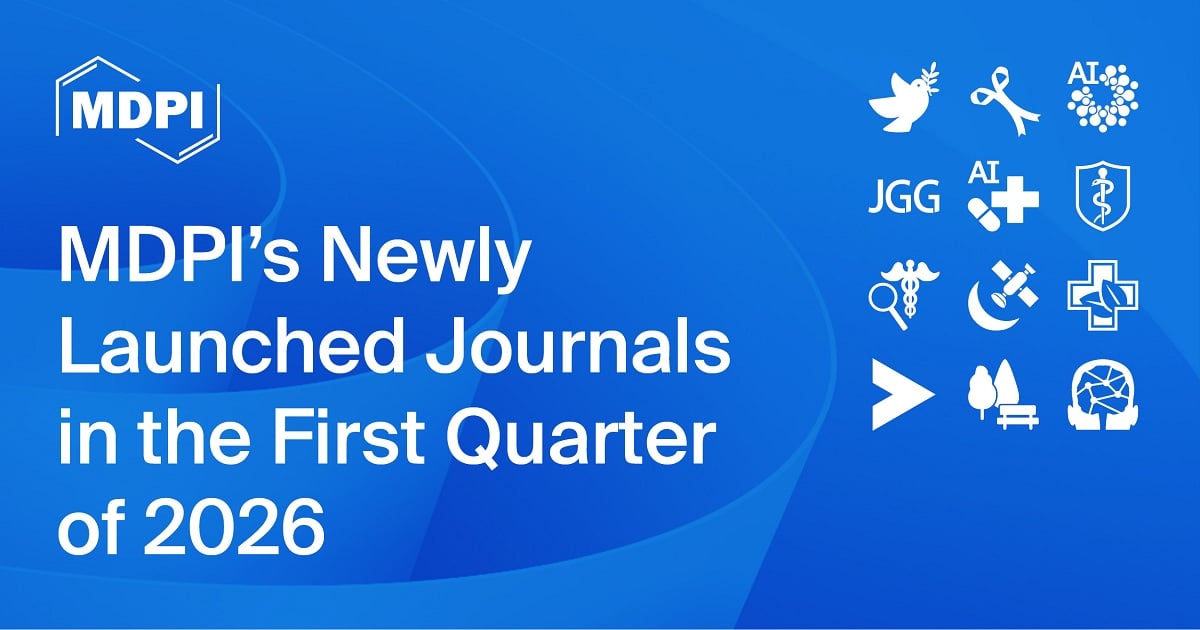
Our portfolio of journals available for publishing up-to-date research in immediate open access format has been further expanded. In the first quarter of 2026, nine new journals released their inaugural issues and three transferred journals released their first issue as part of MDPI, covering the subjects of clinical medicine, chemistry, computer science & mathematics, engineering, environment & ecology, and social sciences & psychology.
We extend our gratitude to the Editors-in-Chief, Associate Editors, and Editorial Board Members who will shape the future course of these brand-new journals. Each journal is dedicated to upholding strong editorial standards through a thorough peer review process, ensuring impactful open access scholarship.
Please feel free to browse and discover more about the new journals below.
|
New Journals |
Founding Editor(s)-in-Chief |
Journal Topics (Selected) |
|
|
Prof. Dr. Matt Oehlschlaeger, |
AI-based chemical data analysis, prediction, and discovery; AI-enabled chemical reaction prediction, synthesis planning, and retrosynthesis; AI in bioorganic chemistry and chemical biology; digital twins and simulation of chemical processes; AI-powered chemical education and pedagogy | |
|
|
Prof. Dr. Guang Jia, |
occupational hazards and exposure science; occupational health effects and susceptibility; occupational risk assessment and management; occupational health intervention, promotion, and policy | |
|
|
Prof. Dr. Alessandro Miani, |
environmental exposures and health; the built environment and public health; One Health approach; environmental justice and health equity; environmental policies and interventions | |
|
|
Prof. Dr. Miriam H. A. Bopp, |
neuroimaging technology and tool; multimodal neuroimaging integration and analysis; |
|
|
Prof. Dr. Raul A. Urrutia, |
personalized translational and clinical oncology research that contribute to a deeper understanding of cancer diagnoses, prognoses, prevention, and treatment specifically for individual patients | |
|
|
Prof. Dr. Pierre Boulanger, |
AI in disease detection, diagnosis, prediction, and treatment; medical informatics; AI in genomics and precision medicine; AI in drug discovery and development; |
|
|
Prof. Dr. Zhaokui Wang, |
astrodynamics; spacecraft technology; satellite technology; space transportation; space vehicle design, propulsion, and avionics; space energy, power and propulsion | |
|
|
Prof. Dr. Richard J Hauer, |
park design, planning, and evaluation; park and art; park, industrialization, urbanization, and civilization; park and education; park and smart society; park role in SDGs; park services for humans | |
|
|
Prof. Dr. Stacey L. Connaughton, |
conflict resolution; peacebuilding; peacemaking; mediation, reconciliation, and transitional justice; sustaining peace | |


|
Transferred Journals |
Editor(s)-in-Chief |
Journal Topics (Selected) |
|
|
Prof. Dr. Gianluigi Vendemiale, |
physiology and pathology of aging; biogerontology; epidemiology; clinical geriatrics; pharmacology; geriatric nursing | |
|
|
Prof. Dr. Michele Maffia, |
cellular and developmental biology; physiology, pathophysiology and endocrinology; diagnostic tools, therapies and public health | |
|
|
Dr. Warren S. Joseph, |
foot and ankle medicine; podiatric medicine | |


We would like to thank everyone who has supported the development of open access publishing. If you would like to create a new journal, you are welcome to send an application here or contact the New Journal Committee (newjournal-committee@mdpi.com).
3 April 2026
Colorectal Cancer Awareness Month–March 2026
As part of its ongoing commitment to advancing cancer research and knowledge exchange, MDPI highlights colorectal cancer in the March edition—one of the most prevalent and deadly cancers worldwide. It ranks as the third most diagnosed cancer and the second leading cause of cancer-related deaths globally, with an estimated 1.9 million new cases and over 900,000 deaths each year.
Of growing concern is the steady rise in incidence among individuals under 50, a trend observed over the past two to three decades. This underscores the urgent need to better understand underlying risk factors, strengthen early detection strategies, and develop innovative diagnostic tools.
Through curated research, Special Issues, and expert-led webinars, MDPI journals continue to support collaboration across researchers, clinicians, and policymakers. Such collective efforts are essential to accelerate discoveries and translate them into meaningful action—advancing toward more effective prevention, earlier detection, and improved patient outcomes.

 |
 |
 |
 |
 |
 |
 |
 |


| Keynote Speakers | |||
 |
 |
 |
 |
| Prof. Dr. Paola Patrignani, “G. d’Annunzio” University School of Medicine, Italy |
Prof. Dr. William Gmeiner, Wake Forest University, USA |
Dr. Eva Martínez-Balibrea, |
Dr. Zoltán Wiener, Semmelweis University, Hungary |
Register for this webinar for free here!

“Integrative Mechanistic Investigation of the Anticancer Effects of Panax notoginseng in Colorectal Cancer”
by Jaemoo Chun, Sarah Shin and Jeeyoun Jung
Molecules 2026, 31(5), 807; https://doi.org/10.3390/molecules31050807
“Integrated Multi-Omics Analysis Identifies Novel Prognostic and Diagnostic Hub Genes in Colorectal Cancer”
by Devi Lal and Himani Pandey
Onco 2025, 5(4), 50; https://doi.org/10.3390/onco5040050
“A Multimodal MRI-Based Model for Colorectal Liver Metastasis Prediction: Integrating Radiomics, Deep Learning, and Clinical Features with SHAP Interpretation”
by Xin Yan, Furui Duan, Lu Chen, Runhong Wang, Kexin Li, Qiao Sun and Kuang Fuby Xin Yan, Furui Duan, Lu Chen, Runhong Wang, Kexin Li, Qiao Sun and Kuang Fu
Curr. Oncol. 2025, 32(8), 431; https://doi.org/10.3390/curroncol32080431
“Exploring Experimental Models of Colorectal Cancer: A Critical Appraisal from 2D Cell Systems to Organoids, Humanized Mouse Avatars, Organ-on-Chip, CRISPR Engineering, and AI-Driven Platforms—Challenges and Opportunities for Translational Precision Oncology”
by Ahad Al-Kabani, Bintul Huda, Jewel Haddad, Maryam Yousuf, Farida Bhurka, Faika Ajaz, Rajashree Patnaik, Shirin Jannati and Yajnavalka Banerjee
Cancers 2025, 17(13), 2163; https://doi.org/10.3390/cancers17132163
“The Gut Microbiota and Colorectal Cancer: Understanding the Link and Exploring Therapeutic Interventions”
by Imen Zalila-Kolsi, Dhoha Dhieb, Hussam A. Osman and Hadjer Mekideche
Biology 2025, 14(3), 251; https://doi.org/10.3390/biology14030251
“A Novel Bacteriophage with the Potential to Inhibit Fusobacterium nucleatum-Induced Proliferation of Colorectal Cancer Cells”
by Ho Yin Pekkle Lam, Meng-Jiun Lai, Pin-Chun Wang, Wen-Jui Wu, Li-Kuang Chen, Hsiang-Wei Fan, Chun-Chieh Tseng, Shih-Yi Peng and Kai-Chih Chang
Antibiotics 2025, 14(1), 45; https://doi.org/10.3390/antibiotics14010045
“A New Blood-Based Epigenetic Diagnostic Biomarker Test (EpiSwitch®® NST) with High Sensitivity and Positive Predictive Value for Colorectal Cancer and Precancerous Polyps”
by Ewan Hunter, Heba Alshaker, Cicely Weston, Mutaz Issa, Shekinah Bautista, Abel Gebregzabhar, Anya Virdi, Ann Dring, Ryan Powell, Jayne Green et al.
Cancers 2025, 17(3), 521; https://doi.org/10.3390/cancers17030521
“The Role of KRAS Mutations in Colorectal Cancer: Biological Insights, Clinical Implications, and Future Therapeutic Perspectives”
by Mitsunobu Takeda, Shoma Yoshida, Takuya Inoue, Yuki Sekido, Tsuyoshi Hata, Atsushi Hamabe, Takayuki Ogino, Norikatsu Miyoshi, Mamoru Uemura, Hirofumi Yamamoto, Yuichiro Doki and Hidetoshi Eguchi
Cancers 2025, 17(3), 428; https://doi.org/10.3390/cancers17030428
“Network Pharmacology and Bioinformatics Study of Six Medicinal Food Homologous Plants Against Colorectal Cancer”
by Xinyue Zhao, Jian Xiu, Hengzheng Yang, Weiwei Han and Yue Jin
Int. J. Mol. Sci. 2025, 26(3), 930; https://doi.org/10.3390/ijms26030930
“A Review of Potential Agents for Colon Cancer Interception in FAP Patients: Evidence from Preclinical Studies in APCMin/+ Mice”
by Karthikkumar Venkatachalam, Krishnendu Goswami, Venkateshwar Madka and Chinthalapally V. Rao
Targets 2025, 3(1), 4; https://doi.org/10.3390/targets3010004
“Colorectal Cancer: Epidemiology, Risk Factors, and Prevention”
by Gholamreza Roshandel, Fatemeh Ghasemi-Kebria and Reza Malekzadeh
Cancers 2024, 16(8), 1530; https://doi.org/10.3390/cancers16081530
“Symptom Burden and Time from Symptom Onset to Cancer Diagnosis in Patients with Early-Onset Colorectal Cancer: A Multicenter Retrospective Analysis”
by Victoria A. Baronas, Arif A. Arif, Eric Bhang, Gale K. Ladua, Carl J. Brown, Fergal Donnellan, Sharlene Gill, Heather C. Stuart and Jonathan M. Loree
Curr. Oncol. 2024, 31(4), 2133-2144; https://doi.org/10.3390/curroncol31040158

|
“Recent Advances in Surgical Strategies for Managing Metastatic Colorectal Cancer” |
“Novel Strategies in the Prevention/Treatment of Colorectal Cancer: 2nd Edition” |
 |
 |
|
“Molecular Mechanisms and Therapeutic Strategies of Colorectal Cancer” |
“Gut Microbiota and Inflammation in Colorectal Tumor Development and Progression” |
 |
 |

 |
 |
 |
2 April 2026
2026 Tu Youyou Award—Open for Nominations

We are delighted to announce that nominations are now open for the 2026 Tu Youyou Award. Named after Nobel Laureate Tu Youyou, whose discovery of artemisinin has saved millions of lives, this award recognizes researchers whose work advances the fields of natural products chemistry and medicinal chemistry, while also contributing to human health.
Prize
– CHF 100,000;
– A medal;
– A certificate.
The monetary prize will be shared equally should there be multiple recipients.
Who May Be Nominated?
– Scientists with outstanding achievements and contributions in the fields of natural products chemistry and medicinal chemistry.
Nominees must be individuals; team or group nominations are not permitted. Nominations are valid only for the current award cycle.
Who May Submit a Nomination?
– The director of the nominee’s host research institution or recognized scientists within the field.
Self-nominations will not be considered.
Nomination Materials
– A biographical sketch;
– A detailed description of the nominee’s contributions;
– 5–10 representative academic publications;
– A list of academic honors, awards, and funded projects;
– A nomination letter signed by two nominators.
How to Submit?
Submit nominations online via the following link: https://tuyouyouprize.org/nomination
Important Dates
– Nomination Deadline: 31 October 2026
– Winner Announcement: March 2027
For further information, please visit the Tu Youyou Award website (https://tuyouyouprize.org/). For any inquiries, please contact the Tu Youyou Award Team at tuyouyouaward@mdpi.com.
1 April 2026
Current Oncology | Interview with Authors of the Cover Article—Dr. Wensi Tao and Prof. Dr. R. Daniel Bonfil

We had the pleasure of speaking with Dr. Wensi Tao and Prof. Dr. R. Daniel Bonfil, who are the first author and corresponding author, respectively, of the cover article published in Volume 32, Issue 12 of Current Oncology (ISSN: 1718-7729). Prof. Dr. Bonfil is also a member of Current Oncology’s Editorial Board. Here, they share insights into their academic journey, research focus, and the motivation behind their recent work.
“Identification of Actionable Mutations in Metastatic Castration-Resistant Prostate Cancer Through Circulating Tumor DNA: Are We There Yet?”
by Wensi Tao, Amanda Sabel and R. Daniel Bonfil
Curr. Oncol. 2025, 32(12), 692; https://doi.org/10.3390/curroncol32120692
Available online: https://www.mdpi.com/1718-7729/32/12/692
Dr. Wensi Tao earned his MS in clinical and translational investigation and PhD in molecular cell and developmental biology from the University of Miami, Miami, FL, USA, where he also completed postdoctoral training at the Bascom Palmer Eye Institute. His research focuses on molecular and cellular mechanisms driving oncologic disease progression and therapeutic resistance in ophthalmologic disorders. He is currently an Assistant Professor in the Department of Medical Education at the Dr. Kiran C. Patel College of Allopathic Medicine, Nova Southeastern University (NSU), Fort Lauderdale, FL, USA. Prior to joining NSU, he served as a Research Assistant Professor in the Department of Radiation Oncology at the University of Miami’s Sylvester Comprehensive Cancer Center, leading translational research in molecular imaging, nanomedicine, and therapeutic development.
Dr. R. Daniel Bonfil earned his PhD from the University of Buenos Aires, Argentina, and completed post-doctoral training at the Fox Chase Cancer Center, Philadelphia, PA, USA. In 2002, he was appointed Research Associate Professor of urology and pathology at the Wayne State University School of Medicine, Detroit, MI, USA, with a secondary appointment in Oncology at the Karmanos Cancer Institute. There, he conducted NIH- and Department of Defense (DOD)-funded research on the molecular mechanisms of bone metastasis in prostate and breast cancer. He transitioned to NSU in 2017, serving as Professor of pathology and medical education at the Dr. Kiran C. Patel College of Allopathic Medicine and Chair of the Division of Pathology through 2022. His scholarly work includes over 100 peer-reviewed publications and book chapters, alongside more than 90 abstracts presented at prestigious national and international scientific meetings.
The following is an interview with Dr. Tao and Prof. Bonfil:
1. Could you please briefly introduce the main research content of the published paper?
In this paper, we examined the expanding clinical role of circulating tumor DNA (ctDNA) testing in patients with metastatic castration‑resistant prostate cancer (mCRPC). At this advanced stage, the disease remains incurable, and treatment selection increasingly depends on the identification of specific genetic alterations that predict response to targeted therapies. However, obtaining tumor tissue for mutation profiling is often invasive, technically challenging, and, in some cases, not feasible.
Current evidence indicates that ctDNA, obtained through a simple blood draw, can reliably identify clinically actionable genomic alterations, including defects in DNA repair genes such as BRCA1/2, which inform the use of PARP inhibitors, as well as mismatch repair deficiency (MMRd) or microsatellite instability-high (MSI‑high) status, which predict response to immune checkpoint inhibitors.
Our study outlines the principles of ctDNA testing and summarizes FDA‑approved therapies guided by these molecular findings. Overall, we conclude that ctDNA analysis can support more personalized treatment strategies, enable real-time monitoring of disease evolution, and expand access to precision medicine for patients with advanced mCRPC.
Despite existing challenges, ctDNA testing is already reshaping the clinical evaluation and management of this aggressive disease, particularly in cases where tumor tissue analysis is not feasible.
2. Could you tell us a little bit about your current research?
Both of us are basic cancer researchers who have consistently worked in close collaboration with oncologists, with the goal of ensuring that our work has a strong translational impact whenever possible.
Our recent research has focused on blood-based liquid biopsies, which offer a minimally invasive approach to monitor tumor evolution in real time. By analyzing ctDNA and other biomarkers, we can gain critical insights into the genetic and molecular changes occurring in cancer over the course of disease progression and treatment. This approach is particularly valuable for guiding personalized therapies, especially in patients with metastatic or otherwise inaccessible tumors.
There is a compelling opportunity to improve the sensitivity and clinical utility of these technologies, with the overarching aim of integrating them into routine practice to enhance patient care.
3. How do you evaluate research trends in this field, and what advice would you give to early career researchers who are interested in this research area?
This field is evolving rapidly, driven by advances in sequencing technologies, bioinformatics, and an increasing emphasis on precision oncology. There is a clear shift toward enhancing the sensitivity and specificity of liquid biopsy approaches, integrating multiple biomarkers, such as ctDNA, circulating tumor cells, and extracellular vesicles, and extending their applications tools beyond advanced disease to include early detection and monitoring of minimal residual disease.
For early career researchers interested in this area, it is essential to develop a strong foundation in both molecular biology and data analysis, given the interdisciplinary nature of the field. Engaging in close collaboration with clinicians, bioinformaticians, and fellow scientists can significantly enhance the translational impact of their work. Equally important is maintaining a focus on clinical relevance, understanding unmet needs in patient care to help guide meaningful and impactful research.
4. Why did you choose Current Oncology as a platform for publishing your work, and how was your experience? Would you consider publishing your future research in Current Oncology?
We chose Current Oncology due to its established reputation as a premier, peer-reviewed forum for oncology professionals. The journal’s emphasis on practical clinical relevance aligns perfectly with our goal of bridging the gap between basic science, translational research, and routine clinical practice.
The publication process was exceptionally professional and efficient. The Editorial Team provided a rigorous, constructive review while maintaining a timely schedule. Given this positive experience and the journal’s clinical reach, we would certainly consider Current Oncology for future submissions.
5. How do you think open access means of publishing impacts authors?
The open access model significantly impacts authors by increasing the visibility, accessibility, and potential impact of their work. By eliminating access restrictions for readers, open access publishing allows research to reach a wider and more diverse audience, which can enhance readership, citation rates, and real‑world application, including improvements in patient care.
In the coming years, the oncology research community is likely to focus on topics that bridge molecular discovery with meaningful clinical impact. Precision oncology will remain central, particularly integrating genomics, epigenomics, and proteomics to better predict treatment response and mechanisms of resistance. Closely related to this is growing interest in tumor heterogeneity and the tumor microenvironment, including immune and stromal interactions that influence disease progression and therapeutic outcomes.
Advances in liquid biopsies and circulating biomarkers are also expected to play a transformative role in minimal residual disease assessment and real‑time monitoring of treatment response. In parallel, the integration of artificial intelligence and machine learning to pathology, imaging, and clinical workflows is rapidly evolving and holds significant promise for improving diagnostic accuracy and optimizing treatment selection.
