



Journal Menu
► ▼ Journal Menu-
- Diversity Home
- Aims & Scope
- Editorial Board
- Reviewer Board
- Topical Advisory Panel
- Instructions for Authors
- Special Issues
- Topics
- Sections & Collections
- Article Processing Charge
- Indexing & Archiving
- Editor’s Choice Articles
- Most Cited & Viewed
- Journal Statistics
- Journal History
- Journal Awards
- Conferences
- Editorial Office
Journal Browser
► ▼ Journal BrowserNeed Help?
Announcements
21 October 2025
Meet Us at the 5th China Ecohydrology Forum, 7–9 November 2025, Tianjin, China

Conference: The 5th China Ecohydrology Forum
Date: 7–9 November 2025
Place: Tianjin, China
We are excited to announce that MDPI will participate as an exhibitor at the 5th China Ecohydrology Forum, from 7 to 9 November 2025.
The 5th China Ecohydrology Forum is jointly organized by the Ecological Hydrology Professional Committee of the Chinese Ecological Society and Tianjin University. Centered around the theme “Ecohydrology and Earth's Critical Zone Science: Frontiers and Applications”, the conference aims to explore the theories, methods, and development trends of ecohydrology under global change, enhance the influence of ecohydrology research in China, and promote its contribution to ecological civilization construction and green, high-quality development.
Conference Topics and Parallel Sessions:
- Ecohydrology Development from an Earth System Science Perspective;
- Multi-Scale Coupling and Feedback Mechanisms in Ecohydrology;
- Ecohydrological Resilience and Response to Extreme Climate Change;
- Ecohydrology and Biogeochemical Cycling in the Earth’s Critical Zone;
- Artificial Intelligence and Ecohydrological Modeling;
- New Technologies in Ecohydrological Monitoring, Data Assimilation, and Integration;
- Soil and Water Conservation and Ecohydrological Regulation;
- Ecohydrological Processes and Environmental Protection in Coastal and Riparian Zones;
- Aquatic Ecological Effects and Water Environment Management;
- Integrated River Basin Water Resources, Management, and Green Development;
- Hydrological and Ecological Effects of Major Ecological Projects;
- Graduate Student Forum: Frontiers and Method Innovation in Ecohydrology Research.
The following MDPI journals will be presenting at the conference:
If you wish to attend the conference, please feel free to contact us. Our delegates look forward to meeting you in person at the booth and to answering any questions that you may have.
For more information about the conference, please visit the following website: http://www.esc.org.cn/detail.html?id=43&contentId=2864.
15 October 2025
MDPI’s Newly Launched Journals in September 2025

Nine new journals covering a range of subjects launched their inaugural issues in September 2025. We are excited to be able to share with you the newest research rooted in the value of open access.
We extend our sincere thanks to all Editorial Board Members for their commitment and expertise. Each journal is dedicated to upholding strong editorial standards through a thorough peer review process, ensuring impactful open access scholarship.
Please feel free to browse and discover more about the new journals below.
|
Journal |
Founding Editor-in-Chief |
Journal Topics (Selected) |
|
|
Prof. Dr. Joseph G. Grzywacz, San José State University, USA |
family formation and dynamics; family relationships; family diversity and structure; family processes; family challenges; global perspectives of family | |
|
|
Prof. Dr. Chengkuo Lee, National University of Singapore, Singapore |
AIoT sensing technologies; distributed AI and federated learning; AI-enhanced edge analytics; sensor fusion in edge computing; low-power AI sensing; security and privacy in edge-AI systems; AI-driven optimization of IoT networks | |
|
|
Prof. Dr. Steven Paul Nistico, Sapienza University of Rome, Italy |
aesthetics; reconstructive surgery and plastic surgery; dermatology; oral and maxillofacial surgery; surgical procedures; non-surgical procedures | |
|
|
Prof. Dr. Mauro Tonelli, University of Pisa, Italy |
plasma physics and technology; atomic and molecular physics; nuclear physics; quantum physics and technology; dielectrics, ferroelectrics, and multiferroics; semiconductor physics and devices; engineering physics; material physics; biophysics| |
|
|
Prof. Dr. Sergej M. Ostojic, University of Agder, Norway; |
biochemical research methods; biochemistry and molecular biology; cell biology; clinical and medicinal chemistry; clinical neurology; endocrinology and metabolism; medicine, general and internal; nutrition and dietetics; toxicology | |
|
|
Prof. Dr. Michele Nappi, University of Salerno, Italy |
foundations and advancements in multimedia technologies; computational social media analytics; human–AI interaction in social contexts; multimedia understanding and generation for social insight; ethics, fairness, and privacy in multimedia systems | |
|
|
Prof. Dr. Philippe Gorce, Toulon University, France |
ergonomic design and evaluation of workspaces, tools, and equipment; biomechanical analysis and ergonomic interventions for musculoskeletal health; cognitive workload assessment and management; human-computer interaction (HCI) and user experience (UX) research; ergonomic wearables; AI-driven ergonomic assessment tools; neuroergonomics | |
|
|
Prof. Dr. Ronald Charles Sims, Utah State University, USA |
bioresources; bioproducts; bioenergy and biofuels; environmental protection; public health protection; biological waste treatment; biomass transformation; circular bioeconomy; bio-based materials and chemicals; bioresidues | |
|
|
Prof. Dr. M. Jamal Deen, McMaster University, Canada |
device design and engineering; circuit design and system integration; applications and emerging technologies; materials and fabrication innovations; testing, reliability, and standards | |


We would like to thank everyone who has supported the development of open access publishing. If you would like to create more new journals, you are welcome to send an application here, or contact the New Journal Committee (newjournal-committee@mdpi.com).
11 October 2025
Meet Us at the 24th Chinese Ecology Congress, 24–26 October 2025, Wuhan, China

Conference: The 24th Chinese Ecology Congress
Date: 24–26 October 2025
Location: Wuhan, China
The Chinese Ecology Congress is the flagship conference of the Ecological Society of China, hosted by the Ecological Society of China and undertaken by local universities and institutes. The theme of the conference is “New mission of ecological science: ecological protection, restoration and high-quality development”. The conference has set up dozens of sub-venues on major topics such as innovation in ecological theory, methods and practice, ecosystem functions, services and human well-being, ecological response and restoration to global change, harmonious coexistence between man and nature, and sustainable development.
MDPI will be attending the 24th Chinese Ecology Congress. We welcome researchers from different backgrounds to visit and share their latest ideas with us.
The following MDPI journals will be represented:
If you are planning to attend this conference, please visit our booth. Our delegates look forward to meeting you in person and answering any questions that you may have. For more information about the conference, please visit the following website: http://esc.bitcast.org.cn/meeting/43.
2 October 2025
MDPI INSIGHTS: The CEO's Letter #27 - OASPA 2025, COUNTER 5.1, UK Summit in London, MDPI at the Italian Senate

Welcome to the MDPI Insights: The CEO's Letter.
In these monthly letters, I will showcase two key aspects of our work at MDPI: our commitment to empowering researchers and our determination to facilitating open scientific exchange.
Opening Thoughts


MDPI at OASPA 2025: Embracing the Complexity of Open Access
From 22 to 24 September, I joined the OASPA 2025 Annual Conference in Leuven, Belgium, where the theme, “Embracing the Complexity – How do we get to 100% Open Access?” tackled the hard questions about the future of scholarly communication.
With MDPI a longstanding member of the Open Access Scholarly Publishing Association (OASPA) and Platinum sponsor of the conference, I was invited to present and participate in important discussions on how we can continue to move the needle in Open Access (OA) publishing.
From 50% to 100% Open Access
Last year’s OASPA conference celebrated a major milestone – reaching 50% of global research outputs published as OA. But, as noted during the conference, this was the “easy” part. The challenge ahead is much tougher: how do we take OA from 50% to 100%? For many academics and institutions, OA is still relatively new, and thus it is essential for us to continue educating people as to what OA is, how it works, and why it matters.

Stefan Tochev (CEO, MDPI) presenting at OASPA’s 2025 Annual Conference in Leuven, Belgium.
MDPI’s perspective
At MDPI, we are fully committed to this. As a 100% OA publisher, our growth is inseparable from the success of OA itself. In many ways, MDPI is a byproduct of the global adoption of OA, and we play an important role in helping to advance it further.
I had the opportunity to share MDPI’s perspective in the panel discussion entitled: "Hello from the other side: views from fully Open Access journals using APCs," alongside industry colleagues from PLOS, eLife, AOSIS, and Frontiers.
Instead of giving a standard presentation, I highlighted aspects of MDPI that the audience might not be aware of. I also presented on the opportunities and challenges facing publishers that are already fully OA, the importance of diverse models in achieving 100% OA, and why OA is the baseline while Open Science is the future.
Recognizing Gold OA
As part of the panel, I had undertaken to make some bold and provocative statements. I therefore emphasized a point that is sometimes overlooked: we didn’t reach 50% OA without Gold OA – it accounts for more than half of all OA publications today. And we certainly won’t reach 100% OA without it.
“By educating the community and working together, we can continue to take Open Science to the next level”

“When people speak about Gold OA and MDPI, they should ‘put some respek on our name.”
MDPI is a leader in Gold OA and has been a driver of this progress at scale.
While Gold OA and MDPI are sometimes slighted, both deserve recognition for their contributions to advancing Open Science globally.
I closed my presentation with a reminder that the good we do is sometimes overlooked, and that when people speak about Gold OA and MDPI, they should "put some respek on our name."
I’m pleased to have seen attendees sharing positive experiences with MDPI, reminding us that we bring real value to the OA movement and deserve a stronger reputation. We also engaged in constructive conversations about various topics, including cost transparency.
A few themes that I took away from the conference:
- Quality and integrity matter as much as access. OA publishers must not lose sight of research integrity, inclusivity, and sustainability while pursuing 100% OA.
- Global collaboration is essential. Policies, funding models, and infrastructure differ around the world, and we will need cross-border collaboration to make OA a truly global reality.
- Open Science is the bigger story. OA is just the first step – the future lies in open data, open peer review, research reproducibility, etc.
“MDPI’s scale allows us to better support authors, reinvest in communities, and push Open Science forward”
How we communicate MDPI’s role
For us at MDPI, this is also a reminder of how we communicate externally. When we tell our story, we shouldn’t forget to start with the bigger picture – Open Science and Open Access. Then we connect it to MDPI, our journals, services, and initiatives, exemplifying the fact that we are part of a mission larger than ourselves.

MDPI colleagues Clàudia Aunós (Society Partnerships), Marta Colomer (External Affairs), Stefan Tochev (CEO), and Nikola Paunovic (Scilit), at OASPA’s 2025 Annual Conference in Leuven, Belgium.
The journey to 100% OA will not be simple. But by educating the community and working together, we can continue to take Open Science to the next level.
Impactful Research

MDPI becomes COUNTER 5.1 compliant across 480+ Journals
I’m pleased to share that MDPI has officially become COUNTER 5.1 compliant and has joined the COUNTER Registry.
For those who might not be familiar with it, COUNTER provides international standards for tracking and reporting how research is being used. By becoming COUNTER 5.1 compliant, MDPI can now deliver credible, comparable, and transparent usage reports across our entire journal portfolio.
“MDPI is showing that they want to be measured against the same yardstick as other publishers”
Why is this important?
Because usage statistics aren’t just numbers: they’re powerful tools that help our authors, institutions, and consortia understand the real impact of their research. With COUNTER compliant reports, our institutional partners can now make more informed decisions about publishing agreements, funding allocations, and the long-term value of Open Access.
In practical terms, MDPI will now provide Platform, Title, and Item Reports, with standardized usage views available at the institute and consortium level. These reports cover usage from January 2024 onwards and will be updated monthly. Institutions will be able to access them via SuSy, or automatically through the COUNTER API.

I’d like to highlight and thank Becky Castellon, our Institutional Partnerships Manager, who has played a key role in driving this project forward. Becky captured it perfectly when she said: "Through these usage reports, our global research community can access trustworthy data about how their work is being used and accessed
This information is often vital for reviewing publishing partnership agreements and for making informed decisions about future funding allocations."
We also received encouraging feedback from Tasha Mellins-Cohen, Executive Director at COUNTER Metrics:
"We’re delighted to see born-OA publishers engaging with COUNTER. Our normalised usage metrics are relied on as the basis for credible return-on-investment calculations by libraries worldwide. By adopting the COUNTER standard, MDPI is showing that they want to be measured against the same yardstick as other publishers."
For MDPI, this milestone is another step in our commitment to transparency, trust, and impact. By adopting COUNTER’s standards, we’re not just aligning with best practice; we’re ensuring that Open Access publishing is measured on the same terms as traditional publishing, proving its value in concrete and globally recognized ways.
This is an important milestone for MDPI, but more importantly for the researchers, librarians, and institutions we serve. Transparency builds trust, and COUNTER compliance helps us show the global reach and influence of Open Access publishing in the clearest way possible.
Inside Research

Lin Li (Publisher, MDPI), Stefan Tochev (CEO, MDPI, Prof. Chengkuo Lee (Editor-in-Chief, AI Sensors), and Constanze Schelhorn (Head of Indexing) at restaurant in Basel, Switzerland.
Welcoming Prof. Lee (EiC of AI Sensors) to Basel
On 11 September, we welcomed Prof. Dr. Chengkuo Lee, Editor-in-Chief of our new journal AI Sensors, to our Basel office. Prof. Lee is a high profiled researcher (h-index 104, 37,000+ citations), a longtime collaborator with MDPI (25 published articles), and has already chaired several AI Sensors (AIS)-related conferences with us, including the recent event in Kuala Lumpur, where AI Sensors held its first editorial board meeting.

Stefan Tochev (CEO, MDPI) showing Special Issue reprint books as part of a tour of MDPI’s Basel office.
Every journal has a story
During his visit, we exchanged ideas on how to build the journal’s identity and impact. A key takeaway that I shared was that every journal has a story: its vision, its purpose, and the community it brings together.
That story is what connects with readers and authors, beyond metrics alone.
I encouraged everyone working on journals to reflect: What is the story of your journal? And how can you bring that story to the forefront in how you communicate about it?
How MDPI supports new journals

Constanze Schelhorn (Head of Indexing, MDPI) presenting on the MDPI indexing process at the company’s headquarters in Basel.
We also shared with Prof. Lee how MDPI supports journals through our Institutional Open Access Program, indexing expertise, and the work of our Journal Relationship Specialists.
Launching a new journal is ambitious, but with our strong track record (93% Scopus and 87% Web of Science acceptance rates in 2024), Prof. Lee felt confident that AI Sensors will find its place in the scholarly landscape.
Having spent some hours together, it’s clear that Prof. Lee is not only an Editor-in-Chief but also an ambassador for MDPI. His leadership and collaboration reflect the mission MDPI by which MDPI lives: accelerating Open Access and advancing Open Science.
Special thanks to Constanze Schelhorn (Head of Indexing), Ting Leng (JRS, Managing Editor, AI Sensors), Lin Li (Publisher, AI Sensors), Aimar Xiong (Publisher), and Christian Eberhard (Office Administrator, Basel), for organizing and hosting the meeting.
Coming Together for Science

Highlights from the MDPI UK Summit in London
I was pleased to be back in the UK in September, supporting our Manchester team in hosting their first MDPI Summit in London. This day-and-a-half private event brought together 25 Chief Editors and Associate Editors to exchange knowledge, learn about latest developments at MDPI, and engage in discussions on advancing Open Science. The program included MDPI and guest presentations, and Q&A sessions.
Why these summits matter
Our Summits provide a platform to:
- Share updates on the latest developments at MDPI, our editorial processes, research integrity practices, and indexing.
- Highlight collaborations with institutions and societies in the region.
- Offer external perspectives from guest speakers.
- Create space for Chief Editors to share their insights, ask questions, network, and help shape MDPI’s path forward.
These gatherings are more than updates: they improve our relationships with Chief Editors, who serve not only as leaders of their journals but also as ambassadors for MDPI within the research community. We often hear that this type of event is unique, something many other publishers do not provide. It shows that we care and are willing to go the extra mile to recognize and engage our key collaborators.
|
|
|
|


MDPI and the UK: Key facts
- With over 80,000 publications, the UK is MDPI’s eighth-largest contributor.
- MDPI is the fourth-largest publisher in the UK, accounting for 11% of the country’s 89,526 Open Access publications in 2024.
- We collaborate with more than 4,000 active UK Editorial Board Members, 48% of whom have an H-index above 26. This includes 49 Editors-in-Chief and 74 Section Editors-in-Chief.
- MDPI maintains over 1,000 IOAP agreements worldwide, with 63 from the UK.
“We are willing to go the extra mile to recognize and engage our key collaborators”
|
|
|
|
|
|
|
|


Agenda highlights:
- MDPI Overview, Open Access, and UK Collaboration – Stefan Tochev (CEO, MDPI)
- MDPI Editorial Process – Dr. Michael O’Sullivan (Scientific Quality Advisor Lead, MDPI)
- Research Integrity and Publication Ethics – Daisy Fenton (Research Integrity Specialist, MDPI)
- Institutional Partnerships – Becky Castellon (Institutional Partnerships Manager, MDPI)
- Promoting and Developing Your Journal – Prof. Fabio Tosti (Editor-in-Chief of NDT)
- Indexing to Impact – Dr. Michael O’Sullivan (Scientific Quality Advisor Lead, MDPI)
- Engaging our Academic Community – Jaime Anderson Anderson (UK Operations Manager, MDPI)
- Closing Remarks – Stefan Tochev (CEO, MDPI)

MDPI colleagues Stefan Tochev (CEO), Jaime Anderson Anderson (UK Operations Manager), Dr. Michael O’Sullivan (Scientific Quality Advisor Lead), Becky Castellon (Institutional Partnerships Manager), Daisy Fenton (Research Integrity Specialist) at the MDPI UK 2025 Summit in London.
Thank you!
A special thank-you to the Manchester team and all colleagues behind the scenes who made this Summit a success. Your efforts are greatly appreciated. We look forward to building on this momentum with future Summits in Europe and beyond.
Closing Thoughts

Dr. Giulia Stefenelli (Scientific Communications Lead, MDPI) and Stefan Tochev (CEO, MDPI) participating in a press conference at the Italiane Senate in Rome to promote the 2nd International Conference on Environmental Medicine (ICEM)
MDPI at the Italian Senate: Promoting Environmental Medicine and Open Science
On 16 September, Dr. Giulia Stefenelli (Scientific Communications Lead) and I had the honour of participating in a press conference at the Italian Senate in Rome, organized by the Italian Society of Environmental Medicine (SIMA) to promote the upcoming 2nd International Conference on Environmental Medicine (ICEM) (20–21 November 2025).
This is an important event for MDPI, as we are the exclusive publishing partner for ICEM and have recently launched a new journal with SIMA, further building our presence both in Italy and within this important field of research.
Why this matters
- The promotion of ICEM has received extensive national media coverage (more than 15 mentions in major Italian outlets; see links below).
- The press conference brought together leading policymakers, academics, and Nobel Laureates to emphasize the impact of environmental exposures and epigenetics on human health.
- We were introduced to government ministries, university rectors, and influential stakeholders, which helps us bolster MDPI’s visibility and reputation in Italy.
Highlights
Nobel Laureate Sir Richard Roberts joined the discussion, underlining the importance of environmental medicine in shaping future health outcomes. Nobel Laureate Prof. Dr. Tong Zhu (Peking University) will also speak at the November conference.
Institutional representatives included the Italian Minister of the Environment and Energy Security, the Italian Undersecretary for Health, and senior officials from the World Health Organization.
In my closing remarks, I highlighted that:
“Over the past five years, about 65% of research published in Italy has been Open Access, compared to an average of 55% worldwide.”
Italian research ranked seventh among the top 20 countries in average citations during this period, reflecting its strong international influence. Not only is Italy producing a high volume of research; it is also producing research of outstanding quality.
MDPI’s role
This event was not only about promoting ICEM but also about showcasing MDPI’s commitment to Open Access and our ability to connect scientific publishing with leading academic, medical, and policy institutions.
As Giulia Stefenelli noted:
“This event was highly relevant for MDPI, as it not only showcased our strong commitment to OA but also emphasized our role in advancing important fields such as Environmental Medicine.”
Learn more
- Watch the full press conference (Radio Radicale)
- Giulia’s speech: 33:20 (in Italian)
- Stefan’s speech: 57:50 (in English)
- ICEM 2025 Conference Program
- Selected media coverage:
This moment at the Italian Senate shows how MDPI can connect publishing with science, policy, and society to help advance both Open Science and environmental health research on a global stage.
|
|
|


In Rome with Sir Richard Roberts (photo left) and Prof. Giuseppe Novelli (EiC of MDPI journal COVID).
Chief Executive Officer
MDPI AG
1 October 2025
2024 MDPI Top 1000 Reviewers

We are honored to recognize the 2024 MDPI Top 1000 Reviewers—scholars whose exemplary commitment to rigorous and constructive peer review is vital in upholding the highest standards of academic publishing.
Selected from a distinguished pool of 215,000 reviewers from 65 countries and regions worldwide, these honorees stand out for their exceptional expertise, diligence, and dedication to advancing research through timely and thoughtful reviews. Their constructive and impartial feedback ensures the publication of high-quality, impactful research, while their timely reviews facilitate swift revisions and faster publication of innovative work.
Peer review is the invisible foundation of academic progress. With gratitude and respect, we celebrate these 1000 scholars who made that foundation stronger in 2024. We respected all privacy preferences, with part of nominees opting for limited attribution.
The names of these reviewers are listed below in alphabetical order by first name:
|
Abbas Yazdinejad |
Hanane Boutaj |
Ophir Freund |
|
Abdessamad Belhaj |
Hany H. Arab |
Oscar De Lucio |
|
Abdolreza Jamilian |
Hao Zang |
Otilia Manta |
|
Abdul Waheed |
Hatem Amin |
Panagiotis D. Michailidis |
|
Abiel Aguilar-González |
Henry Alba |
Panagiotis Simitzis |
|
Adina Santana |
Hiroyuki Noda |
Paola Prete |
|
Aditya Velidandi |
Hitoshi Tanaka |
Paolo Trucillo |
|
Adrian Stancu |
Horst Lenske |
Patricia Kara De Maeijer |
|
Adriana Borodzhieva |
Hossein Azadi |
Patrícia Pires |
|
Adriana Cristina Urcan |
Houlin Yu |
Paulo Schwingel |
|
Adriano Bressane |
Huaifu Deng |
Pavel Loskot |
|
Agbotiname Imoize |
Huamin Jie |
Pedro García-Ramírez |
|
Agustin L. Herrera-May |
Hugo Lisboa |
Pedro Pablo Zamora |
|
Ahmed Arafa |
Igor L. Zakharov |
Pedro Pereira |
|
Ahmet Cagdas Seckin |
Igor Litvinchev |
Pei-Hsun Wang |
|
Ailton Cesar Lemes |
Igor Vujović |
Pellegrino La Manna |
|
Akash Kumar |
Ildiko Horvath |
Petar Ozretić |
|
Akihiko Murayama |
Ilya A. Khodov |
Petko Petkov |
|
Alain E. Le Faou |
Ilya Zavidovskiy |
Petr Komínek |
|
Alain Massart |
Imran Ali Lakhiar |
Petras Prakas |
|
Alejandro Plascencia |
Ines Aguinaga-Ontoso |
Petro Pukach |
|
Aleksandar Ašonja |
Ioan Hutu |
Petru Alexandru Vlaicu |
|
Aleksandra Głowacka |
Ioan Petean |
Phil Chilibeck |
|
Aleksandra Nesić |
Irena M. Ilic |
Pia Lopez-Jornet |
|
Alessio Ardizzone |
Isaac Lifshitz |
Pietro Geri |
|
Alessio Faccia |
Ismael Cristofer Baierle |
Pingfan Hu |
|
Alexander E. Berezin |
I-Ta Lee |
Piotr Cyklis |
|
Alexander Lykov |
Itzhak Aviv |
Piotr Gauden |
|
Alexander Robitzsch |
Iustinian Bejan |
Piotr Gawda |
|
Alexandre Landry |
Ivan Matveev |
Pradeep Kumar Panda |
|
Alexey Chubarov |
Ivan Pavlenko |
Pradeep Varadwaj |
|
Alexey Morgounov |
Ivana Mitrović |
Presentación Caballero |
|
Alexis Rodríguez |
Iyyakkannu Sivanesan |
Pu Xie |
|
Alfredo Silveira De Borba |
Jacek Abramczyk |
Qingchao Li |
|
Ali Hashemizdeh |
Jacques Cabaret |
Qinghua Qiu |
|
Alison De Oliveira Moraes |
Jaime A. Mella-Raipán |
Qingwei Chen |
|
Aliyu Aliyu |
Jaime Taha-Tijerina |
Radoslaw Jasinski |
|
Alok Dhaundiyal |
James Chun Lam Chow |
Radu Racovita |
|
Álvaro Antón-Sancho |
James Chung-Wai Cheung |
Rafael Galvão De Almeida |
|
Amit Ranjan |
James O. Finckenauer |
Rafael Melo |
|
Amritlal Mandal |
Jan Cieśliński |
Rafal Kukawka |
|
Ana Isabel Roca-Fernández |
Ján Moravec |
Rafał Watrowski |
|
Ana Tomić |
Jarbas Miguel |
Raffaele Pellegrino |
|
Anas Alsobeh |
Jaroslav Dvorak |
Rajender Boddula |
|
Anastasios Karayiannakis |
Jarosław Przybył |
Ralf Hofmann |
|
Andre Luiz Costa |
Jasenka Gajdoš Kljusurić |
Ran Wang |
|
Andrea Bianconi |
Jasmina Lukinac |
Ranko S. Romanić |
|
Andrea Sonaglioni |
Jawad Tanveer |
Ratna Kishore Velamati |
|
Andrea Tomassi |
Jean Carlos Bettoni |
Rebecca Creamer |
|
Andrés Fernando Barajas Solano |
Jennie Golding |
Reggie Surya |
|
Andrés Novoa |
Jerzy Chudek |
Rehan Siddiqui |
|
Andreu Comas-Garcia |
Jhih-Rong Liao |
Renato Maaliw |
|
Andrew Lane |
Jiachen Li |
Reuven Yosef |
|
Andrew Lothian |
Jianzhu Liu |
Ricardo García-León |
|
Andrew Sortwell |
Jiaquan Yu |
Richard Murray |
|
Andrius Katkevičius |
Jibing Chen |
Robert Boyd |
|
Andromachi Nanou |
Jie Gao |
Robert H. Eibl |
|
Andrzej Kielian |
Jie Hua |
Robert James Crammond |
|
Andrzej Kozłowski |
Jill Channing |
Robert Oleniacz |
|
Andrzej Zolnowski |
Jinfeng Li |
Roberto Passera |
|
Ángel Josabad Alonso-Castro |
Jinle Xiang |
Rodolpho Fernando Vaz |
|
Ángel Llamas |
Jinliu Chen |
Rodrigo Galo |
|
Angelo Ferlazzo |
Jinyao Lin |
Roger E. Thomas |
|
Angelo Marcelo Tusset |
Jinyu Hu |
Roger W. Bachmann |
|
Anil K. Meher |
Jiří Remr |
Rogério Leone Buchaim |
|
Animesh Kumar Basak |
Jiying Liu |
Roman Trach |
|
Anita Silvana Ilak Peršurić |
João Everthon Da Silva Ribeiro |
Roman Trochimczuk |
|
Anna Kharkova |
Joao Pessoa |
Romil Parikh |
|
Anna Lenart-Boroń |
Joaquim Carreras |
Romina Fucà |
|
Anna Piotrowska |
John Adams Sebastian |
Ronald Nelson |
|
Anne Anderson |
John Van Boxel |
Rosie Yagmur Yegin |
|
Antiopi-Malvina Stamatellou |
Jonathan Puente-Rivera |
Roxana Lucaciu |
|
Antonia Kondou |
Jordi-Roger Riba |
Rui Sales Júnior |
|
Antonio Miguel Ruiz Armenteros |
Jorge De Andres-Sanchez |
Rui Vitorino |
|
Anusorn Cherdthong |
Jorge Guillermo Diaz Rodriguez |
Ruo Wang |
|
Aram Cornaggia |
Jorge Luis Zambrano-Martinez |
Ryoma Michishita |
|
Ariana Saraiva |
José F. Fontanari |
Sabina Necula |
|
Ariel Soares Teles |
José Felipe Orzuna-Orzuna |
Sabina Umirzakova |
|
Aristeidis Karras |
José Francisco Segura Plaza |
Said EL-Ashker |
|
Arnaud Dragicevic |
José Luis Díaz |
Saïf Ed-Dı̂n Fertahi |
|
Artem Obukhov |
José Luis Rivera-Armenta |
Salvatore Romano |
|
Arvind Kumar Shukla |
Jose M. Miranda |
Sándor Beszédes |
|
Arvind Negi |
Jose M. Mulet |
Santiago Lain |
|
Athanasios A. Panagiotopoulos |
Jose Navarro-Pedreño |
Sara Black Brown |
|
Augustine Edegbene |
José Pedro Cerdeira |
Sarat Chandra Mohapatra |
|
Aunchalee Aussanasuwannakul |
Jouni Räisänen |
Sarunas Grigaliunas |
|
Aurel Maxim |
Jui-Yang Lai |
Saša Milojević |
|
Barbara Symanowicz |
Juliana Fernandes |
Sawsan A. Zaitone |
|
Bartosz Płachno |
Julio Plaza Díaz |
Scott E. Hendrix |
|
Bela Kocsis |
Juliusz Huber |
Seong-Gon Kim |
|
Benedetto Schiavo |
Jun Liu |
Sergii Babichev |
|
Bernhard Koelmel |
Junyu Chen |
Sergio Da Silva |
|
Bhupendra Prajapati |
Karan Nayak |
Sérgio Felipe |
|
Bierng-Chearl Ahn |
Karel Allegaert |
Sergio Guzmán-Pino |
|
Bo Zhou |
Katarina Aškerc Zadravec |
Seyed Kourosh Mahjour |
|
Bohong Zhang |
Katarzyna Kubiak-Wójcicka |
Seyed Masoud Parsa |
|
Bonface Ombasa Manono |
Katarzyna Peta |
Shedrach Benjamin Pewan |
|
Bozhidar Stefanov |
Katarzyna Tandecka |
Shehwaz Anwar |
|
Brach Poston |
Katherine Bussey |
Shengwen Tang |
|
Byeong Yong Kong |
Katsuya Ichinose |
Shih-Lin Lin |
|
Caio Sampaio |
Kazuharu Bamba |
Shilong Li |
|
Caius Panoiu |
Kazuhiko Kotani |
Shing-Hwa Liu |
|
Caiyun Wang |
Kazuhiko Nakadate |
Shu Yuan |
|
Calin Mircea Gherman |
Keigi Fujiwara |
Shuohong Wang |
|
Camelia Delcea |
Keith Rochfort |
Shuolin Xiao |
|
Cardellicchio Angelo |
Kenneth Waters |
Shuping Wu |
|
Carlos Alberto Ligarda Samanez |
Keren Dopelt |
Sihui Dong |
|
Carlos Almeida |
Kira E. Vostrikova |
Sławomir Rabczak |
|
Carlos Balsas |
Kit Leong Cheong |
Sojung Kim |
|
Carlos López-de-Celis |
Konstantinos Vergos |
Songli Zhu |
|
Carlos Marcuello |
Koyeli Girigoswami |
Soonhee Hwang |
|
Carlos Pascual-Morena |
Krzysztof R. Karsznia |
Soo-Whang Baek |
|
Carlos Torres-Torres |
Krzysztof Szwajka |
Soufiane Haddout |
|
Casey Watters |
Krzysztof Wołk |
Sousana Papadopoulou |
|
Castillo Castillo |
Kumar Ganesan |
Spiros Paramithiotis |
|
Changmin Shi |
Lan Lin |
Spyridon Kaltsas |
|
Chao Chen |
László Radócz |
Srecko Stopic |
|
Chao Gu |
Laurent Donzé |
Srinivasan Sathiyaraj |
|
Chao Zhang (China) |
Lei He |
Stefano Mancin |
|
Chao Zhang (Singapore) |
Lei Huang |
Subhadeep Das |
|
Chellapandian Maheswaran |
Leonard-Ionut Atanase |
Sumedha Nitin Prabhu |
|
Cheonshik Kim |
Leonardo Henrique Dalcheco Messias |
Sushant K. Rawal |
|
Chia Hung Kao |
Leonie Brummer |
Svetoslav Todorov |
|
Chiachung Chen |
Levon Gevorkov |
Szymon Janczar |
|
Chiara Cinquini |
Li Fu |
Tadeusz Kowalski |
|
Chieh-Chih Tsai |
Lidija Hauptman |
Tadeusz Sierotowicz |
|
Christian Rojas |
Lin-Fu Liang |
Taha Koray Sahin |
|
Chu Zhang |
Ling Yang |
Tahir Cetin Akinci |
|
Chuanyu Sun |
Lingli Deng |
Takuo Sakon |
|
Chun-Wei Yang |
Ljubica Kazi |
Tamara Lazarević-Pašti |
|
Claudia Bita-Nicolae |
Lotfi Boudjema |
Tao Zhang |
|
Constant Mews |
Louis Moustakas |
Taras P. Pasternak |
|
Cristian Vacacela Gomez |
Luca Ulrich |
Tarek Eldomiaty |
|
Cristiano Matos |
Luis Adrian De Jesús-González |
Taro Urase |
|
Cristian-Valeriu Stanciu |
Luis Alfonso Díaz-Secades |
Tenzer Robert |
|
Cristóbal Macías Villalobos |
Luis Filipe Almeida Bernardo |
Thawatchai Phaechamud |
|
Dalia Calneryte |
Luis Nestor Apaza Ticona |
Thomas Michael |
|
Daniel Hernandez-Patlan |
Luis Puente-Díaz |
Tiberiu Harko |
|
Daniele Ritelli |
Luiz Antonio Alcântara Pereira |
Timea Claudia Ghitea |
|
Daniel-Ioan Curiac |
Łukasz Rakoczy |
Timothy John Mahony |
|
Daniil Olennikov |
Łukasz Szeleszczuk |
Timothy Omara |
|
Daodao Hu |
Maciej Kruszyna |
Tomasz Hikawczuk |
|
Daqin Guan |
Magdalena Jaciow |
Tomasz M. Karpiński |
|
Daria Chudakova |
Maha Nasr |
Tomasz Trzepiecinski |
|
Daria Mottareale-Calvanese |
Maharshi Bhaswant |
Triantafyllos Didangelos |
|
Dariusz Dziki |
Maksim Zavalishin |
Tsvetelin Zaevski |
|
Dariusz Gozdowski |
Małgorzata Jeleń |
Ulrich J. Pont |
|
David Kieda |
Man Fai Leung |
Vadim Kramar |
|
David Luviano-Cruz |
Manickam Minakshi |
Vagner Lunge |
|
Da-Zhi Sun |
Marcel Sari |
Valério Monteiro-Neto |
|
Debra Wetcher-Hendricks |
Marcello Iasiello |
Van Giap Do |
|
Demin Cai |
Marco Limongiello |
Van-An Duong |
|
Dennis Dieks |
Marco Zucca |
Vanni Nicoletti |
|
Deokho Lee |
Marconi Batista Teixeira |
Vasilios Liordos |
|
Deyu Li |
Marcos Vinícius Da Silva |
Vedran Mrzljak |
|
Diego Romano Perinelli |
Marek Cała |
Vicente Romo Pérez |
|
Dimitris Tatsis |
Maria G. Ioannides |
Victor-Alexandru Briciu |
|
Dirceu Ramos |
Maria João Lima |
Viktor V. Brygadyrenko |
|
Dmitrii Pankin |
Maria Kantzanou |
Vinícius Silva Belo |
|
Dmitriy Yambulatov |
Maria Leonor Abrantes Pires |
Violeta Popovici |
|
Dmitry Kultin |
Mariana Buranelo Egea |
Viorel Dragos Radu |
|
Dongwei Di |
Mariana Magalhães |
Viswas Raja Solomon |
|
Dorota Formanowicz |
Marija Strojnik |
Viviani Oliveira |
|
Dragan Marinkovic |
Marijn Speeckaert |
Vlad Rotaru |
|
Drazenko Glavic |
Marina G. Holyavka |
Vladica Stojanović |
|
Duguleana Mihai |
Marina Gravit |
Volodymyr Hrytsyk |
|
Dušan S. Dimić |
Mario Cerezo Pizarro |
Volodymyr Ponomaryov |
|
E Terasa Chen |
Mario Ganau |
Waldemar Studziński |
|
Edoardo Bucchignani |
Mariusz Ptak |
Wanming Lin |
|
Eduard Zadobrischi |
Marlen Vitales-Noyola |
Waseem Jerjes |
|
Edwin Villagran |
Marta Forte |
Wei-Chieh Lee |
|
Eitan Simon |
Martha Rocío Moreno-Jimenez |
Weiming Fang |
|
Elena Chitoran |
Marwan El Ghoch |
Weiren Luo |
|
Elena Marrocchino |
Marzena Włodarczyk-Stasiak |
Weiwei Jiang |
|
Elisabeta Negrău |
Massimiliano Schiavo |
Wenan Yuan |
|
Elisavet Bouloumpasi |
Massoomeh Hedayati Marzbali |
Wenguang Yang |
|
Elochukwu Ukwandu |
Mateusz Rozmiarek |
Wenluan Zhang |
|
Emil Smyk |
Matt Smith |
Wiesław Przygoda |
|
Emilio Bucio |
Matteo Riccò |
Wilian Paul Arévalo Cordero |
|
Emmanouil Karampinis |
Matthias Müller |
Wilian Pech-Rodríguez |
|
Ericsson D. Coy-Barrera |
Mauro Lombardo |
Wislei R. Osório |
|
Eugeniusz Koda |
Md. Ataur Rahman |
Wi-Young So |
|
Ewa Chomać-Pierzecka |
Md. Biddut Hossain |
Wojciech Sałabun |
|
Ewa Tomaszewska |
Meisam Abdollahi |
Wojciech Zabierowski |
|
Ezhaveni Sathiyamoorthi |
Meng-Hwan Lee |
Xiaofei Du |
|
Fabio Corti |
Meng-Yao Li |
Xiaolong Ji |
|
Fahmi Zairi |
Meysam Keshavarz |
Xiaomin Xu |
|
Fanzhi Kong |
Michael Eisenhut |
Xiaoshuang Ma |
|
Fasih Ullah Haider |
Michael Gerlich |
Xiaoying Liu |
|
Fayez Tarsha-Kurdi |
Mihaela Brindusa Tudose |
Xiao-Yong Wang |
|
Fekete Mónika |
Mihaela Niculae |
Xinming Zhang |
|
Felipe Jiménez |
Mihaela Tinca Udristioiu |
Xinqiao Liu |
|
Feng Wen |
Mihaela Toderaş |
Xinqing Xiao |
|
Ferdinando Di Martino |
Mihai Crenganis |
Xuechen Zheng |
|
Fernanda Tonelli |
Mika Simonen |
Xueming Zhang |
|
Fernando Lessa Tofoli |
Milan Toma |
Xuezhen Wang |
|
Fernando Viadero-Monasterio |
Miloš Lichner |
Xuguang Cai |
|
Fethi Ouallouche |
Milos Seda |
Yair Wiseman |
|
Flavio Arroyo |
MIloš Zrnić |
Yang Xu |
|
Flor H. Pujol |
Min Xia |
Yangwon Lee |
|
Florin Dumitru Bora |
Mina Tadros |
Yanhong Peng |
|
Florin Nechita |
Mingming Ge |
Yao Ni |
|
Francesco Di Bello |
Mingren Shen |
Yaoxiang Li |
|
Francesco Galluzzo |
Mircea Neagoe |
Yasushige Shingu |
|
Francisco Haces Fernandez |
Mirela-Fernanda Zaltariov |
Yaswanth Kuthati |
|
Francisco Rego |
Mirjana Ljubojević |
Yaxin Liu |
|
Francisco Solano |
Mirko Stanimirović |
Ygor Jessé Ramos |
|
Frédéric Muttin |
Mirza Pojskić |
Yi Xu |
|
Fredrick Eze |
Modesto Pérez-Sánchez |
Yifan Zhao |
|
Gabriel Milan |
Mohammad Ali Sahraei |
Yih Jeng |
|
Gabriel Zazeri |
Mohammad Javad Maghsoodi Tilaki |
Yiyang Chen |
|
Galina Ilieva |
Mohammad Qneibi |
Yoichi Shiraishi |
|
Gary Van Vuuren |
Mohammed Gamal |
Yong Hwan Kim |
|
Gennadiy Kolesnikov |
Mohammed Sayed |
Yongqi Yin |
|
George E. Mustoe |
Mounia Tahri |
Young-joo Ahn |
|
George Lazaroiu |
Muhammad Ahsan Asghar |
Yousi Fu |
|
George Xiroudakis |
Muhammad N. Mahmood |
Yuan Meng |
|
Georgiy Gamov |
Muhammad Syafrudin |
Yuefei Zhuo |
|
Gerald Cleaver |
Muhammed Yildirim |
Yugang He |
|
Ghassan Ghssein |
Murilo E. C. Bento |
Yuliia Trach |
|
Gian Mario Migliaccio |
Muthuraj Arunpandian |
Yuliya Semenova |
|
Giancarlo Trimarchi |
Narcis Eduard Mitu |
Yuri Jorge Peña-Ramirez |
|
Gianmarco Ferrara |
Naser Alsharairi |
Yuri Konstantinov |
|
Giovanni Tesoriere |
Natale Calomino |
Yusheng Xiang |
|
Giuseppe Brunetti |
Natanael Karjanto |
Yutaka Ohsedo |
|
Giuseppe Di Martino |
Nataša Nastić |
Zaihua Duan |
|
Giuseppe Losurdo |
Naveed Ahmad |
Zelaya-Molina Lily Xochilt |
|
Giuseppina Uva |
Nebojsa Pavlovic |
Zenon Pogorelić |
|
Glauber Cruz |
Neli Milenova Vilhelmova |
Zhang Ying |
|
Glenn Morrison |
Nguyen Dinh-Hung |
Zhanni Luo |
|
Gloria Cerasela Crisan |
Nguyen Quoc Khuong |
Zhao Ding |
|
Gordana Wozniak-Knopp |
Nicola Magnavita |
Zhengmao Li |
|
Gordon Alderink |
Nicoleta Dospinescu |
Zhengwei Huang |
|
Grazia Giuseppina Politano |
Nicoletta Cera |
Zhidong Zhou |
|
Grigorios L. Kyriakopoulos |
Nidhi Puranik |
Zhijun Li |
|
Grzegorz Woroniak |
Nikita Osintsev |
Zhixiong Lu |
|
Grzegorz Zieliński |
Nikita V. Martyushev |
Zhizhong Zhang |
|
Guadalupe Gabriel Flores-Rojas |
Nikola Stanisic |
Zhong-Gao Jiao |
|
Guangnian Xiao |
Nilakshi Barua |
Zia Muhammad |
|
Guanxi Yan |
Nobuo Funabiki |
Žiga Laznik |
|
Guoyou Zhang |
Octavian Vasiliu |
Zigmantas Gudžinskas |
|
Gustavo Henrique Nalon |
Oguzhan Der |
Zishan Ahmad |
|
Hai-yu Ji |
Oimahmad Rahmonov |
Zivan Gojkovic |
|
Hamza Faraji |
Olga Morozova |
Zoran Mijić |
|
Hamza Sohail |
Onur Dogan |
Zsuzsanna Bacsi |
30 September 2025
Nobel Prize — The Science Behind the Prize

Nobel Prizes are the world’s most prestigious recognition of scientific breakthroughs, honoring discoveries that push the boundaries of knowledge and reshape entire fields. They bring into the public eye researchers whose work might otherwise remain known only within specialized circles.
For many, winning a Nobel Prize is a surreal experience. Laureates often describe a mix of joy, humility, reflection, and gratitude for the teams and collaborators whose contributions made the achievement possible. Behind every Nobel-winning idea lies years of careful, incremental work—a process that often goes unseen.
When Prof. Steven Weinberg won the Nobel Prize in Physics in October 1979, his wife Louise, a legal scholar, reminded him to keep doing the ordinary hard work of science, joking: “Now you have to write some unimportant papers.” True to form, Weinberg continued to push the boundaries of our understanding of the Universe, showing that curiosity and dedication extend far beyond the moment of recognition (Hofmann 2025: https://www.mdpi.com/2073-8994/17/6/840).
Discover the science behind the world’s most transformative ideas
Over the years, dozens of Nobel laureates have published their work with MDPI, entrusting our open access journals to disseminate their findings to a global audience. As of 2024, more than 40 laureates have contributed over 115 articles across 35 journals, ranging from pioneering research on microRNAs and mRNA therapeutics, to fundamental insights in theoretical physics, and advances in structural biology.
We regularly spotlight how Nobel Prize–winning research intersects with the contributions of our authors. This not only celebrates the achievements of the laureates, but also underscores the role of open access in ensuring that transformative science reaches the widest possible audience.
On this page, we invite you to explore selected works by Nobel laureates within the MDPI portfolio, and to join us in celebrating the global impact of their ideas.

The Nobel Prize in Physiology or Medicine 2025 has been awarded to Mary E. Brunkow, Fred Ramsdell, and Shimon Sakaguchi for for their discoveries concerning peripheral immune tolerance. MDPI sincerely invites you to explore research in a related field.


The Science Behind the Prize: 2025 Nobel Physiology or Medicine Roundtable
6 October 2025, 03:30 pm (CEST)
You are welcome to watch the recording here!

The Nobel Prize in Physics 2025 has been awarded to John Clarke, Michel H. Devoret and John M. Martinis for the discovery of macroscopic quantum mechanical tunnelling and energy quantisation in an electric circuit. MDPI sincerely invites you to explore research in a related field.
The Science Behind the Prize: 2025 Nobel Physics Roundtable
7 October 2025, 02:30 pm (CEST)
You are welcome to watch the recording here!

The Nobel Prize in Chemistry 2025 has been awarded to Susumu Kitagawa, Richard Robson and Omar M. Yaghi for the development of metal-organic frameworks. MDPI sincerely invites you to explore research in a related field.
30 September 2025
World Animal Day—“Save Animals, Save the Planet!”, 4 October 2025

World Animal Day, which will be celebrated on 4 October, is a day that serves as a catalyst for the animal welfare movement, mobilizing it into a global force to make the world a better place for all animals by raising awareness and taking action for their well-being.
This year’s theme—“Save Animals, Save the Planet!”—draws attention to the connection between animal and environmental welfare. From biodiversity loss and habitat destruction to industrial farming and pollution, the ways we treat animals have a direct impact on the planet’s health, and vice versa. The conservation of animal species can aid in the preservation of their environment, and we must commit to the protection of both.
In recognition of World Animal Day, MDPI supports global efforts in conservation of animal life and consequently, the planet. Through open access publishing, we invite you to explore selected articles, Special Issues, and journals that span fields such as animal sciences, biology, and ecology, encouraging knowledge-sharing and collaboration with the aim of making a difference in animal welfare.

| Biology & Life Science | ● Metabolites; | Environment & Earth Sciences |
| ● Arthropoda; | ● Pets; | ● Conservation; |
| ● Animals; | ● Poultry; | ● Diversity; |
| ● Biology; | ● Ruminants; | ● Ecologies; |
| ● Birds; | ● Taxonomy; | ● Sustainability. |
| ● Fishes; | ● Veterinary Sciences; | |
| ● Insects; | ● Wild. | |
| ● JZBG; |

|
Keynote Speakers: |
||
 |
 |
 |
|
Prof. Lynne U. Sneddon, |
Dr. Subir Sarker, |
Prof. Dr. Paulo A.V. Borges, |
Free to register for this webinar here!

“Fragmented Habitats, Fragmented Functions: Unveiling the Role of Habitat Structure in Andean Bird Communities”
by Valentina Ramos-Mosquera, Edwin López-Delgado and Miguel Moreno-Palacios
Ecologies 2025, 6(3), 52; https://doi.org/10.3390/ecologies6030052
“Assessing Habitat Suitability and Overlap for South China Sika Deer and Sympatric Ungulates”
by Jing Zhang, Yankuo Li, Zhaoyang Wang, Guangyao Wang, Shizhao He, Yu Zheng and Chunlin Li
Ecologies 2025, 6(2), 41; https://doi.org/10.3390/ecologies6020041
“Monarch Butterflies in Western North America: A Holistic Review of Population Trends, Ecology, Stressors, Resilience and Adaptation”
by David G. James
Insects 2024, 15(1), 40; https://doi.org/10.3390/insects15010040
“Cetaceans in the Mediterranean Sea: Encounter Rate, Dominant Species, and Diversity Hotspots”
by Guido Gnone, Michela Bellingeri, Sabina Airoldi, Joan Gonzalvo, Léa David, Nathalie Di-Méglio,
Ana M. Cañadas, Aylin Akkaya, Tim Awbery, Barbara Mussi et al.
Diversity 2023, 15(3), 321; https://doi.org/10.3390/d15030321
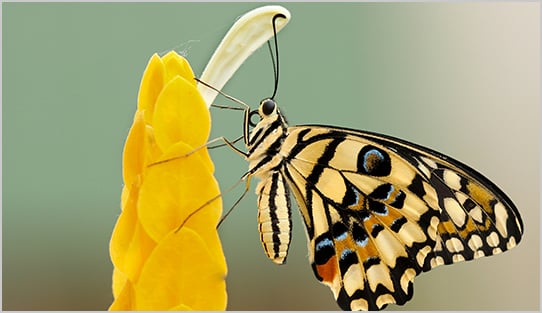
Special Issues:
| “Ecology, Diversity and Conservation of Butterflies” Guest Editor: Dr. Marcin Sielezniew Submission deadline: 28 February 2026 |
“Conservation and Ecology of Polymorphic Animal Populations” Guest Editors: Prof. Dr. Luca Luiselli and Dr. Massimiliano Di Vittorio Submission deadline: 31 May 2026 |
 |
 |

“The Impacts of Traffic Intensity on Taxonomic and Functional Diversity in Understory Spiders from the Brazilian Atlantic Forest”
by Rebeca Esther Da Justa Ximenes, Matheus Leonydas Borba Feitosa, Nancy Lo-Man-Hung, Hugo Rodrigo Barbosa-da-Silva, André Otávio Silva-Junior, Alysson Henrique Alcântara Lins, Geraldo Jorge Barbosa de Moura and André Felipe de Araújo Lira
Arthropoda 2025, 3(2), 7; https://doi.org/10.3390/arthropoda3020007
“Anthropogenic Impact and Antimicrobial Resistance Occurrence in South American Wild Animals: A Systematic Review and Meta-Analysis”
by Manuel Pérez Maldonado, Constanza Urzúa-Encina, Naomi Ariyama and Patricio Retamal
Wild 2025, 2(2), 14; https://doi.org/10.3390/wild2020014
“The Evolution of Zoos as Conservation Institutions: A Summary of the Transition from Menageries to Zoological Gardens and Parallel Improvement of Mammalian Welfare Management”
by Haley N. Beer, Trenton C. Shrader, Ty B. Schidt and Dustin T. Yates
J. Zool. Bot. Gard. 2023, 4(4), 648–664; https://doi.org/10.3390/jzbg4040046
“The Hell of Wildfires: The Impact on Wildlife and Its Conservation and the Role of the Veterinarian”
by Andreia Garcês and Isabel Pires
Conservation 2023, 3(1), 96–108; https://doi.org/10.3390/conservation3010009
“Spatiotemporal Patterns of Wolves, and Sympatric Predators and Prey Relative to Human Disturbance in Northwestern Greece”
by Maria Petridou, John F. Benson, Olivier Gimenez and Vassiliki Kati
Diversity 2023, 15(2), 184; https://doi.org/10.3390/d15020184
Special Issues:
| “Conflict and Coexistence Between Humans and Wildlife” Guest Editor: Prof. Dr. Li Zhang Submission deadline: 31 March 2026 |
“The Future of Marine Megafauna” Guest Editors: Prof. Dr. Vincent L. Bels and Prof. Dr. John R. Turner Submission deadline: 31 July 2026 |
 |
 |

“Intervertebral Disc Disease in Dogs”
by Iván Gómez Álvarez, José Manuel Verdes García and Luciano Espino López
Pets 2025, 2(3), 26; https://doi.org/10.3390/pets2030026
“Dairy Farmers and Veterinarians’ Agreement on Communication in Udder Health Consulting”
by Michael Farre, Erik Rattenborg, Henk Hogeveen, Volker Krömker and Carsten Thure Kirkeby
Vet. Sci 2024, 11(12), 665; https://doi.org/10.3390/vetsci11120665
“Behavioral, Physiological and Hormonal Changes in Primiparous and Multiparous Goats and Their Kids During Peripartum”
by Paolo Cano-Suarez, Juan Pablo Damian, Rosalba Soto, Karen Ayala, Joob Zaragoza, Rocio Ibarra,
Jesús Jonathan Ramírez-Espinosa, Laura Castillo, Irma Eugenia Candanosa Aranda and Angélica Terrazas
Ruminants 2024, 4(4), 515–532; https://doi.org/10.3390/ruminants4040036
“Highly Pathogenic Avian Influenza (HPAI) H5 Clade 2.3.4.4b Virus Infection in Birds and Mammals”
by Giulia Graziosi, Caterina Lupini, Elena Catelli and Silvia Carnaccini
Animals 2024, 14(9), 1372; https://doi.org/10.3390/ani14091372
Special Issues:
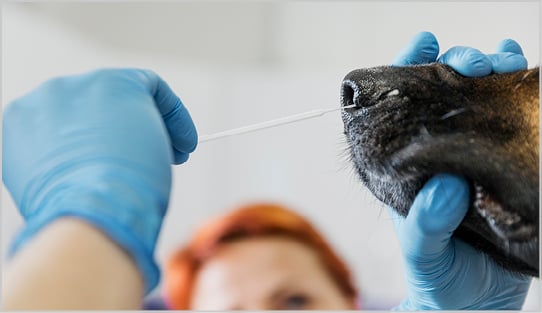
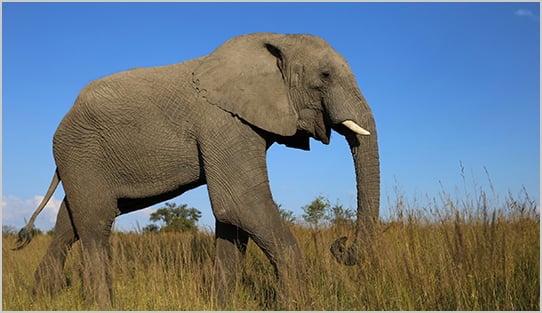
| “Emerging Models in Veterinary and Comparative Pathology” Guest Editors: Dr. Karen Power and Prof. Dr. Gionata De Vico Submission deadline: 15 December 2025 |
“Advancements in Animal Reproductive Biotechnology: Protecting the Future of Endangered Wildlife Species and Domestic Breeds” Guest Editors: Dr. Amin Sayyari and Prof. Dr. Ian Mayer Submission deadline: 31 December 2025 |
 |
 |
| “Veterinary Science in Action: How Zoo and Aquarium Animals Are Diagnosed and Cured” Guest Editors: Dr. Carlos Sánchez, Dr. Richard Sim and Dr. Josie Rose Submission deadline: 30 June 2026 |
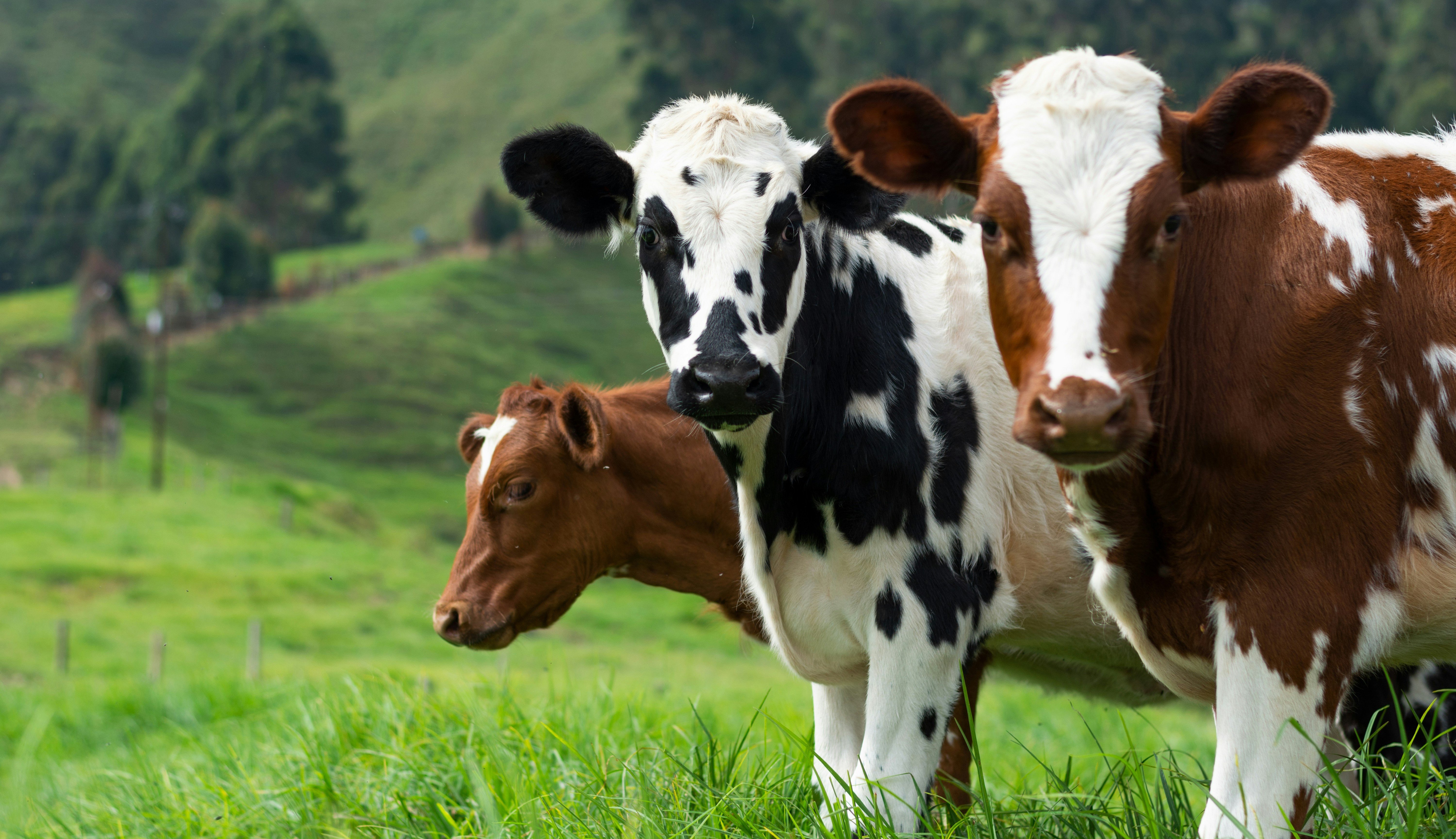
“Advances in Infectious and Parasitic Diseases of Animals” |
 |
 |

“A Poorly Known Catfish Clade in an Endangered Neotropical Biodiversity Hotspot: Relationships and Distribution Patterns of the Cambeva variegata Group (Siluriformes: Trichomycteridae)”
by Wilson J. E. M. Costa, José Leonardo O. Mattos, Valter M. Azevedo-Santos, Caio R. M. Feltrin, Pedro F. Amorim, Felipe P. Ottoni, Paulo J. Vilardo and Axel M. Katz
Fishes 2024, 9(4), 116; https://doi.org/10.3390/fishes9040116
“Description of Bisbalus, a New Genus for the Gray Brocket, Mazama cita Osgood, 1912 (Mammalia, Cervidae), as a Step to Solve the Neotropical Deer Puzzle”
by Eluzai Dinai Pinto Sandoval, Wlodzimierz J˛edrzejewski, Jesús Molinari, Miluse Vozdova, Halina Cernohorska, Svatava Kubickova, Agda Maria Bernegossi, Renato Caparroz and José Mauricio Barbanti Duarte
Taxonomy 2024, 4(1), 10–26; https://doi.org/10.3390/taxonomy4010002
“Searching for a Home Port in a Polyvectic World: Molecular Analysis and Global Biogeography of the Marine Worm Polydora hoplura (Annelida: Spionidae)”
by Vasily I. Radashevsky, Vasily V. Malyar, Victoria V. Pankova, Jin-Woo Choi, Seungshic Yum and James T. Carlton
Biology 2023, 12(6), 780; https://doi.org/10.3390/biology12060780

 |
 |
 |
 |
28 September 2025
Meet Us at the British Ecological Society Annual Meeting 2025, 15–18 December 2025, Edinburgh, UK

Conference: British Ecological Society Annual Meeting 2025
Date: 15–18 December 2025
Location: Lennox Suite, Edinburgh International Conference Centre, Edinburgh, UK
MDPI will be attending the British Ecological Society Annual Meeting 2025, which will be held from 15 to 18 December 2025, in Edinburgh, UK.
The British Ecological Society is the oldest ecological society in the world, and the Annual Meeting is Europe’s largest conference dedicated to ecology. Each year the Annual Meeting attracts around 1500 delegates and provides opportunities to meet new colleagues, develop your career, learn new skills, and share your science with the global ecological community. The theme of the conference for this edition contains various topics related with ecology. It will be offering an exciting programme of internationally renowned plenary speakers, diverse thematic sessions, engaging workshops, and a variety of networking events.
The following open access journals will be represented at the conference:
- Sustainability;
- Land;
- Earth;
- Hydrobiology;
- World;
- Animals;
- Fishes;
- Resources;
- Diversity;
- Climate;
- Ecologies;
- Pollutants.
If you are planning to attend the above conference, please do not hesitate to visit our booth. Our delegates look forward to meeting you in person and answering any questions that you may have. For more information about the conference, please visit the following website: https://www.britishecologicalsociety.org/content/bes-annual-meeting-2025/.
28 September 2025
MDPI’s Journal Cluster of Ecosystem and Resource Management

The responsible management and stewardship of Earth’s ecosystems is pivotal for preserving biodiversity of the plant and animal species inhabiting them. MDPI’s journal cluster of ecosystem and resource management contains journals that focus on individual ecosystems (e.g., Forests) as well as ecology on a broader scale. The demand for biodiversity and conservation research is growing as the world shifts to more extreme climates, and MDPI’s journals on diversity and conservation will play a larger role in making scientific discoveries more accessible to all researchers across the world.
The member journals in this cluster are as follows:
- Forests (ISSN: 1999-4907) is an international and cross-disciplinary scholarly journal of forestry and forest ecology. It publishes research papers, short communications, and review papers. The journal is indexed within Scopus, SCIE (Web of Science), Ei Compendex, GEOBASE, PubAg, AGRIS, PaperChem, and many other databases. Forests is led by its Editor-in-Chief, Prof. Dr. Giacomo Alessandro Gerosa (Catholic University of Brescia, Italy), and has 14 Sections including Forest Ecology and Management, Forest Ecophysiology and Biology, Forest Economics, Policy, Social Science, etc.;
- Diversity (ISSN: 1424-2818) is dedicated to biodiversity research, covering its concepts, applications, assessment, and conservation. The journal publishes work across all scales of biological diversity—from molecules, genes, and populations to species and ecosystems. Diversity is led by its Editor-in-Chief, Prof. Dr. Michael Wink (Heidelberg University, Germany);
- Fire (ISSN: 2571-6255) encompasses all aspects of fire and combustion: landscape fires, fire ecology, ignition sources, the wildland–urban interface, building fires, and combustion physics. It encourages submissions related to the historical, policy, and social science aspects of fire science and fire management. Fire is led by its Editor-in-Chief, Prof. Dr. Grant Williamson (University of Tasmania, Australia);
- Conservation (ISSN: 2673-7159) provides an advanced forum for conservation studies, including biodiversity and environment conservation, resource recycling, conservation and sustainable management, conservation planning and governance, conservation ethics and ecology, and creative and multidisciplinary solutions for conservation and restoration, as well as heritage conservation and restoration. Conservation is led by its Editor-in-Chief, Dr. Antoni Margalida (Pyrenean Institute of Ecology (CSIC), Spain);
- Ecologies (ISSN: 2673-4133) is an international, peer-reviewed, open access journal that publishes high-quality research across all areas of ecology. The Editor-in-Chief is Prof. Dr. José Ramón Arévalo Sierra (University of La Laguna, Spain). Ecologies welcomes original research articles and reviews that advance theoretical and applied understanding of ecological processes at the levels of individuals, populations, communities, ecosystems, and their interactions with the environment. Topics of interest include, but are not limited to, ecosystem functioning, biodiversity conservation, ecological modeling, ecological restoration, global change ecology, and the impacts of human activities on ecosystems;
- Biosphere (ISSN: 3042-6111) focuses on publishing advances in scientific understanding of ecosystems and ability to project their future conditions for sustainable management and stewardship of the global ecosystem. By bringing together the insights of researchers worldwide, Biosphere emphasizes biodiversity, global change, and the interconnected roles of the lithosphere, atmosphere, and hydrosphere in creating favorable conditions for life. Biosphere is led by its Editor-in-Chief, Dr. Ghassem R. Asrar (iCREST Environmental Education Foundation, USA);
- Wild (ISSN: 3042-4526) deals with all aspects related to nature, including natural environments, renaturalization, restoration, wild species, ethical game, fishing, and other uses of natural resources. The journal also aims to highlight the traditions of Indigenous people that do not destroy primary habitats, integral protected areas, and the places and people symbolizing ecological ethics or (wild) nature protection and restoration. Wild is led by its Editor-in-Chief, Dr. Kevin Cianfaglione (Université Catholique de Lille, France).
|
Journals |
Launch year |
Impact Factor (2024) |
CiteScore (2024) |
First Decision (median) |
APC (CHF) |
 |
2010 |
2.5 |
4.6 |
17.1 |
2600 |
 |
2009 |
2.1 |
4.0 |
17.1 |
2100 |
 |
2018 |
2.7 |
3.9 |
16.5 |
2400 |
 |
2021 |
1.9 |
3.2 |
26.4 |
1200 |
 |
2020 |
1.9 |
3.0 |
26 |
1200 |
 |
2025 |
/ |
/ |
19 |
1000 |
 |
2024 |
/ |
/ |
19 |
1000 |
MDPI’s mission and values:
As a pioneer of academic open access publishing, MDPI has been serving the scientific community since 1996. Our aim is to foster scientific exchange in all forms, across all disciplines. MDPI’s guidelines for disseminating open science are based on the following values and guiding principles:
- Open Access—All of our content is published as open access and distributed under a Creative Commons License, providing free access to science and the latest research, allowing articles to be freely shared and content to be re-used with proper attribution;
- Timeliness and Efficiency—Publishing the latest research through thorough editorial work, ensuring a first decision is provided to authors in under 32 days and papers are published within 7–10 days upon acceptance;
- Simplicity—Offering user-friendly tools and services in one place to enhance the efficiency of our editorial process;
- High-Quality Service—Supporting scholars and their work by providing a range of options such as journal publication at mdpi.com, early publication at preprints.org, and conferences on sciforum.net to make a positive impact on research;
- Flexibility—Adapting and developing new tools and services to meet the changing needs of the research community, driven by feedback from authors, editors, and readers;
- Rooted in Sustainability—Ensuring the long-term preservation of published papers and supporting the future of science through partnerships, sponsorships, and awards.
By adhering to these values and principles, MDPI remains committed to advancing scientific knowledge and promoting open-science practices.
Selected Topic and Special Issues:
- “Conservation at the Crossroads: Forest Ecology, Wildlife Dynamics, and Emerging Challenges for Ecosystem Resilience”;
- Topic Editors: Dr. Yiannis G. Zevgolis, Dr. Triantaphyllos Akriotis, Dr. Anastasia Christopoulou, Prof. Dr. Panayiotis G. Dimitrakopoulos, Dr. Dimitra-Lida Rammou and Prof. Dr. Dionisios Youlatos;
- Deadline for manuscript submissions: 31 July 2026;
- “Classification of Forest Tree Species Using Remote Sensing Technologies: Latest Advances and Improvements”;
- Guest Editors: Dr. Udayalakshmi Vepakomma and Prof. Dr. Costas Armenakis;
- Deadline for manuscript submissions: 13 February 2026;
- “The Applications of Emerging Technologies on Biodiversity Conservation”:
- Guest Editors: Dr. Xinhai Li and Prof. Dr. Guiming Wang;
- Deadline for manuscript submissions: 31 January 2026;
- “Current Advances in the Assessment and Mitigation of Fire Risk in Buildings and Urban Areas: 2nd Edition”:
- Guest Editor: Dr. Tiago Miguel Ferreira;
- Deadline for manuscript submissions: 30 April 2026;
- “Conservation Biology, Management of Natural Resources, and Protected Areas Policies”:
- Guest Editor: Dr. Kevin Cianfaglione;
- Deadline for manuscript submissions: 30 April 2026;
- “Microhabitat Diversity and Beetle Conservation in Managed Forests”:
- Guest Editor: Dr. Francesco Parisi;
- Deadline for manuscript submissions: 31 December 2025;
- “Sustainable and Resilient Biosphere”
- Guest Editor: Dr. Ghassem R. Asrar;
- Deadline for manuscript submissions: 31 August 2026.
Selected Articles:
Forests
“Forest-Cover Changes in European Natura 2000 Sites in the Period 2012–2018”
by Antonio Santoro, Francesco Piras, Beatrice Fiore, Alessandra Bazzurro and Mauro Agnoletti
Forests 2024, 15(2), 232; https://doi.org/10.3390/f15020232
Diversity
“Soil Microorganisms: Their Role in Enhancing Crop Nutrition and Health”
by Qingxia Chen, Yingjie Song, Yuxing An, Yinglin Lu and Guohua Zhong
Diversity 2024, 16(12), 734; https://doi.org/10.3390/d16120734
Fire
“Investigation into the Computational Analysis of High–Speed Microjet Hydrogen–Air Diffusion Flames”
by Ali Cemal Benim
Fire 2024, 7(9), 314; https://doi.org/10.3390/fire7090314
Conservation
“Biological and Conservation Aspects of Otter Mortality: A Review”
by Andreia Garcês and Isabel Pires
Conservation 2024, 4(2), 307-318; https://doi.org/10.3390/conservation4020020
Ecologies
“Soil and Sediment Organisms as Bioindicators of Pollution”
by Samir Ghannem, Ons Bacha, Sondes Fkiri, Sabri Kanzari, Abdelwaheb Aydi and Samir Touaylia
Ecologies 2024, 5(4), 679-696; https://doi.org/10.3390/ecologies5040040
Biosphere
“Monitoring Wise Use of Wetlands During Land Conversion for the Ramsar Convention on Wetlands: A Case Study of the Contiguous United States of America (USA)”
by Elena A. Mikhailova, Hamdi A. Zurqani, Lili Lin, Zhenbang Hao, Christopher J. Post, Mark A. Schlautman, Gregory C. Post, Camryn E. Brown and George B. Shepherd
Biosphere 2025, 1(1), 2; https://doi.org/10.3390/biosphere1010002
Wild
“Assessing Species Richness with Camera Trap Surveys During Five Years of Large-Scale Mining Disruptions”
by Ruan W.Higgs and Francois Deacon
Wild 2024, 1(1), 82-95; https://doi.org/10.3390/wild1010007
28 September 2025
Meet Us at the 11th World Sustainability Forum, 2–3 October 2025, Barcelona, Spain

Conference: The 11th World Sustainability Forum
Organization: MDPI, Sustainability
Date: 2–3 October 2025
Place: Barcelona, Spain
The 11th World Sustainability Forum (WSF11) will be a 48-hour event held in Barcelona, Spain, and it stands as a catalyst for urban resilience and environmental sustainability, with a clear focus on forging partnerships and harnessing innovation to create novel solutions for today’s most urgent sustainability challenges. It provides a platform where ideas and visions are translated into concrete solutions for measurable progress in ecology, sustainability and environmental development.
The following open access journals will be represented:
If you plan on attending this conference, please feel free to stop by our booth. Our delegates look forward to meeting you in person and answering any questions you may have.
For more information about the conference, please visit the following link: https://sciforum.net/event/WSF-11.
