Skip to Content
  • 30 days
    Time to First Decision

Journal of Experimental and Theoretical Analyses — Advanced Methods for Science, Engineering, and Technology

Journal of Experimental and Theoretical Analyses — Advanced Methods for Science, Engineering, and Technology is an international, peer-reviewed, open access journal published quarterly online by MDPI, and is dedicated to the methods and applications of experimental and theoretical analysis across science and engineering.

Get Alerted

Add your email address to receive forthcoming issues of this journal.

All Articles (73)

Review on Use of Robots in Electrochemical Machining

  • Pranav Avinash Khadkotkar,
  • André Martin and
  • Ingo Schaarschmidt

Electrochemical machining (ECM) offers precise shaping by material dissolution with negligible mechanical or thermal impact on the workpiece. Metal parts with three-dimensional shapes, such as freeform surfaces or additively manufactured parts, can be addressed by robots with up to six degrees of freedom without significant mechanical impacts on the end-effectors and robots. This study summarizes the state-of-the-art of the use of robots in ECM by assessing the relevant literature. Several investigations were found that implemented or conceptualized the use of robotic arms in ECM sinking, jet-ECM or wire ECM, mainly for effective utilization of the processes. This study includes results of pure ECM, as well as hybrid ECM processes and the use of robots considering their accuracy, degrees of freedom and their application potential. Special emphasis is given to the role of robots in improving machining accessibility and their usability for valuable components in the aerospace, biomedical, and tooling industries. Furthermore, the review provides insights into electrolyte delivery mechanisms and pump configurations that facilitate efficient process performance. Overall, the utilization of robots in ECM not only enhances the process flexibility and surface quality but also aligns well with the aim of intelligent, automated, and high-precision manufacturing.

11 March 2026

Sketch of an ECM setup [2].

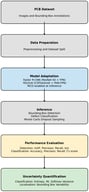
Deep learning models have become central to automated Printed Circuit Board (PCB) defect detection. However, recent work has raised concerns about how reliably these models express confidence in their predictions, particularly when deployed in safety-critical inspection systems. This study conducts an empirical investigation of epistemic uncertainty across representative architectures used in PCB inspection: the two-stage Faster R-CNN detector, the one-stage YOLOv8 detector, and their corresponding classification counterparts, ResNet-50 and YOLOv8-Cls. Monte Carlo Dropout (MCD) was applied during inference to compute predictive entropy, mutual information, softmax variance, and bounding-box variability across multiple stochastic forward passes on both multiclass and binary inspection datasets. On the multiclass SolDef_AI dataset, Faster R-CNN achieved substantially stronger detection performance (mAP = 0.7607, F1 = 0.9304) and lower predictive entropy, with more stable localisation. In contrast, YOLOv8 produced markedly weaker performance (mAP = 0.2369, F1 = 0.3130) alongside higher entropy and greater bounding-box variability. On the binary Jiafuwen datasets, the YOLOv8-Cls model achieved higher overall performance (F1 = 0.6493) compared with the ResNet-50 classifier (F1 = 0.4904), reflecting its strength in simpler binary inspection tasks. Across uncertainty metrics, predictive entropy and mutual information were more sensitive to dataset size, showing higher and more variable values in the smaller multiclass dataset, whereas softmax variance and bounding-box variability appeared more architecture-dependent. These findings demonstrate that architectural choice, dataset structure, and task formulation jointly influence both performance and uncertainty behaviour. By integrating conventional metrics with uncertainty estimates, this study provides a transparent benchmark for assessing model confidence in automated optical inspection of PCBs.

27 February 2026

Overview of the proposed methodology for PCB defect detection and uncertainty evaluation.

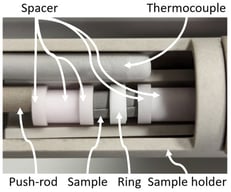
In this work, the sintering behavior of tapes prepared via tape casting from stainless-steel and zirconia powders is investigated by optical—as well as push-rod—dilatometry. Both methods are compared in terms of sample preparation, measurement conditions, and advantages and disadvantages. The experimental work shows the advantages of optical dilatometry in the characterization of the sintering behavior of load-free sintering tapes and the possibility of simultaneously observing sample warpage and deformation. Push-rod dilatometry requires a constant load on the sample, which influences measurement in the case of tapes with lower mechanical stability due to their sensitivity to deformation, but it has advantages because of its higher accuracy in measuring dimensional changes. In the case of warpage, shrinkage due to the sintering of the sample is superimposed by an irregular deformation process that can be separated by analytical methods. No in-plane shrinkage anisotropy of the tapes is observed for either type of tape. In the case of the push-rod dilatometer, an additional peak in the shrinkage rate is observed in the early stage of compaction, along with a slight shift and an increased maximum in the compaction rate. This is most likely due to the effects of the contact pressure of the push-rod.

17 February 2026

Sample positioning for push-rod dilatometry. The sample is usually positioned horizontally between the push-rod and the sample holder.

Tangential turning produces an asymmetric cutting-force system that may cause tool and workpiece deflection, leading to cylindricity, coaxiality, and roundness deviations in practice. This study investigates the relationships between three cutting force components and form errors during tangential turning of 42CrMo4 steel. Tangential, axial, and radial forces were measured under systematically varied cutting speed, feed, and depth of cut, and the resulting cylindricity, coaxiality, and roundness parameters were obtained through precision form measurements. The depth of cut showed the strongest influence on cutting forces, with high correlations to all components (r = 0.709–0.870). Feed was most closely associated with coaxiality error (r = 0.730), while cutting speed was primarily related to cylindricity deviation (r = 0.766). The novelty of this work lies in the combined and quantitative analysis of full cutting-force components and multiple form–accuracy descriptors within a single experimental framework for tangential turning. The results directly link process load to geometric accuracy and provide guidance for selecting cutting parameters to improve dimensional precision in tangential turning of alloy steels.

14 February 2026

Kinematic and geometric configuration of the tangential turning process [4].

News & Conferences

Volumes

Issues

Open for Submission

Editor's Choice

XFacebookLinkedIn
J. Exp. Theor. Anal. - ISSN 2813-4648