


Application of Biomaterials and Techniques in Dental Surgical Treatment (2nd Edition)

A special issue of Journal of Functional Biomaterials (ISSN 2079-4983). This special issue belongs to the section "Dental Biomaterials".

Deadline for manuscript submissions: 20 January 2027 | Viewed by 6578

Special Issue Editors
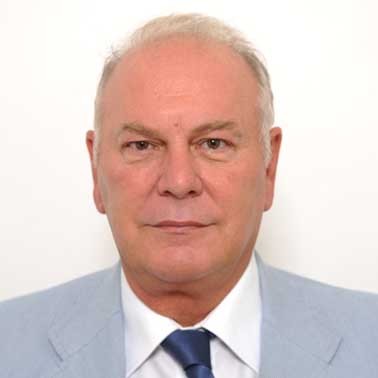

E-Mail Website
Guest Editor
Department of Interdisciplinary Medicine, University of Bari “Aldo Moro”, 70124 Bari, Italy
Interests: stem cells regeneration tissue; dental disease; dental biomaterials; orthodontic diseases; orthodontic innovation; oral surgery
Special Issues, Collections and Topics in MDPI journals
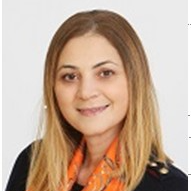
E-Mail Website
Guest Editor
Interdisciplinary Department of Medicine, University of Bari “Aldo Moro”, 70124 Bari, Italy
Interests: oral surgery; orthodontics; microbiota; oral health; COVID-19; prevention; diagnosis; endodontics; parodontology; implantology
Special Issues, Collections and Topics in MDPI journals

Special Issue Information

Dear Colleagues,

It is our utmost pleasure to invite you to submit manuscripts to one of the most current topics in dentistry: “Application of Biomaterials and Techniques in Dental Surgical Treatment (2nd Edition)”.

The continuous development of dental materials enables dentists and dental technicians to choose from a wide variety. Recent advances enable the tailoring of dental materials to specific applications, resulting in progressive materials.

Dentistry probably represents one of the medical fields in which the study and the utilization of innovative biomaterials and operative protocols for tissue reconstruction are much more present.

Autogenous, homologous, heterologous, and synthetic bone grafts; resorbable and non-resorbable membranes; meshes; matrices; fixation pins or screws; and other surgical devices, as well as inducing biological mediators, have been proposed and efficiently used to promote the reconstruction of both hard and soft tissues.

The introduction of new aesthetic materials, digital devices, processing software, and manufacturing and prototyping tools has radically transformed the dental profession.

The current aim of research on biomaterials is to promote and support a complete regeneration of the target tissue. In vitro, in vivo, and clinical studies are absolutely mandatory to evaluate cellular and molecular interactions with biomaterials as well as their behavior in living organisms.

New technologies can help in reducing the invasiveness of clinical procedures.

This Special Issue aims to focus on the advances in this attractive field of research, encouraging a multidisciplinary approach to the subject.

It is our pleasure to invite you to submit your work to this Special Issue. Research papers, reviews, and communications are welcome.

Prof. Dr. Francesco Inchingolo
Dr. Gianna Dipalma
Dr. Angelo Michele Inchingolo
Dr. Alessio Danilo Inchingolo
Guest Editors

Manuscript Submission Information

Manuscripts should be submitted online at www.mdpi.com by registering and logging in to this website. Once you are registered, click here to go to the submission form. Manuscripts can be submitted until the deadline. All submissions that pass pre-check are peer-reviewed. Accepted papers will be published continuously in the journal (as soon as accepted) and will be listed together on the special issue website. Research articles, review articles as well as short communications are invited. For planned papers, a title and short abstract (about 250 words) can be sent to the Editorial Office for assessment.

Submitted manuscripts should not have been published previously, nor be under consideration for publication elsewhere (except conference proceedings papers). All manuscripts are thoroughly refereed through a single-blind peer-review process. A guide for authors and other relevant information for submission of manuscripts is available on the Instructions for Authors page. Journal of Functional Biomaterials is an international peer-reviewed open access monthly journal published by MDPI.

Please visit the Instructions for Authors page before submitting a manuscript. The Article Processing Charge (APC) for publication in this open access journal is 2700 CHF (Swiss Francs). Submitted papers should be well formatted and use good English. Authors may use MDPI's English editing service prior to publication or during author revisions.

Keywords

  • biomaterials
  • tissue regeneration
  • reconstructive surgical procedures
  • tissue engineering
  • biomedical engineering
  • stem cell regeneration tissue
  • dental biomaterials
  • orthodontic diseases and innovation
  • oral surgery

Benefits of Publishing in a Special Issue

  • Ease of navigation: Grouping papers by topic helps scholars navigate broad scope journals more efficiently.
  • Greater discoverability: Special Issues support the reach and impact of scientific research. Articles in Special Issues are more discoverable and cited more frequently.
  • Expansion of research network: Special Issues facilitate connections among authors, fostering scientific collaborations.
  • External promotion: Articles in Special Issues are often promoted through the journal's social media, increasing their visibility.
  • Reprint: MDPI Books provides the opportunity to republish successful Special Issues in book format, both online and in print.

Further information on MDPI's Special Issue policies can be found here.

Related Special Issue

Published Papers (3 papers)

Order results
Result details
Select all
Export citation of selected articles as:

Research

29 pages, 1933 KB  
Article
Autologous Platelet Concentrates and Photobiomodulation as Biologically Active Modifiers of Hard and Soft Tissue Healing: A Randomised Controlled Trial
by Daniel Selahi, Marzena Dominiak, Wojciech Niemczyk, Artur Pitułaj, Kamil Jurczyszyn and Jakub Hadzik
J. Funct. Biomater. 2026, 17(3), 127; https://doi.org/10.3390/jfb17030127 - 5 Mar 2026
Cited by 2 | Viewed by 644
Abstract
Background/Objectives: This study evaluated autologous platelet concentrates (APCs), including advanced platelet-rich fibrin (A-PRF+) and concentrated growth factors (CGFs), as biologically active matrices, and photobiomodulation (PBM) as a biophysical stimulus affecting soft and hard tissue regeneration following mandibular third molar extraction. Methods: A six-arm [...] Read more.
Background/Objectives: This study evaluated autologous platelet concentrates (APCs), including advanced platelet-rich fibrin (A-PRF+) and concentrated growth factors (CGFs), as biologically active matrices, and photobiomodulation (PBM) as a biophysical stimulus affecting soft and hard tissue regeneration following mandibular third molar extraction. Methods: A six-arm parallel randomised controlled trial was conducted including 135 patients. A total of 122 participants completed follow-up and were analysed: control (n = 22), photobiomodulation (n = 20), A-PRF+ (n = 19), CGF (n = 20), A-PRF+ plus photobiomodulation (n = 22), and CGF plus photobiomodulation (n = 19). The primary endpoint was postoperative pain intensity assessed on postoperative day 3 using an 11-point visual analogue scale (VAS). Secondary outcomes included swelling, trismus, wound healing assessed by the early healing index, and bone regeneration assessed by CBCT-based fractal dimension analysis at 4 months. Results: On postoperative day 3, mean VAS pain was 2.95 ± 2.65 in the control group and 1.00 ± 1.65 in the photobiomodulation group, corresponding to a mean difference of 1.95 VAS points. The overall between-group difference for day 3 pain was statistically significant. In swelling outcomes, no statistically significant between-group differences were observed at days 1, 3, or 7 across facial measurement lines. In CBCT fractal analysis, a significant group effect was detected for the mid socket region, with higher fractal dimension at 4 months in the CGF plus photobiomodulation group compared with the control. Conclusions: Both APCs and PBM positively influenced postoperative healing. Their combined application, particularly CGF with PBM, showed the most consistent regenerative effects, although not all outcomes differed significantly between groups. These minimally invasive strategies may support soft and hard tissue regeneration. Full article
Show Figures

Graphical abstract

12 pages, 1769 KB  
Article
Retrievability of Fractured Abutment Screws in Dental Implants Using Three Removal Techniques: An In Vitro Pilot Study
by Ming-Dih Jeng, Tzu-Yun Huang and Amber Yeh Jeng
J. Funct. Biomater. 2026, 17(2), 85; https://doi.org/10.3390/jfb17020085 - 9 Feb 2026
Viewed by 1232
Abstract
Introduction: The fracturing of abutment screws is a recurrent technical complication in implant-supported prostheses that may compromise prosthetic maintenance. Although multiple retrieval approaches have been described, comparative data under controlled experimental conditions remain limited. Materials and Methods: This in vitro pilot study [...] Read more.
Introduction: The fracturing of abutment screws is a recurrent technical complication in implant-supported prostheses that may compromise prosthetic maintenance. Although multiple retrieval approaches have been described, comparative data under controlled experimental conditions remain limited. Materials and Methods: This in vitro pilot study evaluated the retrievability of fractured abutment screws when using three commonly applied instruments: an ultrasonic scaler, a fissure bur, and a screw removal kit. Eighteen implants from a single implant system were embedded in epoxy resin, and abutment screws were fractured under clockwise monotonic torque either with (w/A) or without (w/oA) abutments (n= 3 per retrieval method). Retrieval success and procedure time were recorded. Scanning electron microscopy (SEM) was performed to qualitatively assess deformation of the implant internal hex and screw thread morphology. Results: Fracture torque values were higher in specimens fractured with abutments compared with those without abutments. Fractures induced without abutments appeared to extend deeper within the screw channel, engaging a greater number of internal threads. In this pilot study, a shorter retrieval time was observed with the screw removal kit and fissure bur compared with the ultrasonic scaler, although retrieval outcomes varied between specimens. SEM observations suggested differing patterns of internal hex deformation between the retrieval techniques. Conclusions: Within the limitations of this in vitro pilot study, different retrieval approaches demonstrated characteristic mechanical behaviors and deformation patterns in the implant internal connection. These preliminary findings provide descriptive insight into the retrievability of fractured screws and may serve as a basis for future studies with larger sample sizes and clinically relevant fracture models. Full article
Show Figures

Figure 1

18 pages, 2565 KB  
Article
Six-Year Implants Follow-Up After Guided Bone Regeneration Using Autologous Tooth Graft: Innovative Biomaterial for Bone Regeneration Tooth Transformer®
by Elio Minetti, Angelo Michele Inchingolo, Laura Ferrante, Grazia Marinelli, Francesco Inchingolo, Alessio Danilo Inchingolo, Andrea Palermo and Gianna Dipalma
J. Funct. Biomater. 2025, 16(5), 172; https://doi.org/10.3390/jfb16050172 - 9 May 2025
Cited by 4 | Viewed by 3932
Abstract
Objectives: Recently, there has been great interest in teeth and their derivatives as suitable substrates for the treatment of alveolar bone defects. This retrospective study evaluates the clinical and radiographic outcomes of implants inserted in a site that underwent GBR procedure using a [...] Read more.
Objectives: Recently, there has been great interest in teeth and their derivatives as suitable substrates for the treatment of alveolar bone defects. This retrospective study evaluates the clinical and radiographic outcomes of implants inserted in a site that underwent GBR procedure using a tooth derivate material. Materials and methods: A total of 21 patients received a GBR using an autologous extracted tooth. Four months after the GBR techniques, the implants were inserted and were followed for an average of 5.28 + −1.10 years after loading. The X-ray was analyzed after a period of 63.36 + −13.2 months for a total follow-up period. Results: A total of 28 implants were inserted. All the implants were clinically functional after the follow-up period. The average bone loss from the X-ray images was 0.1208 + −0.1307. Conclusion: Within the limitations of this study, the use of a tooth as a graft using a tooth transformer device guarantees the production of bone and maintenance over time. Full article
Show Figures

Figure 1

Back to TopTop