Skip to Content

Machines

Machines is an international, peer-reviewed, open access journal on machinery and engineering, published monthly online by MDPI.
The International Federation for the Promotion of Mechanism and Machine Science (IFToMM) is affiliated with Machines and its members receive a discount on the article processing charges.
Quartile Ranking JCR - Q2 (Engineering, Mechanical | Engineering, Electrical and Electronic)

Get Alerted

Add your email address to receive forthcoming issues of this journal.

All Articles (5,494)

This paper addresses the three-dimensional trajectory tracking problem for underactuated autonomous underwater vehicles subject to external disturbances and model uncertainties in complex ocean environments. A robust control method integrating backstepping dynamic surface control and non-singular terminal sliding mode is proposed. Firstly, based on the kinematic and dynamic models of autonomous underwater vehicle, virtual velocity commands are constructed via backstepping approach to stabilize the position and attitude errors. To circumvent the “differential explosion” problem inherent in conventional backstepping control caused by repeated differentiations of virtual control variables, first-order low-pass filters are introduced to construct dynamic surface control, yielding smooth derivatives of virtual velocity commands. Secondly, to enhance convergence rate and robustness, a non-singular terminal sliding surface is designed at the dynamic level, and a terminal reaching law is formulated to achieve finite-time convergence of velocity tracking errors. Furthermore, to compensate for external disturbances and unmodeled dynamics, a disturbance observer based on the super-twisting algorithm is developed, enabling finite-time high-precision estimation of lumped disturbances, with the estimation results incorporated into the control law for feedforward compensation. Finally, comparative simulations are conducted under two typical disturbance scenarios. The results demonstrate that the proposed method achieves instantaneous disturbance estimation (reducing convergence time from 3 s to near zero), significantly smoother control inputs, and superior tracking accuracy with RMSE as low as 0.6788 m and MAE as low as 0.1468 m, reducing errors by up to 30.6% compared to baseline methods.

21 March 2026

Schematic diagram of 3D trajectory tracking [23].

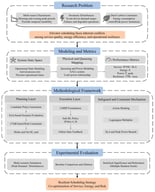
High-rise elevator group control systems operate under pronounced nonstationarity during commuting peaks, post-event surges, and capacity degradation, where the waiting time distribution becomes right-tail heavy and stresses service-level agreements (SLAs) defined by coverage and high-quantile targets. At the same time, the time-of-use tariffs and carbon constraints sharpen the tension between peak-power control, energy savings, and service capacity. This paper proposes a two-layer resilience scheduling framework that integrates queueing-based planning with safe reinforcement learning (RL) fine-tuning. In the planning layer, parsimonious queueing approximations and scenario-based evaluation construct a finite set of implementable mode cards and emergency switching cards; Sample Average Approximation (SAA) combined with Conditional Value-at-Risk (CVaR) constraints filter candidates to enforce tail-risk-aware service limits while keeping power demand within a prescribed envelope. In the execution layer, online dispatch is formulated as a constrained Markov decision process; within the planning layer limits, action masking and Lagrangian safe RL learn small adaptive adjustments to suppress tail-waiting risk and improve recovery dynamics without increasing peak-power commitments. The experiments under morning peaks and post-event surges confirm tail risk reduction and accelerated recovery. For partial outages, the framework prioritizes SLA coverage and recovery speed, accepting a bounded increase in tail risk as a manageable trade-off. Throughout all tests, peak power remains within the prescribed limits. Improvements persist across random seeds and demand fluctuations, indicating distributional robustness and cross-scenario generalization. Ablation studies further reveal complementary roles: removing the planning layer CVaR screening worsens tail performance, while removing the execution layer action masking increases constraint violations and destabilizes recovery.

21 March 2026

Overall research framework and technical roadmap.

This paper presents a practical optimization framework for improving trajectory feasibility in constrained nonlinear optimal control problems for agile unmanned aerial vehicles (UAVs). The proposed method addresses trajectory optimization problems with non-convex geometric constraints, where gradient-based solvers often fail to converge to feasible solutions. The framework combines Model Predictive Path Integral (MPPI) control and the Augmented Lagrangian iterative Linear Quadratic Regulator (AL-iLQR). MPPI is employed as a fast sampling-based guidance mechanism to explore feasible regions of the trajectory space, while AL-iLQR is used to efficiently refine locally optimal solutions with high numerical accuracy. By decoupling feasibility exploration from local optimal refinement, the proposed method mitigates the sensitivity of gradient-based trajectory optimization to initialization in highly constrained environments. Numerical simulations involving both simplified two-dimensional dynamics and full quadrotor models demonstrate that the proposed approach significantly improves the probability of converging to feasible and dynamically consistent trajectories compared with AL-iLQR alone. The proposed method does not aim to provide theoretical guarantees of global optimality; instead, it offers a practical and computationally efficient strategy for enhancing feasibility and robustness in real-time UAV trajectory optimization.

20 March 2026

Block diagram of path planning and path tracking.

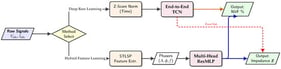
Unbalanced supply voltage (USV) represents a critical power quality challenge in industrial environments, significantly degrading the performance, efficiency, and operational lifespan of three-phase induction motors. Accurate real-time estimation of sequence impedances ( ) and detection of the Negative Voltage Factor (NVF) are essential for effective condition monitoring and preventive maintenance strategies. While existing machine learning methods have demonstrated promising accuracy, they often rely on manual feature engineering, lack hierarchical representation learning, and treat impedance estimation and fault detection as isolated tasks. This paper proposes a unified Deep Multi-Task Learning framework that leverages Residual Multilayer Perceptron (ResMLP) architectures for feature-based learning and Temporal Convolutional Networks (TCNs) for end-to-end raw signal learning. Our contributions include: (1) introduction of a Multi-Head ResMLP architecture that jointly optimizes phase impedance and fault detection, achieving superior NVF accuracy (MAE = 0.0007) and a fault detection F1-score of 0.8831; (2) investigation of raw-voltage TCN models for voltage-only diagnostics, with analysis of the trade-offs between end-to-end learning and feature-based approaches; (3) extensive ablation studies demonstrating the impact of network depth, data augmentation, and training protocols on model generalization; and (4) deployment of PyTorch (v2.0.1)-based models suitable for embedded systems with real-time inference capabilities (2.3 ms per prediction). Experimental validation on a 1.1 kW three-phase motor dataset under diverse load conditions (0–10 Nm) and USV magnitudes (5–15 V) confirms the robustness and practical applicability of the proposed approach for industrial fault diagnosis and condition monitoring systems.

20 March 2026

Proposed dual-path deep learning framework: Contrasting the end-to-end TCN approach (top) with the Hybrid STLSP-ResMLP approach (bottom). Note the ResMLP’s specific dual-head output structure. Black arrows denote primary data flow, whereas colored dashed lines represent separate specific task routes.

News & Conferences

Volumes

Latest Issues

Open for Submission

Editor's Choice

XFacebookLinkedIn
Machines - ISSN 2075-1702