Skip to Content
  • 3.8
    Impact Factor
  • 5.4
    CiteScore
  • 20 days
    Submission to First Decision
  • 3 days
    Acceptance to Publication

Systems

Systems is an international, peer-reviewed, open-access journal that publishes original research on systems theory, systems methodologies and systems practice monthly. The journal encompasses a wide range of fields, including systems engineering, management, business and organisational systems, and information and data systems. It focuses on complex social-technical system issues, offering a comprehensive platform for the exchange of ideas and insights in this field. Systems is committed to publishing high-quality research that addresses systemic, holistic, systems-based issues. Submissions may be research papers or review articles. Systems is interested in studies that include people, processes and technology. Papers on complex mathematical modelling without an obvious link to systems are not suitable for publication. The International Society for the Systems Sciences (ISSS) has an affiliation with Systems and its members receive a discount on the article processing charges. 

Get Alerted

Add your email address to receive forthcoming issues of this journal.

All Articles (4,278)

  • Article
  • Open Access

This study conducts a bibliometric analysis of research on extended reality (XR) technologies in cultural heritage research in the European Union (EU). It maps the overall research landscape and offers insights to inform the future development of XR in this field. Despite the growing interest in XR within the heritage sector, existing reviews tend to focus on specific technologies or application areas rather than providing a comprehensive overview, particularly in the European context. Europe remains a leading region in cultural heritage practice and research. To address this, the study analyses 1368 publications indexed in the Web of Science Core Collection between 1989 and 2025, affiliated with the 27 EU member states. The analysis uses Bibliometrix, VOSviewer and CiteSpace to examine publication trends, geographical distribution, collaboration networks, keyword patterns and thematic evolution. The results reveal that the annual output increased by an average of 11.35%, accelerating after 2012 and peaking at 174 publications in 2022. Italy, Spain, and Greece account for almost 60% of publications, with Italy contributing 36.2% alone, whereas smaller countries such as Denmark, Belgium, and the Netherlands demonstrate the highest rates of international co-authorship. Research hotspots have shifted from technology-driven 3D documentation and single-technology experiments towards integrated XR, digital twins, HBIM, and user-centred immersive experiences. These findings synthesise a structural framework comprising three interconnected dimensions that shape the field’s knowledge landscape. The first is a value-oriented dimension addressing key heritage aims, including education, virtual archaeology, museum engagement, and architectural heritage conservation. The second is a technological dimension covering core foundations such as virtual reality, augmented reality, mixed reality, 3D modelling, and photogrammetry. The third is a digital implementation dimension focusing on practical approaches such as immersive experiences, storytelling, gamification, and interactivity. The study also identifies three priorities for future research: developing comprehensive technical guidelines, investigating broader socio-technical influences, and strengthening cross-cultural comparative studies.

Systems

17 October 2026
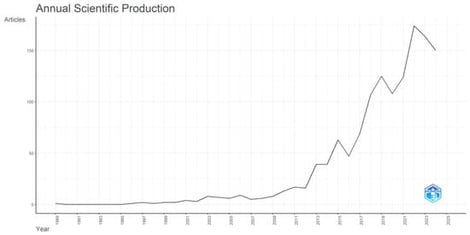
Annual Trends in Publications (Generated by Bibliometrix).
  • Article
  • Open Access

Environmental, social, and governance (ESG) performance is vital for international megaprojects, but current firm-level research ignores the role of digital capabilities in project delivery. Based on dynamic capability theory, this paper examines how the combinations of digital capabilities (sensing, analysis, connecting, integration, and agility) jointly shape the project-level ESG performance of megaprojects. By combining fuzzy-set qualitative comparative analysis (fsQCA) and case study methods and using multi-source text data from 35 Belt and Road Initiative (BRI) megaprojects, an evaluation framework is developed to investigate effective causal paths. The results show that no single digital capability constitutes a necessary condition for high ESG performance. Instead, high performance is achieved through equifinality driven by non-redundant capability combinations. Specifically, analysis-oriented configurations support environmental performance through evidence-based decision-making. Sensing-oriented configurations are the basis of social performance to identify stakeholder risks. Connecting- and agility-oriented configurations improve governance performance by helping cross-organizational coordination. Suggestions are provided for practitioners, including aligning digital investment with specific ESG priorities, developing complementary capability configurations that match project governance priorities, and strengthening digital information sharing and adaptive response. This study helps researchers and practitioners understand the configurational effects of digital capabilities on the ESG of international megaprojects.

Systems

17 October 2026

Research design process.
  • Article
  • Open Access

Coding agents increasingly participate in software development, but submitting an implementation does not settle whether work is complete. This qualitative process comparison examines 30 diagnostic pull requests from 22 GitHub repositories within a frame of 1782 contributions from 120 repositories. Manual screening found substantive contestation in 516 frame contributions (29.0%). The analysis draws on public discussions, reviews, commits, tests, and linked artifacts to trace how participants address unmet or unproven requirements. Using acceptance boundary as a sensitizing distinction, the analysis connects conditions stated in review to their enactment in evaluation artifacts and subsequent revision. Participants may retain requirements for repair, delimit a smaller acceptable increment, pursue an alternative implementation, or terminate an approach. Tests enact these decisions through repair, authorized exclusion, and restoration. In sqruff, issue closure accompanied partial repair and renewed deferral; a subsequent rollback reversed the accepted changes. Integration, issue closure, and requirement satisfaction therefore represent distinct accomplishments. The process model identifies conditional, overlapping paths connecting local acceptance to continuing work. It explains collaborative completion in agent-associated software development and shows how documented interface constraints and human intervention shape subsequent work.

Systems

16 October 2026

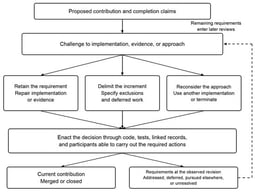
Contested acceptance and the continuation of requirements. The pathways can combine or follow one another. Decisions take effect through code, tests, linked records, and participants able to perform the required actions. The two outcome boxes distinguish the current contribution’s disposition from the treatment of its requirements. The dashed arrow follows requirements into later review. In the sqruff trajectory, subsequent decisions both repartitioned the work and reversed changes in an earlier accepted revision. Path A is supported where the requirement remains binding and a feasible repair is enacted; path B where authorized separation of residual work is enacted; path C where the current approach loses support or an explicit alternative supersedes it. The paths express conditional process relations and may overlap. Unexplained closures remain unassigned.
  • Article
  • Open Access

Digital transformation is a strategic priority across care-intensive service sectors, yet many organisations struggle to realise its intended benefits. Existing research often examines technological, organisational, and environmental barriers separately, offering limited insight into their interconnections within organisational systems. Drawing on Systems Theory and Sociotechnical Systems (STS) Theory, this study investigates digital transformation among small and medium providers within Australia’s National Disability Insurance Scheme (NDIS). Using an interpretive qualitative design, semi-structured interviews were conducted with 15 participants from 15 distinct NDIS provider organisations in Sydney, Australia, followed by reflexive thematic analysis and systems-oriented interpretation. Participants described recurring associations among technological misalignment, fragmented software, adaptive workarounds, increased administrative demands, and constraints on organisational capacity for digital improvement, with regulatory and resource pressures interacting with these technological and organisational conditions. Building on these cross-sectional patterns, this study develops Recursive Capability Constriction (RCC), a systems-based conceptual framework that proposes how technological misalignment, compensatory adaptation, administrative expansion, and constrained organisational capability for digital improvement may become interconnected through reinforcing relationships. Rather than representing an inevitable or empirically established causal sequence, RCC provides a conditional explanation of how local adaptations may become associated with constraints on subsequent digital improvement. By shifting attention from isolated implementation barriers to interconnected sociotechnical relationships, RCC extends digital transformation research and provides practical guidance for managing digital change in regulated care environments.

Systems

16 October 2026

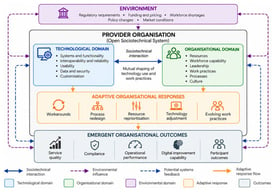
Integrated conceptual framework for examining cross-domain interactions and organisational adaptation within the NDIS provider ecosystem. The conceptual framework was developed by the authors, with graphical enhancement and visual refinement assisted by OpenAI’s ChatGPT (model version as disclosed in Section 3.7).

Highly Accessed Articles

News & Conferences

Latest Issues

Open for Submission

Journal Sections

XFacebookLinkedIn
Systems - ISSN 2079-8954