

Skip to Content
You are currently on the new version of our website. Access the old version .

Computers

Computers is an international, scientific, peer-reviewed, open access journal of computer science, including computer and network architecture and computer–human interaction as its main foci, published monthly online by MDPI.

Quartile Ranking JCR - Q2 (Computer Science, Interdisciplinary Applications)

All Articles (2,021)

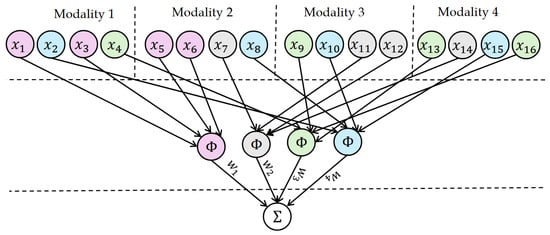
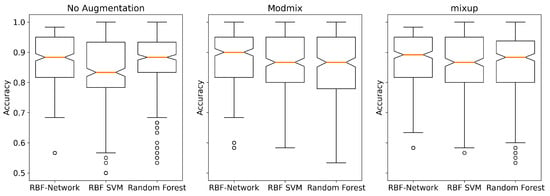
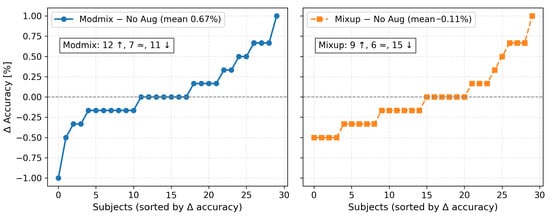
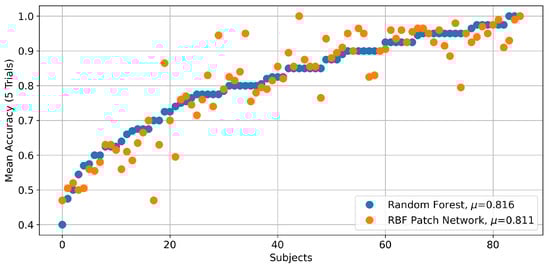
Pain recognition based on multimodal physiological signals remains a challenge, not only because of the limited training data, but also due to the varying responses of individuals. In this article, we present a randomized modality mixing technique (Modmix) for multimodal data augmentation and a patchwise radial basis function (RBF) network designed to improve robustness in limited and highly heterogeneous data. Modmix generates new samples by randomly swapping modalities between existing data points, creating new data in a very simple but effective way. The RBF patch network divides the input into randomly selected, overlapping patches that capture local similarities between modalities. Each patch network is trained end-to-end using stochastic gradient descent. Moreover, the model’s performance is further improved by using multiple independently trained networks and combining them into a single decision. Experiments with the two different pain datasets X-ITE and BioVid were performed under limited training data conditions, where only approximately 30% of the original datasets were used for training. With both datasets the RBF patch network achieved significant improvements for a subset of subjects, resulting in a similar or even slightly better mean accuracy compared to competing related models such as random forest and support vector machine.

14 February 2026

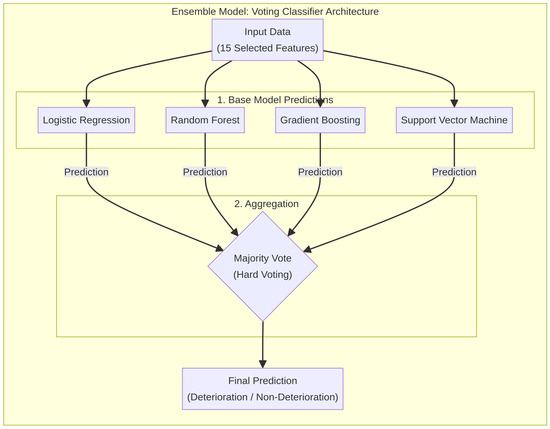
Example architecture of the RBF patch network. The graph illustrates the core architecture where input from four modalities is processed. The features of each modality are randomly assigned to four RBF neurons. However this assignment is fixed and part of the model.

Computing, Electronics, and Health for Everybody: A Multi-Country Workshop on Low-Cost ECG Acquisition

  • Orlando Pérez-Manzo,
  • Denis Mendoza-Cabrera and
  • Cristian Vidal-Silva
  • + 2 authors

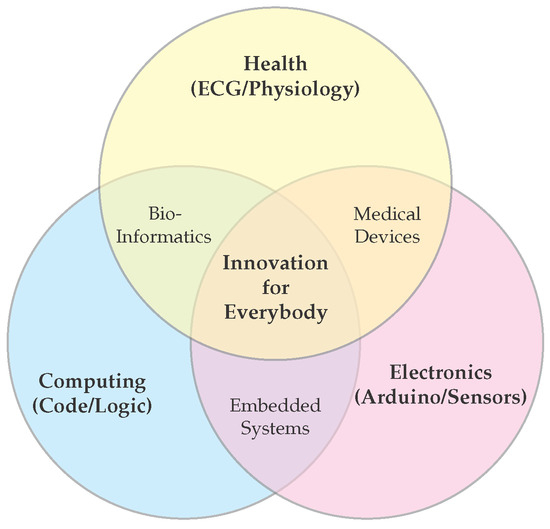
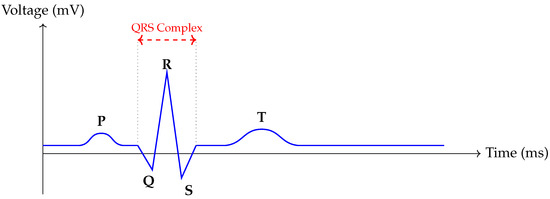
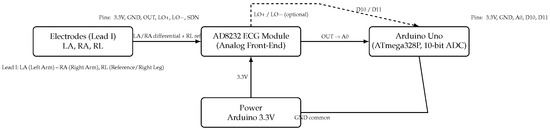
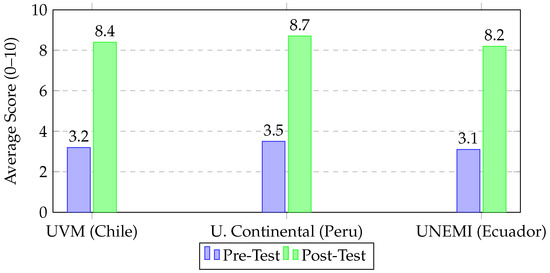
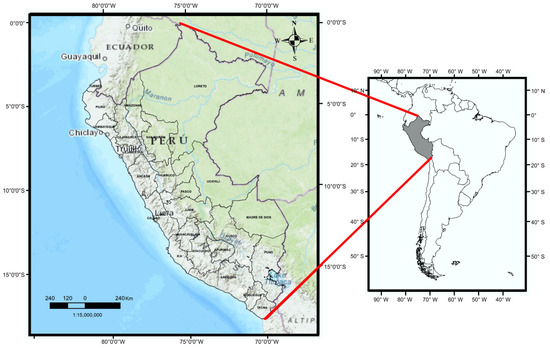
A persistent interdisciplinary gap continues to hinder the development of Health 4.0 educational initiatives. Biomedical Engineering programs typically emphasize physiology and instrumentation while providing limited exposure to modern software ecosystems, whereas Informatics curricula often overlook the physical and physiological foundations of bio-instrumentation. To address this dual deficiency, this paper presents a low-cost and modular educational intervention aligned with the “Computing, Electronics, and Health for Everybody” philosophy. The proposed approach is a hands-on technical workshop that translates core biomedical signal-processing concepts into an accessible learning experience using the Arduino platform and the AD8232 ECG sensor. The intervention was implemented simultaneously across universities in Chile, Peru, and Ecuador, involving a total of n=92 undergraduate engineering students. Learning outcomes were evaluated using a pre–post assessment design. The results demonstrate a statistically significant improvement in participants’ conceptual understanding of ECG signal components (p<0.001), with mean scores increasing across all evaluated dimensions. In addition, students reported higher confidence in interpreting physiological signals and applying interdisciplinary reasoning. These findings indicate that the proposed intervention effectively supports interdisciplinary learning for software-oriented engineering students by introducing core biomedical acquisition and signal-processing concepts through an accessible and scalable educational framework.

14 February 2026

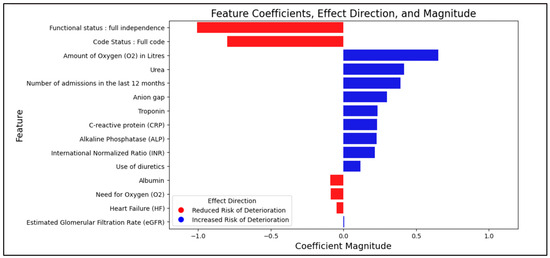
Overview of the interdisciplinary framework. Font size and contrast were adjusted to improve readability.

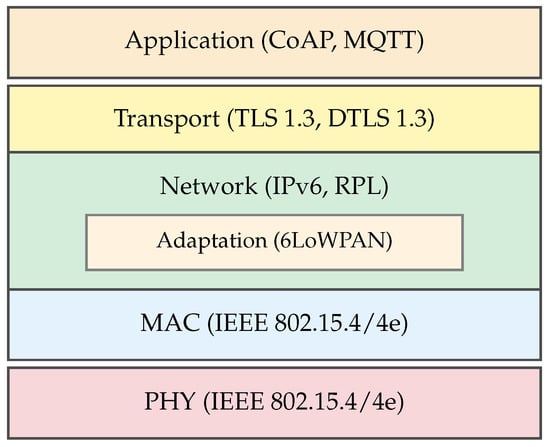
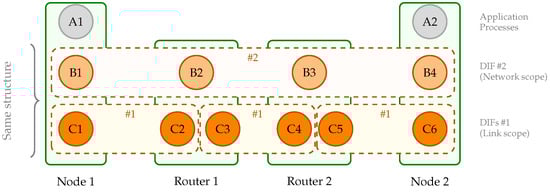
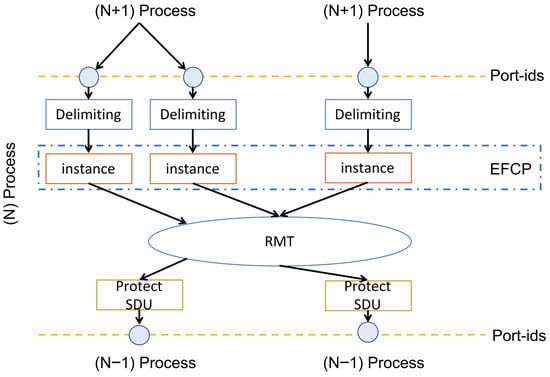
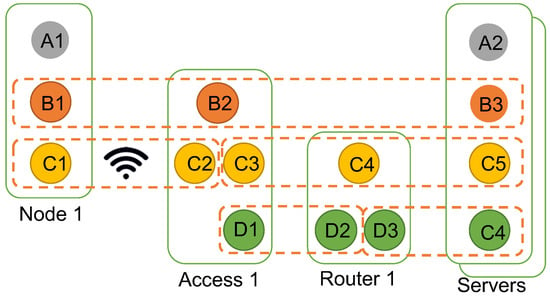
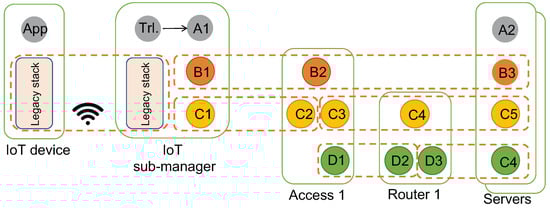
The Internet of Things (IoT) has transformed modern life through interconnected devices enabling automation across diverse environments. However, its reliance on legacy network architectures has introduced significant security vulnerabilities and efficiency challenges—for example, when Datagram Transport Layer Security (DTLS) encrypts transport-layer communications to protect IoT traffic, it simultaneously blinds intermediate proxies that need to inspect message contents for protocol translation and caching, forcing a fundamental trade-off between security and functionality. This paper presents an architectural solution based on the Recursive InterNetwork Architecture (RINA) to address these issues. We analyze current IoT network stacks, highlighting their inherent limitations—particularly how adding security at one layer often disrupts functionality at others, forcing a detrimental trade-off between security and performance. A central principle underlying our approach is the role of structural symmetry in RINA’s design. Unlike the heterogeneous, protocol-specific layers of TCP/IP, RINA exhibits recursive self-similarity: every Distributed IPC Facility (DIF), regardless of its position in the network hierarchy, instantiates identical mechanisms and offers the same interface to layers above. This architectural symmetry ensures predictable, auditable behavior while enabling policy-driven asymmetry for context-specific security enforcement. By embedding security within each layer and allowing flexible layer arrangement, RINA mitigates common IoT attacks and resolves persistent issues such as the inability of Performance Enhancing Proxies to operate on encrypted connections. We demonstrate RINA’s applicability through use cases spanning smart homes, healthcare monitoring, autonomous vehicles, and industrial edge computing, showcasing its adaptability to both RINA-native and legacy device integration. Our mixed-methods evaluation combines qualitative architectural analysis with quantitative experimental validation, providing both theoretical foundations and empirical evidence for RINA’s effectiveness. We also address emerging trends including AI-driven security and massive IoT scalability. This work establishes a conceptual foundation for leveraging recursive symmetry principles to achieve secure, efficient, and scalable IoT ecosystems.

13 February 2026

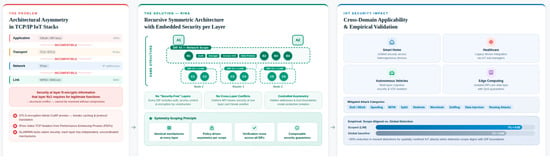
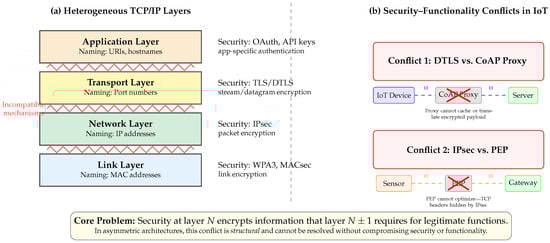
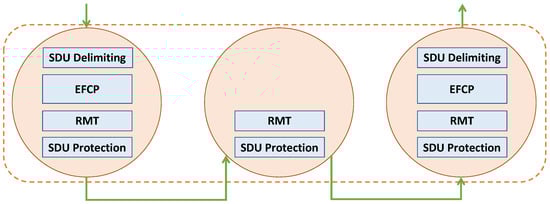
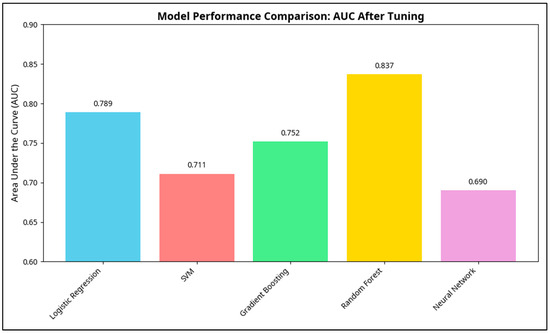
Architectural asymmetry in TCP/IP-based IoT stacks. (a) Each layer employs different naming schemes (URIs, ports, IP addresses, MAC addresses) and independent security mechanisms that do not compose coherently. Zigzag lines indicate semantic discontinuities at layer boundaries. (b) These asymmetries create security–functionality conflicts in IoT: DTLS encryption prevents CoAP proxies from performing caching and protocol translation; IPsec encryption hides transport headers from Performance Enhancing Proxies (PEPs) needed for wireless link optimization [4].

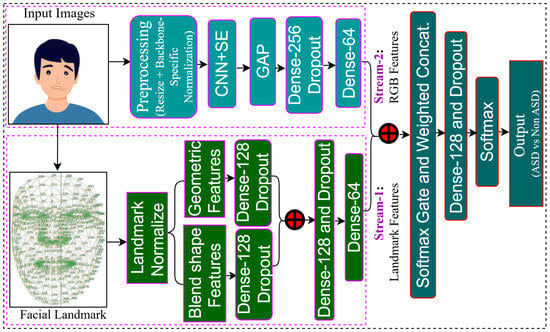
Autism Spectrum Disorder (ASD) is a neurological condition that affects communication and social interaction skills, with individuals experiencing a range of challenges that often require specialized care. Automated systems for recognizing ASD face significant challenges due to the complexity of identifying distinguishing features from facial images. This study proposes an incremental advancement in ASD recognition by introducing a dual-stream model that combines handcrafted facial-landmark features with deep learning-based pixel-level features. The model processes images through two distinct streams to capture complementary aspects of facial information. In the first stream, facial landmarks are extracted using MediaPipe (v0.10.21),with a focus on 137 symmetric landmarks. The face’s position is adjusted using in-plane rotation based on eye-corner angles, and geometric features along with 52 blendshape features are processed through Dense layers. In the second stream, RGB image features are extracted using pre-trained CNNs (e.g., ResNet50V2, DenseNet121, InceptionV3) enhanced with Squeeze-and-Excitation (SE) blocks, followed by feature refinement through Global Average Pooling (GAP) and DenseNet layers. The outputs from both streams are fused using weighted concatenation through a softmax gate, followed by further feature refinement for classification. This hybrid approach significantly improves the ability to distinguish between ASD and non-ASD faces, demonstrating the benefits of combining geometric and pixel-based features. The model achieved an accuracy of 96.43% on the Kaggle dataset and 97.83% on the YTUIA dataset. Statistical hypothesis testing further confirms that the proposed approach provides a statistically meaningful advantage over strong baselines, particularly in terms of classification correctness and robustness across datasets. While these results are promising, they show incremental improvements over existing methods, and future work will focus on optimizing performance to exceed current benchmarks.

13 February 2026

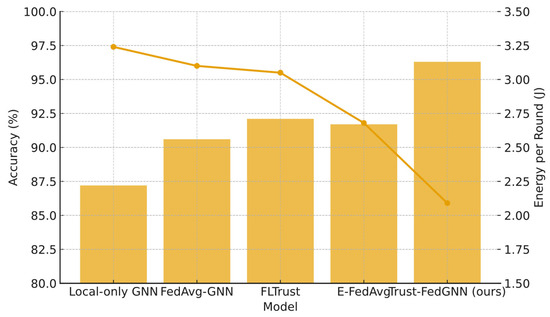
Overview of the proposed two-stream architecture. In Stream-1, face alignment is performed using in-plane rotation based on outer eye corner landmarks (33 and 263) to ensure consistent landmark positioning, followed by extraction and concatenation of geometric and blendshape features. In Stream-2, input images are resized and normalized using backbone-specific preprocessing (ResNet50V2, DenseNet121, and InceptionV3), then processed through a CNN with SE blocks and GAP to obtain deep features. Features from both streams are fused and classified using a softmax layer.

News & Conferences

Issues

Open for Submission

Editor's Choice

Reprints of Collections

Advanced Image Processing and Computer Vision
Reprint

Advanced Image Processing and Computer Vision

Editors: Selene Tomassini, M. Ali Akber Dewan

Get Alerted

Add your email address to receive forthcoming issues of this journal.

XFacebookLinkedIn
Computers - ISSN 2073-431X