Journal Description
Forecasting
Forecasting
is an international, peer-reviewed, open access journal on all aspects of forecasting published bimonthly online by MDPI.
- Open Access— free for readers, with article processing charges (APC) paid by authors or their institutions.
- High Visibility: indexed within Scopus, ESCI (Web of Science), RePEc, and other databases.
- Journal Rank: JCR - Q1 (Multidisciplinary Sciences) / CiteScore - Q1 (Economics, Econometrics and Finance (miscellaneous))
- Rapid Publication: manuscripts are peer-reviewed and a first decision is provided to authors approximately 26.3 days after submission; acceptance to publication is undertaken in 3.5 days (median values for papers published in this journal in the second half of 2025).
- Recognition of Reviewers: reviewers who provide timely, thorough peer-review reports receive vouchers entitling them to a discount on the APC of their next publication in any MDPI journal, in appreciation of the work done.
Impact Factor:
3.2 (2024);
5-Year Impact Factor:
2.9 (2024)
Latest Articles
A Combined Kalman Filter–LSTM to Forecast Downside Risk of BWP/USD Returns: A Bottom-Up Hierarchical Approach
Forecasting 2026, 8(2), 21; https://doi.org/10.3390/forecast8020021 - 2 Mar 2026
Abstract
This paper offers a hybrid forecasting approach that merges a local-level state space Kalman filter with a Long-Short-Term Memory (LSTM) neural network to assess the downside risk of the Botswana Pula versus the US Dollar (BWP/USD). Inspired by the inability of conventional econometric
[...] Read more.
This paper offers a hybrid forecasting approach that merges a local-level state space Kalman filter with a Long-Short-Term Memory (LSTM) neural network to assess the downside risk of the Botswana Pula versus the US Dollar (BWP/USD). Inspired by the inability of conventional econometric models to capture complex latent structural shifts and nonlinear patterns, our architecure uses a bottom-up hierarchical methodology in which the smoothed level component of the exchange rate is isolated by the Kalman filter and subsequently fed into the LSTM architecture. Three key indicators for assessing downside risk—Maximum Drawdown (MDD), Conditional Drawdown-at-Risk (CDaR), and Downside Deviation—are used to assess model performance across various time-frames (7, 30, 90, 180, and 365 days). As confirmed by Kupiec and Christoffersen’s backtesting processes, the findings show a high degree of alignment between projected and actual values, with negligible downside deviation bias and robust calibration. Moreover, global economic and geopolitical shocks, such as the COVID-19 pandemic, the Russia–Ukraine conflict, and the 2015–2016 Shanghai Stock Exchange crash, are important factors that influence exchange rate volatility, according to explainable artificial intelligence techniques, particularly SHAP (SHapley Additive exPlanations) analysis. Downside risk is also greatly increased by regional currency links, especially the impact of the ZAR/BWP exchange rate. On the other hand, domestic temporal variables, such as week, quarter, and month, have very little impact. These results emphasise how Botswana’s currency rate is structurally vulnerable to external shocks and how crucial it is to include both global and regional considerations in risk analysis. The research concludes that the accuracy and transparency of projections for exchange rate risk significantly improve when practical filtering is combined with deep learning and explainable AI. To improve macroeconomic resilience and guide successful financial risk management plans in emerging market environments, policymakers are advised to employ AI-driven forecasting techniques, enhance regional monetary coordination, and set up real-set learning systems.
Full article
(This article belongs to the Section AI Forecasting)
►
Show Figures
Open AccessArticle
External Macroeconomic Variables and Stock Returns: Evidence from Conventional and Islamic Indices
by
Muhammad Hanif
Forecasting 2026, 8(2), 20; https://doi.org/10.3390/forecast8020020 - 2 Mar 2026
Abstract
The study documents the impact of the external sector on movements of the Pakistan Stock Exchange (PSX), covering conventional and Islamic indices. Selected variables include international trade, foreign investment, remittances, oil, gold, and currency markets, as well as the KSE-100 and KMI-30 indices.
[...] Read more.
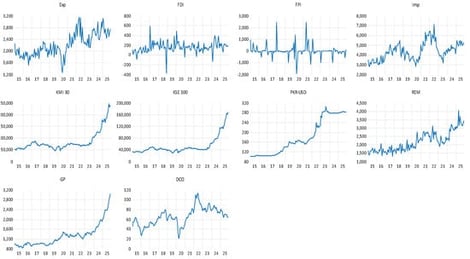
The study documents the impact of the external sector on movements of the Pakistan Stock Exchange (PSX), covering conventional and Islamic indices. Selected variables include international trade, foreign investment, remittances, oil, gold, and currency markets, as well as the KSE-100 and KMI-30 indices. The sample period covers the latest 130 months, from 2015/01 to 2025/10. Results are documented through descriptive statistics, pairwise correlations, and OLS regression. Stability of coefficients during the review period is checked by calculating BTC-Var and switching Var. Outstanding momentum is evident in market indices (in the final phase), accompanied by growth in remittances, while the national currency has experienced an alarming depreciation. The combined impact of the external sector is not in the higher range for either index (adjusted R-square values are low). A group of four variables (remittances, oil, gold, and currency markets) was significant for the conventional index, while a group of three variables (oil, gold, and currency markets) was significant for the Islamic index. All significant variables contribute positively to stock index movements, except the exchange rate. BTC-Var and switching var suggest instability of relationships and regime-dependent var dynamics. The findings are beneficial for managers and investors in predicting index movements and portfolio diversification, as well as for relevant authorities in making policy decisions that promote prudent exchange-rate management and facilitate remittances. To the best of the author’s knowledge, this study is among the few that jointly examine the impact of external-sector variables on stock market movements.
Full article
(This article belongs to the Section Forecasting in Economics and Management)
►▼
Show Figures

Figure 1
Open AccessArticle
Crude Oil Shocks and Saudi Stock Returns: An Integrated Granger–LSTM–XGBoost Analysis
by
Priyanka Aggarwal, Nevi Danila, Eddy Suprihadi and Manoj Kumar Manish
Forecasting 2026, 8(2), 19; https://doi.org/10.3390/forecast8020019 - 24 Feb 2026
Abstract
This study investigates regime-dependent forecasting of the Saudi stock market by combining macro-controlled dependence analysis with nonlinear predictive modeling. Using daily data from September 2010 to August 2025, we analyze the interaction between the Tadawul All Share Index (TASI) returns and crude oil
[...] Read more.
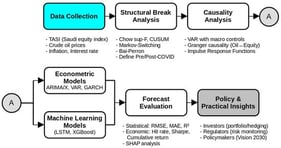
This study investigates regime-dependent forecasting of the Saudi stock market by combining macro-controlled dependence analysis with nonlinear predictive modeling. Using daily data from September 2010 to August 2025, we analyze the interaction between the Tadawul All Share Index (TASI) returns and crude oil returns while controlling for inflation and interest-rate dynamics. A four-variable VAR with macro controls is estimated separately in pre- and post-COVID regimes to characterize directional predictability and changes in transmission lags. We then evaluate out-of-sample return forecasting performance across econometric benchmarks (ARIMA, ARIMAX, and VAR) and machine learning models (LSTM and XGBoost) under a strictly time-ordered expanding-window design with sequential train/validation/test partitioning. The results indicate that traditional linear benchmarks exhibit limited predictive ability in both regimes, with negative out-of-sample explanatory power. By contrast, XGBoost delivers the strongest overall performance, achieving positive out-of-sample R2 in both regimes (0.046 in pre-COVID and 0.010 in post-COVID), together with the lowest forecast errors (RMSE = 0.0081 pre-COVID; 0.0078 post-COVID). Interpretability analysis further reveals a regime-sensitive shift in drivers: short-horizon equity lag dynamics dominate during stable periods, whereas oil-related and macro-financial variables gain importance under turbulent conditions. Economic-value evaluation supports the practical relevance of these gains, showing that XGBoost-based signals yield superior risk-adjusted trading outcomes and remain favorable under downside-risk and drawdown-based assessment. Overall, these findings highlight that forecasting in oil-linked emerging markets is inherently regime-dependent and that nonlinear ensemble learners, particularly XGBoost, provide a more robust and economically meaningful approach under structural change.
Full article
(This article belongs to the Special Issue Advanced Forecasting in an Era of Uncertainty and Its Impact on Strategic Investment Decisions)
►▼
Show Figures

Figure 1
Open AccessArticle
Forecasting Municipal Financial Distress in South Africa: A Machine Learning Approach
by
Nkosinathi Emmanuel Radebe, Bomi Cyril Nomlala and Frank Ranganai Matenda
Forecasting 2026, 8(1), 18; https://doi.org/10.3390/forecast8010018 - 14 Feb 2026
Abstract
Persistent fiscal stress in South African municipalities undermines service delivery, yet practical tools for early detection remain limited. This study predicts one-year-ahead municipal financial distress to support risk-based prioritisation. We develop machine learning models using a 2018/19–2022/23 municipality panel, combining 13 financial health
[...] Read more.
Persistent fiscal stress in South African municipalities undermines service delivery, yet practical tools for early detection remain limited. This study predicts one-year-ahead municipal financial distress to support risk-based prioritisation. We develop machine learning models using a 2018/19–2022/23 municipality panel, combining 13 financial health indicators from State of Local Government (SoLG) reports with selected socio-economic variables. Penalised logistic regression is benchmarked against random forest and XGBoost under a leakage-aware, time-ordered split into training, validation, and an out-of-time test year; class imbalance is handled through class weighting. Performance is evaluated using PR-AUC, ROC-AUC, calibration, and a capacity-constrained Top-30 rule. All models outperform a naïve last-year baseline on the out-of-time test (PR-AUC 0.934–0.954; ROC-AUC 0.886–0.923), with bootstrap intervals supporting robustness. Random forest performs best overall, while penalised logistic regression remains competitive. Under the Top-30 rule (12.3% workload), precision is high (precision@30 0.967–1.000) while recall is modest (recall@30 0.186–0.192). SHAP values and logistic odds ratios identify liquidity, solvency, cash coverage, and employment deprivation as key drivers. The Top-30 rule corresponds to an annual intensive monitoring portfolio that is reasonable under constrained staffing and budget capacity in national and provincial oversight units, while probability thresholds are reported as conventional benchmarks rather than as policy triggers.
Full article
(This article belongs to the Section Forecasting in Economics and Management)
►▼
Show Figures

Figure 1
Open AccessArticle
Satellite Data and Artificial Intelligence for FINtech
by
Alberto Garinei, Massimiliano Proietti, Alessandro Vispa, Stefano Speziali, Giovanni Bartolini, Marcello Marconi, Emanuele Piccioni, Matteo Martini, Francesca Fallucchi, Romeo Giuliano, Ernesto William De Luca, Umberto Di Matteo and Valerio Lemma
Forecasting 2026, 8(1), 17; https://doi.org/10.3390/forecast8010017 - 13 Feb 2026
Abstract
The SAIFIN project (Satellite data and Artificial Intelligence for FINtech) develops a novel algorithmic trading system that integrates satellite imagery, financial data, and advanced artificial intelligence to enhance decision-making, particularly in commodity and agricultural markets. This paper presents the motivation, design, implementation, and
[...] Read more.
The SAIFIN project (Satellite data and Artificial Intelligence for FINtech) develops a novel algorithmic trading system that integrates satellite imagery, financial data, and advanced artificial intelligence to enhance decision-making, particularly in commodity and agricultural markets. This paper presents the motivation, design, implementation, and validation of the SAIFIN framework. Leveraging alternative data and modular multi-agent architectures, SAIFIN aims to deliver robust, context-aware trading signals in diverse market conditions.
Full article
(This article belongs to the Section AI Forecasting)
►▼
Show Figures

Figure 1
Open AccessArticle
Machine Learning Forecasting of Strong Subsequent Events in New Zealand Using the NESTORE Algorithm
by
Letizia Caravella and Stefania Gentili
Forecasting 2026, 8(1), 16; https://doi.org/10.3390/forecast8010016 - 12 Feb 2026
Abstract
New Zealand, located along the boundary between the Pacific and Australian plates, is among the most seismically active regions in the world. In such an area, reliable short-term forecasting of strong aftershocks is essential for seismic risk mitigation. In this study, we apply
[...] Read more.
New Zealand, located along the boundary between the Pacific and Australian plates, is among the most seismically active regions in the world. In such an area, reliable short-term forecasting of strong aftershocks is essential for seismic risk mitigation. In this study, we apply NESTORE (NExt STrOng Related Earthquake), a machine learning probabilistic forecasting algorithm, to the New Zealand earthquake catalogue to evaluate the probability that a mainshock of magnitude Mm will be followed by an event of magnitude ≥ Mm − 1 within a defined space–time window. NESTORE uses nine features describing early post-mainshock seismicity and outputs the probability that a cluster is Type A (i.e., containing a strong aftershock) or not (Type B). We assess performance using two testing strategies: chronological training–testing splits and k-fold cross-validation and refine the training set using the REPENESE outlier-detection procedure. The k-fold approach proves more robust than the chronological one, despite changes in catalogue characteristics over time. Eighteen hours after the mainshock, NESTORE correctly classified 88% of clusters (75% for Type A and 92% for Type B; Precision = 0.75). Notably, the highly destructive 2010–2011 Canterbury–Christchurch sequence was correctly identified as Type A. These findings support the applicability of NESTORE for short-term aftershock forecasting in New Zealand.
Full article
(This article belongs to the Special Issue Feature Papers of Forecasting 2025)
►▼
Show Figures

Figure 1
Open AccessArticle
Series-Core Fusion Based Multivariate Variational Mode Decomposition for Short-Term Wind Power Prediction Using Multiple Meteorological Data
by
Wentian Lu, Zhenming Lu, Wenjie Liu and Yifeng Cao
Forecasting 2026, 8(1), 15; https://doi.org/10.3390/forecast8010015 - 12 Feb 2026
Abstract
Accurate wind power forecasting is critical for enhancing the operational efficiency and stability of electrical power grids. Conventional single-variable signal decomposition forecasting methods ignore the coupling relationship between wind power and multiple meteorological data, thus limiting prediction accuracy. This study proposes an accurate
[...] Read more.
Accurate wind power forecasting is critical for enhancing the operational efficiency and stability of electrical power grids. Conventional single-variable signal decomposition forecasting methods ignore the coupling relationship between wind power and multiple meteorological data, thus limiting prediction accuracy. This study proposes an accurate and fast short-term wind power prediction approach based on series-core fusion technology considering multiple meteorological data. In the data preprocessing stage, the multivariate variational mode decomposition (MVMD) algorithm decomposes wind power and meteorological variables into the same predefined number of frequency-aligned intrinsic mode functions (IMFs), thereby enhancing feature representation and improving forecasting accuracy via a more comprehensive and detailed dataset representation. During the training stage, the series-core fused time series (SOFTS) model establishes the connection among wind power channel and other meteorological variable channels for each IMF, achieving fast convergence through its streamlined and parallel structure. In the forecasting stage, the final wind power prediction is generated by the reconstruction of all IMFs. Furthermore, we conducted a comprehensive performance evaluation by comparing the proposed MVMD-SOFTS model with eight alternative models, including the CNN model, the TCN model, the LSTM model, the GRU model, the Transformer model, the SOFTS model, the CEEMDAN-SOFTS model, and the VMD-SOFTS model. The results indicate that MVMD-SOFTS outperformed all other models, demonstrating its effectiveness in capturing the multifaceted relationships in wind power forecasting.
Full article
(This article belongs to the Collection Energy Forecasting)
►▼
Show Figures

Figure 1
Open AccessArticle
The Impact of ESG Performance on Financial Performance: Evidence from Listed Companies in Thailand
by
Umawadee Detthamrong, Rapeepat Klangbunrueang, Wirapong Chansanam and Rasita Dasri
Forecasting 2026, 8(1), 14; https://doi.org/10.3390/forecast8010014 - 12 Feb 2026
Abstract
Sustainable corporate governance plays an essential role in promoting responsible economic growth and enhancing social and environmental well-being in emerging economies. In this context, Environmental, Social, and Governance (ESG) performance has become an important indicator of a firm’s commitment to sustainable development and
[...] Read more.
Sustainable corporate governance plays an essential role in promoting responsible economic growth and enhancing social and environmental well-being in emerging economies. In this context, Environmental, Social, and Governance (ESG) performance has become an important indicator of a firm’s commitment to sustainable development and its alignment with the United Nations Sustainable Development Goals, particularly SDG 8 and SDG 12. This study investigates the impact of Environmental, Social, and Governance (ESG) performance on the financial sustainability of publicly listed companies in Thailand, a rapidly developing Southeast Asian economy where empirical evidence remains limited. Using an unbalanced panel dataset of 965 firm-year observations across multiple industries, multiple regression models were employed to assess the influence of ESG performance on two financial indicators: return on capital employed and return on assets. Granger causality tests were also conducted to explore directional relationships between sustainability performance and financial outcomes. The empirical results reveal a significant negative short-term association between ESG performance and return on assets (ROA), whereas the relationship with return on capital employed (ROCE) is statistically insignificant. The causality analysis indicates that ESG performance Granger-causes ROA, implying that sustainability-driven strategic decisions may precede and influence financial outcomes over time. Additionally, leverage emerges as a key constraint to financial sustainability, negatively affecting both ROCE and ROA. These findings underscore the challenge of striking a balance between sustainability investments and immediate profitability in emerging markets. Policymakers and business leaders are encouraged to promote supportive governance frameworks, reduce financial barriers, and foster ESG-driven practices that contribute to long-term sustainable competitiveness and inclusive development.
Full article
Open AccessArticle
Investigation of Sudden Stratospheric Warming (SSW) Events Between 1980 and 2100
by
Simla Durmus, Deniz Demirhan, Ismail Gultepe and Onur Durmus
Forecasting 2026, 8(1), 13; https://doi.org/10.3390/forecast8010013 - 10 Feb 2026
Abstract
The main objective of this work is to characterize Sudden Stratospheric Warming (SSW) conditions and their impact on local weather forecasting and climate change, using SSW definition criteria. The SSWs strongly affect Arctic vortex structure and midlatitude weather conditions. This work evaluates the
[...] Read more.
The main objective of this work is to characterize Sudden Stratospheric Warming (SSW) conditions and their impact on local weather forecasting and climate change, using SSW definition criteria. The SSWs strongly affect Arctic vortex structure and midlatitude weather conditions. This work evaluates the frequency, amplitude, and dynamical–thermal characteristics of SSWs under historical and Representative Concentration Pathway (RCP) 4.5 scenarios, focusing on stratospheric air temperature (Ts) and zonal wind speed (Uh) at the 10° N and 60° N latitudes. The fifth-generation ECMWF atmospheric reanalysis (ERA5) is employed as the reference dataset. Simulations of five Coupled Model Intercomparison Project Phase 5 (CMIP5) models, represented by M1 to M5, are analyzed. The primary group of models included 1) the Australian Community Climate and Earth-System Simulator, version 1.3 (ACCESS1-3, M1), 2) the Hadley Center Global Environmental Model, version 2—Carbon Cycle (HadGEM2-CC, M2), and 3) the Max Planck Institute Earth System Model—Medium Resolution (MPI-ESM-MR, M3). The analysis period covers SSW events related to the Quasi-Biennial Oscillation (QBO) in the Northern Hemisphere (NH) from 1980 to 2100. The key findings indicate that while M1, M2, and M3 simulate SSW occurrence correctly for the 21st century, they exhibit significant systematic deficiencies in capturing the structural dynamics of SSW events. Specifically, the M1, M2, and M3 models underestimate the polar stratospheric temperature amplitude (Tamp) by approximately 75–80% and zonal wind amplitude (Uamp) by more than 60% compared to the ERA5 analysis. Furthermore, ERA5 exhibits a strong negative correlation (R ≈ −0.8) between Uh and Ts that is not estimated accurately using the present models. The importance of the horizontal resolution of the models and wave–mean flow interactions in determining SSW intensity and occurrence is also found to be a critical metric. Results suggest that SSW definition criteria affect Arctic and midlatitude weather system prediction at a rate of 61–82%. It is concluded that the primary configurations of CMIP5 models for accurately capturing the dynamical structure and evolution of QBO–SSW interactions are needed, and that they affect future projections of SSW events.
Full article
(This article belongs to the Section Weather and Forecasting)
►▼
Show Figures

Figure 1
Open AccessArticle
Projection of Changes in Coastal Water Temperature of the Baltic Sea up to 2100
by
Mariusz Ptak, Mariusz Sojka, Soufiane Haddout and Teerachai Amnuaylojaroen
Forecasting 2026, 8(1), 12; https://doi.org/10.3390/forecast8010012 - 4 Feb 2026
Abstract
Temperature is a fundamental property of water that determines its quality and the course of both biotic and physical processes. Therefore, the distribution and future changes in thermal conditions are crucial for the functioning of the hydrosphere. In this study, a hybrid air2water
[...] Read more.
Temperature is a fundamental property of water that determines its quality and the course of both biotic and physical processes. Therefore, the distribution and future changes in thermal conditions are crucial for the functioning of the hydrosphere. In this study, a hybrid air2water model was used to determine the course of the sea surface temperature, which allows for its prediction using a minimal set of input data based on the air temperature. The widespread availability of air temperature measurements worldwide offers broad potential for the model’s application, which is especially important in coastal zones—the most dynamic and diverse areas of marine ecosystems, and simultaneously the most exposed to anthropogenic pressure. The study analyzes four hydrological stations in the southern part of the Baltic Sea, where the results confirm the high predictive capabilities of the air2water model for sea surface temperature. Depending on the adopted climate change scenarios, the average rate of sea surface temperature increase by the end of the 21st century is projected to be 0.15 °C per decade (SSP2-4.5) and 0.33 °C per decade (in the case of the SSP5-8.5 scenario). If these projections come true, they should be considered unfavorable, and such a situation will require taking into account changes in the thermal regime in the functioning of the Baltic Sea. More broadly, this simple yet effective method for predicting thermal conditions may be applied in interdisciplinary research as well as in the management of coastal marine zones.
Full article
(This article belongs to the Section Environmental Forecasting)
►▼
Show Figures

Figure 1
Open AccessArticle
A Comparative Study of Univariate Models for Baltic Dry Index Forecasting
by
Juan Huang, Ching-Wu Chu and Hsiu-Li Hsu
Forecasting 2026, 8(1), 11; https://doi.org/10.3390/forecast8010011 - 2 Feb 2026
Abstract
The Baltic Dry Index (BDI) measures the cost of transporting dry bulk commodities such as coal, iron ore, and grain. As a key indicator of global trade, supply chain dynamics, and overall economic activity, accurate short-term forecasting of the BDI is crucial. This
[...] Read more.
The Baltic Dry Index (BDI) measures the cost of transporting dry bulk commodities such as coal, iron ore, and grain. As a key indicator of global trade, supply chain dynamics, and overall economic activity, accurate short-term forecasting of the BDI is crucial. This paper compares six univariate methods to obtain a more precise short-term BDI prediction model, providing valuable insights for decision-makers. The six forecasting techniques include Grey Forecast, ARIMA, Support Vector Regression, LSTM, GRU and EMD-SVR-GWO. Model performance is evaluated using three common metrics: Mean Absolute Error (MAE), Root Mean Squared Error (RMSE), and Mean Absolute Percentage Error (MAPE). Our findings reveal that the novel EMD-SVR-GWO model outperforms the other univariate methods, demonstrating superior accuracy in forecasting monthly BDI trends. This study contributes to improved BDI prediction, aiding managers in strategic planning and decision-making.
Full article
(This article belongs to the Section Forecasting in Economics and Management)
►▼
Show Figures

Figure 1
Open AccessArticle
An Explainable Voting Ensemble Framework for Early-Warning Forecasting of Corporate Financial Distress
by
Lersak Phothong, Anupong Sukprasert, Sutana Boonlua, Prapaporn Chubsuwan, Nattakron Seetha and Rotcharin Kunsrison
Forecasting 2026, 8(1), 10; https://doi.org/10.3390/forecast8010010 - 23 Jan 2026
Abstract
►▼
Show Figures
Accurate early-warning forecasting of corporate financial distress remains a critical challenge due to nonlinear financial relationships, severe data imbalance, and the high operational costs of false alarms in risk-monitoring systems. This study proposes an explainable voting ensemble framework for early-warning forecasting of corporate
[...] Read more.
Accurate early-warning forecasting of corporate financial distress remains a critical challenge due to nonlinear financial relationships, severe data imbalance, and the high operational costs of false alarms in risk-monitoring systems. This study proposes an explainable voting ensemble framework for early-warning forecasting of corporate financial distress using lagged accounting-based financial information. The proposed framework integrates heterogeneous base learners, including Decision Tree, Neural Network, and k-Nearest Neighbors models, and is evaluated using financial statement data from 752 publicly listed firms in Thailand, comprising sixteen financial ratios across six dimensions: liquidity, operating efficiency, debt management, profitability, earnings quality, and solvency. To ensure robustness under imbalanced and rare-event conditions, the study employs feature selection, data normalization, stratified cross-validation, resampling techniques, and repeated validation procedures. Empirical results demonstrate that the proposed Voting Ensemble delivers a precision-oriented and decision-relevant forecasting profile, outperforming classical classifiers and maintaining greater early-warning reliability when benchmarked against advanced tree-based ensemble models. Probability-based evaluation further confirms the robustness and calibration stability of the proposed framework under repeated cross-validation. By adopting a forward-looking, early-warning perspective and integrating ensemble learning with explainable machine learning principles, this study offers a transparent and scalable approach to financial distress forecasting. The findings offer practical implications for auditors, investors, and regulators seeking reliable early-warning tools for corporate risk assessment, particularly in emerging market environments characterized by data imbalance and heightened uncertainty.
Full article

Figure 1
Open AccessArticle
Climate Indices as Potential Predictors in Empirical Long-Range Meteorological Forecasting Models
by
Sergei Soldatenko, Genrikh Alekseev, Vladimir Loginov, Yaromir Angudovich and Irina Danilovich
Forecasting 2026, 8(1), 9; https://doi.org/10.3390/forecast8010009 - 22 Jan 2026
Abstract
Improving the accuracy of climate and long-range meteorological forecasts is an important objective for many economic sectors: agriculture, energy and utilities, transportation and logistics, construction, disaster risk management, insurance and finance, retail, tourism and leisure. Traditional physical models face limitations at ultra-long lead
[...] Read more.
Improving the accuracy of climate and long-range meteorological forecasts is an important objective for many economic sectors: agriculture, energy and utilities, transportation and logistics, construction, disaster risk management, insurance and finance, retail, tourism and leisure. Traditional physical models face limitations at ultra-long lead times, which motivates the development of empirical–statistical approaches, including those leveraging deep learning techniques. In this study, using ERA5 reanalysis data and archives of major climate indices for the period 1950–2024, we examine statistical relationships between climate indices associated with large-scale atmospheric and oceanic patterns in the Northern Hemisphere and surface air temperature anomalies in selected mid- and high-latitude regions. The aim is to assess the predictive skill of these indices for seasonal temperature anomalies within empirical forecasting frameworks. To this end, we employ cross-correlation and cross-spectral analyses, as well as regression modeling. Our findings indicate that the choice of the most informative predictors strongly depends on the target region and season. Among the major indices, AMO and EA/WR emerge as the most informative for forecasting purposes. The Niño 4 and IOD indices can be considered useful predictors for the Eastern Arctic. Notably, the strongest correlations between the AMO, EA/WR, Niño 4, and IOD indices and surface air temperature occur at one- to two-year lags. To illustrate the predictive potential of the four selected indices, several multiple regression models were developed. The results obtained from these models confirm that the chosen set of indices effectively captures the main sources of variability relevant to seasonal and interannual temperature prediction across the analyzed regions. In particular, approximately 64% of the forecasts have errors less than 0.674 times the standard deviation.
Full article
(This article belongs to the Section Weather and Forecasting)
►▼
Show Figures

Figure 1
Open AccessArticle
Beyond Accuracy: The Cognitive Economy of Trust and Absorption in the Adoption of AI-Generated Forecasts
by
Anne-Marie Sassenberg, Nirmal Acharya, Padmaja Kar and Mohammad Sadegh Eshaghi
Forecasting 2026, 8(1), 8; https://doi.org/10.3390/forecast8010008 - 21 Jan 2026
Abstract
AI Recommender Systems (RecSys) function as personalised forecasting engines, predicting user preferences to reduce information overload. However, the efficacy of these systems is often bottlenecked by the “Last Mile” of forecasting: the end-user’s willingness to adopt and rely on the prediction. While the
[...] Read more.
AI Recommender Systems (RecSys) function as personalised forecasting engines, predicting user preferences to reduce information overload. However, the efficacy of these systems is often bottlenecked by the “Last Mile” of forecasting: the end-user’s willingness to adopt and rely on the prediction. While the existing literature often assumes that algorithmic accuracy (e.g., low RMSE) automatically drives utilisation, empirical evidence suggests that users frequently reject accurate forecasts due to a lack of trust or cognitive friction. This study challenges the utilitarian view that users adopt systems simply because they are useful, instead proposing that sustainable adoption requires a state of Cognitive Absorption—a psychological flow state enabled by the Cognitive Economy of trust. Grounded in the Motivation–Opportunity–Ability (MOA) framework, we developed the Trust–Absorption–Intention (TAI) model. We analysed data from 366 users of a major predictive platform using Partial Least Squares Structural Equation Modelling (PLS-SEM). The Disjoint Two-Stage Approach was employed to model the reflective–formative Higher-Order Constructs. The results demonstrate that Cognitive Trust (specifically the relational dimensions of Benevolence and Integrity) operates via a dual pathway. It drives adoption directly, serving as a mechanism of Cognitive Economy where users suspend vigilance to rely on the AI as a heuristic, while simultaneously freeing mental resources to enter a state of Cognitive Absorption. Affective Trust further drives this immersion by fostering curiosity. Crucially, Cognitive Absorption partially mediates the relationship between Cognitive Trust and adoption intention, whereas it fully mediates the impact of Affective Trust. This indicates that while Cognitive Trust can drive reliance directly as a rational shortcut, Affective Trust translates to adoption only when it successfully triggers a flow state. This study bridges the gap between algorithmic forecasting and behavioural adoption. It introduces the Cognitive Economy perspective: Trust reduces the cognitive cost of verifying predictions, allowing users to outsource decision-making to the AI and enter a state of effortless immersion. For designers of AI forecasting agents, the findings suggest that maximising accuracy may be less effective than minimising cognitive friction for sustaining long-term adoption. To solve the cold start problem, platforms should be designed for flow by building emotional rapport and explainability, thereby converting sporadic users into continuous data contributors.
Full article
(This article belongs to the Section AI Forecasting)
►▼
Show Figures

Figure 1
Open AccessArticle
Multi-Scale Explainable AI for RMB Exchange Rate Drivers
by
Jie Ji, Shouyang Wang and Yunjie Wei
Forecasting 2026, 8(1), 7; https://doi.org/10.3390/forecast8010007 - 21 Jan 2026
Abstract
To address the nonlinear nature of exchange rates where drivers vary by time horizon, this paper proposes a CEEMDAN-PE-CatBoost-SHAP framework. Analyzing USD/CNY data (2012–2024), we decomposed rates into high, medium, and low frequencies to bridge machine learning with economic interpretability. Empirical results revealed
[...] Read more.
To address the nonlinear nature of exchange rates where drivers vary by time horizon, this paper proposes a CEEMDAN-PE-CatBoost-SHAP framework. Analyzing USD/CNY data (2012–2024), we decomposed rates into high, medium, and low frequencies to bridge machine learning with economic interpretability. Empirical results revealed distinct frequency-dependent drivers: high-frequency fluctuations depend on market sentiment; medium-frequency variations follow Fed policies; and low-frequency trends reflect fundamentals like gold prices. SHAP analysis provides transparent attribution of these factors. This multi-scale approach isolates heterogeneous drivers, offering policymakers and investors a nuanced paradigm for managing currency risks. The study significantly clarifies how different economic factors shape exchange rate dynamics across varying time scales.
Full article
(This article belongs to the Special Issue Feature Papers of Forecasting 2025)
►▼
Show Figures

Figure 1
Open AccessArticle
New Statistical Approach to Forecasting Earth’s Skin Temperature from MERRA-2 Satellite Using Semiparametric Time Series Regression with Mixed Additive Spline Fourier (STSR-MASF)
by
Andrea Tri Rian Dani, Nur Chamidah, I. Nyoman Budiantara, Budi Lestari and Dursun Aydin
Forecasting 2026, 8(1), 6; https://doi.org/10.3390/forecast8010006 - 19 Jan 2026
Abstract
►▼
Show Figures
We introduce the Semiparametric Time Series Regression with Mixed Additive Spline Fourier (STSR–MASF) model as an innovative approach for analyzing time series data with complex patterns. The model combines the flexibility of the spline estimator in capturing nonlinear variations across specific sub-intervals and
[...] Read more.
We introduce the Semiparametric Time Series Regression with Mixed Additive Spline Fourier (STSR–MASF) model as an innovative approach for analyzing time series data with complex patterns. The model combines the flexibility of the spline estimator in capturing nonlinear variations across specific sub-intervals and the strength of the Fourier series in representing periodically recurring patterns. Within the semiparametric regression framework, STSR–MASF integrates both linear parametric and nonparametric components, with the optimal number of knots and oscillations determined using the Generalized Cross-Validation (GCV) criterion. The model was trained and tested using Earth’s skin temperature data from the National Aeronautics and Space Administration (NASA) MERRA-2 for East Kalimantan, Indonesia, a tropical rainforest region. The results demonstrate that the STSR–MASF model provides more accurate estimations and forecasts compared to six previous methods proposed in earlier studies with highly accurate predictions. This innovation not only offers methodological advancements in nonlinear time series modeling, but also contributes practical insights into understanding variations in Earth’s skin temperature in tropical regions, supporting broader efforts toward global climate change mitigation.
Full article

Figure 1
Open AccessArticle
Pollutant-Specific Deep Learning Architectures for Multi-Species Air Quality Bias Correction: Application to NO2 and PM10 in California
by
Ioannis Stergiou, Nektaria Traka, Dimitrios Melas, Efthimios Tagaris and Rafaella-Eleni P. Sotiropoulou
Forecasting 2026, 8(1), 5; https://doi.org/10.3390/forecast8010005 - 9 Jan 2026
Abstract
Accurate air quality forecasting remains challenging due to persistent biases in chemical transport models. Addressing this challenge, the current study develops pollutant-specific deep learning frameworks that correct systematic errors in the Community Multiscale Air Quality (CMAQ) simulations of nitrogen dioxide (NO2)
[...] Read more.
Accurate air quality forecasting remains challenging due to persistent biases in chemical transport models. Addressing this challenge, the current study develops pollutant-specific deep learning frameworks that correct systematic errors in the Community Multiscale Air Quality (CMAQ) simulations of nitrogen dioxide (NO2) and coarse particulate matter (PM10) over California. Building upon a previous study on ozone bias correction, a hybrid CNN–Attention–LSTM architecture is adapted, and a weighted Huber loss function is introduced for PM10 to enhance the detection of extreme pollution events through a gated tail-weighting mechanism. Using data from twenty EPA monitoring stations (ten per pollutant) for 2010–2014, the proposed approach achieves substantial performance gains over the CMAQ baseline. For NO2, RMSE decreases by ~51% with an average systematic bias reduction of ~80% and a random error reduction of ~42%. For PM10, RMSE improves by ~49% while the systematic and random errors decrease by ~94% and ~33%, respectively. The PM10 model also shows high consistency with observations (Index of Agreement improvement of ~105%) and a strong ability to capture peak events (F1 score improvement of ~270%), while the NO2 model achieves large gains in explanatory power (R2 improvement averaging ~816%). Both pollutants also demonstrate enhanced temporal agreement between predictions and observations, as confirmed by the Dynamic Time Warping analysis (NO2: ~55%, PM10: ~58%). These results indicate that pollutant-specific loss functions and architectural tuning can significantly improve both accuracy and event sensitivity, offering a transferable framework for bias correction across multiple pollutants and regions.
Full article
(This article belongs to the Special Issue Feature Papers of Forecasting 2025)
►▼
Show Figures

Figure 1
Open AccessArticle
Wind Shear Prediction at Jeju International Airport Using a Tree-Based Machine Learning Algorithm
by
Jae-Hyeok Seok, Hee-Wook Choi and Sang-Sam Lee
Forecasting 2026, 8(1), 4; https://doi.org/10.3390/forecast8010004 - 9 Jan 2026
Abstract
This study employed tree-based machine learning (ML) algorithms to predict low-level wind shear (LLWS) at Jeju International Airport (ICAO: RKPC). Hourly meteorological data from 47 observation stations across Jeju Island, collected between 2019 and 2023, were split into training (60%), validation (20%), and
[...] Read more.
This study employed tree-based machine learning (ML) algorithms to predict low-level wind shear (LLWS) at Jeju International Airport (ICAO: RKPC). Hourly meteorological data from 47 observation stations across Jeju Island, collected between 2019 and 2023, were split into training (60%), validation (20%), and test (20%) sets to develop individual prediction models for lead times ranging from 1 to 6 h. A probabilistic prediction model was developed by assigning weights to individual models according to their true skill statistic performance. Validation using an independent 2024 dataset showed that the light gradient boosting machine-based probabilistic model exhibited the highest predictive performance, achieving an area under the receiver operating characteristic curve of 0.883. The Shapley additive explanation analysis identified wind components (U, V) as key variables, contributing over 50%, with the significance of pressure and temperature slightly increasing over long-term prediction times (4–6 h). In addition, spatial analysis revealed that nearby airport stations were more influential for short-term prediction times (1–2 h), whereas Mount Halla and offshore stations north of the airport gained greater influence for medium-to long-term prediction times (3–6 h). The ML-based LLWS prediction model offers high accuracy and interpretability, supporting stepwise warning systems and aiding aviation decision-making.
Full article
(This article belongs to the Section AI Forecasting)
►▼
Show Figures

Figure 1
Open AccessArticle
A Highly Accurate and Efficient Statistical Framework for Short-Term Load Forecasting: A Case Study for Mexico
by
Luis Conde-López, Monica Borunda, Gerardo Ruiz-Chavarría and Tomás Aparicio-Cárdenas
Forecasting 2026, 8(1), 3; https://doi.org/10.3390/forecast8010003 - 5 Jan 2026
Abstract
Short-term load forecasting is fundamental for the effective and reliable operation of power systems. Very accurate forecasting methods often involve complex hybrid approaches that combine statistical, physical, and/or intelligent techniques. In this work, we present an innovative, clear, and effective methodology for short-term
[...] Read more.
Short-term load forecasting is fundamental for the effective and reliable operation of power systems. Very accurate forecasting methods often involve complex hybrid approaches that combine statistical, physical, and/or intelligent techniques. In this work, we present an innovative, clear, and effective methodology for short-term hourly peak load forecasting that is both simple and highly accurate. The methodology is based on the load forecast used for electricity market purposes, together with fine-tuning dynamic estimation. As a case study, the methodology was applied and tested in Mexico’s interconnected power system. It was implemented across various regions and at both regional and load-\ zone levels of this interconnected power system and, even under a variety of standard and extreme load conditions, achieved outstanding results.
Full article
(This article belongs to the Topic Short-Term Load Forecasting—2nd Edition)
►▼
Show Figures

Figure 1
Open AccessArticle
Advanced Techniques for Financial Distress Prediction
by
Lee-Wen Yang, Nguyen Thi Thanh Binh and Jiang Meng Yi
Forecasting 2026, 8(1), 2; https://doi.org/10.3390/forecast8010002 - 30 Dec 2025
Abstract
This study compares Logit, Probit, Extreme Value, and Artificial Neural Network (ANN) models using data from 2012 to 2024 in the Taiwan electronics industry. ANN outperforms traditional models, achieving 98% accuracy in predicting financial distress. Two robust distress signals are identified: Return on
[...] Read more.
This study compares Logit, Probit, Extreme Value, and Artificial Neural Network (ANN) models using data from 2012 to 2024 in the Taiwan electronics industry. ANN outperforms traditional models, achieving 98% accuracy in predicting financial distress. Two robust distress signals are identified: Return on Assets (threshold: 7.03%) and Total Asset Growth (threshold: −9.05%). The nonlinear impacts of financial distress on variables are analyzed, with a focus on contextual considerations in decision-making. These findings bring attention to the importance of utilizing advanced techniques like ANN for improved predictive accuracy, offering profound clarification for risk assessment and management.
Full article
(This article belongs to the Section Forecasting in Economics and Management)
►▼
Show Figures

Figure 1
Highly Accessed Articles
Latest Books
E-Mail Alert
News
Topics
Topic in
Applied Sciences, Energies, Forecasting, Solar, Wind, Batteries
Solar and Wind Power and Energy Forecasting, 2nd Edition
Topic Editors: Emanuele Ogliari, Alessandro Niccolai, Sonia LevaDeadline: 31 July 2026
Topic in
Econometrics, Economies, JRFM, Forecasting
Modern Challenges and Innovations in Financial Econometrics
Topic Editors: Agnieszka Szmelter-Jarosz, Hamed NozariDeadline: 31 August 2027
Conferences
Special Issues
Special Issue in
Forecasting
Renewable Energy Forecasting: Innovations and Breakthroughs
Guest Editors: Grzegorz Mentel, Xin ZhaoDeadline: 1 June 2026
Special Issue in
Forecasting
Advancing Time Series Forecasting with Large Language Models: Innovations and Applications
Guest Editors: Manuela Pedio, Massimo Guidolin, Walayat Hussain, Kaijian HeDeadline: 1 August 2026
Special Issue in
Forecasting
Advanced Forecasting in an Era of Uncertainty and Its Impact on Strategic Investment Decisions
Guest Editors: Marek Nagy, Katarina ValaskovaDeadline: 30 November 2026
Special Issue in
Forecasting
Fire Weather in a Warming Climate: From Surface Indices to Atmospheric Dynamics
Guest Editors: Theodore M. Giannaros, Georgios PapavasileiouDeadline: 31 December 2026
Topical Collections
Topical Collection in
Forecasting
Supply Chain Management Forecasting
Collection Editors: Gokhan Egilmez, Juan Ramón Trapero Arenas
Topical Collection in
Forecasting
Near-Term Ecological Forecasting
Collection Editor: Michael Dietze