
Topical Advisory Panel applications are now closed. Please contact the Editorial Office with any queries.
Journal Description
Robotics
Robotics
is an international, peer-reviewed, open access journal on robotic systems in theory, design, and applications, published monthly online by MDPI. The International Federation for the Promotion of Mechanism and Machine Science (IFToMM) and Robotic Global Surgical Society (TROGSS) are affiliated with Robotics and its members receive a discount on the article processing charges.
- Open Access— free for readers, with article processing charges (APC) paid by authors or their institutions.
- High Visibility: indexed within Scopus, ESCI (Web of Science), dblp, Inspec, and other databases.
- Journal Rank: JCR - Q2 (Robotics) / CiteScore - Q1 (Control and Optimization)
- Rapid Publication: manuscripts are peer-reviewed and a first decision is provided to authors approximately 23.7 days after submission; acceptance to publication is undertaken in 2.9 days (median values for papers published in this journal in the second half of 2025).
- Recognition of Reviewers: reviewers who provide timely, thorough peer-review reports receive vouchers entitling them to a discount on the APC of their next publication in any MDPI journal, in appreciation of the work done.
- Journal Cluster of Mechanical Manufacturing and Automation Control: Aerospace, Automation, Drones, Journal of Manufacturing and Materials Processing, Machines, Robotics and Technologies.
Impact Factor:
3.3 (2024);
5-Year Impact Factor:
3.8 (2024)
Latest Articles
Numerical and Experimental Validation of an Autonomous Navigation and Mapping Framework for Mobile Robotics
Robotics 2026, 15(6), 116; https://doi.org/10.3390/robotics15060116 (registering DOI) - 16 Jun 2026
Abstract
Autonomous navigation in agricultural environments remains a key challenge for the deployment of mobile robots in precision viticulture. In this paper, we present the numerical and experimental validation of a LiDAR–inertial navigation and mapping framework for mobile robots operating in vineyard-like scenarios. A
[...] Read more.
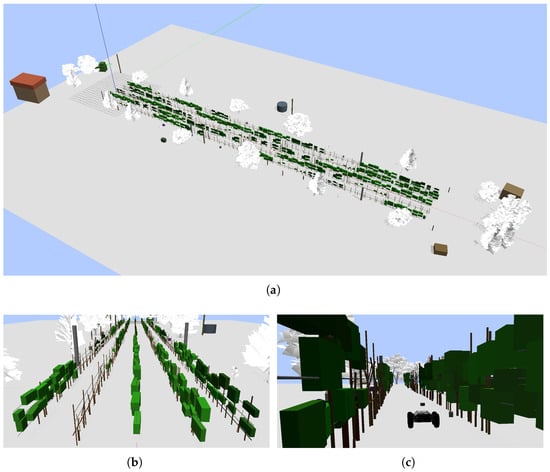
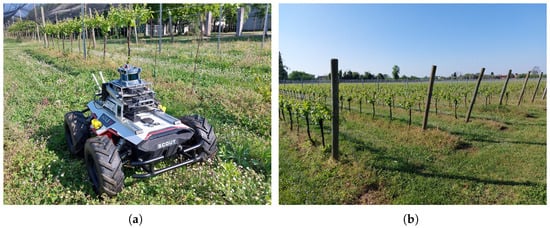
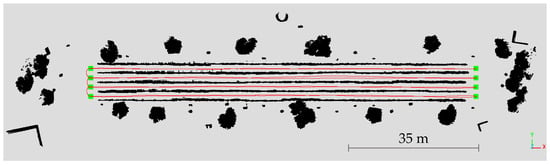
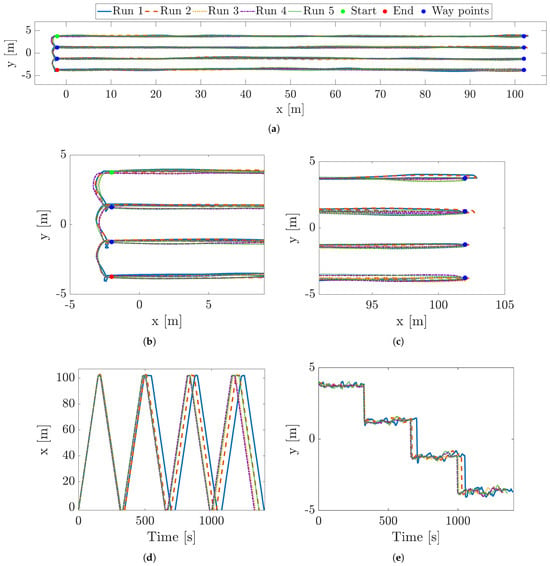
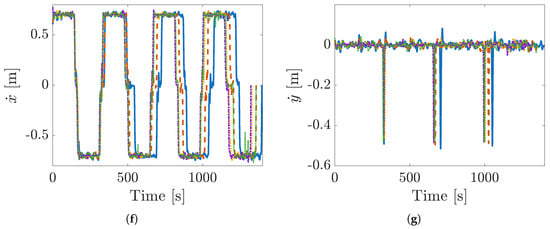
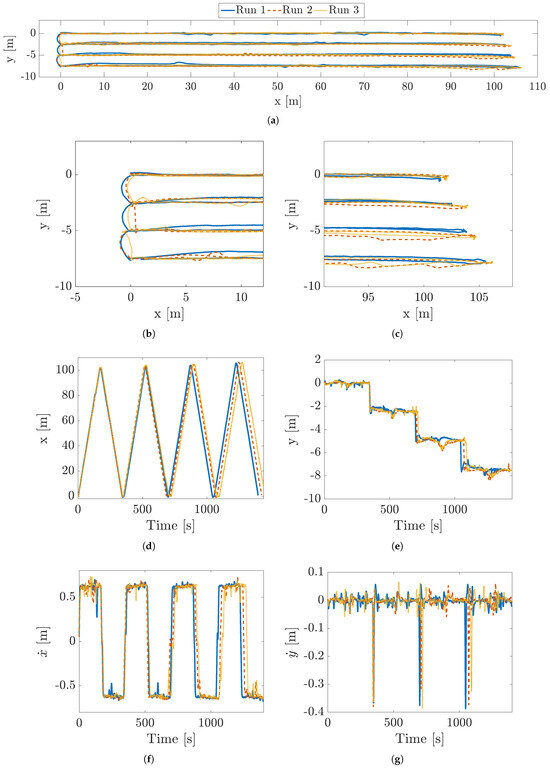
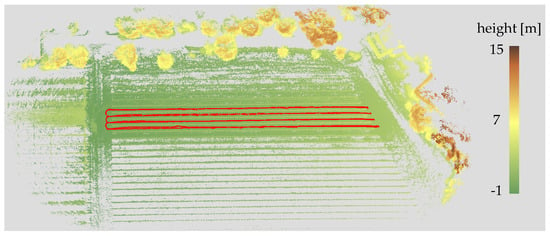
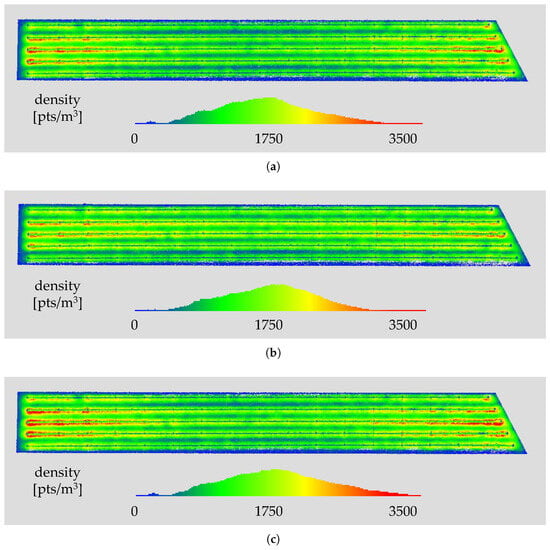
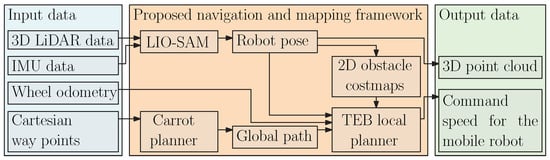
Autonomous navigation in agricultural environments remains a key challenge for the deployment of mobile robots in precision viticulture. In this paper, we present the numerical and experimental validation of a LiDAR–inertial navigation and mapping framework for mobile robots operating in vineyard-like scenarios. A realistic vineyard simulation environment reproducing the geometric structure of vine rows is first developed to evaluate the performance of the proposed framework, considering multiple metrics including mapping time, speed stability, path tracking error, and point cloud reconstruction density. Then, the proposed approach is tested in a real vineyard using a Scout 2.0 mobile robot. Numerical and experimental results demonstrate the feasibility of the navigation and mapping strategy and its robustness during extensive repeated tests in the field.
Full article
(This article belongs to the Special Issue IFToMM for Sustainable Development Goals: Contributions from I4SDG 2025 Conference)
►
Show Figures
Open AccessArticle
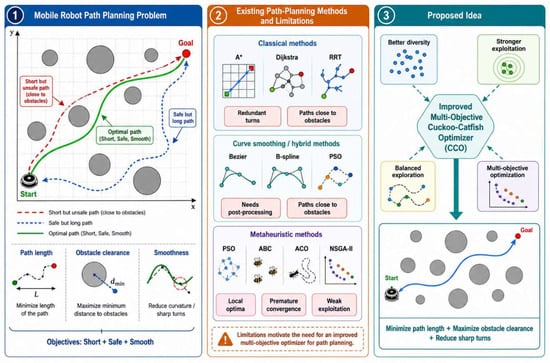
Improved Multi-Objective Cuckoo-Catfish Optimizer for Smooth and Collision-Free Mobile Robot Path Planning
by
Jaafar Ahmed Abdulsaheb and Mohanad Azeez Joodi
Robotics 2026, 15(6), 115; https://doi.org/10.3390/robotics15060115 (registering DOI) - 15 Jun 2026
Abstract
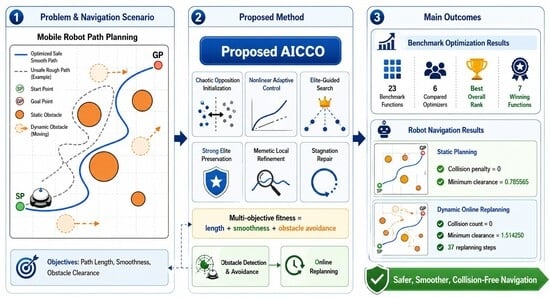
In this paper, an Adaptive Improved Cuckoo-Catfish Optimizer (AICCO) is proposed for smooth and collision-free mobile robot path planning in static and dynamic environments. The proposed AICCO enhances the original Cuckoo-Catfish Optimizer (CCO) by integrating chaotic opposition-based initialization, nonlinear adaptive control, elite-guided search,
[...] Read more.
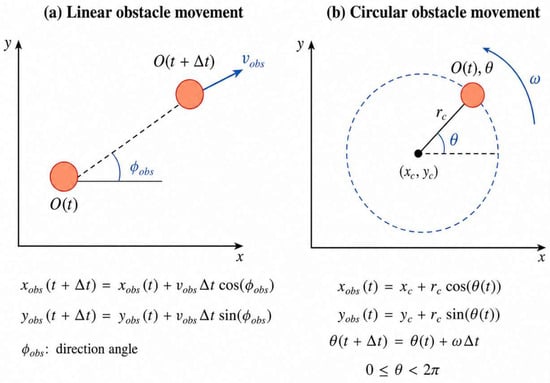
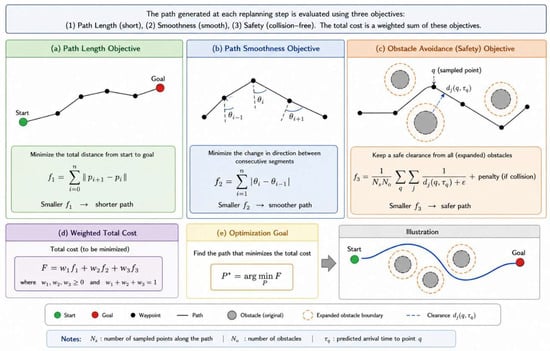
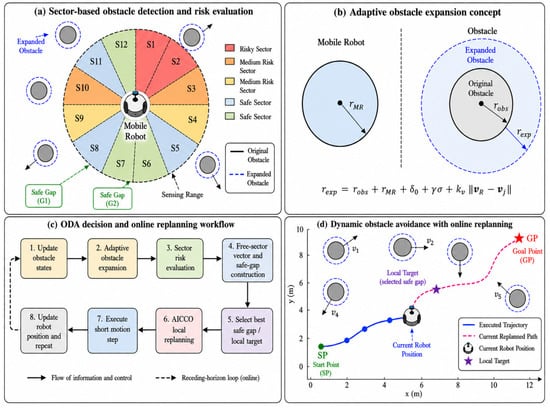
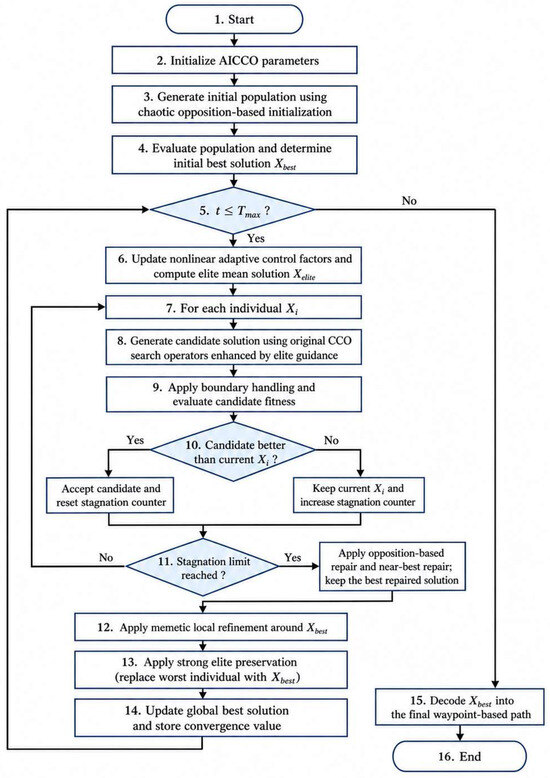
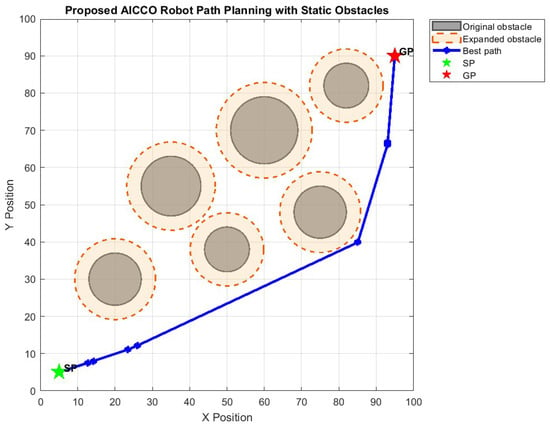
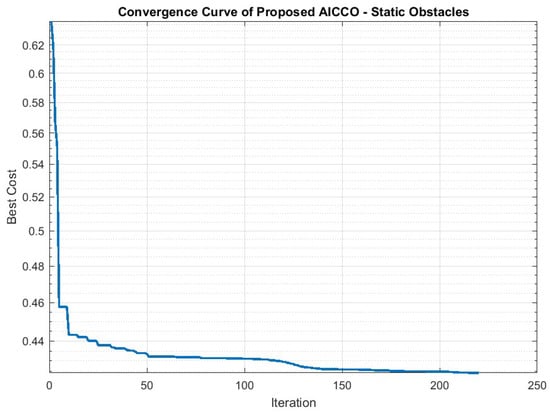
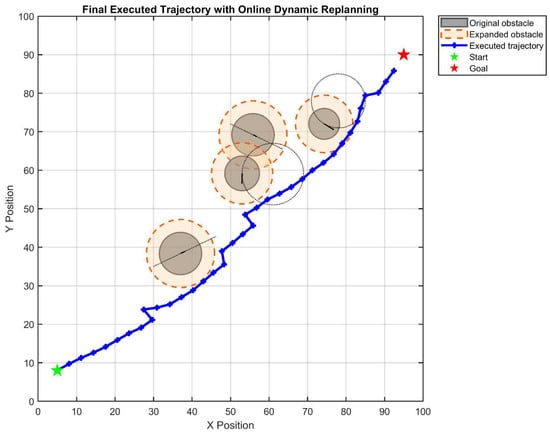
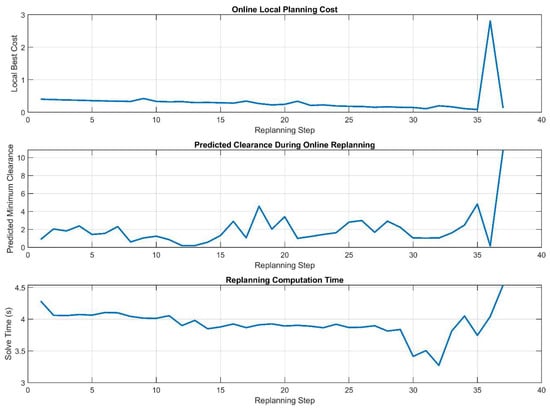
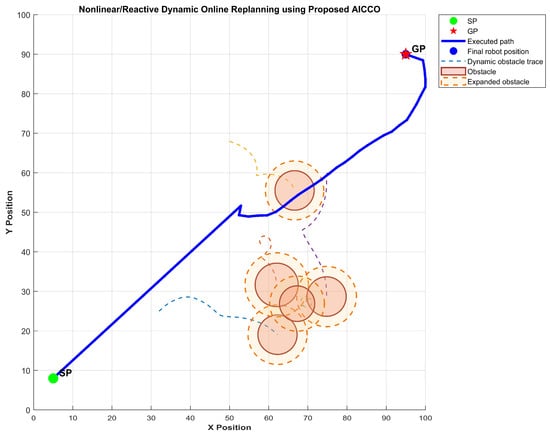
In this paper, an Adaptive Improved Cuckoo-Catfish Optimizer (AICCO) is proposed for smooth and collision-free mobile robot path planning in static and dynamic environments. The proposed AICCO enhances the original Cuckoo-Catfish Optimizer (CCO) by integrating chaotic opposition-based initialization, nonlinear adaptive control, elite-guided search, strong elite preservation, memetic local refinement, and stagnation-based opposition repair. A weighted-sum scalarized fitness function is formulated to minimize path length and turning-angle variation while maximizing obstacle clearance. The proposed method is evaluated using 23 benchmark functions and further validated in static, dynamic, and nonlinear/reactive obstacle navigation scenarios. The benchmark results show that AICCO achieves the best overall rank among the optimizers compared. In the static planning scenario, the method achieves zero collision penalty and a minimum clearance of 0.785565. In the dynamic online replanning scenario, it achieves zero collisions with a minimum clearance of 1.514250. An additional nonlinear/reactive dynamic scenario further demonstrates that the proposed method can maintain collision-free navigation under more complex obstacle motion.
Full article
(This article belongs to the Section Sensors and Control in Robotics)
►▼
Show Figures

Graphical abstract
Open AccessArticle
Physics-Based Hybrid Control of Mobile Robot Drives with Adaptive Neural Network Compensation
by
Alina Fazylova, Kuanysh Alipbayev, Teodor Iliev, Fariza Oraz and Kenzhebek Myrzabekov
Robotics 2026, 15(6), 114; https://doi.org/10.3390/robotics15060114 (registering DOI) - 15 Jun 2026
Abstract
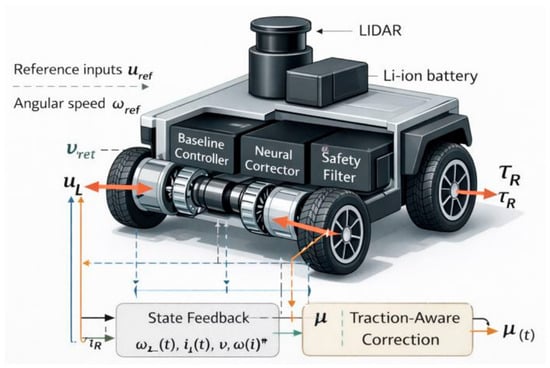
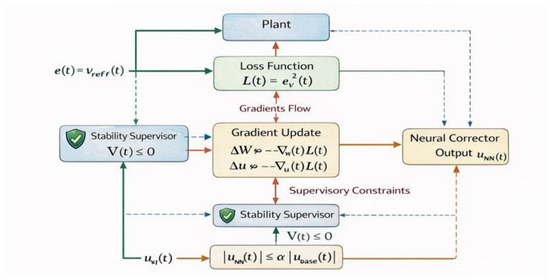
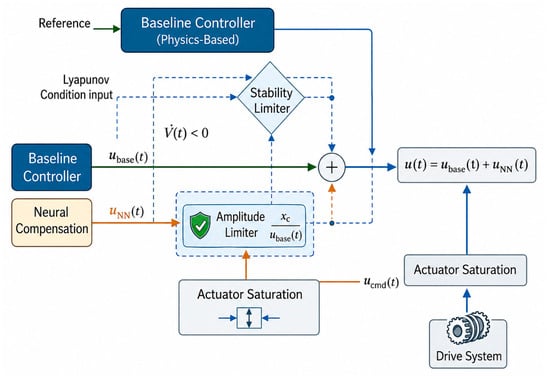
This paper proposes a physically based hybrid architecture for controlling mobile robot drives. It combines a model-based controller, an adaptive neural network compensator for residual dynamics, and a Lyapunov-based stability supervision mechanism. Unlike existing hybrid control approaches, the proposed architecture implements a structured
[...] Read more.
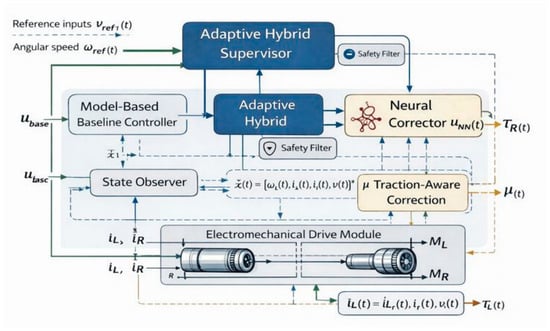
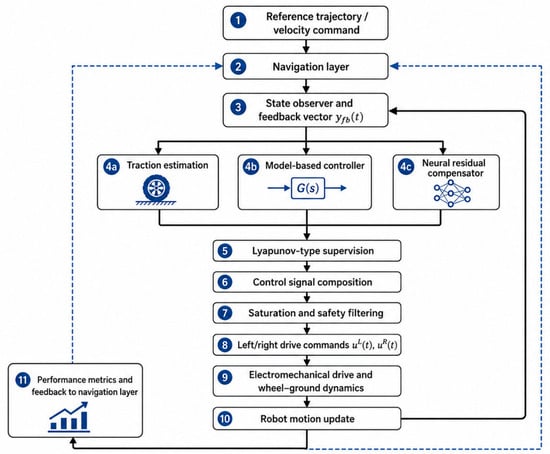
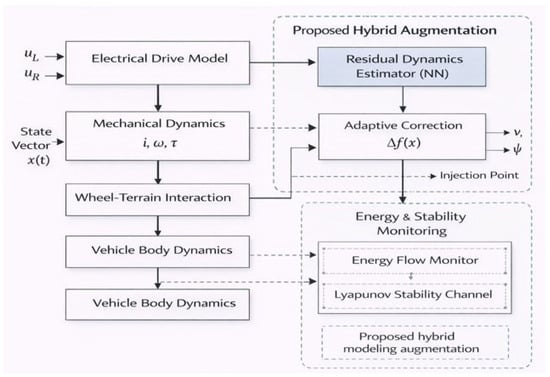
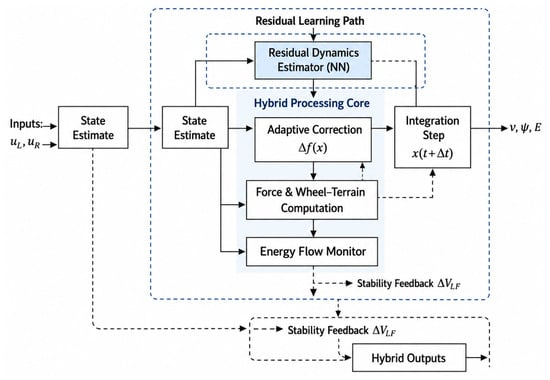
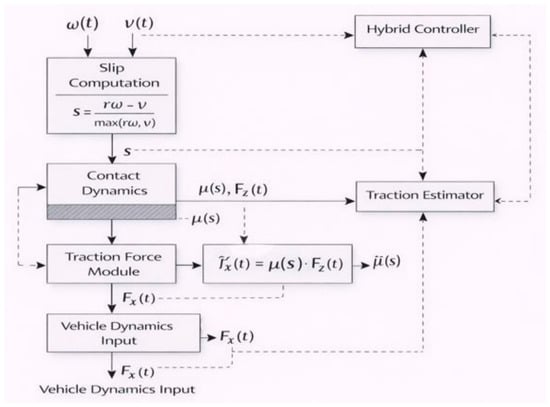
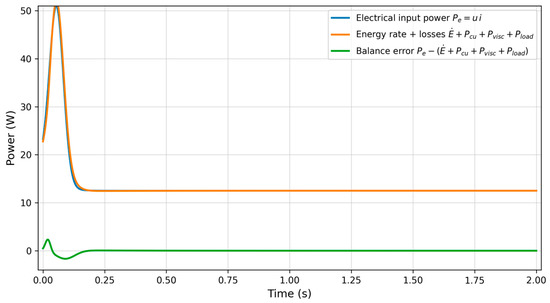
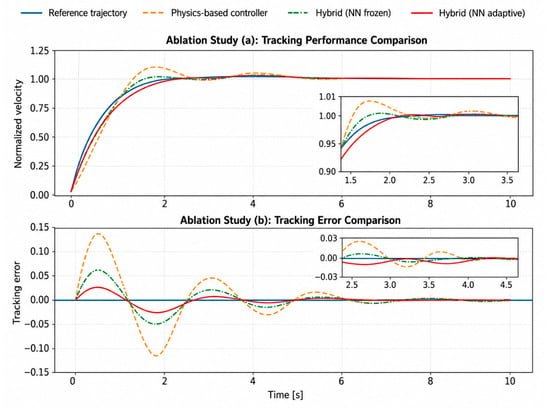
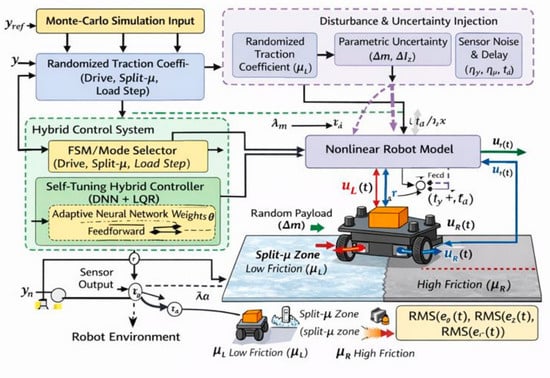
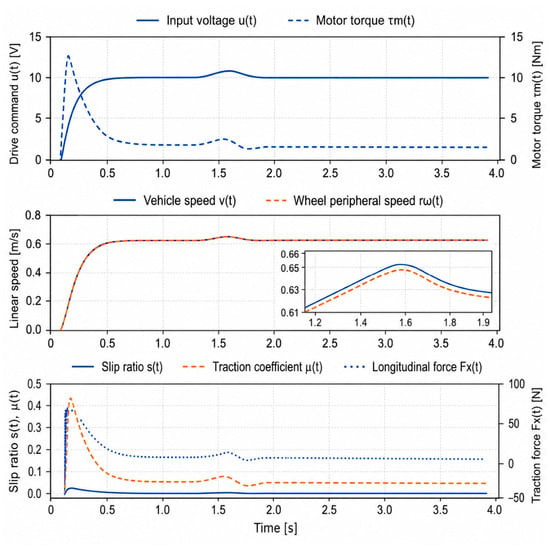
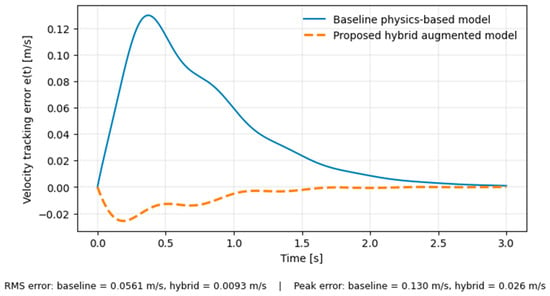
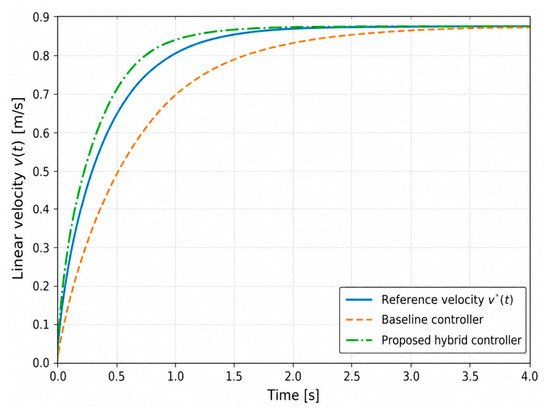
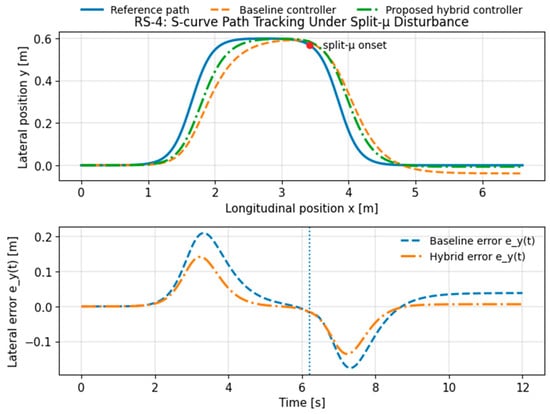
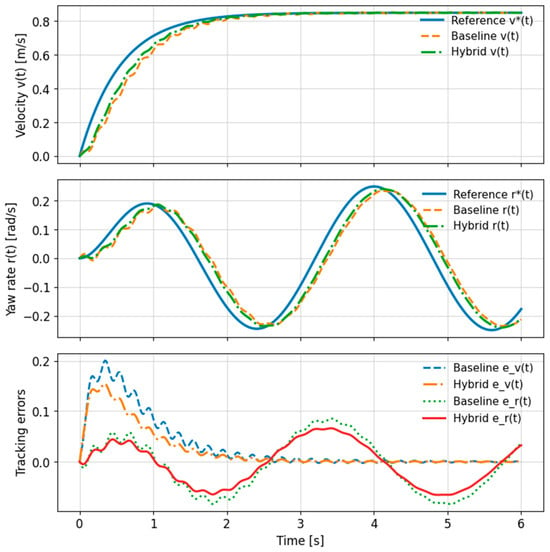
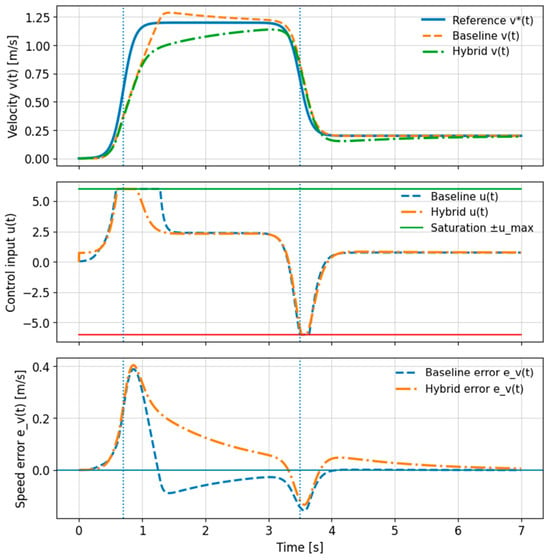
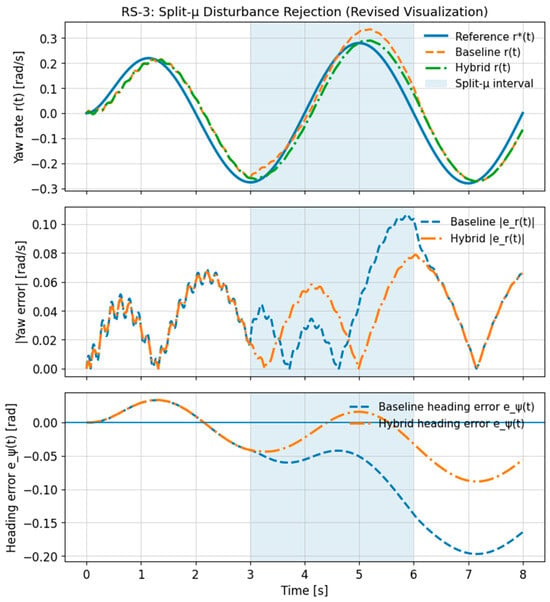
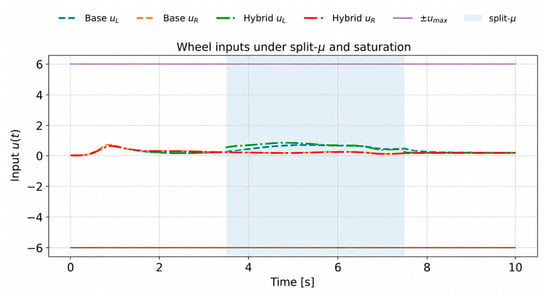
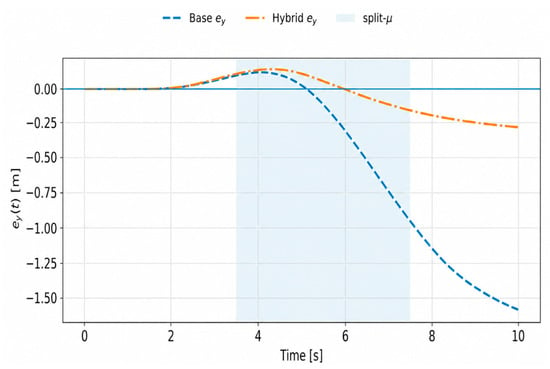
This paper proposes a physically based hybrid architecture for controlling mobile robot drives. It combines a model-based controller, an adaptive neural network compensator for residual dynamics, and a Lyapunov-based stability supervision mechanism. Unlike existing hybrid control approaches, the proposed architecture implements a structured injection of neural network correction directly into the physical drive model with a controlled Lyapunov-based adaptation constraint. A mathematical model of the electromechanical drive of a differential mobile platform is developed, taking into account electrical and mechanical dynamics, wheel-to-surface contact interaction, and the system’s energy characteristics. Numerical simulation results demonstrate that the hybrid approach improves tracking accuracy, improves transient response, and ensures stable operation of the control system under parametric uncertainty, adhesion changes, and external disturbances. The proposed architecture maintains the physical interpretability of the model while simultaneously enhancing the system’s adaptability. The obtained results confirm the effectiveness of the developed method and its potential for application in control systems for mobile robotic platforms.
Full article
(This article belongs to the Section Sensors and Control in Robotics)
►▼
Show Figures

Figure 1
Open AccessArticle
A Dynamic Motion Planner for Trajectory Tracking in HRC
by
Timo Habersang, Michael Miro, Victor Caldas, Raza Saeed, Tadele Belay Tuli, Martin Manns and Bernd Kuhlenkötter
Robotics 2026, 15(6), 113; https://doi.org/10.3390/robotics15060113 - 7 Jun 2026
Abstract
►▼
Show Figures
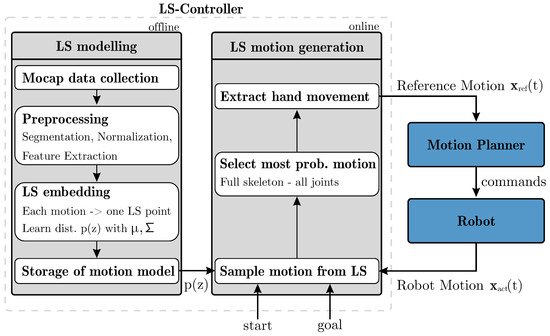
In human-robot collaboration (HRC), robots operate alongside humans within a shared workspace. During collaborative handling tasks, human movements are often highly individual and variable. To ensure smooth collaboration, the robot must adapt its trajectory to align with the motion of the human co-worker.
[...] Read more.
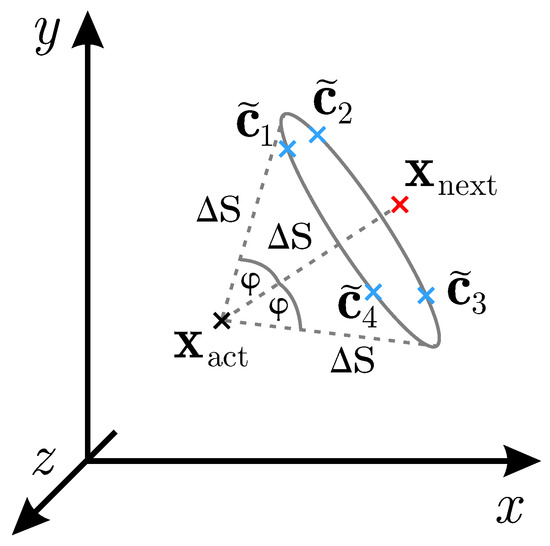
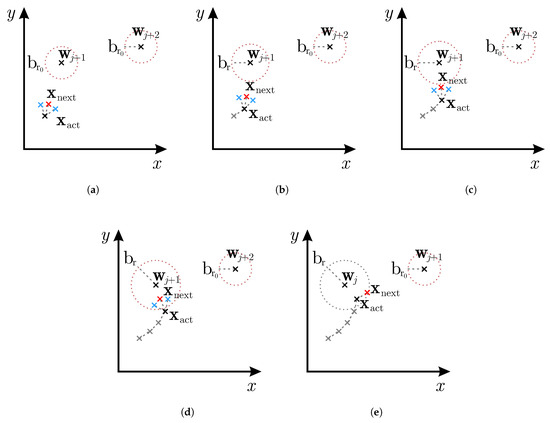
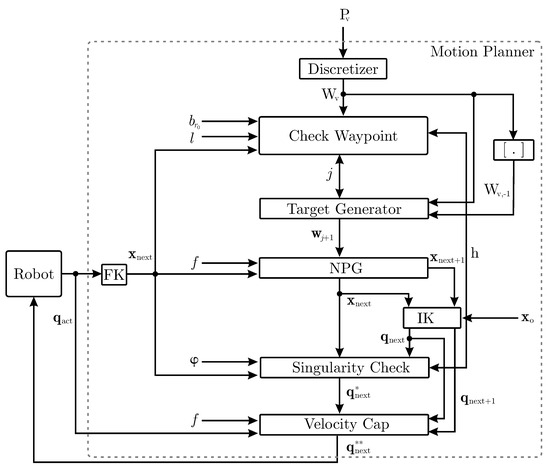
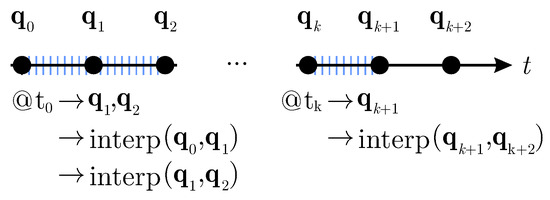
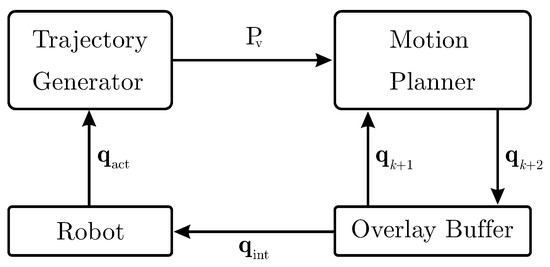
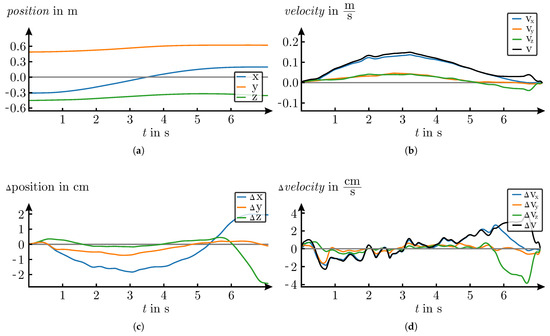
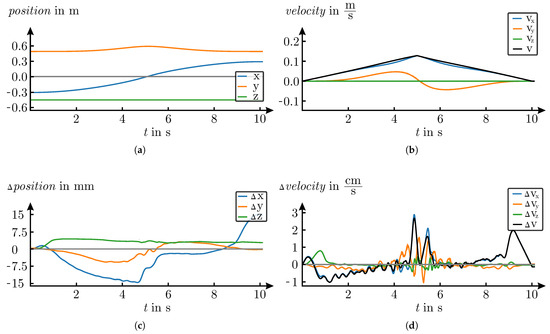
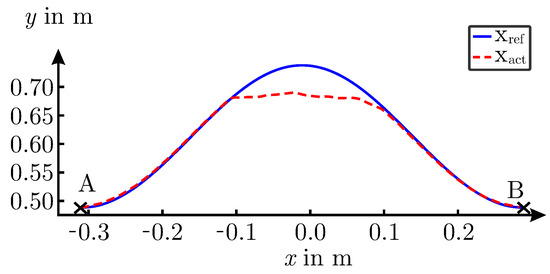
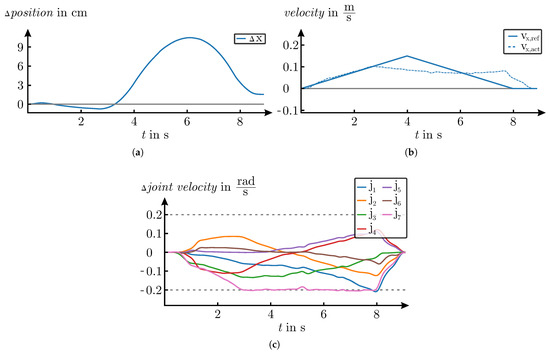
In human-robot collaboration (HRC), robots operate alongside humans within a shared workspace. During collaborative handling tasks, human movements are often highly individual and variable. To ensure smooth collaboration, the robot must adapt its trajectory to align with the motion of the human co-worker. Therefore, this work proposes a dynamic motion planner that enables the robot to track a dynamically changing reference trajectory. The motion planner is evaluated based on its ability to track the trajectory while respecting joint velocity and acceleration limits and avoiding kinematic singularities. When these constraints are at risk of being violated, the robot temporarily assumes a dominant role and attempts to approximate the reference trajectory as closely as possible. An evaluation using a KUKA iiwa in a laboratory setup demonstrates that the proposed motion planner can effectively track dynamically changing, physically feasible reference trajectories. Assuming that the reference trajectory can be human motion, the motion planner can harmonize human and robot movements during collaborative handling tasks.
Full article

Figure 1
Open AccessArticle
Design and Implementation of a Gesture-Controlled Robotic Platform for Applied Education in Human–Robot Interaction
by
Francesco Crivellari, Valerio Cornagliotto, Michele Polito and Stefano Pastorelli
Robotics 2026, 15(6), 112; https://doi.org/10.3390/robotics15060112 - 31 May 2026
Abstract
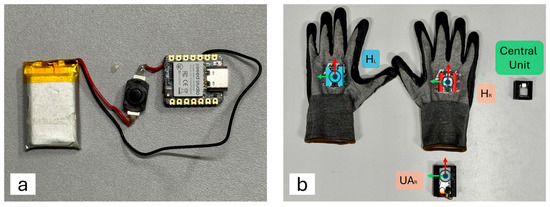
Industry 5.0 places humans at the center of production systems, requiring technologies that integrate operators as active components while adapting dynamically to their physical and cognitive needs. Within this context, facilitating the learning of complex concepts becomes essential, particularly through intuitive and accessible
[...] Read more.
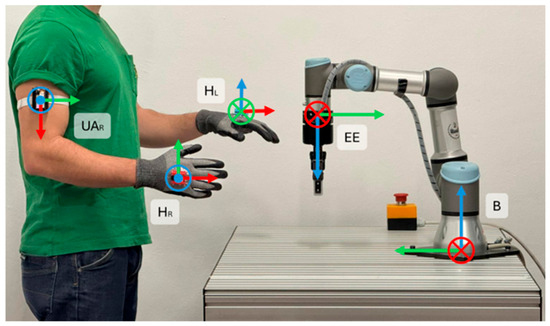
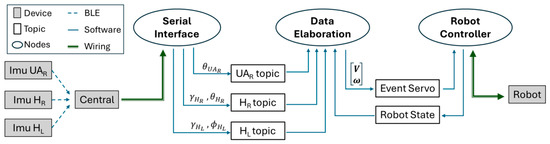
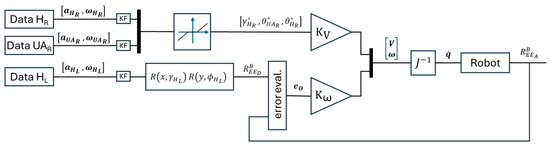
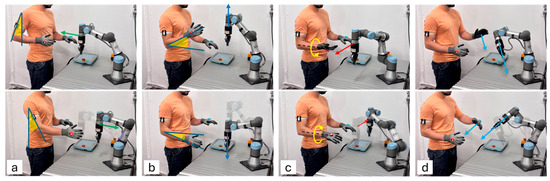
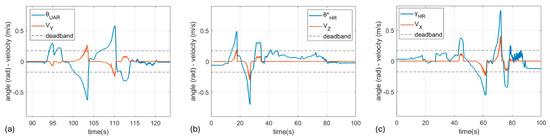
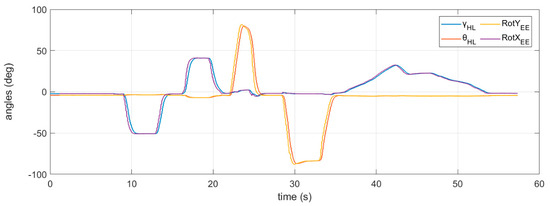
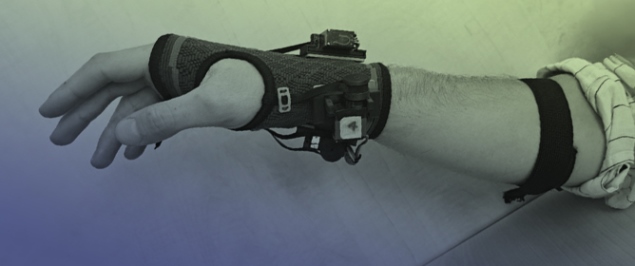
Industry 5.0 places humans at the center of production systems, requiring technologies that integrate operators as active components while adapting dynamically to their physical and cognitive needs. Within this context, facilitating the learning of complex concepts becomes essential, particularly through intuitive and accessible approaches. The objective of this work is to develop a hands-on educational platform for the introduction to human–robot interaction, aligned with Sustainable Development Goal 4 (SDG4). The platform is designed to support the experiential learning of key aspects of collaboration between human and robots while simultaneously familiarizing students with practical elements, including programming, hardware implementation with microcontrollers and sensors, and the use of the Robot Operating System (ROS). The developed system is based on the use of inertial measurement units (IMUs) to capture kinematic signals, enabling real-time interaction with a collaborative robot. The platform supports both translational and orientation control, with a maximum latency of 0.3 s, ensuring responsive and effective human–robot interaction. The hands-on approach will allow students to interact directly with the test bench, putting previously learned theoretical concepts into practice, according to the principle of learn-by-doing.
Full article
(This article belongs to the Special Issue IFToMM for Sustainable Development Goals: Contributions from I4SDG 2025 Conference)
►▼
Show Figures

Figure 1
Open AccessArticle
Novel 7-DoF Kinematic Architecture for Occupational Upper-Limb Exoskeletons with Explicit Scapulothoracic Mobility and Integrated Trunk–Shoulder–Elbow Coupling
by
Yerson Taza Aquino, Iván Núñez Soto, Fabrizzio Cabello Guerrero, Mahdi Tavakoli and Deyby Huamanchahua
Robotics 2026, 15(6), 111; https://doi.org/10.3390/robotics15060111 - 31 May 2026
Abstract
Upper-limb exoskeletons require precise geometric alignment between the device’s mechanical axes and the user’s anatomical joints to preserve physiological mobility and prevent functional constraints; however, many occupational exoskeleton designs oversimplify scapulothoracic mobility, potentially reducing the functional workspace and leading to kinematic misalignment during
[...] Read more.
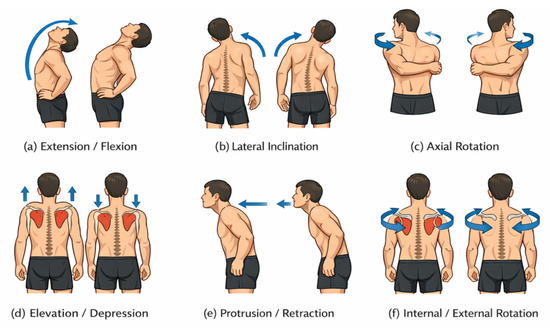
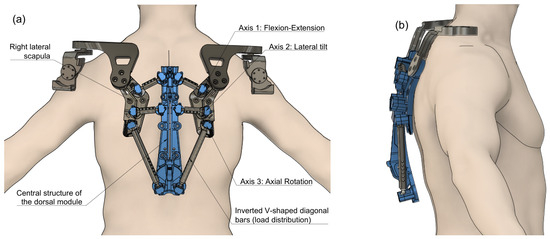
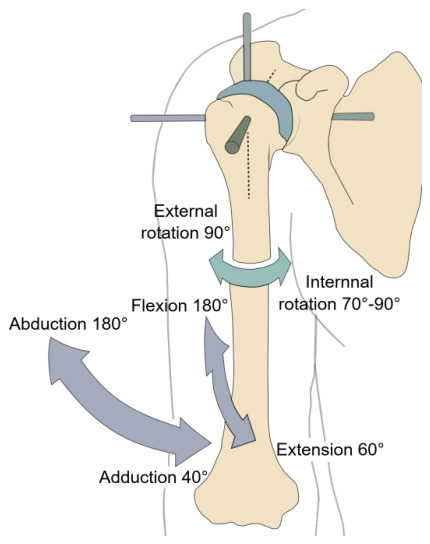
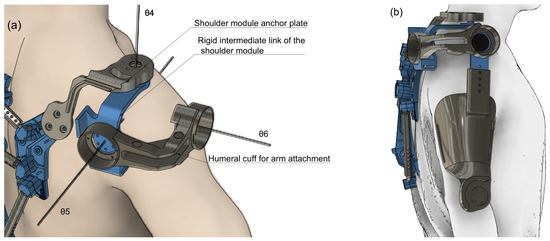
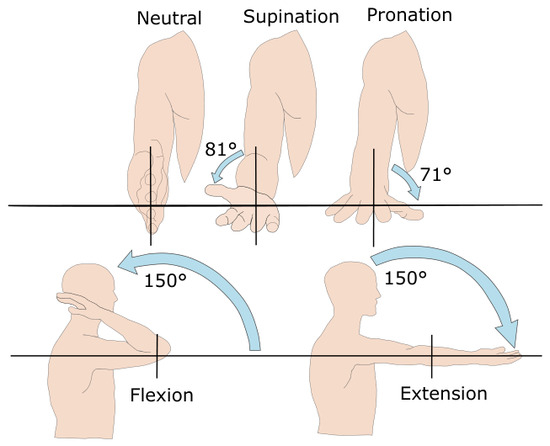
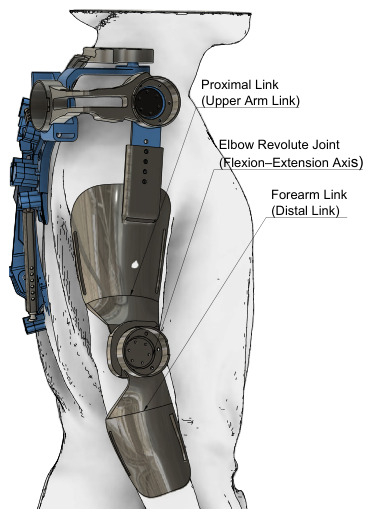
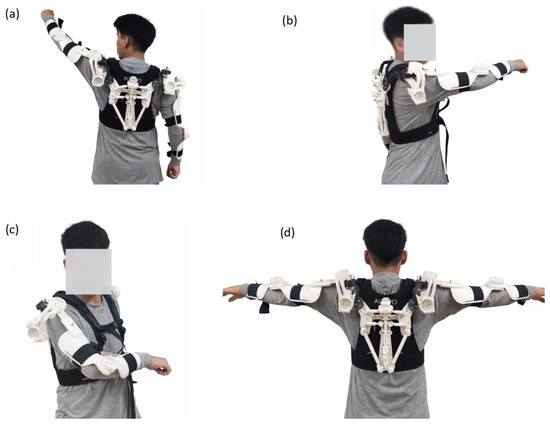
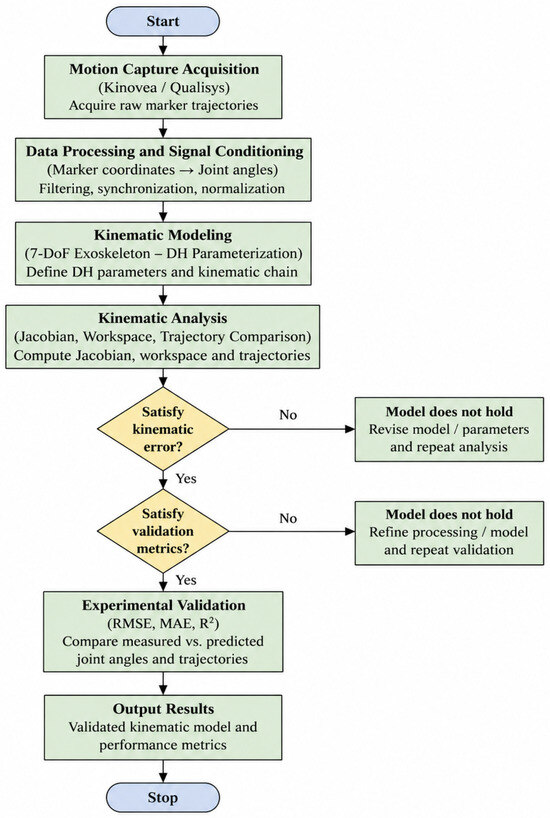
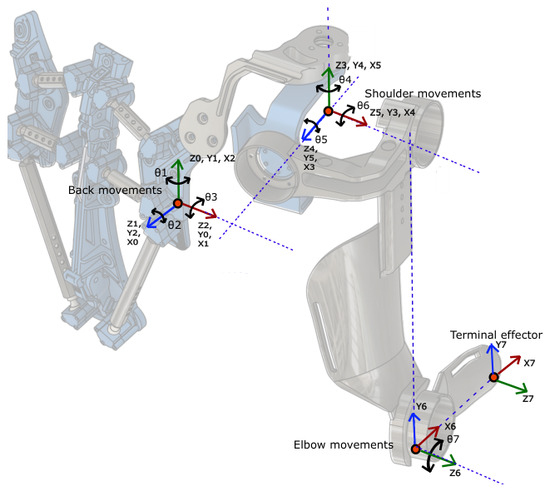
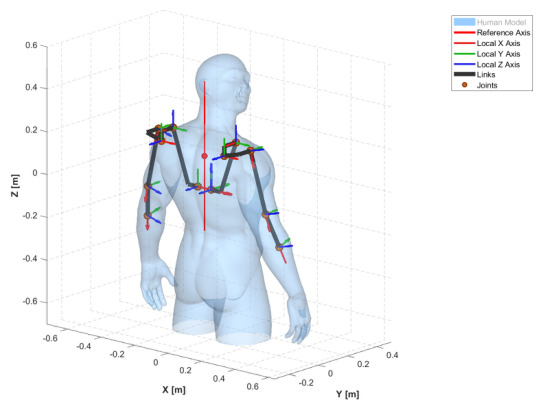
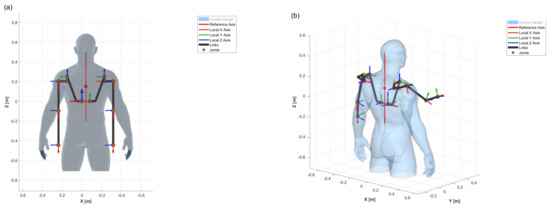
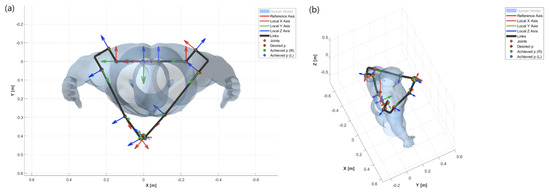
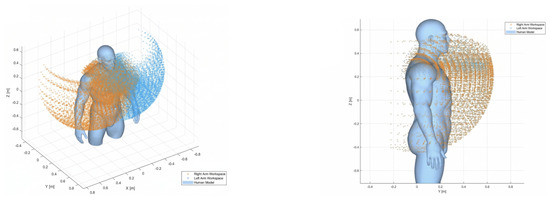
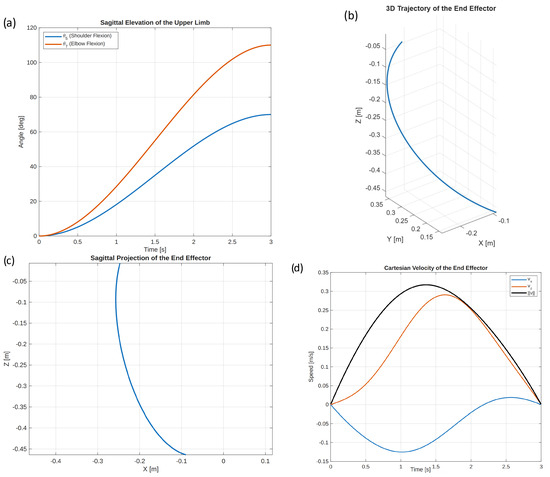
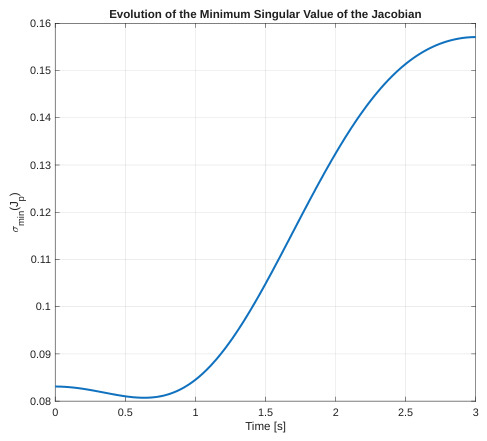
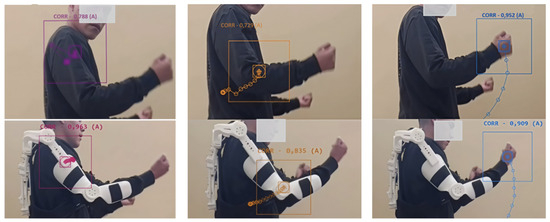
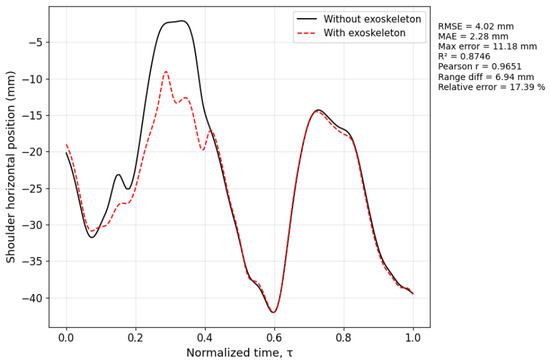
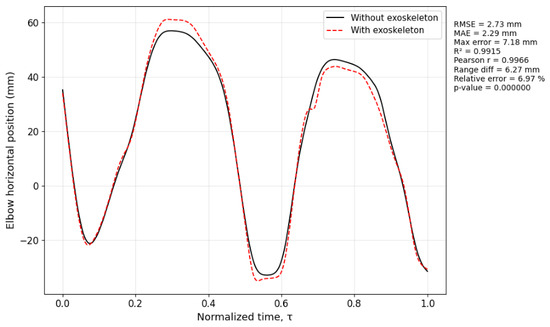
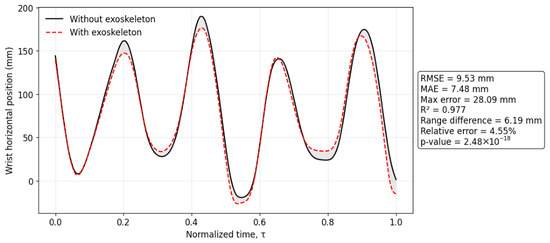
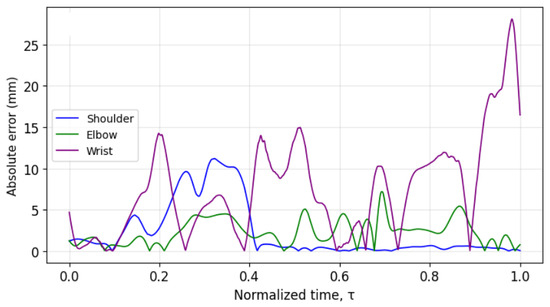
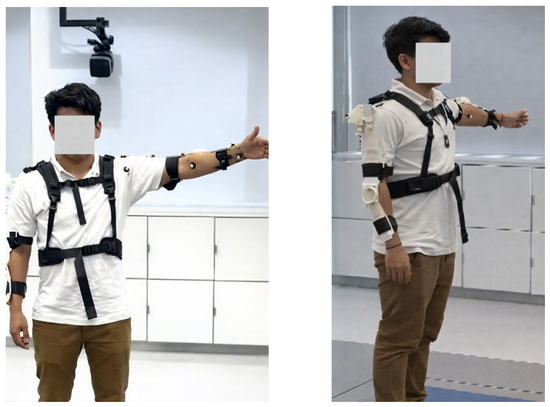
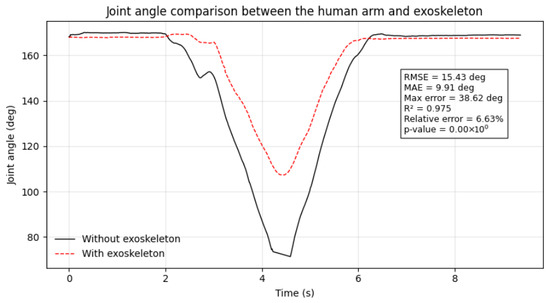
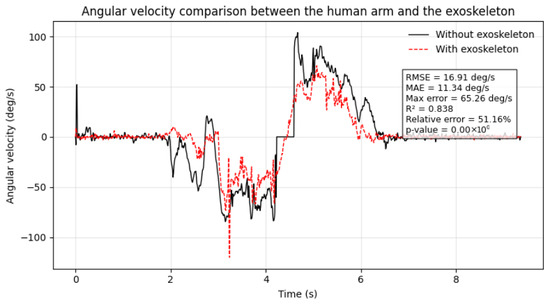
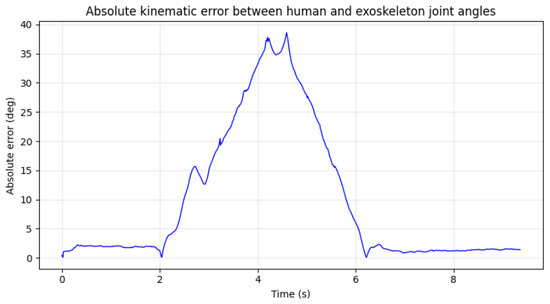
Upper-limb exoskeletons require precise geometric alignment between the device’s mechanical axes and the user’s anatomical joints to preserve physiological mobility and prevent functional constraints; however, many occupational exoskeleton designs oversimplify scapulothoracic mobility, potentially reducing the functional workspace and leading to kinematic misalignment during arm elevation tasks. In this context, the present study addresses this limitation by developing the design, kinematic modeling, and experimental validation of a 7-DoF passive upper-limb exoskeleton organized into dorsal, shoulder, and elbow modules, where the proposed architecture explicitly incorporates 3-DoFs in the dorsal region to accommodate scapular motion within a unified serial kinematic chain. From a modeling standpoint, the kinematic formulation is established using the Denavit–Hartenberg convention, enabling the analysis of the workspace, the properties of the Jacobian matrix, and the identification of potential singular configurations; simulation results demonstrate a continuous workspace within the evaluated functional range, with no singularities detected in the region of interest. Regarding experimental validation, two complementary approaches are implemented: a 2D video-based analysis using Kinovea compares joint trajectories with and without the exoskeleton, revealing strong kinematic agreement ( 6.11 mm, 0.8746), while a 3D motion-capture validation using the Qualisys system evaluates the kinematic coupling between the human arm and the exoskeleton during assisted movement, yielding high correspondence between both trajectories ( = 0.975). Overall, the results confirm the geometric consistency of the proposed architecture and provide a solid methodological foundation for the future development of passive or hybrid upper-limb exoskeletons with integrated dorsal mobility.
Full article
(This article belongs to the Section Medical Robotics and Service Robotics)
►▼
Show Figures

Figure 1

Open AccessArticle
A Hybrid Master–Slave Fuzzy Cascade Control Strategy for Two-Wheeled Self-Balancing Robot with Wheel Synchronization
by
Irving Mora-González, Edson E. Cruz-Miguel, Trinidad Martínez-Sánchez, Zayra E. Santos-Flores, Ricardo Rojas-Galván, Omar A. Barra-Vázquez, Ce T. Méndez-Ramírez, Roberto V. Carrillo-Serrano and José R. García-Martínez
Robotics 2026, 15(6), 110; https://doi.org/10.3390/robotics15060110 - 31 May 2026
Abstract
Two-wheeled self-balancing robots exhibit nonlinear and inherently unstable dynamics due to their inverted-pendulum structure, making control design challenging under terrain variations and external disturbances. This paper proposes a hybrid master–slave fuzzy cascade controller with an additional wheel-synchronization loop to improve tracking performance and
[...] Read more.
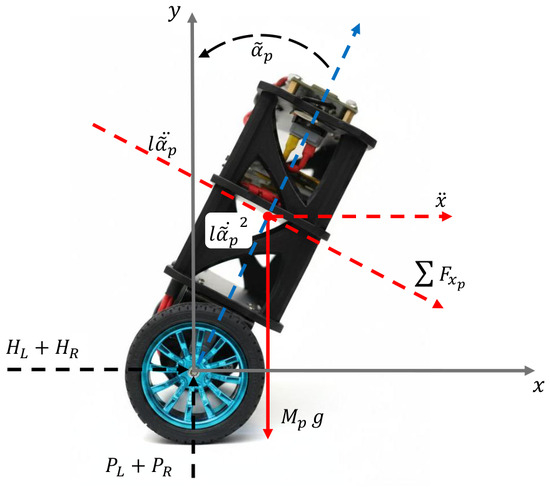
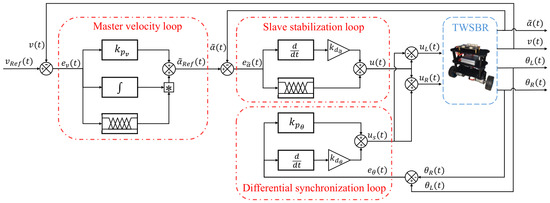
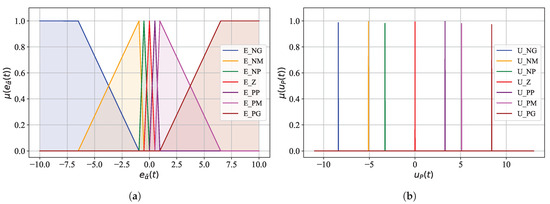
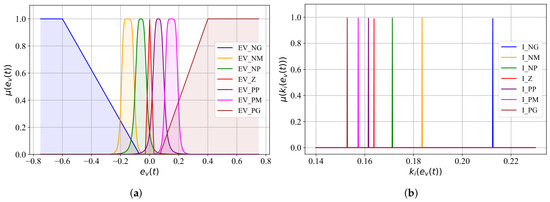
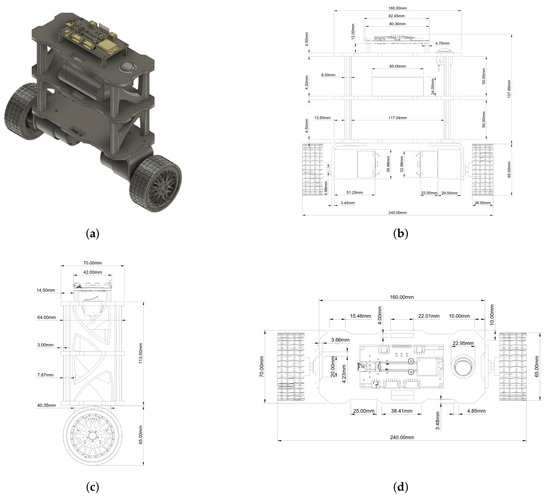
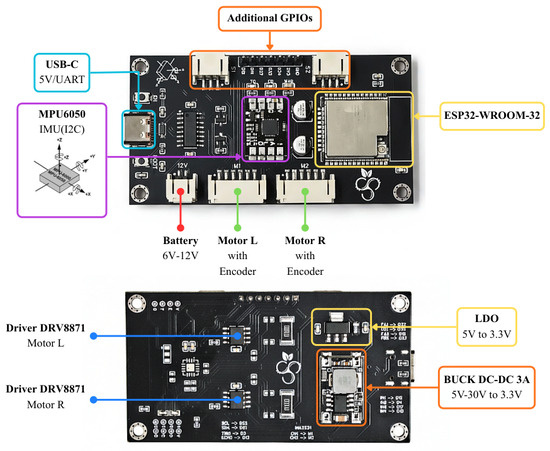
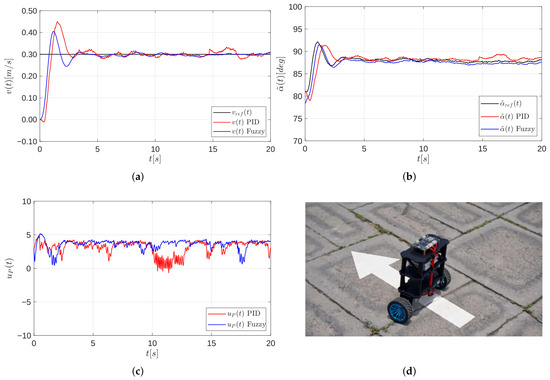
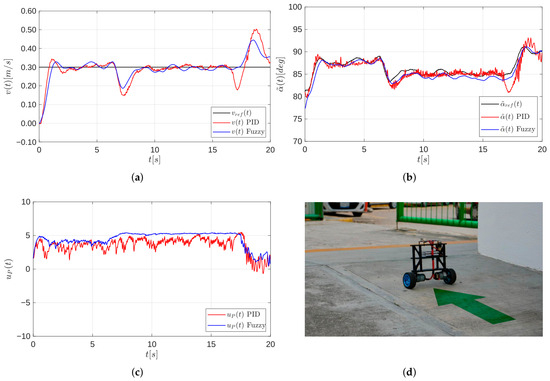
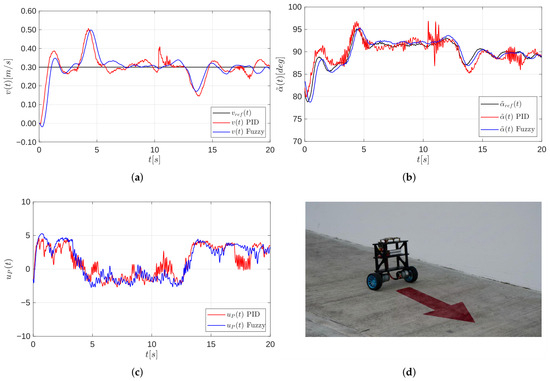
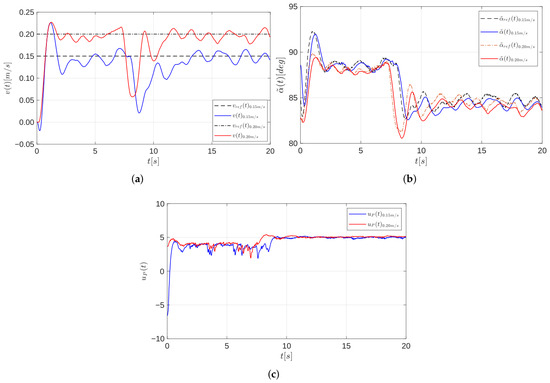
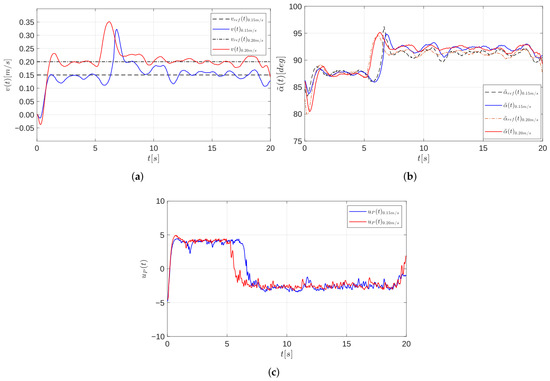
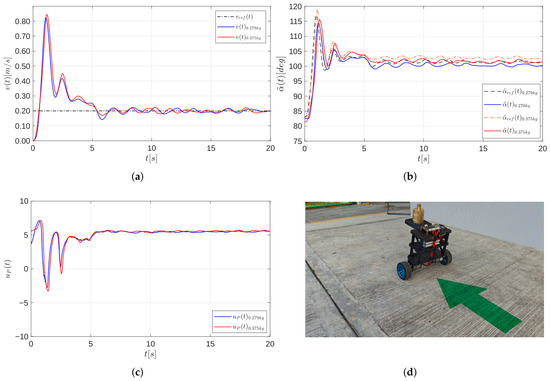
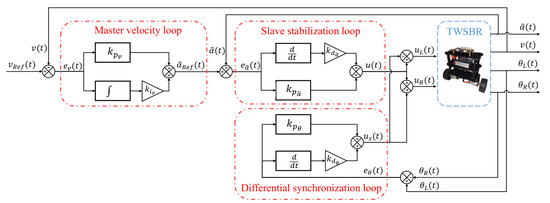
Two-wheeled self-balancing robots exhibit nonlinear and inherently unstable dynamics due to their inverted-pendulum structure, making control design challenging under terrain variations and external disturbances. This paper proposes a hybrid master–slave fuzzy cascade controller with an additional wheel-synchronization loop to improve tracking performance and robustness. The architecture combines a master velocity PI loop with fuzzy-tuned integral action and a slave balance PD loop with fuzzy proportional control, while a differential synchronization mechanism compensates for motor mismatches without affecting the global balance dynamics. Local stability is analyzed through linearization and equivalent gain approximation within a sector-bounded framework. Experimental validation was conducted on an ESP32-based TWSBR under flat, uphill, and downhill conditions at reference velocities of , , and , including payload tests with additional masses of and . For each scenario, 30 independent trials were performed to compute the reported metrics. Compared with a conventional PID controller, the proposed strategy reduced the flat-terrain velocity RMSE from to , while also improving angular stabilization and robustness under slope and payload disturbances.
Full article
(This article belongs to the Section Intelligent Robots and Mechatronics)
►▼
Show Figures

Figure 1
Open AccessArticle
Autonomous Navigation in Lunar Lava Tubes: Sensing SLAM Trade-Offs and a Mission-Oriented GNC Architecture
by
Giulia Calvo, Alessandro Cimini, Matteo Melchiorre, Laura Salamina, Cuono Massimo Crispo, Francesco Saverio Fulginiti, Isacco Pretto, Tharek Mohtar and Stefano Mauro
Robotics 2026, 15(6), 109; https://doi.org/10.3390/robotics15060109 - 29 May 2026
Abstract
Lunar lava tubes are subsurface cavities generated by volcanic activity and are regarded as promising targets for exploration because they can offer natural shielding and potentially support future lunar infrastructures as protected shelters and scientific laboratories. Autonomous navigation in these environments remains challenging
[...] Read more.
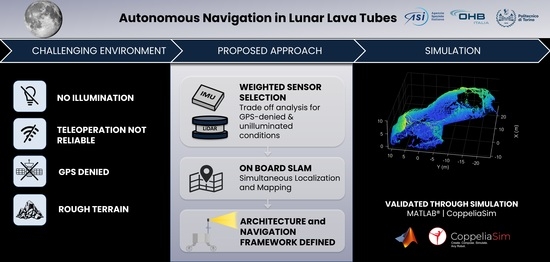
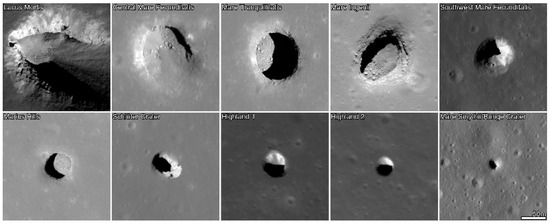
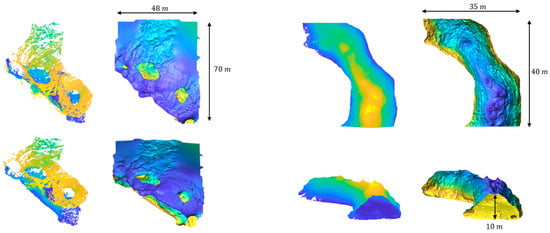
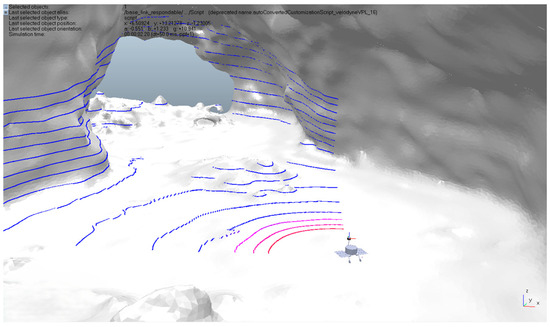
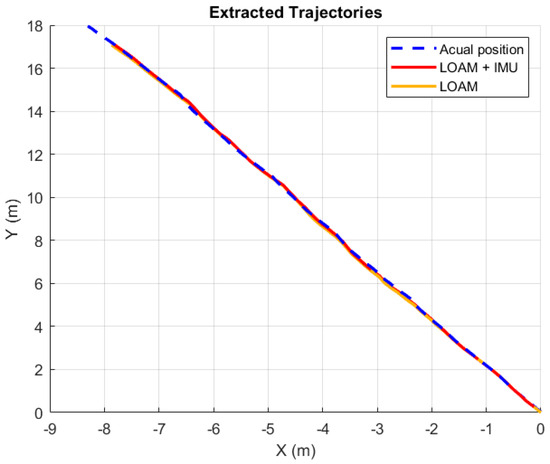
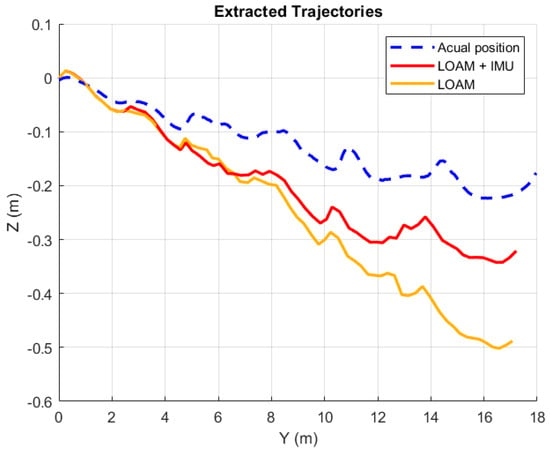
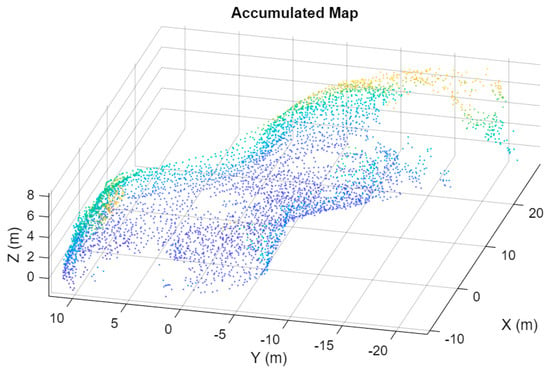
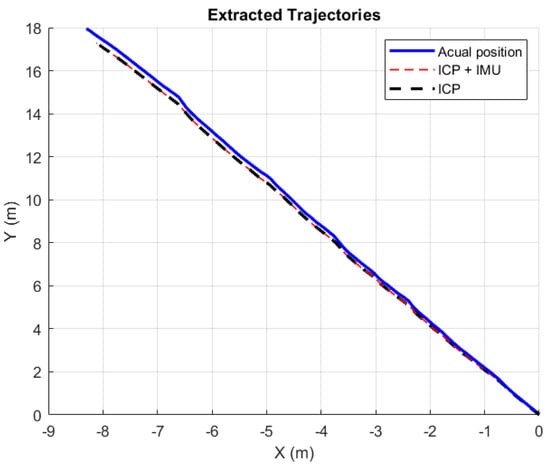
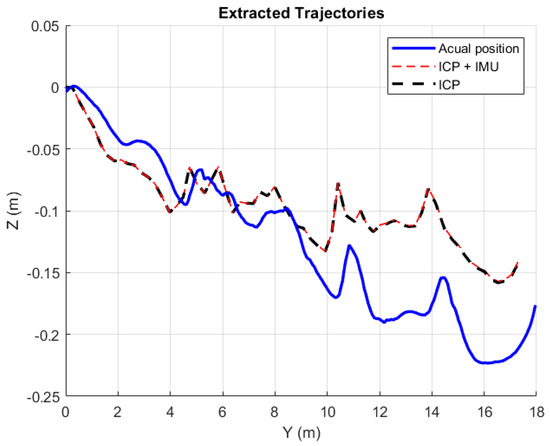
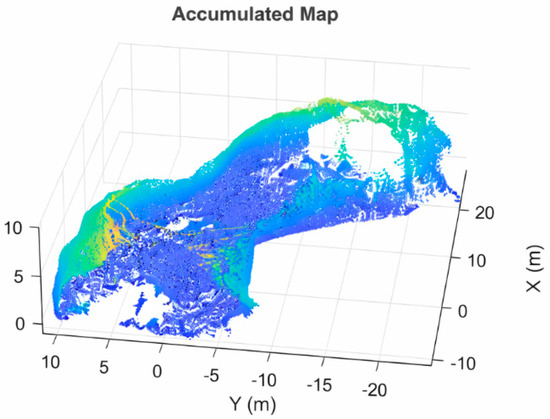
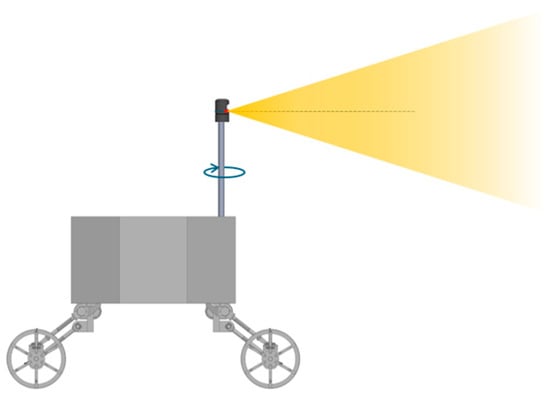
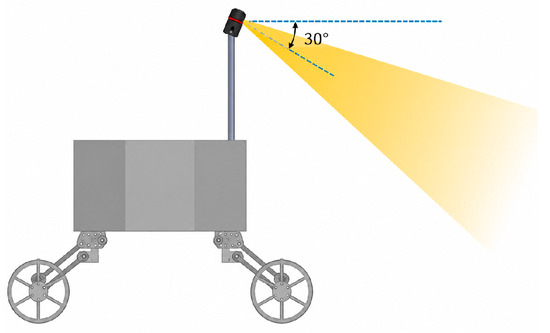
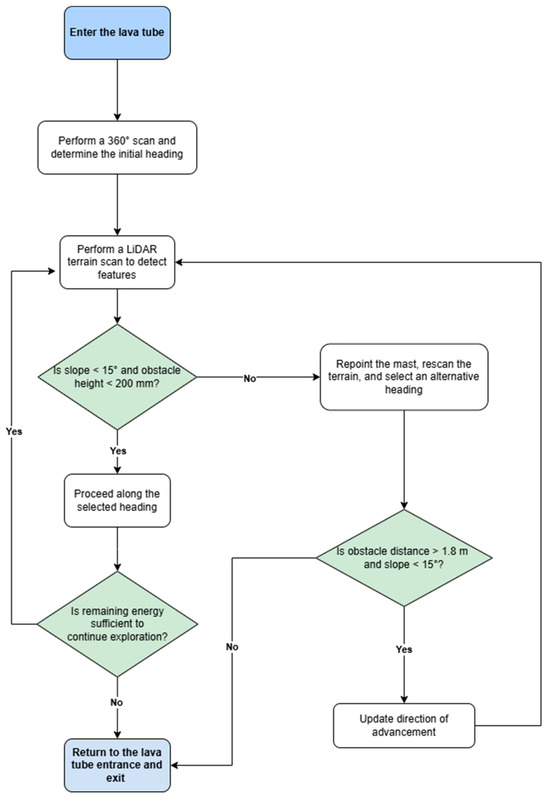
Lunar lava tubes are subsurface cavities generated by volcanic activity and are regarded as promising targets for exploration because they can offer natural shielding and potentially support future lunar infrastructures as protected shelters and scientific laboratories. Autonomous navigation in these environments remains challenging due to the absence of illumination, sparse or repetitive geometric features, uneven terrain, and intermittent communications that limit teleoperation. In this framework, the Italian Space Agency (ASI) is pursuing a dedicated mission, and OHB Italia has been appointed the prime contractor to perform a candidate system-architecture study for lava tube exploration. This paper presents the activities and results related to the definition of the subsurface Guidance, Navigation, and Control (GNC) algorithm for a rover/hopper system. To address the above constraints, this study investigates the requirements for autonomous onboard navigation, focusing on sensor selection for Simultaneous Localization and Mapping (SLAM) as a fundamental prerequisite for mission success. A weighted-criteria evaluation framework is developed to assess various sensing modalities, considering mission-specific constraints. Based on this analysis, a sensor configuration optimized for GPS-denied and unilluminated environments is proposed. The effectiveness of the selected sensing architecture is validated through a simulation campaign conducted in simulation environments (CoppeliaSim v4.10.0/MATLAB 2025a), using two representative SLAM pipelines (ICP and LOAM) in LiDAR-only and LiDAR + IMU configurations. Finally, a modular Guidance, Navigation, and Control (GNC) architecture incorporating frontier-based exploration is proposed.
Full article
(This article belongs to the Special Issue SLAM and Adaptive Navigation for Robotics)
►▼
Show Figures

Graphical abstract
Open AccessArticle
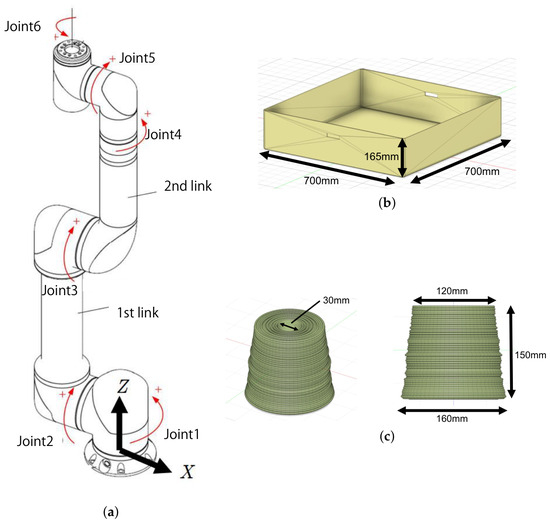
Pose-Constrained Path Optimization for Manipulators with Contact Feedback from Sparse Waypoints
by
Yuta Kasahara, Yuichi Kobayashi, Tomohiro Hayakawa, Francisco Jesús Arjonilla García, Kazuki Yamamoto, Keiji Takeshita, Yuya Wada and Yoichiro Nakamura
Robotics 2026, 15(6), 108; https://doi.org/10.3390/robotics15060108 - 29 May 2026
Abstract
Conventional robot motion teaching methods are time-consuming and place a significant burden on operators, especially when trajectory modification is required after contact with the environment. This paper proposes a six-dimensional automatic path correction method that considers both the position and orientation of the
[...] Read more.
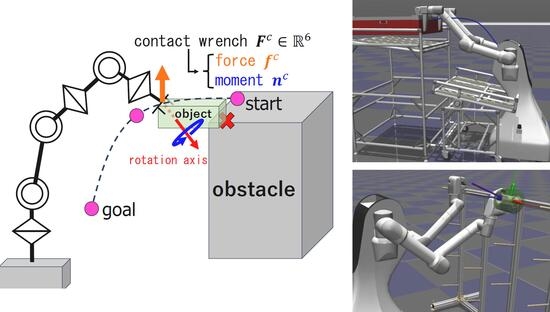
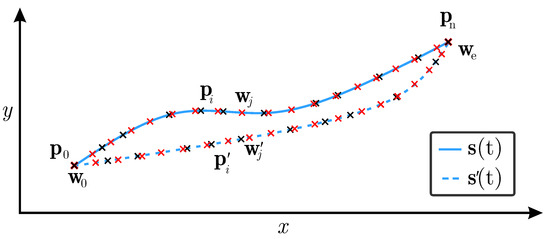
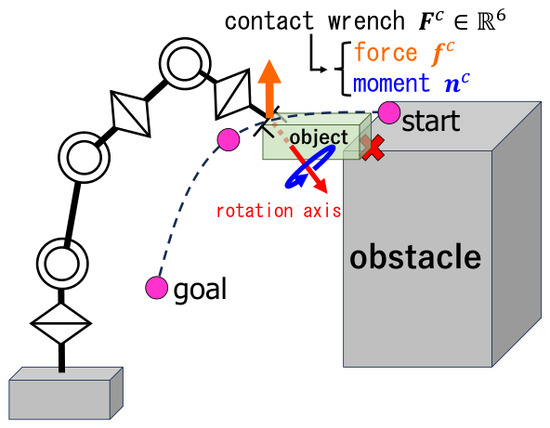
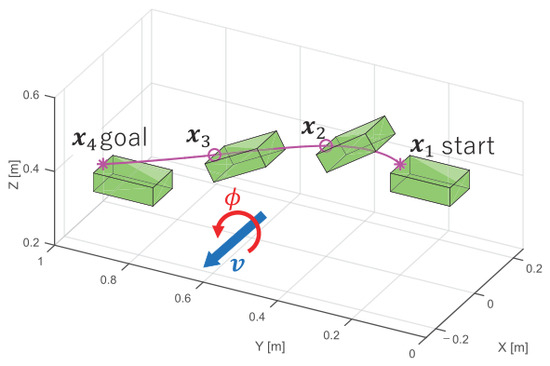
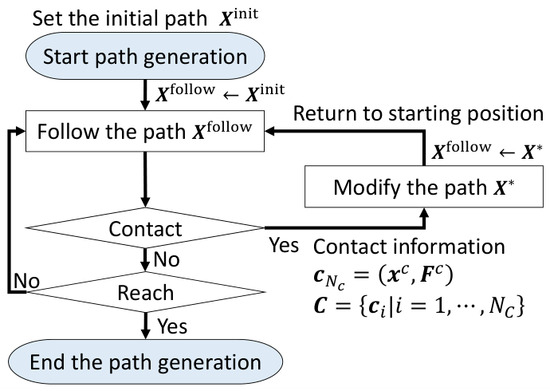
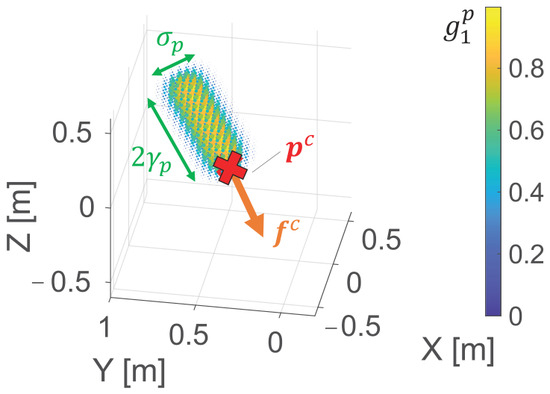
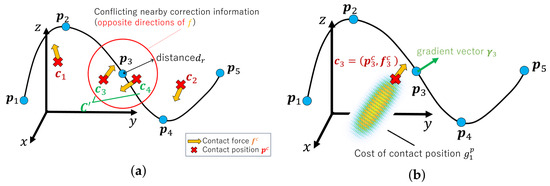
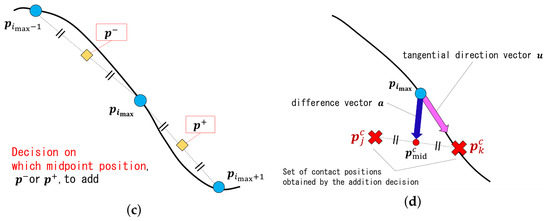
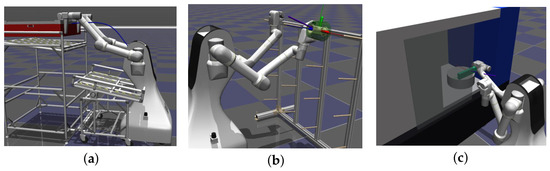
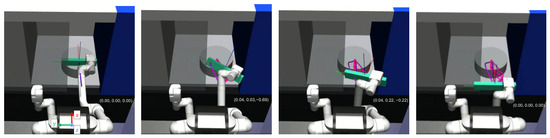
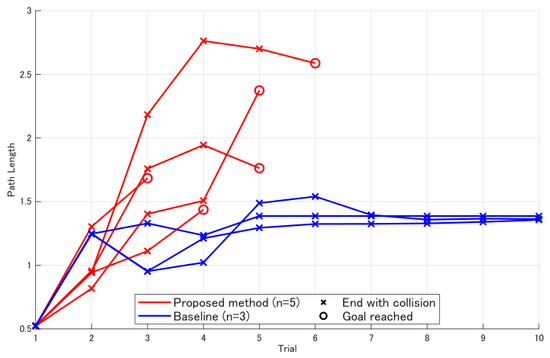
Conventional robot motion teaching methods are time-consuming and place a significant burden on operators, especially when trajectory modification is required after contact with the environment. This paper proposes a six-dimensional automatic path correction method that considers both the position and orientation of the end-effector. The operator specifies only the start, goal, and via points of the motion path. Contact wrench information obtained during execution is incorporated into a cost function, and the control points of a spline-based trajectory are iteratively optimized. The method does not rely on an explicit environment model and autonomously updates the trajectory based on contact information. Simulation experiments were conducted on three industrial tasks: part box unloading, yarn cone removal, and part extraction. In all tasks, the proposed method successfully generated collision-free trajectories within a small number of correction iterations and with practical computation time. These results indicate that the proposed approach enables stable and efficient trajectory correction while reducing the teaching burden in industrial support tasks.
Full article
(This article belongs to the Section Sensors and Control in Robotics)
►▼
Show Figures

Graphical abstract
Open AccessArticle
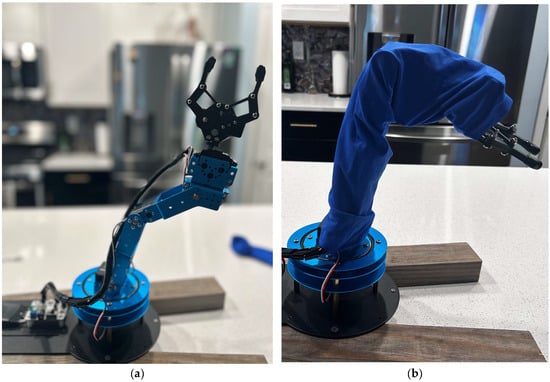
Effects of Anthropomorphic Design and Motion on Human Perception of Industrial Robotic Arms
by
Sushma Nln, Abas Sabouni and Yong Zhu
Robotics 2026, 15(6), 107; https://doi.org/10.3390/robotics15060107 - 28 May 2026
Abstract
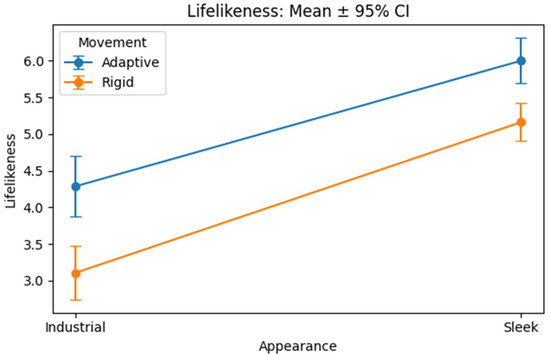
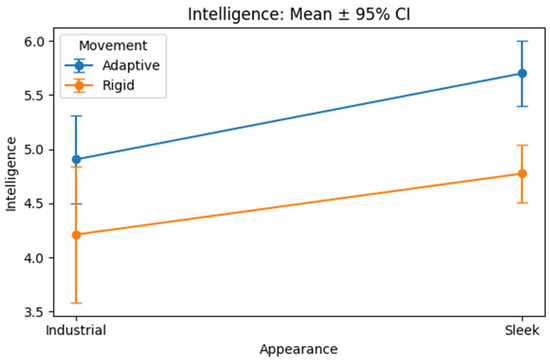
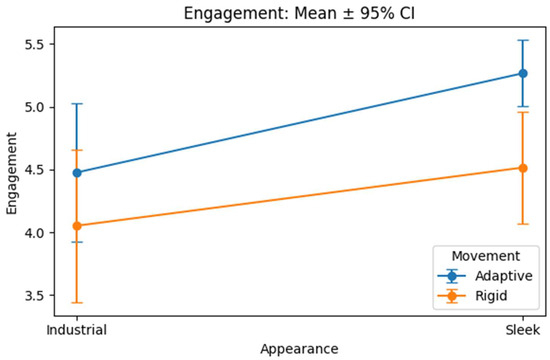
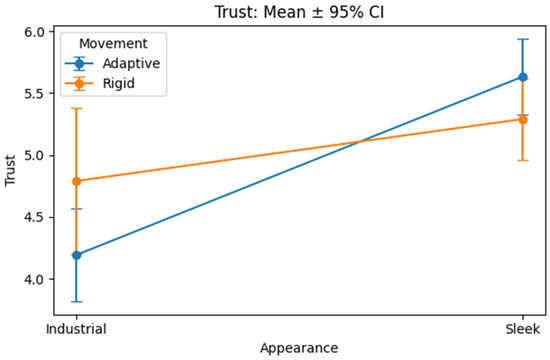
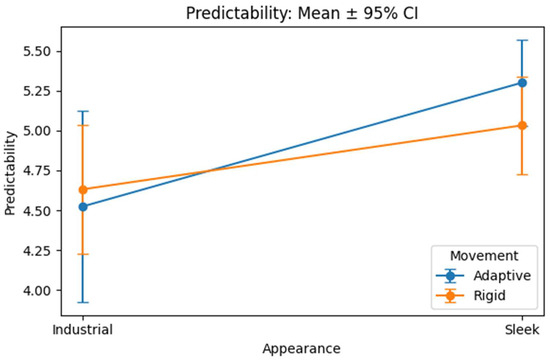
Industrial robots are increasingly deployed in human-centered settings, where appearance and motion critically shape worker trust and acceptance. This study employed a 2 × 2 factorial design manipulating robot appearance (Sleek vs. Industrial) and motion (Adaptive vs. Rigid) to examine effects on perceived
[...] Read more.
Industrial robots are increasingly deployed in human-centered settings, where appearance and motion critically shape worker trust and acceptance. This study employed a 2 × 2 factorial design manipulating robot appearance (Sleek vs. Industrial) and motion (Adaptive vs. Rigid) to examine effects on perceived lifelikeness, intelligence, engagement, trust, and predictability. Participants rated each measure using Likert scales, and data were analyzed using descriptive statistics, two-way ANOVA, and Pearson correlations. Results revealed significant main effects of appearance and movement across multiple perceptual dimensions, with a significant interaction effect observed for trust. Findings suggest that anthropomorphic cues, both visual and behavioral, may enhance perceptions of intelligence, relatability, and trust. This work contributes to the limited literature on anthropomorphism in industrial contexts and provides empirical evidence to guide the design of human-centered collaborative robotic systems.
Full article
(This article belongs to the Special Issue Human-Centered Robotics: The Transition to Industry 5.0)
►▼
Show Figures

Figure 1

Open AccessCorrection
Correction: Shahab et al. Formation Control of Wheeled Mobile Robots with Fault-Tolerance Capabilities. Robotics 2025, 14, 59
by
Muhammad Shahab, Ali Nasir and Nezar M. Alyazidi
Robotics 2026, 15(6), 106; https://doi.org/10.3390/robotics15060106 - 28 May 2026
Abstract
Text Correction [...]
Full article
(This article belongs to the Section Intelligent Robots and Mechatronics)
Open AccessArticle
An Intelligent Loading System for Standardized Mining Material Transportation Based on Multimodal Perception and Multi-Arm Collaboration
by
Yaohui Wang, Sheng Guo, Hongbo Ding, Ao Cao, Chenyang Lou, Zhidong Zhao, Xinyuan Zhu and Guangrong Chen
Robotics 2026, 15(6), 105; https://doi.org/10.3390/robotics15060105 - 27 May 2026
Abstract
Currently, mining material transportation in warehouses relies heavily on manual operations, which pose safety hazards and suffer from low standardization and automation. Existing automated attempts using single-sensor perception or single-arm manipulators lack robustness and adaptability in harsh mine environments. To address these gaps,
[...] Read more.
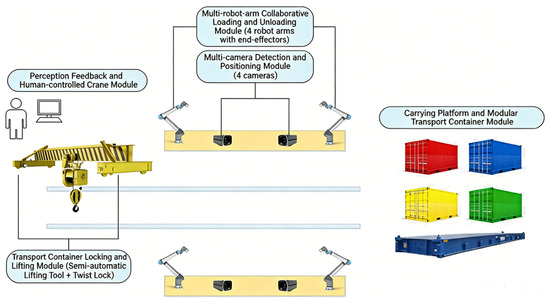
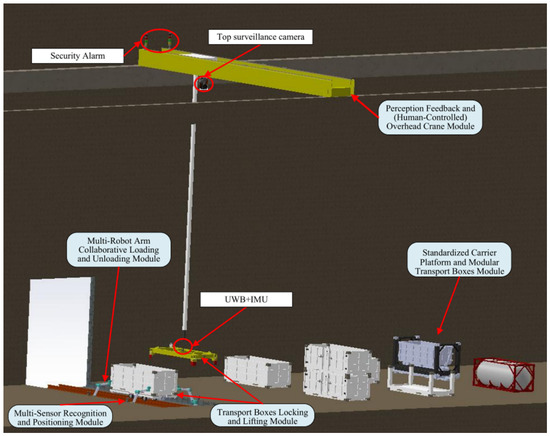
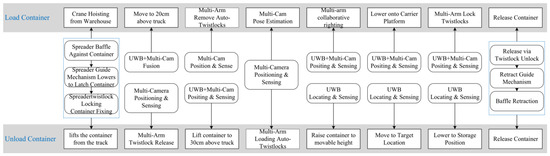
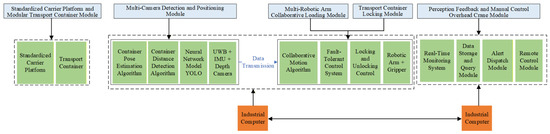
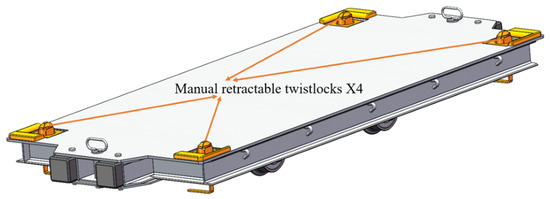
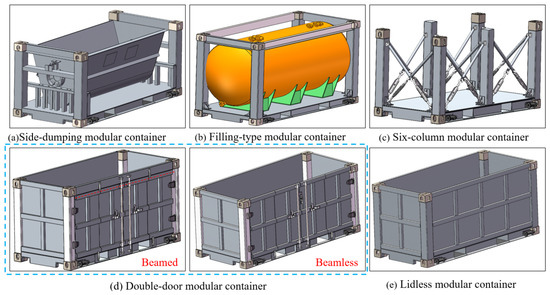
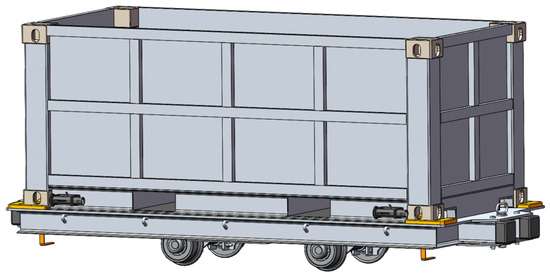
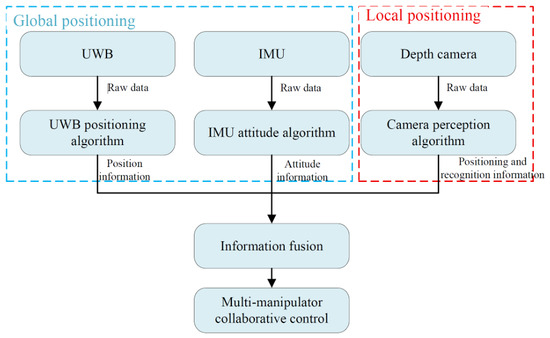
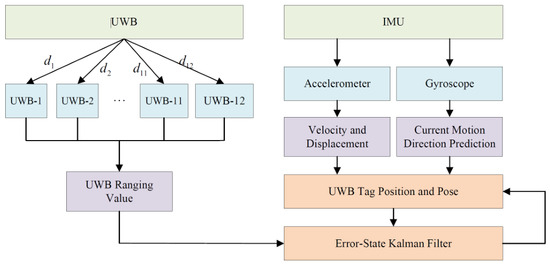
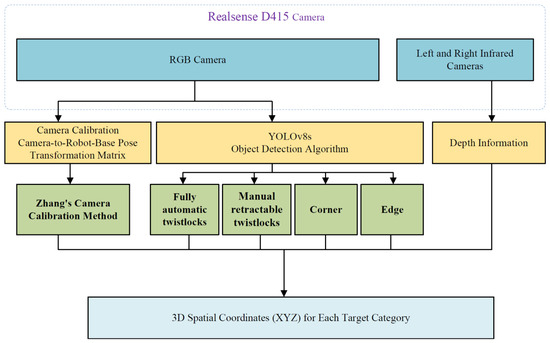
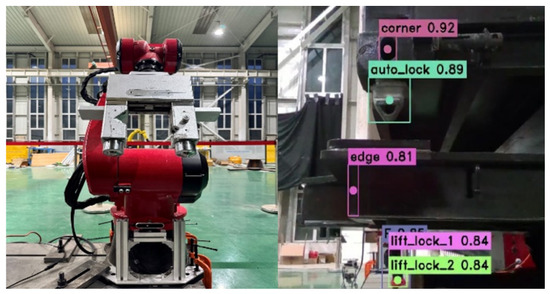
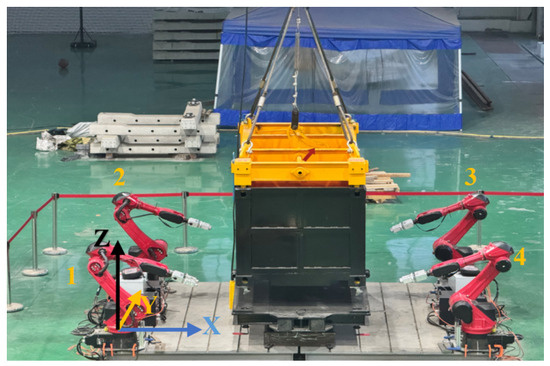
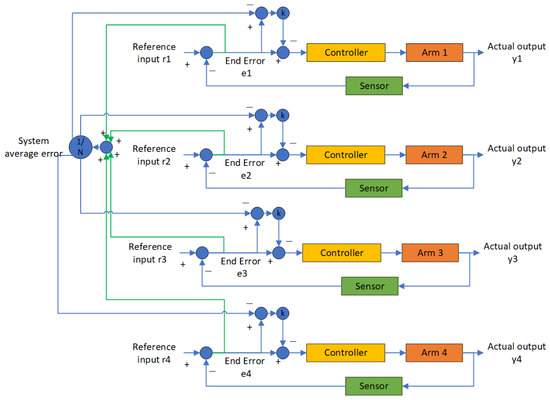
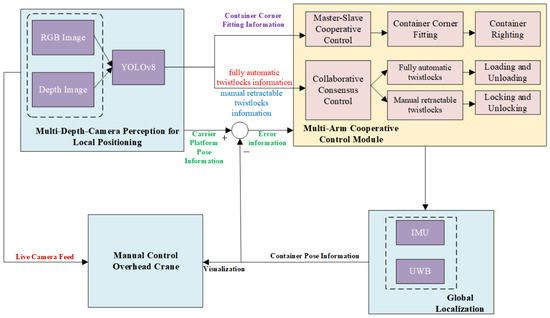
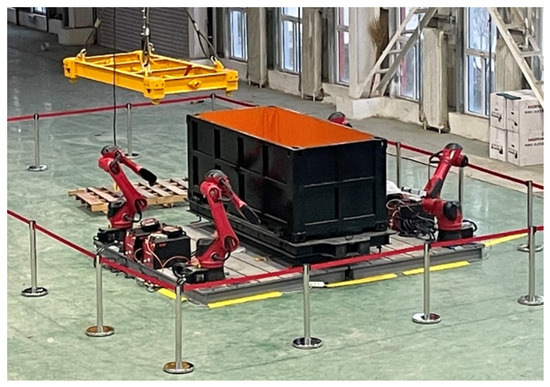
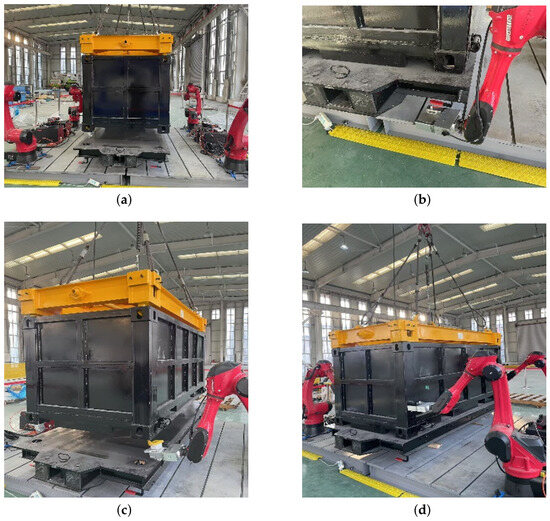
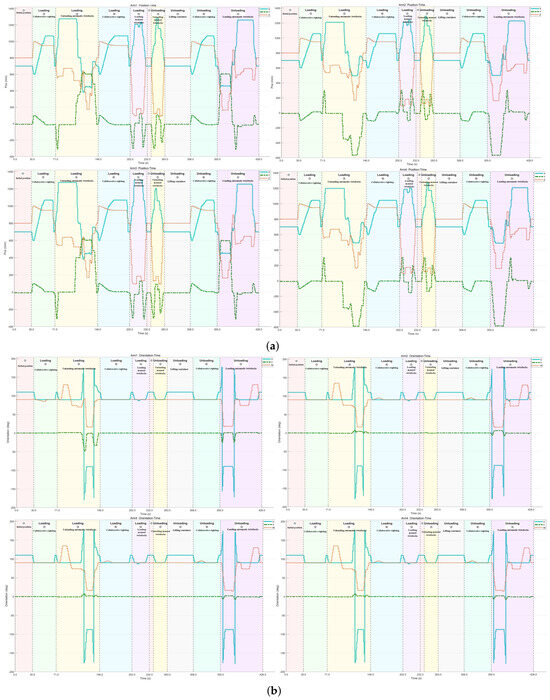
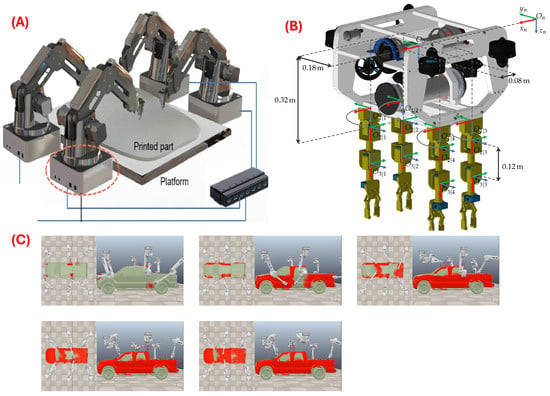
Currently, mining material transportation in warehouses relies heavily on manual operations, which pose safety hazards and suffer from low standardization and automation. Existing automated attempts using single-sensor perception or single-arm manipulators lack robustness and adaptability in harsh mine environments. To address these gaps, this paper proposes an intelligent loading system for standardized mining material transportation based on multimodal perception and multi-arm collaboration. First, the overall architecture of the transportation and loading system is introduced, comprising five modules: a standardized carrier platform and modular transport boxes, a box locking and spreader module, a multi-sensor recognition and positioning module, a multi-manipulator collaborative loading/unloading module, and a perception feedback and (human-controlled) overhead crane module. Next, a standardized hardware system is designed, focusing on the standardization of the separable and easily detachable carrier platform and the modularization of transport boxes, along with the locking mechanism between them, establishing the hardware foundation for the system. Subsequently, a multimodal perception data fusion and recognition positioning technology based on multiple depth cameras, UWB, and IMU is investigated to provide perceptual feedback for automated loading/unloading. Following this, a multi-manipulator collaborative control technology based on multi-agent error consensus is developed, designing a “two-master, two-slave” structure and a collaborative control algorithm to achieve automated loading/unloading of transport boxes. An information-based interactive monitoring software is then designed to monitor system perception data in real time and control the system’s operational status, ensuring safety and controllability. Finally, the feasibility and effectiveness of the system are validated through simulations and prototype experiments. This work provides a foundation for standardized transportation and storage of mining materials and outlines a practical system-level approach.
Full article
(This article belongs to the Section AI in Robotics)
►▼
Show Figures

Figure 1

Open AccessArticle
Path Planning Method for Omnidirectional Mobile Robots Based on an Improved Hippopotamus Optimization Algorithm
by
Junkang Li and Yuchao Wang
Robotics 2026, 15(6), 104; https://doi.org/10.3390/robotics15060104 - 27 May 2026
Abstract
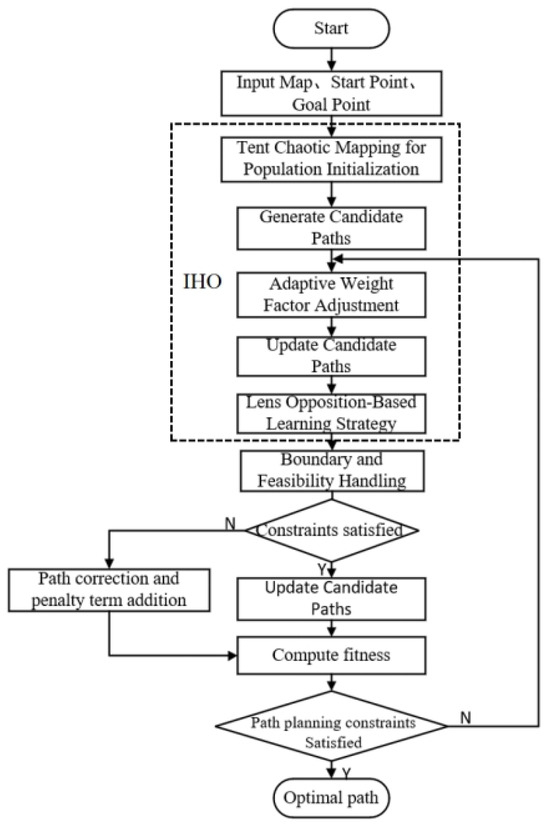
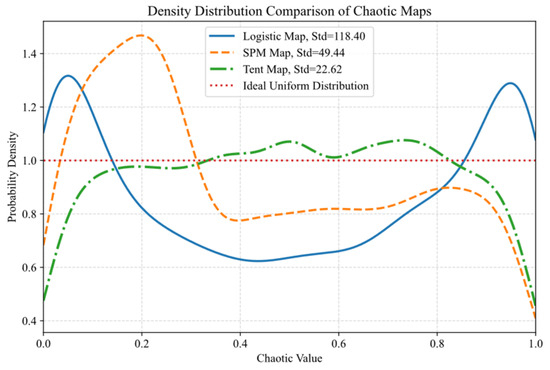
To address the issues of low search accuracy and insufficient stability in mobile robot path planning within complex environments, this paper proposes an improved hippopotamus optimization (IHO) algorithm. During mobile robot waypoint planning, Tent chaotic mapping is introduced during the population initialization stage
[...] Read more.
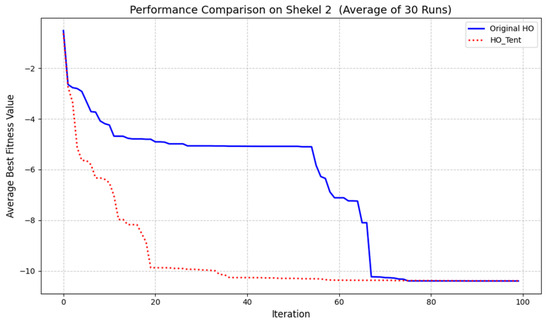
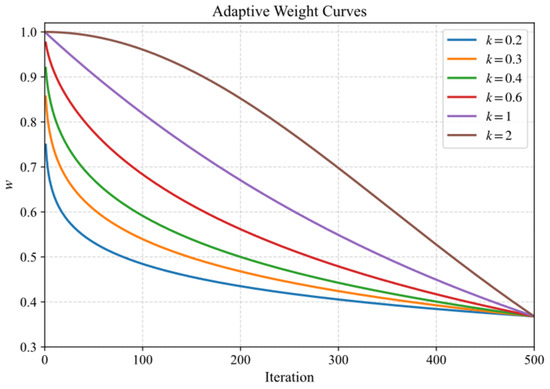
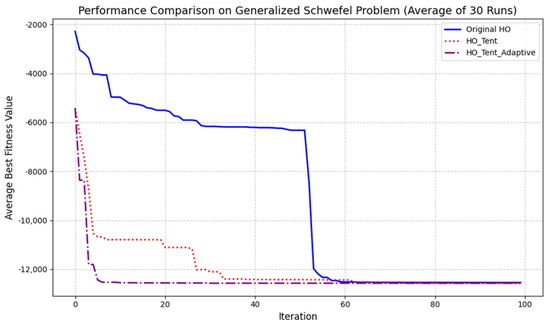
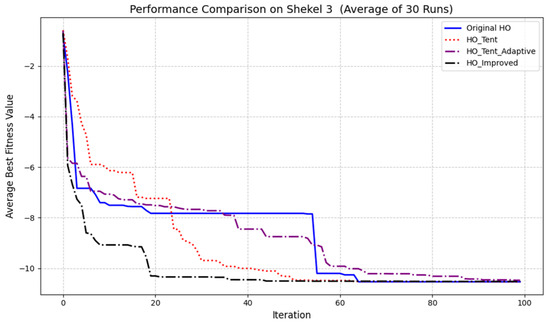
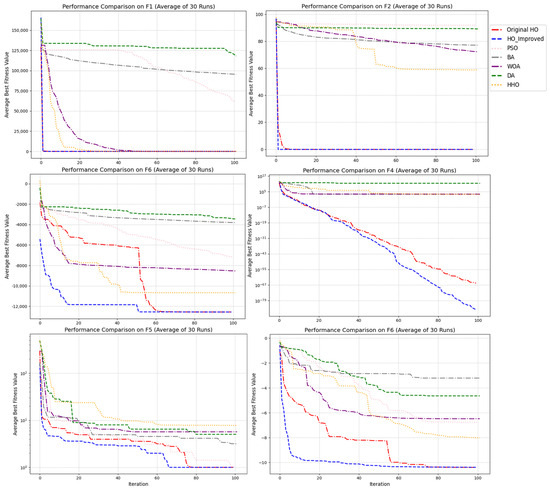
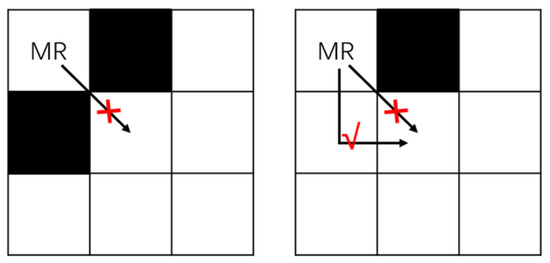
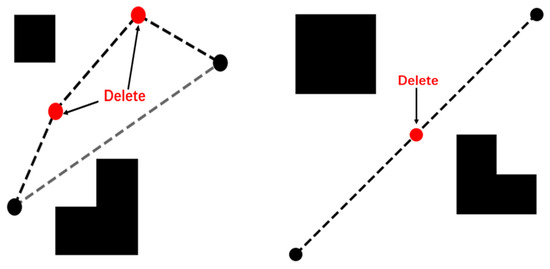
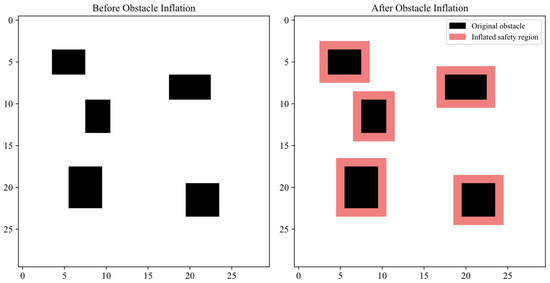
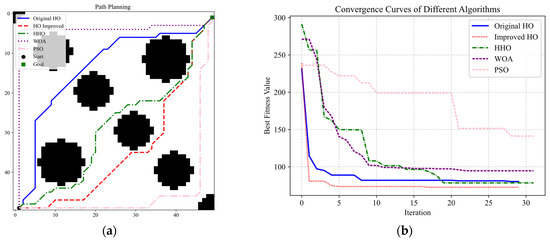
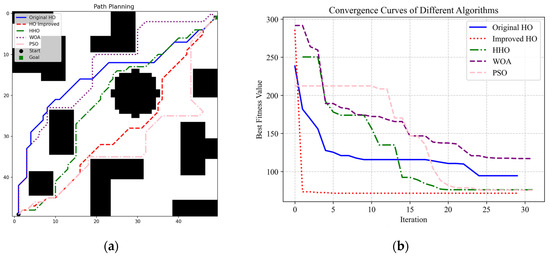
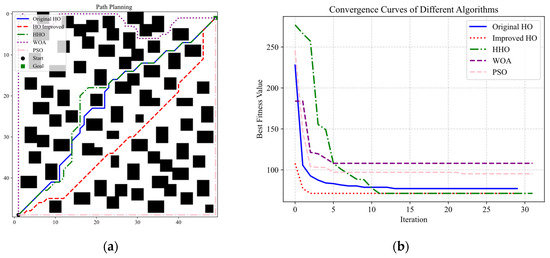
To address the issues of low search accuracy and insufficient stability in mobile robot path planning within complex environments, this paper proposes an improved hippopotamus optimization (IHO) algorithm. During mobile robot waypoint planning, Tent chaotic mapping is introduced during the population initialization stage to improve the uniformity of individual distribution in the search space and enhance population diversity. During the position update stage, a nonlinear adaptive weight factor is incorporated to dynamically balance the global exploration and local exploitation capabilities of the algorithm. In the third stage of the algorithm, a lens opposition-based learning strategy is introduced to improve global optimization performance through symmetric mapping and selection of candidate solutions. Experimental results demonstrate that IHO exhibits superior overall convergence speed and result stability compared to six benchmark algorithms, including hippopotamus optimization (HO). In three complex obstacle environments, IHO enables the robot to generate paths closer to the global optimum, demonstrating its effectiveness in practical path planning applications.
Full article
(This article belongs to the Section Sensors and Control in Robotics)
►▼
Show Figures

Figure 1

Open AccessArticle
A Bio-Inspired Tensegrity Spine with Adjustable Stiffness for Quadruped Robots
by
Yunlong Lian, Tianyuan Wang, Andy Tyrrell and Mark A. Post
Robotics 2026, 15(6), 103; https://doi.org/10.3390/robotics15060103 - 27 May 2026
Abstract
Conventional quadruped robots are usually built with a rigid body, whereas quadrupedal mammals have flexible spines to perform agile behaviours on rough terrains. Applying a flexible spine to robots is a promising way to achieve dynamic and stable movement in extreme environments. In
[...] Read more.
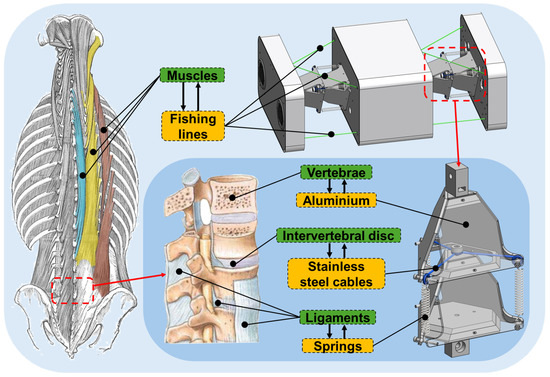
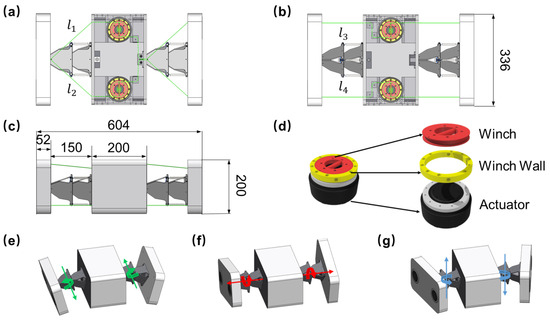
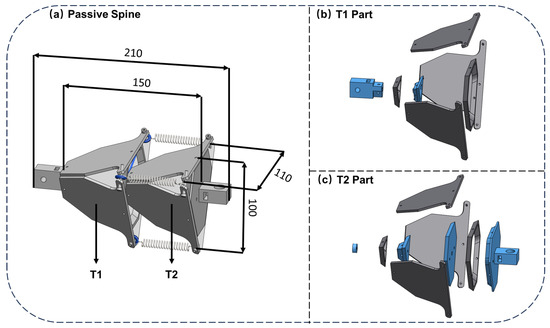
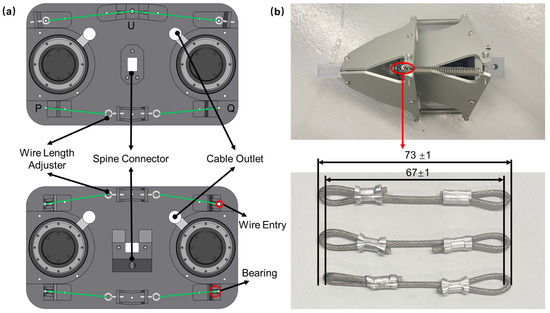
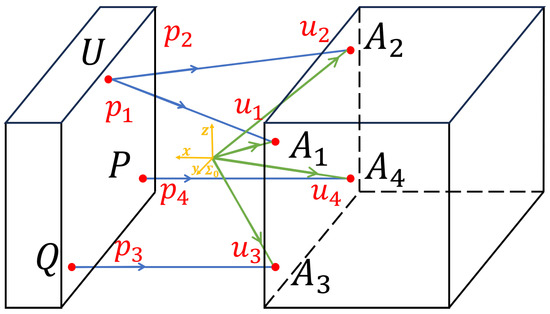
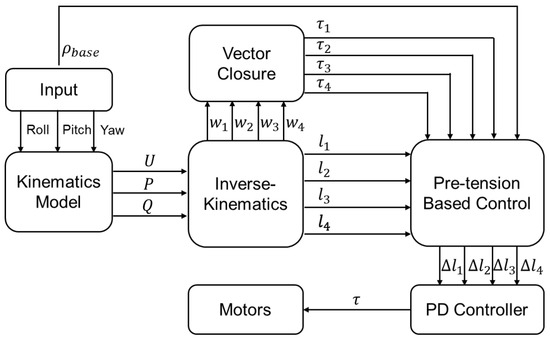
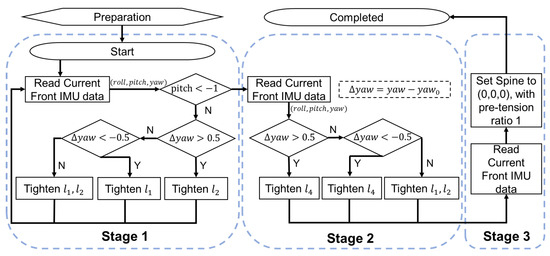
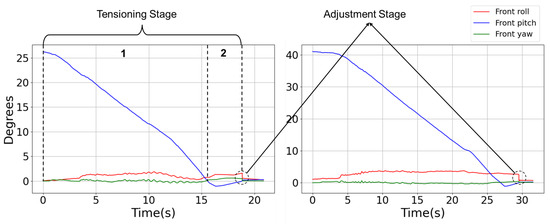
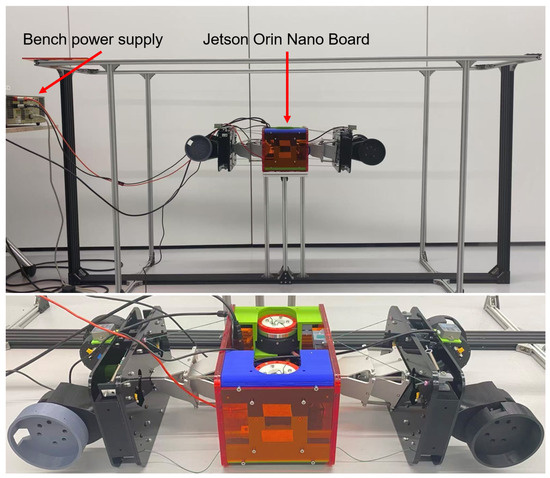
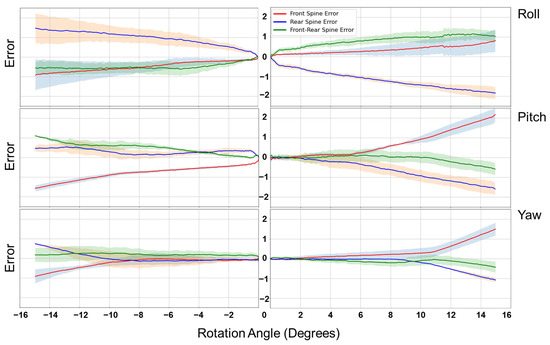
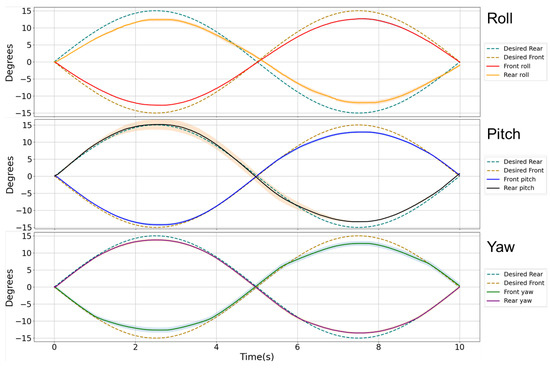
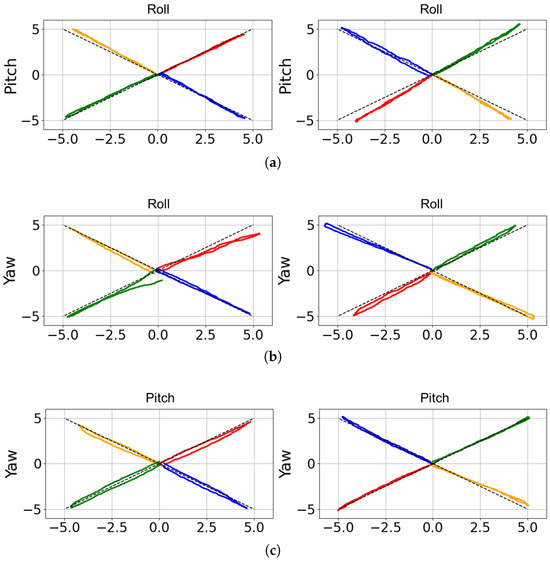
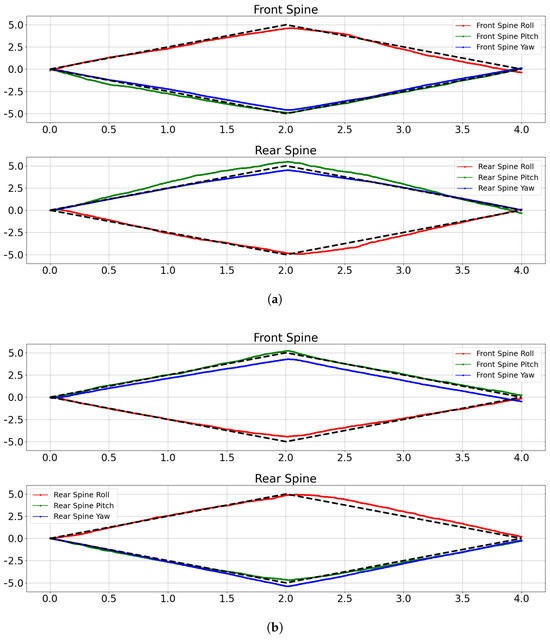
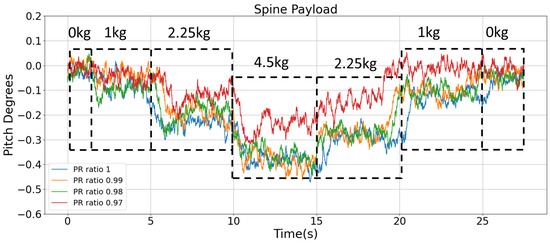
Conventional quadruped robots are usually built with a rigid body, whereas quadrupedal mammals have flexible spines to perform agile behaviours on rough terrains. Applying a flexible spine to robots is a promising way to achieve dynamic and stable movement in extreme environments. In this paper, a novel bio-inspired spine constructed with a tensegrity structure is introduced. The prototype of the spine includes active and passive parts that can both be actively actuated and passively compliant. It has two joints with three degrees of freedom (DOF) each and can generate complex and multi-degree motions simultaneously. To control the spine with adjustable stiffness, a method based on vector closure and adjustment of pretension ratio is proposed. Several experiments are reported to illustrate the physical design of the spine and demonstrate the properties of the spine. The results demonstrate its capabilities of both active motion and passive compliance, which may improve adaptability in complex environments. Future work includes attachment of the spine to a quadruped robot to increase the overall workspace and generate rich motion skills.
Full article
(This article belongs to the Section Soft Robotics)
►▼
Show Figures

Figure 1
Open AccessArticle
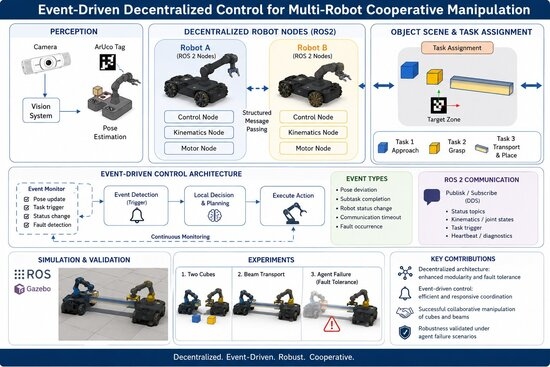
Event-Driven Decentralized Control for Multi-Robot Cooperative Manipulation
by
Javier Felix-Rendon, Alejandro Díaz, Gustavo Hernández-Melgarejo and Rita Q. Fuentes-Aguilar
Robotics 2026, 15(6), 102; https://doi.org/10.3390/robotics15060102 - 22 May 2026
Abstract
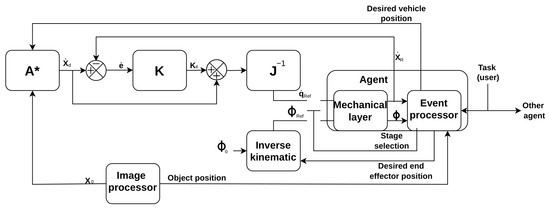
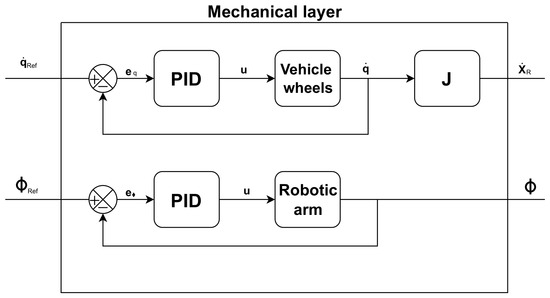
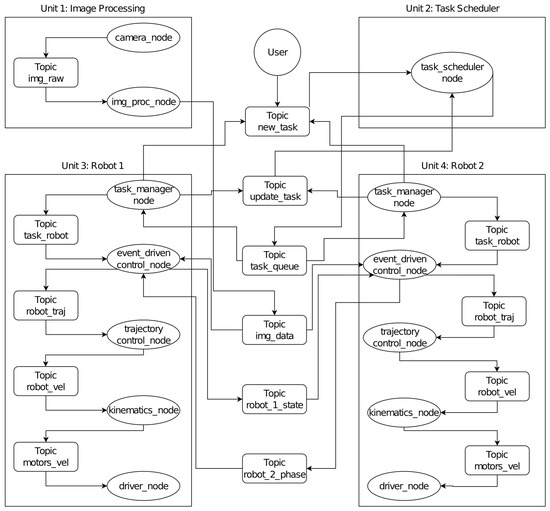
In this work, we present a decentralized, event-driven control architecture for collaborative rigid object manipulation using omnidirectional wheeled mobile robots. Unlike fixed manipulators, mobile manipulation requires complex coordination between robots, making robustness and fault tolerance critical. Our framework is implemented in ROS2, in
[...] Read more.
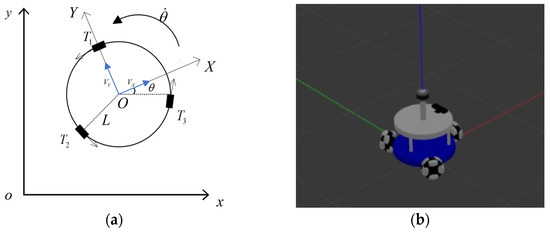
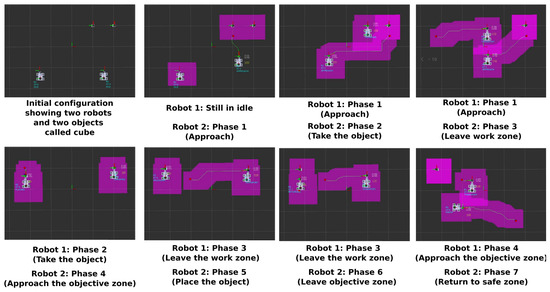
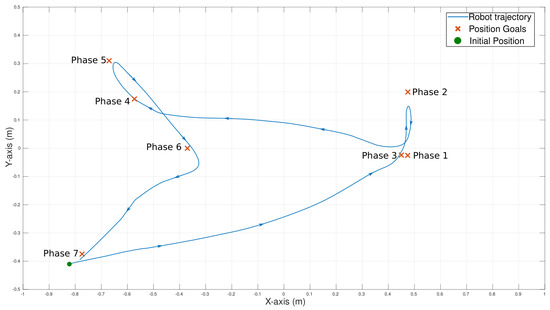
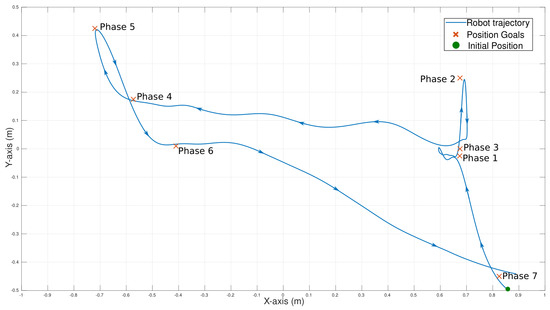
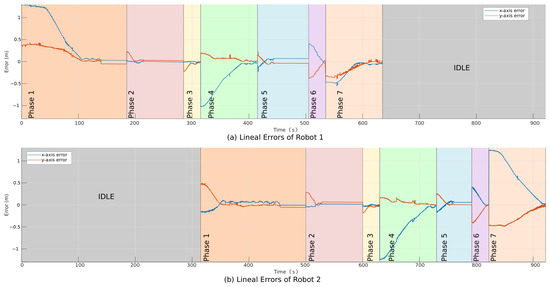
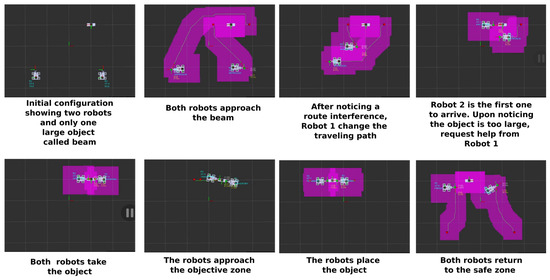
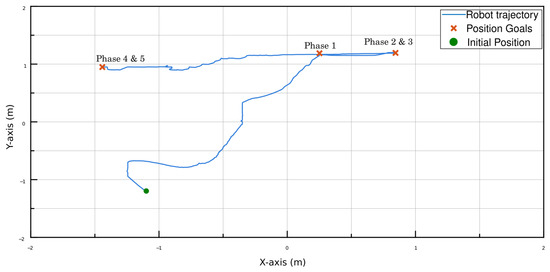
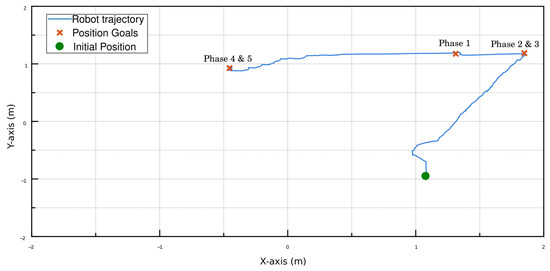
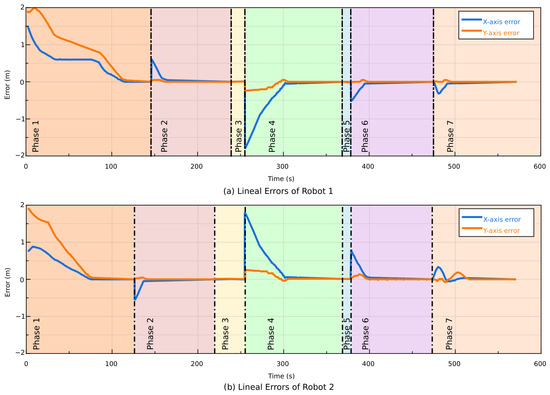
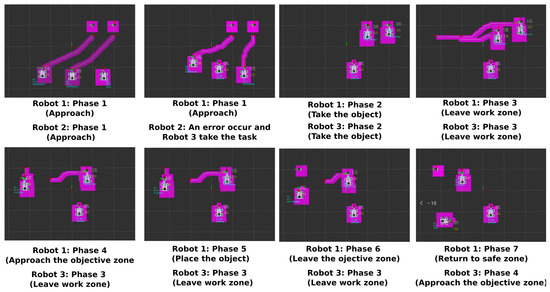
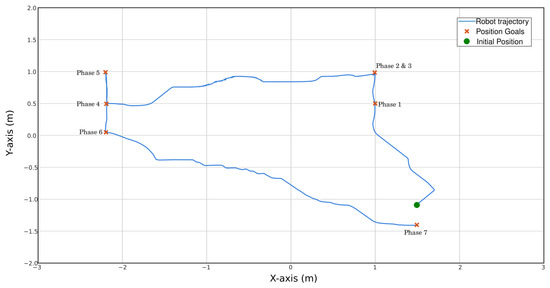
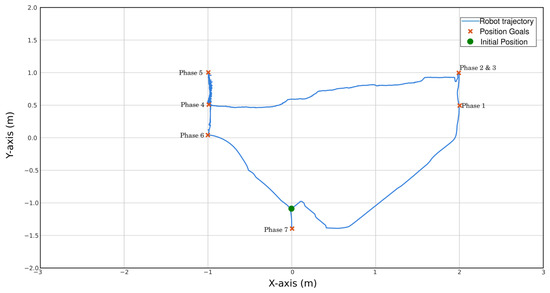
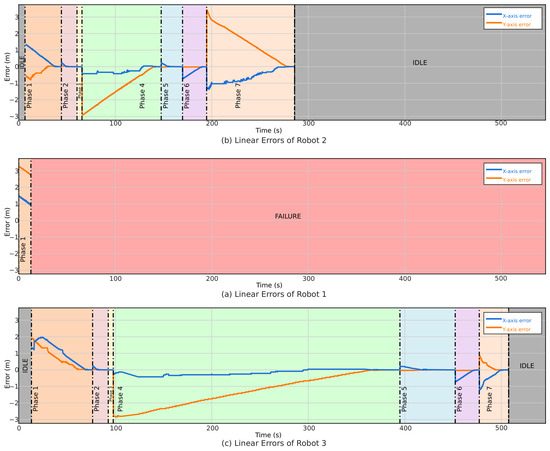
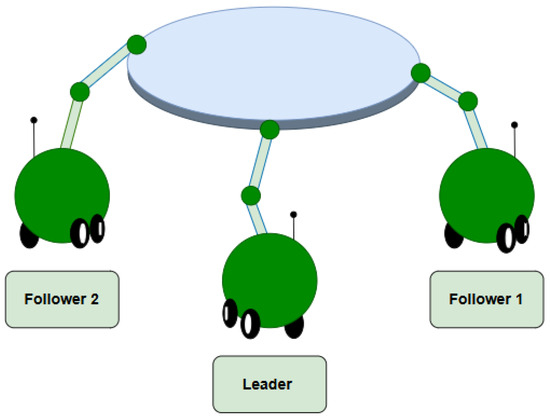
In this work, we present a decentralized, event-driven control architecture for collaborative rigid object manipulation using omnidirectional wheeled mobile robots. Unlike fixed manipulators, mobile manipulation requires complex coordination between robots, making robustness and fault tolerance critical. Our framework is implemented in ROS2, in which each robot operates independently, with control, kinematic, and motor nodes that communicate via structured message passing. This decentralized design enhances fault tolerance, as individual component failures do not compromise the entire system. To enable perception, an ArUco-based vision system is employed to estimate robot and object poses, supporting the execution of three coordinated subtasks: approaching, grasping, and transporting. The proposed scheme is validated in a Gazebo simulation through different experiments, in which two robots successfully manipulate individual cubes or a beam. Results demonstrate that the proposed event-driven, decentralized control strategy enables consistent coordination, fault-tolerant operation under agent failures, and successful task execution in collaborative manipulation scenarios.
Full article
(This article belongs to the Special Issue Advanced Control and Optimization for Robotic Systems)
►▼
Show Figures

Graphical abstract
Open AccessArticle
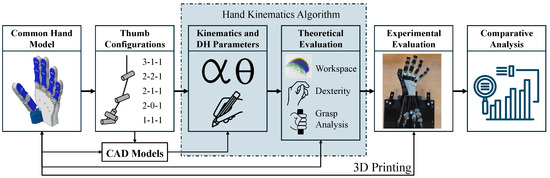
Quantitative Evaluation of Thumb Degrees of Freedom Relevance in Anthropomorphic Robot Hands
by
Sebastian Polzin, Omar Farooq, Daniel Gossen, Shubhankar Riswadkar, Mathias Hüsing, Burkhard Corves and Alexander Brezing
Robotics 2026, 15(5), 101; https://doi.org/10.3390/robotics15050101 - 21 May 2026
Abstract
Thumb degree-of-freedom (DOF) allocation in anthropomorphic robot hands involves a trade-off between functional mobility and mechanical-control complexity. This study presents a controlled multi-metric framework for comparing recurring thumb DOF configurations under common palm geometry, non-thumb finger structure, reference frames, Denavit–Hartenberg kinematics, and sampling
[...] Read more.
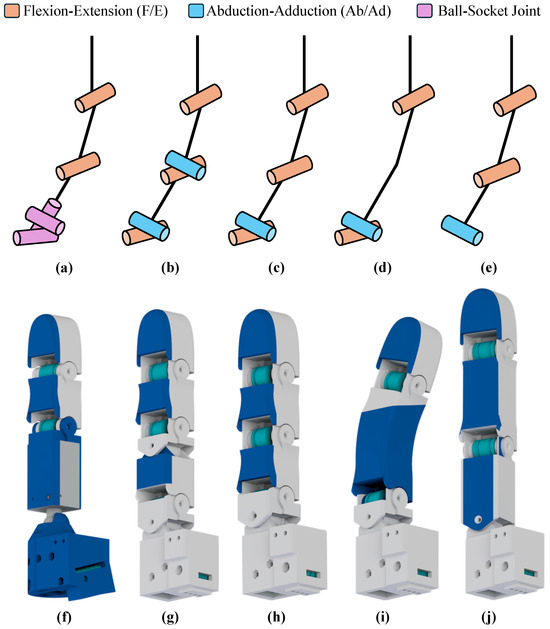
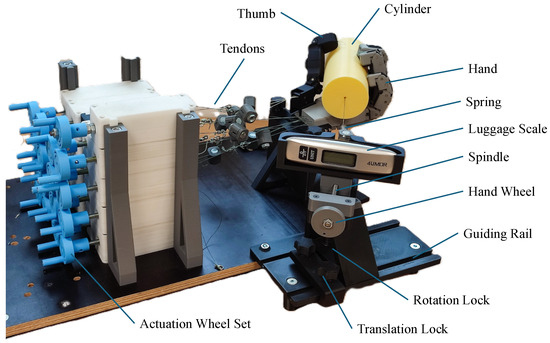
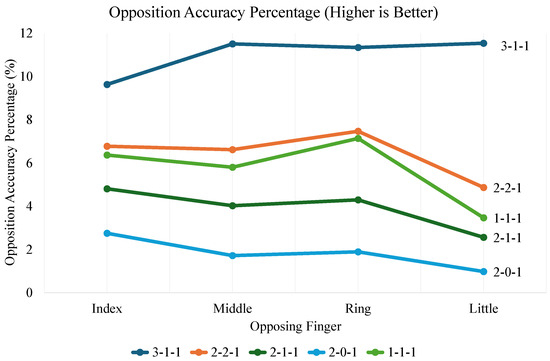
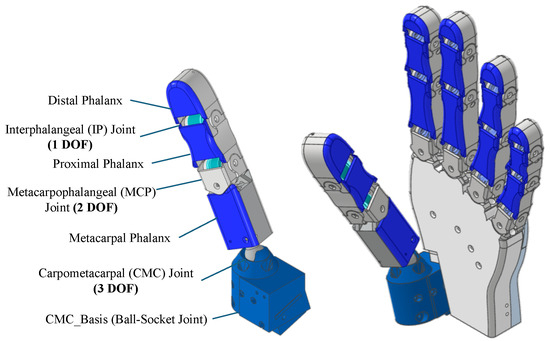
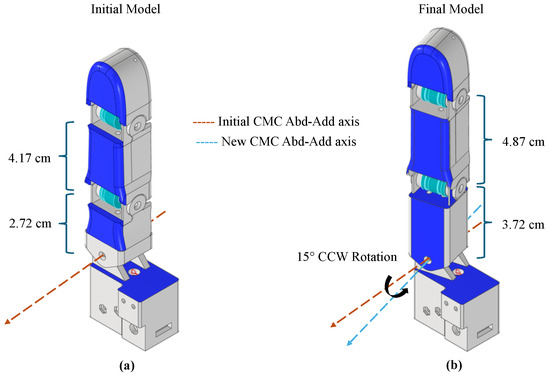
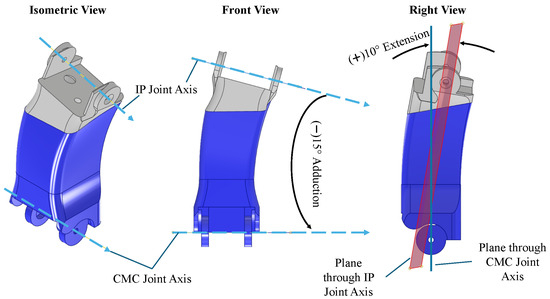
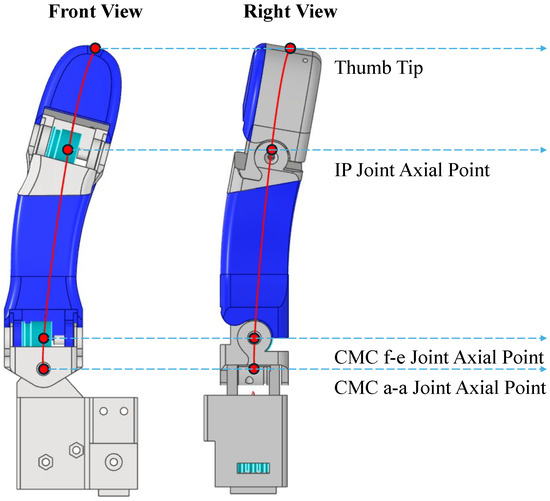
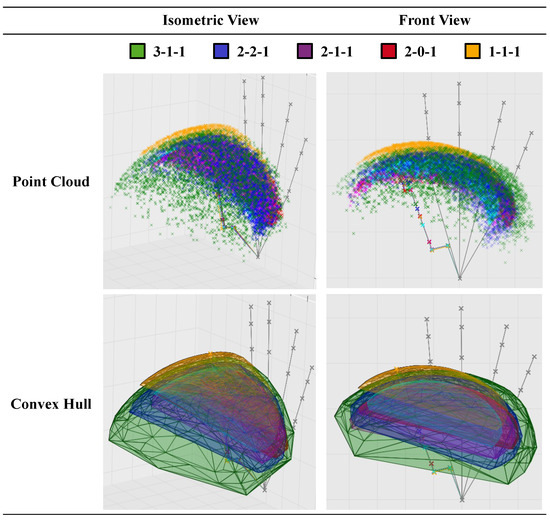
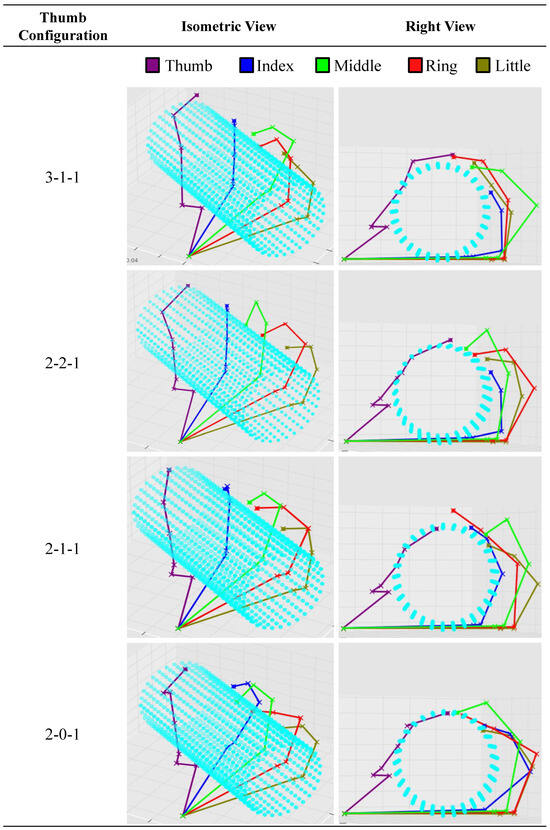
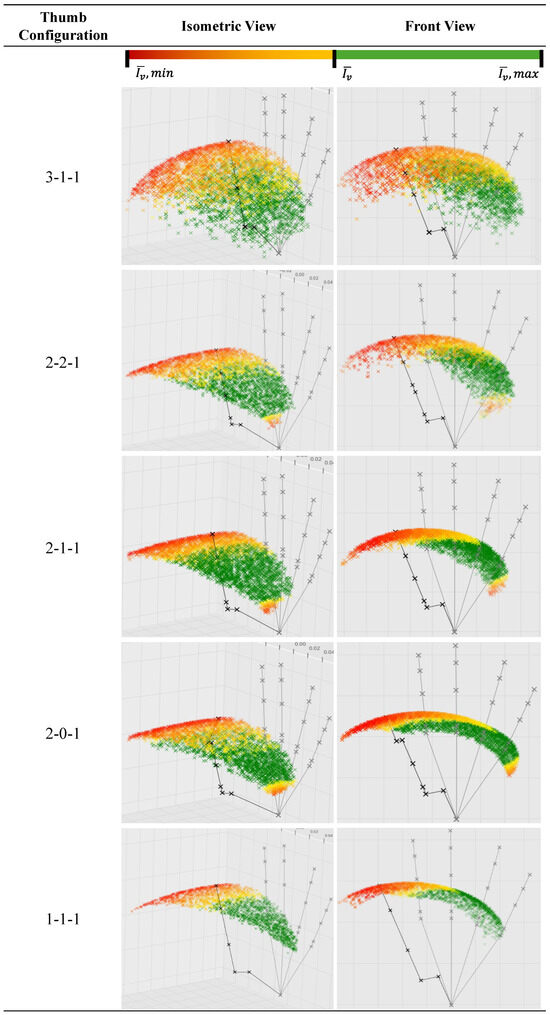
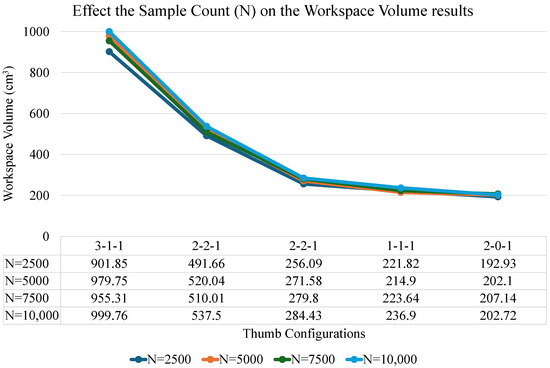
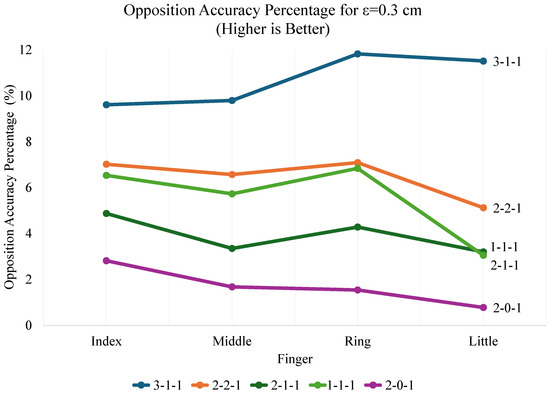
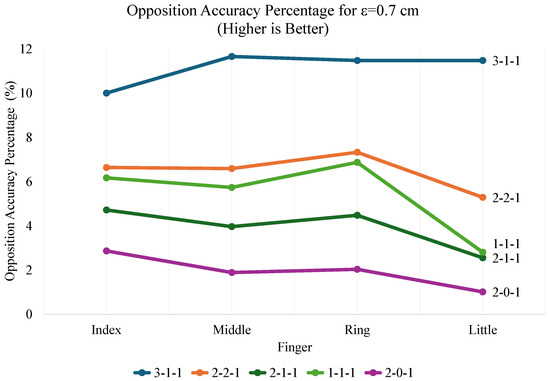
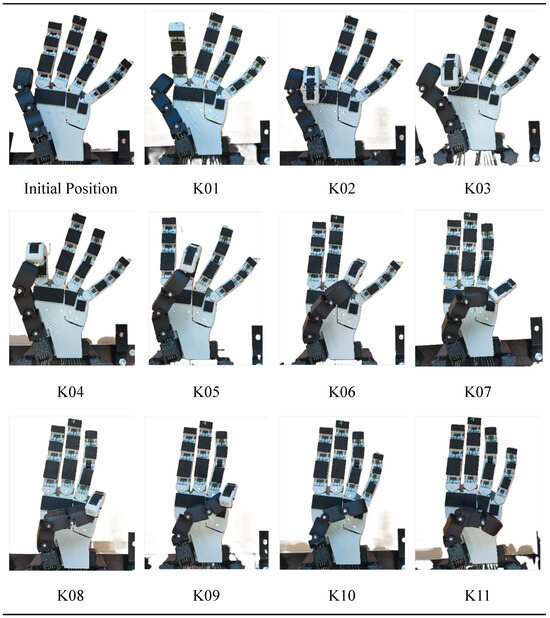
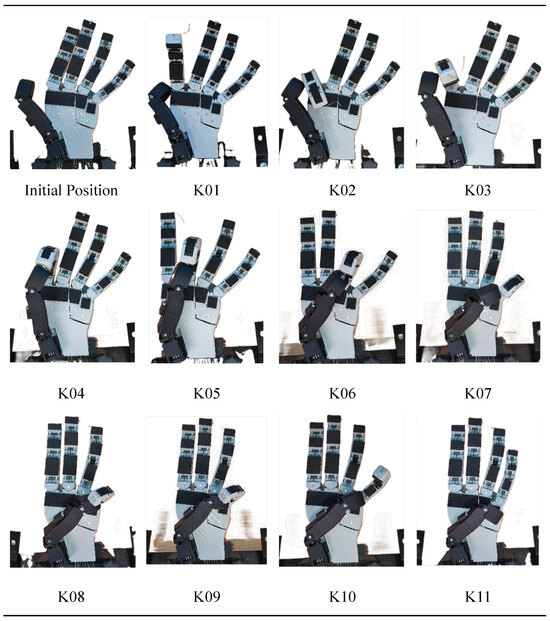
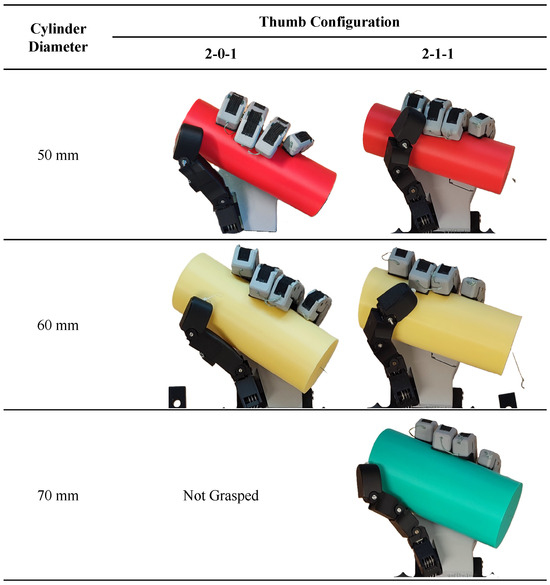
Thumb degree-of-freedom (DOF) allocation in anthropomorphic robot hands involves a trade-off between functional mobility and mechanical-control complexity. This study presents a controlled multi-metric framework for comparing recurring thumb DOF configurations under common palm geometry, non-thumb finger structure, reference frames, Denavit–Hartenberg kinematics, and sampling assumptions. Five literature-derived thumb configurations, namely 3-1-1, 2-2-1, 2-1-1, 2-0-1, and 1-1-1, were evaluated to determine which thumb DOFs should be preserved when kinematic complexity is reduced. The theoretical evaluation included Kapandji Opposition Test reachability, opposition alignment, workspace volume, workspace compactness, cylindrical grasp opportunity, and Jacobian-based dexterity. A targeted experimental validation of the 2-1-1 and 2-0-1 prototypes was then performed on a tendon-driven test bench. The results showed that qualitatively similar thumb configurations are quantitatively unequal: several designs achieved identical Kapandji scores but differed substantially in workspace, alignment, dexterity, and grasp feasibility. Overall, 3-1-1 achieved the strongest overall capability, while 2-2-1 emerged as the strongest reduced-complexity alternative and achieved the best mean dexterity. Retaining two active carpometacarpal DOFs preserved a large share of dexterous function, whereas metacarpophalangeal fixation maintained selected cylindrical grasps but narrowed the feasible task boundary.
Full article
(This article belongs to the Section Humanoid and Human Robotics)
►▼
Show Figures

Figure 1

Open AccessArticle
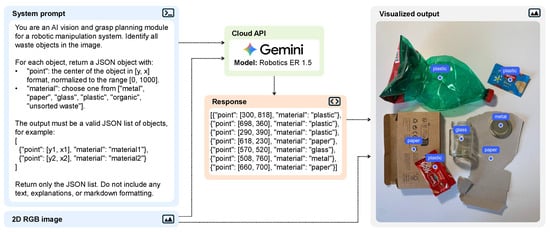
Integrating Vision–Language–Action Models and RGB-D Sensing for Robotic Waste Sorting on KUKA LBR iiwa
by
Teresa Sinico, Daniele Businaro and Giovanni Boschetti
Robotics 2026, 15(5), 100; https://doi.org/10.3390/robotics15050100 - 18 May 2026
Abstract
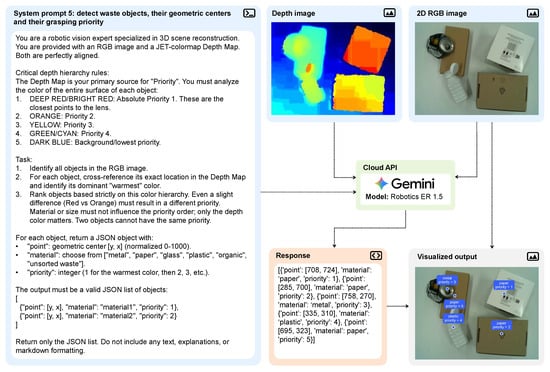
Robotic waste sorting presents significant challenges, including object variability, cluttered environments, and the predominant reliance on deep learning and traditional computer vision techniques, which typically demand extensive datasets and task-specific training. This paper introduces a robotic waste sorting system that integrates the Gemini
[...] Read more.
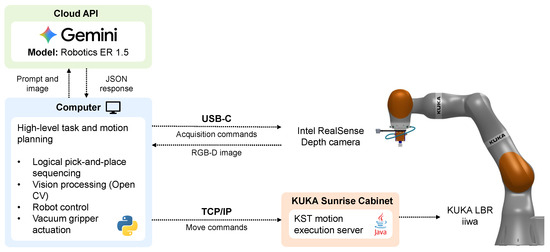
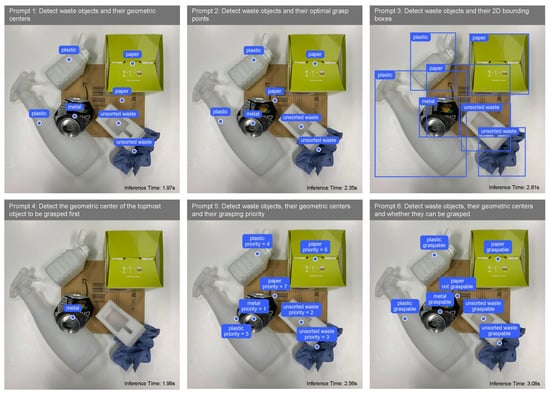
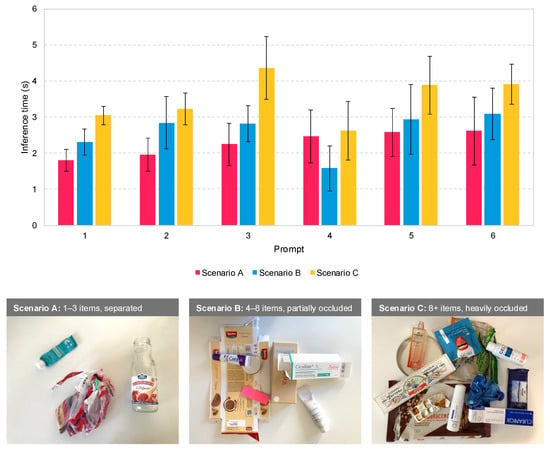
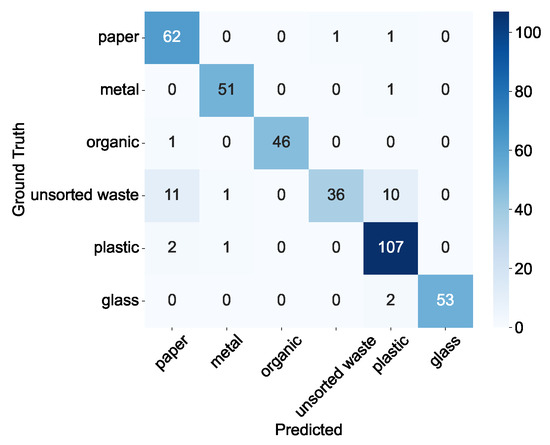
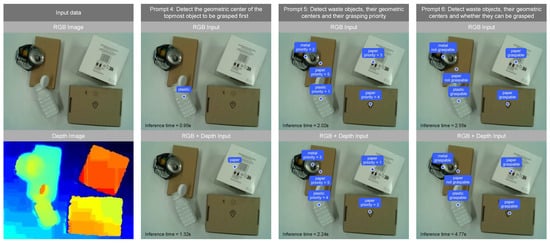
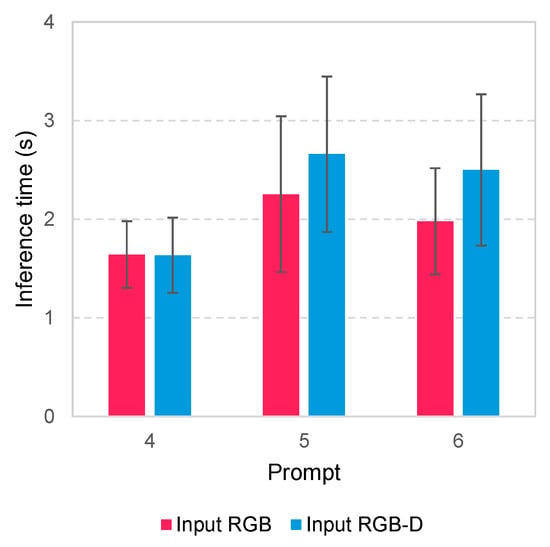
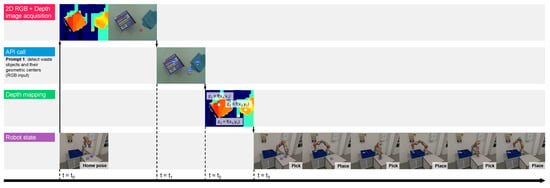
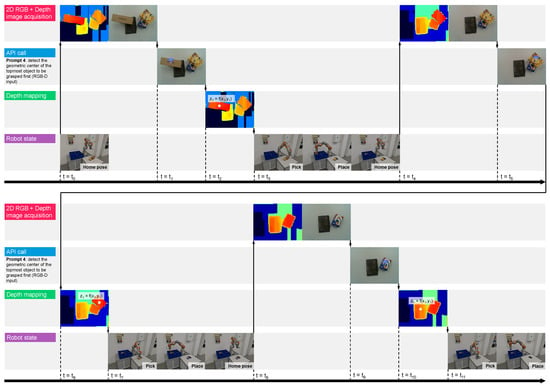
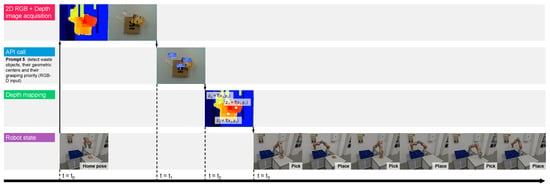
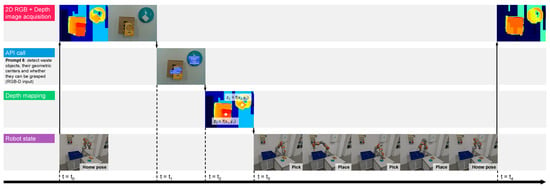
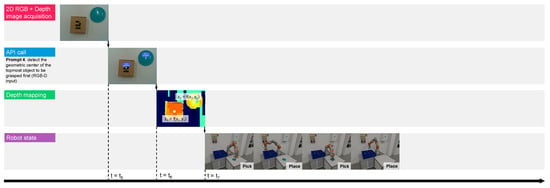
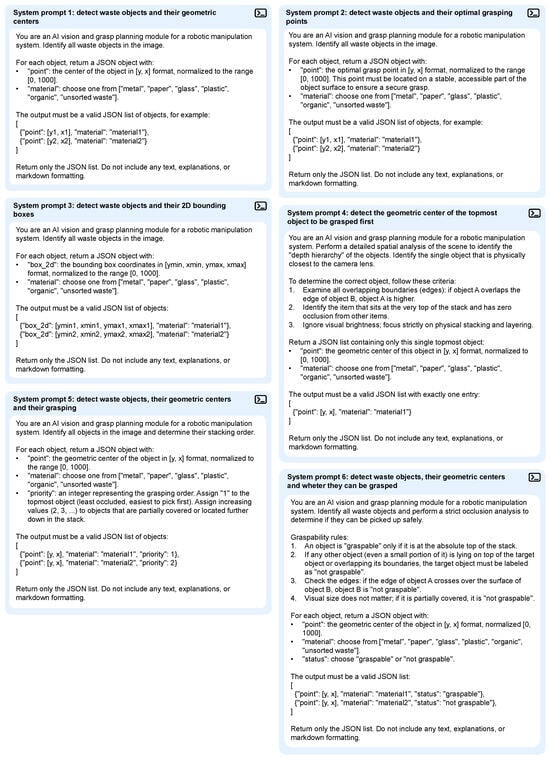
Robotic waste sorting presents significant challenges, including object variability, cluttered environments, and the predominant reliance on deep learning and traditional computer vision techniques, which typically demand extensive datasets and task-specific training. This paper introduces a robotic waste sorting system that integrates the Gemini Vision–Language–Action (VLA) model with a KUKA LBR iiwa collaborative robot and an RGB-D camera. Our approach leverages the advanced reasoning capabilities of large, pre-trained VLA models to perform waste sorting, without requiring explicit training or dataset collection. Key contributions include the development of effective prompt engineering strategies for waste object identification, the assessment of the VLA’s performance in terms of inference time and accuracy, and the development of different grasping strategies for operation in cluttered scenarios. Our experimental tests demonstrated that the system’s inference time is between 2 and 4 s, which is suitable for collaborative robotic applications, and the system achieved a high overall classification accuracy of 89.64%. Crucially, we demonstrated that integration of RGB-D sensing enhanced the model’s ability to perceive object heights, resolve occlusions, and make informed grasping decisions in realistic, three-dimensional settings. We further validated multiple real-world grasping strategies, demonstrating tradeoffs between system efficiency and safety in heavily cluttered scenarios. This work establishes a practical and adaptable framework for deploying VLA-driven intelligence on commercial robotic platforms, highlighting the potential of VLAs for complex manipulation tasks beyond waste sorting.
Full article
(This article belongs to the Special Issue IFToMM for Sustainable Development Goals: Contributions from I4SDG 2025 Conference)
►▼
Show Figures

Figure 1

Open AccessSystematic Review
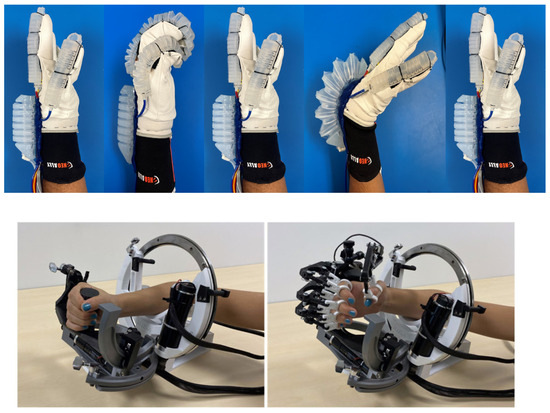
A Systematic Literature Review on Intelligent Soft Hand Exoskeleton Robots: Artificial Intelligence-Enabled Personalisation, Adaptation, and Design Considerations
by
Seena Joseph, Wai Keung Fung, Tony Punnoose Valayil, Rajan Prasad and Tim Bashford
Robotics 2026, 15(5), 99; https://doi.org/10.3390/robotics15050099 - 12 May 2026
Abstract
In recent years, hand exoskeleton robots have attracted extensive attention from researchers and practitioners due to their potential to rehabilitate, assist, and enhance hand movements, particularly for stroke patients. With an ageing population increasingly affected by strokes, there is a growing demand for
[...] Read more.
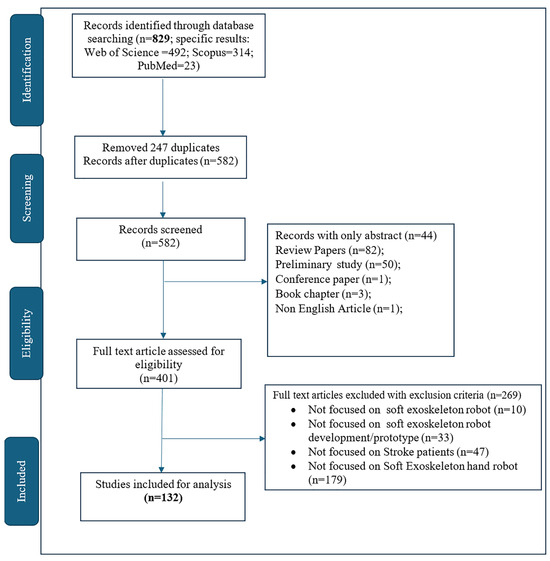
In recent years, hand exoskeleton robots have attracted extensive attention from researchers and practitioners due to their potential to rehabilitate, assist, and enhance hand movements, particularly for stroke patients. With an ageing population increasingly affected by strokes, there is a growing demand for patient-centred interventions which place less demand on clinicians, especially wearable devices that can enhance hand function. Advances in artificial intelligence have opened new avenues for developing more reliable and adaptive assistive systems. This study presents a systematic literature review, following the PRISMA protocol on the design elements of hand exoskeleton robots, acknowledging the emerging perspectives on AI integration and ethical considerations. The study provides a comprehensive foundation for future research and development in rehabilitation technologies by systematically synthesising the current mechanical architecture, actuation, sensors, material, weight, and cost aspects of soft hand exoskeleton robots for rehabilitation. The results show important patterns and trade-offs in various design dimensions, providing useful information to direct the development of more accessible and efficient rehabilitation solutions in the future.
Full article
(This article belongs to the Topic Bio-Inspired, Biomedical, Surgical, Social and AI-Integrated Bio-Mechanical Robotics)
►▼
Show Figures

Figure 1

Open AccessArticle
Hybrid LLM-Genetic Programming: Supervising and Generating Diverse Behavior Trees for Autonomous Robot Evolution
by
Chi Jie Tan, Eiji Hayashi, Abbe Mowshowitz and Way Soong Lim
Robotics 2026, 15(5), 98; https://doi.org/10.3390/robotics15050098 - 11 May 2026
Abstract
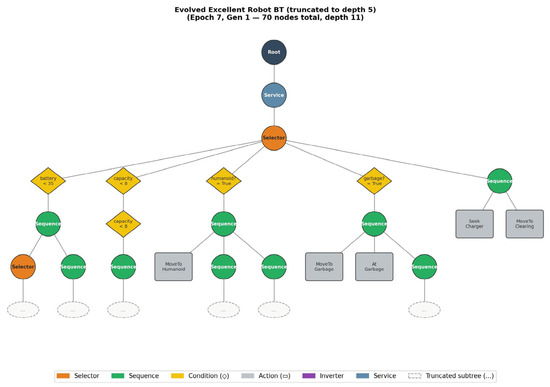
Genetic Programming (GP) for evolving Behavior Trees (BTs) in autonomous robots often suffer from premature convergence, even when adaptive mutation mechanisms are employed. This paper proposes a novel hybrid framework that integrates Large Language Model (LLM) supervision into GP, in which the LLM
[...] Read more.
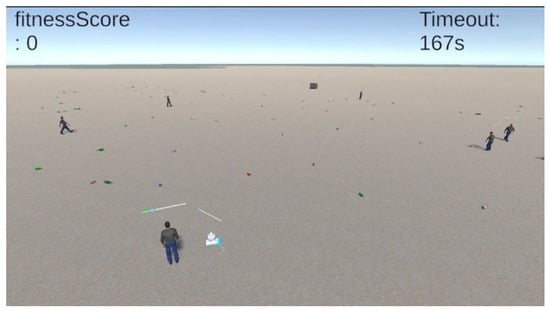
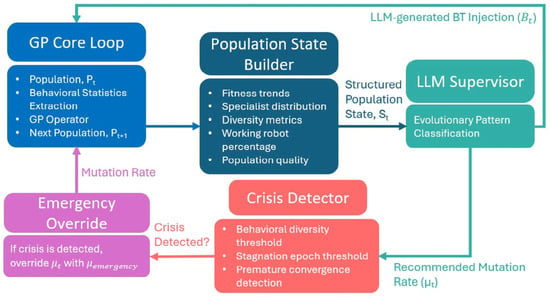
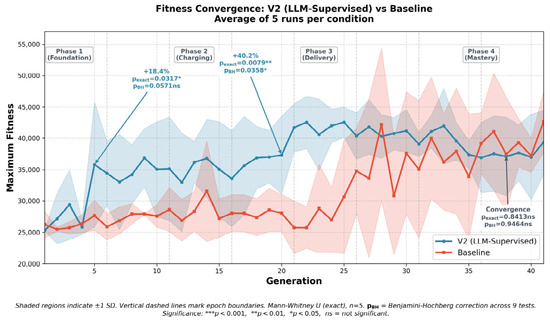
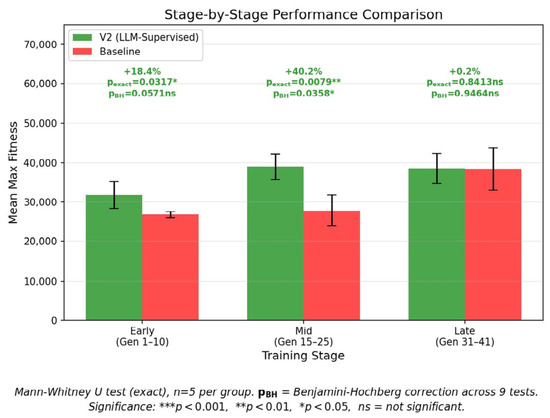
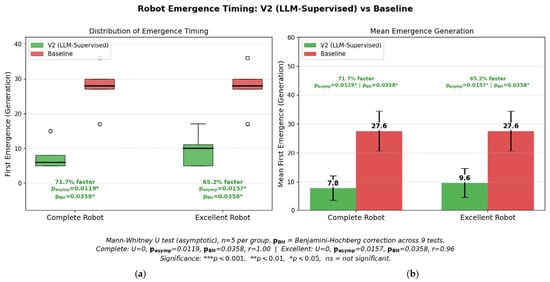
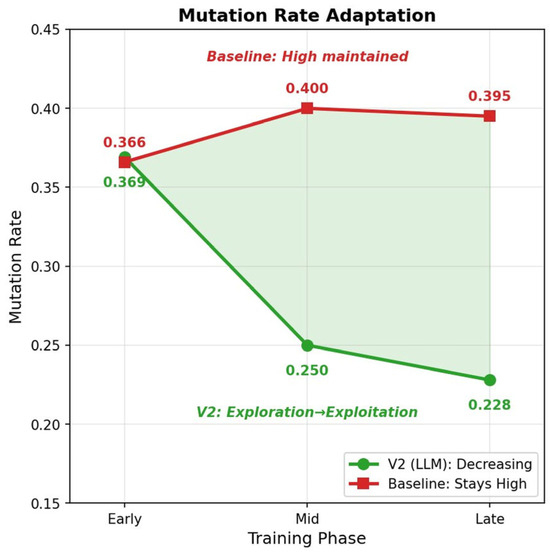
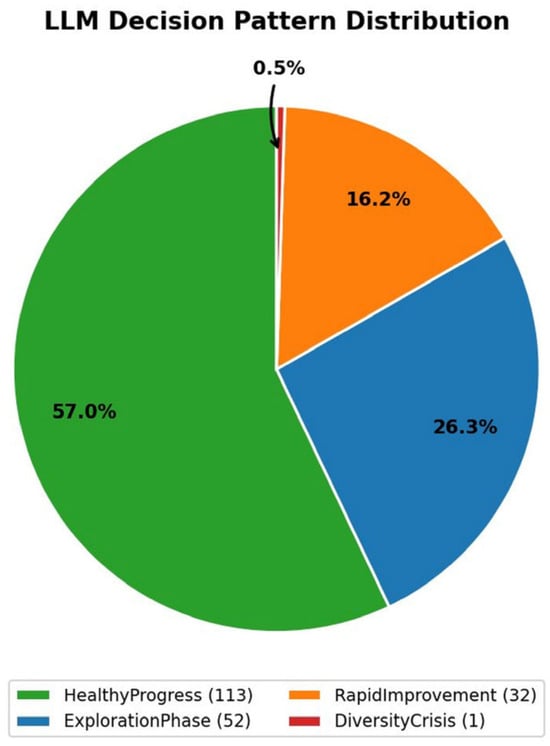
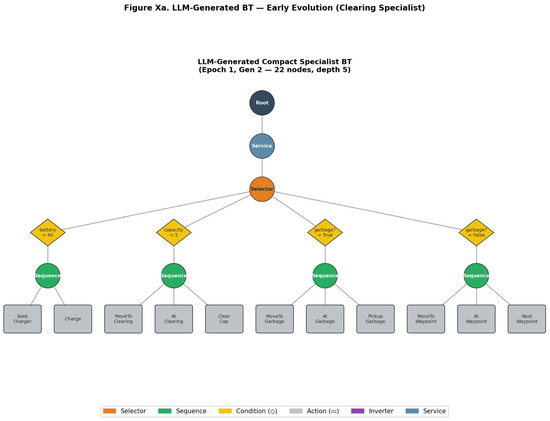
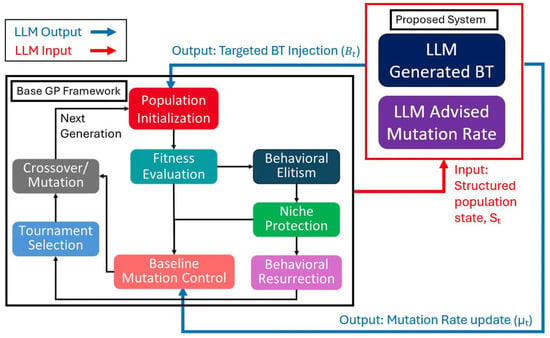
Genetic Programming (GP) for evolving Behavior Trees (BTs) in autonomous robots often suffer from premature convergence, even when adaptive mutation mechanisms are employed. This paper proposes a novel hybrid framework that integrates Large Language Model (LLM) supervision into GP, in which the LLM performs holistic population analysis, adaptively regulates mutation rates, and generates targeted BTs to proactively address behavioral gaps in the evolving population. Unlike conventional evolutionary operators, the LLM introduces high-level semantic guidance by seeding underrepresented behavioral archetypes, thereby complementing stochastic genetic variation with structured exploration. The proposed method is evaluated in a Unity-based multi-task robotic simulation environment. Experimental results show that the hybrid approach significantly outperforms baseline GP with standard adaptive mutation, achieving a 71.7% faster emergence of Complete Robots, a 65.2% faster emergence of Excellent Robots, and a 28% increase in behavioral diversity. Notably, the two systems exhibit opposite mutation dynamics: the LLM-guided system progressively reduces mutation rates to promote exploitation, whereas the baseline maintains a high mutation rate. In addition, the LLM generates approximately 40 targeted BTs per run, proactively seeding the population with underrepresented behavioral archetypes. These performance gains are obtained with only a 13% computational overhead.
Full article
(This article belongs to the Special Issue AI-Powered Robotic Systems: Learning, Perception and Decision-Making)
►▼
Show Figures

Figure 1

Open AccessReview
From Cooperative Dual-Arm Manipulators to Cooperative Multi-Arm Manipulators—Where Are We Standing Today?
by
Lander Ketelbuters, Bart Engelen, Ivo Dekker and Karel Kellens
Robotics 2026, 15(5), 97; https://doi.org/10.3390/robotics15050097 - 11 May 2026
Abstract
This paper highlights the state of the art in Cooperative Dual-Manipulation (CDM) and Cooperative Multi-Manipulation (CMM), comparing advances in modeling, control, planning, sensing, vision, and end-effector technologies. Methods originally established in CDM have been extended or adapted to support higher complexity of CMM.
[...] Read more.
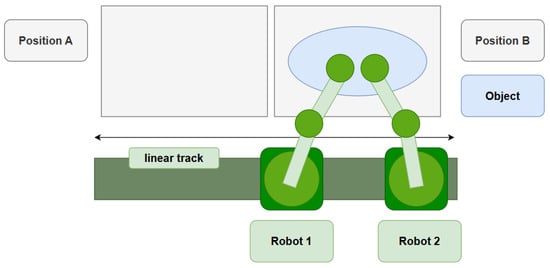
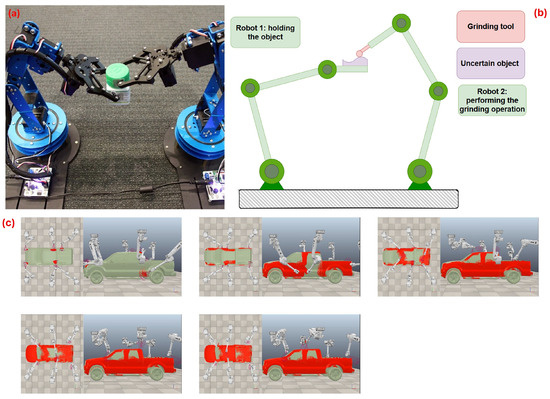
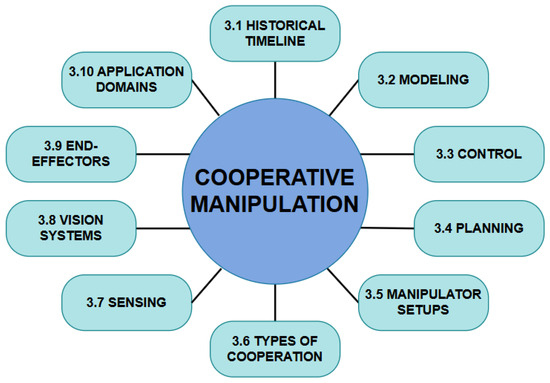
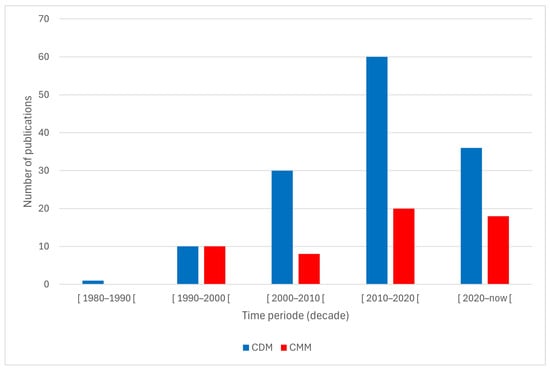
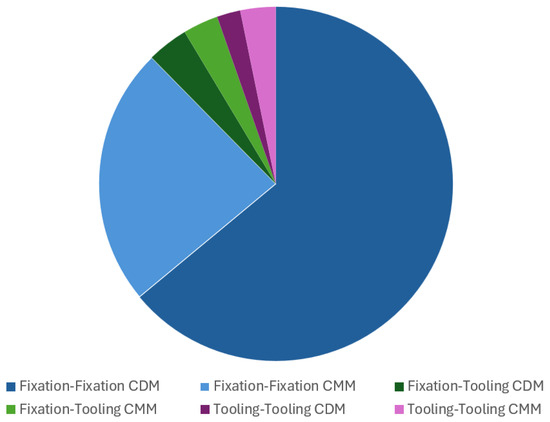
This paper highlights the state of the art in Cooperative Dual-Manipulation (CDM) and Cooperative Multi-Manipulation (CMM), comparing advances in modeling, control, planning, sensing, vision, and end-effector technologies. Methods originally established in CDM have been extended or adapted to support higher complexity of CMM. A historical timeline visualizes the steady growth of cooperative manipulation (CM) and the recent acceleration of CMM driven by rising process complexity and the need for more flexible automation strategies. CM is becoming increasingly relevant as industrial processes demand higher payload capacity, larger workspaces, and greater flexibility. In addition, this paper categorizes existing applications by cooperation type and application domain. Here, a clear dominance of simultaneous object manipulation tasks is visible (fixation-fixation). However, fixation-tooling tasks, where one manipulator grasps the product while another performs a tool operation, and tooling-tooling tasks, where multiple manipulators perform tool operations simultaneously, remain significantly underrepresented. A similar imbalance is found for rigid/non-deformable object manipulation and flexible/deformable object manipulation, respectively. Based on this review, several research gaps are identified: (i) reliable flexible object manipulation methods; (ii) CM strategies for disassembly (e.g., battery pack deconstruction); (iii) complexity in control and planning for multi-manipulator systems; (iv) pathways to industrial deployment beyond laboratory demonstrators; and (v) task-specific tooling and end-effector innovation.
Full article
(This article belongs to the Section Intelligent Robots and Mechatronics)
►▼
Show Figures

Figure 1
Journal Menu
► ▼ Journal Menu-
- Robotics Home
- Aims & Scope
- Editorial Board
- Reviewer Board
- Topical Advisory Panel
- Instructions for Authors
- Special Issues
- Topics
- Sections
- Article Processing Charge
- Indexing & Archiving
- Editor’s Choice Articles
- Most Cited & Viewed
- Journal Statistics
- Journal History
- Journal Awards
- Society Collaborations
- Conferences
- Editorial Office
Journal Browser
► ▼ Journal BrowserHighly Accessed Articles
Latest Books
E-Mail Alert
News
Topics
Topic in
Actuators, Algorithms, BDCC, Future Internet, JMMP, Machines, Robotics, Systems
Smart Product Design and Manufacturing on Industrial Internet
Topic Editors: Pingyu Jiang, Jihong Liu, Ying Liu, Jihong YanDeadline: 30 June 2026
Topic in
Drones, Electronics, Eng, JMSE, Robotics, Sensors, Vehicles
Advanced Technologies and Applications for Unmanned Systems
Topic Editors: Jinchao Chen, Chao Chen, Yingjie ZhangDeadline: 31 July 2026
Topic in
AI, MAKE, Robotics, Sensors, Electronics
Deep Visual Recognition: Methods, and Applications
Topic Editors: Min Young Kim, Francisco Gomez-DonosoDeadline: 30 October 2026
Topic in
Applied Sciences, Electronics, J. Imaging, JMSE, Machines, Robotics, Sensors, Drones
Applications and Development of Underwater Robotics and Underwater Vision Technology, 2nd Edition
Topic Editors: Jingchun Zhou, Wenqi Ren, Qiuping Jiang, Yan-Tsung PengDeadline: 30 November 2026
Conferences
Special Issues
Special Issue in
Robotics
Intelligent Perception and Control for Autonomous Mobile Systems
Guest Editors: Luigi Fortuna, Antonino SferlazzaDeadline: 30 June 2026
Special Issue in
Robotics
Localization and 3D Mapping of Intelligent Robotics
Guest Editors: Mónica Ballesta, Oscar Reinoso García, María Flores TenzaDeadline: 30 June 2026
Special Issue in
Robotics
Human–Robot Collaboration in Industry 5.0
Guest Editor: Stefano BaraldoDeadline: 30 June 2026
Special Issue in
Robotics
Perception and AI for Field Robotics
Guest Editors: Cédric Pradalier, Tito ArevaloDeadline: 30 June 2026