


Abstract
The use of medicinal plants to treat inflammatory conditions and painful processes has attracted the attention of scientists and health professionals due to the evidence that natural products can promote significant therapeutic benefits associated with fewer adverse effects compared to conventional anti-inflammatory drugs. The genus Plectranthus is composed of various plants with pharmacological potential, which are used to treat various diseases in traditional communities worldwide. The present study systematically reviewed Plectranthus species with anti-inflammatory and analgesic potential. To this end, a systematic review was conducted following the Preferred Reporting Items for Systematic Reviews and Meta-Analyses (PRISMA) protocol. The search was conducted on the following databases: PubMed, ScienceDirect, SciVerse Scopus, and Web of Science. Different combinations of search terms were used to ensure more excellent article coverage. After the selection, a total of 45 articles were included in this review. This study identified twelve Plectranthus species indicated for the treatment of different inflammatory conditions, such as wounds, fever, bronchitis, abscess, asthma, hepatitis, labyrinthitis, tonsillitis, and uterine inflammation. The indications for pain conditions included headache, sore throat, heartburn, menstrual cramp, colic, toothache, stomachache, migraine, chest pain, abdominal pain, local pain, labor pain, and recurring pain. Among the listed species, ten plants were found to be used according to traditional knowledge, although only four of them have been experimentally studied. When assessing the methodological quality of preclinical in vivo assays, most items presented a risk of bias. The SR results revealed the existence of different Plectranthus species used to treat inflammation and pain. The results of this systematic review indicate that Plectranthus species have the potential to be used in the treatment of diseases with an inflammatory component, as well as in the management of pain. However, given the risk of biases, the experimental analysis of these species through preclinical testing is crucial for their safe and effective use.
1. Introduction
Ethnobotany and ethnopharmacology investigate the connection between plants and humans through a therapeutic point of view, investigating how traditional medical practices can contribute to exploring new therapeutic compounds [1]. In addition to preserving biodiversity-based therapeutic practices, traditional medicine has significantly contributed to scientific advancement in diverse investigation fields [2]. Notably, the organization of this knowledge through systematic reviews has significantly impacted drug discovery [3]. By synthesizing and analyzing previously reported findings, systematic reviews provide a comprehensive and trustworthy assessment of the current research landscape, offering a more robust understanding of specific issues [4]. Preclinical research has experimentally confirmed the therapeutic potential of plants, herbal remedies, and isolated compounds reported in traditional knowledge sources for the treatment of pain and inflammation. In addition, preclinical research has contributed to understanding the mechanisms of action and potential clinical applications of anti-inflammatory and analgesic natural products [5].
Inflammatory diseases and painful conditions are managed with different drug classes. In this context, nonsteroidal anti-inflammatory drugs (NSAIDs), opioids, and corticosteroids are widely prescribed and used worldwide [6]. However, especially in the long term, these drugs are associated with significant adverse effects, including renal impairment, gastritis and gastric ulcers, platelet dysfunction, hemorrhages, dependence, and psychiatric effects such as depression and psychosis. In addition, many of these drugs can cause immunological and nonimmunological hypersensitivity reactions such as anaphylactic reactions, urticaria, and various late cutaneous and organ-specific reactions [7].
The genus Plectranthus (Lamiaceae) comprises a wide variety of plants with global distribution and significant pharmacological potential. In addition, species of this genus have been used for ornamental and economic purposes [8]. Although approximately 300 Plectranthus species have been identified, only 62 species had their medicinal use investigated. In this context, evidence has indicated that these species have analgesic, anti-inflammatory, antibacterial, and anti-ulcer properties. Plectranthus species are promising sources of essential oil and their biologically active constituents, including monoterpenes, diterpenes, and sesquiterpenes. Additionally, 100 other organic compounds of different classes, such as flavonoids, alkaloids, and tannins, have been identified in this genus, many of which have had their pharmacological properties demonstrated [9,10,11].
The present review aims to integrate ethnobotanical, phytochemical, and pharmacological research findings involving Plectranthus species through a systematic review meta-analysis. This study intends to contribute to understanding this genus’s therapeutic applications to guide future research on anti-inflammatory and analgesic drug development.
2. Results and Discussion
2.1. Selecting the Sources of Information
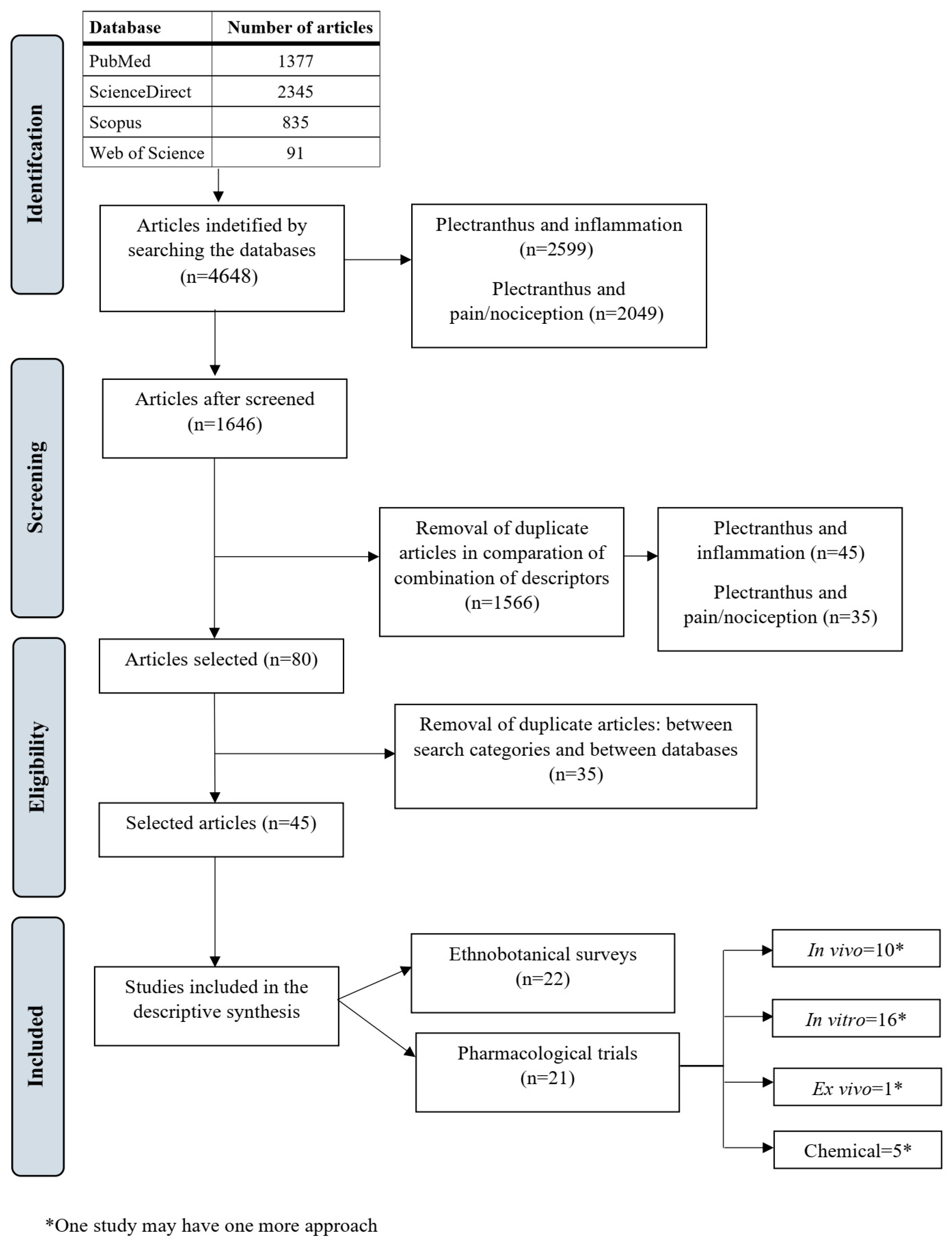
The initial search using all combinations of keywords found 4648, with 2599 reporting Plectranthus and inflammation and 2049 to Plectranthus and pain/nociception (Figure 1). Details on the article search are shown in Table S1. After abstract reading and duplicate exclusion, a total of 43 articles (Figure 1) were included in this review, 22 (51.16%) of which were focused on ethnobotanical surveys, while 21 (48.84%) of them consisted of pharmacological trials.
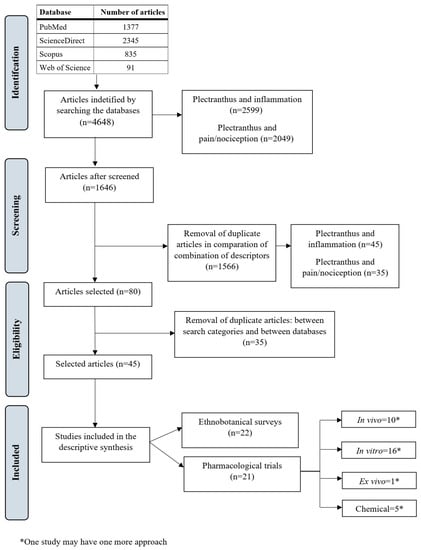
Figure 1.
The flowchart diagram describing step by step the articles analysis process of eligible studies included in this systematic review.
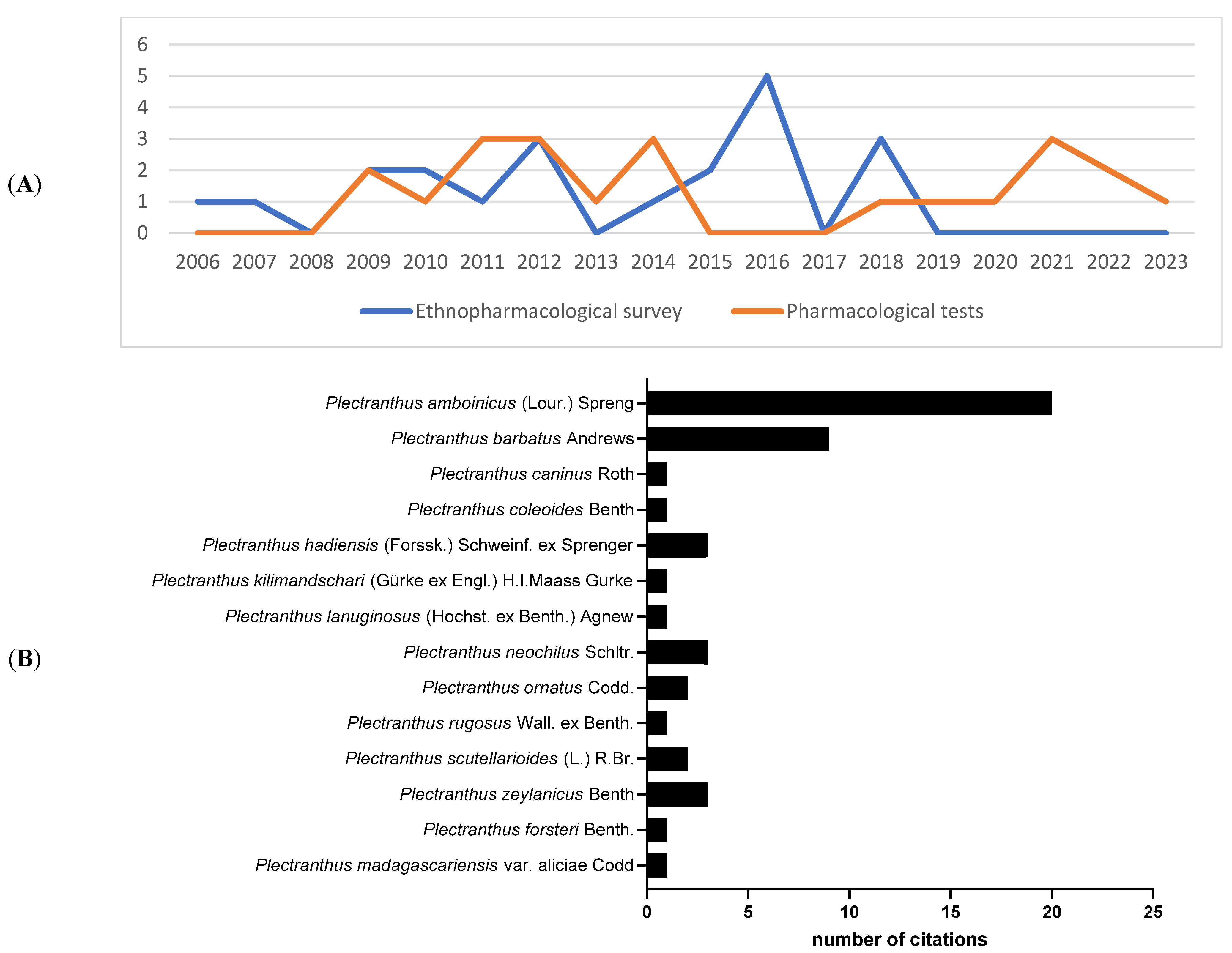
The review identified fourteen species of Plectranthus and showed that most studies were published in 2012 (Figure 2A). As shown in Figure 2B, Plectranthus amboinicus was the most frequently mentioned species (20 mentions), possibly reflecting its relevance in traditional medicine.
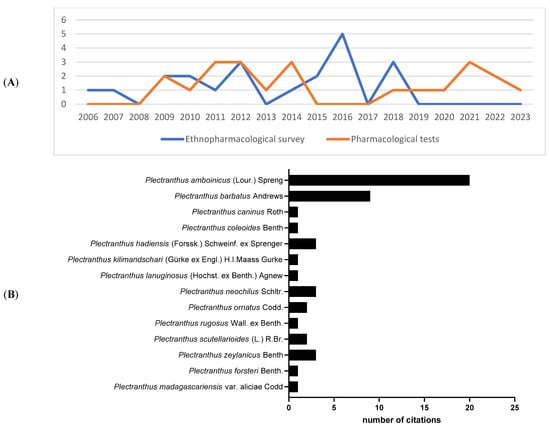
Figure 2.
Ethnobotanical surveys data and pharmacological trials: distribution of articles over the years (A) and total number of citations of each eligible Plectranthus species (B) included in this systematic review.
2.2. Ethnobotanical Studies
Table 1 presents information on the use of Plectranthus species according to ethnobotanical studies. It was observed that most studies were carried out in Africa, South America, and Asia, reflecting the relevance of the genus in the traditional medicine of these continents. Evidence indicates that these areas, along with Oceania (Australia), are the primary habitat for Plectranthus species [12,13].
Some species of this genus were introduced and cultivated in these countries due to favorable climatic conditions. The medicinal use of this genus is of particular importance in South America. The genus was introduced in Brazil during the 16th century, at the beginning of the colonial period. In this country, the extensive use of Plectranthus species to treat pain and inflammation is related to easy access to plants, in contrast to the difficult access to health services and medicines [14]. Notably, out of the 250,000 species cataloged by the United Nations Educational, Scientific and Cultural Organization (UNESCO), 20% are native to Brazil, which favors their use in managing diseases by local communities [11].
Ten species were reported in ethnobotanical studies: Plectranthus amboinicus (Lour.) Spreng [15,16,17,18,19,20,21,22,23], Plectranthus barbatus (Andrews) Benth. [15,18,24,25,26,27,28,29], Plectranthus neochilus Schtr. [15,30], Plectranthus coleoides Benth. [31], Plectranthus kilimandschari Gurke [32], Plectranthus lanuginosus [33], Plectranthus ornatus Codd. [18,21], Plectranthus rugosus [34], Plectranthus scutellarioides (L.) R. Br. [35] and Plectranthus zeylanicus Benth. [36].
Plectranthus amboinicus (Lour.) Spreng receives a variety of popular names such as “hortelã-folha” [15,24], “malva-do-reino” [17,19], “orégano Cubano” [18], “pêng pèng xiāng” [23], “oregano” [20], “malvarisco” [21], and “omavalli” [22].
Plectranthus amboinicus (Lour.) Spreng is a species of African origin, primarily found in the eastern and southeastern regions of the continent, where a tropical climate prevails [37]. Its distribution in the Americas extends from the Antilles region to southern Brazil [38]. Plectranthus aromaticus Roxb., Coleus aromaticus Benth., and Coleus amboinicus Lour. are considered synonyms of P. amboinicus [39]. This plant is known to be a widely versatile natural resource. In addition to its application in traditional medicine, its aromatic leaves and refreshing scent are used in gastronomy to flavor various dishes, especially meats [40].
While the leaves were the part of the plant mainly used [18,20,21,22,23,25,26,27,31,32,41], the roots [36] and the whole plant [29] were also mentioned. However, 8 of the 21 studies did not provide information on the part of the plant used [15,16,17,28,30,33,35]. According to the literature, various plant components of the Plectranthus species can be considered for medical use, including the leaves, stem, roots, and tubers [42].
The leaves are often used in folk medicine due to their medicinal properties and accessible collection and preparation method. They also contain various chemical compounds with antioxidant, anti-inflammatory, analgesic, and antimicrobial properties. From the perspective of natural resource conservation, the predominant use of leaves in medicinal preparations is positive as it does not cause the death of the collected specimen, thus contributing to the preservation of the local flora [43,44,45] The decoction technique was the most used form of preparation [17,18,20,23,36], followed by infusion [15,27,32,36,41] and maceration [15,18]. Syrup [17,19], juice [17,22,31,41], and leaf paste [31,34] were also reported. However, only one study details the plant preparation process [22]. Regarding the administration route, the oral route was the most reported [17,20,21,25,31,35], corroborating the frequent use of teas (infusions) in folk medicine [46].

Table 1.
Main study aspects of ethnobotanical surveys.
Table 1.
Main study aspects of ethnobotanical surveys.
| Author, Year | Place | Country | Cited Species | Use in Inflammation | Use in Pain | Pharmaceutical Form | Part Used | Preparation | Administration | Total of Informants |
|---|---|---|---|---|---|---|---|---|---|---|
| Ignacimuthu et al., 2006 [31] | Madurai, Tamil Nadu | India | P. coleoides Benth. | Wound healing | Labor pain (during pregnancy) | Juice, paste of leaves | Leaves | NR | Oral (drink), local administration | 12 |
| Maregesi et al., 2007 [32] | Bunda | Tanzânia | P. kilimandschari Gurke | Chest pain | Infusion | Leaves | NR | NR | 10 | |
| Ferreira, 2009 [25] | Marudá, Pará | Brazil | P. barbatus (Andrews) Benth. | Fever | Nonspecific pain, toothache | Fresh infusion, | Leaves | NR | Oral | 37 |
| Pereira et al., 2009 [28] | Ponta Porã, Mato Grosso | Brazil | P. barbatus (Andrews) Benth. | - | Recurrent pain | NR | NR | NR | NR | 137 |
| Cartaxo et al., 2010 [17] | Riacho Catingueira, Aiuaba, Ceará | Brazil | P. amboinicus (Lour.) Spreng | Bronchitis, uterine inflammation, inflammation of internal organs, nonspecific inflammation | Headache | Decoction, syrup, juice | NR | NR | Oral (drink) or bathing | 91 |
| Rahmatullah et al., 2010 [29] | Khulna | Bangladesh | P. barbatus (Andrews) Benth. | - | Cramps | NR | Whole plant | NR | NR | NR |
| Waruruai et al., 2011 [35] | Bougainville | Papua New Guinea | P. scutellarioides (L.) R. Br. | - | Headache | NR | NR | NR | Oral | 21 |
| Bieski et al., 2012 [15] | Pantanal, Mato Grosso | Brazil | P. amboinicus (Lour.) Spreng | Bronchitis, uterine inflammation | - | Infusion | NR | NR | NR | 262 |
| P. barbatus (Andrews) Benth. | - | Pain | Maceration | NR | NR | NR | ||||
| P. neochilus Schtr. | Labyrinthitis | Pain | Maceration | NR | NR | NR | ||||
| Furlanetto et al., 2012 [18] | Mandaguaçu, Paraná | Brazil | P. amboinicus (Lour.) Spreng | Gastritis | Headache | Maceration, decoction | Leaves | NR | NR | 220 |
| P. barbatus (Andrews) Benth. | Gastritis | Headache | Maceration, decoction | Leaves | NR | NR | ||||
| P. ornatos Codd. | Gastritis | Headache | Maceration, decoction | Leaves | NR | NR | ||||
| Ong and Kim, 2014 [20] | Ati Negrito, Guimaras | Filipinas | P. amboinicus (Lour.) Spreng | Asthma | - | Decoction | Leaves | NR | Oral | 65 |
| Bieski et al., 2015 [16] | Vale do Juruena, Legal Amazon, Mato Grosso | Brazil | P. amboinicus (Lour.) Spreng | Wound healing, fever, gastritis | Local pain | NR | NR | NR | NR | 383 |
| P. barbatus (Andrews) Benth. | Fever, labyrinthitis | Heartburn, pain, local pain, menstrual cramps | NR | NR | NR | NR | ||||
| Oliveira et al., 2015 [26] | Oriximiná, Pará | Brazil | P. barbatus (Andrews) Benth. | Migraine | NR | Leaves | NR | NR | 35 | |
| Lemos et al., 2016 [19] | Barbalha, Ceará | Brazil | P. amboinicus (Lour.) Spreng | Bronchitis | Sore throat | Infusion, juice, syrup | Leaves | NR | NR | 54 |
| Li and Xing, 2016 [23] | Hainan | China | P. amboinicus (Lour.) Spreng | Abscess | Pain | Decoction | Leaves | NR | NR | 27 |
| Pedrollo et al., 2016 [21] | Jauaperi, Roraima | Brazil | P. amboinicus (Lour.) Spreng | - | Headache | NR | Leaves | NR | Oral | 62 |
| P. ornatus Codd. | - | Bellyache | NR | Leaves | NR | Oral | ||||
| Santana et al., 2016 [30] | Quilombo Salamina Putumujumar, Bahia | Brazil | P. neochilus Schtr. | - | Cramps | NR | NR | NR | NR | 74 |
| Penido et al., 2016 [27] | Imperatriz, Maranhão | Brazil | P. barbatus (Andrews) Benth. | Hepatite | Stomachache | Infusion | Leaves | NR | NR | 205 |
| Rajalakshmi et al., 2019 [22] | Thanjavur, Tamil Nadu | Índia | P. amboinicus (Lour.) Spreng | – | Headache | Juice | Leaves | 10 g of leaves with sesame oil | Topical use | 137 |
| Napagoda et al., 2018 [36] | Gampaha | Sri Lanka | P. zeylanicus Benth. | Fever | - | Decoction, infusion | Roots | NR | NR | 458 |
| Kidane et al., 2018 [33] | Ganta Afeshum, Tigray | Ethiopia | P. lanuginosus | Tonsillitis | - | NR | NR | NR | NR | 78 |
NR = not reported.
Table 2 shows the number and relative frequency of citations (RFC) of Plectranthus species in ethnobotanical studies reporting their use in the treatment of inflammation and pain. Higher RFC values indicate a higher level of data homogeneity, considering the versatility of pharmaco-therapeutic properties or observed toxicity effects. It was observed that Plectranthus amboinicus and Plectranthus barbatus are the most representative species of this genus, with a relatively uniform distribution and remarkable consensus in their citation. Despite the significant variation in their chemical constituents, these species are considered efficient in treating pain and inflammation.
Table 2.
Indications and relative frequency of citation (RFC) of Plectranthus species.
The indications of Plectranthus species for painful processes included headache, sore throat, heartburn, menstrual cramps, colic, toothache, stomachache, migraine, chest pain, abdominal pain, local pain, nonspecific pain, labor pain, and recurring pain. Among these, headache was the most frequently reported [17,18,21,22,35]. Projections indicate that 99% of women and 95% of men will have cephalalgia (the medical term for headache) at least once in their lifetime. The data also show that 40% of these people feel or will feel it with a certain periodicity [47].
Regarding inflammation, the species were indicated for treating wounds, fever, bronchitis, uterine inflammation, abscess, asthma, hepatitis, labyrinthitis, tonsillitis, inflammation of internal organs, and nonspecific inflammation. Plectranthus species were mainly indicated in this context due to their wound healing properties. Since prehistoric times, plants have been used for wound care, where they could be applied directly to the injury through poultices to stop bleeding and accelerate the healing process or ingested to act systemically [48,49].
In a comprehensive review study on the ethnobotanical uses of this genus, around 20 species of Plectranthus were indicated for skin-related conditions, including wound healing. In comparison, 21 species were indicated for digestive disorders. Additionally, 15 types of Plectranthus were reported to treat fever [39], corroborating the present findings.
In this study, five species were simultaneously indicated for treating pain and inflammation: P. amboinicus (Lour.) Spreng. [16,17,18,23,41], P. barbatus (Andrews) Benth. [16,18,25,27], P. neochilus Schtr. [15], P. coleoides Benth. [31] and P. ornatus Codd. [18]. Researchers claim that Plectranthus species have the potential to be used in the treatment of fever, pain, skin diseases, respiratory and genitourinary infections, and musculoskeletal, circulatory, and blood disorders, among others [39,50].
2.3. Pharmacological Studies
A detailed synthesis of the 22 experimental studies included in this review was achieved by presenting their main findings, as shown in Table 3. Ten species were investigated: Plectranthus aliciae [51], Plectranthus amboinicus (Lour.) Spreng [40,52,53,54,55,56,57,58,59,60,61], Plectranthus barbatus (Andrews) Benth [62], Plectranthus caninus Roth [63], Plectranthus forsteri [64], Plectranthus hadiensis (Hribera) [65,66,67], Plectranthus neochilus [68], Plectranthus scutellarioides (L.) R. Br. [69], and Plectranthus zeylanicus Benth. [70,71].
Table 3.
Main aspects of pharmacological assays.
The ethanolic extract of the species P. aliciae and its constituent, rosmarinic acid, were encapsulated in gold nanoparticles and tested for antibacterial effects against aerobic and anaerobic bacteria present in epidermal acne vulgaris (Cutibacterium acnes and Staphylococcus epidermis). Although the compounds showed low toxicity to human keratinocytes and were effective in treating skin wounds, no antibacterial activity or inhibition of the biofilm was observed. Gold nanoparticles containing rosmarinic acid (29.2 g/mL v/v) were found to significantly increase wound closure by 21.4% to 25% compared to negative cellular control and pure rosmarinic acid at the highest tested concentration (500 g/mL) [51]. This study shows that encapsulating the main compound of P. aliciae, rosmarinic acid, has significant healing effects.
In vivo and in vitro research demonstrated that P. amboinicus presented significant anti-inflammatory, analgesic, antimicrobial, antioxidant, and antitumor activities and protected against metabolic disorders. Two species had the essential oil evaluated, where carvacrol was found as the principal constituent. In the studies evaluating the activity of extracts, rosmarinic acid was the most significant secondary metabolite identified in the chemical analyses.
The aqueous extract of P. amboinicus leaves significantly decreased paw edema in rats with collagen-induced arthritis, which was associated with reduced levels of IgM, anti-collagen CRP, and pro-inflammatory cytokines such as tumor necrosis factor-alpha (TNF-α), interleukin-6 (IL-6) and interleukin-1-beta (IL-1β) [52]. In RA, elevated levels of these cytokines activate synovial mesenchymal cells and increase the production of prostaglandins and metalloproteinases. It was suggested that the anti-inflammatory effects of this species were due to the presence of thymoquinone, identified in the hexane extract of P. amboinicus [42]. Notably, the quinone group, present in compounds of several species of Lamiaceae, besides presenting anti-inflammatory activity, has antibacterial, antihypertensive, antidiabetic, neuroprotective, anti-apoptotic, and apoptotic effects [72].
The study of [40] sought to investigate the constituents of the aqueous and hexane extract of P. amboinicus and prepare analogs with therapeutic potential for treating rheumatoid arthritis. They showed that 2-(3,4-dihydroxybenzylidenyl)-3-(3,4-hydroxyphenyl)-4-hydroxy-pentane dioic acid, shimobashyric acid, salvianolic acid, and rosmarinic acid inhibited the binding of the transcription factor AP-1 to its consensual DNA sequence.
Disease-modifying antirheumatic drugs that block cytokine signaling are promising therapeutic agents in rheumatoid arthritis, targeting disease-related biological factors such as TNF-α and transcription factor AP-1. Therefore, the study shows that the constituents of the P. amboinicus species and their analogs may significantly affect arthritis, a progressive [52,56] chronic disease. These results are further evidenced by the studies conducted by [52,56].
The study of [56] evaluated the inhibitory effects of osteoclastogenesis and inflammatory bone erosion of P. amboinicus in mice with collagen-induced arthritis (AIC). The authors found that the extract of this species considerably inhibited bone resorption activity of mature osteoclasts at a dose of 375 mg/kg. A study by [55] showed that the equivalent dose (350 mg/kg) also presented a significant antiedematogenic effect in rats’ paw edema model induced by carrageenan. These authors also reported the inhibitory effects of the extract in the growth of sarcoma-180 and Ehrlich’s ascites tumors, considering the doses of 100, 150, 250, and 350 mg/kg.
The aqueous extract and essential oil of P. amboinicus showed analgesic and anti-inflammatory activities. It was demonstrated that its mechanism is related to the modulation of antioxidant enzymatic activities in the liver and the decrease in malondialdehyde (MDA), tumor necrosis factor-alpha (TNF-α), and cyclooxygenase2 (COX-2). Through in vitro assays, these authors observed inhibitory effects on lipopolysaccharide (LPS)-stimulated RAW 264.7 cells that were associated with the degradation of IκB-α and nuclear translocation of the p65 subunit of NF-Κb [53].
The work of [57] also evaluated the anti-inflammatory activity of aqueous extracts and ethyl acetate of P. amboinicus, demonstrating that the expression of oxidative stress markers, iNOS, COX-2, IL-1β, histamine receptor 1, and NF-Κb was modulated by the pretreatment with the extracts. In addition, the same treatments resulted in decreased NO production, indicating inhibition of macrophage activation. Studies investigating the anti-inflammatory mechanisms of P. amboinicus (PA-F4) demonstrated the inhibition of the NLRP3 inflammasome. PA-F4 inhibited the ATP-induced release of caspase-1, IL-1β, and IL-18 from lipopolysaccharide-initiated cells (LPS) by blocking NF-kB activation. These authors suggested that rosmarinic acid, cirsimaritin, salvigenin, and carvacrol are the active components of the extract [59]. The study of [56] showed that rosmarinic acid inhibited the activation of the transcription factor NF-κB and NFATc1 in bone marrow macrophages (BMM). Moreover, evidence indicates that P. amboinicus has anti-inflammatory, antibacterial, and antifungal activities partially mediated by carvacrol [60]. These data corroborate the previously mentioned studies and demonstrate the therapeutic potential of P. amboinicus in inflammatory and infectious diseases.
P. amboinicus ethanolic extract inhibited the expression of ICAM-1, VCAM-1, and CD40 in obese rats, in addition to decreasing the levels of oxidative stress and inflammatory markers [58]. P. amboinicus also showed diuretic effects associated with improved electrolyte balance [54]. These results emphasize the effectiveness of this species in metabolic diseases such as hypertension and diabetes, which stand out as public health problems.
Regarding the analgesic activity, it was observed [53] that the aqueous extract decreased the writhing response and dose dependently inhibited formalin-induced paw-licking behavior in the late phase. Lopes et al. [54] showed that the alcoholic, hydroalcoholic, and aqueous extracts also showed analgesic effects by decreasing the percentage of abdominal contortions in mice, with the alcoholic extract showing the most significant effects.
The anti-inflammatory activity of P. amboinicus was also observed through the membrane stabilization method (HRBC) by [61], who demonstrated that the aqueous extract of the leaves (500 µg/mL) showed results comparable to hydrocortisone sodium [61]. Another species of the genus, P. hadiensis, was found to inhibit platelet and promote membrane stabilization in HRBC [65]. The terpenoid fraction of P. hadiensis presented excellent radical-scavenging activity [66], while the diethyl ether and n-hexane extracts of the leaves inhibited COX-2, demonstrating that the species has anti-inflammatory and antioxidant activities [67].
The study of [62] demonstrated the antiviral, anti-inflammatory, and antioxidant effects of the ethanol extract of P. barbatus against HIV-1. The extract inhibited the production of pro-inflammatory cytokines and reduced the expression of HIV-1 reverse transcriptase (CI50 = 62.0 μg/mL). In addition, the extract showed a relevant antioxidant effect. However, the mechanisms underlying these actions remain to be determined.
A study by [63] evaluated the anti-inflammatory, antimicrobial, and antioxidant activities of P. caninus essential oil, demonstrating that 200 and 300 mg/kg doses significantly inhibited the late phase of carrageenan-induced paw edema. The essential oil also demonstrated significant activity against a broad spectrum of pathogens, including Gram-positive and Gram-negative bacteria and some fungal strains. Moreover, the extract presented a concentration-dependent DPPH-scavenging activity with an EC50 value of 3.5 μL/mL, indicating significant antioxidant activity in vitro. These effects are possibly mediated by camphor (22.36%) and α-thujene (14.48%), the significant components in the essential oil.
Concerning other species listed in this review, the ethanolic and cyclohexane extracts of P. forsteri were found to reduce the levels of IL-6 and TNF-α, demonstrating promising in vitro anti-inflammatory activity in LPD-stimulated THP-1 cells [64]; The hydroalcoholic extract of P. neochilus showed healing effects associated with skin reepithelialization marked by the presence of fibroblasts, collagen fibers, and blood vessels in scars of Wistar rats [68]; Different extracts of P. scutellarioides [69] inhibited NO production, indicating inhibition of macrophage activation; P. zeylanicus extracts inhibited 5-LOX expression in stimulated human neutrophils but failed to show free radical scavenging activity and inhibit ROS production [70]. The dichloromethane extract (DCM) of this species showed significant antibacterial activity against methicillin-resistant Staphylococcus aureus with a minimum inhibitory concentration (MIC) of 62.5 g/mL [36,70]. These findings point to the pharmacological potential of Plectranthus species in acute and chronic inflammation and infection.
2.4. Methodological Quality/Risk of Bias Analysis
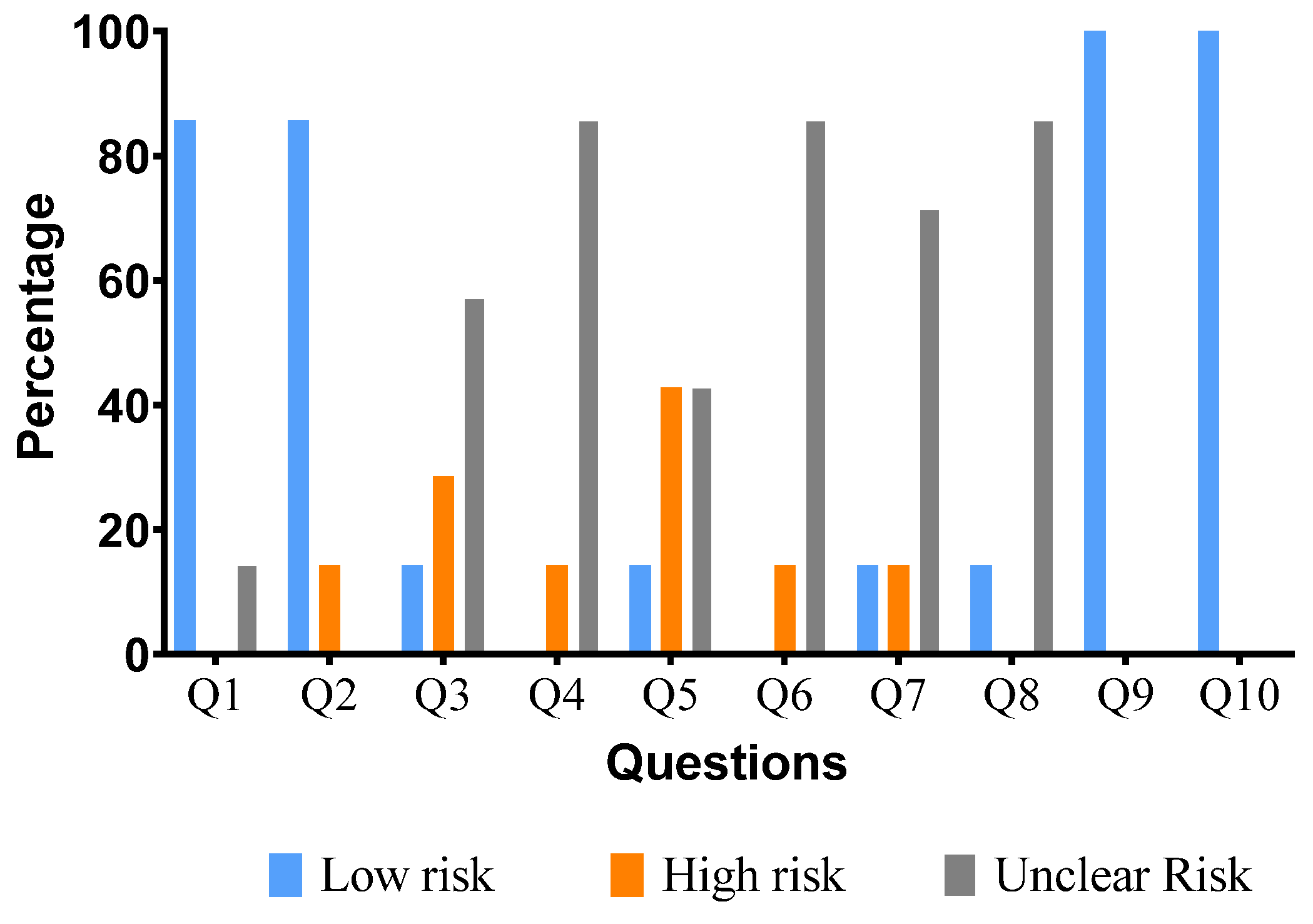
The methodological quality assessment/risk of bias analysis was performed for in vivo studies. For the first question regarding appropriate allocation, only the study by [53] was classified as having a high risk of bias for an inability to assess the risk and design characteristics of the groups. In contrast, the other studies were given a low risk. Regarding blind group allocations during the experiments, only the study in [56] reported accurate information, presenting a low risk, while the studies in [53,55,57,58,60,68] obtained an unclear risk (Table 4).
Table 4.
Methodological quality for preclinical pharmacological trials per reviewer.
Nine studies were clear about animal allocation during the experimental period: those in [52,54,55,56,57,58,60,63,68]. Only the study in [53] presented a high risk for this item. In the blinding before the animal intervention stage, the study by [52] was the only one that reported performing this step. The studies in [53,55,56] had a high risk for this question, while [56,57,58,60,63,68] had an unclear risk of bias.
Question 9 asked if the animals were randomly selected for the result evaluation. Most studies (six) had an unclear risk regarding random animal evaluation (Chang et al., 2010 [52]; Duraisamy et al., 2021 [57]; El-Hawary et al., 2012 [54]; Gurgel et al., 2009 [55]; Harefa et al., 2021 [58]; Hsu et al., 2011 [56]; Manjamalai et al., 2012 [60]; Rêgo et al., 2021 [68]; Tadesse et al., 2011 [63]). Only the study in [53] presented information on the blinded evaluation outcome reported.
For question 8, most authors did not present data to classify the risk, with [52,55,57,58,60,63,68] obtaining an unclear risk of bias and [56] presenting a low risk.
Lastly, for items 9 (selective data results) and 10 (other sources of bias), all studies presented a low risk, with the percentage of the different types of bias expressed in Figure 3.
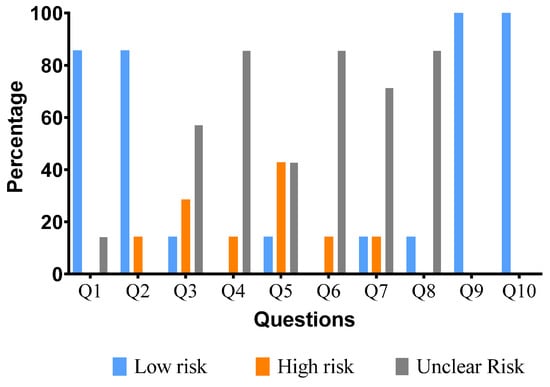
Figure 3.
Percentage of the methodological quality evaluation results from the articles concerning the ten items.
3. Materials and Methods
3.1. Review Outline and Data Selection, Procedure, and Analysis
The present study is a descriptive systematic literature review (SR) developed according to the PRISMA guidelines [73]. Given the objective of this study, five guiding questions were elaborated: Which species from the Plectranthus genus are described for treating inflammation and pain? What signs and symptoms are portrayed in the studies related to inflammation or pain? Are there species involved in the treatment of both conditions? Of the species found in ethnobotanical survey studies, have pharmacological tests been performed to investigate their anti-inflammatory or analgesic/antinociceptive activities? What are the characteristics of the studies found, and what are the biases they present?
The articles were collected from PubMed (Central: PMC- National Library of Medicine National Institutes of Health), ScienceDirect (Elsevier), SciVerse Scopus, and Web of Science (Main Collection—Clarivate Analytics) from December 2006 to April 2023. A total of fourteen different combinations using English descriptors were adopted in the search. Table S1 shows the details from the accessions, broken down by research category (Plectranthus and inflammation and Plectranthus and pain/nociception).
The selection criteria included fully available papers published in any language. Studies that did not contain the correct species specification, those that presented the description of the plant’s use only indicating the body or organ system, and other reviews were excluded. The relative frequency of citation (RFC) of each species is calculated by the number of works mentioning the use of species divided by the total number of works.
Two researchers (M.O.B. and G.M.d.L.L.) conducted the search with no articulation that could influence data collection. During the screening, an eligibility parameter form was applied to evaluate the titles and abstracts from the findings. Following this initial step, a detailed reading of the studies to confirm their inclusion or exclusion. Subsequently, the results from the two investigators were compared, and any divergences were resolved. A consensus between the parties determined the final sample and the data extraction step commenced.
3.2. Review Outline and Data Selection Procedure
The selected studies were classified into ethnobotanical surveys and pharmacological trials. Data extraction was performed following the PICOT (P—population, I—intervened, C—control, O—outcome, and T—type of study) process, adapted to each research nature.
Thus, in ethnobotanical surveys, the highlighted information concerned the: research place, country, cited species, the local name mentioned, an indication of use related to pain, the indication of use related to inflammation, a form of use, method of preparation, and conduct of the use. The pharmacological assays had the following elements extracted: study objective, studied species, type of study, chosen animal model, performed protocols, tested botanical form, plant part used, identified active principle, and results.
In addition, methodological quality assessment tools were adopted. SYRCLE RoB was used for pharmacological studies with non-human animals (in vivo and ex vivo) [74]. Based on Cochrane Collaboration’s criteria, SYRCLE’s RoB contains 10 entries, which fall into 6 types of bias: selection bias; performance bias; detection bias; attrition bias; reporting bias, and other biases [75].
The items considered by Cochrane Collaboration are randomization, allocation, blinding, data from incomplete outcomes, and funding source bias [74]. Thus, after carefully examining each study, the results were classified as “low risk of bias”, “high risk of bias”, and “unclear risk of bias”. It is noteworthy that in vitro preclinical and chemical research were not, at this time, considered since there are no validated instruments to examine their quality [76].
4. Conclusions
The present review contributed to the identification of different Plectranthus species investigated or used in the treatment of inflammatory and painful conditions. Most studies in the review consisted of ethnobotanical surveys highlighting their relevance to drug development research.
Plectranthus amboinicus presented the highest prevalence among studies, confirming the species’ ethnobotanical and pharmacological importance, especially in inflammatory, infectious, and metabolic diseases. In this context, carvacrol and rosmarinic acid, secondary metabolites identified in extracts and essential oils of this species, are promising drug candidates.
The species Plectranthus aliciae, Plectranthus barbatus, Plectranthus caninus, Plectranthus forsteri, Plectranthus hadiensis, Plectranthus neochilus, Plectranthus scutellarioides, and Plectranthus zeylanicus also showed relevant pharmacological activities such as antiviral, antioxidant, antimicrobial, antifungal and anti-inflammatory and as such are of interest in pharmacological research.
While several classes of secondary compounds have been isolated and characterized, their individual and relative contributions to the pharmacological effects of each species need to be better investigated. This approach will significantly contribute to elucidating the mechanisms underlying the effects of action and signaling pathways in the pathogenesis of Plectranthus species in inflammatory and painful responses.
Supplementary Materials
The following supporting information can be downloaded at: https://www.mdpi.com/article/10.3390/molecules28155653/s1, Table S1. Outline of the descriptor applications and their combinations to databases. Table S2. Description of initial and final results by accessed database.
Author Contributions
Conceptualization, M.R.K.M., P.W. and I.R.A.d.M.; methodology, H.D.M.C., M.d.O.B., G.d.A.D. and G.M.d.L.L.; software, L.Y.S.d.S. and S.C.A.J.; validation, L.B.R.D. and I.C.S.L.d.B.; formal analysis, J.R.-F., D.S.B., D.d.Q.D. and P.W.; investigation, M.d.O.B., L.Y.S.d.S., D.S.B. and S.C.A.J.; resources, D.d.Q.D., D.S.B., S.C.A.J. and I.C.S.L.d.B.; data curation, J.R.-F. and C.F.B.F.; writing—original draft preparation, H.D.M.C., L.B.R.D., M.d.O.B., G.d.A.D., G.M.d.L.L. and L.Y.S.d.S.; writing—review and editing, J.R.-F., M.R.K.M., G.d.A.D., P.W. and I.R.A.d.M.; visualization, I.C.S.L.d.B. and D.d.Q.D.; supervision, M.R.K.M., C.F.B.F. and I.R.A.d.M.; project administration, P.W., M.R.K.M., C.F.B.F. and I.R.A.d.M.; funding acquisition, P.W. and I.R.A.d.M. All authors have read and agreed to the published version of the manuscript.
Funding
The authors would like to thank the financial support provided of support of the Brazilian agencies CAPES, FUNCAP, CNPq, and FINEP. This article was supported by the Nacional Institute of Science and Technology—Ethnobiology, Bioprospecting, Nature Conservation/CNPq/FACEPE, and Mahidol University, Thailand.
Institutional Review Board Statement
Not applicable.
Informed Consent Statement
Not applicable.
Acknowledgments
Regional University of Cariri (URCA), Brazil.
Conflicts of Interest
The authors declare no conflict of interest.
Sample Availability
Samples of the compounds are available from the authors.
References
- Sales, M.D.C.; Sartor, E.B.; Gentilli, R.M. Ethnobotany and ethnopharmacology: Traditional medicine and the bioprospection of phytotherapics. Salus J. Health Sci. 2015, 1, 17–25. [Google Scholar] [CrossRef]
- Saggar, S.; Mir, P.A.; Kumar, N.; Chawla, A.; Uppal, J.; Shilpa, S.; Kaur, A. Traditional and Herbal Medicines: Opportunities and Challenges. Pharmacogn. Res. 2022, 14, 107–114. [Google Scholar] [CrossRef]
- Porras, G.; Chassagne, F.; Lyles, J.T.; Marquez, L.; Dettweiler, M.; Salam, A.M.; Samarakoon, T.; Shabih, S.; Farrokhi, D.R.; Quave, C.L. Ethnobotany and the Role of Plant Natural Products in Antibiotic Drug Discovery. Chem. Rev. 2021, 121, 3495–3560. [Google Scholar] [CrossRef] [PubMed]
- Berdigaliyev, N.; Aljofan, M. An overview of drug discovery and development. Future Med. Chem. 2020, 12, 939–947. [Google Scholar] [CrossRef]
- Marmitt, D.J.; Rempel, C.; Goettert, M.I.; Silva, A.D.C.E. Plantas Medicinais da RENISUS Com Potencial Anti-inflamatório: Revisão Sistemática Em Três Bases de Dados Científicas. Rev. Fitos 2015, 9, 129–144. [Google Scholar] [CrossRef][Green Version]
- Braun, J.; Baraliakos, X.; Westhoff, T. Nonsteroidal anti-inflammatory drugs and cardiovascular risk–a matter of indication. Semin. Arthritis Rheum. 2020, 50, 285–288. [Google Scholar] [CrossRef]
- Figueiredo, W.L.M.; Alves, T.C.A. Uso dos anti-inflamatórios não esteroides no controle da dor aguda. Rev. Neurociênc. 2015, 23, 463–467. [Google Scholar] [CrossRef]
- Ribeiro, F.F.; Conceição, L.D.O.D.; Oyama, E.M.; Furlan, M.R. Boldo verdadeiro x boldo falso: Caracterização morfoanatômica foliar. Visão Acad. 2017, 18. [Google Scholar] [CrossRef]
- Bandeira, J.; Barbosa, F.; Barbosa, L.; Rodrigues, I.; Bacarin, M.; Peters, J.; Braga, E. Composição do óleo essencial de quatro espécies do gênero Plectranthus. Rev. Bras. Plantas Med. 2011, 13, 157–164. [Google Scholar] [CrossRef]
- Mauro, C.; Silva, C.d.P.; Missima, J.; Ohnuki, T.; Rinaldi, R.B.; Frota, M. Estudo anatômico comparado de órgãos vegetativos de boldo miúdo, Plectranthus ornatus Codd. e malvariço, Plectranthus amboinicus (Lour.) Spreng.—Lamiaceae. Rev. Bras. Farm. 2008, 18, 608–613. [Google Scholar] [CrossRef]
- Santos, L.A.; Menezes, J.D.S.; Rufino, L.R.A.; Oliveira, N.D.M.S.; Fiorini, J.E. Determination of the antimicrobial activity in the hydroalcoholic extract of the plant Plectranthus ornatus Codd (Bilberry Chinese). Rev. Méd. Minas Gerais 2014, 24. [Google Scholar] [CrossRef]
- Cretton, S.; Saraux, N.; Monteillier, A.; Righi, D.; Marcourt, L.; Genta-Jouve, G.; Wolfender, J.-L.; Cuendet, M.; Christen, P. Anti-inflammatory and antiproliferative diterpenoids from Plectranthus scutellarioides. Phytochemistry 2018, 154, 39–46. [Google Scholar] [CrossRef]
- Freitas, M.; Amorim, A.; Bezerra, A.; Pereira, M.; Bessa, M.; Filho, F.N.; Lacerda, C. Crescimento e tolerância à salinidade em três espécies medicinais do gênero Plectranthus expostas a diferentes níveis de radiação. Rev. Bras. Plantas Med. 2014, 16, 839–849. [Google Scholar] [CrossRef]
- Mesquita, L.S.F.; Matos, T.S.; Ávila, F.D.N.; Batista, A.d.S.; Moura, A.F.; de Moraes, M.O.; da Silva, M.C.M.; Ferreira, T.L.A.; Nascimento, N.R.F.; Monteiro, N.K.V.; et al. Diterpenoids from Leaves of Cultivated Plectranthus ornatus. Planta Med. 2020, 87, 124–135. [Google Scholar] [CrossRef]
- Bieski, I.G.C.; Rios-Santos, F.; de Oliveira, R.M.; Espinosa, M.M.; Macedo, M.L.; Albuquerque, U.P.; de Oliveira Martins, D.T. Ethnopharmacology of Medicinal Plants of the Pantanal Region (Mato Grosso, Brazil). Evid. Based Complement. Altern. Med. 2012, 2012, 272749. [Google Scholar] [CrossRef]
- Bieski, I.G.C.; Leonti, M.; Arnason, J.T.; Ferrier, J.; Rapinski, M.; Violante, I.M.P.; Balogun, S.O.; Pereira, J.F.C.A.; Figueiredo, R.d.C.F.; Lopes, C.R.A.S.; et al. Ethnobotanical study of medicinal plants by population of Valley of Juruena Region, Legal Amazon, Mato Grosso, Brazil. J. Ethnopharmacol. 2015, 173, 383–423. [Google Scholar] [CrossRef]
- Cartaxo, S.L.; Souza, M.M.d.A.; de Albuquerque, U.P. Medicinal plants with bioprospecting potential used in semi-arid northeastern Brazil. J. Ethnopharmacol. 2010, 131, 326–342. [Google Scholar] [CrossRef]
- Furlanetto, P.D.N.C.; Novakowski, G.C.; Correa, E.A. Folk medicine in Mandaguaçu municipality, Paraná State: An ethnobotanical approach. Acta Sci. Biol. Sci. 2012, 34, 463–471. [Google Scholar] [CrossRef][Green Version]
- Lemos, I.C.S.; Delmondes, G.d.A.; dos Santos, A.D.F.; Santos, E.S.; De Oliveira, D.R.; de Figueiredo, P.R.L.; Alves, D.d.A.; Barbosa, R.; de Menezes, I.R.A.; Coutinho, H.D.M.; et al. Ethnobiological survey of plants and animals used for the treatment of acute respiratory infections in children of a traditional community in the municipality of barbalha, ceará, Brazil. Afr. J. Tradit. Complement. Altern. Med. 2016, 13, 166–175. [Google Scholar] [CrossRef]
- Ong, H.G.; Kim, Y.-D. Quantitative ethnobotanical study of the medicinal plants used by the Ati Negrito indigenous group in Guimaras island, Philippines. J. Ethnopharmacol. 2014, 157, 228–242. [Google Scholar] [CrossRef]
- Pedrollo, C.T.; Kinupp, V.F.; Shepard, G.; Heinrich, M. Medicinal plants at Rio Jauaperi, Brazilian Amazon: Ethnobotanical survey and environmental conservation. J. Ethnopharmacol. 2016, 186, 111–124. [Google Scholar] [CrossRef] [PubMed]
- Rajalakshmi, S.; Vijayakumar, S.; Arulmozhi, P. Ethnobotanical survey of medicinal plants in Thanjavur and its surrounding (Tamil Nadu—India). Acta Ecol. Sin. 2019, 39, 380–397. [Google Scholar] [CrossRef]
- Li, D.-L.; Xing, F.-W. Ethnobotanical study on medicinal plants used by local Hoklos people on Hainan Island, China. J. Ethnopharmacol. 2016, 194, 358–368. [Google Scholar] [CrossRef] [PubMed]
- Cerqueira, T.M.G.; de Carvalho Correia, A.C.; dos Santos, R.V.; Lemos, R.P.L.; da Silva, S.A.S.; Barreto, E. The Use of Medicinal Plants in Maceió, Northeastern Brazil: An Ethnobotanical Survey. Medicines 2020, 7, 7. [Google Scholar] [CrossRef]
- Coelho-Ferreira, M. Medicinal knowledge and plant utilization in an Amazonian coastal community of Marudá, Pará State (Brazil). J. Ethnopharmacol. 2009, 126, 159–175. [Google Scholar] [CrossRef]
- Oliveira, D.R.; Krettli, A.U.; Aguiar, A.C.C.; Leitão, G.G.; Vieira, M.N.; Martins, K.S.; Leitão, S.G. Ethnopharmacological evaluation of medicinal plants used against malaria by quilombola communities from Oriximiná, Brazil. J. Ethnopharmacol. 2015, 173, 424–434. [Google Scholar] [CrossRef]
- Penido, A.B.; De Morais, S.M.; Ribeiro, A.B.; Silva, A.Z. Ethnobotanical study of medicinal plants in Imperatriz, State of Maranhão, Northeastern Brazil. Acta Amaz. 2016, 46, 345–354. [Google Scholar] [CrossRef]
- Pereira, Z.V.; Mussury, R.M.; de Almeida, A.B.; Sangalli, A. Medicinal Plants Used by Ponta Porã Community, Mato Grosso Do Sul State. Acta Sci. Biol. sci 2009, 31, 293–299. [Google Scholar] [CrossRef]
- Rahmatullah, M.; Ferdausi, D.; Mollik, A.H.; Jahan, R.; Chowdhury, M.H.; Haque, W.M. A Survey of Medicinal Plants Used by Kavirajes of Chalna Area, Khulna District, Bangladesh. Afr. J. Tradit. Complement. Altern. Med. 2010, 7, 91–97. [Google Scholar] [CrossRef]
- de Santana, B.F.; Voeks, R.A.; Funch, L.S. Ethnomedicinal survey of a maroon community in Brazil’s Atlantic tropical forest. J. Ethnopharmacol. 2016, 181, 37–49. [Google Scholar] [CrossRef]
- Ignacimuthu, S.; Ayyanar, M.; Sivaraman, K.S. Ethnobotanical investigations among tribes in Madurai District of Tamil Nadu (India). J. Ethnobiol. Ethnomed. 2006, 2, 25. [Google Scholar] [CrossRef]
- Maregesi, S.M.; Ngassapa, O.D.; Pieters, L.; Vlietinck, A.J. Ethnopharmacological survey of the Bunda district, Tanzania: Plants used to treat infectious diseases. J. Ethnopharmacol. 2007, 113, 457–470. [Google Scholar] [CrossRef]
- Kidane, L.; Gebremedhin, G.; Beyene, T. Ethnobotanical study of medicinal plants in Ganta Afeshum District, Eastern Zone of Tigray, Northern Ethiopia. J. Ethnobiol. Ethnomed. 2018, 14, 64. [Google Scholar] [CrossRef]
- Parkash, V.; Kumar, D. Ethnomedicinal Uses of Some Plants of Kanag Hill in Shimla, Himachal Pradesh, India. Int. J. Res. Ayurveda Pharm. 2012, 3, 319–322. [Google Scholar]
- Waruruai, J.; Sipana, B.; Koch, M.; Barrows, L.R.; Matainaho, T.K.; Rai, P.P. An ethnobotanical survey of medicinal plants used in the Siwai and Buin districts of the Autonomous Region of Bougainville. J. Ethnopharmacol. 2011, 138, 564–577. [Google Scholar] [CrossRef]
- Napagoda, M.T.; Sundarapperuma, T.; Fonseka, D.; Amarasiri, S.; Gunaratna, P. An Ethnobotanical Study of the Medicinal Plants Used as Anti-Inflammatory Remedies in Gampaha District, Western Province, Sri Lanka. Scientifica 2018, 2018, 9395052. [Google Scholar] [CrossRef]
- Chuchuca, C.C.; Quinche, A.R.S.; González, O.N.V.; Flores, L.S.H.; Guerrero, J.N.Q. Uso de Infusión de oreganón Plectranthus amboinicus (Lour.) Spreng y del vinagre en la crianza de pollos “Acriollados” (Gallus gallus domesticus) mejorados. Acta Agron. 2016, 65, 298–303. [Google Scholar] [CrossRef]
- Oliveira, R.d.A.G.d.; Lima, E.d.O.; de Souza, E.L.; Vieira, W.L.; Freire, K.R.L.; Trajano, V.N.; Lima, I.O.; Silva-Filho, R.N. Interference of Plectranthus amboinicus (Lour.) Spreng essential oil on the anti-Candida activity of some clinically used antifungals. Rev. Bras. Farm. 2007, 17, 186–190. [Google Scholar] [CrossRef]
- Lukhoba, C.W.; Simmonds, M.S.; Paton, A.J. Plectranthus: A review of ethnobotanical uses. J. Ethnopharmacol. 2006, 103, 1–24. [Google Scholar] [CrossRef]
- Chen, Y.-S.; Yu, H.-M.; Shie, J.-J.; Cheng, T.-J.R.; Wu, C.-Y.; Fang, J.-M.; Wong, C.-H. Chemical constituents of Plectranthus amboinicus and the synthetic analogs possessing anti-inflammatory activity. Bioorganic Med. Chem. 2014, 22, 1766–1772. [Google Scholar] [CrossRef]
- Kumar, P.; Sangam; Kumar, N. Plectranthus amboinicus: A review on its pharmacological and pharmacognostical studies. A. J. Physiol. Biochem. Pharmacol. 2020, 10, 55–62. [Google Scholar] [CrossRef]
- Rice, L.; Brits, G.; Potgieter, C.; Van Staden, J. Plectranthus: A plant for the future? S. Afr. J. Bot. 2011, 77, 947–959. [Google Scholar] [CrossRef]
- Cruz, M.G.; Lopes Junior, M.L.; Freitas, M.C.C.; Freitas, A.C.G.d.A.; Santos, L.d.S.; Corrêa, M.J.C.; Araújo, R.N.M.; Silva, L.O.; Pinheiro, W.B.d.S. Levantamento etnobotânico de plantas medicinais na comunidade Guajará de Carapajó, Cametá-pa. Open Sci. Res. VII 2022, 7, 1408–1431. [Google Scholar]
- Farias, O.T.; Nascimento, L.C.; Oliveira, F.S.; Santos, M.D.R.; Bruno, R.L.A. Essential Oil of Andiroba (Carapa guianensis Aubl.) and Copaiba (Copaifera langsdorffi Desf) on Health and Physiology of Seeds Macassar Bean (Vigna unguiculata L. Walp). Rev. Bras. Plantas Med. 2016, 18, 629–635. [Google Scholar]
- Pasa, M.C. Local knowledge and folk medicine: Ethnobotany in Cuiabá, Mato Grosso, Brazil. Bol. Mus. Para. Emílio Goeldi. Ciênc. hum. 2011, 6, 179–196. [Google Scholar] [CrossRef]
- Dos Santos, A.G.S.; Dos Santos, A.B.S. Uso popular de plantas medicinais para tratamento de distúrbios gastrointestinais. Res. Soc. Dev. 2020, 9, e91891110560. [Google Scholar] [CrossRef]
- Junior, A.A.d.S.; Tavares, R.M.; Lara, R.P.; Faleiros, B.E.; Gomez, R.S.; Teixeira, A.L. Frequência dos tipos de cefaleia no centro de atendimento terciário do Hospital das Clínicas da Universidade Federal de Minas Gerais. Rev. Assoc. Med. Bras. 2012, 58, 709–713. [Google Scholar] [CrossRef]
- Silva, D.M.d.; Mocelin, K.R. O Cuidado de Enfermagem Ao Cliente Portador de Feridas Sob a Ótica Do Cuidado Transcultural. Nursing 2007, 9, 81–88. [Google Scholar]
- Souza, D.R.; Rodrigues, E.C.A.M.D.S. Plantas medicinais: Indicação de raizeiros para o tratamento de feridas. Rev. Bras. Em Promoção Saúde 2016, 29, 197–203. [Google Scholar] [CrossRef]
- Rodrigues, F.F.G.; Costa, J.G.M.; Campos, A.R. Study of the Interference between Plectranthus Species Essential Oils from Brazil and Aminoglycosides. Evid.-Based Complement. Altern. Med. 2013, 2013, 724161. [Google Scholar] [CrossRef]
- Lambrechts, I.A.; Thipe, V.C.; Katti, K.V.; Mandiwana, V.; Kalombo, M.L.; Ray, S.S.; Rikhotso, R.; Janse van Vuuren, A.; Esmear, T.; Lall, N. Targeting Acne Bacteria and Wound Healing In Vitro Using Plectranthus Aliciae, Rosmarinic Acid, and Tetracycline Gold Nanoparticles. Pharmaceuticals 2022, 15, 933. [Google Scholar] [CrossRef]
- Chang, J.-M.; Cheng, C.-M.; Hung, L.-M.; Chung, Y.-S.; Wu, R.-Y. Potential Use of Plectranthus amboinicus in the Treatment of Rheumatoid Arthritis. Evid.-Based Complement. Altern. Med. 2010, 7, 115–120. [Google Scholar] [CrossRef]
- Chiu, Y.-J.; Huang, T.-H.; Chiu, C.-S.; Lu, T.-C.; Chen, Y.-W.; Peng, W.-H.; Chen, C.-Y. Analgesic and Antiinflammatory Activities of the Aqueous Extract from Plectranthus amboinicus (Lour.) Spreng. Both In Vitro and In Vivo. Evid. -Based Complement. Altern. Med. 2012, 2012, 508137. [Google Scholar] [CrossRef]
- El-Hawary, S.S.; El-Sofany, R.H.; Abdel-Monem, A.R.; Ashour, R.S.; Sleem, A.A. Polyphenolics content and biological activity of Plectranthus amboinicus (Lour.) spreng growing in Egypt (Lamiaceae). Pharmacogn. J. 2012, 4, 45–54. [Google Scholar] [CrossRef]
- Gurgel, A.P.A.D.; da Silva, J.G.; Grangeiro, A.R.S.; Oliveira, D.C.; Lima, C.M.; da Silva, A.C.; Oliveira, R.A.; Souza, I.A. In vivo study of the anti-inflammatory and antitumor activities of leaves from Plectranthus amboinicus (Lour.) Spreng (Lamiaceae). J. Ethnopharmacol. 2009, 125, 361–363. [Google Scholar] [CrossRef]
- Hsu, Y.-C.; Cheng, C.-P.; Chang, D.-M. Plectranthus amboinicus Attenuates Inflammatory Bone Erosion in Mice with Collagen-induced Arthritis by Downregulation of RANKL-induced NFATc1 Expression. J. Rheumatol. 2011, 38, 1844–1857. [Google Scholar] [CrossRef]
- Duraisamy, P.; Manikandan, B.; Koodalingam, A.; Munusamy, A.; Ramar, M. Anti-inflammatory, anti-nociceptive and anti-oxidant activities of carvacrol containing leaf extracts of edible Indian borage plant Plectranthus amboinicus: An in vivo and in vitro approach. Comp. Clin. Pathol. 2021, 30, 397–413. [Google Scholar] [CrossRef]
- Harefa, K.; Sulastri, D.; Nasrul, E.; Ilyas, S. Analysis of Several Inflammatory Markers Expression in Obese Rats given Plectranthus amboinicus (Lour.) Spreng Ethanol Extract. Pharmacogn. J. 2021, 13, 172–178. [Google Scholar] [CrossRef]
- Leu, W.J.; Chen, J.C.; Guh, J.H. Extract from Plectranthus amboinicus Inhibit Maturation and Release of Interleukin 1β through Inhibition of NF-ΚB Nuclear Translocation and NLRP3 Inflammasome Activation. Front. Pharmacol. 2019, 10, 446300. [Google Scholar] [CrossRef]
- Manjamalai, A.; Alexander, T.; Grace, V.B. Bioactive evaluation of the essential oil of plectranthus amboinicus by gc-ms analysis and its role as a drug for microbial infections and inflammation. Int. J. Pharm. Pharm. Sci. 2012, 4, 205–211. [Google Scholar]
- Ravikumar, V.R.; Dhanamani, M.; Sudhamani, T. In-vitro anti- inflammatory activity of aqueous extract of leaves of Plectranthus amboinicus (Lour.) Spreng. Anc. Sci. Life 2009, 28, 7–9. [Google Scholar] [PubMed]
- Kapewangolo, P.; Hussein, A.A.; Meyer, D. Inhibition of HIV-1 enzymes, antioxidant and anti-inflammatory activities of Plectranthus barbatus. J. Ethnopharmacol. 2013, 149, 184–190. [Google Scholar] [CrossRef] [PubMed]
- Tadesse, S.; Mazumder, A.; Bucar, F.; Veeresham, C.; Asres, K. Chemical Composition and Biological Activities of the Essential Oil of Plectranthus caninus Roth. Pharmacogn. J. 2011, 3, 1–7. [Google Scholar] [CrossRef]
- Nicolas, M.; Lasalo, M.; Chow, S.; Antheaume, C.; Huet, K.; Hnawia, E.; Guillemin, G.J.; Nour, M.; Matsui, M. Anti-inflammatory activities of Coleus forsteri (formerly Plectranthus forsteri) extracts on human macrophages and chemical characterization. Front. Pharmacol. 2023, 13, 1081310. [Google Scholar] [CrossRef]
- Menon, D.B.; Sasikumar, J.M. Anti Inflammtory and Cytotoxic Activity of Methanolic Extract of Plectranthus Hadiensis Stem. Antioxidants from Ethiopian Plants View Project Antioxidant Activities of Under-Exploited Fruits from the Nilgiris. View Project. Available online: https://www.researchgate.net/publication/216675059_Anti_inflammtory_and_cytotoxic_activity_of_methanolic_extract_of_Plectranthus_hadiensis_stem (accessed on 19 July 2023).
- Menon, D.; Sasikumar, J.; Gopalakrishnan, V.K. Antioxidant and Anti-Inflammatory Properties of Terpenoid Fraction Isolated from the Shoot of Plectranthus Hadiensis. Int. J. Pharma. Bio. Sci. 2014, 5, B197–B205. [Google Scholar]
- Schultz, F.; Osuji, O.F.; Wack, B.; Anywar, G.; Garbe, L.-A. Antiinflammatory Medicinal Plants from the Ugandan Greater Mpigi Region Act as Potent Inhibitors in the COX-2/PGH2 Pathway. Plants 2021, 10, 351. [Google Scholar] [CrossRef]
- Rêgo, M.; Franco, E.; Oliveira, R.; Linden, L.; Silva, V.; Maia, C.; Teixeira, M.; Marinho, M.; Lima, E. Evaluation of tissue repair using phytotherapeutic gel from Plectranthus neochilus, Schlechter (boldo-gambá) and Cnidoscolus quercifolius Pohl (favela) in Wistar rats. Arq. Bras. Med. Vet. Zootec. 2021, 73, 395–405. [Google Scholar] [CrossRef]
- Fakhriati, S.G.; Ida, M.; Moektiwardoyo, M.; Ayu, A.C. Inhibition of Nitric Oxide Production in Lipopolysaccharide-Induced Macrophages Cell by Plectranthus scutellarioides (L.) R.Br Leaves. Res. J. Chem. Environ. 2018, 22, 38–42. [Google Scholar]
- Napagoda, M.; Gerstmeier, J.; Wesely, S.; Popella, S.; Lorenz, S.; Scheubert, K.; Svatoš, A.; Werz, O. Inhibition of 5-lipoxygenase as anti-inflammatory mode of action of Plectranthus zeylanicus Benth and chemical characterization of ingredients by a mass spectrometric approach. J. Ethnopharmacol. 2014, 151, 800–809. [Google Scholar] [CrossRef]
- Napagoda, M.; Gerstmeier, J.; Butschek, H.; Lorenz, S.; De Soyza, S.; Qader, M.; Nagahawatte, A.; Wijayaratne, G.B.; Schneider, B.; Svatoš, A.; et al. Plectranthus zeylanicus: A Rich Source of Secondary Metabolites with Antimicrobial, Disinfectant and Anti-Inflammatory Activities. Pharmaceuticals 2022, 15, 436. [Google Scholar] [CrossRef]
- Arcila-Lozano, C.C.; Loarca-Piña, G.; Lecona-Uribe, S.; González de Mejía, E. El Orégano: Propiedades, Composición y Actividad Biológica de Sus Componentes. Arch. Latinoam. Nutr. 2004, 54, 100–111. [Google Scholar]
- Galvão, T.F.; Pansani, T.D.S.A.; Harrad, D. Principais itens para relatar Revisões sistemáticas e Meta-análises: A recomendação PRISMA. Epidemiol. Serv. Saude. 2015, 24, 335–342. [Google Scholar] [CrossRef]
- Higgins, J.P.T.; Altman, D.G.; Gøtzsche, P.C.; Jüni, P.; Moher, D.; Oxman, A.D.; Savović, J.; Schulz, K.F.; Weeks, L.; Sterne, J.A.C.; et al. The Cochrane Collaboration’s tool for assessing risk of bias in randomised trials. BMJ 2011, 343, d5928. [Google Scholar] [CrossRef]
- Hooijmans, C.R.; Rovers, M.M.; de Vries, R.B.M.; Leenaars, M.; Ritskes-Hoitinga, M.; Langendam, M.W. SYRCLE’s Risk of Bias Tool for Animal Studies. BMC Med. Res. Methodol. 2014, 14, 43. [Google Scholar] [CrossRef]
- Delmondes, G.; Bezerra, D.S.; Dias, D.D.Q.; Borges, A.D.S.; Araújo, I.M.; da Cunha, G.L.; Bandeira, P.F.R.; Barbosa, R.; Coutinho, H.D.M.; Felipe, C.F.B.; et al. Toxicological and pharmacologic effects of farnesol (C15H26O): A descriptive systematic review. Food Chem. Toxicol. 2019, 129, 169–200. [Google Scholar] [CrossRef]
Disclaimer/Publisher’s Note: The statements, opinions and data contained in all publications are solely those of the individual author(s) and contributor(s) and not of MDPI and/or the editor(s). MDPI and/or the editor(s) disclaim responsibility for any injury to people or property resulting from any ideas, methods, instructions or products referred to in the content. |
© 2023 by the authors. Licensee MDPI, Basel, Switzerland. This article is an open access article distributed under the terms and conditions of the Creative Commons Attribution (CC BY) license (https://creativecommons.org/licenses/by/4.0/).