


Abstract
Essential oils are a mixture of natural aromatic volatile oils extracted from plants. The use of essential oils is ancient, and has prevailed in different cultures around the world, such as those of the Egyptians, Greeks, Persians, and Chinese. Today, essential oils are used in traditional and complimentary medicines, aromatherapy, massage therapies, cosmetics, perfumes and food industries. The screening effect of essential oils has been studied worldwide. They demonstrate a range of biological activities, such as antiparasitic, antifungal, antibacterial, antiviral, antioxidant, anti-inflammatory, anticancer, antiaging, and neuroprotective properties. In this scoping review, we provide a 10-year updated comprehensive assessment of volatile oils and their effects on the nervous system. MEDLINE, Scopus, and Google Scholar were systematically and strategically searched for original studies investigating these effects from 2012 to 2022. Approximately seventy studies were selected as included studies. Among these studies, several outcomes were reported, including antistress, antianxiety, analgesic, cognitive, and autonomic effects. Some essential oils showed developmental benefits, with the potential to induce neurite outgrowth. The neurotransmitter receptor level can also be modified by essential oil application. Physiological and pathophysiological outcome measures were reported. For physiological outcomes, arousal, cognitive performance, circadian eating behavior, emotional modulation, consumer acceptance, preferences, and willingness to buy were investigated. For pathophysiological conditions, pain, depression, anxiety, stress, sleep disorder, mental fatigue, agitated behavior, and quality of life were measured. In conclusion, essential oils showed promising effects on the nervous system, which can be further applied to their use in functional foods, drinks, and alternative therapy.
1. Introduction
Essential oils (EOs) are the naturally aromatic oily liquids produced by plants, which are responsible for their essence or odor. EOs are found in great quantities in plant oil sacs or oil glands. EOs can be extracted from different parts of plants, including their leaves, barks, flowers, buds, seeds, and peels. As EOs are a concentrated hydrophobic mixture of hydrocarbon volatile compounds that easily evaporate at room temperatures, they are also known as volatile oils. Thus, inhalation via the olfactory system is a common method of use. During the extraction, most volatiles oil are commonly and easily isolated through steam- or hydro-distillation methods. However, for the oils produced from the rind of fruits such as those in the citrus family, the cold-pressed or expressed oils extraction method is usually used. A solvent extraction method is also used for some plant materials that cannot tolerate heat (in steam) or be subjected to cold-pressing, such as the rose, neroli, tuberose, jasmine, and oak [1]. In most plants, the major components of EOs are terpenoid and phenylpropanoid derivatives. Terpenoids are the main components (comprising approximately 80%), but phenylpropanoid provides the flavor and odor of the EOs. Terpenoid and phenylpropanoid are derived from different primary metabolic precursors by different biosynthetic pathways. The pathways for terpenoids synthesis are mevalonate and mevalonate independent (deoxyxylulose phosphate), whereas phenylpropanoids synthesis occurs through the shikimate pathway [2,3]. The scent and bioactivity of EOs depends on their chemical compositions. Different EOs from different plant species and habitats have various potentials. According to the various biological properties, EOs have been widely used and have attracted increased attention in recent years. The primary use of EOs started in the medical field. The term “essential oil” comes from “quinta essentia” in ancient Latin, which means the fifth element. The fifth element is the spirit or life force integrated with the other four elements: fire, air, earth, and water. The isolation of essential oil was thought to be the process of removing the spirit from the plant and the oils were used as healing essences with medical benefits [3]. Until now, the use of EOs has been studied and demonstrated across a range of biological activities, exhibiting antiseptic, antibiotic, antifungal, antiviral, anti-inflammatory, antioxidants, anti-cancer, antinociceptive, carminative, laxative, rubefacient, antidepressant, anticonvulsant, analgesic, sedative, and immunomodulatory properties [4]. EOs have been widely applied in plants and animals industries, perfumery, cosmetics, food, and pharmaceuticals. The popularity of EOs and aromatic plants is also continuously growing according to their various activities and the increase in consumer demand. The use of EOs for the human body or routes of administration occurs not only via inhalation, but also including skin absorption (topical or aromatherapy), as well as ingestion. However, inhalation via the olfactory system is the fastest and easiest method. It has been reported that EOs affect the immediate changes in the autonomic nervous system and physiological responses such as pupil dilation, blood pressure, muscle tone, pulse rate, skin temperature, and brain activity. These body responses improve physical, mental, and emotional well-being after 15 min of inhalation [5,6,7]. The component of EOs is detected by the olfactory receptors on a nasal olfactory epithelium, which causes the stimulation of olfactory nerves and transmission of a signal to the central nervous system, including the limbic system and hypothalamus, which further modulate human behavior and body function [7]. These indicate that the nervous system is the very first mechanism of the body’s response to EOs. There has been a lot of research in this growing field of study. However, there is no updated summary or review describing the physiological and pathophysiological outcomes of the nervous system. There are a limited number of systematic review articles in the database providing more specific topics such as the pharmacological properties of EOs or confined health outcomes. The systematic scoping review will show more broad outcomes from basic physiology to more sophisticated pathophysiology in animal and human research. Therefore, we updated and discussed the 10-year evidence related to EOs in relation to the physiological and pathophysiological outcomes of the nervous system in a systematic scoping review.
2. Results
2.1. Essential Oils and Application Methods
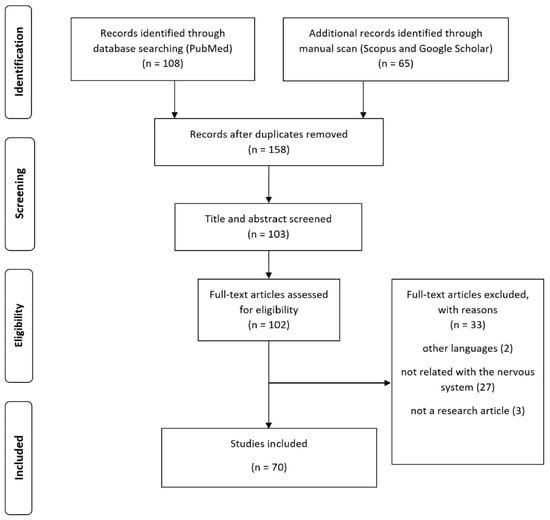
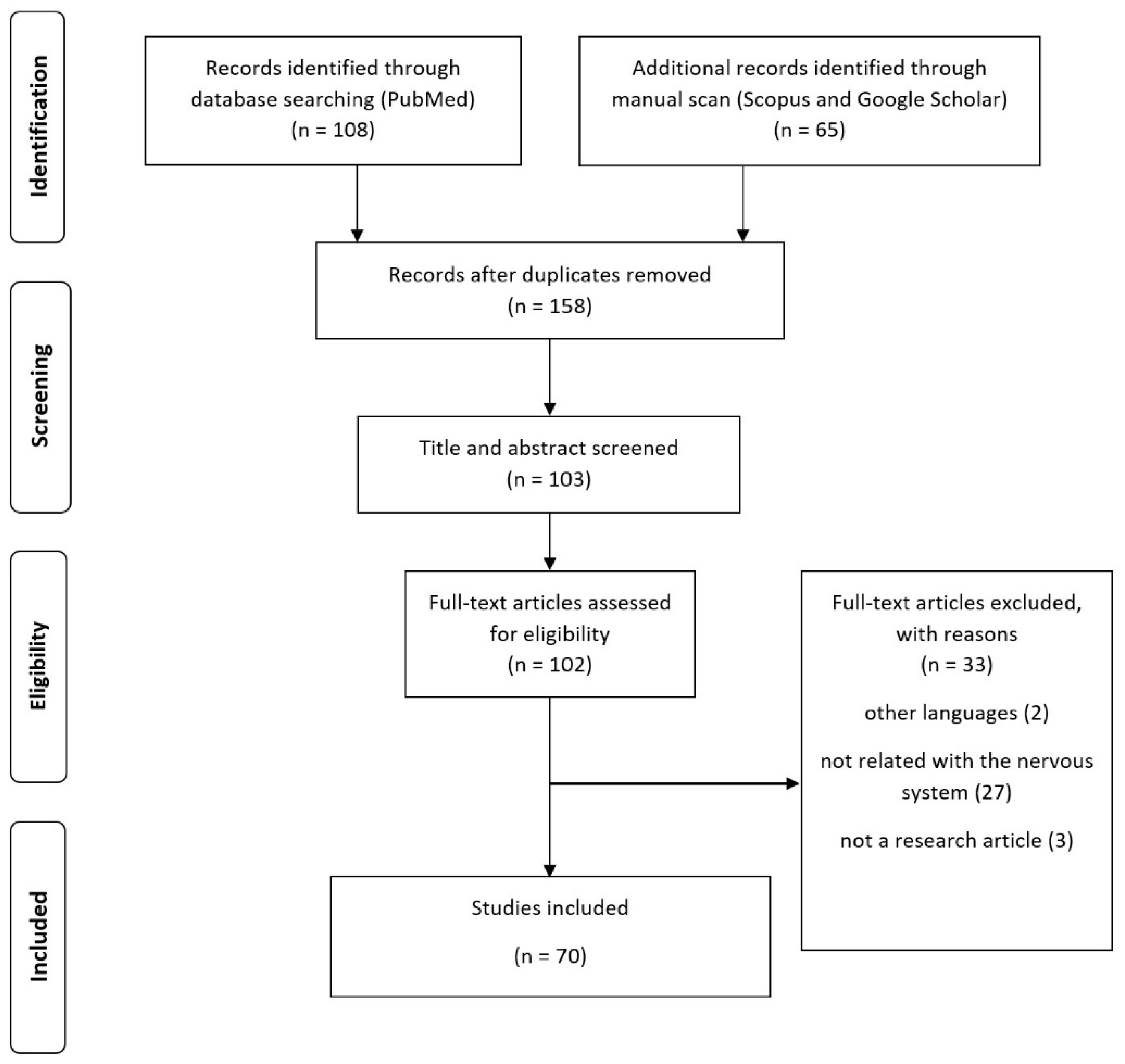
According to the included studies, the effects of essential oils on the nervous system have been widely studied in every region around the world. Several types of essential oils were used in the included studies. In this scoping review, we included both animal and human studies to comprehensively understand the possible mechanisms to outcome measures in humans. The PubMed database showed more specific results than others; however, Scopus and Google Scholar showed more sensitivity than PubMed (Figure 1). Based on the PubMed database, 81.43% of the included studies were conducted on humans, 18.57% were carried out on animals and about 1.43% were researched on cell cultures. Lavender essential oil was the most used essential oil, appearing in approximately 30.71% of the studies. The second most popular category of essential oil in the studies is the Citrus spp., which includes essential oils such as orange, bergamot, grapefruit, and lemon (24.4%). Rosemary essential oil was the third choice after the lavender oil and Citrus spp. oil (5.51%). Mint, rose, cedar wood, geranium, lemon grass, chamomile, cinnamon, and others were also used, though in smaller amounts. The routes of administration used in the included studies including inhaled, oral, topical, massage, injection, and immersion. Inhalation was the most popular route of administration at approximately 58.57%. There was a wide range of study populations and age groups, as reported in Table 1.
Figure 1.
Flow chart of the study identification and selection process.
2.2. Physiological Outcomes
Several levels of physiological hierarchy were investigated (Table 2). At the very first level of alertness, electroencephalography was used to evaluate the arousal and sedative properties in animals and humans. Lavender oil showed a sedative effect. Peppermint and coffee showed a stimulating effect, as shown by the electroencephalogram. The autonomic nervous system was frequently measured after the alertness level. Heart rate (HR), blood pressure (BP), respiratory rate (RR), and heart rate variability (HRV) were evaluated. Lavender, rosemary, bergamot, eucalyptus, rose, yuzu, lemon, Meniki, Hinoki, Juniperus phoenicea gum extract, Copaifera officinalis (Balsam Copaiba) resin, Aniba rosaeodora (Rosewood) wood oil, Juniperus virginiana oil, grapefruit oil, and petitgrain revealed autonomic nervous system (ANS) activity modification via the inhalation route. A massage with lavender and geranium oils also affected the ANS by reducing heart rate and blood pressure after the massage. In the opposite of alertness, lavender improved objective sleep quality. For another type of alertness and arousal, peppermint, rosemary, grapefruit, and cinnamon oils improved vigilance using a vigilance test. In response to olfactory stimuli, the cortisol level and salivary chromogranin A were affected by lavender, bergamot, yuzu, Juniperus phoenicea gum extract, Copaifera officinalis resin, Aniba rosaeodora wood oil, Juniperus virginiana oil, and grapefruit essential oil.
In addition to the objective measure of stress hormones, these oils also affected subjective emotional measurements. Interestingly, most essential oil use decreased stress and negative emotions with the reduction in stress hormones and parasympathetic stimulation. Anxiolytic effects were reported in lavender, Juniperus phoenicea gum extract, Copaifera officinalis resin, Aniba rosaeodora wood oil, Juniperus virginiana oil, Origanum majorana, Citrus sinensis, and petitgrain. At the uppermost levels, cognitive functions and behaviors were finally affected by essential oils. Rosemary essential oil improved cognition using a computerized cognitive task. Spearmint and peppermint essential oils modulated performance during a demanding cognitive task and reduced mental fatigue during a prolonged cognitive task. Petitgrain essential oil could improve performance in the workplace when added to an aroma diffuser in the work room. Oregano and rosemary essential oils increased consumer acceptability and willingness to buy food products. Among the positive results, there were also negative results. Lavender could not modulate stress and ANS responses in patients with coronary bypass surgery, which only affected systolic blood pressure. Koteless and Babulka also showed negative effects of rosemary, lavender, and eucalyptus oils on adult volunteers.
2.3. Pathophysiological Outcomes
Depression was the most studied clinical manifestation related to the effect of essential oils. Lavender, chamomile, bergamot, sweet orange, anise, geranium, and mountain pepper reduced depression in the elderly, postpartum women, restless patients, breast cancer patients, irritable bowel syndrome patients, mixed anxiety and depressive disorder, and residents in a long-term care unit. Analgesic and anxiolytic effects were the second most attractive topics. Lavender, bergamot, and Melissa officinalis (lemon balm) showed an analgesic effect, which can be observed in mice, rats, neonatal, premature babies, and women with dysmenorrhea. Lavender, bergamot, geranium, mountain pepper, chamomile, Juniperus phoenicea gum extract, Copaifera officinalis resin, Aniba rosaeodora wood oil, Juniperus virginiana oil, and Citrus spp. oil showed anxiolytic activity in several types of populations. Other interesting outcomes in different groups of patients were reported as described in Table 3. Essential oils could alleviate fatigue, memory problems, behavioral symptoms, stress, inhalant cravings, and sleep problems without the potential for abuse. They still showed negative effects on several groups of breast cancer patients undergoing breast reconstruction, children with burns, mild to moderate dementia sufferers older than 65 years old, and coronary bypass surgery patients.
Table 1.
Characteristics of included studies.
Table 2.
Effects of essential oils on physiological responses.
Table 3.
Effects of essential oils on pathophysiological responses.
2.4. Mechanism Studies from Basic Research
Lavender was one of the essential oils that was completely researched in terms of its safety and mechanisms in humans (Table 4). From the imaging study, it was found that Silexan intake, a patented product of lavender oil, showed a reduction in serotonin-1A receptor binding in several brain areas. Acori Tatarinowii Rhizoma showed a synergistic effect with the nerve growth factor in pheochromocytoma PC12 cells potentiating neurite outgrowth in an essential oil co-treatment group. Menthol could increase the circadian eating behavior in animal research. The treatment of alpha (α)- and beta (β)-pinene could reduce the nitrite level in the hippocampus and lower dopamine and norepinephrine levels in the striatum, resulting in seizure intensity reduction. Ocimum gratissimum essential oil showed anesthetic properties and reduced stress in Nile tilapia during transport. Coriander oil and linalool showed a sedative effect, reducing stress-related behaviors in chicks in a manner similar to the effects of diazepam. Lavender, peppermint, rosemary, grapefruit, bergamot, and yuzu could modulate autonomic nervous system function, resulting in changes in cardiovascular parameters and cortisol release. Citronellol showed a nociceptive effect of orofacial pain via the retrosplenial cortex and periaqueductal gray activations. Bergamot oil also reduced the central sensitization-phase-related pain and agitation behaviors in a mouse model. Peppermint essential oil reduced mental fatigue and prolonged cognitive tasks with acetylcholinesterase inhibitory and gamma-aminobutyric acid A receptor stimulating properties. Geraniol oil also improved learning and memory impairment related to aging.
Table 4.
Studies related mechanisms of essential oils.
3. Discussion
In this scoping review, we updated the effects of essential oils on the nervous system for this decade in terms of physiological and pathophysiological conditions. The number of studies on essential oils is increasing year by year, and more mechanisms are being revealed. The PubMed search strategy showed more specific research compared with Scopus and Google Scholar. However, a number of studies were found in the Scopus and Google Scholar databases. In this review, we intended to provide a comprehensive view of this issue. Therefore, we included both animal and human research to completely explain the beneficial properties and related mechanisms. We did not perform risk of bias in this systematic scoping review. Most of the excluded studies were not related to nervous system function and were written in other languages. The population covered in this review is broad, as reported in Table 1, to show the previous use of essential oils in many possible models. We analyzed the included studies and categorized the physiological and pathophysiological modifications.
It is not only the olfactory system that plays a role in this intervention; the direct effect of odorant compounds also takes part in the central nervous system [77]. The intervention mechanisms might be split into two forms: action via the olfactory system and action via the oil’s own chemical properties. Actions in both physiology and pathophysiology ranges through the olfactory system connect with the hypothalamus, limbic system, and prefrontal cortex, exerting body responses [61]. The suprachiasmatic nucleus (SCN) plays an important part in our sense of smell [78]. In the hypothalamus–hypophysis–adrenal axis, essential oils and emotional signals from the prefrontal cortex, amygdala, and hippocampus could reduce corticotropin-releasing hormone (CRH), which then reduced the adrenocorticotropic hormone (ACTH). The reduction in ACTH leads to a lower release of stress hormone as cortisol in serum [30,53,58]. Autonomic nervous system activity from odorants is also involved with SCN, which in turn reduces sympathetic activity and increases parasympathetic activity. Endogenous opioids are an important factor in mental issues [79]. These activities were observed using cardiovascular parameters and the responses of other organs such as the pupils, skin, and gastrointestinal system, or based on cerebral activity [80]. In the physiological range, most of the essential oils used in research cause body responses in a parasympathetic fashion. Interestingly, menthol can cause a cold perception triggered by transient receptor potential channel (TRP) stimulation. This psychological perception of TRP could increase the sympathetic response and food intake [81]. Another psychological aspect is distraction, and aromatherapy also successfully distracted patients or participants from anxiety, stress, and pain [31]. Regarding the chemical properties of essential oils, many receptors of neurotransmitters are involved, such as gamma-aminobutyric acid (GABA) A receptor, n-methyl-D-aspartate (NMDA) receptor, serotonin (5-HT) 1A receptor, and a voltage-dependent calcium channel. For arousal, GABA and NMDA receptors take part in the function causing sedative or stimulating effects. Linalool increased the chloride current from GABA receptor stimulation, which then caused sedation. For depressive symptoms, 5-HT is the ideal neurotransmitter system used in antidepressants. Silexan showed a reduction in 5-HT1A receptor binding after oral route administration for 8 weeks [68]. This action might be the mechanism of anxiolytic and antidepressant activities. Essential oils still have a direct effect on the nociceptor in case of analgesic effect [82].
Regarding the null results in children with burns, breast reconstruction patients, and open-heart surgery patients, there are several explanations in these cases [18,39,50]. Very young children showed a low level of stress compared with adults or older children because they could comfort themselves by being close to their parents. Intense distress can happen as a result of cancer diagnoses and surgery causing concerns about a lower household income, reduced social support, and higher tumor stage. There is a strong level of fear associated with acute procedures involving invasive interventions such as open-heart surgery. This scoping review showed broad, complex health outcomes from basic mechanisms to pathophysiology through a key strategic search. There is a limitation related to the outcome measures related to explicit measures based on rating methodology. Objective measures were used for most of the physiological parameters. To compare efficacy among EOs, the dose of EOs, duration of application, risk of bias, and measures need to be comparable. The objective or implicit measures will provide a benefit when comparing efficacy. Altogether, essential oils showed beneficial effects on the nervous system in both physiological and pathological ranges. Concern about pathologic mechanisms and actions of essential oils in terms of types, as well as the administration route, will benefit wellbeing and quality of life.
4. Materials and Methods
4.1. Question
Preferred reporting items for systematic reviews and meta-analyses extension for scoping reviews were used as guidelines during the preparation of this scoping review. The scoping review intended to update the comprehensive evidence to answer the following question: “What are the effects of essential oils on the nervous system?”
4.2. Search Strategy
To completely answer the question, we set up a strategic search concerning sensitivity and specificity to identify literature related to the nervous system. Three electronic databases—PubMed, Scopus, and Google Scholar—were used in this study, which was conducted by two independent reviewers (AS and PK) on 5 October 2022. A search strategy for PubMed was created using a combination of MeSH terms and Boolean operators “AND”, “OR”: ((Oils, Volatile[MeSH Terms]) OR (essential oil*[Title/Abstract])) AND (((((((((Nervous System[MeSH Terms]) OR (nervous system*[Title/Abstract])) OR (cognition[MeSH Terms])) OR (consciousnesses[MeSH Terms])) OR (arousal[MeSH Terms])) OR (arousal*[Title/Abstract])) OR (behavior[MeSH Terms])) OR (behavior*[Title/Abstract])) OR (executive function[MeSH Terms])) filters: from 2012 to 2022. For other databases, the searching strategy was partially modified. Articles published from January 2012 onward were included in the acquisition process. Included studies were further screened, and a manual search was performed to discover any missing data. Endnote 20 (PDFNet SDK © PDFTron™ Systems Inc., 2001–2020, and distributed by Clarivate Analytics (US) LLC under license) was used as an imported and managing software.
4.3. Study Selection
Duplicated studies were filtered using Endnote. Two reviewers (AS and PK) independently screened the titles and abstracts of all studies and subjected them to the inclusion and exclusion criteria. For the inclusion criteria, original articles written in English and describing animal and human studies were selected for every age group and health condition. For the exclusion criteria, articles published in other languages and including no outcome of the nervous system were excluded. Then, the full texts were downloaded and evaluated. Any disagreements during the selection processes were resolved via discussion and consensus between the two writing reviewers.
4.4. Data Charting Process
The data extraction process was performed by two writing reviewers (AS and PK). A standardized data extraction form including the author, year, study design, type of essential oils, route of administration, population, outcome measure methodology, and outcome was extracted using Microsoft Excel software. Any disagreements during the selection processes were resolved via discussion and consensus between the two writing reviewers. Tables listing the essential oils and outcomes were created to conclude the selected studies.
5. Conclusions
Essential oils showed beneficial effects on the nervous system in both animal and human research via the olfactory system and its chemical properties, impacting physiology and pathophysiology.
Author Contributions
A.S., literature search and information extraction, analysis, table making, and writing and preparing the original draft; S.W., literature search and information extraction; P.K., conceptualization, literature search and information extraction, analysis, table making, and, writing and preparing the original draft. All authors have read and agreed to the published version of the manuscript.
Funding
This research was funded by the National Research Council of Thailand, by a Mid-career Research Grant, grant number N41A640166.
Institutional Review Board Statement
Not applicable.
Informed Consent Statement
Not applicable.
Data Availability Statement
Not applicable.
Acknowledgments
The authors thank the partial grant support without a contract number from School of Medicine, Walailak University related with the support for extending research results to write a new article.
Conflicts of Interest
The authors declare no conflict of interest.
References
- Herman, R.A.; Ayepa, E.; Shittu, S.; Fometu, S.S.; Wang, J. Essential oils and their applications-a mini review. Adv. Nutr. Food Sci. 2019, 4, 1–13. [Google Scholar]
- Fokou, J.B.H.; Dongmo, P.M.J.; Boyom, F.F. Essential oil’s chemical composition and pharmacological properties. In Essential Oils-Oils of Nature; IntechOpen: London, UK, 2020; pp. 13–36. [Google Scholar]
- Sell, C. Chemistry of essential oils. In Handbook of Essential Oils; CRC Press: Boca Raton, FL, USA, 2020; pp. 161–189. [Google Scholar]
- Mehdizadeh, L.; Moghaddam, M. Essential Oils: Biological Activity and Therapeutic Potential. In Therapeutic, Probiotic, and Unconventional Foods; Academic Press: Cambridge, MA, USA, 2018; pp. 167–179. [Google Scholar]
- Lee, M.S.; Choi, J.; Posadzki, P.; Ernst, E. Aromatherapy for health care: An overview of systematic reviews. Maturitas 2012, 71, 257–260. [Google Scholar] [CrossRef] [Scilit] [PubMed]
- Huang, L.; Capdevila, L. Aromatherapy Improves Work Performance Through Balancing the Autonomic Nervous System. J. Altern. Complement. Med. 2017, 23, 214–221. [Google Scholar] [CrossRef] [Scilit] [PubMed]
- Angelucci, F.; Silva, V.; Dal Pizzol, C.; Spir, L.; Praes, C.; Maibach, H. Physiological effect of olfactory stimuli inhalation in humans: An overview. Int. J. Cosmet. Sci. 2014, 36, 117–123. [Google Scholar] [CrossRef] [Scilit] [PubMed]
- Scuteri, D.; Rombolà, L.; Hayashi, T.; Watanabe, C.; Sakurada, S.; Hamamura, K.; Sakurada, T.; Tonin, P.; Bagetta, G.; Morrone, L.A.; et al. Analgesic Characteristics of NanoBEO Released by an Airless Dispenser for the Control of Agitation in Severe Dementia. Molecules 2022, 27, 4987. [Google Scholar] [CrossRef] [Scilit] [PubMed]
- Pereira, M.; Moreira, C.S.; Izdebski, P.; Dias, A.C.P.; Nogueira-Silva, C.; Pereira, M.G. How Does Hedonic Aroma Impact Long-Term Anxiety, Depression, and Quality of Life in Women with Breast Cancer? A Cross-Lagged Panel Model Analysis. Int. J. Environ. Res. Public Health 2022, 19, 9260. [Google Scholar] [CrossRef] [Scilit]
- Maya-Enero, S.; Fàbregas-Mitjans, M.; Llufriu-Marquès, R.M.; Candel-Pau, J.; Garcia-Garcia, J.; López-Vílchez, M. Analgesic effect of inhaled lavender essential oil for frenotomy in healthy neonates: A randomized clinical trial. World J. Pediatr. 2022, 18, 398–403. [Google Scholar] [CrossRef] [Scilit]
- Hawkins, J.; Hires, C.; Keenan, L.; Dunne, E. Aromatherapy blend of thyme, orange, clove bud, and frankincense boosts energy levels in post-COVID-19 female patients: A randomized, double-blinded, placebo controlled clinical trial. Complement. Ther. Med. 2022, 67, 102823. [Google Scholar] [CrossRef] [Scilit]
- Ebrahimi, H.; Mardani, A.; Basirinezhad, M.H.; Hamidzadeh, A.; Eskandari, F. The effects of Lavender and Chamomile essential oil inhalation aromatherapy on depression, anxiety and stress in older community-dwelling people: A randomized controlled trial. Explore 2022, 18, 272–278. [Google Scholar] [CrossRef] [Scilit]
- Du, B.; Schwartz-Narbonne, H.; Tandoc, M.; Heffernan, E.M.; Mack, M.L.; Siegel, J.A. The impact of emissions from an essential oil diffuser on cognitive performance. Indoor Air 2022, 32, e12919. [Google Scholar] [CrossRef] [Scilit]
- Dehghan, N.; Azizzadeh Forouzi, M.; Etminan, A.; Roy, C.; Dehghan, M. The effects of lavender, rosemary and orange essential oils on memory problems and medication adherence among patients undergoing hemodialysis: A parallel randomized controlled trial. Explore 2022, 18, 559–566. [Google Scholar] [CrossRef] [Scilit] [PubMed]
- Chen, M.L.; Chen, Y.E.; Lee, H.F. The Effect of Bergamot Essential Oil Aromatherapy on Improving Depressive Mood and Sleep Quality in Postpartum Women: A Randomized Controlled Trial. J. Nurs. Res. 2022, 30, e201. [Google Scholar] [CrossRef] [Scilit] [PubMed]
- Atef, M.M.; Emam, M.N.; Abo El Gheit, R.E.; Elbeltagi, E.M.; Alshenawy, H.A.; Radwan, D.A.; Younis, R.L.; Abd-Ellatif, R.N. Mechanistic Insights into Ameliorating Effect of Geraniol on D-Galactose Induced Memory Impairment in Rats. Neurochem. Res. 2022, 47, 1664–1678. [Google Scholar] [CrossRef] [Scilit] [PubMed]
- Usta, C.; Tanyeri-Bayraktar, B.; Bayraktar, S. Pain Control with Lavender Oil in Premature Infants: A Double-Blind Randomized Controlled Study. J. Altern. Complement. Med. 2021, 27, 136–141. [Google Scholar] [CrossRef] [Scilit]
- Shammas, R.L.; Marks, C.E.; Broadwater, G.; Le, E.; Glener, A.D.; Sergesketter, A.R.; Cason, R.W.; Rezak, K.M.; Phillips, B.T.; Hollenbeck, S.T. The Effect of Lavender Oil on Perioperative Pain, Anxiety, Depression, and Sleep after Microvascular Breast Reconstruction: A Prospective, Single-Blinded, Randomized, Controlled Trial. J. Reconstr. Microsurg. 2021, 37, 530–540. [Google Scholar] [CrossRef] [Scilit]
- Sgoifo, A.; Carnevali, L.; Pattini, E.; Carandina, A.; Tanzi, G.; Del Canale, C.; Goi, P.; De Felici del Giudice, M.B.; De Carne, B.; Fornari, M.; et al. Psychobiological evidence of the stress resilience fostering properties of a cosmetic routine. Stress 2021, 24, 53–63. [Google Scholar] [CrossRef] [Scilit]
- Seifritz, E.; Möller, H.J.; Volz, H.P.; Müller, W.E.; Hopyan, T.; Wacker, A.; Schläfke, S.; Kasper, S. No Abuse Potential of Silexan in Healthy Recreational Drug Users: A Randomized Controlled Trial. Int. J. Neuropsychopharmacol. 2021, 24, 171–180. [Google Scholar] [CrossRef] [Scilit]
- Schneider, R. Natural Odor Inhalers (AromaStick®) Outperform Red Bull® for Enhancing Cognitive Vigilance: Results From a Four-Armed, Randomized Controlled Study. Percept. Mot. Ski. 2021, 128, 135–152. [Google Scholar] [CrossRef] [Scilit]
- Mascherona, I.; Ferretti, M.; Soldini, E.; Biggiogero, M.; Maggioli, C.; Fontana, P.E. Essential oil therapy for the short-term treatment of behavioral and psychological symptoms of dementia: A monocentric randomized pilot study. Aging Clin. Exp. Res. 2021, 33, 2251–2259. [Google Scholar] [CrossRef] [Scilit]
- Manor, R.; Kumarnsit, E.; Samerphob, N.; Rujiralai, T.; Puangpairote, T.; Cheaha, D. Characterization of pharmaco-EEG fingerprint and sleep-wake profiles of Lavandula angustifolia Mill. essential oil inhalation and diazepam administration in rats. J. Ethnopharmacol. 2021, 276, 114193. [Google Scholar] [CrossRef] [Scilit]
- Ko, L.W.; Su, C.H.; Yang, M.H.; Liu, S.Y.; Su, T.P. A pilot study on essential oil aroma stimulation for enhancing slow-wave EEG in sleeping brain. Sci. Rep. 2021, 11, 1078. [Google Scholar] [CrossRef] [Scilit] [PubMed]
- Karimzadeh, Z.; Azizzadeh Forouzi, M.; Rahiminezhad, E.; Ahmadinejad, M.; Dehghan, M. The Effects of Lavender and Citrus aurantium on Anxiety and Agitation of the Conscious Patients in Intensive Care Units: A Parallel Randomized Placebo-Controlled Trial. Biomed. Res. Int. 2021, 2021, 5565956. [Google Scholar] [CrossRef] [Scilit] [PubMed]
- Ferreira, A.L.; Favero, G.C.; Boaventura, T.P.; de Freitas Souza, C.; Ferreira, N.S.; Descovi, S.N.; Baldisserotto, B.; Heinzmann, B.M.; Luz, R.K. Essential oil of Ocimum gratissimum (Linnaeus, 1753): Efficacy for anesthesia and transport of Oreochromis niloticus. Fish. Physiol. Biochem. 2021, 47, 135–152. [Google Scholar] [CrossRef] [Scilit]
- Takahashi, Y.; Shindo, S.; Kanbayashi, T.; Takeshima, M.; Imanishi, A.; Mishima, K. Examination of the influence of cedar fragrance on cognitive function and behavioral and psychological symptoms of dementia in Alzheimer type dementia. Neuropsychopharmacol. Rep. 2020, 40, 10–15. [Google Scholar] [CrossRef] [Scilit] [PubMed]
- Schneider, R. Essential oil inhaler (AromaStick®) improves heat tolerance in the Hot Immersion Test (HIT). Results from two randomized, controlled experiments. J. Therm. Biol. 2020, 87, 102478. [Google Scholar] [CrossRef] [Scilit] [PubMed]
- Hacke, A.C.M.; Miyoshi, E.; Marques, J.A.; Pereira, R.P. Anxiolytic properties of Cymbopogon citratus (DC.) stapf extract, essential oil and its constituents in zebrafish (Danio rerio). J. Ethnopharmacol. 2020, 260, 113036. [Google Scholar] [CrossRef] [Scilit]
- Kawai, E.; Takeda, R.; Ota, A.; Morita, E.; Imai, D.; Suzuki, Y.; Yokoyama, H.; Ueda, S.Y.; Nakahara, H.; Miyamoto, T.; et al. Increase in diastolic blood pressure induced by fragrance inhalation of grapefruit essential oil is positively correlated with muscle sympathetic nerve activity. J. Physiol. Sci. 2020, 70, 2. [Google Scholar] [CrossRef] [Scilit]
- Bae, S.; Asojo, A.O. Ambient Scent as a Positive Distraction in Long-Term Care Units: Theory of Supportive Design. Herd 2020, 13, 158–172. [Google Scholar] [CrossRef] [Scilit]
- Watson, K.; Hatcher, D.; Good, A. A randomised controlled trial of Lavender (Lavandula angustifolia) and Lemon Balm (Melissa officinalis) essential oils for the treatment of agitated behaviour in older people with and without dementia. Complement. Ther. Med. 2019, 42, 366–373. [Google Scholar] [CrossRef] [Scilit]
- Son, H.K.; So, W.Y.; Kim, M. Effects of Aromatherapy Combined with Music Therapy on Anxiety, Stress, and Fundamental Nursing Skills in Nursing Students: A Randomized Controlled Trial. Int. J. Environ. Res. Public Health 2019, 16, 4185. [Google Scholar] [CrossRef] [Scilit]
- Patra, A.K.; Geiger, S.; Braun, H.S.; Aschenbach, J.R. Dietary supplementation of menthol-rich bioactive lipid compounds alters circadian eating behaviour of sheep. BMC Vet. Res. 2019, 15, 352. [Google Scholar] [CrossRef] [Scilit] [PubMed]
- Park, K.H.; Kim, H.J.; Oh, B.; Seo, M.; Lee, E.; Ha, J. Evaluation of human electroencephalogram change for sensory effects of fragrance. Ski. Res. Technol. 2019, 25, 526–531. [Google Scholar] [CrossRef] [Scilit] [PubMed]
- Felipe, C.F.B.; Albuquerque, A.M.S.; de Pontes, J.L.X.; de Melo JÍ, V.; Rodrigues, T.; de Sousa, A.M.P.; Monteiro, Á.B.; Ribeiro, A.; Lopes, J.P.; de Menezes, I.R.A.; et al. Comparative study of alpha- and beta-pinene effect on PTZ-induced convulsions in mice. Fundam. Clin. Pharmacol. 2019, 33, 181–190. [Google Scholar] [CrossRef] [Scilit] [PubMed]
- Xiong, M.; Li, Y.; Tang, P.; Zhang, Y.; Cao, M.; Ni, J.; Xing, M. Effectiveness of Aromatherapy Massage and Inhalation on Symptoms of Depression in Chinese Community-Dwelling Older Adults. J. Altern. Complement. Med. 2018, 24, 717–724. [Google Scholar] [CrossRef] [Scilit]
- Vital, A.C.P.; Guerrero, A.; Kempinski, E.; Monteschio, J.O.; Sary, C.; Ramos, T.R.; Campo, M.D.M.; Prado, I.N.D. Consumer profile and acceptability of cooked beef steaks with edible and active coating containing oregano and rosemary essential oils. Meat Sci. 2018, 143, 153–158. [Google Scholar] [CrossRef] [Scilit]
- van Dijk, M.; O’Flaherty, L.A.; Hoedemaker, T.; van Rosmalen, J.; Rode, H. Massage has no observable effect on distress in children with burns: A randomized, observer-blinded trial. Burns 2018, 44, 99–107. [Google Scholar] [CrossRef] [Scilit]
- Şentürk, A.; Tekinsoy Kartın, P. The Effect of Lavender Oil Application via Inhalation Pathway on Hemodialysis Patients’ Anxiety Level and Sleep Quality. Holist. Nurs. Pract. 2018, 32, 324–335. [Google Scholar] [CrossRef] [Scilit]
- Qadeer, S.; Emad, S.; Perveen, T.; Yousuf, S.; Sheikh, S.; Sarfaraz, Y.; Sadaf, S.; Haider, S. Role of ibuprofen and lavender oil to alter the stress induced psychological disorders: A comparative study. Pak. J. Pharm. Sci. 2018, 31, 1603–1608. [Google Scholar]
- Moss, M.; Smith, E.; Milner, M.; McCready, J. Acute ingestion of rosemary water: Evidence of cognitive and cerebrovascular effects in healthy adults. J. Psychopharmacol. 2018, 32, 1319–1329. [Google Scholar] [CrossRef] [Scilit]
- Montibeler, J.; Domingos, T.D.S.; Braga, E.M.; Gnatta, J.R.; Kurebayashi, L.F.S.; Kurebayashi, A.K. Effectiveness of aromatherapy massage on the stress of the surgical center nursing team: A pilot study. Rev. Esc. Enferm. USP 2018, 52, 03348. [Google Scholar]
- Kennedy, D.; Okello, E.; Chazot, P.; Howes, M.J.; Ohiomokhare, S.; Jackson, P.; Haskell-Ramsay, C.; Khan, J.; Forster, J.; Wightman, E. Volatile terpenes and brain function: Investigation of the cognitive and mood effects of mentha × piperita L. essential oil with in vitro properties relevant to central nervous system function. Nutrients 2018, 10, 1029. [Google Scholar] [CrossRef] [Scilit] [PubMed]
- Kalayasiri, R.; Maneesang, W.; Maes, M. A novel approach of substitution therapy with inhalation of essential oil for the reduction of inhalant craving: A double-blinded randomized controlled trial. Psychiatry Res. 2018, 261, 61–67. [Google Scholar] [CrossRef] [Scilit] [PubMed]
- Brnawi, W.I.; Hettiarachchy, N.S.; Horax, R.; Kumar-Phillips, G.; Seo, H.S.; Marcy, J. Comparison of Cinnamon Essential Oils from Leaf and Bark with Respect to Antimicrobial Activity and Sensory Acceptability in Strawberry Shake. J. Food Sci. 2018, 83, 475–480. [Google Scholar] [CrossRef] [Scilit] [PubMed]
- Mosaffa-Jahromi, M.; Tamaddon, A.M.; Afsharypuor, S.; Salehi, A.; Seradj, S.H.; Pasalar, M.; Jafari, P.; Lankarani, K.B. Effectiveness of Anise Oil for Treatment of Mild to Moderate Depression in Patients with Irritable Bowel Syndrome: A Randomized Active and Placebo-Controlled Clinical Trial. J. Evid. Based Complement. Altern. Med. 2017, 22, 41–46. [Google Scholar] [CrossRef] [Scilit] [PubMed]
- Matsumoto, T.; Kimura, T.; Hayashi, T. Does Japanese Citrus Fruit Yuzu (Citrus junos Sieb. ex Tanaka) Fragrance Have Lavender-Like Therapeutic Effects That Alleviate Premenstrual Emotional Symptoms? A Single-Blind Randomized Crossover Study. J. Altern. Complement. Med. 2017, 23, 461–470. [Google Scholar] [CrossRef] [Scilit]
- Lam, K.Y.C.; Huang, Y.; Yao, P.; Wang, H.; Dong, T.T.X.; Zhou, Z.; Tsim, K.W.K. Comparative Study of Different Acorus Species in Potentiating Neuronal Differentiation in Cultured PC12 Cells. Phytother. Res. 2017, 31, 1757–1764. [Google Scholar] [CrossRef] [Scilit]
- Karadag, E.; Samancioglu, S.; Ozden, D.; Bakir, E. Effects of aromatherapy on sleep quality and anxiety of patients. Nurs. Crit. Care 2017, 22, 105–112. [Google Scholar] [CrossRef] [Scilit]
- Goepfert, M.; Liebl, P.; Herth, N.; Ciarlo, G.; Buentzel, J.; Huebner, J. Aroma oil therapy in palliative care: A pilot study with physiological parameters in conscious as well as unconscious patients. J. Cancer Res. Clin. Oncol. 2017, 143, 2123–2129. [Google Scholar] [CrossRef] [Scilit]
- Forte, C.; Ranucci, D.; Beghelli, D.; Branciari, R.; Acuti, G.; Todini, L.; Cavallucci, C.; Trabalza-Marinucci, M. Dietary integration with oregano (Origanum vulgare L.) essential oil improves growth rate and oxidative status in outdoor-reared, but not indoor-reared, pigs. J. Anim. Physiol. Anim. Nutr. 2017, 101, e352–e361. [Google Scholar] [CrossRef] [Scilit]
- Chen, P.J.; Chou, C.C.; Yang, L.; Tsai, Y.L.; Chang, Y.C.; Liaw, J.J. Effects of Aromatherapy Massage on Pregnant Women’s Stress and Immune Function: A Longitudinal, Prospective, Randomized Controlled Trial. J. Altern. Complement. Med. 2017, 23, 778–786. [Google Scholar] [CrossRef] [Scilit]
- Kasper, S.; Volz, H.P.; Dienel, A.; Schläfke, S. Efficacy of Silexan in mixed anxiety-depression—A randomized, placebo-controlled trial. Eur. Neuropsychopharmacol. 2016, 26, 331–340. [Google Scholar] [CrossRef] [Scilit] [PubMed]
- Gastón, M.S.; Cid, M.P.; Vázquez, A.M.; Decarlini, M.F.; Demmel, G.I.; Rossi, L.I.; Aimar, M.L.; Salvatierra, N.A. Sedative effect of central administration of Coriandrum sativum essential oil and its major component linalool in neonatal chicks. Pharm. Biol. 2016, 54, 1954–1961. [Google Scholar] [CrossRef] [Scilit] [PubMed]
- Dyer, J.; Cleary, L.; McNeill, S.; Ragsdale-Lowe, M.; Osland, C. The use of aromasticks to help with sleep problems: A patient experience survey. Complement. Ther. Clin. Pract. 2016, 22, 51–58. [Google Scholar] [CrossRef] [Scilit] [PubMed]
- Yoshiyama, K.; Arita, H.; Suzuki, J. The Effect of Aroma Hand Massage Therapy for People with Dementia. J. Altern. Complement. Med. 2015, 21, 759–765. [Google Scholar] [CrossRef] [Scilit] [PubMed]
- Watanabe, E.; Kuchta, K.; Kimura, M.; Rauwald, H.W.; Kamei, T.; Imanishi, J. Effects of Bergamot (Citrus bergamia (Risso) Wright & Arn.) Essential Oil Aromatherapy on Mood States, Parasympathetic Nervous System Activity, and Salivary Cortisol Levels in 41 Healthy Females. Comp. Med. Res. 2015, 22, 43–49. [Google Scholar]
- Kasper, S.; Anghelescu, I.; Dienel, A. Efficacy of orally administered Silexan in patients with anxiety-related restlessness and disturbed sleep—A randomized, placebo-controlled trial. Eur. Neuropsychopharmacol. 2015, 25, 1960–1967. [Google Scholar] [CrossRef] [Scilit] [PubMed]
- Hasanein, P.; Riahi, H. Antinociceptive and antihyperglycemic effects of Melissa officinalis essential oil in an experimental model of diabetes. Med. Princ. Pract. 2015, 24, 47–52. [Google Scholar] [CrossRef] [Scilit]
- Chen, C.J.; Kumar, K.J.; Chen, Y.T.; Tsao, N.W.; Chien, S.C.; Chang, S.T.; Chu, F.H.; Wang, S.Y. Effect of Hinoki and Meniki Essential Oils on Human Autonomic Nervous System Activity and Mood States. Nat. Prod. Commun. 2015, 10, 1305–1308. [Google Scholar] [CrossRef] [Scilit]
- Bikmoradi, A.; Seifi, Z.; Poorolajal, J.; Araghchian, M.; Safiaryan, R.; Oshvandi, K. Effect of inhalation aromatherapy with lavender essential oil on stress and vital signs in patients undergoing coronary artery bypass surgery: A single-blinded randomized clinical trial. Complement. Ther. Med. 2015, 23, 331–338. [Google Scholar] [CrossRef] [Scilit]
- Nagata, K.; Iida, N.; Kanazawa, H.; Fujiwara, M.; Mogi, T.; Mitsushima, T.; Lefor, A.T.; Sugimoto, H. Effect of listening to music and essential oil inhalation on patients undergoing screening CT colonography: A randomized controlled trial. Eur. J. Radiol. 2014, 83, 2172–2176. [Google Scholar] [CrossRef] [Scilit]
- Matsumoto, T.; Asakura, H.; Hayashi, T. Effects of olfactory stimulation from the fragrance of the Japanese citrus fruit yuzu (Citrus junos Sieb. ex Tanaka) on mood states and salivary chromogranin A as an endocrinologic stress marker. J. Altern. Complement. Med. 2014, 20, 500–506. [Google Scholar] [CrossRef] [Scilit] [PubMed]
- Köteles, F.; Babulka, P. Role of expectations and pleasantness of essential oils in their acute effects. Acta Physiol. Hung. 2014, 101, 329–340. [Google Scholar] [CrossRef] [Scilit] [PubMed]
- Kasper, S.; Gastpar, M.; Müller, W.E.; Volz, H.P.; Möller, H.J.; Schläfke, S.; Dienel, A. Lavender oil preparation Silexan is effective in generalized anxiety disorder—A randomized, double-blind comparison to placebo and paroxetine. Int. J. Neuropsychopharmacol. 2014, 17, 859–869. [Google Scholar] [CrossRef] [Scilit]
- Igarashi, M.; Song, C.; Ikei, H.; Ohira, T.; Miyazaki, Y. Effect of olfactory stimulation by fresh rose flowers on autonomic nervous activity. J. Altern. Complement. Med. 2014, 20, 727–731. [Google Scholar] [CrossRef] [Scilit]
- Baldinger, P.; Höflich, A.S.; Mitterhauser, M.; Hahn, A.; Rami-Mark, C.; Spies, M.; Wadsak, W.; Lanzenberger, R.; Kasper, S. Effects of Silexan on the serotonin-1A receptor and microstructure of the human brain: A randomized, placebo-controlled, double-blind, cross-over study with molecular and structural neuroimaging. Int. J. Neuropsychopharmacol. 2014, 18, pyu063. [Google Scholar] [CrossRef] [Scilit] [PubMed]
- Varney, E.; Buckle, J. Effect of inhaled essential oils on mental exhaustion and moderate burnout: A small pilot study. J. Altern. Complement. Med. 2013, 19, 69–71. [Google Scholar] [CrossRef] [Scilit]
- Taavoni, S.; Darsareh, F.; Joolaee, S.; Haghani, H. The effect of aromatherapy massage on the psychological symptoms of postmenopausal Iranian women. Complement. Ther. Med. 2013, 21, 158–163. [Google Scholar] [CrossRef] [Scilit]
- Seol, G.H.; Lee, Y.H.; Kang, P.; You, J.H.; Park, M.; Min, S.S. Randomized controlled trial for salvia sclarea or lavandula angustifolia: Differential effects on blood pressure in female patients with urinary incontinence undergoing urodynamic examination. J. Altern. Complement. Med. 2013, 19, 664–670. [Google Scholar] [CrossRef] [Scilit]
- Igarashi, T. Physical and psychologic effects of aromatherapy inhalation on pregnant women: A randomized controlled trial. J. Altern. Complement. Med. 2013, 19, 805–810. [Google Scholar] [CrossRef] [Scilit]
- Han, P.; Han, T.; Peng, W.; Wang, X.R. Antidepressant-like effects of essential oil and asarone, a major essential oil component from the rhizome of Acorus tatarinowii. Pharm. Biol. 2013, 51, 589–594. [Google Scholar] [CrossRef] [Scilit]
- Fu, C.Y.; Moyle, W.; Cooke, M. A randomised controlled trial of the use of aromatherapy and hand massage to reduce disruptive behaviour in people with dementia. BMC Complement. Altern. Med. 2013, 13, 165. [Google Scholar] [CrossRef] [Scilit] [PubMed]
- Brito, R.G.; Santos, P.L.; Prado, D.S.; Santana, M.T.; Araújo, A.A.; Bonjardim, L.R.; Santos, M.R.; de Lucca Júnior, W.; Oliveira, A.P.; Quintans-Júnior, L.J. Citronellol reduces orofacial nociceptive behaviour in mice—Evidence of involvement of retrosplenial cortex and periaqueductal grey areas. Basic Clin. Pharmacol. Toxicol. 2013, 112, 215–221. [Google Scholar] [CrossRef] [Scilit] [PubMed]
- Apay, S.E.; Arslan, S.; Akpinar, R.B.; Celebioglu, A. Effect of aromatherapy massage on dysmenorrhea in Turkish students. Pain Manag. Nurs. 2012, 13, 236–240. [Google Scholar] [CrossRef] [Scilit] [PubMed]
- Lizarraga-Valderrama, L.R. Effects of essential oils on central nervous system: Focus on mental health. Phytother. Res. 2021, 35, 657–679. [Google Scholar] [CrossRef] [Scilit] [PubMed]
- Tanida, M.; Niijima, A.; Shen, J.; Nakamura, T.; Nagai, K. Olfactory stimulation with scent of essential oil of grapefruit affects autonomic neurotransmission and blood pressure. Brain Res. 2005, 1058, 44–55. [Google Scholar] [CrossRef] [Scilit] [PubMed]
- Razaghi, N.; Aemmi, S.Z.; Hoseini, A.S.S.; Boskabadi, H.; Mohebbi, T.; Ramezani, M. The effectiveness of familiar olfactory stimulation with lavender scent and glucose on the pain of blood sampling in term neonates: A randomized controlled clinical trial. Complement. Ther. Med. 2020, 49, 102289. [Google Scholar] [CrossRef] [Scilit]
- Zygmunt, A.; Stanczyk, J. Methods of evaluation of autonomic nervous system function. Arch. Med. Sci. 2010, 6, 11–18. [Google Scholar] [CrossRef] [Scilit]
- Reilly, T.; Drust, B.; Gregson, W. Thermoregulation in elite athletes. Curr. Opin. Clin. Nutr. Metab. Care 2006, 9, 666–671. [Google Scholar] [CrossRef] [Scilit]
- Le Bars, D.; Gozariu, M.; Cadden, S.W. Animal models of nociception. Pharmacol. Rev. 2001, 53, 597–652. [Google Scholar]
Disclaimer/Publisher’s Note: The statements, opinions and data contained in all publications are solely those of the individual author(s) and contributor(s) and not of MDPI and/or the editor(s). MDPI and/or the editor(s) disclaim responsibility for any injury to people or property resulting from any ideas, methods, instructions or products referred to in the content. |
© 2023 by the authors. Licensee MDPI, Basel, Switzerland. This article is an open access article distributed under the terms and conditions of the Creative Commons Attribution (CC BY) license (https://creativecommons.org/licenses/by/4.0/).