

- Article

Development of a Curcumin-Loaded Nanomicelles-Injectable Sustained-Release Hydrogel System for Modulating Oxidative Stress to Alleviate Tendinopathy
- Shuang Wang,
- Keyi Wu and
- Zhidong Qiu
- + 4 authors
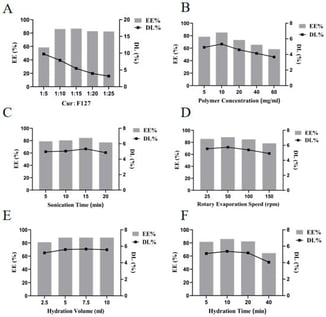
Tendinopathy is a common musculoskeletal disorder that increases the risk of tendon rupture if not properly treated. Current local injection therapies require frequent administration, and no fully effective drug is yet available. Curcumin (Cur) exhibits excellent anti-inflammatory and antioxidant effects, but its poor water solubility and low stability limit its clinical application. To overcome these challenges, this study encapsulated Cur into pluronic F127-based nanomicelles (Cur-F127) to improve its aqueous solubility and stability. Subsequently, the micelles were incorporated into a hydrogel network (Cur-F127&gel) formed by oxidized hyaluronic acid (oxi-HA) and adipic acid dihydrazide (ADH) to achieve sustained release. The resulting Cur-F127 micelles had a particle size of 20.14 ± 0.287 nm, an encapsulation efficiency (EE%) of 89.95 ± 0.60%, and a drug loading (DL%) of 5.57 ± 0.05%. The composite hydrogel possessed a loose, porous three-dimensional network, excellent biocompatibility, and favorable degradation behavior. The system enabled sustained release of Cur for over 20 days without an initial burst. In a rat model of tendinopathy, Cur-F127&gel significantly promoted tendon repair, as evidenced by reduced inflammatory cell infiltration, improved collagen fiber alignment, restored expression of key mitochondrial-related proteins (Ndufs3, Uqcrq, Uqcr10, Atp5mc3), and alleviated oxidative stress damage demonstrated by increased SOD activity and decreased MDA content in tendon tissue, thereby suppressing disease progression. This injectable sustained-release hydrogel system for poorly soluble drugs provides an effective approach for the local, long-acting delivery of Cur and long-term repair of tendinopathy, highlighting its potential value for clinical application.
7 February 2026