


Abstract
Outpatient care is made up of medical procedures, tests, and services that can be provided to the patient in a setting that doesn’t involve an overnight hospital stay. In China, tertiary hospitals are medical services centers of health care systems, and some tertiary hospitals had more than 20,000 outpatient visits per day. However, a systematic review of existed evidence on factors influencing the outpatient satisfaction in tertiary hospitals in China could inform the efforts and does not yet exist. Therefore, in order to better understand the outpatient satisfaction provided by tertiary hospitals in China, we carried out a systematic review following PRISMA guidelines. Studies reporting on the level of and factors associated with outpatient satisfaction in Chinese tertiary hospitals were systematically searched in both Chinese and English electronic databases. A total of 36 articles reported 35 studies that met the inclusion criteria. Out of these eight were household surveys covering 12,119 residents, and another 27 directly interviewed 45,930 outpatients during their hospital visits from 185 hospitals. The included studies generally used self-designed questionnaire and indicated there is a lack of standardized questionnaire for investigating outpatient satisfaction in China. The outpatients showed the highest satisfaction with the doctors and nurses and the lowest satisfaction with the hospital hygiene and outpatient procedures, especially with the long waiting time. The socio-demographic characteristics (e.g., age, marital status, income and education levels), professional skills and service attitudes of medical staff were reported to be associated with outpatient satisfaction. The results indicated that in China, the outpatient satisfaction can be largely improved. Firstly, the attitude of medical service providers, especially the pre-diagnosis nurses, registration officers, and pharmaceutical counters should be improved. Furthermore, to shorten the waiting time, policies should be developed to guide patients with common diseases and slight discomforts to community health systems to alleviate the overload in tertiary hospitals. Considering the strained relations between the doctors and patients in the clinical practice, improving patient satisfaction in China deserves more attention and research.
1. Introduction
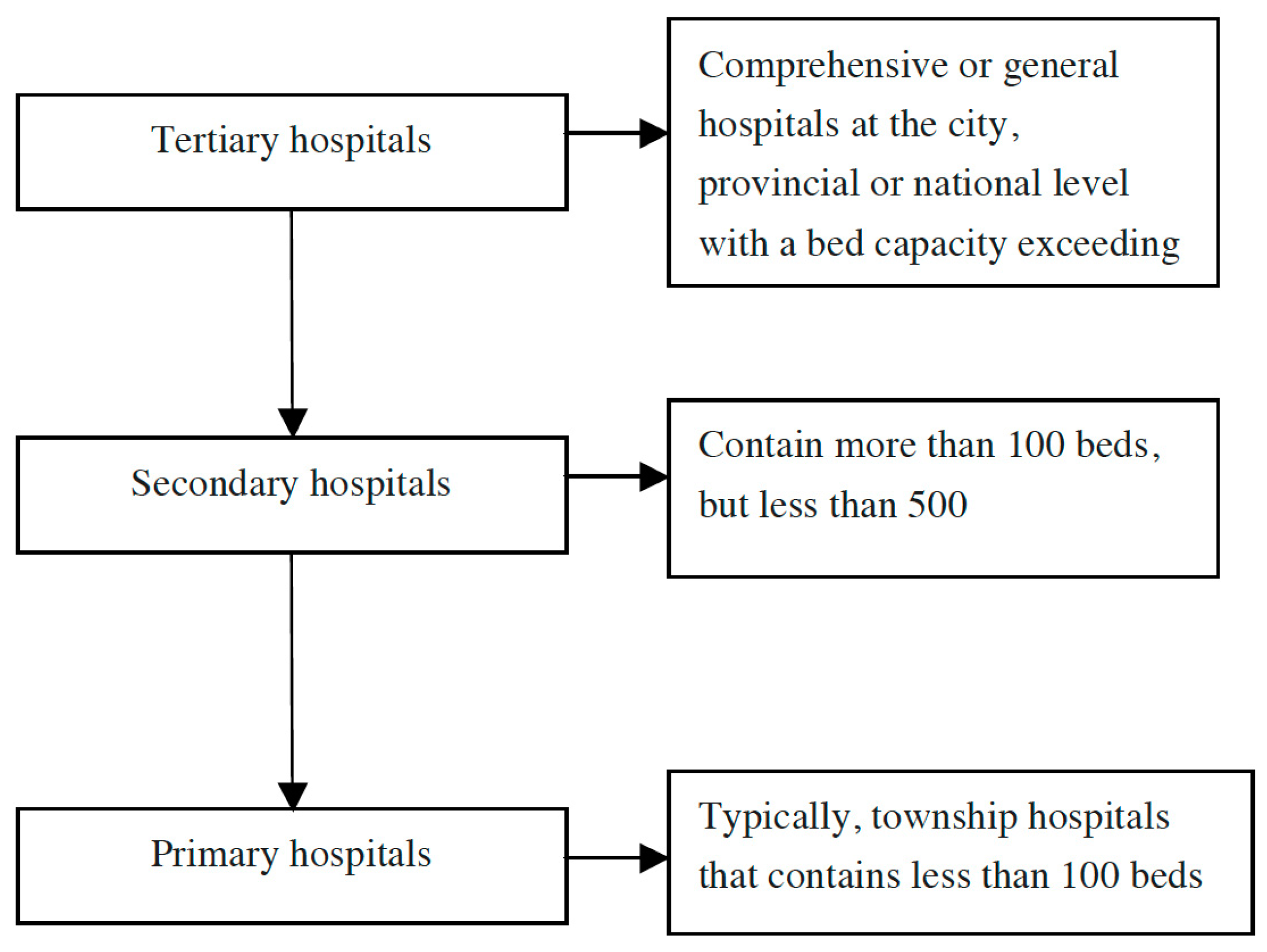
Hospitals in China are organized according to a three-tier system (designated as primary, secondary or tertiary institutions) that recognizes a hospital’s ability to provide medical care and medical education and to conduct medical research (Figure 1). Tertiary hospitals are medical services centers within the region and play a key role in the medical and health service system [1]. Patients in China prefer tertiary hospitals when seeking medical services because tertiary hospitals represent the best medical resources, including both outpatient and inpatient care. According to the statistics from the National Health and Family Planning Commission of the People’s Republic of China, in 2014, 2.6 billion patients visited Chinese hospitals, 46% of which visited tertiary hospitals [2].
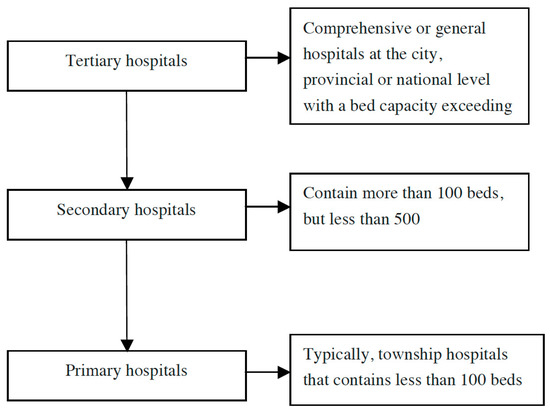
Figure 1.
Classification of Chinese hospitals (Hospitals in China are organized according to a three-tier system including primary, secondary, or tertiary levels.).
Outpatient care is made up of medical procedures, tests, and services that can be provided to the patient in a setting that doesn’t involve an overnight hospital stay. Some tertiary hospitals in China had more than 20,000 outpatient visits per day, and doctors must see more than 100 patients over the course of 1 day [3]. In such a context, violence against healthcare staff during outpatient visits frequently occurs [4,5]. According to the data from the Chinese Hospital Association, at a rate of once every two weeks per hospital, patients or their relatives have attacked medical staff in China [6]. Moreover, tertiary hospitals were found to have more medical conflicts and lower patient satisfaction compared with primary hospitals [7].
In China, patient satisfaction surveys have gained increasing attention, and many hospitals have sought to improve the quality and the experience of outpatient care over the past decade. However, the majority of the previous surveys on outpatient satisfaction were conducted in individual hospitals and, therefore, were aimed at the development of that particular hospital [8,9,10,11]. Some researchers have analyzed outpatients with diverse types of diseases from different hospitals in one region [7,12,13]; however, the results were still limited to the development of the specific area. Previous studies suggested the conflicts between Chinese doctors and patients at outpatient services has been largely attributed to the extremely poor quality of the doctor-patient relationship [4,5,14,15]. But, a systematic review of existed evidence on factors influencing the outpatient satisfaction in tertiary hospitals in China could inform the efforts and does not yet exist. Therefore, the objective of this study is to develop a comprehensive understanding of outpatient satisfaction in tertiary hospitals and to conduct a critical review of the measurement tools used to evaluate the outpatient satisfaction in China. This review is expected to provide meaningful and essential sources of information to identify gaps, harmonize the patient–doctor relationship, and develop effective action plans for quality improvement in healthcare organizations in China.
2. Materials and Methods
This systematic review followed the preferred reporting items for systematic reviews and meta-analysis (PRISMA) checklist [16].
2.1. Study Inclusion and Exclusion Criteria
Studies that have evaluated the levels or associated factors regarding outpatient satisfaction in Chinese tertiary hospitals are included, with no language or study design restrictions. Participants of the studies could be the outpatients or residents who had experience receiving outpatient services in a tertiary hospital. Outpatients refers to patients receiving medical care without an overnight stay in the hospital.
Studies conducted in non-tertiary hospitals, community health centers. or village clinics were excluded. Studies were excluded if the participants were not Chinese. We also excluded studies involving participants with one specific disease from one specialized outpatient department. Reviews, comments, editorials, or letters were also excluded.
2.2. Search Strategy and Selection Criteria
The primary data sources for this review include English electronic databases, including MEDLINE, Cochrane, PubMed, Embase, and Web of Science, and Chinese electronic databases, including the Chinese National Knowledge Infrastructure and VIP Database. No language restrictions were applied, and the databases were searched from their inception until 28 February 2018. The search used combinations of the terms patient, satisfaction and China as both MeSH headings and key or free text words and included a wide range of derivations to ensure as wide a search strategy as possible. A list of the detailed search strategy used is available online as supplemental material (Supplementary Material 1). A grey literature search was explored by search conference abstracts or papers, hard to find studies, reports, or dissertations in university library catalogs. In addition, the reference lists of the included articles were manually screened for potentially relevant studies that could have been missed during the electronic database search.
2.3. Data Extraction and Analysis
The electronic reports identified were imported into the reference manager Endnote and duplicates removed. Each paper was assessed in two phases: first by screening title and abstract, and then by full-text review to ensure they met the inclusion criteria. The first assessment was done by two reviewers (Y.L. and G.L.). The second assessment was done by G.L. and Q.C. An additional reviewer (O.M.) settled any discordance between the reviewers.
It was decided a priori that if the data from different studies were sufficiently homogeneous and the combination of the collected data was justifiable, a meta-analysis would be conducted. However, if the results are too heterogeneous, we will describe all study outcomes using a narrative analysis based on primary objectives of studies to clarify study results and draw conclusions [16]. The degree of heterogeneity was evaluated on the characteristics of participants of the study and tools used in outpatient satisfaction evaluation.
We developed a standardized data collection form based on the Cochrane Consumers and Communication Review [17]. The data from the included articles were extracted independently by two reviewers (G.L. and Y.L.). For each article, we extracted the data for the hospital backgrounds, sample size, participant information, sampling methods, assessment instrument, and response rate. We also extracted the key findings from the included articles [17]. Disagreements were solved by consensus.
If the studies only evaluated the levels of outpatient satisfaction, we reported the satisfaction levels. If the studies also analyzed, the associated factors of outpatient satisfaction, we extracted the main findings on the relationship between outpatient satisfaction and its influencing factors. The influencing factors were categorized as follows: patient factors, medical staff factors, the medical environment, and process management.
2.4. Quality Assessment
Considering the fact that the majority of the satisfaction surveys are cross-sectional studies, the Newcastle-Ottawa scale, modified for cross-sectional studies, was used as a tool for risk of bias assessment of all selected articles (Supplementary Material 2). This scale addresses 3 domains (selection, outcome, and comparability), and the studies could be awarded 1 star for each factor in the first 2 categories (sum of 5 stars) and 2 stars for each factor in the comparability section. The sum of the stars, up to a maximum of 7, reflected the overall quality rating of each study. The higher the number of stars, the higher the quality rating. Two reviewers (G.L., Y.L.) separately completed the quality assessments of the selected studies. Once again, disagreements were solved by consensus.
3. Results
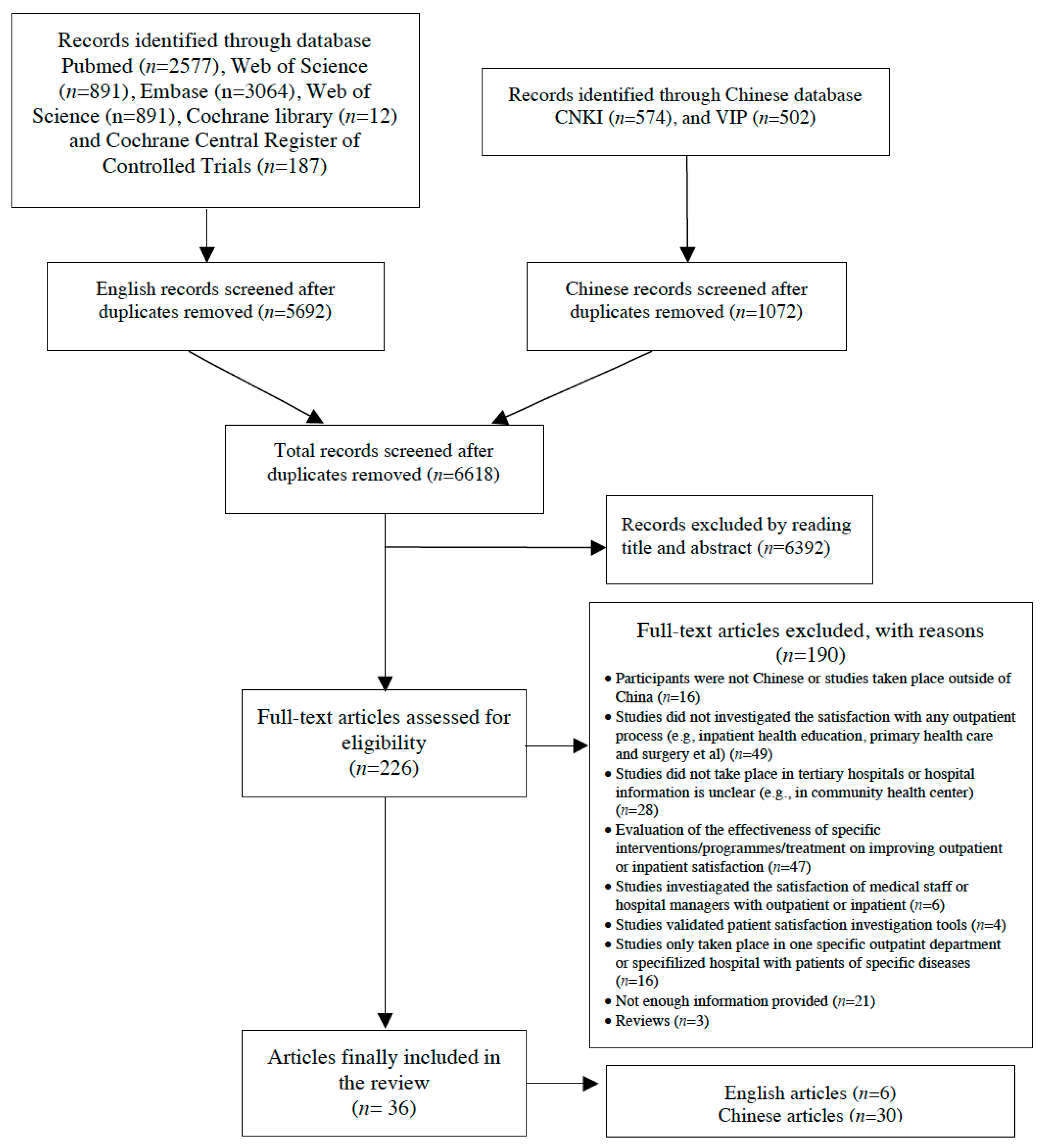
We identified 6507 citations by the literature search. The broad selection of articles by title and abstract led to the retrieval of 226 potentially eligible studies. After a full-text review of these 226 studies, 190 studies were excluded with the reasons (Supplementary Material 3). A total of 36 articles reported 35 studies that met the inclusion criteria of this review [7,15,18,19,20,21,22,23,24,25,26,27,28,29,30,31,32,33,34,35,36,37,38,39,40,41,42,43,44,45,46,47,48,49,50,51]. All studies were published in peer-reviewed journals. Six of the studies were published in English [7,15,18,26,28,31], and 30 of the studies were published in Chinese. The selection process is summarized in Prisma searching flow diagram (Figure 2).
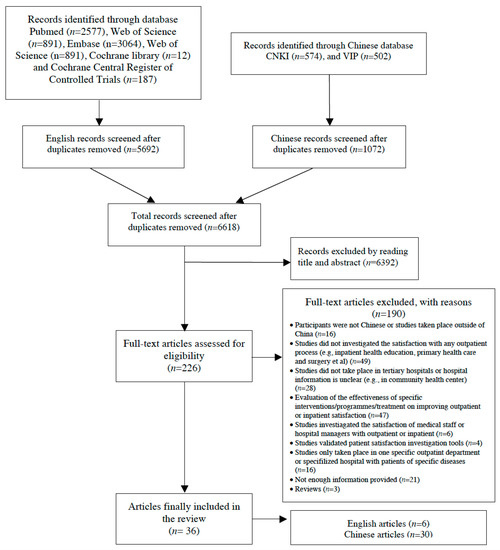
Figure 2.
Selection Process Flow Diagram [52,53].
3.1. Characteristics of Included Studies
This study included patients with a variety of diseases from the outpatient departments in tertiary hospitals in different areas of China. The degree of heterogeneity was evaluated based on the basic information of include studies. The included studies have great differences in age, living place (urban or rural) of patients, and the tools used in outpatient satisfaction evaluation, which indicated that the degree of heterogeneity too great for any quantitative analysis. The characteristics of included studies were reported in Table 1, including study context, number of participants, participant information, sampling methods, and study design.

Table 1.
Characteristics of included studies (n = 35).
All of the studies were published after 2000, and 30 out of 35 studies (36 papers) were published after the year 2010. All the included studies used survey designs, eight of which were household surveys, covering resident populations up to 12,119. Another 27 studies directly interviewed the outpatients during their visits to the hospital. These 27 hospital-based studies reported data from 185 hospitals with 45,930 outpatients in nearly the whole of China. Eighteen out of these 35 studies analyzed the relationship between outpatient satisfaction and the influencing factors [7,12,18,19,20,21,22,23,24,25,26,27,28,29,30,31,32,33,34], while another 17 only descriptively reported the most satisfactory or dissatisfactory factors during outpatient service.
3.2. Measures of Outpatient Satisfaction and the Study Quality
In terms of the methodology, the studies primarily used simple survey instruments to investigate the outpatient satisfaction. The instruments were predominantly self-designed questionnaires, either adjusted based on an existing questionnaire, such as the Inpatient Satisfaction Questionnaire (IPSQ), or were designed by the researchers. The Likert-type scale (3-point, 5-point or 7-point scales) was primarily employed to measure the attitude of the outpatients (33/35, 94.3%).
Table 2 listed the quality appraisal for the included studies. Of these 35 studies reported by 36 papers, in terms of quality, 8 were very good, 20 were of satisfactory, and 7 were unsatisfactory. The studies published in English were generally credited with better study quality. Of the 27 hospital-based on-site studies, 21 studies used random sampling. Although the sample size of the included studies is relatively large, only about one-third of the studies reported the justification for the sample size. The majority of the studies (n = 32) reported the response rate, of which over 95% (30/32, 96.8%) studies reported the response rate larger than 85% (Table 3). It indicated satisfactory response rates of included studies.
Table 2.
Quality of included studies (n = 35).
Table 3.
Findings on levels of outpatient satisfaction of included studies (n = 35).
3.3. Overall Satisfaction Level
The assessment instrument, response rate and overall findings on levels of outpatient satisfaction were reported in Table 3. The majority of the studies reported a high level of outpatient satisfaction, ranged from 76.9–94.6%. Although the factors each study investigated varied, 22 out of 35 studies (62.9%) provided information on which factors were the most satisfactory and unsatisfactory (Table 3 and Table 4). The most frequently investigated factors include the satisfaction with the following five aspects: the professional skills and service attitude of the medical staff (doctors and nurses, 19/22, 86.4%), the service attitude of the staff in other departments or administrative offices (e.g., the payment office or pre-diagnostic counters, 18/22, 81.8%), the hospital hygiene and facilities (18/22, 81.8%), the waiting time (15/22, 68.2%), and medical costs (13/22, 59%). Waiting time is the most frequently investigated factor in the aspect of outpatient process and management, followed by diagnosis and treatment process (12/22, 54.5%), easy access to hospital and registration (5/22, 22.7%), medical needs being met (4/22, 18.2%), and ease of complain (3/22, 13.6%).
Table 4.
Satisfaction with hospital staff, hospital hygiene and facilities, outpatient process and management, and medical costs (n = 22).
The outpatients showed the highest satisfaction with the doctors and nurses (yellow color) and showed the lowest satisfaction with the hospital hygiene and outpatient procedures (blue color) (Table 4). A total of 78.9% (15/19) studies reported that the professional skills and service attitude of the medical staff (including doctors and nurses) were the most satisfying factors during outpatient services. Moreover, only 2 of the 10% (2/19) studies reported dissatisfaction with the people at the hospital, and it is important to notice their dissatisfactions were with the pre-diagnosis counters and the registration/payment officers instead of the doctors and nurses. Moreover, 60% (9/15) studies found that waiting time was the most dissatisfied factor.
3.4. Relationships between Outpatient Satisfaction and Influencing Factors
Eighteen of the 35 studies (51.4%) analyzed the relationships between outpatient satisfaction and its influencing factors (Table 5).
Table 5.
Findings on factors associated with outpatient satisfaction (n = 18).
3.4.1. Patient Social-Demographic Factors
Twelve of the 18 studies (66.7%) investigated the association of socio-demographic factors with outpatient satisfaction. 83.3% of studies (10/12) found that the main socio-demographic characteristics (including sex, age, occupation, monthly income, residence, and marital status) of outpatients were related to satisfaction to varying degrees. While, 16.7% of studies (2/12) reported there were no significant differences in the sex, age, marital status, and occupation (p > 0.05) of the outpatients regarding outpatient satisfaction [25,33].
The satisfaction of the Chinese elderly outpatients were found to be significantly higher than those of the young and middle-aged outpatients. However, the elderly outpatients were less satisfied in the domain of the hospital information experience than young and middle-aged outpatients [19]. The findings on genders were controversial. Two studies have reported that, females are more likely to be satisfied regarding the waiting time [7,31]. In contrast, another study reported that male outpatients were more likely to be highly satisfied with doctors than female outpatients [12]. Four studies reported that patients who were married seemed to be more satisfied, and the divorced or widowed patients had lower odds of high satisfaction [7,12,22,29]. Moreover, higher incomes and higher education levels were both associated with lower odds of satisfaction [7,22,23,25,31]. Two studies reported that insured patients were much more likely to be satisfied [7,26]. One study reported that health-related knowledge was positively associated with outpatient satisfaction [27].
3.4.2. Medical Staff Factors
Seven of 18 studies (38.9%) investigated the association of staff factors with outpatient satisfaction. Studies have consistently reported that the professional skills and service attitudes of doctors and nurses were significantly associated with the overall outpatient satisfaction. Here, professional skills refer to the diagnosis and treatment skills. One study found that the time spent in communication with doctors, and degree of careful inquiry by the doctors, and the degree of the clarification by the doctors in explaining the diseases were associated with outpatient satisfaction [20]. Moreover, a trusting doctor–patient relationship and the length of communication time with doctors were found to be major factors associated with the overall satisfaction of the elderly outpatients [19,26]. It is important to notice that outpatients showed significantly lower satisfaction with administrative officers (e.g., payment officers) compared to medical providers (doctors and nurses) [30].
3.4.3. Hospital Indoor Hygiene, Facilities, and Process Management Factors
Ten of 18 studies (55.9%) investigated the association of the hospital indoor hygiene, facilities, and process management with outpatient satisfaction. The specific aspects in this domain investigated include hospital indoor hygiene, waiting time, reputation of the hospital, management of the outpatient procedure, and the medical costs. Seven of 10 (70%) studies reported that these factors were associated with outpatient satisfaction. Waiting time was found to be associated with outpatient satisfaction in four studies [7,21,32,33]. While one population-based survey reported that the waiting time is not associated with outpatient satisfaction [27]. For elderly patients, the existence of channels for praise and complaints (OR = 1.39) was a major factor associated with the overall satisfaction. Moreover, payment methods were associated with the outpatients’ satisfaction [19,26].
4. Discussion
This is the first systematic review that has investigated the levels of outpatient satisfaction and its influencing factors in Chinese tertiary hospitals. The most frequently investigated domains included patient demographic characteristics, medical and administrative staff professional skills and attitude, hospital hygiene, and outpatient process aspects. Our paper demonstrated that outpatient satisfaction in Chinese tertiary hospitals is associated with patient social-demographic factors (age, gender, and marital status, income levels and educational levels), professional skills and service attitudes of medical staff, and waiting time. The Chinese outpatients generally showed the highest satisfaction with the professional skills and attitudes of the doctors and nurses, but the lowest satisfaction with the hospital management and environmental aspects. The findings of this study provide important insights into understanding the levels of outpatient satisfaction and the associated factors in tertiary hospitals in China. These findings are essential to improve outpatient satisfaction, increase the quality of care, strengthen the doctor–patient relationship, and further implement health reform in China.
The majority of the studies were published in this decade. This also reflects the fact that, while international research on patient satisfaction in healthcare has grown tremendously in the past three decades, research concerning outpatient satisfaction and its influencing factors in China started late and has been increasing in the recent decade.
4.1. Methodological Issues and Study Quality
Although the majority of the studies in this review were of a satisfactory in quality, the review highlighted some general quality issues of the studies on outpatient satisfaction surveys. First, there is no standardized questionnaire for investigating outpatient satisfaction in China. All studies used self-designed questionnaires based on the research purposes or adjusted existing tools (e.g., the IPSQ). One large study developed and validated an outpatient satisfaction questionnaire for the Chinese population in 2012 [54]. However, it seems to be of limited use in use, as it may not apply to different levels of hospitals. Although it is well acknowledged that careful, reliable, and valid measurement of outpatient satisfaction is required, internationally acknowledged tools for achieving this objective have not been fully developed [55]. Some established tools of patient satisfaction are still in limited use because of the lack of suitability when the context changes [56]. Second, there is little standardization of the procedures for data collection and analysis. Some studies have analyzed the correlation between outpatient satisfaction and its influencing factors, while others have just reported the satisfaction scores on the investigated factors. Besides these two aspects, the included studies in this review reported representative samples from over 30 provinces in China (34 provinces total), which increased the external validity of the findings.
4.2. Overall Satisfaction
Tertiary hospitals in China usually obtain financial investment in buildings, equipment, and medical resources from central and local governments and thus are expected to provide high-quality services. The results of our study demonstrated that outpatients generally show a high level of satisfaction with outpatient services in tertiary hospitals. Moreover, our study found that the outpatients showed the highest satisfaction with the professional skills and service attitude of the doctors and nurses. This finding did not support the traditional explanation regarding outpatient dissatisfaction, which was largely attributed to doctors who do not provide sufficient time to explain to or communicate well with the patients.
To improve outpatient satisfaction, Chinese hospitals have spent time and effort improving the service attitudes of doctors and to improve the doctor–patient relationship. This was reflected by the finding in our study that outpatients are generally satisfied with the doctors regarding professional skills and service attitudes. In fact, how to maintain the good services of doctors in tertiary hospitals will be the next challenge, as doctors in tertiary hospitals (top-level hospitals) are generally overloaded. A 2014 national survey showed that 92% of the doctors in tertiary hospitals work overtime, and 72% of the doctors who have worked more than 60 h a week on average in tertiary hospitals in China [57].
In some studies, patients complain about the service attitude of the administrative staff working at the payment counters, registrations, and pre-diagnostic guiders. To deal with this overcrowding of the hospitals, tertiary hospitals usually set up “pre-diagnosis counters”. Pre-diagnosis counters perform triage, conduct pre-diagnoses to help patients register appropriately, and facilitate clinic processing, thereby effectively shortening the wait time and improving patient satisfaction 14. Therefore, patients usually have first contact with these staff members. However, compared with doctors, these staff members who deal with patients firstly rarely receive patient-related training on communication skills. Similar findings were noted in previous studies, wherein the service provided by pre-diagnosis counters had a strong effect on patient satisfaction [58]. Therefore, it is important to improve the service quality and attitude of the subsidiary departments. Outpatients also showed most dissatisfaction with medical costs, but this could also be attributed to the fact that outpatients in tertiary hospitals usually suffered more severe illnesses [59].
4.3. Patient Social-Demographic Factors
Our review indicated that the socio-demographic characteristics of outpatients were related to satisfaction to varying degrees. It is interesting to notice that a higher income was associated with lower outpatient satisfaction in China, and a similar pattern was also seen for those with a higher education level, which was associated with lower outpatient satisfaction [12,23,25,31]. This can be explained by the fact that the patients with higher levels of education and incomes usually have higher social status; therefore, their expectations are higher.
Many prior studies demonstrated that gender, income, and education have all shown inconsistent effects on satisfaction [60,61,62,63,64]. The evidence on the influence of gender on patient satisfaction levels remains controversial in this study. Some studies have reported that women are more satisfied than men with the medical care received, and some report that women are more critical of medical care than men. In a meta-analysis of 110 studies of patient satisfaction, no average difference in satisfaction with medical care between women and men was found [61].
Our study found that outpatient satisfaction was associated with age and Chinese elderly outpatients were found to be more satisfied than young and middle-aged outpatients. This pattern is consistent with findings of studies in many other courtiers [60,61,62,63]. However, the elderly outpatients were less satisfied in the domain of the hospital information experience, such as online registration and modern payment methods (e.g., Alipay). Therefore, with the fast development of hospital information technology, related technical assistance should be provided to elderly patients to facilitate their adaptation to new developments.
Consistent with previous findings, the results of this study showed that patients who were married seemed to be more satisfied, but the divorced or widowed patients had lower odds of high satisfaction. Therefore, based on these findings, several studies have indicated that young and middle-aged adults who are married and have a lower level of education and less income seem to have the highest level of satisfaction compared to their counterparts [7,12].
4.4. Medical Staff Factors
Our review demonstrated that the patient–doctor relationship is significantly associated with the overall patient satisfaction. Especially for the elderly outpatients, a trusting doctor–patient relationship and the length of communication time with doctors were suggested as major factors associated with the overall satisfaction. In fact, doctor–patient communication in China has gained increasing attention as the relationship between patients and health care providers has sharply deteriorated over the past decade [65]. The doctor–patient communication skills training programs were firstly introduced in China in 2003, and according to the recent study, less than 50% of Chinese medical schools include the doctor–patient communication skills training programs in the clinical medical curriculum [66]. Although there are multiple reasons behind the deterioration of the doctor-patient relationship in China in the past decade, practical measures to improve doctors’ caring competence and interaction skills with patients by providing qualified doctor-patient communication skills training programs both in the medical schools and in hospitals are crucial to improve the doctor-patient relationship [67].
4.5. Process Management Factors
The results of this study show that patients complained frequently about the long wait time, and the wait time was negatively correlated with outpatient satisfaction scores. These findings are in line with those of previous studies done in many countries [68,69]. More patients in China are increasingly likely to visit tertiary hospitals even in cases that are not serious or complex because tertiary hospitals usually have better medical resources. This is reflected by the utilization rate of tertiary hospitals, which has risen to 100.5% in China in 2008 [70]. A previous study has suggested that outpatients were reasonably satisfied if they waited no more than 37 min when arriving on time [71]. However, considering that the study was conducted two decades ago, the time threshold may do not apply to the current metropolis rhythm. Thus, further studies are needed to provide a better understanding of the current acceptable wait time.
The methods to reduce the wait time are challenging to implement in the current health system (e.g., increasing resources, such as staffing). However, improving the waiting experience may act as an effective way to improve the satisfaction. For example, providing a clean, comfortable environment and providing more transparent information about available healthcare services and department-related health education during the wait time. It is also important to point out that providing enough skilled doctors or general practitioners to strengthen the primary care institutions would fundamentally improve the long wait time and overcrowded situation. As a direct consequence of the increasing number of outpatients, doctors must limit their communication time to meet huge needs. Thus, it is not difficult to imagine that patients complain about the short communication time with doctors.
Our review suggested that the outpatient process was associated with outpatient satisfaction. Process matters in healthcare and a process improvement can be successful in reducing the wait time and increasing patient satisfaction [71,72,73,74]. The Chinese government has tried to implement process reforms to increase patient satisfaction [75]. A full range of healthcare improvement requirements were established in 2015. These were designed to give patients a tangible sense of improvement in the health system, including promoting a service appointment system, optimizing the ward structure, and enhancing the health information system, and harmonizing the patient–doctor relationship to regain patient trust.
4.6. Limitations of the Study
Although this study provided a comprehensive review of studies on the satisfaction of outpatients in tertiary hospitals from over 30 provinces in China. This study has several limitations. First, the included studies are cross-sectional studies, which limited the ability to draw causal conclusions. Moreover, the majority of the surveys were conducted in hospitals through face to face interviews, thus may bring the bias in answering questions as the patients may indicate higher satisfaction during their health-seeking process. While, the population-based survey also faces the recall bias from residents who had experience receiving outpatient services in a tertiary hospital. Furthermore, the heterogeneity of methodology and study settings difficult the pooling of data. Additionally, there is a lack of standardized outpatient satisfaction questionnaire, core aspects related to the outpatient satisfaction have been studied differed in included studies. Lastly, subgroup analysis of satisfaction of elderly patients was planned at the beginning, while could only be done in future study because of limited information.
5. Conclusions
Considering the contributions of various subtypes of satisfaction to the overall satisfaction, the results indicated that in China, the outpatient satisfaction can be largely improved. Our results suggest that, to increase satisfaction, the service attitudes of other medical service providers, including pre-diagnosis nurses, registration officers, and pharmaceutical counters, should be greatly improved. Moreover, to shorten the waiting time, policies are needed to guide patients with common diseases and slight discomforts to community health systems to alleviate the overload in tertiary hospitals. The establishment of a standardized questionnaire to investigate the outpatient satisfaction is needed. In summary, routine monitoring of patient satisfaction is needed and will help policy makers improve the quality of the Chinese healthcare system. Especially considering the strained relations between the doctors and patients in the current clinical practice, improving patient satisfaction in China deserves more attention and research.
Supplementary Materials
The following are available online at https://www.mdpi.com/1660-4601/17/19/7070/s1. Supplementary material 1: Databases searched and search strategy, Supplementary material 2: Tool used for quality assessment: NEWCASTLE—OTTAWA QUALITY ASSESSMENT SCALE (adapted for cross sectional studies), Supplementary material 3: Papers excluded after reading full texts with the reasons (n = 190), Supplementary material 4: Titles of include studies.
Author Contributions
Y.L., G.L. and O.M. were responsible for the initial study concept, and Y.L., G.L. and O.M. all contributed to the study design. Y.L. and G.L. developed the search strategy and carried out the data collection. Y.L. drafted the initial abstract and O.M. provided editing of the initial abstract. G.L., X.K., and W.G. provided critical review of the manuscript and approved the final version for submission. All authors have read and agreed to the published version of the manuscript.
Funding
We acknowledge the financial support from the National Natural Science Foundation of China (Grant no. 71904165) and the Jiangsu Province Post-doctoral Research Funding (Grant no. 010654).
Acknowledgments
We thank the editing work of tables, figures and manuscript done by Yuying Zhang, Yuting Liu, and Jiayu Huang.
Conflicts of Interest
The authors declare no conflict of interest.
References
- Zhang, W.; Deng, Z.; Evans, R.; Xiang, F.; Ye, Q.; Zeng, R. Social media landscape of the tertiary referral hospitals in china: Observational descriptive study. J. Med. Internet Res. 2018, 20, e249. [Google Scholar] [CrossRef] [PubMed]
- National Health and Family Planning Commission of the People’s Republic of China. The Situation of National Medical Service Delivery in China in 2014. Available online: http://www.nhfpc.gov.cn/mohwsbwstjxxzx/s7967/201501/0faf05af332b4f9f83bc1244b84f6dfb.html (accessed on 28 August 2019).
- Liu, C.; Liu, W.; Wang, Y.; Zhang, Z.; Wang, P. Patient safety culture in China: A case study in an outpatient setting in Beijing. Bmj Qual. Saf. 2014, 23, 556–564. [Google Scholar] [CrossRef] [PubMed]
- Wang, X.Q.; Wang, X.T.; Zheng, J.J. How to end violence against doctors in china. Lancet 2012, 380, 647–648. [Google Scholar] [CrossRef]
- Jiang, Y.; Ying, X.; Kane, S.; Mukhopadhyay, M.; Qian, X. Violence against doctors in china. Lancet 2014, 384, 744–745. [Google Scholar] [CrossRef]
- Chinese doctors becoming the targets of patients’ anger. Available online: https://sinosphere.blogs.nytimes.com/2013/11/01/doctors-the-targets-of-patients-anger/ (accessed on 23 September 2020).
- Li, J.; Wang, P.; Kong, X.; Liang, H.; Zhang, X.; Shi, L. Patient satisfaction between primary care providers and hospitals: A cross-sectional survey in jilin province, china. Int. J. Qual. Health Care 2016, 28, 346–354. [Google Scholar] [CrossRef]
- Wang, W.Y. Multivariate analysis on satisfaction with health care services of outpatients. J. Occup. Health 2010, 26, 92–94. [Google Scholar]
- Liao, H.Q.; Zen, X.Y.; Ren, Y.Q.; Zen, Q.X. Analysis of outpatient satisfaction and influencing factors in a certain hospital of shenzhen. Chin. J. Health Stat. Med. 2010, 27, 375–376. [Google Scholar]
- Wang, C.M. Survey and analysis of outpatient satisfaction. J. North Pharm. 2013, 10, 138–139. [Google Scholar]
- Xie, Z.Z.; Or, C. Associations between waiting times, service times, and patient satisfaction in an endocrinology outpatient department: A time study and questionnaire survey. Inq. J. Med Care Organ. Provis. Financ. 2017, 54, 46958017739527. [Google Scholar] [CrossRef]
- Yu, W.; Li, M.; Xue, C.; Wang, J.; Liu, J.; Chen, H.; Zhang, L. Determinants and influencing mechanism of outpatient satisfaction: A survey on tertiary hospitals in the people’s republic of china. Patient Prefer. Adher. 2016, 10, 601–612. [Google Scholar]
- Yan, Z.; Wan, D.; Li, L. Patient satisfaction in two Chinese provinces: Rural and urban differences. Int. J. Qual. Health Care 2011, 23, 384–389. [Google Scholar] [CrossRef] [PubMed]
- Violence against doctors: Why china? Why now? What next? Lancet 2014, 383, 1013. [CrossRef]
- Xu, G.C.; Zheng, J.; Zhou, Z.J.; Zhou, C.K.; Zhao, Y. Comparative study of three commonly used methods for hospital efficiency analysis in beijing tertiary public hospitals, china. Chin. Med. J. 2015, 128, 3185–3190. [Google Scholar] [CrossRef]
- Liberati, A.; Altman, D.G.; Tetzlaff, J.; Mulrow, C.; Gøtzsche, P.C.; Ioannidis, J.P.; Clarke, M.; Devereaux, P.J.; Kleijnen, J.; Moher, D. The prisma statement for reporting systematic reviews and meta-analyses of studies that evaluate healthcare interventions: Explanation and elaboration. BMJ 2009, 339, b2700. [Google Scholar] [CrossRef] [PubMed]
- Ryan, R.; Synnot, A.; Prictor, M.; Hill, S. Cochrane Consumers and Communication Group Data Extraction Template for Included Studies. Available online: http://cccrg.cochrane.org/author-resources. (accessed on 23 September 2020).
- Tang, L. The influences of patient’s trust in medical service and attitude towards health policy on patient’s overall satisfaction with medical service and sub satisfaction in china. BMC Public Health 2011, 11, 472. [Google Scholar] [CrossRef] [PubMed]
- Wu, L.Y.; Sun, J.; Hu, G.Y.; Liu, Y.L. Satisfaction of elderly patients with out-patient services: A study based on the 2015 evaluation of the national health care improvement initiative. Chin J Evid-based Med. 2016, 16, 1256–1262. [Google Scholar]
- Sun, J.; Li, S. Experience and associated factors of consultation among primary care outpatients from the grade a tertiary general hospital. Chin. Gen. Pract. 2018, 21, 774–777. [Google Scholar]
- Bao, C.; Zhou, Y.; Li, J.; Wu, F.; Cao, J.; Tian, J. Investigation and analysis of outpatients’ satisfaction of 2170 cases. Chin. Hosp. Manag. 2015, 35, 34–36. [Google Scholar]
- Luan, J.; Dong, J.; Bao, Y. Relevance of patient satisfaction with health care to trust in residents from nantong area. Chin. J. Gen. Pract. 2013, 11, 1928–1931. [Google Scholar]
- Han, C.; Zhang, Y.; Ding, R. The outpatient satisfaction investigation in new health reform background. Chin. J. Health Stat. 2012, 29, 849–851. [Google Scholar]
- Teng, Z.; Li, G.; Lan, Y. Exploration of the associate between the health seeking experience and the outpatient satisfaction. Chin. J. Health Stat. 2009, 26, 413–414. [Google Scholar]
- Hu, W.L.; Wang, S.Y.; Xie, L.W. Analysis of satisfaction investigation to outpatient service in xuzhou tertiary hospital. Chin. J. Hosp. Stat. 2007, 14, 251–253. [Google Scholar]
- Sun, J.; Hu, G.; Ma, J.; Chen, Y.; Wu, L.; Liu, Q.; Hu, J.; Livoti, C.; Jiang, Y.; Liu, Y. Consumer satisfaction with tertiary healthcare in china: Findings from the 2015 china national patient survey. Int. J. Qual. Health Care 2017, 29, 213–221. [Google Scholar] [CrossRef] [PubMed]
- Zhang, J.; Li, J.; Cao, X. An empirical study on influencing factors of patient satisfaction with medical treatment. Jouenal Beijing Inst. Technol. Soc. Sci. Ed. 2018, 20, 102–109. [Google Scholar]
- Xie, J.; Hu, Y.; Lu, C. Factors associated with outpatient experience of chinese public hospitals: A cross-sectional study. Lancet 2017, 390, s38. [Google Scholar] [CrossRef]
- Lu, Q.; Zhang, T.; Zeng, L.; Wu, T.; Li, X. Investigation and analysis on the satisfaction degree of outpatients in public hospitals in beijing. Mod. Hosp. 2016, 16, 225–230. [Google Scholar]
- Zhou, Z.; Mei, C.; Zhang, Y.; Shao, J. Study on satisfaction degree of outpatients in a notched hospital. Mod. Prev. Med. 2011, 38, 1262–1265. [Google Scholar]
- Pan, J.; Liu, D.; Ali, S. Patient dissatisfaction in china: What matters. Soc. Sci. Med. 2015, 143, 145–153. [Google Scholar] [CrossRef]
- Xu, R.; Jing, X. Study on satisfaction degree in outpatients. Soft Sci. Health 2004, 18, 252–256. [Google Scholar]
- Yang, Y.; Zhang, C. Analysis on the factors of polyclinic patients satisfaction. Soft Sci. Health 2015, 29, 147–149. [Google Scholar]
- Zhao, J.; Wang, L.; Chen, K. Outpatient satisfaction in tertiary hospital. Southwest Natl. Def. Med. 2015, 26, 228–230. [Google Scholar]
- Xun, M.J.; Xiang, J.Z.; Shu, L.Z. Study on patient satisfaction measurement and outpatient service process reengineering based on different treatment chains. Chin. Hosp. 2010, 14, 13–15. [Google Scholar]
- Deng, M.; Geng, Y. Investigation and analysis of outpatient satisfaction on non-technical quality. Chin. Hosp. Manag. 2013, 33, 35–37. [Google Scholar]
- Li, Y.; Wang, X.; Yang, H.; Zhu, Y. Investigation on outpatient service needs and satisfaction in five tertiary comprehensive hospitals in tianjin city. Chin. Hosp. Manag. 2011, 31, 57–59. [Google Scholar]
- Meng, F.Z.; Zhang, F.Y.; Gonggacizhen; Zhaxideji; Ma, S.P.; Zhaxidawa. Hospital visit and satisfaction with medical treatment among poor farmers and herdsmen in Tibet. Chin. Rural Health Serv. Adm. 2016, 36, 959–962. [Google Scholar]
- Shu, J.; Zhou, D. Outpatients satisfaction in a tertiary hospital of anhui province. Chin. Rural Health Serv. Adm. 2016, 36, 725–729. [Google Scholar]
- Ren, C.; Wang, Y.; Zhao, S. Investigation of the outpatient satisfaction in changchun. Contemp. Econ. 2014, 4, 36–38. [Google Scholar]
- Zhang, Q.; Liu, Z. Investigation of the outpatient satisfaction. Hebei Med. 2011, 33, 3000–3001. [Google Scholar]
- Song, J.; Xu, R.; Chen, Y. Investigation and analysis on the satisfaction of current outpatient service flow. Jiangsu Healthc. Adm. 2007, 18, 22–23. [Google Scholar]
- Luo, H.; Peng, C.; Wang, J. Analysis of factors related to outpatients dissatisfaction and strategies improving satisfaction. J. Qiqihar Med Coll. 2010, 31, 1608–1612. [Google Scholar]
- Guo, S.; Hu, H.; Wang, B. Investigation on the patient satisfaction on the outpatient clinic of a general hospital basis. J. Wannan Med. Coll. 2014, 33, 80–83. [Google Scholar]
- Jing, G.; Piao, S. Investigation of the factors influencing the outpatient satisfaction and interventions. Med. Inf. 2011, 24, 11. [Google Scholar]
- Deng, L.; Rao, S. Analysis of the factors influencing the outpatient satisfaction and interventions. Med. Soc. 2006, 19, 54–55. [Google Scholar]
- Ling, K.; Yang, M.; Zhong, Q.; CHen, M. Survey and strategies of outpatients satisfaction of senior patients. Mod. Hosp. 2009, 19, 123–124. [Google Scholar]
- Zou, Y.; Wang, L.; Peng, Q. Survey of satisfaction of outpatients based on different clinics. Nurs. Res. 2014, 28, 3231–3233. [Google Scholar]
- Ren, L.; Xu, H. Investigation of outpatient satisfaction in a tertiary hospital. Qilu J. Nurs. 2016, 22, 51–52. [Google Scholar]
- Shao, W.; Liu, D.; Lv, M. Survey of outpatient satisfaction of a tertiary hospital in xinjiang province. World Latest Med. Inf. Electron. Version 2017, 17, 136–137. [Google Scholar]
- Zulipiye, T.; Liu, C.; Yang, Y.; Bahaer, A. Investigation and analysis on the satisfaction of outpatients in a general hospital in xinjiang. Xinjiang Med. J. 2016, 46, 688–689. [Google Scholar]
- Moher, D.; Liberati, A.; Tetzlaff, J.; Altman, D.G.; Prisma Group. Preferred reporting items for systematic reviews and meta-analyses: The prisma statement. J. Clin. Epidemiol. 2009, 62, 1006–1012. [Google Scholar] [CrossRef]
- Mahtani, K.; Heneghan, C.; Aronson, J. Single screening or double screening for study selection in systematic reviews? BMJ Evid. Based Med. 2020, 25, 149–150. [Google Scholar] [CrossRef]
- Wei, J.; Shen, L.; Yang, H.B.; Qin, J.B.; Huang, W.; Zhang, J.J.; Gonga, Q.-Y.; Lia, X.-X.; Yanga, T.-B. Development and validation of a Chinese outpatient satisfaction questionnaire: Evidence from 46 public general hospitals and 5151 outpatients. Public Health 2015, 129, 1523–1529. [Google Scholar] [CrossRef] [PubMed]
- Brent Graham. Defining and Measuring Patient Satisfaction. J. Hand Surg. 2016, 14, 929–931. [Google Scholar]
- Centers for Medicare & Medicaid Services. Consumer Assessment of Health Care Providers and Systems (CAHPS) Hospital Survey. Available online: https://hcahpsonline.org (accessed on 22 August 2020).
- Hu, Y.; Zhang, Z. Skilled doctors in tertiary hospitals are already overworked in china. Lancet Glob. Health 2015, 3, 737. [Google Scholar] [CrossRef]
- Mohd, A.; Chakravarty, A. Patient satisfaction with services of the outpatient department. Med. J. Armed Forces India. 2014, 70, 237–242. [Google Scholar] [CrossRef] [PubMed]
- McCollum, R.; Chen, L.; ChenXiang, T.; Liu, X.; Starfield, B.; Jinhuan, Z.; Tolhurst, R. Experiences with primary healthcare in fuzhou, urban china, in the context of health sector reform: A mixed methods study. Int. J. Health plan. M. 2014, 29, 107–126. [Google Scholar] [CrossRef]
- Hall, J.A.; Irish, J.T.; Roter, D.L.; Ehrlich, C.M.; Miller, L.H. Satisfaction, gender and communication in medical visits. Med. Care 1994, 32, 1216–1231. [Google Scholar] [CrossRef]
- Hall, J.A.; Dornan, M.C. Patient sociodemographic characteristics as predictors of satisfaction with medical care: A meta-analysis. Soc. Sci. Med. 1990, 30, 811–818. [Google Scholar] [CrossRef]
- Ware, J.E., Jr.; Davies-Avery, A.; Stewart, A.L. The measurement and meaning of patient satisfaction. Health Med. Care Serv. Rev. 1978, 1, 1–3. [Google Scholar]
- Harpole, L.H.; Orav, E.J.; Hickey, M.; Posther, K.E.; Brennan, T.A. Patient satisfaction in the ambulatory setting: Influence of data collection methods and socioeconomic factors. J. Gen. Intern. Med. 1996, 11, 431–434. [Google Scholar] [CrossRef]
- Blendon, R.J.; Aiken, L.H.; Freeman, H.E.; Corey, C.R. Access to medical care for black and white Americans: A matter of continuing concern. JAMA 1989, 261, 278–281. [Google Scholar] [CrossRef]
- Li, S.; Liu, Y. The achievements, problems and experiences of the health service development in china’s 30 year reform and opening-up. Chin. J. Health Policy 2008, 11, 3–8. [Google Scholar]
- Peng, L.; Ran, S.J. Teaching doctor–patient communication for medical students: A situation and reflection on curriculum design. Chongqing Med. 2011, 40, 2594–2595. [Google Scholar]
- Liu, X.; Rohrer, W.; Luo, A.; Fang, Z.; He, T.; Xie, W. Doctor-patient communication skills training in mainland china: A systematic review of the literature. Patient Educ. Couns. 2015, 98, 3–14. [Google Scholar] [CrossRef]
- Bleustein, C.; Rothschild, D.B.; Valen, A.; Valatis, E.; Schweitzer, L.; Jones, R. Wait times, patient satisfaction scores, and the perception of care. Am. J. Manag. Care 2014, 20, 393–400. [Google Scholar] [PubMed]
- Anderson, R.T.; Camacho, F.T.; Balkrishnan, R. Willing to wait?: The influence of patient wait time on satisfaction with primary care. BMC Health Serv. Res. 2007, 7, 31. [Google Scholar] [CrossRef] [PubMed]
- Shen, Q.; Tang, L.; Feng, Y.; Tang, J. The imbalance between patients needs and the limited competence of top-level health providers in urban china: An empirical study. Med. Eco. Applied Eco. Mod. J. 2010. [Google Scholar] [CrossRef]
- Huang, X.M. Patient attitude towards waiting in an outpatient clinic and its applications. Health Serv. Manag. Res. 1994, 7, 2–8. [Google Scholar] [CrossRef]
- Vesna, V.S.; Miodraga, S.P. Patient satisfaction in outpatient healthcare services at secondary level vs. tertiary level. Srpski Arhiv za Celokupno Lekarstvo 2014, 142, 579–585. [Google Scholar]
- Ho, E.T. Improving waiting time and operational clinic flow in a tertiary diabetes center. BMJ Qual. Improv. Rep. 2014, 2, 2. [Google Scholar] [CrossRef]
- Prakash, B. Patient satisfaction. J. Cutan. Aesthet. Surg. 2010, 3, 151–155. [Google Scholar] [CrossRef]
- Liu, G.G.; Vortherms, S.A.; Hong, X. China’s health reform update. Annu. Rev. Public Health. 2017, 38, 431–448. [Google Scholar] [CrossRef] [PubMed]
© 2020 by the authors. Licensee MDPI, Basel, Switzerland. This article is an open access article distributed under the terms and conditions of the Creative Commons Attribution (CC BY) license (http://creativecommons.org/licenses/by/4.0/).