


Abstract
According to the US Bureau of Labor Statistics (BLS), 882 people were killed or injured due to confined space accidents in 2011–2017. Occupational accident statistics published in 2008–2018 by the Taiwan Occupational Safety and Health Administration (OSHA, Taiwan) show that 70 people suffered from disasters and 52 were injured in the 64 accident reports involving confined spaces. In the US, on average, 126 people die each year in accidents related to confined spaces, and in Taiwan, an average of 8 people per year are casualties of accidents involving confined spaces, proving that it is an area of concern that cannot be neglected. When misjudgments occur in confined spaces, not only can people be hurt, but they can even lose their lives, and the risks associated with confined spaces can subsequently result in rescue personnel also being killed or injured. This study was conducted via the systematic causal analysis technique (SCAT), which was proposed and developed by the International Loss Control Institute (ILCI), with the intention of identifying the critical basic causes of the confined space accidents that have occurred over the years in the Taiwan area, in order to propose corresponding improvement strategies. After investigating the statistics in Taiwan, it was determined that hydrogen sulfide was involved in 45% of accidental deaths in confined spaces, followed by 11% involving carbon dioxide, 9% involving carbon monoxide, and 7% involving toluene. Additional analysis of non-standard acts identified “failure of operating procedures” as being involved in 27% of accidents, followed by 25% involving “improper personal protective equipment” and 23% involving “incorrect position”. The analysis of non-standard conditions revealed that “dangerous workplace” was involved in 39% of accidents, “improper protective measures” in 30%, and “inadequate ventilation” in 27%. In accordance with our analysis results, it could be suggested that hazard prevention strategies for confined spaces, in addition to encouraging avoidance of non-standard acts by personnel, should also strive to improve these non-standard conditions. Otherwise, if not prevented deliberately and in a fundamental, relevant accidents will remain inevitable.
1. Introduction
Serious occupational accidents caused by confined spaces have been occurring for many years. Continuous and comprehensive reports [1,2,3] and academic studies [4,5] have been published and discussed worldwide regarding confined spaces from the point of view of safety and disaster prevention. Many confined space accidents occur because workers fail to be aware of the dangers inside, and they may not consider the hazards inherent to their confined space work. Hence, the most important concern of all is the careful identification of all possible confined spaces [6]. The Occupational Safety and Health Administration (OSHA) in the United States estimates that there will be 4.8 million confined spaces created per year in America [7]. There are many potential hazards in confined spaces, primarily atmospheric hazards (e.g., poisoning, suffocation, and explosion) and physical hazards (e.g., mechanical, electrical, phagocytosis, and falling) [8]. Between 2008 and 2018 in Taiwan, an average of nearly 8 people died each year due to poisoning or suffocation in confined spaces, and, on average, 18% of occupational accidents resulted in the death of one or more people. In particular, confined space disasters often also lead to rescue casualties; an average of one person per two victims dies in attempting rescue of companions [9]. Similarly, in the United States between 1992 and 2005, an average of nearly 38 people died every year due to poisoning or suffocation in confined spaces; on average, 20% of occupational accidents caused multiple deaths [10]. In addition, in Canada between 1998 and 2011, an average of nearly three people died per year due to confined spaces, with an average of nearly 20% of occupational accidents leading to multiple deaths [11]. In a survey from Canada, indicating the types of accidents that led to people dying in confined spaces, the main cause was found to be suffocation by hydrogen sulfide in wastewater treatment plants and septic tanks [11]. Thus, the United States, Canada, and Taiwan are becoming aware of the seriousness of occupational accidents in confined spaces. In Korea, workers are killed or injured in confined spaces every year, with the victims including people working in confined spaces and those trying to rescue them without proper training and equipment [2]. To prevent accidents occurring in confined spaces, a systematic inspection should be carried out before anyone enters the confined spaces, including checking for damage of protective equipment, relevant training, management, and supervision. In other words, an employer should conduct an appropriate and adequate assessment of the risks involved in any work activities to decide which safety measures are necessary [3].
According to the law in Taiwan (“Occupational Safety and Health Facilities Regulation (Article 19-1)), a confined space is defined as a space that “is not intended inside for labor routine work, with restricted access, and inadequate natural ventilation for keeping ample and clean air” [12]. The US National Institute for Occupational Safety and Health (NIOSH) (1987) defines a confined space as “a space with limited entry/egress and inadequate ventilation, and not suitable for labor continuous work” [13]. According to another Taiwanese law, “Regulations for Prevention of Hypoxia (Article 2)”, common confined space workplaces include internal workplaces with inadequate ventilation, such as water wells, pits, vertical pits, tunnels, caissons, culverts, and manholes [14]; because “confined space” is often understood as “enclosed space”, workers may underestimate the hazards involved in entering such spaces [15]. Because confined spaces may contain toxic, hypoxic, and/or explosive gases, and may contain particular physical hazards, such as the possibility of collapse due to pipes and the contents of pipes, confined space engineering is considered to be dangerous engineering, with a high frequency of injury and lethality [4,5,10].
In previous accident investigations and relevant regulations in Taiwan, all accidents occurring in workplaces were generally defined as “occupational injury”. However, the Institute of Labor, Occupational Safety and Health in Taiwan suggests that such accidents should be classified based on the characteristics of the accidents into process accident, traffic accident, personal injury, occupational disease, or near miss [16]. One of the important purposes of occupational safety analysis of accidents is to clarify the critical causes that affected the severity of the incident [17]. In-depth safety analysis is the most important factor in ensuring safe production [18,19]. In addition, analyzing accidents based on business and injury characteristics is crucial for identifying their critical causes and implementing preventive management plans [20]. If data analysis can be applied to identify risks in an organization, it can not only increase the productivity of workers, but also reduce occupational injuries and diseases [21]. Therefore, the purpose of this study was to find the causes of higher accident frequency by means of a descriptive statistics approach using a number allocation table. A total of 64 accidents that occurred between 2008 and 2018 in confined spaces [22] due to atmospheric hazards and that caused death were further investigated via systematic causal analysis technique (SCAT) [23], in order to analyze the primary cause of catastrophic and fatal occupational accidents in confined spaces, and to provide references to business entities for the establishment of improvement strategies.
2. Materials and Methods
2.1. Subjects
There is rarely a single cause of occupational accidents in confined spaces; they are usually caused by multiple factors. However, cause analysis of occupational accidents in the past has often focused on unsafe actors or conditions. Nevertheless, if the cause analysis is not extended to the management system level for thorough improvement, similar accidents may happen repeatedly, potentially involving even more serious accidents. By utilizing the SCAT technique to analyze the case data of catastrophic and fatal occupational accidents associated with confined spaces from 2008 to 2018 in Taiwan, the factors that caused management system failure could be investigated in detail in addition to disclosing the main cause of accidents.
2.2. Data Collection
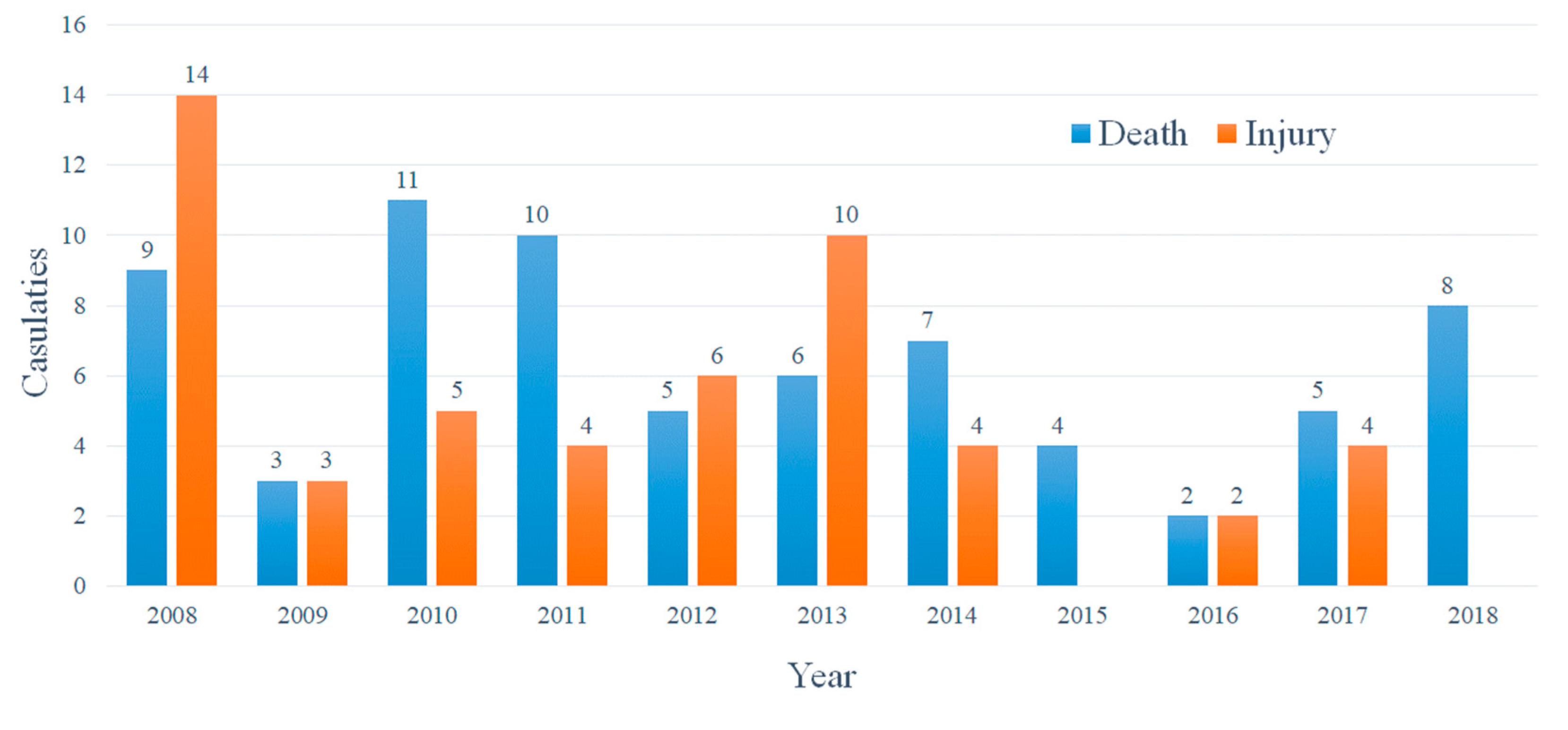
Analysis of the 64 accidents reports associated with confined spaces in Taiwan from 2008 to 2018 (not limited to fatal accidents), as shown in Figure 1, revealed there were 9 deaths and 14 injuries in 2008. The Council of Labor Affairs in Taiwan, i.e., the predecessor of the Ministry of Labor Taiwan, immediately extended the number of labor inspections to include 1534 factories in 2009 and, in April of the same year, launched a “Confined Space Hazards Prevention Implementation Plan”, and 98 publicity meetings and 6 experience-sharing conferences on “Confined Space Hazards Prevention” were held [24]. In the same year, the number of deaths and injuries fell to three people in individual accidents, representing an immediate and remarkable effect. Nevertheless, in 2010, two catastrophic and fatal occupational accidents occurred involving hydrogen sulfide, resulting in seven deaths and four injuries. Although the labor inspections were increased to include 4728 factories [25], it was still impossible to recover the lost life.
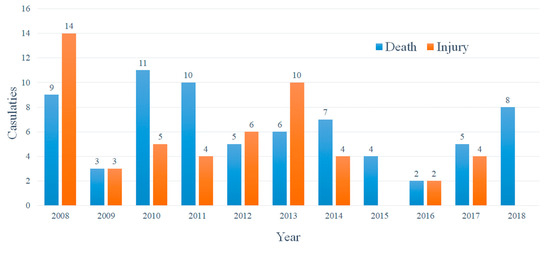
Figure 1.
Statistics for injuries and deaths in catastrophic and fatal occupational accidents occurring in confined spaces from 2008 to 2018 in Taiwan.
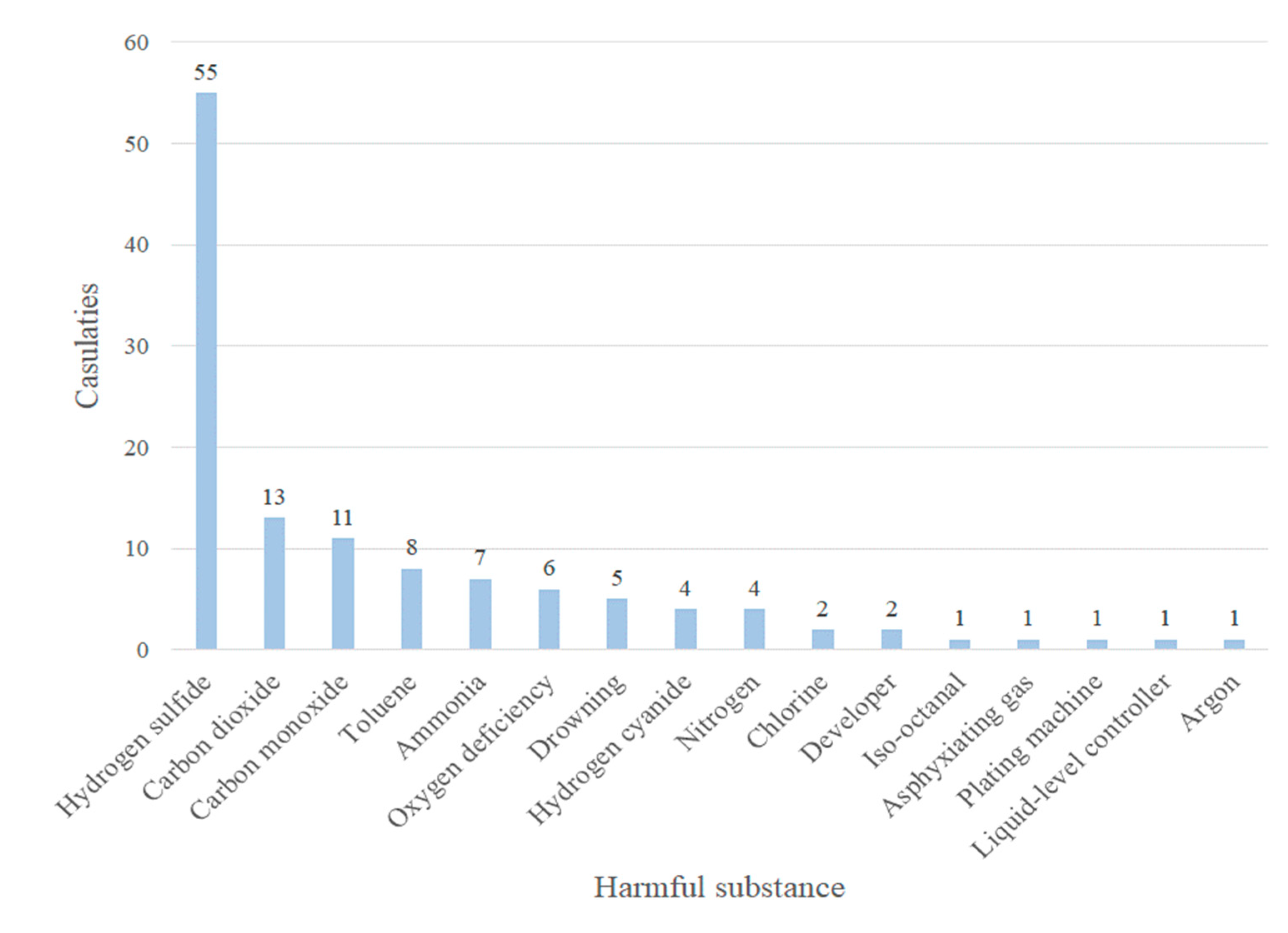
A total 64 accident reports associated with confined spaces were consolidated, as shown in Table 1; in total, 70 deaths and 52 injuries were included. Further analysis, as illustrated in Figure 2, indicated that the harmful substance associated with the highest proportion of casualties was hydrogen sulfide with 45% (55/122), followed by carbon dioxide with 11% (13/122), carbon monoxide with 9% (11/122), toluene with 7% (8/122), and ammonia with 6% (6/122). Therefore, if these five hazards could be eliminated, the proportion of disasters could be reduced.

Table 1.
Statistics for catastrophic and fatal occupational accidents associated with confined spaces in Taiwan from 2008 to 2018.
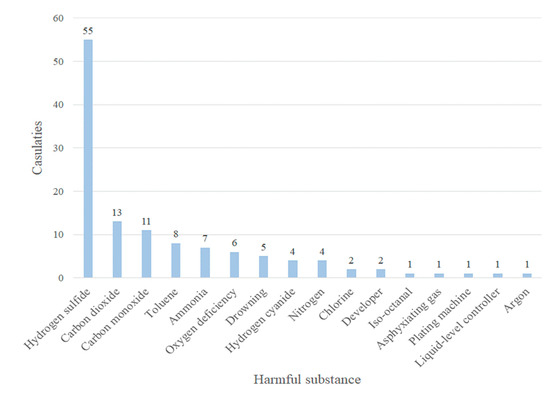
Figure 2.
Classification statistics for media and casualties of confined space accidents in Taiwan from 2008 to 2018.
2.3. Data Analysis
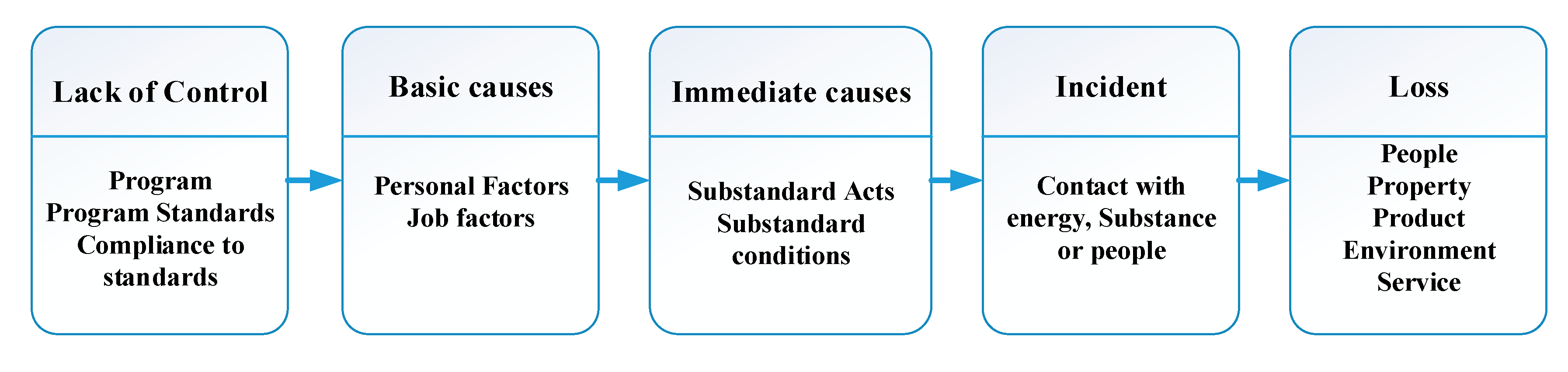
In 1931, Heinrich proposed the “domino theory”, which divides the causes of accidents into five factors: social factors, personal negligence, unsafe acts, accidents, and injuries; these factors will affect each other. Each accident factor is considered a domino. When the initial event occurs, other accident factors will also take place sequentially. The logical and general principle of the domino theory is that if one or more dominoes are removed, the whole row of dominoes will not fall down [26,27]. In particular, if the last two dominoes are removed, accidents and injuries will not happen. Most accident investigations conducted by business entities in Taiwan identified and determined risk factors in accordance with this theory and the responsibilities of the law, but were often limited to discussions of human and device factors, so the root causes of accidents could not be confirmed. Therefore, this study was based on the ILCI loss causation model [28], which was developed by the International Loss Control Institute (ILCI), as displayed in Figure 3. Combined with the SCAT check list of Pei-Ling Yao based on Bird and Germain, the direct cause of each accident was divided into 16 items related to non-standard acts and 13 items related to non-standard conditions [29], as delineated in Table 2. According to the interpretation of direct cause based on CCPS, the direct cause is the factor that directly causes an incident, with no other factor’s intervention, and is also the closest cause to the time and space of the accident [30]. Therefore, in this study, the catastrophic and fatal occupational accidents associated with confined spaces in Taiwan from 2008 to 2018 were discussed using SCAT in order to clarify their direct causes and to recognize hazards or identify the cause of failure in risk control methods, in order to develop corresponding improvements and preventive measures.
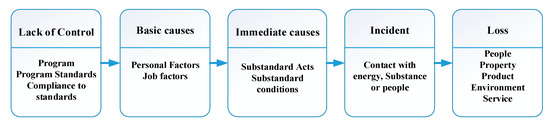
Figure 3.
The ILCI loss causation model.
Table 2.
Checklist for direct causes defined using SCAT.
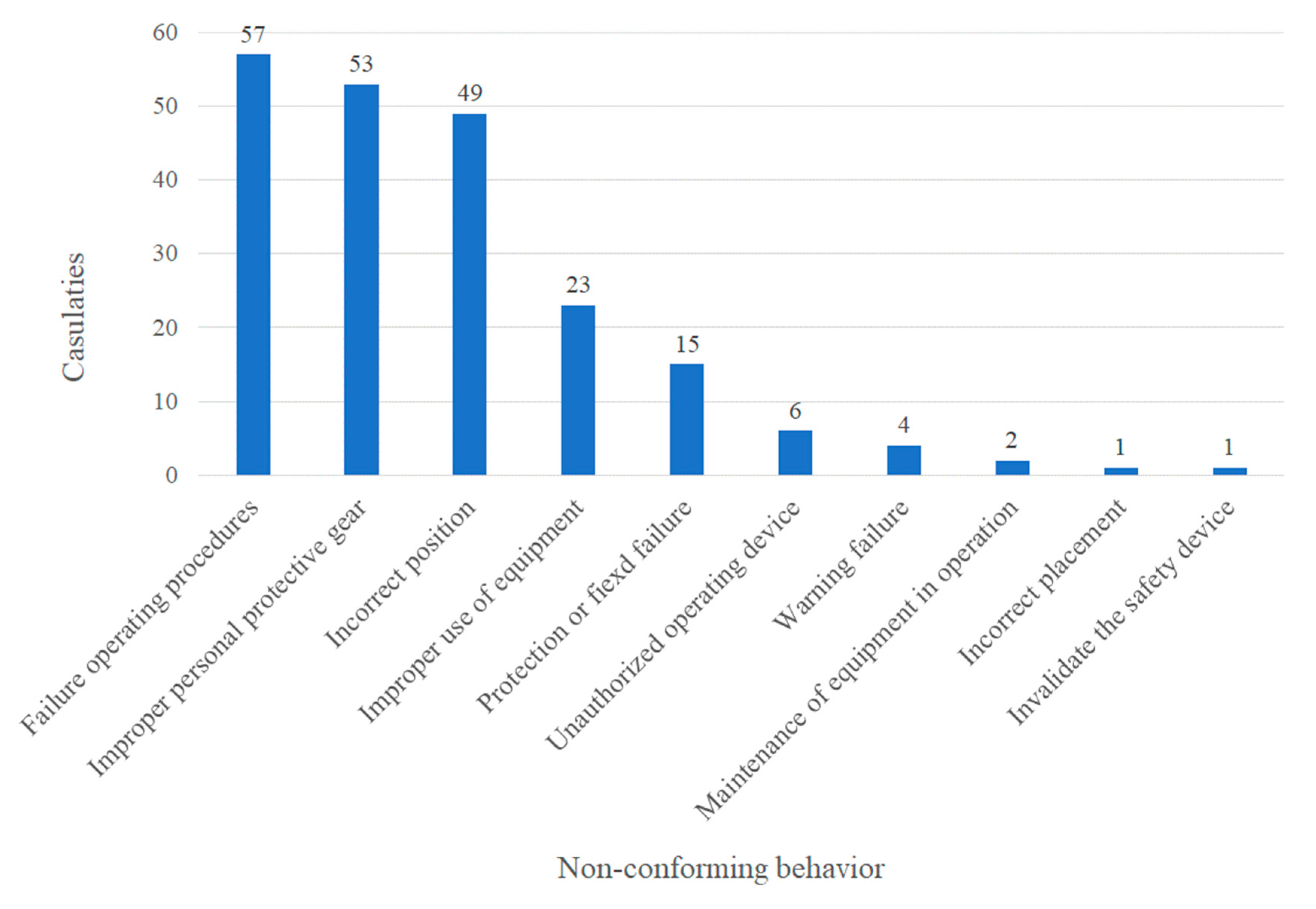
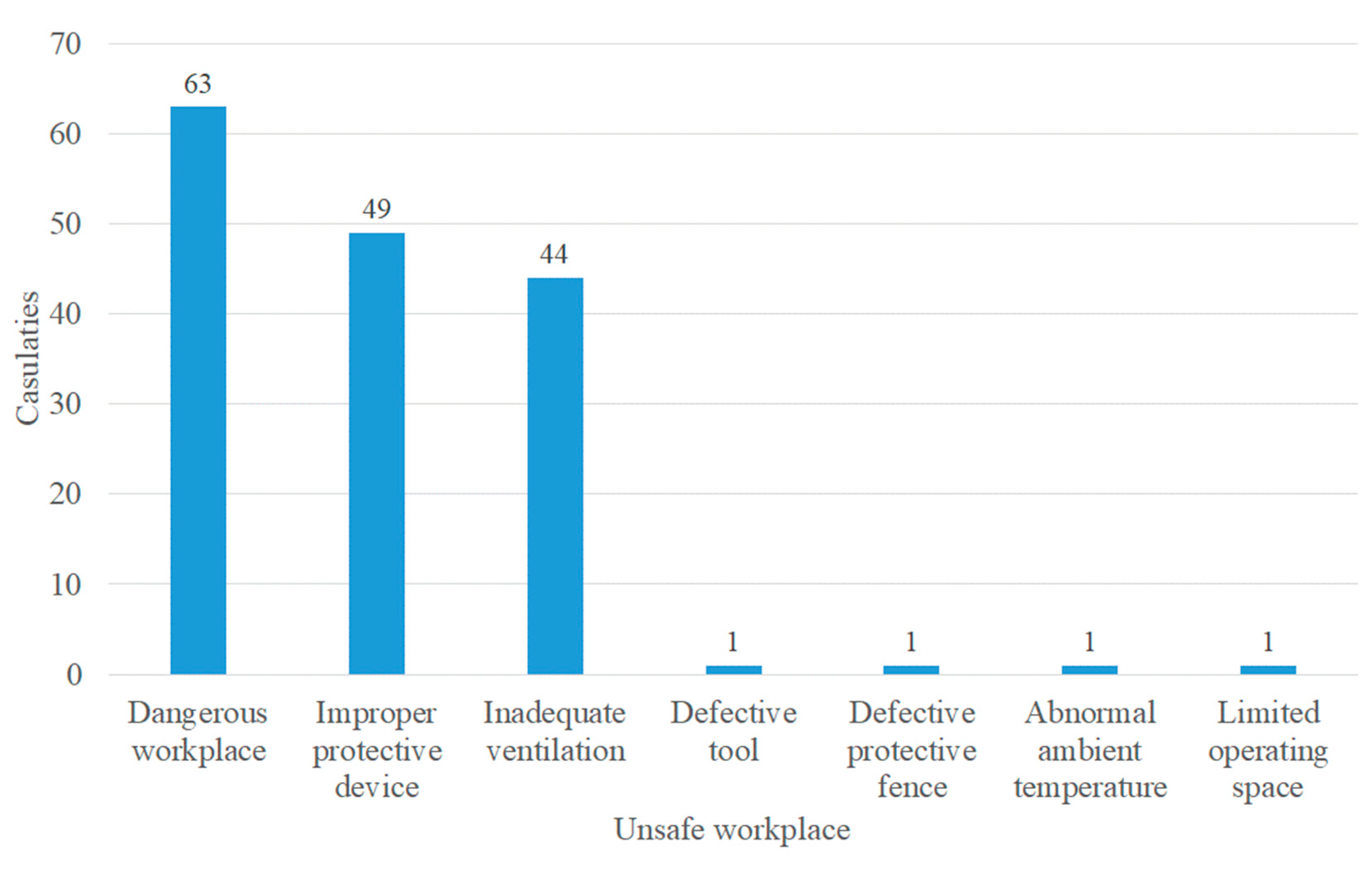
The analysis of non-standard acts conducted via SCAT is displayed in Figure 4, indicating that the highest proportion of direct causes was “failure of operating procedures” with 27% (57/211), followed by “improper personal protective equipment” with 25% (53/211) and incorrect position” with 23% (49/211). In addition, the analysis of non-standard conditions displayed in Figure 5 revealed that “dangerous workplace” had the highest proportion of direct causes with 39% (63/160), followed by “improper protective measures” with 30% (49/160) and “inadequate ventilation” with 27% (44/160).
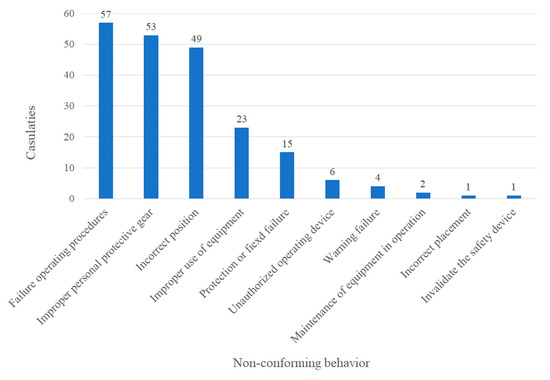
Figure 4.
Statistics for non-standard acts.
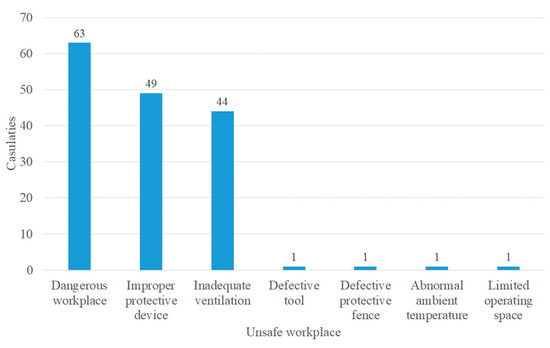
Figure 5.
Statistics for non-standard conditions.
3. Results and Discussion
3.1. Characterization of Fatal Work Accidents in Confined Spaces in Taiwan
In this study, consolidation analysis was conducted according to the 64 accident reports associated with confined spaces published by OSHA (Taiwan). Relevant analysis results were as follows.
3.1.1. Period of the Year
There were 11 catastrophic and fatal occupational accidents associated with confined spaces in 2008 in Taiwan, with a total of 9 deaths and 14 injuries. These casualties accounted for 19% (23/122) of the casualties recorded in the statistical period, and contributed to the passing of the “Occupational Safety and Health Promotion Program” by Taiwan Executive Yuan Taiwan in 2009, which involved eradication of inspection-oriented thinking, adoption of the three-in-one inspection strategy of “promotion, inspection, counseling” to promote the risk management grading inspection system, and establishment of the “Declaration System for Confined Space Work Schedule”. Moreover, the publicity meetings were greatly increased to a total 98; additionally, six experience-sharing conferences on “Confined Space Hazards Prevention” were held [31]. The number of casualties in 2009 was significantly reduced to six people. This plan continued to be implemented until 2010; since then, the number of casualties in confined space accidents has continued to decline steadily.
3.1.2. Type of Accident
Table 3 gives a detailed description of the harmful substances involved in casualties caused in confined spaces investigated in Taiwan; hydrogen sulfide was the main harmful substance involved in accidents, and these accidents made up 45% (55/122) of casualties. Among these, 19 deaths occurred in wastewater treatment facilities, 3 deaths occurred in sewers, and 2 deaths occurred in hot spring storage tanks. Therefore, the number of casualties due to hydrogen sulfide accidents accounted for half of the total. Analysis of the types of non-standard acts according to SCAT, as shown in Table 4, indicated that “failure of operating procedures” was the cause of the highest proportion of accidents at 27% (57/211), followed by 25% (53/211) due to “improper personal protective equipment” and 23% (49/211) due to “incorrect position”. From further cross-comparison between “hydrogen sulfide” and “non-standard acts”, we found that the cause of “incorrect position” accounted for 43% (21/49) of casualties, “improper personal protective equipment” for 42% (22/53), and “failure of operating procedures” for 40% (23/57). From the analysis of the types of non-standard conditions, as shown in Table 5, the cause of “dangerous workplace” was associated with the highest proportion of accidents at 39% (63/160), followed by “improper protective measures” with 30% (49/160), and “inadequate ventilation” with 27% (44/160). From further cross-comparison between “hydrogen sulfide” and “non-standard conditions”, it was found that the cause of “inadequate ventilation” accounted for 45% (20/44) of casualties, “improper protective measures” for 35% (17/49), and “dangerous workplace” for 33% (21/63).
Table 3.
Harmful substances involved in casualties caused by confined space examined in this study.
Table 4.
Non-standard acts and non-standard conditions analyzed in this study.
Table 5.
Key causes of exposure to harmful substances by non-standard acts and non-standard conditions analyzed in this study.
According to the analysis of the direct causes made via SCAT, the first three causes of “non-standard acts” were associated with 75% of the total accidents; the first three causes of “non-standard conditions” were associated with 96%; if the appropriate coping strategy (as delineated in Table 3) is applied to address these causes, the probability of confined space accidents due to hydrogen sulfide should be reduced.
The results revealed that, due to the lack of awareness of the confined space hazards by employers, problems arise for personnel, such as lacking in education and training relevant for the work, or being immersed in a suffocating or anoxic workplace without knowing, and therefore being unable to provide appropriate personal protective equipment and adequate ventilation measures. In addition, rescue people often underestimated the risk involved in entering the accident sites, thus causing themselves to be killed or injured subsequently.
The suggested strategies for preventing accidents represent the most important part of the results and conclusions of this study. First, through our research outcomes, we found that the hydrogen sulfide was the most common harmful substance involved in accidents in confined spaces, involved in 45% of accidents. Therefore, in order of priority, we began with hydrogen-sulfide-related strategies, as these were the most common accidents (up to almost 50%), when listing suggested coping strategies and practical considerations for preventing confined space accidents, as displayed in Table 6. We paid more attention and space to coping strategies for factors that were the causes of greater numbers of accidents. Table 7 presents the suggested coping strategies for preventing confined space accidents caused by carbon dioxide. Thus, we suggested coping strategies for the causes of more than half of confined space accidents i.e., hydrogen sulfide 45% (Table 6) and carbon dioxide 11% (Table 7), meaning this study could be a practical reference for confined space hazard prevention.
Table 6.
Coping strategies for preventing confined space accidents due to hydrogen sulfide.
Table 7.
Coping strategies for preventing confined space accidents due to carbon dioxide.
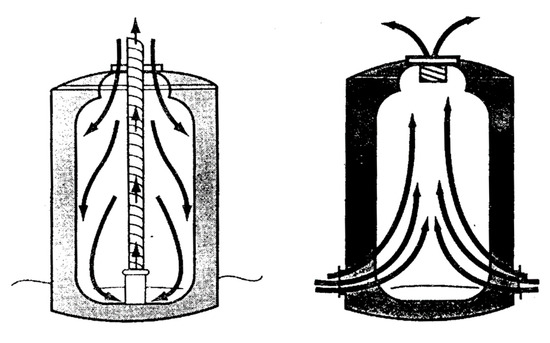
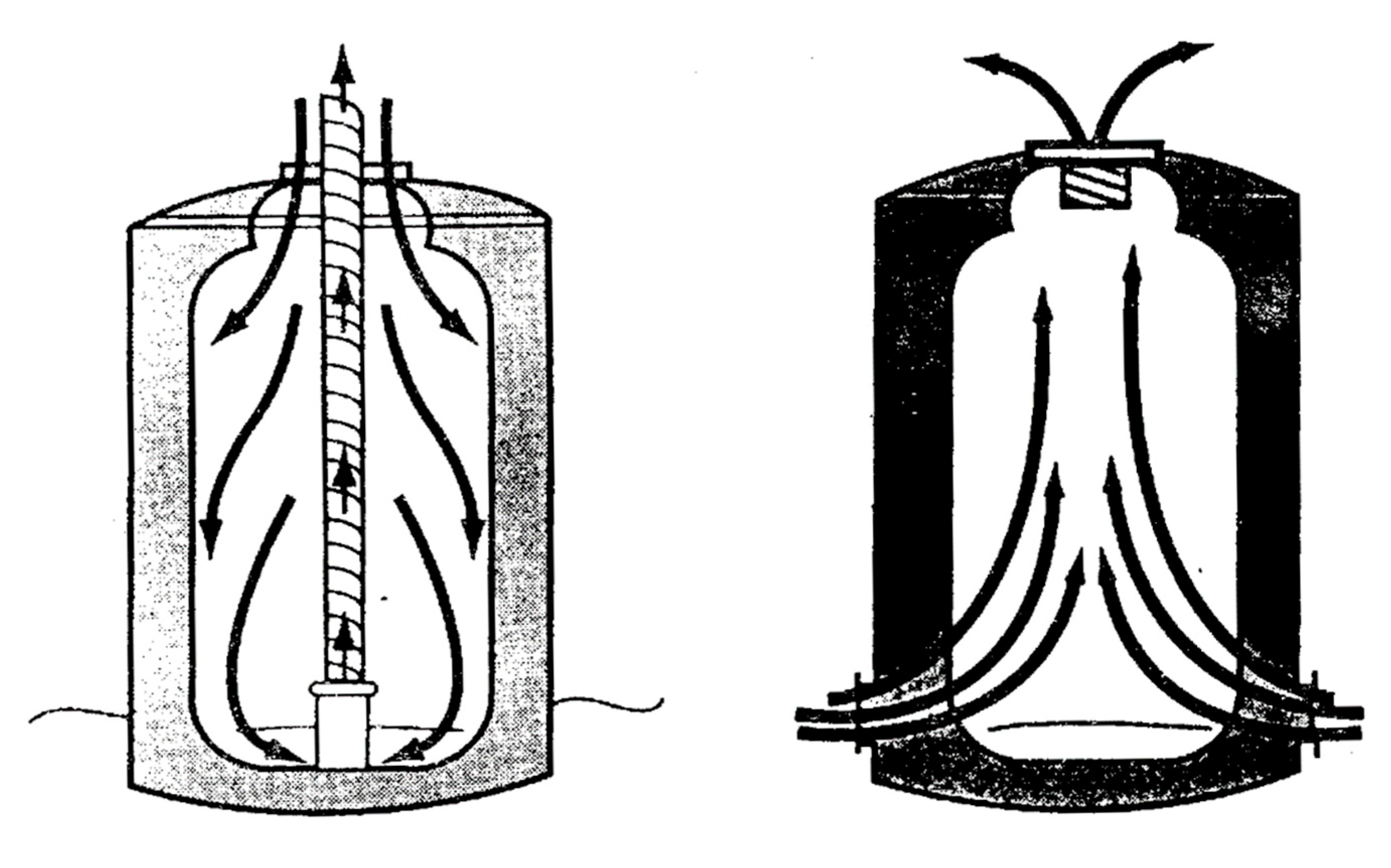
Figure 6.
Schematic diagram of a ventilation method for a heavier-than-air hazardous gas (left) and a lighter-than-air hazardous gas (right).
4. Conclusions
Referring to the 64 accident reports and 70 death cases analyzed in this study, we were able to more accurately identify the factors that cause confined space hazards. An average of 18% of the confined space occupational accidents that occur in Taiwan cause multiple deaths [5]. In addition, in Canada, nearly 20% of confined space occupational accidents have led to multiple deaths [6]. Since the threats of confined space hazards are typically silent, they often result in catastrophic and fatal occupational accidents with multiple deaths.
This study analyzed the causes of confined space occupational disasters via an improved SCAT check method. The original SCAT checked method does not specify the definition of the direct cause. This would make it difficult for investigators to determine the true cause of an accident. Therefore, this study supplied a judgment of relevant direct causes, and also provided a benchmark that could be used to determine the multiple causes of an accident in detail, and could assist investigators to quickly, effectively, and objectively determine the true cause of an accident. In our analysis of confined space disasters, whether in Taiwan or Canada, suffocation by hydrogen sulfide was found to be the main cause of casualties. After cross-comparison of hydrogen sulfide with non-standard acts and non-standard conditions, it was found that the causes of “incorrect position” and “inadequate ventilation” were associated with the highest proportion of accidents. The research’s limitations and implications, their implications, expected contributions, and our future prospects are delineated below. This study used SCAT as a preliminary analysis method for confined space accidents, and did not further analyze indirect causes on top of direct causes. In the future, case studies could be used to continue in-depth research. After classifying the evidence data using the OSHA 4Ps model, the ECFA + method was used to construct a time series diagram, and the SCAT accident cause checklist was used to design related question forms to assist investigators to ascertain the direct, indirect and root causes of accidents. According to Table 6 and Table 7, preventive coping strategies for eliminating the hazards of confined space work should start by removing non-standard acts and non-standard conditions, and should especially focus on design for intrinsic safety, so as to minimize confined space hazards to nonexistence.
A confined space is a work area wherein mistakes cannot be accepted. When problems occur in confined spaces, people not only get hurt but may even lose their lives. Nevertheless, there are still many employers who do not comply with the relevant laws and regulations, exposing their workers to hazardous situations. Such employers may not understand the real risks, and may make their workers enter work spaces with insufficient protection. Such situations are quite dangerous and have caused workers to be killed. Never wait for the labor inspection agency to find the problem, and do not wait until the emergency occurs to respond to the problem. Be sure that hazard recognition and identification are done well in advance, find problems at any time, and then make corrections on a continuous basis.
Author Contributions
Conceptualization, C.-C.C. and T.-J.W.; methodology, C.-C.C., Y.-M.C., T.-J.W.; investigation, C.-C.C.; data curation, C.-C.C. and T.-J.W.; writing—original draft preparation, C.-C.C.; writing—review and editing, C.-C.C. and T.-J.W.; visualization, C.-C.C.; supervision, T.-J.W. All authors have read and agreed to the published version of the manuscript.
Funding
This research received no external funding.
Conflicts of Interest
The authors declare no conflict of interest.
References
- Health and Safety Executive (HSE). Guidance on Permit-to-Work Systems: A Guide for the Petroleum, Chemical and Allied Industries; HSE: Bootle, UK, 2005.
- Health and Safety Executive (HSE). Confined Spaces: A Brief Guide to Working Safely; HSE: Bootle, UK, 2014.
- Health and Safety Executive (HSE). Safe Work in Confined Spaces: Confined Spaces Regulations, 3rd ed.; HSE: Bootle, UK, 2014.
- Pettit, T.A.; Braddee, R.W.; Suruda, A.J.; Castillo, D.N.; Helmkamp, J.C. Worker deaths in confined spaces. Prof. Saf. 1996, 41, 22–24. [Google Scholar]
- Kim, Y.R.; Jeong, B.Y.; Park, M.Y. Effects of job satisfaction, organizational support and risk perception on safety consciousness in confined space workers. J. Ergon. Soc. Korea 2017, 36, 245–254. [Google Scholar]
- American National Standards Institute (ANSI). Safety Requirements for Confined Spaces; ANSI\ASSE Z117.1: Des Plaines, IL, USA, 2003. [Google Scholar]
- OSHA (USA). Permit-Required Confined Spaces for General Industry (2.29 C.F.R., 1910.146); OSHA, US Department of Labor: Washington, DC, USA, 1993.
- National Institute for Occupational Safety and Health (NIOSH). Worker Deaths in Confined Spaces; NIOSH: Washington, DC, USA, 1994.
- Wu, H.C. Hazard Evaluation of Confined Space in Wastewater Treatment Facilities Case Studies. Master’s Thesis, National Chung Hsing University, Taichung, Taiwan, 2014. [Google Scholar]
- Wilson, M.P.; Madison, H.N.; Healy, S.B. Confined space emergency response: Assessing employer and fire department practices. J. Occup. Environ. Hyg. 2012, 9, 120–128. [Google Scholar] [CrossRef] [PubMed]
- Burlet-Vienney, D.; Chinniah, Y.; Bahloul, A.; Roberge, B. Occupational safety during interventions in confined spaces. Saf. Sci. 2015, 79, 19–28. [Google Scholar] [CrossRef]
- Ministry of Labor (Taiwan). Occupational Safety and Health Facilities Regulation; Ministry of Labor Taiwan: Taipei, Taiwan, 2019.
- National Institute for Occupational Safety and Health (NIOSH). A Guide to Safety in Confined Spaces; NIOSH: Washington, DC, USA, 1987.
- Ministry of Labor (Taiwan). Regulations for Prevention of Hypoxia; Ministry of Labor Taiwan: Taipei, Taiwan, 2014.
- Taylor, B. Confined Spaces Common Misconceptions & Errors in Complying with OSHA’s Standard; American Society of Safety Professionals (ASSP): Park Ridge, IL, USA, 2011. [Google Scholar]
- Institute of Labor, Occupational Safety and Health (ILOSH). Application Study of Incident Investigation Method; ILOSH, Ministry of Labor Taiwan: New Taipei City, Taiwan, 2010.
- Kakhki, F.D.; Freeman, S.A.; Mosher, G.A. Segmentation of severe occupational incidents in agribusiness industries using latent class clustering. Appl. Sci. 2019, 9, 3641. [Google Scholar] [CrossRef]
- Bevilacqua, M.; Ciarapica, F.E.; Giacchetta, G. Industrial and occupational ergonomics in the petrochemical process industry: A regression trees approach. Accid. Anal. Prev. 2008, 40, 1468–1479. [Google Scholar] [CrossRef] [PubMed]
- Shafique, M.; Rafiq, M. An overview of construction occupational accidents in Hong Kong: A recent trend and future perspectives. Appl. Sci. 2019, 9, 2069. [Google Scholar] [CrossRef]
- Burnham, K.P.; Anderson, D.R. Multimodel inference: Understanding AIC and BIC in model selection. Sociol. Methods Res. 2004, 33, 261–304. [Google Scholar] [CrossRef]
- Emanuele, C.F. Big data analytics as a tool for reducing ergonomics risk. J. Ergon. 2017, 7, 1000. [Google Scholar] [CrossRef]
- OSHA (Taiwan). Occupational Accidents Cases; OSHA, Ministry of Labor Taiwan: New Taipei City, Taiwan, 2018.
- Katsakiori, P.; Sakellaropoulos, G.; Manatakis, E. Towards an evaluation of accident investigation methods in terms of their alignment with accident causation models. Saf. sci. 2009, 47, 1007–1015. [Google Scholar] [CrossRef]
- OSHA (Taiwan). 2009 Annual Reports of Labor Inspection; OSHA, Ministry of Labor Taiwan: New Taipei City, Taiwan, 2009.
- OSHA (Taiwan). 2010 Annual Reports of Labor Inspection; OSHA, Ministry of Labor Taiwan: New Taipei City, Taiwan, 2010.
- Ciaran, M.C. Confined Space Fatalities; Edith Cowan University: Perth, WA, Australia, 2006. [Google Scholar]
- Jovanovic, J.; Arandelovic, M.; Jovanovic, M. Multidisciplinar aspects of occupational accident and injuries. Facta Univ. Ser. Work. Living Environ. Prot. 2004, 2, 325–333. [Google Scholar]
- Bird, F.E., Jr.; Germain, G.L. Practical Loss Control Leadership; International Loss Control Institute: Loganville, GA, USA, 1985; ISBN 0-88061-054-9. [Google Scholar]
- Yao, P.L. Occupation Incident Investigation Technique. Master’s Thesis, National Central University, Taoyuan, Taiwan, 2009. [Google Scholar]
- Center for Chemical Process Safety (CCPS). Guidelines for Investigating Chemical Process Incidents, 3rd ed.; CCPS, AIChE: New York, NY, USA, 2019. [Google Scholar]
- Council of Labor Affairs (Taiwan). 2009 Occupational Safety and Health Promotion Program; Executive Yuan: Taipei, Taiwan, 2009.
© 2020 by the authors. Licensee MDPI, Basel, Switzerland. This article is an open access article distributed under the terms and conditions of the Creative Commons Attribution (CC BY) license (http://creativecommons.org/licenses/by/4.0/).