


Abstract
The specific activity of U-238 and Th-232, as well as K-40 radionuclides, in twenty-nine investigated medicinal herbs used in Egypt has been measured using a high-purity germanium (HP Ge) detector. The measured values ranged from the BDL to 20.71 ± 1.52 with a mean of 7.25 ± 0.54 (Bq kg−1) for uranium-238, from the BDL to 29.35 ± 1.33 with a mean of 7.78 ± 0.633 (Bq kg−1) for thorium-232, and from 172 ± 5.85 to 1181.2 ± 25.5 with a mean of 471.4 ± 11.33 (Bq kg−1) for potassium-40. Individual herbs with the highest activity levels were found to be 20.71 ± 1.52 (Bq kg−1) for uranium-238 (H4, Thyme herb), 29.35 ± 1.33 (Bq kg−1) for thorium-232 (H20, Cinnamon), and 1181.2 ± 25.5 (Bq kg−1) for potassium-40 (H24, Worm-wood). (AACED) Ingestion-related effective doses over the course of a year of uranium-238 and thorium-232, as well as potassium-40 estimated from measured activity concentrations, are 0.002304 ± 0.00009 (minimum), 0.50869 ± 0.0002 (maximum), and 0.0373 ± 0.0004 (average)(mSv/yr). Radium equivalent activity (Raeq), annual gonadal dose equivalent (AGDE), absorbed gamma dose rate (Doutdoor, Dindoor), gamma representative level index (I), annual effective dose (AEDtotal), external and internal hazard index (Hex, Hin), and excess lifetime cancer risk were determined in medicinal plants (ELCR). The radiological hazards assessment revealed that the investigated plant species have natural radioactivity levels that are well within the internationally recommended limit. This is the first time that the natural radioactivity of therapeutic plants has been measured in Egypt. In addition, no artificial radionuclide (for example, 137Cs) was discovered in any of the samples. Therefore, the current findings are intended to serve as the foundation for establishing a standard safety and guideline for using these therapeutic plants in Egypt.
1. Introduction
Many plants have been employed for nutrition and medicine since the dawn of human history. The study of the concentration of radioactivity in plants in the environment is relevant to ecological and plant evolution under certain geochemical conditions and adaptation and provides information for environmental radioactivity monitoring [1,2].
Radionuclides from the 238U and 232Th family, as well as 40K, are terrestrial primordial radionuclides that formed in the earth’s crust and are natural sources of radioactivity in the environment [3].
Traditional medicine is defined by the World Health Organization as therapeutic techniques that have existed for hundreds of years before the establishment and spread of modern medicine and are still in use today [4].The environmental conditions could affect the properties and efficacy of medicinal herbs, and one of the most significant parameters that should be controlled is the level of natural and artificial radionuclides. According to the WHO guidelines for herbal medicines’ quality regulation, the health risk posed by the accidental contamination of herbal medicines by radionuclides depends not only on the specific radionuclide and the level of contamination but also on the dose and duration of use of the product consumed [5].
All over the world, medicinal herbs have been used for a long time [6]. A growing number of people are turning to herbal medicine to enhance their health in recent years because of their well-known pharmacological as well as therapeutic properties of many of them [7]. Seventy-five percent of the world’s population relies on herbs for basic health care, according to WHO reports [8]. We are witnessing a global herbal that is taking place all over the world, with herbs containing medicinal properties being used in contemporary medical therapies as well. A plant’s most used organs are its leaves. Other organs include the flowers, fruit, seeds, stems, wood, bark, roots, and rhizomes. These organs are used as is or pulverized into a fine powder [9]. Additionally, medicinal plant ethnobotanical research is a critical step in the local development of ecotourism, which includes environmental museums and small-scale businesses dealing with native medicinal and edible plants, as well as community-based bio-conservation initiatives. However, in order to complete all of these duties, the use of medicinal plants and their products must be strictly regulated in order to avoid any potentially harmful side effects on the health of consumers. Since plants are the principal conduit of natural radionuclides entering the human body through the food chain, radionuclides in soil may enter the food chain through direct deposition on leaves or transfer to portions of plants used for medicinal purposes. In addition, root uptake, direct deposition from the atmosphere, and resuspended natural radionuclide from the soil contribute to the absorption of soluble radionuclides in soil water. In soils and rocks, the naturally occurring radionuclides 226Ra, 232Th, and 40K are the principal radiation sources. Because of their gamma-ray emissions, these radionuclides constitute a danger of external exposure [10].
Medicinal herbs’ properties and efficacy may be influenced by their environmental surroundings, and one of the most important parameters that must be monitored is the level of natural and man-made radionuclides present in them. Aside from the specific radionuclide and the level of contamination, the health risks posed by accidental radionuclide contamination of herbal medicines has been found to be dependent on the amount consumed and the length of time it was consumed [5]. It is possible to accumulate harmful substances in the human body when using herbal remedies for a long period of time [11]. An individual’s annual effective dose from ingestion increases because of increased concentrations of radioactive elements, increasing the risk of radiological harm because of ingestion. As a result, it is critical to research radionuclide absorption and activity distribution, as well as the possible human effective radiation dosage from therapeutic plants. Medicinal plants can be found in their natural state or processed.
Due to preparation techniques that invariably eliminate part of the radionuclides, NORMS (Naturally Occurring Radioactive Material) activity concentrations in herbal formulations are substantially lower than in raw plants. The health effects of NORMS (Naturally Occurring Radioactive Material) exposure from medicinal plants and herbal preparation ingestion concerning NORMS levels in medicinal plants may be linked to most types of leukemia and cancer [12,13]. The average annual effective dose from natural sources is 2.4 mSv worldwide—the average radioactivity ingested in food and drink results in a dosage of roughly 0.29 mSv−1. Potassium, a vital nutrient, is the major radionuclide that contributes to the dosage. Potassium levels in the body are almost constant. Compared to uranium and thorium, thorium has a lower melting point [14,15]. K-potassium is the most important nutrients for plants. Because K and Cs are members of the same chemical element family, their attitude toward the plant’s metabolism is very similar to one another [16]. Potassium, as well as its naturally occurring radioisotope 40K, enters the plant roots through ion channels, or transporters, that are also used for the Cs+ ion transporter. As a result, a high K content in soil inhibits the adsorption of Cs, and the impact could be heightened by higher mobility of the potassium ion in soil, which increases the availability of potassium to plants [17]. The purpose of this study was to provide information on: natural radionuclide activity concentrations in numerous medicinal plants; the radiation hazards related to the intake of therapeutic plants, as evaluated in this research.
2. Materials and Methods
Samples Preparation & Measurements
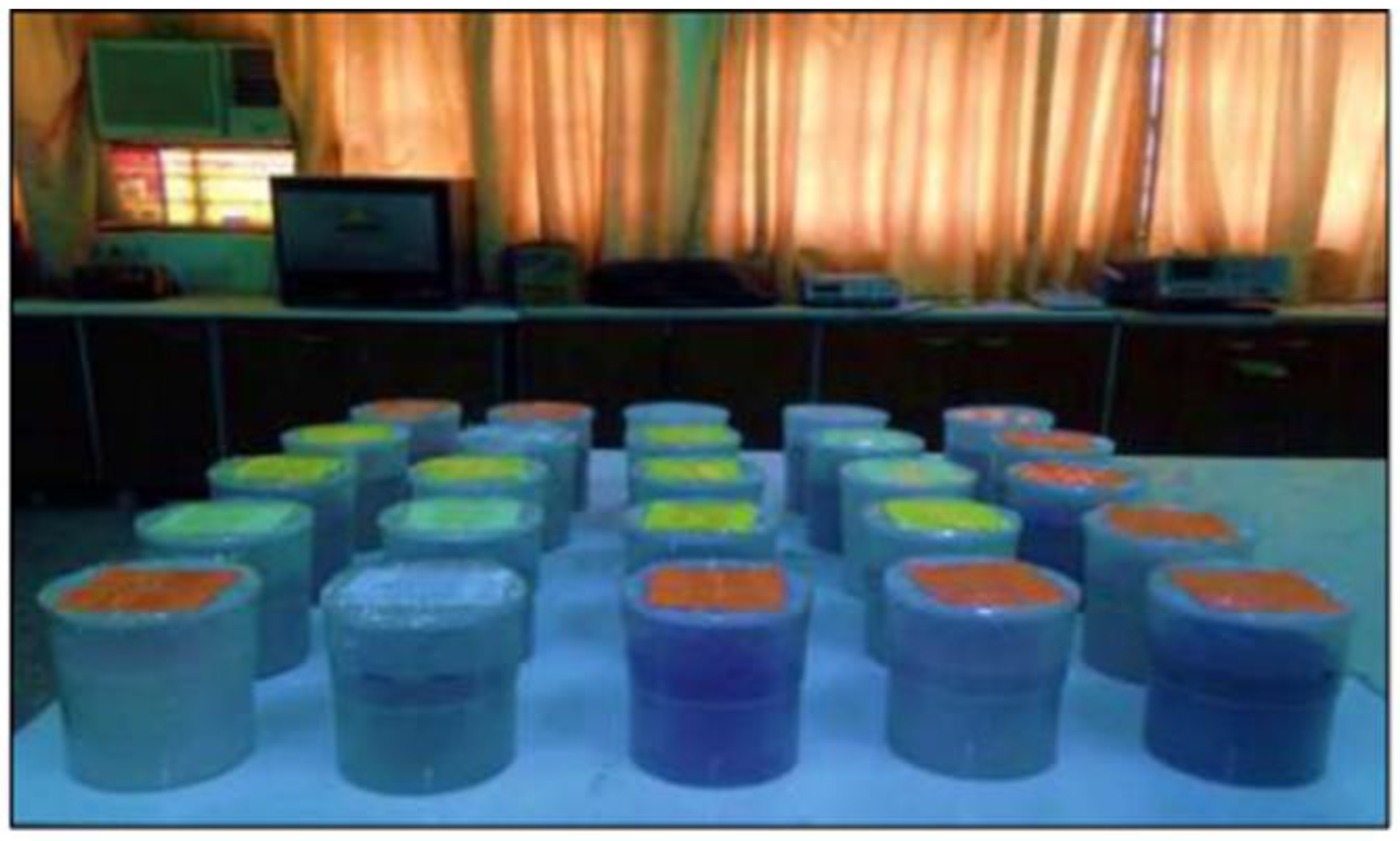
The Egyptian marketplaces provided dried medicinal plant samples measuring one kilogram apiece. The samples were then rinsed in water and dried in the sun to remove any dust contamination. At the central laboratory for Environmental Radioactivity Measurements, Intercomparison and Training CLERMIT and Nuclear & Radiological Regulatory Authority in Cairo, these samples were crushed into tiny bits, homogenized, and dried in an electric oven at 105–110 °C until they reached a consistent weight. The dry components were subsequently ground into a fine powder, and sieved at 0.5 mm in diameter, with a sealed joint in a beaker, as illustrated in Figure 1. Finally, the samples were kept at room temperature for about a month before counting, to allow the radionuclides 226Ra, 222Rn, and their daughters to approach earthly equilibrium.
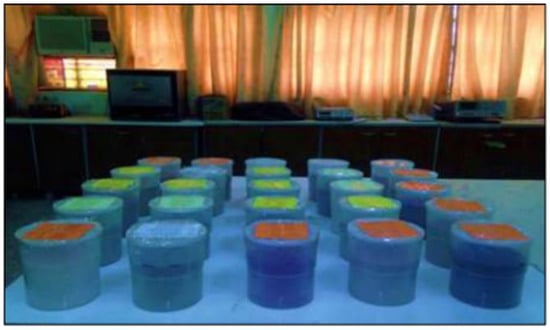
Figure 1.
Samples inside the Marinelli beakers.
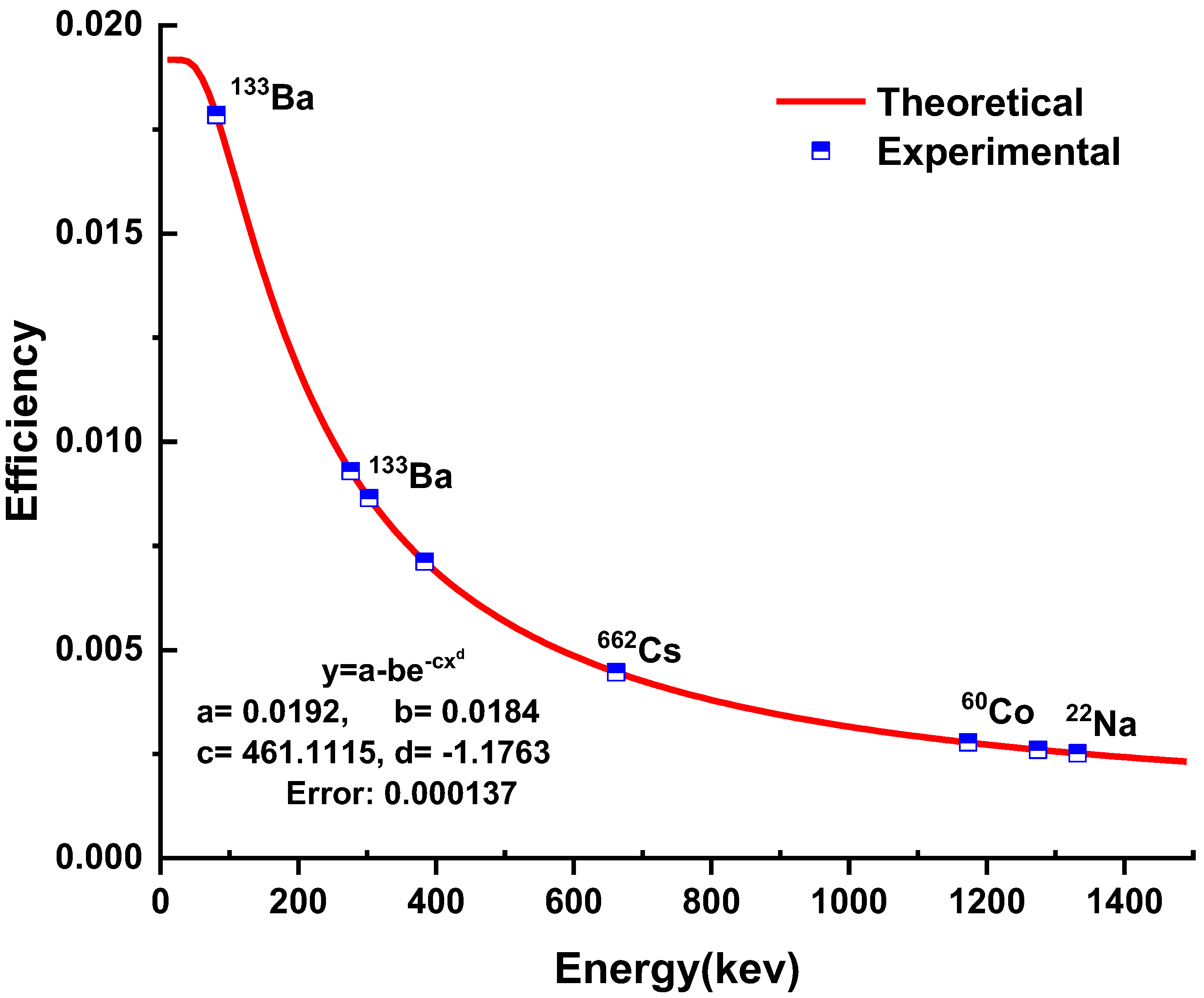
The dry mass of the samples in this experiment was used to calculate the radioactive content. Table 1 lists the traditional and scientific names. The samples have been counted using a gamma-ray spectrophotometer. A high purity germanium (HP Ge) detector with an efficiency of 25% and an energy resolution of 1.8 keV (FWHM) at a peak energy of 1333 keV from the 60Co, peak share to Compton 55:1 was used. Through an uninterrupted power supply, a high-voltage power supply (Model 13103) was used to deliver the bias voltage of 3000 V. (UPS). The detector was kept cooled in a 25-L Dewar with liquid nitrogen at 196 °C (77 K) and an ambient temperature of 16 to 27 °C. One-hundred millimeters of lead shielding reduces the soft components of cosmic rays to a shallow level. The X-ray (73.9 keV) generated by lead as a result of its interaction with external radiation was reduced by the copper layer [18]. To facilitate radionuclide identification and quantification, the system’s energy and efficiency were calibrated prior to the use of samples for analysis with the IAEA’s Multinuclear Reference Standard Solution, which has the same geometry of the investigsted samples as shown in Figure 2.

Table 1.
Physical data of herbs.
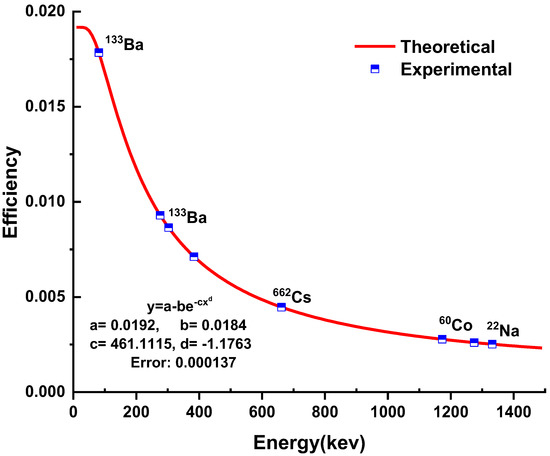
Figure 2.
Standard sources are used to calibrate the detector for efficiency.
The standard and sample were computed for 8000 s to collect spectral data to improve counting and assessment. The activity concentrations of 238U, 232Th, and 40K, as well as the background in an empty beaker under the same conditions, were estimated after normalizing for background and heterogeneity [19]. The absolute efficiency was calculated using the next isotopes, which included (Eγ and Iγ%) 133Ba (80.1 KeV—34.06%) and (356 KeV—62.05%), 137Cs (661.6 KeV—85.12%), 60C (1173.2 KeV—99.97% and 1332.5 KeV—99.98%) and 22Na (1274.5 KeV—99.9%), with specified activities. The IAEA 154 instruction was used to calibrate the detector efficiency [20]. An equation fitted to experimental data by polynomial curve is reported in Formula 1. In this formula, Y is efficiency, a, b, c, d, e, f are constants, and x is the gamma ray energy in KeV.
Y = a + b (Lnx) + c (Lnx) 2 + d (Ln x) 3 + e (Lnx) 4 + f (Lnx) 5
The calibration curve fitted to experimental data by polynomial curve is shown in Figure 2. Background measurements, sample counting geometry, and a standard mixed source for efficiency calibration were all kept constant. All the spectra’s counting times were within 80,000 s. The absolute efficiency of detector arrangement was estimated using the registered gamma-ray spectrum:
where the Net-area represents net counts for those that fall under the full-energy peak, A represents radionuclide activity at a given date, Iγ(Eγ) stands for the abundance of energy Eγ and represents counting. The radioactivity concentration of 238U, 232Th, and 40K in medicinal plants was assessed using quantitative analysis of the gamma spectra, acquired using Ortec MAESTRO-32 analytic software at specific energies. A mean of 214Pb (251.9 and 295.2 keV) and 214Bi (609.3 and 1764.5 keV) was used to compute 238. A mean of 208(2614.5 and 583.2 keV), 212Pb (238.6 keV), 228(11.2 keV), and 40(1460.0 keV) was used to calculate 232. After the decay had been corrected, the values for activity concentrations in decay chains were based on secular equilibrium for the various isotope activities. The measurement yielded no artificial radioactivity. Each sample’s radioactivity was determined using a calibrated high purity germanium detector. The radionuclides in the samples had their specific activity (Asp (E, i) in Bq kg−1) evaluated using the following equation [21].
Nsam(E, i) is net counts under the full-energy peak corresponding to the Ei energy, Tc is the calculation of live time (s), Pγ(E, i) is the gamma emission potential of the radionuclide to transition at energy E; Nsam is the dry weight of the samples (kg) after obtaining the values of the specific activity concentrations of radionuclides that occur naturally in medicinal plants. ϵγ(E) is the absolute efficiency of detector. The equations used to calculate the radiological hazards have been discussed in detail in our previous works [22,23,24,25,26,27,28,29,30]. The error associated with every calculation was measured by the standard deviation (SD) equation. The disintegration of a radionuclide is a random process, and only an estimate of the true activity of a sample can be obtained. Factors such as the confidence limit and sample counting error are all dependent on counting time. When many samples with low-level activities must be assessed, it is important to utilize the time available in the most efficient manner. The percentage of sample counting error for the radioactivity measurement is found with the help of the following relation [31]:
where σ is the standard deviation; Nt is the number of counts for samples; Nb is the counts for the background; Tt is the counting time for Nt, and Tb is the counting time for Nb.
3. Calculation of Radiological Hazard
The air-absorbed dose rate () was determined using UNSCEAR’s recommendations. The absorbed gamma dose rate D (nGy/h) in the air at 1 m above the ground was measured to guarantee the homogeneous dispersion of radionuclides. This parameter may be used to measure any radiological risk and radiation exposure from radionuclides in the soil; the absorbed dose rate in air Dout was determined using the formula [32]:
where is the dose rate in nGy h−1 and , , and are the activity concentrations (Bq kg−1) of radium (226Ra), thorium (232Th), and potassium (40K), respectively. Determining the ratio of the absorbed dose to the outdoor dose received from radiation emitted by radionuclides is a key step in health risk assessments.
The internally absorbed gamma dos (Din) rate is expressed by Equation (6), and according to the UNSCEAR 2000 report, this internal dose should not exceed 84 nGy/h [32].
The average annual committed effective dose (AACED) for the ingestion of NORMs in medicinal plants is calculated using the expression:
where is the average annual committed effective dose, is the rate of consumption of intake NORMs from medicinal plants, is the dose conversion coefficient for ingestion for each radionuclide (i.e., 4.5 × 10⁻⁵ 2.8 × 10⁻⁴, 2.3 × 10⁻⁴ and 6.2 × 10⁻⁶ for 238U, 226Ra, 232Th, and, K respectively for an adult) [33], and isthe specific activity concentration of each radionuclide. Although there is no defined dosage for the use of medicinal plants, a rise in the rate of intake by a patient who utilizes these plants to treat an illness on a regular basis raises their average effective yearly dose Using the Formula (7), The average bound annual effective dosage for NORMs in medicinal plants is [33]. represents the annual consumption rate of NORMs in medicinal plants, which is 1.8 kg/yr [1,2].
For all the medicinal plants utilized in this investigation, it was assumed that a patient requires 100 mL/day of the herbal preparation or product throughout the treatment period or is 5%.
To assess the health effects of the absorbed dose, the annual effective dose should be calculated using a conversion factor (0.7 ) to convert the air-absorbed dose to the effective dose received by humans, along with an external occupancy factor (0.2), which is equivalent to a 20% outdoor occupancy and an 80% inward occupancy [34,35].
This variable is appropriate for identifying the lifestyle in the research area [36]. It can be used to compute the annual effective dose rate (AEDR, in mSv/y) received by a population. This component is appropriate for identifying the life pattern in the research area. The population’s annual effective dose rate (AEDR, in ) may be computed using the following equation [37].
where, is the total air absorbed dose rate in the outdoors; 8760 h is the number of hours in one year; 0.2 is the outdoor occupancy factor; 0.7 is the conversion coefficient from the absorbed dose in the air to the effective dose received by adults; is the conversion factor between nano- and milli-level measurements. The annual effective dose rates (E) are an important parameter to consider when evaluating the health effects of an absorbed dose. The conversion coefficient from absorbed dose in the air to effective dose (0.7 Sv/Gy) and the indoor occupancy factor (0.80) proposed by [13,32] are used to estimate effective dose rates. The annual effective dose in millisieverts per year (mSv/y) was calculated using the following formula [32].
The thyroid gland, lungs, bone marrow, gonads, and breasts are among the organs affected by atomic radiation. The amount of AGDE produced in soil by the activity of 226Ra, 323Th and 40K is calculated as follows [32].
The external hazard index (Hex) produced by the emitted rays of the samples should be ≤1, which corresponds to the upper limit of Raeq (370 Bp/Kg) [38]. The Hex external hazard index, expressed in (mGy/yr) is calculated according to the following equation
where , , and are the activity concentrations of 226Ra, (238U-series), 232Th, and 40K, respectively. The internal exposure Hin to 222Rn and its daughter products are controlled by an internal hazard index Hin, which is defined in [39,40].
The radioactivity level index used to estimate the level of gamma radiation hazard associated with different concentrations of some specific radionuclides is defined by the following equation [21,41,42].
where, , , and are the activity concentrations of 226Ra, (238U-series), 232Th, and 40K, respectively. Even in the absence of radioactive components, miners, and inhabitants of the study region who are expected to spend the majority of their time in this environment, one may estimate carcinogenic potential using the lifetime cancer risk (ELCR). Excess lifetime cancer risk (ELCR) was determined based on the values of the annual committed effective dose using the equation
where LE is life expectancy taken to be 70 years and RF is a fatal risk factor per sievert which was 0.05 [43].
4. Results and Discussion
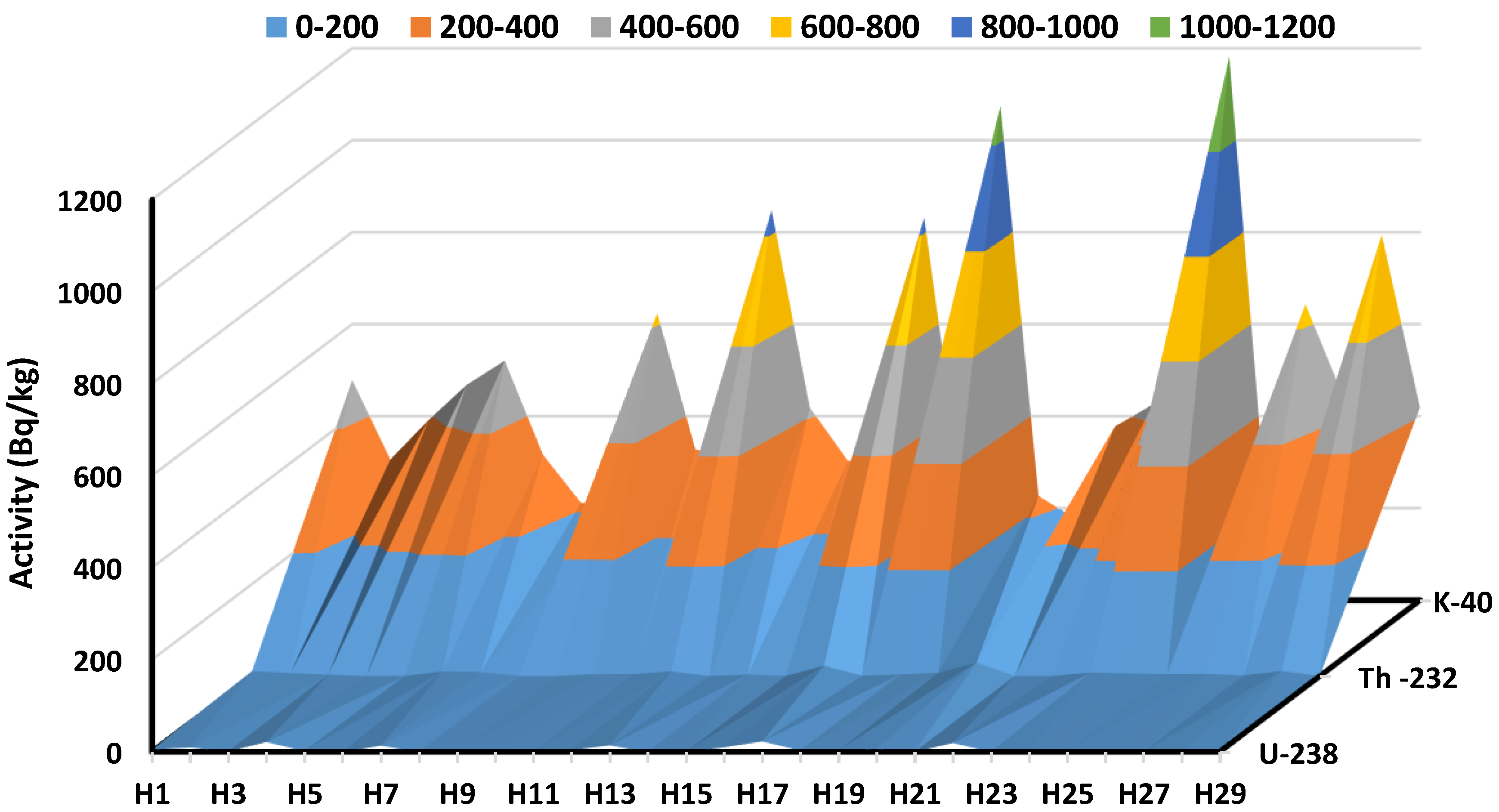
Gamma-ray spectrometry was used to measure the radioactivity levels of NORMs in 29 different medicinal plants that are commonly used in Egypt. The equation used to figure out the average concentrations of 226Ra, 232Th and 40K that were used (3). Calculations were also used to figure out how much radiation these medicinal plants might cause. The risk indexes and annual effective doses were also considered. Results from our study were compared to global averages set by UNSCEAR and results from other countries. Our findings and comparisons are shown in the following logical order. Figure 3 and Table 2 show the average dry weight activity concentrations of 226Ra, 232Th and 40K for the medicinal plants that were tested in this study. Each sample and isotope being looked at has a wide range of activities. Different medicinal plants may have different concentrations of NORMs because they have different amounts of radioactive minerals and can absorb certain elements [2].
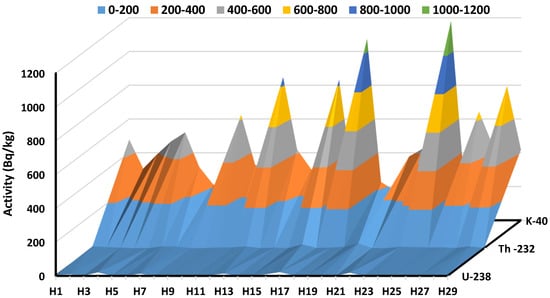
Figure 3.
The activity concentration for 238U, 232Th, and 40K in medicinal plant samples (Bq⁄kg).
Table 2.
Specific activities (Bq/kg) of 238U (226Ra), 232Th, and 40K in medicinal plant samples using a γ-spectrometer.
From the current research, we can see that the concentration levels of 238U varied from BDL to 20.71 ± 1.52 Bq/Kg as observed in 15 plant species exceeding BDL values with an average of 7.25 ± 0.52 Bq/Kg. Thyme herb (H4) has the highest 238U concentration. 232Th concentrations ranged from BDL to 29.35 ± 1.33 Bq/Kg, as observed in 10 plant species with with concentrations greater than BDL values, with an average of 7.78 ± 0.633 . Cinnamon (H20) has the highest 232Th concentration. The 40K activity concentrations were recorded between 172 ± 5.85 Bq/Kg turmeric and 1181.2 ± 25.5 cinnamon with an average value of 471.4 ± 11.33 Bq/Kg. Since some of the studied samples have been imported from different regions, the detected activity values of radionuclides were affected due to different levels of natural radioactivity in the soil and environment in those countries. Nevertheless, based on the findings, the specific activity values of 238U were within the limit of 33 Bq/Kg in all samples [32].
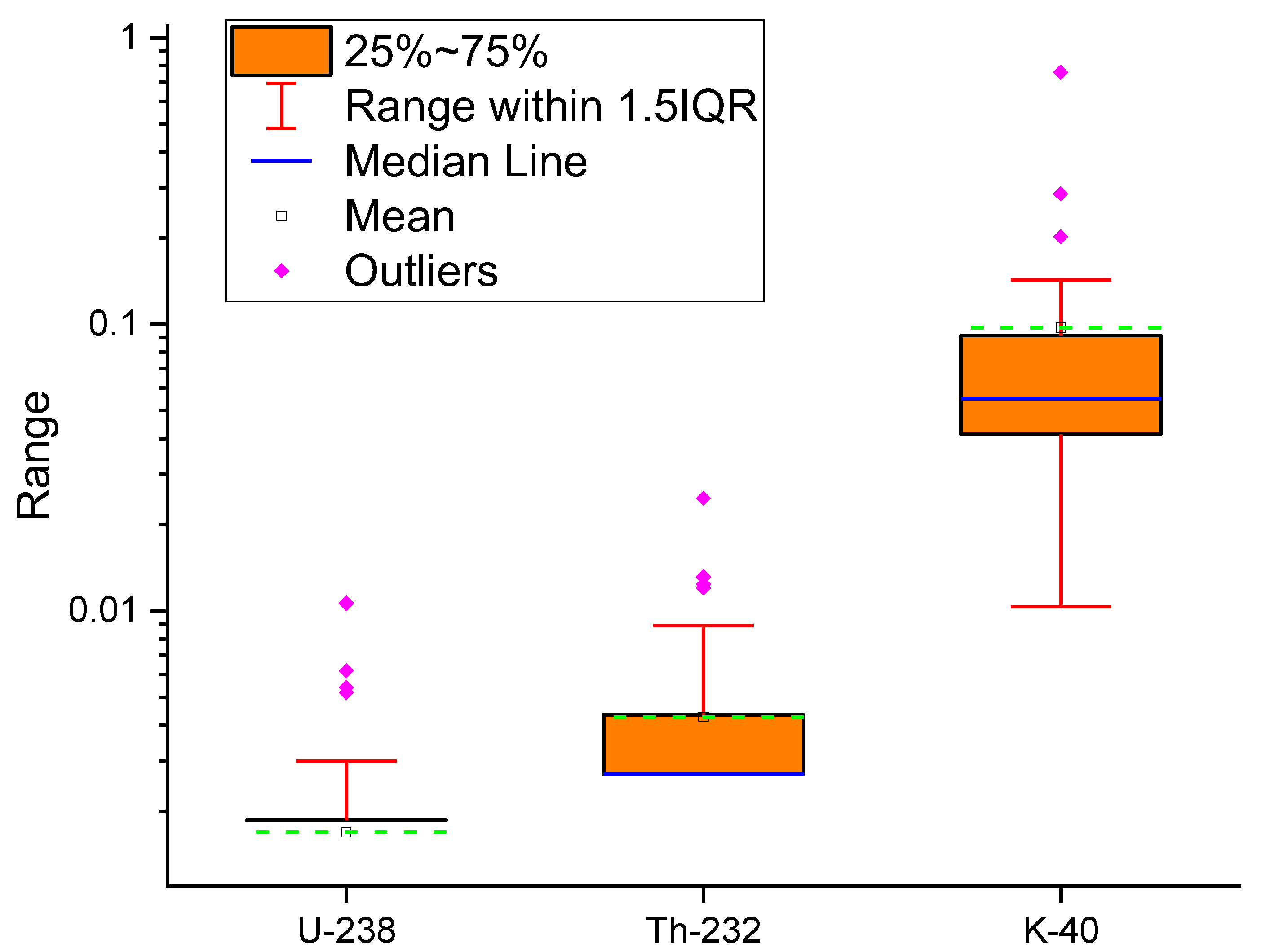
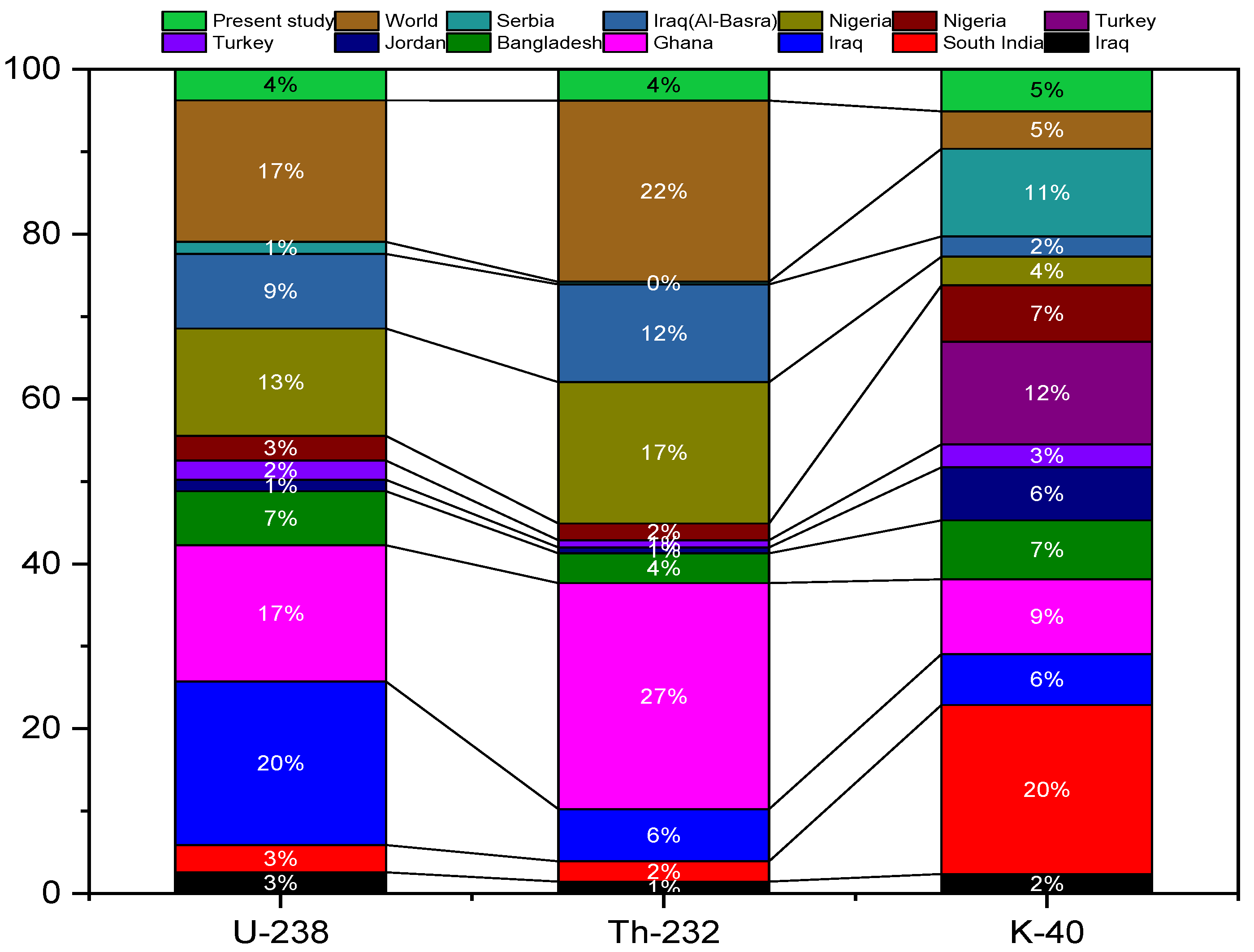
Furthermore, it was discovered that the specific activity levels of 232Th in all samples were within the range of 45 Bq/Kg [32]. Except for a few samples that were more extensive than the permissible value of 400 Bqkg−1 [32], the values of the activity concentration of the 40K are less than the allowable value of 400 Bqkg−1. Since typical radionuclide activity heights are not regulated across the ground and due to the flowers’ ability to absorb more basic features than others, differences in the concentrations of activity could be attributed to changes in the physical location of the plants and the radiochemical action of the lands in which these medicinal plants are developed or cultivated. The increased potassium activity in these plants might be related to the plants’ effectiveness in absorbing potassium as well as other components from the soil [44]. Figure 4 shows the range, mean, median line, and outliers’ radioactive elements for measured samples in the region of interest. The current study’s activity concentration findings were compared to the published data in Table 3 for a selection of medicinal plants found in the literature, as shown in Figure 5. This comparison shows that the current findings are relatively consistent with those measured in other nations using the global values indicated in the UNSCEAR 2000 report.
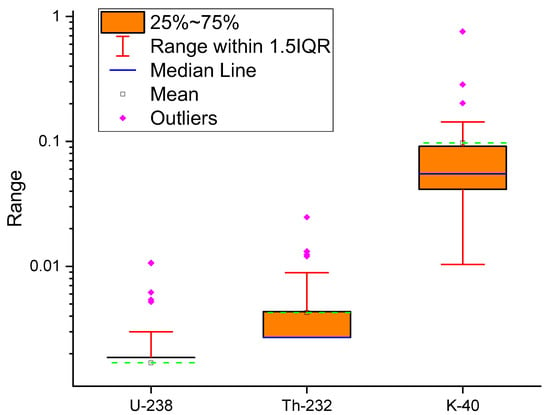
Figure 4.
Range, mean, median line, and outlier radioactive elements (238U, 226Ra, 232Th, and 40K radionuclides) for measured samples in the interested area.
Table 3.
The mean activity concentrations (Bq/Kg) of the natural radioactivity of medicinal plant samples in the present were compared with those from similar investigations performed in other countries.
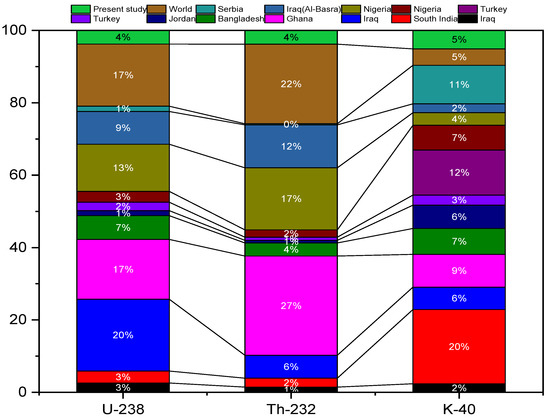
Figure 5.
The mean activity concentrations of natural radioactivity of medicinal plant samples in the present study were compared with those from similar investigations performed in other countries.
In a real sense, the current results show that the amount of 238U in the air is much higher than in Iraq [45], South India [46], Jordan [49], Turkey [50], Nigeria [53], Serbia [54], Turkey [51], and lower than amounts obtained in Iraq [47], Ghana [2], Bangladesh [48], and Nigeria [53]. The results of 232Th show that our result is higher than the results found in Iraq [45], South India [46], Nigeria [52], Jordan [49] and Turkey [50] and is lower than the results found in Iraq [47], Ghana [2] and Nigeria [53]. Our findings in the case of 40K are significantly greater than those from Iraq [45], Turkey [50] and Nigeria [53] but significantly lower than those from Iraq [47], South India [46], Ghana [2], Jordan [49], Nigeria [52] and Turkey [51].The discrepancies in natural radioactivity concentrations between countries might be explained by the raw material sources (Figure 5).
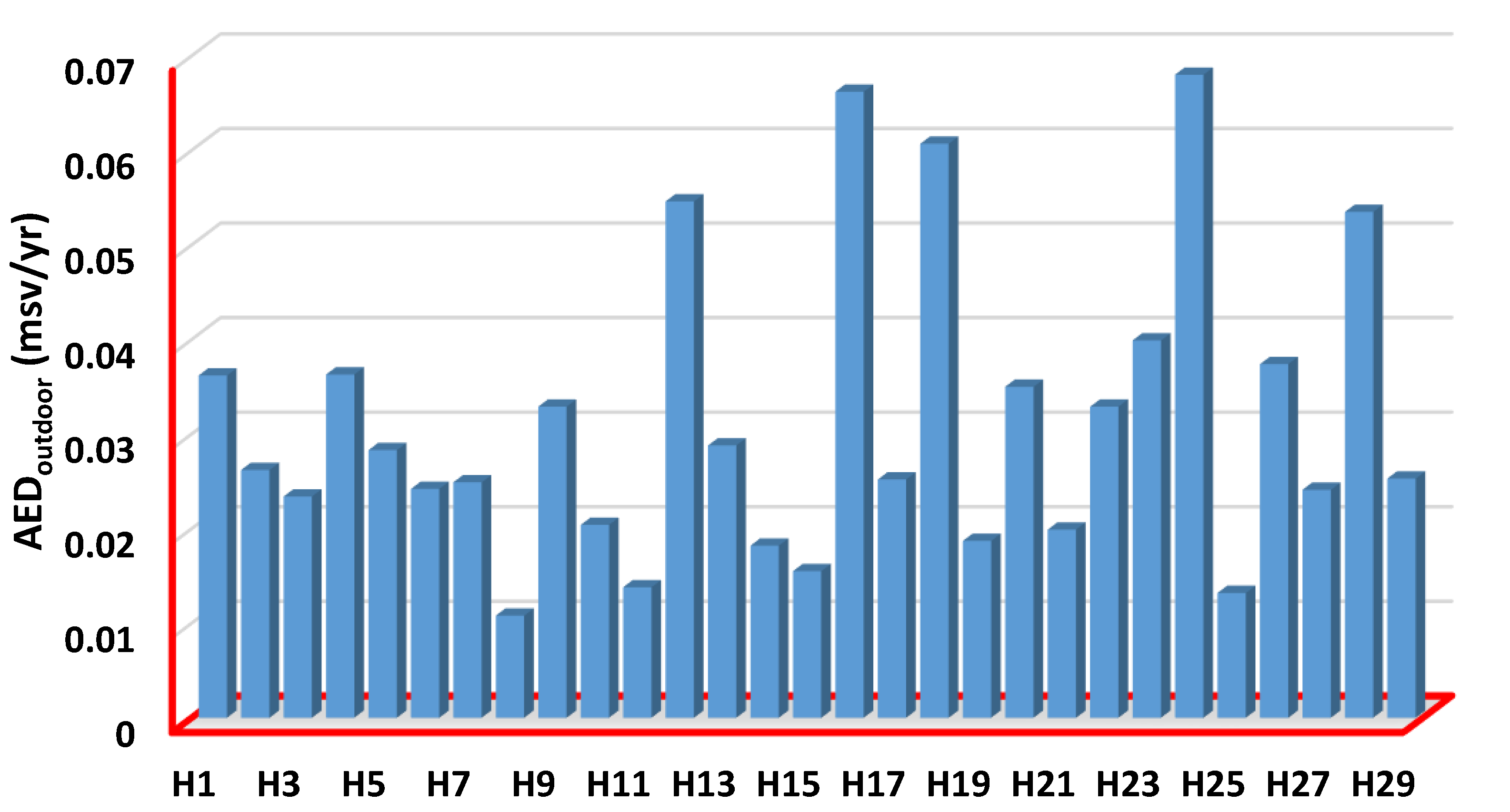
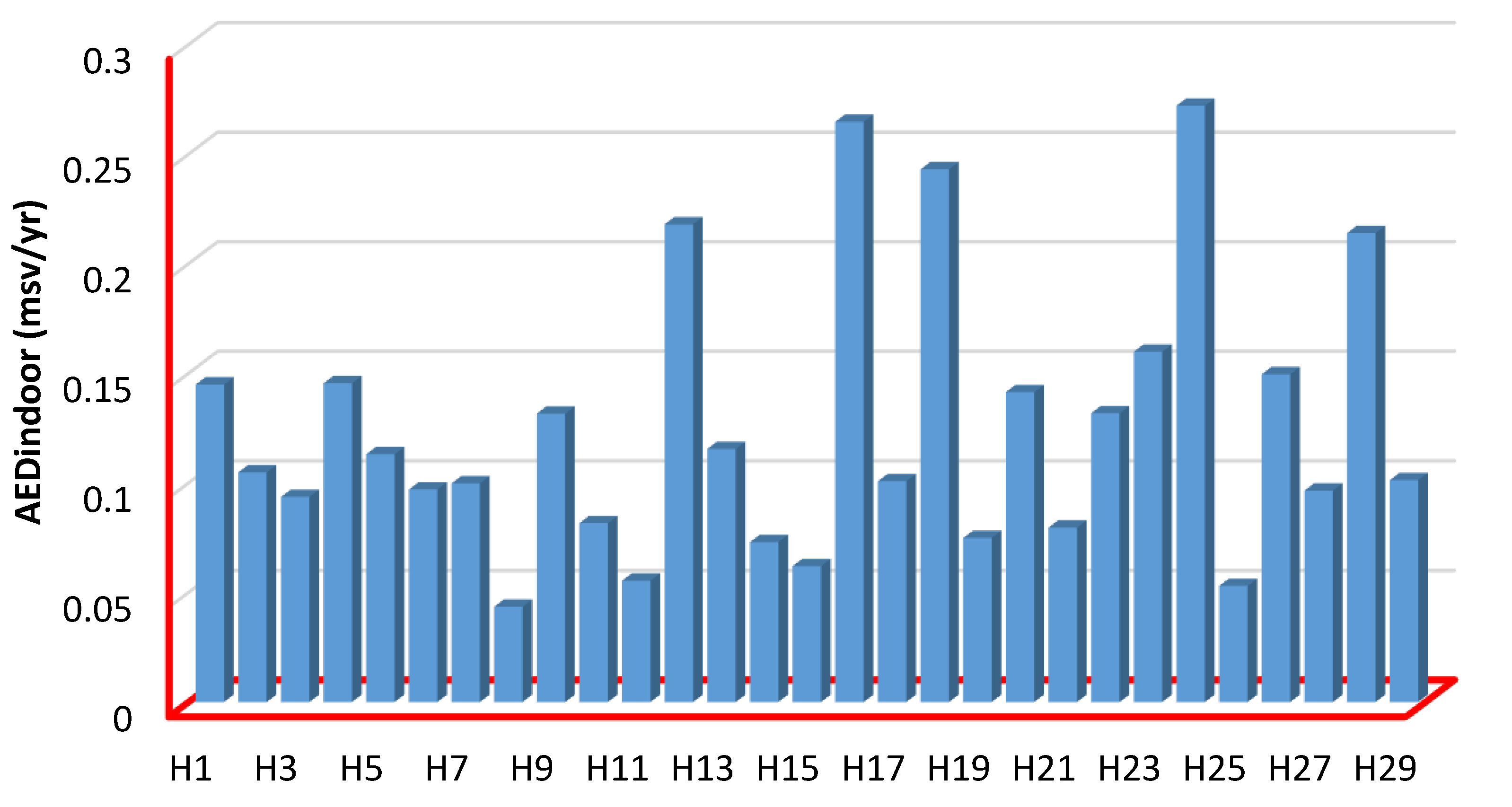
The measured outdoor annual effective doses (AEDoutdoor) values for examined herbs have been listed in Table 4. The values ranged from 0.0108 ± 0.0032 to 0.0680 ± 0.0097 mSv/yr, with the mean value of 0.0315 ± 0.0084 mSv/yr. Lemon Balm (H8) and Worm Wood (H24) herbs have the lowest and highest AEDoutdoor among all herb samples (Figure 6). The AEDoutdoor results are smaller than the corresponding global value of 1 mSv/yr. The measured indoor annual effective doses (AEDindoor) values for examined herbs have been listed in Table 4. The values ranged from 0.0810 ± 0.0032 to 0.5053 ± 0.0097 mSv/yr, with the mean value of 0.236 ± 0.0084 mSv/yr. Lemon Balm (H8) and Quince (H23) herbs have the lowest and highest AEDindoor and AEDoutdoor among all herb samples (Figure 6 and Figure 7). The AEDindoor results are smaller than the corresponding global value of 1 mSv/yr. 0.0919 ± 0.0036, 0.555 ± 0.024, and 0.267 ± 0.0095 mSv/yr are the minimum, maximum, and average total annual effective dose (AEDtot) values for all investigated herbs, respectively. Lemon Balm (H8) and Lavender (H16) herbs have the lowest and highest AEDtotalr among all herb sample values for all investigated herbs, respectively. According to the NSRC and the International Atomic Energy Agency (IAEA), the annual effective dose equivalent for all tested herbs is less than the annual dose limit of 1 mSv for the general population.
Table 4.
The outdoor (AEDoutdoor) and indoor (AEDindoor) annual effective doses and total annual effective doses (AEDtot) for different medicinal plant samples.
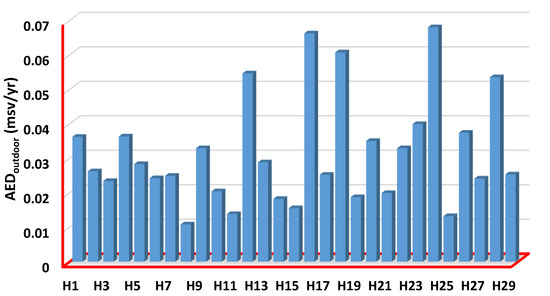
Figure 6.
Outdoor annual effective doses (AEDoutdoor) for all herbs.
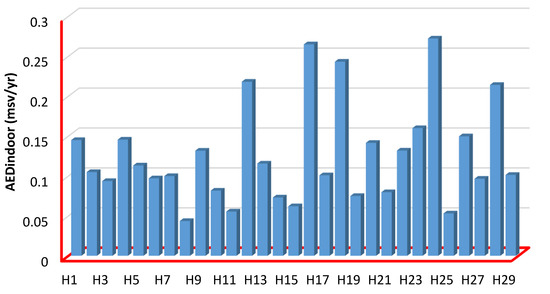
Figure 7.
Indoor annual effective doses (AEDindoor) for all herbs.
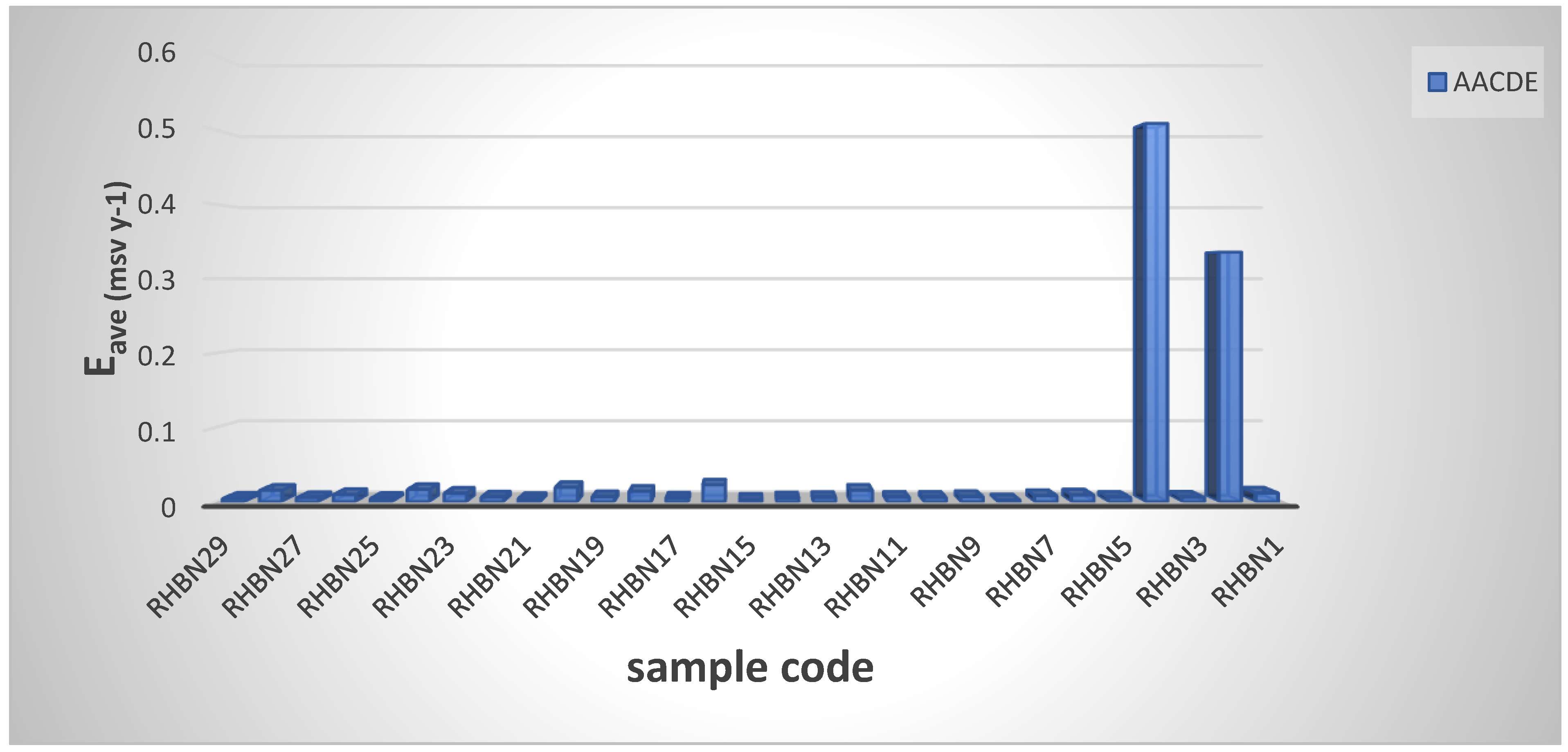
Table 4 and Figure 8 represent the minimum, maximum, and mean annual effective doses (AACDE) values due to the intake of 238U, 232Th, and 40K radionuclides through eating the medical plants (herbs), which were equal to 0.002304 ± 0.000091, 0.50869 ± 0.00024, and 0.0373 ± 0.00040 mSv/yr, respectively. Lemon Balm (H8) and Worm Wood (H24) herbs have the lowest and highest AACDE among all herb samples. The AACDE values were lower than the global average (0.3 mSv/yr) for natural radionuclide ingestion reported in the UNSCEAR 2000 report [32]. Table 5 compares our AACDE to those assessed in Egypt [55], South India [46], Ghana [2], Iraq [47] and Thailand [56]. According to the comparison, our result is smaller than that of Egypt [55], and the amount of AACDE is higher than that South India [46], Ghana [2], Iraq [47], Turkey [57] and Thailand [56]. These figures are all considerably lower than the global average dose [32]. As a result, the medicinal plant samples tested here are radiologically safe for adult consumption and pose no risk to human health. According to the findings, there are no radiological health concerns associated with the use of these materials.
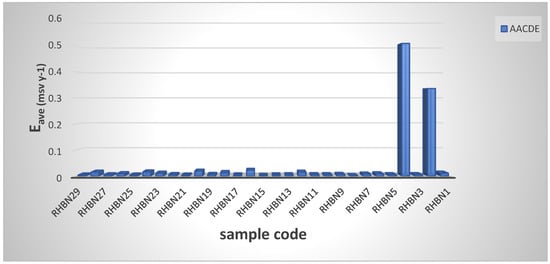
Figure 8.
The average annual committed effective dose (Eave) distribution in the various species of the medicinal plant samples.
Table 5.
Comparison between AACED ingestion dose of the present medicial plant samples with that of other countries of the world.
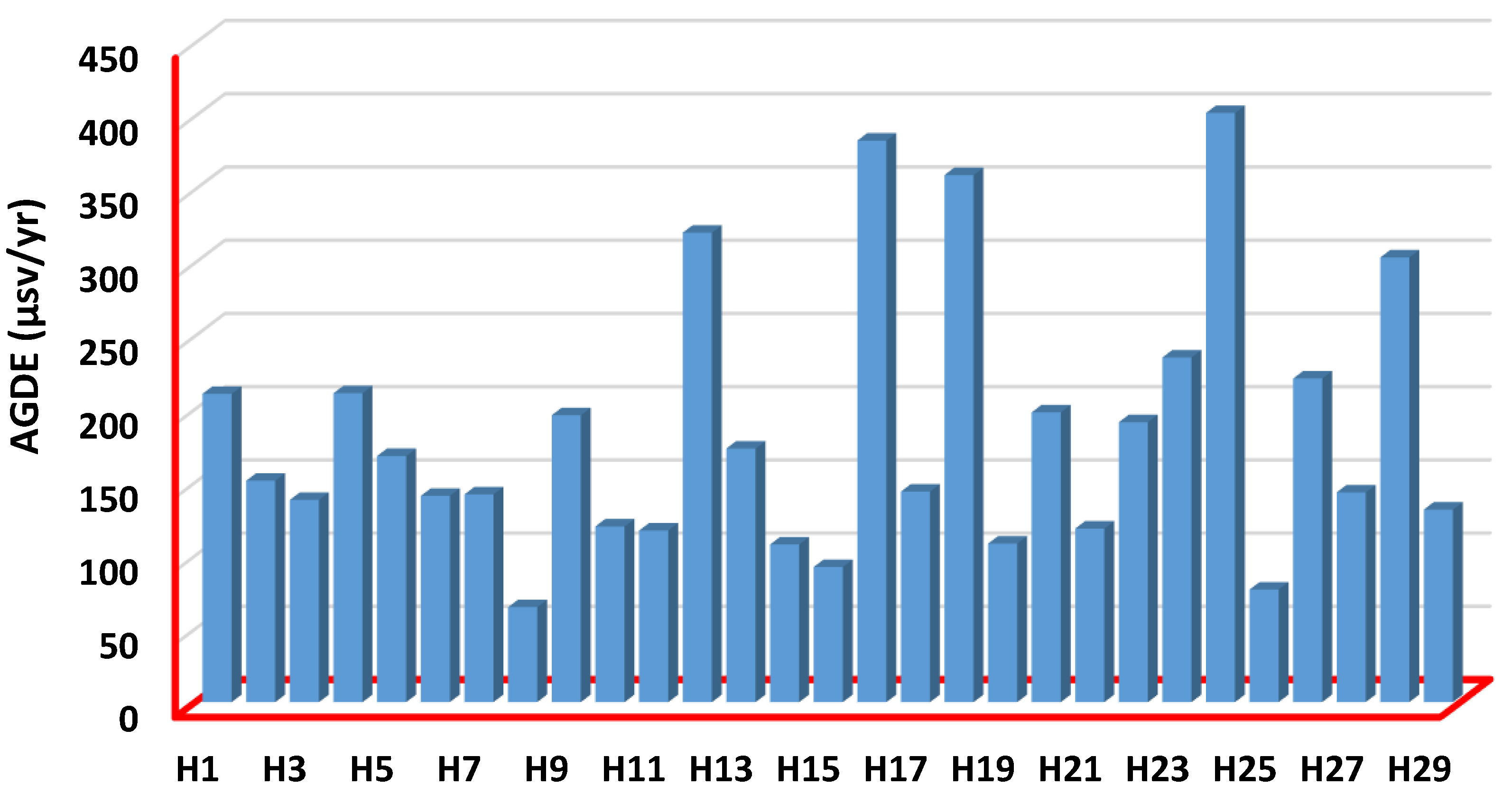
The annual gonadal dose equivalent (AGDE) for medicinal plants is shown in Figure 9 and listed in Table 4. AGDE values range from 402.2 ± 11.3 to 64.8 ± 2.57 µSv/yr with an average of 185.1 ± 6.48 µSv/yr. All values are less than their corresponding global value of 300 [32], except for Worm Wood (H24). These measurements provide information on the local drugs, in order for these models to be used to formulate guidelines related to radiological health care.
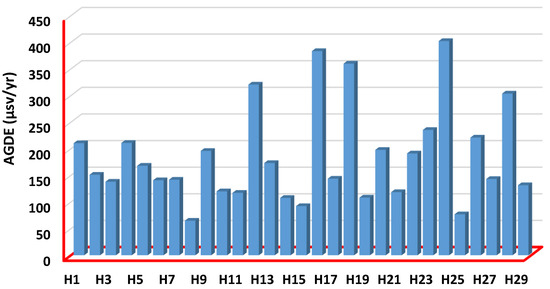
Figure 9.
The annual gonadal equivalent dose (AGDA) in the various species of the medicinal plant samples.
The outdoor absorbed dose rate (Doutdoor) values have been estimated for the medicinal plants’ samples, as shown in Table 6. It was found that the values of the Doutdoor vary from 55.46 ± 1.59 to 8.87 ± 0.35 nGy/h with a mean value of 22.75 ± 22.75 nGy/h. The lowest value was found in the sample Lemon Balm and the highest value in the Worm Woodsample. The values of the absorbed dose rate for all samples were less than the permissible level of 84 nGy/h; according to UNSCEAR, it has been recommended that the average exposure rate of the population should be within 84 nGy/h, while the indoor absorbed dose rate (Dindoor) values ranged from 103.01 ± 1.98 to 16.52 ± 0.65 nGy/h, with an average value of 48.183 ± 1.71 nGy/h. The lowest value was found in Lemon Balm and the highest in a sample Quince. The values of the absorbed dose rate for all samples were less than the permissible level of 84 nGy h−1. According to UNSCEAR, the population’s average exposure rate should be kept below 84 nGy/h.
Table 6.
Outdoor and indoor absorbed dose rate, internal hazard index (Hin), external hazard index (Hex), and radioactivity level index (Iγ) for different medicinal plant samples.
According to UNSCEAR, the average indoor absorbed dose rate values for all samples are below the permissible level of 59 nGy h−1. The external and internal hazard indexes are shown in Table 6, and their maximum values are 0.287 ± 0.013 and 0.3099 ± 0.015, respectively. At the same time, the minimum values were 0.0429 ± 0.0017 and 0.0429 ± 0.0017, respectively. The average values were 0.1322 ± 0.0050 and 0.1448 ± 0.0059. For all types of medicinal plant samples evaluated in this study, the calculated values of extrinsic and intrinsic risk indices were less than one [32]. Therefore, there should be efforts to reduce the annual effective dose to ≤1.5 mSv for the safe use of these plants, because of the calculated radioactivity level index in Table 6. The values ranged from 0.860 ± 0.024 maximum value in Worm wood sample to 0.1376 ± 0.0054 minimum value in the Lemon Balm sample, with an average value of 0.399 ± 0.0142. All values of the calculated radioactivity level index (Iγ) for the samples were checked, and were below the permissible levels [32].
Excess lifetime cancer risk (ELCR) values ranged from the maximum value 1.7804 × 10⁻³ ± 0.0008 in Thyme herb to the minimum value 0.00806 × 10⁻³ ± 0.003 in Lemon Balm, with an average value of 0.1307 × 10⁻³ ± 0.00142. Based on the annual exposure limit of (1 mSv) for the general population set by UNSCEAR, ICRP [32,58], the mean value of ELCR is less than the global average of 2.9 × 10⁻⁴ as shown in Table 7.
Table 7.
The excess lifetime cancer risk (ELCR) for the investigated samples.
5. Conclusions
The gamma rays released by natural radionuclides, 238U, 232Th, and 40K, were measured in 29 samples of medicinal herbs commonly used in Egypt. The concentration of naturally occurring radionuclide activity in medicinal plant samples was examined for the first time. The average activity concentrations in the examined medicinal herbs were 7.25 ± 0.52, 7.78 ± 0.633, and 471.4 ± 11.33 , respectively. NORMs were reported to have mean annual effective doses of 0.267 ± 0.0095 and 0.2363 ± 0.0084 mSv/yr from both external and internal exposure (outdoor annual effective doses, indoor annual effective doses) and ingestion of NORMs in the studied medicinal plants at a concentration of 0.0373 ± 0.00040 . We also determined that the findings must be within the UNSCEAR Committee’s allowed limit. The computed radioactivity level index (I) for the tested samples was below the allowed limit, and the absorbed dose rate was within the global average of 84 nGy/h. Since the projected life-long excess cancer risks are globally recognised, the use of these plant samples poses no radiological health hazards. These findings were compared with their respective reference values and with results from other nations. The comparison revealed that the current study’s radioactivity concentrations and annual effective doses were comparable to previous research in other countries. The levels were likewise within UNSCEAR’s allowed limit. The study’s plant samples had no artificial radioactivity. The radiation level of the plant samples in this investigation does not now constitute a health danger. As a result, a continual environmental monitoring program is required to detect any changes caused by artificial radioactivity produced by a nuclear site. Using these plants in herbal medicines may not be harmful to your health. The baseline data from this research may be used to estimate future radiation threats to human health.
Author Contributions
H.M.H.Z., S.A.M.I., A.E., and H.A.S.: wrote the main manuscript text; H.T.A., M.A.M.U., I.I.B., and H.M.D.: prepared and drawn all figures; H.A.S., M.E.G., G.A.A., and H.M.H.Z.: Contributing to preparing the samples and analysis data; All authors have read and agreed to the published version of the manuscript.
Funding
This work was funded by Princess Nourah bint, Abdulrahman University, Research Supporting Project number (PNURSP2022R173) Princess Nourah bint, Abdulrahman University, Riyadh, Saudi Arabia.
Institutional Review Board Statement
Not applicable.
Informed Consent Statement
Not applicable.
Data Availability Statement
The data presented in this study are available on request from the corresponding author. All data generated or analysed during this study are included in this published article. Correspondence and requests for materials should be addressed to H.M.Z.
Acknowledgments
Authors express their sincere gratitude to Princess Nourah bint, Abdulrahman University, Research Supporting Project number (PNURSP2022R173) Princess Nourah bint, Abdulrahman University Riyadh, Saudi Arabia. The work of author A.E. and the APC were supported by Dunarea de Jos University of Galati, Romania.
Conflicts of Interest
The authors declare no conflict of interest.
Abbreviations
| Abbreviation | Description |
| HPGe | High Purity Germanium |
| NORM | Naturally Occurring Radioactive Material |
| IAEA | International Atomic Energy Agency |
| WHO | World Health Organization |
| ICRP | International Committee on Radiation Protection |
| UNSCEAR | United National Scientific Committee on the Effects of Atomic Radiation |
| NaI | Sodium Iodide |
| FWHM | Full width at half maximum |
| B.D.L | Below Detection Limit |
| AEDE out | Annual effective dose equivalent in the outdoor |
| AEDE in | Annual effective dose equivalent in the indoor |
| AEDE (total) | Total Annual effective dose equivalen |
| Bq/kg | Becquerel per kilogram |
| AACED | annual committed effective doses |
| ELCR | excess lifetime cancer risk |
| Raeq | Radium equivalent |
| AGDE | annual gonadal dose equivalent |
| Hex | external hazard index |
| NaI(Tl) | Scintillation detector |
| CLERMIT | central laboratory for Environmental Radioactivity Measurements, Inter-comparison, and Training |
| NRRA | Nuclear & Radiological Regulatory Authority |
| Dout | a bsorbaed gamma dose out door |
| Din | a bsorbaed gamma dose In door |
| OECD | Organisation for Economic Co-operation and Development |
| Hin | Internal Hazard Index |
| A | Activit concentration |
| SD | standard deviation |
| ICRP | International Commission on Radiological Protection |
| Iγ | Gamma activity index |
References
- Harb, S.M. Natural radioactivity concentrations in some medicinal plants and annual committed effective dose from their consumption. Radiat. Prot. Environ. 2015, 38, 35. [Google Scholar] [CrossRef]
- Tettey-Larbi, L.; Darko, E.O.; Schandorf, C.; Appiah, A.A. Natural radioactivity levels of some medicinal plants commonly used in Ghana. Springerplus 2013, 2, 157. [Google Scholar] [CrossRef] [PubMed]
- Kessaratikoon, P.; Boonkrongcheep, R.; Polthum, S. Measurement of radionuclides in surface soil and beach sand samples from Rayong Province (Thailand) and the evaluation of excess lifetime cancer risk. ScienceAsia 2021, 47, 120–129. [Google Scholar] [CrossRef]
- Sharmila, S.; Kalaichelvi, K. Anatomical Characterization on the Leaf of Cayratia pedata var. glabra (Lam.) Gagnep. var. glabra Gamble (Vitaceae)—An Endemic Climber of Western Ghats, India. ScieXplore Int. J. Res. Sci. 2016, 3, 21. [Google Scholar] [CrossRef][Green Version]
- World Health Organization. WHO Guidelines for Assessing Quality of Herbal Medicines with Reference to Contaminants and Residues; World Health Organization: Geneva, Switzerland, 2007. [Google Scholar]
- Kandić, I.; Kandić, A.; Čeliković, I.; Gavrilović, M.; Janaćković, P. Activity concentrations of 137Cs, 40K, and 210Pb radionuclides in selected medicinal herbs from Central Serbia and their effective dose due to ingestion. Sci. Total Environ. 2020, 701, 134554. [Google Scholar] [CrossRef]
- Jamshidi-Kia, F.; Lorigooini, Z.; Amini-Khoei, H. Medicinal plants: Past history and future perspective. J. Herbmed Pharmacol. 2018, 7, 1–7. [Google Scholar] [CrossRef]
- Pan, S.-Y.; Litscher, G.; Gao, S.-H.; Zhou, S.-F.; Yu, Z.-L.; Chen, H.-Q.; Zhang, S.-F.; Tang, M.-K.; Sun, J.-N.; Ko, K.-M. Historical Perspective of Traditional Indigenous Medical Practices: The Current Renaissance and Conservation of Herbal Resources. Evid. -Based Complement. Altern. Med. 2014, 2014, 525340. [Google Scholar] [CrossRef]
- Mitrović, B.; Ajtić, J.; Lazić, M.; Andrić, V.; Krstić, N.; Vranješ, B.; Vićentijević, M. Natural and anthropogenic radioactivity in the environment of Kopaonik mountain, Serbia. Environ. Pollut. 2016, 215, 273–279. [Google Scholar] [CrossRef]
- Gurib-Fakim, A.; Kasilo, M. Promoting African Medicinal Plants through an African Herbal Pharmacopoeia. Afr. Health Monit. Spec. Issue Decad. Afr. Tradit. Med. 2010, 14, 63–66. [Google Scholar]
- Cruz da Silva, R.; Lopes, J.M.; Barbosa da Silva, L.; Domingues, A.M.; da Silva Pinheiro, C.; Faria da Silva, L.; Xavier da Silva, A. Radiological evaluation of Ra-226, Ra-228 and K-40 in tea samples: A comparative study of effective dose and cancer risk. Appl. Radiat. Isot. 2020, 165, 109326. [Google Scholar] [CrossRef]
- Scott, D. UNSCEAR report (1988) sources, effects and risks of ionising radiation. United nations scientific committee on the effects of atomic radiation, 1988. Report to the general assembly, with annexes. Int. J. Radiat. Biol. 1989, 55, 1047–1048. [Google Scholar] [CrossRef]
- UNSCEAR. Sources and Effects of Ionising Radiation. Report to the General Assembly with Scientific Annexes; UNSCEAR: New York, NY, USA, 2010. [Google Scholar]
- Shapiro, J. Ionizing-Radiation-Sources and Biological Effects-Un-Sci-Comm-Effects-of-Atom-Radiat; Massachusetts Medical Soc Waltham Woods Center: Waltham, MA, USA, 1983. [Google Scholar]
- Markose, P. Studies On The Environment Behaviour Of Radium from Uranium Mill Tailings. Ph.D. Thesis, University Of Mumbai, Maharashtra, India, 1990. [Google Scholar]
- White, P.J.; Swarup, K.; Escobar-Gutiérrez, A.J.; Bowen, H.C.; Willey, N.J.; Broadley, M.R. Selecting plants to minimise radiocaesium in the food chain. Plant Soil 2003, 249, 177–186. [Google Scholar] [CrossRef]
- Lasheen, E.S.R.; Azer, M.K.; Ene, A.; Abdelwahab, W.; Zakaly, H.M.H.; Awad, H.A.; Kawady, N.A. Radiological Hazards and Natural Radionuclide Distribution in Granitic Rocks of Homrit Waggat Area, Central Eastern Desert, Egypt. Materials 2022, 15, 4069. [Google Scholar] [CrossRef] [PubMed]
- Aziz, A. Methods of Low-Level Counting and Spectrometry Symposium; Berlin West: Berlin, Germany, 1981. [Google Scholar]
- Gilmore, G.; Hemingway, J. Practical Gamma ß Ray Spectrometry; John Wiley & Sons Ltd.: New York, NY, USA, 1995. [Google Scholar]
- Radionuclides in Whey Powder, Analytical Quality Control Services; International Atomic Energy Agency (IAEA-154): Vienna, Austria, 2000.
- Ebaid, Y.Y.; Bakr, W.F. Investigating the effect of using granite and marble as a building material on the radiation exposure of humans. Radiat. Prot. Dosim. 2012, 151, 556–563. [Google Scholar] [CrossRef]
- Zakaly, H.M.H.; Uosif, M.A.M.; Issa, S.A.M.; Tekin, H.O.; Madkour, H.; Tammam, M.; El-Taher, A.; Alharshan, G.A.; Mostafa, M.Y.A. An extended assessment of natural radioactivity in the sediments of the mid-region of the Egyptian Red Sea coast. Mar. Pollut. Bull. 2021, 171, 112658. [Google Scholar] [CrossRef]
- Moghazy, N.M.; El-Tohamy, A.M.; Fawzy, M.M.; Awad, H.A.; Zakaly, H.M.H.; Issa, S.A.M.; Ene, A. Natural radioactivity, radiological hazard and petrographical studies on aswan granites used as building materials in Egypt. Appl. Sci. 2021, 11, 6471. [Google Scholar] [CrossRef]
- Awad, H.A.; Zakaly, H.M.H.; Nastavkin, A.V.; El Tohamy, A.M.; El-Taher, A. Radioactive mineralizations on granitic rocks and silica veins on shear zone of El-Missikat area, Central Eastern Desert, Egypt. Appl. Radiat. Isot. 2021, 168, 109493. [Google Scholar] [CrossRef]
- Awad, H.A.; Zakaly, H.M.H.; Nastavkin, A.V.; El-Taher, A. Radioactive content and radiological implication in granitic rocks by geochemical data and radiophysical factors, Central Eastern Desert, Egypt. Int. J. Environ. Anal. Chem. 2020. [Google Scholar] [CrossRef]
- Ghoneim, M.M.; Abdel Gawad, A.E.; Awad, H.A.; Hesham, M.H.Z.; Mira, H.I.; El-Taher, A. Distribution patterns of natural radioactivity and rare earth elements in intrusive rocks (El Sela area, Eastern Desert, Egypt). Int. J. Environ. Anal. Chem. 2021. [Google Scholar] [CrossRef]
- Abbasi, A.; Zakaly, H.M.H.; Mirekhtiary, F. Baseline levels of natural radionuclides concentration in sediments East coastline of North Cyprus. Mar. Pollut. Bull. 2020, 161, 111793. [Google Scholar] [CrossRef]
- Abed, N.S.; Monsif, M.A.; Zakaly, H.M.H.; Awad, H.A.; Hessien, M.M.; Yap, C.K. Assessing the radiological risks associated with high natural radioactivity of microgranitic rocks: A case study in a northeastern desert of Egypt. Int. J. Environ. Res. Public Health 2022, 19, 473. [Google Scholar] [CrossRef] [PubMed]
- Tawfic, A.F.; Zakaly, H.M.H.; Awad, H.A.; Tantawy, H.R.; Abbasi, A.; Abed, N.S.; Mostafa, M. Natural radioactivity levels and radiological implications in the high natural radiation area of Wadi El Reddah, Egypt. J. Radioanal. Nucl. Chem. 2021, 327, 643–652. [Google Scholar] [CrossRef]
- El-Taher, A.; Zakaly, H.M.H.; Elsaman, R. Environmental implications and spatial distribution of natural radionuclides and heavy metals in sediments from four harbours in the Egyptian Red Sea coast. Appl. Radiat. Isot. 2018, 131, 13–22. [Google Scholar] [CrossRef]
- Monira, B.; Ullah, S.M.; Mollah, A.S.; Chowdhury, N. 137Cs Uptake into Wheat (Triticumvulgare) Plants from Five Representative Soils of Bangladesh. Environ. Monitor. Assess. 2005, 104, 59–69. [Google Scholar] [CrossRef]
- UNSCEAR United Nations. Scientific Committee on the Effects of Atomic Radiation (UNSCEAR), 2000. In Sources and Effects of Ionizing Radiation: Sources (Vol. 1); United Nations Publications: New York, NY, USA, 2000. [Google Scholar]
- United Nations Scientific Committee on the Effects of Atomic Radiation (UNSCEAR). Report Sources, Effects and Risks of Ionizing Radiation, Report to the General Assembly, with Scientific Annexes; United Nations: New York, NY, USA, 2017. [Google Scholar]
- Abdel-Rahman, A.M.; El-Desoky, H.M.; Shalaby, B.N.A.; Awad, H.; Ene, A.; Heikal, M.A.; El-Awny, H.; Fahmy, W.; Taalab, S.A.; Zakaly, H.M.; et al. Ultramafic rocks and their alteration products from Northwestern Allaqi Province, South Eastern Desert, Egypt: Petrology, mineralogy, and geochemistry. Front. Earth Sci. 2022. [Google Scholar] [CrossRef]
- OECD. Exposure to Radiation from the Natural Radio activity in Building Materials, Report by a Group of Experts of the OECD Nuclear Energy Agency; OECD: Paris, France, 1979. [Google Scholar]
- United Nations Scientific Committee on the Effects of Atomic Radiation (UNSCEAR). Sources and Effects of Ionizing Radiation. Report to the General Assembly, with Scientific Annexes; United Nations: New York, NY, USA, 1994. [Google Scholar]
- Varshney, R.; Mahur, A.K.; Sonkawade, R.G.; Suhail, M.A. Evaluation and analysis of 226 Ra, 232 Th, 40 K and radon exhalation rate in various grey cements. Indian J. Pure Appl. Phys. 2010, 48, 473–477. [Google Scholar]
- Quindos, L.; Fernandez, P.; Soto, J. Building materials as source of exposure in houses. Indoor Air 1987, 87, 365. [Google Scholar]
- Cottens, E. Actions against radon at the international level. In Proceedings of the Symposium on SRBII (Journey Radon)(Brussels: Royal Society of Engineers and Industrial of Belgium), Belgium, Brussels, 17 January 1990. [Google Scholar]
- Beretka, J.; Matthew, P. Natural radioactivity of Australian building materials, industrial wastes and by-products. Health Phys. 1985, 48, 87–95. [Google Scholar] [CrossRef]
- Shoeib, M.; Thabayneh, K. Assessment of natural radiation exposure and radon exhalation rate in various samples of Egyptian building materials. J. Radiat. Res. Appl. Sci. 2014, 7, 174–181. [Google Scholar] [CrossRef]
- Dabayneh, K.; Mashal, L.; Hasan, F. Radioactivity concentration in soil samples in the southern part of the West Bank, Palestine. Radiat. Prot. Dosim. 2008, 131, 265–271. [Google Scholar] [CrossRef]
- International Commission on Radiological Protection (ICRP). Recommendations of the ICRP Publication, 103. Annu. ICRP 2007, 37, 2–4. [Google Scholar]
- Bhatti, T.M.; Malik, K. Phosphate Fertilizers a Potential Source for Uranium Recovery as by-Product; Technical Report No. PAEC/NIBGE-2; National Institute for Biotechnology and Genetic Engineering (NIBGE): Faisalabad, Pakistan, 1994. [Google Scholar]
- Kareem, A.A.; Heiyam, N.H.; Ali, A.A. Measurement of natural radioactivity in selected samples of medical plants in Iraq. Int. J. Phys. Sci. 2016, 11, 178–182. [Google Scholar] [CrossRef]
- Chandrashekara, K.; Somashekarappa, H.M. Estimation of radionuclides concentration and average annual committed effective dose due to ingestion for some selected medicinal plants of South India. J. Radiat. Res. Appl. Sci. 2016, 9, 68–77. [Google Scholar] [CrossRef]
- Hamza, Z.M.; Alshebly, S.A.; Hussain, H.H. A practical study to determine the percentage of radiation in medicinal herbs used in the Iraqi market. J. Phys. Conf. Ser. 2020, 1591, 012007. [Google Scholar] [CrossRef]
- Sultana, S.; Ferdous, J.; Haque, M.M. Natural Radioactivity and Hazards Assessment in Medicinal Plants in Bangladesh. J. Health Sci. 2020, 10, 20–27. [Google Scholar]
- Okoor, S.A.K.; Abumurad, K.M.; Ababneh, E.M.; Abdallah, M.J. Natural Radioactivity Concentrations And Dose Assessment In Selected Medicinal Plants Consumed In Jordan. Fresenius Environ. Bull. 2019, 28, 5179–5187. [Google Scholar]
- Kırıs, E. Radioactivity levels and radiation health hazards in medicinal plants used in Rize Province, Turkey. Int. J. Environ. Anal. Chem. 2020, 1–14. [Google Scholar] [CrossRef]
- Turhan, Ş.; Köse, A.; Varinlioğlu, A. Radioactivity levels in some wild edible mushroom species in Turkey. Isotopes Environ. Health Stud. 2007, 43, 249–256. [Google Scholar] [CrossRef]
- Alade, A.A.; Igwe, C.O.; Adekunle, T. Natural Radioactivity Levels of Some Herbal Plants With Antimalaria Potency In Ibadan South-West Local Government Area of Oyo State, Nigeria. IOSR J. Appl. Chem. 2020, 13, 2278–5736. [Google Scholar] [CrossRef]
- Njinga, R.L.; Jonah, S.A.; Gomina, M. Preliminary investigation of naturally occurring radionuclides in some traditional medicinal plants used in Nigeria. J. Radiat. Res. Appl. Sci. 2015, 8, 208–215. [Google Scholar] [CrossRef]
- Živković, M.; Zlatić, N.; Krstić, D.; Stanković, M. Health risk assessment of natural and artificial radionuclides in medicinal plants. Kragujev. J. Sci. 2021, 43, 15–22. [Google Scholar] [CrossRef]
- Ahmed, F.; Daif, M.M.; El-Masry, N.M.; Abo-Elmagd, M. External and internal radiation exposure of herbal plants used in Egypt. Radiat. Eff. Defects Solids 2010, 165, 65–71. [Google Scholar] [CrossRef]
- Kranrod, C.; Chanyotha, S.; Kritsananuwat, R.; Ploykrathok, T.; Pengvanich, P.; Tumnoi, Y.; Thumvijit, T.; Sriburee, S. Natural radioactivity concentration in traditional Thai herbal medicine. J. Phys. Conf. Ser. 2019, 1285, 012010. [Google Scholar] [CrossRef]
- Parmaksız, A.; Ağuş, Y. Activity concentrations of 226Ra, 232Th, 40K and 137Cs radionuclides in Turkish medicinal herbs, their ingestion doses and cancer risks. Radiat. Eff. Defects Solids 2014, 169, 980–988. [Google Scholar] [CrossRef]
- ICRP International Commission on Radiological Protection, (ICRP). Age-Dependent 612 Doses to Members of the Public from Intake of Radionuclides: Part 5 Compilations of In-613 gestion and Inhalation Dose Coefficients (ICRP Publication 72); Pergamon Press: Oxford, UK, 1996; p. 614. [Google Scholar]
Publisher’s Note: MDPI stays neutral with regard to jurisdictional claims in published maps and institutional affiliations. |
© 2022 by the authors. Licensee MDPI, Basel, Switzerland. This article is an open access article distributed under the terms and conditions of the Creative Commons Attribution (CC BY) license (https://creativecommons.org/licenses/by/4.0/).