


Abstract
Duqm is located in the Al Wasta Governorate in Oman and is currently fed by 10 diesel generators with a total capacity of around 76 MW and other rental power sources with a size of 18 MW. To make the electric power supply come completely from renewables, one novel solution is to replace the diesel with hydrogen. The extra energy coming from the PV-wind system can be utilized to produce green hydrogen that will be utilized by the fuel cell. Measured data of solar insolation, hourly wind speeds, and hourly load consumption are used in the proposed system. Finding an ideal configuration that can match the load demand and be suitable from an economic and environmental point of view was the main objective of this research. The Hybrid Optimization Model for Multiple Energy Resources (HOMER Pro) microgrid software was used to evaluate the technical and financial performance. The findings demonstrated that the suggested hybrid system (PV-wind-fuel cell) will remove CO2 emissions at a cost of energy (COE) of USD 0.436/kWh and will reduce noise. With a total CO2 emission of 205,676,830 kg/year, the levelized cost of energy for the current system is USD 0.196/kWh. The levelized cost for the diesel system will rise to USD 0.243/kWh when taking 100 US dollars per ton of CO2 into account. Due to system advantages, the results showed that using solar, wind, and fuel cells is the most practical and cost-effective technique. The results of this research illustrated the feasibility and effectiveness of utilizing wind and solar resources for both hydrogen and energy production and also suggested that hydrogen is a more cost-effective long-term energy storage option than batteries.
1. Introduction
The Oman Investment Authority started to invest in green hydrogen plant productions. It announced four projects with a total capacity of around 30 gigawatts (GW) of renewables to support green hydrogen production [1]. The Al Wusta and Dhofar governorates will be the sites of these projects. The excellent wind and solar resource availability in both areas is anticipated to lower the net levelized cost of energy and, as a result, the levelized cost of hydrogen, which will become very competitive in Oman. The biggest one (the Gio project) will be powered by 25 GW of wind and solar energy [2]. It will be located in the Al Wusta governorate with a total investment of USD 30 bn. Construction is planned to start in 2028. The Gio project will be built in stages and will reach its full capacity by 2038. The second project, Hyport Duqm, will be located in Duqm, Al Wusta, with a total capacity of 1.3 GW and is expected to produce 1 million metric tons per annum of green ammonia when it fully operates [3]. The third and fourth projects will be in the Dhofar governorate with around 3 GW capacity.
Renewable energy systems are typically used with backup power production, such as diesel generators or batteries, for off-grid applications because of the intermittent nature of renewable energy sources and their low reliability. Due to the fluctuating cost of fuel and the challenges associated with delivering gasoline to some remote and rural regions, additional solutions are being used, such as biofuel generators and fuel cells with hydrogen production [4].
The main advantages of hydrogen are its high energy storage capacity and that it can store energy for a longer time and in different forms. There are various studies in the literature that focus on how hydrogen can be one of the most effective ways of generating energy which leads to a better-improved environment and long-term sustainability [5,6,7]. The most popular method for producing hydrogen is natural gas steam reforming; however, it emits a lot of greenhouse gases. Nearly half of the world’s hydrogen supply originates from natural gas steam reforming, with the remaining percentages coming from oil reforming, coal gasification, water electrolysis, and other sources [8]. To counteract the negative consequences of fossil fuels, hydrogen should be produced from abundant, clean sources utilizing environmentally beneficial methods [9,10]. This concept is defined as “green hydrogen production”. In the literature, a number of scholars have looked into the production of hydrogen using water and renewable energy sources. High-temperature water dissociation, thermochemical water splitting, water electrolysis, and water photolysis were all studied by Lodhi [11]. After that, Lodhi defined the main green sources for producing hydrogen as solar, wind, nuclear, hydro, and sea/ocean energy [12]. Methods for producing hydrogen can be characterized as “green” depending on the primary energy source and/or the material employed [13]. Green sources for hydrogen production include fresh and seawater, biomass, and hydrogen sulfide [12].
The most fundamental commercial technology for producing nearly pure hydrogen is water electrolysis, and its significance is expected to increase in the future [14]. Electron flow supported by an external circuit is the foundation of water electrolysis. Alkaline, polymer membrane, and solid oxide electrolyzers are the three basic electrochemical hydrogen generating technologies. The efficiency of an electrolysis cell is determined by the ideal and real energy needed to drive the reaction [14]. Catalysts are used to boost the current density and rate of the electrolysis reaction. One of the most often utilized heterogeneous catalysts is platinum, which is used by coating electrode surfaces with it. Due to their reduced price and rapid turnover rate, homogeneous catalysts can also be utilized during electrolysis [15]. Desalination and demineralization are required before the electrolysis process due to electrolyzers’ high sensitivity to water purity. In an electrolyzer, for instance, chlorine is more likely to be created than oxygen when brine (or seawater) is injected into the device [16]. The literature discusses a number of strategies for halting unwanted side reactions (such as the chlorine evolving reaction) during electrolysis. One of these is the desalination of water using ion-selective membranes [17]. Additionally, hydrogen is seen as a crucial energy source in the sustainable energy plan that will defeat the problems of cheap oil, the depletion of natural resources, and global warming [18]. This is due to the fuel’s energy efficiency and low environmental impact [19]. When burned with air, it emits water and a negligible amount of NOx, having the highest energy content by weight of all traditional energy sources [20]. Hydrogen has the capacity to store massive amounts of energy, such as terawatt-hours of volume, over extended periods of time in a variety of forms, even though it may not be a competitive solution for short-term storage [21]. Additionally, although the idea of a “hydrogen economy” was first proposed in 1972, it has only been in recent years that the cost of every step in the value chain has come down enough to make hydrogen a viable economic option [22]. The primary factors driving the change in the costs of the hydrogen value chain are the sharp decline in solar and wind energy costs as well as the ongoing commercialization of electrolyzers, fuel cells, and supporting infrastructure [23,24]. Furthermore, a global demand and supply chain is being actively developed by Japan, China, South Korea, and Germany, which lowers the cost of the hydrogen value chain [22].
The benefits of using hydrogen in energy production can be summed up as follows [23]:
- It can be produced utilizing renewable energy sources from freshwater, seawater, or wastewater;
- It has high energy conversion efficiency;
- It has a high heating value;
- No CO2 emission occurs if it is used in fuel cells or combusted;
- It can be converted into different fuels such as methanol, ethanol, and ammonia;
- It can be stored for a long time using various storage alternatives.
In order to contribute to a society without carbon emissions, this research examines the viability of substituting diesel fuel with clean and sustainable fuel utilizing the HOMER Pro software [24]. Finally, based on both economic and environmental considerations, an ideal system is selected from among four other alternatives.
2. A Summary Comparison between Hydrogen Storage and Other Storage Methods
Large-scale energy storage is one way to enhance the stability of electric power systems, especially with more penetration of renewable energy sources. Pump hydro and compressed air are among various types of economically viable energy storage systems, but they need special geographical locations. Redox flow batteries are one of the most promising grid-scale energy storage devices. They are cost-effective batteries with fast response times and long cycle lives, and they have a flexible and scalable modular design with decoupled electrolyte and electrode materials. Their disadvantages are their low energy density due to low solubility and narrow cell voltage [25]. Recent developments with the employment of redox-active organic materials have provided the way for high-energy-density batteries [26,27]. Although batteries can store energy, they are not economically feasible for long-term and large-scale storage [28].
Another method of energy storage is using Lion batteries, which are applied in most portable electronics and grid-scale storage systems owing to their fast charging, high energy density, long cycle life and wide operating temperature range [29]. However, there are serious safety concerns about this type of battery. Several research papers were published to enhance their safety through methods such as fire retardants in electrolytes [30], fire retardant encapsulation by a polymer [31] and fireproof, ultralight-weight polymer-polymer solid-state electrolytes [32].
Another form of large-scale energy storage is a regenerative fuel cell, in which the energy is stored as hydrogen gas. One of the most severe challenges of hydrogen storage is safety. The advantage of hydrogen is that it is a low polluting, clean fuel with high energy density, a low rate of self-discharge (good for seasonal storage), a lower cost compared with battery storage [33], and the ability to be stored in different forms such as gases, liquids, solids and chemicals. The main drawback of this method is the low round trip efficiency (ratio of total electrical energy returned by the device to the total energy consumed by the system for the lifetime) compared with lithium-ion batteries [33].
Large-scale hydrogen storage can take different forms, including densified storage via compressed gas and liquid hydrogen (such as storage vessels, geological storage and other underground storage); circular hydrogen carriers (mainly ammonia and methanol); and liquid organic molecules [34]. Liquid organic molecules have advantages because of their low cost and compatibility with existing fuel transport infrastructure [34]. Furthermore, solid-state hydrogen storage technology is a promising storage method owing to its high-volume hydrogen capacity and safety, such as seen in metal hydride (MH) [35].
3. Existing System
3.1. Generations
The Duqm power plant comprises 10 diesel generators with a combined output of approximately 76 MW and additional leased power sources with a capacity of 18 MW. Table 1 displays the capacity of each generator.

Table 1.
The capacity of diesel generators at Duqm.
3.2. Load Profile
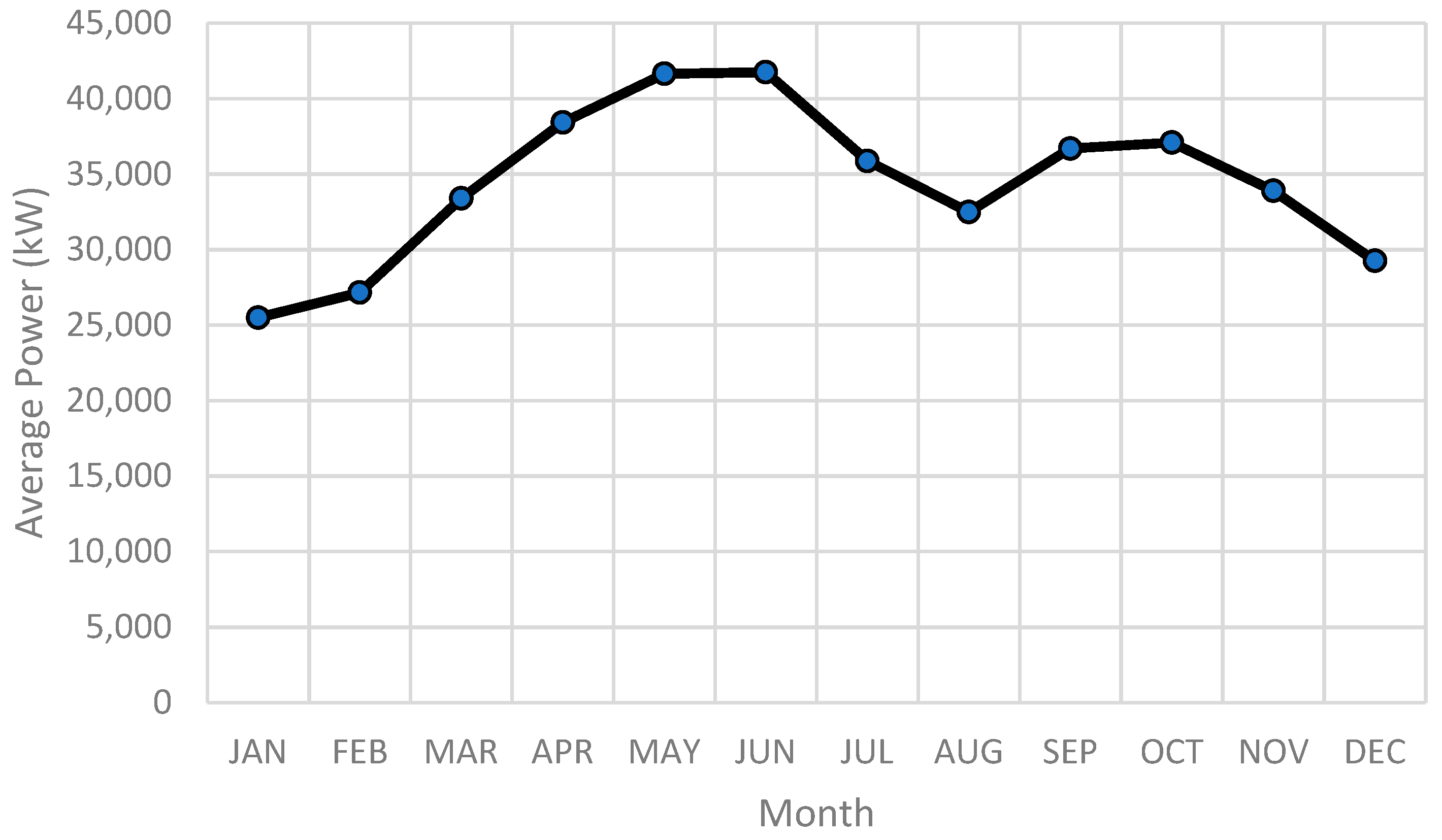
The load requires an average power of 34,437 kW for one year (2021). The maximum demand occurs during the month of June, with an average value of 41,757 kW. The average load profile for the year 2021 is shown in Figure 1.
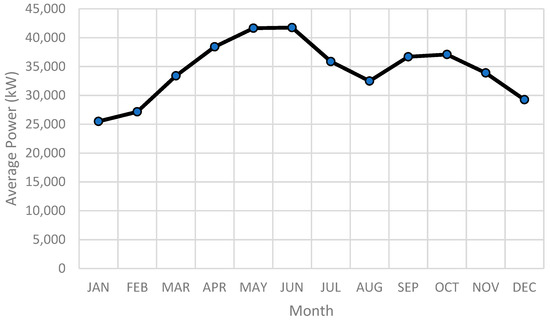
Figure 1.
Monthly average load for 2021.
3.3. Solar Irradiance
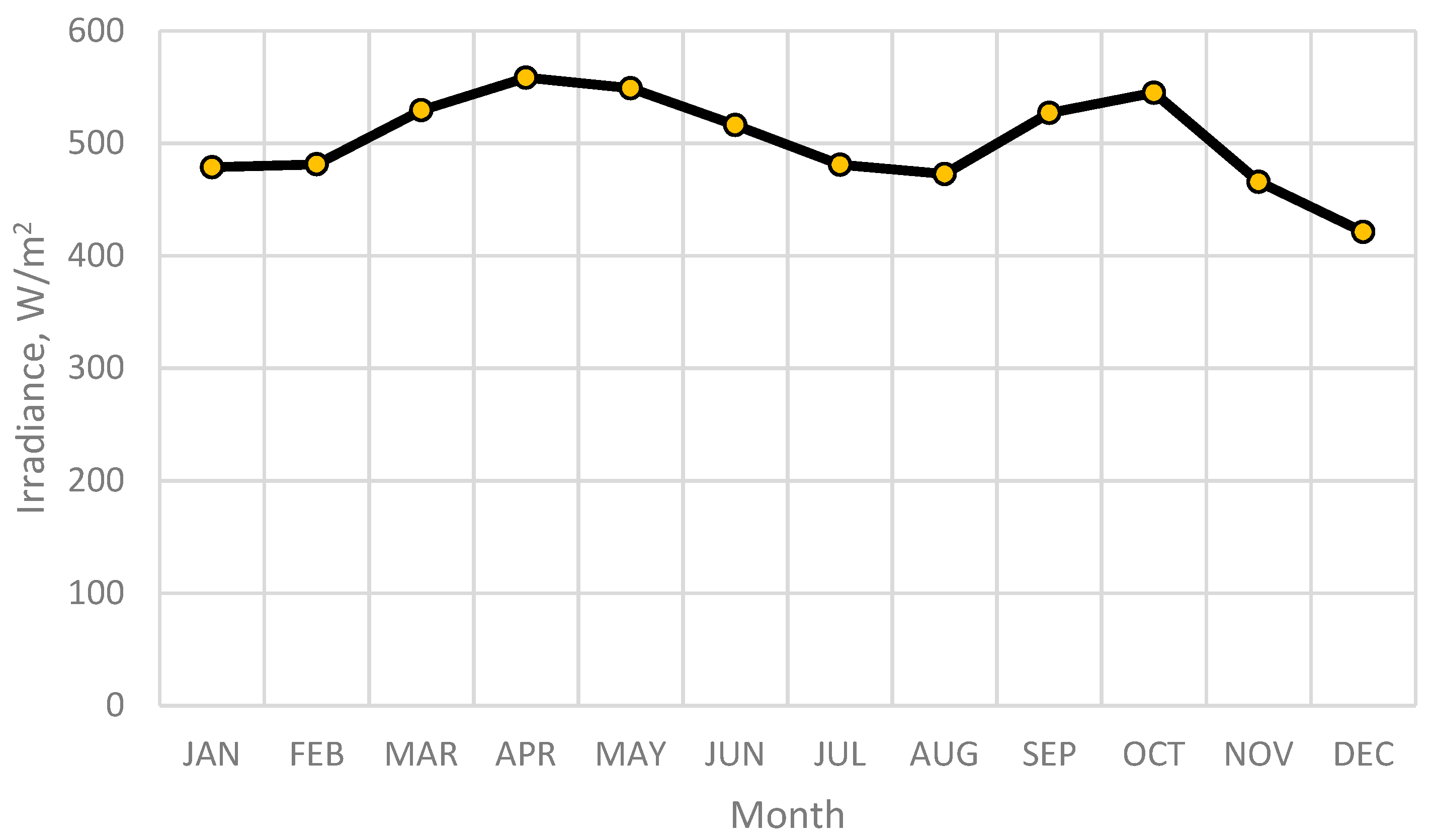
The measured solar irradiance in Duqm for two years (2020 and 2021) was obtained from the Directorate General of Meteorology, Civil Aviation Authority [35]. The monthly average of solar irradiance (W/m2) for two years is presented in Figure 2. These data are used in HOMER after converting W/m2 to kWh/m2/day.
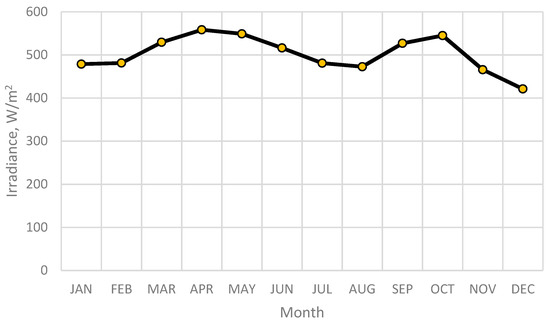
Figure 2.
Monthly average solar irradiance (W/m2) for two years (2020 and 2021).
3.4. Wind Speed
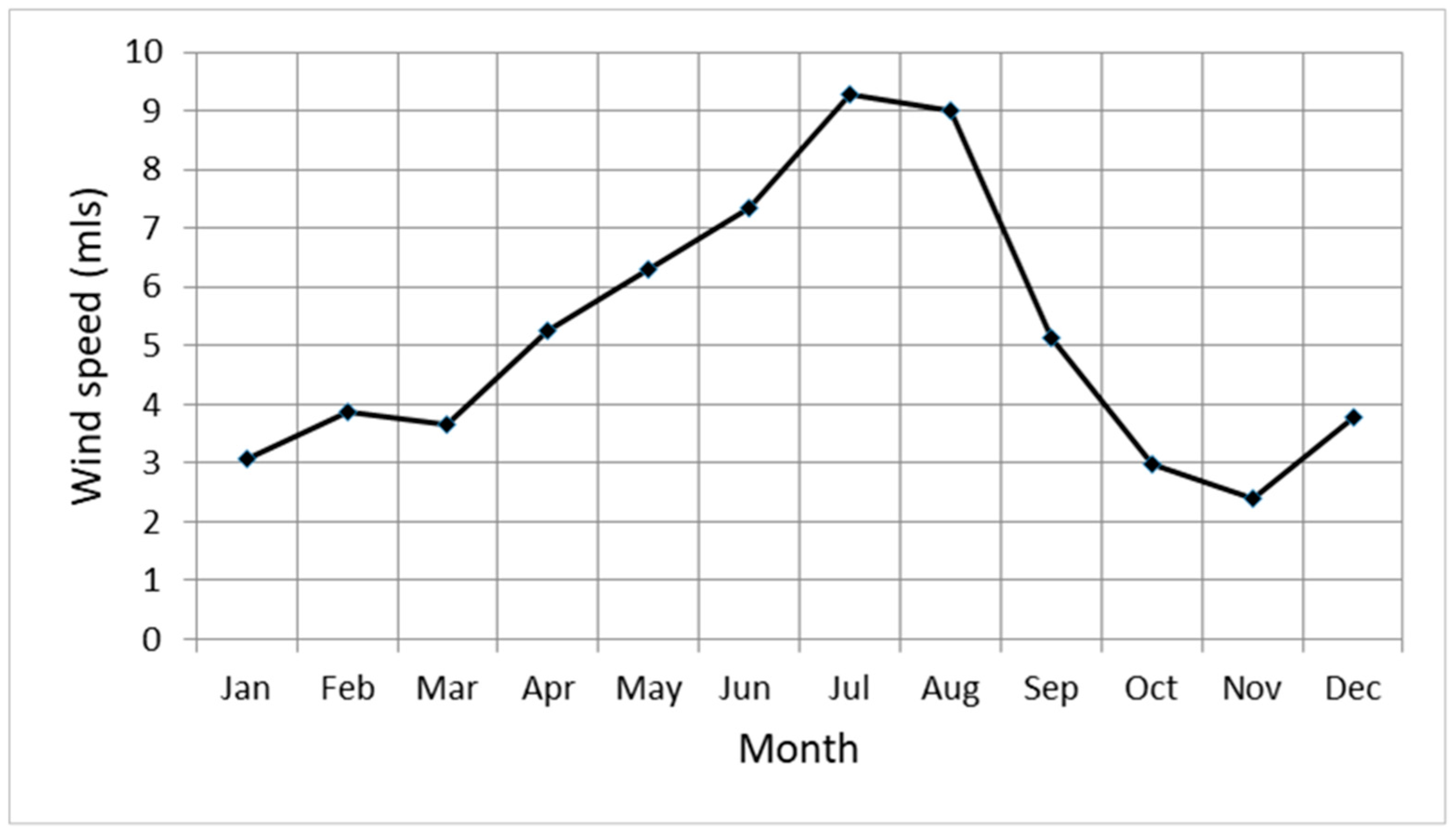
The Directorate General of Meteorology, Civil Aviation Authority provided the monthly average measured wind speed for Duqm (during a four-year period) [36]. At 10 m anemometer height, the wind speed fluctuates from about 3 m/s in the winter to about 9 m/s in the summer. The wind speed fluctuates in accordance with the load variation, with an average annual wind speed of 5.2 m/s. The monthly average wind speed at Duqm over a four-year period is shown in Figure 3.
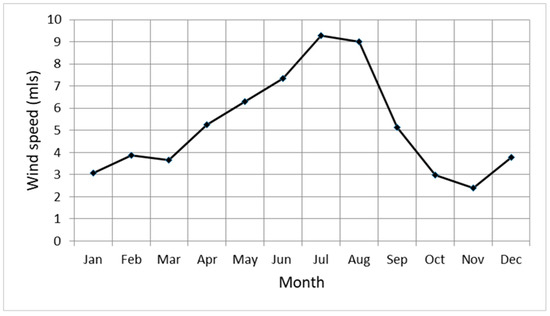
Figure 3.
Monthly average wind speed for four years.
4. Modeling of the Proposed System Using HOMER
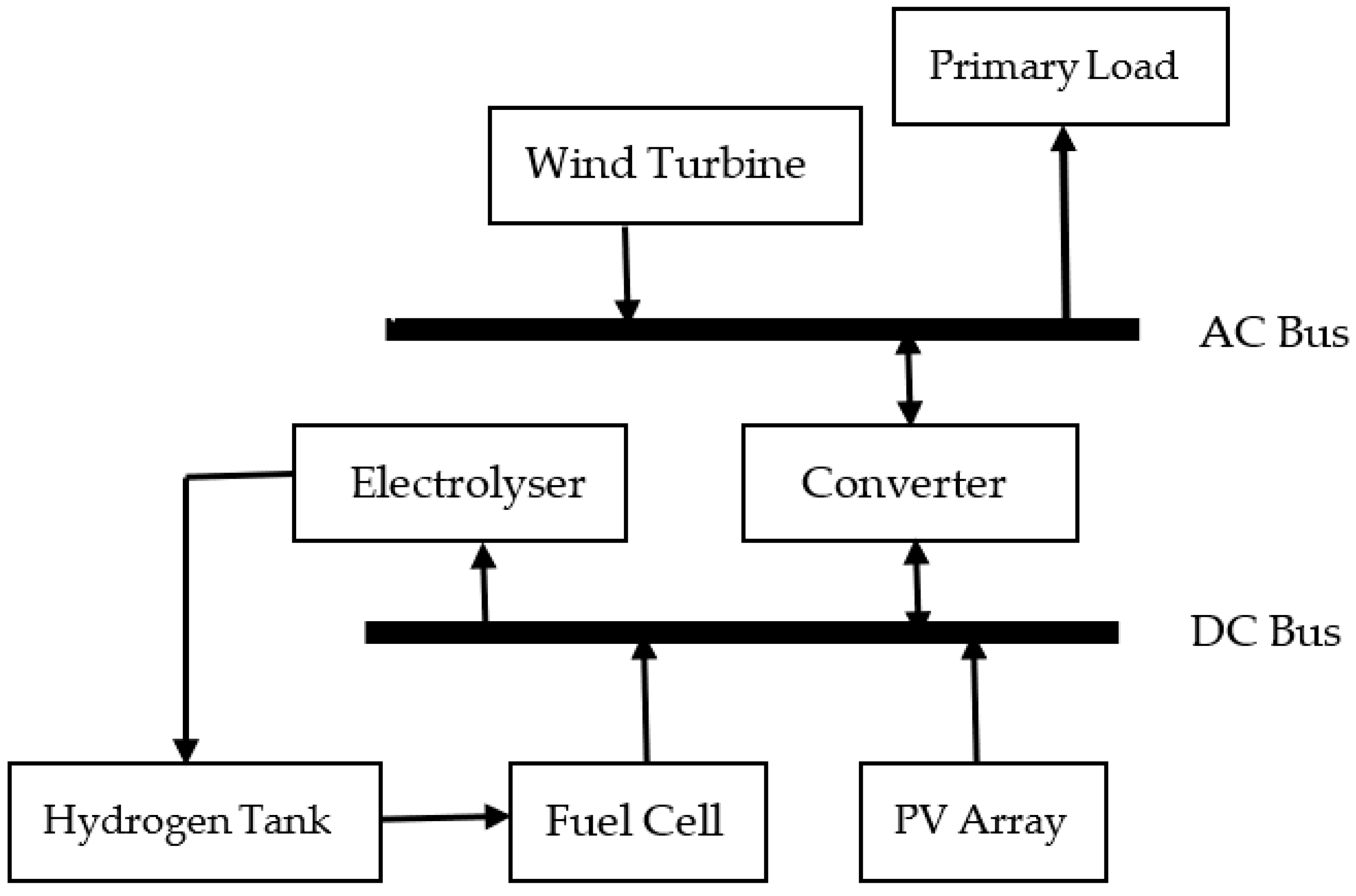
Figure 4 displays the suggested hybrid system’s configuration. HOMER Pro software was used to model the PV, wind turbines, converter, fuel cell, electrolyzer, and hydrogen tank that make up this system. In order to meet the energy needs of the load and the electrolyzer, solar PV provides electricity during the day and wind turbines during the night. A hydrogen tank is used to store the hydrogen produced by the electrolyzer. Table 2 presents the technical information for various components.
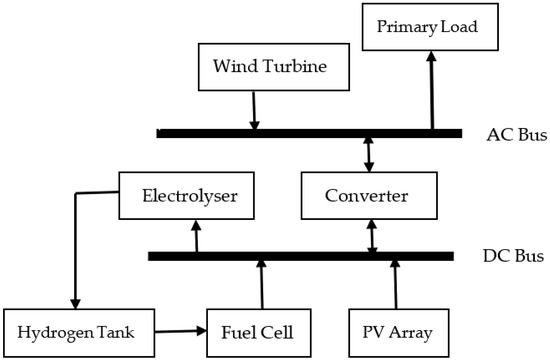
Figure 4.
Schematic diagram of the proposed system (PV-Wind-Fuel Cell).
Table 2.
Technical data and study assumptions of PV, diesel unit, inverter, and batteries [37,38,39].
5. Discussion of Results
5.1. Existing System
The levelized cost of energy for using the current system in Duqm will be US $0.181/kWh, with a total net present cost (NPC) of USD 96.5 M. The main disadvantage of this system is the noise produced as well as the release of various pollutants, as stated in Table 3.
Table 3.
The quantity of different emissions from the existing system.
Carbon Price
Governments can use carbon pricing to guide their economies toward and along a course for carbon-neutral growth [40]. Carbon prices have the potential to increase resource efficiency and encourage investment in clean energy and low-emission goods and services [41,42]. Moreover, carbon pricing is a highly effective decarbonization strategy. Carbon pricing lowers emissions by promoting reduced use of carbon-containing fuels and by increasing the competitiveness of low- and zero-carbon energy compared to high-carbon alternatives. It is anticipated that raising the effective carbon rate by EUR 1 per tonne of CO2 will reduce emissions by 0.73 percent over time [43]. This indicates that applying a carbon tax of EUR 10 per tonne of CO2 on a nation’s whole energy base would be expected to reduce emissions by 7.3%. The effective carbon rate (ECR), which is the sum of specific fuel taxes (including fuel- and emission-based carbon taxes) and tradeable emission permit prices expressed in EUR per tonne of CO2, is how the Organization for Economic Co-operation and Development (OECD) determines carbon prices on energy usage. Furthermore, a steadfast commitment to carbon pricing reassures investors that spending money on both the advancement of new and existing clean technology is profitable [44]. Looking across nations, there are numerous examples of where carbon pricing has been implemented feasibly throughout the economy. Finland, Sweden, the Netherlands, and Switzerland, for example, already price practically all emissions from fossil fuels in the residential and commercial sectors at or above EUR 60 per tonne of CO2 [40]. Furthermore, carbon pricing’s remarkable return is more than just theory. When comparing various emission reduction policies, the OECD concluded that carbon pricing is the lowest cost policy tool for cutting emissions, i.e., carbon pricing is cost-effective [45,46].
5.2. Proposed System
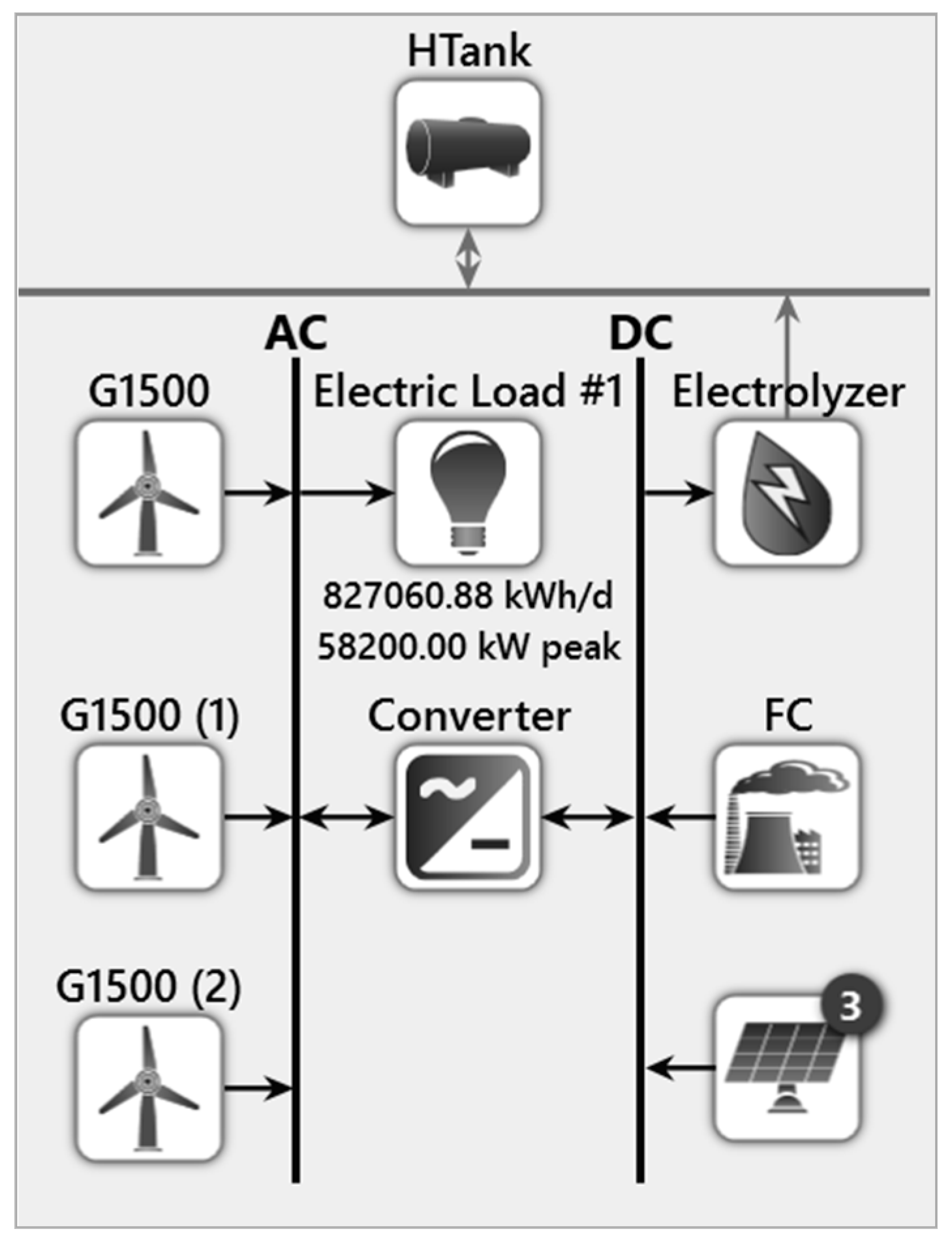
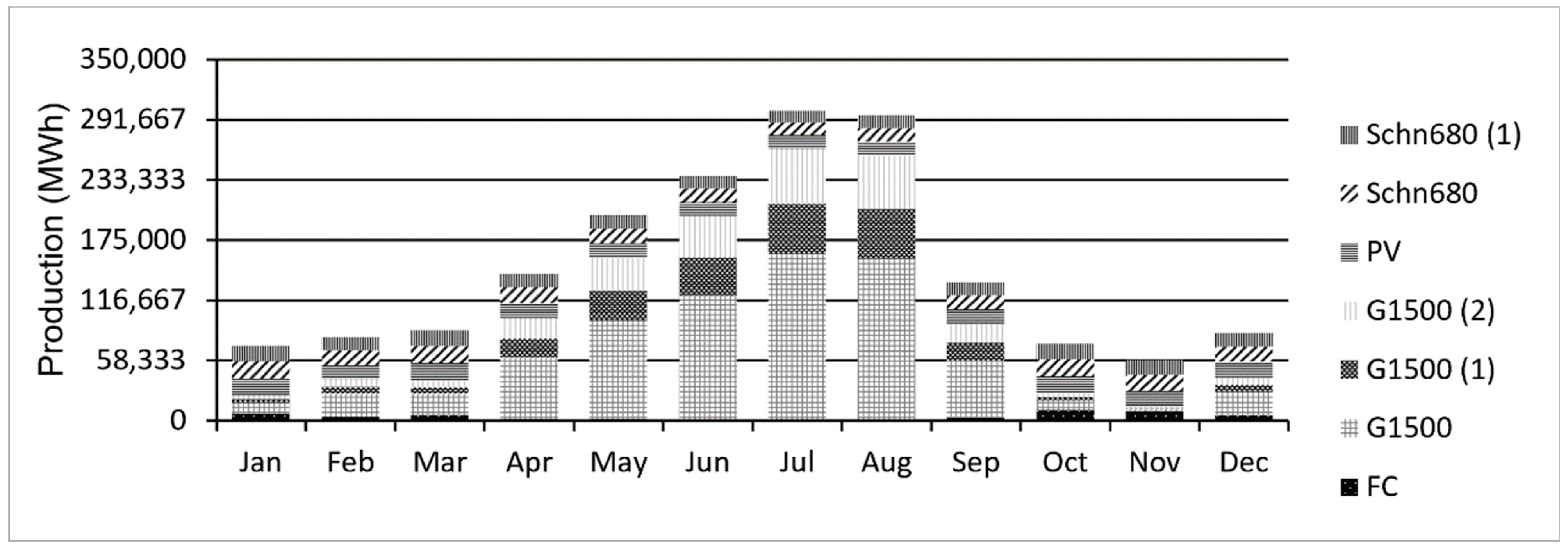
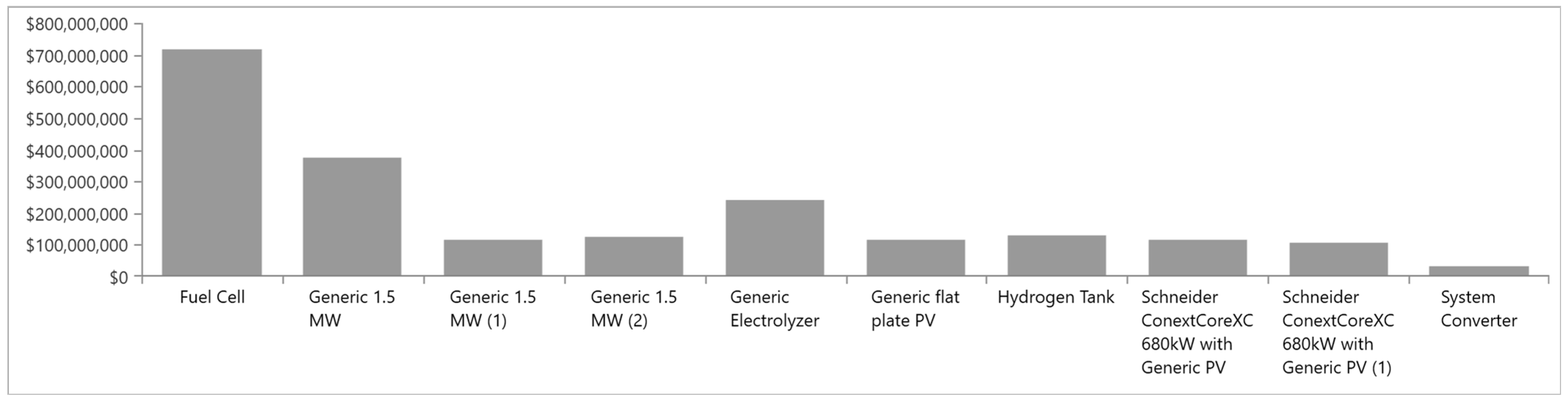
The average wind and sun irradiation values in Duqm for more than a year are greater than 5 m/s and 500 W/m2, respectively, as illustrated in Figure 1 and Figure 2. These renewable energy sources can be used to create hydrogen, which can subsequently be converted into the electrical energy needed for the load using fuel cells. Figure 5 displays the HOMER model for the suggested system. Figure 6 shows the load demand and electrolyzer energy requirement, with wind turbines contributing 71.3%, solar panels 23.7%, and fuel cells 5%. Figure 7 displays the net present value for each system component. The two system components that account for a large portion of the system cost are the fuel cell and electrolyzer.
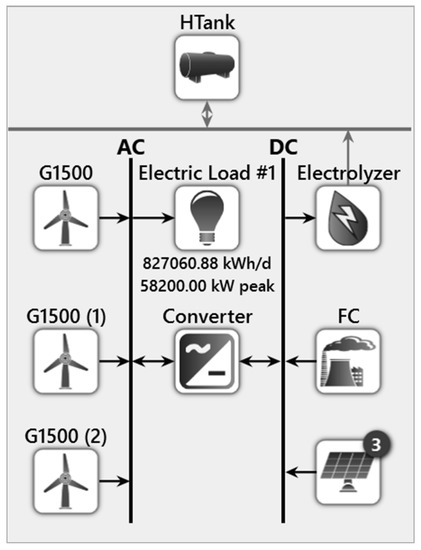
Figure 5.
Schematic diagram of wind-PV-FC system.
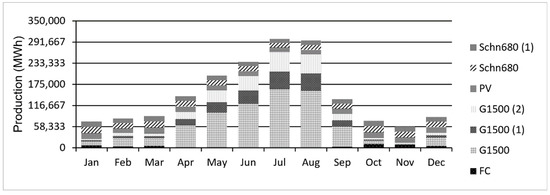
Figure 6.
Monthly average electric energy production from renewable sources.
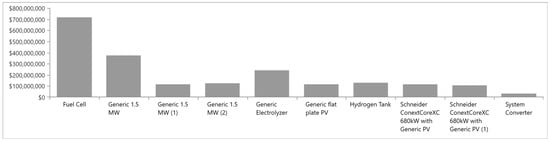
Figure 7.
Net present value (NPV) for each system component.
5.2.1. Hydrogen Tank
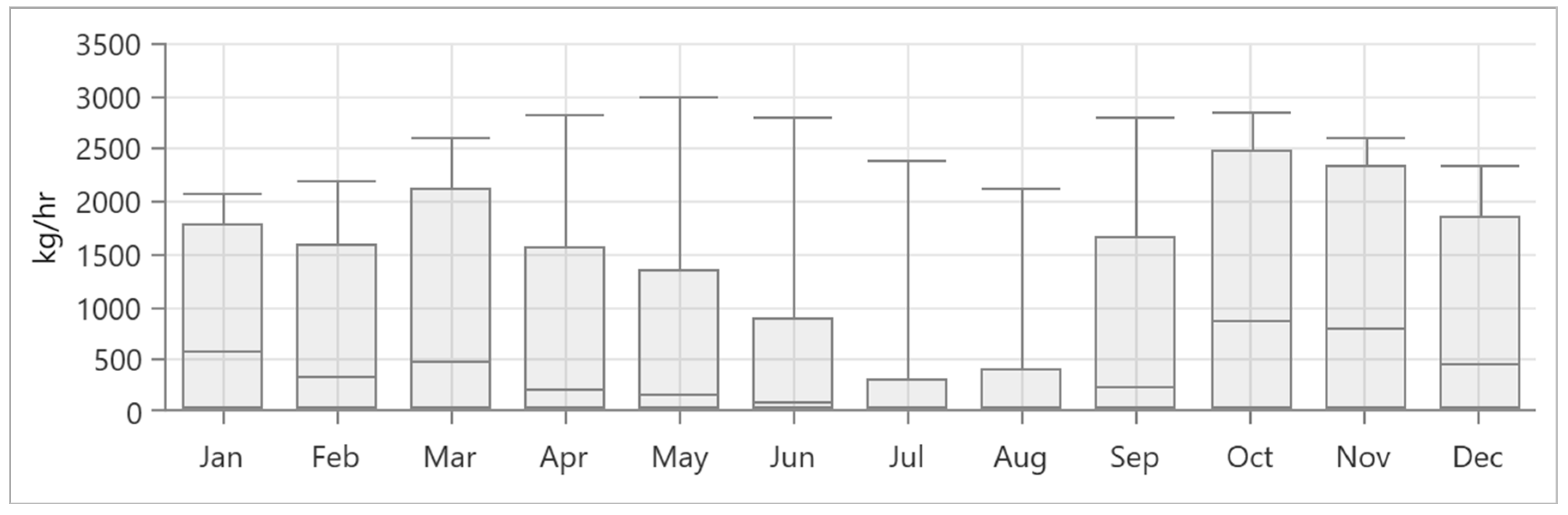
The size of the hydrogen tank is 100,000 kg. At the end of the year, the tank is full. The total hydrogen consumed in one year is 3,023,746 kg, with an average consumption of 8284 kg/day. The average consumption in kg/h for each month is presented in Figure 8. The fuel cell works for 3498 h/year or 40% of the time for one whole year, as depicted in Table 4. For the remaining time, the load will receive energy from renewable energy sources.
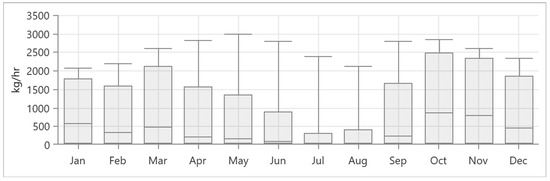
Figure 8.
Average consumption of hydrogen (kg/h) for each month.
Table 4.
Fuel cell operation.
5.2.2. Electrolyzer
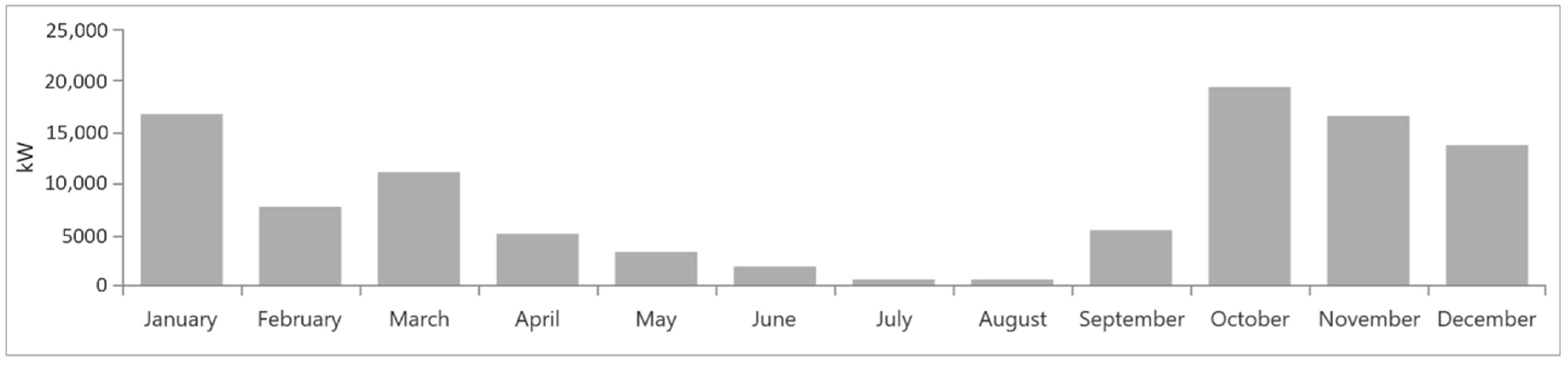
The electrolyzer has a rated capacity of 100 MW, a capacity factor of 16.5%, mean output of 357 kg/h, and a specific consumption of 46.4 kWh/kg. More specifications of the electrolyzer’s operation are presented in Table 5. The average electric power per month taken by the electrolyzer is presented in Figure 9.
Table 5.
Electrolyzer operation.
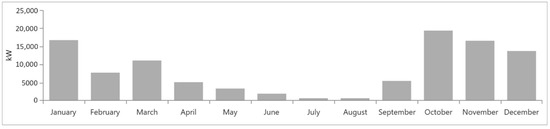
Figure 9.
Monthly average electric power consumption by electrolyzer.
5.3. PV-Wind-Battery
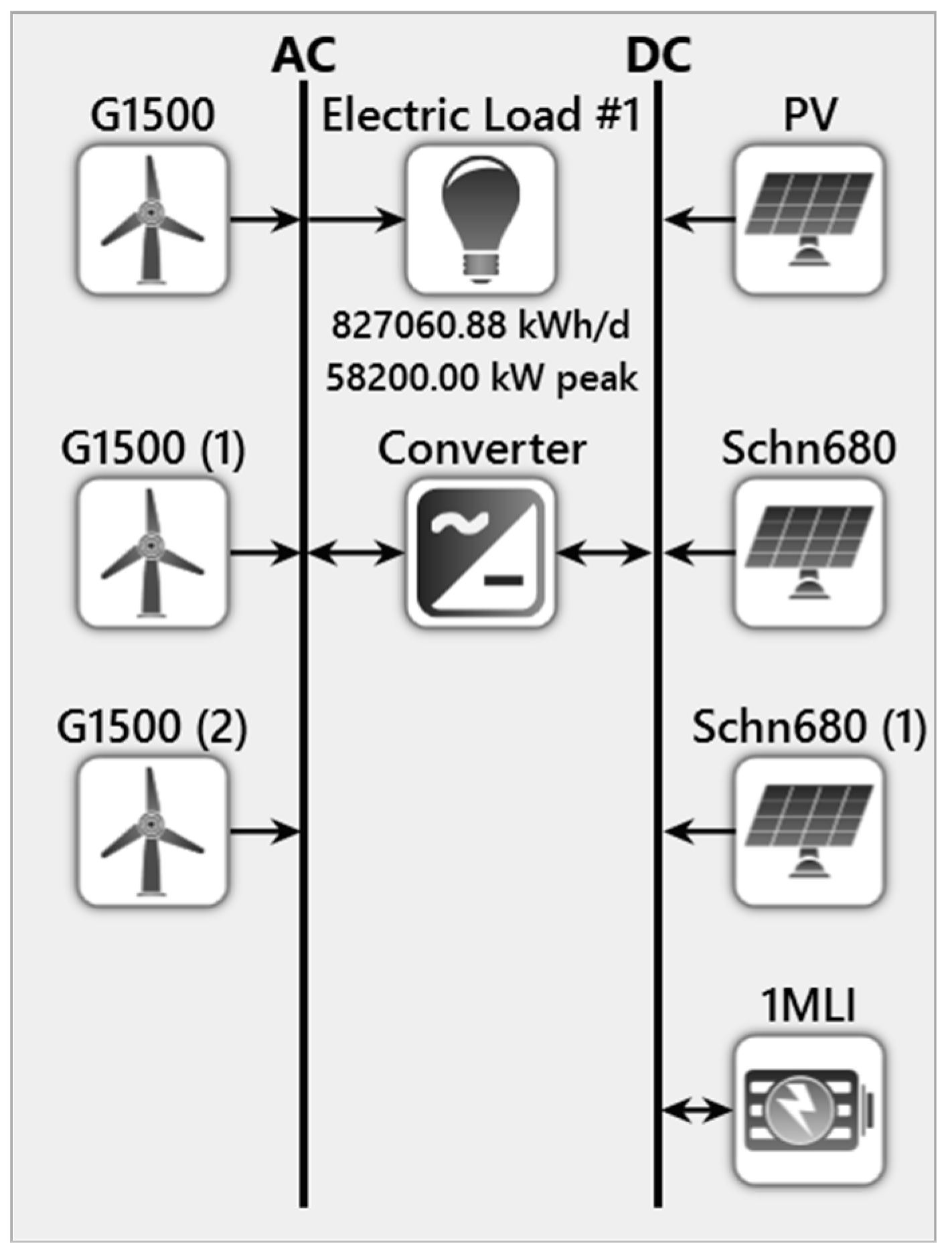
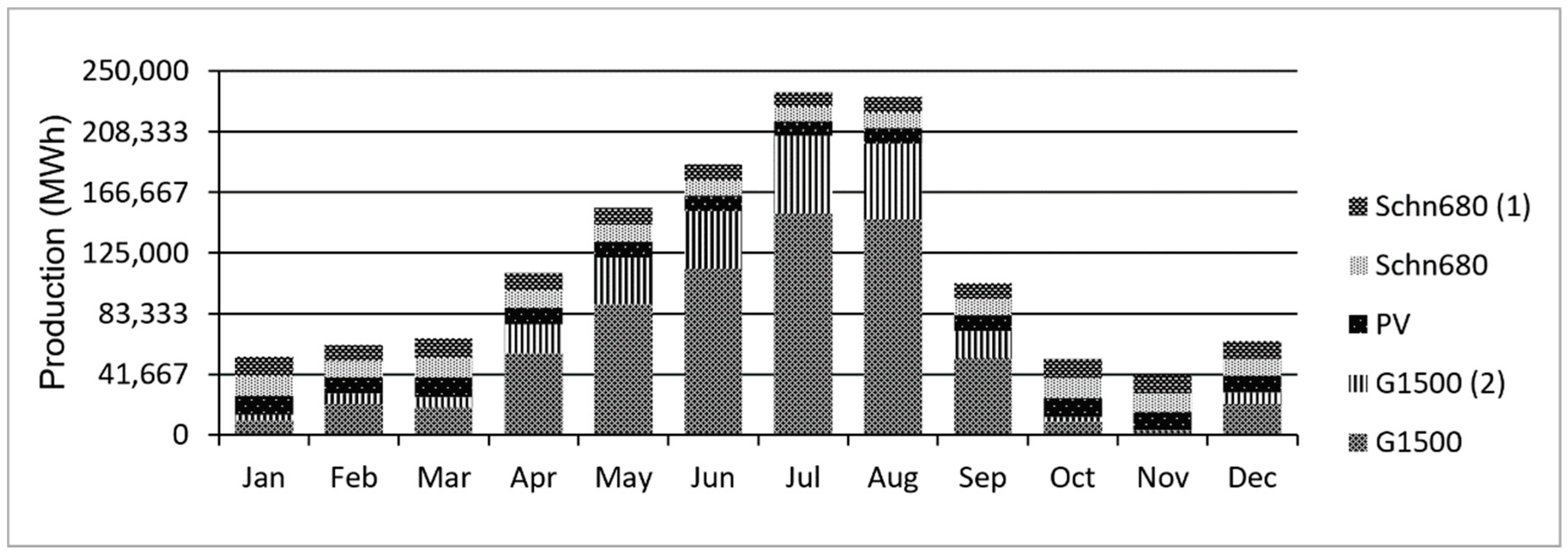
The PV-wind-battery system, as depicted in Figure 10, handles the load in this case. Figure 11 displays the system’s average monthly output of electric energy. A total of 31 percent of the load and battery requirements are generated by PV, with the remaining amount coming from wind turbines. There are 539 battery units in all, producing a total of 55,536,138 kWh per year in energy. The levelized cost of energy for this system is $0.273/kWh, and the net present cost (NPC) is USD 1.3 billion.
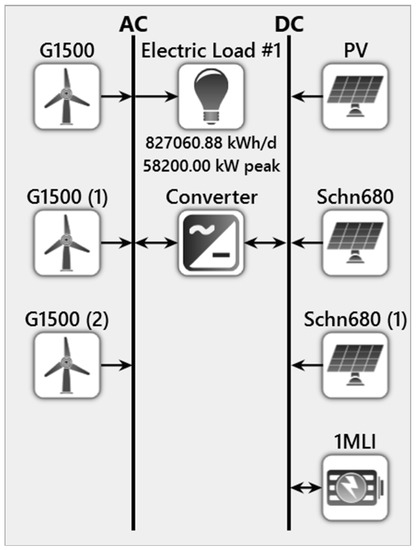
Figure 10.
Schematic diagram of wind-PV-battery System.
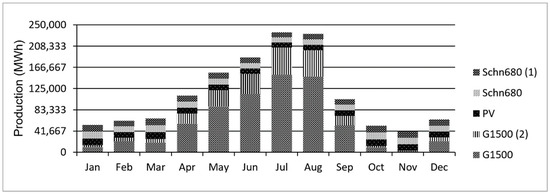
Figure 11.
Monthly electric energy production of wind-PV-battery System.
5.4. PV-Wind-Fuel Cell-Battery
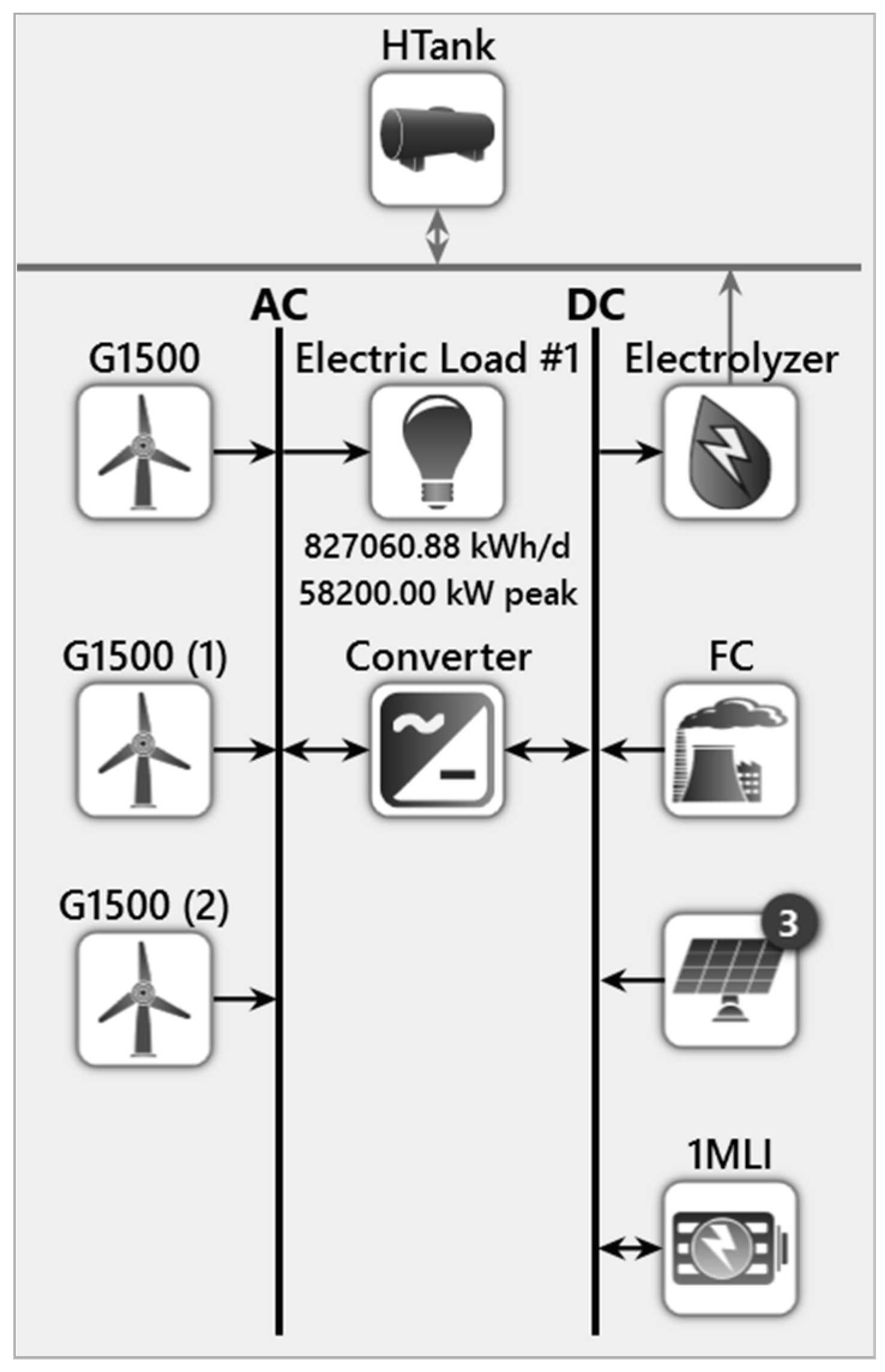
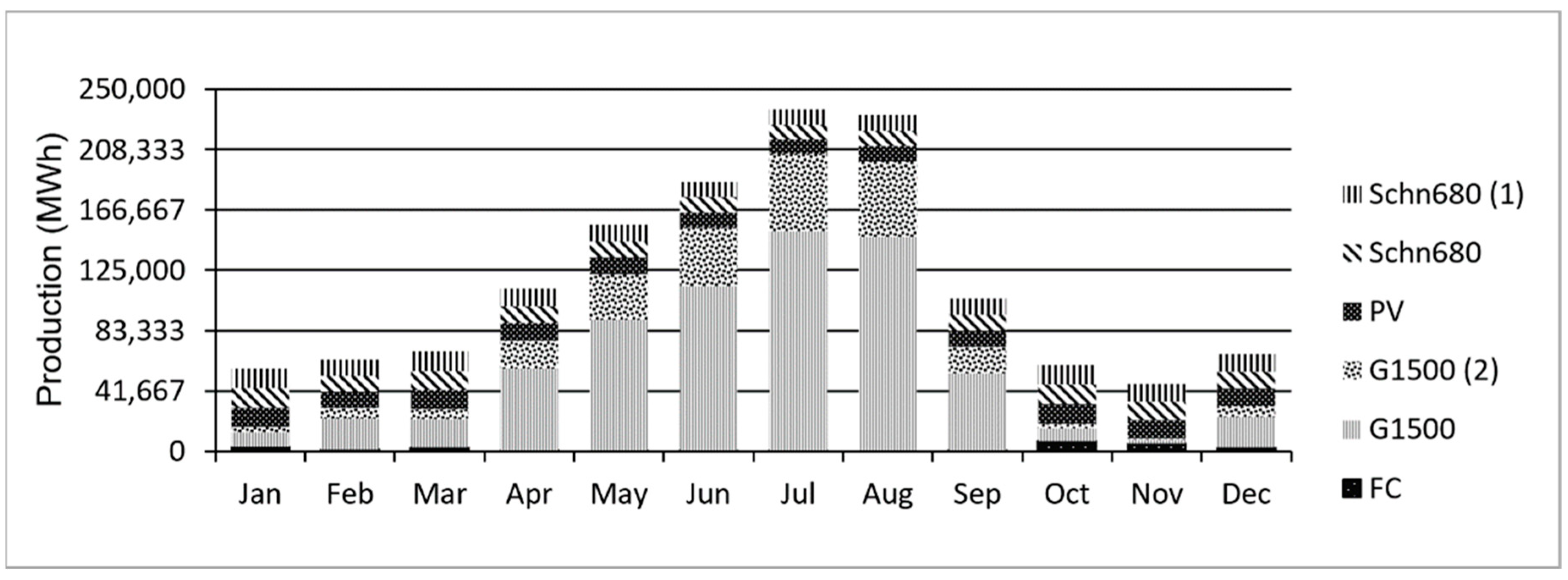
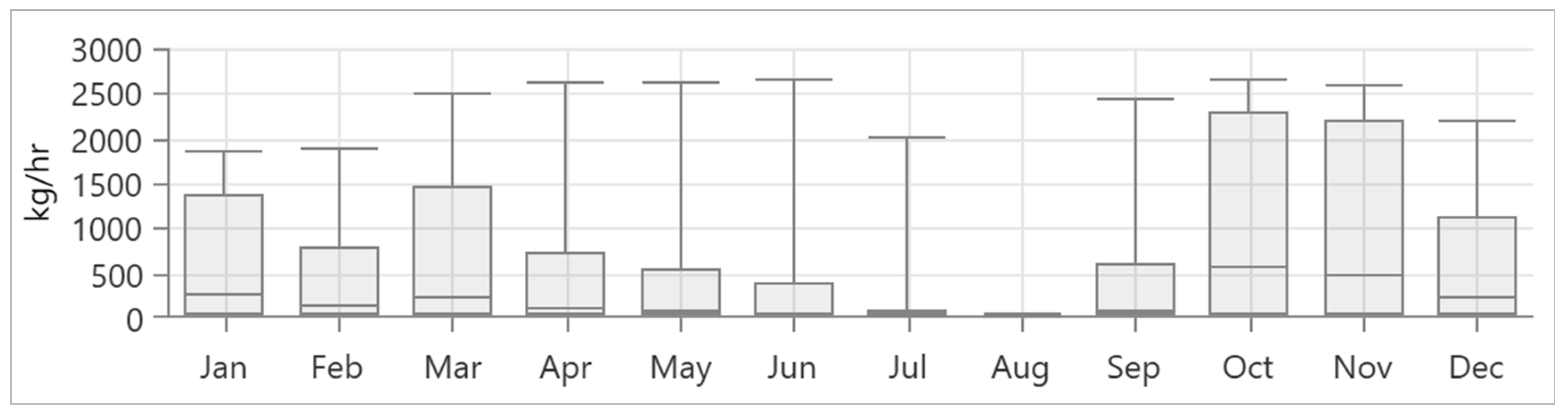
Figure 12 displays the schematic diagram for this system. In this scenario, the renewable energy system will provide the load energy demand as well as the energy needed by the electrolyzer and battery system, as shown in Figure 13. The average hydrogen consumed per day is 4183 kg and per year is 1,526,791 kg. The average hydrogen consumption for each month for one year is depicted in Figure 14. The fuel cell provides 2% of load energy requirements, and the wind turbine contributes 67.8%, while the rest of the energy comes from PV. The levelized cost of energy for this system is USD 0.322/kWh, and the net present cost (NPC) is USD 1.53 billion. There will be 198 battery units that generate 29,673,746 kWh of electricity annually. Since the fuel cell only supplies a small portion of the necessary energy and fewer battery units are needed in this scenario, the cost of energy is fairly similar to the prior one.
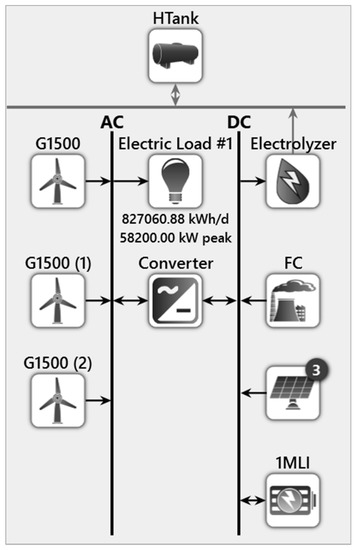
Figure 12.
Schematic diagram of wind-PV-FC-Battery system.
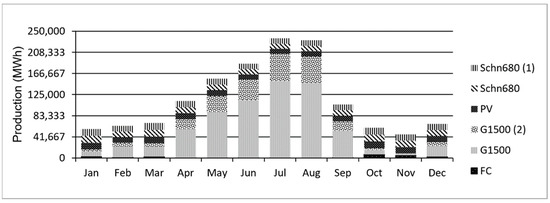
Figure 13.
Monthly electric energy production of wind-PV-FC-Battery system.
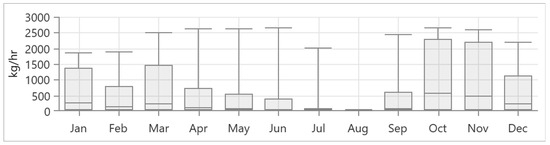
Figure 14.
Monthly average hydrogen consumption.
A comparison between the four scenarios is presented in Table 6.
Table 6.
Comparison between the base system and the other systems.
6. Conclusions
Oman will invest in green hydrogen production by constructing a total capacity of around 30 gigawatts of power generation based on solar and wind. The existing power station in Duqm is based on a diesel generator; the calculated levelized cost of energy is 0.196 USD /kWh. This cost does not include the carbon tax (100 USD/tonne in some countries) and the emission of pollution. Investigations are carried out on the use of solar and wind energy in Duqm for the production of electrical energy and hydrogen. A power generation of fuel cells with renewable energy sources was proposed and recommended. This method was compared with three different methods using HOMER Pro software. These methods are as follows: using only diesel generators; utilizing battery systems with fuel cells and renewables; and using only battery systems with renewables. Technical, environmental, and economic considerations have all been taken into account when optimizing. Although compared to other methods, the proposed approach will cost more upfront and in terms of energy, hydrogen can be kept for a long period, and this process has a high energy conversion efficiency. With a total net present cost of USD 2.1 billion, the levelized cost of energy for the suggested method is USD 0.436 per kWh. This study was performed based on the current technological states and their costs. However, the fuel cell technology and its characteristics can be further investigated for Omani conditions.
Author Contributions
Conceptualization, A.A.-B.; methodology, A.A.-B.; software, A.A.W.; validation, A.A.-B., A.A.W., R.A. and A.M.; formal analysis, A.A.-B., A.A.W., R.A. and A.M.; investigation, A.A.-B., A.A.W., R.A. and A.M.; resources, A.A.-B.; data curation, A.A.-B.; writing—original draft preparation, A.A.-B.; writing—review and editing, A.A.-B., A.A.W., R.A. and A.M.; visualization, A.A.-B., A.A.W., R.A. and A.M.; supervision, A.A.-B.; project administration, A.A.-B. All authors have read and agreed to the published version of the manuscript.
Funding
This research received no external funding.
Institutional Review Board Statement
Not applicable.
Informed Consent Statement
Not applicable.
Data Availability Statement
Not applicable.
Acknowledgments
The Tanweer Company, Oman, provided the authors with reliable support in The authors declare no conflict of interest the form of load and diesel generator data. Additionally, they thank the Civil Aviation Authority’s Directorate General of Meteorology for its assistance in providing the wind and solar data for Duqm.
Conflicts of Interest
The authors declare no conflict of interest.
References
- Conrad, P. OQ Eyes Role as Oman’s Energy Transition ‘Champion’. Oman Daily Observer. 28 March 2022. Available online: https://www.zawya.com/en/projects/industry/oq-eyes-role-as-omans-energy-transition-champion-nzfo8n8h (accessed on 1 April 2022).
- Laura, P. Oman Plans to Build World’s Largest Green Hydrogen Plant. The Guardian. 27 May 2021. Available online: https://www.theguardian.com/world/2021/may/27/oman-plans-to-build-worlds-largest-green-hydrogen-plant (accessed on 2 June 2022).
- Conrad, P. Hyport-duqm-project-eyes-1m-mtpa-of-green-ammonia-at-full-capacity. Oman Observer. 26 December 2021. Available online: https://www.omanobserver.om/article/1111712/business/energy/hyport-duqm-project-eyes-1m-mtpa-of-green-ammonia-at-full-capacity (accessed on 20 March 2022).
- Bezmalinovic, D.; Barbir, F.; Tolj, I. Techno-economic analysis of PEM fuel cells role in photovoltaic-based systems for the remote base stations. Int. J. Hydrogen Energy 2013, 38, 417–425. [Google Scholar] [CrossRef] [Green Version]
- Dincer, I. Environmental and sustainability aspects of hydrogen and fuel cell systems. Int. J. Hydrogen Energy 2007, 31, 29–55. [Google Scholar] [CrossRef]
- Ryland, D.K.; Li, H.; Sadhankar, R.R. Electrolytic hydrogen generation using CANDU nuclear reactors. Int. J. Energy Res. 2007, 31, 1142–1155. [Google Scholar] [CrossRef]
- Dincer, I.; Balta, M.T. Potential thermochemical and hybrid cycles for nuclear-based hydrogen production. Int. J. Energy Res. 2011, 35, 123–137. [Google Scholar] [CrossRef]
- Muradov, N.Z.; Veziroglu, T.N. From hydrocarbon to hydrogen-carbon to hydrogen economy. Int. J. Hydrogen Energy 2005, 30, 225–237. [Google Scholar] [CrossRef]
- Levin, D.B.; Chahine, R. Challenges for renewable hydrogen production from biomass. Int. J. Hydrogen Energy 2010, 35, 4962–4969. [Google Scholar] [CrossRef]
- Awad, A.H.; Veziroglu, T.N. Hydrogen vs. synthetic fossil fuels. Int. J. Hydrogen Energy 1984, 9, 355–366. [Google Scholar] [CrossRef]
- Lodhi, M.A.K. Hydrogen production from renewable sources of Energy. Int. J. Hydrogen Energy 1987, 12, 461–568. [Google Scholar] [CrossRef]
- Lodhi, M.A.K. Helio-hydro and helio-thermal production of hydrogen. Int. J. Hydrogen Energy 2004, 29, 1099–1113. [Google Scholar] [CrossRef]
- Miltner, A.; Wukovitz, W.; Proll, T.; Friedl, A. Renewable hydrogen production: A technical evaluation based on process simulation. J. Clean Prod. 2010, 18, 51–62. [Google Scholar] [CrossRef]
- Dincer, I.; Acar, C. Review and evaluation of hydrogen production methods for better sustainability. Int. J. Hydrogen Energy 2015, 40, 11094–11111. [Google Scholar] [CrossRef]
- Karunadasa, H.I.; Chang, C.J.; Long, J.R. A molecular molybdenum-oxo catalyst for generating hydrogen from water. Nature 2010, 464, 1329–1333. [Google Scholar] [CrossRef]
- Ni, M.; Leung, M.K.H.; Sumathy, K.; Leung, D.Y.C. Potential of renewable hydrogen production for energy supply in Hong Kong. Int. J. Hydrogen Energy 2006, 31, 1401–1412. [Google Scholar] [CrossRef]
- El-Bassuoni, A.M.A.; Sheffield, J.W.; Veziroglu, T.N. Hydrogen and fresh water production from sea water. Int. J. Hydrogen Energy 1982, 7, 919–923. [Google Scholar] [CrossRef]
- Andrews, J.; Shabani, B. Re-envisioning the role of hydrogen in a sustainable energy economy. Int. J. Hydrogen Energy 2012, 37, 1184–1203. [Google Scholar] [CrossRef]
- Dincer, I. Technical, environmental and exergetic aspects of hydrogen energy systems. Int. J. Hydrogen Energy 2002, 27, 265–285. [Google Scholar] [CrossRef]
- Othman, E.-S.A.; Nawar, S.K.; Fahmy, F.H.; El-Shafy, A.; Nafeh, A. A new design of A Hydrogen Fueling Station Powered By Renewable Energy Sources. IOSR J. Electr. Electron. Eng. 2015, 10, 116–125. [Google Scholar]
- Abdin, Z.; Khalilpour, K.R. Single and polystorage technologies for renewable-based hybrid energy systems. In Polygeneration with Polystorage for Chemical and Energy Hubs; Khalilpour, K.R., Ed.; Academic Press: Amsterdam, The Netherlands, 2019; pp. 77–131, Chapter 4. [Google Scholar]
- Abdin, Z.; Mérida, W. Hybrid energy systems for off-grid power supply and hydrogen production based on renewable energy: A techno-economic analysis. Energy Convers. Manag. 2019, 196, 1068–1079. [Google Scholar] [CrossRef]
- Canan, A.; Yusuf, B.; Murat, E.D.; Ibrahim, D. “Transition to a new era with light-based hydrogen production for a carbon-free society: An overview. Int. J. Hydrogen Energy 2019, 44, 25347–25364. [Google Scholar]
- HOMER Pro Version 3.14.2. Available online: https://www.homerenergy.com/products/pro/index.html (accessed on 19 April 2022).
- Goodenough, J.B.; Manthiram, A. A Perspective on Electrical Energy Storage. MRS Commun. 2014, 4, 135–142. [Google Scholar] [CrossRef]
- Giyun, K.; Sechan, L.; Jinyeon, H.; Hyun, S.S.; Byungju, L.; Myeong, H.L.; Youngmin, K.; Sung, K.J.; Kyojin, K.; Jihyun, H.; et al. Multi-redox Molecule for High-Energy Redox Flow Batteries. Joule 2018, 2, 1771–1782. [Google Scholar]
- Qizhao, H.; Qing, W. Next-Generation, High-Energy-Density Redox Flow Batteries. ChemPlusChem 2015, 80, 312–322. [Google Scholar]
- Pellow, M.A.; Emmott, C.J.M.; Barnhart, C.J.; Benson, S.M. Hydrogen or batteries for grid storage? A net energy analysis. Energy Environ. Sci. Jul. 2015, 8, 1938e52. [Google Scholar] [CrossRef] [Green Version]
- Kazunori, T. Progress and prospective of solid-state lithium batteries. Acta Mater. 2013, 61, 759–770. [Google Scholar]
- Chen, S.; Zheng, J.; Yu, L.; Ren, X.; Engelhard, M.H.; Niu, C.; Lee, H.; Xu, W.; Xiao, J.; Liu, J.; et al. High-Efficiency Lithium Metal Batteries with Fire-Retardant Electrolytes. Joule 2018, 2, 1548–1558. [Google Scholar] [CrossRef] [Green Version]
- Liu, K.; Liu, W.; Qiu, Y.; Kong, B.; Sun, Y.; Chen, Z.; Zhuo, D.; Lin, D.; Cui, Y. Electrospun core-shell microfiber separator with thermal-triggered flame-retardant properties for lithium-ion batteries. Sci. Adv. 2017, 3, e1601978. [Google Scholar] [CrossRef] [Green Version]
- Cui, Y.; Wan, J.; Ye, Y.; Liu, K.; Chou, L.; Cui, L. A Fireproof, Lightweight, Polymer−Polymer Solid-State Electrolyte for Safe Lithium Batteries. Nano Lett. 2020, 20, 1686–1692. [Google Scholar] [CrossRef]
- Cheng, H.; Yang, Q.; Liu, C. Hydrogen storage in carbon nanotubes. Carbon 2001, 39, 1447–1454. [Google Scholar] [CrossRef]
- Zainul, A.; Tang, C.; Liu, Y.; Kylie, C. Large-scale stationary hydrogen storage via liquid organic hydrogen carriers. iScience 2021, 24, 102966. [Google Scholar]
- Chen, Z.; Ma, Z.; Zheng, J.; Li, X.; Akiba, E.; Li, H.W. Perspectives and challenges of hydrogen storage in solid-state hydrides. Chin. J. Chem. Eng. 2021, 29, 1–12. [Google Scholar] [CrossRef]
- Directorate General of Meteorology, Civil Aviation. Available online: https://www.caa.gov.om/caa/directorates/directorate-general-of-meteorology (accessed on 19 April 2022).
- Shahid, H.S.; Dimitris, M.; Mark, H. Economic analysis of standalone wind-powered hydrogen refueling stations for road transport at selected sites in Sweden. Int. J. Hydrogen Energy 2015, 40, 9855–9865. [Google Scholar]
- Vikas, K.; Savita, N.; Prashant, B. Optimization of hydrogen based hybrid renewable energy system using HOMER, BB-BC and GAMBIT. Int. J. Hydrogen Energy 2016, 41, 16743–16751. [Google Scholar]
- Nader, B.; Pearl, D.P. Cost Optimization of Hybrid Solar, Micro-Hydro and Hydrogen Fuel Cell Using Homer Software. Energy Power Eng. 2015, 7, 337–347. [Google Scholar]
- Flues, F.; Dender, K.V. Carbon Pricing Design: Effectiveness, Efficiency and Feasibility: An Investment Perspective; OECD Taxation Working Papers; OECD Publishing: Paris, France, 2020; No. 48. [Google Scholar]
- OECD. Effective Carbon Rates 2018. Pricing Carbon Emissions Through Taxes and Emissions Trading; OECD Publishing: Paris, France, 2018. [Google Scholar] [CrossRef]
- OECD. Investing in Climate, Investing in Growth; OECD Publishing: Paris, France, 2017. [Google Scholar] [CrossRef]
- Sen, S.; Vollebergh, H. The effectiveness of taxing the carbon content of energy consumption. J. Environ. Econ. Manag. 2018, 92, 74–99. [Google Scholar] [CrossRef] [Green Version]
- Effective Carbon Rates 2021. 2022. Available online: https://www.oecd.org/tax/tax-policy/effective-carbon-rates-2021-brochure (accessed on 19 April 2022).
- OECD. Effective Carbon Prices; OECD Publishing: Paris, France, 2013. [Google Scholar] [CrossRef]
- Carbon Pricing Dashboard, Up-to-Date Overview of Carbon Pricing Initiatives. 2022. Available online: https://carbonpricingdashboard.worldbank.org/map_data (accessed on 19 April 2022).
Publisher’s Note: MDPI stays neutral with regard to jurisdictional claims in published maps and institutional affiliations. |
© 2022 by the authors. Licensee MDPI, Basel, Switzerland. This article is an open access article distributed under the terms and conditions of the Creative Commons Attribution (CC BY) license (https://creativecommons.org/licenses/by/4.0/).