


Abstract
Much research has already been dedicated to the impact of the supply chain, but less attention has been paid to the potential of supplier development (SD) processes in strengthening enterprises’ sustainability performance. This study aimed to indicate how the approach to socially responsible supplier development has changed over the years (2010–2019) in the automotive sector considering the types of practices and the applied areas of social responsibility. The study was based on original and empirical content analysis research of sustainability reports of car producers. To identify changes in the approach to socially responsible supplier development (SRSD) practices, 17 criteria were identified within direct as well as indirect types of supplier development practices. Considering areas of social responsibility, we applied the core subjects of social responsibility based on the ISO 26000 standard. The findings revealed that during the analyzed period, there has been a recursive use of both direct and indirect SD practices by the car producers but to varying degrees. The environmental protection, human rights, labor practices, fair operating practices, and organizational governance issues were the major concerns. When comparing 2010 and 2019, a clear increase was observed within all identified SRSD initiatives. The study outputs and examples of SRSD practices of car producers can act as a role model for automotive suppliers as well as other industries regarding how to incorporate sustainability into supplier development processes.
1. Introduction
Companies worldwide are practicing sustainability to achieve improvement in the economic, environmental, and social performance of their operations [1,2,3,4,5,6,7]. When considering corporate social responsibility (CSR), the need to care about relations with key stakeholders lies at the core of the concept [8,9,10,11,12]. A socially responsible company should not only embrace responsibility for the impact of its operations on society and environment but should also consider the impact through its supply chain. Engagement with suppliers is fundamental to practice social responsibility and integrating social responsibility into supply chain may bring long-term environmental, social, and economic value for all stakeholders [13,14].
The capabilities and skills of suppliers to deal with CSR challenges play critical roles in producers’ CSR performance. Suppliers have the power to highly influence the producers, and irresponsible supplier behavior is able to damage public image and reputation and can also be severely expensive for a company. Therefore, the focus on cost and quality issues in supply chain management must be expanded and also include environmental and social aspects [15]. The automotive industry is facing many challenges nowadays to when striving for sustainability. Car manufacturers have to deal with increasing expectations of their stakeholders—regulations, customers, and society demand reduction of CO2 emissions, alternative-power trains, or new mobility concepts. To address these problems, it is not enough to take into account sustainable production practices in their daily operations. In the automotive industry, up to 75% of the cost of a vehicle comes from parts sourced from suppliers [16]; therefore, it is of utmost importance that car manufacturers collaborate directly with suppliers and demand socially responsible behavior in their supply chains. The way the car producers are trying to assure sustainability in their supply chain is the implementation of socially responsible practices into their supplier development process, which is already in place due to the obligatory requirements of their implemented quality management system.
Car manufacturers increasingly try to disclose such kind of information in their sustainability reports [17]. Some examples of socially responsible supplier development disclosed in these reports are: evaluation of the suppliers’ environmental and social performance, supplier training, sharing sustainability knowledge, and collaboration on product improvement that ends in a better corporate social responsibility (CSR) performance for the supplier.
Previous studies on sustainable supplier management indicate that evaluating suppliers’ sustainability has attracted great attention thus far, while suppliers’ sustainability development has been widely neglected [18]. Therefore, this study has tried to fill this gap by providing knowledge on the supplier development practices that car automakers use to make their supply chains more sustainable. In particular, the paper aims to indicate how the approach to socially responsible supplier development has changed over the years (2010–2019) in the automotive sector considering the types of practices and the applied areas of social responsibility. Hence, we formulated two main research questions which are central to the empirical part:
RQ1: How have the types of socially responsible supplier development practices of car producers in Europe changed over the years?
RQ2: How have the areas of social responsibility changed in which supplier development activities were undertaken by car producers in Europe?
The rest of the paper is structured as follows: the next section provides an overview of the supplier development literature, with a particular emphasis on studies focusing on socially responsible supplier development. This is followed by a section dedicated to methodology used in the research process. The research findings are then presented concerning the types of supplier development practices as well as areas of social responsibility they are focused on. Next, the most common socially responsible supplier development practices of car producers in Europe are presented. The paper ends with discussion section and conclusions including limitations as well as recommendations for further research.
2. Literature Review
2.1. Supplier Development
The supplier development (SD) term was first used by Leenders [19] when describing activities of manufacturers (Buyer) directed towards increasing the number of suitable suppliers and improving a supplier’s performance. Studies on supplier development report that buying firms can use various supplier development strategies to improve supplier performance. The framework of these strategies includes (1) supplier assessment, (2) providing suppliers with incentives for improved performance, (3) instigating competition among suppliers, and (4) direct involvement of the buying firm’s personnel with suppliers through activities such as training of suppliers’ personnel [20,21].
Very often, supplier development activities are classified by the manufacturer’s level of commitment to a specific supplier [21,22,23,24,25,26]. This differentiating factor enables us to distinguish two types of supplier development practices: indirect and direct supplier development. In the case of indirect supplier development, the manufacturing firm engages with no or only limited resources from a specific supplier. Some common techniques used in indirect supplier development include supplier assessment, supplier recognition, communicating feedback, plant visits, performance measurement, and supplier auditing [20,23]. When using a direct type of supplier development, the manufacturer plays a more active role. Direct supplier development might include activities such as training of the suppliers’ personnel given by the manufacturing firm, providing temporary on-site support to improve further cooperation, providing equipment and tools, or even spending capital resources on suppliers [27,28]. Therefore, direct supplier development is a more collaborative approach based on exchanges between manufacturer and supplier, resulting in a bilateral deployment of relationship-specific investments [29]. Wagner [26] found that indirect supplier development improves suppliers’ product and delivery performance, while direct supplier development improves supplier capabilities. When practicing indirect supplier development, the buying firm makes use of communication and external market forces to achieve improvements in supplier’s performance. In contrast, in a direct supplier development programme, the buying firm plays an active role and dedicates its human and capital resources to a specific supplier to solve a particular problem. Therefore, the practices of direct supplier development transfer the knowledge and qualifications into the suppliers.
In the automotive sector, supplier development practices have gained popularity owing to quality management systems obligations spread throughout the supply chain. The present global technical specification and quality management standard for the automotive industry (the IATF 16949: 2016) discusses the supplier development requirements in Section 8.4.2.5 of this standard, named supplier development. This section points out performance-based supplier development activities. The supplier monitoring process should constitute an input to the supplier’s development practices [30]. Both short and long-term goals should be taken into account within these development activities. Short-term activities would generally focus on supplier’s products and would require defining suitable methods to assure the quality of purchased products. Conversely, long-term activities would concentrate on the supplier’s quality management system and manufacturing processes and consider such activities as audits, training, and efforts that enhance the quality assurance between the buying company and suppliers and the organization, which in turn will reduce the risk.
2.2. Socially Responsible Supplier Development
Supplier development was defined by Wagner [25] as activities supporting the supplier to enhance the performance of its products and services or improving the supplier’s capabilities. Bearing in mind this explanation of supplier development, the socially responsible supplier development (SRSD) can be defined as activities supporting the supplier to enhance its corporate social responsibility (CSR) performance. In other words, SRSD means specific supplier development efforts made by a buying firm to improve the capability of its foremost suppliers to implement the concept of social responsibility. Socially responsible supplier development implementation may be an example of a win–win strategy by which both suppliers and the buying firms’ CSR performance may be improved [31,32]. Integrating economic, environmental, and social targets into strategic supplier portfolio configuration reduces supply risks and promotes the achievement of the sustainability goals of the purchasing company [33].
The empirical results of Wu [34] show that socially responsible supplier development practices significantly and positively affect SME suppliers’ sustainability-oriented innovations. The results of [32] suggest that while supplier development practices help to improve the suppliers’ social performance and the buying firm’s operational performance, they do not pay off in terms of economic performance.
Moreover, suppliers’ capabilities and skills to deal with sustainability challenges play a critical role in the producers’ corporate social responsibility performance also for another reason. Irresponsible supplier behavior is able to damage public image and reputation and can also be severely expensive for a company. Stakeholders can punish producers severely when they become aware of unsustainable practices among suppliers [35], arguing that buyers are able to prevent such practices by means of supplier selection [36,37] and development. We have all witnessed many scandals of producers suffering problems because of their suppliers’ irresponsible behavior, for example Mattel (its supplier produces defective toys) and Nike or Sainsbury (labor abuses in their suppliers’ plants). Therefore, ensuring a socially responsible supply chain requires special attention of the producer. Properly designed activities within supplier development seem to be of great value. Lu et al. [31] suggest that information sharing, supplier evaluation, and supplier development activities are the most relevant dimensions for socially responsible supplier development. In a socially responsible supplier development program, SD information sharing is about the transfer of CSR knowledge to suppliers. Through information sharing, suppliers can learn CSR knowledge such as the fundamental concepts, related practices, implementation guidelines, and outcome measurements, etc. Socially responsible supplier evaluation relies on the use of an audit and feedback system to monitor suppliers’ CSR implementation and outcomes [38]. However, the study of Subramaniam et al. [39] revealed that simply monitoring suppliers and giving them incentives are not effective ways of enhancing social responsibility among suppliers; instead, supplier development and collaboration such as technical support and training are needed. These results are also supported by the study of Alghababsheh and Gallear [40], which examined the individual impact of assessment and collaboration practices on suppliers’ social performance and revealed that assessment practices are less likely to influence suppliers to improve social performance compared to collaboration practices. To understand the evolution of socially responsible supplier development practices, we undertook a preliminary literature review. Since our study is not a meta-analysis, we decided to use the Web of Science database as one of the worldwide recognized databases as a reference to search for the studies within the topic of interest. We searched for two sets of keywords: (1) supplier socially responsible practices and (2) socially responsible supplier development between the years 2010–2020. The search results for the first and second keywords were, respectively, 50 and 38 papers. The results of the search are valid for the day of 28 September 2020. For the studied period, the authors identified sixteen papers related to the topic of socially responsible supplier development practices (see Table 1). When analyzing the search results from the last ten years, we noticed no rising trend in the amount of research devoted to socially responsible supplier development, in comparison to what is seen in the topic of socially responsible supply chains [41], which is definitely a more complex and capacious topic. In the years 2010, 2016, 2017, and 2020, only one paper was published; two papers were published in 2019, three in 2012 and 2015, and four in 2018. In the years 2011, 2013, and 2014, no papers on socially responsible supplier development were found in the WoS database. None of the papers published during the studied period considered this topic within the automotive sector, reinforcing the necessity of addressing the research gap.

Table 1.
List of studies related to socially responsible supplier development.
The integration of sustainability into supply chains is a significant and evolving area of research [42]. The environmental dimension is significantly better represented in the literature than the social dimension. According to Ashby et al. (2012) [43], these two dimensions are treated separately in the literature with limited insight on how to integrate them, and current supply chain management and sustainability research provides limited practical outputs. Both assessment and collaboration activities positively impact the extension of sustainability into suppliers, and it is indicated that assessment alone is not enough. The identified enablers of these practices can be internal, e.g., the firm’s environmental commitment, senior management support, and the availability of resources, or external, e.g., trust and clarity objectives in the buyer–supplier relationship [44].
Having no control over the suppliers’ actions affects the buyer’s reputation, and the associated risks are the reason why it is necessary to consider the supplier’s sustainability performance. The results of Sancha [45] show that mimetic pressures have a positive effect on the adoption of sustainable supplier development and that this influence is positively moderated by the firm’s level of supplier integration. Contrarily, coercive and normative pressures have no effect on the adoption of sustainable supplier development practices.
The results of Yawar and Seuring [46] indicate that adopting supplier development is an established practice in the dairy industry, which is used by the buyers as a strategy to manage social and societal issues. Findings indicate that such supplier development strategies result in the development of the suppliers’ capabilities to deal with related issues of social sustainability. Buying firms initiate indirect and direct supplier development strategies such as supplier assessments, technical investments, financial assistance, and logistic integration to ensure the continuity of the supply base, ultimately improving economic and social performance. The findings of Yawar and Kauppi [47] revealed motivations behind the adoption of similar SD strategies in addressing sustainability. They found that both private and cooperative dairies adopt similar SD practices to build supplier capabilities and improve buyers and suppliers’ social and economic performance. Private dairies imitate the cooperatives’ SD practices to survive the competition, i.e., economic performance is the main reason behind their isomorphism. On the other hand, cooperatives take up SD practices more for legitimacy and even philanthropic reasons, partly taking advantage of the long-term economic benefits of developing the supplier community.
Bearing in mind the evolution of socially responsible supplier development, the specific change in these activities has been indicated by the study of Cole and Aitken [48], i.e., the movement of post-selection supplier development activities to the pre-selection stage to align sustainability goals and reduce risk. The supplier’s development activities previously situated at the post-selection stage are now performed at the pre-selection stage. The shift of the practices to the beginning of the process is caused by the fact that suppliers must demonstrate a commitment to sustainability by implementing improvements highlighted in corrective action reports at the pre-selection point before any financial transactions occur.
3. Methodology
3.1. Sample Selection and Data Collection
This study on the evolution of socially responsible supplier development practices in automotive sector was based on data disclosed in the sustainability/CSR reports of eight car producers located in European Union member states. The authors decided to investigate sustainability reports from the EU as these companies are subject to the same legal conditions and EU directives, especially those related to disclosing environmental and social issues. We used CSR reports as the data source because widely used sustainability reporting frameworks, e.g., GRI and UN Global Compact require to disclose information on supply chain. The frameworks are also recommended by Directive 2014/95/EU to guide companies’ disclosure and provision of information about the organization’s approach in order to prevent and mitigate negative social and environmental impacts in its supply chain. In order to analyze these reports, the authors applied the content analysis method.
To find out how the approach to socially responsible supplier development has changed over the years in the automotive sector, it was necessary to select a sample of reports that spanned a long time range. This study focused on car producers as they represent large companies; thus, many of them have been reporting for a long time, and these companies have the highest impact on the automotive sector through their socially responsible supplier development practices. In addition, we intentionally decided to investigate the sustainability reports of companies from European Union countries as they are subject to the same legal conditions, especially those related to the disclosure of environmental and social issues.
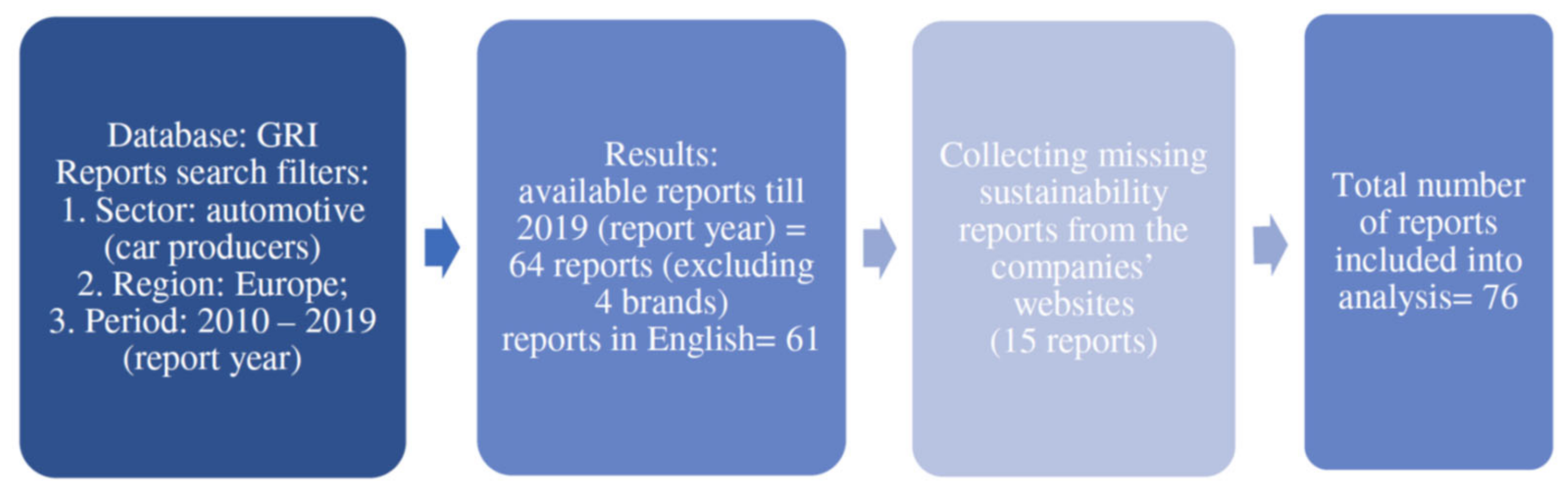
The sustainability reports of the car producers from the European Union were downloaded from the Global Reporting Initiative database for the years 2010–2019 (the year in which the study was conducted (2019) was the last available publication year in the GRI database). The literature analysis enabled us to find that papers related to socially responsible supplier development practices started to be published from 2010; hence, we started our analysis from that date. It is worth mentioning that GRI reports the publication year, which indicates the calendar year in which the report was published, not the year the report covers. The unavailable and missing GRI database reports, including the reports from 2019, were collected from the car producers’ websites. Only reports that were published in English were selected for this study. Finally, the reports published in English, together with those that were available, gave a total of 76 sustainability reports admitted to the study. Toyota Europe and Vauxhall Motors were excluded from the analysis as they had not disclosed CSR reports for several years. Moreover Audi AG and Porsche AG were excluded as they belong to the Volkswagen Group (see Figure 1).
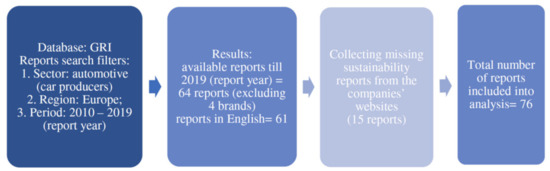
Figure 1.
Process of collecting sustainability reports.
3.2. Content Analysis
To analyze the sustainability reports of car producers, we used the content analysis technique, which is a commonly used research tool for assessing organizations’ social and environmental disclosures [49]. Two approaches to content analysis can be distinguished: index studies and amount–volume studies. Index studies generally check for the presence or absence of specific information items, whereas the volumetric ones check for the overall volume of disclosure, most frequently by counting words, sentences, or proportions of an A4 page (Vourvachis, 2007; Vourvachis and Woodward, 2015) [50,51]. We applied the index approach as in this study we were interested in the evolution of socially responsible supplier development practices, so the variety and focus of these activities undertaken by the car producers in the analyzed period, and not the intensity of their disclosure, was the subject of the investigation.
In order to find out how socially responsible supplier development practices evolved, both the types of supplier development activities and the areas of social responsibility those activities were focused on; the authors identified assessment categories based on the literature review (especially the study of Krause [52] and Wagner, 2010 [26]) as well as the international standard on social responsibility (ISO 26000). Four criteria were identified within the type of direct supplier development practices and six criteria within the indirect type of supplier development (see Table 2). Furthermore, considering areas of social responsibility of the supplier development types of practices referred to, we took the seven core subjects of social responsibility based on the ISO 26000 standard as the criteria (see Table 3).
Table 2.
Supplier development criteria with examples of practices.
Table 3.
Social responsibility core subjects based on ISO 26000.
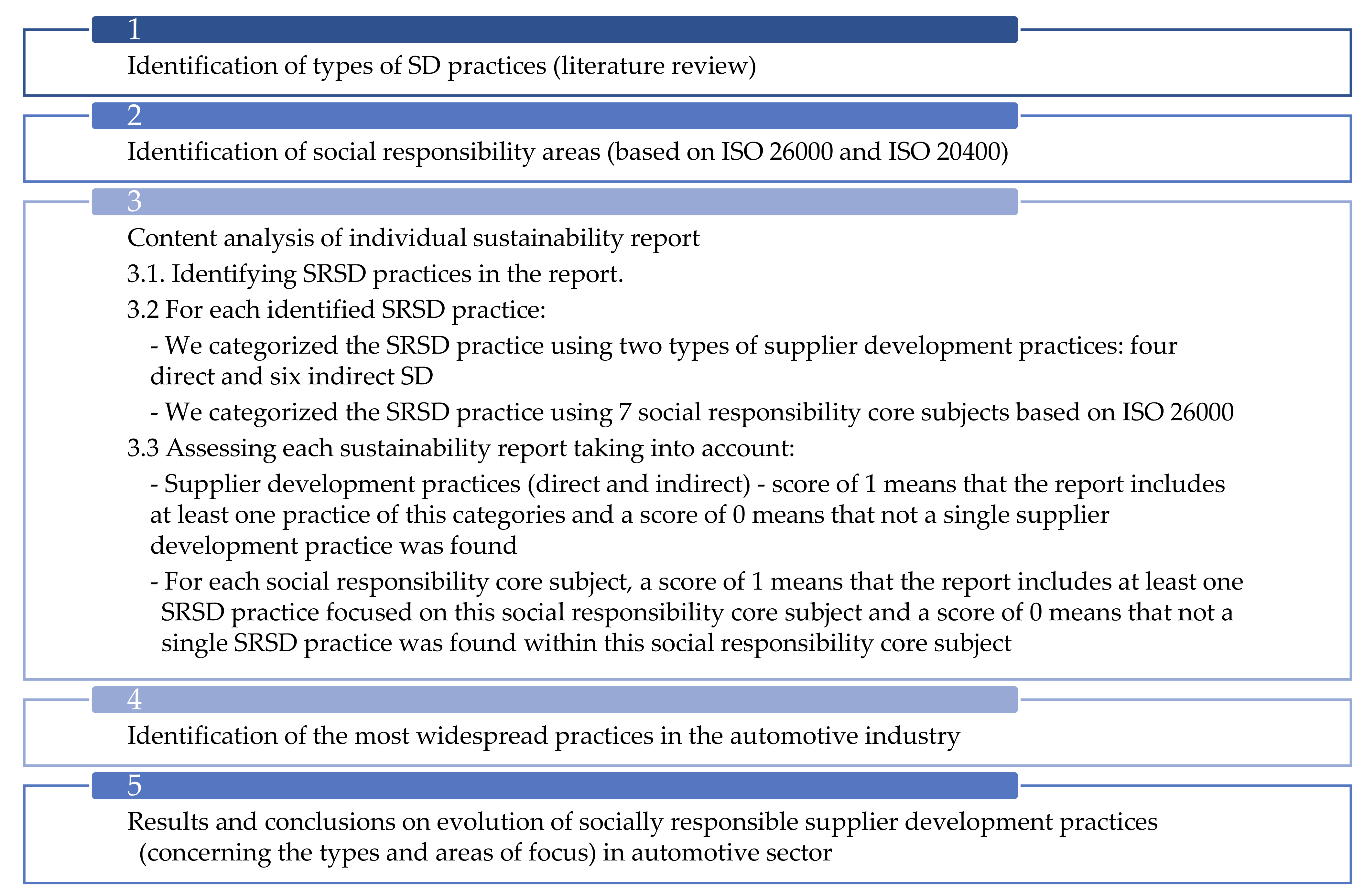
A database was created in a spreadsheet including the socially responsible supplier development (SRSD) practices found in the reports of the eight car producers. The stages of the study are presented in Figure 2. First, for each report, the SRSD practices were identified. Secondly, each identified SRSD practice was classified using the supplier development criteria (see Table 2) as well as the social responsibility core subjects (see Table 3), e.g., a risk management system that refers to the supply chain (SRSD practice) encompasses different supplier development activities: supplier evaluation, the audit of some suppliers (indirect SD practices), and can entail on-site consultation or problem identification analysis (indirect SD practice). Additionally, the risk management system is related to the different social responsibility core subjects: human rights, labor practices, and environmental requirements. Thirdly, once the SRSD practices of a given report were classified, we characterized the sustainability report as follows: following an index content analysis approach, a simple binary coding scheme was used to register the presence or absence in the report of at least one SD practice (Table 2). Thus, for every report and SD practice type, a score of 1 meant that the report included at least one SRSD practice of the type, and a score of 0 meant that not a single SRSD practice of the type was found. By the same token, each report was also characterized by the social responsibility core subjects in a similar way. Thus, for every report and social responsibility core subject, a score of 1 meant that the report included at least one SRSD practice referring to the social responsibility core subject, and a score of 0 meant that not a single SRSD practice related to the social responsibility core subject was found. A total of seventeen parameters, four direct SD practices, six indirect SD practices, and seven social responsibility core subjects, were taken into consideration.
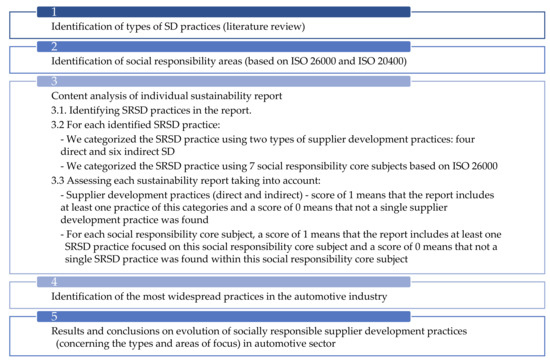
Figure 2.
Stages of the study.
Additionally, and based on the previous analysis, we identified the most widespread SRSD practices among car producers, and we characterized the sustainability reports by the presence or absence of these practices, providing a complementary picture of the evolution of socially responsible supplier development in the automotive industry in Europe.
4. Results
We analyzed 76 reports of eight car producers. The vast majority of the reports were prepared according to the GRI guidelines. Only Jaguar Land Rover (4 of 9 reports) and Renault (2 of 10 reports) used different frameworks to disclose their sustainability performance. Using the same reporting framework means using the same rigor when developing the report and thus does not disrupt the comparison. This fact is highly valuable for the quality of the research where the content analysis is applied and the evolution of practices is analyzed. Some of the sustainability reports were completely inaccessible: BMW Group and Jaguar Land Rover reports from 2011, PSA report form 2012, and one report of Volkswagen AG from 2015 (see Table 4).
Table 4.
Classification by the GRI type of the reports of each brand and the corresponding year.
4.1. Direct Socially Responsible Supplier Development Practices
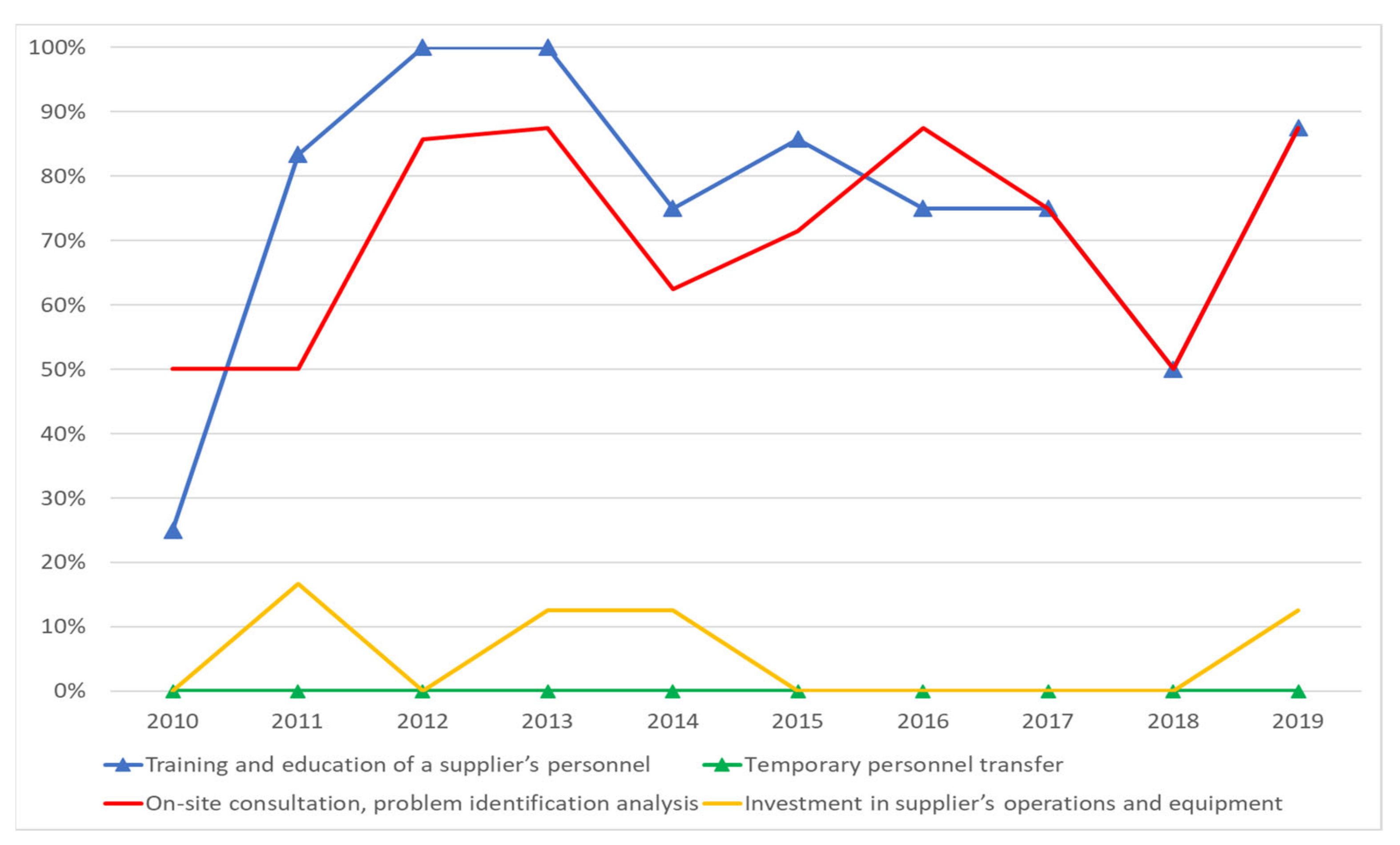
The first analysis calculated the percentage of reports disclosing information concerning the type of direct socially responsible SD practice. As shown in Figure 3 and Table 5, two clear groups emerge. The first includes the most common direct SD practices disclosed in the reports: training and education of a supplier’s personnel and on-site consultation and problem identification analysis. The second group contains the SD practices that carmakers seldom disclose in their reports: temporary personnel transfer and investment in supplier’s operation and equipment. Temporary personnel transfer was not disclosed at all in the analyzed reports. Investment in supplier’s operations and equipment appeared only in specific improvement cooperation programs of a buying firm and its suppliers. Training and education of a supplier’s personnel appeared explicitly in compulsory or voluntary e-learning and face-to-face training courses programs and specific programs (e.g., reducing CO2 emissions), sustainability management systems, or the manufacturing management system, including a sustainability area. On-site consultation and problem identification analysis were frequently found as part of the risk management system and due diligence process when a non-compliant supplier was asked to define an action plan where the buying firm provides orientation (e.g., ad hoc teams), but also in supplier improvement cooperation programs.
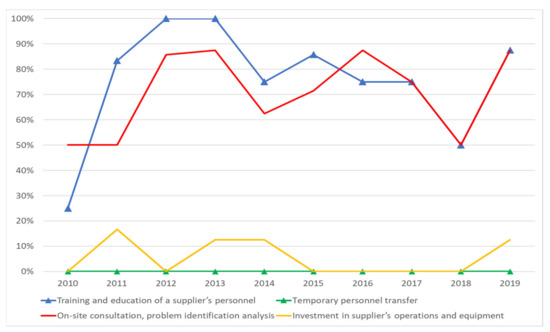
Figure 3.
Percentage of automakers disclosing direct types of supplier development practices in the reports.
Table 5.
Percentage of automakers disclosing direct types of supplier development practices in the reports.
When we considered the time span of 2010 to 2019, it was observed that trainings as well as on-site consultation were always disclosed in the reports despite the fact that the percentage of these practices fluctuated. This might be caused by the real needs of the suppliers and the identified problems to be resolved. In 2019, on-site consultation and problem identification were disclosed in all reports and training, and education of a supplier’s personnel practice was found in 88% of the analyzed reports.
4.2. Indirect Socially Responsible SD Practice
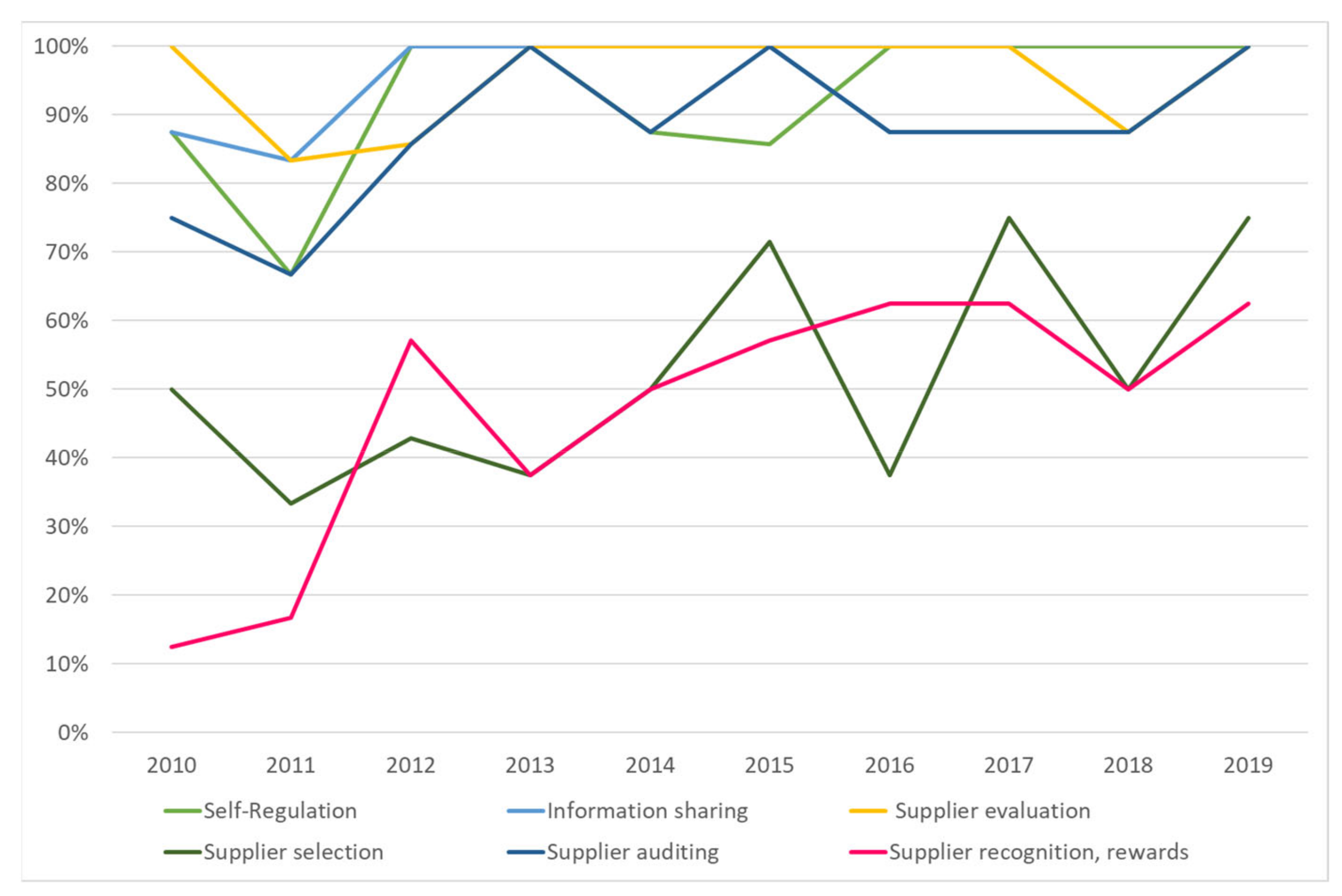
The results of the analysis that calculated the percentage of automakers disclosing information concerning the indirect type of SD practices are presented in Figure 4. In this case, we also distinguished two groups of such practices. The first group includes self-regulation, information sharing, supplier evaluation, and supplier auditing, which are practices disclosed mostly by the automakers. Self-regulation practices appear in the reports in the form of environmental and sustainability requirements, codes of conduct, and guidelines, defined by a single firm or with industry collaboration in sustainability initiatives. Information sharing is practiced in supplier information meetings and forums, supplier portals, and improvement and cooperation programs with a specific supplier or at industry collaboration levels. Supplier evaluation appears in reports as an essential part of compliance and risk management systems and due diligence while monitoring the evolution of sustainability improvement programs. It is frequently found in the form of self-assessment questionnaires. Supplier auditing practices are widely used in the industry to verify compliance with the different sustainability criteria and requirements.
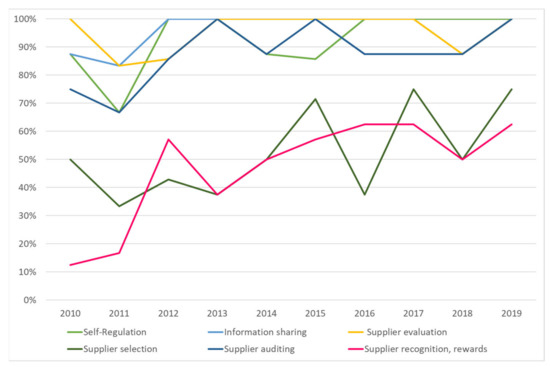
Figure 4.
Percentage of automakers disclosing indirect types of supplier development practices in the reports.
The second emerged group comprises practices such as supplier selection and supplier recognition and awards. Although they are not disclosed by all the automakers, there was a visible increase in the proportion of companies disclosing such types of SD practices. Supplier selection practices appear in the reports in the form of sustainability criteria in supplier selection or supplier rating systems. Supplier recognition and rewards practices are usually part of the awards used by suppliers to boost supplier development in other areas and have included sustainability criteria for the last decade as a global category or divided into environmental, social, and ethical performance. Within the last kind of supplier development practices (supplier recognition, rewards), we observed the most visible difference in disclosure when comparing reports form 2010 and 2019 (see Table 6).
Table 6.
Percentage of automakers disclosing indirect types of supplier development practices in the reports.
4.3. Socially Responsible Supplier Development Practices and SR Core Subjects
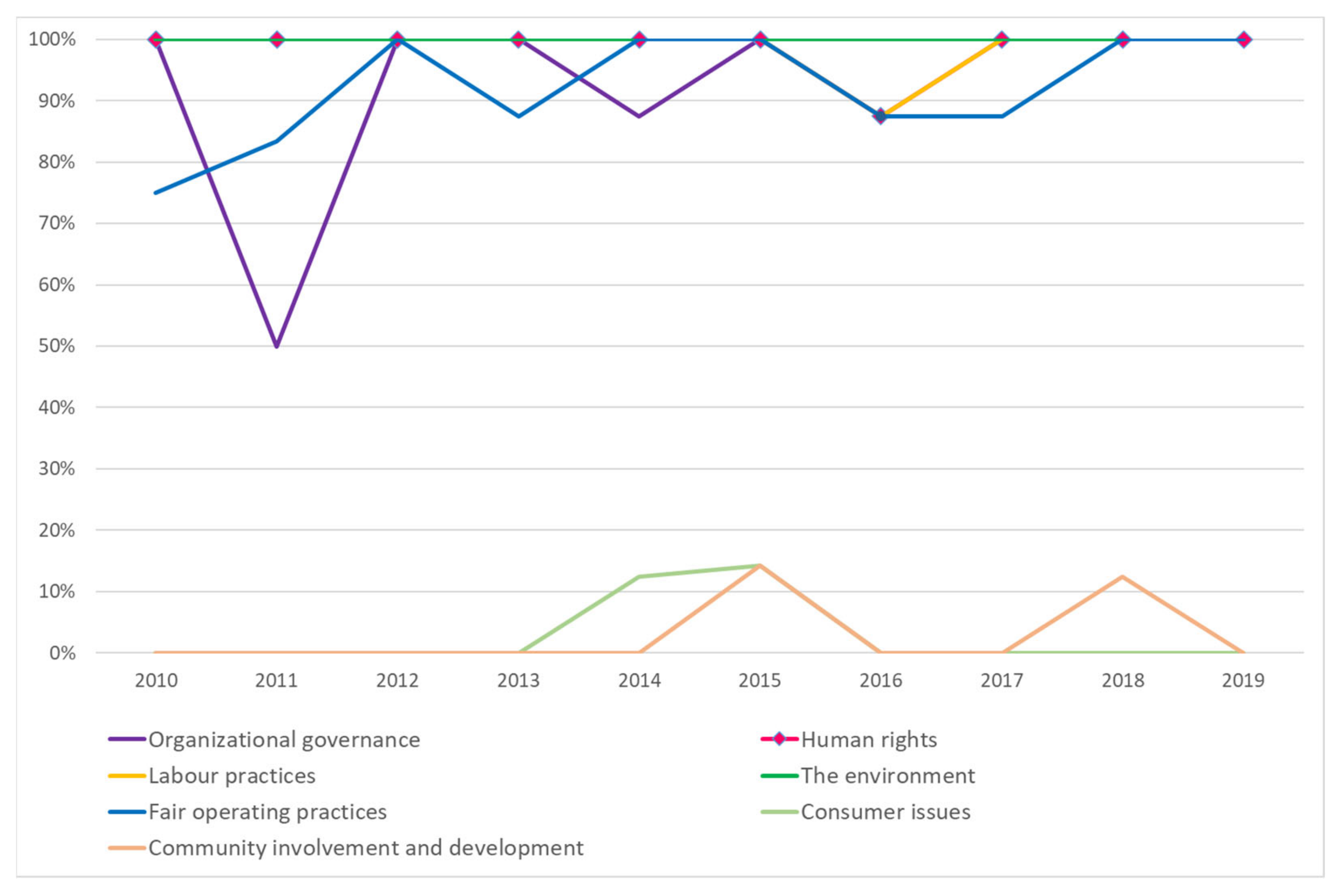
Figure 5 and Table 7 presents the percentage of reports disclosing information concerning the SD practices related to SR core subjects. The analysis of its evolution over the years shows two differentiated groups. The first group includes the most popular SR subjects included in the majority of reports, i.e., the environment, labor practices, human rights, organizational governance, and fair operating practices. The other group includes the SR subjects that are seldom mentioned when disclosing SD practices in the reports, i.e., consumer issues and community involvement and development. The focus on environment protection in supplier development practices was present in all analyzed reports within the whole investigated time span.
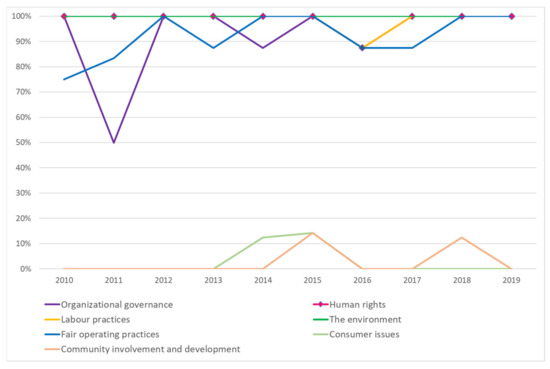
Figure 5.
Percentage of automakers disclosing supplier development practices related to each SR core subjects in the reports.
Table 7.
Percentage of reports including supplier development practices related to the core subjects of social responsibility.
4.4. The Most Common SRSD Practices
The results of the content analysis of the sustainability reports conducted in the previous stages of the study allowed the identification of the most common activities used within socially responsible supplier development practices and disclosed by car producers in Europe. Six were identified:
- Risk management system;
- Whistle-blower system;
- Raw material extraction and mining;
- Environmental improvement programmes;
- Industry collaboration initiatives;
- Supply chain sustainability management system.
The first activity is the risk management system, which is a structured practice based on risk analysis, including supplier evaluation and audit, and subsequent action plans for the cases of non-compliance with the minimum requirements or standards. For example, the BMW risk management system is based on OECD Due Diligence Guidance, while Volvo uses a risk assessment tool developed by Responsible Business Alliance (see Table 8).
Table 8.
Examples of risk management systems among the automakers.
The next identified activity is related to raw material extraction and mining. It comprises actions to foster transparency along the raw material supply chain. Over the last few years, with the development of electric mobility, there has been an increase in the so-called conflict minerals (tin, tantalum, tungsten, and gold) in the automotive industry. Their supply chains have a high risk of human rights violation, labor condition breaches, and unethical behavior that could threaten the future of the communities involved. International initiatives provide a framework to address responsible mineral sourcing issues in global supply chains, such as the Responsible Minerals Initiative (RMI). The Volkswagen Group for example has joined additionally the Responsible Sourcing Blockchain Network (RSBN) for the responsible sourcing of strategic minerals using blockchain technology (see Table 9).
Table 9.
Examples of raw material and mineral extraction SD practices of the automakers.
The next commonly used activities are environmental improvement programs. These are improvement programs mainly related to the circular economy; the most prevalent type in 2010 aimed to increase the recyclability rate of materials, components, and parts and the substitution of single-use products with reusable ones (e.g., reusable containers); well carbon emission reduction programs were the most prevalent type in 2019, encouraging suppliers to participate in initiatives such as the CDP to disclose their carbon emissions and other particular environmental projects in order to reduce them (see Table 10).
Table 10.
Examples of environmental improvement SD practices.
The analyzed car producers are very often involved in different industry or cross-industry initiatives to improve sustainability in their supply chain, for example Drive Sustainability, Responsible Business Alliance, or Automotive Industry Action Group (see Table 11).
Table 11.
Examples of industry collaboration initiatives.
The last identified activity is the supply chain sustainability management system, which includes a comprehensive management system including company-owned systems such as Volvo’s Sustainable Purchasing Program or external cross-industry platforms such as Achilles or Ecovadis (see Table 12).
Table 12.
Examples of sustainability management systems of car producers.
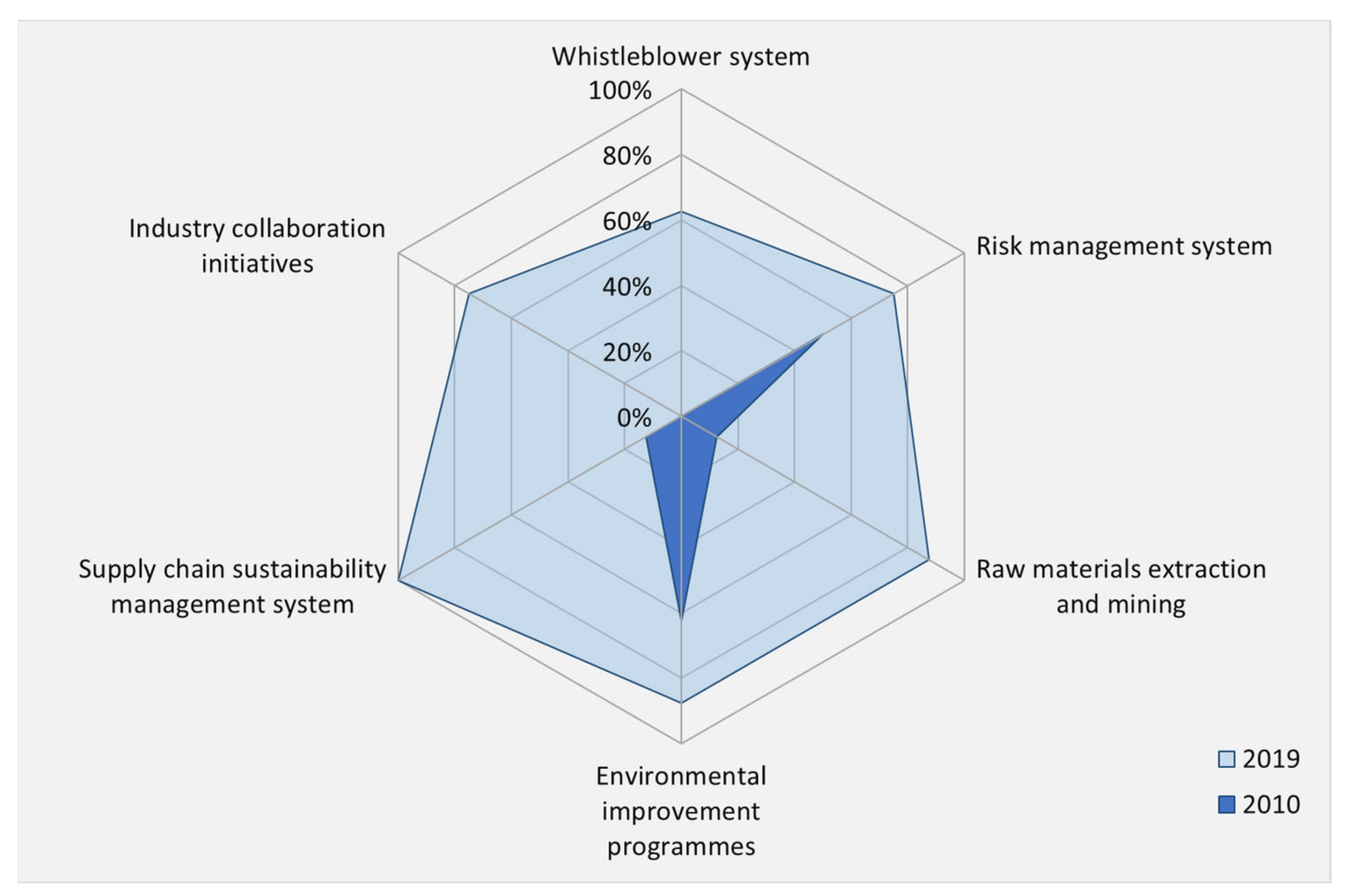
In order to recognize changes in the most commonly used activities within socially responsible supplier development practices, we compared their appearance in the reports from 2010 and 2019. The obtained results are presented at Figure 6. The difference can be observed in each case. The smallest changes can be observed in environmental improvement programs and risk management systems. Reports from 2010 did not disclose information about a whistle-blower system or collaboration of car producers with industry initiatives. In 2019, all reports disclosed information on supply chain sustainability management systems in place, which indicates the growing importance of socially responsible supply chains in the sustainability performance of the analyzed car producers (see Figure 6).
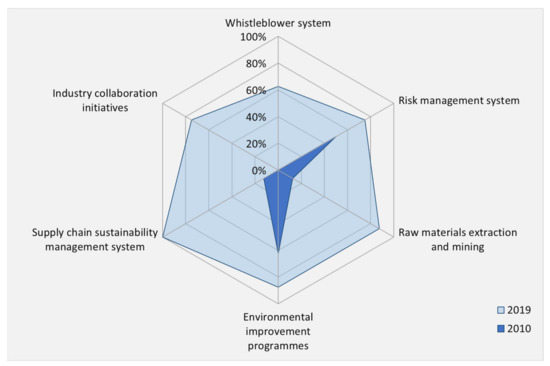
Figure 6.
The most common SRSD practices—comparison between 2010 and 2019.
5. Discussion and Conclusions
Enterprise sustainability depends, among other factors, on the capabilities and skills of suppliers to deal with sustainability challenges. This is especially critical when most of the added value is provided by the suppliers, as in the case of car producers. This research provides knowledge on suppliers’ development practices that car producers apply to make their supply chains more sustainable and, in consequence, enhance enterprise sustainability. The paper aimed to indicate how the approach to socially responsible supplier development has changed over the years (2010–2019) in the automotive sector considering the types of practices and the applied areas of social responsibility. The integration of sustainability into supply chains is a significant and evolving area of research [42], but the topic of integrating sustainability into supplier development is thus far poorly investigated. The literature analysis revealed that this study significantly contributes to the existing literature as it is the first study presenting the evolution of socially responsible supplier development practices undertaken by car producers.
The authors classified the socially responsible supplier development (SRSD) practices into two types, indicating the car producer’s level of commitment to a supplier, e.g., direct and indirect supplier development practices. Giving an answer to the first research question (RQ1), the portfolio of the socially responsible supplier development practices of the car producers in Europe is diversified; however, two groups within the two types of SRSD practices were observed. Regarding the direct SRSD practices, there has been an increase over the years in the use of training of supplier personnel and of on-site consultation and problem identification analysis, both becoming standard practices in the industry. This increase took place in the early years of the decade and was maintained over the years. The other two generic practices, temporary personnel transfer and investment in supplier’s operations and equipment, are seldom disclosed in the reports. Indirect SRSD practices were widely used from the beginning of the analyzed period, especially in the case of self-regulation, information sharing, supplier evaluation, supplier auditing, and supplier selection. However, over the years, there has been an increase in the explicit inclusion of sustainability criteria in the suppliers’ awards and the supplier selection process, which was also confirmed by the findings of Cole and Aitken [48].
The second research question (RQ2) refers to the change in areas of social responsibility in which supplier development activities were undertaken by the car producers in Europe over the analyzed period. In 2010, most SRSD practices were associated with environmental protection, and complementary practices focused on human rights, labor practices, fair operating practices, and organizational governance. The popularity of these practices can be caused by the social, labor, and environmental risks along the supply chain that automakers have to bear. Suppliers are responsible for the main part of the value creation in the automotive industry, but it is the car producers who hold the reputation. Some of the results could be surprising but not unexpected as some of the social responsibility subjects, e.g., consumer issues and community involvement and development, are not disclosed in the reports at all. The explanation may be that the analysis constrains the sustainability supplier development practices and that the consumers of the final products are at the furthest end of the supply chain, thus not directly related to suppliers. With regard to the subject of community involvement and development, there is a noticeable difference, but this area is still not widespread. Suppliers who are not engaging in this subject have not caused such a negative impact on the car producers’ social responsibility performance and reputation as compared to engagement in other social responsibility core subjects (e.g., environment, labor conditions, or human rights).
We have complemented the analysis with the evolution of the specific practices related to SRSD that have become an industry standard over the years 2010–2019. With the rapid expansion of the electric car, new risks are also increasing, primarily related to the supply of raw materials. Thus, three identified practices, risk management system, whistle-blower system, and raw material extraction and mining, result from the increase in suppliers’ dependence in geographic areas where the minimum legal requirements regarding human rights and labor conditions may not be guaranteed. A risk management system can help companies reduce the cost of evaluating and auditing suppliers. This is because the need to audit the supply chain is proportional to the assessed risk. Therefore, they can focus on the companies or regions with potential higher risks.
Collaboration in the industry towards the standardization of sustainable practices in the supply chain is another trend in the automotive industry in Europe. In this sense, sustainability has become a threshold rather than a distinctive capability. Thus, for example, the Drive Sustainability is a partnership created to improve the social, ethical, and environmental performance of automotive supply chains (www.drivesustainability.org, accessed on 17 August 2021), including the compliance with regulations, standards, and internal guidelines on the social, ethical, and environmental standards and the capacity building of suppliers by training and information sharing, with a particular focus on the extraction of raw materials. Except for PSA, which follows the more general approach of EcoVadis, all the studied carmakers are members of this initiative. European automakers also participate in other initiatives implying industry or cross-industry initiatives, such as the IMDS International Material Data System (https://public.mdsystem.com, accessed on 25 September 2021), that collects and analyzes all materials present in finished automobile manufacturing, and this has also become an industry standard. European automakers also participate in in different cross-industry initiatives such as RMI (https://rmi.org/, accessed on 17 August 2021) or CDP (www.cdp.net, accessed on 17 August 2021), which are focused on carbon reduction and minimizing the environmental impact of organizations and have a pulling effect on their suppliers.
Responsible companies should assess the availability of socially responsible suppliers when sourcing. If few responsible suppliers are found, there will be a need to apply direct socially responsible supplier development practices (SRSD), including training or on-site consultation and problem identification analysis. On the other hand, if responsible suppliers are available, indirect SRSD such as self-regulation (e.g., sustainability requirements, codes of conduct) or different types of assessment (supplier evaluation, supplier selection and auditing) could be more cost effective.
6. Limitations and Future Research Directions
Although this study significantly contributes to the existing literature on socially responsible supplier development, it is subject to limitations that should be considered in interpreting its results. The findings are based on the information disclosed in the companies’ sustainability reports, and the quality of the information provided in the report was not judged. The type of the record can influence the amount of information provided by the report. The reporting framework chosen by the company can also affect the content of the report as well as the perspective of the team responsible for developing the report, e.g., some aspects may be highlighted and some neglected or totally omitted. It should be mentioned that disclosing the information on any topic may not be consistent with the real effects. Sometimes the less disclosed practices are more beneficial. As 92% of the investigated reports were prepared in accordance with the GRI guidelines, we should point out that the reporting guidelines have also changed between 2010 and 2019 (new versions of the guidelines have been launched in 2013 and 2016). These changes might have influenced the reporting practices. Therefore, future research should be complemented with industry interviews.
Assuring sustainability in supply chains is still a current, crucial, and necessary topic that needs attention from researchers in order to help the industry tackle this issue. Thus, future research may try to answer the question regarding the types of sustainable supplier development practices that are the most beneficial for both suppliers and buyers at the same time. Thus, it would also be interesting to find out if suppliers assess the usefulness of the socially responsible supplier development practices the same as the producers. Future study may also analyze which practices of socially responsible supplier development engage the suppliers the most to practice sustainability along their supply chain.
Author Contributions
Conceptualization, P.H.; methodology, P.H.; investigation, P.H., J.J.L.; resources, J.J.L.; data curation, J.J.L.; writing—original draft preparation, P.H., J.J.L.; writing—review and editing, P.H., J.J.L.; visualization, J.J.L.; supervision, P.H. All authors have read and agreed to the published version of the manuscript.
Funding
This research received no external funding.
Data Availability Statement
Not applicable.
Conflicts of Interest
The authors declare no conflict of interest.
References
- Janik, A.; Ryszko, A. Measuring Product Material Circularity—A Case of Automotive Industry. In Proceedings of the International Multidisciplinary Scientific GeoConference Surveying Geology and Mining Ecology Management, SGEM; International Multidisciplinary Scientific Geoconference, Albena, Bulgaria, 29 June–5 July 2017; Volume 17, pp. 123–130. [Google Scholar] [CrossRef]
- Jonek-Kowalska, I.; Zieliński, M. CSR Activities in the Banking Sector in Poland. In Proceedings of the 29th International Business Information Management Association Conference—Education Excellence and Innovation Management through Vision 2020: From Regional Development Sustainability to Global Economic Growth, Vienna, Austria, 3–4 May 2017. [Google Scholar]
- Cierna, H.; Sujová, E. Integrating Principles of Excellence and of Socially Responsible Entrepreneurship. Manag. Syst. Prod. Eng. 2020, 28, 23–28. [Google Scholar] [CrossRef] [Green Version]
- Gajdzik, B.; Grabowska, S.; Saniuk, S.; Wieczorek, T. Sustainable Development and Industry 4.0: A Bibliometric Analysis Identifying Key Scientific Problems of the Sustainable Industry 4.0. Energies 2020, 13, 4254. [Google Scholar] [CrossRef]
- Zasadzien, M. Social Evaluation of Mining Activity Effects. In Proceedings of the International Multidisciplinary Scientific GeoConference Surveying Geology and Mining Ecology Management, SGEM, Albena, Bulgaria, 17–26 June 2014; Volume 3. [Google Scholar] [CrossRef]
- Alavi, H.; Hąbek, P.; Cierna, H. Corporate Social Responsibility and Self-Regulation. MM Sci. J. 2016, 2016, 1121–1126. [Google Scholar] [CrossRef]
- Bluszcz, A. Conditions for Maintaining the Sustainable Development Level of EU Member States. Soc. Indic. Res. 2018, 139. [Google Scholar] [CrossRef] [Green Version]
- Tokoro, N. Stakeholders and Corporate Social Responsibility (CSR): A New Perspective on the Structure of Relationships. Asian Bus. Manag. 2007, 6, 143–162. [Google Scholar] [CrossRef]
- Kuzior, A.; Ober, J.; Karwot, J. Stakeholder Expectation of Corporate Social Responsibility Practices: A Case Study of PWiK Rybnik, Poland. Energies 2021, 14, 3337. [Google Scholar] [CrossRef]
- Tworzydło, D.; Gawroński, S.; Szuba, P. Importance and role of CSR and stakeholder engagement strategy in polish companies in the context of activities of experts handling public relations. Corp. Soc. Responsib. Environ. Manag. 2021, 28, 64–70. [Google Scholar] [CrossRef]
- Lim, J.S.; Greenwood, C.A. Communicating corporate social responsibility (CSR): Stakeholder responsiveness and engagement strategy to achieve CSR goals. Public Relat. Rev. 2017, 43, 768–776. [Google Scholar] [CrossRef]
- Hąbek, P.; Biały, W.; Livenskaya, G. Stakeholder Engagement in Corporate Social Responsibility Reporting: The Case of Mining Companies. Acta Montan. Slovaca 2019, 24, 25–34. [Google Scholar]
- Camilleri, M.A. The Rationale for Responsible Supply Chain Management and Stakeholder Engagement. J. Glob. Responsib. 2017, 8. [Google Scholar] [CrossRef]
- Peloza, J.; Shang, J. How Can Corporate Social Responsibility Activities Create Value for Stakeholders? A Systematic Review. J. Acad. Mark. Sci. 2011, 39, 117–135. [Google Scholar] [CrossRef]
- Porter, M.E.; Kramer, M.R. Strategy & Society: The Link between Competitive Advantage and Corporate Social Responsibility. Harv. Bus. Rev. 2006, 84. [Google Scholar] [CrossRef]
- Chavhan, R.; Mahajan, D.S.K.; Joshi Sarang, P. Supplier Development Success Factors in Iindian Manufacturing Practices. Mater. Today Proc. 2018, 5. [Google Scholar] [CrossRef]
- Habek, P.; Wolniak, R. Factors Influencing the Development of CSR Reporting Practices: Experts’ versus Preparers’ Points of View. Eng. Econ. 2015, 26, 560–570. [Google Scholar] [CrossRef] [Green Version]
- Rashidi, K.; Saen, R.F. Incorporating Dynamic Concept into Gradual Efficiency: Improving Suppliers in Sustainable Supplier Development. J. Clean. Prod. 2018, 202, 226–243. [Google Scholar] [CrossRef]
- Leenders, M.R. Supplier Development. J. Purch. 1966, 2, 47–62. [Google Scholar] [CrossRef]
- Krause, D.R.; Handfield, R.B.; Scannell, T.V. An Empirical Investigation of Supplier Development: Reactive and Strategic Processes. J. Oper. Manag. 1998, 17, 39–58. [Google Scholar] [CrossRef]
- Krause, D.R.; Scannell, T.V.; Calantone, R.J. A Structural Analysis of the Effectiveness of Buying Firms’ Strategies to Improve Supplier Performance. Decis. Sci. 2000, 31, 33–55. [Google Scholar] [CrossRef]
- Humphreys, P.; Cadden, T.; Li, W.L.; McHugh, M. An Investigation into Supplier Development Activities and Their Influence on Performance in the Chinese Electronics Industry. Prod. Plan. Control 2011, 22, 9152–9164. [Google Scholar] [CrossRef]
- Krause, D.R.; Ellram, L.M. Critical Elements of Supplier Development The Buying-Firm Perspective. Eur. J. Purch. Supply Manag. 1997, 3, 21–31. [Google Scholar] [CrossRef]
- Wagner, S.M. A Firm’s Responses to Deficient Suppliers and Competitive Advantage. J. Bus. Res. 2006, 59, 686–695. [Google Scholar] [CrossRef]
- Wagner, S.M. Supplier Development Practices: An Exploratory Study. Eur. J. Mark. 2006, 40, 554–571. [Google Scholar] [CrossRef]
- Wagner, S.M. Indirect and Direct Supplier Development: Performance Implications of Individual and Combined Effects. IEEE Trans. Eng. Manag. 2010, 57, 536–546. [Google Scholar] [CrossRef]
- Monczka, R.M.; Trent, R.J.; Callahan, T.J. Supply base strategies to maximize supplier performance. Int. J. Phys. Distrib. Logist. Manage. 1993, 23, 42–54. [Google Scholar] [CrossRef]
- Wagner, S.M.; Krause, D.R. Supplier Development: Communication Approaches, Activities and Goals. Int. J. Prod. Res. 2009, 47, 3161–3177. [Google Scholar] [CrossRef] [Green Version]
- Proch, M.; Worthmann, K.; Schlüchtermann, J. A Negotiation-Based Algorithm to Coordinate Supplier Development in Decentralized Supply Chains. Eur. J. Oper. Res. 2017, 256, 412–429. [Google Scholar] [CrossRef] [Green Version]
- Automotive Industry Action Group. IATF 16949:2016. Available online: https://www.aiag.org/quality/iatf16949/iatf-16949-2016 (accessed on 17 August 2021).
- Lu, R.X.A.; Lee, P.K.C.; Cheng, T.C.E. Socially Responsible Supplier Development: Construct Development and Measurement Validation. Int. J. Prod. Econ. 2012, 140, 160–167. [Google Scholar] [CrossRef]
- Sancha, C.; Gimenez, C.; Sierra, V.; Kazeminia, A. Does Implementing Social Supplier Development Practices Pay Off? Supply Chain Manag. 2015, 20. [Google Scholar] [CrossRef]
- Neumüller, C.; Lasch, R.; Kellner, F. Integrating Sustainability into Strategic Supplier Portfolio Selection. Manag. Decis. 2016, 54. [Google Scholar] [CrossRef]
- Wu, G.C. Effects of Socially Responsible Supplier Development and Sustainability-Oriented Innovation on Sustainable Development: Empirical Evidence from SMEs. Corp. Soc. Responsib. Environ. Manag. 2017, 24, 661–675. [Google Scholar] [CrossRef]
- Hofmann, H.; Busse, C.; Bode, C.; Henke, M. Sustainability-Related Supply Chain Risks: Conceptualization and Management. Bus. Strateg. Environ. 2014, 23, 160–172. [Google Scholar] [CrossRef]
- Chen, Y.; Wang, S.; Yao, J.; Li, Y.; Yang, S. Socially Responsible Supplier Selection and Sustainable Supply Chain Development: A Combined Approach of Total Interpretive Structural Modeling and Fuzzy Analytic Network Process. Bus. Strateg. Environ. 2018, 27, 1708–1719. [Google Scholar] [CrossRef]
- Zorzini, M.; Hendry, L.C.; Huq, F.A.; Stevenson, M. Socially Responsible Sourcing: Reviewing the Literature and Its Use of Theory. Int. J. Oper. Prod. Manag. 2015. [Google Scholar] [CrossRef]
- Awaysheh, A.; Klassen, R.D. The Impact of Supply Chain Structure on the Use of Supplier Socially Responsible Practices. Int. J. Oper. Prod. Manag. 2010, 30. [Google Scholar] [CrossRef]
- Subramaniam, P.L.; Iranmanesh, M.; Kumar, K.M.; Foroughi, B. The Impact of Multinational Corporations’ Socially Responsible Supplier Development Practices on Their Corporate Reputation and Financial Performance. Int. J. Phys. Distrib. Logist. Manag. 2020, 50. [Google Scholar] [CrossRef]
- Alghababsheh, M.; Gallear, D. Socially Sustainable Supply Chain Management and Suppliers’ Social Performance: The Role of Social Capital. J. Bus. Ethics 2020. [Google Scholar] [CrossRef]
- Tundys, B. Sustainable Supply Chain Management—Past, Present and Future. Pr. Nauk. Uniw. Ekon. Wrocławiu 2020, 64. [Google Scholar] [CrossRef]
- Ansari, Z.N.; Kant, R. A State-of-Art Literature Review Reflecting 15 Years of Focus on Sustainable Supply Chain Management. J. Clean. Prod. 2017, 142, 2524–2543. [Google Scholar] [CrossRef]
- Ashby, A.; Leat, M.; Hudson-Smith, M. Making Connections: A Review of Supply Chain Management and Sustainability Literature. Supply Chain Manag. 2012. [Google Scholar] [CrossRef]
- Gimenez, C.; Tachizawa, E.M. Extending Sustainability to Suppliers: A Systematic Literature Review. Supply Chain Manag. 2012. [Google Scholar] [CrossRef]
- Sancha, C.; Longoni, A.; Giménez, C. Sustainable Supplier Development Practices: Drivers and Enablers in a Global Context. J. Purch. Supply Manag. 2015, 21, 95–102. [Google Scholar] [CrossRef]
- Yawar, S.A.; Seuring, S. The Role of Supplier Development in Managing Social and Societal Issues in Supply Chains. J. Clean. Prod. 2018, 182. [Google Scholar] [CrossRef]
- Yawar, S.A.; Kauppi, K. Understanding the Adoption of Socially Responsible Supplier Development Practices Using Institutional Theory: Dairy Supply Chains in India. J. Purch. Supply Manag. 2018, 24, 164–176. [Google Scholar] [CrossRef]
- Cole, R.; Aitken, J. Selecting Suppliers for Socially Sustainable Supply Chain Management: Post-Exchange Supplier Development Activities as Pre-Selection Requirements. Prod. Plan. Control 2019, 30, 1184–1202. [Google Scholar] [CrossRef]
- Smith, M.; Taffler, R.J. A Content Analysis of Discretionary: The Chairman’s Statement. Account. Audit. Account. J. 2000, 13, 624–647. [Google Scholar] [CrossRef] [Green Version]
- Vourvachis, P. On the Use of Content Analysis (CA) in Corporate Social Reporting (CSR): Revisiting the Debate on the Units of Analysis and the Ways to Define Them. In Proceedings of the British Accounting Association Annual Conference, Egham, UK, 3–5 April 2007. [Google Scholar]
- Vourvachis, P.; Woodward, T. Content Analysis in Social and Environmental Reporting Research: Trends and Challenges. J. Appl. Account. Res. 2015, 16. [Google Scholar] [CrossRef] [Green Version]
- Krause, D.R. The antecedents of buying firms’ efforts to improve suppliers. J. Oper. Manag. 1999, 17, 205–224. [Google Scholar] [CrossRef]
Publisher’s Note: MDPI stays neutral with regard to jurisdictional claims in published maps and institutional affiliations. |
© 2021 by the authors. Licensee MDPI, Basel, Switzerland. This article is an open access article distributed under the terms and conditions of the Creative Commons Attribution (CC BY) license (https://creativecommons.org/licenses/by/4.0/).