


Abstract
Because of its potential to directly transform solar energy into heat and energy, without harmful environmental effects such as greenhouse gas emissions. Hybrid nanofluid is an efficient way to improve the thermal efficiency of solar systems using a possible heat transfer fluid with superior thermo-physical properties. The object of this paper is the study the latest developments in hybrid applications in the fields of solar energy systems in different solar collectors. Hybrid nanofluids are potential fluids with better thermo-physical properties and heat transfer efficiency than conventional heat transfer fluids (oil, water, ethylene glycol) with single nanoparticle nanofluids. The research found that a single nanofluid can be replaced by a hybrid nanofluid because it enhances heat transfer. This work presented the recent developments in hybrid nanofluid preparation methods, stability factors, thermal improvement methods, current applications, and some mathematical regression analysis which is directly related to the efficiency enhancement of solar collector. This literature revealed that hybrid nanofluids have a great opportunity to enhance the efficiency of solar collector due to their noble thermophysical properties in replace of conventional heat transfer working fluids. Finally, some important problems are addressed, which must be solved for future study.
1. Introduction
A safe and prosperous world now needs more than ever an environmentally friendly and effective source of energy [1,2,3]. In the face of the challenges of eliminating fossil fuels and reducing exhaust emissions from those fuels, one of the major divisions of renewable energy is solar energy. Although the option of energy sources has always been low-priced, solar energy has never really been used globally. More to the point, while the energy of the sun is free, it is expected that the maintenance charge of such systems, including the construction of devices and systems, would surpass the total cost of the usable source [4,5,6]. Looking closely at renewable technologies and their recent development estimates, the world has a perceivable interest in solar energy systems, accounting for almost 60 percent of the overall growth in the renewable energy potential of more than 250 GW in 2021–2022 [7]. There have been major efforts taken to increase the performance of the existing energy conversion systems [8,9].
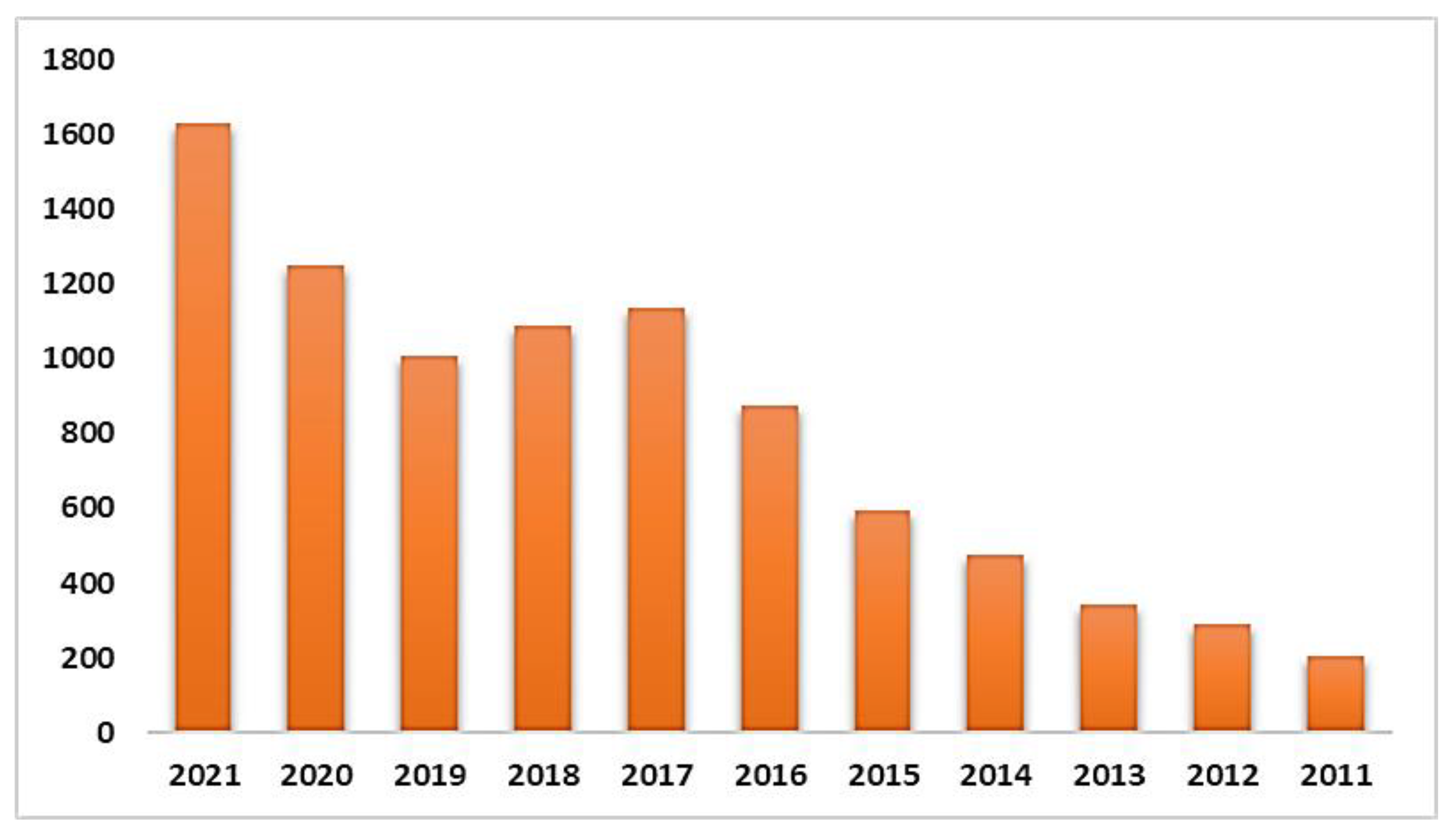
In recent years, several academics and researchers have made progress in nano-fluid technologies. The number of papers published in the field of nano-fluids per year should is presented in Figure 1. The figure below illustrates the importance of nanofluid flows in the different engineering sectors as well as the solar energy sector. [10,11,12,13,14,15,16,17,18,19,20]. The evolution of technologies of nanofluids has drawn the attention of assorted researchers in recent years. With the aid of nanofluids, researchers have focused on research in many scientific fields, including warming, climate control, electronics and microelectronics, new energy, medicine, as well as energy and fuel management [21,22,23,24,25,26].
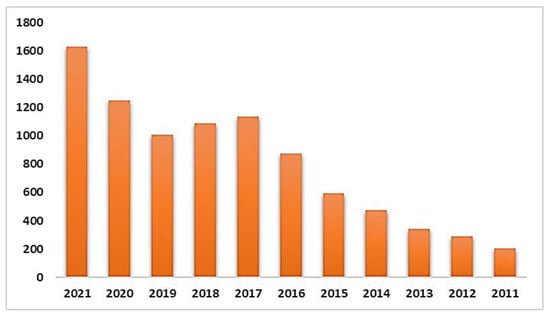
Figure 1.
Schematic diagram of published articles in the Web of Science concerning with nanofluids.
The heat-transfer system plays a crucial role in many industries related to thermal and chemical processes. The heat-transfer process is always treated by using fluids. The main aim of the use of mixtures (hybrid nanofluid) is to improve the potency of the mixture’s thermal properties, and the mixture of various nano-sized particles with fluid is called hybrid nanofluid. In practice, numerous methods have been applied to enhance the thermal properties of fluids. Nanoparticles are the most common and the most up-to-date technological trend in terms of improving heat-transfer efficiency [27]. Nanofluids have an excellent ability to increase the thermal efficiency of the solar collector by different nanoparticles used in different types of solar collectors [28]. Hybrid nanofluids were found to be the most efficient approach when used as a working fluid in solar energy systems [29]. The hybrid nanoparticles consist of a synthesis of two or more nanoparticles and are propagated into the base fluid. This is due to the synergistic effect of the hybrid nanofluid heat-transfer change compared to a nano-fluid containing a nano product. A hybrid nanofluid can have good thermal characteristics compared to the simple fluid and nanofluid-containing single nanoparticles [30]. The choice of the base fluid, size of nanoparticles, viscosity, fluid temperature and stability, dispensability of nanoparticles, purity of nanoparticles, method of preparation, size and shape of nanoparticles, and compatibility of nanoparticles have contributed significantly to the improvement of hybrid nanofluid heat transfer, resulting in the harmonious nanofluid mixture [31,32,33,34,35]. The primary goal of using hybrid nanofluids is to improve thermal conductivity at a lower cost and with acceptable stability due to the synergistic effect of its constituent materials. Stability is a term used to describe the long-term performance and thermal efficiency of nanofluids [36,37]. In comparison to mono nanofluids, hybrid nanofluids can significantly improve heat transmission. The pressure drop caused by the friction factor escalation, on the other hand, remains a major concern in hybrid nanofluids. The increase in pressure drop is a direct result of the increase in hybrid viscosity, which results in the penalty of high pumping power [30].
Nanoparticles are subject to various parameters of their thermal conductivity, including concentration, temperature, particle size, pH, shape, material, and perhaps, the production process. Theoretical models for thermal conductivity and viscosity determination. The stability of nanofluids or hybrid nanofluids in terms of settlement and agglomeration is still troublesome for practical applications, particularly in higher concentrations. Hybrid nanofluids, therefore, exhibit greater thermal conductivity compared to the individual nanofluids, which separately contain nanoparticles. Therefore, this paper focuses on evaluating the research of hybrid nano-fluid to recognize and resolve the latest technology by way of a forefront study into the economic feasibility of this technology in the future. The reported theoretical, digital, and experiential work on single nanofluid has revealed that nanofluid cooling, cameras, microcomputers, displays, heat exchangers, and space-craft applications can be implemented in various possible ways. Many thermal product reviews are found in the literature. However, single nanofluids are characterized and prepared. Few articles are available on hybrid nanofluid preparedness and thermal characteristics. The purpose of this paper is therefore to provide a further consideration of recent developments in various engineering applications in a hybrid nanofluid. Moreover, the critical challenges of hybrid nanofluids are presented, such as long-term stability, cost of preparation, and production. More experimental research is needed to address several issues related to hybrid nanofluids, such as instability and an increase in the friction factor, to reduce pumping power in solar systems. These issues appear to be critical for hybrid nanofluid commercialization and general applications. More importantly, the cost of preparing hybrid nanofluids is high and must be reduced. Future research should concentrate on finding a balance between the hybrid nanofluid’s high thermal efficiency and the cost of preparation. This is a critical step toward the commercialization of hybrid nanofluids-based solar systems.
2. Historical Background
A key parameter of all the specifications which have contributed enormously to the improvement of heat transfer is thermal conductivity. Several studies have reported that the use of nanofluids has improved thermal conductivity undoubtedly [38,39,40,41,42]. Nanofluid hybrid is a brand-new type of nanofluid, which is massed by dispersing two distinct nanoparticles into an agreed heat-transference fluid. Hybrid nanofluids are possible fluids that have improved thermo-physical properties over traditional thermo-transfer fluids, an increased thermo-efficiency (oil, water, and ethylene glycol) and nanofluids with single nanoparticles. The scientific findings have shown that the hybrid nanofluid can be substituted with one single nanofluid as it enhances heat transfer, especially in the automotive, electro-mechanical, manufacturing, HVAC, and solar industries [43].
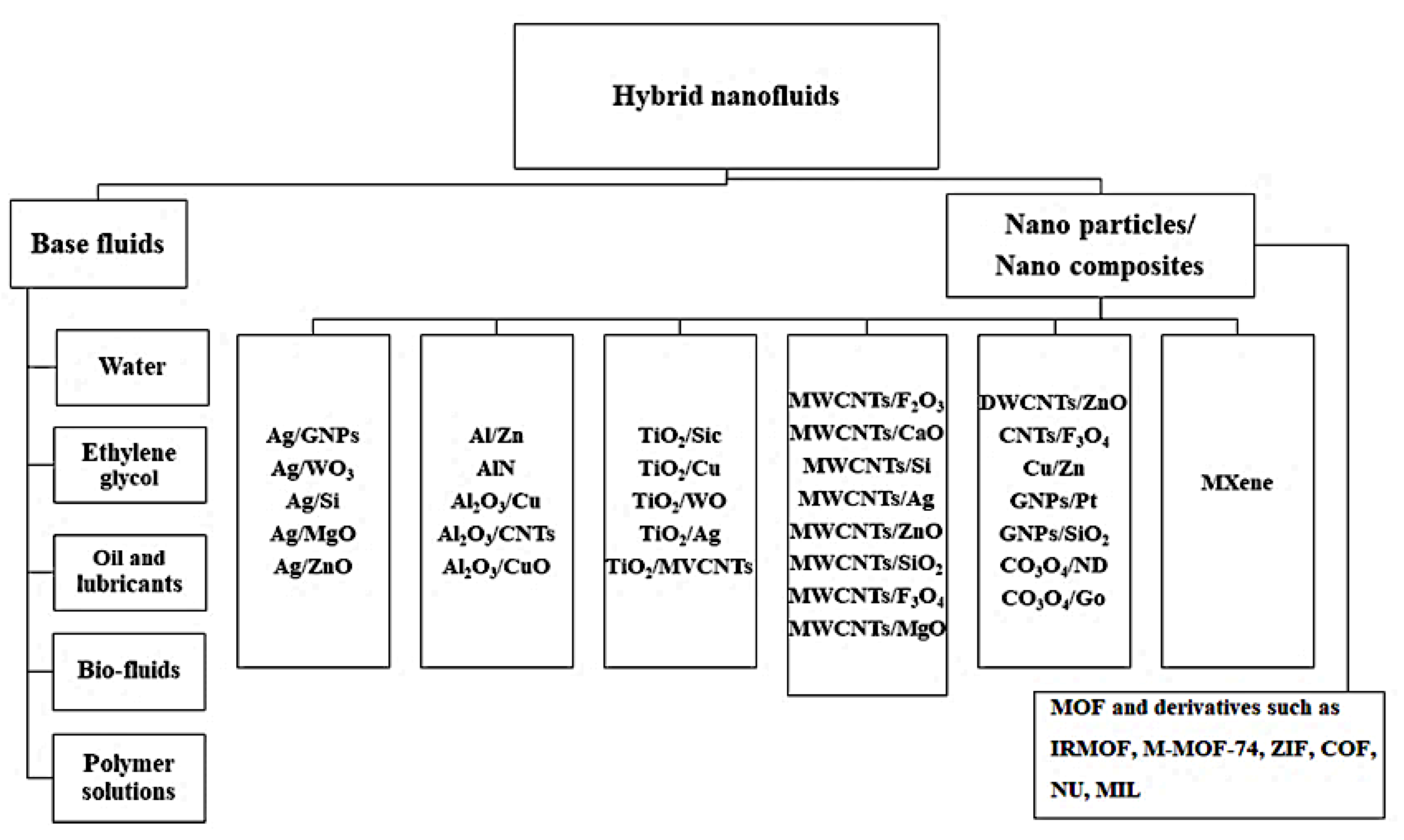
In solar collectors, a wide ranges of functioning fluids have been tested. Historically, water, grease, ethylene glycol, and various lubricants have been used to promote the performance of solar collectors, as shown in Figure 2 [44,45,46,47,48,49]. In anchor fluids (water, ethylene glycol or oil/lubricant), nanosized metals (Al, Cu, Zn, Ag, Au, etc.), metal oxides (SiO2, TiO2, Al2O3, ZnO, CuO, etc.) or organic particles (carbon nanotubes, graphene oxide, diamond, etc. could be disseminated to create hybrid nanofluids) [50,51] are used to enhance the thermophysical properties and heat transfer efficiency, and hybrid nanofluid synthesis is crucial. The Al2O3-Cu nanofluid, for example, was developed using the hydrogen reduction method using Al2O3 and CuO (90:10 ratio) to improve the viscosity to be steeper than concentration conductivity [52,53]. The MWCNT-Fe3O4 nanocomposite particle has been synthesized empirically (0–0.3 volume percentage) to test their thermal properties [54]. Improved thermal conductivity was achieved with Ag/MWCNT-HEG hybrid nanofluids at 25 °C by 0.08 percent with 0.04 percent of volume fraction. The rheological properties of nanocomposite MWCNT-Ag can be measured by covalent and non-covalent working methods [55]. A 20.2% increase in the thermal transfer coefficient relative to the base fluid has been discovered in a platform exchanger by the MWCNT-TiO2/water hybrid nanofluids [56]. The performance of the heat exchanger served by bringing together 0.0111% MWCNT/water nanofluid with 1.89% Al2O3/water. The appeal for graphene nanoplatelets (GNPs) has enormously increased despite the excellent use of MWCNTs for hybrid nanofluids [57]. Its diffusion in distilled water showed a 17.77% advancement in thermal conductivity at a 0.1% weight concentration and 40 °C. Another study investigated the impacts of particle concentration (range, 0.0–2.3%) and temperature (range, 25–50 °C) on the thermal conductivity of f-MWCNTs-Fe3O4-EG hybrid nanofluid [58]. The effects of various flows and geometrical parameters of solar thermal collector depend on different nanoparticles, base fluids and the thermophysical properties of different nanoparticles. This study indicated that the hybrid nanofluids significantly enhanced the exergy efficiency. The assessment criteria of the examined cases are the thermal, energetic, and overall performance and background of solar collector.
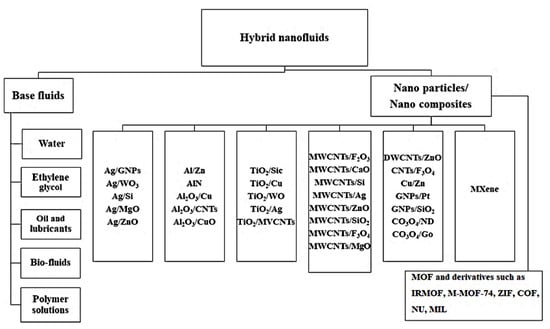
Figure 2.
Scenario of different fluids and nanoparticles used for preparing hybrid nanofluids.
3. Preparation of Hybrid Nanofluids
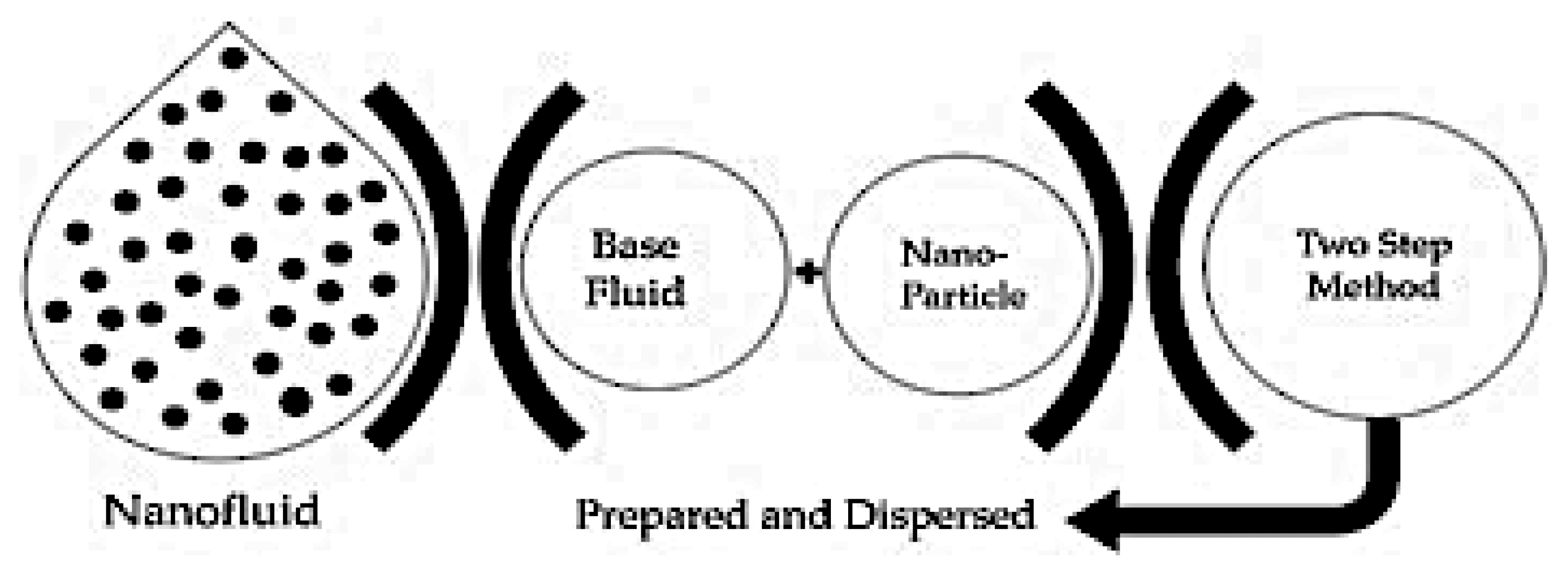
Hybrid nanofluids are new fluids that are generated in a mixture or composite form to increase the heat transmission by suspending two or more nanoparticles [59]. By using hybrid nanostructures consisting of multiple materials with nano dimensions, the thermophysical properties of nanofluids can be further enhanced [43,60]. Water is the basic fluid exposed to radiation. This hybrid mixture uses a larger wavelength combination and absorbs heat. For various concentrations, diameters, and container heights, graphite and the numeric value for the mixture are added into the water of gold, silver, aluminum, graphite, and silicon dioxide gold nanoparticles [61]. Quite a few studies have studied and modeled the thermophysical characteristics of these hybrid fluid forms [62]. It has been found that relative to the base fluid at a volumetric concentration and a temperature of 0.86%, the thermal conductivity ratio of the hybrid nanofluid increased to 20.1% [63]. The reviewed literature indicates that hybrid nanofluids are an attractive candidate for thermal convective fluids in solar systems. Furthermore, hybrid nanofluids have a variety of benefits, which make them more useful for the increase in heat transfer. A summary of solar power is given in this report. Subsequently, the use of hybrid nanofluids is reviewed and the findings are analyzed in various forms of solar-driven technologies [64]. The two-step process of nanofluid preparation includes the induction of the mechanical or chemical action of nanoparticles in powder form, followed mixing them with base fluid as shown in Figure 3. In the base fluid, powdered nanoparticles are dispersed by an intense shearing action known as ultrasonic. Both strength and ultrasonic length play a critical role in the stability of hybrid nanofluids [65].
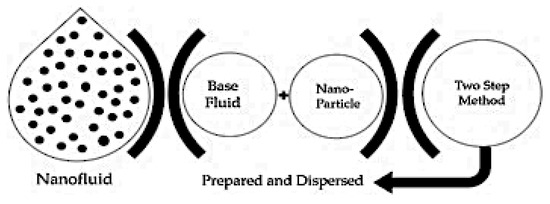
Figure 3.
Portrayal of two-step method of nanofluid preparation [66].
By scatting around 0.2–1.5 vol.% of these nanoparticles in water and ethylene glycol, Al2Cu, and Ag2Al nanoparticles synthesized by mechanically alloying the prepared nanofluids, the nanoparticles were identified by X-ray diffraction and transmission electron microscopy and the nanofluid thermal conductivity was found by employing a changed thermal comparator. The findings suggest an increase in the thermal conductivity advancement of existing nanofluids by 50–150%. Both experimental findings and empirical analysis suggest that the degree of change strongly depends on the dispersed nanoparticles’ identity/composition, scale, volume fraction, and shape [67]. The two-step method was used to generate a 0.1 percent volume fraction Al2O3-Cu/water hybrid nanofluid. As a surfactant, sodium lauryl sulfate (SLS) was used. Before that, over several steps, a thermochemical synthesis process that included spray drying, precursor powder oxidation, hydrogen-atmosphere reduction, and homogenization was used to prepare the nanocrystalline alumina–copper (Al2O3-Cu) hybrid powder [68]. The two-step technique was introduced to generate identical hybrid nanofluids as prepared by Suresh et al. Dry f-MWCNT and nanoparticle Fe3O4 were prepared with a mixture of equivalent volumes. For the development of hybrid nanoparticles (f-MWCNT-Fe3O4) dispersed in ethylene glycol, a two-step method was employed [58].
MXene with a Ti3C2 chemical theorem was synthesized by applying the wet chemistry method and suspended in pure olein palm oil (OPO) to formulate a new type of heat-transfer fluid by applying COMSOL Metaphysics to investigate its thermal and energy efficiency numerically in a hybrid PV/T solar thermal structure. In addition to this research, the hybrid PV/T solar thermal device contrasts Al2O3–water-based nanofluid with MXene-OPO nanofluid. With a loading concentration of 0.01, 0.03, 0.05, 0.08, 0.1, and 0.2 percent, the MXene-OPO nanofluid was prepared. At a 0.2 percent loading concentration, the MXene-OPO nanofluid exhibits a 68.5 percent higher thermal conductivity than pure OPO at 25 °C. When the temperature increased from 25 °C to 50 °C for the nanofluid with 0.2 wt. percent of MXene, the maximum viscosity reduction was observed as 61 percent. The MXene-based nanofluid shows about a 16 percent higher thermal efficiency improvement at a 0.07 kg/s flow rate compared to PVT with Al2O3–water-based nanofluid. For the PVT with MXene nanofluids, a heat transfer coefficient improvement of approximately 9 percent was observed compared to PVT with Al2O3–water heat-transfer fluid. Compared to the stand-alone PV modules, the MXene nanofluid can reduce PV temperature by 40 percent [69].
4. Application of Hybrid Nanofluids in the Solar Collector
The research related to the relevance of nanofluids is the talk of the hour. A research-facility survey of single nano-fluid work covering a wide range of functions has been carried out, with regard to electronic cooling, heat exchange, heat capacity, sun-based building heating and cooling, sun-powered pickers, cooling, room, and security, etc., [70,71,72,73,74,75,76]. Among all the applications, the usage, and the implementation of hybrid nanofluids in solar collectors are breaking new ground. The crossbreed or nanocomposite fluid may be a unique type of nanofluid, and although its utility at the research-facility level has been largely detailed in literary works [77,78,79,80,81], there is also work detailing factors such as heat exchange, electronic cooling, essential limits, and so on. It is now pertinent to focus on the mechanical utilization of crossbreed nano liquids with regard to single nano liquids [81] utilized such as Cu–TiO2/deionized two-fold refined water hybrid nanofluid for ducts within the duct-sort counter stream heat exchanger. They detailed that the surface-functionalized and exceedingly crystalline nature of crossover nanocomposite (Cu–TiO2) contributed to the creation of successful warm interfacing with the liquid medium; thus, allowing for the accomplishment of an increased heat conductivity and heat-transfer potential for nanofluids [79].
Concentrated solar panel (CSP) technology, as a typical PV application, is gaining popularity due to its benefits such as high conversion efficiency and low cost, among others. However, an important issue for CPV technology is non-uniformity in illumination and temperature, which can ultimately affect the overall electrical efficiency of solar cells [82]. Heat transfer applications have been analyzed by fluidic behavior, thermal properties, the size of nanoparticles and the mathematical co-relationships [83]. At higher temperatures, the increase in thermal conductivity with an increasing solid volume fraction is more pronounced. The effect of increasing the volume fraction on thermal conductivity, however, was greater than the effect of increasing temperature. Thermal conductivity was increased by 27.84% compared to the base fluid at a volume fraction of 0.5% and a temperature of 75 °C. Besides, Aguilar, Navas [84] studied the thermal properties of NiO-based nanofluids for CSP applications experimentally, and dynamic structures have also been studied as well. They inferred that thermal conductivity increased by up to 96% and that the heat transfer coefficient was enhanced by 50%. They also found that the surfactant has a significant effect on the improvement of thermal properties in CSP. Finally, a model for predicting the thermal conductivity of nanofluids based on the measured data was proposed. This model has a margin of error of 1.44 percent, indicating that the results obtained from model calculations are compatible with the experimental data [85]. The main criteria of the solar collector are to collect heat or increase the efficiency by using different nano or hybrid nanofluids of different conditions.
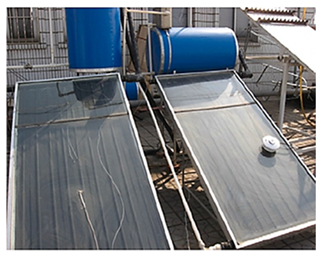
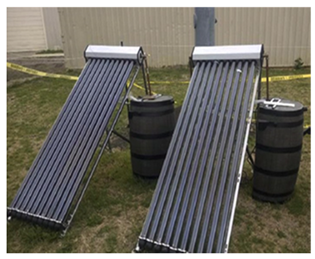
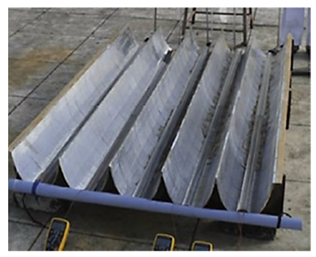
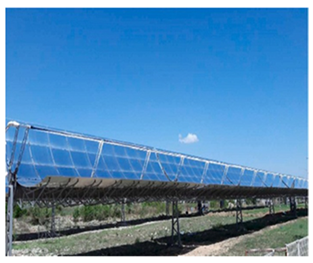
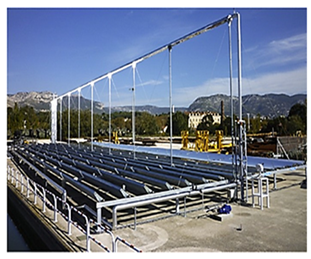
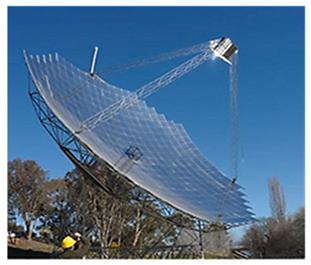
Table 1 illustrates the application characteristics of different solar collectors using hybrid nanofluids. For instance, FPC is used for warm-water in-home applications. Using hybrid nanofluids in these kinds of solar collectors enhances the productivity and outlet temperature, as well as the efficiency, which is also improved significantly. Additionally, ETSC is used to heat the water for residential purposes. ETSC is much better than FPC in cool weather. Generally, CPC is utilized for sun-oriented drying, water cleaning, and biomedical conditions, during which temperature performance is also increased by applying hybrid nanofluids. Besides, PTC is the most developed and commercially used solar collector. PTC is preferred largely due to some specific characteristics such as its high-temperature range. On the other hand, the linear frenal, parabolic-dish reflector, and heliostat-field collector are used to produce electricity by harvesting solar energy. These solar collectors perform at quite high temperatures.

Table 1.
Application of hybrid nanofluids in various solar collectors.
Table 2 describes the research area and possible outcomes using hybrid nanofluids. Besides, Table 2 also presents the used nanoparticles and base fluids for these research studies. The repeatedly used nanoparticles are Al2O3, MWCNT, Ag, Fe3O4, MgO, SiO2, ZnO, TiO2, Cu, CNT, graphene, silica, and water is the most used base fluid. Ethylene glycol was also utilized several times as a base fluid in these research studies. Table 3 stated that research has been conducted in various areas such as in a circular tube, warm channel, electronic-warm sink, thermal solar collector, etc. Moreover, the thermo-physical properties such as optical and rheological properties of hybrid nanofluids are still being studied.
Table 2.
Previous research works are based on hybrid nanofluids.
Table 3.
Previous research works are based on hybrid nanofluids.
5. Efficiency Observations of Solar Collectors with Hybrid Nanofluids
Hybrid nanofluid and thermal systems play a vital role in heat transfer and the efficiency enhancement of solar collector. Efficiency enhancement is also directly related to nanoparticle size and the mass flow system of fluid, concentration or solid volume fraction of nanoparticles may have a significant effect on the thermal conductivity of hybrid nanofluids. [116]. When a hybrid nanofluid was prepared using Al2O3/Fe, Al2O3-water, with the mass volume of 0.05–0.2 wt., the volume % increases the efficiency of thermal heat transfer by 6.9%, as found by Harandi, Karimipour [58]. The hybrid nanofluids were developed by dispersing a synthetic ND-CO3O4 nanocomposite into water, ethylene glycol, and water mixtures to confirm the ND and CO3O4 phases of synthesized nanocomposites. The thermal properties including thermal conductivity and viscosity were experimentally tested at various weight and temperature concentrations and the ND–CO3O4-water maximum efficiency increased to 59% if 0.15 wt. as found by Sundar, Misganaw [105]. The efficiency increased to 89% for the water-based MWCNTs/GNPs/h-BN flat plate solar collector, whereas the mass volume concentration was 0.05 to 0.1 for the weight of water, as reported by Hussein, Habib [37]. For the water-based MWCNTs/MgO, MWCNTs/CuO flat-plate solar collector, the mass volume concentration was 0.25 to 0.2% wt., and the performance increase of CuO-MWCNT was 18.05%, while for MgO-MWCNT it was 20.52% [117]. An efficiency increase of 15.13% was observed for the water/EG-based Al2O3, ZnO flat-plate solar collector, whereas the mass volume concentration was 0.25, as reported by Arıkan, Abbasoğlu [116]. Recent studies have investigated this kind of solar collector. The use of hybrid nanofluids is studied in the planned method, and some of the problems in some of the ETSCs with increased heat transfer are evaluated through the general analysis, such as different types of nano-fluids, the nano-fluid scale, volume-fraction, and hybrid nano-fluid application. The efficiency of ETSCs was affected by nanoparticles, using a base fluid [117,118,119,120,121,122,123,124]. In some studies, the enhanced performance was attributed to a higher Nusselt number. The Nusselt number can be improved with the use of hybrid nanofluids to make convective heat transfer more efficient [125,126].
6. Mathematical Analysis of Hybrid Nanofluids in Solar Collectors
When sunbeams, G, hit the darkened absorber’s surface zone, Aab, they are ingested by the heat-exchange medium and transferred into the heat. The valuable vitality selected by the collector, Qu, is the sum of warmth that the working liquid collects, subtracted by the sum of the heat exchange from the collector to the discussion as the misplaced vitality [151,152,153].
where FR is calculated as
and Tab and Ta are the surface temperature of the safeguard and discuss temperature individually, F′ indicates the collector proficiency figure which drops with a rise in the general misfortune coefficient, UL, from the accepting plate to the environment, which was firstly presented by Hottel and Woertz [154] that was afterward created by Klein [155].
Hence, the valuable vitality extricated from the collector can be decided by the sum of the sun-oriented occurrence where the warm productivity of an FPC can be assessed as provided by Fudholi, Sopian [156].
where η (%) is the collector effectiveness, Qc is the vitality achieved from the collector, m is the mass stream rate, Cp is the heat, Ac is the collector range, To and Ti are the outlet and gulf temperatures of the liquid separately. In TSCs, the safeguard range is an imperative parameter characterized as the plate region short the punctured range and demonstrates the sum of the retained vitality (Qab = GAcαc). Radiative and convective heat traded from the surface to the encompassing and the back divider are the major components for warm misfortunes [157,158]. For this sort, heat productivity is portrayed as a division of the overall sun-powered energy that comes to the collector’s surface and is accomplished by the discussion as the valuable heat which can be calculated as demonstrated by Leon and Kumar [159].
A further calculation of the warm trade adequacy (HEE) proportion (εHX) is additionally taken under consideration to assess the contrast between the real temperature and the greatest conceivable esteem given by Kutscher [160].
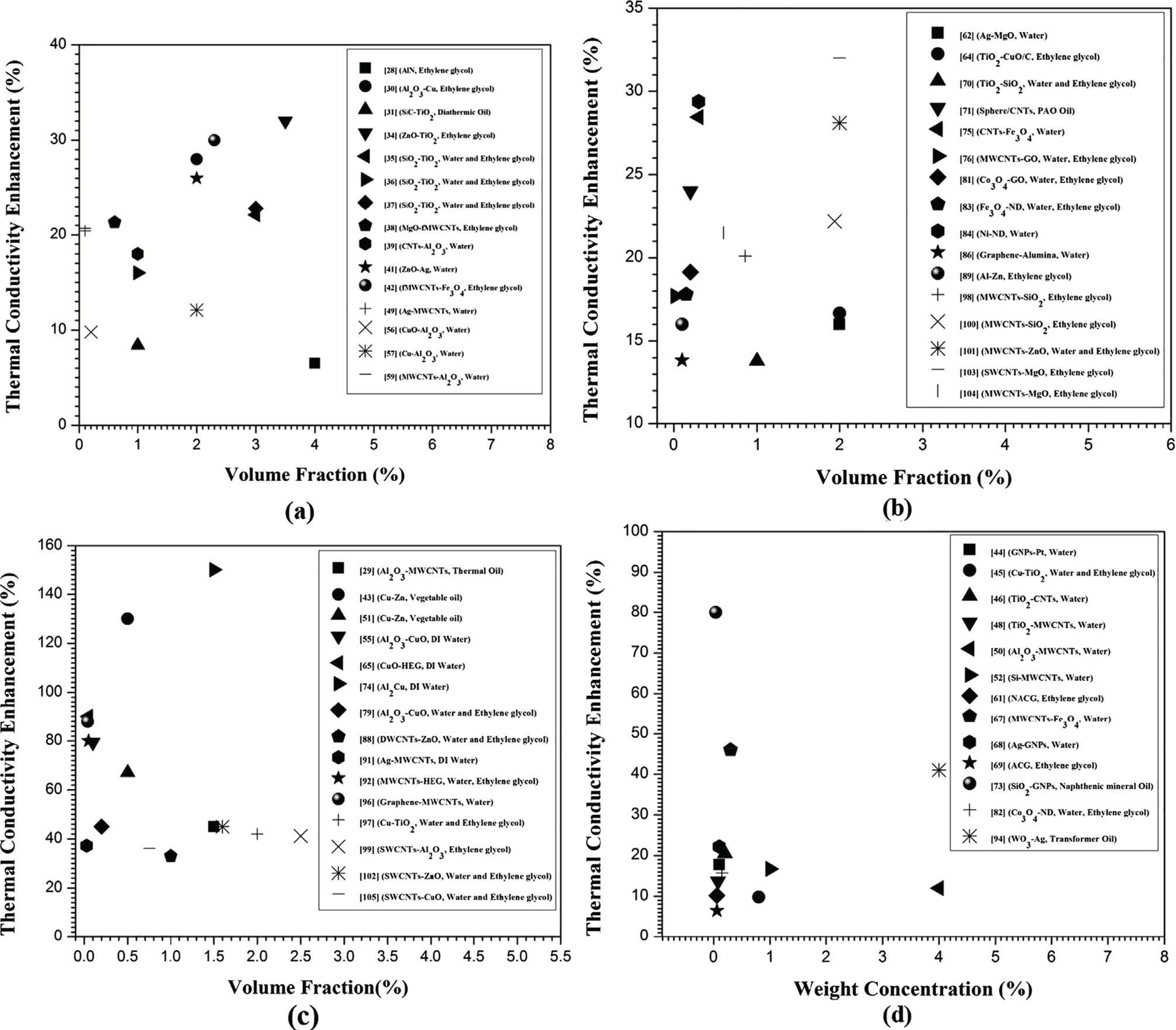
Solar collectors are one of the cleanest and most efficient heating systems available. Density, absorbency, temperature, the heat-transmission system, dynamic viscosity and types of nanoparticles are important for efficiency. Table 4 just illustrates the different parameter, which are directly related to efficiency. Normally, temperature and volume are the key parameters of the solar collector co-relation. Besides, if we see an example analysis of hybrid nanofluids as shown in Figure 4, we can see that depending on nanoparticle concentration, it depicts the thermal conductivity of hybrid nanofluids. Remarkable researchers preserved tiny quantities of nanoparticles to prevent particle sedimentation and agglomeration (usually less than 1%). At 1.5% of the volume, the maximal increase in thermal conductivity for Al2Cu hybrid nanofluids was 150 percent. Nanoparticle weight and volume % is the key to the hybrid nanofluid performance of enhancing heat efficiency. can The mathematical correlations related to the design of the solar collector, numerical simulations, efficiency enhancement of solar collectors with different variables such as volume concentrations and viscosity are presented in Table 4.
Table 4.
Mathematical expression of solar collectors.
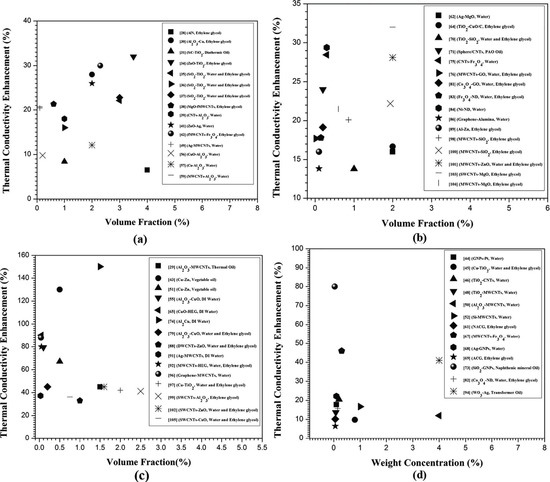
Figure 4.
Enhancement of thermal conductivity using hybrid nanofluids; (a–c) mirror an accelerated thermal conductivity as a feature of the quantity fraction of the thermal conductivity improvement obtained via researchers (d) as a characteristic of the obtained weight fraction [167].
7. Challenges Found Based on the Study
Hybrid nanofluids are newly emerging dynamic liquids, which remain in the study stage. Researchers continue, however, to conduct a feasibility analysis on hybrid nanofluids and solar collectors for better performance across different applications. Some interesting characteristics of hybrid nanofluids were noticed in the performance of heat transfer but there are some challenges with regard to them being a new type of working fluid. First, there is a lack of consensus between researchers and the theoretical model to predict the exact behavior of hybrid nanofluids. Second, there is a lack of understanding between the researchers. Third, in the preparation process, the findings for a particular hybrid nanofluid and volume fraction vary in different methods. The challenges include the design of the solar plate, mixing and making the concentration of the base fluid with different nanoparticles, whether it flows inside the tube or coil, the stability of the hybrid nanofluid, the behavior of surfactants usage, nanoparticles size and volume concentration, pumping power, pressure drop, and most importantly, the cost of hybrid nanofluids.
7.1. Physical Characteristics
Stability is one of the main factors in the success of nanofluids and can have a detrimental impact on the hybrid nanofluid, i.e., lack of good stability. The stability of certain nanofluids deteriorates over time, which was observed by previous researchers. Surfactants were used to minimize fluid surface tension and to promote the dispensability of particles in a fluid [53] or no active surface compound. Excess surfactant, however, affects nanofluid viscosity, thermal conductive properties, and stability [168]. Solar power systems are also based on the mass and size of nanoparticles [169]. More research on the effect of nanoparticles on solar energy has been reported for thermal systems [170]. Reference has been made to the appropriate size and quantity of nanoparticles required to optimize the maximum outlet temperature and achieve the desired thermal efficiency of the solar collector [146].
Nanofluids can be prepared by calculating the number of nanoparticles for the required volume concentrations using the following (Equation (7)) [171]:
where is the volume concentration of nanofluids (%); is the mass; and stands for the density of nanoparticles. The subscripts p and bf stand for nanoparticles and base fluid, respectively.
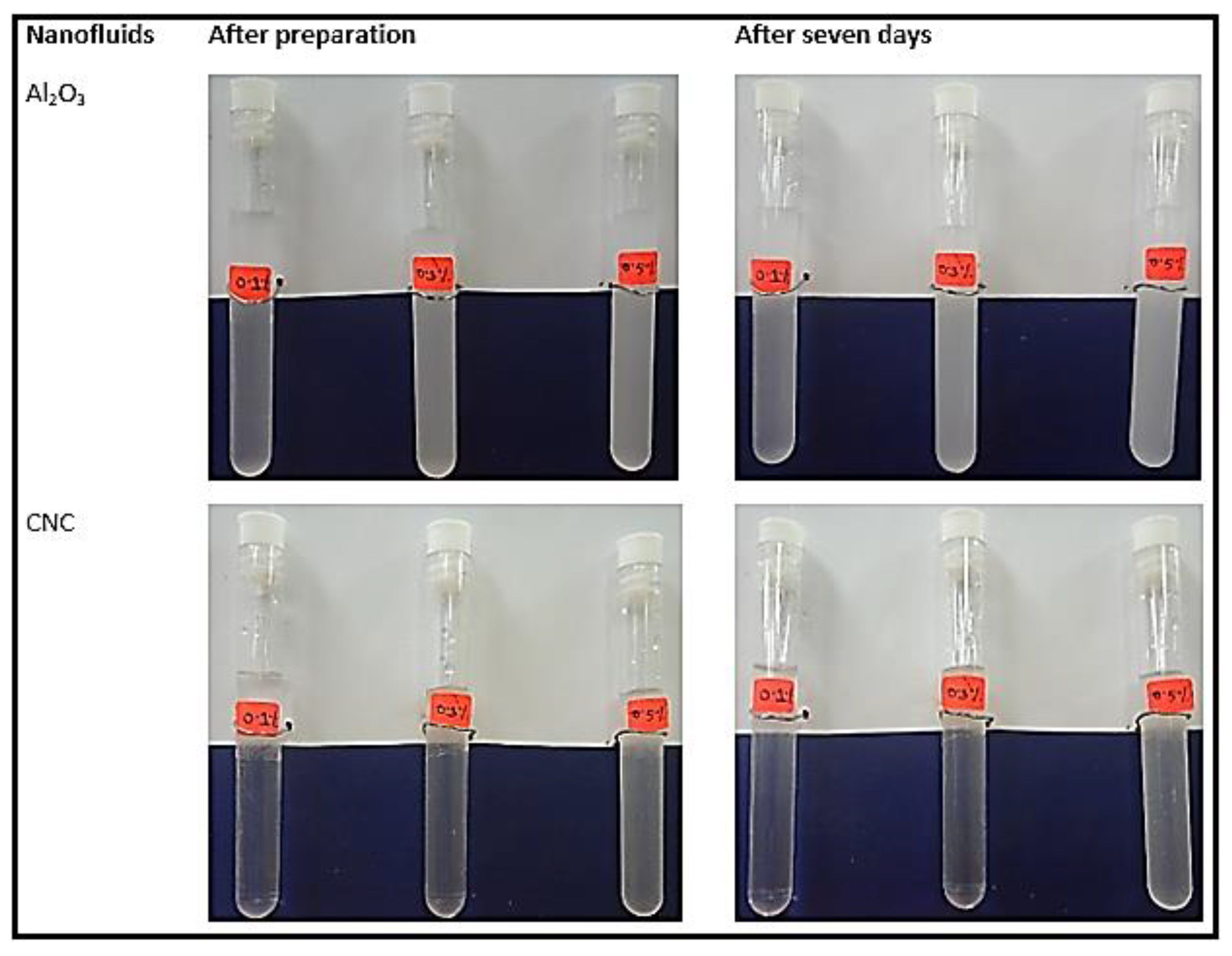
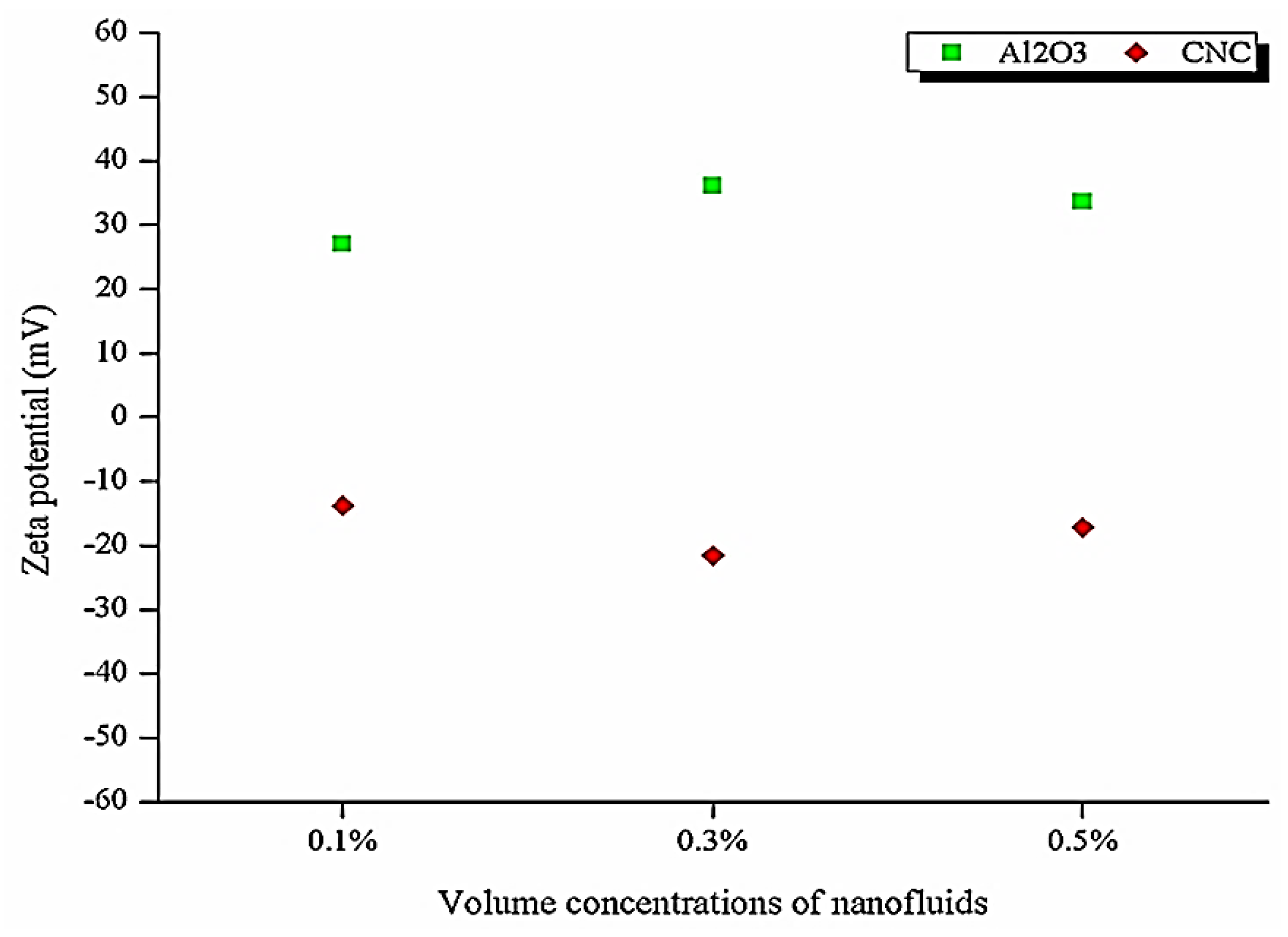
A visual inspection of sedimentation in the GNP nanofluids was performed, and it was indicated that the GNP nanofluids were stable even after the heat-transfer run [172] examined the stability of the nanofluids by observing the sedimentation photographs of the nanofluids captured after 30 days of preparation [173]. A combined experimental and statistical method was used to investigate the effective thermal conductivity and relative viscosity of CNC/W-EG nanofluids. The authors used a sedimentation observation to assess the stability of nanofluids. The observation was carried out every day in this investigation. After one week of preparation of the nanofluids, there was no aggregation of CNC and AL2O3 nanoparticles at the bottom of the test tube, as portrayed in Figure 5. This discovery reveals the moderate to good stability of both nanofluids, whereas quantitative approaches have been used to study the numerical values of stability as shown in Figure 6 [42].
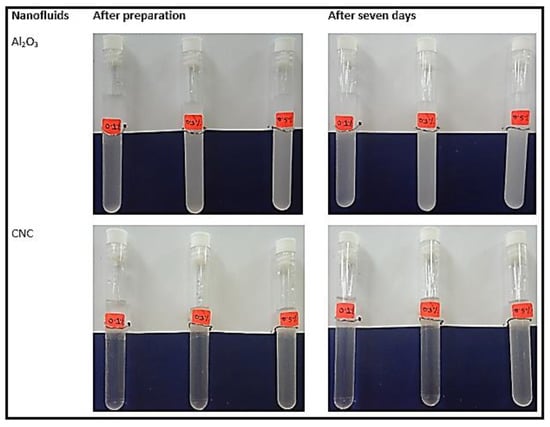
Figure 5.
Evaluation of qualitative stability measurement of nanofluids [42].
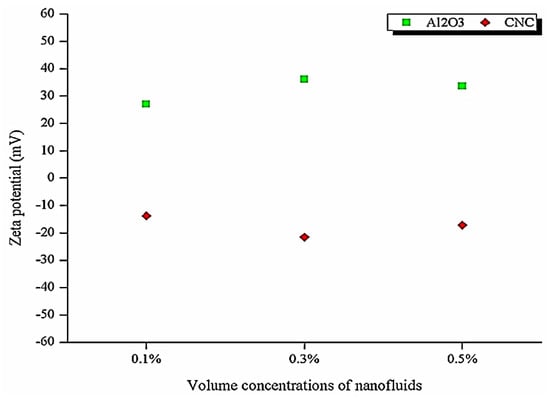
Figure 6.
Quantitative analysis of the stability of nanofluids [42].
7.2. Design and Mathematical Relationship
The total efficiency of the solar collector is based on the design parameters. The evaluation of the efficiency of each upgrading technique centered on the characteristics concerned. Thus, with characteristics such as a higher concentration rate, the effect of sun trackers may be more positive [174]. Hybrid nanoparticles have volume functions in most of the correlations formed by experiments. The efficiency in the heat transfer was characterized by hybrid nanofluids. However, there exist some disagreements with regard to the development of hybrid nanofluids as a new working fluid replacing water or any common working fluid. Besides, the results of a similar hybrid nanofluid analysis appeared to have little contrast as regards to thermal improvement. In particular, the data gained by different researchers are not standardized. Furthermore, expected mathematical correlations are still limited for other applications because of their limitations. The experimental application of nanofluids is therefore limited. Mathematical models rely solely on experimental integrity analytical research [175].
7.3. Cost and Economic Perspective
An economic analysis is used to identify industrial effective nanofluids. It is especially critical, therefore, that the type and price of hybrid nanofluids are considered so that the best comprehensive thermal transfer efficiency can be achieved at a lower cost for further industrial applications [176]. The mixing of nanoparticles and preparation of hybrid nanofluids is a challenge in the cost-effective procedure [177]. More importantly, the cost of creating hybrid nanofluids is prohibitively expensive and must be reduced. Future research should focus on finding a balance between the high thermal efficiency of the hybrid nanofluid and the cost of preparation.
8. Conclusions
In this current paper, a comprehensive study has been performed on the performance of solar collectors with hybrid nanofluids. The literature reviewed that hybrid nanofluids had been applied in different engineering fields to enhance their performance in terms of the circular tube, heat channel, electronic-heat sink and thermal solar collector. Moreover, hybrid nanofluids were implemented in various kinds of solar collectors such as a flat-plate collector, compound parabolic collector, evacuated tube solar collector, parabolic trough collector, linear Fresnel collector, parabolic-dish reflector, and heliostat field collector to evaluate the performance in replace of conventional fluids. The study mainly stated the performance of efficiency of solar collectors that has been increased significantly. A maximum increase of 89% efficiency was achieved for a flat-plate collector by MWCNTs/GNPs/h-BN-water hybrid nanofluids. The stable, higher thermal conductive, and lower viscous hybrids nanofluids are preferred so as to improve the performance of a solar collector. Although the hybrid can increase the efficiency of solar collectors to a greater extent, it is also associated with some obstacles. However, a hybrid nanofluid is an impressive fluid to replace conventional fluids and increase the efficiency of solar collectors.
Author Contributions
Conceptualization, A.S.F.M. and W.S.W.H.; resources, M.K.K.; data curation, K.K.; writing—original draft preparation, D.R. and A.S.F.M.; writing—review and editing, K.F.; visualization, R.A.B.; supervision, W.S.W.H.; project administration, T.Y.; funding acquisition, S.S. and B.Y. All authors have read and agreed to the published version of the manuscript.
Funding
This research was funded by [Ministry of Higher Education of Malaysia] grant number [FRGS/1/2019/TK03/UMP/02/15] and Universiti Malaysia Pahang internal grant [RDU213308]. The APC was funded by [RDU1903134]. Information regarding the funder and the funding number should be provided. Please check the accuracy of funding data and any other information carefully.
Institutional Review Board Statement
Not applicable.
Informed Consent Statement
Not applicable.
Data Availability Statement
Not applicable.
Conflicts of Interest
The authors declare no conflict of interest.
References
- Furlan, C.; Mortarino, C. Forecasting the impact of renewable energies in competition with non-renewable sources. Renew. Sustain. Energy Rev. 2018, 81, 1879–1886. [Google Scholar] [CrossRef]
- Elsaid, K.; Sayed, E.T.; Abdelkareem, M.A.; Baroutaji, A.; Olabi, A. Environmental impact of desalination processes: Mitigation and control strategies. Sci. Total Environ. 2020, 740, 140125. [Google Scholar] [CrossRef] [PubMed]
- Elsaid, K.; Sayed, E.T.; Abdelkareem, M.A.; Mahmoud, M.S.; Ramadan, M.; Olabi, A. Environmental impact of emerging desalination technologies: A preliminary evaluation. J. Environ. Chem. Eng. 2020, 8, 104099. [Google Scholar] [CrossRef]
- Olfian, H.; Ajarostaghi, S.S.M.; Ebrahimnataj, M. Development on evacuated tube solar collectors: A review of the last decade results of using nanofluids. Sol. Energy 2020, 211, 265–282. [Google Scholar] [CrossRef]
- Plante, R.H. Solar Energy, Photovoltaics, and Domestic Hot Water: A Technical and Economic Guide for Project Planners, Builders, and Property Owners; Academic Press: Cambridge, MA, USA, 2014. [Google Scholar]
- Wilberforce, T.; Baroutaji, A.; El Hassan, Z.; Thompson, J.; Soudan, B.; Olabi, A. Prospects and challenges of concentrated solar photovoltaics and enhanced geothermal energy technologies. Sci. Total Environ. 2018, 659, 851–861. [Google Scholar] [CrossRef]
- International Energy Agency. Renewable Energy Market Update; International Energy Agency: Paris, France, 2022. [Google Scholar]
- Olabi, A.; Elsaid, K.; Rabaia, M.K.H.; Askalany, A.A.; Abdelkareem, M.A. Waste heat-driven desalination systems: Perspective. Energy 2020, 209, 118373. [Google Scholar] [CrossRef]
- Brough, D.; Mezquita, A.; Ferrer, S.; Segarra, C.; Chauhan, A.; Almahmoud, S.; Khordehgah, N.; Ahmad, L.; Middleton, D.; Sewell, H.I.; et al. An experimental study and computational validation of waste heat recovery from a lab scale ceramic kiln using a vertical multi-pass heat pipe heat exchanger. Energy 2020, 208, 118325. [Google Scholar] [CrossRef]
- Bandyopadhyay, S.; Chakraborty, S. Thermophoretically driven capillary transport of nanofluid in a microchannel. Adv. Powder Technol. 2018, 29, 964–971. [Google Scholar] [CrossRef]
- Esmaeili, E.; Rounaghi, S.A.; Gruner, W.; Eckert, J. The preparation of surfactant-free highly dispersed ethylene glycol-based aluminum nitride-carbon nanofluids for heat transfer application. Adv. Powder Technol. 2019, 30, 2032–2041. [Google Scholar] [CrossRef]
- Al-Rashed, A.A.; Ranjbarzadeh, R.; Aghakhani, S.; Soltanimehr, M.; Afrand, M.; Nguyen, T.K. Entropy generation of boehmite alumina nanofluid flow through a minichannel heat exchanger considering nanoparticle shape effect. Phys. A Stat. Mech. Its Appl. 2019, 521, 724–736. [Google Scholar] [CrossRef]
- Purusothaman, A. Investigation of natural convection heat transfer performance of the QFN-PCB electronic module by using nanofluid for power electronics cooling applications. Adv. Powder Technol. 2018, 29, 996–1004. [Google Scholar] [CrossRef]
- Mahdi, J.M.; Lohrasbi, S.; Ganji, D.D.; Nsofor, E.C. Simultaneous energy storage and recovery in the triplex-tube heat exchanger with PCM, copper fins and Al2O3 nanoparticles. Energy Convers. Manag. 2018, 180, 949–961. [Google Scholar] [CrossRef]
- Mei, S.; Qi, C.; Luo, T.; Zhai, X.; Yan, Y. Effects of magnetic field on thermo-hydraulic performance of Fe3O4-water nanofluids in a corrugated tube. Int. J. Heat Mass Transf. 2018, 128, 24–45. [Google Scholar] [CrossRef]
- Wang, G.; Qi, C.; Liu, M.; Li, C.; Yan, Y.; Liang, L. Effect of corrugation pitch on thermo-hydraulic performance of nanofluids in corrugated tubes of heat exchanger system based on exergy efficiency. Energy Convers. Manag. 2019, 186, 51–65. [Google Scholar] [CrossRef]
- Qi, C.; Liu, M.; Tang, J. Influence of triangle tube structure with twisted tape on the thermo-hydraulic performance of nanofluids in heat-exchange system based on thermal and exergy efficiency. Energy Convers. Manag. 2019, 192, 243–268. [Google Scholar] [CrossRef]
- Farhana, K.; Kadirgama, K.; Rahman, M.M.; Noor, M.M.; Ramasamy, D.; Samykano, M.; Najafi, G.; Sidik, N.A.C.; Tarlochan, F. Significance of alumina in nanofluid technology. J. Therm. Anal. 2019, 138, 1107–1126. [Google Scholar] [CrossRef]
- Abu-Hamdeh, N.H.; Alazwari, M.A.; Salilih, E.M.; Sajadi, S.M.; Karimipour, A. Improve the efficiency and heat transfer rate’ trend prediction of a flat-plate solar collector via a solar energy installation by examine the Titanium Dioxide/Silicon Dioxide-water nanofluid. Sustain. Energy Technol. Assess. 2021, 48, 101623. [Google Scholar] [CrossRef]
- Ashour, A.F.; El-Awady, A.T.; Tawfik, M.A. Numerical investigation on the thermal performance of a flat plate solar collector using ZnO & CuO water nanofluids under Egyptian weathering conditions. Energy 2021, 240, 122743. [Google Scholar] [CrossRef]
- Khodadadi, H.; Aghakhani, S.; Majd, H.; Kalbasi, R.; Wongwises, S.; Afrand, M. A comprehensive review on rheological behavior of mono and hybrid nanofluids: Effective parameters and predictive correlations. Int. J. Heat Mass Transf. 2018, 127, 997–1012. [Google Scholar] [CrossRef]
- Arani, A.A.A.; Akbari, O.A.; Safaei, M.R.; Marzban, A.; Alrashed, A.A.; Ahmadi, G.R.; Nguyen, T.K. Heat transfer improvement of water/single-wall carbon nanotubes (SWCNT) nanofluid in a novel design of a truncated double-layered microchannel heat sink. Int. J. Heat Mass Transf. 2017, 113, 780–795. [Google Scholar] [CrossRef]
- Khodabandeh, E.; Safaei, M.R.; Akbari, S.; Akbari, O.A.; Alrashed, A.A. Application of nanofluid to improve the thermal performance of horizontal spiral coil utilized in solar ponds: Geometric study. Renew. Energy 2018, 122, 1–16. [Google Scholar] [CrossRef]
- Bahrami, M.; Akbari, M.; Karimipour, A.; Afrand, M. An experimental study on rheological behavior of hybrid nanofluids made of iron and copper oxide in a binary mixture of water and ethylene glycol: Non-Newtonian behavior. Exp. Therm. Fluid Sci. 2016, 79, 231–237. [Google Scholar] [CrossRef]
- Ranjbarzadeh, R.; Karimipour, A.; Afrand, M.; Isfahani, A.H.M.; Shirneshan, A. Empirical analysis of heat transfer and friction factor of water/graphene oxide nanofluid flow in turbulent regime through an isothermal pipe. Appl. Therm. Eng. 2017, 126, 538–547. [Google Scholar] [CrossRef]
- Dehkordi, R.A.; Esfe, M.H.; Afrand, M. Effects of functionalized single walled carbon nanotubes on thermal performance of antifreeze: An experimental study on thermal conductivity. Appl. Therm. Eng. 2017, 120, 358–366. [Google Scholar] [CrossRef]
- Nazir, U.; Nawaz, M.; Alharbi, S.O. Thermal performance of magnetohydrodynamic complex fluid using nano and hybrid nanoparticles. Phys. A Stat. Mech. Its Appl. 2020, 553, 124345. [Google Scholar] [CrossRef]
- Farhana, K.; Kadirgama, K.; Rahman, M.M.; Ramasamy, D.; Noor, M.M.; Najafi, G.; Samykano, M.; Mahamude, A.S.F. Improvement in the performance of solar collectors with nanofluids—A state-of-the-art review. Nano-Struct. Nano-Objects 2019, 18, 100276. [Google Scholar] [CrossRef]
- Shah, T.R.; Ali, H.M. Applications of hybrid nanofluids in solar energy, practical limitations and challenges: A critical review. Sol. Energy 2019, 183, 173–203. [Google Scholar] [CrossRef]
- Sarkar, J.; Ghosh, P.; Adil, A. A review on hybrid nanofluids: Recent research, development and applications. Renew. Sustain. Energy Rev. 2015, 43, 164–177. [Google Scholar] [CrossRef]
- Zainal, S.; Tan, C.; Sian, C.; Siang, T.J. ANSYS simulation for Ag/HEG hybrid nanofluid in turbulent circular pipe. J. Adv. Res. Appl. Mech. 2016, 23, 20–35. [Google Scholar]
- Li, H.; Ha, C.-S.; Kim, I.J. Fabrication of carbon nanotube/SiO2 and carbon nanotube/SiO2/Ag nanoparticles hybrids by using plasma treatment. Nanoscale Res. Lett. 2009, 4, 1384–1388. [Google Scholar] [CrossRef]
- Karthikeyan, N.; Philip, J.; Raj, B. Effect of clustering on the thermal conductivity of nanofluids. Mater. Chem. Phys. 2008, 109, 50–55. [Google Scholar] [CrossRef]
- Sastry, N.N.V.; Bhunia, A.; Sundararajan, T.; Das, S.K. Predicting the effective thermal conductivity of carbon nanotube based nanofluids. Nanotechnology 2008, 19, 055704. [Google Scholar] [CrossRef] [PubMed]
- Sidik, N.A.C.; Adamu, I.M.; Jamil, M.M. Preparation methods and thermal performance of hybrid nanofluids. J. Adv. Res. Appl. Mech. 2020, 66, 7–16. [Google Scholar] [CrossRef]
- Chakraborty, S.; Panigrahi, P.K. Stability of nanofluid: A review. Appl. Therm. Eng. 2020, 174, 115259. [Google Scholar] [CrossRef]
- Hussein, O.A.; Habib, K.; Muhsan, A.S.; Saidur, R.; Alawi, O.A.; Ibrahim, T.K. Thermal performance enhancement of a flat plate solar collector using hybrid nanofluid. Sol. Energy 2020, 204, 208–222. [Google Scholar] [CrossRef]
- Choi, S.U.S.; Zhang, Z.G.; Yu, W.; Lockwood, F.E.; Grulke, E.A. Anomalous thermal conductivity enhancement in nanotube suspensions. Appl. Phys. Lett. 2001, 79, 2252–2254. [Google Scholar] [CrossRef]
- Azwadi, C.N.; Adamu, I.J. Turbulent force convective heat transfer of hybrid nano fluid in a circular channel with constant heat flux. J. Adv. Res. Fluid Mech. Therm. Sci. 2016, 19, 1–9. [Google Scholar]
- Lee, Y.J. The use of nanofluids in domestic water heat exchanger. J. Adv. Res. Appl. Mech. 2014, 3, 9–24. [Google Scholar]
- Park, S.D.; Lee, S.W.; Kang, S.; Bang, I.C.; Kim, J.H.; Shin, H.S.; Lee, D.W. Effects of nanofluids containing graphene/graphene-oxide nanosheets on critical heat flux. Appl. Phys. Lett. 2010, 97, 023103. [Google Scholar] [CrossRef]
- Farhana, K.; Kadirgama, K.; Mohammed, H.A.; Ramasamy, D.; Samykano, M.; Saidur, R. Analysis of efficiency enhancement of flat plate solar collector using crystal nano-cellulose (CNC) nanofluids. Sustain. Energy Technol. Assess. 2021, 45, 101049. [Google Scholar] [CrossRef]
- Sidik, N.A.C.; Jamil, M.M.; Japar, W.M.A.A.; Adamu, I.M. A review on preparation methods, stability and applications of hybrid nanofluids. Renew. Sustain. Energy Rev. 2017, 80, 1112–1122. [Google Scholar] [CrossRef]
- Budihardjo, I.; Morrison, G.L.; Behnia, M. Natural circulation flow through water-in-glass evacuated tube solar collectors. Sol. Energy 2007, 81, 1460–1472. [Google Scholar] [CrossRef]
- Minardi, J.E.; Chuang, H.N. Performance of a “black” liquid flat-plate solar collector. Sol. Energy 1975, 17, 179–183. [Google Scholar] [CrossRef]
- Singh, A.K.J. A review study of solar desalting units with evacuated tube collectors. J. Clean. Prod. 2020, 279, 123542. [Google Scholar] [CrossRef]
- Zhou, Y.; Li, Q.; Wang, Q. Energy storage analysis of UIO-66 and water mixed nanofluids: An experimental and theoretical study. Energies 2019, 12, 2521. [Google Scholar] [CrossRef]
- McGrail, B.; Thallapally, P.K.; Blanchard, J.; Nune, S.; Jenks, J.; Dang, L. Metal-organic heat carrier nanofluids. Nano Energy 2013, 2, 845–855. [Google Scholar] [CrossRef]
- García, E.J.; Bahamon, D.; Vega, L.F. Systematic search of suitable metal–organic frameworks for thermal energy-storage applications with low global warming potential refrigerants. ACS Sustain. Chem. Eng. 2021, 9, 3157–3171. [Google Scholar] [CrossRef]
- Murshed, S.S.J. Correction and comment on “thermal conductance of nanofluids: Is the controversy over?”. J. Nanopart. Res. 2009, 11, 511–512. [Google Scholar] [CrossRef][Green Version]
- Amrollahi, A.; Rashidi, A.; Meibodi, M.E.; Kashefi, K. Conduction heat transfer characteristics and dispersion behaviour of carbon nanofluids as a function of different parameters. J. Exp. Nanosci. 2009, 4, 347–363. [Google Scholar] [CrossRef]
- Suresh, S.; Venkitaraj, K.P.; Selvakumar, P.; Chandrasekar, M. Synthesis of Al2O3–Cu/water hybrid nanofluids using two step method and its thermo physical properties. Colloid. Surf. A Physicochem. Eng. Asp. 2011, 388, 41–48. [Google Scholar] [CrossRef]
- Sundar, L.S.; Singh, M.K.; Sousa, A.C.J. Enhanced heat transfer and friction factor of MWCNT–Fe3O4/water hybrid nanofluids. Int. Commun. Heat Mass Transf. 2014, 52, 73–83. [Google Scholar] [CrossRef]
- Baby, T.T.; Sundara, R.J. Synthesis and transport properties of metal oxide decorated graphene dispersed nanofluids. J. Phys. Chem. C 2011, 115, 8527–8533. [Google Scholar] [CrossRef]
- Amiri, A.; Shanbedi, M.; Eshghi, H.; Heris, S.Z.; Baniadam, M. Highly dispersed multiwalled carbon nanotubes decorated with Ag nanoparticles in water and experimental investigation of the thermophysical properties. J. Phys. Chem. C 2012, 116, 3369–3375. [Google Scholar] [CrossRef]
- Huang, D.; Wu, Z.; Sunden, B. Effects of hybrid nanofluid mixture in plate heat exchangers. Exp. Therm. Fluid Sci. 2016, 72, 190–196. [Google Scholar] [CrossRef]
- Yarmand, H.; Gharehkhani, S.; Ahmadi, G.; Shirazi, S.F.S.; Baradaran, S.; Montazer, E.; Zubir, M.N.M.; Alehashem, M.; Kazi, S.; Dahari, M. Graphene nanoplatelets–silver hybrid nanofluids for enhanced heat transfer. Energy Convers. Manag. 2015, 100, 419–428. [Google Scholar] [CrossRef]
- Harandi, S.S.; Karimipour, A.; Afrand, M.; Akbari, M.; D’Orazio, A.J. An experimental study on thermal conductivity of F-MWCNTs–Fe3O4/EG hybrid nanofluid: Effects of temperature and concentration. Int. Commun. Heat Mass Transf. 2016, 76, 171–177. [Google Scholar] [CrossRef]
- Ahammed, N.; Asirvatham, L.G.; Wongwises, S.J. Entropy generation analysis of graphene–alumina hybrid nanofluid in multiport minichannel heat exchanger coupled with thermoelectric cooler. Int. J. Heat Mass Transf. 2016, 103, 1084–1097. [Google Scholar] [CrossRef]
- Maddah, H.; Aghayari, R.; Mirzaee, M.; Ahmadi, M.H.; Sadeghzadeh, M.; Chamkha, A.J. Factorial experimental design for the thermal performance of a double pipe heat exchanger using Al2O3-TiO2 hybrid nanofluid. Int. Commun. Heat Mass Transf. 2018, 97, 92–102. [Google Scholar] [CrossRef]
- Tullius, T.K.; Bayazitoglu, Y. Analysis of a hybrid nanofluid exposed to radiation. Numer. Heat Transf. Part B Fundam. 2016, 69, 271–286. [Google Scholar] [CrossRef]
- Esfe, M.H.; Arani, A.A.A.; Badi, R.S.; Rejvani, M.J. ANN modeling, cost performance and sensitivity analyzing of thermal conductivity of DWCNT–SiO2/EG hybrid nanofluid for higher heat transfer. J. Therm. Anal. Calorim. 2018, 131, 2381–2393. [Google Scholar] [CrossRef]
- Esfe, M.H.; Rejvani, M.; Karimpour, R.; Arani, A.A.A. Estimation of thermal conductivity of ethylene glycol-based nanofluid with hybrid suspensions of SWCNT–Al2O3 nanoparticles by correlation and ANN methods using experimental data. J. Therm. Anal. 2017, 128, 1359–1371. [Google Scholar] [CrossRef]
- Ahmadi, M.H.; Ghazvini, M.; Sadeghzadeh, M.; Alhuyi Nazari, M.; Ghalandari, M. Utilization of hybrid nanofluids in solar energy applications: A review. Nano-Struct. Nano-Objects 2019, 20, 100386. [Google Scholar] [CrossRef]
- Sidik, N.A.C.; Adamu, I.M.; Jamil, M.M.; Kefayati, G.H.; Mamat, R.; Najafi, G. Recent progress on hybrid nanofluids in heat transfer applications: A comprehensive review. Int. Commun. Heat Mass Transf. 2016, 78, 68–79. [Google Scholar] [CrossRef]
- Ali, H.M.; Babar, H.; Shah, T.R.; Sajid, M.U.; Qasim, M.A.; Javed, S. Preparation techniques of TiO2 nanofluids and challenges: A review. Appl. Sci. 2018, 8, 587. [Google Scholar] [CrossRef]
- Chopkar, M.; Kumar, S.; Bhandari, D.; Das, P.; Manna, I. Development and characterization of Al2Cu and Ag2Al nanoparticle dispersed water and ethylene glycol based nanofluid. Mater. Sci. Eng. B 2007, 139, 141–148. [Google Scholar] [CrossRef]
- Moghadassi, A.; Ghomi, E.; Parvizian, F. A numerical study of water based Al2O3 and Al2O3–Cu hybrid nanofluid effect on forced convective heat transfer. Int. J. Therm. Sci. 2015, 92, 50–57. [Google Scholar] [CrossRef]
- Samylingam, L.; Aslfattahi, N.; Saidur, R.; Yahya, S.M.; Afzal, A.; Arifutzzaman, A.; Tan, K.; Kadirgama, K. Thermal and energy performance improvement of hybrid PV/T system by using olein palm oil with MXene as a new class of heat transfer fluid. Sol. Energy Mater. Sol. Cells 2020, 218, 110754. [Google Scholar] [CrossRef]
- Brailsford, A.D.; Major, K.G. The thermal conductivity of aggregates of several phases, including porous materials. Br. J. Appl. Phys. 1964, 15, 313–319. [Google Scholar] [CrossRef]
- Miles, J., Jr.; Robertson, H.J. The dielectric behavior of colloidal particles with an electric double-layer. Phys. Rev. 1932, 40, 583. [Google Scholar] [CrossRef]
- Takabi, B.; Salehi, S.J. Augmentation of the heat transfer performance of a sinusoidal corrugated enclosure by employing hybrid nanofluid. Adv. Mech. Eng. 2014, 6, 147059. [Google Scholar] [CrossRef]
- Yu, W.; Xie, H. A review on nanofluids: Preparation, stability mechanisms, and applications. J. Nanomater. 2012, 2012, 1–17. [Google Scholar] [CrossRef]
- Wong, K.V.; De Leon, O.J. Applications of nanofluids: Current and future. Adv. Mech. Eng. 2010, 2, 519659. [Google Scholar] [CrossRef]
- Wen, D.; Lin, G.; Vafaei, S.; Zhang, K. Review of nanofluids for heat transfer applications. Particuology 2009, 7, 141–150. [Google Scholar] [CrossRef]
- Saidur, R.; Leong, K.Y.; Mohammed, H.A. A review on applications and challenges of nanofluids. Renew. Sustain. Energy Rev. 2011, 15, 1646–1668. [Google Scholar] [CrossRef]
- Han, W.; Rhi, S. Thermal characteristics of grooved heat pipe with hybrid nanofluids. Therm. Sci. 2011, 15, 195–206. [Google Scholar] [CrossRef]
- He, Y.; Vasiraju, S.; Que, L. Hybrid nanomaterial-based nanofluids for micropower generation. RSC Adv. 2013, 4, 2433–2439. [Google Scholar] [CrossRef]
- Selvakumar, P.; Suresh, S. Use of Al2O3–Cu/water hybrid nanofluid in an electronic heat sink. IEEE Trans. Compon. Packag. Manuf. Technol. 2012, 2, 1600–1607. [Google Scholar] [CrossRef]
- Ho, C.; Huang, J.; Tsai, P.; Yang, Y. On laminar convective cooling performance of hybrid water-based suspensions of Al2O3 nanoparticles and MEPCM particles in a circular tube. Int. J. Heat Mass Transf. 2011, 54, 2397–2407. [Google Scholar] [CrossRef]
- Madhesh, D.; Parameshwaran, R.; Kalaiselvam, S. Experimental investigation on convective heat transfer and rheological characteristics of Cu–TiO2 hybrid nanofluids. Exp. Therm. Fluid Sci. 2014, 52, 104–115. [Google Scholar] [CrossRef]
- Li, G.; Xuan, Q.; Pei, G.; Su, Y.; Ji, J. Effect of non-uniform illumination and temperature distribution on concentrating solar cell—A review. Energy 2017, 144, 1119–1136. [Google Scholar] [CrossRef]
- Said, Z.; Ghodbane, M.; Sundar, L.S.; Tiwari, A.K.; Sheikholeslami, M.; Boumeddane, B.J. Heat transfer, entropy generation, economic and environmental analyses of linear Fresnel reflector using novel rGO-Co3O4 hybrid nanofluids. Renew. Energy 2021, 165, 420–437. [Google Scholar] [CrossRef]
- Aguilar, T.; Navas, J.; Sánchez-Coronilla, A.; Martín, E.I.; Gallardo, J.J.; Martínez-Merino, P.; Gómez-Villarejo, R.; Piñero, J.C.; Alcántara, R.; Fernández-Lorenzo, C.J. Investigation of enhanced thermal properties in NiO-based nanofluids for concentrating solar power applications: A molecular dynamics and experimental analysis. Appl. Energy 2018, 211, 677–688. [Google Scholar] [CrossRef]
- Bakhtiari, R.; Kamkari, B.; Afrand, M.; Abdollahi, A. Preparation of stable TiO2-graphene/water hybrid nanofluids and development of a new correlation for thermal conductivity. Powder Technol. 2021, 385, 466–477. [Google Scholar] [CrossRef]
- Tang, R.; Cheng, Y.; Wu, M.; Li, Z.; Yu, Y. Experimental and modeling studies on thermosiphon domestic solar water heaters with flat-plate collectors at clear nights. Energy Convers. Manag. 2010, 51, 2548–2556. [Google Scholar] [CrossRef]
- Arunkumar, T.; Velraj, R.; Denkenberger, D.; Sathyamurthy, R.; Kumar, K.V.; Ahsan, A. Productivity enhancements of compound parabolic concentrator tubular solar stills. Renew. Energy 2016, 88, 391–400. [Google Scholar] [CrossRef]
- Papadimitratos, A.; Sobhansarbandi, S.; Pozdin, V.; Zakhidov, A.; Hassanipour, F. Evacuated tube solar collectors integrated with phase change materials. Sol. Energy 2016, 129, 10–19. [Google Scholar] [CrossRef]
- Li, X.; Xu, E.; Ma, L.; Song, S.; Xu, L. Modeling and dynamic simulation of a steam generation system for a parabolic trough solar power plant. Renew. Energy 2019, 132, 998–1017. [Google Scholar] [CrossRef]
- Beltagy, H.; Semmar, D.; Lehaut, C.; Said, N. Theoretical and experimental performance analysis of a Fresnel type solar concentrator. Renew. Energy 2017, 101, 782–793. [Google Scholar] [CrossRef]
- Li, L.; Dubowsky, S. A new design approach for solar concentrating parabolic dish based on optimized flexible petals. Mech. Mach. Theory 2011, 46, 1536–1548. [Google Scholar] [CrossRef]
- Roca, L.; de la Calle, A.; Yebra, L.J.J. Heliostat-field gain-scheduling control applied to a two-step solar hydrogen production plant. Appl. Energy 2013, 103, 298–305. [Google Scholar] [CrossRef]
- Esfe, M.H.; Yan, W.-M.; Akbari, M.; Karimipour, A.; Hassani, M.J. Experimental study on thermal conductivity of DWCNT-ZnO/water-EG nanofluids. Int. Commun. Heat Mass Transf. 2015, 68, 248–251. [Google Scholar] [CrossRef]
- Suresh, S.; Venkitaraj, K.P.; Selvakumar, P.; Chandrasekar, M. Effect of Al2O3–Cu/water hybrid nanofluid in heat transfer. Exp. Therm. Fluid Sci. 2012, 38, 54–60. [Google Scholar] [CrossRef]
- Baghbanzadeh, M.; Rashidi, A.; Rashtchian, D.; Lotfi, R.; Amrollahi, A. Synthesis of spherical silica/multiwall carbon nanotubes hybrid nanostructures and investigation of thermal conductivity of related nanofluids. Thermochim. Acta 2012, 549, 87–94. [Google Scholar] [CrossRef]
- Chen, L.; Yu, W.; Xie, H. Enhanced thermal conductivity of nanofluids containing Ag/MWNT composites. Powder Technol. 2012, 231, 18–20. [Google Scholar] [CrossRef]
- Aravind, S.S.J.; Ramaprabhu, S. Graphene wrapped multiwalled carbon nanotubes dispersed nanofluids for heat transfer applications. J. Appl. Phys. 2012, 112, 124304. [Google Scholar] [CrossRef]
- Munkhbayar, B.; Tanshen, R.; Jeoun, J.; Chung, H.; Jeong, H. Surfactant-free dispersion of silver nanoparticles into MWCNT-aqueous nanofluids prepared by one-step technique and their thermal characteristics. Ceram. Int. 2013, 39, 6415–6425. [Google Scholar] [CrossRef]
- Labib, M.N.; Nine, J.; Afrianto, H.; Chung, H.; Jeong, H. Numerical investigation on effect of base fluids and hybrid nanofluid in forced convective heat transfer. Int. J. Therm. Sci. 2013, 71, 163–171. [Google Scholar] [CrossRef]
- Tomar, L.J.; Chakrabarty, B. Synthesis, structural and optical properties of TiO2-ZrO2 nanocomposite by hydrothermal method. Adv. Mater. Lett. 2013, 4, 64–67. [Google Scholar] [CrossRef]
- Suresh, S.; Venkitaraj, K.P.; Hameed, M.S.; Sarangan, J. Turbulent heat transfer and pressure drop characteristics of dilute water based Al2O3-Cu hybrid nanofluids. J. Nanosci. Nanotechnol. 2014, 14, 2563–2572. [Google Scholar] [CrossRef]
- Batmunkh, M.; Tanshen, R.; Nine, J.; Myekhlai, M.; Choi, H.; Chung, H.; Jeong, H. Thermal conductivity of TiO2 nanoparticles based aqueous nanofluids with an addition of a modified silver particle. Ind. Eng. Chem. Res. 2014, 53, 8445–8451. [Google Scholar] [CrossRef]
- Xuan, Y.; Duan, H.; Li, Q.J. Enhancement of solar energy absorption using a plasmonic nanofluid based on TiO2/Ag composite nanoparticles. RSC Adv. 2014, 4, 16206–16213. [Google Scholar] [CrossRef]
- Baghbanzadeh, M.; Rashidi, A.; Soleimanisalim, A.H.; Rashtchian, D. Investigating the rheological properties of nanofluids of water/hybrid nanostructure of spherical silica/MWCNT. Thermochim. Acta 2014, 578, 53–58. [Google Scholar] [CrossRef]
- Sundar, L.S.; Misganaw, A.H.; Singh, M.K.; Sousa, A.C.M.; Ali, H.M. Efficiency analysis of thermosyphon solar flat plate collector with low mass concentrations of ND–Co3O4 hybrid nanofluids: An experimental study. J. Therm. Anal. 2020, 143, 959–972. [Google Scholar] [CrossRef]
- Syam Sundar, L.; Sousa, A.; Singh, M.K. Heat transfer enhancement of low volume concentration of carbon nanotube-Fe3O4/water hybrid nanofluids in a tube with twisted tape inserts under turbulent flow. J. Therm. Sci. Eng. Appl. 2015, 7, 021015. [Google Scholar] [CrossRef]
- Esfe, M.H.; Wongwises, S.; Naderi, A.; Asadi, A.; Safaei, M.R.; Rostamian, H.; Dahari, M.; Karimipour, A. Thermal conductivity of Cu/TiO2–water/EG hybrid nanofluid: Experimental data and modeling using artificial neural network and correlation. Int. Commun. Heat Mass Transf. 2015, 66, 100–104. [Google Scholar] [CrossRef]
- Esfe, M.H.; Arani, A.A.A.; Rezaie, M.; Yan, W.-M.; Karimipour, A. Experimental determination of thermal conductivity and dynamic viscosity of Ag–MgO/water hybrid nanofluid. Int. Commun. Heat Mass Transf. 2015, 66, 189–195. [Google Scholar] [CrossRef]
- Afrand, M.; Toghraie, D.; Ruhani, B. Effects of temperature and nanoparticles concentration on rheological behavior of Fe3O4–Ag/EG hybrid nanofluid: An experimental study. Exp. Therm. Fluid Sci. 2016, 77, 38–44. [Google Scholar] [CrossRef]
- Eshgarf, H.; Afrand, M. An experimental study on rheological behavior of non-Newtonian hybrid nano-coolant for application in cooling and heating systems. Exp. Therm. Fluid Sci. 2016, 76, 221–227. [Google Scholar] [CrossRef]
- Sundar, L.S.; Ramana, E.V.; Graça, M.; Singh, M.K.; Sousa, A.C.J. Nanodiamond-Fe3O4 nanofluids: Preparation and measurement of viscosity, electrical and thermal conductivities. Int. Commun. Heat Mass Transf. 2016, 73, 62–74. [Google Scholar] [CrossRef]
- Soltani, O.; Akbari, M. Effects of temperature and particles concentration on the dynamic viscosity of MgO-MWCNT/ethylene glycol hybrid nanofluid: Experimental study. Phys. E Low-Dimens. Syst. Nanostruct. 2016, 84, 564–570. [Google Scholar] [CrossRef]
- Senniangiri, N.; Bensam Raj, J.; Sunil, J.J. Effects of temperature and particles concentration on the dynamic viscosity of graphene-NiO/coconut oil hybrid nanofluid: Experimental study. Int. J. Nanosci. 2020, 19, 1950016. [Google Scholar] [CrossRef]
- Nemade, K.; Waghuley, S.J. A novel approach for enhancement of thermal conductivity of CuO/H2O based nanofluids. Appl. Therm. Eng. 2016, 95, 271–274. [Google Scholar] [CrossRef]
- Verma, S.K.; Tiwari, A.K.; Tiwari, S.; Chauhan, D.S. Performance analysis of hybrid nanofluids in flat plate solar collector as an advanced working fluid. Sol. Energy 2018, 167, 231–241. [Google Scholar] [CrossRef]
- Arıkan, E.; Abbasoğlu, S.; Gazi, M. Experimental performance analysis of flat plate solar collectors using different nanofluids. Sustainability 2018, 10, 1794. [Google Scholar] [CrossRef]
- Sabiha, M.; Saidur, R.; Hassani, S.; Said, Z.; Mekhilef, S. Energy performance of an evacuated tube solar collector using single walled carbon nanotubes nanofluids. Energy Convers. Manag. 2015, 105, 1377–1388. [Google Scholar] [CrossRef]
- Mahendran, M.; Lee, G.; Sharma, K.; Shahrani, A. Performance of evacuated tube solar collector using water-based titanium oxide nanofluid. J. Mech. Eng. Sci. 2012, 3, 301–310. [Google Scholar] [CrossRef]
- Daghigh, R.; Zandi, P. Improving the performance of heat pipe embedded evacuated tube collector with nanofluids and auxiliary gas system. Renew. Energy 2018, 134, 888–901. [Google Scholar] [CrossRef]
- Peng, Y.; Zahedidastjerdi, A.; Abdollahi, A.; Amindoust, A.; Bahrami, M.; Karimipour, A.; Goodarzi, M. Investigation of energy performance in a U-shaped evacuated solar tube collector using oxide added nanoparticles through the emitter, absorber and transmittal environments via discrete ordinates radiation method. J. Therm. Anal. 2019, 139, 2623–2631. [Google Scholar] [CrossRef]
- Luo, Z.; Wang, C.; Wei, W.; Xiao, G.; Ni, M. Performance improvement of a nanofluid solar collector based on direct absorption collection (DAC) concepts. Int. J. Heat Mass Transf. 2014, 75, 262–271. [Google Scholar] [CrossRef]
- Hussain, H.A.; Jawad, Q.; Sultan, K.F. Experimental analysis on thermal efficiency of evacuated tube solar collector by using nanofluids. Sol. Energy 2015, 4, 19–28. [Google Scholar]
- Kim, H.; Ham, J.; Park, C.; Cho, H. Theoretical investigation of the efficiency of a U-tube solar collector using various nanofluids. Energy 2016, 94, 497–507. [Google Scholar] [CrossRef]
- Kaya, M.; Gürel, A.E.; Ağbulut, Ü.; Ceylan, İ.; Çelik, S.; Ergün, A.; Acar, B.J. Performance analysis of using CuO-Methanol nanofluid in a hybrid system with concentrated air collector and vacuum tube heat pipe. Energy Convers. Manag. 2019, 199, 111936. [Google Scholar] [CrossRef]
- Benkhedda, M.; Boufendi, T.; Touahri, S.J. Laminar mixed convective heat transfer enhancement by using Ag-TiO2-water hybrid Nanofluid in a heated horizontal annulus. Heat Mass Transf. 2018, 54, 2799–2814. [Google Scholar] [CrossRef]
- Rahman, M.R.A.; Leong, K.Y.; Idris, A.C.; Saad, M.R.; Anwar, M. Numerical analysis of the forced convective heat transfer on Al2O3–Cu/water hybrid nanofluid. Heat Mass Transf. 2016, 53, 1835–1842. [Google Scholar] [CrossRef]
- Gorji, T.B.; Ranjbar, A. A numerical and experimental investigation on the performance of a low-flux direct absorption solar collector (DASC) using graphite, magnetite and silver nanofluids. Sol. Energy 2016, 135, 493–505. [Google Scholar] [CrossRef]
- Li, X.; Chang, H.; Zeng, L.; Huang, X.; Li, Y.; Li, R.; Xi, Z. Numerical analysis of photothermal conversion performance of MXene nanofluid in direct absorption solar collectors. Energy Convers. Manag. 2020, 226, 113515. [Google Scholar] [CrossRef]
- Gupta, M.; Singh, V.; Said, Z. Heat transfer analysis using zinc Ferrite/water (Hybrid) nanofluids in a circular tube: An experimental investigation and development of new correlations for thermophysical and heat transfer properties. Sustain. Energy Technol. Assess. 2020, 39, 100720. [Google Scholar] [CrossRef]
- Abdelrazik, A.S.; Tan, K.H.; Aslfattahi, N.; Saidur, R.; Al-Sulaiman, F.A. Optical properties and stability of water-based nanofluids mixed with reduced graphene oxide decorated with silver and energy performance investigation in hybrid photovoltaic/thermal solar systems. Int. J. Energy Res. 2020, 44, 11487–11508. [Google Scholar] [CrossRef]
- Kasaeian, A.; Daneshazarian, R.; Pourfayaz, F. Comparative study of different nanofluids applied in a trough collector with glass-glass absorber tube. J. Mol. Liq. 2017, 234, 315–323. [Google Scholar] [CrossRef]
- Loni, R.; Pavlovic, S.; Bellos, E.; Tzivanidis, C.; Asli-Ardeh, E.A. Thermal and exergy performance of a nanofluid-based solar dish collector with spiral cavity receiver. Appl. Therm. Eng. 2018, 135, 206–217. [Google Scholar] [CrossRef]
- Esfe, M.H.; Alirezaie, A.; Rejvani, M.J. An applicable study on the thermal conductivity of SWCNT-MgO hybrid nanofluid and price-performance analysis for energy management. Appl. Therm. Eng. 2017, 111, 1202–1210. [Google Scholar] [CrossRef]
- Asadi, M.; Asadi, A.J. Dynamic viscosity of MWCNT/ZnO–engine oil hybrid nanofluid: An experimental investigation and new correlation in different temperatures and solid concentrations. Int. Commun. Heat Mass Transf. 2016, 76, 41–45. [Google Scholar] [CrossRef]
- Afrand, M. Experimental study on thermal conductivity of ethylene glycol containing hybrid nano-additives and development of a new correlation. Appl. Therm. Eng. 2017, 110, 1111–1119. [Google Scholar] [CrossRef]
- Sundar, L.S.; Singh, M.K.; Ferro, M.; Sousa, A. Experimental investigation of the thermal transport properties of graphene oxide/Co3O4 hybrid nanofluids. Int. Commun. Heat Mass Transf. 2017, 84, 1–10. [Google Scholar] [CrossRef]
- Nine, J.; Batmunkh, M.; Kim, J.-H.; Chung, H.-S.; Jeong, H.-M. Investigation of Al2O3-MWCNTs hybrid dispersion in water and their thermal characterization. J. Nanosci. Nanotechnol. 2012, 12, 4553–4559. [Google Scholar] [CrossRef] [PubMed]
- Khan, M.S.; Abid, M.; Ali, H.M.; Amber, K.P.; Bashir, M.A.; Javed, S. Comparative performance assessment of solar dish assisted s-CO2 Brayton cycle using nanofluids. Appl. Therm. Eng. 2018, 148, 295–306. [Google Scholar] [CrossRef]
- Zadeh, P.M.; Sokhansefat, T.; Kasaeian, A.; Kowsary, F.; Akbarzadeh, A. Hybrid optimization algorithm for thermal analysis in a solar parabolic trough collector based on nanofluid. Energy 2015, 82, 857–864. [Google Scholar] [CrossRef]
- Huang, W.; Marefati, M. Energy, exergy, environmental and economic comparison of various solar thermal systems using water and Thermia Oil B base fluids, and CuO and Al2O3 nanofluids. Energy Rep. 2020, 6, 2919–2947. [Google Scholar] [CrossRef]
- Loni, R.; Asli-Ardeh, E.A.; Ghobadian, B.; Kasaeian, A.; Bellos, E. Energy and exergy investigation of alumina/oil and silica/oil nanofluids in hemispherical cavity receiver: Experimental study. Energy 2018, 164, 275–287. [Google Scholar] [CrossRef]
- Potenza, M.; Milanese, M.; Colangelo, G.; de Risi, A. Experimental investigation of transparent parabolic trough collector based on gas-phase nanofluid. Appl. Energy 2017, 203, 560–570. [Google Scholar] [CrossRef]
- Aslfattahi, N.; Samylingam, L.; Abdelrazik, A.; Arifutzzaman, A.; Saidur, R. MXene based new class of silicone oil nanofluids for the performance improvement of concentrated photovoltaic thermal collector. Sol. Energy Mater. Sol. Cells 2020, 211, 110526. [Google Scholar] [CrossRef]
- Soltani, S.; Kasaeian, A.; Lavajoo, A.; Loni, R.; Najafi, G.; Mahian, O. Exergetic and enviromental assessment of a photovoltaic thermal-thermoelectric system using nanofluids: Indoor experimental tests. Energy Convers. Manag. 2020, 218, 112907. [Google Scholar] [CrossRef]
- Sardarabadi, M.; Passandideh-Fard, M.; Heris, S.Z. Experimental investigation of the effects of silica/water nanofluid on PV/T (photovoltaic thermal units). Energy 2014, 66, 264–272. [Google Scholar] [CrossRef]
- Arora, S.; Singh, H.P.; Sahota, L.; Arora, M.K.; Arya, R.; Singh, S.; Jain, A.; Singh, A. Performance and cost analysis of photovoltaic thermal (PVT)-compound parabolic concentrator (CPC) collector integrated solar still using CNT-water based nanofluids. Desalination 2020, 495, 114595. [Google Scholar] [CrossRef]
- Wahab, A.; Khan, M.A.Z.; Hassan, A. Impact of graphene nanofluid and phase change material on hybrid photovoltaic thermal system: Exergy analysis. J. Clean. Prod. 2020, 277, 123370. [Google Scholar] [CrossRef]
- Soltani, S.; Kasaeian, A.; Sarrafha, H.; Wen, D. An experimental investigation of a hybrid photovoltaic/thermoelectric system with nanofluid application. Sol. Energy 2017, 155, 1033–1043. [Google Scholar] [CrossRef]
- Sardarabadi, M.; Hosseinzadeh, M.; Kazemian, A.; Passandideh-Fard, M. Experimental investigation of the effects of using metal-oxides/water nanofluids on a photovoltaic thermal system (PVT) from energy and exergy viewpoints. Energy 2017, 138, 682–695. [Google Scholar] [CrossRef]
- Sardarabadi, M.; Passandideh-Fard, M.J.S.E.M.; Cells, S. Experimental and numerical study of metal-oxides/water nanofluids as coolant in photovoltaic thermal systems (PVT). Energy 2016, 157, 533–542. [Google Scholar] [CrossRef]
- Sakhaei, S.A.; Valipour, M.S. Performance enhancement analysis of the flat plate collectors: A comprehensive review. Renew. Sustain. Energy Rev. 2018, 102, 186–204. [Google Scholar] [CrossRef]
- Duffie, J.A.; Beckman, W.A. Solar Engineering of Thermal Processes; John Wiley & Sons: Hoboken, NJ, USA, 2013. [Google Scholar]
- Salman, A.; Hamdi, R.J. Theoretical technique for studying the effecting factors for loss coefficients theoretical technique for studying the effecting factors for loss coefficients in solar collectors. Int. J. Trend Res. Dev. 2018, 5, 1–6. [Google Scholar]
- Ward, G.T. Performance of a flat-plate solar heat collector. Proc. Inst. Mech. Eng. 1955, 169, 1091–1112. [Google Scholar] [CrossRef]
- Klein, S. Calculation of flat-plate collector loss coefficients. Sol. Energy 1975, 17, 79–80. [Google Scholar] [CrossRef]
- Fudholi, A.; Sopian, K. A review of solar air flat plate collector for drying application. Renew. Sustain. Energy Rev. 2018, 102, 333–345. [Google Scholar] [CrossRef]
- Golneshan, A.; Nemati, H. Exergy analysis of unglazed transpired solar collectors (UTCs). Sol. Energy 2014, 107, 272–277. [Google Scholar] [CrossRef]
- Badache, M.; Hallé, S.; Rousse, D. A full 34 factorial experimental design for efficiency optimization of an unglazed transpired solar collector prototype. Sol. Energy 2012, 86, 2802–2810. [Google Scholar] [CrossRef]
- Leon, M.A.; Kumar, S. Mathematical modeling and thermal performance analysis of unglazed transpired solar collectors. Sol. Energy 2007, 81, 62–75. [Google Scholar] [CrossRef]
- Kutscher, C.F. Heat exchange effectiveness and pressure drop for air flow through perforated plates with and without crosswind. J. Heat Transf. 1994, 116, 391–399. [Google Scholar] [CrossRef]
- Esfe, M.H.; Behbahani, P.M.; Arani, A.A.A.; Sarlak, M.R. Thermal conductivity enhancement of SiO2–MWCNT (85: 15%)–EG hybrid nanofluids. J. Therm. Anal. Calorim. 2017, 128, 249–258. [Google Scholar] [CrossRef]
- Esfahani, N.N.; Toghraie, D.; Afrand, M.J. A new correlation for predicting the thermal conductivity of ZnO–Ag (50–50%)/water hybrid nanofluid: An experimental study. Powder Technol. 2018, 323, 367–373. [Google Scholar] [CrossRef]
- Toghraie, D.; Chaharsoghi, V.A.; Afrand, M.J. Measurement of thermal conductivity of ZnO–TiO2/EG hybrid nanofluid. J. Therm. Anal. Calorim. 2016, 125, 527–535. [Google Scholar] [CrossRef]
- Alirezaie, A.; Saedodin, S.; Esfe, M.H.; Rostamian, S.H. Investigation of rheological behavior of MWCNT (COOH-functionalized)/MgO-engine oil hybrid nanofluids and modelling the results with artificial neural networks. J. Mol. Liq. 2017, 241, 173–181. [Google Scholar] [CrossRef]
- Moldoveanu, G.M.; Ibanescu, C.; Danu, M.; Minea, A.A. Viscosity estimation of Al2O3, SiO2 nanofluids and their hybrid: An experimental study. J. Mol. Liq. 2018, 253, 188–196. [Google Scholar] [CrossRef]
- Motahari, K.; Moghaddam, M.A.; Moradian, M. Experimental investigation and development of new correlation for influences of temperature and concentration on dynamic viscosity of MWCNT-SiO2 (20–80)/20W50 hybrid nano-lubricant. Chin. J. Chem. Eng. 2018, 26, 152–158. [Google Scholar] [CrossRef]
- Sajid, M.U.; Ali, H.M.J. Thermal conductivity of hybrid nanofluids: A critical review. Int. J. Heat Mass Transf. 2018, 126, 211–234. [Google Scholar] [CrossRef]
- Choi, C.; Yoo, H.; Oh, J. Preparation and heat transfer properties of nanoparticle-in-transformer oil dispersions as advanced energy-efficient coolants. Curr. Appl. Phys. 2007, 8, 710–712. [Google Scholar] [CrossRef]
- Otanicar, T.P.; Phelan, P.E.; Prasher, R.S.; Rosengarten, G.; Taylor, R.A. Nanofluid-based direct absorption solar collector. J. Renew. Sustain. Energy 2010, 2, 33102. [Google Scholar] [CrossRef]
- Khullar, V.; Tyagi, H.; Phelan, P.; Otanicar, T.; Singh, H.; Taylor, R.A. Solar energy harvesting using nanofluids-based concentrating solar collector. J. Nanotechnol. Eng. Med. 2012, 3, 31003. [Google Scholar] [CrossRef]
- Sundar, L.S.; Kirubeil, A.; Punnaiah, V.; Singh, M.K.; Sousa, A. Effectiveness analysis of solar flat plate collector with Al2O3 water nanofluids and with longitudinal strip inserts. Int. J. Heat Mass Transf. 2018, 127, 422–435. [Google Scholar] [CrossRef]
- Khaleduzzaman, S.; Sohel, M.; Saidur, R.; Selvaraj, J. Stability of Al2O3-water nanofluid for electronics cooling system. Procedia Eng. 2015, 105, 406–411. [Google Scholar] [CrossRef]
- Shao, X.; Chen, Y.; Mo, S.; Cheng, Z.; Yin, T. Dispersion stability of TiO2-H2O nanofluids containing mixed nanotubes and nanosheets. Energy Procedia 2015, 75, 2049–2054. [Google Scholar] [CrossRef][Green Version]
- Gorjian, S.; Ebadi, H.; Calise, F.; Shukla, A.; Ingrao, C. A review on recent advancements in performance enhancement techniques for low-temperature solar collectors. Energy Convers. Manag. 2020, 222, 113246. [Google Scholar] [CrossRef]
- Hamzah, M.H.; Sidik, N.A.C.; Ken, T.L.; Mamat, R.; Najafi, G. Factors affecting the performance of hybrid nanofluids: A comprehensive review. Int. J. Heat Mass Transf. 2017, 115, 630–646. [Google Scholar] [CrossRef]
- Ma, M.; Zhai, Y.; Yao, P.; Li, Y.; Wang, H. Synergistic mechanism of thermal conductivity enhancement and economic analysis of hybrid nanofluids. Powder Technol. 2020, 373, 702–715. [Google Scholar] [CrossRef]
- Alirezaie, A.; Hajmohammad, M.H.; Ahangar, M.R.H.; Esfe, M.H. Price-performance evaluation of thermal conductivity enhancement of nanofluids with different particle sizes. Appl. Therm. Eng. 2018, 128, 373–380. [Google Scholar] [CrossRef]

Publisher’s Note: MDPI stays neutral with regard to jurisdictional claims in published maps and institutional affiliations. |
© 2022 by the authors. Licensee MDPI, Basel, Switzerland. This article is an open access article distributed under the terms and conditions of the Creative Commons Attribution (CC BY) license (https://creativecommons.org/licenses/by/4.0/).